i | P a g e
SAFE DELIVERY INCENTIVE PROGRAM UNDER MATERNAL
HEALTH FINANCING POLICY OF NEPAL: A CASE OF KAILALI
DISTRICT IN NEPAL
SUBMITTED BY: ANJALINA KARKI
MASTER IN PUBLIC POLICY AND GOVERNANCE (MPPG), THIRD BATCH DEPARTMENT OF GENERAL AND CONTINUING EDUCATION
NORTH SOUTH UNIVERSITY (NSU) BANGLADESH, DHAKA
ii | P a g e ABSTRACT
Around a half million women die every year due to pregnancy and childbearing related causes and millions of other suffer from lifelong complications. MMR is estimated to be 229 per 100,000 live births in Nepal (MoHP 2009). Lack of professional assistance at delivery is considered as an important factor that contributes to high maternal mortality and morbidity. According to Nepal Demographic and Health Survey 2011, an overwhelming majority (64.7 %) of births still take place in home (MoHP et al., 2012). The Government of Nepal initiated Safe Delivery Incentive Programme (SDIP) under maternal health financing policy on July 2005 as a cost sharing scheme to increase access of women to safe delivery services. The SDIP has evolved into the “Aama programme” which includes cash incentives to women and health worker, and free delivery services. This study aims to explore the implementation practice of SDIP at district and VDC level and to assess the factors associated with SDIP utilization. Andersen‟s framework of health services utilization is used as the theoretical framework for this study.
A cross sectional descriptive study was conducted in Dododhara VDC of Kailali district, using both qualitative and quantitative methods. The qualitative study was carried out to review the implementation practice of the SDIP through in-depth interviews with policy implementers (3 from district and 2 from VDC). Quantitative data was collected among 54 (27 delivered at health facility and 27 at home) women who delivered live birth within the last six months prior to survey in Dododhara VDC. Bivariate association between the population characteristics with the use of SDIP were assessed by t-test for continuous and chi-square test for categorical variable. The effect of the SDIP was further assessed by analyzing the trend of maternal health care utilization indicators in last ten years.
SDIP, in Kailali district, was introduced in 2005. The policy was revised and introduced as Aama Surakchhya Programme on 2007/08. Number of HFs providing delivery services is increasing in Kailali district but there is still lack of resources and equipments to provide quality services to meet the demand of people, and late approval of budget are creating problems in implementing the policy.
Among the predisposing factors measured in this study, household size; type of family; women‟s education and husband‟s occupation were associated with health facility delivery. Exposure to
iii | P a g e
media, knowledge about SDIP, ANC service utilization, months of pregnant at first ANC visit, husband presence at delivery, discussion with husband about own health during pregnancy, birth preparedness and distance to health facility were the enabling factors significantly associated with delivery at health facility. Trends analysis of maternal health service utilization shows that the proportion of deliveries taking place in a health facility, delivery assisted by HWs and SBAs increased after the implementation of SDIP and free delivery care. Geographical settings/disaster affected area, delay in fund release, joint signatories, insufficient resources and temporarily paced ANMs are major challenges faced by policy implementers at the community and district level.
Though there was some confusion at the initial phase of policy implementation, it is being implemented in a smooth manner by now. However, problems like geographical difficulties, delay in fund release, and insufficient resources need to be tackled for SDIP implementation. Household size, type of family, women‟s education, husband‟s occupation, knowledge about SDIP, media exposure, ANC visit made during pregnancy, husband‟s presence at ANC and delivery, birth preparedness and distance to health facility from home were found to be associated with SDIP utilization. Trend analysis of last 10 years data showed that there is some evidence to suggest that maternal health service utilization have increased due to the SDIP.
iv | P a g e TABLE OF CONTENTS List of Table V List of Figure VI Abbreviation VII-VIII Acknowledgement IX CHAPTER: 1 INTRODUCTION ... 1-6 1.1. BACKGROUND ... 1-2
1.2. SCOPE OF THE RESEARCH ... 2-3 1.3. STATEMENT OF PROBLEM ... 3-4
1.4. RESEARCHOBJECTIV ... 4
1.5. RESEARCH QUESTION ... 4 1.6. SIGNIFICANCE OF THE STUDY ... 5
1.7. OPERATIONAL DEFINITION ... 5-6 1.8. LIMITATION OF THE STUDY ... 6 1.9. STRUCTURE OF THE REPORT ... 6 CHAPTER: 2 LITERATURE REVIEW ... 7-12 CHAPTER: 3 THEORETICAL/ANALYTICAL FRAMWROK ... 13-18 CHAPTER: 4 STUDY METHODOLOGY ... 19-23 4.1. STUDY DESIGN ... 19
4.2. STUDY SITE,POPULATION AND SAMPLING PROCEDURE ... 19-20 4.3. STUDY TOOLS ... 20-21 4.4. DATA COLLECTION PROCEDURE ... 21 4.5. DATA PROCESSING, ANALYSIS AND INTERPRETATION ... 21-22 4.6. RELIABILITY AND VALIDITY... …22 4.7. ETHICAL CONSIDERATION………23 CHAPTER: 5 RESULTS ... ...24-48 5.1. OPERATION AND MANAGEMETN OF SDIP ... 24-32 5.2. FACTORS AFFECTING USED OF SDIP ... 32-38 5.3. EFFECT ON MATERNAL HEALTH OUTCOME ... 39-40 CHAPTER: 6 DISCUSSION AND CONCLUSION ... 41-48 REFERENCES……….49-51 ANNEXES
v | P a g e LIST OF TABLES
Table 1: The financial benefits offered by the SIDP and eligibility criteria
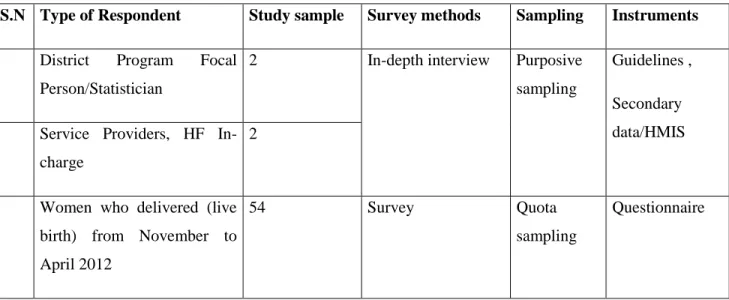
Table 2: Study sampling and sample size
Table 3: Knowledge about SDIP
Table 4: Process of receiving SDI
Table 5: Satisfaction from services
Table 6: Referral and decision-making
Table 7: Motivating factor for HF delivery
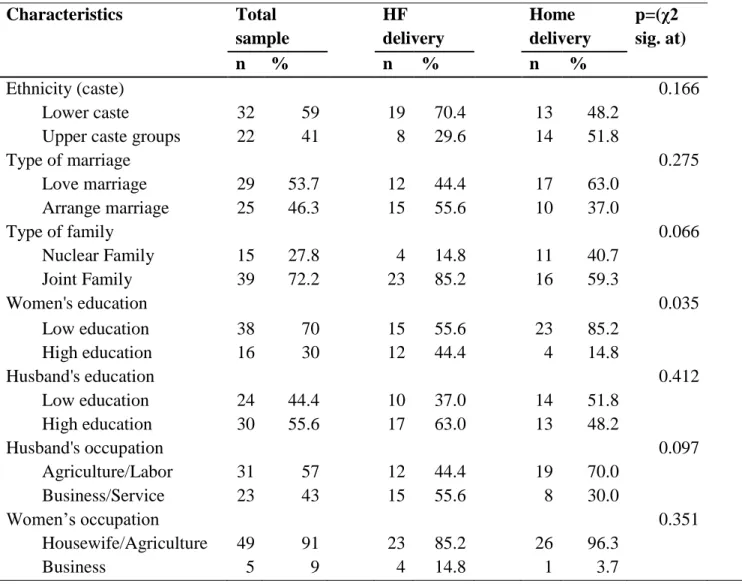
Table 8: Demographic characteristics
Table 9: Social characteristics
Table 10: Enabling characteristics
vi | P a g e LIST OF FIGURES AND CHARTS
Figure 1: Situation of skilled birth attendants and maternal mortality in South and West Asia
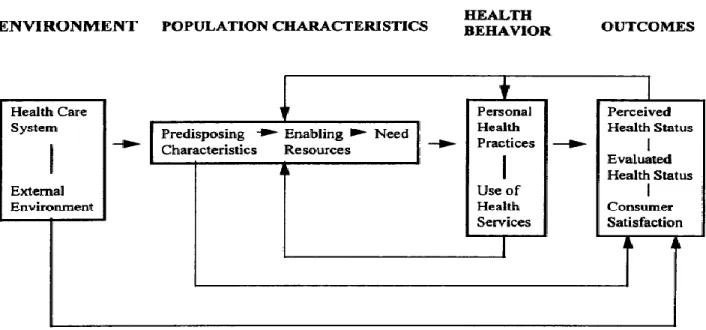
Figure 2: Behavioral model of health service use, an emerging model- phase 4 (Anderson, 1995)
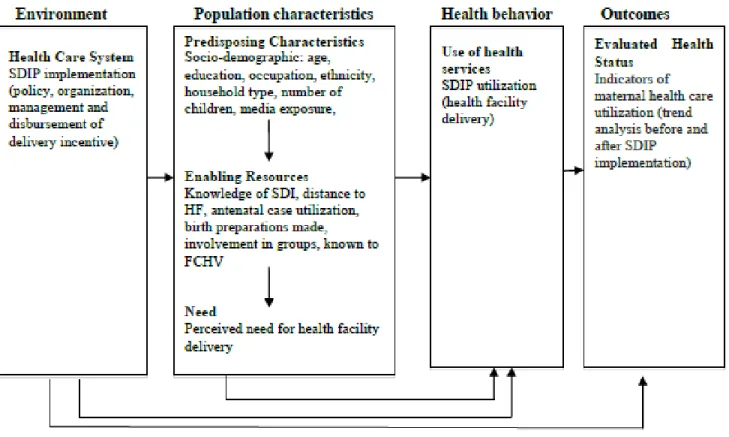
Figure 3: SDIP utilization model used in the study (adopted from Anderson, 1995)
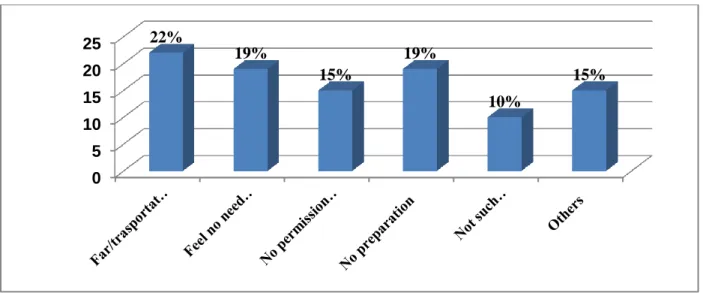
Figure 4: Reason of not undertaking institutional delivery
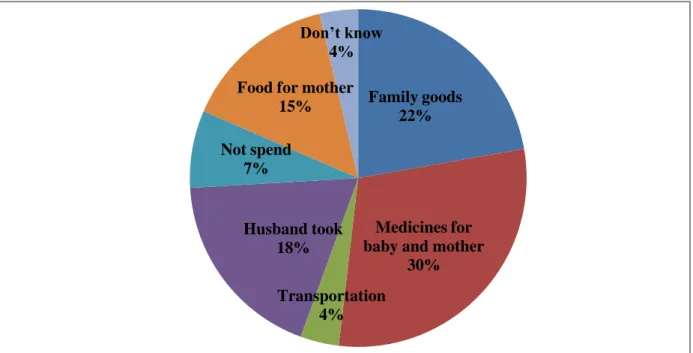
Figure 5: SDIP expenditure items
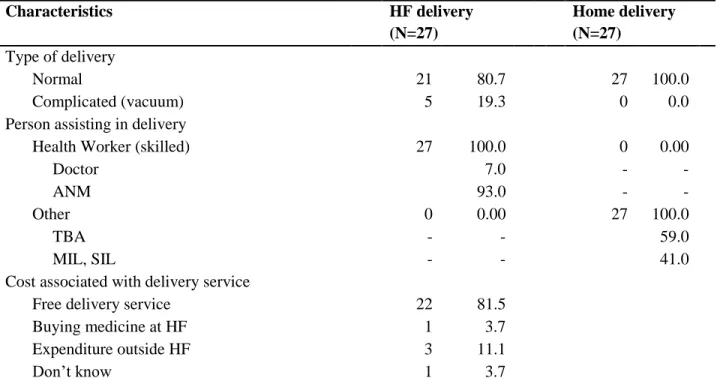
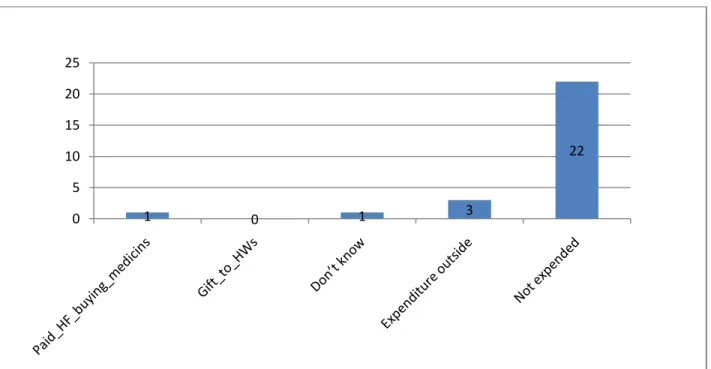
Figure 6: Expenditure during delivery
Figure 7: Trend of delivery conducted by HWs and SBAs during last 10 years
vii | P a g e ABBREVIATIONS
ANC - Antenatal Care
ANM - Auxiliary Nurse Midwifery
BIC - Birth In centre
BMHSU - Behavior model of health service use
BOC - Basic Obstetric Care
BPP - Birth Preparedness Programme
CBNCP - Community Based Newborn Care Programme
CCT - Conditional cash Transfer
COC - Comprehensive Obstetric Care
DoHS - Department of Health Services
DPHO - District Public Health office
EP - Expected Pregnancy
EOC - Emergency Obstetric Care
FCHV - Female Community Health Volunteer
FHD - Family Health Division
FIL - Father in Law
FWRA - Far Western Region
FY - Fiscal Year
GoN - Government of Nepal
HA - Health Assistant
HF - Health Facility
HFOMC - Health Facility Operational Management Committee
HMIS - health Management Information System HP - Health Post
HW - Health Worker
IHP - International Health Partnership
I/NGO - International/Non Governmental Orgnaization
JSY - Janani Suraksha Yojana
viii | P a g e MIL - Mother in Law
MIS - Maternity Incentive Scheme MMM - Maternal Mortality and Morbidity
MMR - Maternal Mortality Rate MNH - Maternal and Neonatal health
MoHP - Ministry of Health and Population
MWRA - Married Women of Reproductive Age
NDHS - Nepal Demography and Health Survey
PHCC - Primary health Care Centre
PHC ORC - Primary Health Care Outreach Clinic
PHN - Public Health Nurse
PNC - Post Natal Care
Rs. - Rupees
$ - Dollar
SBA - Skilled Birth Attendant
SDI - Safe Delivery Incentive
SDIP - Safe Delivery Incentive Programme
SHP - Sub Health Post
SN - Staff Nurse
UN - United Nation
US - United States
VDC - Village Development Committee
ix | P a g e ACKNOWLEDGEMENT
I would like to express my heartful gratitude to thesis supervisors Dr. SK. Tawfique M. Haque, Prof Dr. Tek Nath Dhakal and Prof Dr. Govinda Dhakal who have guided and supported me throughout my thesis for masters on public policy and governance. I am grateful for their support, patient guidance, enthusiastic encouragement for the thesis, from initial advice to the end of my research.
I would also like to thank Dr. Ishtiaq Jamil, Dr. Salahuddin M. Aminuzzaman, Prof. Dr. Shree Krishna Shrestha, and Mr. Narendra Poudyal for advice and assistance in keeping my progress on schedule.
My special appreciation is to DPHO Kailali and Dododhara HP team especially Miss. Tara Tamang, Mr. Pushpa Raj Joshi, Miss Bhawani Khanal, Mr. Krishna Dev Joshi and to all mothers who participated and provided the valuable information. I would like to offer my regards to Mr. Dilli Singh Rawal and Miss Indira Bhandari for helping me in managing the field work for the data collection.
I wish to thank my parents for their undivided support and interest who inspired me and encouraged me to go my own way, without whom I would be unable to complete my thesis. Lastly, I offer my regards everyone who supported me in any respect during the completion of the thesis.
Anjalina Karki September 2012
1 | P a g e CHAPTER 1: INTRODUCTION
1.1. Background
Globally each year, out of an estimated 120 million pregnancies more than half a million women die from the complications of pregnancy and childbirth and virtually all (99%) of these maternal deaths occur in low-income countries (Clarke, 2008, WHO, 2007). More than 50 million women suffer from a serious pregnancy-related illness or disability; around 1.2 million newborn infants die from complications during delivery. Fifth Millennium Development Goal (MDG) is improving maternal health aiming to reduce the maternal mortality ratio (MMR) by three quarters between 1990 and 2015 (UN 2008).In spite of a decline in the MMR of 2.5% globally from 1990 to 2005 and a slight drop in every region of the world, the achievement is still too little to reach up to the goal (Hill et al., 2007).
In Nepal MMR is estimated to be 229 per 100,000 live births (MoHP 2009), and the maternal health care utilization is low, as only 58 percent of mothers received antenatal care(ANC) at least once for the last live birth from a doctor or nurse/midwife for their most recent birth, only 36 percent of babies are delivered by a doctor or nurse/midwife, and 35 percent are delivered at a health facility indicating that Nepal has a long way to go to meet the Millennium Development Goal (MDG) target of 60 percent births attended by a skilled provider and 40% target delivered at HFs (NDHS, 2011). Overwhelmingly, vast majority 65% of Nepali women gives birth at home under unhygienic conditions, with untrained attendants (NDHS, 2011). Lacks of health service provision and under utilization of services are important contributing factors to the high maternal and neonatal mortality rates which beg for immediate attention.
There is wide recognition that the major factors contributing to high maternal mortality and morbidity is the low use of maternal health services during pregnancy, for delivery and at the post natal period. Health facility delivery ensure skilled care by Skilled Birth Attendants (SBAs) during childbirth as they immediately afterward can make a critical contribution to preventing maternal and newborn deaths and disabilities as they can manage normal childbirth, recognize complications and refer women in time if necessary. Although maternal health outcomes have been improving considerably in Nepal but low levels of Health facility (HF) delivery, delivery
2 | P a g e
attendant by skilled attendance and unequal access to safe emergency obstetric care is still high which is found as major barrier to achieve the MDG 5. The study by Borghi et al. (2006) found that the household cost of seeking care at childbirth was prohibitively high and the majority of expenditures were made outside of the health facility on transport. Borghi estimated the cost of normal delivery to be US$ 71 and a caesarean section US$ 152.
The Government of Nepal (GoN) has made changes to maternal health financing policy with a view to raising demand and supply for safe delivery care services. These changes have been implemented through two programmes. The first of these, the Safe Delivery Incentive Programme (SDIP) provides a cash payment to women who give birth in a public health facility with the aim of fostering the demand side to alleviate some of the transport costs of accessing care iii) a financial incentive to health workers for each delivery attended both at the health facility and at home encouraging health workers to attend home deliveries (GoN, 2005). It is a safe motherhood intervention initiated nationwide by Government of Nepal on July 2005 as a cost sharing scheme in response to help households to overcome financial barriers to increase the access of women to safe delivery services and to mobilize SBAs to provide home based delivery services.
The goal of the Safe Delivery Incentive Programme (formerly the Maternity Incentive Scheme) is to reduce maternal mortality and morbidity in line with the Government of Nepal‟s (GoN) commitment to the Millennium Development Goals (MDG). A key component of the GoN‟s effort to improve maternal health is to increase the coverage of women who deliver in the presence of a skilled health professional so that complications, should they arise, be recognised and managed. The SDIP is central to this strategy. The SDIP sought to change the behavior of both families and health workers through the package of financial incentives.The second policy reform has been to provide free delivery care (in addition to the cash incentive) in designated public and private not for profit health facilities across Nepal since January 2009.
1.2. Scope of the research
This study explores about the implementation of policy in district, factors associated with use of SDIP and analyzes maternal health outcomes after introduction of policy in bringing change on
3 | P a g e
service delivery. The experiences and views of both service providers and services seekers involved in the program is explored using both quantitative and qualitative methods. The findings from the study will benefit policy makers, researchers and policy implementer.
1.3. Statement of the problem
The International Health Partnership consensus is that skilled care at every birth is the key to making childbirth safer for women and their newborns. The proportion of births assisted by SBAs is an indicator of Millennium Development Goal which assesses progress towards maternal mortality reduction. As a signatory of Millennium Declaration, Government of Nepal (GoN) is committed to achieve it.
In Nepal, only 35% of birth takes place at HFs and 36% of births take place with the assistance of SBA (MoHP et al., 2012). The target of delivery assistance by SBAs and delivery at HF for the country are 60 and 40 percent respectively by the year 2015 (DoHS Nepal, 2011). Therefore a new policy and strategy must be in place to ensure delivery of mothers at HFs, availability of birthing centre and skilled attendants at HFs providing emergency obstetric services. The below graph proves that percentage of deliveries conducted by SBA is negatively associated with maternal mortality in all countries.
The single greatest contributing factor to the high maternal and neonatal mortality rates is that 65% of delivery at home and 64% of births have no skilled birth assistance (MoHP et al., 2012). It is widely asserted that financial cost as major barrier for inadequate access to services. A study undertaken by the National Planning Commission showed that transport cost for safe delivery could be as high as NRs 1000 (US $13.3), a delivery without complications NRs 400 (US $5.3) and with complications NRs 800 (US $10.7) and concluded that most women would only seek care on their own accord if services were free (National Planning Commission, 1998). It has been hypothesized that if incentive will be provided to mother for support in transportation and service will be free at HF then only she can be able to reach health facility. The incentive provided to HWs will also help to make active service providence side thereby increasing delivery attendant at HF and delivery by HWs which will decrease the maternal mortality.
4 | P a g e
Source: Situation of maternal health status in Asia
1.4. Research Objective
The study aims to explore the implementation practice of SDIP at district and VDC level and assess the factors associated with SDIP utilization. More specifically, the objectives of the study are:
To review the implementation practice of SDIP at district level and below. To assess the factors associated with the use of SDIP.
To assess the effect of SDIP on maternal health outcomes
1.5.
Research Question
What is the implementation practice of SDIP and what are the factors associated with the utilization of SDIP?
5 | P a g e
1.6.
Significance of the research
A Maternal Mortality and Morbidity (MMM) study (MoHP et al., 2009) which was carried out over the one-year period, 13 April 2008 to 13 April 2009, in eight districts of Nepal and it showed that the MMR per 100,000 live births is lowest in Baglung (120) and Okhaldhunga (138) and the highest is in Kailali (219) and Jumla (310). The SDIP has been in operation for over five years in Kailali. Study of the SDIP has been done in other districts of Nepal, but Kailali was not in included in the study. So, it is necessary to review the implementation process, factors associated with use of SDIP and its outcome in terms of increase in institutional deliveries, delivery by HWs and SBAs for further strengthening the scheme.
Furthermore, Kailali is one of the highly populated districts of the Far Western Region (FWR) of Nepal with population 7,84,757, expected pregnancies (EP) 22,117 and married women of reproductive age (MWRA) (15 to 49 years) is 13,850 (DoHS Nepal, 2011). Dododhara, the study VDC, has population of 18, 371, EP 528 and MWRA 3,613. There is an Ilaka HP, which is also a birthing centre, under which 4 HFs are running (DPHO Kailali, 2011).
This study not only explores the trend of maternal health outcome but study the program from perspective of both service provider and services seeker who actually implement the policy at field level and who is benefitted directly from the program. The study will provide valuable information for evaluating the current implementation status of the scheme in Kailali to recommend for improving its effectiveness. With the impressive increase in demand for services, the issue of supply side matching the demand and the quality of services rendered becomes very crucial for the successful functioning of the scheme in future. The findings of this study will be utilized by the respective district to observe the status of program and at national level towards strengthening the implementation of the program, formulating an appropriate action plan to address specific gaps highlighted in this study and to act on the specific findings for improving the maternal health status in the country.
1.7.
Operational Definition
Health care system - This system includes safe delivery incentive program. Use of health services - Safe delivery incentive program utilization
6 | P a g e
Evaluated health status - It includes HMIS indicators i.e. % of delivery conducted at HF, % of delivery by HWs and % of delivery by SBAs.
Low education – It means no schooling, incomplete primary and complete primary education.
High education - It means from lower secondary to high level study Lower caste - It represents untouchable and disadvantaged ethnic group. SDIP use - Those who received incentive after delivery at HFs
1.8.
Limitation of the research
The limitations of the study are:
The study is limited to Terai setting and hence does not present the situation of SDIP in hilly region of the district.
Non-random sampling and small sample size are also the limitations of the study. Lack of random sampling and small number of sample makes it difficult to generalize the findings to entire population of Kailali. Further, due to small sample size also limited the statistical analysis could not be carried out for all variables of studied.
1.9.
Structure of the report
This report describes the implementation practice of SDIP in Dododhara VDC and Kailali district of Nepal, association of factors with use of SDIP and effect of SDIP on maternal health outcome. This report is presented in six different chapters. First chapter begins with introduction of the study that includes background, scope of study, statement of problem, objectives and research questions, significance of the study, theoretical framework, operational definition, and limitation of the study. Second chapter presents findings from literatures reviewed related to the programme, study on effect of SDIP in maternal health outcome in other districts of Nepal and association of factors with place of delivery. Chapter three gives the overall process and methodology of the study. In chapter four, results of the study are described. Chapter five presents the discussions and conclusion of the study.
7 | P a g e CHAPTER 2: LITERATURE REVIEW
This chapter presents the review of literature related to safe delivery incentive programs implemented in Nepal as well as in other countries. This chapter consists of three sections. First, review of policy documents related to SDIP in Nepal is presented briefly. In second section, results of other relevant studies conducted in Nepal are described. In third section, review of similar studies from around the world is presented. Both second and third section presents the review of literature in line with the factors (predisposing, enabling and need) influencing service utilization according to Andersen‟s model used in this study. Furthermore, the effect of delivery incentive on utilizing maternal health services, as described in other studies is presented.
2.1.
Introduction of the Safe Delivery Incentive Program in Nepal
Maternal health is one of the important policy concerns in Nepal and the present interim plan focuses on improvement of women‟s health by reducing maternal mortality (National Planning Commission, 2007). Over the last decade Nepal has made substantial policy initiatives in maternal health. Nepal Safer Motherhood Project (1997–2004) commissioned a study on the financial implications of skilled attendance at delivery. The study showed high financial cost as a major barrier in seeking and utilizing delivery care (c.f. Ensor et al., 2009). A study by World Bank demonstrated that the cost of emergency obstetric care is a major barrier to access to services. Similarly cost was identified as one of five main barriers for inadequate access to services through participatory social analysis from seven years DFID funded project. These findings swiftly moved the area of policy interest and increasing policy concern was given to SBAs. A key component of the GoN‟s effort to improve maternal health is to increase the coverage of women who deliver in the presence of a skilled health professional so that complications, should they arise, be recognised and managed. In 2005, the Government of Nepal introduced the Safe Delivery Incentive Programme (it was given this name late in 2007, previously it was known the Maternity Incentives Scheme) with the overriding objective of increasing the use of professional care at childbirth (Government of Nepal, 2005).
Monetary incentives given to households, on the condition that they engage in certain health seeking behaviour, are known as conditional cash transfers (CCT). SDIP consists of a conditional cash transfer to women who deliver in a health facility; an incentive to health
8 | P a g e
workers for each delivery they attend; and free delivery care for eligible women. In 2007, the Government of Nepal made a number of changes. The eligibility criteria to receive the conditional cash transfer to women were removed, allowing all women to benefit. The programme was also expanded to include not-for-profit hospitals in order to address concerns about the availability of obstetric services (Powell-Jackson et al., 2009a). The second policy reform has been made to provide free delivery care (in addition to the cash incentive) in designated public and private not for profit health facilities across Nepal since January 2009. To reflect this change in policy, the SDIP has evolved into the “Aama programme” (Government of Nepal 2009) which is made up of three elements; cash incentives to women, incentive to health workers and free delivery care to women. The following table shows the financial benefits offered by the SDIP and eligibility criteria or the conditions applied.
Table 1: The financial benefits offered by the SIDP and eligibility criteria
SDIP components Eligibility criteria
1. Conditional cash transfer to women Woman delivered in a public health facility*
Woman had an obstetric complication or had no more than two living
children** 500 NRs ($7.8) in plain districts
1,000 NRs ($15.6) in hill districts 1,500 NRs ($23.4) in mountain districts 2. Provider incentive
Doctor, nurse, midwife, health assistant, auxiliary health worker or maternal and child health worker attended at home or in a public health facility
300 NRs ($4.7) for each delivery attended at HP paid out of HF reimbursement
200 NRs for each delivery attended at home paid out of HF reimbursement
3. Free delivery care to women and facility reimbursed
Woman is resident in a low human development district
Woman delivered in a public health facility
Woman had an obstetric complication or had no more than two living
children** 1,000 NRs ($15.6) reimbursed to health facility
If <25 beds, normal birth
1,500 NRs reimbursed to health facility If >25 beds, normal birth
3,000 NRs reimbursed to health facility If complicated case
7,000 NRs reimbursed to health facility If caesarean case
* Since 2007 the programme has expanded to include non-profit and private health facilities. ** This condition has now been removed.
9 | P a g e
2.2.
Study on implementation and effect of SDIP in Nepal
A study conducted by Powell-Jackson et al. (2008) reported that almost three‐quarters of women were unaware of the financial benefits offered by the SDIP and a very few women giving birth in a public health facility received the cash incentive on discharge. Furthermore, awareness of the SDIP was skewed towards wealthier and more educated families. Conservative bureaucracy structure, delays in disbursement of funds, lack of clear communication of policy, and complexity of the program itself were some of the barriers that constrain the smooth implementation of the programs in Nepal (Powell-Jackson et al., 2009a). Though, the positive effects of the program are increasing. The program was found to reduce inequality in utilization of delivery services and women with knowledge of the SDIP were 17 percent more likely to deliver with a skilled birth attendant (Powell-Jackson and Hanson, 2010). A study conducted in Makwanpur district of Nepal showed that the SDIP had no impact on neonatal mortality (Powell-Jackson et al., 2009b). Bhusal and others (Bhusal et al., 2011) found that women only knew that there was a cash payment, but they did not know exactly for what specific purpose mothers were given such payments. They furthermore argued that SDIP has not adequately benefitted the hard to reach women groups who are living in remote areas.
2.3
Research on Incentive Programme in different countries of the World
Conditional cash payments induce households and individuals to behave differently than they would have had they been not given the cash payments. Conditional cash transfer (CCT) programs have the ability to influence behavior positively. CCT programs have been extensively used during the last decades to increase school enrollment (e.g. in Brazil, Bangladesh), to prevent nutritional problems (e.g. Brazil, Mexico, Tunisia, Bangladesh), to improve children‟s health (e.g. Mexico, Kenya) and to prevent malaria (E.g. Kenya) (Das et al., 2005).
Cash incentive program elsewhere in the world have successfully raised demand for health services. The Government of India also launched Janani Suraksha Yojana (JSY) in 2005, a conditional cash transfer scheme, to encourage women to give birth in the health facility with the aim of reducing the number of maternal and neonatal deaths (Government of India, 2005). The assessment of the JSY programs in India by Lim et al. (2010) found that the implementation of JSY varied by state; from less than 5% to 44% of women giving birth received cash payments
10 | P a g e
from JSY. The program had a significant effect on increasing antenatal care and delivery at health facility. Furthermore, the matching analysis showed that JSY payment was associated with a reduction of 3.7 prenatal deaths per 1000 pregnancies and 2.3 neonatal deaths per 1000 live births (Lim et al., 2010). Hence the findings showed that there is positive effect of the conditional cash transfer program in India.
A study undertook a public health program effectiveness trial in Honduras to assess the effect of monetary incentive on utilization of preventive health services in which about 5600 households were randomly allocated into four groups i.e. money to households; resources to local health teams combined with a community-based nutrition intervention; both packages and neither. After two years, evaluation suggested that the conditional payments to households increase the use and coverage of preventive health intervention like ANC, children‟s growth monitoring and immunization (Morris et al., 2004).
Most of the deliveries conducted in home are not without cost. A study by Borghi and others (2006) reported that households pay around 900 Nepalese Rupees (Rs) for a trained attendant at home however payment methods are flexible – as they can be made in kind and the amount depends upon the ability of household to pay. The same study reported that the delivery in a facility imposes additional cost burdens on households including transport to the facility and companion time of going with the woman. On average, transport cost represents 60% of the total cost associated with a normal delivery in hospital. In addition, opportunity cost of the companion (husbands in nearly 70% of cases), drug and medical supply cost, foods and washing materials, and other costs threaten poor households to decide going health facility during delivery. The total cost of delivery with a trained attendant at home is about half the costs of a normal delivery in a hospital.
Financial barrier is very important which make women not to deliver their children in a health facility before the implementation of SDIP, which is conditional cash transfer program in 2005 (Borghi et al., 2006). Household cost of seeking care at childbirth was prohibitively high and the majority of expenditures were made outside of the health facility on transport. The total amount expended in a normal delivery in health facility exceeded Rs. 5300 ($ 70) including opportunity and transport costs, and for a caesarean section the total household cost was more than 11 400 RS ($150). Economic inaccessibility was one of the single most important factors that prohibit
11 | P a g e
poor households from attending health facility during delivery. The study also recommended for financial support in public facilities to overcome both supply and demand-side barriers to care seeking.
2.4 Research about the association of factors with place of delivery
Stephen K. Ngigi, Department of Medicine, Moi University, Kenya did a thesis entitled as “Socio-demographic factors associated with skilled or unskilled delivery among parturient women in Bungoma East District, Western Kenya” on November, 2009.The study concluded that age less than or equal to 35 years and distance more than 5km are associated with unskilled delivery while distance less than or equal to 5km is associated with skilled delivery. Age, distance, marital status, parity, occupation, cost, transport and education level were independently significantly associated with place of delivery.
A case control study was done by Thomas “Factors associated with low institutional delivery” revealed that mothers education, husbands occupation, family monthly income, expose to media, distance from health facility and decision maker for place of delivery were significantly associated with low institutional delivery. A study was done on “Factors affecting home delivery in rural Tanzania”. Issues of risk and vulnerability such as lack of money, lack of transport, sudden onset of labour, short labour, staff attitudes, lack of privacy, tradition and cultures and the pattern of decision-making power within the household were perceived as key determinants of the place of delivery. A cross sectional descriptive study on determinants of place of delivery explained that mothers‟ educational level, husbands‟ occupation and age at first pregnancy were the main determinants of place of deliver and there was no statistical significance between employment status of fathers and home delivery. A community based cross sectional study conducted on January 2007 explained that problem during labor, antenatal care follow up, knowledge about delivery services, ethnicity and decision making power of subjects were found to have a statistically significant association with preference of safe delivery place.
2.5. Millennium Development Goal (MDG)
As part of the world‟s commitment towards the right to development, peace and security, gender equality, eradication of multi-dimensional poverty and sustainable human development, the Government of Nepal (GoN) also endorsed the Millennium Declaration in September 2000. In
12 | P a g e
order to achieve the MDGs, the GoN has incorporated the MDGs into the strategic framework of the country‟s Tenth Plan/Poverty Reduction Strategy Paper (2002/03 - 2006/07) and three years interim plan (2007 - 2010). Out of the eight goals of MDGs, goal five is concerned with improving maternal health and reducing maternal mortality. An analysis of the demographic health survey data showed that Nepal has come a long way in meeting the targets of the MDG, especially in relation to gender equity in education, child mortality, child nutrition, contraceptive prevalence rate and knowledge of HIV/AIDS. However, although maternal care indicators have improved over the years, they still have a long way to go. The focus on antenatal, delivery, and newborn care is vital for improving maternal health indicators (Macro International Inc., 2007). According to Nepal MDG Progress report (NPC and UNDP, 2010), Nepal is very close to achieving the target of reducing maternal mortality ratio. In 2009, the figure was 229 and the target by 2015 is 213. Major policy changes over the past decade that illustrate the level of leadership and political commitment include the legalization of abortion; a skilled birth attendant policy; a blood supply policy; the introduction of safe delivery incentive policy; and more recently, the introduction of free delivery care (Hulton et al., 2010). However, the proportion of birth attended by skilled birth attendants is still low (29 % in 2009) as compared to the target of MDG (60%) by 2015. Nepal has still a lot to do for achieving universal access to reproductive health.
13 | P a g e CHAPTER 3: THEORETICAL/ANALYTICAL FRAMEWORK
3.1. Theoretical framework
Andersen‟s Behavioral Model of Health Services Use (1995) is used as the theoretical framework for this study. Andersen has developed framework to discover conditions that either facilitate or impede utilization. This framework provides behavioural model to understand and explain utilization of health services. The framework was first developed in the 1960s and has been revised and modified through four phases to ensure a comprehensive analysis. The framework below represents the fourth phase, developed in 90s (Andersen, 1995). The model can be modified by using different healthcare services, predisposing characteristics, enabling resources, healthcare need, or by other health outcomes or health status variables (Graves, 2009). The concept of Andersen‟s model are widely used as a framework for assessment of healthcare access, outcomes, and quality (Diala et al., 2000, Goodwin and Andersen, 2002, Ogbuanu et al., 2012, Tomiak et al., 2000, Lo and Fulda, 2008). A major goal of the model is also to provide measures of access to health care, which are important for health policy and health reforms.
Figure 2: Behavioral model of health service use, an emerging model- phase 4 (Andersen, 1995)
The figure above exhibits a dynamic and recursive nature of health services‟ use. The model portrays multiple influences on health services‟ use and subsequently on health status. The framework presents that the environment and population characteristics are primary determinants
14 | P a g e
of health behavior, to influence health outcomes. The feedback loops, in turn, show that outcome affects subsequent health behavior and population characteristics. Each component of the health service utilization framework of Andersen is briefly described below.
Environment
The model shows that environment that comprises of health care system and external environment influences to use services. The health care system highlights the importance of health policies, resources and their organization in the health care system and acknowledges the
external environment (including physical, political, and economic components) as an important input for understanding use of health services.
Population characteristics
Anderson mentions that people‟s use of health services is a function of their predisposition to use services, factors that enable or impede use, and their function for care.
Predisposing factors include demographic factors that represent biological imperative, social structure (like education, occupation, ethnicity, culture) and health beliefs (attitudes, values, and knowledge of people) that influence subsequent perceptions of need and use of health services.
Enabling resources: It describes that community and personal enabling resources must be present for use to take place. These would include health personnel and facilities, income, health insurance, a regular source of care, travel and waiting times, organizational factors and social relationships.
Need: It highlights the need to understand perceived need (how people perceive their own general health, functional state and experience about symptoms of illness and pain) and evaluated health needs (professional judgment about people‟s health status and need for medical care). He explained perceived need will better help to understand care-seeking.
Health behavior
The model explains use of health services measured in terms of type, site, purpose, and time interval. The model also recognizes personal health practices such as diet, exercise, and self care as interacting with the use of formal health services to influence health outcomes.
15 | P a g e Outcome
Anderson mentions that health services are supposed to have something to do with maintaining and improving the health status of the population both as perceived by the population and evaluated by professionals. The model also includes consumer satisfaction as an outcome of health services that can be measured in terms of convenience, availability, financing, provider characteristics and quality.
Concept of access: - This model defines equitable and inequitable accesses. Equitable access
occurs when demographic and need variables account for most of the variance in utilization.
Inequitable access occurs when social structure (e.g. ethnicity), health beliefs, and enabling resources (e.g. income) determine who gets medical care. The model could be used to assess the outcome of service use as effective and efficient access. Effective access is established when utilization studies show that use improves health status or consumer satisfaction with services.
Efficient access is shown when the level of health status or satisfaction increases relative to the amount of health care services consumed.
Concept of mutability: Anderson (1995) describes that concept of mutability in the behavioural model to promote equitable access. To be useful for promoting access, a variable must also be considered as mutable, or point to policy changes that might bring about behavioral change. He describes demographic variables as having low mutability, since they cannot be altered to change utilization. Enabling variables can be quite mutable, and they may be quite strongly associated with utilization. Need can also be mutable variable as people‟s perceived need for care may be increased or decreased, e.g. through health education programs, changing their financial incentives to seek services, etc.
3.2. Analytical Framework
As mentioned by Anderson, SDIP has tried to promote equitable access to women who could not afford to deliver at health institutions due to cost associated with the service utilization. Here, cost of service is the mutable factor that the policy aims to intervene. In this study, the BMHSU guided to establish an analytical framework and variables for analysis to review the implementation and effect of SDIP. The model also guides to develop the specific objectives of the study.
16 | P a g e
This study carries out process evaluation to describe implementation process of policy (both operation and management) in at the district level and the study VDC. The environment component of BMSHU, particularly the health care system, was reviewed to assess how the health system at district and below level has been organized to implement the policy to influence the health behavior. Association between the population characteristics (predisposing, enabling and need) with the delivery at home and health use and non- use of SDIP was analyzed to identify the factors associated with the use of SDIP. Here the use and non-use of SDIP correspondences to institutional and home delivery, respectively, institutional delivery as the use of health services. This study also describes status of SDIP components among those women delivered at HFs. The effect of the SDIP was assessed through trend analysis of maternal and child health (MCH) outcome indicators. The detail of the utility of BMHSU in the study is shown in the figure below and the variables used are listed below.
17 | P a g e
Health care system: It includes descriptive review of process of implementation of policy (or
operation and management) in at the district level and the study VDC based on the following variables.
Initiation of SDIP (district and VDC) Dissemination of policy
- Source of information Organization of resources
- Availability of safe delivery services (24-hour delivery service, types of delivery service, medicine, equipment, private room for ANC/PNC, ambulance, and service charge)
- Human resource (availability of trained HWs, training to HWs, receive of SDI) - Fund management
Implementation of SDIP components
- Knowledge on SDIP(when, source, purpose, who give SDI and sufficiency of SDI) - SDIP utilization (SDI received, when, where, by whom, difficulties faced)
- SDI expenditure items - Satisfaction from services - Referral and decision power - Display of name list
Pre-disposing, enabling and need factors:
- Predisposing characteristics: It includes women‟s age, husband‟s age, women‟s age at
marriage, age at first pregnancy, number of living children and HH size as demographic factors and ethnicity, type of marriage, type of family, education and occupation of mother and husband as social structure.
- Enabling factors: These factors includes media exposure, husband support, involvement in
group, recognize FCHV, distance to reach HFs, ANC service utilization and BPP
- Need: This includes person assisting delivery, type of delivery (normal or complicated),
18 | P a g e Use of health services:
This refers to utilization of SDIP. In this study women‟s delivery of the most recent birth at health facility is considered as the use of SDIP, because all the women who delivered in health facility had received delivery incentive.
Evaluated health status:
This includes trend analysis of 10 years before and after the implementation of SDIP. The analyzed indicators are delivery at HFs, delivery by HWs and SBAs.
19 | P a g e CHAPTER 4: STUDY METHODOLOGY
4.1. Study Design
The study was cross sectional descriptive using both qualitative and quantitative methods.
Process evaluation of SDIP was carried out to review the implementation practice of the SDIP at district and below level. The environment component of Andersen‟s model, particularly the health care system, was reviewed to assess how health system has been organized to implement the policy. It includes initiation and dissemination of policy, organization of resources (fund, manpower and equipments).The supplementary information was examined to identify components status on implementation of SDIP from service seekers.
Association between the population characteristics (predisposing, enabling and need) with the use and non-use of SDIP was analyzed to identify the factors associated with the use of SDIP. Here the use and non-use of SDIP correspondences to institutional and home delivery, respectively.
The effect of the SDIP was assessed through trend analysis of proxy indicators of maternal and child health outcomes like percentage of deliveries conducted by Health Workers, percentage of deliveries conducted at HFs and percentage of deliveries conducted by SBAs at district and national level.
4.2. Study site, population and sampling procedure
4.2.1. Study AreaThe field work of this study was carried out in Dododhara VDC of Kailali district.
4.2.2. Study Population
The study population under this study includes:
The quantitative data was collected from mothers of Dododhara VDC delivered from November 2011 to April 2012 (within six months before the study).
The qualitative data was collected from public health nurse, statistician of district and health service provider (Sr.ANM) and HF In charge at VDC.
20 | P a g e 4.2.3. Sampling and Sample size
District and VDC were chosen purposively. The mothers of Dododhara, Kailali VDC who delivered a child (live birth) within six months before the study were selected for quantitative study while qualitative data was collected by in-depth interviews among service providers and program focal person at district. A complete list of the women delivering at home and HFs from
November 2011 to April 2012 was obtained from respective FCHVs and HF and quota sampling was done to reach the respondents from the list
and it includes six respondents of all wards i.e. 3 from delivered at HFs and 3 from home delivery in each ward (there are 9 wards per VDC). So, altogether 54 respondents ( 27 delivered at HF and 27 at home) were selected.
Table 2: Study sampling and sample size
S.N Type of Respondent Study sample Survey methods Sampling Instruments
1
District Program Focal Person/Statistician
2 In-depth interview Purposive
sampling Guidelines , Secondary data/HMIS 2
Service Providers, HF In-charge
2
3
Women who delivered (live birth) from November to April 2012
54 Survey Quota
sampling
Questionnaire
4.3. Study tools
In order to collect the right information, appropriate study instruments were developed and used for data collection. The study tools were designed keeping in view the objectives of the study. Altogether four tools were developed, which are as follows:
1. Interview with mothers delivered at health facility (Annex – 1) 2. Interview with mothers delivered at home (Annex – 2)
3. Key Informant Interview with district focal persons (Annex – 3) 4. Key Informant Interview with MNH service providers (Annex – 4) 5. HMIS data(Annex – 5)
21 | P a g e
Interview Questionnaire: A structured questionnaire with both closed and open-ended questions
were used to get required information from the mothers.
Interview Guideline: Interview guidelines were developed for in-depth interview with service
providers and district program focal person involved on program implementation.
Checklist: Checklist was used to collect the secondary data in consultation with respected HFs,
and FCHVs to find out the number and detail description of delivered mothers of Dododhara VDC. HMIS was observed to analyze ten years trend of maternal health indicators.
4.4. Data collection procedure
Primary data was collected by interviewing the mothers who delivered (live birth) within six months before the study (from November 20122 to April 2012) using structured questionnaires. The questionnaire was at first developed in English and then translated into Nepali. Pretesting of the questionnaire was carried out in five women in Alapot VDC of Kathmandu district. Enumerators having educational background of ANMs and HAs with at least 2 years working experience on MNH area were recruited for interviewing mothers from the VDCs. They were oriented by researcher herself before the data collection. Qualitative information for the study were collected through, in-depth interviews checklist and guidelines from service providers of VDC and district.
4.5. Data processing, analysis and interpretation
Qualitative data
Descriptive study was conducted to understand how SDIP was implemented from both service providers and service seekers. Health facility in charge and midwife from the study VDC and district supervisors from DPHO Kailali were interviewed using semi-structured interview guidelines. The information collected from in-depth interviews was systematically analyzed to explore the implementation practice and opinion of service providers about the scheme. At first the recordings were transcribed and all the transcripts were read several times by the researcher. All the data were collected in Nepali language and the English translations were also made by researcher herself. As the guideline for qualitative data collection was developed focusing on the different topic lists, data was also coded into respective topic lists by top-down coding to reduce the data making clustering into major themes. The main themes/topics included on
22 | P a g e
implementation practice: initiation of policy, dissemination of policy, organization of resources (human resources, fund management, equipments availability). The description of findings on these topic lists with key illustrative narratives is presented in this report.
Quantitative data
The second phase of the study consisted of questionnaire survey among women who delivered live births within the period of six months prior to the survey association between the population characteristics (predisposing, enabling and need) with the use and non-use of SDIP was analyzed to identify the factors associated with the use of SDIP. Another part of secondary data collection consisted of the review of maternal health service utilization coverage in Kailali district. Quantitative data was taken from secondary sources i.e. HMIS for trend analysis of maternal heath indicators of last 10 years (Five years before and 5 years after the implementation of SDIP) to see effect of program on indicators. Similarly quantitative data was taken from study sample i.e. mothers delivered at HF to explain components of SDIP to give picture of the implementation status from service seeker. Date was edited, entered, coded for processing in the computer using SPSS package. Tables are used to summarize the data for general reading. After giving, the necessary statistical treatment results were derived.
For continuous study variables, means and standard deviations were calculated and for categorical study variables, proportions were computed. Bivariate association between predisposing, enabling and need characteristics and outcome variables of interest were assessed by t-test for continuous and chi-square test for categorical variables. The findings were compared among women who delivered in health facility and who delivered in home to identify the factors which influenced place of delivery and thereby utilization of SDIP.
4.6. Reliability and validity
The questionnaire was translated into the local language (Nepali) and pretested for refinements. Enumerators were well oriented about the data collection procedure. The filled-in questionnaire were checked and edited each day by the researcher. The researcher herself was involved in the data collection and analysis procedure and data editing was done each day of data collection to minimize the error. Expert opinions were taken from time to time as per need of the research process.
23 | P a g e
4.7. Ethical consideration
Ethical considerations were maintained by getting approval from District Public Health Office (DPHO), Kailali. Verbal informed consent was established with the participants before each interview and objectives of the research were clarified to them. The participants were not forced to answer all the questions and assured that their privacy and confidentiality would be highly respected.
24 | P a g e CHAPTER 5: RESULTS
The results are presented according to the objectives of the study in three different sections following the Andersen‟s BMHSU framework. In the first section, operation and management of SDIP in Kailali and Dododhara VDC are presented. Analysis of the association of factors with the use of SDIP is presented in second section and 10-years trends of maternal health service utilization indicators of Kailali district are presented in the third section to assess the effect of SDIP on maternal health.
5.1.
Operation and management of SDIP
Health care system variables or service provider‟s perspectives were reviewed to review the operation and management of SDIP in the district and VDC. Such variables included initiation of SDIP in the district and VDC, dissemination of policy, organization of resources for implementing the policy, and disbursement of fund at district and below levels. In-depth interviews were carried out with a district supervisor and an ANM of the health facility. The findings were, further, supplemented and triangulated with consumers‟ perspectives or the information collected from mothers delivering at HF through questionnaires. The information collected from the mothers included their knowledge about SDIP, process of receiving SDIP, purpose for using SDIP, referral and decision making in the use of SDI, and satisfaction with the service provided.
Service provider’s perspective
5.1.1. Initiation of SDIP
SDIP has been implemented in Kailali district since 2005, the same year the MoHP/GoN had brought the policy in the country. Initially, the policy was known as Maternal Incentive Scheme (MIS). During the initial phase, peripheral HFs under DPHO provided financial incentives only to women undergoing institutional delivery and incentive to HWs. In 2008/09 the policy was revised as Aama Surakchhya Program and incentives are being provided to women delivering at health institutions. Additionally, certain amount to health facilities are also being provided which covers cost of all required drugs, supplies, instruments together with incentives to health workers The policy has supported in increasing the demand for the services. So, birthing centers are also
25 | P a g e
being established and numbers of SBAs is also increasing in the district to meet the increasing demand.
5.1.2. Dissemination of policy
Family Health Division (FHD) sent a letter to the DPHO to flow the message about the policy along with the guideline. The DPHO in turn circulated the message about the policy and guidelines to the peripheral HFs. HF conduct FCHVs meeting regularly in every month and they were oriented about the program on monthly meeting held. The message about the policy in communities were disseminated through FCHVs in mothers‟ group meetings, hoarding boards with messages, and airing the message through local FMs. Every year awareness program is included in plan and as per that plan message is aired through local FM and published in newspaper.
5.1.3. Organization of resources
Human resource, infrastructure and equipment
Out of 44 public HFs in the district, 30 are currently registered as birthing centers and are providing 24-hour delivery services. This includes 5 Primary Health Care Centers (PHCC), 7 Health Posts (HPs), 18 Sub-health Posts (SHPs) and 2 private institutions. There is a plan to upgrade 2 SHP into birthing centers this year, the process for which is already started. HP and PHC provides delivery, ANC and PNC services but SHP provides ANC and PNC but no delivery services as there is no posting of ANM, not sufficient infrastructure and equipments and no provision of safe delivery incentives to mothers and amount to HF under SDIP. Altogether 32 private and government institutions are registered as birthing centers in Kailali
Through a collaborative and combined efforts of DPHO, VDC and international/non-governmental organizations (I/NGOs) SHPs are being upgraded into birthing centers in the district. VDC has been providing the financial support in recruiting (including their salary) Auxiliary Nurse Midwives (ANMs) in SHPs to upgrade into birthing centers. HFOMC decides this agenda and took it to VDC council meeting and is finalized from VDC planning in every year. Their contract is renewed annually. DPHO has been coordinating with different I/NGOs to manage infrastructure and equipment support for the establishment birthing centers and DPHO provides on work coaching, guidance and training to staffs for their capacity enhancement.
26 | P a g e
There is a Comprehensive Obstetric Care (COC) at the Regional Hospital in the headquarters of Kailali district as a referral site providing caesarian services. The BOC and EOC are being managed by SBA-trained HWs (both SN and ANMs). SBAs are providing services for complicated cases like post-partum hemorrhage (PPH) management, retained placenta, use of magnesium sulphate, (MBA), shoulder dystorsiya, breech delivery, and vacuum delivery from the HFs.
Twenty-hour delivery service is available at Dododhara HP. There are 3 ANMs in the HP (1 - permanent government staff, 1 – temporarily hired by government and 1 – supported by the VDC). The VDC is also planning to support 1 additional ANM in the coming year. However, only one ANM is SBA-trained and she is residing in room provided by HF within HF area. Therefore HF is providing 24 hour services for managing the complicated delivery cases. All ANMs have recently taken birth preparedness (BPP) and community-based newborn care program (CB-NCP) trainings. BPP includes changed schedule for ANC check up and about the preparedness of women during pregnancy. CB-NCP enhances the skill of HWs on management of hypothermia, low birth weight (LBW), asphyxia and infection. The HP is equipped with instruments for managing complicated delivery services with support from government and INGO (CARE Nepal). Room facility is also available in the HP for ANMs for night duties.
Fund Management
The revised policy includes incentives to mothers (delivering at HF) and amount to HFs. HF provides incentive to HWs (anyone it doesn‟t count SBA or not if at home 200 rs and if HF 300 rs). In terai region, HF has provision to provide NRs. 500 to mothers delivering at HF with additional NRs. 400 for 4 times ANC taken at right (defined) times. HWs get NRs. 255 and support staff NRs. 50 for each delivery conducted at the HF. Health Facility Operation Management Committee (HFOMC) of Dododhara HP has decided to provide NRs. 100 to FCHVs to take mothers to HF for delivery as a motivational factor.
FHD manages the budget for SDIP at central level. FHD directly sends the budget to DPHO. DPHO disperses the four-monthly amount as advance to HFs based on the record on the number of delivery services provided by the HF, money is send quarterly but settlement in every month.
27 | P a g e
PHN is the person responsible for managing the fund at the district level. The money is deposited into a joint bank account controlled by HF In-charge and VDC Secretary. They provide advance to permanent government staff - ANM of the HF who provide incentives to the mothers.
The ANM files monthly report to DPHO with information on number of women benefited, total amount disbursed, and outcome of delivery. At the end of every month or every quarter, HF In-charge submits the report to the PHN, and their advance is settled accordingly.To promote transparency, all HFs are expected to list and display publicly the names of the beneficiaries and the amount disbursed on a board.
The HFs under DPHO hadn‟t received the advance fund in time for the first fiscal quarter because of late approval of national budget by interim. Health facility operation management committee (HFOMC) of Dododhara HP has lack of fund to lend money to HF so it can provide money to make payments to women who came for institutional delivery during the end of the fiscal month (after accounts are freeze). Due to the unavailability of funds at the end of the financial month and beginning of the first quarter women who delivered during the period hadn‟t received their incentive in time. The money provided to HFs for delivery is distributed to HW who attended the delivery, to support staffs, FCHVs and remaining is balanced in HF account.
Consumers’ perspective
5.1.4. Knowledge about SDIP
The quantitative survey done in Dododhara VDC explains that three-fourth (64.8%) of mothers had heard about SDIP and more than half (54.3%) of the women who heard about SDIP reported that they have knowledge before pregnancy and 8.6% during pregnancy. Most of the women told that they heard about SDIP from FCHVs, and friends and/or relatives Majority of women (85.7%) could tell the amount of incentive correctly. Only more than half of women could tell the purpose of the incentive. All of the women reported that they received the SDI amount from health facility and 62.9% of women told that SDI is provided by ANM. Only 11.4% of the women told that the incentive was sufficient, while about 50% of women told that it was okay (neither sufficient nor insufficient).
28 | P a g e
Table 3: Knowledge about SDIP
Study variables n %
Heard about SDI (N = 54)
Yes 35 64.8
No 19 35.2
When did you hear about SDI? (N = 35)
Before pregnancy 19 54.3
During pregnancy 3 8.6
After delivery 5 14.3
Don‟t know 8 22.9
Source of information about SDI (multiple response) (N = 35)
FCHV 18 66.7
Friends/relatives 15 55.6
Health worker 7 25.9
Radio/Television 7 25.9
Mothers' group 9 33.3
Women who could rightly tell the amount of SDI (N = 35) 30 85.7
Women who could rightly tell the purpose of SDI (N = 35) 18 51.4
Women who knew other women receiving SDI (N = 35) 35 64.8
Who give SDI amount? (N = 35)
ANM 22 62.9
Health worker 13 37.1
Is the amount provided sufficient? (N = 35)
Yes 4 11.4
No 4 11.4
OK 17 48.6
Don‟t know 10 28.6
Figure 4 shows the multiple responses of women for home delivery and not going health institutions for delivery. Some of the major reasons are: HF being far and no transportation facility to reach to HF, no felt for such service, no preparation beforehand, no permission from family and no such practice in the community.
29 | P a g e
Figure 4: Reason of not undertaking institutional delivery
5.1.5. Process of receiving SDIP
Table 4 shows that only 7.4% women received incentive on the same day of delivery. Majority of the women (92.6%) received the incentive after one month of the delivery.
Table 4: Process of receiving SDI (N = 27)
Study variables n %
When did you receive incentive?
While returning from HF (on the same day of delivery) 2 7.4
Later (after 1 month of delivery) 25 92.6
Where did you receive incentive?
At health facility 24 88.9
Village/Home/PHC ORC 3 11.1
Who gave the incentive?
ANM 23 85.2
Other health worker 4 14.9
Any difficulties in receiving incentive?
Yes 7 25.9 No 20 74.1 0 5 10 15 20 25 22% 19% 15% 19% 10% 15%