
MADRES SANAS, BEBES SANOS:
THE INTERGENERATIONAL EFFECTS OF MATERNAL STRESS IN THE GALAPAGOS ISLANDS
Johanna Ruth Jahnke
A dissertation submitted to the faculty at the University of North Carolina at Chapel Hill in partial fulfillment of the requirements for the degree of Doctor of Philosophy in the Department
of Anthropology.
Chapel Hill 2020
Approved by:
ABSTRACT
Johanna R. Jahnke: Madres Sanas, Bebés Sanos: The Intergenerational Effects of Maternal Stress in the Galápagos Islands
(Under the direction of Amanda Thompson)
This research utilizes a longitudinal, mixed-methods design to analyze rich narrative interviews alongside psychosocial and physiological measures of stress to examine shifts in infant development over the course of the peripartum period. This work incorporates the understudied roles of the postpartum period, epigenetic regulation in the placenta, and the gut microbiome into existing models for infant HPA axis development that have continuously reported inconsistent findings. Since the infant HPA axis has consistently been associated with metabolic and neurobehavioral disorders in later life, disentangling the mechanisms that
underpin early HPA axis dysregulation is essential. While other research has examined isolated mechanisms linking maternal stress to infant HPA axis dysregulation largely in wealthy,
biomedical settings, this project investigates how various biological pathways work in tandem to shape HPA axis development in the Galápagos, a middle-income, ecological setting.
more placental HSD11B2 methylation and significantly associated with less HSD11B2
expression for the mothers of girls, but not boys. Evolutionarily, these results fit into a disrupted adaptive framework, in which the ability to upregulate expression in response to stress
diminishes as maternal stress becomes chronic. Last, we find that maternal precarity and HPA axis dysregulation were associated with an increase in pathogenic bacteria in the infant
ACKNOWLEDGEMENTS
I would like to begin by thanking the members of my dissertation committee for providing me with inspiration, constructive criticism, and support for this work. First and foremost, I would like to thank my advisor, Dr. Amanda Thompson, for her brilliant intellectual guidance and mentorship, and without whom this work would not have been possible. I am grateful for her ceaseless encouragement, support, and friendship both in Chapel Hill and abroad. She has guided me professionally and personally, and I feel honored to have had the opportunity to work together for so many years. I hope for many more. I am also grateful to Dr. Margaret Bentley for initially inviting me to the Galápagos Islands to investigate the underutilization of San Cristóbal’s new hospital, which allowed me to develop critical insights and collaborations to establish further research on the island. I am also grateful to Dr. Bentley for sharing her expertise on qualitative data collection and analysis and imparting her wisdom on life and academia. I would like to thank Dr. Jocelyn Chua and Dr. Silvia Tomášková for keeping me grounded in biocultural anthropology and continually encouraging me to consider a more rounded
perspective in anthropology. I would like to thank Dr. Asia Maselko for her guidance in
support, without which this project would not have been possible. In particular, I would like to thank Dr. Steve Walsh, Phil Page, Dr. Jaime Ocampo, and Sylvia Sotomba for supporting my work in the Galápagos for many years. I am grateful to the health care professionals at Hospital Oskar Jandl for their collaboration and support for public health research on the islands, and particularly for their support in investigating health seeking behavior (Chapter 2) and their cooperation collecting placenta samples that were invaluable to this project (Chapter 6). In particular, I would like to give special thanks to Dr. Byron Tobar, Dr. Rafael Parra, Dr. Juan Ochoa, Francisca Murgueitio, and Jennifer Aviles. I am indebted to Paulina Lara Marchena for her assistance with data collection for this project and for her incredible friendship. Thank you for letting me into your family and for your patience with my early Spanish. While living on San Cristóbal, I enjoyed the enduring friendship of Dr. Diana Pazmiño, Dr. Soledad Sarzosa, and Elena Perez. You are my Galápagos family, and without you, life would not have been nearly as fun. Thank you. Funding from the National Science Foundation, Fulbright-Hays, and UNC’s Off-Campus Fellowship allowed me to conduct this research. I would also like to thank the Carolina Population Center for years of training, mentorship, and funding through the National Institutes of Health Eunice Kennedy Shriver National Institute of Child Health and Human Development Training Grant (T32-HD007168).
I am forever grateful to be part of the Human Biology Lab at UNC, where I was able to practice methods, expand my understanding of biological anthropology, and develop lasting friendships. I would also like to thank the Galápagos Research Group, whose members have pushed me intellectually and continually closed out Midori with me.
TABLE OF CONTENTS
LIST OF TABLES ... xiii
LIST OF FIGURES ... xv
LIST OF ABBREVIATIONS ... xvi
CHAPTER 1: INTRODUCTION ... 1
1.1 Study Summary ... 1
1.2 Article 1: Social support over the peripartum period shapes HPA axis development ... 4
1.3 Article 2: Maternal distress influences placental 11b-hydroxysteroid dehydrogenase type 2: Psychosocial and physiological pathways ... 5
1.4 Article 3: Maternal precarity and HPA axis functioning shape infant gut microbiota and HPA axis development in humans ... 6
CHAPTER 2: THE GALAPAGOS ... 8
2.1 Geography and Population ... 8
2.2 The People of the Galápagos ... 10
2.3 Challenges in Context ... 12
2.4 Health Care on the Galápagos ... 14
2.5 Maternal and Child Health on the Galápagos ... 17
2.6 Summary ... 20
3.1 Evolutionary Perspectives: The Developmental Origins of Health and Disease ... 22
3.2 What is Stress? ... 27
3.3 Intergenerational Stress Transfer and the Hypothalamic Pituitary Adrenal Axis ... 29
3.4 Placental Regulation with HSD11B2 ... 33
3.5 The Developmental Niche and Postnatal Environment ... 37
3.6 The Gut Microbiome ... 38
3.7 Gut Microbiome Development ... 40
3.8 Stress and the Infant Microbiome... 43
3.9 Summary ... 46
CHAPTER 4: STUDY DESIGN, DATA COLLECTION, MEASURES, AND ANALYSIS ... 58
4.1 Study Aims ... 58
4.2 Recruitment and Study Sample ... 59
4.3 Ethical Considerations ... 60
4.4 Semi-Structured Interviews ... 60
4.5 Structured Sociodemographic Interview ... 62
4.11 Home Environment ... 64
4.12 Food Security ... 65
4.13 Salivary Cortisol ... 65
4.14 HPA Axis Dysregulation ... 67
4.15 Placental HSD11B2 ... 68
4.16 Infant Stool Sample ... 70
4.17 Anthropometry ... 74
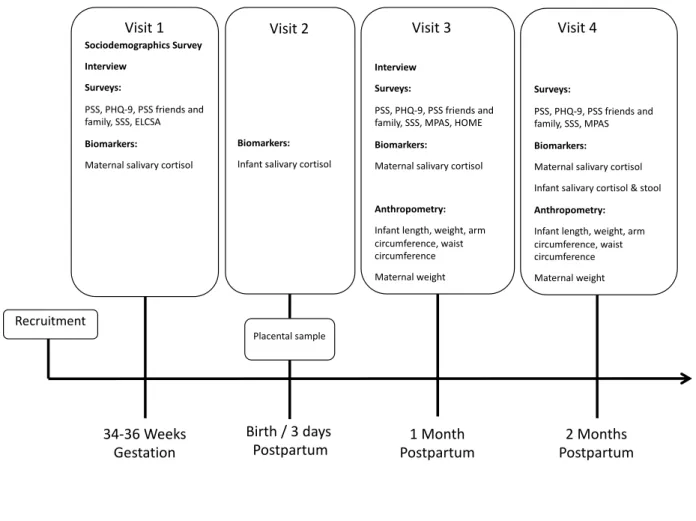
4.18 Study Schedule ... 74
CHAPTER 5: THE FOURTH TRIMESTER MATTERS: PRENATAL AND POSTPARTUM SOCIAL SUPPORT PREDICT MATERNAL HPA AXIS DEVELOPMENT IN THE GALAPAGOS ISLANDS ... 79
5.1 Introduction ... 79
5.2 Methods... 82
5.3 Results ... 91
5.4 Discussion ... 100
5.5 Conclusions ... 105
CHAPTER 6: MATERNAL STRESS DURING PREGNANCY IS ASSOCIATED WITH PLACENTAL 11β-HYDROXYSTEROID DEHYDROGENASE TYPE 2 METHYLATION AND EXPRESSION IN HUMANS: PSYCHOSOCIAL AND PHYSIOLOGICAL PATHWAYS ... 113
6.1 Introduction ... 113
6.2 Methods... 115
6.4 Discussion ... 124
6.5 Conclusions ... 130
CHAPTER 7: MATERNAL PRECARITY AND HPA AXIS FUNCTIONING SHAPE INFANT GUT MICROBIOTA AND HPA AXIS DEVELOPMENT IN HUMANS ... 136
7.1 Introduction ... 136
7.2 Materials and Methods... 140
7.3 Results ... 148
7.4 Discussion ... 152
7.5 Conclusions ... 159
CHAPTER 8: THE EMBODIMENT OF STRESS IN THE GALAPAGOS: CONCLUSIONS AND IMPLICATIONS ... 168
8.1 Summary and Significance of Research Findings ... 168
8.2 Implications for Maternal and Child Health in the Galápagos ... 172
8.3 Overall Strengths and Limitations ... 173
8.4 Directions for Future Research ... 176
8.5 Conclusions ... 177
Patient Health Questionnaire 8 ... 188
Perceived Social Support – Family ... 189
Perceived Social Support – Friends... 189
MacArthur SSS ... 190
Maternal Postnatal Attachment Scale ... 191
Infant/Toddler Home Observation for Measurement of Environment ... 194
APPENDIX D: MATERNAL SALIVA COLLECTION INSTRUCTIONS ... 196
APPENDIX E: INFANT SALIVA SAMPLE COLLECTION... 198
APPENDIX F: PLACENTAL SAMPLE COLLECTION INSTRUCTIONS ... 200
APPENDIX G: STOOL SAMPLE INSTRUCTIONS ... 200
APPENDIX H: INFANT ANTHROPOMETRY ... 202
LIST OF TABLES
Table 3.1 Summary of studies investigating maternal psychosocial stress
and maternal salivary cortisol in peripartum women ... 47
Table 3.2 Summary of studies investigating prenatal stress and offspring HPA-axis functioning through salivary cortisol in humans, organized by infant age at assessment ... 50
Table 3.3 Summary of studies investigating prenatal maternal stress, HSD11B2, and infant outcomes, animal and human models ... 54
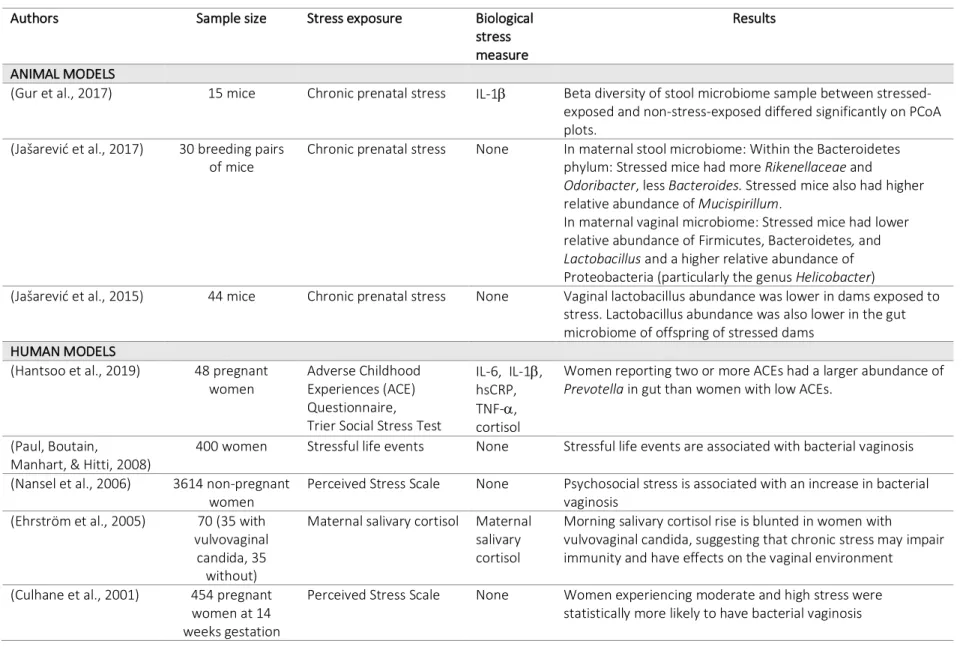
Table 3.4 Summary of studies on stress and maternal vaginal or gut microbiome ... 56
Table 3.5 Summary of studies on perinatal stress and infant gut microbiome ... 57
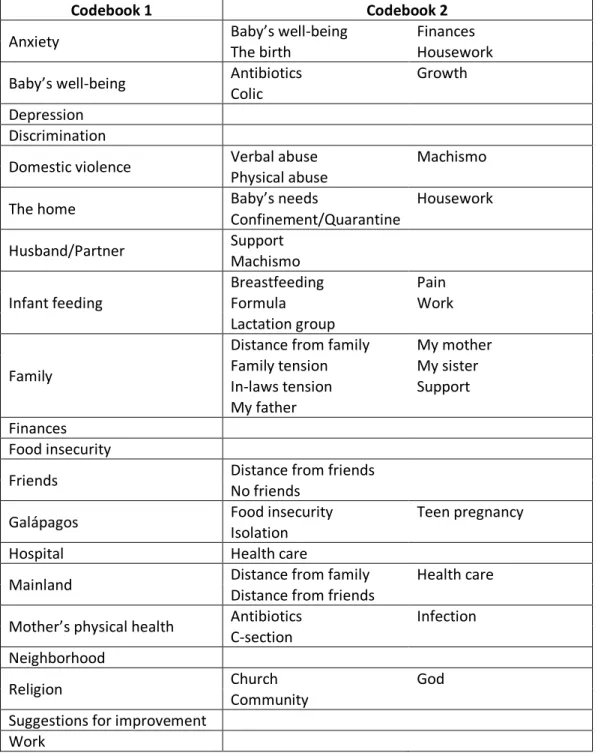
Table 4.1 Qualitative analysis codebooks ... 77
Table 4.2 Study timeline ... 78
Table 5.1 Sociodemographics and infant characteristics……….107
Table 5.2 Distress throughout the peripartum period ... 108
Table 5.3 Predictors of social support, stress, and depression, represented as correlation coefficients (r)... 109
Table 5.4 Bivariate associations between distress and HPA axis dysregulation in mothers and infants, represented as correlation coefficients (r) ... 110
Table 5.5 Bivariate associations between maternal and infant HPA axis dysregulation, represented as correlation coefficients (r) ... 111
Table 5.6 Significant associations in propositions models ... 112
Table 7.3 Maternal precarity and maternal and infant HPA axis dysregulation
are associated with differences in taxa abundance in bivariate analyses ... 164 Table 7.4 Maternal precarity and maternal and infant HPA axis dysregulation
LIST OF FIGURES
Figure 2.1 Population and rates of growth according to the annual census,
adapted from INEC Census (INEC, 2015) ... 10
Figure 3.1 The Hypothalamic Pituitary Adrenal Axis ... 31
Figure 3.2 Placental HSD11B2 ... 34
Figure 4.1 Data Collection Summary ... 78
Figure 5.1 Conceptual model ... 82
Figure 5.2 Research propositions ... 91
Figure 6.1 Conceptual model ... 115
Figure 6.2 Placental HSD11B2 methylation predicts HSD11B2 expression ... 132
Figure 6.3 Maternal cortisol regulation is associated with differences in placental HSD11B2 expression ... 134
Figure 6.4 Placental HSD11B2 expression is associated with infant cortisol regulation ... 135
Figure 7.1 Conceptual model ... 140
Figure 7.2 High postpartum maternal depression, stress, and morning cortisol concentration significantly decrease Shannon’s Entropy in infant stool ... 161
Figure 7.3 Stool sample sequences from infants cluster separately by maternal postpartum depression, maternal postpartum cortisol awakening response, and infant cortisol on a Principal Coordinates Analysis (PCoA) ... 162
LIST OF ABBREVIATIONS
ACE Adverse childhood experience ACTH Adrenocorticotropic hormone BMI Body mass index
C-section Caesarean-section
CAR Cortisol awakening response
CES-D Center for Epidemiologic Studies Depression Scale
cm Centimeters
CNS Central nervous system CpG Cytosine-phosphate-guanine
CpG loci/site Specific locations in the genome at which methylation of a cytosine is altered CRH Corticotropin-releasing hormone
CT Cycle Threshold
DNA Deoxyribonucleic acid; the carrier of the genetic code DOHaD Developmental origins of health and disease
E. coli Escherichia coli
ELISA Enzyme-linked immunosorbent assay EPDS Edinburgh Postnatal Depression Scale
g grams
GSC Galápagos Science Center HOJ Hospital Oskar Jandl
HPA axis Hypothalamic Pituitary Adrenal Axis HSD11B2 11β-hydroxysteroid dehydrogenase type 2 IPV Intimate partner violence
IUGR Intrauterine growth restriction
kg kilograms
MDD Major depressive disorder
mg Milligrams
mL Milliliter
MPAS Maternal Postnatal Attachment Scale
mRNA messenger RNA; also known as transcript or gene expression MSPSS Multidimensional Scale of Perceived Social Support
n Total number of observations OTU Operational taxonomic unit PAR Predictive adaptive response PCoA Principal Coordinate Analysis PCR Polymerase chain reaction PHQ-8 Patient Health Questionnaire 8 PSS Perceived Stress Scale
SSS MacArthur Scale of Subjective Social Status: Community Standing STAI State-Trait Anxiety Inventory
STI Sexually transmitted infection UNC University of North Carolina
UNESCO United Nations Educational, Scientific and Cultural Organization USFQ Universidad San Francisco de Quito
CHAPTER 1: INTRODUCTION 1.1 Study Summary
Globally, chronic diseases cause more deaths than all other causes of mortality combined. Low and middle-income countries disproportionately account for these deaths, bearing three quarters of the world’s burden (WHO 2015). Research on the developmental origins of health and disease (DOHaD) has shown that early life environments, and particularly exposures to stress, shape long-term risk for a variety of chronic and metabolic diseases, including obesity, cardiovascular disease, hypertension, and diabetes (Barker, 2004; Barker, Osmond, Winter, Margetts, & Simmonds, 1989; Wells, 2010) as well as neurobehavioral disorders including mood and anxiety disorders, depression (Cryan & Dinan, 2012), attention deficit/hyperactivity (Talge, Neal, & Glover, 2007), and post-traumatic stress disorder (Yehuda et al., 2005) in offspring even when controlling for adverse birth outcomes.
The mechanisms by which prenatal maternal psychosocial stress is embodied in maternal and infant biology are not yet fully understood. Many animal models have linked prenatal stress exposure to HPA axis programming, but research on this relationship in humans has not
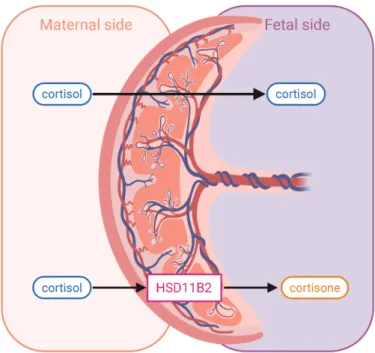
directionally with the central nervous system (CNS), and the HPA axis in particular (Cryan & Dinan, 2012; Rackers, Thomas, Williamson, Posey, & Kimmel, 2018); and the role of the postnatal period more broadly. Since HSD11B2 may buffer the amount of cortisol that reaches the developing fetus, it is hypothesized to have protective effects for fetal development
(Edwards, Benediktsson, Lindsay, & Seckl, 1993). Nonetheless, little remains known about this enzyme and what influences its functioning and expression.
Further, unfavorable shifts in the infant gut microbiome, termed dysbiosis, have been associated with the same long-term disease risks as HPA axis dysregulation, namely increased risk for metabolic (Goulet, 2015) and neurobehavioral disorders (Cryan & Dinan, 2012), suggesting that the gut microbiome could be a candidate for involvement in this pathway. Analyzing how these mechanisms work together is critical for understanding the early
development of an individual's HPA axis and thus their subsequent risk for metabolic disease and neurobehavioral disorders later in life.
work in tandem to shape HPA axis development in a middle-income, ecological setting. The goals of this study are:
Objective 1: To identify which factors contribute to psychosocial stress in peripartum women in the Galápagos and to assess how these exposures both during pregnancy and in the postpartum shape maternal and infant HPA axis regulation
Objective 2: To assess both the psychosocial and physiological relationships between maternal distress during pregnancy and the placental enzyme, HSD11B2, as well as the relationship between HSD11B2 and infant HPA axis development.
Objective 3: To analyze the relationships among maternal stress and HPA axis dysregulation during the peripartum period, infant gut microbiome composition, and infant HPA axis functioning
The Galápagos is an ideal site for this project due to the unique suite of stressors that life on the islands poses for residents and its simultaneous rapidly increasing rate of chronic disease, particularly obesity (Page, Bentley, & Waldrop, 2013; Waldrop, Page, & Bentley, 2016).
months and utilizing the home as the primary site of investigation, the current study was able to build trust with participants and better assess stress within the context that it is experienced. The peripartum period offers a particularly important opportunity to understand this process, since stress during this time has intergenerational effects on health, perpetuating existing disparities (Thayer and Kuzawa 2014; Wells 2010).
1.2 Article 1: Social support over the peripartum period shapes HPA axis development Maternal distress during pregnancy has been shown to have long-term effects on infant hypothalamic-pituitary-adrenal axis (HPA axis) functioning, but hypotheses about underlying physiology and the role of the postpartum environment are poorly specified. We employ a biocultural approach to first qualitatively identify low social support as a central and culturally salient measure of distress for women in the Galápagos Islands, and then use it as an exposure to quantitatively test the effects of three models for infant HPA axis development. We test three propositions: 1) a direct effect of maternal social support (separately for pregnancy and the postpartum) on infant HPA axis regulation, 2) an additional indirect effect of social support on HPA axis regulation through maternal HPA axis regulation (separately for pregnancy and the postpartum), and 3) an indirect effect of social support during pregnancy on HPA axis regulation through postpartum support.
associated with maternal HPA axis functioning. We confirm our third hypothesis, that
postpartum support has an indirect effect on the relationship between prenatal support and infant HPA axis functioning, suggesting that postpartum experience can attenuate prenatal insults to infant development. By incorporating the culturally-salient role of social support during
pregnancy and the postpartum into a model for infant HPA axis development, this study adds a critical component to the literature on the developmental origins of health and disease that will elucidate the pathways through which early environments shape development.
1.3 Article 2: Maternal distress influences placental 11b-hydroxysteroid dehydrogenase type 2: Psychosocial and physiological pathways
are marginally associated with more placental HSD11B2 methylation and significantly associated with less HSD11B2 expression for the mothers of girls, but not boys. Conclusions and
implications: Our results support a disrupted adaptive framework, in which the adaptive ability to upregulate HSD11B2 expression in response to acute stress diminishes as maternal stress becomes chronic. In this model, chronic stress may exhaust the protective mechanism of HSD11B2, leaving the infant vulnerable to high levels of maternal cortisol, which could injure the fetal HPA axis and disrupt neurobehavioral and metabolic development in the long-term. By incorporating both psychosocial and physiological measures of maternal distress into our model, as well as the role of infant HPA axis development in response to placental changes, this study adds a critical component to the literature on the fetal programming that will help illustrate the biological underpinnings of early life adaptations.
1.4 Article 3: Maternal precarity and HPA axis functioning shape infant gut microbiota and HPA axis development in humans
Background: Early life exposure to adverse environments, and maternal stress in
particular, has been shown to increase risk for metabolic diseases and neurobehavioral disorders later in life. While many studies have examined the hypothalamic-pituitary-adrenal axis (HPA axis) as the primary mechanism for these relationships, emerging research on the brain-gut axis suggests that the microbiome may be a key piece of this mechanism. We test the relationships among maternal precarity and HPA axis dysregulation during the peripartum period, infant gut microbiome composition, and infant HPA axis functioning. Methods: Data come from 25 mother-infant dyads in the Galápagos, Ecuador. Women completed surveys on precarity
samples during and after pregnancy. Infant salivary cortisol was collected at 3 days postpartum and 2 months postpartum, and infant stool was collected at 2 months postpartum. Differences in microbial diversity and relative abundance were tested using adjusted linear regression models. Results: Measures of maternal precarity and maternal and infant HPA axis functioning were all associated with differences microbiome composition. Maternal precarity was associated with lower diversity and higher relative abundance of Enterobacteriaceae and Streptococcaceae and a lower relative abundance of Bifidobacteriaceae and Lachnospiraceae. These patterns of
colonization for Enterobacteriaceae and Bifidobacteriaceae mirrored those found in infants with HPA axis dysregulation. Maternal HPA axis dysregulation during pregnancy was associated with a lower relative abundance of Bacteroidaceae, while the opposite was found for maternal HPA axis dysregulation in the postpartum. Maternal HPA axis dysregulation during pregnancy was also associated with a greater relative abundance of Veillonellaceae. Conclusions: Overall, exposures to precarity and HPA axis dysregulation were associated with an increase in
CHAPTER 2: THE GALAPAGOS
2.1 Geography and Population
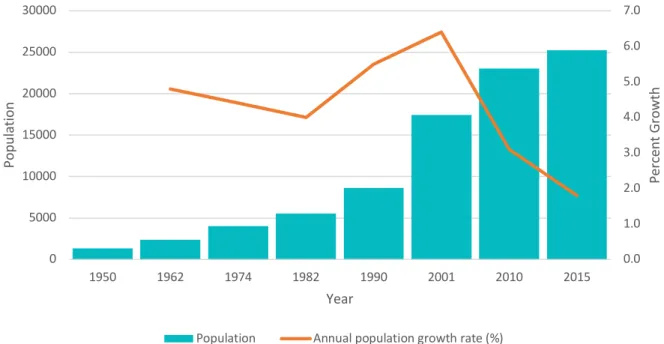
The Galápagos Islands, located 1000 km off the coast of Ecuador’s mainland, make up Ecuador’s archipelago province of over 20 islands (Walsh & Mena, 2016). According to the most recent census from 2015, the four populated islands are now home to of 25,000 residents, with roughly 15,700 residents on the island of Santa Cruz, 7,100 on San Cristóbal, 2,300 on Isabela, and 100 on Floreana (INEC, 2015). While Santa Cruz is the most populated island, San Cristóbal holds the provincial seat. The Galápagos does not have an indigenous population, and its human population remained minimal before the mid-twentieth century. Since then, the creation of the Galápagos National Park in 1959 and the designation of the Galápagos as a United Nations Educational, Scientific and Cultural Organization (UNESCO) World Heritage Site in 1978 incited vast population growth, and tourism and migration brought with it economic and urban development between the 1960s and 1990s (Hoyman & McCall, 2012; Walsh & Mena, 2013). Since 1950, the population has grown quickly, from approximately 1,300 residents to today’s approximately 25,000 (INEC, 2015). Figure 2.1 illustrates the population growth from 1950 to 2015. Recent census data reports that among island residents, 36% were born in the Galápagos, 63% immigrated from Ecuador’s mainland, and 1% immigrated from other nations (INEC, 2015).
response to an influx of migration to the Galápagos, the Special Law of the Galápagos, decreed in 1998, tightened regulations for immigration and labor markets by more strictly defining resident roles (Kerr, Cardenas, & Hendy, 2004). The law defined three groups of residents (permanent residents, temporary residents, and tourists) and regulated travel and work protocols for each in order to limit population growth, which the government feared could be detrimental to the Galápagos’ fragile ecosystem. Through this decree, permanent residents were defined as those who had been residents of the islands for five years at any time before 1998 as well as people who married permanent residents and those who were born on the Galápagos (Kerr et al., 2004). Temporary residents were defined as Ecuadorian mainlanders or foreigners whose
employers granted them temporary work on the islands, which is permitted when the employee has skills that cannot be found among the Galapaganean population. Temporary residencies can be renewed, and temporary residents may bring their spouses and children during their stay (Kerr et al., 2004). The third group, tourists and transients, are allowed short-term stays on the
Galápagos for only up to 90 days within a one-year period.
politics of the island. A major piece of this tension springs form the Galapaganeans’ acute awareness that the best jobs on the islands require higher education and skilled training, which are out of reach for most islanders due to the islands’ limited infrastructure and lack of higher education (Waldrop et al., n.d.).
Figure 2.1 Population and rates of growth according to the annual census, adapted from INEC Census (INEC, 2015)
2.2 The People of the Galápagos
Ethnicity. Ethnically, the Galápagos is largely homogenous, as 85% of the population identifies as Mestizo, 8% identify as Indigenous, 3% identify as Afro-Ecuadorian, 3% identify as White, and 1% identify as Montubio (INEC, 2015).
Education. Overall, education on the islands has been improving over the past few
decades. The literacy rate rose from 97.1% in 2001 to 98.7% in 2015 (INEC, 2015). Nonetheless, 0.0 1.0 2.0 3.0 4.0 5.0 6.0 7.0 0 5000 10000 15000 20000 25000 30000
1950 1962 1974 1982 1990 2001 2010 2015
Per cen t Gr ow th Po pu la tio n Year
illiteracy persists at higher rates among women than men and, generationally, illiteracy is highest among residents over 65 years of age (8.9%) and lowest among individuals under 30 years of age (0.2%) (INEC, 2015). Despite differences in literacy by sex, in each census year, class
attendance was higher among women than men, suggesting that literacy rates are better among younger generations of women. Overall, class attendance has also been improving over the past few decades, as class attendance for people 5 – 24 years old has risen from 64% in 2001, to 76% in 2010, to 78% in 2015 (INEC, 2015).
the 1990s and the rapid expansion of tourism in recent years has degraded the fisheries industry, and many residents have transitioned to other jobs, particularly within the tourism and
conservation sectors, and the people of the Galápagos have embraced ecotourism as a solution to both environmental and economic concerns (Hoyman & McCall, 2012). Today, tourism is the backbone of the Galápagos’ economy, and while the fishing industry has faced policy changes to meet environmental standards, the fishing industry continues to thrive as well (Hoyman & McCall, 2012).
2.3 Challenges in Context
Residents of the Galápagos face a unique suite of challenges in everyday life due to the islands’ isolated geography and protection as a national park.
Food. For those who live on the islands, agricultural restrictions for the preservation of indigenous flora and fauna contribute to the changing social-ecological system by limiting local food production and increasing the residents’ reliance on imported food from the mainland to sustain the needs of the growing population (Page et al., 2013). The majority of fruits and vegetables consumed on the islands are not grown on the islands, but instead must be imported by boat or plane. While the government is responsible for food provision on the Galápagos, private companies are hired to fill this need, and ships are often delayed for long periods, limiting food availability for weeks at a time (Jahnke, Thompson, & Archer, n.d.). When food does arrive, residents often report that fruits and vegetables have spoiled, and healthy options are limited. Consequently, traditional diets are being replaced by energy-dense foods, and
increased prices of food due to importation, the cost of food can be driven up quickly once on a small island with limited resources for re-stocking and ample tourists to feed. Consequently, residents worry about their ability to purchase healthy foods, and food security remains a major concern for residents.
Water. Water quality too, introduces health risks for residents, as fresh water scarcity places a burden on water and wastewater treatment on the islands (Walsh, McCleary, &
Heumann, 2010). On San Cristóbal, where the present study was conducted, water quality testing has documented high levels of Escherichia coli (E. coli) in household tap water (Gerhard, Choi, Houck, & Stewart, 2017), and other studies have found common infectious morbidity from gastrointestinal, respiratory, and skin infections (Walsh et al., 2010). While San Cristóbal is the only island on the Galápagos whose piped water is sourced from fresh water, efforts to improve piped water quality are still ongoing. After a new drinking water treatment plant was
have experienced sexual violence (INEC, 2011). Of women who have experienced some type of violence, 76% report that the perpetrator was their current or ex-partner (INEC, 2011). On the Galápagos islands specifically, 55% of women have reported experiencing from some kind of violence, and 43% of women have reported being victims of violence in a relationship (INEC, 2011). According to a national survey, in the Galápagos, 50% of women reported experiencing psychological violence, 35% have experienced physical violence, and 23% have experienced sexual violence (INEC, 2011), demonstrating comparable rates to those elsewhere in Ecuador. Notably, violence against women is a sensitive and often fraught subject, and consequently, these data are likely under-reported.
Social isolation. The geographic isolation of the islands also leaves residents vulnerable to social isolation from family and friends on the mainland. Restrictive immigration laws prevent large-scale migration to the islands, and travelling to and from the mainland is costly for
residents even with subsidized airfare provided by the government. Consequently, many residents who have married Galapaganeans born on the islands do not often have the chance to see their own families that remain on mainland Ecuador, limiting socials support, particularly for newcomers.
2.4 Health Care on the Galápagos
free care to all citizens (Aldulaimi & Mora, 2017; De Paepe et al., 2012). Despite this change, Ecuador’s medical system has been and remains fragmented into a combination of public and private facilities, which are made up of both non-profit and for-profit institutions
(López-Cevallos & Chi, 2010a). Nonetheless, public health care accounts for the vast majority of health facilities in Ecuador (Pan American Health Organization, 2008), and in many rural settings, public care is the only option (López-Cevallos & Chi, 2010a). Further, after the adoption of Ecuador’s new constitution in 2008, former President Correa entered Ecuador into bilateral cooperation agreements on education, health, and social support with Cuba. Through these programs, Ecuador has invited over 1,000 Cuban doctors to work throughout Ecuador (Anderson, 2015), including in the Galápagos, where the doctors have been met with some resistance from the Galapaganean population who preferred Ecuadorian physicians (Jahnke, Archer, Thompson, Ocampo, & Bentley, n.d.). Recently though, in November 2019, Ecuador’s current president, Lenín Moreno, who was elected in 2017, ended Ecuador’s physician
agreement with Cuba as a piece of his effort to pull away from his predecessor’s commitment to “socialism of the 21st century” (Gámez Torres & Pentón, 2019). His actions both terminated
(HOJ), replaced a smaller, older hospital on the island and is now the only hospital on San Cristóbal. Hospital Oskar Jandl contains both a hospital wing and a primary health care wing, which provides preventative services including vaccinations, dentistry, and counseling. The only other health care center on the island is a small public health clinic in the highlands of El
Progreso for basic care, and the only other (much smaller) hospital on the Galápagos is on the island of Santa Cruz and is also run through Ecuador’s Ministry of Health. Despite the Hospital Oskar Jandl’s improved facilities and technologies, in 2016, health care providers at the hospital identified underutilization of health care services for both primary care and hospital services as a major concern. A qualitative analysis of health seeking behavior found that the community’s perceptions that the hospital lacks specialists and is inefficient have deterred residents from seeking care at the hospital (Jahnke, Archer, et al., n.d.). Further, residents voiced concerns with provider trust and overall health care quality, motivating them to travel to the mainland for care, which poses financial burdens on individuals and potentially exacerbates health conditions during the waiting and travel time (Jahnke, Archer, et al., n.d.; Page et al., 2013). Despite the scarcity of specialists, island residents have been particularly impressed with the prenatal and labor and delivery care that they had received at Hospital Oskar Jandl (Jahnke, Archer, et al., n.d.), and travel to the mainland for delivery has decreased since the establishment of the new hospital.
The Special Law of the Galápagos prioritizes the recruitment of Galapaganean residents for staffing, but without applicants from qualified locals, positions open up to outsiders; however, non-resident staffing limits the terms of service, leading to high turnover at the hospital, which hinders residents’ ability to form long-term relationships and develop trust with providers (Waldrop et al., n.d.). Further, the law requires that if someone from the community with the same qualifications later applies for the job, the non-resident staff must be asked to leave. Thus, many Galapaganeans view the presence of outsiders, and thus the hospital and its staff, as another means of political control imposed upon them from the continent. Much of their anger, though directed at hospital personnel, is rooted in past political injustices and current lack of control over many political and conservation-related efforts on the islands (Hoyman & McCall, 2012; Kerr et al., 2004).
The constant tension among the Ecuadorian government, the hospital staff, and the constituents of the Galápagos make health care provision fraught and complicated on the islands. Nonetheless, hospital personnel are hopeful that they can build trust with the community as more residents have good experiences with care.
2.5 Maternal and Child Health on the Galápagos Overview
(0.013%) (Freire et al., 2015). On average, the fertility rate has been slowly declining over the past few decades from 2.3 children in 2001, to 2.2 in 2010 and 2.1 in 2015 (INEC, 2015). Nonetheless, the Galápagos still faces challenges to maternal and child health, specifically in regard to nutrition and obesity, infections, and overuse of Caesarean section, all of which can be detrimental to long-term health.
Nutrition and obesity
The Galápagos has the highest rate of overweight and obesity of all of Ecuador’s
provinces, with 12.7% of children under the age of five and 75.9% of adults between the ages of 10 and 60 qualifying as overweight or obese (Freire et al., 2018). Overweight and obesity put women at risk hypertension and gestational diabetes and obesity during pregnancy has been associated with for large for gestational age infants, who are more likely to be obese later in life (Pan et al., 2019).
where 16.1 % of children under the age of 5 are anemic, while 6.4% are iron deficient, and 8.4% are Vitamin A deficient (Freire et al., 2014).
Infections
Both urinary tract infections and sexually transmitted infections are also of concern for island residents. The Galápagos has high rates of sexually transmitted diseases (STIs) and urinary tract infections (UTIs) (Jahnke, Thompson, et al., n.d.). Previous research has suggested that the high incidence of UTIs may be a consequence of bathing or showering in contaminated water (Houck et al., 2020; Walsh et al., 2010). These infections are of particular concern during pregnancy, since untreated UTIs during pregnancy have been associated with intrauterine growth restriction, low birthweight, and preterm delivery (R. Cohen, Gutvirtz, Wainstock, & Sheiner, 2019).
High rate of Caesarean delivery
Ecuador’s Caesarean-section (C-Section) rate has been rising far beyond the 10-15% rate recommended by the World Health Organization (World Health Organization (WHO), 2015) over the past few decades (Jahnke, Houck, Bentley, & Thompson, 2019), and the C-section rate on the Galápagos is even higher than that on the mainland, at roughly 58% of all births
and adolescence, including increased allergy and asthma and elevated risk of overweight and obesity (Blustein et al., 2013; Cho & Norman, 2013).
Infant growth
Children under the age of five on the Galápagos have a higher rate of overweight and obesity (12.7%) compared to children nationally in Ecuador (8.5%) (Freire et al., 2014).
Galapagaean children also have a lower rate of underweight (1.2%) than those in Ecuador more generally (6.4%) (Freire et al., 2014). Nevertheless, children on the Galápagos have lower rates of stunting 10.6% and wasting (0%) than children in the national sample, whose rates of stunting are 25.2% and 3.9% respectively (Freire et al., 2014), suggesting that children on the Galápagos are more at risk for overnutrition than undernutrition. These differences may be due to the consumption of many high-calorie processed foods, but differences in underweight may be due in part to nutrient absorption as well, particularly since the rate of diarrhea in children on the Galápagos is marginally lower (10.2%) than that for Ecuadorian children in generally (11.8%) (Freire et al., 2015).
2.6 Summary
Overall, the Galápagos’ geography, policies, and infrastructure have contributed to challenges for human health and well-being on the islands. While recent research has reported birth outcomes, growth measures, and other indicators of physical health, few studies have examined mental health on the islands, and provision of mental health care remains limited. Residents’ everyday lives are complicated by food and water insecurity, poverty, limited
CHAPTER 3: STRESS AND THE BODY
3.1 Evolutionary Perspectives: The Developmental Origins of Health and Disease
The DOHaD hypothesis suggests that early life environments shape long-term disease risk. Robust evidence from epidemiological studies has shown associations between early life exposures to adverse environments and subsequent cardiovascular and metabolic disease, as well as a variety of neurobehavioral disorders (Barker et al., 1989; O’Connor, Heron, Golding,
Beveridge, & Glover, 2002). In particular, prenatal maternal stress has been associated with negative birth outcomes in the forms of preterm birth, low birth weight, intrauterine growth restriction (IUGR), and impaired infant development (Copper et al., 1996; Dayan et al., 2002). At the same time, evidence from epidemiological studies suggests that these adverse birth outcomes are associated with a number of diseases in adulthood including metabolic disease, a suite of diseases including cardiovascular disease, hypertension, obesity, and diabetes (Barker, 2004; Barker et al., 1989); asthma (Mai et al., 2003); behavioral problems (Lagerstrom,
Universio, Bremme, Eneroth, & Magnusson, 1990); and psychological dysfunctions (Bohnert & Breslau, 2008). Further, though many studies have found associations between low birth weight, preterm birth, and IUGR and disease in later life, these adverse birth outcomes constitute the extremes of fetal response to stressful contexts, while in fact, fetal environment shapes development across the range of normal birth weights, and modifications are not restricted to those born particularly small or early (Drake et al., 2012; Godfrey, Gluckman, & Hanson, 2010).
approach to investigate two fundamental evolutionary tradeoffs, that between investment in current or future reproduction, and that between the number of offspring and the fitness of offspring (Hill, 1993). Primarily focused on energetics and energy allocation (Hill 1993), life history theory recognizes that energy can be used for maintenance, growth, storage, and reproduction, and life history researchers investigate how humans navigate tradeoffs in energy investment in order to maximize reproductive effort (Hill, 1993). Further, reproduction is of particular interest within life history theory, since both during gestation and during the first few years of life, a child depends on its mother’s energetic capacity. Thus, allocations of maternal energy must be made doubly—once within the mother for maintenance, growth and
reproduction, and once within the child for maintenance, growth and reproduction. In this way, the perinatal period could provide insight into the energetic “decision-making” of mothers and how the interests and efforts of offspring may shape energy allocation.
plasticity is evolutionarily driven, many disagree about the specificities of how these early life modifications fit into evolutionary models.
Further, while much of the literature on DOHaD in utero has focused on the effects of energetic and nutritional stress, a growing body of literature has found that the effects of
maternal psychosocial stress introduce additional burdens on energy expenditure and have long-term effects on the development of the fetal HPA axis (Nyberg et al., 2012; Pike, 2005; Wells, 2010). Prenatal psychosocial stress has been associated with dysregulated glucocorticoid function, which is known to underlie metabolic disorders (Reynolds et al., 2001), and with neurobehavioral disorders in offspring even when controlling for adverse birth outcomes including low birth weight and gestational age (Davis, Glynn, Waffarn, & Sandman, 2011; O’Connor et al., 2002; O’Donnell et al., 2013). Thus, both energetic and psychosocial stress can influence early life phenotypic modification. Physiologically, this makes sense, since it is the neuroendocrine system that shapes the physiologic mechanisms that affect changes to life history through resource allocation (Finch & Rose, 1995; Worthman & Kuzara, 2005).
future reproduction, and allowing a fetus to avoid direct competition for resources (Pike, 2005). This hypothesis mirrors life history theory, through which the mother and infant must carefully allocate and balance resources. Nonetheless, early parturition is not without trade-offs. Though potentially advantageous for survival in the short term, preterm birth, IUGR, and low birth weight leave the infant vulnerable to perinatal mortality and permanent changes in organ and metabolic functioning (Barker et al., 1989; Hales & Barker, 1992; Pike, 2005). Nonetheless, evolutionarily, this model could thrive through natural selection, since it confers an advantage in early life, and its detrimental ramifications often do not manifest until after an individual’s primary reproductive years.
Others’ hypotheses suggest that these developmental changes are driven by the prioritization of long-term adaptive advantages of early life modifications for offspring,
term perturbations in stress to reflect a reliable sense of postnatal experience that is not derailed by anomalies experienced during one pregnancy. While often this theory elaborates on maternal metabolism as a buffer, it was developed from work with animal models that demonstrates how maternal phenotype buffers offspring from exposure to psychological stressors, in turn buffering the offspring’s HPA axis stress response (Hennessy, O’Leary, Hawke, & Wilson, 2002).
Kuzawa’s hypothesis of intergenerational phenotypic inertia also prioritizes maternal physiology as a signal of the external environment over cues from the momentary external environment itself (Kuzawa, 2005). This hypothesis, which suggests that the fetus is able to use its mother’s metabolism to discern and respond to long-term environmental quality, has been proposed as long-term phenotypic adaptation (Kuzawa, 2005). Kuzawa claims that this
adaptation allows a fetus to adapt to environmental trends that may at once be too gradual to be detected through conventional developmental plasticity, which responds to cues from the maternal external environment, and also too rapid to be incorporated into the genome through natural selection. In this way, the fetus may “predict the future by seeing the past” (Kuzawa, 2005:13). These evolutionary hypotheses demonstrate the utility of phenotypic plasticity despite the fact that phenotypic modifications can lead to detrimental conditions later in life.
disproportionately at risk for pathology (Gluckman et al., 2007; Pike, 2005; Thayer & Kuzawa, 2011, 2014; Wells, 2010). Research on DOHaD has the potential to inform pathways of disease development, which could be used to mitigate future health disparities. By incorporating the role of the placenta, microbiome, and postnatal environment into research on DOHaD, this work provides a more comprehensive approach to understanding the mechanisms behind long-term development of disease. Early development constitutes a continuum of systemic alterations from the prenatal into the postnatal period. This study recognizes and emphasizes the importance of this often-divided period of development.
3.2 What is Stress?
Models of developmental plasticity often rely on “stress” as an exposure that shapes growth and development, but the definition of “stress” itself can be difficult to pinpoint, as it is constructed and utilized differently across studies. Nonetheless, Selye’s original definition of stress as an acute threat to the homeostasis of an organism (Selye, 1936) remains a useful
In this framework, a stressor is the environmental (physical, social, or psychological) event or stimulus that alters normal functioning and creates an adaptive challenge and elicits a stress response from an individual (Chrousos, 2009; McDade, 2002). Throughout our lives, humans, like other organisms, must maintain a dynamic equilibrium, termed homeostasis, to survive. Stressors challenge homeostasis, and the stress response is the individual’s attempt to restore homeostasis through behavioral or physiological adaptive responses (Chrousos, 2009; McEwen, 1998). Thus, stress occurs when homeostasis is threatened or is perceived to be threatened (Chrousos, 2009). In humans, basal homeostasis (also termed eustasis) and stress responses are controlled by the Central Nervous System (CNS) and peripheral organs and tissues and mediated largely through glucocorticoids like cortisol. In the face of a stressor, the body can produce either an appropriate response, returning the body to homeostasis, or it may produce an inappropriate response (inadequate or excessive), causing cacostasis (also termed allostasis), which can have consequences for an individual’s health, particularly if the stressor is prolonged (Chrousos, 2009; McDade, 2002; McEwen, 1998). Such consequences may be physical,
behavioral, or neuropsychiatric changes, including anxiety, depression, and cognitive dysfunction (Chrousos, 2009; McEwen, 1998). More specifically, chronic stress causes the continual or prolonged activation of the HPA axis, and thus the prolonged secretion of mediators, including corticotropin-releasing hormone (CRH), norepinephrine, and cortisol, which activate the fear system, causing a variety of conditions including anxiety, depression, and insomnia (Chrousos, 2009). The last component of the stress response, moderators are factors that could interfere with this pathway. Moderators may be biological, situational, or cultural factors that account for differences in vulnerability to stressors, stress responses, and their health
The stress response, which constitutes the immediate embodiment of the stressor, may be operationalized through mental processes, behavioral processes, and physiological processes (McDade, 2002). Mental processes are often operationalized through self-report surveys or symptom checklists, including self-rated perceived stress scores or symptoms of anxiety or depression. Behavioral processes could be operationalized through the analysis of many behaviors including of changes in diet, exercise, sleep patterns, smoking, or drinking. Last, physiological processes could be operationalized through measuring changes to nervous system activity, hormone activity, or cardiovascular function, all of which are shifted as the body attempts to re-establish homeostasis (Chrousos, 2009; McDade, 2002). While each of these processes provides insights into “stress,” it is important to note that these mental, behavioral, and physiological processes are interconnected, making causal pathways difficult to articulate. For example, changes in sleep patterns could induce hormonal changes, and changes in self-perception of stress may alter someone’s sleep patterns.
While the stress response can be operationalized in various ways, it is important to note that stress, and health more broadly, is situated within social, cultural, and political-economic contexts (Lock & Kaufert, 2001). Consequently, correctly interpreting reports of stress is dependent upon a shared understanding of “stress” cross-culturally (McDade, 2002).
axis, thus prolonging the secretion of glucocorticoid mediators, including cortisol, among others (Chrousos, 2009). The exposure to stressors during critical periods of development, including the perinatal period and infancy, can induce prolonged cacostasis with lasting effects on the brain’s stress response, establishing inappropriate basal activity or inappropriate responsiveness of the stress system that could last a lifetime (Chrousos, 2009). Inappropriate physiological
management of stress, which may be established through insult during such critical periods can lead to an array of behavioral, physical, and neuropsychiatric conditions, including anxiety, depression, cognitive dysfunction, cardiovascular disease, and metabolic disease later in life (Chrousos, 2009).
In the body, the HPA axis plays a central role in regulating hormone systems,
maintaining health, mobilizing energy stores, bolstering vigilance, and inhibiting inflammatory response during times of stress, both energetic and psychosocial (Talge et al., 2007).
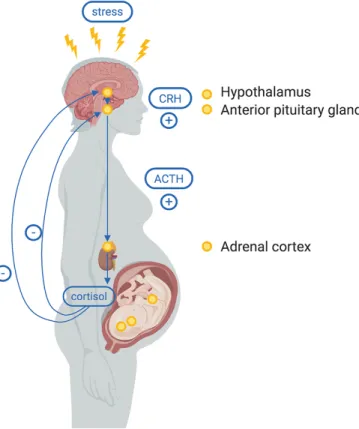
Biologically, stress stimulates the hypothalamus to release CRH, which binds to receptors in the anterior pituitary, releasing adrenocorticotropic hormone (ACTH). In turn, ACTH binds to receptors on the adrenal cortex, which stimulates the release of cortisol. Once a threshold of cortisol is reached, cortisol then downregulates the release of CRH from the hypothalamus, acting as a negative feedback loop (Figure 3.1). During pregnancy, the HPA axis takes on the additional role of regulating glucocorticoid feedback interactions among the mother, placenta, and fetus. As such, the activation of the HPA axis has been proposed to be the primary
Figure 3.1 The Hypothalamic Pituitary Adrenal Axis
maternal salivary cortisol in pregnant and postpartum women. These studies assess a variety of stressors, and provide mixed evidence as to whether chronic stress does indeed shape maternal salivary cortisol regulation.
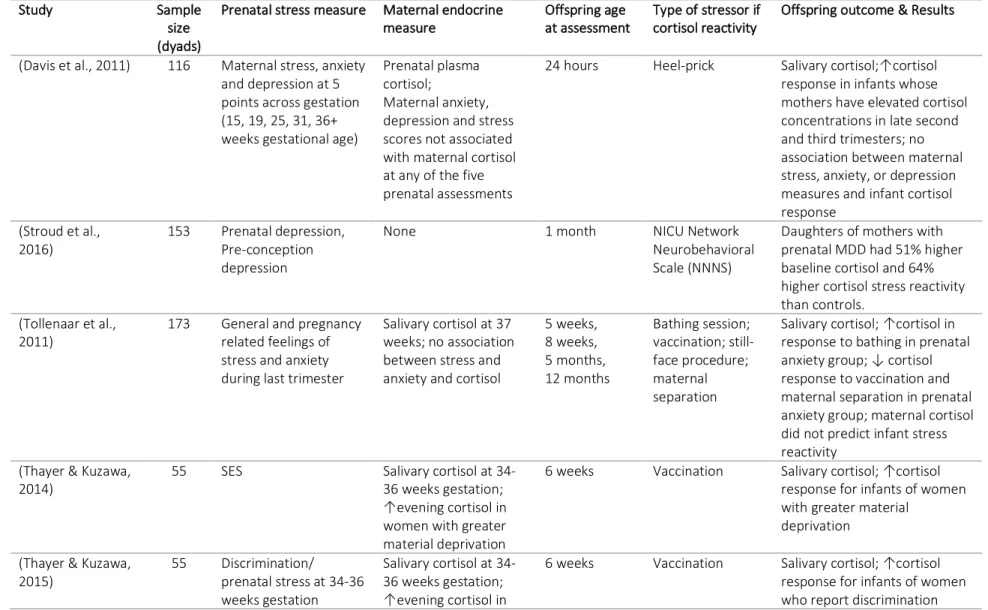
Nonetheless, studies have found that maternal prenatal stress has significant effects on offspring HPA axis functioning as early as infancy (Brennan et al., 2008; Davis et al., 2011; Diego et al., 2004; Grant et al., 2009; Thayer & Kuzawa, 2014; Tollenaar, Beijers, Jansen, Riksen-Walraven, & De Weerth, 2011) into childhood (Gutteling, De Weerth, & Buitelaar, 2004, 2005; O’Connor et al., 2005), and through adolescence (Huizink et al., 2008; O’Donnell et al., 2013). Table 3.2 provides a summary of studies investigating prenatal stress and offspring HPA-axis functioning through salivary cortisol in humans. These studies suggest that prenatal
psychosocial stress may lead to prolonged cacostasis through long-term HPA axis dysregulation in offspring, posing consequences on other systems that may persist throughout the life course. In fact, studies have found that early life changes in HPA axis regulation have long-term effects on growth, immune function, cognition, and cardiovascular and reproductive systems
(Nepomnaschy, Vitzthum, & Flinn, 2009; Nyberg et al., 2012).
However, results from studies on the associations between prenatal psychosocial stress and maternal cortisol, as well as their effects on offspring, are inconsistent, suggesting that other mechanisms may play a role in the relationship between prenatal stress and infant HPA axis development. The present study explores the role of the HPA axis alongside potential placental, postnatal, and microbiome pathways to explain the varied outcomes in the literature.
deficiency, cognitive impairments, inhibited growth, damage to the hippocampus, and psychological maladjustment (Flinn & England, 1997; Nyberg et al., 2012). Work on fetal programming continues to investigate HPA axis programming as the primary mechanism (O’Donnell et al., 2013; Thayer & Kuzawa, 2014, 2015), but recently, other mechanisms have been proposed to underlie the relationship between maternal stress and adverse outcomes in offspring, including the roles of placental HSD11B2, catecholamines and the sympathoadrenal system, the maternal immune system, maternal microbiome microbiota, maternal behaviors, and maternal postnatal stress (Beijers et al., 2014).
3.4 Placental Regulation with HSD11B2
Figure 3.2 Placental HSD11B2
The amount of HSD11B2 protein present in tissue is described as expression and is measured by messenger RNA (mRNA), which is regulated through epigenetic modifications. Epigenetic regulators respond to the environment in order to provide individual-level
(Jablonka & Lamb, 2014, p. 126). Typically, genes in more densely methylated regions are less likely to be transcribed (Jablonka & Lamb, 2014, p. 126), which has been found to be the case for HSD11B2 (Alikhani-Koopaei, Fouladkou, Frey, & Frey, 2004; Marsit, Maccani, Padbury, & Lester, 2012). This research project investigates how maternal distress during pregnancy
influences both the mRNA expression of placental HSD11B2 and the DNA methylation of its promoter region, thus assessing how epigenetic shifts in response to psychosocial exposures regulate the body’s ability to produce HSD11B2 and thus protect the fetus from high maternal cortisol.
Expression of HSD11B2 has been shown to vary significantly among individuals (Welberg, Seckl, & Holmes, 2000) and to be lower in women who develop pre-eclampsia, have IUGR and low birth weight babies, and deliver preterm (O’Donnell, O’Connor, & Glover, 2009; Zhao et al., 2014). Low placental HSD11B2 would predispose the fetus to higher levels of maternal cortisol, but its relationship to maternal stress and infant HPA axis regulation has not been explored extensively in humans.
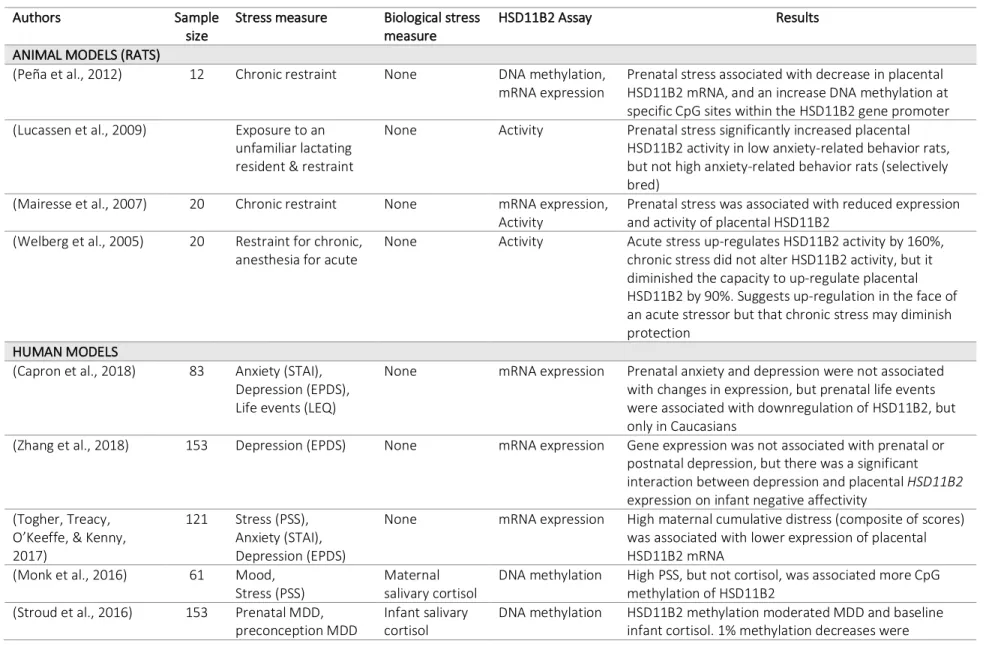
Table 3.3 provides a summary of the studies investigating prenatal maternal stress, measurements of HSD11B2, and infant HPA axis regulation, including both animal and human models.
In animal models, it appears that chronic stress and anxiety may diminish the protection of HSD11B2. One study found that acute stress up-regulated HSD11B2 activity, but chronic stress did not, and in fact, chronic stress hindered the ability of HSD11B2 to up-regulate in the face of an acute stressor (Welberg, Thrivikraman, & Plotsky, 2005). Another study found that prenatal stress increased the activity of HSD11B2 in low-anxiety rats, but not in high-anxiety rats (Lucassen et al., 2009). Other studies have found that higher prenatal stress is associated with an increase in methylation of the HSD11B2 gene promoter (Peña, Monk, & Champagne, 2012) and a decrease in the expression of HSD11B2 (Mairesse et al., 2007; Peña et al., 2012). These mechanisms suggest that chronic stress and anxiety decrease HSD11B2 expression and activity, and thus cannot protect against high cortisol transfer to the fetus.
Studies on these relationships in humans are limited and report mixed results. Like animal studies, many studies with humans have found that chronic maternal distress (including anxiety and/or depression) is associated with greater methylation of the HSD11B2 promoter region (Conradt, Lester, Appleton, Armstrong, & Marsit, 2013; Monk et al., 2016) as well as lower expression of HSD11B2 (O’Donnell et al., 2012; Seth, Lewis, Saffery, Lappas, & Galbally, 2015; Togher et al., 2014).
(Appleton et al., 2013). However, many studies report that anxiety (Capron, Ramchandani, & Glover, 2018) and depression (Capron et al., 2018; Conradt et al., 2013; Reynolds et al., 2015; Zhang et al., 2018) were not found to be associated with differences in HSD11B2 measures. Nonetheless, overall, the majority of results on this pathway suggest that maternal distress is associated with hypermethylation of the HSD11B2 CpG islands, causing transcriptional repression of the gene, ultimately downregulating HSD11B2 expression and leaving the infant more vulnerable to high levels of maternal cortisol, which could injure the fetal brain and HPA axis. Despite its central role as a gatekeeper for cortisol, the placenta remains an understudied component of this biological pathway. This research investigates the epigenetic regulation of HSD11B2 through both psychosocial and physiological stress pathways.
3.5 The Developmental Niche and Postnatal Environment
The early postpartum period can be a time of particular maternal stress, which may be detrimental to a mother's mental health and caregiving behaviors (Grajeda & Perez-Escamilla, 2002; Rudzik et al., 2014). In turn, poor maternal mental health and patterns of care during early childrearing have each been found to be associated with HPA axis dysregulation in offspring later in life (Essex, Klein, Cho, & Kalin, 2002; Gunnar & Donzella, 2002; Tollenaar, Beijers, Jansen, Riksen-Walraven, & De Weerth, 2012; Wright, 2007). Postnatal maternal stress may also influence the infant directly through cortisol transfer during breastfeeding; Glynn and colleagues found that among breastfed infants, high maternal cortisol levels were associated with increased fearful temperament (Glynn et al., 2007). Improved postnatal stress may also work in the other direction, according to Bergman and colleagues, who found that the relationship between
prenatal stress and infant health outcomes is moderated by mother-infant attachment, a marker of caregiving quality (Bergman, Sarkar, Glover, & O’Connor, 2010). These works suggest that postnatal environment is an important component of the mechanism through which the early HPA axis develops, and insufficient investigation of postnatal maternal stress may confound studies of prenatal stress and offspring development. By incorporating the role of postnatal stress into a study of prenatal stress and offspring HPA axis development, this research work adds a critical component to the literature on DOHaD that will elucidate the pathways through which early environment shapes development.
3.6 The Gut Microbiome
2015) and neurobehavioral disorders (Cryan & Dinan, 2012), suggesting it could be a candidate for involvement in this pathway. Recent research has also found that microbiota communicate bidirectionally with the central nervous system (CNS) (Mayer, 2011), along the gut-brain axis, and thus gut microbiota may also influence and be influenced by brain function and behavior (Cryan & Dinan, 2012; Rackers et al., 2018). In other work, microbial composition has been linked to psychological disorders including anxiety, stress, autism, and depression (Dinan & Cryan, 2017). Recently, the gut microbiome has attracted great interest in the DOHaD literature, but its relationship to stress in pregnancy and infant health remains largely under-studied.
Gut microbiota, including bacteria, viruses, fungi, and other microorganisms, make up the diverse microbial communities that colonize the human gut (Rakers et al., 2017). Most microbial species develop a symbiotic relationship with their host that promotes healthy
development, educates the immune system, supports the development of gut function, regulates intestinal barrier function, protects against infection, promotes food tolerance, and supports central nervous function and the neuroendocrine system including the HPA axis (Goulet, 2015; Rackers et al., 2018; Rakers et al., 2017). Generally, the healthy gut maintains a state of
3.7 Gut Microbiome Development
Though there is no consensus on an ideal healthy adult microbiome, the majority of microbiota in the adult gut is composed of two main phyla: Firmicutes and Bacteroidetes (Jandhyala et al., 2015; Tap et al., 2009). Other important phyla, including Actinobacteria, Proteobacteria, and Verrucomicrobia are not as well-represented, but nonetheless have important effects on health (Everard et al., 2011; Willing et al., 2010). In adults, the ratio of Firmicutes to Bacteroidetes remains a key measure of gut health and has been associated with a variety of metabolic disorders (DiBaise, Frank, & Mathur, 2012). Studies have also found that in adults, high microbial diversity has been associated with relatively more anti-inflammatory bacteria, while low microbial diversity has been associated with relatively more pro-inflammatory bacteria as well as higher adiposity and inflammation (Jandhyala et al., 2015).
The infant microbiome is distinct from that of healthy adults, and it is shaped by a variety of exposures, maturing over time until it eventually reaches an adult-like profile when a child is about three years old (Voreades, Kozil, & Weir, 2014). On the phylum level, the a newborn’s gut microbiome predominantly consists of Actinobacteria and Proteobacteria (Dinan & Cryan, 2017). In the first few days of life, the microbiome transitions to the development of anaerobic bacteria such as Bifidobacteria, Clostridia, Bacteroides, and sometimes Ruminococcus
(Matamoros et al., 2013). However, during early life, the infant gut microbiome is influenced by a variety of exposures including the prenatal environment, mode of delivery, antibiotic use, and infant feeding (Bäckhed et al., 2015; Goulet, 2015).
and meconium (Jiménez et al., 2008) have microbial DNA, suggesting that the infant may encounter bacterial exposures before birth (Walker, Clemente, Peter, & Loos, 2017). The prenatal environment, including maternal body composition, diet, and other factors, have been associated with changes in the gut microbiome. Studies have found that both maternal body mass index (BMI) and consumption of a high-fat diet during pregnancy shape the neonatal gut
microbiome and increase risk for obesity and metabolic diseases for the infant later in life
(Friedman, 2018). Maternal obesity has also been associated with an increase in Bifidobacterium species as well as higher levels of Staphylococcus and Enterobacteriaceae including E. coli in the maternal gut microbiome, though more studies are needed to determine if these changes are mirrored in the infant microbiome (Calatayud, Koren, & Collado, 2019). Further, women’s adverse childhood experiences have been associated with changes in their gut microbiome during pregnancy, such that women with more adverse experiences exhibit a differentially higher
abundance of Prevotella than women with fewer adverse experiences in childhood (Hantsoo et al., 2019). Proponents of the hypothesis that infants are not born sterile suggest that maternal microbiota could be transferred to a developing fetus through the bloodstream and placenta (Borre et al., 2014), enabling shifts in a woman’s microbiome to be passed to the fetus during pregnancy. While the question of newborn sterility remains open, perturbations in a woman’s microbiota during pregnancy may, nonetheless, be transferred to the infant during birth.
infants born by Caesarean are more often colonized by epithelial bacteria (Bäckhed et al., 2015; Dominguez-Bello et al., 2010). Infants born vaginally have been shown to have higher levels of Bacteroides species, which are associated with higher gut diversity and increased maturation (Stewart et al., 2018). Studies have also shown that infants born by Caesarean have elevated levels of Clostridium difficile, a species of gut microflora that has been associated with the development of asthma (Van Nimwegen et al., 2011). Notably, the microbiota of Caesarean-delivered newborns have a low abundance of Bifidobacteria (Biasucci et al., 2010), bacteria that has been associated with reduced risk for allergic disease (Björkstén, Sepp, Julge, Voor, & Mikelsaar, 2001; Kuitunen, Kukkonen, & Savilahti, 2012) and excessive weight gain (Dogra et al., 2015; Kalliomäki, Collado, Salminen, & Isolauri, 2008), and the infant’s microbiome may not be colonized by Bifidobacteria until a few months after birth (Biasucci, Benenati, Morelli, Bessi, & Boehm, 2008).
Antibiotic treatment, too, can disturb intestinal microflora with effects lasting years (Jakobsson et al., 2010; Jernberg, Löfmark, Edlund, & Jansson, 2007). Antenatal antibiotic treatment has been shown to lower colonization of Lactobacillus and Bifidobacteria in the human neonate gut (Fouhy et al., 2012). Further, infants born by Caesarean and are more likely to be treated with antibiotics around the time of birth than infants delivered vaginally, and thus antibiotics may be the root cause of some associations found between Caesarean section and changes in the microbiome.
found that there are distinct differences in infant gut microbiota based on feeding. Generally, breastfed infants have higher levels of Bifidobacterium species (Stewart et al., 2018) and have higher levels of probiotic taxa including L. johnsonii and L. gasseri, L. paracasei and L. casei, and B. longum (Bäckhed et al., 2015). Formula fed infants have higher levels of Clostridium difficile, Granulicatella adiacens, Citrobacter spp., Enterobacter cloacae, and Bilophila wadsworthia (Bäckhed et al., 2015). Further, the cessation of breastfeeding shifts the infant gut composition to a more adult-like state, with a higher abundance of the phylum Firmicutes (Stewart et al., 2018) as well as Bacteroides, Bilophila, Roseburia, Clostridium, and Anaerostipes (Bäckhed et al., 2015).
3.8 Stress and the Infant Microbiome
It has been known for some time that stress and consequent HPA axis activity can change the composition of gut microbiota throughout the life course and that stress early in life can pose long-term consequences on the composition of gut microbiota (Cryan & Dinan, 2012).
new field of study, some research has shown that prenatal stress, the maternal gut microbiome, and the infant gut microbiome are all connected.
Studies have found that maternal stress during pregnancy influences maternal vaginal microbiota in animal models (Jašarević, Howard, Misic, Beiting, & Bale, 2017; Jašarević, Howerton, Howard, & Bale, 2015). In humans, maternal stress has been found to increase the risk of both bacterial (Culhane et al., 2001; Nansel et al., 2006) and fungal (Ehrström, Kornfeld, Thuresson, & Rylander, 2005) vaginosis, which may alter vaginal microbiota, and women with more adverse childhood experiences have been shown to have a differential abundance of some taxa (Hantsoo et al., 2019). Table 3.4 summarizes studies that have investigated the effects of stress on the maternal vaginal or gut microbiome. Since maternal microbiota are transferred to infant during parturition, stress-related perturbations in the maternal microbiome may be transferred to the infant, which could have long-term consequences on health (Rakers et al., 2017).
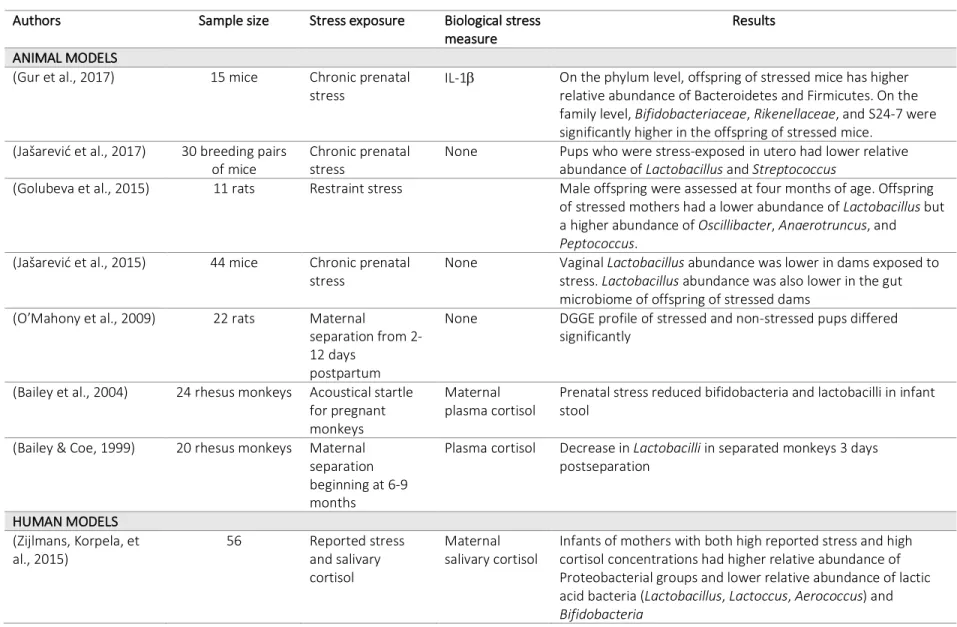
In fact, a few recent studies have found that maternal stress during pregnancy shapes the infant gut microbiome. Table 3.5 summarizes the studies that have examined perinatal stress and the development of the infant gut microbiome in animal and human models. In humans, one study found that high maternal stress, measured both by reported stress and by salivary cortisol, was strongly associated with infant microbiota composition at 16 weeks after birth (Zijlmans, Korpela, Riksen-Walraven, de Vos, & de Weerth, 2015). In this study, infants of stressed
the colonization pattern of infants of stressed mothers was associated with more reported infant gastrointestinal symptoms and allergic reactions (Zijlmans, Korpela, et al., 2015). Currently, this is the only study that has reported outcomes of prenatal maternal stress on infant gut microbiota in humans.
Though there are few studies that have examined this relationship in humans, similar results have been found in animal models (Walker et al., 2017), where offspring of monkeys stressed during pregnancy had significantly lower abundance of Bifidobacteria and Lactobacillus at 2 days post-birth (Bailey, Lubach, & Coe, 2004) and offspring of mice stressed during
pregnancy had a significantly lower abundance of Lactobacillus (Jašarević et al., 2015). In the latter study, the abundance of Lactobacillus in the infant gut was positively associated with maternal vaginal Lactobacillus.
3.9 Summary
In this biological model, the early development of the infant HPA axis could be influenced by stress and cortisol in mothers, placental HSD11B2 levels and the subsequent transfer of cortisol from mother to fetus, the postnatal environment, and microbiota. Studies addressing how these mechanisms function together are scarce. Further, many studies on maternal stress and offspring HPA axis development have relied on either maternal self-report and scales of stress or on physiological markers to measure maternal stress, but few have incorporated both measures (O’Connor et al., 2012). This research uses measures of both

![catena Poly[[[tetraaquanickel(II)] μ glycine κ2O:O′] dinitrate]](data:image/gif;base64,R0lGODlhAQABAIAAAP///wAAACH5BAEAAAAALAAAAAABAAEAAAICRAEAOw==)