of peer-reviewed research and commentary in the population sciences published by the Max Planck Institute for Demographic Research Doberaner Strasse 114 · D-18057 Rostock · GERMANY www.demographic-research.org
DEMOGRAPHIC RESEARCH
VOLUME 7, ARTICLE 11, PAGES 407-432
PUBLISHED 29 AUGUST 2002
www.demographic-research.org/Volumes/Vol7/11/
DOI: 10.4054/DemRes.2002.7.11
Research Article
Association of Divorce With
Socio-Demographic Covariates in China,
1955-1985:
Event History Analysis Based on Data Collected
in Shanghai, Hebei, and Shaanxi
Zeng Yi
T. Paul Schultz
Wang Deming
Gu Danan
1 Introduction 409
2 A Brief Review on Socio-Cultural Background of Divorce in China
410
3 Data and Model Specifications 411
4 Findings: The Estimates 415
5 Discussions 418
6 Concluding Remarks 423
7 Acknowledgements 424
Notes 425
Research Article
Association of Divorce With Socio-Demographic Covariates
in China, 1955-1985:
Event History Analysis Based on Data Collected in
Shanghai, Hebei, and Shaanxi
Zeng Yi1
T. Paul Schultz2
Wang Deming3
Gu Danan4
Abstract
Based on a unique data set on the event history of marriage and divorce collected in the In-Depth Fertility Surveys conducted in Shanghai, Shaanxi, and Hebei in 1985 and a multivariate hazards model, this paper investigates the association between divorce risk and demographic factors in China. Controlling for several other socio-demographic factors, we demonstrate that the risk of divorce for women who married before age 18 is twice as high as that of those married after age 20; the risk of divorce of arranged marriages is about 2.6 times as high as that of not-arranged ones. The number of children is highly and negatively correlated with risk of divorce; the traditional son preference does not seem having substantial effects on divorce among women who have one or two children; but the risk of divorce of women who have three or more daughters without a son was 2.2 times as high as that of those women who have three or more
1
Research Professor at Center for Demographic Studies and Department of Sociology of Duke
University, Professor at Institute of Population Research of Peking University, and Distinguished Research Scholar at Max Planck Institute for Demographic Research. Correspondence: CDS, Duke University, 2117 Campus Drive, Box 90408, Durham, NC, 27708, USA.
2
Professor at Economic Growth Center, Yale University.
3
Director of Computer and Media Services, Alma College.
3
1. Introduction
While divorce has long been culturally discouraged in China (Parish and Whyte 1978; Whyte and Parish 1984; Li 1985; Honig and Hershatter 1988; Bao 1990), the divorce level has been rapidly increasing since 1980 (Lan 1985; Liu 1987; Wang 1987; Yang 1987; Platte 1988). Based on the aggregate data at the population level, Zeng and Wu (2000) estimate and discuss the general divorce rates (Note 1) in China and in its 30 provinces since 1980. The general divorce rate in China increased from 2.01 per thousand married couples in 1982 to 2.86 in 1990: an increase of 42 percent in eight years. It continued to increase to 3.13 in 1995. A substantial increase in divorce was observed in almost all provinces. A fairly strong regional pattern of divorce in China was found: lowest divorce rates in the eastern coast and east areas, highest divorce rates in the northwest and northeast areas, and modest divorce rates in the middle and southern part of the country (Zeng and Wu 2000).
socio-demographic variables to be included in our model and the interpretations of our statistical findings. The third section describes the data and model specification. The other sections will present and discuss the findings.
2.
A Brief Review on Socio-Cultural Background of Divorce
in China
There exists a persistence of deeply-rooted tradition unfavorable to divorce in the Chinese culture. The Confucian ideology regards marriage as a matter of the families of the husband and wife rather than a private matter of the partners. It was stated in the section on marriage definition in the Book of Rites, one of the five Chinese classics on Confucian ethical codes, that marriage connects the two sexes for serving upwards the ancestral shrine and continuing downward the descent of the family line. Three additional purposes were added later to the marriage definition in the Confucian codes: caring for parents, increasing family labors and preventing incorrect sexual contacts (Yue, 1990: 227). Because marriage was to serve the ancestral shrine and to continue family line, parents may arrange their children’s marriage regardless of love between the partners; the marriage may be in trouble if after a sufficiently long period it cannot produce a son, which is the key to continuing the family line (Zeng, 1995: 1). The three additional purposes of the traditional Chinese marriage (caring for parents, increasing family labors and preventing incorrect sexual contacts) in the Confucian codes may result in early marriages in which the partners lack maturity and a solid emotional basis for the union.
persons might withdraw their divorce request at one of the stages of family consultation, work unit reporting, civil affairs department and local court hearing, either because they are really convinced that the union should survive or because they were worn down by the time-consuming process. Some couples might never submit their case for a divorce because they were afraid of being ostracized by their family, work unit and society.
While divorce has long been culturally discouraged in China, the number of divorces reached a peak of 1.17 million and the crude divorce rate was 1.99 per thousand in 1953, which was even much higher than the rate in 1990s. The extremely abnormal high divorce rate in 1953 was the result of wide publicity about the 1950 new marriage law, released after the establishment of the People’s Republic of China in 1949. The 1950 new marriage law outlawed bigamy, concubinage and child betrothal, which were therefore terminated as divorces. It promoted freedom of marriage, monogamy, and equal rights of men and women. The implementation of the new marriage law helped dismantle the feudal marriage system left over from the old society and consequently resulted in the dissolution of numerous unhappy marriages (Li, 1985: 18).
The movement to increase women's status after 1950 encouraged some young people to divorce if their unhappy marriages were arranged by their families (so called "feudal marriage"). Although it is difficulty to divorce under the Chinese cultural and social context as reviewed above, some women, especially those with higher education, were seeking divorce to challenge the unhappy marriage, the authority of husbands, and demand equality between men and women (Zhao et al. 1987: 163-164). Such trends were more prevalent in more developed provinces/cities than in the poorer areas/villages. The rapid socioeconomic development since the 1980s significantly changed people’s attitudes towards divorce and largely relaxed the restrictive legal and administrative procedures of divorce, although traditional Chinese values continued to exist (e.g. Zeng and Wu, 2000). The opening-door to the outside World also introduced the influences of Western ideology on marriage and divorce into China.
3. Data and Model Specifications
according to strata and cluster sampling framework, representing female population of reproductive ages in the provinces. The questionnaire covers six demographic topics: background, marriage history, birth and pregnancy history, contraceptive knowledge and history of contraceptive use, fertility preferences, and background of current or last spouse. In the first phase of the surveys, detailed marriage and divorce history data were collected; the questionnaire included current marital status; starting and end dates of first, second, third ... marriage(s); and individual’s socio-demographic characteristics. A consensus on the reasonably high quality of the data collected in the In-Depth Fertility Surveys had been reached among international and Chinese scholars who analyzed the data and presented papers in an international seminar devoted to these surveys (ISI, 1991; Department of Population Statistics, 1986).
The first phase of the In-Depth Fertility Surveys provided a valuable data set for a comprehensive study on the association of divorce with socio-demographic covariates (Note 3). We believe that the findings may roughly reveal the pattern in China in the period 1955-1985, since it includes one most developed area (Shanghai), one less developed area (Shaanxi), and one moderately developed area (Hebei). It is, however, important to note that the event history data used in this paper were collected in 1985 and there is no such detailed data available since then; the data analysis reported in this paper is within the Chinese cultural and social context between 1955 and 1985. Such analysis may serve as a basis for investigating the most recent trends under the new social environment after 1985 if new event history data on divorce become available in the future.
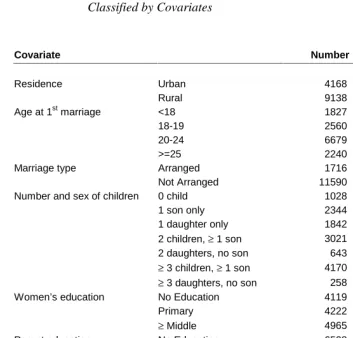
Table 1: Frequency Distribution of Ever-Married Women Interviewed in the Survey
Classified by Covariates
Covariate Number %
Residence Urban 4168 31.3
Rural 9138 68.7
Age at 1st marriage <18 1827 13.7
18-19 2560 19.2
20-24 6679 50.2
>=25 2240 16.8
Marriage type Arranged 1716 12.9
Not Arranged 11590 87.1
Number and sex of children 0 child 1028 7.7
1 son only 2344 17.7
1 daughter only 1842 13.8
2 children, ≥ 1 son 3021 22.7
2 daughters, no son 643 4.8
≥ 3 children, ≥ 1 son 4170 31.4
≥ 3 daughters, no son 258 1.9
Women’s education No Education 4119 31.0
Primary 4222 31.7
≥ Middle 4965 37.3
Parent education No Education 6508 52.4
Primary 4797 38.6
≥ Middle 1123 9.0
Women’s occupation Had no paid-job 6345 47.8
Agriculture 2232 16.8
Non-Agr. 4708 35.4
Province Shaanxi 4083 30.68
Shanghai 4143 31.14
Hebei 5080 38.18
The average age at divorce of women was 25.8 years old. The average marriage duration at divorce of women was 7.7 years (Note 4). The data on marriage duration and age specific rates of divorce among ever-married women demonstrates that the period of highest risk of divorce is less than 5 years after marriage; the peak divorce rate is at the marriage duration of 3 years. The married women aged 15-19 had the highest divorce rates in comparison with other age groups.
This paper adopts the multivariate hazards models of event history analysis methodology to study the association of each selected covariate and divorce while controlling for the effects of other covariates. Event history analysis is an extension of the cluster of methods connected with the life table, direct and indirect standardization, and increment-decrement techniques (Hoem 1993: 281). The mathematics of and discussions on the multivariate hazards models of event history analysis are available elsewhere (see especially, Hoem 1993; Menken et al. 1981; Teachman 1982; and Allison 1984 for a good exposition), and are not detailed here.
We have chosen seven time-fixed covariates, referring to individual socio-demographic characteristics: province, residence type (rural or urban), women’s education, occupation (Note 5), age at marriage, arranged or not arranged marriage, and parents’ education. We also included a time-varying composite covariate of number and sex composition of children surviving at each of the marriage duration. Duration of marriage is treated as a basic controlling variable that is time-varying in the multivariate hazards model. Age is also considered implicitly as another time-varying basic controlling variable because variables of age at marriage and time-varying duration of marriage are included in the model. Although the covariates included in our model do not constitute a complete list of explanatory variables of divorce, this is the best we can do given the currently available data (Note 6).
marriage, etc.), but the results are insignificant and do not make sense presumably because the number of events of divorce are too small when we include many combinations of covariates and their interactions in the model. We have not reported the results of these additional models since they do not contribute any additional and reliable insights to our study.
One might wish to estimate the hazards model for each of the three provinces separately. We did not do so because we think treating province codes as dummy variables in a model can parsimoniously control for the regional differences on divorce and reduce the problem of the small number of events given the very low divorce level in China. Similarly, we did not estimate the hazards models for different periods, again, because of the limitation of the sample size. We will mainly present and discuss the results of the first model listed in Table 2 in the subsequent analysis.
4. Findings: The Estimates
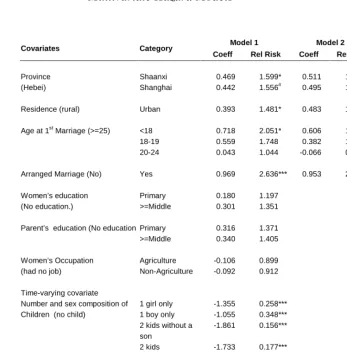
Table 2: Estimates of the Coefficients and the Relative Risks Based on the Multivariate Hazard Models
Model 1 Model 2 Model 3
Covariates Category
Coeff Rel Risk Coeff Rel Risk Coeff Rel Risk
Province Shaanxi 0.469 1.599* 0.511 1.666** 0.502 1.652**
(Hebei) Shanghai 0.442 1.556# 0.495 1.640* 0.505 1.657*
Residence (rural) Urban 0.393 1.481* 0.483 1.621** 0.477 1.611**
<18 0.718 2.051* 0.606 1.832#
0.555 1.743#
18-19 0.559 1.748 0.382 1.466 0.423 1.526
Age at 1st
Marriage (>=25)
20-24 0.043 1.044 -0.066 0.936 -0.018 0.982
Arranged Marriage (No) Yes 0.969 2.636*** 0.953 2.595*** 0.924 2.519***
Primary 0.180 1.197
Women’s education
(No education.) >=Middle 0.301 1.351
Primary 0.316 1.371
Parent’s education (No education
>=Middle 0.340 1.405
Agriculture -0.106 0.899
Women’s Occupation
(had no job) Non-Agriculture -0.092 0.912
Time-varying covariate
1 girl only -1.355 0.258*** -1.350 0.259***
1 boy only -1.055 0.348*** -1.039 0.354***
2 kids without a son
-1.861 0.156*** -1.870 0.154***
2 kids with 1+ son
-1.733 0.177*** -1.734 0.177***
3+ kids without a son
-1.715 0.180* -1.752 0.173*
Number and sex composition of Children (no child)
3+ kids with 1+ sons
-2.500 0.082*** -2.513 0.081***
Global Statistics
Log Likelihood -1750.5 -1791.3 -1754.2
Global Chi-Square 229.6 102.9 223.2
Degree of freedom 19 7 13
P-value 0.000 0.000 0.000
The hazards model estimates of model 1 listed in Table 2 show that controlling for the other covariates, women who married before age 18 had the highest divorce rate, while women who married at age 18-19 had the second highest divorce rate. More specifically, the risk of divorce of the marriages that occurred before age 18, at age 18-19, and at age 20-24 are about 2.1, 1.7 and 1.0 times as high as that of marriages that occurred at or after age 25.
The hazards model estimate (see Table 2) shows that the risk of divorce for arranged marriage is about 2.6 times as high as that of marriage that is not arranged by the family or relatives, controlling for the other factors. The estimate is highly significant.
Since the number of surviving children and sex composition of children at each marriage duration change over time, we must deal with this composite variable as a time-varying covariate, which is one of the major advantages of the multivariate hazards model as compared with traditional multiple regression. The estimates of model 1 in Table 2 show that, as compared with women who have no children, women with one son or one daughter have 35% or 26% of the risk of divorce; women who have two daughters or two children with at least one son have 16% or 18% risk of divorce; women who have 3+ daughters without a son or 3+ children with at least one son have 18% or 8% risk of divorce. Obviously, the number of children is negatively correlated with risk of divorce, and the estimates are highly significant. Of course, it is also possible that more stable marriages from the onset may encourage the couple to have children sooner and in greater numbers. Also, the civil and legal authorities may be less inclined to grant a divorce if the marriage has produced more children. Another point here is that marital difficulties may be associated with separation and a low frequency of intercourse well before divorce, thus resulting in a smaller number of children. The direction of causation between fertility and divorce is therefore not entirely clear, but the association is strongly evident in the data.
reported a more than twofold increased risk of divorce compared with the woman with three or more children with at least one son. This association might indicate that her husband and her husband’s family concluded that mother of at least three daughters without a son was not likely to be able to produce a son. Her increased risk of divorce might thus reflect the strength of her husband’s family preferences for a son. Such estimates are consistent with other related Chinese studies (e.g. Zhao, Lu and Guo, 1987: 169).
Controlling for the other factors, educated women had a higher risk of divorce than uneducated women; women who had educated parents tended to have a higher divorce risk than those whose parents were illiterate. But the estimates of women’s education and parents’ education on divorce are not statistically significant. It is not surprising, therefore, that we also found that the association of divorce and occupation, which is closely related to education in China, is not statistically significant in the hazards model analyses. We tried another model that includes women’s education plus province and rural/urban residence, but omits all other covariates that may be associated with education, such as parents’ education and women’s occupation. The results still show that association of divorce and women’s education is not statistically significant.
Controlling for factors such as rural-urban residence, age at first marriage, arranged marriage, number and sex composition of surviving children, divorce risk in Shaanxi was about 60 percent higher than that in Hebei, which has the lowest divorce level among the three regions in this study. Although Shaanxi province has a lower socio-economic development level than Shanghai, its relative risk of divorce (1.60) in the period 1955-1985 was slightly higher than Shanghai's (1.56).
5. Discussions
Chang and Chen (1992) found that early age at first marriage increased divorce risk in Shanghai. Marriages at very young ages are less stable even in the Chinese context where social custom strongly discourages divorce. The very young brides and bridegrooms might be less mature and are more likely to rush into marriage, which might be associated with an unstable union. The lower risk for women who married late might reflect their greater maturity, or the benefit of a longer search for an appropriate partner; alternatively, having not married early may indicate a belief that marriage should be permanent, and a preference not to marry in haste (Bracher et al., 1993: 413). Although we cannot establish the causal relationship between early marriage and divorce, it is clear that a negative relationship between age at marriage and divorce risk exists in China.
We found that arranged marriages had a much higher risk of divorce than the not-arranged marriages. We believe that in the Chinese social context, not-arranged marriage may more likely lack the emotional base of love between the partners. The Chinese parents who arranged their children’s marriages most likely made their decision based on the social, economic, and political conditions of both families rather than on love. The old Chinese saying “Men Dang Hu Dui” (marriage must be based on a comparable gate of the house, i.e. appropriate socio-economic status) reflects this social phenomenon. Richer or politically more powerful families, especially those in rural and poor areas, are in a much better position in marriage negotiations. Poor parents may likely force their daughter to marry a richer man whom the girl does not love. Our empirical study supports the hypothesis that arranged marriages have a higher risk of divorce. The opposite hypothesis – that arranged marriages would be more stable because of the intensive investment of parents and extended kin in the marriage (Xu and Whyte 1990: 710) -- has been rejected by our data. Similar to findings by Blood and Wolfe (1960) and by Xu and Whyte (1990), our study does not support the prediction by defenders of arranged marriages that “love matches start out hot but grow cold, while arranged marriages start out cold but grow hot”.
Among 13,306 surveyed ever-married women, 1,716 women, 12.9 percent of the sample, reported that their marriages were arranged. This indicates that arranged marriage is still not a negligible phenomenon in contemporary China, especially in the rural areas, but is less frequent in younger birth cohorts of women (SSB 1986). Society may benefit from the decrease in arranged marriages and might want to promote this trend in order to increase the likelihood that people have an enduring and presumably happier family life.
"Have you considered the future of your children?" by their family, friends, work unit leaders, and governmental officers. Although the causal relationship between fertility and divorce is not entirely clear, and further research is needed, this study has confirmed the negative association between the number of children and the risk of divorce. This association has also been found in other divorce studies in China. For example, a study of 1,000 cases of divorce by Zhao, Lu and Guo (1987: 169) found that in their sample, 50.3 percent of the divorcees are childless women, 27.1, 14.2 and 8.4 percent have one child, two children, and three or more children, respectively. The negative association between parity and divorce risk has also been found in studies in other countries (e.g. Andersson, 1997; Lutz, 1993; Belacek, 1991; Canabal, 1990; Fergusson, Horwood, and Lloyd, 1990).
Son-preference has been a social phenomenon in Chinese societies for thousands of years. A son is not only important as a worker in the household, but he is also necessary to continue the family line. Although the government has tried to promote the status of daughters in families, and some young urban couples have begun to moderate their preference for sons, progress has been slow in reducing son-preference among most Chinese couples, especially those in rural areas. Morgan, Lye, and Condran (1988) found that sons reduce the risk of marital disruption by 9% more than daughters do, based on the 1980 Current Population Survey of the United States. Their explanation of this phenomenon in the United States, in which there is no or much less son-preference, is that fathers have a greater role in raising sons than daughters and have a consequently differential involvement in the family. This, however, may be only one of the reasons for the lower divorce rates associated with Chinese women who have three or more children and at least one son, as compared to those who had three or more daughters. Sons not only result in the father’s greater involvement in the family; more importantly, sons satisfy his desire to continue his family line. If a couple did not produce a son until the third or higher order birth, the wife was likely looked down upon by her husband and her husband’s family members; her husband would likely use their inability to produce a son as the main reason to divorce her.
sexual division of labor is greater in rural households than it is in urban households; if a couple’s complementary roles tend to increase the gains from marriage, then rural marriage should be more stable (Sander, 1985: 519-523; Bracher et al., 1993: 418; Balakrishnan et al., 1987). Rural women undoubtedly have more difficulty finding alternative work, housing, or a new partner than urban women do, which may present a greater barrier to the dissolution of rural marriages (Bracher et al., 1993: 418; Levinger, 1979). Women in urban areas are economically more independent than women in rural areas, and thus are more willing to ask for a divorce if their marriage is unhappy.
It is generally believed that the higher the socio-economic status, the higher the divorce rates, mainly because in advanced social strata, women are more economically independent and the social attitudes concerning divorce are more liberal. The evidences of higher divorce rates in the industrialized countries than those in the less developed countries may support this hypothesis. It is, however, also noted that socio-economic status and romantic marriage (as opposed to arranged marriage) are positively related. Using Ordinary Least Squares regression without interaction terms, Smith (1981) found that education is positively correlated with marriage stability in Sri Lanka and Thailand. Hoem (1997) showed that the increased risk of a first marriage breaking down was concentrated in women with lower educational attainment in Sweden. The investigation by Blossfeld et al. (1995), however, indicated that the risk of marital disruption increases when a woman's educational attainment improves in Sweden, western Germany, and Italy. But Menken et al. (1981) and Balakrishnan et al. (1987) found that in the U.S. and Canada, education was not statistically significant in their Cox proportional hazards model analysis of divorce. It may be reasonable to assume that women with more education will be more inclined to end an unhappy marriage in the Chinese context. On the other hand, more educated women are more likely to have a romantic marriage and are less likely to be exposed to other high risk factors, such as very early and arranged marriages. These factors operate in opposite directions and may offset each other. The univariate analysis without controlling for other risk factors such as early or arranged marriage indicated that the general divorce rate of women with no education was 11.2% and 60.0% higher than that of woman with primary schooling and women with middle schooling or higher education, respectively. A positive but insignificant association between education and divorce was found, however, in our multivariate hazards model analysis, controlling for the other risk factors such as early or arranged marriage. The relationship between education and divorce in China deserves further investigation in the future when new data become available.
almost equal to that in Shanghai. This phenomenon cannot be explained directly by a hypothesized positive relationship between socio-economic development and the divorce rate. A few remarks may be useful to understand this phenomenon. First, as discussed earlier, the risk of divorce for arranged marriages is about 2.6 times as high as that of non-arranged (romantic) marriages. Women who married before age 20 have a risk of divorce that is 1.7-2.1 times as high as that of women who married at or after age 25. About 25 percent of all Shaanxi marriages recorded in the survey were arranged, but only 6 percent in Shanghai were arranged. Among the two groups of women aged 20-24 and 45-49 in Shaanxi in the survey time of 1985, 34.5 and 87.3 percent were married before age 20, respectively; the corresponding figures of the comparative cohorts in Shanghai were 6.8 and 52.6 percent, respectively. Obviously, there were many more early and arranged marriages in Shaanxi than there were in Shanghai; these structural differences in marriage certainly contribute to the higher general divorce rate in Shaanxi before 1985. The hazards model estimates that control for the other selected factors, including age at marriage and arranged marriage, however, show that Shaanxi’s divorce level did not differ from that in Shanghai. This suggests the advantage of multivariate statistical models as compared to univariate tabulations of demographic rates, which may not reveal the underlying patterns accounted for by a variety of socioeconomic covariates simultaneously. Another possible cause, which could not be measured in the survey but might be helpful for understanding the higher general divorce rate before 1985 that was observed in Shaanxi as compared to Shanghai, was political. In the second half of the 1960s and the first half of the 1970s, a large number of high school graduates from large cities, such as Beijing, were sent to Shaanxi for "Re-Education by the Peasants and Workers" under Mao Zhedong's regime. Some of them married in the local areas. At the beginning of the 1980s, when the era of Mao ended, almost all of them were allowed to return to the large cities from which they originally came. Some of them divorced their rural spouse because of the large differences in education and occupation. Tight restrictions on city residence permits contributed to this case to greater risks of divorce because, although these better-educated exiles were allowed to return to their native city, their rural spouses were not allowed to migrate with them.
development. Jones’ study and our findings of changes in differentials of divorce rates between Shaanxi, Shanxi, and Shanghai in the early 1980s and early 1990s may confirm the observation by Goode and Jones (Jones 1997: 97; Goode 1993: Chapter 8). More specifically, in societies with a relatively higher divorce rate and a low level of socio-economic development, “industrialization” can be expected to lead to a decline or slower increase in divorce rates (such as what happened in Shanxi and Shaanxi). This is because the high risk factors of divorce such as early marriage, arranged marriage, and local cultural tradition in societies with a relatively higher divorce rate and a low level of socio-economic development, may be mitigated during the process of modernization (Jones 1997). In other regions where divorce rates were extremely low before modernization, “industrialization” can be expected to lead to a quicker increase in divorce rates, such as happened in Shanghai and most other provinces of China in the 1990s (see Zeng and Wu 2000, for a more detailed discussion).
6. Concluding Remarks
This study demonstrates that the risk of divorce for women who married before age 18 is significantly higher than that of those who married after age 20, controlling for several other socio-demographic factors. Arranged marriage has a risk of divorce that is about 2.6 times as high as that of non-arranged ones. Estimates of the effects of a time-varying composite covariate of parity and sex of children in the multivariate model show that number of children is highly and negatively correlated with risk of divorce; the traditional son preference does not have significant effects on divorce among women who have one or two children; but the risk of divorce of women who have three or more daughters without a son was more than twice as high as that of those women who have three or more children with at least one son. The divorce level in urban areas is higher than that in rural areas. The greater proportion of arranged and early marriages plus some other special factors in a relatively less developed region (Shaanxi) contributes to its higher general divorce rate (without controlling for other factors) before 1985, in comparison with the advanced region (Shanghai). The divorce level in Shanghai after 1985 has become higher than that in Shaanxi. Education level seems positively related to the risk of divorce; the estimates of the association of education and occupation with divorce are not statistically significant, however, and the causal interpretation would not be straightforward.
associations might not have changed dramatically, although the quantitative effects might be changed. It is, however, important to organize new national surveys about marriage history to have a more up-to-date understanding of divorce including the influences of rapid economic development in the later periods.
7. Acknowledgements
Notes
1. The general divorce rate is defined as the number of divorces occurred in one year divided by the mid-year total number of married couples.
2. The term “divorce” in this paper refers to formal divorce. We cannot include separation because there was no legal separation procedure before the 1990s in China and no separation information was collected in the In-Depth Fertility Surveys.
3. The second phase of the In-Depth Fertility Surveys was conducted in April, 1987 in Beijing municipality and in Liaoning, Shangdong, Guangdong, Guizhou, and Gansu provinces, covering a total population of 236 million (SSB 1988). The second phase of the In-Depth Fertility Surveys, however, addressed a question about the date of marriage dissolution only to the currently divorced and widowed women, not to currently remarried women. This unfortunate change in the second phase questionnaire makes it impossible to use the second phase data for this study. Therefore, the estimates reported in this paper are based on only the first phase of the Surveys.
4. According to a recent study based on vital statistics and census data up to the early 1990s, there were relatively more middle-aged Chinese couples who divorced in the early 1990s than those who divorced in early 1980s. The average age at divorce of females and males had increased by 6.4 and 4.1 percent in early 1990 as compared with the early 1980s, respectively (Zeng and Wu, 2000).
to using education attainment measured at the time of the survey are unimportant in this study.
6. Some other variables such as husbands’ education, husbands’ occupation, age difference between husband and wife, and whether the couple lives with parents may be considered as factors associated with divorce behavior in the Chinese context. The In-Depth Fertility Surveys, however, collected only the information of the interviewed women’s current husband if they were married, or of the last husband if they were unmarried. In our sample, 81.8 percent of the ever-divorced women were remarried at the time of the survey. Because of the high remarriage rate in China (Zeng and Wang 1993) and because information about a current husband does not provide the information that is needed on the ex-husband to explain the women's likelihood of divorce, we are unable to include the husband’s characteristics in our model. Variables such as religion and premarital birth were also considered as important covariates to understand divorce behavior in other populations (see, for example, Menken et. al. 1981; Balakrishnan et. al. 1987). We did not include these variables in this study because religion is not a distinctive feature among most people in China and, therefore, no religion question was asked in the In-Depth Fertility Surveys. There are very few premarital births in China, especially before 1985, when the survey was conducted. Thus, this variable is not included as a factor influencing divorce. The income data collected in the In-Depth Fertility Surveys refer to the household income at the time of the survey, which is not linked to the divorces of the remarried women, who consist of 81.9 percent of the women ever divorced in the sample. Therefore, we are unable to include income variables in our hazards models.
7. The relative risk is calculated as an exponential of the coefficient (see, for example, Menken et al. 1981; Teachman 1982; Allison 1984).
8. The #, *, **, *** accompanied with the relative risk means the estimate is statistically significant at a level of p<0.10, p<0.05, p<0.01, and p<0.001, respectively. An estimate of the relative risk without superscript means not statistically significant.
References
Allison, P.D. 1984. Event History Analysis, Beverly Hills, CA: SAGE Pub. Inc.
Andersson G. 1997. “The impact of children on divorce risks of Swedish women.”
European Journal of Population; 13(2): 109-45.
Balakrishnan, T.R., K. Vaninadha Rao, E. Lapierre-Adamcyk, and K. J. Krotki. 1987. "A hazards model analysis of covariates of marriage dissolution in Canada".
Demography, 24 (3): 395-406.
Bao, Yu. 1990. “Divorce: a skewed social phenomenon”. Society, December, 1990. (in Chinese).
Barclay, G. W. 1954. Colonial Development and Population in Taiwan, New York: Kennikat Press.
Belacek J. 1991. “Looking for explanatory divorce factors (regional application of dispersion analysis).” [Hledani vysvetlujicich faktoru rozvodovosti (regionalni aplikace analyzy rozptylu).] Demografie; 33(4): 309-16. 1991
Blood, Robert O., Jr., and Donald M. Wolfe. 1960. Husbands and Wives: The
Dynamics of Married Living. New York: Free Press.
Blossfeld, Hans-Peter, Alessandra de Rose, Jan M. Hoem, and Götz Rohwer. 1995. “Education, modernization, and the risk of marriage disruption in Sweden, West Germany, and Italy.” In: Karen O. Mason and An-Magritt Jensen (eds.) Gender
and Family Change in Industrialized Countries. Oxford: Clarendon Press.
Bracher M; Santow G; Morgan SP; Trussell J. 1993. “Marriage dissolution in Australia: models and explanations.” Population Studies; 47(3): 403-25.
Canabal M. E. 1990. “An economic approach to marital dissolution in Puerto Rico.”
Journal of Marriage and the Family; 52(2): 515-30.
Department of Population Statistics, State Statistical Bureau of China. 1986. “Preliminary findings of China's detailed fertility survey (the first phase).”
Population Research (Renkou Yianjou; 3(4): 29-43 (in Chinese).
Fergusson DM; Horwood LJ; Lloyd M. 1990. “The effect of preschool children on family stability.” Journal of Marriage and the Family; 52(2): 531-8.
Goode, William J. 1993. World Changes in Divorce Pattern. New Haven: Yale University Press.
Hoem, Jan M. 1997. “Educational gradients in divorce risks in Sweden in recent decades”. Population Studies, Vol. 51 (1): 19-27
Hoem, Jan M. 1996. “The harmfulness or harmlessness of using an anticipatory regressor: how dangerous is it to use education achieved as of 1990 in the analysis of divorce risks in earlier years? In: Yearbook of Population Research in
Finland, Vol. 33, 1996. 34-43 pp. Helsinki, Finland.
Hoem, Jan M. 1993. “Classical demographic methods of analysis and modern event-history techniques”. International Union for Scientific Studies of Population
22th General Conference Volumes, No. 3, Liege: IUSSP, pp. 281-291.
Honig, E. and G. Hershatter. 1988. Personal Voices: Chinese Women in the 1980s. Stanford: Stanford University Press.
International Statistical Institute (ISI). 1991. Fertility in China. The Hague: ISI.
Johansson, Sten and Ola Nygren. 1991. The missing girls of China: A new demographic account, Population and Development Review, Vol. 17, No. 1: 35-51.
Jones, Gavin W. 1997. “Modernization and Divorce: Contrasting Trends in Islamic Southeast Asia and the West,” Population and Development Review 23: 95-114.
Lan, Chenrong. 1985. “How to look at the social phenomenon of increase in divorce rates”. Society and Population (Shehui Yu Renkou), No. 3, 1985, (In Chinese).
Levinger G; Moles O. C. 1979. Divorce and separation: context, causes, and
consequences. Basic Books, New York, N.Y., 363 p.
Liao, Cailian and TIM B. Heaton. 1992. “Divorce trends and differentials in China.”
Journal of Comparative Family Studies. 23 (3): 413-429.
Li N. 1985. "How does China deal with divorce?" Beijing Review No.5, February 4: 18-21.
Liu, Yinje. 1987. “A sociological analysis on increase in divorce rates”. Society and
Population (Shehui Yu Renkou), No. 3, 1987 (in Chinese).
Menken, J., J. Trussell, D. Stempel and O. Babakol. 1981. "Proportional hazards life table analysis of socio-demographic influences on marriage dissolution in the United States." Demography 18 (2): 181-200.
Morgan, S.P., D.N. Lye and G.A. Condran. 1988. “Sons, daughters, and the risk of marital disruption”. Journal of American Statistics 94 (1): 110-29.
Murphy M.J. 1985. “Demographic and socio-economic influences on recent British marital breakdown patterns.” Population Studies; 39(3): 441-60.
Parish, W. L. and M. K. Whyte. 1978. Village and Family in Contemporary China. Chicago: The University of Chicago Press.
Parvathy K. A. 1998. “Divorce -- causes and effects.” In: Women in development:
perspectives from selected states of India, Vol. 2, edited by P.R. Reddy,
P. Sumangala.; Delhi: B.R. Publishing Corporation, pp. 825-37.
Platte, E. 1988. "Divorce trends and patterns in China: past and present". Pacific Affairs June issue: 428-445.
Sander W. 1985. “Women, work, and divorce”. American Economic Review, 75: 519-523.
Smith, D. P. 1981. "Illustrative Analysis: Marriage dissolution and remarriage in Sri Lanka and Thailand", WFS (World Fertility Surveys) Scientific Report No. 7, Voorburg, Netherlands: International Statistical Institute.
SSB (State Statistical Bureau).1986. Preliminary Report on the First Phase of In-Depth
Fertility Surveys in China. Beijing: SSB.
. 1988. Preliminary Report on the Second Phase of In-Depth Fertility Surveys in
China. Beijing: SSB.
Teachman, J. 1982. "Methodological issues in the analysis of family formation and dissolution", Journal of Marriage and the Family 44: 1037-1053.
Wang, Jichuan, Juisahn Chang and Jiajian Chen. 1992. “Differentials in marriage dissolution among women in Shanghai, P.R. China”. Unpublished manuscript.
Wang, Lijuan. 1987. “Divorce due to the ‘third party’ ", Society and Population (Shehui
Yu Renkou) No. 2. 1987. (In Chinese).
Yang, Dawen. 1987. “Defend the Right to Divorce, Guard against Hasty Separations”. In: New Trends in Chinese Marriage and the Family, published by Women of
China, and distributed by China International Book Trading Corporation,
Beijing.
Xu, Xiaohe and Martin King Whyte. 1990. “Love matches and arranged marriages: a Chinese replication”. Journal of Marriage and the Family. 52 (August): 709-722.
Yue Qinping 1990. Family and Nation in China. Changchun: Jilin Literature and History Publishing House.
Zeng, Yi, Tu Ping, Gu Baochang, Xu Yi, Li Bohua, and Li Yongping. 1993. Causes and implications of the recent increase in the reported sex ratio at birth in China.
Population and Development Review 18, No. 2:283-302.
Zeng Yi. (ed.) 1995. Divorce in 1980s in China. Beijing: Peking University Press.
Zeng Yi, T. Paul Schultz, and Wang Deming. 2000. Association of Divorce With Socio Demographic Covariates in China - Analysis Based on Data Collected in Shanghai, Hebei, and Shannxi. Duke University Center for Demographic Studies (CDS) Working Paper Z1, can be downloaded from CDS Website.
Zeng, Yi, and Wang Deming. 1993. “An event history analysis of remarriage in China”. Selected paper for publication in the IUSSP (International Union for Scientific
Studies of Population) 22th General Conference proceedings, Montreal, Canada.
August 23-Sept. 1, 1993. Liege: IUSSP.
Zeng, Yi and J. Vaupel. 1989. "Impact of urbanization and delayed childbearing on population growth and aging in China". Population and Development Review 15: 425-445.
Zeng Yi and Wu Deqing. 2000. “A Regional Analysis of Divorce in China Since 1980.”
Demography, 37 (2): 215-219.
Zhao, Zixiang, Lu Xinlian and Guo Zhahua. 1987. “The causes of divorce -- An analysis of 1000 divorce cases in Shenyang”. In: The New Trend in Chinese Marriage