14
Developing
Pricing Strategies
and Programs
Synonyms for Price
Rent
Tuition
Fee
Fare
Rate
Toll
Premium
Honorarium
Special assessment
Bribe
Dues
Salary
Commission
Wage
Tax
Common Pricing Mistakes
Determine costs and take traditional industry
margins
Failure to revise price to capitalize on market
changes
Setting price independently of the rest of the
marketing mix
Failure to vary price by product item, market
Copyright © 2011 Pearson Education, Inc. Publishing as Prentice Hall 14-4
Consumer Psychology
and Pricing
Reference prices
Price-quality inferences
Price endings
Table 14.1 Possible Consumer
Reference Prices
“Fair price”
Typical price
Last price paid
Upper-bound price
Lower-bound price
Competitor prices
Expected future price
Usual discounted
Tiers in Pricing
Steps in Setting Price
Select the price objective
Determine demand
Estimate costs
Analyze competitor price mix
Select pricing method
Copyright © 2009 Pearson Education, Inc. Publishing as Prentice Hall 14-8
Step 1: Selecting the Pricing Objective
Survival
Maximum current
profit
Maximum market
share
Maximum market
skimming
Product-quality
Step 2: Determining Demand
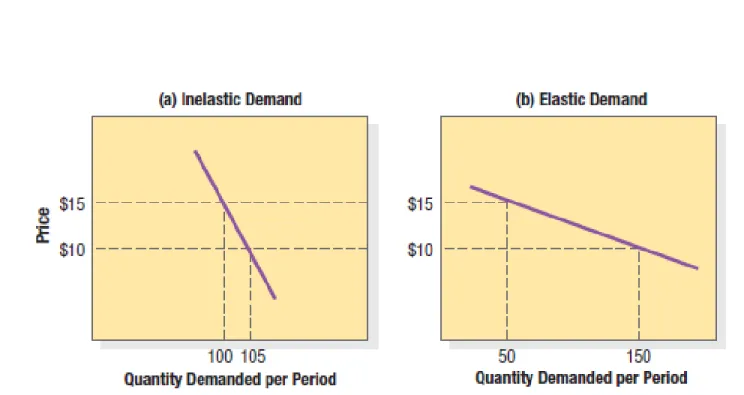
Price Sensitivity
Estimating
Demand Curves
Figure 14.1 Inelastic and
Elastic Demand
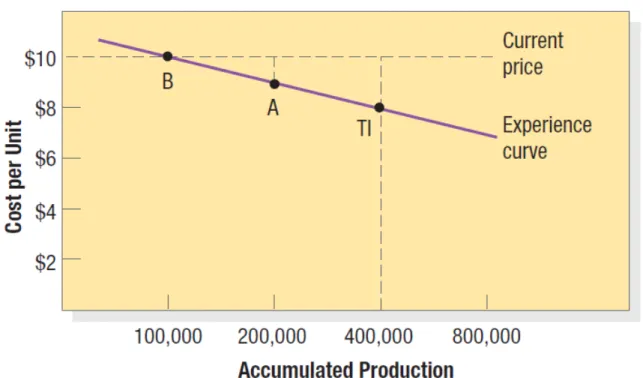
Figure 14.3 Cost per Unit as a
Function of Accumulated
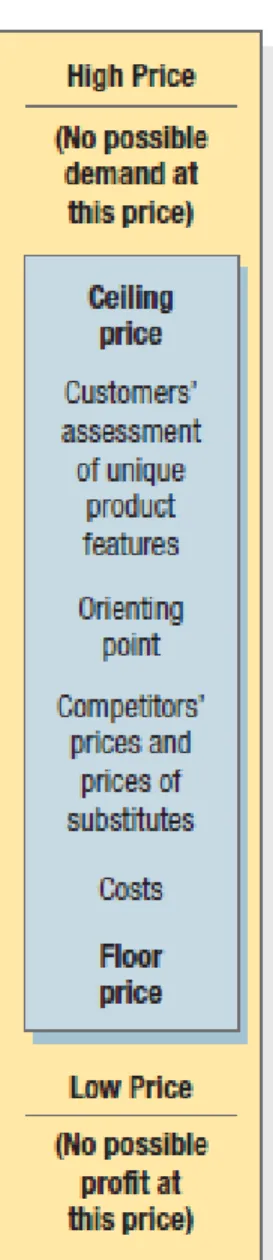
Figure 14.4 The Three Cs Model
for Price-Setting
Step 5: Selecting a Pricing Method
Markup pricing
Target-return pricing
Perceived-value pricing
Value pricing
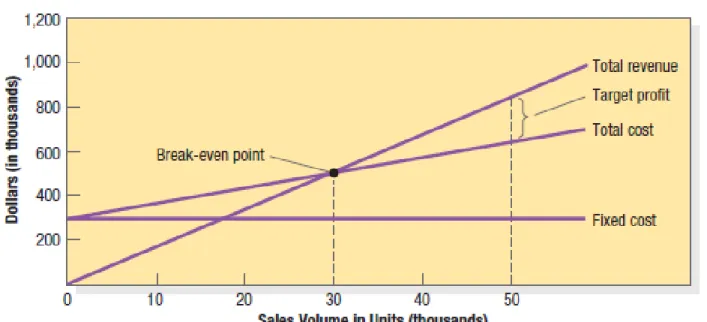
Figure 14.5 Break-Even Chart for
Determining Target-Return Price
and Break-Even Volume
Geographical Pricing
Price Discounts and Allowances
Discount
Quantity discount
Functional discount
Seasonal discount
Allowance
Promotional Pricing Tactics
Loss-leader pricing
Special-event pricing
Cash rebates
Low-interest financing
Longer payment terms
Warranties and service
contracts
Psychological
Copyright © 2011 Pearson Education, Inc. Publishing as Prentice Hall 14-18