Based Patient Decision Aid to Promote Colorectal
Cancer Screening for Primary Care Practice
Jane Kim, MD
A Master's Paper submitted to the faculty of the University of North Carolina at Chapel Hill in partial fulfillment of the requirements lor the degree of Master of Public Health in the Public Health Leadership Program.
Development and Initial Testing of a
Computer-Based Patient Decision Aid to
Promote Colorectal Cancer Screening for
Primary Care Practice
Jane Kim, MD
A Master's Paper submitted to the faculty of the University of North Carolina at Chapel Hill in partial fulfillment of the requirements for the degree of Master of Public Health in the
Public Health Leadership Program.
Chapel Hill
2004
Advisor
Second Reader
3
t
~Abstract
Background: Colorectal cancer (CRC) is the second leading
cause of cancer death in the United States and the third most commonly diagnosed cancer in men and women. Despite
published guidelines advocating screening for average-risk adults 50 years and older, rates of screening remain low.
Purpose: To investigate whether a patient-directed, computer-based decision aid about colorectal cancer screening can increase patient interest in screening and raise screening rates.
Study Design: Before-after uncontrolled trial.
Setting: The University ofNorth Carolina (UN C)-Chapel Hill
general internal medicine clinic.
Population: A convenience sample of 80 patients 50-75 years
old at average risk for CRC who were seen for a new or return appointment.
Methods: Patients viewed the decision aid in which all patients viewed a 3-5 minute introduction to CRC screening. They were then given a choice to view one to four 3-5 minute segments describing individual screening tests or comparative information about the tests. Subjects completed before- and
patient charts 3-6 months afterwards to assess screening test
ordering and completion.
4
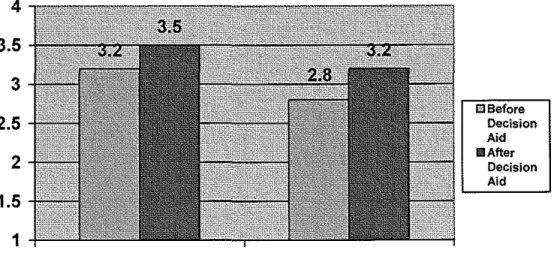
Results: At baseline, the mean intent to ask providers for
screening was 2.8 as measured on a 4-point Likert scale (1 =not at
all likely to ask, 4=very likely to ask). After viewing the decision
aid, mean intent increased to 3.2 (p<O.OOOl, paired t-test).
Interest in being screened, also measured on a 4-point Likert
scale (1 =not at all interested, 4=very interested), increased from
3.2 to 3.5 (p=O.Ol, paired t-test). 89% said the information
increased their knowledge about colon cancer. After viewing the
decision aid, 60% were ready to be screened, 18% wanted more
information but were considering screening, and 22% were not
ready for testing. Three to six months after viewing the decision
aid, 46% of participants had a colorectal cancer screening test
ordered and 39% of patients had completed tests. Among
patients who were ready to be screened, 51% had tests ordered
and 43% had completed screening tests.
Conclusions: In this pilot study, a computer-based colorectal
cancer decision aid improved patients' interest in being screened
and subjectively improved patient knowledge about CRC. Only
approximately half of patients who were ready for screening had
6
I. Burden of Suffering
Colorectal cancer (CRC) is the second leading cause of cancer
death and third most diagnosed cancer in the United States. In
2004, an estimated 152,000 new cases and 57,000 deaths will
occur due to CRC, accounting for approximately 10% of all new
cancer cases and deaths nationwide.1• 2 CRC has a high survival
rate when detected at an early stage but when diagnosed in
advanced stages, survival is poor. Individuals diagnosed with
localized disease have a five-year survival rate of 90%, but those
with distant disease have a five-year survival rate of only 9%.1' 2
Both CRC incidence and death rates have declined in the past 30
years. Incidence rates for colorectal cancer began to decline in
the mid-1980s and stabilized starting in 1995; death rates began
to decline in the 1970s and continue to decline among men and
women? Possible reasons for these declines in incidence and
mortality include an increase in early detection as a result of
screening as well as improvements in treatments such as adjunct
chemotherapy.
Although incidence and mortality rates declined overall
during the past twenty years, there are important differences by
sex and race. Death rates from CRC remain approximately 40%
higher in men compared to women.4 In addition,
incidence and death rates compared to other races. From
1996-2000, the colorectal cancer death rate for black men was
34.6/100,000 and for white men, 25.3/100,000, with a similar
absolute difference seen between black and white women.1
Although overall death rates from CRC declined over the past
decade at 2.2% per year for white men and 1.8% for white
women, the declines were 50% less for blacks.4• 5 In addition,
more African-Americans are diagnosed at an advanced stage6
and have lower five-year survival rates at every stage of
t
l
diagnosis1 compared with whites. There are no conclusive
explanations for these racial disparities but possible reasons
include poor access to care resulting in delayed diagnoses, lower
rates of screening, 7 inadequate staging and treatment of disease,
or a higher burden of co morbid diseases among
African-Americans leading to poorer outcomes.
II. Colorectal Cancer Screening: Evidence and Guidelines
There is good evidence that screening for colorectal
cancer using fecal occult blood testing (FOBT) leads to
reductions in colorectal cancer incidence and mortality. Mandel
et al. conducted a trial of 46,551 patients randomized to annual
FOBT, biennial FOBT, or controls.8 After a follow-up period of
8
rate in the annual FOBT group (5.88/1 000) compared to controls (8.83/1 000); this difference was statistically significant.
Additional data collected after 18 years of follow-up showed a persistent 33% mortality rate reduction in the annually screened group compared with controls. There was also a statistically significant 21% lower mortality rate in the biennial FOBT group compared to controls.9 Other large randomized controlled trials from Demnark10 and the United Kingdom11 found significant 18% and 15% reductions in mortality, respectively, with biennial FOBT screening. Along with reductions in mortality rates, FOBT screening is also associated with reductions in the incidence of CRC. In the trial conducted by Mandel et al., cumulative incidence ratios for CRC were 0.80 and 0.83 for annual and biennial FOBT screening, respectively, after 18 years of followup.12
There is evidence from case-control studies that screening with sigmoidoscopy leads to decreased mortality from colorectal cancer. Selby eta!. conducted a case-control study of261
polyps, family history of CRC, numbers of digital rectal exams
and FOBTs, and number of health visits over the previous 10
L
years. Another case-control study conducted using data from acohort of 4411 veterans who had died of colon and rectal cancer between 1988-1992 showed a mortality benefit to large bowel endoscopy, including flexible sigmoidoscopy (FS), rigid
proctosigmoidoscopy, and colonoscopy. The 4411 patients who had died of colorectal cancer were matched by age, sex, and race to four living and four dead control patients without colorectal cancer. This study found an odds ratio of 0.41 (95% CI, 0.33-0.50) for any diagnostic procedure of the large bowel.14 There are two ongoing large randomized trials of flexible
sigmoidoscopy, the Prostate, Lung, Colorectal, and Ovarian trial15• 16 and the UK Flexible Sigmoidoscopy trial, 17 that will
provide additional data regarding the mortality benefit of flexible
f
'
sigmoidoscopy.
that the CRC mortality rate in the intervention group was 0.3611000 per year vs. 0.63/1000 per year in controls (p=0.053, one-tailed test). In addition, patient compliance to FOBT was poor. Given the borderline significance of these results, it is uncertain whether there is a true mortality benefit to annual FOBT and sigmoidoscopy vs. sigmoidoscopy alone.
10
There is no evidence from randomized controlled trials to support a mortality benefit for colonoscopy. There is evidence that colonoscopy and colon polypectomy can lead to a decrease in CRC incidence. The National Polyp Study was comprised of a cohort of 1,418 patients who had a complete colonoscopy with removal of one or more colon or rectal adenomas. The average follow-up time was 5.9 years.19 This cohort was compared to three reference groups, two cohorts who had not undergone colon polypectomy and one cohort representative of people at average risk in the general population. They found statistically significant decreases in cumulative incidence in the colon polypectomy group when compared to each of the reference groups. The observed CRC incidence in the intervention cohort was 0.6/1000 person-years compared to 5.8, 5.2, and 2.511000 person years, respectively, in the reference groups. A
compared to the Italian general population?0 Over a mean
follow-up of 10.5 years there were 6 CRC cases compared to
17.7 cases expected in the reference population, with an
incidence ratio of 0.34 (95% CI 0.23, 0.63) comparing observed
vs. expected incidence.
In addition to decreasing CRC incidence, co1onoscopy
may be able to detect advanced colonic neoplasms that would not
otherwise be detected via sigmoidoscopy. In a cohort of3,121
veterans
whoundetwentcolonoscopy;··r(r5%
hadadenomas
> 1 Omm in diameter, villous adenomas, high-grade dysplasia, or
invasive cancer. Of 128 patients with advanced proximal
neoplasia, 52% did not have distal adenomas. These results
suggest that colonoscopy may be able to detect pre-malignant
adenomas that would not be seen by sigmoidoscopy, but to date
there are no randomized controlled trials to support this assertion
or to show a mortality benefit to colonoscopy.
In 2002-2003, the American Gastroenterological
Association along with a multi-disciplinary consortium panel, the
U.S. Preventive Services Task Force (USPSTF), and the
American Cancer Society published guidelines for the screening
of average-risk adults 50 years and older.21-23 Average-risk is
defined as individuals without a family or personal history of
CRC, no personal history of adenomatous polyps, and the
r
12
absence of an illness such as inflammatory bowel disease that
predisposes individuals to CRC. Screening modalities endorsed
by all three organizations include: 1) FOBT yearly; 2) flexible
sigmoidoscopy (FS) every 5 years; 3) FOBT yearly combined
with FS every 5 years; 4) double contrast barium enema every 5
years; and 5) colonoscopy every 10 years (Table 1 ). The
organizations agree that any one of these methods is an
appropriate means of screening but that there is no clear evidence
that any one method is superior. They recommend that providers
discuss these options with patients and decide on a strategy based
on patient preferences for screening.
Colorectal cancer screening also appears to be cost
effective. In 2002, Pignone et a!. performed a systematic review
of cost effectiveness analyses of CRC screening. They reviewed
seven studies and found cost-effectiveness ratios of $10-25,000
per life-year saved when compared with no screening.24 No
single screening modality was found to be superior in terms of
cost-effectiveness. There was insufficient evidence to determine
an appropriate age to stop screening for CRC.
III. Colorectal Cancer Screening Rates
Despite the evidence supporting screening and the
from state and national surveys show that the self-reported rates
of colorectal cancer screening in the U.S. population are low. L
The percentage of individuals 50 and over who reported ever
having a screening test for colorectal cancer ranges from 25% 25
to 48%26. Although current rates remain low, there has been a
trend towards increased screening in the past decade. In the
National Health Interview Survey (NHIS), an annual household
survey of 49,000 households, there was a trend toward increased
FOBT use; from 1987-1998, FOBT use in the past three years
increased from 18% to 29% in men and from 21% to 26% in
women.25 Rates of sigmoidoscopy in the NHIS were low,
although there was a trend towards increased use in both men
and women. The Behavioral Risk Factor Surveillance System
(BRFSS) survey also found recent increases in CRC screening.
The BRFSS consists of self-report data collected from a
state-based, random digit-dialed telephone survey administered yearly.
From 1997-2001, the percentage of individuals reporting FOBT
within the past 12 months rose from 19.4% in 1997 to 23.5% in
200 I. Self-reported endoscopy rates with in the past 5 years rose
from 29.9% to 38.7% over the same time period.27•28 Reasons for
the differences in screening rates and test use estimates between
the NHIS and BRFSS are unclear. One possible explanation is
14
survey methods resulting in the sampling of different
populations.
There are limitations to these survey findings. One
limitation is that these are self-reported data that do not
differentiate between screening vs. diagnostic procedures,
resulting in an overestimation of screening rates. Another
limitation is that the surveys do not accurately measure
compliance with current screening guidelines. The BRFSS
cannot distinguish between sigmoidoscopy within the past 5
years and colonoscopy in the past 10 years, and the NHIS only
reports data on sigmoidoscopy use within the past 3 years. There
is also potential respondent bias given that response rates range
from 51.1% in the 2001 BRFSS28 to 74% in the 1998 NHIS25•
Despite these limitations, these national surveys show
that colorectal cancer screening rates less than half of adults over
50 reporting having been screened for CRC. These rates are far
below those of mammography and pap smear testing25• 29• 30 and
fall short of the goals set by Healthy People 2010 which are to
increase the proportion of adults receiving FOBT in the past 2
years to 50% and the proportion of adults ever having received a
sigmoidoscopy to 50%.31 Reasons for the low rates of screening
IV. Barriers to Screening
1. Patient-related Factors
Patient non-adherence to colorectal cancer screening is caused by patients' perceptions that screening tests are
inconvenient, patient misconceptions about screening tests, insurance and access issues, and poor patient-provider communication. A 1997 review of the literature on patient participation in colorectal screening32 found that reasons given by patients for nonparticipation included: 1) practical reasons, such as time conflicts, inconvenience, lack of interest, being too busy, and cost; 2) perceived lack of current health problems or
I
symptoms of colorectal cancer; 3) anxiety or embarrassment about undergoing screening; and 4) not wanting to know about health problems or being anxious about test results. Practical reasons and perceived lack of health problems or symptoms were the most common reasons why patients did not complete
screening tests such as FOBT and sigmoidoscopy.
L
16
l
r
practice in San Francisco from 1995-1997 found that having
private insurance was a significant predictor ofFOBT screening
compared with no insurance, and managed care insurance was a
predictor of receiving sigmoidoscopy or any type of colon cancer
screening?4 Lack of insurance coverage has become less of a
barrier in recent years due to Medicare's addition of colonoscopy
to its list of covered services in 2001
?
5 For individuals not yeteligible for Medicare, lack of insurance is still a barrier to
screening.
'i--Access to health care is another barrier that affects those
t
in medically underserved areas and can prevent individuals from
obtaining screening. A focus-group based analysis of21 rural
Medicaid patients' views on colorectal screening found that a
main theme was patients' perception of poor access to quality
healthcare. 36 These patients defined poor quality care as either
not being offered screening or not having followup of test results.
In this case, patients had access to a health care system but felt
that the low quality of care interfered with their ability to comply
with screening recommendations.
There is evidence that major barriers to CRC screening are
L
poor patient understanding about CRC and the failure of health
care providers to recommend screening. Beeker et a!. conducted
Kansas, and Pennsylvania. 37 They found that participants were
poorly informed about colorectal cancer, including the causes
and risk factors for CRC, and that few were aware of the benefits
of screening. Many reported that they received little or no
information about screening from tbeir health care provider and
identified this lack of counseling as a barrier to screening.
Similarly, Weizman eta!. conducted focus groups with 39
individuals in Massachusetts and found that tbere was a low level
of knowledge about tbe prevalence and risk factors for CRC as
well as a lack of information given by providers regarding
screening?8A study of397 African-Americans enrolled in a
'
i
church-based health program found that tbe most common
perceived barrier was that a health care provider had not
recommended screening.39 Provider recommendation was also
important in a study oflow-income African American women;
physician recommendation was significantly associated with
adherence to screening.40 A survey of70 patients enrolled in a
CRC screening program in Alabama found that tbe most
common reason for nonparticipation was being unaware that
. d 41
screenmg was ue.
Although many of these studies consisted of small volunteer
samples from defined geographic regions, tbey provide insight
18
many patients have misconceptions about colorectal cancer,
including risk factors and knowledge about the disease, and that
lack of provider counseling about screening is a significant
barrier. These results point to the need for increased patient
education about CRC and screening and the need for improved
patient-provider communication about screening.
2. Provider-related factors
Other barriers to CRC screening are due to
provider-related factors. Reasons that providers fail to counsel or order
CRC screening tests include lack of time, lack of knowledge
about current guidelines, concerns about screening effectiveness,
provider forgetfulness, and rnisperceptions about patient
preferences. As discussed previously, studies show that patients
identify the lack of provider counseling as a barrier to screening.
There is a need to address provider-level barriers to screening in
order to identifY areas for change and to increase screening rates.
One barrier to screening is providers' lack of time to
counsel patients about screening. Patients and providers should
discuss CRC screening together because of the range of test
options available and the importance of incorporating patient
preferences to ensure compliance. This process of shared
constraints of primary care practice, conversations about
screening are often brief or do not occur. One study by Yarnall et
a!. calculated a model of the time needed to provide all the
preventive services recommended by the USPSTF. According to
their calculations, a family physician would need 7.4 hours a day
to counsel and provide clinical preventive services in a 2500
patient panel.42 Ellerbeck eta!. observed 38 rural primary care
physicians' counseling practices over an 8-week period. They
found that only 14% of patients 50 and older were counseled
about CRC screening.43 Although the period of observation was
only 8 weeks and did not account for prior history of screening,
half the patients surveyed after the clinical encounter said they
had not discussed FOBT within the past year or sigmoidoscopy
within the past 5 years, suggesting that screening was overdue in
these patients.
Another provider-level barrier to screening is lack of
knowledge about existing guidelines and doubts about the
effectiveness of screening tests. Guidelines for CRC screening
were not uniform until all major organizations made recent
revisions in 2002-2003 that advocated any of the five methods of
L
screening discussed above. Despite existing guidelines, not all
providers are knowledgeable about current recommendations and
20
surveyed Massachusetts internists and found that 80% were
aware of at least one of the available published guidelines for
screening but that physicians' perceived lack of efficacy data was
associated with lower rates of offering sigrnoidoscopy.44
Klabunde et a!. administered a national survey to primary care
providers in 1999 to assess their knowledge about guidelines and
their perceptions about test effectiveness.45 There was variable
knowledge about existing guidelines among the 1235 physician
respondents. Forty-nine percent reported that current ACS
guidelines were very influential on their screening practices, but
24% were unfamiliar with USPSTF guidelines and 37% were
unaware of the GI Consortium guidelines. In terms of screening
practices, there were discrepancies between guidelines and actual
practice. Although more than 98% recommended some form of
CRC screening, 43% started screening average-risk individuals
at age 40, more than half of general practioners recommended
sigmoidoscopy every 1-3 years, and 64% ofOB-GYNs said they
used office-based FOBT and digital rectal exams exclusively for
CRC screening. More than 80% of respondents rated
colonoscopy as "very effective" and rated the other screening
modalities lower in effectiveness. These results show that most
provider knowledge about starting ages, recommended timing of
screening tests, and efficacy data.
Another barrier to CRC screening is that providers may
have incorrect perceptions about patients' acceptance of
screening. Ling et a!. conducted a cross-sectional survey of 217
patients and 39 physicians at an academic general medicine
clinic in order to assess patient and physician preferences for
CRC screening as well as physicians' perceptions of patient
preferences.46 They found significant differences in physician
opinions about patient preferences compared to actual patient
preferences; 64% of physicians felt that patients considered
discomfort to be the most important feature when selecting a
screening method, whereas only 15% of patients actually rated
discomfort as most important. Likewise, 15% of physicians felt
that patients thought that accuracy was the most important test
r '
feature when 54% of patients actually rated this most important.
These discrepancies show that physicians in this study had
incorrect opinions of patient preferences about screening, rating
discomfort as most important to patients while most patients
chose accuracy as most important. L
Other surveys also show that providers perceive the most
common concern for patients to be discomfort. A survey of 77
22
perceived the most common patient barriers to be discomfort and
patients' assumptions that they will have symptoms if there is a
problem.47 Schroy et al.'s survey ofMassachusetts internists
found that these physicians rated patient fear and anxiety as the
most common barrier to sigmoidoscopy.44
Provider views on patient preferences can influence their
screening recommendations to patients. If providers have
incorrect perceptions about patients' preferences, they may offer
or order screening tests that are not compatible with patients'
actual preferences, possibly leading to lower rates of patient
compliance.
3. Office systems-related factors
The time pressures on primary care providers likely
contribute to the low rates of CRC screening. There is a need for
office systems support given the competing demands of acute
problems, management of chronic diseases, and the need for
counseling regarding other preventive services. Support in the
form of performance audits, chart reminder systems, patient
reminders, and screening test tracking systems are potential
means of improving the performance of screening. 48
L
f
'
Computerized or web-based systems that link patient data to
patient- and provider-reminders are promising innovations that
care office setting.49-51 Shea et al. conducted a meta-analysis of
randomized trials of computer-based clinical reminder systems
and found that computerized reminders improved the odds of
colorectal screening compared to control groups who did not
receive reminders. 50
Standing orders that can be initiated by a nurse based on
patient preferences are another means of improving screening
test ordering rates. Standing orders systems are recommended for
preventive services such as pneumococcal vaccination52 and have
been effective in raising pneumococcal vaccination rates in an
outpatient setting. 53 In a standing orders protocol for CRC
screening, nurses or other designated staff would be able to order
screening tests for average-risk patients based on patient
preferences for screening and a written protocol approved by the
providers in the practice. Providers would be notified about the
order and would have the ability to cancel or change the request
if needed. The implementation of an office-systems
infrastructure to support CRC screening has the potential to help
address patient and provider barriers and improve screening
rates.
i-1
I
I
i
r
f
24
V. Development and initial testing of a computer-based
patient decision aid for colorectal cancer screening
1. Background: Colorectal cancer screening decision aids
Colorectal cancer screening is a complex issue given the many available options for screening and the different risks and benefits of each option. Optimally, colorectal cancer screening should involve both the patient and provider in a shared decision-making process where risks, benefits, and patient preferences are considered. Time limitations and lack of knowledge about current guidelines may prevent providers from adequately discussing screening with patients. This may lead to patients lacking the knowledge needed to make an informed decision about screening.
To address patients' need for education about screening, tools such as decision aids have been developed. Decision aids provide information that helps patients understand their options for screening as well as the risks and benefits of these options. 54 Formats include printed brochures, scripts read aloud to patients, videotapes, or interactive CD-ROMs. A systematic review found that patient decision aids improved knowledge, reduced
decisional conflict, and helped patients become more active in the decision-making process. 54
t
r
A few decision aids for colorectal cancer have been
developed and studied. Meade et al. conducted a randomized
controlled trial of a print booklet and a videotape about
colorectal cancer screening. 55 They randomized 1100 patients from a primary care clinic in Milwaukee to a booklet, videotape,
or no intervention. Both the booklet and the videotape
significantly improved scores on a test of colorectal screening
knowledge by 23% and 26%, respectively, compared to a 3%
improvement in knowledge among controls. Another CRC
decision aid developed by Dolan et al. consisted of a short verbal
description of colorectal cancer and screening tests. 56 In a
randomized trial of 96 patients enrolled in general medicine
practices, patients who received the decision aid had a significant
decrease in decisional conflict due to increased knowledge, better
clarity of values, and higher ratings of the quality of decisions
they made vs. controls. There was no difference, however, in the
rate of screening test completion between the two groups (52%
of control group and 49% of intervention group).
These decision aids increased patient knowledge about
CRC screening but did not increase actual screening rates. We
conducted a randomized, controlled trial of a patient-directed,
videotape-based decision aid for colorectal cancer along with a
,
L
26
targeted brochure and chart marker that improved patient interest
in screening and increased rates of test ordering and completion.
2. Previous Research
We previously conducted a randomized controlled trial of
an 11-minute videotape decision aid that contained information
about susceptibility to colon cancer and descriptive information
about screening tests. 57 In 1998 we enrolled 249 patients from
three community primary care practices in North Carolina and
randomized them to an intervention videotape about colon cancer
screening or a control videotape about automobile safety. The
intervention videotape reviewed how screening tests were
performed, the meaning of positive and negative results, and
included vignettes in which patients described their experiences
with screening. It only contained information on flexible
sigmoidoscopy and FOBT, the two recommended screening
modalities at the time. After viewing the videotape, patients in
the intervention group chose a color-coded brochure that
indicated their stage of readiness to be screened. The color-coded
brochures were based on Prochaska et al. 's transtheoretical
model and stages of change. 58 Green indicated that the patient
was currently ready to be screened, yellow that the patient was
they did not want screening. In addition to choosing a
color-coded brochure, a chart marker of the same color chosen by the
patient was attached to their charts. A research assistant reviewed
medical records 3-6 months after patients viewed the decision aid
to assess screening test ordering and completion.
There was a significant increase in test ordering and
completion in the intervention group compared to controls and
there was also an increase in patients' intent to ask providers for
screening after viewing the intervention videotape. The
participants' mean age was 63, 59% were female, 84% were
white, and 73% were high school graduates. 3-6 months after the
I
viewing the decision aid, test ordering was 21 percentage points
higher in the intervention groups vs. controls ( 4 7% vs. 26%, 95%
CI of the difference 9-33). Screening test completion was 14
percentage points higher (37% in the intervention group vs. 23%
in controls, 95% CI of the difference 3-25). Among patients
viewing the intervention video, the mean intent to ask providers
for screening as measured on a 4-point Likert scale (1 =very
unlikely to ask, 4=very likely to ask) increased from 2.2 prior to
viewing the decision aid to 3.1 afterwards (p<0.001). The
videotape decision aid in combination with a stage-targeted
brochure and chart marker improved patient intent to be screened
L
28
Despite the videotape-based decision aid's success in
raising screening rates, there were limitations to the format and
content of the aid that necessitated changes. Because the decision
aid was produced in videotape form only, it could not be easily
updated to include information on new screening guidelines that
now include colonoscopy and barium enema. In addition, the
videotape could not be tailored to meet different levels of
knowledge about CRC screening; all patients in the intervention
group watched the same videotape. In light of these limitations, a
revised, computer-based form of the decision aid was developed.
Recent advances in web-based and CD-ROM technology since
the development of the videotape decision aid made it possible to
produce a revised version that can be updated to include new
information and can be tailored to patients' individual knowledge
needs.
3. Computer-based decision aid development
We based the educational content of the computer-based
decision aid on the content used in the videotape version.
Additional segments on colonoscopy, barium enema, and
comparative information about the tests were added. The
decision aid was programmed into a web-based format that
cancer screening and then gives patients a choice to view one or
more segments on individual screening tests or a segment
comparing the tests. Questionnaires were programmed into the
web-based version to be completed by patients before and after
viewing the decision aid.
We conducted two rounds of usability testing with 12
representative patients per group. Based on feedback from these
sessions, we increased font sizes and more clearly labeled
controls to facilitate use of the decision aid. After these changes,
patients with varying levels of computer experience were able to
successfully navigate through the choices presented.
Purpose of the current study
The goals of this study are to test whether a
computer-based, patient-directed decision aid can increase patient interest
and knowledge about screening and improve the ordering and
completion of colorectal cancer screening tests.
4. Methods
Study Design
We enrolled a convenience sample of 80 patients from the
University of North Carolina (UN C)-Chapel Hill general internal
30
The participants were adults 50 to 75 years old who were currently enrolled in the general internal medicine clinic and presented to their provider for a scheduled appointment.
Eligibility
Eligibility criteria were: I) the absence of a personal or family history of colon cancer in a first degree relative; 2) sufficient general health to undergo screening as determined by the research assistant (RA) or the primary care provider; and 3) the ability to communicate in English. We attempted to enroll patients who were not up to date with screening, defined as those who did not have FOBT performed within the past year, flexible sigmoidoscopy or barium enema within the past 5 years, or colonoscopy within the past I 0 years. If it was found after patients were enrolled, however, that they were up to date with screening, they were allowed to continue in the study.
Enrollment
The RA identified eligible patients from a daily review of clinic rosters. The medical records of patients ages 50-7 5 were
reviewed to determine if these patients were up to date with screening. Providers were given a general overview of the study, and the RA asked providers for permission to approach eligible patients prior to each clinic session. In addition to RA
l
i
~
t-r
f31
recruitment, providers also referred eligible patients for
participation in tbe study. Eligible patients who presented to the
clinic were consecutively approached either before or after their
scheduled appointment and asked to enroll. If tbe patient agreed
to participate in the study, the RA explained tbe study's purpose,
described tbe decision aid and the estimated time needed to
complete the study, and obtained written informed consent.
Intervention
The decision aid consisted of an introduction and five additional
segments tbat described individual screening tests. A physician
provided narration for all segments. All patients viewed tbe
introduction tbat described the importance of colorectal cancer
screening, the benefits of early detection of neoplasms, and gave
a brief overview of the five available screening options. After
viewing the introduction, patients were directed to a menu of
choices tbat allowed them to choose segments on FOBT, flexible
sigmoidoscopy, colonoscopy, barium enema, or comparative
information about the tests. Each segment was approximately 3-5
minutes long and described each screening test, preparation for
the test, how tbe test is performed and its risks and benefits. All
segments included multiple vignettes in which patients talked
32
Once written informed consent was obtained, participants
viewed the decision aid on a computer in a private area in the
clinic. TheRA provided computer assistance as necessary.
Patients also completed on-line questionnaires before and after
viewing the decision aid (Appendix A). The questionnaire
administered before viewing the decision aid asked about
patients' interest in being screened for CRC in the next 6 months,
intent to ask their physician about screening, interest in shared
decision-making, history and type of previous CRC screening,
and demographic information. After viewing the decision aid,
participants completed a questionnaire that again asked about
interest in screening and intent to ask their physician about
screening. They were also asked if they had gained knowledge
from using the decision aid, usefulness of the aid in deciding
whether to be screened, and stage of readiness to be screened.
Participants indicated their stage of readiness by choosing one of
three color-coded stages: green indicated that they were ready to
be screened, yellow that they needed more information, and red
that they did not want screening. Patients then completed an
additional questionnaire based on their stage of readiness that
asked about their preferences for screening tests or the reasons
33
Outcome measures
Patient-centered outcome measures were: change in
interest in CRC screening before and after viewing the decision
aid, usefulness of the information presented, and change in
knowledge about CRC screening. Intent to ask providers for
screening was measured on a 4-point Likert scale (1 ==not at all
likely to ask, 4=very likely to ask). Patients' interest in being
screened for CRC in the next 6 months was also measured on a
4-point Likert scale (1 ==not at all interested, 4=definitely
interested). The mean Likert scores before the decision aid were
compared to the mean scores after viewing the decision aid.
Change in knowledge about screening was based on patients'
self-assessment of whether their knowledge had increased after
viewing the aid.
The primary outcome measure was the proportion of
CRC screening tests ordered and completed. Three to six months
after patient completion of the decision aid, the RA conducted a
chart review to determine if CRC screening tests were ordered
and completed. Test ordering was defined as an FOBT order
recorded in the clinic's computer database or a colonoscopy or
sigmoidoscopy order entered into the patient's computerized
medical record. Test completion was defined as the record of a
completed FOBT test in the computer database or the report of a
)
L
34
completed colonoscopy or sigmoidoscopy in the medical record.
The FOBT clinic database is a Microsoft Access-based system
that tracks FOBT ordering and completion. Whenever an FOBT
is ordered, nurses enter the patients' name, medical record
number, and date of test ordering into the database. Although this
system has not been formally evaluated, all patients who had an
FOBT ordered by a provider should be entered in the clinic
database at the time of test ordering. Patients who are not listed
in the database did not have FOBT tests ordered. The patients are
sent follow-up letters if they fail to return the FOBT cards to
clinic, and all returned FOBT results are recorded in the
database.
Statistical Analysis
We initially examined the characteristics of the sample by using
univariate analysis to determine the distribution of each variable.
The mean, range, and standard distribution were calculated for
continuous variables and frequencies and percentages were
tabulated for categorical variables. We used paired t-tests to
compare the difference in continuous Likert scores before and
after viewing the decision aid. Frequencies and percentages were
tabulated for categorical variables in the questionnaires, test
ordering, and test completion. Pearson's chi-square test was used
of readiness to be screened. A two-sided p-value <0.05 was
considered statistically significant. Stata version 8.2 (College
Station, TX) was used for all analyses. Prior approval for the
study was obtained from the UNC Institutional Review board.
5. Results
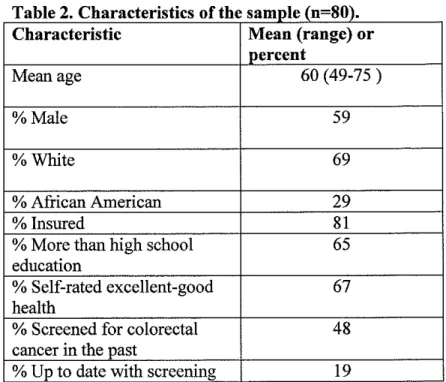
Demographic characteristics of the 80 patients are shown
in Table 2. The mean age was 60 years. Fifty-nine percent were
male and 29% were African American. 81% had health
insurance; of those with insurance, 18% had Medicare and 46%
had private insurance. Approximately half of participants had
previously been screened for colon cancer and 19% were up to
date with screening. When asked about how they had been
screened, 48% reported having FOBT, 21% sigmoidoscopy, 19%
colonoscopy, and 10% barium enema. Almost two-thirds of
patients said that a provider had discussed CRC screening with
them in the past.
Intent to ask providers about screening and interest in
screening both rose significantly after viewing the decision aid,
and most patients said that their knowledge about screening
increased and they found the information useful. Patients' intent
to ask for screening increased from a mean score of2.8 before
t-L
36
test, Figure 1). There was also an increase in patients' interest in
being screened in the 6 months after viewing the decision aid.
Prior to viewing the aid, the mean score for interest in being
screened at was 3.2; this increased to 3.5 (difference, 0.3;
p=O.Ol, paired t-test). Eighty-nine percent said that the
information presented increased their knowledge about colon
cancer, 78% said that the information presented helped them
decide whether to be screened, and 90% felt that the amount of
information in the decision aid was just right. Ninety percent
preferred to make decisions together with their physician. The
mean amount of time spent viewing the decision aid was 19
minutes.
Table 3 shows the percentage of participants who had
screening tests ordered and completed as determined by chart
review and a search of the clinic FOBT database 3-6 months
after completing the decision aid. 16 of the 80 patients were not
entered into the computer FOBT database and thus did not have
an FOBT ordered. For test ordering, 46% (37 /80) of patients had
either an FOBT or endoscopy ordered 3-6 months after viewing
the decision aid. Twenty-five percent (20/80) had an FOBT
ordered and 25% had an order for endoscopy. Three patients had
orders for both FOBT and endoscopy. For test completion, 39%
(14/80) of patients completed FOBT and 24% (19/80) had
completed endoscopies.
Most patients reported that they were ready to be
screened for CRC. When asked about stage of readiness to be
screened, 60% chose green, indicating that were ready to be
tested, 18% chose yellow (needed more information) and 22%
chose red (not ready to be screened). We did an analysis to
determine whether those who were ready to be screened were
'
more likely to have tests ordered and completed than patients f L
who were not ready or needed more information. There was a
greater percentage of test ordering and completion among
patients choosing green compared to those choosing yellow or
red but these differences did not reach statistical significance
(Table 4). Of the 47 patients who chose green, 51% had a test
ordered after 3-6 months compared to 40% of those choosing
yellow and 39% of those who chose red (p=0.59). In terms oftest
completion, 43% of patients who chose green completed a
screening test compared to 33% of those choosing yellow and
33% of those choosing red (p=0.71). We conducted another
analysis after excluding patients who were up to date with
L
screening because these patients might be less likely to have tests
ordered or completed after viewing the decision aid. There was
38
ordered and completed by stage of readiness after excluding
these patients.
Among the 47 patients who were ready to be screened,
diagnostic accuracy was the most important criteria for a
screening test, and the most preferred test was colonoscopy.
Fifty-five percent of patients choosing green said that the ability
of tests to find cancers or polyps was the most important criteria
in selecting a screening test. The next most important criteria
were the preparation required for the test (16%) and medications
needed (11 %). Forty-two percent preferred colonoscopy, with the
next most preferred tests being FOBT alone (20%) and FOBT in
combination with flexible sigmoidoscopy (20% ).
6. Discussion
In this study we found that a computer-based CRC
decision aid increased patient interest in screening and
subjectively improved their knowledge about screening.
Participants responded that they were more likely to ask their
providers about screening after viewing the decision aid. These
results are comparable to those from the videotape decision aid
trial where patients' intent to ask providers for screening
increased significantly after viewing the decision aid. In our
improved patients' knowledge about screening and was useful to most in making decisions about whether to be screened. Other studies have also found that CRC decision aids increased
patients' level of knowledge about screening; the videotape- and print-based versions developed by Meade eta!. improved patient knowledge about screening as determined by a change in score from expert-validated pre- and post-tests. 55 Dolan et a!. found that patients subjectively reported improved knowledge after using a CRC decision aid. 56 Improved knowledge is thought to lead to increased patient participation in medical decision
making by empowering patients to make informed decisions with their provider. Incorporating patient values in the decision
making process can potentially lead to the ordering oftests based on patient preferences. Although it is thought that patient
involvement in medical decisions may lead to increased patient compliance with recommendations, 59• 60 there is no research to date that links shared decision making to increased patient
compliance with screening tests. Future studies should be done to assess whether there is an association between shared decision
making, test ordering based on patient preferences, and patient
t
compliance with screening.40
about screening, patients were able to interact with the aid via its computer-based format and choose to view additional segments on individual screening tests. In this way, patients could tailor the decision aid to meet their knowledge needs. Message tailoring is thought to stimulate cognitive activity, improve the relevance of the information presented, and make the message more effective, thus leading to a greater likelihood of behavior change.61• 62 Tailored interventions have been used to increase other health promoting behaviors such as mammography screening. 63 The decision aid was not truly tailored in the sense that the information in the decision aid was not targeted towards individual patients' stage of readiness to be screened. Each patient, however, was able to select the amount and content of information they received about screening through the choices offered in the computer-based decision aid. In this way, the message about CRC and the importance of screening may have achieved greater relevance to patients and increased their interest
and completion of screening.
When asked about stage of readiness to be screened, most patients responded that they were ready to be screened after viewing the decision aid; of these patients, only about half had a test ordered and 43% completed a screening test. These results indicate that not all patients who want screening are having tests
i
ordered, but that most patients who had tests ordered completed their tests. There are a number of possible reasons for the low rates of test ordering. One possibility is that our intervention was patient-directed and did not have a system for prompting
providers about screening. Although patients may have indicated an interest in screening, providers may not have discussed or ordered CRC screening tests during the patient encounter. Another reason for the low rates of test ordering is that some patients may have viewed the decision aid after seeing their provider and thus did not have the opportunity to discuss
screening at that visit. Patients who were already up to date with screening prior to viewing the decision aid may not have had tests ordered even if they responded that they were ready for screening. Excluding these patients from the analysis, however, did not increase the proportion of tests ordered and completed among patients who were ready to be screened.
The proportion of tests ordered and completed for patients who answered green (ready for screening) was higher than for patients who answered yellow or red (need more
L
42
interesting that approximately 40% of patients choosing yellow or red had tests ordered and one-third completed screening tests. It may be that these patients and providers had subsequent conversations about screening that led to test ordering or that some providers ordered tests without knowing patients' preferences for being screened. In the videotape decision aid study, only 7% of patients choosing red had tests ordered, and 4% completed tests. More research needs to be done to determine why patients who were uncertain or not ready for screening had
tests ordered and completed. j
In order to achieve higher screening rates among those
I
ready to be tested, the decision aid may need to be implemented with a provider reminder system or standing orders for screening tests. A patient-oriented decision aid alone may be insufficient to increase test ordering and completion. Multifaceted interventions that target a combination of providers, patients, or office systems may be more likely to increase screening rates. 64 Dolan et al. 's patient-oriented decision aid was implemented without additional office systems or physician interventions. In their study there was no increase in CRC screening test completion among patients who viewed the decision aid vs. controls. 56 Our
color-coded chart marker that notified providers about patients'
readiness to be screened. The combination of the decision aid
and chart marker resulted in a statistically significant increase in
the percentage of tests ordered and completed in the intervention
group vs. controls. 57 Physician prompting has been shown to
increase performance of preventive care, including cancer
screening, 65• 66 and may be a necessary component in a screening
program to ensure that physicians order recommended tests. In a
standing orders protocol, test ordering can be initiated by a nurse
f
;
based on patient preferences and a previously developed
screening policy agreed upon by providers in the practice. If the
patient or provider later decide against screening, the order can
be cancelled. Implementing the computer-based decision aid
with a standing orders protocol or a provider prompting system
may help to improve rates of screening test ordering.
f
+ Among the 47 patients who were ready to be screened,most rated the ability to find cancer as the most important factor
in deciding on a screening test, and 42% chose colonoscopy as
their preferred method for screening. Those patients who value
accuracy may be more likely to choose colonoscopy for its
ability to detect and remove neoplasms. Previous studies on
patient preferences for colorectal cancer screening have also
44
of a screening test. Ling et al. found that 54% of patients
considered accuracy to be the most important factor in selecting
a screening method. 46 Among those who most valued accuracy,
colonoscopy was the preferred method of screening.
Interestingly, this study also found that providers viewed
discomfort as the most important factor for patients when
deciding about screening. Accuracy appears to be a very
important factor for many patients in screening and should be
considered by providers when discussing test options with
patients.
There are a number oflimitations to this trial. First, it was
an uncontrolled trial without a comparison group, so it is unclear
whether the proportion of patients having tests ordered and
completed represents an increase compared to patients who did
not view the decision aid. The baseline rates of CRC screening
test ordering and completion in our clinic are not known and it is
uncertain whether our results represent an increase over baseline
clinic CRC screening rates for average-risk adults 50 and older.
Although clinic screening rates are unknown, our results appear
to be fairly comparable with those from the videotape decision
aid trial; among patients viewing the videotape decision aid, 4 7%
of individuals had screening ordered, and 37% completed tests. It
may be useful to conduct a randomized trial comparing the
L
t
!-decision aid to a control group to see if viewing the !-decision aid can increase the rates of screening test ordering and completion.
Another limitation is possible selection bias; the responses of those who chose to participate may be different from those who did not participate. The fact that some of the patients were referred by providers may have resulted in an increase in the proportion of patients who were ready to be screened and may have elevated rates of test ordering and completion. Our results also may have been biased by the fact that many participants had previously been screened; 48% had been previously screened for CRC and 19% were up to date with screening. Patients who have previously been screened may have been more ready for screening than those who had never been tested. In addition, those who were already up to date with screening may have been less likely to have tests ordered, although excluding these patients from the analysis did not change the proportion of patients having tests ordered or completed.
Because our study was conducted at a single site among a clinic population, our study findings may not be generalizable to other populations. Other patient populations, including
individuals not currently enrolled in medical care, might respond differently to the decision aid. In addition, patients in our sample
'
I
46
had high levels of education and most had health insurance.
Although Medicare covers CRC screening and added
colonoscopy to its list of covered services in 2001,35 cost is still
an issue for patients without insurance or those whose plans may
not cover CRC screening. Testing of the decision aid in
population-based samples will provide information on whether
the decision aid is useful to patients of varying levels of
education and insurance status.
A final limitation is that the decision aid may be difficult
to use for those unfamiliar with computers. Patients who are have
limited computer skills may find it hard to navigate through the
menu of choices in the decision aid. Such patients may not be
able to view the decision aid without assistance. Most patients in
this study completed the decision aid successfully and required
limited, if any, computer assistance, so computer literacy may be
an issue for only a subset of patients.
7. Conclusions and Implications
Despite these limitations, our computer-based decision
aid increased patient interest in screening, improved self-rated
knowledge about screening, and was useful to patients in
deciding whether to be screened. It is interactive, easy to use, and
could independently navigate through the menu of choices to
select video segments that met their knowledge needs.
There are many ways in which the decision aid can be
incorporated into primary care practice. Patients can view the
decision aid in preparation for a visit with their provider.
Because the decision aid explains the importance of CRC
screening and describes each screening test with its risks and
benefits, the decision aid can potentially save providers time in
counseling patients about screening. Its web-based format can be
made accessible to patients and can be viewed by patients via
their home computers. prior to their appointments. Nurses can
identify patients at triage who are due for CRC screening, and
these patients can view the decision aid in the office while
waiting to see their provider. The computer-based format allows
for modifications ifthere are changes in screening
recommendations or new research findings about screening tests.
It can also be translated into different languages to reach
non-English speaking patients; a Spanish language version is
currently under development. This translated version will allow
for dissemination of the aid to Spanish-speaking patients and will
help inform their decisions about CRC screening.
In this study, a computer-based, patient-directed decision
48
subjectively improved knowledge about screening options. Most
patients were ready to be screened after viewing the decision aid
but only half of the patients who wanted to be screened had tests
ordered. Future research needs to be done to determine whether
implementation of the decision aid with other interventions such
as provider reminders or a standing order system can effectively
Table 1: Colorectal Cancer Screening Guidelines for Average Risk Individuals 50 years and older*1•21-23•67
Any one of the following:
I. Yearly fecal occult blood testing (FOBT) 2. Flexible sigmoidoscopy (FS) every 5 years 3. Combined yearly FOBT and FS every 5 years** 4. Colonoscopy every 10 years
5. Double-contrast barium enema every 5 years
*Recommendations of the American Gastroenterological Association Consortium Panel, US Preventive Services Task Force, American Cancer Society (ACS)
** ACS recommends the combination ofFS and FOBT over either test alone
Table 2. Characteristics of the sample (n=SO).
Characteristic Mean (range) or
percent
Mean age 60 (49-75)
%Male 59
%White 69
% African American 29
%Insured 81
% More than high school 65
education
% Self-rated excellent-good 67 health
% Screened for colorectal 48 cancer in the past
%Up to date with screening 19
l
Figure 1. Change in intent to be screened after viewing the decision aid
4
3.5
3
2.5
2
1.5
1
50
Interest in Screening in Intent to ask Provider
next 6 mos* about screening**
*
p=0.01, paired t-test. Based on 4-point Likert scale, 1 =not at all interested, 4=very interested**
p<O.OOO 1, paired t-test. Based on 4-point Likert scale, 1 =not at all likely to ask, 4=very likely to askTable 3. 3-6 month follow-up: Screening test ordering and completion (n=80)
Colonoscopy/ Total FOBT sigmoidoscopy
%Ordered
46
25
25
%Completed 39
16
24
Table 4. Test ordering and completion by stage of readiness to be screened
msefore
Decision
Aid Ill After
Decision
Aid
'
rI
Stage of n %ordering
Readiness test*
Green: ready to
be tested 47
Yellow: need
more 18
Information
Red: not ready for
screemng 15
*p=0.59, Pearson s cht-square test **p=0.71, Pearson's chi-square test
References
51
40
39
% completing test**
43
33
33
1. Jemal A, Tiwari R, Murray T, et al. Cancer Statistics, 2004. CA: A Cancer Journal for Clinicians.
2004;41(1):8-29.
2. Cancer Facts and Figures. Atlanta: American Cancer Society; 2003.
3. Weir HK, Thun MJ, Hankey BF, eta!. Annual report to the nation on the status of cancer, 1975-2000, featuring the uses of surveillance data for cancer prevention and control. J Nat! Cancer Inst. Sep 3 2003;95(17):1276-1299.
4. Recent trends in mortality rates for four major cancers, by sex and race/ethnicity--United States, 1990-1998.
Morbidity and Mortality Weekly Report. 2002;51(3):49-52.
5.
6.7.
8. 9.Edwards BK, Howe HL, Ries LA, et a!. Annual report to the nation on the status of cancer, 1973-1999, featuring implications of age and aging on U.S. cancer burden.
Cancer. 2002;94(1 0):2766-2792.
Clegg LX, Li FP, Hankey BF, Chu K, Edwards BK. Cancer survival among US whites and minorities: a SEER (Surveillance, Epidemiology, and End Results) Program population-based study. Arch Intern Me d. Sep 23 2002;162(17):1985-1993.
Cooper GS, Koroukian SM. Racial disparities in the use of and indications for colorectal procedures in Medicare beneficiaries. Cancer. Jan 15 2004;100(2):418-424. Mandel JS, Bond JH, Church TR, et al. Reducing mortality from colorectal cancer by screening for fecal occult blood. Minnesota Colon Cancer Control Study. N
Eng! J Med. May 13 1993;328(19):1365-1371.
Mandel JS, Church TR, Ederer F, Bond JH. Colorectal cancer mortality: effectiveness of biennial screening for fecal occult blood. J Natl Cancer Inst. Mar 3
10. Kronborg 0, Fenger C, Olsen J, Jorgensen OD, Sondergaard 0. Randomised study of screening for colorectal cancer with faecal-occult-blood test. Lancet. Nov 30 1996;348(9040):1467-1471.
11. Hardcastle JD, Chamberlain JO, Robinson MH, eta!. Randomised controlled trial offaecal-occult-blood screening for colorectal cancer. Lancet. Nov 30 1996;348(9040):1472-1477.
12. Mandel JS, Church TR, Bond JH, et a!. The effect of fecal occult-blood screening on the incidence of colorectal cancer. N Eng! J Med. Nov 30
2000;343(22): 1603-1607.
52
13. Selby N, Friedman GD, Quesenberry CP, Jr., Weiss NS. A case-control study of screening sigmoidoscopy and mortality from colorectal cancer. N Eng! J Med. Mar 5 1992;326(1 0):653-657.
14. Muller AD, Sonnenberg A. Protection by endoscopy against death from colorectal cancer. A case-control study among veterans. Arch Intern Med. Sep 11 1995;155(16):1741-1748.
15. Prorok PC, Andriole GL, Bresalier RS, et al. Design of the Prostate, Lung, Colorectal and Ovarian (PLCO) Cancer Screening Trial. Control Clin Trials. Dec 2000;21(6 Suppl):273S-309S.
16. Gohagan JK, Prorok PC, Hayes RB, Kramer BS. The Prostate, Lung, Colorectal and Ovarian (PLCO) Cancer Screening Trial of the National Cancer Institute: history, organization, and status. Control Clin Trials. Dec
2000;21(6 Suppl):251S-272S.
17. Single flexible sigmoidoscopy screening to prevent colorectal cancer: baseline findings of a UK multi centre randomised trial. Lancet. Apr 13 2002;359(9314):
1291-1300.
18. Winawer SJ, Flehinger BJ, Schottenfeld D, Miller DG. Screening for colorectal cancer with fecal occult blood testing and sigmoidoscopy. J Nat! Cancer Inst. Aug 18
1993;85(16):1311-1318.
19. Winawer SJ, Zauber AG, Ho MN, eta!. Prevention of colorectal cancer by colonoscopic polypectomy. The National Polyp Study Workgroup. N Eng! J Med. Dec 30
1993;329(27):1977-1981.
21. Pignone M, Rich M, Teutsch SM, Berg AO, Lohr KN. Screening for colorectal cancer in adults at average risk: a summary ofthe evidence for the U.S. Preventive Services Task Force. Ann Intern Med. Jul16
2002;137(2):132-141.
22. Winawer S, Fletcher R, Rex D, et al. Colorectal cancer screening and surveillance: clinical guidelines and rationale-Update based on new evidence.
Gastroenterology. Feb 2003;124(2):544-560.
23. Smith RA, Cokkinides V, Eyre HJ. American Cancer Society guidelines for the early detection of cancer, 2003.
CA Cancer J Clin. Jan-Feb 2003;53(1):27-43.
24. Pignone M, Saha S, Hoerger T, Mandelblatt J. Cost-effectiveness analyses of colorectal cancer screening: a systematic review for the U.S. Preventive Services Task
Force. Ann Intern Med. Jul16 2002;137(2):96-104.
.,.
25. Hiatt RA, Klabunde C, Breen N, Swan J, Ballard-Barbash l_R. Cancer screening practices from National Health
1
Interview Surveys: past, present, and future. Journal of
the National Cancer Institute. 2002;94(24):1837-1846.
~
26. Centers for Disease Control and Prevention. Behavioral ~
Risk Factor Surveillance System Prevalence Data.
I
Available at: httJ2://amls.nccd.cdc.gov/brfss/disJ2lay."
Accessed 9/25/2003, 2003.27. Trends in screening for colon cancer--United States, 1997 and 1999. Morbidity and Mortality Weekly Report.
2001 ;50(9): 162-166.
28. Centers for Disease Control and Prevention. Colorectal
cancer test use among persons aged 50 years---United }
'
States, 2001. Morbidity and Mortality Weekly Report. 2003;52(1 0): 193-196.
29. Coughlin SS, Thompson TD, SeeffL, Richards T, Stallings F. Breast, cervical, and colorectal carcinoma screening in a demographically defined region of the southern U.S. Cancer. Nov 15 2002;95(10):2211-2222.
30. SeeffLC, Shapiro JA, Nadel MR. Are we doing enough to screen for colorectal cancer? Findings from the 1999 Behavioral Risk Factor Surveillance System. J Fam
Pract. Sep 2002;51(9):761-766.
31. Healthy People 2010. Available at:
httJ2://www.healthmeoJ2le.gov/document/html/objectives. Accessed September 25, 2003.