Stigma: Perceived Discrimination and Barriers to Services and
Care among Persons with HIV and Substance Use Disorders
By
Andrea Bowen
A Master's paper submitted to the faculty of the University of North
Carolina at Chapel Hill in partial fulfillment of the requirements for
the degree of Master of Public Health in the Public Health Leadership
Proaram
bChapel Hill
Abstract
ANDREA BOWEN: Stigma: Perceived Discrimination and Barriers to Care and Services among Persons with HIV and Substance Use Disorders
HIV and AIDS increasingly affect the most vulnerable populations, including those who are poor, racial and ethnic minorities, and those with mental illnesses or substance use disorders. Members of these often marginalized groups must also contend with being stigmatized by society due to their race, ethnicity, mental health problems, substance abuse, and HIV status. Stigma results in increased barriers to receiving care and services, and a high likelihood of experiencing discrimination. This negatively affects life chances, physical health, and mental health. Stigma and discrimination also hinder efforts to prevent HIV transmission and provide long-term, continuous care for persons living with HIV or AIDS (PL WHA). It is therefore important to understand the experiences of
incarceration reported a greater number of barriers (RR=1.59, 95% CI: 1.20-2.30), and were more likely to report any discrimination from an institutional source (OR=5.36, 95% CI: 2.31-12.42), compared with those who had never been incarcerated. Participants with a history of being physically abused were more likely than those who had not to report discrimination from an everyday source (OR=2.06, 95% CI: 1.06-3.98). No major sociodemographic characteristics (race, gender, age, education level, or income) significantly predicted number of barriers or reporting of any discrimination. An increased number of barriers predicted both a decrease in self-reported health status (OR=l.17, 95% CI: 1.06-1.30), and an increase in the number of significant psychiatric problems experienced during the past 30 days (RR=l.06, 95% CI: 1.03-1.10). Reporting any discrimination did not significantly predict health status or number of psychiatric problems.
Acknowledgements
Many thanks to Rae Jean Proescholbell, who has been an extraordinary mentor and advocate throughout the process of researching and writing this paper.
Thanks also to Nathan Thielman and Linda Kinsinger for their support, extremely quick (and helpful) feedback, and health services research savvy.
Table of Contents
Introduction ... 1
Background ... 1
Stigma ... 3
Discrimination ... 9
Review of Two Major Studies on HIV and Discrimination ... 12
Discrimination in Other Populations ... 15
Summary and Hypotheses ... 18
Methods ... 21
Recruitment procedures ... 21
Measures ... 23
Independent Variables ... 23
Dependent Variables ... 28
Analyses ... 3 3 Results ... 35
Study Participant Characteristics ... 35
Correlation Coefficients ... 39
Multivariate Models ... 40
Discussion ... 46
Summary of Findings ... 46
Limitations ... 52
Implications and Future Interventions and Research ... 53
References ... 56
Introduction
Background
Within the United States, and the South in particular, HIV and AIDS increasingly affect those who are poor, racial and ethnic minorities, residents of rural locations, and individuals who actively abuse substances. For these vulnerable populations, poverty, minority status, location of residence, and substance abuse are significant barriers to accessing care. These barriers make it hard for them to get the services they need to stay healthy, achieve a good quality oflife, and be productive and contributing members to society. In addition to facing the stigma of being HIV positive, their status as members of marginalized groups may confer them with added stigma from society. Furthermore, these individuals may experience overt discrimination by others: from their families and communities, to police and the criminal justice system, to the social service agencies and treatment programs that are supposed to provide them with help and support.
Persons living with HIV and AIDS (PLWHA) in the South are more likely than those in other regions to report illicit substance abuse, mental illness,
residence, unstable living arrangements, transportation difficulties, and lack of coordinated services and benefits. 1 A 2001 survey of Southern HIV patients fonnd that 66% reported past or current use of illicit substances and 28% reported using illicit substances within the last six months.1
North Carolina is typical of the South with regard to trends in HIV infection. As of December 31,2004, there were an estimated 28,000 PLWHA in North Carolina (including those unaware of infection). For the last several years, on average, there have been 1, 700 new reports of HIV annually, higher than rates in the late 1990s.2 Within North Carolina, HIV also disproportionately infects those belonging to already socially disadvantaged groups. Rates of new HIV infection in recent years have been highest among Black residents of North Carolina. In 2005, the rate was 61.4 for every 100,000 Black non-Hispanic residents, compared to 8.6 for White non-Hispanic residents3 In 2004, 66% of new cases ofHIV among adolescent and adult men were attributed to men who have sex with men (MSM); 9% attributed to intravenous drug use, and an
additional 2% among individuals with both risk factors. Thirteen percent of new diagnoses of HIV among females could be attributed to intravenous drug use. 2 In 2005, a questionnaire of PL WHA attending 2 clinics in North Carolina reported a 32% prevalence of current substance use problems, and a 60% prevalence of symptoms of mental illness, with 23% of all respondents reporting both.4
status, or sexual orientation? However, prevention and long-term treatment, the
two most important pillars of modem HIV I AIDS care, require that these
individuals have access to services and programs that meet their needs.
Therefore, a better understanding of the stigma and discrimination they face will
provide crucial information for improving care and services for PL WHA.
This Master's Paper presents the findings from a study conducted with a
group of HIV positive individuals with co-morbid substance use disorders, who
were receiving care at one of three infectious diseases clinics in North Carolina.
Specifically, I will focus on participants' responses to a baseline interview, in
which they were asked about their experiences of discrimination and barriers to
receiving care and services. Both PubMed and PSYCinfo were used to locate
relevant background literature. The following keywords, in various combinations
were used for searching: perceived discrimination, stigma, barriers, alcohol,
drug, substance, abuse, violence, victim, incarceration, convict. Relevant
abstracts from January 1980 through May 2006 were identified, and when
obtainable, the corresponding articles and books used. In addition, some articles
were located using the references listed in other articles that pertained to the topic.
Finally, assistance with identifying useful references and authors was provided by
researchers with expertise in the subject matter.
Stigma
For more than 20 years, researchers in sociology and public health have
Jonathan Mann, director of the World Health Organization's Special Programme on AIDS, described the existence of AIDS as 3 distinct epidemics: 1) HIV infection, 2) AIDS the disease, and 3) the social, cultural, political, and economic responses, including high levels of stigma and discrimination. 5
Stigma, as defined by sociologist Erving Goffman in his frequently cited 1963 work on the subject, is "an attribute that is significantly discrediting." (p.3)6 These attributes are not, in and of themselves, objectively creditable or
discreditable, but rather, they depend upon relationships among people. Stigma reduces those who possess these qualities from whole persons into ones who are tainted and discounted. Goffman conceived of three distinct types of stigma: physical deformities, blemishes of individual character (inferred from a history of mental illness, incarceration, addiction, homosexuality, unemployment,
suicidality, or radical politics), and "tribal stigma" of race, ethnicity, nationality or religion (which is familial and passed down from generation to generation).6
Theories developed in the 1960s and 1970s by philosophers Michel Foucault and Pierre Bourdieu emphasized the role of power in societies, and how power is exercised to maintain social hierarchies and reproduce inequalities.7•10
legitimizing systems of hierarchy and domination. Because stigmatized
individuals come up against this apparatus oflegitimized domination, they often cannot put up resistance, but rather, accept and even internalize stigma.7•11
Social psychologists, Crocker, Major and Steele, propose that there are two main streams of research on stigma.12 The first, consistent with the theories cited above, identifies stigma as a process that is uniquely internalized by the stigmatized, leading to psychological distress and negative outcomes. The second defines stigma as a functional threat-to-self, which stigmatized people cope with in the same way that any individual would typically cope. This second stream, which Crocker, Major, and Steele tend to favor, holds that stigmatized groups are not fundamentally different from other groups. What members of stigmatized groups have in common are economic disadvantage, susceptibility to negative stereotypes, and receipt of interpersonal rejection and discrimination. Those with visible stigmas (such as race) cannot defend themselves against these
consequences by hiding the stigmatizing attributes, while those with concealable stigmas (such as sexual orientation or asymptomatic infection) live with the knowledge that discovery of their stigmatizing attributes could put them at risk.12 No matter how visible the stigma, these individuals constantly deal with the possibility of facing prejudice and discrimination at any time. 6• 12
forces placement of individuals in lower positions of the social hierarchy. Far
from being a theoretical position, tbere are very concrete, material consequences
to stigma. Stigma fundamentally alters life chances, including income,
l h . . . l . . d h l h 13 14
emp oyment, access to ousmg, cnrmna actiVIty, an eat . '
Research demonstrates that for those who possess stigmatized attributes,
the experience of stigma can have severe, long-lasting effects. Goffrnan wrote of
stigma's power to create a "spoiled identity."6 Indeed, members of stigmatized
groups may be vulnerable to decreased self-esteem, both at an individual and
group level. Psychological distress and negative mental health outcomes,
. l l d . ft l 12 Is 16 F h . . .
particu ar y epressiOn, o en resu t. · · urt ermore, stigmatizatiOn can
continue to negatively influence people, long after the attributes have diminished
or even disappeared. In a study of 84 men, dually diagnosed with mental illness
and substance abuse, and enrolled in a treatment program, symptoms of
depression and other psychiatric disorders improved markedly after a year of
treatment, but tbeir reported experiences of stigma, devaluation, and rejection
remained.17 Among PL WHA in the South, stigma has been identified as a
contributing factor to chronic depression and social isolation. Interviews
conducted of2l HIV-positive men and women living in Birmingham, Alabama
demonstrated a relationship between high levels of depressive symptoms (as
measured by the Center on Epidemiological Studies Depression Scale or CES-D)
and experiences of stigma, particularly among female and African-American
d . . 18
Not all stigmas are the same. Stigmatizing attributes that are generally perceived to be self-inflicted, or evidence of character defect or loss of self control, are regarded more severely. The stigma of drug and alcohol use has been well-documented. The public views those addicted to alcohol and drugs
negatively, often with fear and lack of sympathy.19'21 Health professionals hold similar perceptions of drug users, often resisting working with addicted patients because of the perceived difficulty,22 and also viewing them as needing less care than other patients.23 Unfortunately, far from encouraging drug users to quit, the fear of stigma can cause users to take drugs in riskier settings, which increases the likelihood of unsanitary conditions, injection, and sharing needles and other paraphema!ia.Z4 Furthermore, stigma and discrimination are more strongly directed toward individuals who are addicted to illicit substances (such as cocaine) than toward those with more accepted addictions (such as cigarettes).25
Mental illness also carries with it a great degree of stigma, which is highly correlated with increased psychiatric symptoms and decreased life satisfaction.26• 27
However, those with a history of incarceration may face the greatest degree of stigma of alL A study conducted with 182 undergraduates to assess the social perception of those having 1 of3 "deviant roles," concluded that identity as an ex-convict was the most negative, when compared to ex-mental patient and ex-drug addict.28 However, the relationship between incarceration and stigma has not otherwise been well-studied or well-documented in the literature.
questionnaire was then used to assess participants' perceptions of social distance from the described persons. Responses revealed that AIDS was more
stigmatizing than hepatitis, the flu, or being in a wheelchair. The authors attribute this added stigma to the fact that AIDS is "grave and without a cure."29 Susan Sontag's Illness as Metaphor and AIDS and its Metaphors highlighted the similarities of experience among people with stigmatized illnesses, particularly cancer and HIV/AIDS.30 However, research indicates that illness-related stigma is experienced more strongly by PL WHA than by individuals with cancer, even after controlling for severity of disease and respondent background
characteristics.15
Therefore, factors other than the gravity and incurability of HIV must account for part of its stigma. In fact, the stigma attached to various modes of HIV transmission (such as sex between men or intravenous drug abuse)
influences the extent to which HIV is stigmatizing. Those who were infected with HIV by either of these modes are stigmatized more than those who were infected while providing medical care or receiving a blood transfusion.29 In addition, studies of both HIV patients and the general public indicate that intravenous drug users with HIV are even more stigmatized than homosexual men with HIV?9• 31
feelings that could easily translate to avoidance or discrimination?3 The social
response to this stigma has, in fact, enhanced the epidemic by hindering efforts to
educate the public and prevent transmission.14 The pervasiveness of HIV stigma
may explain why many at-risk individuals do not get tested. They may even
neglect to alter risky behaviors, believing that a change would raise suspicion of
infection among others.16 Once diagnosed, the fear of being discovered and
suffering the consequences also interferes with care-seeking and treatment
adherence.16• 34• 35
These challenges greatly affect the delivery of care to PL WHA in North
Carolina. In a recent survey of case managers in North Carolina, 57% reported
that HIV -related stigma was a "major problem that influences medication
adherence," with an additional 29% reporting that it was "somewhat of a
problem."36 Consistent with these findings, in a qualitative study of PL WHA in
North Carolina, many participants indicated the fear of revealing their HIV
serostatus to others caused them to miss doses of antiretroviral medication.37
Discrimination
While stigma connotes a rather abstract pattern of social relations, the
closely related concept of discrimination implies more concrete actions. Goffman
noted that because society perceives stigmatized individuals to be "not quite
human," it exercises discrimination, which effectively reduces the life chances of
members of stigmatized groups. 6 Thus, individuals discriminate against
societal level, discrimination is evidenced through patterns of dominance and oppression. Because discrimination is enacted stigma, it is complicit with stigma in producing and reproducing social inequality. 11
Discrimination is highly prevalent. In a national survey, 33.5% of respondents reported having experienced major discrimination in their lifetimes, while 60.9% reported experiencing day-to-day discrimination.38 Far from being a simple, harmless fact of daily life, however, discrimination profoundly damages health and well-being. In 2001, The World Conference Against Racism, Racial Discrimination, Xenophobia, and Related Intolerance in Durban brought the relationship of discrimination and vulnerability to poor health to the forefront of global health considerations.39 Numerous studies of racial and ethnic
discrimination have demonstrated adverse effects on both mental health38• 4044 and physical health (especially hypertension).45-50 A longitudinal study of women
found that workplace discrimination also negatively affected physical and emotional health. 51 Discrimination based on sexual orientation is positively
associated with depressive symptoms and suicidal ideation, 52 as well as having
any psychiatric illness, low self-reported health status, and current psychological distress. 53 Discrimination may also prevent individuals from trusting health care and social services providers, and lead to decreased utilization of services. 54
between reports of perceived discrimination and various outcomes. A recent study demonstrated that study participant characteristics including hostility and neuroticism were strong confounders of the relationship between perceived discrimination and depressive symptoms. Nevertheless, even when these
characteristics were adjusted for in multivariate models, the association between perceived discrimination and depressive symptoms remained strong. 55 Moreover, measures of the perception of discrimination are as important as objective
exposure to discrimination in predicting adverse health-relevant outcomes, including psychological distress and health problems. 56
Typically, questionnaires that are used to assess respondents' perceptions of discrimination will ask a series of questions that are context-specific (e.g., health care setting, workplace, etc.) and cause-specific (e.g., due to HIV diagnosis, race, socioeconomic status, etc.). Frequently, the wording of these questions does not specify "discrimination" per se, but asks about various types of unfair treatment. Therefore, respondents may not necessarily have identified that they were discriminated against, in order for their experiences of unfair treatment to count as discrimination. A follow up question may inquire about the specific person or institution that discriminated against the participant. Review of the literature indicates that while many researchers have developed reliable and valid measures of perceived discrimination, there is not a single, gold-standard
experienced discrimination due to race and sex, respectively. A scale of perceived discrimination developed by Williams, Yu, Jackson, and Anderson60, has also been widely used for examining relationships between discrimination and health.
A higher level of education is one factor that may increase the reporting of discrimination, although the reasons are not clear. 61 A survey of 76 African-American adults found that education level and stigma-consciousness were each associated with increased reporting of race-based and socioeconomic status (SES)-based discrimination. However, education level and stigma-consciousness did not correlate with each other, indicating that an expectation of being
discriminated against did not act as a mediator in the relationship between education and reporting of discrimination. 62
Review of Two Major Studies on HIV and Discrimination
Both overt and subtle forms of discrimination against HIV infected people have existed since the beginning of the epidemic. However, only a few studies have focused on perceived discrimination among PL WHA.
medical care and hospital care, and trust in health care providers. 2,466 participants responded, which was 86% of the original cohort. Perceived
discrimination was assessed using 4 yes/no questions: "Since you have had HIV, has any health care provider ... ":"been uncomfortable with you?," "treated you as an inferior?," "preferred to avoid you?," and "refused you service?" If respondents reported that they had experienced discrimination from a health care provider, they were asked to respond yes or no to a list of providers for each type of discrimination, including medical doctor or physician, dentist, nurse or other clinical staff, hospital staff, and case manager or social worker. Twenty-six percent of the full sample reported perceiving at least 1 of the 4 types of discrimination. Respondents identified the source of discrimination as a
physician (56%), dentist (32%), nurse/clinical staff(39%), hospital staff(31%), case manager/social worker (8%), and someone else (2%). White respondents were significantly more likely than Black respondents to report discrimination (32% versus 17%, p<O.OOl ). Respondents who had completed high school were significantly more likely to report discrimination than those who had not (27% versus 19%, p<0.001). Among those who had experienced at least 1 type of discrimination, reported access to care was lower than for those who had not experienced any discrimination (78.3 versus 82.7 on a 0 to 100 scale). In
addition, those who had perceived discrimination rated the quality of medical and hospital care and trust in health care providers lower (80.9 versus 87.1 on a 0 to
remain. Specifically, this study did not assess experiences of discrimination that occur outside the health care setting. Also, given the wording of the items used to elicit reports of discrimination, it is not clear whether the discrimination
experienced by participants was due solely to HIV status, or whether respondents would even know whether it was due to their HIV infection, or some other factor. Finally, this study does not describe region-specific data. Therefore, it is difficult to assess how representative this study is of the experiences of PL WHA in the South.
A smaller study conducted by Bird, Bogart, and Delahanty consisted of interviews with II 0 individuals infected with HIV. Participants were recruited by staff at an AIDS service organization in a Midwestern city. Eligible participants received a face-to-face interview on sociodemographic characteristics and health status, and then responded to self-administered questions on perceived
seven types of discrimination due to their race or color; 66.3% reported having ever experienced one of the seven types of discrimination due to their
socioeconomic status (SES). Overall, 79.0% reported ever experiencing
discrimination while receiving HIV care due to either race or SES. Greater race-based and SES-race-based discrimination were associated with more symptoms of depression, as measured by the CES-D, more post-traumatic stress symptoms, more AIDS-related symptoms, and lower general health and health care satisfaction. 64 The strengths of this study include the use of multiple items to assess multiple types of discrimination, and the ability to demonstrate greater reporting of discrimination with physical and mental health outcomes. However, this was quite a small study. The recruitment methods are not completely
described, so the degree to which the study population represents the source population cannot be assessed. Furthermore, the geographic range of this study was very narrow, limiting its generalizability to other populations. Finally, the researchers only studied two specific forms of discrimination; study participants may have experienced discrimination due to many other factors, and may not have been able to accurately assess the cause of discrimination they experienced.
Discrimination in Other Populations
their drug use, and that this form of discrimination had the greatest impact on
their lives. High reporting of discrimination was associated with poorer mental
health and multiple chronic health problems.65 While the stigma of substance
abuse may be what causes discrimination, some studies indicate that causality
may also move in the other direction, and that discrimination increases substance
abuse. Among transit workers in San Francisco, the experience of workplace
discrimination was associated with problematic drinking practices66 A
longitudinal study with an average of 20 months between baseline and follow-up
demonstrated that in 897 African-American families, parents with higher levels of
perceived discrimination had less of a decline over time, or more of an increase
over time, in substance use. In fact, substance use was more highly correlated
with perceived discrimination than with social support, social relationship
problems, financial strain, optimism, religiosity and perceived control.67
Experiences of physical and sexual violence also have multiple, complex
associations with discrimination. Violent abuse is considered one type of
manifestation of enacted stigma, often experienced by individuals with mental
illness or substance use disorders.27·68 The experience of violence may be
internalized by the victim, creating a stigmatized, discredited identity. Those who
belong to disadvantaged subgroups vulnerable to stigma may have difficulty
recovering from violent experiences due to repeated discrimination and
re-victimization. Therefore, discrimination and victimization can reinforce one
most likely to be infected are also likely to have experienced violence. In addition, a diagnosis with HIV may provoke violence from an intimate partner.70
People who experience discrimination due to multiple attributes (such as HIV status, history ofiV drug use, or race/ethnicity) have a greater magnitude of negative health outcomes than whose who experience discrimination due to only one attribute.71 In particular, because HIV often affects those (e.g., gay men, injection drug users, racial/ethnic minorities) who are stigmatized for reasons in addition to infection, the experience of discrimination can be very complex.Z9 However, the mechanisms by which this occurs are unclear. Some studies support a "layering" hypothesis, in which multiple attributes can combine to produce a shared stigma, greater than either source of stigma alone, and even result in a synergized layer of stigma35· 72 A double-jeopardy hypothesis
advances that those who perceive discrimination due to 2 attributes will experience greater disadvantage than those who perceive discrimination from only I, while other evidence shows that only one attribute (often ethnicity) predominates in experiences of discrimination. 73• 74 A study of Black and Latino substance abusers revealed that they experienced discrimination due to drug use more than due to membership in any other stigmatized group (including
ethnicity). Nevertheless, they often reported that their experiences with
As would be expected, for those within groups that are subjected to stigma and discrimination, numerous barriers to accessing health care and social services have been identified. A recent review article of research on utilization of health care services by PL WHA identified race, gender, injection drug use, mental health status, financial resources, and age as important predictors of service use. 75 HIV-positive substance users receiving services through the Ryan White Care Act face structural and programmatic barriers such as lack of housing options, availability of services, lack of transportation, inadequate insurance coverage, little support for child care, and language76• 77 Commonly reported barriers to accessing
services among PL WHA in the South include HIV status, denial of insurance, lack of knowledge, and difficulty applying for programs.1 Nationally, among those with HIV I AIDS, those who use crack cocaine or have an unstable housing situation are most likely to have unmet service needs. 78 Among these groups, the disproportionate presence of barriers indicates how severely discrimination and stigma affect opportunities, health, and life.
Summary and Hypotheses
Discrimination is not based upon any objective qualities, but rather, is an act that follows from a socially-constructed meaning imbedded in certain
stigmatized characteristics. The existence of these meanings serves the purpose
against members of a stigmatized group often do so while believing they are justified.
Although stigma is socially constructed, its effects are physically embodied. Discrimination can dramatically affect the health and well-being of those who possess stigmatized attributes. Those with HIV, AIDS, or a history of substance abuse are particularly vulnerable to stigma and discrimination. They are often blamed for possessing these stigmatizing attributes, and therefore the stigma they face is even more severe. Numerous studies report adverse physical and mental health effects associated with perceived stigma and discrimination.
Discrimination and stigma continue to adversely affect mental and
physical health, as well as hinder public health and preventative efforts. In recent years, numerous researchers and advocates in the field of HIV I AIDS investigation have therefore called for greater investment in studying the causes and
mechanisms of discrimination and stigma, in order to intervene. Because the discrimination experienced by PL WHA can often be multifactorial, a better understanding of how these multiple attributes interact is required. Furthermore,
because stigma and discrimination are socially constructed, individuals'
The population we are studying, PL WHA who have been diagnosed with substance abuse disorders, is likely to have experienced high levels of stigma. However, the mechanisms by which stigma and discrimination affect this population are unclear. While a great deal of research has identified possible pathways based on a single stigmatizing attribute, there is a dearth of knowledge to explain the experiences of those who face discrimination based on a number of different factors. How do stigmas due to multiple attributes combine to affect these individuals? Do individuals perceive that they have experienced barriers to care and services predominantly due to one attribute, or are the effects additive?
I hypothesize that members of groups that are more highly stigmatized (Black/ African-American race, use of injection drugs, longer duration of alcohol or drug abuse with respect to age, greater number of legal convictions, history of incarceration, and history of being physically or sexually abused) will tend to report more barriers to receiving services and will report experiencing
Methods
Recruitment procedures
Interview respondents were participants in a health services intervention research study funded by the Substance Abuse and Mental Health Services Administration (SAMHSA). The study was designed to examine the medical and substance abuse outcomes of the provision of 12 months of integrated HIV-substance abuse treatment. Participants were recruited from three infectious disease (ID) clinics: Duke University ID Clinic, UNC-Chapel Hill ID Clinic, and the Title III Early Intervention Clinic of Lincoln Community Health Center. All participants were required to be HIV -infected, age 18 or older, and professing a
need for substance abuse treatment. Although the vast majority of participants had a current DSM-IV alcohol or substance abuse disorder, some participants sought substance abuse treatment to prevent relapse.
mood, anxiety and substance abuse disorders. 79 Patients with scores indicating a substance abuse issue and who met study criteria were engaged in a conversation to assess their readiness to begin substance abuse treatment. 2) At all three clinics, medical providers who were concerned about a patient's substance use directly referred them to a Behavioral Health Provider who assessed their substance use and whether they met study eligibility criteria. Patients who were not immediately ready were considered to be in an "outreach" phase in the which the Behavioral Health Provider met with them periodically, often before medical appointments, and engaged in cognitive behavioral therapy to increase their motivation to engage in substance abuse treatment.
Once patients were motivated, they were offered participation in 12 months of substance abuse treatment provided by a Behavioral Health Provider located in the ID clinic and who coordinated care with the patient's ID medical provider. Included in study participation was a series of three interviews
conducted at baseline, 6, and 12 months. Participants did not have to participate in the interviews in order to receive services; however, all but one participant provided data for the baseline interview. Interviews were conducted at the ID clinic or a location ofthe participant's choosing (e.g., their home) and lasted 60-120 minutes each. Participants were compensated with $20 in gift cards to
interviews had been conducted and responses entered into a database. The data reported in this study are baseline data from these first 188 participants.
Measures
The interview questionnaire included the Addiction Severity Index- Lite (AS!-Lite) to assess substance use. The AS!-Lite is widely used and accepted in addictions research and has consistently shown exceptional levels of test/retest reliability 80-82 and validity 83. In addition, the interview questionnaire included
the SAMHSA-required items from the Center for Substance Abuse Treatment Government Performance and Results Act (CSA T GPRA) Participant Outcome Measures for Discretionary Programs84 These items were used to assess demographic information (age, gender, race, ethnicity, education level, and income) and health status.
Independent Variables
Age
Participants were asked "What is your date of birth?" and the month, day and year were recorded. Responses were converted to age in years at the time of completion of the interview.
The interviewer obtained participant gender through the item: "What is your gender?" Response options included "Male," "Female," "Transgender," or "Other (specify)."
Race and Ethnicity
The first 171 participants were asked to respond to the open-ended
question, "What is your race? (Select one or more)" For participants 172-188, the required GPRA race assessment changed to a series of probes, requiring
participants to indicate "yes" or "no" to each of the following: "Black or African American," "Asian," "Native Hawaiian or other Pacific Islander," "Alaska Native," "White," "American Indian." All responses were standardized to correspond with the latter format. For multivariate analyses, only those who responded "Black or African American" or "White" were included; those who endorsed more than one race (n=S) were excluded.
Income
Monthly income was assessed using GPRA questionnaire items.
Interviewers asked participants what amount of money they had received (pre-tax
the groups that were and were not asked about Family and/or Friends. Therefore, income from Family and Friends was included in the totals. Incomes were not normally distributed, and were strongly skewed, so the base I 0 logarithm of income was used for all analyses. For those with a total income of $0, the base I 0 logarithm was undefined, and so was approximated by the base I 0 logarithm of $!.
Education Level
To assess education level, interviewers used the GPRA questionnaire item: "What is the highest level of education you have finished, whether or not you received a degree?" Responses were coded on a continuous scale, ranging from "Never attended school"( coded as "0") through "Doctoral degree" (coded as "20").
Years of Alcohol Use
Years of Illegal Drug Use
The number of years participants used illegal drugs was assessed using items from the AS!-Lite. Respondents were asked how many years they had regularly used any illegal drugs, three or more times per week. Responses were categorized to one of four levels: 0 years, 1 to 10 years, 11 to 20 years, and more than 20 years.
Use oflnjection Drugs
Using items from the AS!-Lite, participants were asked about their use of various substances, including cocaine and crack, marijuana, heroin,
methamphetamines, hallucinogens, barbiturates, and several other categories including additional opiates, and other prescription and non-prescription drugs, during the last 30 days, last 6 months, and life time. For each substance, participants were asked about their usual route of administration for that substance. Response options included "Oral" "Nasal" "Smoking" "Non IV injection" or "IV injection." A response of"intravenous injection" or "non-intravenous injection" to any substance was coded as injection drug use for that observation. If a participant did not indicate intravenous or non-intravenous intravenous injection as the usual route of administration for any substance, that observation was coded as no injection drug use.
Participants were first asked about number of lifetime charges for crimes with the following item: "How many times since the age of 18 have you been arrested and charged with the following? Shoplifting/vandalism; Parole/probation violations; Drug charges; Forgery; Weapons offense; Burglary, Larceny, Breaking
& Entering; Robbery; Assault; Arson; Rape; Homicide, Manslaughter;
Prostitution; Contempt of court; Other (specify)" The number of charges for each criminal act were then totaled into a summary continuous variable. Participants were then asked "How many of these charges resulted in convictions?" The number of convictions was coded into one of 8 categories: 0, 1, 2, 3, 4, 5, 6, and 7 or more.
History of Incarceration
To assess history of incarceration, participants were asked "How many months were you incarcerated in your life?" A dichotomous variable was created based on responses to this item, in which observations were coded as None if incarcerated for 0 months, and Any if incarcerated for 1 or more months.
History of Being Physically Abused
Using an item from the AS!-Lite, participants were asked whether any of the following people harmed or abused them physically in their life: mother,
having been physically abused by a known assailant. Those who responded no
were coded as having not been abused by a known assailant.
History of Sexual Abuse
Using an item from the ASI-Lite, participants were asked whether any of
the following people forced sexual advances or sexual acts, or abused them
sexually: mother, father, brothers/sisters, sexual partner/spouse, children, other
significant family, close friends, neighbors, co-workers. Those who responded
yes were coded as having been sexually abused by a known assailant. Those who
responded no were coded as having not been abused by a known assailant.
Dependent Variables
New items were created to assess respondents' perceived stigma and
discrimination. The wording of these items and response choices was based upon
our prior qualitative research on the experiences of people living with HIV or
AIDS.85 These items are described below.
Number of Barriers to Services and Care
Participants were first asked, "Have any of the following made it hard for
you to get services that you needed. For example, drug abuse treatment, health
care, counseling, help getting benefits, or other social services?" For each item,
respondents gave a yes or no response. Items included: Your sex, Your age, Your
ability to pay, Your transportation, Your religion, Language, Your mental health problems, Child care, Fear of consequences, Disability, HIV status, Availability of services, Lack of information, Housing status, and Immigration status.
Respondents were then permitted to name up to 4 additional factors that made it difficult for them to get services they needed. Responses were coded as "Yes" or "No" for each item. The number of endorsed items in this set was summed, to create a continuous variable, ranging from 0 to 23 barriers. The additional
barriers the respondents provided spontaneously were not included in the sum. In addition, to test hypotheses generated during the course of data analysis, the barriers score was broken into two separate component scores. The first was a sum of the number of barriers that were structural or systemic, which included: Your employment, Your ability to pay, Your transportation, Child care,
Availability of services, Lack of information, Housing status, Immigration status. The second was a sum of the number of barriers that were a personal, potentially stigmatizing attribute, which included: Your sex, Your age, Your education Your sexual orientation, Your drug of choice, Your religion, Language, Your mental health problems, Fear of consequences, Disability, and HIV status.
Perceived Discrimination
then permitted to name up to 4 additional sources from which they had
experienced discrimination. Responses were coded as "Yes" or "No" for each item. The discrimination variable was coded as having ever experienced discrimination if any of the sources of discrimination were endorsed, or having experienced no discrimination if no sources of discrimination were endorsed. Also, to test hypotheses generated during the course of data analysis, two additional dichotomous indicators of discrimination were created. The first indicated whether respondents had ever experienced discrimination from an everyday or home source (Your community/neighborhood, Your job, Your family, Your school, or A religious institution). The second indicated whether respondents had ever experienced discrimination from an institutional or
governmental source (Social service agencies, Police, Current treatment program, or Criminal justice system).
Health Status
We assessed participant-reported current health status with an item from the CSAT GPRA: "How would you rate your overall health right now?"
"Excellent" "Very Good" "Good" "Fair" or "Poor." This item is intended to assess mental, emotional, and physical health.84
Number of Significant Psychiatric Problems in the Past 30 days
alcohol or drugs, how many days have you: experienced serious depression; experienced serious anxiety; experienced hallucinations; had trouble
understanding, concentrating or remembering; had trouble controlling violent behavior; attempted suicide; been prescribed medication for
psychological/emotional problems?" These items differed slightly from the original AS!-Lite items, which asked whether or not there was any significant period of each psychiatric problem during the past 30 days (rather than how many days). Responses to each item were dichotomized to "No days" ifO days and "Any days" if 1 or more days, and the total number of psychiatric problems was summed.
ASI Composite Measures for Problem Areas: Family I Social Status
Family I Social status was calculated using ASI composite score
guidelines. The ASI items included in this score were, a) "Are you satisfied with this situation (your current marital situation)?" b) "How many days in the past 30 have you had serious conflicts with your family?" c) "How troubled or bothered have you been in the past 30 days by family problems?" d) "How important to you is treatment or counseling for family problems?" and e) "Have you had
significant periods in which you have experienced serious problems in the past 30 days with: Mother I Father I Brothers I Sisters I Sexual Partner I Spouse I Children I Other significant family I Close friends /Neighbors I Co-Workers." Responses
weighted, by dividing each response by the highest possible numerical value for that item, then dividing by the total number of items in the composite score. The responses for all items were then summed. The composite score ranged from 0 to
l, with higher scores indicating greater severity of family/social status.
Drug Use
An approximation of the ASI composite score for Drug Use was calculated consistent with ASI guidelines. An exact score could not be
determined, because the questionnaire did not contain one of the items included in ASI scoring guidelines. The approximate score included the following items: a) use in the past 30 days of Heroin I Methadone I Other Opiates/analgesics I
Barbiturates I Other sedatives/hypnotics/tranquilizers I Cocaine I Amphetamines I Cannabis I Hallucinogens I More than one drug, "How many days in the past 30 have you experienced problems with drug use?" and "How important to you now is treatment for these drug problems?" Responses to these items were weighted and summed in the same way as the Family/Social status composite score. Drug Use composite scores ranged from 0 to l, with higher scores indicating greater drug use severity.
Alcohol Use
An approximation of the ASI composite score for Alcohol Use was calculated consistent with ASI guidelines. An exact score could not be
ASI scoring guidelines. Items used to calculate the score included: Days of alcohol use at all in the past 30 days, Days of alcohol to intoxication in the past 30 days, "How many days in the past 30 have you experienced alcohol problems?", "How important to you now is treatment for these problems?", and "How much would you say you spent during the past 30 days on alcohol?" Responses to these items were weighted and summed in the same way as the Family/Social status composite score. Alcohol Use composite scores ranged from 0 to 1, with a higher score indicating greater alcohol use severity.
Analyses
Statistical analyses were conducted using Stata 9.0 statistical software. Univariate frequencies were calculated for participants' sociodemographic characteristics, and all independent and dependent variables. Bivariate frequencies of responses to individual Barriers and Discrimination items were examined by gender, race, income category and education level category. Pair-wise correlation coefficients were then computed, including all sociodemographic characteristics, the
1) Stigmatizing participant characteristics (Black vs. White race, longer duration of alcohol or illegal drug use, use of injection drugs, greater number of
convictions, history of incarceration, history of physical abuse, and history of sexual abuse) are associated with a greater number of barriers that make it difficult to receive services.
2) Stigmatizing participant characteristics (Black vs. White race, longer duration of alcohol or illegal drug use, use of injection drugs, greater number of
convictions, history of incarceration, history of physical abuse, and history of sexual abuse) are associated with a greater likelihood of reporting discrimination from any source.
Results
Study Participant Characteristics
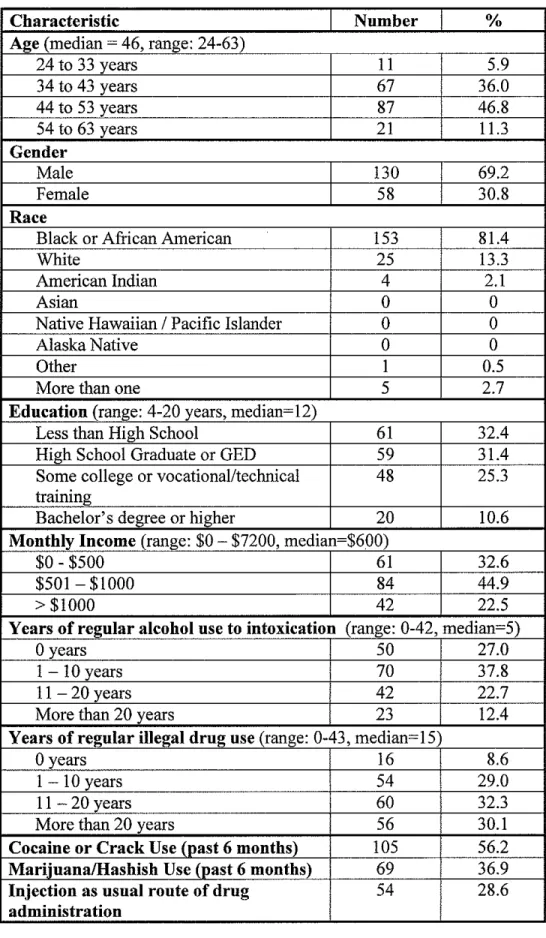
One-hundred and eighty-eight program participants completed a baseline interview. Table I depicts participant demographics. Participants were 69.2% male and 30.8% female. One-hundred and fifty-three participants (8!.4%) identified their race as Black or African American, 25 (!3.3%) identified as White, 4 (2.1 %) identified as American Indian, I (0.5%) identified as Other, and 5 (2.7%) reported more than one race. Respondents' ages ranged from 24 to 63 years, with a median of 46 years. Participants completed between 4 and 20 years of education, with a median of 12 years. 32.4% completed less than 12 years, 31.4% had a high school diploma or GED, 25.3% completed some college or vocational/technical training, and 10.6% had a bachelor's degree or higher. Income received over the past 30 days ranged from $0 to $7200 with a median of $600. This was low compared to the U.S. Census Bureau's estimate for median household income in North Carolina for 2003 of approximately $3,286 per month.86
28.6% of participants reported that their usual route of administration for any drug was intravenous or non-intravenous injection, whereas 71.4% reported a route of administration other than injection for each drug used. 73.0% of
respondents reported that they had regularly (greater than three times per week) used alcohol to intoxication (more than 5 drinks per sitting) for at least one year. The number of years of regular alcohol use to intoxication ranged from 0 to 42 years, with a median of 5 years. 91.4% of respondents had regularly used any illegal drug for at least I year. Respondents reported using illegal drugs from 0 to 43 years, with a median of 15 years. The most common illicit drugs used during the past 6 months were Cocaine or Crack (56.2%) and Marijuana/Hashish (36.9%).
Legal Status
54.3% of respondents reported having been incarcerated at least one month during their entire lives. The number of convictions reported by respondents ranged from 0 to 533, with a median of2.
History of Abuse
Eighty-eight respondents (46.8%) reported having been physically abused, and 60 (31.9%) reported having been sexually abused by a family member, friend, or co-worker in their lifetime.
55.9% of respondents stated that they were in excellent, very good, or good health at the time of the interview, whereas 44.1% reported fair or poor health. 78.6% of respondents had experienced at least one serious psychological or emotional problem in the past 30 days, based on a checklist of problems as shown in Table I.
Barriers to Accessing Services
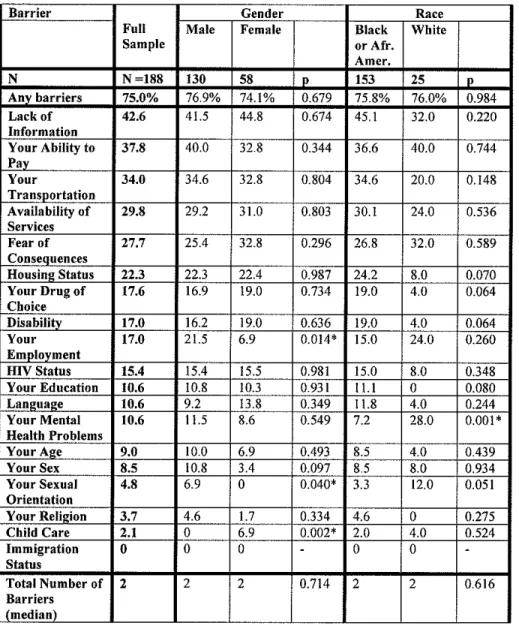
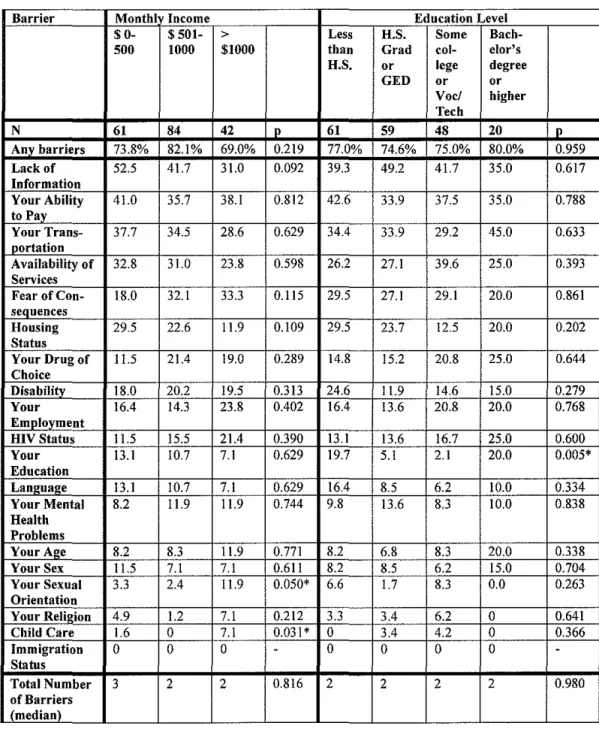
Overall, 7 5% of respondents reported experiencing at least one barrier from a list of 19 possible barriers that made it difficult for them to access the care and services they needed (see Tables 2a and 2b ). The most commonly endorsed barriers were Lack of Information (42.6%), Ability to Pay (37.8%),
Transportation (34.0%), Availability of Services (29.8%), and Fear of
Consequences (27.7%). Men were significantly more likely than women to
endorse Employment Status as a barrier (21.5% versus 6.9%; x2=6.1, p=O.Ol). There was a trend toward significance (p<.l 0) in which Black or African American respondents endorsed Housing status, Drug of Choice, and Disability more frequently than did White respondents. White respondents were almost four times as likely to endorse Mental Health Problems as a barrier than were Black or African American respondents (28.0% vs. 7.2%, x2=10.2, p=O.OOI) Reporting of Sexual Orientation as a barrier varied by gender, race and income, with male
(6.9% VS. 0%, x2=4.2, p=0.04), White (12.0% vs. 3.3%, x2=3.8, p=0.05), and
barriers, including legal problems/criminal record (4 respondents), race (1), being "too feminine" (1 ), low literacy (1 ), having no form of identification (1 ), lack of agency funding (1 ), and inability to qualify for services (1 ).
Sources of Discrimination
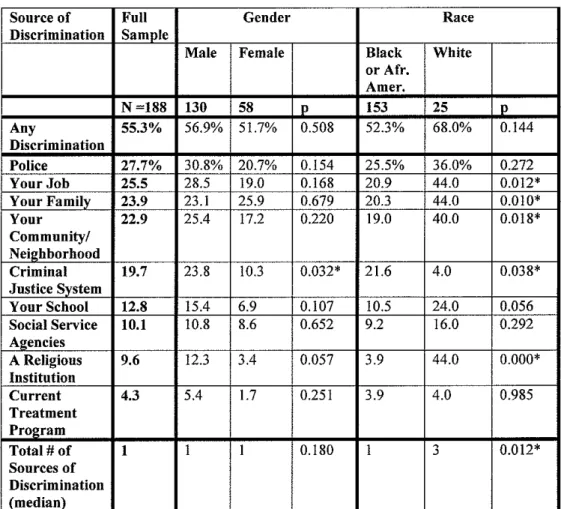
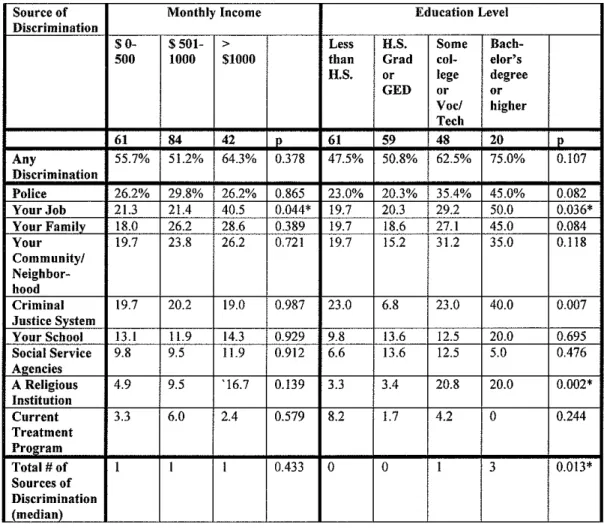
55.3% of respondents reported experiencing discrimination from at least one of 9 sources. Table 3a includes the frequencies of reporting each source of discrimination, for the whole sample and by gender and race. Table 3b includes the frequencies of reporting each source of discrimination by monthly income and education level. The most frequently cited sources were the Police (27.7%), Job (25.5%), Family (23.9%), Community/Neighborhood (22.9%), and the Criminal Justice System (19.7%). Male and Black or African American respondents were
more likely than female (23.8% vs. 10.3%, x2=4.6, p=0.03) and White (21.6% vs. 4.0%, x2=4.3, p=0.04) respondents to report discrimination from the Criminal Justice System. However, as compared to Black or African American
respondents, White respondents reported discrimination 2 times more frequently from Job (44.0% vs. 20.9% x2=6.3, p=0.01), Family (44.0% vs. 20.3%, x2=6.7, p=0.01), and Community/Neighborhood (40.0% vs. 19.0%, x2=5.6, p=0.02) and 11 times more frequently from a Religious Institution (44.0% vs. 3.9%, x2=40.0,
p<0.001). Furthermore, higher levels of income were significantly associated with more reporting of Job discrimination. Respondents who had completed a greater number of years of education also reported significantly more
p<O.Ol), and a Religious Institution (x2=14.9, p<O.Ol). In addition to the sources
of discrimination listed, several respondents provided other sources, including:
government (2), a hotel (I), a business establishment (1 ), landlords (1 ), friends'
parents (I), housing (I), individuals (I), and society (I).
Correlation Coefficients
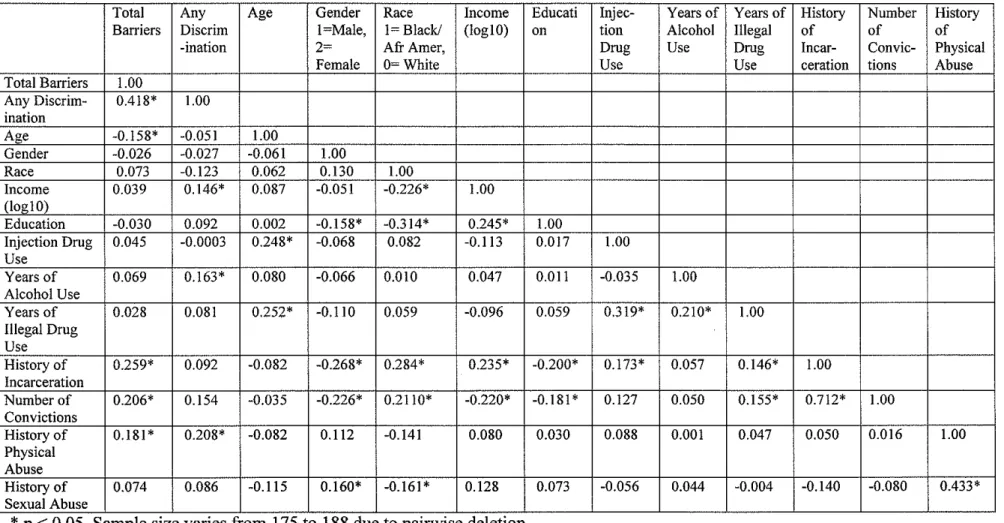
Correlation coefficients (see Table 4) were computed between the number
of barriers, any discrimination, demographic characteristics (age, gender, race,
education, and income), and hypothesized predictors (injection drug use, years of
regular alcohol use to intoxication, years of illegal drug use, history of
incarceration, number of convictions, history of physical abuse, and history of
sexual abuse).
An increased number of barriers was highly correlated with having
experienced discrimination (p<0.001). Among the demographic characteristics,
increased age was associated with decreased number of barriers, but gender, race,
income, and education did not significantly correlate with number of barriers.
Participants who had been incarcerated (p<0.001), had an increased number of
convictions (p<O.O I), or had experienced physical abuse (p<0.05) reported
significantly more barriers.
Higher income was associated with experiencing discrimination (p<0.05),
but age, gender, race, and education did not significantly correlate with
reported using alcohol regularly for more years (p<0.05) and were more likely to report having been physically abused (p<O.Ol).
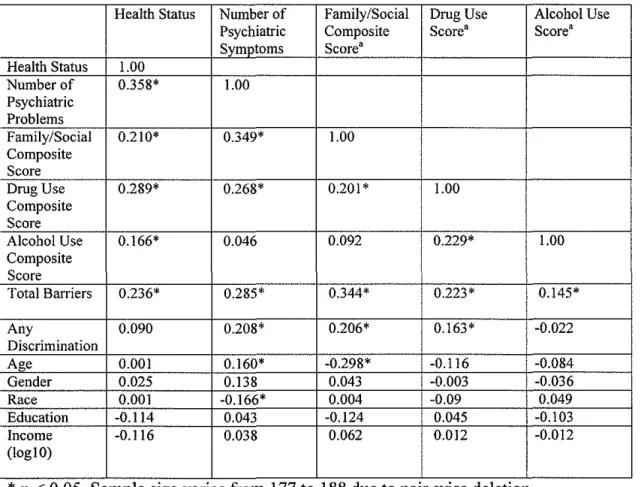
The associations among number of barriers, experience of discrimination, self-reported health status, number of psychiatric or emotional problems
endorsed, and ASI Composite Scores for current Family/Social Status, Drug Use, and Alcohol Use were also examined. Tables 5 reports the results. Increased reporting of barriers was associated with poorer current health status (p<O.Ol), more psychiatric problems in tbe past 30 days (p<O.OOI), more severe Family and Social Status (p<O.OOOI), more severe Drug Use (p<O.Ol), and more severe Alcohol Use (p<0.05). Those who reported discrimination did not have
significantly different health or Alcohol Use scores, but did have more psychiatric problems (p<O.Ol), more severe Family and Social Status (p<O.Ol), and more severe Drug Use scores (p<0.05) compared to those who did not report any discrimination.
Multivariate Models
Modell: Predictors oflncreased Number of Barriers
A multivariate regression model was constructed to determine which of the hypothesized characteristics predicted more barriers experienced by
contributed to the number of barriers. The model was initially run including all of
the major demographic characteristics (age, gender, race, income and education)
and all hypothesized predictors (injection drug use, years of alcohol use, years of
drug use, history of incarceration, number of convictions, history of physical
abuse and history of sexual abuse). Injection drug use, years of alcohol use, years
of drug use, number of convictions and history of sexual abuse were not
significantly associated with the dependent variable. They were eliminated and
the model was re-run. Age, gender, race, education, and income did not predict
the dependent variable, but were included in the final model as covariates.
The final model therefore included the five demographic characteristics,
history of incarceration, and history of physical abuse. Table 6 depicts the results.
A history of incarceration was associated with a 59% increase in the number of
reported barriers (RR=l.59, CI=l.20- 2.30). A trend was observed in which the
history of being physically abused was associated with a 36% increase in the
number of barriers (RR=1.36, 95% CI=0.97- 1.89).
Model2: Predictors of Perceived Discrimination
A logistic regression model was constructed to determine which
independent variables predicted any versus no discrimination. The model was run
with all of the major demographic characteristics and all hypothesized predictors
(injection drug use, years of alcohol use, years of illegal drug use, history of
incarceration, number of convictions, history of physical abuse and history of
convictions, and history of sexual abuse did not significantly predict the dependent variable, in the model or in individual significance tests, and were therefore eliminated and the model was re-run. Age, gender, race, education, and income did not predict the dependent variable, but were included in the final model as covariates.
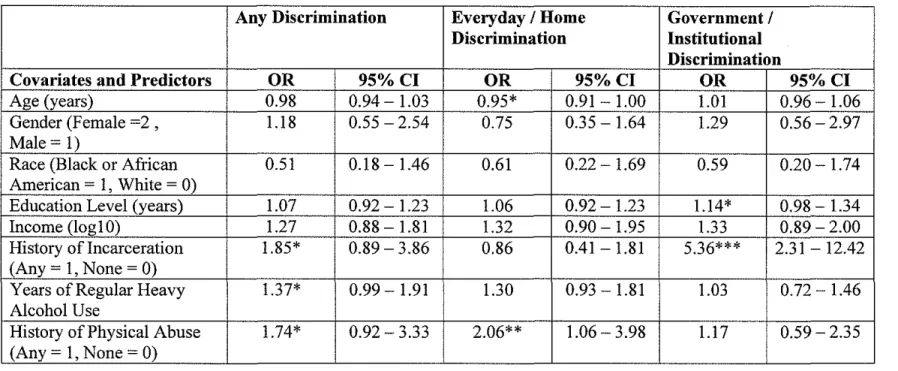
The final model consisted of the five demographic characteristics, history of incarceration, years of alcohol use, and history of physical abuse. Results are listed in Table 7. Both history of incarceration and history of physical abuse individually predicted discrimination when controlling for age, gender, race, education and income, but were not significant at the 95% confidence level in the final model. Those who had ever been incarcerated were 1.85 times more likely to report having experienced discrimination (95% CI: 0.89- 3.86). Those who had been physically abused were 1.74 times more likely to report having
experienced discrimination (95% CI: 0.92- 3.33). A trend was also observed for an association between years of alcohol and discrimination, in which every 10 year increase in use of alcohol was associated with being 1.3 7 times more likely to report having experienced discrimination (OR=l.37, 95% CI: 0.99 -1.91). However, none of these findings were statistically significant.
institution), and any discrimination from a governmental or institutional source (police, criminal justice system, social service agency, or current treatment
program). This is consistent with measures of discrimination used by Yen et a!, to study workplace discrimination and alcohol consumption.66 In their study, 4 different sources of workplace discrimination were assessed, and the results dichotomized 3 ways: workplace discrimination (any I of 4 sources), public discrimination (any I of 2 of the sources) and company discrimination (any I of the other 2 sources).
In the first of these two variations, history of physical abuse emerged as a significant predictor of any discrimination from a home or everyday source (OR=2.06, CI: !.06- 3.98), while history of incarceration and years of alcohol use no longer approached significance. In the second variation, history of incarceration was a significant predictor of any discrimination from a
governmental or institutional source (OR= 5.36, CI: 2.3!-12.42), while history of physical abuse and years of alcohol use were not significant.
Model3: Relationship between Self-Reported Health Status, and Barriers to Services and Discrimination
Health status was coded as an ordinal variable, with I: Excellent, 2: Very
Good, 3: Good, 4: Fair, 5: Poor. Rather than dichotomizing responses and
thereby losing information, a maximum likelihood ordered logit estimation model (also known as a proportional odds model) was used to determine whether
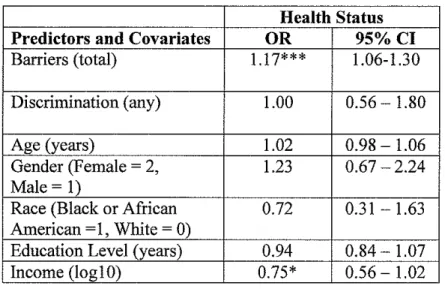
are shown in Table 8a. Each additional barrier was associated with a 17% increase in the odds of an incremental decrease in health status (OR=1.17; 95% CI: 1.06-1.30), when controlling for age, gender, race, education and income. However, perceived discrimination was not significantly associated with health status (OR=l.OO, CI=0.56-1.80). When the model was re-run with total number of barriers replaced by 2 independent variables: total number of systemic or structural barriers and total number of personal attributes/stigmatizing barriers, the total number of personally stigmatizing barriers significantly predicted worse health (OR= 1.24, 95% CI: 1.00- 1.54) while the total number of
systemic/structural barriers did not (OR= 1.14, CI: 0.94- 1.39). When replacing the any discrimination independent variable with any discrimination from
everyday/home source and any discrimination from government/institution, neither was significantly associated with health status (see Table 8b).
Model 4: Relationship Between Number of Significant Psychiatric Problems, and Barriers to Services and Discrimination
Because the number of psychiatric problems was continuous but non-normally distributed, a negative binomial regression model was used to determine
psychiatric problems (RR=l.07, CI: 0.84- 1.37); however, if number ofbarriers was taken out of the model, discrimination did significantly predict number of psychiatric problems, when controlling for sociodemographic characteristics (RR = 1.26, CI: 1.00- 1.59). This finding indicates that there may be a relationship between discrimination and number of psychiatric problems, but that it was not independent from the number of barriers. When replacing number of barriers with number of stigmatizing barriers and number of systemic barriers, and
Discussion
Summary of Findings
Three-quarters of the study population reported that at least one of the listed barriers in the questionnaire made it difficult for them to receive services and care. The most frequently cited barriers were structural or systemic (such as lack of information or ability to pay), rather than directly attributable to a
personal, stigmatized characteristic (such as mental health problems or HIV status). However, the barriers that are considered structural may also be
indicators of institutional discrimination. If stigmatized groups disproportionately encounter certain barriers, the general societal disadvantage conferred by their stigma could be the root cause.
Responses to most individual barriers did not vary greatly by
not statistically significant, having a history of physical abuse also trended toward being significantly associated with more barriers. This may be related to findings in some populations that physical abuse is a form of enacted stigma, 27• 68 and that stigma is felt most strongly by those who lack supportive social relationships.87
More than half of all respondents had experienced discrimination from at least one of the sources listed in the questionnaire. The police, job, family, community/neighborhood, and criminal justice system were most frequently reported. There was some variation by sociodemographic characteristics in reporting of specific sources of discrimination. As with individual barriers, male, White, and higher income respondents, as well as more highly educated
respondents, were significantly more likely to report several sources of
discrimination. Black or African American respondents reported discrimination from the Criminal Justice System more frequently. These findings are consistent with prior research with HIV -infected and other populations, in which White and more highly educated respondents had equal or higher rates of reporting
discrimination. 51• 62• 63 In this population, in contrast to the general U.S.
not, therefore, confer significantly greater susceptibility to experiencing any discrimination. History of incarceration, history of physical abuse, and greater number of years of heavy alcohol showed a trend toward being significantly associated with reporting any discrimination. While these results were not statistically significant, they may indicate that those who have been incarcerated and those who have been physically abused are vulnerable to both barriers and discrimination.
History of physical abuse, while not significantly associated with presence of any source of discrimination, was significantly associated with discrimination from one of the "everyday" sources: family, community/neighborhood, job, school, or religious institution. This is consistent with findings in the literature, mostly studied in women, that violence and discrimination are closely
intertwined. An experience of discrimination may, for instance, trigger memories of being violently victimized. In addition, someone who is victimized may have increased sensitivity to recognizing discrimination.69 Another possible
explanation is that, for those who have been physically abused by family members, partners, friends, or coworkers, their status as a victim, and therefore their stigmatized identity, is well known to others in the context of everyday life.
Because the stigma of having been abused is not concealed in these contexts, they face greater discrimination.
may indicate that those who have been incarcerated have had more run-ins with these institutions, and therefore more opportunities to be discriminated against. Alternatively, it may be a marker of institutional discrimination, in which people are frequently funneled into the corrections system through discriminatory channels. The finding in bivariate analyses that Black or African American respondents experienced significantly more discrimination from the criminal justice system (whereas all other sources of discrimination were experienced more frequently by White respondents, or by both groups equally), is consistent with evidence that the criminal justice system exercises discrimination. 88
In order to assess the public health implications of barriers and
were more frequently reported, they did not as strongly predict poor health as did the barriers due to potentially stigmatizing personal attributes. This relationship between personally stigmatizing attributes and health, found in this
cross-sectional dataset, indicates that stigma may be a particularly important determinant of health that warrants longitudinal study.
An increased number of barriers significantly predicted an increased number of psychiatric problems in the past 30 days. As with general health status, these findings indicate that mental health may be compromised by barriers to accessing necessary care and services. However, several other explanations could account for these findings. Consistent with Goffman's theory that stigma creates a spoiled identity and psychological distress, more barriers may result in a greater degree of felt stigma, which could induce psychiatric problems such as depression and anxiety. Or, the relationship may be primarily in the opposite direction; the number of psychiatric problems could be an indicator of persistent mental health problems, which are stigmatizing in and of themselves, and therefore create more barriers. In any case, the association between psychiatric problems and barriers likely consists of multiple complex interactions. Among those with HIV and substance use disorders, because of the high prevalence of mental illness and the great need for consistent care and services, this is a relationship that needs greater attention.
documented in other studies. However, it is important to note that discrimination from a health care provider was not assessed in this interview, as it was in other studies. Therefore, while these findings imply that perceived discrimination experienced outside the health care setting does not correlate with worse health, they do not provide any information as to whether discrimination in the health care setting does. Discrimination correlated with increased number of psychiatric problems, when controlling for sociodemographic characteristics only. These findings may point to an association between discrimination and mental health (for example, discrimination can induce mental health problems, or mental health problems can lead to experiencing discrimination). However, when the number of barriers was added to the model, the relationship between discrimination and number of psychiatric problems was no longer significant. Number of barriers was therefore a better predictor of mental health problems.
It is important to note that other studies of the relationship between
discrimination and physical or mental health use a broader definition of perceived discrimination. The questions that most researchers use do not rely on
respondents' ability to recollect having been discriminated against. Instead, they ask about numerous forms of unfair treatment, within specific contexts, and due to specific causes (such as racism or sexism). In contrast, this study asked
participants about "discrimination" directly. Therefore, the measure of