MEASUREMENT OF BODY DENSITY USING THE BOD POD® VERSUS UNDERWATER WEIGHING: A VALIDATION STUDY IN ADULT BLACK WOMEN
Dangaia Sims
A thesis submitted to the faculty of the University of North Carolina at Chapel Hill in partial fulfillment of the requirements of the degree of Master of Arts in the Department of Exercise
and Sport Science (Exercise Physiology)
Chapel Hill 2013
Approved By:
Bonita L. Marks, Ph.D.
© 2013 Dangaia Sims
ABSTRACT
DANGAIA SIMS: Measurement of Body Density Using the Bod Pod® Versus Underwater Weighing: A Validation Study in Adult Black Women
(Under the direction of Bonita L. Marks, Ph.D.)
This study examined the validity of the Bod Pod®, using underwater weighing (UWW) as the criterion, for the determination of body density (Db) and estimation of percent body fat
(%BF). Thirty-six healthy Black women (25.2 ± 5.3) completed one UWW measurement period and one Bod Pod® measurement period to determine Db. Percent body fat was
estimated from Db using the general Siri formula and the race/ethnicity-specific Ortiz
formula. Results showed no significant differences between Db (g/cm3) as measured by the
Bod Pod® and UWW in adult Black women (p = 0.715). A significant difference (p < 0.001) was found between the Siri and Ortiz %BF estimations, with Ortiz estimating %BF to be approximately 1.0% greater than Siri. These results suggest that while the Bod Pod® is valid in determining Db in adult Black women, the use of race/ethnicity-specific equations
ACKNOWLEDGEMENTS
I would like to thank my advisor, Dr. Bonita Marks, and my committee for their
assistance in the completion of this project. Without their guidance, patience, and persistence this thesis would not have been possible. I would also like to thank the subjects who were willing to volunteer their time to help me collect my data. Finally, I would like to thank my parents, sisters, friends, and fellow graduate students for their support. Without their love and encouragement I would not be the person, student, and researcher I am today.
TABLE OF CONTENTS
LIST OF TABLES...vi
LIST OF FIGURES...vii
DEFINITIONS OF TERMS AND LIST OF ABBREVIATIONS...viii
Chapter I. INTRODUCTION...1
Statement of the Problem...4
Research Question and Hypotheses...4
Delimitations...5
Limitations...6
Significance...7
II. REVIEW OF LITERATURE...9
Introduction...9
Compartment Models...9
Basic Principles of Underwater Weighing...11
Basic Principles of the Bod Pod®...13
General Reliability and Validity of the Bod Pod®...14
Race/Ethnicity...16
Reliability and Validity of the Bod Pod® in Blacks...17
III. METHODOLOGY...21
Subjects...21
Instrumentation...23
Procedures...24
Research Design and Statistical Analyses...31
IV. RESULTS...33
Subjects…...33
Body Density Measurement and Percent Fat Estimation...34
Bland-Altman Plot of Agreement Between Body Density Determination Methods...37
Age Influence...…...38
Power Analyses...40
V. DISCUSSION…...41
Validity of the Bod Pod® in Adult Black Women for Determination of Body Density...42
Use of Race/ethnicity-specific Equations for Determination of Percent Body Fat...42
Limitations…...45
VI. SUMMARY AND CONCLUSIONS..…...48
Conclusions…...49
Practical Applications and Suggestions of Future Research…...50
APPENDIX A: Telephone Health/Info Screening…...51
APPENDIX B: Consent Form…...52
LIST OF TABLES Table
1. Partial Display of Water Density...12
2. Equations for Determining Percent Body Fat from Body Density...17
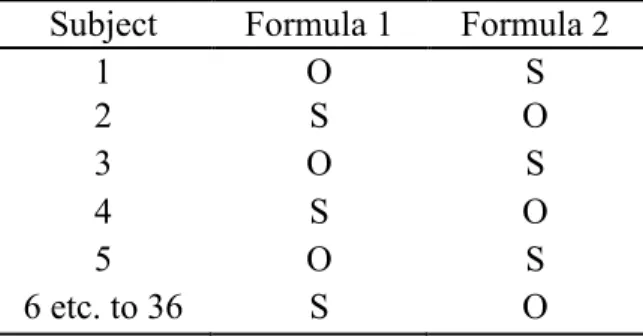
3. Sample of Counterbalanced Schema...28
4. Physical Characteristics of the Sample...34
5. Paired Sample T-Tests for Body Density and Percent Body Fat Estimations...35
6. Model Summary...37
7. ANOVA Summary...37
8. Coefficients...37
9. Aging Influence on Model Summary...39
10.Aging Influence on ANOVA...39
11.Aging Influence on Coefficients...39
LIST OF FIGURES Figure
1. Lung Volumes...xiii 2. Percent Body Fat Means (± SD) using Siri and Ortiz Conversion Formulas
for the Bod Pod® and Underwater Weighing...35 3. Scatterplot of Relationship Between Body Density as Measured by the
DEFINITION OF TERMS AND LIST OF ABBREVIATIONS
General
Black: A term of ethnicity used to describe persons of whom all biological parents were of African descent, excluding Black Hispanics. This encompassed but was not limited to the following ethnicities: African American, Sub-Saharan African, and Afro-Caribbean.
Urine Specific Gravity (USG): A measure of hydration status as determined by a urinalysis screening (1). A reading between 1.00 and 1.025 was considered euhydrated.
Women: A term of gender used to describe females who were physiologically mature. This was restricted to females greater than or equal to 19 years of age. This was different from the term “females” which encompassed all age groups including those less than or equal to 18 years of age.
Body Composition: The make-up of the constituents of the body including fat, bone, and muscle (2).
Air Displacement Plethysmography (ADP): Body composition method used to assess body density (Db) and estimate percent body fat (%BF) via the displacement of air in an
enclosed chamber relative to one’s total body volume (BV) (3).
Isothermal Condition: A process permitting the transfer of heat to the surroundings, causing no change in the overall temperature. The largest sources of isothermal air are those contained in the lungs, near the skin or hair, and in clothing (4).
Body Density (Db): Body mass (BM) as expressed per unit body volume (BV) measured
in grams per centimeters squared (g/cc) (2,5).
BM equals body mass in air (i.e. dry weight in kilograms or pounds) and Bv equals body
volume (the amount of space the body takes up on land and/or displaced in water).
Body Surface Area (BSA): The measured or calculated surface of the human body (2). Calculated as follows (6):
BSA (cm2) = 71.84 x Weight (kg)0.425 x Height (cm)0.725
Fat Mass (FM): All extractable lipids from adipose and other body tissues (2). Fat Free Mass (FFM): All residual lipid-free chemicals and tissues, including water, muscle bone, connective tissue, and internal organs (2).
Density of Fat Free Mass (Dffm): Insert here Dffm term, abbreviation and
explanation, indented
Lean Body Mass (LBM): FFM plus essential body fat (2).
Percent Body Fat (%BF): The percentage of total BM that is composed of fat and estimated from population-specific formulas (2).
• Ortiz %BF Equation: A method of calculating %BF from Db for Black females.
This equation assumes the two-compartment model of body composition that divides BM into FM, of which the density is 0.901 grams per cubic centimeter
(g/cc), and FFM, of which the density is 1.106 g/cc (7). This method was derived under the assumption that Blacks and Whites have differences in FFM, with Blacks having greater muscularity, bone density, bone mineral mass, body potassium, and body proteins than Whites (7–11). Percent body fat is calculated as follows:
• Siri % BF Equation: A method of calculating %BF from Db based upon the
compartment model of body composition. This equation assumes the
two-compartment model of body composition that divides BM into FM and FFM. The
original equation was formulated from cadaver information obtained from young adult White male soldiers and was later expanded to White females. Siri’s general equation assumes that the density of FM is 0.901 g/cc and the density of FFM is 1.10 g/cc (12,13). The widely accepted gender specific,
non-population specific Siri Equation for %BF is then calculated as follows: %BF = (495/Db) – 450
Underwater Weighing (UWW): Body composition method used to assess Db and %BF
via the displacement of water in a tank. In this procedure, whole Db is calculated from BV in
accordance with Archimedes’ principle, which states that an object submerged in water is buoyed up by the weight of the water displaced (14). It is also known as hydrostatic weighing or hydrodensitometry.
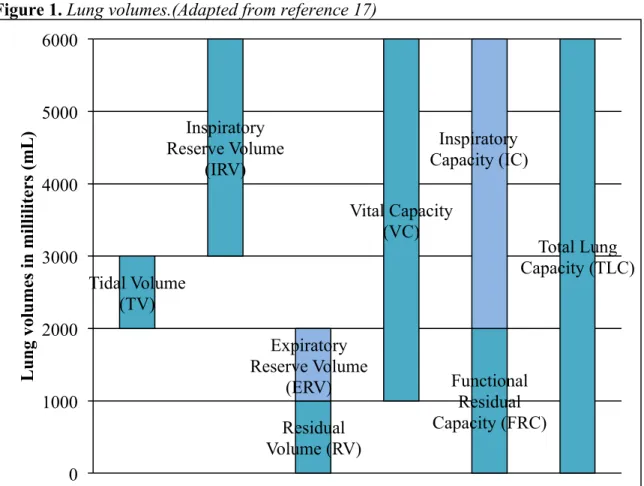
Pulmonary Function Tests (PFTs): An array of studies to measure lung function as shown in Figure 1 which follows the definitions (2).
Forced expiratory flow rate in one second (FEV1): A dynamic measurement of lung
function. The amount of air that can be forcefully exhaled in one second (2).
Forced vital capacity (FVC): Maximum volume expired after maximum inspiration. The women-specific equation is (2):
FVC = 0.1321 x Height (inches) - 0.018 x Age (years) - 4.360 Percent forced expiratory volume (FEV%): The ratio of FEV1 to FVC.
Residual volume (RV): Volume in lungs after maximum expiration (2). The women-specific equation is (15):
RV = 0.0813 x Height (inches) + 0.009 x Age (years) - 3.900
Thoracic gas volume (TGV): The absolute volume of gas in the thorax at any point in time and any level of alveolar pressure (16).
Tidal Volume (TV): The normal volume of air displaced between normal inspiration and expiration (2).
Total lung capacity (TLC): Volume in lungs after maximum inspiration (2). TLC is equal to RV + FVC.
Figure 1. Lung volumes.(Adapted from reference 17)
Statistical Concepts of Variance
Coefficient of Determination (R2): A statistic indicating the strength of fit between
two variables (18).
Coefficient of Variance (CV): A statistic indicating the normalized measure of variance, or dispersion, of a distribution. The standard deviation divided by the mean (18).
Standard Deviation (SD): A statistic indicating the amount of variation, or dispersion, from the mean for an individual data point (18).
Standard Error (SE): A statistic indicating the amount of variation, or dispersion, from the mean for sample means (18).
Standard Error of the Estimate (SEE): A statistic indicating the accuracy of a prediction. The standard deviation of the difference between actual and predicted values (18).
CHAPTER ONE Introduction
Percent body fat (%BF) is often used as an indicator of a person’s general health and nutritional status. Furthermore, it provides an indication of risk for diseases including hypertension, diabetes, cardiovascular disease, hyperlipidemia and certain types of
cancer (19). Rates of obesity, hypertension, and high cholesterol in Blacks have increased dramatically within the last decade (20). More notably, the incidence of major weight gain and the subsequent diseases associated with weight gain and obesity has increased
considerably more in Black women as compared to other subgroups (21). In 2005-2006, 52.9% of Black women over the age of 20 were obese compared with 37.2% of Black men. Similarly, prevalence of extreme obesity was highest among Black women (13.7%) as
compared to that of Black men (5.9%) and White women (6.7%) (22). Therefore, it is crucial for body composition assessment techniques in this population to be convenient, reliable, and accurate.
It has been suggested that the Bod Pod® provides a valid and reliable alternative for body density (Db) measurement and %BF estimation (19,23). Non-significant differences have
affords no exposure to x-rays. The machine operates via air displacement plethysmography (ADP), a technique that displaces air around the body to determine Db in a similar sense that
UWW displaces water (26).
Race/Ethnicity and the Bod Pod®. It is known that there are a number of differences in body composition between ethnicities, specifically Blacks as compared to Whites. Blacks have been shown to have a greater muscularity, bone density, bone mineral mass, total body potassium, and body protein content than Whites, resulting in a higher density of fat free mass (Dffm) (7–11). Therefore, in order to obtain accurate Db results for the Bod Pod®
method, it is suggested that race/ethnicity must be taken into account. Using race/ethnicity-specfic equations, the Bod Pod® has been shown to provide accurate results in Blacks (9,32).
In contrast, using ADP, UWW, DXA and other multi-compartment models, research teams determined that there was no difference in Dffm nor %BF, thereby repudiating the
rationale for race/ethnicity-specific equations for measurement in Blacks (24,33–35). In fact, three of these studies concluded that there was no grounds to expect differences in body composition on the basis of race/ethnicity for ADP when specifically investigating Blacks, contending that race-specific equations were not needed in the first place (26,32,33).
Gender and the Bod Pod®. As with race/ethnicity, body composition differs between genders with respect to both fat mass (FM) and distribution and cellular composition of FFM distribution (36–38). The Bod Pod® has been shown to provide accurate results in women when compared to DXA and UWW (31,39,40), yet the samples used in these studies, like the race/ethnicity studies, included few, if any, Black women. Hornbuckle, Basset and
of body composition assessment. Additonally, Dioum et al. (8) conducted a study on a sample of 196 African women, where the Bod Pod® was used as the criterion variable to which skinfold analyses were compared. Assuming that the race/ethnicity-specific
formulas (7) were valid to use in Black females, Hornbuckle, Bassett and Thompson (41) and Dioum et al. (8) measured body composition in the Bod Pod® without comparison to one of the “gold standard” criterions methods.
In conclusion, the accuracy of the Bod Pod® for use in Black women must be better validated in order for the Bod Pod® to be a trusted measure of %BF in this population.
Statement of the Problem
With increasing attention allied to the relationship between obesity and race/ethnicity, valid body composition measurement techniques in Black women, a population with
dramatically increasing rates of obesity (22), are critical. While numerous studies have been conducted on the validity of the Bod Pod®, data regarding these measurements in Black women is insufficient. Therefore, the primary purpose of this study was to validate the Bod Pod®, using UWW as the gold standard criterion, in adult Black women for the determination of Db and %BF. A secondary purpose of this study was to evaluate the
race/ethnicity-specific equations of the Bod Pod® to determine which equation was the most accurate for use in Black women when determining %BF.
Research Question and Hypotheses
Research Question: Will body density (Db) measurements and consequent percent body
fat (%BF) estimations differ when measured in the Bod Pod® versus underwater weighing (UWW) for adult Black women?
Hypothesis One. There will not be a significant difference between the Bod Pod® and UWW determination of Db for adult Black women subjects.
Delimitations
Due to the numerous hormonal and body composition changes known to occur with menopause, this study was delimited to healthy pre-menopausal Black females 19 to 39 years of age. Body fat estimations were based not only upon body mass but also lung volume exchange. Because the Bod Pod® uses lung volume measures to predict %BF, only those without significant respiratory issues were recruited for this study. Moderate to severe chronic obstructive pulmonary diseases (COPD) such as asthma, bronchitis, and emphysema as well as acute upper respiratory tract infections (URTI; e.g., cold, flu) may cause
significant underestimations of percent body fat using the Bod Pod® (43). Women unable or unwilling to wear the required test clothing for UWW and the Bod Pod® (tight fitting
Limitations
Non-compliance to pre-test guidelines or the actual testing procedures may have produced errors in Db and %BF calculations. To minimize the known potential errors,
adherence to the medical exclusions and pre-test guidelines were verified via a brief health history questionnaire and a 24-hour health history questionnaire upon lab arrival. If a woman did not meet study inclusion criteria or failed to adhere to the pre-test guidelines, she was given the option to reschedule (if medically qualified) or be dismissed from the study. The specific limitations and preventive actions are detailed below.
1. Pre-Test Diet and Exercise. Some women may have had difficulty adhering to the requirements of abstinence from food and exercise four hours prior to testing. To verify they met the study’s pre-test diet and exercise requirements, subjects completed a form self-reporting their compliance. All subjects complied with pre-test diet and exercise guidelines.
2. Hydration Status. Both dehydration and over-hydration can influence the %BF
estimation. To counter this, all women were informed about appropriate fluid intake amounts prior to their testing session. Upon arrival to the lab, not only did they report their fluid intake for the past 24 hours, they also partook in a urinalysis screening to verify a euhydrated state. Those who appeared to be dehydrated or over-hydrated had their testing session rescheduled and were provided with more explicit hydration guidelines.
3. Predicted Lung Volumes. We anticipated that subjects may have had difficulty properly performing the breathing techniques required for determining residual volume (RV) for both the Bod Pod® and UWW testing. To eliminate breath control performance
method for determination of %BF in the Bod Pod® which does not require the puffing technique for lung volume determination. The puffing technique is difficult for many subjects to perform reliably which then negatively impacts the lung volume and subsequent Db and %BF predictions. Predicted lung volume estimates were based upon body surface
area (BSA) (per age, gender, and height) (40). The use of predicted lung volume using predicted values could result in 2.0 - 3.5% error in the body fat prediction (44–46). Even so, this prediction error should not have impacted the ability to compare the validity between the test methodologies, as the Db and %BF prediction error should be consistent between
methods.
4. Underwater Weighing Technique. Because exhaling all one’s air prior to submerging
underwater is deemed “unnatural” and potentially frightening for the subject, subjects first practiced the exhalation component outside of the tank in order to learn how to perform this technique. Once in the tank, subjects engaged in several UWW trials in order to account for learning and fatigue effects of this exhalation technique. The best (and closest) three trials were averaged and used for the UWW %BF formulas (47).
5. Race/ethnicity-specific equations. A further limitation to this study was the ages of the samples used for development of the Db equations. There is no published Db formula for
Significance
Black women are under-represented in body composition research. This proposed study will assist in determining whether or not the Bod Pod® is an appropriate means of body composition measurement in Black women, when race/ethnicity-specific equations are used. Considering that Black women are at major risk for the development of obesity and obesity-related diseases, determining whether the Bod Pod® is a valid body composition assessment method for this specific population may facilitate wider use of ADPtechnology in
CHAPTER TWO Literature Review
Introduction
The Compartment Models
Traditionally, body composition methods involve the determination of body density (Db)
by underwater weighing (UWW), known as the two-compartment model (2C). The 2C model is based on the principle that the body can be divided into two compartments – fat mass (FM) and fat free mass (FFM). The Bod Pod® operates under a 2C model. However, it has been suggested that the 2C model lacks validity due to the fact that it makes
assumptions regarding the density of FFM (44).
and commercial wellness centers in lieu of UWW, it is important to determine the validity of the Bod Pod® as a method of body composition in the understudied Black female
population.
Underwater weighing was the “gold standard” for body composition measurement, however, this method has proven to be time consuming, difficult to perform, and impractical in some populations (elderly, children, obese, disabled) (23). Thus, since the mid-1990s (3), air-displacement plethysmography (ADP) has become a popular method used to measure human body composition due to its ease of use. It is less intimidating for children, the elderly, disabled, and anyone adverse to water submersion (40).
Air displacement plethysmography offers no radiation exposure like dual energy x-ray absorptiometry (DXA) and requires no ingestion of radioactive compounds as with doubly labeled water. One such ADP unit, developed by Life Measurement Inc. (LMI, Concord, CA) is known as the Bod Pod®. This unit, now owned by COSMED (Rome, IT), is the most widely used ADP unit, consisting of several models to accommodate various body mass sizes, and contains numerous population-based body composition estimation formulas. However, the Bod Pod® does have limitations. First, the equipment is expensive, costing between $30,000 and $40,000 per unit (31). Second, certain Bod Pod® models have weight limitations due to a smaller internal chamber, thereby limiting its use in morbidly obese or athletically overweight populations (e.g., football linebackers). While measurement of body composition in the Bod Pod® is relatively quick, the small chamber may exacerbate feelings of claustrophobia in certain individuals, even with the viewing window. While the following may not be limitations of the Bod Pod® itself, there is a strict clothing requirement to
information is limited on using the Bod Pod® in ethnic populations, especially Black women.
Thus, this research aimed to explore the use of body composition measurements
comparing results obtained from both the Bod Pod® and UWW in Black women. It did so by comparing the Black %BF equation formulated by Ortiz (7) to the more common “default” Caucasian %BF equation developed by Siri (13).
Basic Principles of Underwater Weighing
Goldman and Buskirk (5) and Katch, Michael, and Horvath (50) were among the first to have determined UWW to be a valid and reliable measure for Db, where the volume of the
body is obtained from water displacement. This research paved the way for UWW to become the criterion method for body composition measurements. Underwater weighing is historically regarded as the “gold standard” of body composition techniques. Other more current “gold standard” reference methods include DXA and a multi-compartment model; however, UWW is still highly regarded as a body composition technique. The UWW procedure is based on Archimedes’ principle which states that an object submerged in water is buoyed up by the weight of the water displaced (14). The difference between the weight of the body in air (Wa) and the weight of the body submerged in water (WW) is the weight of the
displaced water (5). Residual lung volume (RV) is also taken into account. In more relative terms, due to the fact that body fat is less dense than water, adipose tissue increases one’s buoyancy. Conversely, FFM is denser than water thus decreasing buoyancy (14). Using a standard formula, body volume (BV) is determined:
Body density (Db) is then calculated by including not only the components of the BV formula,
but also the additional components of Wa and lung and gastrointestinal (GI) gas volumes as
illustrated in the standard Db equation (5,14):
Db = Wa ÷ [(Wa – WW)/DW - (RV + 100 mL)]
The density of water (DW) is determined via a Table and is partially represented in Table 1
below.
Table 1. Partial Display of Water Density (DW) Table (Adapted from Reference 47). Water Temperature (C°) Water Density (g/cm3)
20 0.998207
25 0.997047
30 0.995650
35 0.994034
40 0.992218
Residual volume (RV), the amount of air left in the lungs after a maximal expiration, can be measured directly using a variety of methods (nitrogen washout, helium dilution, or
oxygen dilution methods) or estimated based on the combined personal characteristics of age, sex, height, and occasionally, physical activity level (14,51). Because males have larger RV values than females, gender-based estimation formulas have been developed as follows (15):
accordingly. However, Pellegrino et al. (54) state that, if available, a race/ethnic-specific reference equation should be used over a race/ethnic adjustment factor.
The last component in the Db prediction formula corrects for the amount of
non-expellable air in the gastrointestinal (GI) tract. Since the volume of air in the GI tract is difficult to measure, it is generally estimated as 0.1 liters and the correction factor of 100 mL is added on to the RV in the Db equation (51). Percent BF is then calculated from Db using
population-specific equations (14).
Basic Principles of the Bod Pod®
In ADP, the volume of air displaced inside the enclosed chamber indirectly measures the volume of an object. The subject sits inside the large, egg-shaped, fiberglass chamber and a volume of air is displaced equal to the BV of the subject.
Boyle’s law states that at a constant temperature, pressure (P) and volume (V) are inversely related:
P1/V1 = P2/V2
The Bod Pod® is functionally divided into two chambers: the anterior test chamber where the subject is seated (≈ 450 L) and the posterior reference chamber (≈300 L) (4). Between the chambers, a diaphragm oscillates to create small volume changes that are equal in magnitude but opposite in sign between the two chambers. This produces small pressure
fluctuations (3). The air in the chambers is allowed to compress and expand during which it freely gains and loses heat (i.e. adiabatically). In this sense, the Bod Pod® utilizes Poisson’s law:
Where γ is the ratio of specific heat of the gas at a constant pressure to that of a constant volume and is equal to 1.4 for air (23) and 1.3 in gases such as carbon dioxide (CO2) and
water (H2O) (3). To maintain equivalency of gas composition in the two chambers, and thus
constancy of γ, an air circulation system mixes the air between the chambers. A two-point calibration process preceding each test accounts for variations in conditions such as chamber size (3).
To accurately measure BV, it is necessary to account for the effects of isothermal
conditions. Body surface area (BSA) is estimated by the Dubois formula (6): BSA (cm2) = 71.84 x Weight (kg)0.425 x Height (cm)0.725 BSA is then multiplied by the constant k to yield surface area artifact (SAA) (6):
SAA (l) = k(l/cm2) x BSA(cm2)
SAA is used to correct for the negative volume caused by isothermal effects related to skin surface area (3). Other pulmonary measurements are extractable from the Bod Pod® for use in the body composition equations.
General Reliability and Validity of the Bod Pod®
Nunez et al. (31) showed a high positive correlation (r = 0.93; p < 0.0001) in Db between
the Bod Pod® and UWW in a sample of 110 subjects (gender: 66 females, 54 males; age range: 6 to 86 years). In another Bod Pod® comparison study, Ballard et al. (39) examined a sample of 47 female division II athletes and determined no significant differences in
predicting %BF between ADP and DXA (%BFADP = 22.5 ± 5.5%, %BFDXA = 22.0 ± 4.7%;
However, data regarding between-day and within-day reliability on the Bod Pod® yielded mixed results. When measuring %BF, the Bod Pod® produced a wide range of results for within-day reliability. The coefficient of variation (CV) for these studies ranged from 1.7% to 4.5% (19,25,29,42,55). It was noted by Miyatake et al. (55) that the 4.5% CV was the result of an outlier in the data. Though not as extreme as the within-day reliability data, the Bod Pod® produced a wide range of results when examining between-day
reliability. The CV for these studies ranged from 2.0 to 2.3% (30,31,55). The coefficient of variation expresses the standard deviation (SD) as a percentage of the sample mean – the lower the CV the higher the precision (18). This indicates a small difference in the tests and thus a high degree of replicability.
Validitity of the Bod Pod® as compared to UWW, DXA, and multicompartment models also produced inconclusive results. When validating the Bod Pod® against the 2C UWW model, mean group differences ranged from -4.0% to 1.9% BF (4). Five studies showed there was no significant difference between the two measurement techniques
(19,28,29,34,42), five showed that %BF was lower with the Bod Pod® and two showed that %BF was higher with the Bod Pod® (23,24). When validating the Bod Pod® as compared to the 4C DXA model, four studies showed no significant difference (28,31,53,55), four showed a positive significant difference (26,29,30,34), and one showed a negative significant
difference (24). Multiple researchers compared the Bod Pod® to multicompartment models to determine its validity (26,28,34). Results showed that the 2C Bod Pod® considerably underestimated %BF (1.8-2.8%) compared to 4C model estimates of %BF.
suggest otherwise. Therefore, more population-specific research involving reliability and/or validity is warranted for the Bod Pod.
Race/Ethnicity
For the purposes of this study, Black is described as a person of whom all biological parents were of African descent, excluding Black Hispanics. This encompassed but was not limited to the following ethnicities: African-American, Sub-Saharan African, and Afro-Caribbean. This definition differs from that of strictly African or of mixed raced Blacks.
Race/ethnicity-specific Equations. Blacks have greater muscularity, bone mineral mass, and bone density compared with Whites (7–10). This has led to speculation that these differences would correspond to higher density of FFM (Dffm), however the effect on Dffm in
Blacks may be compensated for since the mineral fraction is relatively low (less than 7% of FFM) (17). In any case, the specific race/ethnicity equations that have been developed for predicting %BF for Db (7,58) have yielded conflicting results. Millard-Stafford et al. (34) and
Visser et al. (35) both determined via measurement of Dffm in Blacks using a
multi-compartment model that there is no difference in Dffm, repudiating the rationale for
Table 2. Equations for Determining Percent Body Fat from Body Density. Author (citation) Population %BF equation
Siri (13) General (495 ÷ Db) – 450
Brozek et al. (12) General (457 ÷ Db) – 414.2
Schutte et al. (58) Black males (437.4 ÷ Db) – 392.8
Ortiz et al. (7) Black females (485 ÷ Db) – 439
Reliability and Validity of the Bod Pod® in Blacks
There is limited data regarding the reliability and validity of the Bod Pod® in the assessment of body composition in Blacks, most of which investigate Black men.
Furthermore, studies involving Black women usually consist of very small subject samples. Bod Pod® Studies in Adult Black Men. An ADP ethnic-equation validity study (6) investigated the use of the Schutte equation (49) in adult Black men (n = 30; aged 19-45 years). That study consistently found the Bod Pod® to slightly, but significantly (p < 0.01), underestimate Db (0.00450 ± 0.00718 g/cc-1) and overestimate mean %BF when compared
to UWW (+1.73%). Collins et al. (10) suggested that a confounding factor likely accounted for the differences in the Wagner study (24), however, they did not specify the potential confounding factor(s). It is speculated that lack of a White control group may have been one of the limitations. Collins et al. (10) did note that the effects are impossible to discern as individuals from multiple ethnic groups were treated as one. Collins et al. (26) also found no difference on the basis of race by ADP in Black versus White male collegiate football
players.
estimated obtained with ADP, UWW, and DXA, and various multi-compartment
models (24,31,33–35). Furthermore, Wagner and Heyward (9) indicated that the Schutte equation (58), which provides an additional 3.0% BF in lean Black male athletes,
overestimates %BF.
Bod Pod® Studies in Adult Black Women. Gallagher and Heymsfield (37) have shown
that White women have less upper muscle mass as compared to White men. Similarly, Nindl et al. (38) showed there are significant differences (p ≤ 0.05) between men and women for lean soft tissue mass of the arm (men: 7.1 kg vs. women: 6.4 kg) and fat mass of the leg (men: 5.3 kg vs. women: 6.8 kg) regardless of race. Therefore, several women-specific formulas have been developed. Ortiz et al. (15) developed the Black women-specific body composition formula in a sample (n = 28) of Black women aged 24-79 years. Unfortunately, the formula must be used with caution in younger populations, as a major limitation is women under 24 years of age were not included in this subject sample.
In general, the Bod Pod® has been shown to provide accurate results in women when compared to DXA and UWW (31,39,40), however most of the studies involved relatively few adult Black women. For example, 43 White college-aged women participated in an ADP versus DXA body composition study (26). Results indicated no significant differences (p < 0.01) between ADP (24.3 ± 1.1) and DXA (23.8 ± 0.8) when measuring %BF. This suggests that the Bod Pod® is valid for assessing body fat in White college women but lends no information regarding the applicability to Black women collegians.
children. However, that study included both adults and children and gave no information regarding how many of these 18 Black females were adult women. The overall objective of the study was to determine the accuracy of the Bod Pod® for use in children when compared to UWW, but 66.7% of subjects were over 18 years of age and therefore could be considered adult-aged. Of the studies determining the accuracy of ADP and those strictly examining adults, Biaggi et al. (42) had a total sample size of 47, of which only 8.5% were Black women (i.e., n = 4). They (28) found no significant difference between %BF as measured by ADP (25 ± 8.9%) and UWW (25.1 ± 7.7%). Lack of sufficient representation of Black women also occurred in the landmark ADP validation study conducted by Fields et al. (10) which showed no significant differences (p = 0.35) in Db when comparing ADP
(1.0349 g/cm3) to UWW (1.0352 g/cm3). The number of Black women in Fields et al.’s study (10) was only three. It is quite possible that no significant differences were found in any of the studies discussed above due to lack of power to detect a significant difference, thereby potentially creating a Type II error (18). Therefore, the Bod Pod® needs to be re-evaluated with a sufficient sample size using a criterion reference method such as UWW in order to more confidentally state whether or not an ethnic variation in %BF estimation exists for Black women when comparing UWW to ADP using the Bod Pod® .
African women ages 19-56, in which the Bod Pod® was used as the criterion variable to which skinfold analyses were compared. Their purpose was two-fold: 1) to test the validity of an equation for predicting body density from skinfolds in Africans and 2) to determine the effect of calculating %BF from Db the Ortiz formula rather than the Siri equation. The
limitation common to both studies (8,41) was that neither measured body composition in the Bod Pod® in comparison to one of the “gold standard” criterions methods (i.e., either UWW or DXA). Therefore, the validity of the Bod Pod® remains quesionable for Black adult women.
Conclusion
The accuracy of the Bod Pod® using the race/ethnicity-specific equation of Ortiz et al. (7) in Black women must be better validated in order for it to be a trusted apparatus to measure %BF in this population. Furthermore, the conflicting Db and %BF validation results
from past studies utilizing the Bod Pod® suggest that race/ethnicity must be explored further. If shown to be valid for Black women, the Bod Pod® will provide a convenient measurement tool to determine %BF. Information gathered via the Bod Pod® will enable practitioners to provide a more complete health risk evaluation and set better goals for the
CHAPTER THREE Methodology
This was a cross-sectional prospective study that aimed to address the limited data on the validity of the Bod Pod® for use in Black women. Therefore, the primary purpose of this study was to validate the Bod Pod®, using UWW as the gold standard criterion, in adult Black women for the determination of Db and %BF. A secondary purpose of this study was
to evaluate two race/ethnicity-specific equations of the Bod Pod® to determine which equation would be most accurate for use in Black women when determining %BF.
Subjects
Recruitment. Based upon published data from several references (19,24,27,30), it was determined that 36 healthy Black female subjects needed to complete this study in order to achieve a power of 0.70 at an alpha level of 0.05 (18). Subjects were recruited from the central North Carolina area via posters, informational emails, and word of mouth,
specifically targeting community businesses, organizations and university classes with Black customers/students. To facilitate successful completion of the study, all subjects were pre-screened with a telephone interview (Appendix A).
pre-menopausal transition, which can occur as early as 40 years of age (59). As detailed in the Definition of Terms section, subjects must have self-reported that all of their biological parents are of African heritage. This was to ensure a more pure biological sample as those of mixed race/ethnicity may have different bone and Db values. Black Hispanics were excluded
from this population, as there are also Hispanic % BF formulas. It is acknowledged that self-reporting is not optimal, however it is beyond the scope of this investigation to perform genetic testing to quantify the true percentage of their African heritage.
Pulmonary Health and Breathing Technique. All subjects were free from moderate to severe chronic obstructive pulmonary disease (COPD: e.g. asthma, bronchitis, emphysema) and will not have an acute upper respiratory tract infection (URTI; e.g., cold, flu). The presence of an upper respiratory tract infection or moderate to severe COPD has been shown to lead to an underestimation in %BF as compared to healthy subjects (43,60). Subjects must have also be willing and able to perform the appropriate breathing techniques as required by the Bod Pod® and UWW.
Disordered Eating Risk. Those at risk for disordered eating (as determined by self-report) would have been excluded from this study, however, no subjects reported disordered eating or disordered eating tendencies. Body composition results were given to the subjects, therefore, to prevent unintentional exacerbation of disordered eating behaviors, subjects determined to be at risk for disordered eating (via their self-reported behaviors) were
excluded from the study. Educational information to prevent disordered eating was provided to all subjects at their first lab appointment.
subjects reported severe claustrophobia. Those with mild claustrophobia were included if their practice period demonstrated the ability to remain in the Bod Pod® for the required testing time. Finally, those with known hydrophobia were excluded from the study as testing requires subjects to sit in a tank of water submerged for up to 10 seconds for each UWW trial.
Test Clothing. All subjects were willing and able to wear the mandatory test clothing per the Bod Pod® testing instructions (i.e., tight fitting bathing lycra or spandex one or two piece bathing suit) (61). They brought with them their own bathing suit, as one was not provided.
Body Hair. Hair creates an isothermal condition, as opposed to an adiabatic condition, which results in a negative volume when measured by air displacement plethysmography (ADP) resulting in an underprediction of %BF (62). Therefore, all subjects were required to wear a lycra bathing cap (provided) and those with excessive body hair were required to shave/depilate at home prior to lab arrival. Failure to meet any one of the above conditions was grounds to exclude the volunteer from the study.
Instrumentation
The PulmoLife hand-held pulmonary function screening device (MicroDirect,
Lewistown, ME) was used to measure FEV1 and FEV% to determine risk for COPD. An
electronic scale was used to measure body mass (BM) (Tanita Corp., Tokyo, Japan). A
stadiometer (Perspective Enterprise, Portage, Michigan) was used to determine height to the nearest centimeter (cm). Lung volumes, Db and %BF was determined in the ADP unit
chamber in which the subject sat during measurement and a rear reference chamber. A molded fiberglass seat separated the two chambers. An oscillating diaphragm within the Bod Pod® created small volume changes, which produced small pressure fluctuations.
Temperature of the water was determined using a submergible thermometer (Springfield Instruments, Inc., Woodridge, New Jersey). Body density was determined using a five-foot depth UWW tank outfitted with an electronic load-cell system (Avery Weigh-Tronix, Fairmont, Minnesota). Urine specific gravity (USG) was determined with a handheld refractometer (Reichert, Depew, New York).
Procedures
Pre-Telephone Screening. Fifty-one subjects were first interviewed over the telephone by the principle investigator to determine study eligibility. The telephone script and
Testing Locations. All appointments took place in the labs on the ground floor of Fetzer Hall at UNC-Chapel Hill’s Main Campus. The consent form, COPD screening, and
questionnaires were completed in the Applied Physiology Lab (APL) and/or private conference room. Bod Pod® testing was conducted in a private body composition
assessment room in the Sports Medicine Research Lab (SMRL; contains a private restroom for changing into a bathing suit and voiding for the urinalysis). UWW was conducted in a private area in the APL. The subjects were able to change out of their wet bathing suit following the UWW in a women’s locker room located adjacent to the APL. Both labs are located in close walking proximity of each other.
Parking. Subjects not affiliated with the University were able to park for free in designated visitor parking spaces behind Fetzer Hall per space availability. Visitor
permission parking must be requested in advance so a pass can be obtained upon arrival, but free visitor parking is not guaranteed. All others used their regular modes of
transportation/parking when on the UNC campus. The testing appointment required approximately one hour.
Test Appointment Day.
1. Consent Form. Upon arrival to the ESTL, the subject reviewed and signed the Consent Form with the principal investigator (Appendix B), after which she completed the following questionnaires and screening tests:
would be known via the telephone interview, it was possible a potential subject could have COPD and not know it or the subject may have contracted a cold/flu after the telephone interview. Another risk we attempted to avoid was facilitating those with known or suspected disordered eating. Thus, the health history screening form contained a few
standard-screening questions pertaining to disordered eating. If the subject’s responses were suggestive of disordered eating patterns (answering “yes” to any one of the screening
questions), she was excluded from this study and given information for recognizing and treating disordered eating behaviors (31). Fortunately, this did not pertain to our recruitment sample. Previously approved educational pamphlets and contact information was provided (IRB Study #: 08-0093, PI: Bonita L. Marks, Ph.D., Study Title: Influence of light clothing on percent body fat estimations using the Bod Pod®). Subjects were also asked to verify their weeklong hydration status and the potential for either claustrophobia and/or
hydrophobia. No subjects reported claustrophobia or hydrophobia and all complied with the hydration guidelines.
3. Twenty-four-Hour History Form (Appendix D). The subject completed a short questionnaire regarding her 24-hour health status and when she last ate, consumed fluids, and exercised. For accurate Bod Pod® results, the subject was instructed not to have an acute illness nor to have eaten or exercised within two hours of the test – she must have been rested and hydrated. If it was determined that the subject did not meet these criteria then the
appointment was rescheduled. No subjects were rescheduled due to non-compliance of a subject in regards to her 24-hour history.
“moderate to severe” COPD (FEV1 < 80% of predicted) were excluded from the
study (43,60). All subjects received information about COPD and a UNC contact number for further evaluation. Previously approved educational pamphlets and contact information were provided (IRB Study #: 08-0093, PI: Bonita L. Marks, Ph.D., Study Title: Influence of light clothing on percent body fat estimations using the Bod Pod®). The spirometry equipment measured forced expiratory flow rate in one second (FEV1) and percent forced expiratory
volume (FEV%). Analyzed data provided a percentage of normal indication (FEV1) which
was then compared to predicted values to determine the presence and severity of the
disease (64). Disposable one-way valve cardboard mouthpieces (exhalation only) were used. The unit was cleaned with an antiseptic wipe between subjects. For this test, the subject was asked to sit and provide a maximal exhalation into the unit. This unit is accurate to ± 3.0%, which complies with industry standards (65). The subject performed this test three times, resting one to two minutes between trials. The ‘best’ score was used as the test score. If accepted into the study, the subject proceeded with the urinalysis and body composition testing. Fortunately, no subjects had to be excluded due to the presence of moderate to severe COPD.
5. Urinalysis and Body Composition Testing. Following completion of the screenings, the subject was escorted to the SMRL for the urinalysis screening and first body composition test using the Bod Pod®. She was then escorted back to the APL to complete the UWW test. Descriptions of each methodology are described below.
Urinalysis Screening (66). Hydration status via measurement of urine specific gravity
and 1.025 was considered euhydrated; a USG reading of greater than 1.025 was considered potential dehydration and the subject was rescheduled. One subject was rescheduled due to her hydration status.
6. Air Displacement Plethysmography (ADP; Bod Pod).
If the urinalysis screening was acceptable, then the subject changed into her bathing suit,
removed her jewelry (put in a safe location among her personal belongings), exited the
bathroom, and entered the Bod Pod® testing room. The subject participated in one test in the
Bod Pod® using the appropriate formulas, Ortiz (37) and Siri (38). Once body composition
results are recorded for the first formula, the equation initially input into the Bod Pod®
software was changed to the second formula. This eliminated the need for multiple testing
procedures within the Bod Pod®. To reduce bias, use of these two formulas was presented in
a counterbalanced order per subject. This results in the Ortiz (7) formula used first for 18
subjects and the Siri (13) formula used first for the other 18 subjects as illustrated in Table 3 below, where “O” refers to the Ortiz formula and “S” refers to the Siri formula.
Table 3. Sample of Counterbalanced Schema.
Subject Formula 1 Formula 2
1 O S
2 S O
3 O S
4 S O
5 O S
6 etc. to 36 S O
Calibration Procedure. Prior to each testing session, a two-point calibration of the Bod
cylinder. It was ensured that the calibration cylinder was handled with care to avoid causing any dents to the cylinder as this may have altered the volume and thus calibration.
Measurement Period. The subject was clothed in her bathing suit, provided a clean
study-supplied lycra bathing cap required for the testing and enter the Bod Pod®. The subject was instructed to sit in the chamber while staying as still as possible and breathing normally. The subject was first given a three-minute practice/familiarization session so she could become accustomed to the unit and to determine if she was able to sit in the unit without a claustrophobic reaction. After the familiarization period, the door was opened and the subject was asked to complete two measurements with the Bod Pod®, with the formulas presented in a counterbalanced order between subjects as previously described.
If results from the first and second test measurement periods were inconsistent, it was repeated up to three times. The entire testing phase required approximately 20 minutes. At the conclusion of the Bod Pod® testing session, the subject was escorted to the UWW tank area in the APL. The Bod Pod® chamber was cleaned with an antiseptic disposable cloth and re-calibrated prior to testing a new subject.
7. Underwater Weighing. For UWW testing, the subject was asked if she needed to empty her bladder and then, after voiding as needed, was escorted to the APL. Prior to the subject’s entrance into the UWW tank, the temperature of the water was taken. The subject was asked to remove all jewelry since it has a density of its own. For comfort, the
temperature of the water in the UWW tank was between 34 and 38 degrees Celsius
(equivalent to Fahrenheit, similar to bathwater). Water density (DW) was determined from
method; this included wetting the head. The tare weight of the electronic load cell system was zeroed out. Basic instructions were given to the subject regarding how to sit in the chair suspended within the UWW tank so that the head remained above the water level prior to the submersion procedure. With minimal water movement, the subject grasped one side of the PVC piping chair and slowly lowered herself into the chair, grasping the other side when seated.
The subject was then instructed to fully submerge her head underwater by bending forward slowly, so that all parts of the body are completely submerged. At the same time, she exhaled maximally. The feet did not touch the bottom or sides of the tank. If the subject “floated” off of the seat, she was required to wear a weight belt and the weighing procedure was repeated. The subject remained motionless while seated completely submerged
underwater until the scale reading had minimal fluctuation and no more exhalation bubbles were seen. It took up to ten seconds underwater for the computer to determine the
underwater weight of the subject. At the completion of the trial, the tester knocked on the tank to cue the subject to slowly come up from underneath the water. Six to ten trials of UWW were administered. The average of the closest and highest three trials were used for Db and %BF determinations. If the sinking belt was used, the weight was then subtracted out.
Residual Volume Estimation (67). Residual volume (RV) was estimated using the
Wilmore formula for females:
RV (L) = (0.009 x age in years) + (0.08128 x height in inches) – 3.9
Body Density Determination. Body density (Db) was calculated per the Goldman and
Buskirk equation (5):
where Wa and WW are measured in kilograms (kg) and RV and the constant of 0.1 were
measured in liters (L). Standard published %BF equations were selected for Black females using the following formulas:
• Ortiz formula (7): %BF = (485/Db) – 439
• Siri formula (13): %BF = (495/Db) – 450
Research Design and Statistical Analyses
This cross-sectional quasi-experimental study utilized a partially randomized
counterbalanced design with subjects serving as their own control. Paired t-tests were used to compare estimates of Db and %BF for ADP and UWW. If significant differences were
found, post-hoc Bonferroni adjustments were performed to prevent type I family-wise error. Ninety-five percent confidence limits of the mean differences between body composition methods were determined. The agreement between methods was explored using a simple linear regression and Bland-Altman plots. A simple linear regression with age entered as an independent factor was also used to determine if the nearly 20-year age span of the subjects impacted the results. Descriptive statistics (means, standard deviations) were used to characterize both the demographic and the body composition scores. Statistical significance was set a priori at p < 0.05 for all analyses. The data was analyzed using the SPSS (v. 20.0) Statistical Software Package (IBM Solutions, Durham, North Carolina). The following analyses were used to test the specific research questions and corresponding hypotheses:
Research Question: Will body density (Db) predictions and consequent percent body fat
Hypothesis One. There will not be a significant difference between the Bod Pod® and UWW determination of Db for adult Black women subjects.
CHAPTER FOUR Results Subjects
The primary purpose of this study was to validate the Bod Pod®, using underwater weighing (UWW) as the gold standard criterion, in adult Black women for the determination of body density (Db) and estimation of percent body fat (%BF). A secondary purpose of this
study was to evaluate the Siri and Ortiz race/ethnicity-specific equations to determine which equation would be most accurate for use in Black women when determining %BF from Db.
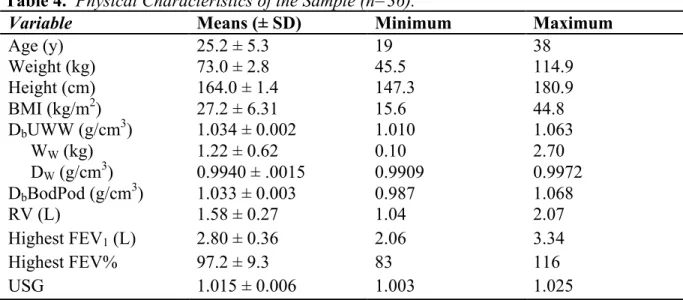
Fifty-one subjects were screened for the study, however, nine subjects did not fit the racial criteria, four subjects were not in the required age range, and two subjects noted severe claustrophobia. Therefore, thirty-six adult Black women with both Black biological parents volunteered to participate, signed the UNC-IRB approved consent form, and completed the body composition protocol. The protocol included Db measurement in the Bod Pod® and
Table 4. Physical Characteristics of the Sample (n=36).
Variable Means (± SD) Minimum Maximum
Age (y) 25.2 ± 5.3 19 38
Weight (kg) 73.0 ± 2.8 45.5 114.9
Height (cm) 164.0 ± 1.4 147.3 180.9
BMI (kg/m2) 27.2 ± 6.31 15.6 44.8
DbUWW (g/cm3) 1.034 ± 0.002 1.010 1.063
WW (kg) 1.22 ± 0.62 0.10 2.70
DW (g/cm3) 0.9940 ± .0015 0.9909 0.9972
DbBodPod (g/cm3) 1.033 ± 0.003 0.987 1.068
RV (L) 1.58 ± 0.27 1.04 2.07
Highest FEV1 (L) 2.80 ± 0.36 2.06 3.34
Highest FEV% 97.2 ± 9.3 83 116
USG 1.015 ± 0.006 1.003 1.025
Notes: BMI = body mass index; DbUWW = body density by underwater weighing;
DbBodPod = body density by Bod Pod®; RV = estimated residual volume, 0.0813 x Height
(inches) + 0.009 x Age (years) - 3.900; WW = water weight by underwater weighing;
DW = water density by underwater weighing; USG = urine specific gravity.
Body Density Measurement and Percent Fat Estimation
To answer the research question, “Will body density (Db) measurements and consequent percent body fat (%BF) estimations differ when measured in the Bod Pod® versus
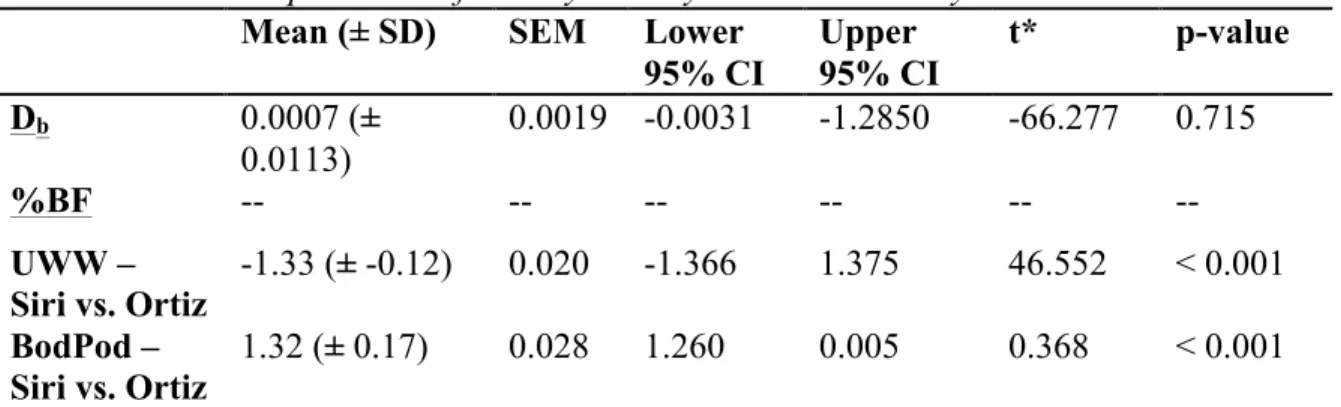
underwater weighing (UWW) for adult Black women?” several paired samples t-tests were performed. As shown in Table 5 the results of the paired t-tests suggested that there was not a significant difference in determination of Db using either the Bod Pod® or UWW method
despite the Db measurement obtained from UWW being approximately 1% greater than the
Bod Pod® Db measurement. However, their degree of association for the Db values was high
the estimated %BF comparisons. The Ortiz formula consistently estimated higher %BF regardless of the Db method used. The %BF estimation results are depicted in Figure 2.
Table 5. Paired Sample T-Tests for Body Density and Percent Body Fat Estimations. Mean (± SD) SEM Lower
95% CI
Upper 95% CI
t* p-value
Db 0.0007 (±
0.0113)
0.0019 -0.0031 -1.2850 -66.277 0.715
%BF -- -- -- -- -- --
UWW –
Siri vs. Ortiz -1.33 (± -0.12) 0.020 -1.366 1.375 46.552 < 0.001 BodPod –
Siri vs. Ortiz
1.32 (± 0.17) 0.028 1.260 0.005 0.368 < 0.001 Notes: Siri = using Siri %BF estimation formula; Ortiz = using Ortiz %BF estimation formula; UWW = underwater weighing method; BodPod = Bod Pod® method; Db = body
density calculation, * degrees of freedom = 35.
Figure 2. Percent Body Fat Means (± SD) using Siri and Ortiz Conversion Formulas for the Bod Pod® and UWW.
0 5 10 15 20 25 30 35 40
UWW Bod Pod
Ortiz Siri *
To determine the degree of association between the UWW and Bod Pod® methods for determining Db, a simple linear regression analysis was used. With the Bod Pod® Db
variable assigned as the dependent variable and the criterion UWW Db assigned as the
independent variable, the following scatter plot was created (see Figure 3).
Figure 3. Scatterplot of Body Density Values with Bod Pod® Designated as the Dependent Variable and UWW as the Independent Variable.
As shown in the regression summary tables below (Tables 6-8) where the dependent variable is Bod Pod® Db and the independent variable is UWW Db, the regression analyses
produced a highly significant adjusted R2 value. The adjusted R2 value approximates the 0.98
0.99 1 1.01 1.02 1.03 1.04 1.05 1.06 1.07 1.08
1 1.01 1.02 1.03 1.04 1.05 1.06 1.07
Bod
y D
en
si
ty b
y Bod
P
od
®
(g/
cm
3)
“goodness of fit” of the model (18) and suggests that approximately 60% of the variance of the Bod Pod® Db was explained by UWW Db.
Table 6. Model Summary.
R R Square Adjusted R
Square
SEE
0.783 0.613 0.602 0.01136
Table 7. ANOVA Summary.
Sum of Squares Mean Square F p-value
Regressiona 0.007 0.007 53.932 < 0.001
Residualb 0.004 0.000 -- --
Totalc 0.011 -- -- --
Notes: a df = 1; b df = 34, c df = 35
Table 8. Coefficients.
Ba SEa Betab t p-value
(Constant) -0.101 0.154 -- -0.653 0.518
UWW Db 1.097 0.149 0.783 7.344 < 0.001
Notes: a Unstandardized Coefficients, b Standardized Coefficients.
Bland Altman Plot of Agreement between Body Density Determination Methods The body composition assessment literature often uses Bland-Altman plots for
demonstrating the degree of agreement between body composition variables. Therefore, the agreement between Db for UWW and the Bod Pod® is shown via a Bland-Altman plot (68)
in Figure 4, where the difference between methods in Db (calculated as UWWDb –
BodPod Db) is plotted against the mean Db of the two methods. This plot was also used to
the average difference between values (0.0007 g/cm3).
Figure 4. Bland-Altman Plot of Agreement between Methods.
Although there is good overall agreement between Db by UWW and Db by the Bod Pod®
in the present study and the paired %BF scatter plots exhibiting perfect correlations, the Bland-Altman plot depicts that the difference between methods was greater than 0.020 g/cm3, or 1.96 times the standard deviation from the mean in four subjects.
Age Influence
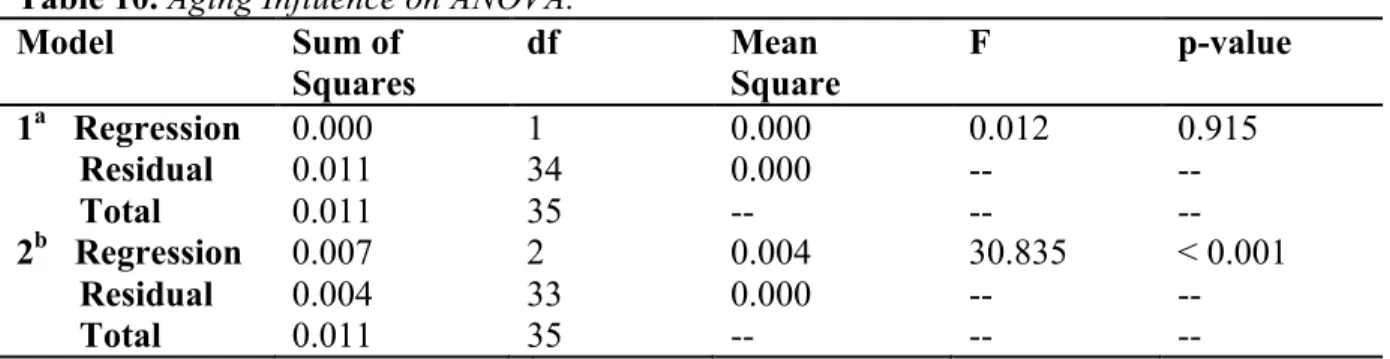
Because the subjects’ ages spanned two decades, it seemed prudent to determine if aging was a potential confounding factor in the results. Therefore, another simple linear regression was run (Tables 9-12), with age included as an independent variable and entered in the first
-0.032 -0.024 -0.016 -0.008 0 0.008 0.016 0.024 0.032
1 1.01 1.02 1.03 1.04 1.05 1.06 1.07
D
iffe
re
n
ce
in
Db
(U
WW
- Bod
P
od
®
)
Pod® Db was entered as the dependent variable for all analyses. The bivariate correlation
showed no significant relationship to either UWW Db (r = -0.219, p > 0.19) or BodPod® Db
(r = 0.019, p > 0.90) and the partial correlation that excluded age showed only a slight improvement in the correlation (Table 12, R partial = 0.807) versus the bivariate correlation in Table 6 that did not exclude age(R= 0.783). Thus, there appeared to be no significant relationship between aging and Db in this subject sample of 19-38 year old Black women.
Table 9. Aging Influence on Model Summary.
Model R R Square Adjusted
R Square df SEE F ∆ F ∆ p-value
1a 0.019 0.000 -0.029 34 0.018 0.012 0.915
2b 0.807 0.651 0.630 33 0.011 61.637 < 0.001 Notes: a Independent variable: age; b Independent variables: age + body density by UWW; ∆
= change.
Table 10. Aging Influence on ANOVA.
Model Sum of
Squares df Mean Square F p-value
1a Regression 0.000 1 0.000 0.012 0.915
Residual 0.011 34 0.000 -- --
Total 0.011 35 -- -- --
2b Regression 0.007 2 0.004 30.835 < 0.001
Residual 0.004 33 0.000 -- --
Total 0.011 35 -- -- --
Notes: a Independent variable: age; b Independent variables: age + body density by UWW.
Table 11. Aging Influence on Coefficients.
Model Ba SEa Betab tc p-value
1 (Constant) 1.032 0.015 -- 68.204 < 0.001
Age 0.000 0.001 0.019 0.108 0.915
2 (Constant) -0.182 0.155 -- -1.173 0.249
Age 0.001 0.000 0.200 1.899 0.066
UWW Db 1.158 0.148 0.827 7.851 < 0.001
Table 12. Aging Influence on Excluded Variablesa.
Beta Tb p-value Partial
Correlation
Tolerance
UWW Db 0.827 7.851 < 0.001 0.807 0.952
Note: a Age removed for partial; b degrees of freedom = 35.
Power Analyses
The power analyses performed a-priori, based on published literature data, suggested that a sample of 36 women would yield 70% power for detecting significant differences for the current study (18,19,24,27,30). While this study did detect statistically significant
differences between the %BF pairwise comparisons, it did not find a significant difference between the Db results. Therefore, a post-hoc power analyses was performed using the actual
Db data to determine the true power of the Db comparison. Using an alpha level of 0.05, a
0.001 value as the change to be detected, and the actual standard deviation of change
(0.0025), the power to detect a significant difference for Db with 36 subjects was 64.6% (18).
CHAPTER FIVE Discussion
The primary purpose of this study was to validate the Bod Pod®, using UWW as the gold standard criterion, in adult Black women for the determination of body density (Db). A
secondary purpose of this study was to evaluate the race/ethnicity-specific percent body fat (%BF) equations of Siri vs. Ortiz to determine which would be most accurate for use in Black women when estimating %BF from measured Db. The results indicated there was no
significant difference (p = 0.715) found between the Bod Pod® and UWW for Db results in
adult Black women. Significant differences (p < 0.001) were found between the general Siri formula and the race/ethnicity-specific Ortiz formula for estimating %BF from Db. The
following discussion focuses on the aforementioned results followed by a review of limitations in the study.
Validity of the Bod Pod® in Adult Black Women for Determination of Db
The present study found that there was no significant difference between the Bod Pod® and a criterion “gold standard” method, UWW, for determination of Db in adult Black
women. This suggests that the Bod Pod® is a valid alternative for determining Db in adult
Black women. These findings compare favorably with those of Fields, Hunter, and
those conclusions appear to be contrary to that of Millard-Stafford et al. (34), who reported that the Bod Pod® significantly overestimated (p < 0.05) Db and underestimated %BF when
compared to a four-compartment (4C) model, that study’s recommendation was specific to young adults and not the current study’s population sample of adult Black females.
Findings from the present study indicate that the Bod Pod® is a valid method for
determining Db in adult Black women as compared to UWW. It therefore can be used in lieu
of UWW for estimating %BF as long as one is comfortable with the known under/over-estimation error, which results from the various %BF under/over-estimation formula(s). The mean difference between methods for Db was 0.0007 ± 0.0112 g/cm3. These results are important
from both a research and (practical) clinical perspective, because unlike UWW, DXA or other Db determination methods, the Bod Pod® does not require water submersion, affords
no exposure to x-rays, and offers a quick, convenient method for Db determination.
Considering that Black women are at major risk for the development of obesity and obesity-related diseases, it is crucial to identify and promote a valid, easy-to-use technique for determination of Db and estimation of %BF.
Use of Race/Ethnicity-Specific Equations for Determination of Percent Body Fat There are a number of differences in body composition between ethnicities, specifically Blacks as compared to Whites. Blacks have been shown to have a greater muscularity, bone density, bone mineral mass, total body potassium, and body protein content than Whites, all of which should contribute to a higher density of fat free mass (Dffm) (7–11) and presumably
measuring Db and resultant %BF estimations, it is suggested that race/ethnicity must be taken
into account.
Determining the multiple components that contribute to Db was not feasible for the
current study. More elaborate Db methodologies while desirable, was not possible. A
matched comparison group of similarly aged White women would also have been helpful for determining over- or underestimation issues with the Db methodology used. Therefore, it is
not possible to state with certainty that the lower %BF estimations found per the Siri equation were truly biological underestimations attributable to being non-ethnic specific as has been documented in the literature (45) .
The present study confirmed that a significant difference exists between the general Siri formula and the race/ethnicity-specific Ortiz formula (7) for estimated %BF values derived from Db in adult Black women. Using Db data from UWW, the mean difference for %BFSiri
was 1.33 (± 0.12), approximately 1% lower than %BFOrtiz. Using the Db data from the Bod
Pod®, the mean difference for %BFSiri was 1.32 (± 0.17). Again, this was approximately 1%
lower than %BFOrtiz. Since the standard error of the estimate using UWW is about 2.5%
(45), this 1.33% error is well within the known error inherent in the UWW methodology. These numbers, while statistically significant, are relatively small and therefore the clinical practical relevance or impact is potentially negligible. This suggests that the use of
race/ethnicity-specific equations may be unnecessary when estimating %BF from Db
measured via UWW or the Bod Pod® in adult Black women. Similar conclusions were reached by other studies (19,23,26,32,33).
Given our study found no significant differences in Db values obtained via UWW versus