DIFFUSION OF INNOVATION: KNOWLEDGE AND ATTITUDES OF ONCLOGY NURSES REGARDING PHARMACOGENOMIC TESTING
Crystal Dodson
A dissertation submitted to the faculty of the University of North Carolina at Chapel Hill in partial fulfillment of the requirements for the degree of Doctor of Philosophy in the School of Nursing.
Chapel Hill 2012
Approved by:
Marcia Van Riper, PhD, RN, FAAN George Knafl, PhD
iii ABSTRACT
CRYSTAL DODSON: Diffusion of Innovation: Knowledge and Attitudes of Oncology Nurses Regarding Pharmacogenomic Testing
(Under the direction of Marcia Van Riper, PhD, RN, FAAN)
There are currently over 20 different pharmacogenomic tests being used in the oncology field. However, only a few studies have been conducted regarding knowledge and attitudes towards pharmacogenomic testing among clinicians, in particular nursing. This descriptive study (guided by Rogers‟ Diffusion of Innovation Theory) utilizing descriptive statistics and variable selection methods was conducted with 368 oncology nurses in the state of North Carolina to identify and test key elements of Rogers‟ Diffusion of Innovation theory that play a role in the adoption of pharmacogenomic testing into the oncology practice by assessing oncology nurses knowledge, attitudes, and support for use of pharmacogenomic testing.
Oncology nurses who participated in this study had a low perception of their knowledge of both genomics and pharmacogenomic testing based on their perceived knowledge. Additionally, attitudes towards pharmacogenomic testing were overall positive. Attitudes toward pharmacogenomic testing specifically related to oncology had a more favorable response than attitudes towards pharmacogenomic testing in general. Furthermore, the study revealed that oncology nurses in this study utilize
iii
Variable selection methods revealed that total genomic knowledge was more accurately predicted by prior experience and personality variables. Secondly, basic genomic knowledge was more accurately predicted by prior experience, ruralality, perceived need of pharmacogenomic testing, and personality variables. Furthermore, pharmacogenomic knowledge was more accurately predicted by personality variables. Moreover, attitude towards pharmacogenomic testing was more accurately predicted by communication behavior, prior experience, perceived need and characteristics of the innovation. Finally, support for use was accurately predicted by perceived genomic knowledge.
iii
DEDICATION
iv
ACKNOWLEDGEMENTS
v
TABLE OF CONTENTS
LIST OF TABLES ... ix
LIST OF FIGURES ... x
ABBREVIATIONS ... xi
Chapter I. INTRODUCTION ... 1
Statement of the Problem ... 3
Theoretical Framework ... 6
Purpose of the Study ... 8
Significance of the Study ... 8
Summary ... 10
II. LITERATURE REVIEW ...11
Conceptual Framework: Diffusion of Innovation ...11
Concepts ... 15
Knowledge of Pharmacogenomic Testing ... 15
Attitudes Concerning Pharmacogenomic Testing ... 20
Support for Use of Pharmacogenomic Testing ... 24
Diffusion of Innovation ... 25
v
Perceived Need of Innovation ... 26
Innovativeness... 26
Norms of society (Work environment) ... 26
Ruralality... 27
Personality Variables ... 27
Communication Behavior ... 28
Relative Advantage ... 28
Compatibility ... 28
Complexity ... 28
Trialability ... 29
Observability ... 29
Summary ... 29
III. METHODODOLOGY ... 31
Research Design... 31
Setting and Sample ... 32
Population ... 32
Eligibility Criteria ... 32
Data Sources and Collection ... 33
Aims ... 33
Measurement of Variables ... 35
Instruments ... 40
Knowledge, Attitude, and Support for Use Questionnaire (KAQ-PGx) .. 40
vi
Nursing Practice Questionnaire-Pharmacogenomic Testing
(NPQ-PGx). ... 43
Protection of Human Subjects ... 44
Statistical Analyses ... 45
Summary ... 50
IV. RESULTS ... 51
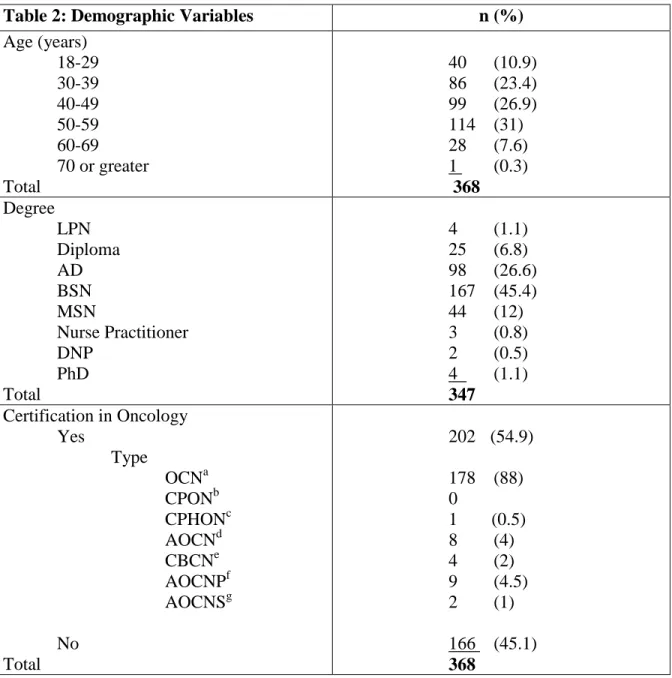
Sample Demographics ... 51
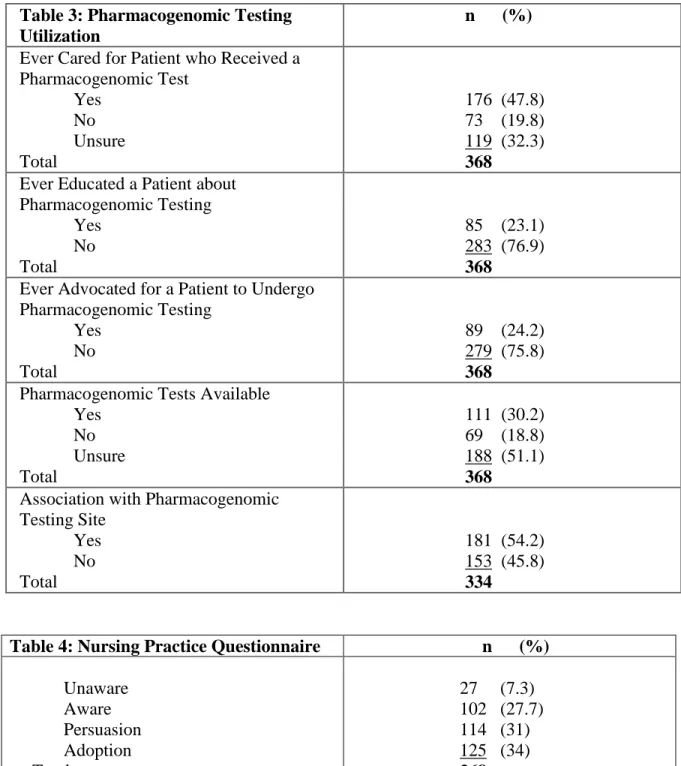
Pharmacogenomic Utilization ... 54
Statistical Analyses ... 54
Aim #1 Analyses ... 54
Summary ... 59
Aim #2 Analyses ... 60
Summary ... 70
Aim #3 Analyses ... 72
Summary ... 80
Aim #4 Analyses ... 83
Summary ... 84
Interest in Continuing Education ... 85
Summary ... 86
V. DISCUSSION ... 87
Key Findings ... 87
Perceived and Acutal Knowledge (Awareness) ... 87
Attitude (Persuasion) Toward pharmacogenomic testing ... 87
vii
Innovativeness... 88
Concepts Related to Theory ... 89
Relationships Associated with Knowledge (Awareness) ... 89
Total Genomic Knowledge ... 89
Basic Genomic Knowledge ... 91
Pharmacogenomic Knowledge ... 91
Relationships Associated with Attitude (Persuasion) ... 92
Overall Attitude ... 92
General Attitude ... 93
Attitude Specifically Related to the Field of Oncology ... 94
Relationships Associated with Support for Use (Decision) ... 95
Support for use ... 95
Dicussion... 95
Strengths and Limitations ... 98
Strengths ... 98
Limitations ... 98
Study Tools ... 98
Study Sample ... 99
Study Variables ... 99
Implications for Education ... 100
Implications for Practice ... 101
Implications for Future Research ... 102
viii
APPENDICES ... 105
Appendix A: Data Request Form ... 105
Appendix B: Knowledge, Attitude, and Support for Use Questionnaire (KAQ-PGx) ... 106
Appendix C: Innovativeness Scale (IS) ...117
Appendix D: Informed Consent ...118
ix
LIST OF TABLES
Table
1. Measurement of Concepts……… 36
2. Demographic Variables ………...……… 52
3. Pharmacogenomic Testing Utilization ……….... 55
4. Nursing Practice Questionnaire..………...………55
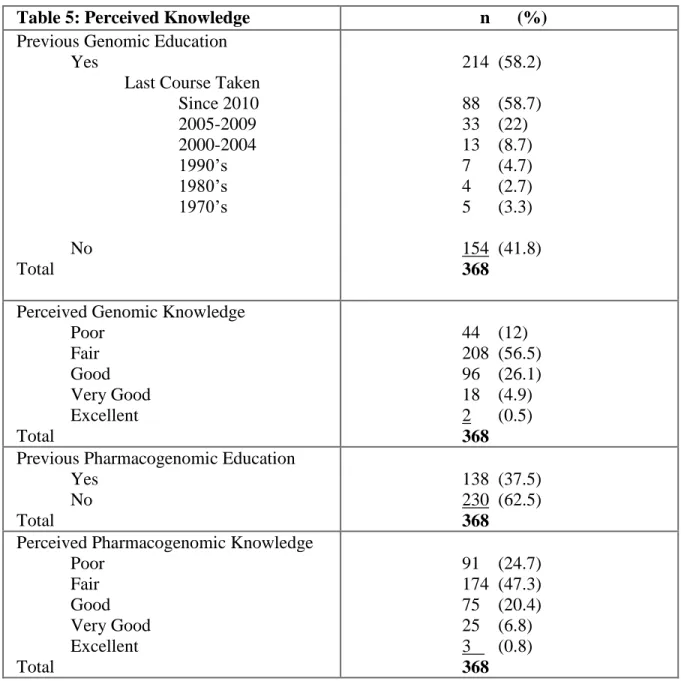
5. Perceived Knowledge………...……….58
6. Actual Genomic Knowledge………..……….…. 59
7. Attitude Scales………..……….…60
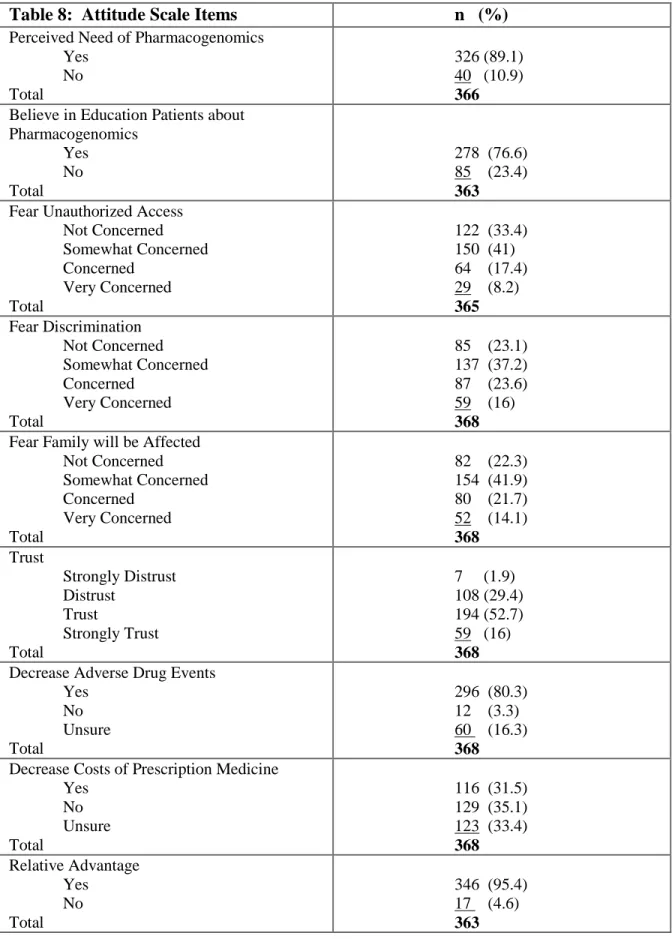
8. Attitude Scale Items………..……….61
9. Support for Use………...………...62
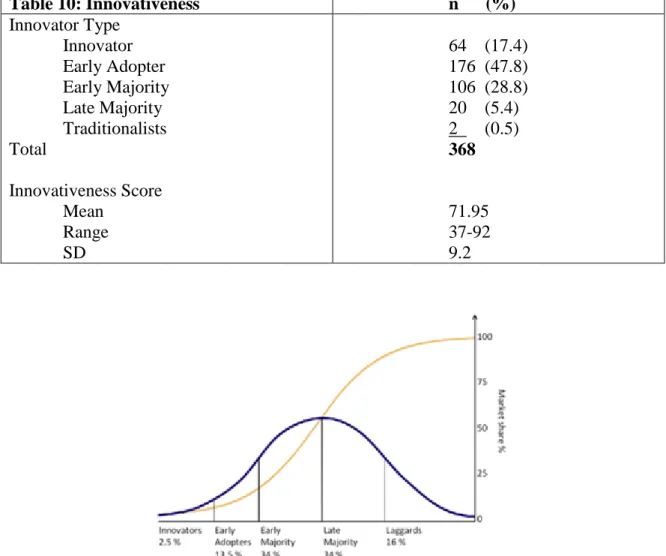
10. Innovativeness………....63
11. ANOVA-Actual Overall Genomic Knowledge……….………65
12. ANOVA- Basic Genomic Knowledge………..67
13. ANOVA-Pharmacogenomic Knowledge……….………….68
14. Regression for Knowledge…………...……….71
15. ANOVA-Overall Attitude……….75
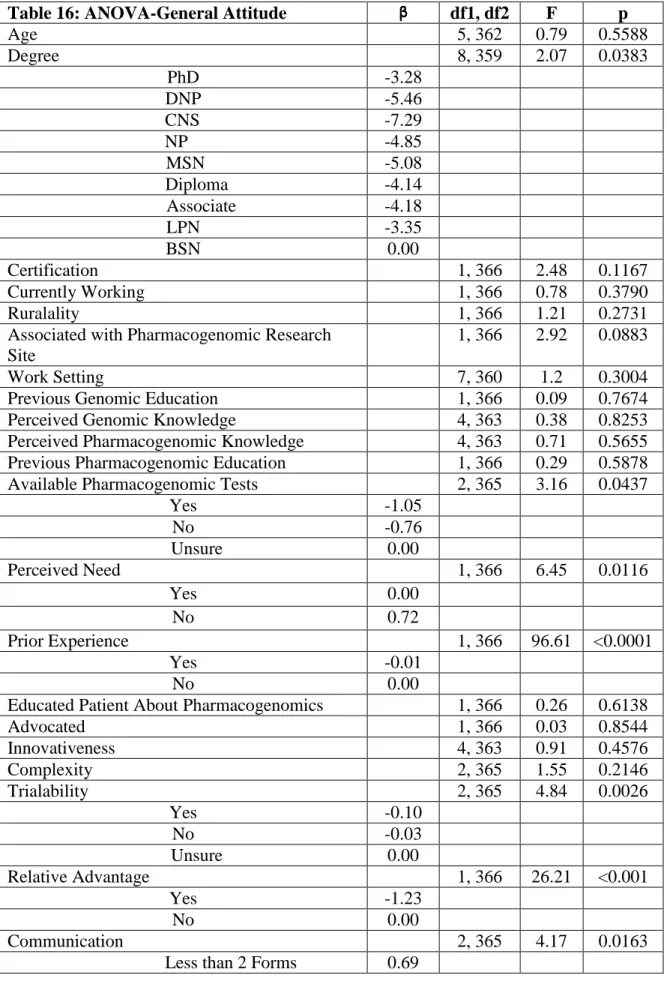
16. ANOVA-General Attitude………76
17. ANOVA-Attitude Related to Oncology………78
18. Regression for Attitude…………..……….……….80
19. ANOVA-Support for Use………...….84
x
LIST OF FIGURES
Figure
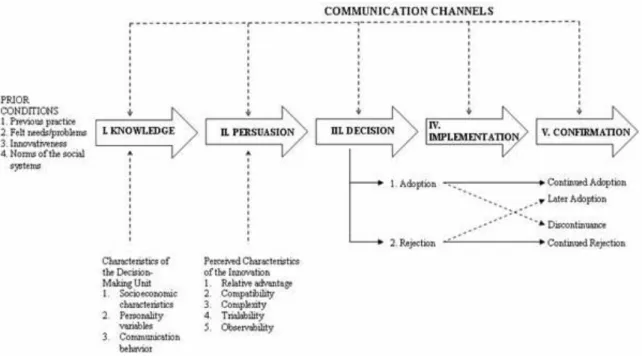
1. Rogers‟ Diffusion of Innovation Framework …………...………...7
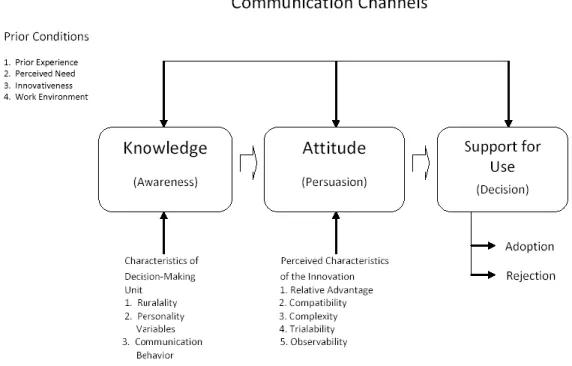
2. Modified Version of Rogers‟ Innovation of Diffusion as Adapted by Dodson ....14
3. Perceived Genomic Knowledge ………...………...57
4. Perceived Pharmacogenomic Knowledge..………....57
5. Diffusion of Innovation according to Rogers (2003)………....………….63
xi
ABBREVIATIONS
AIC Akaike Information Criterion ANOVA Analysis of Variance
APRN Advanced Practice Registered Nurse BIC Bayesian Information Criterion DNA Deoxyribonucleic Acid
DNP Doctorate of Nursing Practice FDA Food and Drug Administration
KAQ-PGx Knowledge, Attitude, and Support for Use Questionnaire- Pharmacogenomic Testing
LPN Licensed Practical Nurse
NPQ-PGx Nursing Practice Questionnaire-Pharmacogenomic Testing PG Pharmacogenomic
PRESS Predicted Residual Sums of Squares
RN Registered Nurse
Chapter I Introduction
During the past few decades there has been a dramatic increase in genomic testing. The term genomic testing covers a wide array of sophisticated techniques including direct examination of DNA, RNA, or protein (National Human Genome Research Institute, 2012). According to the GeneTests website, a publically funded medical genomics information resource, genomic testing is currently available for over 2,500 diseases in the clinical setting (University of Washington, 2012). In addition, testing for another 240 diseases is being carried out in research settings. Consequently, genomic testing will soon become available for a growing number of diseases.
Genomic testing can be utilized for a multitude of reasons including confirmation of a suspected diagnosis, detection of the presence of a carrier state in individuals who appear unaffected, screening or diagnostic testing for genomic conditions in embryos, fetuses, and newborns, and prediction of a patient‟s response to different types of therapy (National Human Genome Research Institute, 2012). Pharmacogenomic testing is a particular type of genomic testing that is used to guide a patient's drug therapy based on the individual‟s genomic make-up (Foley & Quigley, 2010). The utilization of
2
(National Institute of General Medical Sciences, 2012). In addition, the techniques used to test for pharmacogenomic polymorphisms and genomic mutations are fundamentally the same as technique used in other types of genomic testing. However, which
populations are targeted and how test results are interpreted and utilized can be quite different. For example, pharmacogenomic testing is only appropriate for patients who are candidates for treatment with particular medications (U.S. Food and Drug
Administration, 2011), while other types of genomic testing are often considered appropriate for the general population.
Several healthcare fields are currently benefiting from the use of
pharmacogenomic testing. One in particular is oncology. At this time, there are over 20 different pharmacogenomic tests being used in oncology (U.S. Food and Drug
Administration, 2012). Pharmacogenomic tests are divided into two categories within the oncology field, ones that test for chemotherapy toxicity and ones that test responsiveness to treatment such as in tumor profiling (Genomic Diagnostic Network, 2012).
Commonly used oncology drugs with pharmacogenomic testing information included in their package inserts are: Trastuzumab, Tamoxifen, Cetuximab, Vemurafenib, and Imatinib (U.S. Food and Drug Administration, 2012).
3
recent years many researchers and clinicians have begun recommending a shift to individualized drug therapy. Individualized drug therapy is an approach in which a patient‟s genomic profile is used to guide the type and amount of medication the patient receives (Hamburg & Collins, 2010; Roederer, Van Riper, Roederer, McLeod, & Evans, 2012). There is growing evidence that adverse reactions can be decreased when a patient‟s dosage of medication is based on their genomic profile (Amur, Zineh, Abernethy, Huang, & Lesko, 2010; Anderson et al., 2007, Becquemont, 2009; Manolopoulos, 2007; Phillips et al., 2001).
Statement of the Problem
Pharmacogenomic testing is becoming a routine part of practice in some areas but in others areas this is not the case (Ferraldeschi & Newman, 2011; Mutsatsa & Currid, 2012). The integration of pharmacogenomic testing into clinical practice ultimately depends on acceptance of and requests for pharmacogenomic testing by clinicians and patients (Rogausch , Prause, Schallenberg, Brockmoller, & Himmel, 2006). Clinicians who have limited awareness of pharmacogenomic testing or lack an adequate
understanding of the potential benefits of pharmacogenomic testing are less likely to have favorable attitudes about pharmacogenomic testing (Ghaddar, Cascorbi, & Zgheib, 2011). Other factors that may influence attitudes about pharmacogenomic testing include access to genomic specialists, availability of educational resources about pharmacogenomic testing, and the existence of well-defined clinical guidelines (Haga, Tindall, & O‟Daniel, 2012).
4
Rogausch et al., 2006). However, the studies that do exist suggest that while some
clinicians view their understanding of pharmacogenomics to be good, the majority do not. A nationwide survey of 10,303 physicians revealed that only 10.3% felt adequately informed about pharmacogenomics (Stanek et al., 2012). In contrast, a case study
revealed that the four study participants whom were interviewed felt that pharmacists had a good understanding of pharmacogenomic testing (El-Ibiary, Cheng, & Alldredge, 2008). Moreover, in a study that included over 2000 clinicians and students from a variety of disciplines including pharmacy, nursing, and medicine, most of the participants described their knowledge of pharmacogenomic testing to be fair (44%) or poor (34%). In addition, on the 5 knowledge-based questions about pharmacogenomic testing about more than half of study answered the majority of questions correctly (Van Riper et al., 2012).
Findings from studies about attitudes towards pharmacogenomic testing suggest that many clinicians have ethical concerns. Some of the most commonly reported ethical concerns about pharmacogenomic testing are concerns about discrimination, lack of privacy, and failure to obtain informed consent (Avard, Silverstein, Sillon, & Joly, 2009; Egalite, Ozdemir, & Godard, 2007; Haga et al., 2011; Hedgecoe, 2006; Roederer et al., 2012; Rogausch et al., 2006; Tamaoki, Gushima, & Tsutani, 2007; Van Riper et al.,
2012). However, positive attitudes towards pharmacogenomic testing were also reported. The advantages of pharmacogenomic testing acknowledged by clinicians were a
5
et al., 2012). In addition, two studies revealed that clinicians are more apt to use these tests because of the improved predictive accuracy of the prescribed drugs (Haga et al., 2011; Payne et al., 2011). According to the literature, clinicians have varying attitudes towards pharmacogenomic testing which may be related to the uncertainty of new innovations that have promising outcomes.
Many barriers have been linked to the successful adoption of pharmacogenomic testing into practice. Some of these barriers include lack of clinicians‟ awareness or knowledge, lack of counselors available, cost-effectiveness of this type of testing, substandard ethical regulations on genomic information, and inadequate evidence based outcomes relating to this type of testing (Ghaddar et al., 2011; Haga et al., 2011; Schnoll & Shields, 2011; Squassina et al., 2010). However, one study revealed that clinicians did not feel that inferior ethical regulations were a barrier to the implementation of
pharmacogenomic testing (Ghaddar et al., 2011). Additionally, a study with third year medical students revealed that they were not concerned with ethical barriers; however, the plan for disclosure to patients varied greatly among these respondents (Zgheib, Arawi, Mahfouz, & Sabra, 2011). Based on the literature, these barriers may play a role in the successful adoption of pharmacogenomic testing.
In summary, lack of knowledge about and variable attitudes towards
6
pharmacogenomic testing. Information obtained from a systematic review of the empirical literature revealed that there is a significant gap pertaining to the attitudes and understanding of pharmacogenomic testing within the oncology nursing population. Due to the relation between knowledge, attitudes, and adoption of pharmacogenomic testing, a study focusing on the assessment of knowledge and attitudes as it relates to support for use of pharmacogenomic testing within the oncology nursing population was conducted. Theoretical Framework
Everett Rogers‟ Diffusion of Innovation theory provided the framework for examining the process of adoption and diffusion of pharmacogenomic testing among oncology nurses (Rogers, 2003). An innovation is defined as an idea, practice, or object that is perceived as new by an individual (Rogers, 2003). Adoption of an innovation is a decision-making process in which the individual first passes from initial knowledge of the innovation to forming an attitude toward this innovation, to a decision to either accept or reject it, or wait to make a decision at a later date. Factors that influence this decision are of utmost importance because this decision leads to the utilization of the innovation into practice. The stages of adoption and diffusion of an innovation are shown in Figure 1.
The first step in the adoption of an innovation is the initial knowledge about the
innovation (Rogers, 2003). According to Rogers‟ (2003), there are several antecedents
that affect how knowledge is received such as prior experience, perceived need of the
innovation, general attitude towards change, personality variables such as age and
educational level, demographic variables, communication behavior, and the work
7
Figure 1: Rogers‟ Diffusion of Innovation framework. This figure displays the stages of
this framework.
The awareness of the innovation then motivates the individual to gain more information about the topic. However, knowledge of the innovation does not automatically lead to adoption due to the fact that the individual must be persuaded to accept the innovation. The decision to adopt the innovation relies on the attitude of the individual concerning the innovation. Certain characteristics such as relative advantage, complexity,
compatibility, trialability, and observability influence the individual‟s attitude toward the innovation (Rogers, 2003). Once a decision has been made to adopt it, the innovation is put into use and finally an evaluation of the innovation is completed.
8
potential to influence the adoption process of the innovation. These factors were utilized in the creation of specific variables to target within this study.
Purpose of Study
The purpose of this study was to identify and test key elements of Rogers‟ Diffusion of Innovation theory that play a role in the adoption of pharmacogenomic testing into the oncology practice by assessing oncology nurses knowledge, attitudes, and support for use of pharmacogenomic testing.
Significance of the Study
Scientific knowledge of genomics has exponentially increased in the first decade of the 21st century. The growing applicability of genomic testing raises concerns
9
Furthermore, pharmacogenomic testing, a specific type of genomic testing, is becoming more prominent in clinical practice. Currently there are 104 Food and Drug Administration (FDA)-approved drugs with pharmacogenomic information in their labels (U.S. Food and Drug Administration, 2012). Out of these FDA-approved drugs, 28 of them are directly related to oncology. Nurses are at the forefront of patient care, which makes them perfectly positioned to educate patients about new and innovative
technologies associated with their health care. Therefore, nurses could play a critical role in the incorporation of pharmacogenomic testing and genotype-guided therapy into routine practice, especially with oncology patients.
There is growing evidence that a substantial contributor to cancer drug therapy is the patient‟s own genomic makeup (Prows, 2011). As noted previously, a multitude of pharmacogenomic tests are used in a variety of oncology settings for many different forms of cancers. Therefore, oncology nurses must become well-informed about
10
Nurses, especially oncology nurses, have an important role in making sure that patients and families are informed about the purpose and limitations of pharmacogenomic testing. However, to do this, nurses must be accepting of, and knowledgeable about this type of genomic testing and therapy. Nurses who are knowledgeable about this type of testing and therapy will be able to become advocate and discuss the benefits and
limitations of this therapy with patients and their families. Consequently, studies like this which provide an assessment of oncology nurses‟ knowledge, attitude, and support for use of pharmacogenomic testing will provide a baseline for deficits in knowledge and ethical concerns regarding pharmacogenomic testing among this population.
Summary
Chapter II Literature Review
Conceptual Framework: Diffusion of Innovation
The adoption of a new idea is often times very difficult despite many obvious advantages that this new idea may provide (Rogers, 2003). According to Rogers (2003), often many years pass before an innovation is widely adopted. An innovation is defined as an idea, practice, or object that is perceived as new by an individual (Rogers, 2003). Despite the fact that the word „pharmacogenomics‟ was coined in 1959 by Friedrich Vogel of Heidelberg, Germany, widespread adoption of this new idea is still forthcoming (Motulsky & Qi, 2006). Nurses are among several disciplines that are now being
introduced to pharmacogenomic testing as a new innovation.
Adoption of an innovation is a time-consuming process due to the fact that diffusion of the innovation must take place through the appropriate channels within the social system (Rogers, 2003). This process can be extensive at times, which makes this process difficult. Diffusion is the passive spread by which an innovation is
12
Finally, implementation is the planned efforts to put the idea into clinical practice (Greenhalgh, Robert, Macfarlane, Bate, & Kyriakidou, 2004). The elements of the diffusion of innovation process are shown in Figure 1. This framework was utilized to describe the process by which the idea of pharmacogenomic testing is diffused through the field of nursing. The characteristics of the innovation, as perceived by the
individuals, determine the rate of adoption.
Additionally, an individual‟s innovativeness also is a determinant of the time it takes to adopt an innovation. Innovativeness is the degree to which an individual adopts new ideas as compared to other members of their social system. There are five adopter categories based on their innovativeness: innovators, early adopters, early majority, late majority, and laggards. Innovators are adventurous types that enjoy being on the cutting edge and like trying new ideas. The decision made by this type of individual within the implementation and confirmation stage is important to the subsequent decisions of other potential adopters. Early adopters use the innovator‟s decision to make their own
adoption decisions. If the early adopters perceive that the innovation has been beneficial for the innovators, then they will adopt as well. This group is well respected for its well-informed decision-making. Therefore this group is where most opinion leaders in a social system reside (Rogers, 2003). The majority of the rest of the social system trust the decisions made by opinion leaders in order to be similar to others. Once these opinion leaders adopt the innovation the rate of adoption rapidly increases and a large section of the social system follows, which are called the early majority and then
13
they are considered very traditionalists or may be isolated from the rest of the social system, which decreases their rate of adoption of the innovation.
Multiple studies have revealed that there are typically the same percentage of individuals distributed within each innovativeness category for all social systems. This distribution should follow a bell-shaped curve and is utilized to assess whether a particular social system, such as oncology nursing, will have successful adoption of an innovation (Rogers, 2003)
This research study focused on the first three stages of the Diffusion of Innovation theory, as shown in Figure 2. It is important to understand what variables affect the development of knowledge and attitudes that may enhance the successful adoption of the innovation. Information concerning ways to speed up the rate of diffusion,
dissemination, and implementation of the innovation will lead to a more successful widespread uptake of this innovation.
The first step focused on is initial awareness of the innovation. According to Rogers (2003), there are several characteristics that affect how one receives new knowledge such as prior experience, perceived need of the innovation, general attitude towards change, ruralality, and the work environment of the individual. This knowledge of the innovation then stimulates the individual to expand upon the information
14
Figure 2: Modified Version of Rogers‟ Diffusion of Innovation as adapted by Dodson. This figure
represents the stages of Rogers‟ Diffusion of Innovation used in this study.
The persuasion step relies on the attitude of the individual concerning the innovation (Rogers, 2003). Antecedents that affect the persuasion of an individual include relative advantage, complexity, compatibility, trialability, and observability. Relative advantage is the perception that the innovation is better than the current treatment. Compatibility is the degree to which the innovation coexists with the
individual‟s existing values, past experiences, and needs. Complexity of the innovation is the degree of difficulty to comprehend. Trialability is the ability of the innovation to be incorporated into practice on a trial basis. Finally, observability is the degree to which the innovation is visible to the individuals. These characteristics influence the
individual‟s attitude towards the innovation (Rogers, 2003). Once a decision has been made to adopt it, the innovation is implemented and finally confirmation of the
15 Concepts
The review of the literature conducted for this study focused on two main concepts within the field of nursing: knowledge of pharmacogenomic testing and attitudes concerning pharmacogenomic testing. Also a review of the literature surrounding support for use of pharmacogenomic testing and Rogers‟ Diffusion of Innovation model was conducted to identify key variables that may play a role in the process of diffusion of the innovation.
Knowledge of pharmacogenomic testing. Adequate competence in genomics as
it relates to a nurse‟s specialized field supports the delivery of safe, quality care (Kirk, Calzone, Arimori, & Tonkin, 2011). A panel of leaders from almost 50 organizations created a document that entails the critical nursing competencies for genomics entitled “Essential Nursing Competencies and Curricula Guidelines for Genomics and Genomics” (Prows, 2011). This document describes the minimal genomic competencies for all registered nurses regardless of their practice setting or academic preparation. One main competency that all nurses should possess is the ability to provide patients with accurate and appropriate information regarding genomic information, resources, and/or services that allows for better decision-making skills. This competency allows the nurse to become a better patient advocate because nurses, who are knowledgeable about
16
necessary (Prows & Saldana, 2009). According to Prows and Saldana (p. 184, 2009), nurses need to know the following key points about pharmacogenomic (PG) testing:
“(a) drug response is influenced by many different factors and bodily processes; (b) genomic test results provide a component of the necessary information when prescribers select and dose medications; (c) commercially available PG tests are not relevant for all medications; (d) genomic test results may be relevant to a patient's future health care because inherited genes, for the most part, do not change; (e) a patient's genomic test result may be relevant to biologic family members because they share inherited genes; and (f) depending on the type of analysis performed in the laboratory, a negative or normal test result may be a false negative if all possible variants associated with altered gene function were not analyzed.”
While staff nurses are not responsible for ordering pharmacogenomic tests; however, as a patient advocate, it is within all nurses‟ scope of practice to be an active participant in their patient‟s care, which may include reminding prescribers that pharmacogenomic tests are available and should be considered. Additionally, as
pharmacogenomic testing becomes more widespread, all nurses will become accountable for applying genomic information when administering medications that are based on a genomic test. Therefore, safe and optimal patient care will demand accurate and up-to-date knowledge of genomic and pharmacogenomic testing by nurses in practice, research, and education (Read, 2002). Furthermore, Beery and Hern (2004) stated that most
17
of knowledge, in 2010, the Health Resources and Services Administration (HRSA) Expert Panel on Genomics and Nursing recommended that genomics is no longer an option but must be a part of nursing curriculum and continuing education programs (Beery & Hern, 2004).
Findings from a recent study of genetic/genomic competencies and nursing regulation in 10 countries (Kirk et al., 2011) revealed that only one of the countries included competencies in genomics and genomics in their regulatory standards for
nursing and this was only at a “basic level”. Kirk and colleagues argued that professional regulation of genomic/genomic competencies must be demonstrated in order for
practicing nurses to gain the adequate knowledge base to provide safe and optimal care for their patients. According to Prows and Beery (2008), the minimum genomic competencies for nurses will be to learn about basic genomic information, which will give a good introduction for the explanation and acceptance of pharmacogenomic testing among clinicians.
Awareness of the knowledge and attitudes of genomic testing in general is
pertinent to this study because it plays a large role in the knowledge and attitudes towards pharmacogenomic testing. A literature search of general knowledge towards genomic testing revealed a concerning knowledge deficit among the general public. Henneman, Timmermans, and Van Der Wal (2006) conducted a study to assess the knowledge, experiences, and future expectations of genomic testing in the Dutch population. Over half of the participants believed that they had a lower level of genomic knowledge
18
testing among healthcare professionals is deficient as well (Baars, Henneman, & Ten Kate, 2005; Dodson & Lewallen, 2011; Fargher et al., 2007; Hoop et al., 2010; Kadafour, Haugh, Posin, Kayser, & Shin, 2009). Dodson & Lewallen (2011) found that 76% of nursing students perceived their knowledge as minimal. Also Kadafour et al. (2009) found that 66% of healthcare professionals felt they had a general lack of knowledge. These findings should in theory correlate with pharmacogenomic testing knowledge.
After an extensive review of the literature, only nine research articles were located that reported findings from studies in which knowledge of pharmacogenomic testing among clinicians were assessed. The majority of these studies revealed that clinicians felt that they had limited knowledge of pharmacogenomic testing (Dodson & Lewallen, 2011; Fargher et al., 2007; Hoop et al., 2010; Kadafour et al., 2009; Roederer et al., 2012; Tamaoki et al., 2007; Stanek et al., 2012; Van Riper et al., 2012). However, findings from a case study in which 4 pharmacists were interviewed revealed that these participants believed that pharmacists are well informed about pharmacogenomic testing (El-Ibiary et al., 2008).
19
from the study conducted by Dodson and Lewallen revealed that 76% of nursing students in an undergraduate program reported minimal to no knowledge of pharmacogenomic testing. In contrast, findings from the study by Van Riper et al. (2012) revealed that most healthcare students, including residents, pharmacy, and nursing students rated their knowledge of pharmacogenomic testing as excellent to very good. In addition, healthcare students scored the highest on the knowledge based questions regarding
pharmacogenomic testing with a mean score of 3.25 out of 5.
In a study by Hoop et al. (2010), clinicians who had pharmacogenomic testing available at their worksite had a significantly higher median knowledge score of
pharmacogenomic testing (p = 0.03), as did those who used it (p= 0.009). However, this study also revealed that 66% of all clinicians felt that they had a general lack of
knowledge about pharmacogenomic testing. This finding coincides with the results found throughout the majority of the literature review, which revealed that clinicians generally underestimate their knowledge. Therefore, a perceived lack of knowledge concerning pharmacogenomic testing permeates this field, which reveals the need to test the actual knowledge of pharmacogenomic testing to gather accurate results regarding pharmacogenomic knowledge of clinicians.
20
Furthermore, only one nursing study focused on the field of oncology and only included APRNs (Van Riper et al., 2012). Van Riper et al. (2012) study revealed that it is
imperative that nurses understand the difference between genomic tests that assess risk of disease versus tests that are used as a tool for the guidance of treatment related to tumor markers and medication decisions. Therefore, this study looked at perceived and actual knowledge of different types of practicing nurses concerning pharmacogenomic testing specifically within the oncology field.
Attitudes concerning pharmacogenomic testing. Pharmacogenomic testing has
the capability to affect major decisions for individuals and their families. Therefore, all genomic testing must be utilized in a just and confidential manner. According to Pestka (2003), nurses need to be especially aware of all factors involved with both testing and not testing, limitations of legal safeguards, family genograms that may reveal
unsuspected information, cultural issues, and maintaining strict confidentiality. Beery and Hern (2004) revealed that clinicians need to have the skills necessary to apply the appropriate ethical, social, cultural, and personal values based on genomic technology. The understanding of healthcare professional attitudes towards genomic technology will lead to a better comprehension of these necessary skills.
21
feelings or perception toward the concepts whether it is positive, negative, or neutral. The informational component consists of the beliefs and information one has concerning the particular concept. Finally, the behavioral component consists of the tendency to conduct oneself in a particular way toward the concept.
Clinicians must understand the psychological impact and implications for family members due to the ethical, legal and social issues associated with all genomic testing (Arnett, Claas, & Lynch, 2009). Attitudes towards genomic testing in general will play a large part in the formation of one‟s attitude towards pharmacogenomic testing. There has been a wide variety of research conducted on public attitudes concerning medical
genomics. Both positive and negative attitudes have been identified. There are a few negative attitudes among the general public that have been consistent within the review of the literature. Overall, the main concern with genomic testing was the possibility of discrimination from either employment or insurance (Bates, Lynch, Bevan, & Condit, 2005; Haga et al., 2012; Henneman et al., 2006; Hietala et al., 1995; Jallinoja et al., 1998). Additionally a literature search revealed that clinicians also felt that genomic testing could potentially increase risk of discrimination by employment and insurance as well as fear of increased risk of breach of privacy (Freedman et al., 2003; Lawrence & Appelbaum, 2011).
22
pharmacogenomic testing concurred with the previous findings related to genomic testing in general due to the fact that clinicians felt that pharmacogenomic testing would lead to discrimination based on one‟s genomic tests (Egalite et al., 2007; Hedgecoe, 2006; Hoop et al., 2010; Rogausch et al., 2006;Van Riper et al., 2012; Zgheib, Arawi, Mahfouz, & Sabra, 2011). Employment discrimination, insurance discrimination and racism were the terms frequently utilized in the qualitative studies. Furthermore, Avard et al. (2009) and Egalite et al. (2007) had a distinctive theme of fear of racial profiling and stigmatization based on pharmacogenomic testing, though it tends to relate to the overall fear of
discrimination.
Another common attitude towards pharmacogenomic testing among clinicians was the concern of lack of privacy (Avard et al., 2009; Hedgecoe, 2006; Hoop et al., 2010; Tamaoki et al., 2007;Van Riper et al., 2012). One study, which was conducted in 2004 with clinicians, researchers, and leaders of drug companies and regulatory agencies, revealed that 40% of the sample feared that pharmacogenomic testing would lead to leakage of genomic information (Tamaoki et al., 2007).
23
coincides with the concern for equal access is the increased expense of this type of testing.
A common perceived advantage of pharmacogenomic testing was a reduction in adverse drug reactions (Avard et al., 2009; El-Ibiary et al., 2008; Rogausch et al., 2006; Tamaoki et al., 2007; Van Riper et al., 2012). Rogausch et al. (2006) revealed
approximately 52% of physicians felt that pharmacogenomic testing had clinical utility and 54% felt that this would aid in the correct dosage of drugs, which would ultimately lead to a reduction in adverse drug reactions. Avard et al. (2009) and El-Ibiary et al. (2008) agreed with the findings by Rogausch et al. (2006) in that researchers felt that there were several advantages of pharmacogenomic testing, including better reliability of tests in order to reduce adverse drug reactions. However Kadafour et al. (2009) revealed a discrepancy among anticoagulation providers' perceptions regarding pharmacogenomic testing in that they were undecided about whether this testing will be more accurate or even decrease adverse drug reactions.
Furthermore, four studies revealed that pharmacogenomic testing would lead to overall better outcomes for patients (Egalite et al., 2007; Fargher et al., 2007; Roderer et al., 2012;Van Riper et al., 2012). Fargher et al. (2007) and Payne et al. (2011) revealed that clinicians felt that pharmacogenomic testing would increase confidence in
24
Overall, there are many ethical concerns related to pharmacogenomic testing. However, there are some positive aspects of pharmacogenomic testing according to these clinicians. The majority of the ethical concerns were related to lack of privacy, need for informed consent, cost, and fear of discrimination (Avard et al., 2009; Egalite et al., 2007; Hedgecoe, 2006; Rogausch et al., 2006; Tamaoki et al., 2007;Van Riper et al., 2012). The positive aspects of pharmacogenomic testing acknowledged by clinicians were a reduction in adverse drug reactions and better clinical outcomes (Avard et al., 2009; Egalite et al., 2007; Fargher et al., 2007; Hoop et al., 2010; Mrazek et al., 2007; Rogausch et al., 2006; Tamaoki et al., 2007; Van Riper et al., 2012). Lee, Ma, and Kuo (2010) also revealed that patient and clinicians must overcome ethical barriers such as fear of loss of privacy, genomic profiling, and stigmatization. In addition, social issues such as the creation of health disparity should be focused upon due to many concerns related to this issue. Finally, economic issues such as the cost effectiveness of certain tests should be addressed for all clinicians (Lee et al., 2010). Many studies have been conducted on the attitude to pharmacogenomic testing in general, however, no studies have assessed the attitude of pharmacogenomic testing specifically related to oncology. Therefore, the current study assessed not only attitudes towards pharmacogenomic testing in general, but also attitudes specifically related to pharmacogenomic testing in the oncology field.
Support for use of pharmacogenomic testing. Integration of pharmacogenomic
25
Innovation of Diffusion theory. This concept is defined as degree to which the respondent uses pharmacogenomic testing information in their practice. In addition, support for use of pharmacogenomic testing was measured by the availability of pharmacogenomic testing within the healthcare field.
One of most significant reasons for the utilization of pharmacogenomic testing is the reduction in adverse drug reactions. Adverse drug reactions are the leading cause of hospitalization and are considered the fourth leading cause of in-patient death
(Kongkaew, Noyce, & Ashcroft, 2008). An estimated 1 out of every 7 in-patient
hospitalizations are exposed to an adverse drug reaction every year (Davies et al., 2009). In addition, Lazarou, Pomeranz, and Corey (1998) conducted a meta-analysis of
prospective studies related to serious and fatal adverse drug reactions and revealed that on average two million hospitalized patients suffer from an adverse drug reaction even when the medications are prescribed correctly. These reactions can be dramatically decreased when dosage of medication is based on one‟s genomic profile (Amur et al., 2010; Vora et al., 2011). Therefore, nurses must recognize the opportunities available due to pharmacogenomic testing to develop successful strategies to best utilize genomic information into their practice because individualized care is optimal (Beery & Hern, 2004).
Diffusion of innovation. According to Rogers (2003), several variables
potentially influence the adoption of an innovation. Certain variables such as prior experience, perceived need of the adopters, innovativeness, norms of society, demographic variables, personality variables such as age and education, and
26
making process to adopt or reject an innovation. In addition, perceived characteristics of the innovation which include relative advantage, compatibility, complexity, trialability, and observability also play a significant role in the decision-making process.
Prior experience. Earlier information revealed that before any innovation can be
adopted, an individual must be made aware of the innovation (Zaltman, Duncan, & Holbek, 1973). Previous innovation experience of the adopter can affect resistance to adopt the innovation. Ram (1987) revealed that past experience can bias one‟s decision-making process and is often called a „mind set.‟ This mind-set plays an important role in shaping the adopter‟s perception and attitude formation. Therefore a positive previous innovative experience will increase the adoption of the innovation.
Perceived need of innovation. According to Ram (1987), unless an adopter
perceives the need for the innovation, one is unlikely to adopt. Therefore the perceived need must occur before the innovation will be adopted.
Innovativeness. According to Rogers (2003), innovativeness is the degree to
which an individual will adopt an innovation as compared to other members in their society. Therefore an individual‟s innovativeness influences their rate of adoption of an innovation.
Norms of society (Work environment). Rogers (2003) defined the norms of a
27
Ruralality. Rogers (2003) revealed that adoption of innovation is based upon
availability of resources, which was confirmed by a study conducted by Tawari and Davies (2009). However, Jenkins (1999) found no relationship with availability of resources and adoption of an innovation.
Personality variables. Personality variables are characteristics of the particular
individual. Two personality variables, age and educational level, were assessed in prior research about diffusion of innovations. Based on the 4000 diffusion publications that Rogers reviewed, inconsistent evidence was found on whether age influenced the
adoption of new ideas (Rogers, 2003). Almost half of the studies showed no relationship, whereas a few studies showed conflicting results in that some studies revealed younger individuals as early adopters whereas other studies showed that older individuals were the early adopters. Based on the current literature review, no studies have revealed a
relationship between age and adoption of an innovation (Damanpour & Schneider, 2009; Ostergaard, Timmermans, & Kristinsson, 2011; Tawari & Davies, 2009). Moreover, according to Rogers, many studies reported a relationship between adoption of innovation and more years of formal education. Recent studies also coincide with Rogers (2003). These studies found that more formal education had a positive correlation with adoption of innovation (Damanpour & Schneider, 2009; Ostergaard et al., 2011; Tawari & Davies, 2009).
28
association with a pharmacogenomic testing research site and perceived genomic and pharmacogenomic testing knowledge.
Communication behavior. According to Rogers (2003), mass media channels
are more effective in generating knowledge about the innovation, whereas interpersonal channels are more effective in establishing and altering attitudes towards a new idea.
Relative advantage. The relative advantage of an innovation may be in the form of economic gain or beneficial to society in some other form. The costs that are saved could be either financial or social, such as exclusion from peer groups (Ram, 1987). The innovation could also improve performance or provide a better solution to a problem. According to Rogers (2003), if an innovation has a low relative advantage, adoption will be resisted among the potential adopters.
Compatibility. Compatibility characterizes the consistency with the existing values of the adopter, as well as traditional and cultural values of the society. This variable is also linked to the concept of pervasiveness. Pervasiveness of an innovation is the amount to which it necessitates change in behavior of the potential adopter (Ram, 1987). Therefore, the higher the degree of pervasiveness equals more behavioral change, which leads to resistance to adoption.
Complexity. The complexity of an innovation is comprised of how easy it is to
understand the innovation as well as how easy it is to implement (Ram, 1987). Two separate components play a role in comprising the complexity of the innovation.
29
Trialability. Trialability of an innovation relates to the ability of the innovation to
be trialed before adoption as well as the ability to trial the innovation in stages (Roger, 2003). According to Ram (1987), the less trialability equals more resistance to adoption of the innovation.
Observability. According to Rogers (2003), the rate of adoption increases as the
innovation becomes more visible to the potential adopters. Observability was categorized as having available pharmacogenomic tests or not.
Summary
Additional education about, and the acceptance of pharmacogenomic testing will most likely be required before genomically guided therapy can be widely utilized
(Lanfear & McLeod, 2007). Nurses could play a critical role in the integration of pharmacogenomic testing and genotype-guided therapy into routine practice. However, to do this, nurses must be accepting of and knowledgeable about this type of genomic testing and therapy. Nurses who are knowledgeable about this type of testing and therapy will be able to discuss the benefits and limitations of this therapy with their patients. Nurses must make opportunities to advance their knowledge in genomics including pharmacogenomic testing, because nurses are in an excellent situation to synchronize inclusive care for their patients that includes these essential genomic components (Pestka, 2003).
30
Chapter III Methodology
The purpose of this study was to identify and test key elements of Rogers‟ Diffusion of Innovation theory that play a role in the adoption of pharmacogenomic testing into the oncology practice by assessing oncology nurses‟ knowledge, attitudes and support for use of pharmacogenomic testing. In this chapter, the research design,
population and sample, instruments used to measure variables, the methods used to protect human subjects, and the procedures for conducting the study are described. Research Design
Based on the information obtained from the review of literature, a study of the knowledge, attitudes, and support of use concerning pharmacogenomic testing in the oncology nursing field was pertinent. In order to assess this knowledge and attitudes, the type of design that was implemented was a cross-sectional, descriptive survey design. A cross-sectional design was chosen because it gathers information on a population at one point in time (Polit & Beck, 2008). In addition, the feasibility of this study allows for the use of this type of design.
32
large, representative sample was utilized (Shadish, Cook, & Campbell, 2002). Moreover, a power analysis was conducted to control the possibility of failing to reject a false null hypothesis, (i.e. a Type II error), by guaranteeing power at least 0.8 (Brink & Wood, 1998). The statistical program, Statistics Calculator, was utilized to calculate the appropriate sample size for sufficient power (Soper, 2012). A f2 was utilized to
determine the appropriate minimum sample size required to test for significance, which is calculated by R2/ (1 R2). A medium effect size for R2 in the analysis of variance context is 0.06 (Green & Salkind, 2005). Therefore, the f2 was set at 0.06. Using the
significance level of 0.05, in order to detect a moderate effect size of 0.06, the minimum sample size was determined to be 202.
Setting and Sample
Population. The population addressed in this study were nurses who practice in
the oncology setting within North Carolina. The sampling frame included all nurses in the state of North Carolina who identified themselves as a nurse with a background in oncology through the North Carolina Board of Nursing. The study of oncology nurses only in the state of North Carolina was chosen due to the feasibility of this study related to easier access to information as well as knowledge of specific medical facilities in the state of North Carolina associated with pharmacogenomic testing sites specifically related to Tamoxifen.
Eligibility criteria. The eligibility criteria for the sample were currently licensed
33 Data Sources and Collection
The sample was obtained from the North Carolina Board of Nursing. This
organization has a list of all nurses that work in North Carolina in an oncology setting. A request form was submitted that included the type of media desired for the contact list (e.g., CD-ROM, Excel Spreadsheet), contact information for this investigator, a
description of how the data would be used, and what data was being requested, such as all Registered Nurses (RN) in Wake, Durham and Orange counties (See Appendix A). For this study, a request was submitted for a list of all Licensed Practical Nurses (LPN) and RNs within the state of North Carolina who work in the oncology field. Around two thousand seven hundred nurses met the eligibility criteria. For each of these nurses, their mailing address was obtained along with additional data such as type of degree and setting of employment. An invitation to participate was distributed to these nurses via a postcard sent to their mailing address. The postcard had a link to an online survey through the survey engine, Survey Monkey, in order for this to be completed with
anonymity. A chance to win an i-Pad was offered for those who completed the survey in order to provide an incentive for a good response rate.
Aims
Based on the literature review, the following research questions were formulated. Aim #1
A. What is the perceived and actual knowledge of oncology nurses in the state of North Carolina about basic genomic and pharmacogenomic testing?
34
concerning pharmacogenomic testing?
C. What is the support for use of pharmacogenomic testing in the oncology field throughout the state of North Carolina?
Aim #2
What are the relationships between actual knowledge of oncology nurses in the state of North Carolina concerning basic genomic and pharmacogenomic testing and the variables: prior experience with pharmacogenomic testing, innovativeness, perceived need of innovation, work setting, ruralality, communication behavior, and personality variables such as age, years of experience in the oncology setting, education level, certification in oncology, currently practicing in oncology field, time since last genomic and
pharmacogenomic education, association with a pharmacogenomic testing research site and perceived genomic and pharmacogenomic testing knowledge? Aim #3
35
testing research site and perceived genomic and pharmacogenomic testing knowledge?
Aim #4
What are the relationships between the support for use of
pharmacogenomic testing in the oncology field and the following variables: actual genomic and pharmacogenomic testing knowledge, overall attitudes towards pharmacogenomic testing, attitudes specifically related to Tamoxifen, age, years of experience in the oncology setting, education level, certification in oncology, currently practicing in oncology field, time since last genomic and
pharmacogenomic education, association with a pharmacogenomic testing research site and perceived genomic and pharmacogenomic testing knowledge? Measurement of Variables
Several concepts related to demographics were measured, including age, years of experience in the oncology setting, education level, certification in oncology, currently practicing in oncology field, time since last genomic and pharmacogenomic education, association with a pharmacogenomic testing research site, prior experience with pharmacogenomic testing, perceived need of innovation, innovativeness, work setting, ruralality, association with a pharmacogenomic testing research site. Additionally, other concepts that were assessed included basic genomic knowledge and pharmacogenomic knowledge as well as perceived knowledge of genomics and pharmacogenomic testing. Concepts related to favorability of the innovation such as relative advantage,
36
pharmacogenomic testing for Tamoxifen, as well as the concept of support for use of pharmacogenomic testing within the oncology field were assessed. These variables are highlighted in Table 1.
Knowledge is defined as the information gained through education or practice. Basic genetics is defined as the area of study related to heredity and the variation in inherited characteristics (“Genetics”, 2011). Basic genetics knowledge was
operationalized as the number of basic genetic questions correctly answered. Pharmacogenomic testing is defined as the study of the interaction of genomics and pharmacotherapy in which genomic testing is used to guide a patient's drug therapy (Foley & Quigley, 2010). Pharmacogenomic testing knowledge was operationalized as the number of pharmacogenomic testing questions answered correctly.
37
38
testing. This concept was operationalized by whether or not the respondent had heard of the term pharmacogenomic testing prior to taking this survey and whether
pharmacogenomic testing was available at their place of work. Perceived need of innovation was defined as the respondent‟s feelings of whether this innovation would be of benefit. This concept was operationalized by whether or not the individual felt that pharmacogenomic testing would be useful in the oncology setting. Innovativeness was defined as the degree to which an individual adopts new ideas as compared to other members of their social system. Innovativeness was operationalized by whether the respondent was an innovator, early adopter, early majority, late majority, or laggard, as evidenced by their score on the Innovativeness Scale. Norms of society or work environment were defined as the behavioral patterns of the society. This variable was operationalized by the specific type of workplace the nurse worked at (e.g. inpatient oncology unit, ambulatory care/outpatient center, hospice/palliative care, etc.). Ruralality was defined as the location of the respondent‟s workplace. This variable was
operationalized as the respondent‟s response to working in either a rural or urban setting. Personality variables were measured as well (e.g. age, educational level, certification in oncology, currently practicing, etc.). Certification in oncology was defined as a nurse who is certified by a credentialing organization in the oncology field. This variable was operationalized by whether the nurse held one or more of the seven oncology nursing certifications as governed by the Oncology Nursing Certification Corporation.
Association with a pharmacogenomic testing research site was defined as the affiliation with a facility that was a pharmacogenomic testing center. This variable was
39
part of the Tamoxifen pharmacogenomic testing study. Finally, communication behavior was defined as the process by which an individual receives up-to-date information. This concept was operationalized by the mode of media/communication one receives
information.
Attitude was defined as a favorable or unfavorable position about the innovation. Overall attitude was operationalized by the number of favorable responses towards use of pharmacogenomic testing in general and whether the respondent believed that
pharmacogenomic testing should be utilized in nursing care. Attitude specifically related to pharmacogenomic testing within the oncology field was operationalized by the number of favorable responses towards pharmacogenomic testing. In combination with attitude, the favorability of the innovation was measured by assessing relative advantage,
compatibility, complexity, trialability, and observability. Relative advantage was the perception that the innovation was better than the current treatment. This concept was operationalized by whether the respondent believed pharmacogenomic testing was beneficial for the field of oncology. Compatibility was the degree to which the
innovation coexists with the individual‟s existing values, past experiences, and needs. Compatibility was operationalized by whether the respondent believed that nurses should incorporate pharmacogenomic testing into their practice. Complexity of the innovation was defined as is the degree of difficulty to comprehend. This concept was
40
work setting. Finally, observability was defined as the degree to which the innovation was visible to the individuals. This concept was operationalized by whether or not the individual used or observed pharmacogenomic testing in their place of work. Finally, support for use of pharmacogenomic testing was defined as the degree to which
pharmacogenomic testing was utilized. This concept was operationalized by the degree to which the respondent used pharmacogenomic testing information in their practice. Instruments
Knowledge, Attitude, and Support for Use Questionnaire-Pharmacogenomic
Testing (KAQ-PGx). The measure that was utilized to assess these concepts was a
modified version of Van Riper et al.‟s (2012) Knowledge and Attitude Questionnaire about Pharmacogenomic testing (KAQ-PGx). The original questionnaire was developed by a team of experts from the University of North Carolina (UNC) Center for Genomics and Society and the UNC Institute of Pharmacogenomics and Individualized Therapy (Roederer et al, 2012). This questionnaire assesses knowledge concerning
pharmacogenomic testing as well as addressing areas of concern that were expressed throughout existing literature. The questionnaire was evaluated by an interdisciplinary group, including nurses, physicians, and pharmacists, who were knowledgeable about pharmacogenomic testing. Then a pilot study was conducted by testing five clinicians prior to data collection. The original survey was comprised of: six background
41
focusing on pharmacogenomic testing to guide warfarin therapy), four questions for clinicians with prescriptive privileges, and two questions to assess interest in future continuing education courses regarding pharmacogenomic testing. The University of North Carolina at Chapel Hill Office of Human Research Ethics determined that the Institutional Review Board approval was not mandatory because responses to the questionnaire were anonymous (Roederer et al., 2012).
A team of experts on pharmacogenomic testing knowledge and nursing care evaluated and modified the revised version to establish content validity. The modified version included nine additional demographic questions that specifically relate to oncology nurses. Also five questions were added to the background of
genomics/pharmacogenomics section that specifically relate to nursing. Additionally, a brief summary of pharmacogenomic testing was included within the survey. Moreover, a question regarding their communication behavior was added to the final section. Finally, the section of attitudes regarding pharmacogenomic testing for Warfarin was deleted due to the fact that oncology medications replaced these items, which related more closely with oncology nursing.
Additionally, ten cognitive interviews were conducted with inpatient and outpatient oncology nurses in order to ascertain the validity of the 43 KAQ-PGx items and directions. A coding system was developed for each category for their responses. Based on these interviews, the following changes were made: 35 of the 43 items were interpreted as intended and were unchanged; 6 items were revised; 2 items were deleted; and 9 items were added. In addition, the informational paragraph within the
42
Once the cognitive interviews were completed and modifications made, five oncology nurses pilot tested the questionnaire to determine the need for additional revisions and as well as to determine approximate length of time required for completion of questionnaire.
The finalized survey includes a total of 52 items: 11 demographic questions, two questions assessing background in genomic and pharmacogenomic testing education, two questions that assesses overall perceptions of understanding about genomics and pharmacogenomic testing, four questions designed to assess the availability and utilization of pharmacogenomic testing information in their place of work, five basic knowledge questions about genomics, five knowledge questions about
pharmacogenomic testing, eight questions regarding overall attitudes about
pharmacogenomic testing, six questions focused on attitudes related to pharmacogenomic testing used within the oncology field, five questions pertaining to prescriptive privileges, three questions about the clinicians‟ interest in future educational offerings about
pharmacogenomic testing, and an open-ended question addressing any additional comments or concerns of the clinicians. In addition, an educational summary of pharmacogenomic testing was incorporated into the questionnaire (See Appendix B).
Innovativeness Scale (IS). As previously stated, innovativeness was defined as
the degree to which an individual adopts new ideas as compared to other members within their society. The Innovativeness Scale developed by Hurt, Joseph, and Cook (1977) was utilized to measure innovativeness. This scale has construct validity due to the similarity between the outcomes and prior publication of Rogers‟ and Shoemaker‟s adopter
43
of 0.94 (Hurt et al., 1977). Twenty questions comprise this survey that assesses how an individual responds to their environment. The score was calculated to determine which type of adopter the individual is categorized (e.g. Innovator, Early Majority, etc.).
Each individual‟s innovativeness score was calculated per the published
guidelines (Hurt et al., 1977) (See Appendix C). In step 1, responses to questions 4, 6, 7, 10, 13, 15, 17, and 20 were summed together. Then step 2 consisted of summing
together the responses from questions 1, 2, 3, 5, 8, 9, 11, 12, 14 16, 18, and 19. Finally, in the final step the following formula was used: 42 + total score from step 2 – total score from step 1 (Hurt et al., 1977). Each question utilized a five-point Likert scale with Strongly Disagree coded as 1 to Strongly Agree coded as 5. Each respondent was then classified as an Innovator, Early Adopter, Early Majority, Late Majority, or
Traditionalists based on their scores, and coded 5, 4, 3, 2, and 1, respectively. Scores above 80 were classified as Innovators, scores between 69 and 80 were classified as Early Adopters, scores between 57 and 68 were Early Majority, scores between 46-56 were Late Majority, and scores below 46 were considered Traditionalists (Hurt et al., 1977).
Nursing Practice Questionnaire-Pharmacogenomic Testing (NPQ-PGx). The
Nursing Practice Questionnaire was originally developed by Brett in 1987 to measure nurses‟ adoption of research findings. Rogers‟ Diffusion of Innovation framework was used to guide the development of this instrument. Content validity was established prior to pilot testing with a total of 25 graduate nursing students. The results established reliability of 0.82, with test-retest reliability of 0.83 (Brett, 1987).
44
and one assesses the support for use phase. If one answers positively to any of the first four questions they are at least within the knowledge phase. If the respondent answers positively to the fifth question, they have a positive attitude towards the innovation. Finally, the final questions assess whether they have never, sometimes, or always use the innovation, which measured their support for use of the innovation. This questionnaire was scored by assigning a one to a positive answer to having ever heard of the term pharmacogenomics, assigning a one to a positive answer to whether a nurse should use this in their nursing practice, and finally a zero was assigned to an answer that
pharmacogenomic testing information was never used in their nursing care, a one if they sometimes use this, and a two if they always use this in their nursing care. Therefore, a maximum score of four could be achieved. Respondents with a score of 0 are in the unaware stage, a score of 1 are in the aware stage, 2 are in the persuasion stage, 3 or greater are in the adoption stage (Brett, 1987). This questionnaire was utilized to assess all three stages of Rogers‟ Diffusion of Innovation that is focused upon in this study. Protection of Human Subjects
45
collected data was downloaded over a secure channel. Furthermore, the respondents IP addresses were not stored in the survey results.
Statistical Analyses
Univariate statistics were conducted for all demographic variables, including ranges, means, medians, and standard deviations for continuous variables and frequencies and percents for categorical variables. To address part A of Aim #1, the total score for the basic genomic knowledge questions, the total score for the pharmacogenomic knowledge questions, and the combination of these total scores were calculated for each respondent. Also the total score for overall attitude, attitudes specifically related to Tamoxifen, and the total score for support for use of pharmacogenomic testing were calculated to address parts B and C of Aim #1. Finally, Cronbach‟s alpha was used to measure the internal consistency of these totals. In addition, summary statistics were calculated as well as the formation of box plots to assess results.
46
there is not enough evidence to reject the null hypothesis. The null hypotheses to be considered were:
H0: Age, prior experience with pharmacogenomic testing, years of experience in
the oncology setting, innovativeness, perceived need of innovation, ruralality, communication behavior, educational level,
certification in oncology, currently practicing in oncology field, work environment, association with a pharmacogenomic testing research site are independent of perceived genomic and of pharmacogenomic testing
knowledge considering one variable at a time.
A one-way analysis of variance (ANOVA) was conducted relating the total number of correct responses on genomic knowledge, on pharmacogenomic testing knowledge and on the combination of these questions to each predictor variable: age, prior experience with pharmacogenomic testing, years of experience in the oncology setting, innovativeness, perceived need of innovation, ruralality, communication behavior, educational level, certification in oncology, currently practicing in oncology field, work environment, association with a pharmacogenomic testing research site, and perceived genomic and pharmacogenomic testing knowledge. A power analysis was conducted to determine the minimum required sample size to achieve statistical
significance in order to perform the ANOVA, which can be found in the research design section. This statistical test determined whether the total score of a set of knowledge questions was significantly different within levels for each of the predictor variables. The null hypothesis tested was: