FACTORS CONTRIBUTING TO FALLS IN HOSPITALIZED PATIENTS: POST-FALL AGGREGATE ANALYSIS
Carla Massengill Jones
A DNP Project submitted to the faculty at the University of North Carolina at Chapel Hill in partial fulfillment of the requirements for the degree of Doctor of Nursing Practice in
the Healthcare Systems Administration in the School of Nursing.
Chapel Hill 2014
Approved by:
Mary R. Lynn
ii © 2014
iii ABSTRACT
Carla Massengill Jones: Post-Fall Aggregate Analysis for Contributory Factor Identification to Reduce Falls
(Under the direction of Mary R. Lynn)
Patient falls and related injuries are one of the most common hospital adverse events in the United States, with millions of patient affected annually. The impact of falls to the patient is considerable as it can affect each patient physically and emotionally, likewise affecting health care organizations through non-reimbursement of falls with injuries. Elimination of patient falls within hospitals continues to be multi-faceted and perplexing, and requires further analysis geared toward understanding commonalities in order to prevent and reduce falls.
The aim of the project was to identify and analyze factors contributing to patient falls by performing an aggregate analysis of data about patients who fell while hospitalized at an
academic medical center from January 2012 and March 2014. Data were obtained for all adult inpatients that fell from both nursing documentation and post-fall documentation forms.
A secondary analysis of the aforementioned data was conducted using both content analysis and examination of the patterns that could be identified for those patients who fell. Content analysis was done to determine typologies of falls from the written descriptions of the fall. Factors from the fall descriptions and post fall documentation were used to develop the patterns.
iv
v
vi
vii
TABLE OF CONTENTS
LIST OF TABLES ... ix
List of figures ... x
LIST OF ABBREVIATIONS ... xi
CHAPTER 1: SIGNIFICANCE AND BACKGROUND ... 1
Introduction ... 1
CHAPTER 2: The FALLS LITERATURE ... 3
Fall Prevention Programs ... 5
Measurement ... 8
Falls Assessment and Follow-up the study site ... 11
The Problem Studied ... 13
CHAPTER 3: GUIDING THEORY ... 14
Theoretical Framework ... 14
CHAPTER 4: METHODs... 15
Overview ... 15
Clinical Questions ... 16
Setting... 16
viii
Approvals ... 17
CHAPTER 5: RESULTS AND DISCUSSION ... 18
Overview ... 18
Demographics... 18
Data on Falls... 18
Discussion of Results ... 22
Recommendations ... 24
Limitations ... 28
Future Work ... 28
Appendix 1: Morse Fall Scale... 30
Appendix 2: Post-Fall Huddle Sheet... 31
Appendix 3: Data sources, study variables, and variable values ... 32
Appendix 4: Post Fall Huddle factor descriptions ... 34
Appendix 5: typologies and descriptions of fall events ... 36
ix
LIST OF TABLES
Table 1: Demographics of patients that fell……….37
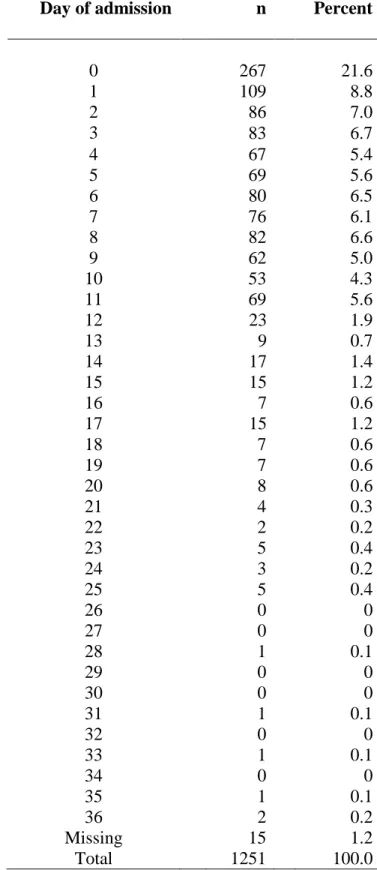
Table 2: Frequency of patient falls by day of hospitalization .………39
Table 3: MFS frequencies of patients who fell… ………...40
Table 4: Percentage of patients who fell per hour across 24 hour period………41
Table 5: Percentage of patients who fell between 7AM-7PM……….42
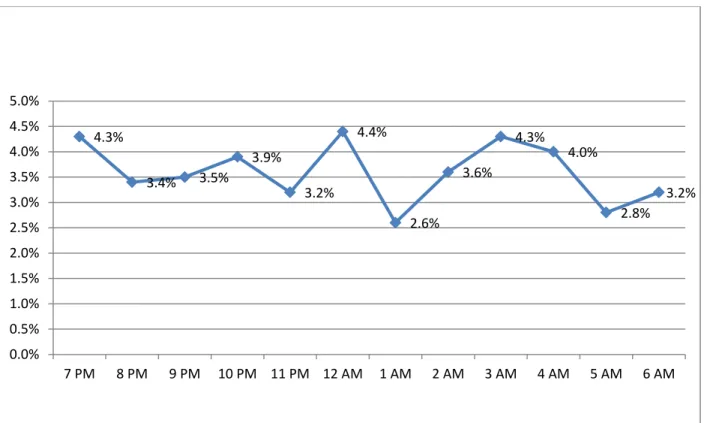
Table 6: Percentage of patients who fell between 7PM-7AM……….43
Table 7 Frequency of PFH categories and factors for the patients who fell………...44
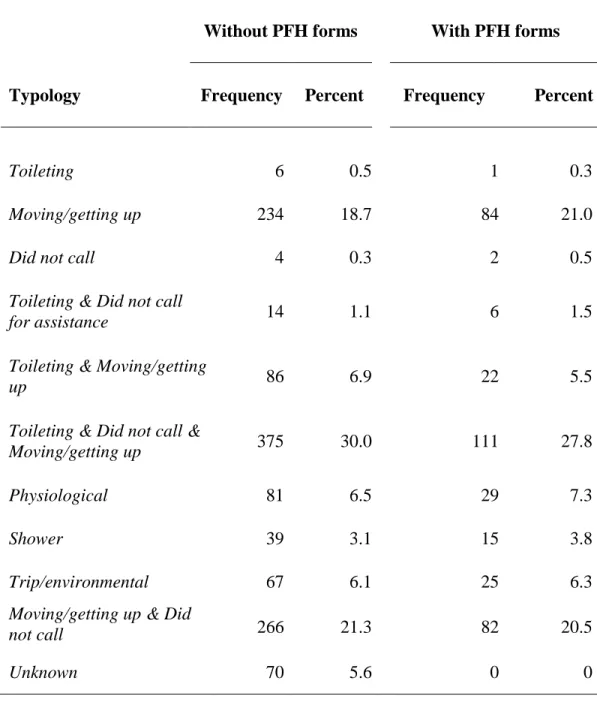
Table 8: Typology frequency and percent of the patients that fell who did and did not have PFH forms……….………45
x
LIST OF FIGURES
xi
LIST OF ABBREVIATIONS
AHRQ Agency for Healthcare Research & Quality AMC Academic Medical Center
ANA American Nurses Association
CDC Centers for Disease Control and Prevention CMS Centers for Medicare and Medicaid Services FPP Falls Prevention Protocol
FTTK Fall Tailoring Interventions for Patient Safety Toolkit HFRM Hendrich Falls Risk Model II
IHI Institute of Healthcare Improvement IOM Institute of Medicine
MFS Morse Fall Scale
NDNQI® National Database of Nursing Quality Indicators NPV Negative predictive value
PFH Post Fall Huddle
PPV Positive predictive value
1
CHAPTER 1: SIGNIFICANCE AND BACKGROUND Introduction
Patient safety and prevention of harm are the heart of quality patient care. To Err is Human: Building a Safer Health System, released by the Institute of Medicine (IOM) in 1999, followed in 2001 by Crossing the Quality Chasm: A New Health System for the 21st Century
described the state of medical errors and their cost, and issued a call for action to decrease preventable errors (IOM Reports, 2014). Further, the Centers for Medicare and Medicaid
Services (CMS) instituted a ruling effective October 1, 2008, that hospitals will no longer receive reimbursement for eight hospital acquired conditions (Inouye, Brown, & Tinetti, 2009). Thus it is imperative that health care organizations create effective programs to prevent harm to patients and reduce the financial impact of decreased reimbursement (Volz, & Swaim, 2013). Health care leaders are therefore increasingly focused on falls, infection rates, length of stay and other patient safety outcomes in hospitals.
2
Falling again, and feeling unsafe in health care environments; physical injuries can include bruises, lacerations, fractures, hematomas and even death. Any fall with or without injury can have a tremendous, life altering impact that is preventable.
The financial impact of falls is also considerable since it affects health care organizations and patients alike. The Centers for Disease Control and Prevention (CDC) report that direct care costs (to patients and insurance companies) for people who fall are upwards of $30 billion annually and both direct and indirect costs are estimated to increase to $67.7 billion by 2020 (CDC, 2013). Accrediting entities such as The Joint Commission (TJC), the American Nurses’ Credentialing Center, and the CMS require hospitals to focus on preventing patient harm, specifically falls and falls with injury. Health care organizations must have a systematic falls prevention program that can ensure that patient falls are prevented to reduce unnecessary impacts to patients, both physically and emotionally, and to health care organizations financially.
3
CHAPTER 2: THE FALLS LITERATURE
A fall event is defined by the National Database of Nursing Quality Indicators
(NDNQI®), the most common benchmark, as “a sudden, unintentional descent, with or without injury to the patient, that results in the patient coming to rest on the floor, on or against some other surface, on another person, or on an object” (American Nurses Association [ANA], NDNQI Guidelines for Data Collection, 2013, p.2). A fall event includes both assisted and unassisted falls, regardless of injury, but does not include child falls unless the child is injured (ANA, NDNQI Guidelines for Data Collection, 2013). Most health care organizations compare their falls and injury rates (per 1000 patient days) with other organizations as a benchmark through the NDNQIfrom the American Nurses Association’s National Center for Nursing Quality (ANA, NDNQI Guidelines for Data Collection, 2013).
4
approximately 14% of falls. Anticipated physiological falls are those identified as risks on a screening tool; they account for approximately 78% of falls. The Morse Fall Scale (MFS) is used by many hospitals to predict the likelihood of anticipated physiological falls. There are six items on the MFS that a nurse scores to determine fall risk; these are:1) patient has a history of falling, either in the immediate or within the last three months; 2) patient has a secondary diagnosis; 3) patient uses an ambulatory aid; 4) patient has an IV/Med lock; 5) patient has a problem with gait or transferring from one physical place to another; and 6) patient has mental status concerns (Appendix 1: Morse Fall Scale).
To prevent falls it is also important to understand the predictors of unanticipated physiological and accidental falls since there is currently no measure used to predict for these types of falls (Morse, 2009). Currently, fall prevention includes assessments for fall risk, post-fall follow-up and quality improvement efforts (Ganz, Huang, Saliba, et al., 2013). According to the AHRQ Toolkit for Preventing Falls in Hospitals, contributory factors in patient falls should be reviewed on both an individual and aggregate level. Analysis of an individual patient fall helps to keep the same patient from falling again, while aggregate analysis identifies contributory causes at the unit, service, or organizational levels (2013).
5
primary nurse and team. Post-fall follow-up provides an immediate review after a patient has fallen (Degelau, Belz, Bungum, et al., 2012).
Quigley et al. (2009) reported that falls were reduced on units performing ‘safety huddles’ after a patient fell, in which staff discussed what seemed to contribute and how to modify the patients plan. A post fall huddle sheet includes factors that the primary nurse thinks contributed to a patient’s fall. The post fall huddle sheet is intended for use by the nursing team who meets to determine and discuss the fall event. In this discussion they select the factors thought to have contributed to this fall and consider fall prevention interventions to prevent a repeat fall. Post-fall huddles can include patients and families, and the all staff working with the patient at the time of the fall (Ganz, Huang, Saliba, et al., 2013). Post-fall huddles should include what happened during or related to the fall, any falls interventions in place at the time of the fall, patients’ injury and risk factors that are identified, patients’ medications and
comorbidities present at the time of the fall, as well as actions that should be taken to prevent the patient from falling again (Degelau, Belz, Bungum, et al., 2012 & Ganz, Huang, Saliba, et al., 2013). Post-fall huddles should also provide learning opportunities for staff and patients, since they create evidence for unit and hospital fall prevention programs (Degelau, Belz, Bungum, et al., 2012 & Ganz, Huang, Saliba, et al., 2013).
Fall Prevention Programs
A systematic review by Maike-Lye et al. (2013) of programs consisting of
multi-component interventions including signage, wristbands, medication reviews, scheduled toileting, risk assessments, and staff and patient education concluded, that these multi-component
6
organizational state is recommended by the AHRQ Toolkit and National Guideline Clearing House Prevention of Falls Guidelines (Ganz, Huang, Saliba, et al., 2013; Degelau, Belz, Bungum, et al., 2012).
Health care organizations can also reduce falls by establishing an infrastructure that focuses on fall prevention at an organizational level. Weinberg et al. (2011) suggested that such an infrastructure should include evaluation of existing fall prevention practices and gaps,
validation of a fall risk assessment tool, policy changes to support gaps identified in fall
prevention practices, and nurse manager involvement in review of fall risk assessments for new admissions and follow-ups with nurses after patient falls, through root cause analysis. In the falls prevention initiative infrastructure Weinberg implemented, nurse managers and nurses were held accountable for documentation and performance on falls risk assessments, and root cause analysis was reviewed at a hospital-wide level to identify trends, accountability, and missed opportunities. Through changing organizational culture related to falls through policy changes, root cause analysis, and identification of trends at the organizational level, the fall rate in the organization was reduced by 64%.
7
staff and patients; integration of technology; risk factor interventions; and post-fall follow-up and quality improvement (Degelau, Belz, Bungum, et al., 2012; Neily, Quigley, & Essen, 2013; McArthur, 2013; Ganz, Huang, Saliba, et al., 2013; & Boushon, Nielsen, Quigley, et al., 2012).
Major recommendations within the guidelines are organizational structure, support, and culture for fall prevention programs. These recommendations include methods of obtaining organizational support for a falls prevention program and ensuring that there is a committee or team structure to support falls reduction initiatives (Degelau, Belz, Bungum, et al., 2012; Spoelstra, Given, & Given, 2011; Neily, Quigley, & Essen, 2013; McArthur, 2013; & Ganz, Huang, Saliba, et al., 2013). A key component of a falls prevention program is strong leadership on the falls team, including senior leadership, front line staff, and multi-disciplinary team
members, as well as a member from the organization’s quality improvement team (Ganz, Huang, Saliba, et al., 2013). Team members provide the expertise necessary to establish a culture of falls prevention (2013). Further, having a senior leader as a part of the team not only can foster accountability, but also assist with minimizing barriers that the team may encounter (2013). Senior leadership can also increase safety awareness across the health care organization through communication (Spoelstra, Given, & Given, 2011).
A key study of a falls reduction program was conducted by Weinberg et al. (2011) who implemented a two-phased intervention: (1) an evaluation of fall prevention efforts and (2) a fall prevention intervention program that addressed fall risk assessments, investigation, planning and identification of falls. This program reduced the fall rate by 64% and the rate of falls with moderate injury by 64%. The initiative included a step-by-step process that held staff
8
were achieved by creating a culture of safety, accountability and continuous quality improvement with a focused initiative by senior leadership and front line nurses (2011).
Communication with and education of staff and patients are key pieces of a fall prevention program is the integration of technology (Spoelstra, Given, & Given, 2011; Neily, Quigley, & Essen, 2013; McArthur, 2013; Ganz, Huang, Saliba, et al., 2013; & Boushon, Nielsen, Quigley, et al., 2012). Dykes et al. (2010) conducted a three-phase study to identify why patients fell and to create and test a Fall Tailoring Interventions for Patient Safety Toolkit (FTTK). The study found that the FTTK reduced falls when technology was integrated at the bedside and generated tailored interventions for nurses to follow (2010). One of the study conclusions was that nurses should tailor patient education to the patient’s risk factors (2010). Dykes et al. showed a 22% reduction in falls with an accurate plan and interventions; however, they noted that patient and staff compliance with prevention strategies should be continually addressed, through post-fall follow-up and quality improvement initiatives.
Measurement
There are a variety of measures used to assess falls, both before and after a fall has occurred. To benchmark fall rates, many health care organizations that participate in NDNQI measure and compare their falls and fall injury rates with other organizations through NDNQI quarterly reporting. NDNQI gathers data from hospitals and reports four standard fall and injury rates quarterly: “falls, injury falls, unassisted falls, and intentional falls” (ANA, NDNQI
Guidelines for Data Collection, 2013, p.2). Each indicator is reported for a standard 1,000 patient days for a total falls rate.
9
falsely report having fallen (ANA, NDNQI Guidelines for Data Collection, 2013). While reported as falls, suspected intentional falls are categorized separately and are not counted as a fall. Every fall has a potential injury level identified, which is reported to NDNQI. As mandated by the NDNQI fall reporting guidelines, hospitals have the responsibility to ensure that injury level is determined within 24 hours (ANA, NDNQI Guidelines for Data Collection, 2013).
Injury classifications are:
None - resulted in no signs or symptoms of injury as determined by post-fall evaluation (which may include x-ray or CT scan)
Minor - resulted in application of ice or dressing, cleaning of a wound, limb elevation, topical medication, pain, bruise or abrasion
Moderate - resulted in suturing, application of steri-strips or skin glue, splinting, or muscle/joint strain
Major - resulted in surgery, casting, traction, required consultation for
neurological (basilar skull fracture, small subdural hematoma) or internal injury (rib fracture, small liver laceration), or patients with any type of fracture
regardless of treatment, or patients for have coagulopathy who receive blood products as a result of a fall
Death - the patient died as a result of injuries sustained from the fall (not from physiological events causing the fall) (ANA, NDNQI Guidelines for Data Collection, 2013, p.5-6)
Fall risk assessments and identification of risk factors for falls are necessary for a fall prevention program. In fact, every hospitalized patient is required to have a fall-risk assessment within 24 hours of admission in order to meet the Joint Commission standards. Therefore, all health care organizations use some type of fall screening tool to identify every patient’s fall risk.
10
tools recommended accurate risk assessments in designing fall program interventions, noting that even the best risk assessment tools will sometimes fail to capture those who fall (Oliver, et al., 2004). There is no evidence that any of the assessment tools is a solid predictor of falls (Degelau, Belz, Bungum, et al., 2012). However, Ganz, et al. (2013), note that performing a standardized fall risk assessment does initiate care planning and communication, and assist in clinical decision making for patient-specific considerations. Also, Morse (2009) pointed out that the MFS assesses a patient’s risk for anticipated physiological falls.
STRATIFY, commonly used in acute and rehabilitative care hospitals, and was created in the United Kingdom for elderly patients using a 5-point scoring system to identify high and low risk of falling (Oliver, et al., 2008). In a systematic review Oliver et al found that though STRATIFY was comparable to other fall risk assessment tools in adherence, speed of use, and reliability, the tool’s sensitivity and positive predictive value (PPV) were too low to identify patients of high risk for falling in hospitals. The authors noted that the findings demonstrated that patient population and setting does affect the performance of the STRATIFY fall risk assessment tool (2008).
11 Falls Assessment and Follow-up the study site
Though no risk assessment tool has proven to be the “gold standard” for identifying high risk patients for falling, risk assessment is an essential process in quality improvement efforts. Although several falls risk assessment tools exist, the health care organization examined in this project uses their Morse Falls Scale (MFS) as the fall risk assessment tool (Appendix 1). The MFS tool was created in 1989-1992 (Morse, 2009). The MFS has six items for scoring: history of falling, secondary diagnosis, ambulatory aid, intravenous therapy, gait, and mental status (2009). Construction of the scale began with testing 100 patients who fell and 100 selected control patients in order to identify variables for the scale (2009). The inter-rater reliability scores (21 raters) for five of the items was r=0.96 with a range of 0.82-1.0 the NPV was 0.992 and the PPV was 0.73 (2009). Validity for the MFS was tested by discriminatory analysis, examining those cases that were not classified correctly during the analysis, and by prospective testing in three different clinical areas (2009). Chapman et al. (2011) studied 1540 patients in acute and critical care units and found sensitivity of 77.2 and specificity of 72.8.
At the institution studied, the current process of falls assessment is that the nurse
identifies a patient’s fall risk factors within 24 hours of admission, and again each shift (every 12 hours), as well as when there is any change in the patient’s status (mental status change,
12
and considering bed alarm activation. If the patient falls, the nurse provides care that includes assessing the patient for injury, taking vital signs, notifying the physician and nurse manager, providing patient and family education, documenting fall in the medical record, completing a MFS assessment, and completing the Post-Fall Safety Huddle Form (Appendix 2: Post-Fall Huddle).
As part of the post-fall event analysis, a Post-Fall Safety Huddle Form was created to be used by nurses after a fall event to identify and ‘huddle’ about the reasons a patient fell in efforts to prevent the patient from falling again. The form was developed by members of the health care organization’s Falls Committee, led by Lean Six Sigma Express Work-Out Session as a part of a process improvement methodology. It is unknown from what source the Post-Fall Huddle factors were derived. The Post-Fall Safety Huddle Form includes pre-populated data items pulled from the post-fall electronic documentation and is printed out for use as soon as the nurse completes the post fall documentation. The primary nurse selects the factors that contributed to the fall on the form. The 24 factors that may have contributed to the fall are grouped in these categories: factors related to the patient’s diagnostic and cognitive status, the environment, family and staff presence, effects of medication, and activities involved in the fall, if any. Within each category the following are factors are listed:
Patient factors: Does not follow commands, patient confused, neutropenia, orthopedic issues, off service patient, repeat fall
Environmental factors: Environmental clutter, no gripping socks on patient, call bell promptness, no bed alarm activated, foley on bed, IV pump, reaching
Human factors: family present, sitter present
Medication factors: sedatives, diuretics, chemotherapy
13
The primary nurse completes the Post-Fall Safety Huddle Form, the nurse then leads a “huddle” or meeting with all the staff within 30 minutes of the fall. The huddle includes a discussion of all of the information on the Post-Fall Safety Huddle Form. Once the huddle is completed, the form is given to the nurse manager of the unit for further review and follow-up with team members if necessary. The nurse manager is required to review the Post-Fall Safety Huddle Form within 24 hours of the fall event to assess the patient for injury and review the medical record for documentation of compliance. If the patient is injured, the next steps are pre-determined and stated in the policy. If additional information is required, the nurse manager holds a discussion with the nurse and other team members to clarify any questions before the Post-Fall Safety Huddle form is signed and sent to the Co-Chair of the institution’s Falls Committee.
The Problem Studied
Patient falls remain a challenge for hospitalized patients: there is not a single solution to prevent falls, nor a tool for accurately identifying patients that are at highest risk for falling. There are no “gold standard” fall prevention techniques either a single intervention or
interventions used in combination. However, an analysis of existing patient falls data can aid in understanding the common causes of falls and the characteristics of patients who fall so that an effective fall prevention program can be developed.
Therefore the question addressed in this project was:
14
CHAPTER 3: GUIDING THEORY Theoretical Framework
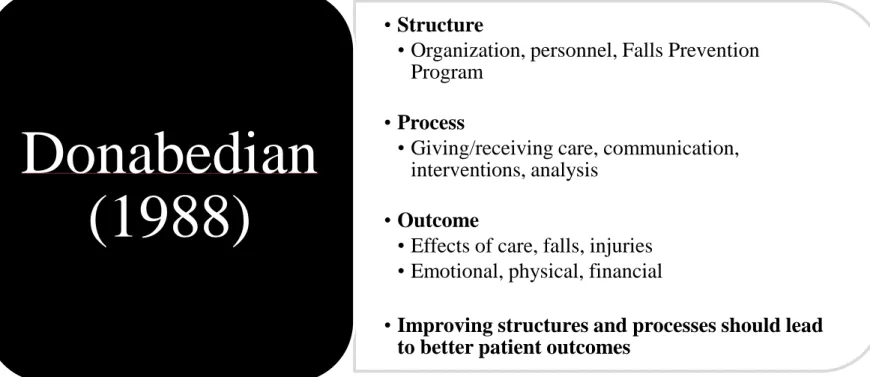
After identifying a problem where improvement is needed, a central tenant in process improvement is to analyze the current process to determine why the process is inadequate (Butts & Rich, 2011). Quality assessment often begins with Donabedian’s central tenets of (1988) ‘structure, process, outcome’, which provided the framework to address falls in this study. Structure refers to the attributes of the setting and organization, including resources, physical structure, and personnel. Process is what is specifically done in either giving or receiving care, including patient activities. Of particular interest in this project, a falls prevention program is the chief structural component. Related processes within such a program include reporting of falls, a communication feedback loop, the way the falls are analyzed, and the way the policy/protocol outlines nursing interventions (For a graphic see Figure 1 Theoretical Framework).
Donabedian’s model would predict that improving structures and processes should lead to better patient outcomes, or the effects of care (1988).
15
CHAPTER 4: METHODS Overview
The Post-Fall Safety Huddle data have never been aggregated at the institution where this project was conducted and were the focus of this project. The results of this project will be an essential step in building an evidence-based falls program for the institution. Data came from the post-fall huddle sheet and the medical record (Appendix 3: Data sources, study variable, and variable values), and these data were merged and validated. In preparation for the analysis, the first step was to recode all of the text variables to numeric data to eliminate text entries for such variables as gender (male=1and female=2). The 24 factors from the post-fall huddle (PFH) Forms also converted to numeric values (Appendix 4: PFH Factor Descriptions). Typologies were also created based on an analysis of nurses’ descriptions of fall events in the medical record. Demographic data gathered via the PFH forms were also examined.
Variables were assigned a numerical value and entered into SPSS® and prepared for data analysis. The institution report all fall events and fall injury using NDNQI measures.
16
the event descriptions was done to identify themes in the descriptions (See Table 9: Groups (Themes) with corresponding PFH factors and Typology terms). Other data in the Fall
Description section of the Post-Fall Safety Huddle tool (e.g., date/time, location, incident type, level of injury, safety precautions, and use of restraints) were analyzed descriptively. Using content analysis the descriptions were then examined to see whether typologies could be
identified from the most frequently occurring words or phrases (e.g., chair/bedside commode to bed transfer, no injury, no restraints). Factors related to the post-fall huddle were identified within typologies to see if there were common patterns that could be used to develop interventions to reduce falls in the institution. These were grouped and compared. Clinical Questions
1. What are common factors of patients who fall?
2. Does the Post-Fall Safety Huddle Form capture the data necessary to analyze falls after the event has occurred?
3. Is the Post-Fall Safety Huddle Form consistent with current practice guidelines?
4. Are there recommendations for the falls prevention program that can be generated from these findings?
Setting
17
representatives from all of the institution’s service line areas. As with virtually all hospitals, decreasing falls and falls with injury is an organizational priority.
Participants
The data for this project came from all adult patients admitted between January 2012 to March 2014 who fell sometime during their hospital stay (n=1,264). All fall events were analyzed, including repeat falls by the same patient and falls that occurred for the same patient but during different admissions within the project period.
Approvals
18
CHAPTER 5: RESULTS AND DISCUSSION Overview
The fall aggregate analysis included 1,251 patients who fell on one of the adult inpatient units at the project AMC between January 2012 and March 2014. The data set originally included 1,264 patients who fell, but 13 patients were removed from the data set either because they were duplicates (2) or admitted to newly opened units (11). PFH forms were available for 400 of the patients who fell.
Demographics
Of the 1,251 patients who fell between January 1, 2012, and March 31, 2014, the typical patient was hospitalized in an acute care unit (84.7%), assessed to be at risk for falling (72.6%), did not require any type of ambulatory assistance (86.7%), did not require the use of any special type of equipment (88.4%), and experienced a fall from an inpatient hospital bed (23.8%). For all patients, the FPP was activated (81.5%), and patients were neither restrained (99.6%), nor injured (71.2%). The average age of patients who fell was 56 years, ranging from 18 to 96 years (mean = 56.28, SD = 16.94). (For more information, see Table 1: Demographics of patients who fell.)
Data on Falls
19
hospitalization (91%). The patients who fell had a range of days in the hospital from 0 (less than a full 24 hour stay) to 36 days (mean days=5.6, SD=5.6).
Most patients who fell were identified as at risk for falling in the electronic medical record (72.6%); 98.8% of patients on these units had a MFS assessment, and the patients who fell had a MFS mean score of 60.5 (median = 60.0, SD=24.89) (See Table 3: MFS frequencies for patients who fell for more information). Over 81% of the patients who fell had a fall prevention protocol activated.
The most common times of the day for falling were (range of 2.6%-6% per hour) 10AM (6%) and 4PM (6%) (Table 4: Percentage of patients who fell per hour across 24 hour period). When patients who fell were divided into the typical 12-hour shifts their nursing team members work, 56% of the patients fell on the 7AM-7PM shift, while 43% fell on the 7PM-7AM shift (Table 5: Percentage of patients who fell 7AM-7PM, and Table 6: Percentage of patients who fell 7PM-7AM).
The top five factors reported by nurses as factors contributing to patient falls are these listed below (Table 7: Frequency of PFH categories and factors for the patients who fell1):
1. Does not follow commands (n = 151) 2. Patient confused (n = 107)
3. Ambulating room/hall (n = 99) 4. In/out of chair (n = 98)
5. Toileting bathroom (n = 98).
20
The two most common factors selected were in the Patient Factors category, selected 258 times out of 1,251 notations, while the remaining three most common factors were in the Activity Factors category (373 selections). The least common factors selected were Human Factors (n = 76) and Medication Factors (n = 104). Over half of the factors were rarely selected as a cause of the patient’s fall, that is they were selected fewer than 50 times out of the more than 1,000 selections. A total of 1,172 factor selections were noted on the 400 PFH sheets, with 1-9 factors selected for each patient who fell (Table 8: Typology frequency and percent of the patients who fell and did not have PFH forms).
The most common typologies listed for all patients who fell (n = 1,251) were the following, based on the nurse’s fall description:
1. Toileting, did not call, and Moving/getting up (30%) 2. Moving/getting up and did not call (21.3%)
3. Moving/getting up (18.7%)
4. Toileting and Moving/getting up (6.9%) 5. Physiological (6.5%)
Patients not calling for assistance and moving/getting up were noted for 51.3% of the patients who fell, while toileting accounted for 38.5% of the falls (Table 9: Groups (Themes) with corresponding PFH factors and Typology terms).
When the typologies were examined for the 400 patients who fell and who also had a PFH, the most common typologies were:
1. Toileting, did not call, and Moving/getting up (27.8%) 2. Moving/getting up (21%)
21 4. Physiological (7.3%)
5. Toileting and Moving/getting up (5.5%)
Although the top five typologies were the same in both the total group of patients who fell (n = 1,251) and those with a PFH (n = 400), the rankings differed.
In further analysis of the patients who had both PFH and a typology (n = 400), the ‘like’ factors were combined to form five groups. Some groups included factors from either the PFH or the typology or both. The five groups were toileting, following commands, environmental, showering, and moving/getting up (Table 9: Groups (Themes) with corresponding PFH factors and Typology terms).
Group 1 factors were all related to toileting. PFH factors included Toileting bedside commode and Toileting bathroom; typology factors for this group were Toileting, Toileting and Did not call, Toileting and Moving/getting up, and Toileting, Did not call, and Moving/getting up. PFH factors related to toileting were selected 150 times, whereas in the typologies only 139 patient falls were related to toileting.
Group 2 factors included all factors from the PFH that involved Does not follow
commands and all factors from the typologies involving Did not call. Among the PFH factors, the Does not follow commands were involved in 151 falls, while Did not call was involved in total of 201 falls.
Group 3 factors included environmental factors from both the PFH and the typologies. The PFH factors Environmental clutter, Foley to bed, IV pump, and Reaching.
22
Group 4 was the most straightforward; this included one PFH factor and one typology factor showering. Showering was identified 16 times on the PFH, while the typologies identified it 15 times.
Group 5 factors revolved around moving, getting up, and walking in both groups.
Among PFH factors, In/out of chair and Ambulating in room/hall were noted, while from among typology factors Moving/getting up and Moving/getting up and Did not call were noted. The PFH factors resulted in 197, while the typology factors resulted in 166.
Discussion of Results
Only 72.6% of the patients examined in this project who fell were scored as at risk for falling. Reasons for the not documenting this risk may be that nurses did not fully understand the items on the MFS, scored the patient’s risk correctly, or the scale did not include adequate information necessary for the patients to be assessed and scored as at risk. Also, since the MFS is measures risk of falls of anticipated physiological falls, the patients who fell who may have not been at risk of anticipated physiological falls (Morse, 2009). Additionally, 155 patients (12.5%) were scored either 35 or 40 on the MFS, the difference of a single item on the MFS could have made the patient at risk for falling. A total of 81.5% of the patients were on placed on FPP (nurse initiated falls interventions), 8.4% more than were deemed to be at risk using the MFS alone (score ≥ 45). This could indicate the nurses believed these patients should be on falls prevention even though the patient did not score at risk.
23
The most common risk factors selected by the nurses on the PFH sheet were Patient,
Activity, and Environmental Factors, while Human and Medication Factors were selected only 15% of the time. Of the 24 factors listed, 13 were selected less than 50 times as contributing factors, which may suggest that these factors should not be included on the PFH sheet.
Data on the Activity Factors from the PFH Forms, in/out of chair (n = 98), ambulating room/hall (n = 99), and toileting bedside commode (n = 98) indicate that patient activities were frequent contributors to patient falls. Although no Environmental Factors were top contributors of patient falls, the category of environmental factors, represented over 20% of the causes for patient falls.
Based on data on patients who fell and who had both the PFH and a typology, similarities were found between the two. For example, showering was noted almost exactly the same on the PFH sheet and the typology. This outcome suggests using the PFH factors in future analysis.
However, there were differences in other groupings, for example, following commands. The typologies included did not call, since these were the specific words used in fall descriptions by nurses. The PFH factor most similar to the typology was does not follow commands.
Although these two phrases have different meanings, does not follow commands may have seemed the best option for the nurse to select on the PFH sheet when the nurse stated in the fall description that ‘patient states that he/she “forgot to call’. However, the PFH sheet could benefit from including a did not call factor, to differentiate the two variables.
Environmental factors encompassed a range of items in the PFH, while the typologies included specific phrases such as ‘trip’, ‘slip’, ‘tangled’, or ‘clutter’. This group was least used.
24
moving ‘from’ and ‘to’. The difference in the frequency of noting this factor on the PFH and the typology was probably due to the fact that on the PFH sheet, the only options for moving/getting up were via chair or ambulating, while the typology included moving/getting up from any
position and included moving/getting up from bed, which is where most patients spend their time and the location from which most patients are likely to move. The PFH form did not offer ‘from bed’ as an option.
Recommendations
Any post-fall review should include: an assessment and evaluation of a patient fall completed by the primary nurse as close as possible to the fall event and could include team members, the patient, and/or the family; it should provide meaningful information such as fall event, interventions, time, date, injury level, risk or contributory factors associated with the fall event, and interventions that could prevent this patient from falling again (Degelau, Belz, Bungum, et al., 2012 & Ganz, Huang, Saliba, et al., 2013).
25
Although the falls prevention program at the study AMC is in alignment with current clinical practice guidelines, the analysis performed provides insight into several
recommendations that can be made to improve the falls prevention program. As would be suggested within the structure component of Donobedian’s model, the falls prevention program should require completing the MFS on admission for all adult patients, rather than allowing the assessment to be completed anytime within the first 24 hours of hospitalization. With 21.6% of patient falls occurring in the first 24 hours of admission, assessing patients’ fall risk on
admission is critical. A process enhancement of the falls program would be for the nurse to provide falls prevention education, also at admission, specifically explaining that they are in a different place, medications may alter their cognition and ability to move as they normally do, and so forth. This could then be reinforced with each nurses’ shift assessment of the MFS falls risk of specific ways that this patient is at risk for falling based on their plan of care. Making specific interventions and education tailored to the patient is key in preventing falls (Dykes et al., 2010).
Secondly, 10:00 AM and 4:00 PM were the most common times for patients to fall during this time period. Further analysis is recommended to determine what is important about these times, especially if there is a structural or process issue that needs to be addressed; a first step could be to perform intentional rounding on patients determined to be at risk for falling hourly and with a special emphasis at these times.
Third, The PFH forms do capture some important information about the patient
demographics, activity during the fall, risk assessment scores before and after the fall. However, the PFH form is not always completed and does not capture causes for the patient falling;
26
clinicians focus on identifying causes of falls from post-fall assessments, the information retrieved from the PFH should guide patient fall prevention efforts (Oliver et al., 2004).
Therefore, specific recommendations on what happens after a patient falls including the PFH are essential. One essential process change is to ensure that the PFH is completed for all patient falls, which might be facilitated by coupling the PFH sheet and the required PFH incident report.
Based on the number of PFH forms retrieved (400) relative to the number of patients who fell (1,251), it is recommended that a process be instituted to ensure tracking and follow-up for PFH forms not received. Additionally, it is clear that some data were not captured by the PFH that would assist in fall prevention. Specifically missing from the PFH form were factors that addressed patients getting out of bed, other types of medications like narcotics, and not calling for assistance, each of which was found to be relevant to falls prevention, but were not captured on the form. The tool needs to be considered for revisions to include these factors.
Establishing a database of PFH data for on-going analysis would be optimum for both aggregate and individual analyses. Next, the PFH form should be integrated into the electronic health record so the process is automated. This would reduce double charting (electronic and then PFH written form), encourage nurses’ to complete of the PFH or make it a required field to complete, and create an electronic data base for the reporting of data at the aggregate level.
27
Further evaluation of the each PFH factor would provide insights into data that are not currently being captured. Half of the PFH factors were rarely selected, indicating that those factors are either not common causes of patient falls, or the meaning of the factor is not clear. Also, most PFH forms had as many as 9 factors marked (range 1-9), which suggests that there may be too many factors from which to choose, the factors not clearly defined, or that nurses believe they must mark at least one factor in each of the five sections. Improving instructions for the use of the PFH sheet and eliminating factors rarely chosen might improve the its utility. The PFH form factors should be analyzed to determine further the clarity and use of each factor as a guide for keeping them as factors that contribute to patient falls or if additional factors need to be added, or limiting the nurse to select only the top five contributing factors.
Finally, further clarification of the definition Does not follow commands on the PFH sheet is needed. The fall descriptions revealed that often patients did not call for assistance. Many of these descriptions included comments like ‘patient did not call for assistance’,
28 Limitations
As with any secondary analysis, there were limitations to this project, including the omission of PFH forms for some patients who fell, and the comparison of data to patients who did not fall during the same time period. There were only 400 PFH forms for the 1,251 patients who fell. Explanation of common risk factors was done for almost two-thirds of the patients, who fell was not done, limiting the extent to which the results can be extrapolated to even this one institution. Another limitation of this study was that the analysis was done only at one academic medical center. Including a larger sample of similar patient populations would strengthen the generalizability of the results.
Future Work
Future work on this data set could include a comparison of the nurse’s fall descriptions with the PFH factors. This would make it possible to determine whether the PFH factors capture the essence of the fall descriptions. Also, all patients admitted could be compared to patients who fell in regard to gender, age, length of stay, admitting and discharging diagnosis, and MFS. For example, patients who fell might include a larger proportion of patients with a specific disease or patients older than those who did not fall. Further, a review of FPP successes in preventing falls could help better identify effective interventions. Also, a future study could evaluate the impact of patients’ inclusion and engagement into the post-fall huddle and the impact that this has on the identification of PFH factors.
29
30
APPENDIX 1: MORSE FALL SCALE
Item Scale
1. History of falling; immediate or within 3 months No 0 Yes 25
2. Secondary Diagnosis No 0
Yes 25
3. Ambulatory Aid
None/bed rest/nurse assist Crutches/cane/walker Furniture
0 15 30
4. IV/Med Lock No 0
Yes 20
5. Gait/Transferring
Normal/bed rest/immobile Weak
Impaired
0 10 20
6. Mental status
Oriented to own ability Forgets limitations
31
APPENDIX 2: POST-FALL HUDDLE SHEET
Name: Age: Gender:
MRN: Account# Patient Location:
Instructions:
1. Complete by end of shift and deliver to Nurse Manager. 2. Manager send to Chair of Falls Committee within 7 days. 3. Re-Assess Falls Risk Score.
4. Up-date “Falls Risk” Goal.
5. Up-date G-Chart/Days since last fall.
Pre-Fall Score____ Post-Fall Score___
Fall Description Date/Time: Fall Location:
Incident Type: Level of Injury:
Description:
Post-Fall Huddle
Primary RN Name: NA Name:
Patient Factors: Environment: Activity
{} Does not follow directions {} Environmental clutter {} In/out of chair {} Patient confused {} No gripping socks on patient {} Ambulating
{} Neutropenia {} Call bell promptness room/hall
{} Orthopedic issues {} No bed alarm activated {} Toileting-
{} Off service patient {} Foley on bed (tethered) bedside commode
{} Repeat fall {} IV pump (tethered) {} Toileting-
{} Reaching bathroom
{} In/out of shower Medications: Human Factors: Other__________________
{} Sedatives {} Family present
{} Diuretics {} Sitter present
32
APPENDIX 3: DATA SOURCES, STUDY VARIABLES, AND VARIABLE VALUES
Data Source Levels of Variable
Post Fall Huddle Sheet (PFH)
Post fall contributory factors does not follow commands patient confused neutropenia orthopedic issues off-service patient repeat fall environmental clutter no gripping socks on patient call bell promptness
no bed alarm activated foley on bed
IV pump reaching family present sitter present sedatives diuretics chemotherapy in/out of chair
ambulating room/hall toileting bedside commode toileting bathroom
in/out of shower other
Medical Record
Gender male, female
Date month/day/year
Time hour:minutes, AM/PM
Day patient fell days
Typology of fall description toileting
moving/getting up did not call
toileting and did not call
toileting and moving/getting up
toileting, did not call, moving/getting up physiological
showering
33
Data Source Levels of Variable
moving/getting up and did not call unknown
Morse Fall Scale (MFS) range of 0-125
Age years
Assisted fall yes, no Fall equipment yes, no
Restraints yes, no
Physiological fall yes, no Risk for falling yes, no
34
APPENDIX 4: POST FALL HUDDLE FACTOR DESCRIPTIONS
Patient Category
Factors
Description
Does not follow commands May be due to confusion or does/did not follow prior commands
Patient confused Patient is continuously or intermittently confused
Neutropenia Neutropenia based on lab values and/or diagnosis
Orthopedic Issues Any current orthopedic issues involving care
Off-Service patient Patient with diagnosis or situation unfamiliar to staff
Repeat fall Fell more than once during same hospitalization
Environmental Factors
Environmental clutter Clutter in room or environment of moving/ambulation
No gripping socks on patient Patient not wearing gripping socks while moving/ambulating
Call bell promptness The promptness of staff when patient requested assistance using the call bell
No bed alarm activated Bed alarm not activated at time of fall
Foley on bed Foley attached to bed frame
IV pump IV pump plugged into outlet
35 Human factors
Family present Family present at patient’s bedside
Sitter present Personal nursing assistant/sitter at patient’s bedside
Medication factors
Sedatives Patient sedated by prescribed medication
Diuretics Medication causing diuresis effect for patient
Chemotherapy Patient receiving chemotherapy
Activity factors
In/out of chair Patient getting in or out of any type of chair or recliner
Ambulating room/hall Patient ambulating in room or hallway
Toileting bedside commode Patient on bedside commode for elimination
Toileting bathroom Patient in bathroom to use toilet
36
APPENDIX 5: TYPOLOGIES AND DESCRIPTIONS OF FALL EVENTS
Typology Description
Toileting Patient actively toileting with assistance from staff
Moving/getting up Patient moving or getting up from a position with assistance from staff
Did not call Patient did not call for assistance from staff
Toileting and Did not call Patient getting up to use toilet in bathroom or bedside commode, urinal, etc. and did not call for assistance from staff
Toileting and Moving/getting up Patient getting up to toilet and moving or getting up from any position with assistance from staff
Toileting, Did not call, and
Moving/getting up
Patient got up from any position, without calling for assistance from staff to toilet
Physiological Descriptors stating physiological symptoms such as ‘dizzy,’ ‘light-headed,’ ‘low blood sugar,’ ‘orthostatic,’ ‘seizure’
Showering Patient actively showering, getting in or out of shower
Trip/environmental hazard Descriptors stating ‘trip’, ‘slip’, ‘tangled’, ‘clutter’ Moving/getting up and Did not call Patient got up from any position and did not call staff for
assistance
37 Table 1: Demographics of patients who fell
Variable n Percent
Gender
Male 624 49.9
Female 627 50.1
Location of bed
Acute Care 1059 84.7
Critical Care 192 15.3
At risk for falling
Yes 908 72.6
No 343 27.4
Assisted fall
Yes 166 13.3
No 1085 86.7
Fall equipment in
use
Yes 145 11.6
No/Unknown 1106 88.4
What patient doing at time of fall?
From bed 298 23.8
From chair 155 12.4
From equipment 8 0.6
From toilet/bedside
commode 164 13.1
From wheelchair 45 3.6
Unknown 193 15.4
Running/playing 3 0.2
Shower/tub 28 2.2
Transfer 10 0.8
While Ambulating 189 15.1
While Standing 156 12.5
38
Variable n Percent
Fall prevention protocol activated
Yes 1019 81.5
No 232 18.5
Level of fall injury
None 891 71.2
Minor 326 26.1
Moderate 16 1.3
Major 18 1.4
Physiological fall
Yes 307 24.5
No 92 7.4
Unknown 852 68.1
Previous fall risk score
Yes 1236 98.8
No 15 1.2
Restraints on at time of fall
Yes 5 0.4
No 1246 99.6
Risks for falling
Yes 908 72.6
39
Table 2: Frequency of patient falls by day of hospitalization
Day of admission n Percent
0 267 21.6
1 109 8.8
2 86 7.0
3 83 6.7
4 67 5.4
5 69 5.6
6 80 6.5
7 76 6.1
8 82 6.6
9 62 5.0
10 53 4.3
11 69 5.6
12 23 1.9
13 9 0.7
14 17 1.4
15 15 1.2
16 7 0.6
17 15 1.2
18 7 0.6
19 7 0.6
20 8 0.6
21 4 0.3
22 2 0.2
23 5 0.4
24 3 0.2
25 5 0.4
26 0 0
27 0 0
28 1 0.1
29 0 0
30 0 0
31 1 0.1
32 0 0
33 1 0.1
34 0 0
35 1 0.1
36 2 0.2
Missing 15 1.2
40 Table 3: MFS frequency for patients who fell
(Mean = 60.5, Median = 60.0, SD = 24.9)
14
6 3 1 4 2 2 39
24
15 22
100 55 108 58 37 171 51 130 70 49 131 18 75 28 3 13
2 5 0 20 40 60 80 100 120 140 160 180
0 1 2 3 4 5 10 15 20 25 30 35 40 45 50 55 60 65 70 75 80 85 90 95
41
Table 4: Percentage of patients who fell per hour across 24 hour period
4.4%
2.6% 3.6%
4.3% 4.0%
2.8% 3.2% 3.1%
3.4% 5.3%
6.0%
5.4%
4.5% 4.6% 5.2%
4.7% 6.0%
3.4% 5.2%
4.3%
3.4% 3.5% 3.9%
3.2%
42
Table 5: Percentage of patients who fell between 7am-7pm (56% of total falls)
3.1%
3.4%
5.3%
6.0%
5.4%
4.5% 4.6%
5.2%
4.7%
6.0%
3.4% 5.2%
0.0% 1.0% 2.0% 3.0% 4.0% 5.0% 6.0% 7.0%
43
Table 6: Percentage of patients who fell between 7pm-7am (43% of total falls)
4.3%
3.4% 3.5%
3.9%
3.2%
4.4%
2.6%
3.6%
4.3%
4.0%
2.8% 3.2%
0.0% 0.5% 1.0% 1.5% 2.0% 2.5% 3.0% 3.5% 4.0% 4.5% 5.0%
44
Table 7: Frequency of PFH categories and factors for the patients who fell2
PFH Categories
Factors Frequency
Patient category
Does not follow commands 151
Patient confused 107
Neutropenia 18
Orthopedic Issues 33
Off-Service patient 19
Repeat fall 55
Total frequency 383
Environmental category
Environmental clutter 12
No gripping socks on patient 51
Call bell promptness 8
No bed alarm activated 81
Foley on bed 10
IV pump 49
Reaching 25
Total frequency 236 Human category
Family present 68
Sitter present 8
Total frequency 76
Medication category
Sedatives 72
Diuretics 23
Chemotherapy 9
Total frequency 104
Activity category
In/out of chair 98
Ambulating room/hall 99
Toileting bedside commode 52
Toileting bathroom 98
In/out of shower 16
Unknown 10
Total frequency 373
45
Table 8: Typology frequency and percent of the patients that fell who did and did not have PFH forms3
Without PFH forms With PFH forms
Typology Frequency Percent Frequency Percent
Toileting 6 0.5 1 0.3
Moving/getting up 234 18.7 84 21.0
Did not call 4 0.3 2 0.5
Toileting & Did not call
for assistance 14 1.1 6 1.5
Toileting & Moving/getting
up 86 6.9 22 5.5
Toileting & Did not call &
Moving/getting up 375 30.0 111 27.8
Physiological 81 6.5 29 7.3
Shower 39 3.1 15 3.8
Trip/environmental 67 6.1 25 6.3
Moving/getting up & Did
not call 266 21.3 82 20.5
Unknown 70 5.6 0 0
Table 9: Groups (Themes) with corresponding PFH factors and Typology terms4
Groups Themes PFH Factors Frequency Typology Frequency
1 Toileting Toileting bedside
commode
52 Toileting 1
Toileting bathroom 98 Toileting and Did not call 6
Toileting, did not call, and Moving/getting up 111
Toileting and Moving/getting up 22
Total 150 Total 139
2 Following
commands
Does not follow commands
151 Did not call 2
Toileting and Did not call 6
Toileting, did not call, and Moving/getting up 111
Moving/getting up and Did not call 82
Total 151 Total 201
3 Environmental Environmental clutter 12 Trip/Environmental hazard 25
Foley on bed 10
IV pump 49
Reaching 25
Total 96 Total 25
4 Showering In/out of shower 16 Shower 15
Total 16 Total 15
5 Moving/getting up In/out of chair 98 Moving/getting up 84
Ambulating room/hall 99 Moving/getting up and Did not call 82
Total 197 Total 166
4 Patients who fell that had both PFH and fall description
Figure 1: Theoretical Framework
•
Structure
• Organization, personnel, Falls Prevention
Program
•
Process
• Giving/receiving care, communication,
interventions, analysis
•
Outcome
• Effects of care, falls, injuries
• Emotional, physical, financial
•
Improving structures and processes should lead
to better patient outcomes
Donabedian
(1988)
4
48
REFERENCES
American Nurses Association (ANA), NDNQI Guidelines for Data Collection and Submission on Patient Falls. (2013). Retrieved December 17, 2013, from
http://www.nursingquality.org/Content/Documents/NQF-Data-Collection-Guidelines.pdf Boushon B., Nielsen G., Quigley P., Rutherford P., Taylor J., Shannon D., & Rita S. (2012)
How-to Guide: Reducing Patient Injuries from Falls. Cambridge, MA: Institute for Healthcare Improvement.
Butts, J., & Rich, K. (2011). Philosophies and Theories for Advanced Nursing Practice Sudburry, MA: Jones & Barlett.
Centers for Disease Control. (2013). Cost Among Falls of Older Adults. Retrieved December 2, 2013 from http://www.cdc.gov/HomeandRecreationalSafety/Falls/fallcost.html
Chapman, J., Bachand, D., & Hyrkas, K. (2011). Testing the sensitivity, specificity and feasibility of four falls risk assessment tools in a clinical setting. Journal of Nursing Management, 19(1), 133-142. doi:10.1111/j.1365-2834.2010.01218.x [doi]
Currie, L. (2008). Fall and injury prevention. Patient Safety and Quality: An Evidence-Based Handbook for Nurses. Rockville, MD: Agency for Healthcare Research and Quality. Degelau, J., Belz., M., Bungum, L., Flavin, P., Harper, C…Webb, B. (2012). Institute for
Clinical Systems Improvement. Prevention of Falls (Acute Care). Retrieved March 10, 2014 from http://bit.ly/Falls0412.
Donabedian, A. (1988). The quality of care: How can it be assessed? Journal of the American Medical Association, 260, 1743-1748. doi:10.1001/jama.1988.03410120089033.
Dykes, P. C., I-Ching, E. H., Soukup, J. R., Chang, F., & Lipsitz, S. (2012). A case control study to improve accuracy of an electronic fall prevention toolkit. AMIA ...Annual Symposium Proceedings / AMIA Symposium.AMIA Symposium, 2012, 170-179.
Ganz D.A., Huang C., Saliba D., et al. (2013). Preventing falls in hospitals: A toolkit for
improving quality of care. Rockville, MD: Agency for Healthcare Research and Quality; AHRQ Publication No. 13-0015-EF.
Inouye, S. K., Brown, C. J., & Tinetti, M. E. (2009). Medicare nonpayment, hospital falls, and unintended consequences. New England Journal of Medicine, 360, 2390-2393.
doi:10.1056/NEJMp0900963
49
Institute of Medicine (IOM) Reports. (2014). Retrieved March 21, 2014, from http://www.iom.edu/Reports.aspx?Series={4EC47331-CA08-4A25-80E6-D4CEB54A485C}&page=2
Ivziku, D., Matarese, M., & Pedone, C. (2011). Predictive validity of the Hendrich fall risk model II in an acute geriatric unit. International Journal of Nursing Studies, 48(4), 468-474. doi:http://dx.doi.org.libproxy.lib.unc.edu/10.1016/j.ijnurstu.2010.09.002
McArthur, A., (2013). The Joanna Briggs Institute Falls prevention strategies: Acute in- hospital setting Accession Number: JBI8367.
Minon, L.C., Chandler, A., Waters, T., Dietrich, M., Kessler,L, & Shorr, M. (2012). Is it possible to identify risks for injurious falls in hospitalized patients? The Joint Commission Journal on Quality and Patient Safety.38(9), 408-413.
Morse. J.M. (2009). Preventing Patient Falls: Establishing a Fall Intervention Program. 2nd ed. New York: Springer.
Neily, J., Quigley P., & Essen, K. (2013). Reducing preventable falls and fall-related injuries
Veterans Affairs (VA) National Center for Patient Safety (NCPS). Retrieved on April 3, 2014 from http://www.patientcarelink.org/uploadDocs/1/Implementation-Guide-for-Fall-Injury-Reduction-VA-NCPS-508.pdf
Oliver, D., Papaioannou, A., Giangregorio, L., Thabane, L., Reizgys, K., & Foster, G. (2008). A systematic review and meta-analysis of studies using the STRATIFY tool for prediction of falls in hospital patients: How well does it work? Age and Ageing, 37(6), 621-627.
doi:10.1093/ageing/afn203 [doi]
Oliver, D., Daly, F., Martin, F., & McMurdo, M. (2004). Risk factors and risk assessment tools for falls in hospital in-patients: a systematic review. Age and Ageing,33(2), 122-130. Quigley, P.A., Hahm, B., Collazo, S., Gibson, W., Janzen, S., Powell-Cope, G. et al., White, S.V.
(2009). Reducing serious injury from falls in two Veterans’ Hospital medical-surgical units. Journal of Nursing Care Quality, 24(1), 33-41.
doi:10.1097/NCQ.Ob013e31818f528e
Spoelstra, S., Given, B., & Given, C. (2011). Fall prevention in hospitals: An integrative review. Clinical Nursing Research. 21(1), 92-112. doi:10.1177/1054773811418106 UNC Health Care Mission. Who we are. Retrieved on September 21, 2013 from
http://www.unchealthcare.org/site/aboutus/about-the-university-of-north-carolina-health-care-system.html
50