ILLUMINATING TEACHER CHANGE IN THE CONTEXT OF A
TECHNOLOGICALLY-MEDIATED PROFESSIONAL DEVELOPMENT PROGRAM
AND EARLY READING INTERVENTION: A CASE STUDY
Jeanne Gunther
A dissertation submitted to the faculty of the University of North Carolina at Chapel Hill in partial fulfillment of the requirements for the degree of Doctor of Philosophy in the School of Education.
Chapel Hill 2012
Approved by:
Lynne Vernon-Feagans
Marnie Ginsberg
Julie Ellison Justice
Steven Knotek
ABSTRACT
JEANNE GUNTHER: Illuminating Teacher Change in the Context of a Technologically-Mediated Professional Development Program and Early Reading Intervention: A Case Study
(Under the direction of Drs. Lynne Vernon-Feagans and Marnie Ginsberg)
The Targeted Reading Intervention (TRI) is a technologically-mediated professional
development program and early reading intervention designed with rural schools in mind
(Ginsberg, Amendum, Mayer, Fedora, & Vernon-Feagans, 2006). The TRI is known to
positively impact teachers’ practices, resulting in improved reading outcomes for children in
kindergarten and first grade (Amendum, Vernon-Feagans, & Ginsberg, 2011; Ginsberg,
2006; Ginsberg, Amendum, Vernon-Feagans, & Athey, n.d; Vernon-Feagans, Gallagher,
Ginsberg, et al., 2010; Vernon-Feagans, Kainz, Hedrick, Ginsberg, & Amendum, 2010;
Vernon-Feagans et al., 2012). Unknown, however, is the process of change that occurred,
leading to the more effective teaching of reading. An understanding of the supportive nature
of specific affordances of the TRI may help to ensure its continued success. As well, this
understanding also holds the potential to inform the design of other programs intending to
facilitate teacher change that leads to higher early reading achievement of students. This
study examined the process of change for one participating TRI teacher over the course of
one school year as she used the program’s affordances of: TRI Weekly Meetings, Coaching,
Technology, One-on-One Format and TRI Reading Strategies. A qualitative, collective case
study design was used to examine how these affordances supported the teacher’s changes in
Coaching together created a context that allowed for a change in the way the teacher
considered the reading development of students. The TRI Weekly Meetings supported
change by providing the participating teacher with a forum for speaking on behalf of her
coworkers. Speaking for coworkers lead to a change in the way the participating teacher was
accepted at her school. The TRI Weekly Meetings were also conducive to professional
conversations that enhanced the Coaching aspect of the intervention. Technology supported
the teacher’s changes mainly by facilitating full implementation of the program, allowing her
DEDICATION
ACKNOWLEDGEMENTS
I would first like to thank and recognize Laura, the dynamic teacher who allowed this
adventure in learning to happen. Laura, you told me we would make a powerful team and
you were correct! I would like also to thank Eli, Caleb, Drew, Troy and Jisela. These five
wonderful children have taught me so much about my own worldviews and the teaching of
reading.
I would like to acknowledge my talented, compassionate and wise committee
members who have provided me with emotional and instructional support throughout my
years at UNC.
To Lynne Vernon-Feagans, I thank you for being the epitome of an amazing advisor.
Your high expectations and belief in my abilities and passions were always evident. You
never missed an opportunity to let me know areas where I needed to grow and areas where I
demonstrated strengths. It is because of your fine example that I am now a wonderful advisor
to my students at Francis Marion University. Your trust in me on the TRI over the years gave
me such confidence and allowed me to learn so very much from the TRI Team, the
participating teachers and all of the participating children. Again, thank you.
To Marnie Ginsberg, I thank you for your unwavering support. You, like Dr.
Vernon-Feagans made your belief in me clear. Your respect for my perspectives and goals will
learned to my pre-service teachers. I look forward to writing and presenting with you in the
years to come.
To Julie Justice, I thank you for your straight-forward and positive approach to
supplying feedback. The time you have given to me providing your thoughts and advice
during the course of this project have been generous and helpful. I am so glad to have had the
opportunity to work with you.
To Steve Knotek, I thank you for your insights on connections from psychology to
education. I am taking away many ideas about future analyses because of these particular
insights. I have grown as a researcher because you’ve introduced these ideas to me.
To Sharon Palsha, I thank you for taking on the role of a reader of my dissertation
with very little notice and without even knowing me. Your dedication to teaching and
supporting doctoral students is so evident. Your feedback on my writing and findings were
extremely thoughtful and necessarily improved my work.
To my family and friends, I thank all of you for your incredible support. Your
encouragement, help with childcare and patience are so greatly appreciated by me. I could
TABLE OF CONTENTS
LIST OF TABLES ... xii
LIST OF FIGURES ... xiii
Chapter I. INTRODUCTION ...1
Problem Statement ...1
The Targeted Reading Intervention ...2
Purpose of the Study ...5
II. REVIEW OF THE LITERATURE ...8
Theoretical Framework ...8
Guskey’s Model ...8
Change of Teacher’s Practice and Change of Student Outcomes ...11
Change of Teacher Practice and Student Outcomes in the TRI ...12
Change in Beliefs and Attitudes ...12
Professional Development ...15
Content-focused and Early Reading ...17
Collaborative ...19
Ongoing...20
Literacy Coaching ...24
Summary of Professional Development ...30
The TRI: A Dual-Level Model ...32
I. TRI Professional Development ...33
II. TRI Reading Strategies Framework ...37
III. METHODS ...43
Case Study Design ...43
Teacher Participant ...45
Smithfield Elementary School ...46
Laura’s TRI Students ...47
Researcher’s Perspective: Constructivism ...48
Data Collection ...49
Coding and Analyses ...53
Within-case Analysis ...53
Cross-case Analysis ...58
Trustworthiness ...60
IV. RESULTS ...62
Section One: Portraits of Laura and her TRI Students ...62
The First Portrait: Before Implementation ...62
The Second Portrait: Laura’s Work with Eli ...64
The Third Portrait: Laura’s Work with Caleb...66
The Fourth Portrait: Laura’s Work with Drew ...67
The Sixth Portrait: Laura’s Work with Jisela ...70
The Seventh Portrait: After One Year of TRI Implementation ...72
Section Two: Cross Case Analysis ...73
Brief Overview of Laura’s Changes ...73
Expanded Explanations of Laura’s Changes ...74
Changes Spurred by Laura’s Quest for Community ...75
Changes Spurred by Unexpected Student Response ...102
Summary of Findings ...130
V. DISCUSSION ...136
Discussion of Selected Sub-findings ...137
The Building of the Coach/Teacher Relationship ...138
Perception of the Influence of Students’ Backgrounds on Reading Instruction ...143
Emergence of Laura’s Transfer of Learning ...146
A Proposed Modified Version of Guskey’s Model of Teacher Change ...150
The Optimal Mix of Avoidances ...151
Teacher Change of Practice ...151
Unexpected Student Response ...152
Change in Teacher Beliefs and Future Practices ...152
Implications for this Model ...152
Limitations of the Study...154
APPENDICES ...156
LIST OF TABLES
Table
1. Teacher-Identified Student Characteristics And Class Ranking ...48
2. Data And Time Points Per TRI Student ...52
3. Teacher-Identified Student Characteristics And Class Ranking-2 ...110
LIST OF FIGURES
Figure
1. Guskey’s Model of Teacher Change in the context of a
professional development program ...9, 31, 42, 151
2. TRI Clinical Coaching and Teaching Model ...36, 129, 141
3. Summary of data ...44
4. Within-case analysis procedure ...54
5. Cross-case analysis procedure ...59
6. Modified Guskian Model of Teacher Change ...151
CHAPTER 1
INTRODUCTION
Problem Statement
Teaching students to read has been described as the “most fundamental
responsibility” of teachers in American schools (Moats, 1999). With this responsibility
comes great challenge for teachers of primary grades as approximately 20% of students have
difficulty in learning to read (Lyon, 1995; National Council on Teacher Quality [NCTQ],
2004). The field of reading research has made great gains in identifying elements of the
reading process and strategies to support those elements, but few teachers learn this kind of
specialized knowledge in their pre-service college programs (Walsh, Glaser, &
Dunne-Wilcox, 2006). Teachers who are knowledgeable about and regularly implement reading
instruction informed by scientifically based research can be effective in their practice and
have the power to greatly reduce the staggering percentage of students struggling to learn to
read (NCTQ, 2004). Clearly, finding ways to expand teachers’ understandings of the most
effective practices in early reading instruction is vital in realizing the great responsibility
placed upon them.
Professional development programs are the main venue for introducing teachers to
such practices in reading instruction. Unfortunately though, as Chard (2004) points out, “The
exist, but an effective means for imparting change using those strategies is still somewhat
elusive. Recently however, studies examining the ongoing school-based professional
development model known as literacy coaching are beginning to uncover hopeful findings
about the efficacy of this kind of support as a means for improving certain aspects of student
reading skills (Amendum et al., 2011; Biancarosa, Bryk, & Dexter, 2010; Carlisle &
Berebitsky, 2011; Elish-Piper & L’Allier, 2011; Vernon-Feagans, Gallagher, Ginsberg, et al.,
2010). A literacy coach is a professional with specialized reading knowledge who provides
“support needed to teachers to implement various programs or practices” (Nowak, 2003, as
cited in International Reading Association [IRA], 2004). An understanding of the process of
how teachers made the necessary changes in practices that impacted student achievement is
still needed though. Many professional development programs fail to consider the factors and
processes involved in how teacher change occurs (Beatty et al., 2008; Guskey 1984, 2002).
Factors such as teachers’ beliefs and attitudes concerning the new practices may not be
explored during professional development yet they play a role in the change process and
teachers’ willingness to embrace the new practices (Grant, Young, & Montbriand, 2001). An
understanding of the mechanisms of teacher change in the context of effective professional
development for reading holds the potential to then inform future program designs.
The Targeted Reading Intervention
The professional development program at the heart of this study is the Targeted
Reading Intervention (TRI), which is couched within a larger study that is part of the
National Research Center on Rural Education Support. The Targeted Reading Intervention is
a technologically-mediated professional development (TMPD) program and early reading
readers within low-wealth communities. Recognizing that teachers in rural schools have
more difficulty obtaining professional development opportunities than those in more urban
locations (Lee & Burkham, 2002), the TRI chose to facilitate the program via technology.
The TRI introduces teachers to new practices and support teachers’ implementation of these
practices with the guidance of a literacy coach (Ginsberg, Amendum, Mayer, Fedora, &
Vernon-Feagans, 2006). The actual framework of this program will be detailed in Chapter 2
in the section labeled, “The TRI: A Dual Level Model.”
Evidence of the effectiveness of the TRI has been demonstrated in a variety of studies
(Amendum, Vernon-Feagans, & Ginsberg, 2011; Ginsberg, 2006; Ginsberg, Amendum,
Feagans & Athey, n.d.; Feagans, Gallagher, Ginsberg, et al., 2010;
Vernon-Feagans, Kainz, Hedrick, Ginsberg, & Amendum, 2010; Vernon-Feagans et al., 2012). For
example, in a randomized controlled trial of the face-to-face delivery of coaching, an
examination of student gains over the course of a school year showed TRI students improved
significantly over control students in Letter/Word Identification, an assessment of early letter
and word reading skills (Vernon-Feagans, Gallagher, Ginsberg, et al., 2010). The impressive
gains made by the students, most notably the kindergarteners, show promise for a model of
intervention seeking to enhance the skills of the regular classroom teacher in providing
specialist-like results for struggling readers. In addition, children of differing genders and
races made similar gains, contrary to intervention studies reporting the opposite phenomenon
(Foorman, Francis, Fletcher, Schatschneider, & Mehta, 1998; Nelson, Benner, & Gonzalez,
2003; Torgesen et al., 1999). Vernon-Feagans, Gallagher, Ginsberg, et al. (2010) attribute
One-relationship that not only supported the teacher in learning to provide instruction specifically
geared for the individual student, but may have also helped overcome possible teacher biases
against race, gender and socioeconomic status.
Amendum et al. (2011) examined reading growth of TRI students in the context of
technologically-mediated TRI delivery. These researchers analyzed data from 8 schools,
finding the TRI students at experimental sites demonstrated significant gains over students at
control sites in the areas of Word Attack, Letter/Word Identification, Passage
Comprehension, and Spelling of Sounds.
A subsequent study (Vernon-Feagans, Kainz, et al., 2010) using a larger sample of 16
schools, but again examining student achievement, found TRI students made significant
gains in all word reading skills for which they were assessed (Word Attack, Letter/Word ID,
Spelling of Sounds) as well as comprehension skills (Passage Comprehension). These
findings confirm those of Amendum et al. (2011). Another remarkable finding of the
Vernon-Feagans, Kainz, et al. (2010) study showed the TRI students “caught up” to their
non-struggling peers in word reading skills by the end of the school year. In considering the
role of implementation frequency and fidelity to the intervention, Vernon-Feagans, Kainz, et
al. reported that teachers who had high implementation and were rated high in their fidelity to
the intervention had students with significant gains on the Woodcock Johnson, a battery of
achievement assessments, as compared with participating teachers with low implementation.
Looking closely at one participating teacher/student dyad in the TRI context,
Ginsberg (2006) discovered a marked increase in positive instructional and emotional
conversations between the teacher and student. This relationship was supportive of the
qualitative case study of one participating teacher’s experiences piloting the
technologically-mediated coaching delivery concluded the TRI positively influenced the teacher’s thinking
and consequent practices of reading with her struggling student (Ginsberg et al., n.d.). While
this change in a teacher’s practice is encouraging, the Ginsberg et al. study did not attempt to
delineate carefully which of the many elements of the TRI framework (i.e., summer institute,
weekly meetings, ongoing coaching through webcam or e-mail, new reading strategies, etc.)
spurred the changes.
Collectively, these randomized controlled trials and case studies demonstrate
effective teaching of reading to struggling students took place in classrooms implementing
the TRI. Students improved significantly in reading while teachers demonstrated changes in
thinking and practice as a result of their involvement in this program. However, the influence
of specific aspects of this program on teacher change and the process of teacher change has
not yet been examined.
Purpose of the Study
The purpose of this study is to closely examine an educational reform in reading by
focusing on the phenomenon of one teacher’s changes within the context of the TRI, a
technologically-mediated professional development program and early reading intervention
for rural schools known to significantly impact struggling students’ reading gains (Amendum
et al., 2011; Ginsberg et al., 2006). Specifically, how particular affordances of this program
supported the transformations of one exemplar teacher participant as she enacted new
practices is examined. “Affordances” included the materials, support and model of the
1. TRI Weekly Meeting 2. Coaching
3. Technology
4. One-on-One Format 5. TRI Reading Strategies
These affordances are further discussed in Chapter 2. The teacher participant of this study as
characterized as an “exemplar.” The definition of an exemplar set forth by early literacy
expert, Richard Allington is adopted for this study. Allington (2002) defines exemplary
literacy teachers as practitioners particularly effective in “developing reading and writing”
abilities of their students (p. 742).
The research question guiding this dissertation is: How do the affordances of a
technologically-mediated professional development program and early reading intervention
support teacher change in a teacher who emerged as an exemplar?
The intention in designing this study was to offer explanations for particular aspects
of the TRI that were successful in bringing about positive changes in teachers leading to
improved outcomes for students involved in the greater study. As well, it was hoped the
findings might be useful to professional development program designers when considering
best practices to impart to teachers. However, this study also served to highlight the distinct
nature of the participant teacher’s changes and her particular journeys toward those changes.
Understanding how particular aspects of the TRI serve to promote positive teacher change
and why is necessary for the continued success and refinement of the program as well as the
advancement of the field’s understanding of professional development, early intervention,
the program were supportive of change, what change looked like in the process of it
happening, and the nature of those changes for one exemplar teacher. It is anticipated that
CHAPTER 2
REVIEW OF THE LITERATURE
Theoretical Framework Guskey’s Model
Historically, professional development sought to change teachers’ beliefs with an
in-service program in the hope that teachers would translate their new thinking into different,
more effective practices in the classroom. Kurt Lewin was the psychologist/theorist who
introduced this theory of change in 1935—a model still popular as a way of conceptualizing
the process of change in a variety of fields. His theory consisted of a three-step process
whereby “unfreezing” or motivation to change was the first step, making the change was the
second step and “freezing” or maintaining the change was the final step (Wirth, 2004). While
this theory seems plausible in certain contexts, it may not always be the case that a teacher
enters a professional development program with the motivation of making a change.
Teachers attend professional development programs for a variety of reasons. While certainly
some teachers seek to improve practice, other motivations for attending professional
development programs include career advancement, possibility for salary increases and
certificate renewal obligation (Stout, 1996). Expecting an “unfreezing” or the making of a
change at the onset of a new professional development program may be an unreasonable
conceptualization of change that simply does not apply well to the specific needs of teachers
and students in our schools.
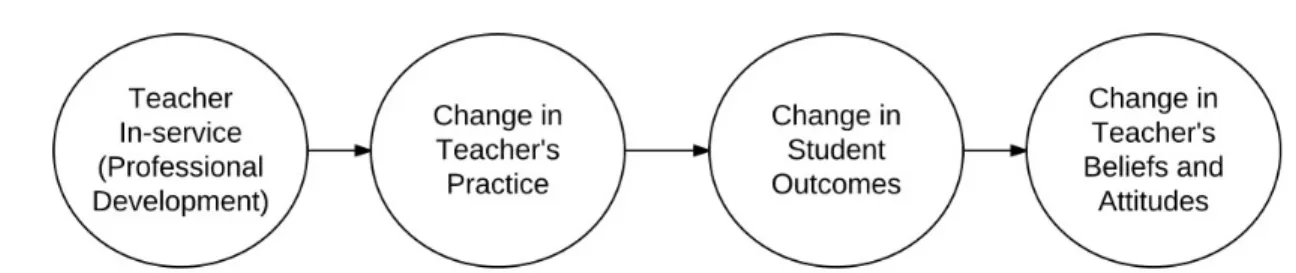
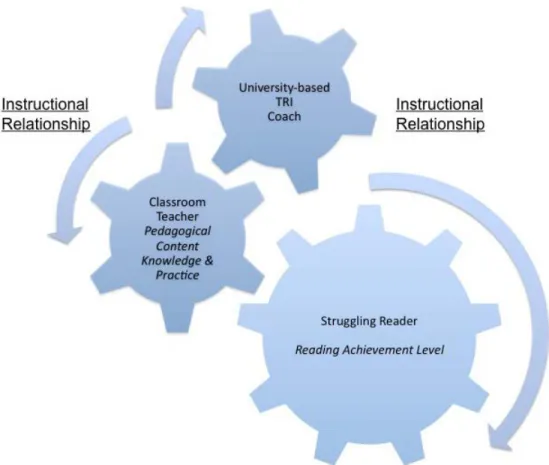
Professional development expert, Thomas Guskey (1986, 2002), concludes that a
more successful model of professional development begins with a change of practice (see
Figure 1). His theory of teacher change suggests that teachers can change their beliefs and
future practices once they have had the opportunity to “try out” a new practice with their
students and experience a positive response from them. Rather than expecting to observe a
change in teachers’ beliefs and attitudes at the beginning of a new professional development
experience, Guskey claims teachers are more likely to change their beliefs, attitudes and
future practices based on positive results from their students when a new practice is
employed. When teachers observe their students’ success as a result of practices introduced
in professional development, a change in thinking on the part of the teacher might occur.
Guskey’s model demonstrates that provision of a new practice is not merely “something to
do on Monday” for teachers, but an opportunity for greater change. This concept “illustrates
that the process of teacher change is orderly and that such change can be facilitated”
(Guskey, 1986, p. 59).
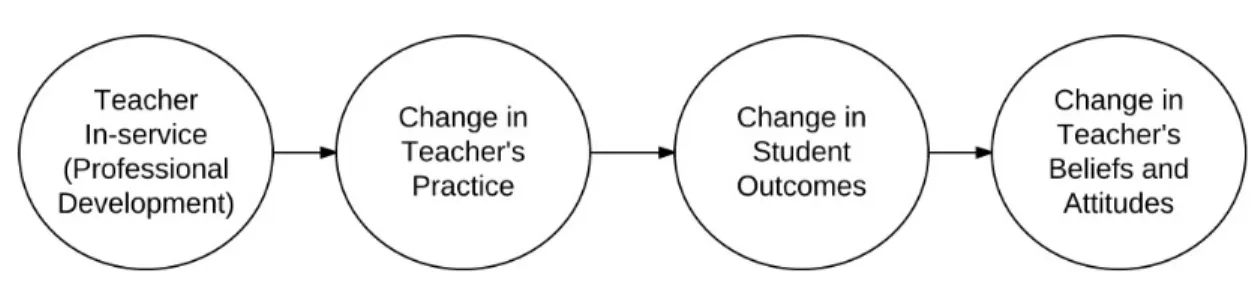
Figure 1. Guskey’s Model of Teacher Change in the context of a professional development
program.
practices. Because this dissertation rested on the assumption that change would be
documented in a participating TRI teacher, Guskey’s model is provided as a source of
rationale when designing the study and a lens by which to view the possible path of changes
happening over time when analyzing data.
In addition, because of the importance of Guskey’s model in shaping the researcher’s
thinking about teacher change and analyzing the data for this study, his model is referenced
throughout the dissertation. As well, the research is reviewed and theory under-girding this
study according to the four domains of his model as they are broadly applicable to the
domains of the TRI: Professional Development (Teacher In-service), Change in Teachers’
Classroom Practice, Change in Student Outcomes and Change in Teachers’ Beliefs and
Attitudes. Understanding the phenomena of teacher change in light of each domain and the
specific affordances of the technologically-mediated professional development program at
hand has the potential to inform the design of future programs wishing to support positive
teacher change.
In the following two sections relevant professional literature is expanded upon and
reviewed concerning the last three domains of Guskey’s model: Change of Teacher’s
Classroom Practice, Change of Student Outcomes, and Change in Teacher’s Beliefs and
Attitudes. Within these sections the model’s domains are related to the TRI. It is then that the
first domain of Guskey’s model, Professional Development, is revisited and more fully
addressed. The review of the professional development literature is placed toward the end of
the chapter. This is because research pertaining to effective professional development
programs’ characteristics conclude the chapter. This aspect of the review provides an
a review of the affordances being examined as supportive of teacher change Again, those
affordances are: Technology, TRI Reading Strategies, Literacy Coaching, and TRI Weekly
Meeting. The description of the TRI concludes this chapter.
Change of Teachers’ Classroom Practice and Change of Student Outcomes
It was necessary to combine the two domains of Change of Teachers’ Classroom
Practice and Change of Student Learning Outcomes as the importance of each rests on the
other. Truly, all four of the domains of Guskey’s model are related to one another, but an
explanation of why these two particular domains are best discussed in tandem is necessary.
Guskey’s linear, four-domain model has been criticized for its simplicity (Rogers, 2007;
Tom, 1986). While Guskey’s model appears simple, Guskey (1986) does explain that there is
a complex relationship among the domains. His model is not meant to explain the
complexities between the outcomes, but rather to provide a structure for understanding what
may be the surest route to change. Guskey contends change within the teacher can only
happen when student change (in the form of academic learning or a positive behavioral
response) from a new practice is evident. Several other researchers seeking to explain change
have found this phenomenon also to be true (Chaney-Cullen & Duffy, 1999; Clarke &
Hollingsworth, 2002; Rogers, 2007). In using domains similar to those of Guskey’s, Clarke
and Hollingsworth (2002) note, “Change in one domain is translated into change in another”
(p. 951). It is perhaps the most salient to consider the interconnectedness of the domains of
Change of Teachers’ Classroom Practice and Change of Student Learning Outcomes. It is
among these domains that a dynamic relationship between these domains that makes teacher
Change of Teacher Practice and Student Outcomes in the TRI
Recall that Guskey theorized the experience of a professional development program
could encourage a change of teacher practice. Teachers who implement the TRI experience
change of practice in the areas of pedagogy and role. In terms of pedagogy, the reading
strategies themselves are a new approach for the teachers. The change of practice in regard to
role involves the teacher acting more like a reading specialist by increasing her knowledge of
teaching reading and working with students in a One-on-One fashion. The teachers are also
changing their role by engaging in a professional learning community with their colleagues
and spending time with the TRI literacy coach via web-conferencing and e-mail exchanges.
For some teachers, becoming a user of technology is another new role. These intended
changes of practice, as described later in this chapter in the sections TRI Professional
Development and TRI Reading Strategies Framework, hold promise for sparking change.
Change in Beliefs and Attitudes
Guskey’s theory postulates a change in teacher beliefs and attitudes is a possibility
following a change of teacher practice and evidence of positive student outcomes as a result
of that practice. Teacher beliefs refer to the “highly personal ways in which a teacher
understands classrooms, students, the nature of learning, the teacher’s role in a classroom and
goals of education” (Kagan, 1990, p. 423). Teacher beliefs are a specific kind of knowledge
subjective in nature (Kagan, 1990; Nisbet & Ross, 1980; Pajares, 1992). Pajares (1992), in
his synthesis on research on teacher beliefs, distinguishes how beliefs are different from other
kinds of knowledge by saying, “a teacher’s knowledge of what typically happens in school or
the understanding of the faculty handbook are instances of cognitive knowledge. ‘Knowing’
of knowledge, belief” (p. 310). While belief and knowledge are fairly clear in their distinct
definitions, attitude is not as clear (Pajares, 1992). Attitudes refer to opinions held by
individuals but these attitudes are influenced by beliefs (Alexander, Murphy, Guan, &
Murphy, 1998). An expression of an attitude may reveal the underlying belief. For example,
if a teacher stated her English class would not do well because the class was comprised of
mostly male students, she is expressing an attitude. However, her belief behind that attitude
may be that she is not an effective teacher to her male students or that male students cannot
perform as well as female students in English. Because attitudes are formed from belief, I
have chosen to discuss both attitudes and beliefs as simply beliefs in this study.
Teacher beliefs are drawn from experiences both in and out of the classroom and play
an important role in teachers’ instructional decisions (Goodman, 1988; Guskey, 1986;
Nespor, 1987; Pajares, 1992; Trueba & Bartolome, 1997). Nespor (1987) calls the
experiences a teacher draws from episodic memory and Goodman (1988) refers to this
phenomenon as guiding images. These conceptualizations of teacher beliefs mesh with
Guskey’s model in that a new practice eliciting a positive student response would provide a
teacher with a new episode or guiding image on which to base a belief.
Changing beliefs is a complex process. Guskey’s model depicts a change in student
outcomes as preceding a teacher change of beliefs. What Guskey’s model does not account
for is that sometimes the student outcomes change will trigger a change of teacher beliefs,
but sometimes it will not. For example, Clarke and Hollingsworth (2002) found that student
outcomes could indeed elicit a change of beliefs in teachers, but that change of beliefs is
teacher might. One teacher may struggle with analyzing a change of student outcomes and
try to explain how that change fits in with beliefs she currently holds. If an anomaly occurs,
that is, if she cannot make sense of the change of student outcomes in light of her present
beliefs, there is an opportunity for a change of her beliefs (Pajares, 1992). Pajares concluded,
“beliefs are unlikely to be replaced unless they prove unsatisfactory, and they are unlikely to
prove unsatisfactory unless they are challenged and one is unable to assimilate them into
existing conceptions” (p. 321). Wood, Cobb, and Yackel (1991) also found teachers must
grapple with an anomaly in order for their beliefs to change. The presence of an anomaly
alone though will not spur change of beliefs. The teacher must recognize that this anomaly
exists in order to struggle with it. The teacher must also feel that what she is faced with (such
as the nature of change in student outcomes) is meaningful enough that it should be
“reconciled” with the beliefs she already holds(Pajares, 1992).
The importance of investigating teacher beliefs stems from research demonstrating
that beliefs held by teachers drive instructional decisions (Nespor, 1987; Pajares, 1992;
Richardson, 1996; Wilkins, 2008). In a landmark study, Deford (1985) found teachers’
pedagogical beliefs about reading to be strongly related to their practice. For example, a
teacher who believes students can learn well from one another may assign group projects
frequently. This relationship was evidenced again in a study specific to reading
comprehension beliefs and practices (Richardson, Anders, Tidwell, & Lloyd, 1991). While
other factors influence instruction such as content knowledge and attitudes (Richardson,
1996), a recent study by Wilkins (2008) found beliefs to have the strongest effect on
classroom practice. When considering the importance of teacher beliefs on instructional
clear teachers are an essential component in educational change. Teacher development expert
Gess-Newsome (2003) claims it is the nature of beliefs held by teachers that has the power to
decide the extent of success or failure of a given program. Understanding the changes
experienced by a teacher immersed in a professional development program holds the
potential to inform the future designing of programs seeking positive change at the classroom
level.
Professional Development
In this section relevant literature about the field of professional development is
reviewed in a broad manner. Research pertaining to just reading professional development
did not allow for a thorough review concerning the potential of professional development.
One of the main vehicles for changing teacher knowledge, beliefs and practices is
professional development (Fullan, 1991; Guskey, 1982; Hawley & Valli, 1999). The goal of
professional development is ultimately to inspire changes that will make teachers more
effective in their practice. Teachers who are effective can make a significant difference in
student achievement (Haycock, 1998; Sanders & Rivers, 1996). Guskey (1986) claims the
change process for teachers is best facilitated beginning with professional development
programs presenting new practices to teachers and allowing an opportunity to try the practice
in their classrooms.
While consideration of the change process is integral in eliciting change, so too are
the actual practices of the given professional development program. With the recognized
importance of professional development as a means to change, research efforts have
from study to study run contrary to one another. For example, Guskey’s (1994) review of
effective professional development practices found the following dichotomies:
Some researchers suggest that professional development efforts designed to facilitate change must be practitioner specific and focus principally on day-to-day activities at the classroom level (McLaughlin, 1990; Weatherley & Lipsky, 1977; Wise, 1991). Others indicate that an emphasis on individuals is detrimental to progress and more systemic or organizational approaches are necessary (Tye & Tye, 1984; Waugh & Punch, 1987).
Some experts stress that reforms in professional development must be initiated and carried out by individual teachers and school-based personnel (Joyce, McNair, Diaz, & McKibbin, 1976; Lambert, 1988; Lawrence, 1974; Massarella, 1980). Others emphasize the most successful programs are those guided by a clear vision that sees beyond the walls of individual classrooms and schools, since teachers and school-based individuals generally lack the capacity to conceive and implement worthwhile improvements on their own (Barth, 1991; Clune, 1991; Mann, 1986; Wade, 1984).
Some reviewers argue the most effective professional development efforts approach change in a gradual and incremental fashion, not expecting too much at one time (Doyle & Ponder, 1977; Fullan, 1985; Mann, 1978; Sparks, 1983). Others insist the broader the scope of a professional development program, the more effort
required of teachers, and the greater the overall change in teaching be implemented well (Berman & McLaughlin, 1978; McLaughlin & Marsh, 1978). (p. 42)
Guskey attributes these dichotomies to the variety of contexts of each of the programs
being reviewed. He suggests professional development designers look for an “optimal mix”
of affordances for their programs which are necessarily suited to the unique educational
setting for which they are intended. Understanding what “mix” of program affordances in
given contexts support positive teacher change could inform the future designing of
programs.
The lists of traits of effective professional development programs are still helpful,
even if fraught with contradictions. Certain characteristics do appear on many of the lists and
are effective across a variety of contexts (Darling-Hammond, Chung Wei, Richardson, &
Orphanos, 2009; Porter, Garet, Desimone, & Birman, 2003; Snow-Renner & Lauer, 2005;
Eisenhower Program, a federally sponsored effort intended to improve teachers’ knowledge
and practice, six characteristics of effective programs were identified (Porter et al., 2003).
These researchers used a self-report survey to gather data about teachers’ experiences in
Eisenhower funded programs. Porter et al. (2003) list three of these six characteristics as
“structural” and three as “core features.” Structural characteristics of effective programs
were those which created mentorships and networks of teachers, were ongoing in duration,
and included the collective participation of teachers within the same school. Core features of
effective programs were content-focused, aligned goals of the program with the district and
teachers’ goals, and allowed for active learning on the part of the teacher.
In a recent synthesis of effective professional development programs Yoon et al.
(2007) found the following characteristics of effective programs: contained workshops and
institutes as part of the design; involved outside experts working with the teachers; had
ongoing delivery; and provided follow up support and focused on content. Upon examining
where these two seminal pieces of research converge, three characteristics are common.
Effective professional development efforts are content-focused, collaborative (though one
study suggests collaboration among teacher networks and the other suggests collaboration
between outside experts and teachers) and ongoing.
Content-focused and Early Reading
Yoon et al. (2007) found that all of the studies in their review that met the criteria of
“credible evidence” as per the What Works Clearinghouse focused on improving teacher
knowledge in a given content area and strategies for teaching the content. Yoon et al. (2007)
student achievement through three steps. First, professional development enhances teacher
knowledge and skills. Second, better knowledge and skills improve classroom teaching.
Third, improved teaching raises student achievement” (p. 4). Yoon et al.’s explanation is
helpful in understanding the role of content knowledge in positively influencing student
achievement, but it may be unrealistic to assume that even through carefully planned
professional development that the end result will be student achievement. Teachers need to
be knowledgeable about their content area, but they need to possess another kind of
knowledge as well; knowledge of instructional techniques that best support their students in
learning the specific content (Shulman, 1986). These two kinds of knowledge intersect to
form what Shulman (1986) describes as pedagogical content knowledge. Even when teachers
enhances their pedagogical content knowledge through professional development though,
there is no guarantee for improved practices or student achievement. As Carlisle and
Berebitsky (2011) point out, “improved knowledge about reading and reading practices does
not necessarily lead to improvements in teachers’ practices or, as a result, their students’
academic achievement (Cirino, Pollard-Durodola, Foorman & Francis, 2007; Garet et al.,
2008)” (p. 776).
The review conducted by Yoon et al. (2007) was deemed by Wayne, Yoon, Zhu,
Cronen, and Garet (2008) as one of the most comprehensive and systematic completed to
date on this topic. Content areas represented in the effective programs included reading,
math and science. One implication named is that an effective professional development
program should necessarily be focused on content knowledge, pedagogy or both. This was
While the content area of focus is irrelevant in deeming a particular professional
development program as effective, it is important in considering the needs and goals of
schools. Many schools and districts examine standardized test scores to determine “student
and teacher gaps” in particular content areas that may be addressed by improving teaching in
that area (Hassel, 1999). With 67% of elementary students scoring below proficient on
standardized reading scores in this nation, a number growing by the year since 2002 (NCES,
2007), a focus on reading is justified. Early reading in particular is an important content area
to be addressed by professional development. First grade has been cited as the vital time for
learning to read (Chall, 2000). Students who struggle in learning to read in first grade will
likely struggle academically for years to come (Juel, 1988; Snow, Burns, & Griffin, 1998).
Collaborative
Stoll and Louis (2007) define a professional learning community as “a group of
teachers sharing and critically interrogating their practice in an ongoing, reflective,
collaborative, inclusive, learning-oriented, growth promoting way” (p. 2).
Collaboration among teachers in the form of professional learning communities has been
documented to not only boost teachers’ sense of intellectual purpose, but schools with such
communities have lower drop-out rates and significant student improvement in math,
science, history and reading (Newman & Wehlage, 1997). A professional learning
community removes the traditional isolation of teaching to provide collaboration where
responsibility for student learning is shared (Darling-Hammond et al., 2009), “collective
efficacy” is fostered (Bandura, 1997), and teachers focus on students’ academic achievement
created when teachers in one school attend the same professional development promoting of
an environment that is conducive to positive teacher change.
Unfortunately, most schools are still operating in an “egg-crate model” where
teachers are separated from one another, working in individual classrooms
(Darling-Hammond et al., 2009). This egg crate model has a stagnating effect on teaching. Fullan and
Hargreaves (1995) describe the danger of isolation of teachers from one another as a situation
of “untapped competence and neglected incompetence” (p. 10). That is, teachers who are
effective have no systematic way of sharing how they find their success. And teachers who
need support have no access to the expertise available within their peers. These authors
bluntly state, “Whatever great things individual teachers could do go unnoticed, and
whatever bad things they do go uncorrected” (p. 10).
Ongoing
The one-shot workshops that have historically typified professional development are,
for the most part, ineffective. Less than 15% of teachers will implement a practice introduced
in a one-time workshop (Joyce & Showers, 2002). Episodic workshops simply do not
provide enough time for teachers to try out new strategies and receive feedback (Barnett,
2002; Garet, Porter, Desimone, Birman, & Yoon, 2001; Guskey, 1986; Joyce & Showers,
2002).
On the other hand, teachers who take part in on-going professional development have
the opportunity to make the kinds of changes in their teaching that positively influence the
achievement of their students. The definition of “ongoing” is ambiguous. No set number of
contact hours or program structure has been set as qualifiers to deem a program ongoing.
average 49 hours across the course of the school year have boosted their students’
achievement by 21 percentile points. It is discouraging to learn, according to the National
Schools and Staffing Survey, that 57% of teachers had 16 hours or less of professional
development in a content area they teach during the 2003-2004 school year (as cited in
Darling-Hammond et al., 2009). The same survey showed 60% of teachers had the
opportunity to attend professional development in the area of reading instruction, but a mere
19% of those teachers engaged in a program that involved more than 16 hours over the
course of the school year. Darling-Hammond et al. (2009) stated the supports needed at the
school level to provide on-going professional development and teacher change “fall short,”
yet no suggestions for remedying the situation are offered.
Unequal Access to Ongoing Professional Development
Children in all geographic areas could benefit from their teachers engaging in
ongoing professional development in the area of early reading. However, the opportunities
for professional development programs are not equal across the different geographical areas
of the United States. Teachers in rural schools have less professional development
opportunities than those in urban or suburban areas (Lee & Burkham, 2002). The geographic
isolation of rural schools makes travel challenging and costly (Government Accountability
Office [GAO], 2004; Hodges, 2002). Rural schools have difficulty recruiting personnel-
making staffing limited for substitutes to cover classes when professional development is
available during school hours (GAO, 2004). Adding to the difficulty of obtaining
professional development is the pressure to obtain it. Like all schools, rural schools must
findings that produce a lasting impact on a teacher’s practice in the classroom (NCLB, 2001).
Meeting these requirements is challenging for schools throughout the country, but it may be
the most challenging for rural schools because of their physical isolation, economic
challenges and staffing limitations (Cullen, Brush, Frey, Hinshaw, & Warren, 2006; Hodges,
2002; Vernon-Feagans, Gallagher, & Kainz, 2010).
Technology
As mentioned in Chapter 1, technology may hold an answer to the issue of unequal
access to professional development. Technologically-mediated professional development
(TMPD) programs may have the potential to ameliorate some of the challenges faced by rural
schools in obtaining professional development (Gentry, Denton, & Kurz, 2008). Coaching
and/or workshops as ongoing support to teachers become more efficient and inexpensive
when delivered via technology. Expenses such as travel and childcare typically needed for
face-to-face delivery are not necessarily needed for technologically-mediated programs
(Holmes, Signer, & MacLeod, 2010).
Research studies of these programs are beginning to uncover the possibilities offered
when effective professional development models are delivered technologically (Amendum et
al., 2011; Bishop, Giles, & Bryant, 2005; Chaney-Cullen & Duffy; 1999; Ensher, Heun, &
Blanchard; 2003; Ginsberg, Vernon-Feagans, & Amendum, 2010; Hedrick, Vernon-Feagans,
& Ginsberg, 2010; Vernon-Feagans et al., 2012). Teacher change of practices (Adsit, 2004)
and opportunities for teacher collaboration have been documented as a result of TMPD’s
(Adsit, 2004; Marrero, Woodruff, Schuster, & Riccio, 2010). As well, teacher isolation can
be reduced through collegial relationships fostered through TMPD’s (Adsit, 2004; Killion,
Recent studies indicate teachers who have engaged in a TMPD program tend to prefer
this format of professional development over face-to-face delivery (Holmes et al., 2010;
Russell, Carey, Kleiman, & Venable, 2009). Holmes et al. (2010) found this preference was
true regardless of teachers’ number of years of teaching or grades levels taught. Russell et al.
(2009) found teachers taking part in a TMPD program reported a greater willingness to seek
further opportunities for additional learning than did teachers taking the same program
face-to-face. Findings such as these provide a positive outlook for the future of these programs.
What is missing from these studies, however, is discussion of how teachers of varying
experience and comfort with technology came to learn the necessary applications or software
to fully participate.
As technology serves to facilitate the given TMPD program, teachers must be
comfortable with the technological skills needed to be able to fully participate (Liu, Carr, &
Strobel, 2009). Gray, Thomas, and Lewis (2010) found 98% of rural teachers nationwide
report having computers in their classroom, but only 38% report often using this resource
often. Of the teachers using computers, 96% of rural teachers use word processing at least
“sometimes” and as much as “often” (p. 11). The most common use of technology for
communication was reported to be email. Rural teachers overwhelmingly report that the
technological skills they possess were learned independently and in professional
development. Taken together these statistics show that while technology is widely available,
it may be an under-used resource. An understanding is needed of the reasons for low
technology usage in rural schools. Knowing these reasons may help to inform the field of
Technology holds great promise for facilitation of effective professional development
programs. The research base reports positive outcomes such as building collegial
relationships and reducing isolation. However, the research base is currently limited. New
findings can inform the future design of technologically-mediated professional development
programs.
Literacy Coaching
A popular model for content focused, collaborative and ongoing professional
development in the area of literacy is coaching. The particular job description of a literacy
coach may vary from one program to another, but coaches are generally reading
professionals who provide support to individual teachers in implementing new practices
(IRA, 2004). This model should be an effective one as it embodies the characteristics deemed
as effective in the area of professional development. The promise of coaching has many
schools reaching for it as a means to improved student achievement (Russo, 2004). Although
this model is popular and is a sound design judging by the characteristics of effective
professional development, more empirical research is needed to support or refute it as an
effective practice.
Recent studies on literacy coaches have highlighted the complex and personal nature
of this position (Rainville & Jones, 2008), focused on the nature of coach/teacher
conversations (Peterson, Taylor, Burnham, & Schock, 2009), and examined the multitude of
roles taken on by coaches (Walpole & Blamey, 2008). Other studies evaluated how coaches
spent their time (Bean, Draper, Hall, Vandermolen, & Zigmond, 2010; Bean & Zigmond,
2006; Deussen, Coskie, Robinson, & Autio, 2007). Bean et al. (2010) found coaches
spent, was centered more around assisting students than focusing on a change of teacher
practices. Bean and her colleagues (2010) concluded the 20 coaches in the study were taxed
by the many roles needing to be filled within their schools, leaving less time for actual
coaching; serving instead as data managers or coordinators of various types. This finding is
especially unfortunate in light of the claim made in another recent study (discussed later in
this section) that student gains are positively impacted with increased time spent between the
coach and teacher (Elish-Piper & L’Allier, 2011). The findings of these two studies taken
together suggest understaffed schools relying on coaches to serve many roles may not realize
the full benefit of coaching.
The relationship between coaching and teacher practice. Some studies examined the relationship between coaching and teacher practice. For example, Neuman and
Cunningham (2009) examined the effect of coaching on the language and literacy practices
of teachers at 291 early childcare centers. Each center was randomly assigned to one of three
groups: a three-credit course in early literacy and language, a three-credit course plus
ongoing coaching, and a control group. Teachers from the centers were then assessed on their
literacy practices and knowledge. There was no significant difference in teacher knowledge
in any of the groups after treatment. However, the group receiving the 3-credit course plus
ongoing coaching did demonstrate a significant improvement over the other two groups in
their language and literacy practices. Discussion of the specific practices of the coaches’
work directly with teachers or students, however, is left out of this study.
Walpole, McKenna, Uribe-Zarain, and Lamitina (2010) studied 116 schools in
initiative provides monetary support for low performing/high poverty elementary schools.
This study examined the coaching practices of collaboration, coaching for differentiation and
leadership support for coaching. Teaching practices examined included: small group work,
effective reading instruction, read alouds and management. Each of the coaching practices
proved to be a predictor of one or more teaching practices. However, the coaching practices
were not predictive of the same teaching practices across all grade levels studies
(kindergarten–third grade). Coaching was not uniformly implemented across schools—or
even within schools. Though the findings are hopeful, making a confident claim that
particular coaching results in particular teaching practices cannot be made based on these
findings.
The relationship between coaching and student achievement. Studies linking literacy coaching with student outcomes have provided some insight into the effectiveness of
coaching. The series of studies on the TRI demonstrates powerful student growth in a
professional development model resting largely on the practice of literacy coaching
(Amendum et al., 2011; Ensher et al., 2003; Ginsberg, 2006; Ginsberg et al., n.d.;
Vernon-Feagans et al., 2012). It is possible the findings of student improvement from these studies
can be attributed to literacy coaching supporting the classroom teacher to be more effective
in the teaching of reading to struggling students and developing a diagnostic way of
considering all students. A particularly salient finding by Amendum et al. (2011) points to
such a conclusion. Not only did the students who received the intervention demonstrate
significant gains in reading, but their non-struggling classroom peers did as well. That is,
students who were in the classes of teachers receiving coaching via web-conferencing, but
non-struggling students at control sites. Such findings lead Amendum et al. (2011) to
conclude “a positive relationship (exists) between teachers’ participation in the TRI and
children’s reading performance” (p. 123). The corpus of TRI studies provide not only
evidence of the efficacy of a specified type of coaching, but it opens the doors for further
research into examination of the aspects of this particular program concerning teacher
change.
Encouraging findings have been reported by other studies investigating programs
with a coaching component as well. The Literacy Collaborative is one such program.
Looking at student reading achievement over three consecutive years of implementation, this
program found annually increasing and significant student reading gains (Biancarosa, Bryk,
& Dexter, 2010). Reading was measured for each student using results from several subtests
of the Dynamic Indicators of Basic Early Literacy Skills (DIBELS) and Terra Nova. The
total assessed skills included phonological awareness, letter recognition, decoding, oral
reading fluency and reading comprehension. Using Rasch scaling, a single score was
calculated to represent each student as a reader. This research design allowed the researchers
to see broadly how students were progressing year to year, but determining if a particular
reading skill was impacted more than another by coaching is not possible. Still, the findings
of this study suggest not only that coaching is an effective means for raising student
achievement in reading, but that the coaching effort may see its greatest benefits when
implemented over longer periods of time. This study gives insight into the possible reason
why findings of programs spanning a lesser amount of time may not be as impressive.
third grade for one school district in its first year of implementation. Funding for coaches in
this district was provided by the Reading First initiative. Elish-Piper and L’Allier (2011)
found the length of time spent between teachers and coaches influenced student-reading
gains. Elish-Piper and L’Allier (2011) also delineated four activities carried out by coaches
that impacted student-reading gains in one or more grade levels. These coaching activities
were: conferencing, administering assessments, modeling lessons and observing teachers.
These activities were necessarily related directly to teachers’ instruction, needs of individual
students, curriculum or assessment. Kindergarten reading gains were predicted by
conferencing hours spent between individual teachers and the coach. Conferencing and
administering assessments were two activities that approached significance in predicting first
grade reading gains. Interestingly, second grade reading gains were predicted by all four of
these activities while none of these activities predicted third grade gains. An examination of
other factors is needed to understand the impact of coaching on third grade students. As well,
stronger findings may be possible given more time to implement coaching. The findings of
this study do not offer explanations as to why kindergarten, first and second grade levels
benefitted from different coaching activities.
Matsumura, Garnier, Bickel, Junker, and Resnick (2010) examined the relationship
between coaching and student reading achievement in schools with high teacher turnover.
They found English Language Learning students in an urban school district in Texas
performed significantly higher than control students on the Texas Assessment of Knowledge
and Skills (TAKS). The coaching did not have an effect on teacher mobility. However,
Matsumura et al. (2010) hypothesize that given more time with implementation, there may be
relationships among faculty as a factor that may entice some teachers to retain their positions
at their schools. Not mentioned in this study is the possibility of self-efficacy being
developed in the teachers working with coaches and enjoying the rewards of successfully
teaching English Language Learners in their classes. Teachers’ self-efficacy is a factor
positively influencing teacher retention (Yost, 2006).
Not all studies relating coaching to student achievement have found the promising
results described above. For example, an examination of standardized reading test scores
from each of three randomly assigned groups, showed coaching did not influence student test
scores significantly over groups not receiving coaching (Garet et al., 2008). The first group
of teachers received professional development in the Language Essentials for Teachers of
Reading and Spelling (LETRS) program. LETRS is a professional development program that
teaches educators to use scientifically based explicit instruction with struggling readers. The
second group received the LETRS program along with ongoing support in the form of
coaching and the third group received regular professional development for the district.
While the teachers receiving LETRS, with or without coaching, demonstrated a significant
increase in teacher knowledge over control teachers, there was no significant effect size
between the groups concerning student reading achievement. As disappointing as the results
of this study were, the coaching that took place was not fully described, leaving the question,
“What exactly did each coach do?” Garet et al. (2008) say the coaches received the same
initial and follow-up training. This training was meant to provide information to the coaches
so they would be adept at coaching individual teachers, but there is no mention of exactly
being employed. However, there was no such fidelity measure for the coaches. It is possible
the coaches interpreted their responsibilities and delivered support quite differently from one
another. To be sure, the job of literacy coach has been conceptualized differently across
contexts (Deussen et al., 2007; Walpole & Blamey, 2008; Walpole & McKenna, 2008).
Coaches’ roles tend to be shaped according to specific initiatives (Garet et al., 2008; Porche,
Pallante, & Snow, 2012; Walpole & Blamey, 2008). The differences in interpretations of this
position and the needs of the various initiatives may contribute to the mixed findings in the
literature thus far.
Coaching as a form of professional development that has seen such a fast surge in
practice, but even with the emergence of promising findings linking coaching to improved
student achievement in reading, there is still much to be learned. In spite of the limited
research base and mixed findings of studies completed thus far as to the efficacy of coaching,
the practice will not soon disappear. Walpole and McKenna (2008) point out, no alternative
model lurks at the ready to replace coaching, and coaching is more complex than an efficacy
study can easily capture.
Summary of Professional Development
The format of professional development matters greatly in its ability to provide the
kind of knowledge and implementation support needed for it to be effective. One-shot
workshops that typified professional development can provide content or pedagogical
knowledge to teachers, but cannot provide opportunities to try the new practice or give
feedback on teaching of the new practice. Teacher knowledge is a key factor in effective
instruction, but being knowledgeable alone doesn’t necessarily equate to effective
opportunities to create new teaching experiences that contribute to a teacher’s guiding
images. Professional learning communities (PLC’s) have contributed to positive outcomes
for teachers and students. Unfortunately, like workshops, PLC’s do not typically offer
teachers opportunities to implement and receive feedback on practices. Literacy coaching
embodies the characteristics of professional development deemed most effective. It offers
opportunities to support teachers as they learn about and implement new practices. Literacy
coaching is also a format of professional development that best maps onto Guskey’s
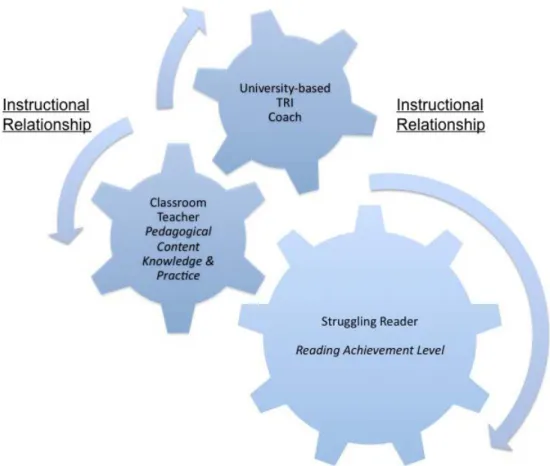
conceptualization of how teacher change may occur. I have placed Figure 1, Guskey’s model
of teacher change in the context of a professional development program introduced in
Chapter 1 again here for reader reference (See Figure 1).
Figure 1. Guskey’s model of teacher change in the context of a professional development
program.
In the first domain, Professional Development, literacy coaching may take the form of
the introduction of a new instructional practice. In the second and third domains, Change in
Teachers’ Practice and Change in Student Outcomes, literacy coaching would take the form
of supporting the teacher to implement the new practice, eliciting the new student outcomes.
In the last domain, Change of Teachers’ Beliefs and Attitudes, coaching may serve to assist
interpretation of given student outcomes supporting the development of new guiding images.
the formats of professional development mentioned none necessarily go beyond the first
domain of Guskey’s (1986) model.
The TRI: A Dual-Level Model
The findings of TRI related studies were briefly summarized previously. In this
section the actual framework of the program will be described. The TRI employs a dual-level
model. That is, there are aspects to the program aimed at building teacher knowledge to
inform their practice as well as actual reading strategies implemented with students. Teacher
knowledge is built through the Summer Institute, workshops, the TRI Weekly Meeting and
coaching. Reading strategies include those for word work, fluency and guided oral reading.
Because of this duality, the structure of the TRI will be detailed in two sub-sections: TRI
Professional Development and TRI Reading Strategies Framework. Within these
sub-sections the TRI will be described in terms of its affordances. Namely, the five TRI
affordances chosen to be investigated as supports of teacher change will be highlighted:
1. TRI Weekly Meeting 2. Coaching
3. Technology
4. One-on-One Format 5. TRI Reading Strategies
This chapter concludes by referring again to Guskey’s (1986) model to understand the
specific ways his model may provide insight into this investigation of teacher change.This
particular section of my dissertation contains models and language specific to the TRI. These
study. The models and language contained in this section only indirectly affected my analysis
of the data and quest to answer the research question at hand.
I. TRI Professional Development
Affordances of the TRI professional development include participation in a
professional learning community, coaching, and technology. The professional learning
community is begun through involvement in an intense summer institute and fostered
through weekly meetings and quarterly workshops. Coaching in the context of the TRI is
focused on early reading instruction. Almost all of the professional development aspects of
the TRI are delivered technologically from university-associated personnel at the University
of North Carolina at Chapel Hill to the distant experimental sites.
TRI affordance #1: Participation in a professional learning community. Summer institute. The TRI summer institute is an intense three-day workshop. Teachers and on-site consultant attend this workshop in person. The on-site consultant is
typically a reading specialist or administrator of the school. The on-site consultant acts as a
liaison between the university-based personnel and the teachers. The on-site consultant also
observes implementation of the TRI and helps teachers troubleshoot when they are
considering strategies that best address the “most pressing needs” of their students. One
on-site consultant is chosen for each experimental school.
During this institute, teachers are introduced to the TRI Reading Model. The TRI
Reading Model is one that is guided by the belief that reading is a complex process best
facilitated by incorporating reading instruction for word identification, fluency, vocabulary
opportunities to practice those strategies. These strategies are supportive of the three main
parts of a TRI lesson: Re-reading for Fluency, Word Work and Guided Oral Reading. The
strategies themselves are further discussed in the subsection labeled TRI Reading Strategies
Framework. These strategies are explored in light of the TRI Reading Model and/or the TRI
Model of Decoding and Sight Word Development (see Appendix B). Teachers are then
guided to consider the strategies, the models, and the possible responses of their students to
plan for and provide “diagnostically-driven individual instruction for one struggling reader at
a time” (Ginsberg et al., n.d.). This diagnostic approach allows for an “instructional match.”
Instructional match is “congruence between the student’s skill or functioning level and the
nature of the assigned tasks” (Ysseldyke, Christenson, & Thurlow, 1987, p. 8). At the TRI
institute, teachers also have the opportunity to meet the university-based literacy coach
(referred to as “coach” for the remainder of the paper) in person who will serve as ongoing
support via web-conferencing to the teachers as they implement the TRI strategies with their
students.
TRI weekly meeting. The participant teachers and on-site consultant at each school gather weekly and call the coach via web-conferencing. The coach leads the meeting, asking
teachers to discuss the progress of the particular student currently being served. Teachers
typically concentrate on one TRI student at a time and work intensively four times per week
for about 15–20 minutes per session. Teachers are encouraged to consider the TRI Reading
Model introduced at the summer institute along with evidence in the form of student
responses to discuss a diagnostically-driven plan for future instruction for the given student.
Teachers may sometimes ask questions of one another, gain ideas for instruction or help one