EFFECT OF BRAIN EXERCISE AND BENSON RELAXATION
THERAPY ON DEPRESSION LEVEL IN THE ELDERLY IN THE
ELDERLY SOCIAL SERVICE UNIT
Wulansari1*, Ani Margawati2,3, Rita Hadi W4
1Magister Keperawatan, Fakultas Kedokteran, Universitas Diponegoro, Semarang, Indonesia
2Fakultas Ilmu Gizi, Universitas Diponegoro, Semarang, Indonesia 3Sekolah Pasca Sarjana, Universitas Diponegoro, Semarang, Indonesia
4Departemen Keperawatan, Fakultas Kedokteran, Universitas Diponegoro, Semarang, Indonesia
*Corresponding author: Wulansari
Magister Keperawatan, Jurusan Keperawatan, Fakultas Kedokteran, Universitas Diponegoro
Gedung Dekanat lama FK Universitas Diponegoro Lt. 2 Zona Pendidikan RSUP Dr. Kariadi, Jl. Dr. Soetomo No. 18 Semarang Jawa Tengah Indonesia 50231
Email : [email protected]
Abstract
Background: Depression is one of the most common psychosocial problems in the elderly. The incidence of depression in the elderly is greater in the elderly living in the social service unit than the elderly in the community. Management of depression in the elderly should be more emphasized on interventions that focus on the individual needs of the biopsychosocial and spiritual aspects. Brain gym therapy and Benson relaxation are considered appropriate in decreasing depression.
Objective: This study was to determine the effect of brain exercise and Benson relaxation on the level of depression in elderly in the elderly social service unit.
Methods: This was a quasi-experimental study with pretest posttest control group design. Fifty-six elderly included in this study, which 28 assigned in the experiment and control group. The depression level was assessed using Geriatric Depression Scale (GDS). Wilcoxon and Mann-Whitney test were used for data analyses.
Results: The study showed that the mean GDS score in the experiment group before the intervention was 7.21, while the mean value of GDS in the control group was 6.64. The mean value of GDS in the experiment group after the intervention was 5.04 and the mean in control group was 6.18. There was a significant difference of GDS score between experiment and control group with p-value of 0.021 (<0.05).
Conclusion: There was a significant effect of brain gymnastics and Benson relaxation therapy in reducing depression in elderly. brain gymnastic therapy and Benson relaxation can be one of independent nursing interventions as an effort to improve care for elderly groups.
Keywords: brain gym therapy; Benson relaxation; depression; GDS; social service unit
INTRODUCTION
By 2050 it is estimated that the number of people in the world with age more than 65 years two-fold increased and individuals with age 85 years and above 4-fold increased (Varcarolis, Carson, & Shoemaker, 2006). In
Indonesia, according to data from the United Nations, it is estimated that there will be an increase in the number of elderly people up to 4 times in 35 years, from 1990 to 2025. By 2020, the estimated elderly population in
© 2018 The Author(s)
This is an Open Access article distributed under the terms of the Creative Commons Attribution 4.0 International License which permits unrestricted non-commercial use, distribution, and reproduction in any medium, provided the original work is properly cited.
Indonesia reaches 25.5 millions of inhabitants (Soejono, 2009). The increase in the number of elderly at the moment is influenced by the increase of life expectancy due to the development of treatment and prevention of infection (Ganong, 2002), the improvement of health status as well as the improvement of welfare, the advancement of health services, the improvement of nutrition and the increased supervision of infectious diseases (Bandiyah, 2009; Nugroho, 2008).
This increasing number of elderly people is actually a challenge. This is because there are consequences of the need for the improvement of health and nursing services in dealing with degenerative health problems (World Health Organization, 2008). In addition, the elderly will have physical and psychosocial health problems (Bandiyah, 2009; Smeltzer et al., 2008).
The problem of physical health in the elderly comes with age and physiological changes. Indirectly, physiological changes will also affect the psychology, thus makes elderly as a vulnerable group (Potter & Perry, 2005). Psychosocial health problems in the elderly can be found in elderly living with family or not in the community, primary care facilities and inpatient services. Study states that the elderly who have mental disorders in community are about 12% and reach 30% to 50% in primary care and or inpatient facilities due to medical or physical illness, and > 70% in long-term care facilities (MOH, 2013).
Psychosocial health disorders that can occur in the elderly are aggression, anger, anxiety, mental disorder, rejection, dependence, fear,
manipulation, fear, sadness and
disappointment, and depression. Psychosocial health problems that often occur in the elderly, according to the national old people 'welfare council, are depression, dementia and anxiety (World Health Organization, 2008). The most common psychosocial health problem in the elderly is depression.
Percentage of depression increase with age of the individuals. The highest percentage of
depression is over the age of 65 years (MOH, 2013). The prevalence of depression in the elderly generally ranges from 15% to 20% of the total elderly, which half of them is in the community and home care units (Kurlowicz & Greenberg, 2007).
Depression in the elderly has a fairly serious impact. Complications of depression experienced by the elderly are malnutrition resulting from decreased appetite, insomnia / sleep disorders, interpersonal disorders and destructive behaviors. In addition, patients with depression have a higher risk of suicide (Soejono, 2009). Of 33% elderly patients who have feelings of loneliness and helplessness try to commit suicide. The condition of loneliness is one of the signs of depression (Kurlowicz & Greenberg, 2007). Many elderlies who live alone or do not live with family experience loneliness conditions. According to WHO, of the approximately 121 million elderly people in the depressed world show a suicide rate of 850,000 for each year (Stanley & Beare, 2007).
According to the study, that 40% of people with depression experience quality of life disorders (Kurlowicz & Greenberg, 2007). However, untreated depression in the elderly has significant clinical and social impacts such as decreased quality of life and increased dependence. Depression in the elderly also affects dementia, physical disability and despair (Depkes, 2003).
The form of treatment of depression in the elderly can be through psychological and pharmacological therapies that can be
accompanied by a comprehensive
interdisciplinary approach. Many therapies have been done in order to provide depression treatment to the elderly in the community setting. Therapy for depression in the elderly can be environmental therapy, family therapy and self-therapy (Stuart & Sundeen, 2007).
therapy known as Complementary and Alternative Medicine (CAM) is an intervention that focuses on the integrity of the individual including bio-psychosocial and spiritual aspects (Stuart & Sundeen, 2007), which can be given to those who have psychosocial health problems such as depression. Studies show that complementary and alternative therapies positively reduce depression. The complementary and alternative therapy models are herbal, acupuncture, massage and exercise and spiritual therapy (Dennison & Dennison, 2006; Stuart & Sundeen, 2007).
Brain gymnastics is one of exercises that can be used as a complementary and alternative therapy. Brain gymnastics can reduce the condition of depression because the basic principle of brain gymnastics is to train the brain to stay fit and prevent senility (Dennison & Dennison, 2006). Research showed significant results from the use of brain gymnastics therapy in combination with cognitive therapy in reducing depression in the elderly. This brain exercises strengthen the benefits of cognitive therapy in reducing depression (Depkes, 2003).
Brain gymnastics consists of 3 dimensions, which one of the dimensions that exist is the dimension of focusing, which can be applied in Benson relaxation. Thus, Benson relaxation can be done in conjunction with brain gymnastics or after the exertion of brain gymnastics therapy. Benson relaxation can be done by individuals independently and or with the assistance of nurse or caregiver. While Benson relaxation consists of 3 main activities namely focusing, deep breath and pray, which can be done continuously (Prasetyo, 2010).
Benson relaxation is an evaluation of the body mind or body intervention to reduce stress and anxiety (Deckro et al., 2002). Study showed an effect of Benson relaxation in decreasing anxiety in individuals with cervical cancer (Ma’rifah, Setyowati, & Ririn Isma Sundari, 2016). At this time many places or services are dedicated to provide care for the elderly. The social home or “Panti Sosial” is a
comprehensive care-giving institution that not only provides physical and spiritual care, but also provides social and mental care. Panti sosial, with the guidance of the Ministry of Social Affairs of the Republic of Indonesia, provides social welfare services in the elderly including the provision of shelter, life insurance in which to eat and clothing, health care, recreation, and social, mental and spiritual guidance. The activities in this institution are divided into two, namely routine activities and leisure activities. Routine activities consist of eating, gymnastics, spiritual guidance, making handcraft and facilitating hobbies (World Health Organization, 2008).
From preliminary studies conducted by researchers, the elderly living in the social services unit received socialization, selection, contacts, contracts, motivational and social guidance, assessment, exercise, recreation and counseling. The program in the social service is designed for the elderly with the standard of health service, happy, confident, calm, peaceful and skilled. However, there is no specific activities focused on overcoming depression in the elderly.
The purpose of this study was to determine the effect of brain gymnastics therapy and Benson relaxation in reducing depression levels in the elderly.
METHODS
Study design
This was a quasi-experimental study with pretest posttest control group design. This research was conducted at the beginning of August 2017 until mid-September 2017 at the Wening Wardoyo Ungaran's elderly social services unit and the elderly social services unit of Pucang Gading Semarang.
Sample
depression. Patients with depression were purposively recruited using Geriatrics Depression Scale in the elderly. The inclusion criteria of the respondent were: (1) staying in the elderly social service unit less than 5 years, (2) GDS value ranged from 5 to 11, (3) staying on their own (based on his/her decision), (4) Aged 60 to 80 years, (5) able to perform therapy program / no musculoskeletal problem, (6) willing to participate fully during therapy, and (7) not in total care condition. While the exclusion criteria of the patient were (1) having other psychological disorders, and (2) not run the therapy program according to the rules.
Instrument
The depression level was assessed using Geriatric Depression Scale (GDS), which consisted of 15 questions (Prasetyo, 2010). GDS is a closed questionnaire that has been used to assess the level of depression specifically for the elderly.
Intervention
The brain exercise module was developed based on the brain exercise of (Dennison & Dennison, 2006) adjusted for the elderly. The module was further simplified by reducing the excessive clarity of the image. While the Benson relaxation module was simply describing the Benson relaxation method to the stages of implementation. The implementation of brain gymnastics therapy followed by Benson relaxation consists of two sessions of training sessions and self-execution sessions.
In the training session, brain exercises and Benson relaxation were performed in 5 meetings, and each meeting time was 60 minutes, with an estimated 2 to 3 times of practice. This intensive training was intended to make the elderly remember with existing movements or therapeutic procedures. While the implementation of independent therapy sessions was done by elderly within 2 weeks under observation of researcher. Within 2
weeks elderly was recommended to do the implementation of therapy 6 times, which took 20-30 minutes in each session. In anticipation of forgetfulness in the elderly regarding the movement or procedure of brain gymnastics and Benson relaxation, each elderly was given a module at the beginning of the training.
While the control group was given intervention standard of the orphanage program such as recreation, spiritual guidance and recreation. Routine execution was done in the meeting room. Researchers monitored the activity of respondents in all routine activities.
Data analysis
Wilcoxon test was used to determine the effect of brain gymnastics therapy and Benson relaxation on depression level of each group. While to know difference of depression level after intervention between control group and experiment group, Mann-Whitney test was used.
Ethical consideration
All respondents in this study have obtained an explanation of the purpose and benefits of the study orally and in writing. This study has been approved by the Health Research Ethics Commission of Medical Faculty of Diponegoro University and Dr Kariadi Hospital in Semarang, with Ethical Clearance No.455 / EC / FK-RSDK / VII / 2017.
RESULTS
Table 1 Characteristics of respondents based on age
Group n Mean SD Min - Max
Experiment 28 70.25 5.925 60-80
Control 28 69.29 6.874 60-80
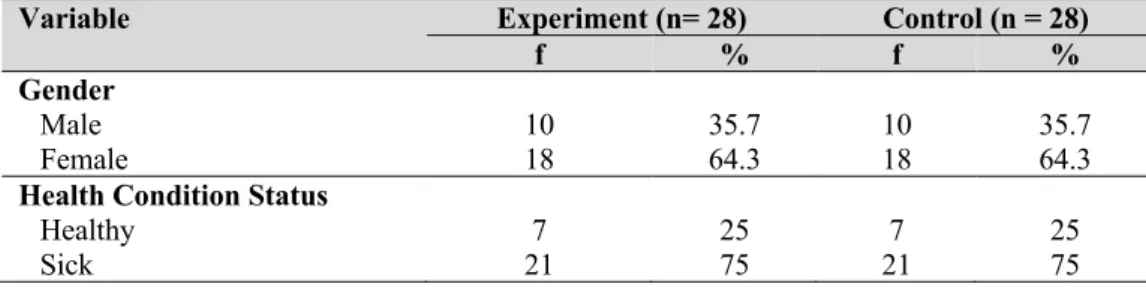
Table 2 Characteristics of respondents based on gender and health condition status
Variable Experiment (n= 28) Control (n = 28)
f % f %
Gender
Male 10 35.7 10 35.7
Female 18 64.3 18 64.3
Health Condition Status
Healthy 7 25 7 25
Sick 21 75 21 75
Based on Table 2, it was found that most of the gender of elderly in the experiment group were women, (64.3%) and elderly with male gender was only 35.7%. This is directly proportional to the number of elderly living in Wening Wardoyo's social home as well as more elderly with female gender. In the control group also found that most of the female sex was reaching about 64.3% or 18 elderly. While the number of elderly males was only 35.7% or 9 respondents. It is also directly proportional to the number of
elderlies who live in the elderly social services unit of Pucang Gading with more female elderly. Table 2 also shows the percentage of health conditions, which most of the elderly health conditions in the experiment group were sick, reaching 75% or 21 elderly. As for elderly with healthy condition was only 25% or 7 elderly. Similarly, elderly health conditions in the control group that were sick reached 75% or 21 elderly and healthy elderly was only 25% or 7 respondents.
Table 3 Characteristics of respondents based on duration of sickness
Variable Experiment (n= 21) Control (n = 21)
f % f %
Duration of sickness
Acute 12 57.1 11 52.4
Chronic 9 42.9 10 47.6
Based on table 3, the elderly in the experiment group who experienced chronic pain reached 57.1% or 12 respondents and elderly with acute pain was 42.9% or 10 respondents. This
is directly proportional to the control group who experienced chronic pain was 52.4% or 11 respondents and the elderly with acute pain was 47.6 % or 10 respondents.
Table 4 Difference in GDS in the experiment and control group before and after given intervention
Group N Mean SD Min - Max
Experiment 28
Pretest 7.21 2.183 5-11
Posttest 5.04 1.526 2-10
Control 28
Pretest 6.64 1.471 5-10
Table 4 shows that the mean of GDS during pretest in the experiment group was 7.21 with a standard deviation of 2.183. The lowest GDS score in the pretest in the experiment group was 5 and the highest was 11. There was a decrease of GDS score during posttest in the experiment group was 5.04 with a standard deviation of 1.526, with the lowest GDS score of 2 and the highest score of 10.
While the mean score of GDS in the control group during pretest was 6.64 with the standard deviation of 1.471, with the lowest score of 5 and the highest of 10. There was also a decrease of GDS score during posttest in the control group was 6.18 with the standard deviation of 1.926, with the lowest GDS score was 4 and the highest score was 10.
Table 5 Difference of GDS score before and after given intervention in the experimental group
Mean SD p value
GDS pretest 7.21(5-11) 2.183 0.000
GDS posttest 5.04( 2-10) 1.526
Table 5 shows that p-value was 0.000 (<0.05), which indicated that there was a significant effect of brain gymnastic and Benson relaxation on depression level. There was a significant different in GDS score before and after given intervention. While Table 6 shows
p-value 0.053 (>0.05), which indicated that there was no significant difference in GDS score before and after intervention in the control group. It is concluded that there was no effect of activities in social service unit on GDS or depression level.
Table 6 Difference of GDS score before and after given intervention in the control group
Mean SD p value
GDS pretest 6.64(5-10) 1.526 0.053
GDS posttest 6.18(4-10) 1.926
DISCUSSION
The characteristics of respondents in the experiment and control group were homogenous. The mean age of the elderly in the experiment group was 70.25 years, and in the control group was 69.29 years. This is consistent with studies conducted in the United States suggesting that 10 to 15% of elderly over 65 years and living in communities are depressed (Stanley & Beare, 2007). The incidence of depression also increases in the elderly or 2x higher than in adults (Alexopoulos, 2005).
The number of depressions in the study likely occurred in female respondents. This can be possible because the number of elderly living in the social service unit are mostly female, and female life expectancy is higher than male. According to research data, the number of depressed elderlies with female gender is
more than 60%. This is in line with the percentage of elderly who live in the social service unit, which was 70% of females and 30% of males. The ratio of depression between female and male elderly is 14:8 (Dharmono, 2008). Study states that women have 2 times tendency of depression compared to men, this is because more women get the stressor / exposure to factors causing depression (Miller, 2009).
of depression are metabolic, endocrine, neurobiology, cancer, heart, lung, blood vessels and anemia (Stanley & Beare, 2007). In this study, the elderly was mostly suffering from acute physical illness or less than 6 months.
The results of this study indicated that there were significant differences about the level of depression before and after the intervention of brain gymnastic therapy and Benson relaxation in the experiment group. This is in line with previous research stated that brain gymnastics therapy can reduce the level of depression. There were significant differences in mean of GDS values in elderly in social institutions before and after cognitive and brain therapy (p value <0.05) (Prasetyo, 2010). Followed by the other study showed a significant difference in depression rate in elderly before and after exercise with p-value <0.01 (Cox, 2007).
Individual therapy is a therapy that focuses on the person or individual and other aspects of the person's life (O’Brien, Kennedy, & Ballard, 2013). The individual therapy is a psychoanalytic therapy and often used as a mental health therapy. Brain gym therapy and Benson relaxation are individual therapies which both therapies focus on the individual itself. Individual therapy according to some experts is the most recent form of therapy to be selected in overcoming mental health problems, which involves group support or social group support (O’Brien, Kennedy, & Ballard, 2013). The results of this study revealed that there was a positive outcome or effect of the therapy of brain gymnastics and Benson relaxation in reducing depression levels in the elderly.
CONCLUSION
It is concluded that there was a significant effect of brain gymnastics therapy and Benson relaxation in decreasing the depression level in elderly seen from the GDS. It is suggested that brain gymnastic therapy and Benson relaxation can be one of independent nursing
interventions through empowerment of the elderly social service unit as an effort to improve care for elderly groups.
Declaration of Conflicting Interest None declared.
Funding
This study was supported by Magister Keperawatan, Fakultas Kedokteran, Universitas Diponegoro, Semarang, Indonesia.
Author Contribution
All authors contributed equally in this study.
References
Alexopoulos, G. S. (2005). Depression in the elderly.
The Lancet, 365(9475), 1961-1970.
Bandiyah, S. (2009). Lanjut usia dan keperawatan gerontik [Elderly and gerontic nursing].
Yogyakarta: Nuha Medika.
Cox, J. G. (2007). Is exercise an evidence-based intervention for clinical depression in older adults: A meta-analysis of randomized studies 2000–2006. Florida: The Florida State University.
Deckro, G. R., Ballinger, K. M., Hoyt, M., Wilcher, M., Dusek, J., Myers, P., . . . Benson, H. (2002). The evaluation of a mind/body intervention to reduce psychological distress and perceived stress in college students. Journal of American College Health, 50(6), 281-287.
Dennison, P. E., & Dennison, G. E. (2006). Guideline book of brain gym. Jakarta: Grasindo.
Depkes. (2003). Kebijakan dan strategi nasional pencegahan dan penanggulangan penyakit tidak menular [Policy and national strategy in preventing and treating non-infectious disease]. Jakarta: Department of Health, Ministry of Health of Indonesia.
Dharmono, S. (2008). Waspadai depresi pada lansia [Be careful in depression in elderly]. Retrieved from http://www.klikdokter.com
Ganong, W. F. (2002). Teaching book of physiology of medicine (20th ed.) Jakarta: EGC.
Kurlowicz, L., & Greenberg, S. A. (2007). The geriatric depression scale (GDS). American Journal of Nursing, 107(10), 67-68.
Ma’rifah, A. R., Setyowati, M. B., & Ririn Isma Sundari. (2016). Pengaruh relaksasi Benson terhadap tingkat kecemasan pasien kanker serviks di RSUD Margono Soekardjo Purwokerto [Effect of Benson relaxation on anxiety in patients with servical cancer at
RSUD Margono Soekardjo Purwokerto].
Paper presented at the MUSWIL IPEMI, East Java, Indonesia.
MOH. (2013). Riset kesehatan dasar [Basic health research). Jakarta: Ministry of Health of the Republic of Indonesia.
Nugroho, W. (2008). Gerontik and geriatric nursing,
Jakarta:EGC Medical Book Publishers. O’Brien, P., Kennedy, W., & Ballard, K. (2013).
Psychiatric mental health nursing: Teory and practice (B. Angelina, Trans.). Jakarta: EGC. Potter, P. A., & Perry, A. G. (2005). Buku ajar
fundamental keperawatan: Konsep, proses, dan praktik [Teaching book of fundamentals of nursing: Concept, process and prctice]. Jakarta: EGC.
Prasetyo, A. S. (2010). Pengaruh terapi kognitif dan senam otak terhadap tingkat depresi dengan harga diri rendah pada klien lansia di Panti Tresna Wreda Bakti Yuswa Bandar Lampung [Effect of cognitive therapy and brain gym on depression and low self-esteem in elderly at Panti Tresna Wreda Bakti Yuswa Bandar Lampung]. Jakarta: Universitas Indonesia. Smeltzer, S. C., Bare, B. G., Hinkle, J. L., Cheever, K.
H., Townsend, M. C., & Gould, B. (2008).
Brunner & Suddarth’s textbook of medical surgical nursing (12th ed.). Philadelphia: Wolters Kluwer: Lippincott Williams and Wilkins.
Soejono, H. (2009). Pengkajian paripurna pada pasien geriatri [Plenary assessment of geriatric patients]. Jakarta: Internal Publishing. Stanley, M., & Beare, P. G. (2007). Buku ajar
keperawatan gerontik [Gerontik nursing teaching boo]. Jakarta: EGC Medical Book Publishers.
Stuart, G. W., & Sundeen, S. J. (2007). Buku saku keperawatan jiwa [Psychiatrcic nursing handbook]. Jakarta: EGC.
Varcarolis, E., Carson, V., & Shoemaker, N. (2006).
Foundations ofpsychiatric mental health nursing: A clinical approach. St. Louis: Elsevier.
World Health Organization. (2008). Technical brief for policy maker. Geneva, Switzerland: World Health Organization.