For the Purpose of DNP Accreditation
Submitted to the Commission of Collegiate
Nursing Education by the University of
Pittsburgh School of Nursing
January 27, 2014
INTRODUCTION Page iv
STANDARD I - Program Quality: Mission And Governance Page 1
Key Element I-A Page 1
Key Element I-B Page 5
Key Element I-C Page 6
Key Element I-D Page 7
Key Element I-E Page 8
Key Element I-F Page 9
STANDARD II – Program Quality: Institutional Commitment and Resources Page 15
Key Element II-A Page 15
Key Element II-B Page 18
Key Element II-C Page 21
Key Element II-D Page 22
Key Element II-E Page 24
Key Element II-F Page 26
STANDARD III - Program Quality: Curriculum and Teaching-Learning Practices Page 29
Key Element III-A Page 29
Key Element III-B Page 30
Key Element III-C Page 33
Key Element III-D Page 36
Key Element III-E Page 39
Key Element III-F Page 40
Key Element III-G Page 44
Key Element III-H Page 45
STANDARD IV - Program Effectiveness: Program Effectiveness: Assessment and
Achievement of Program Outcomes 51
Key Element IV-A Page 51
Key Element IV-B Page 54
Key Element IV-C Page 58
Key Element IV-D Page 59
Key Element IV-E Page 60
Key Element IV-F Page 62
Key Element IV-G Page 67
TABLES:
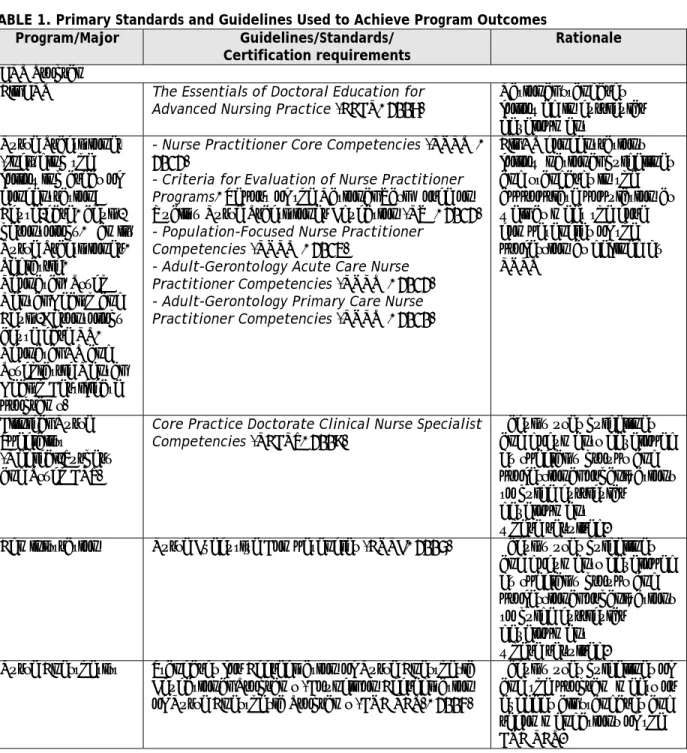
Table 1: Primary Standards and Guidelines Used to Achieve Program Outcomes
Page 2
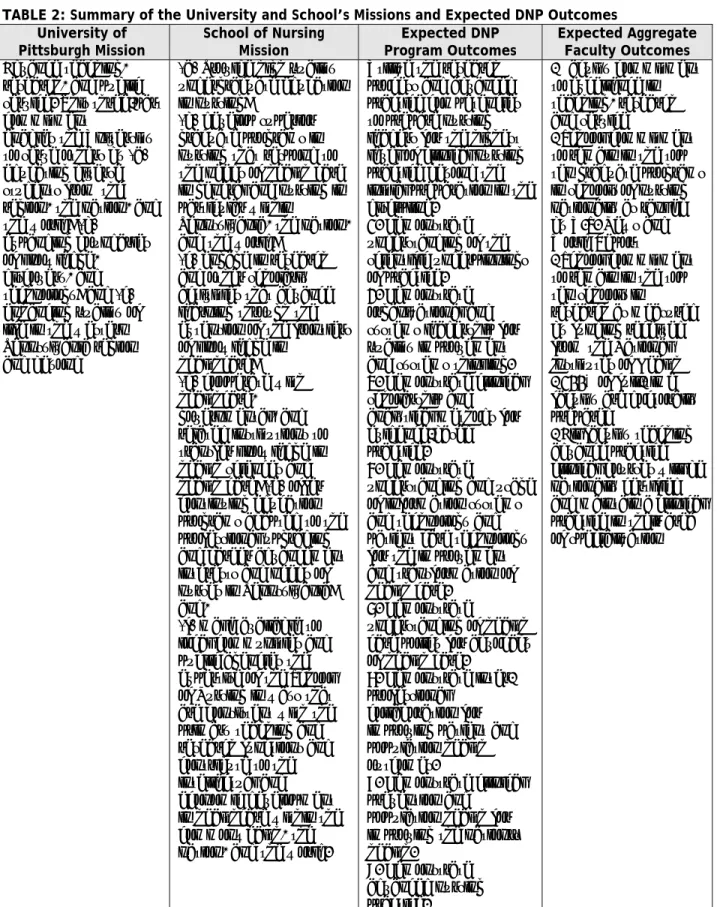
Table 2: Summary of the University and School’s Missions and Expected DNP Outcomes
Page 3
Table 3: Corresponding program objectives across degrees Page 4
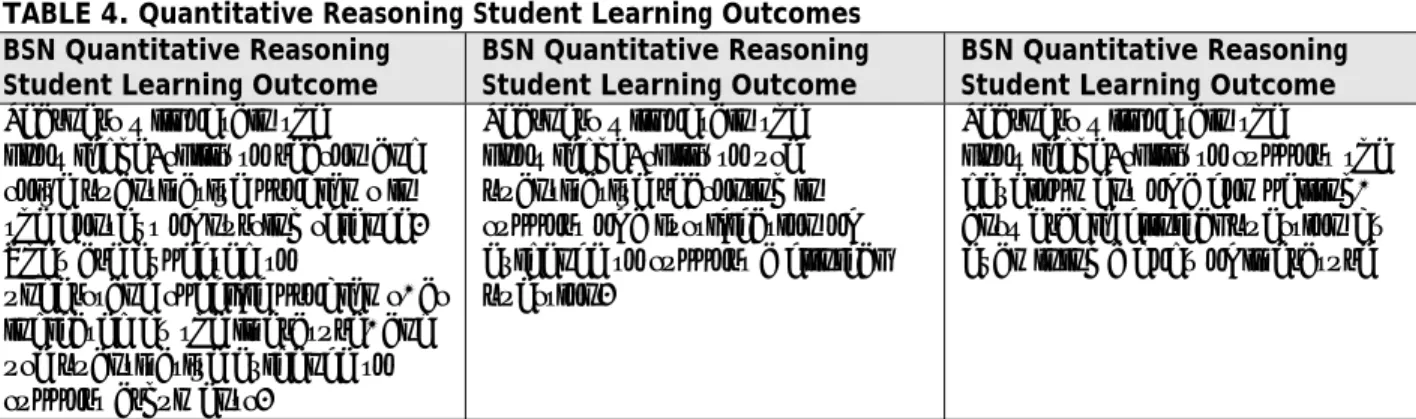
Table 4: Quantitative Reasoning Student Learning Outcomes Page 4
Table 5: Specific DNP Outcomes with Benchmarks Page 4-5
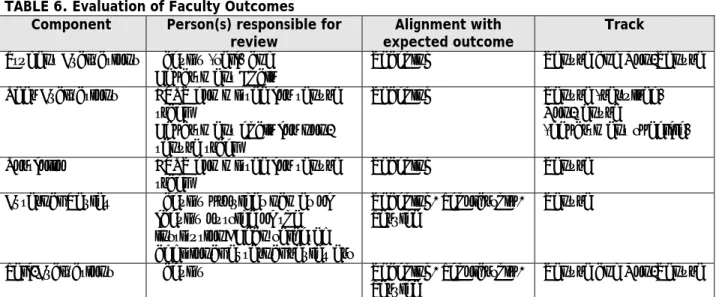
Table 6: Evaluation of Faculty Outcomes Page 7
Table 7: Faculty and Student Program Governance Attendance Page 8
Table 8: Accuracy and Consistency of Documents Page 9
Table 9: Congruence of Policies (examples) Page 10-14
Table 10: School of Nursing Expense Summary (Dollars in Thousands) Page 15
Table 11: Availability of Resources Page 21
Table 12: Examples of objectives for specialty roles Page 29-30
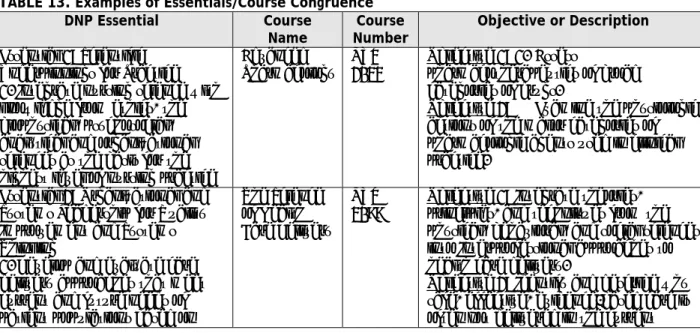
Table 13: Examples of Essentials/Course Congruence Page 32-33
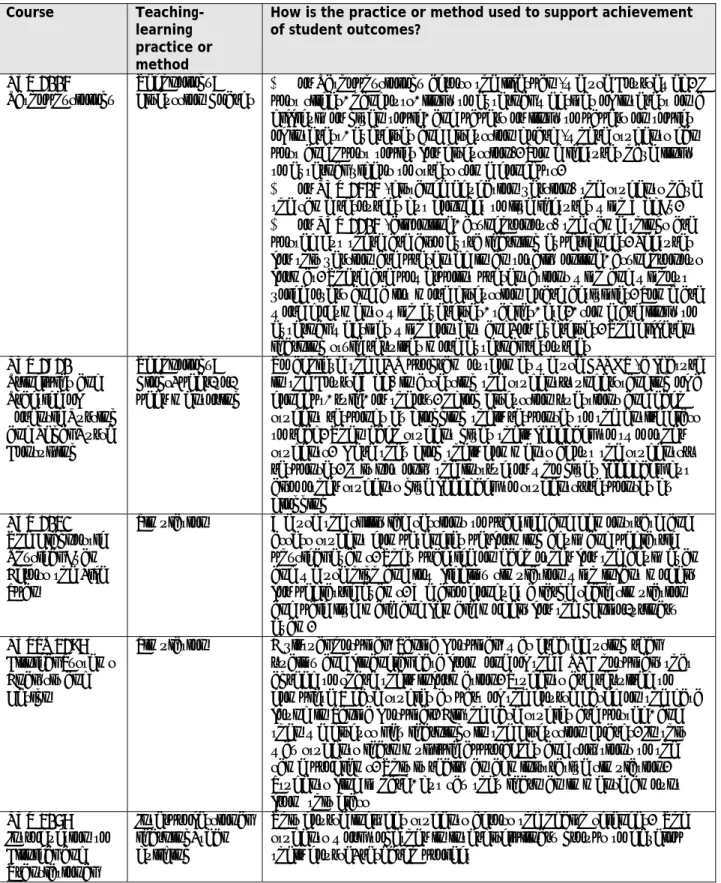
Table 14: Examples of faculty use of teaching-learning practices and
methods in achieving program outcomes Page 38-39
Table 15: Student Evaluations of DNP Courses Page 42
Table 16: Communication of Evaluation Page 45
Table 17: DNP Program Outcomes, Data Collection, and Benchmarks Page 52-54
Table 18: Summary of Enrollment/Graduation Data Page 56-57
Table 19: Licensure and Certification Pass Rates Page 59
Table 20: Evaluation of Faculty Outcomes Page 63-64
Table 21: Faculty Achievement 2012-2013 Page 64-67
Table 22: Comparison of Benchmarks and Outcomes Page 69-72
Table 23: Statistics: Online vs. Onsite Page 73
Table 24-25 Descriptive Statistics: Online and Onsite Page 73
Table 26: Grade distribution by DNP Subplans and Core Course: ONSITE Page 73-74
Table 27: Grade distribution by DNP Subplans and Core Course: ONLINE Page 74-76
Table 28: Applicants who take the GRE and Average GRE (2012-2013) Page 76
Table 29: Average admitted GPA (2012-2013) Page 76-77
APPENDICES:
Appendix 1: University Organization Chart
Appendix 2: Schools of the Health Sciences Organization Chart Appendix 3: The School of Nursing Organization Chart
Appendix 4: Outline of the Graduate Orientation Module Appendix 5: The current long-range plan (2012-2017) Appendix 6: NTF criteria worksheet
Appendix 7: Orientation Packet Appendix 8: Correspondence
Appendix 9: DNP Capstone Project Guidelines Appendix 10: DNP Curriculum plans
Appendix 11: Guidelines for the administration residency experience Appendix 12: Additional OMET results
Appendix 13: Listing of all DNP courses Appendix 14: 2014 QIR template
Appendix 15: Specific employment information Appendix 16: Descriptions of presentations Appendix 17: Faculty Certification and Licensure Appendix 18: List of Faculty Forum topics
Appendix 19: List of Research Methodology Presentations
Appendix 20: Additional application/enrollment/graduation data
Appendix 21: Comprehensive report of quality improvement efforts conducted during the 2012-2013 Academic Year
Appendix 22: DNP Written Communication Learning Outcome Matrix Appendix 23: DNP Quantitative Reasoning Learning Outcome Matrix Appendix 24: DNP Discipline-Specific Learning Outcome Matrix Appendix 25: Student Learning Outcomes Process for Evaluation Appendix 26: Student Learning Outcomes Sampling Plan
Appendix 27: Capstone Quality Metric Appendix 28: Course review form
Introduction
The University of Pittsburgh and the University of Pittsburgh School of Nursing have each made notable progress since the last Commission On Collegiate Nursing Education (CCNE) site visit in 2009. The University, under the dynamic leadership of Chancellor Mark A. Nordenberg, has a reputation as a world-class public research university while still maintaining a reputation for excellence in teaching. School progress under the leadership of Dean Jacqueline Dunbar-Jacob mirrors that of the University as the number of applicants continues to increase, better- qualified students are enrolling, and research support continues to grow. Today, the University of Pittsburgh School of Nursing is ranked 3rd in National Institutes of Health (NIH) research funding and 7th overall in graduate education by U. S. News and World Report America’s Best Graduate Schools.
The board of trustees, the faculty, staff, and administration are committed to making the University of Pittsburgh one of the nation’s preeminent research universities—an institution that provides high-quality undergraduate and superior graduate programs; is engaged in research, artistic, and scholarly activities advancing knowledge and transference of that knowledge in science,
technology, and health care; offers continuing education programs; and relates to the surrounding community. The School of Nursing shares this commitment and, as this self-study demonstrates, is succeeding in meeting it to the fullest extent. (Resource Room: A Self-Study submitted to the Middle States Association Commission on Higher Education by the University of Pittsburgh, April 2012. See also University Fact Books: http://www.ir.pitt.edu/factbook/)
University History and Locations
The University of Pittsburgh of the Commonwealth System of Higher Education is a nonsectarian, coeducational, state-related, public research university made up of five campuses located throughout western Pennsylvania. The Pittsburgh campus in Oakland is located in the cultural and medical center of Pittsburgh within an hour’s commuting distance for the metropolitan area’s 2.4 million people. The Johnstown campus, a four-year undergraduate college in Cambria County, serves the region at the foothills of the Allegheny Mountains. The Bradford campus, a four-year undergraduate college located in the Allegheny Mountains at the Pennsylvania-New York border, serves the
predominantly rural areas of western Pennsylvania and western New York. The Greensburg campus is a four-year undergraduate college located east of Pittsburgh that serves Westmoreland County and the eastern Pittsburgh areas. The Titusville campus is a two-year college located in northwestern
Pennsylvania.
One of the top public research universities in the nation, the University of Pittsburgh was founded as The Pittsburgh Academy in 1787, the year the United States Constitution was adopted, and located in a log cabin in the Pennsylvania wilderness near the head of the Ohio River. Thirty-two years later, the Pittsburgh Academy became the Western University of Pittsburgh. In 1908, the school moved to a new, much larger location in Pittsburgh’s Oakland neighborhood and changed its name to the University of Pittsburgh. The first graduate degree was conferred in 1836 and the first doctoral program was developed in 1884. A private institution for most of its past, the University of Pittsburgh became state-related in 1966, establishing a relationship with the Commonwealth of Pennsylvania that continues to benefit both partners. Today, the University of Pittsburgh is an elected member of the Association of American Universities and is ranked eleventh nationally among public research universities, according to The Center for Measuring University Performance (CMUP). As of federal FY 2010, the University was ranked 10th nationally among all universities in total research dollars ($806 million after Johns Hopkins, University of Michigan, University of Washington, University of Wisconsin at Madison, University of California at San Diego, University of California at San Francisco and Duke University), and 5th in federal research ($581 million). Moreover, in 2012, the University of Pittsburgh
was ranked 5th according to the NSF for federal science and engineering research and development
support (over $800 million in research expenditures), see Chancellor’s report.
The CMUP 2012 annual report noted the challenges top public research universities face today such as competition with private institutions and national competition in general (not simply local or regional) for faculty, staff, and funding; budgetary competition with non-educational sectors; public opposition to revenue increases; and increasing demands for taxpayer control. CMUP also noted a shift to reinvestment in higher education as a mechanism to drive economic development. While
Pennsylvania lags in exploiting the possibilities this model offers, the University and the school are strongly situated and taking advantage of the elements driving these opportunities where they exist, capitalizing on research, technological development, and occupationally-focused education and training, among other factors. The recent economic downturn is impacting the University of Pittsburgh as it is all universities. However, through the strength of the University’s strategic and budgetary planning, plans are in process to minimize negative effects of the current economic environment
University Governance
The University is governed by a Board of Trustees, and led by its chief executive officer, Chancellor Nordenberg. Under the Charter and Bylaws of the University, the board is responsible for advancing the purposes of the University; promoting and protecting its independence, academic freedom, and integrity; and enhancing and preserving its assets for the benefit of future generations of students and society at large. The trustees bear responsibility for the financial and academic
development of the University, for overseeing the management of its resources, and for ensuring that the University meets its obligations to the Commonwealth of Pennsylvania and to society generally. The board delegates general administrative, academic, and management authority to the chancellor. The board retains ultimate responsibility for all University affairs, however, and reserves its authority directly in at least three areas: selection of a chancellor; approval of major institutional policies, particularly those related to the fiduciary responsibilities of the board; and definition of the mission and goals of the University.
The board is composed of thirty-six voting members consisting of the chancellor; seventeen term trustees elected by the board; six alumni trustees elected by the board from nominees provided by the University Alumni Association Board of Directors; and twelve Commonwealth trustees, four each appointed by the governor, the president pro tempore of the senate, and the speaker of the house. Much of the work of the board is carried out in committees and sub-committees, and many of these committees include faculty, staff, and students as non-voting representatives. There is a sub-committee specifically for the health sciences.
Chancellor Nordenberg appoints the senior administrative and academic leadership team. He appoints deans of all non-health sciences divisions upon recommendation of the provost; deans in the schools of the health sciences are appointed in conjunction with the senior vice chancellor for the health sciences (the provost guides matters that are purely academic while the senior vice chancellor oversees matters specifically related to health care). All appointments are subject to confirmation by the board. All deans throughout the University, including the health sciences, belong to the council of deans which meets monthly with the provost.
The University has fifteen major divisions and four regional campuses described above. The divisions are: School of Arts and Sciences (including the College of General Studies); the Joseph M. Katz Graduate School of Business; School of Education; the John A. Swanson School of Engineering; School of Law; Graduate School of Public and International Affairs; School of Social Work; School of Information Sciences; University Honors College; and the schools of the health sciences, consisting of: School of Dental Medicine; School of Health and Rehabilitation Sciences; School of Medicine; School of Nursing; School of Pharmacy; and the Graduate School of Public Health. (Bulletins and descriptive material for each school and campus are available online through the University’s main Web site: www.pitt.edu.)
Organization of the University and Relationship to the University of Pittsburgh Medical Center (UPMC) (See Appendix 1: University Organization Chart and Appendix 2: Schools of the Health Sciences Organization Chart) Schools and colleges within the University have parallel administrative structures modified to each situation and covering academic affairs, student services, finance, alumni affairs, and information technology. Each school is assigned a development officer who reports to the University’s Office of Institutional Advancement. Since 2003, the University of Pittsburgh and the University of Pittsburgh Medical Center (UPMC) have maintained a unified fundraising organization. Potential donors can come to one source instead of several different development offices to identify the range of philanthropic possibilities open to them. The Medical and Health Sciences Foundation raises
philanthropic funds on behalf of the University of Pittsburgh’s schools of the health sciences and UPMC; as with the other health sciences units, the School of Nursing’s director of development reports to the president of the foundation.
The University has a strong relationship with UPMC. UPMC is a separate corporate body; the University has a set number of seats on the UPMC board and UPMC has set representation on the
University board. The dean of the School of Nursing is a University appointee to the board of the academic health center hospitals – Presbyterian, Montefiore, Shadyside, and Western Psychiatric Institute and Clinics. UPMC provides negotiated financial support to the health sciences, including the School of Nursing through a variety of mechanisms such as loaned faculty. UPMC’s chief nursing officer is an ex officio member of the School of Nursing’s dean’s council, and the dean of the School of Nursing in turn sits on the CNO’s UPMC leadership council.
University of Pittsburgh Accreditation and Memberships
The University is accredited by the Middle States Association of Colleges and Schools, the major accrediting body for institutions of higher education in the mid-Atlantic region. Professional schools hold accreditations from their relevant professional associations as required. The University is a member of the Association of American Universities, the American Council on Education, as well as other national, regional, and specialty organizations. History of the University of Pittsburgh School of Nursing
Founded in 1939 under the leadership of Dean Ruth Perkins Kuehn (1939-1961), the University of Pittsburgh School of Nursing educates nurses for increasingly demanding roles through a
comprehensive curriculum that combines rigorous academic work with varied and intensive clinical experiences and an extensive and growing involvement in research. The first students enrolled in 1940, and through an intensive three year course of study including summers, graduated in 1943. The first continuing education workshop was offered in 1941. Also in 1941, School of Nursing received part of a $1.2 million grant from the Nursing and National Defense Act to provide funding for the Army Cadet Nurse Program in response to the demand for nurses during World War II. The first African American and first foreign students were admitted in 1944, and the first male student was admitted in 1946. A Doctor of Philosophy (PhD) program began in 1954 and the first PhD degree was conferred in 1957; a clinical PhD in pediatric and maternity nursing was added in 1963. A consolidated master’s degree (MNEd) was offered beginning in 1959 with majors in the clinical fields of maternity nursing, nursing care of children, and psychiatric nursing. Beginning in 1968, all undergraduate students received the Bachelor of Science in Nursing degree (BSN) (some had been receiving a BSNEd). That same year the first oncology clinical nursing specialist program in the country was established, and a doctorate in nursing education was added.
Today the School offers the baccalaureate degree on three tracks (traditional, Accelerated 2nd Degree, and RN Options), the master’s in three majors and five areas of concentration, the Doctor of Nursing Practice (DNP) in four majors and ten concentrations, and the PhD, and post-master’s certificates in eight areas.
Research began at the School in the early 1950s with funding from the Pittsburgh-based Sarah Mellon Foundation for three studies, and nursing faculty were involved in Jonas Salk’s breakthrough polio research during the same period. Faculty research began to accelerate in the 1980s with a new emphasis on recruiting faculty with doctoral degrees and shifting the focus of the doctoral program from clinical to new-knowledge-based research.
To enable faculty research, a director of nursing research was appointed in 1981 to assist faculty in developing pilot studies and to obtain funding. The Office of Nursing Research was reorganized as the Center for Nursing Research (CNR) in 1987 under the leadership of now-Dean Jacqueline Dunbar-Jacob. In 1989, funds for one of the first of two Exploratory Centers for Research in chronic care in the nation were awarded by the NIH National Institute of Nursing Research [NINR] to the School of Nursing. By the 1990s, the school held a sixth-place ranking in NIH research funding; in 1992 research award funding surpassed one million dollars for the first time; the NINR designated the School of Nursing as a Nursing Research Intensive Environment in 1993; and in 1994 the School of Nursing received one of the first of five P30 Center grants for research in chronic disorders. By 1995, external research funding surpassed two million dollars. Today, the NIH places the University of Pittsburgh School of Nursing third in the number of awards received and fifth in the total dollars received among schools of nursing – the11th consecutive year in the top ten.
The Learning Resources Center was created in 1981 to provide technical and educational support for students, faculty and staff. Known as the Center for Innovation in Clinical Learning (CICL) from 2007 to 2012 and to the Center for Evaluation and Innovation in 2012 and greatly expanded, it offers state-of-the-art technology services described more fully in Key Element II-B.
In 2001, the School of Nursing established the first genome lab housed in a university school of nursing, and the School of Nursing was the first school of nursing nation-wide to require students to take a full semester course in genetics beginning in spring 2001.
The School of Nursing saw a significant jump in enrollment after the closing of the Presbyterian University Hospital School of Nursing in 1972. In 1977, the School of Nursing consolidated operations into the Victoria Building thanks to a major capital initiative, and the school is still located there today, albeit with many changes and upgrades over time including changes since the last site visit.
An outstanding achievement of the school prior to the last visit was the establishment in 1995 of the first Distinguished Clinical Scholar Endowment in the nation at a school of nursing. The first awards were made in academic year 2002-03, and, as of January 2, 2104, the endowment exceeded $1,052 million. To date, nine faculty members have benefited from the fund (see 2013 annual report for details).
Several acting deans led the school after Dean Kuehn’s retirement in 1961, until Marguerite Schaefer’s permanent appointment in 1966; she served in that capacity until 1973. Enid D. Goldberg served from 1973-1991; and Ellen B. Rudy from 1991-2001. Jacqueline Dunbar-Jacob became dean in 2001 and has led the school to its current ranking as 7th among schools of nursing graduate programs, according to U.S. News and World Report’s America’s Best Graduate Schools.
Accreditation
The baccalaureate and master’s programs are accredited by the Collegiate Commission on Nursing Education (CCNE), One Dupont Circle, NW, Suite 530, Washington, DC 20036-1120 through 9/30/19. The master’s and DNP in nursing anesthesia accredited by American Association of Nurse Anesthetists through Spring 2020.
Organizational units provide functional support to the BSN, MSN, DNP and PhD programs, as well as to the overall mission and goals of the School of Nursing. The School of Nursing Organization Chart shown in Appendix 3 depicts the positions and reporting relationships of the dean, three
associate deans, one assistant dean, three department chairs, and five directors. (Position descriptions are available in the Resource Room.)
International Activity
International Activity
One of the areas where the School of Nursing has made considerable progress since our last accreditation is in the area of international activities. Consistent with the University’s Global Vision and Strategies, the School of Nursing has expanded our international activities focusing our efforts on a key regions and countries that support our vision and build on our educational and research strengths. The School currently has Memorandums of Understanding (MOUs) with the following universities:
● UPMC Palermo, Italy, where nursing students have a 1 month educational opportunity
● University of Basel, Switzerland, where nursing student have a 2 week educational opportunity
● Birmingham City University in Birmingham, England, where nursing students have a 2 week educational exchange each year
● Fudan University in Shanghai, China, where visiting faculty scholars visit Pitt yearly to observe research and educational strategies. Pitt nursing faculty also visited Fudan to instruct courses for three weeks
● Capital Medical University in Beijing, China, where a memorandum of agreement has been developed
● Angkor Hospital for Children in Siem Reap, Cambodia, where students and faculty have a 1 month service-learning experience
● Royal University of Bhutan in Thimphu, Bhutan, where students and faculty have a 1 month service- learning experience
● Harbin Medical University in Harbin, China, where a memorandum of agreement has been developed
● Pontifical Catholic University in Santiago, Chile, where a memorandum of agreement has been developed
● Nazerbayev University, Astana, Kazakhstan developing a school of nursing as part of Pitt/UPMC collaboration University of Belize, Belmopan, Belize – Faculty exchanges including Rick Henker
● Tzu Chi University in Hualien City, Hualien County, Taiwan, establishing student exchanges coordinated by S. Engberg
Our faculty members have shared their research and educational expertise with faculty in many of these settings by hosting a number of scholars from countries including China, Egypt, Germany, Iceland, Jordan, South Africa, Taiwan and Turkey. In addition, our faculty have travelled to present at international conferences, collaborate with international researchers and educators, and teach or accompany students abroad. Our students have an opportunity of participate in study abroad programs led either by School of Nursing faculty or by faculty from other programs at the University.
Our DNP Students and Curriculum
The students who enter the University of Pittsburgh School of Nursing DNP program are among the best and brightest in the country. They display high levels of undergraduate (and graduate) achievement, as demonstrated in the DNP enrollment statistics. Since 2006, we have attracted more and more out-of-state students. In 2006 there were 2 out-of-state admitted applicants, compared with 23 Pennsylvania residents (8% of-state). For the 2013-2014 academic year, the percentage of out-of-state admitted applicants rose to 21% (17 out-out-of-state, 63 PA residents). Our students perform highly and comparably across all areas of concentration and option (online/onsite). As demonstrated in Standard IV, analysis of the core course performance and GPA, shows that we hold all students to the same high standard, regardless of the concentration or program in which they are enrolled. In addition, our students perform similarly regardless of their point of entry (BSN-DNP vs. MSN-DNP). Our survey data indicates that students, alumni, and employers are continuously and highly satisfied with the DNP curriculum, faculty, and graduates.
The DNP focuses on evaluating evidence and using evidence in clinical decision-making, leadership skills, implementing viable clinical innovations, and through applying research and
theoretical understanding to plan and make change in practice. There is also emphasis on a population perspective, assessment of populations, use of data to make programmatic decisions, and program evaluation. Course work and clinical practice are required in the DNP curriculum. The core theory content and set of core competencies for all DNP graduates are aligned with The Essentials of Doctoral Education for Advanced Nursing Practice, defined by the American Association of Colleges of Nursing [AACN]. Core courses of this curriculum focus on advanced evidence-based practice, organizational and systems leadership, clinical research and analytical methods for evidence-based practice, informatics and patient care technology for the transformation of health care, health care policy and finance, ethics, clinical prevention and population health, and interprofessional collaboration for improving patient and population health outcomes. This knowledge is then expanded upon through cognates within selected areas of focus. The DNP educational experience culminates in a Capstone Project that reflects the practice interest of the student and the synthesis and application of knowledge gained through the curriculum.
The discussion around the curriculum and performance data will be primarily focused on the four majors and ten areas of concentration. Enrollment for the RN-DNP program and post-Masters certificate programs is low (n<10). In addition, the curriculum for the certificate programs varies by student background. These low-enrolling programs are kept open to meet the needs of the community, which will be discussed in detail throughout the document.
The following table describes our curriculum options:
BSN to DNP Post-Masters's DNP Completion
Clinical Nurse Specialist Adult Gerontology (onsite)
Clinical Nurse Specialist
Adult Gerontology (onsite and online)
Psychiatric Mental Health (onsite and online)
Nurse Administration (onsite) Nursing Administration (onsite and online)
Nurse Anesthesia (onsiteand online)
Nurse Practitioner
Adult-Gerontology Acute Care (onsite)
Adult-Gerontology Primary Care (onsite)
Family (Individual Across the Lifespan) (onsite)
Nurse Practitioner
Adult-Gerontology Acute Care (onsite and online)
Adult- Gerontology Primary Care (onsite and online)
BSN to DNP Post-Masters's DNP Completion
Neonatal (onsite)
Pediatric Primary Care (onsite)
Psychiatric Mental Health Nurse Practitioner (onsite)
(onsite and online)
Neonatal (onsite and online)
Pediatric Primary Care (onsite and online)
Psychiatric Primary Care Nurse Practitioner (onsite and online)
Standard I
Program Quality: Mission and Governance
The mission, goals, and expected program outcomes are congruent with those of the parent institution, reflect professional nursing standards and guidelines, and consider the needs and expectations of the community of interest. Policies of the parent institution and nursing program clearly support the program’s mission, goals, and expected outcomes. The faculty and students of the program are involved in the governance of the program and in the ongoing efforts to improve program quality.
I-A. The mission, goals, and expected program outcomes are: congruent with those of the parent institution; and
consistent with relevant professional nursing standards and guidelines for the preparation of nursing professionals.
Elaboration: The program’s mission statement, goals, and expected program outcomes are written and accessible to current and prospective students, faculty, and other constituents. Program outcomes include student outcomes, faculty outcomes, and other outcomes identified by the program. A mission statement may relate to all nursing programs offered by the nursing unit or specific programs may have separate mission statements. Program goals are clearly differentiated by level when multiple degree/certificate programs exist. Student outcomes may be expressed as competencies, objectives, benchmarks, or other terminology congruent with institutional and program norms.
The program identifies the professional nursing standards and guidelines it uses. CCNE requires, as appropriate, the following professional nursing standards and guidelines:
The Essentials of Baccalaureate Education for Professional Nursing Practice [American Association of Colleges of Nursing (AACN), 2008];
The Essentials of Master’s Education in Nursing (AACN, 2011);
The Essentials of Doctoral Education for Advanced Nursing Practice (AACN, 2006); and Criteria for Evaluation of Nurse Practitioner Programs [National Task Force on Quality Nurse
Practitioner Education (NTF), 2012].
A program may select additional standards and guidelines.
A program preparing students for certification incorporates professional standards and guidelines appropriate to the role/area of education.
An APRN education program (degree or certificate) prepares students for one of the four APRN roles and in at least one population focus, in accordance with the Consensus Model for APRN Regulation: Licensure, Accreditation, Certification and Education (July 2008).
Program Response:
The mission, goals, and expected program outcomes of the School of Nursing and the University are congruent and accessible to current and prospective students through the University Bulletin, the University Fact Book, and both the University and the School of Nursing web sites (Table 2). In addition, the missions are displayed prominently in the lobby of the School of Nursing in the Victoria Building. In their first term of enrollment each DNP student completes an online orientation to the School, which includes the mission statement and policies. A copy of the outline of the Graduate Orientation Module can be found in Appendix 4. There has been no change in the mission of the University or the School since our last review.
Per Policy 431, The School of Nursing Dean’s Council, in collaboration with the School of Nursing’s Total Faculty, reviews the School of Nursing mission statement every 3 years. It is reviewed to reflect congruency with the University’s mission and to reflect the professional nurse standards and guidelines, and consider the needs and expectations of the community of interest. The total faculty of
the School reviewed both mission statements in Oct 2012. The DNP curriculum and program outcomes reflect the appropriate professional nursing standards and guidelines as identified in Table 1, and consider the needs and expectations of the community of interest. Copies of all guidelines and advanced practice standards cited are available in the Resource Room.
TABLE 1. Primary Standards and Guidelines Used to Achieve Program Outcomes
Program/Major Guidelines/Standards/
Certification requirements
Rationale
DNP Program
All DNP The Essentials of Doctoral Education for Advanced Nursing Practice (AACN, 2006)
National standards followed in curricular development
Nurse Practitioner (Including the following areas of concentration: Acute-care, adult-gerontology, Family Nurse Practitioner, Pediatric, Neonatal, Psych Mental Health and Adult-Gerontology acute care NP, Neonatal NP and Psychiatric Mental Health Certificate programs)
- Nurse Practitioner Core Competencies (NONPF, 2012)
- Criteria for Evaluation of Nurse Practitioner Programs, Report of the National Task Force on Quality Nurse Practitioner Education (NTF, 2012)
- Population-Focused Nurse Practitioner Competencies (NONPF, 2013)
- Adult-Gerontology Acute Care Nurse Practitioner Competencies (NONPF, 2012)
- Adult-Gerontology Primary Care Nurse Practitioner Competencies (NONPF, 2010)
All NP concentrations follow national guidelines and standards in the appropriate population as well as meet the core competencies of the profession as defined by NONPF
Clinical Nurse Specialist (Medical-Surgery and Psych CNS)
Core Practice Doctorate Clinical Nurse Specialist
Competencies (NACNS, 2009) Faculty uses guidelines and documents developed by specialty groups and professional organizations to guide curricular development where required. Administration Nurse Executive Competencies (AONE, 2005) Faculty uses guidelines
and documents developed by specialty groups and professional organizations to guide curricular development where required. Nurse Anesthetist Standards for Accreditation of Nurse Anesthesia
Educational Programs (Council on Accreditation of Nurse Anesthesia Programs (COA NAP), 2004)
Faculty uses guidelines of and the program meets or exceeds all standards and recommendations of the COA NAP.
DNP faculty members determine congruence with standards and guidelines through a series of rigorous evaluative steps aimed at continuous program quality improvement, which is discussed in detail under Key Element IV-H. The School of Nursing further defines strategic goals and objectives in a formal 5-year strategic (long term) plan, which is reviewed and revised annually. An operational plan is devised for each year. The initial review and revision is the responsibility of the School of Nursing Planning and Budgeting committee. The current long-range plan (2012-2017) can be found in Appendix 5, and minutes from the Planning and Budget committee can be found in the Resource Room.
For a comparison of the school and University missions, along with expected DNP program and faculty outcomes, see Table 2 below.
TABLE 2: Summary of the University and School’s Missions and Expected DNP Outcomes University of
Pittsburgh Mission School of Nursing Mission Program Outcomes Expected DNP Expected Aggregate Faculty Outcomes
Advance teaching, research, and public service. This three-part commitment
enables the University to serve others by (a) educating diverse students from the region, the nation, and the world; (b)
expanding boundaries of knowledge,
discovery, and technology; and (c) enhancing quality of life in the western Pennsylvania region and beyond
(a) Provide high quality undergraduate education in nursing;
(b) develop superior graduate programs in nursing that respond to the needs of health care in general and nursing in particular within
Pennsylvania, the nation, and the world;
(c) engage in research and other scholarly activities that advance learning through the extension of the frontiers of knowledge in
healthcare; (d) cooperate with healthcare, governmental, and related institutions to transfer knowledge in health sciences and health care; (e) offer continuing education programs adapted to the professional upgrading and career advancement interests and needs of nurses in Pennsylvania; and,
(f) make available to local communities and public agencies the expertise of the School of Nursing in ways that are consistent with the primary teaching and research functions and contribute to the intellectual and economic development in healthcare within the commonwealth, the nation, and the world.
Utilize the research process and advanced practice competencies to prepare nursing leaders for the highest level of clinical nursing practice beyond the initial preparation in the discipline.
1. Demonstrate understanding of the scientific underpinnings of practice.
2. Demonstrate organizational and systems leadership for quality improvement and systems thinking. 3. Demonstrate clinical scholarship and
analytical methods for evidence-based practice. 4. Demonstrate
understanding and usage of information systems and technology and patient care technology for the improvement and transformation of health care.
5. Demonstrate
understanding of health care policy for advocacy of health care.
6. Demonstrate inter-professional
collaboration for improving patient and population health outcomes.
7. Demonstrate clinical prevention and
population health for improving the nation’s health.
8. Demonstrate advanced nursing practice.
- Faculty commitment to excellence in teaching, research and service
- School commitment to remain in the top ten graduate programs in schools of nursing nationally as ranked by U.S. News and World Report
- School commitment to remain in the top ten schools in
research as measured by funding received from the National Institutes of Health - 100% of full-time faculty are doctorally prepared
- All faculty teaching advance practice clinical courses will be nationally certified and maintain a clinical practice in their area of specialization
The University of Pittsburgh is a research-intensive university, producing high levels of research activity within its schools. As demonstrated in the Table 2 above, expected school, program, and faculty outcomes are consistent with the University’s position on research activity.
The DNP program objectives logically build upon program objectives at the BSN and MSN levels, as exhibited by the examples in Table 3 below.
TABLE 3. Corresponding program objectives across degrees.
BSN Program Objective MSN Program Objective DNP Program Objective
6) Synthesize research findings, clinical evidence and patient values and preferences, and evaluate their applicability for translation into practice with individuals, families, groups and communities.
2) Critically evaluate knowledge and theories from nursing and other disciplines for their contribution to nursing practice.
3) Demonstrate clinical scholarship and analytical methods for evidence-based practice.
9) Demonstrate a leadership role in promoting cultural
competence in interactions with peers and others as well as with individuals, families, and aggregates
5) Demonstrate leadership activities to advance the profession of nursing.
6) Demonstrate
inter-professional collaboration for improving patient and population health outcomes.
Correspondingly, the DNP Student Learning Outcomes logically build upon student learning outcomes at the BSN and MSN levels. For example, a Quantitative Reasoning learning outcome was developed at the program level. The expected outcomes and attainment of skills build upon prior knowledge obtained, as indicated below.
TABLE 4. Quantitative Reasoning Student Learning Outcomes BSN Quantitative Reasoning
Student Learning Outcome BSN Quantitative Reasoning Student Learning Outcome BSN Quantitative Reasoning Student Learning Outcome
Learners will obtain the knowledge/skills to reason and solve quantitative problems in the context of nursing science. They are expected to
understand specific problems, as indicated by the literature, and use quantitative evidence to support arguments.
Learners will obtain the knowledge/skills to use quantitative reasoning in support of a justification of evidence to support a clinical question.
Learners will obtain the
knowledge/skills to support the development of a compelling, answerable clinical question by examining a body of literature
In addition to the stated University, School, and Program outcomes, we have identified specific, measurable outcomes to be assessed annually. These outcomes are reflective of our program success, and include student, program, and alumni achievement. The expected outcomes, along with specific benchmarks, are displayed in Table 5 below. Our progress and analysis of these outcomes will be discussed in Standard IV.
TABLE 5. Specific DNP Outcomes with Benchmarks
Expected Outcome Benchmark
DNP Progression 95% of admitted students progress in course work. Delays are explained by approved leave of absence or extenuating circumstances
Achievement of DNP Essential
Competencies - 100% of the DNP Essential will be reflected in required DNP courses - 80% of completed capstone projects/portfolios will reflect achieve of relevant DNP Essentials
Achievement of specialty
competencies as relevant - 100% of the relevant specialty competencies will be reflected in required DNP courses - 100% of students will pass all required DNP courses
Effectiveness of clinical
experiences in meeting program objectives/
competencies
>90% of clinical sites will be rated as effective
>90% of students will be rated positively by preceptors BSN to DNP Comprehensive
Examination Pass Rates
90% 1st time pass rates; 100% on 2nd attempt
Student Satisfaction 80% of students satisfied with the program
DNP Graduation rates 95% will graduate within the 10 year statute of limitations Profession Certification
Examination Pass Rates 100% pass rate
Employment Rates 95% of graduates are employed
Alumni Satisfaction 90% of alumni are satisfied or very satisfied with their education 6 months to 3 years post-graduation
Alumni Achievements - 80% will have published their capstone project;
- 90% will have presented at a local, regional or national meeting; 80% will have mentored DNP students;
- 90% will be active in professional organizations Increase the proportion of
full-time BSN to DNP primary care NP students
50% of BSN to DNP primary care NP students will be enrolled full-time.
Student Achievement of School of Nursing Learning Outcomes
90% of students will meet School of Nursing established outcomes in writing (By the end of the program 80% of
students must achieve a rating of Exceptionally Met on the assessment rubric) and global health (Students are
expected to achieve a score of 80% or better on the end-of-program pre-assessment to meet program standards)
Ensure equivalency between
onsite and online programs The online and onsite Nurse Practitioner, CNS, and Administration programs will be equivalent in terms of curriculum, course requirements, student achievement, and student satisfaction Ensure outcomes for BSN-DNP
and MSN-DNP students are equivalent
BSN-DNP and MSN-DNP students will be equivalent in terms of course requirements, student achievement, and student satisfaction
I-B. The mission, goals, and expected student outcomes are reviewed periodically and revised, as appropriate, to reflect:
professional nursing standards and guidelines; and
the needs and expectations of the community of interest.
Elaboration: There is a defined process for periodic review and revision of program mission, goals, and expected student outcomes. The review process has been implemented and resultant action reflects professional nursing standards and guidelines. The community of interest is defined by the nursing unit. The needs and expectations of the community of interest are reflected in the mission, goals, and expected student outcomes. Input from the community of interest is used to foster program improvement.
Program Response:
The University of Pittsburgh School of Nursing has integrated the concept of quality
improvement by implementing a detailed evaluation plan to guide the quality improvement process, and reflects CCNE Standards I through IV. Each program reports on its quality improvement activities annually, documenting achievement and identifying quality improvement strategies. A faculty member represents the DNP Council on the Evaluation and Steering Committee of the School and reports on the
quality improvement activity of the DNP Council. For instance in 2013 a task force of the DNP Council charged with making recommendations about the impact of DNP enrollment on admission processes, class size (on-site and on-line) and faculty workload recommended the use of the Taft model for assessing the appropriate class size for each course. The task force further agreed that workload for on line and on site courses are equivalent and recommended that they be assigned the same workload credit with additional credit for new course development. A second task force recommended an electronic format for the DNP portfolio which is required of each student prior to graduation. The DNP Council supported these recommendations and the budgetary implications of both reports are currently being reviewed.
The School of Nursing defines its community of interest as faculty, students, staff, alumni, employers, preceptors, various advisory boards and committees, Board of Visitors, the other schools of the Health Sciences, members of other areas of the University, CNOs of health care facilities, and clinician educators from other institutions. Members of the community of interest participate in ongoing quality activities by providing feedback on student and alumni performance, and by identifying healthcare trends. The DNP Community Advisory Committee was constituted in 2012. Represented in this group are actual and potential employers, faculty and DNP graduates and students. This group suggested that we work to improve our distance education outreach. Consequently, we implemented WebEx delivery of courses for BSN-DNP students living at least 50 miles from campus. Students who meet the distance criteria may elect to participate in selected courses from their home computers. We also implemented an institutional cohort discount enabling students from the same hospital system to receive tuition discounts ranging from 15 to 25%. We currently have a cohort of DNP students from a facility in Erie Pennsylvania taking advantage of this discount and taking courses via Web-X.
I-C. Expected faculty outcomes are clearly identified by the nursing unit, are written and communicated to the faculty, and are congruent with institutional expectations.
Elaboration: The nursing unit identifies expectations for faculty, whether in teaching, scholarship, service, practice, or other areas. Expected faculty outcomes are congruent with those of the parent institution.
Program Response:
Expected faculty outcomes have been clearly identified and are congruent with institutional expectations, as indicated in Table 2 above. Members of the faculty are expected to engage in
teaching, scholarship, service and practice according to their appointment in the tenure or non-tenure stream and according to their particular level (instructor, assistant, associate, full professor). Further, faculty are expected to meet the criteria of the State Board of Nursing and of the National Task Force on Quality Nurse Practitioner Education (NTF), as appropriate. Supporting materials for NTF will be available in the Resource Room, and the NTF criteria worksheet can be found in Appendix 6. All faculty are required to do so meet these criteria. Specific expectations for individuals are communicated orally and in writing upon hiring. Overall expectations of faculty regarding teaching, scholarly productivity, and service are clearly identified, accessible to all faculty via the School of Nursing Intranet, and are congruent with those of the University, which are accessible on the University provost’s web site (http://provost.pitt.edu/leadership-in/faculty.html. New faculty members participate in a School of Nursing orientation session during their first year of employment (orientation workbook and materials available in the Resource Room). The orientation session provides new faculty with the opportunity to learn about School of Nursing governance, education, external relations, administration, student services, and technology/research support (Appendix 7). Each faculty member also undergoes annual merit review conducted by the department chairs to gauge performance and identify any necessary corrective measures. Various evaluation tools are used to determine whether goals congruent with those of the School and University have been met; these are clearly communicated to the faculty by their department chairs and posted on the school’s Intranet.
Faculty are evaluated against expected outcomes according to their rank and track. Table 6 lists components of a faculty evaluation. Specific guidelines for faculty appointment and promotions, merit review guidelines, and examples, etc. are available on the Intranet and will be available in the Resource Room.
TABLE 6. Evaluation of Faculty Outcomes
Component Person(s) responsible for
review expected outcome Alignment with Track
Student Evaluations Faculty (self) and Department Chair
Teaching Tenure and Non-Tenure Peer Evaluations ARPT committee for tenure
track
Department chair for non-tenure track
Teaching Tenure (required) Non-tenure
(department specific) Portfolio ARPT committee for tenure
track
Teaching Tenure
External Review Faculty provides names of faculty outside of the institution; Dean selected additional external reviewers
Teaching, Scholarship,
Service Tenure
Self-Evaluations Faculty Teaching, Scholarship, Service
Tenure and Non-Tenure
I-D. Faculty and students participate in program governance.
Elaboration: Roles of the faculty and students in the governance of the program, including those involved in distance education, are clearly defined and promote participation.Nursing faculty are involved in the development, review, and revision of academic program policies.
Program Response:
Program governance continues to be highly inclusive with faculty and students participating largely through a committee structure defined by the School’s bylaws. There are four academic councils and nine standing committees with faculty representation on each one; undergraduate and graduate students are represented on the councils and selected committees (e.g., Planning and Budget Committee and Evaluation and Steering). In addition, there are ad hoc committees such as the DNP Task Force on Registration and Enrollment and the DNP Task Force on Electronic Portfolios DNP Council addressing specific issues; these are advisory bodies appointed by the director of the DNP program to make recommendations but not policy. For example, the task force on registration and enrollment examined the current evidence and best practices for online education and made recommendations to the DNP Council (Committee minutes are posted on the Intranet as are by-laws; policies are available on the Web site: http://www.nursing.pitt.edu/policies.jsp). By-laws are also available as hardcopy in the Resource Room. Both undergraduate and graduate (including DNP) students have an advisory committee consulting directly with the Dean. The DNP students have a non-voting representative on the DNP Council as well as the Curriculum, Evaluation Steering, and Planning and Budget committees. Two DNP students (representing BSN-DNP and post masters DNP) are members of the DNP Community Advisory Committee that was newly constituted in 2012. In addition, online students are also
encouraged to serve on committees and councils (via Skype/teleconferencing). During the 2012-3013 AY, a post-masters DNP administration student served of the School’s Planning and Budget committee.
Students also have a variety of student governance organizations through which they may make recommendations and inquiries. DNP students are members of the Graduate Student Organization (GNSO). The GNSO's purpose is to coordinate activities, encourage, and provide a channel of
communication and representation between students and the faculty of the School of Nursing. Mid-way through the fall term, the current GNSO secretary sends an email to all graduate students, inviting them to join the organization and asks for nominations for officers/seats on committees (a copy of the correspondence can be found in Appendix 8). The School of Nursing By-laws states which committees allow/require student representation. Faculty involvement in program governance is articulated in the by-laws, which are available on the Intranet and in the Resource Room. Faculty and students participate in the University of Pittsburgh’s governing structure as well. At present, 35 nursing faculty members are represented on University committees. The University fosters an extensive strategic
planning process driven by the University’s mission and academic values (see
http://www.provost.pitt.edu/leadership-in/strategic-planning.html). At present, nursing faculty members are represented on 80% of University Senate standing committees
(http://www.univsenate.pitt.edu/committees). A list of faculty who serve on University and school committees is listed in the annual reports available in the Resource Room; a list of student committee service is likewise available. Faculty and student participation in program governance is monitored, and attendance is recorded in committee minutes. Table 7 summarizes the 2012-2013 program governance attendance.
TABLE 7. Faculty and Student Program Governance Attendance
Committee Meeting
Occurrence
Average Number and Percentage of Members
Attending
Student Representation
Total Faculty Monthly 80 No
DNP Council Monthly 21 (100%) Yes
Evaluation Steering Monthly 8 (57%) Yes
Planning and Budget Monthly 9 (53%) Yes
Admission, Progression and
Graduation (APG) Monthly 5 (66%) No
Dean’s Council Monthly 10 (100%) No
Faculty/Staff Welfare Monthly 6 (50%) No
I-E. Documents and publications are accurate. A process is used to notify constituents about changes in documents and publications.
Elaboration: References to the program’s offerings, outcomes, accreditation/approval status, academic calendar, recruitment and admission policies, grading policies, degree/certificate completion requirements, tuition, and fees are accurate. Information regarding licensure and/or certification examinations for which graduates will be eligible is accurate. For APRN education programs, transcripts or other official documentation specify the APRN role and population focus of the graduate.1, 2
If a program chooses to publicly disclose its CCNE accreditation status, the program uses either of the following statements:
“The (baccalaureate degree in nursing/master's degree in nursing/Doctor of Nursing Practice and/or post-graduate APRN certificate) at (institution) is accredited by the Commission on Collegiate Nursing Education, One Dupont Circle, NW, Suite 530, Washington, DC 20036, 202-887-6791.”
“The (baccalaureate degree in nursing/master's degree in nursing/Doctor of Nursing Practice and/or post-graduate APRN certificate) at (institution) is accredited by the Commission on Collegiate Nursing Education (http://www.aacn.nche.edu/ccne-accreditation).”
1Consensus Model for APRN Regulation: Licensure, Accreditation, Certification and Education (July 2008).
2 Criteria for Evaluation of Nurse Practitioner Programs (National Task Force on Quality Nurse
Program Response:
School of Nursing documents and publications accurately reflect program offerings, outcomes, accreditation/approval status, academic calendar, recruitment and admission policies, grading policies, degree completion requirements, licensure and/or certification exams, and tuition and fees. The School and University websites contain relevant information for prospective and current students.
Prospective students: http://www.nursing.pitt.edu/students/prospective/index.jsp; Current students: http://www.nursing.pitt.edu/students/index.jsp
Tuition and fees: http://www.ir.pitt.edu/tuition/ University Bulletin: (http://www.bulletins.pitt.edu/ The School of Nursing 2012 archived graduate bulletin:
http://www.bulletins.pitt.edu/archive/2012/graduate/nursdr.htm
Brochures describing each program and certificate program will be available in the resource room. The brochures contain an overview of the program, admission criteria, and the curriculum format. The certificate program brochures contain specific course requirements.
Prospective applicants are advised to check with the appropriate department/office before finalizing plans in order to provide for changes occurring between scheduled updates of the bulletins and the website. Applicants and current students are notified of changes in a variety of ways depending upon the circumstances (e.g., e-mail, telephone, website postings). Resource Room: Advertising and promotional material available online and in the Resource Room during the team visit.
The Office of the Dean (associate deans) has final responsibility for accuracy of materials posted in the University Bulletin and the University website. The Assistant Dean for Student Services, DNP director, department chairs, areas of concentration coordinators and the director of advancement and external relations has primary responsibility for maintaining accuracy of all informational material related to program curricula; the academic calendar; scholarships; tuition and fees; degree completion requirements; and policies relevant to student recruitment, admission, retention, grading, and progression as they fall within each person’s purview. Policies are posted on the school’s website
(http://www.nursing.pitt.edu/policies.jsp.). While the School website is updated on an ongoing basis, we have an established yearly review process that compares information posted in the University Bulletin, School of Nursing website and recruitment materials are reviewed by the DNP director, student services and area of concentration coordinators to ensure accuracy and consistency. Over the past year, we have encouraged real-time updating of documents.
The process for updating documents on the web is as follows: 1. Requested document change is sent to Webmaster
2. Webmaster completes change and sends to appropriate person for final approval.
3. If the change is related to education, the Associate Dean for Clinical Education has final approval. If the change is related to policy, the Dean of the School of Nursing has final approval. If the change is related to Alumni, the Associate Dean for External Relations has final approval.
As a result of our review and preparation for the self-study, we have identified a need for a policy/process for notifying constituents of changes to documents and publications.
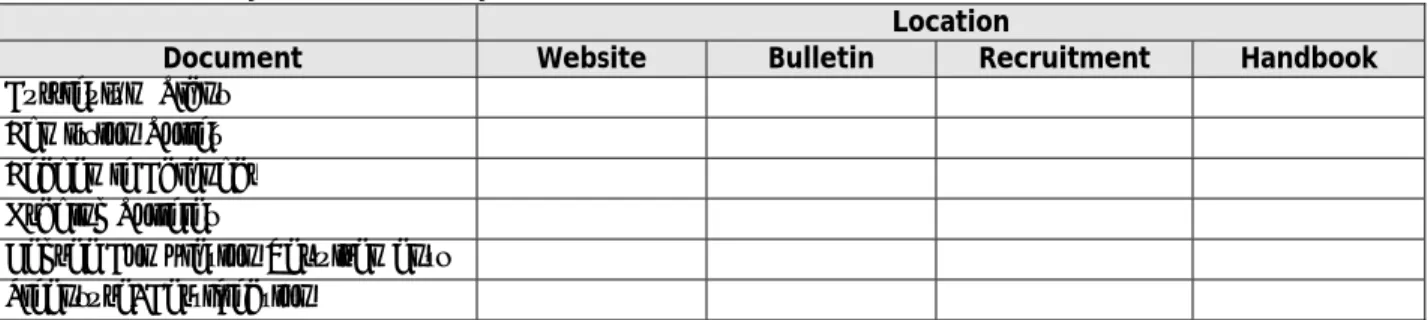
Verification of accuracy and consistency of current documents can be found in Table 8.
TABLE 8. Accuracy and Consistency of Documents
Location
Document Website Bulletin Recruitment Handbook
Curriculum Plans ☒ ☒ ☒ ☒
Admission Policy ☒ ☒ ☒ ☒
Academic Calendar ☒ ☒ ☒ ☒
Grading Policies ☒ ☒ ☒ ☒
Degree Completion Requirements ☒ ☒ ☒ ☒
Licensure/Certification ☒ ☒ ☒ ☒
I-F. Academic policies of the parent institution and the nursing program are congruent and support achievement of the mission, goals, and expected student outcomes. These policies are:
published and accessible; and
reviewed and revised as necessary to foster program improvement.
Elaboration: Academic policies include, but are not limited to, those related to student recruitment, admission, retention, and progression. Policies are written and communicated to relevant constituencies. Policies are implemented consistently. Differences between the nursing program policies and those of the parent institution are identified and support achievement of the program’s mission, goals, and expected student outcomes. A defined process exists by which policies are regularly reviewed. Policy review occurs and revisions are made as needed. Program Response:
School of Nursing policies are available on the School's website
(http://www.nursing.pitt.edu/policies.jsp.) and the bylaws are posted on the Intranet. The Bylaws and Policies Committee, which is chaired by a faculty member, reviews policies and bylaws every 3 years to ensure continued congruence with the University and consistency with program mission, goals, and expected student outcomes. In addition, area of concentration coordinators, as well as faculty committees of the school may request changes relevant to their areas of interest. If a change to an existing policy or a new academic policy is proposed, it is sent to the Bylaws and Policies Committee for review and congruency with University policies. The Committee takes proposed changes or new policies to the appropriate academic council, and departments for their input; the proposed policy is sent back to the committee for final editing and/or further discussion; and finally, it is presented to the Total Faculty Organization for approval. The School of Nursing’s standards are greater than or equal to the University’s standards, with respect to admission, retention, and progression. A process is in place to communicate with the University Provost regarding policy issues.
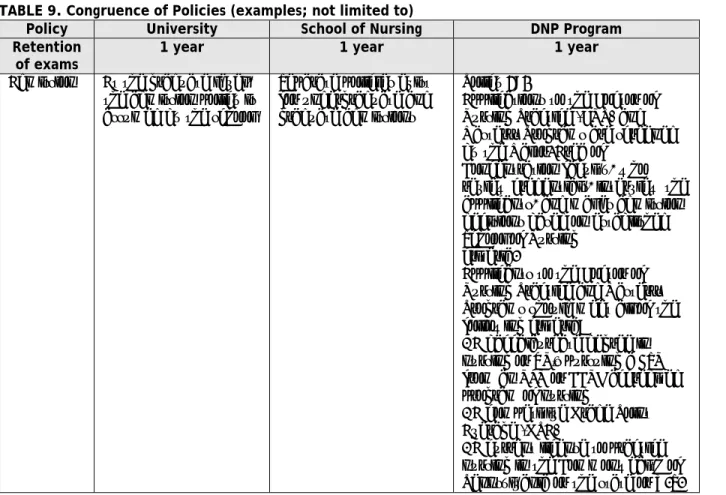
Examples of congruence of academic policies between the University, School, and DNP program are available in Table 9.
TABLE 9. Congruence of Policies (examples; not limited to)
Policy University School of Nursing DNP Program
Retention
of exams 1 year 1 year 1 year
Admission At the graduate level, the admission policy is assumed by the school
Separate policies exist for undergraduate and graduate admissions
Policy 280
Applications to the Doctor of Nursing Practice (DNP) and Master’s Programs are screened by the Major/Area of
Concentration faculty, who review credentials, interview the applicants, and makes admission decisions based on established School of Nursing
criteria.
Applicants to the Doctor of Nursing Practice and Master’s Programs should meet all of the following criteria:
- A baccalaureate degree in nursing or RN's pursuing a BSN from an NLN or CCNE accredited program of nursing
- A competitive Grade Point Average (GPA)
- A current license to practice nursing in the Commonwealth of Pennsylvania or the state or U.S.
Policy University School of Nursing DNP Program
territory where DNP clinical or capstone requirements will be completed is required prior to enrolling in relevant courses. Foreign applicants should see section on Admission of Students from Other Countries.
- A pre-admission interview. If the applicant resides at a great distance, a telephone interview may be substituted.
- Personal essay (submitted online)
- Pre-requisite statistics course - Competitive scores on the Graduate Record Examination. This is not required if applicant is an RN with a BSN and has a master's degree with GPA of 3.5 or above except for Anesthesia. Progression
(Grading) The following policy includes all grades and their corresponding definitions which may be legitimately issued within the schools of the University of Pittsburgh. All available grading options and their uses are also included. Each school uses symbols and grading options consistent with this University Grading Policy. The Registrar will record for a particular course only those grades specified in the Schedule of Classes. An
inappropriate grade reported for a student will register as invalid, hence Z. Students will be subject to the grading policy of the school in which a course is given. Graduate students wishing to register for undergraduate courses should contact the
- Policy 209: Graduate (see column to right) - Policy 60:
Undergraduate
Grades for courses will be reported according to the following scale. When the grading system for
courses outside the School of Nursing is different than the following, the student should consult the student's advisor in the School of Nursing. 1. Level of Attainment: A+ = 4.00
A = 4.00 Superior A- = 3.75
B+ = 3.25 B = 3.00 Meritotious B- = 2.75 C+ = 2.25
C = 2.00 Minimal attainment for all courses with the prefix NUR and specified sciences courses listed in Policy No. 64 C- = 1.75
Policy 209
Grades for the School of Nursing Graduate Programs will be reported according to the following scale:
A+ = 4.00
A = 4.00 Superior attainment
A- = 3.75 B+ = 3.25
B = 3.00 Minimal
attainment in a required course; core, cognate or course in the area of specialization; adequate attainment in an elective course B- = 2.75
C+ = 2.25
C = 2.00 Minimal attainment in an elective course;
inadequate attainment in a required course (see policy #214)
C- = 1.75
D+ = 1.25 Below minimal attainment in any course. D = 1.00
D- = 0.75
F = 0.00 Failure
2. The following grades carry no quality points:
Policy University School of Nursing DNP Program
dean's office of the Academic Center offering the course to explore grading option requirements and procedures.
Grading System Definitions and Grade Points
A+ = 4.00
A = 4.00 Superior attainment
A- = 3.75 B+ = 3.25 B = 3.00 Adequate graduate level attainment B- = 2.75 C+ = 2.25
C = 2.00 Minimal graduate level
attainment C- = 1.75 D+ = 1.25 D = 1.00 D- = 0.75
F = 0.00 Failure G Course work unfinished because of extenuating personal circumstances H Exceptional (honors) completion of course requirements I Incomplete course work, due to the nature of the course, clinical work, or incomplete research work in individual guidance courses or seminars
N Noncredit audit NC No Credit R Student resigned from the University
S Satisfactory (successful) completion of course requirements U Unsatisfactory (failing) completion of course requirements W Withdrawal
D+ = 1.25
D = 1.00 Minimal D- = 0.75
F = 0.00 Failure
2. The minimum passing grade for individual required nursing courses is C( See Policy 64) 3. The following grades carry no quality points: G -- Unfinished course work because of extenuating personal circumstances H Exceptional completion of course requirements
I -- Ongoing study such as incomplete research, work in individual guidance courses, clinical work or seminars.
N -- Non-credit audit R -- Resignation, when student resigns from University
S -- Satisfactory completion of course requirements
U -- Unsatisfactory completion of course requirements
W -- Withdrawal from a course
4. For courses
incorporating a clinical component, satisfactory clinical performance is required to successfully pass the course
*For specific point scale, see policy #60 in supporting documents
because of extenuating personal circumstances
H Exceptional completion of course requirements
I -- Ongoing study such as incomplete research, work in individual guidance courses, clinical work or seminars. N -- Non-credit audit
R -- Resignation, when student resigns from University
S -- Satisfactory completion of course requirements
U -- Unsatisfactory completion of course requirements
W -- Withdrawal from a course Z -- Invalid grade reported **-- No grade reported
3. Letter grades (A, B, C, D, F) will be used for the following types of courses: seminar, lecture, combination lecture and clinical, and Master’s Research Practicum [except for the
doctoral level research practicum course].
4. Letter grades (A, B, C, D, F) or H/S/U can be used for clinical courses depending on the discretion of the program. 5. The I/H/S/N/U grade is used for Thesis, Dissertation, Capstone Project, Capstone Clinical and any doctoral level research practicum.
6. A graduate student may audit a course upon the written approval of the specific course instructor and an undergraduate student may audit a graduate course but must complete the Grade Option form (see
Policy #300). The course appears on the transcript with an "N" (non-credit audit) designation, or a "W" (withdrawal) designation. 7. At the instructor’s discretion, H/S/U may be used as a grading option for graduate level courses taken by students as elective courses and for which students request an H/S/U grade.
8. Only letter grades carry grade points.