DOI: 10.2478/10004-1254-65-2014-2541 Review
Low-grade chronic inflammation perpetuated by modern
diet as a promoter of obesity and osteoporosis
Jasminka Z. Ilich
1, Owen J. Kelly
2, Youjin Kim
3, and Maria T. Spicer
1Department of Nutrition, Food and Exercise Sciences, Florida State University, Tallahassee, Florida1, Adult Clinical Nutrition, Abbott Nutrition, Columbus, Ohio2, USA, Bayer CropScience Ltd. Seoul, South Korea3
Received in May 2014 CrossChecked in May 2014
Accepted in June 2014
Some of the universal characteristics of pre-agricultural hominin diets are strikingly different from the modern human diet. Hominin dietary choices were limited to wild plant and wild animal foods, while the modern diet includes more than 70 % of energy consumed from refined sugars, refined vegetable oils, and highly processed cereals and dairy products. The modern diet, with higher intake of fat has also resulted in a higher ratio of omega-6 (n-6) to omega-3 (n-3) polyunsaturated fatty acids (PUFA), contributing to low-grade chronic inflammation (LGCI) and thus promoting the development of many chronic diseases, including obesity and osteoporosis. In this review, we describe the changes in modern diet, focusing on the kind and amount of consumed fat; explain the shortcomings of the modern diet with regard to inflammatory processes; and delineate the reciprocity between adiposity and inflammatory processes, with inflammation being a common link between obesity and osteoporosis. We present the evidence that over-consumption of n-6 PUFA coupled with under-consumption of n-3 PUFA results in LGCI and, along with the increased presence of reactive oxygen species, leads to a shift in mesenchymal stem cells (precursors for both osteoblasts and adipocytes) lineage commitment toward increased adipogenesis and suppressed osteoblastogenesis. In turn, high n-6 to n-3 PUFA ratios in the modern diet, coupled with increased synthesis of pro-inflammatory cytokines due to adiposity, propagate obesity and osteoporosis by increasing or maintaining LGCI.
KEY WORDS:adipocytes; cytokines; eicosanoids; mesenchymal stem cells; omega-3 fatty acids; omega-6 fatty acids; osteoblasts; osteoclasts; polyunsaturated fatty acids
Abbreviations:
5-LOX=5-Lipoxygenase; AA=Arachidonic acid; AHA=American Heart Association; ALA=Alpha-linoleic acid; CLA=Conjugated Linolenic Acid; COX-2=Cyclooxygenase-2; CRP=C-reactive protein; DHA=Docosahexanoic Acid; EPA=Eicosapentanoic Acid; IGBP-3=Insulin like growth factor binding protein-3; IL-1=Interleukin-1; IL-6=Interleukin-6; LA=Linolenic Acid; LBT4=Leukotriene B4; LBT5=Leukotriene B5; LGCI=Low grade chronic inflammation; MSC=Mesenchymal stem cells; MUFA=Monounsaturated Fatty
Acids; n-3=Omega-3; n-6=Omega-6; NHANES=National Health and Nutrition Examination Survey; OPG=Osteoprotegerin; PDE=Phosphodiesterase; PGE2=Prostaglandin E2; PGE3=Prostaglandin E3; PUFA=Polyunsaturated Fatty Acids; RANK=Receptor activator of nuclear factor kappa-B; RANKL=Receptor activator of nuclear factor kappa-B ligand (RANKL); SFA=Saturated Fatty
Acids; TNF-α=Tumor Necrosis Factor-alpha; TXA2=Thromboxane A2 Dietary intake and other lifestyle factors (e.g. physical activity, smoking) are environmental modifiers that have changed dramatically with agriculture and animal husbandry, about 10,000 years ago (1, 2). However, a number of anthropological, nutritional, and genetic studies indicate that even more drastic changes
happened very recently, some 200 years ago with the onset of industrial revolution, and that these changes could be associated with many chronic diseases or the so-called diseases of civilization (1, 3).
difference between the pre-agricultural hominine and modern human diet. Hominin dietary choices were limited to wild plant and animal foods. In contrast, 72 % of the energy consumed by modern humans includes refined sugars, refined vegetable oils, highly processed cereals and dairy products, as well as high consumption of alcohol (4).
The objectives of this review are to: a) describe the changes in modern diet with regard to several nutrients, particularly addressing the type and amount of consumed fat; b) explain the shortcomings of the modern diet with regard to inflammatory processes; and c) delineate the reciprocity between adiposity and inflammatory processes and the link that connects obesity, osteoporosis, and inflammation. We present the hypothesis that omega-6 (n-6) polyunsaturated fatty acids (PUFA) propagate obesity and osteoporosis by increasing/maintaining low-grade chronic inflammation (LGCI), ultimately shifting the commitment of mesenchymal stem cells (MSC) toward increased adipogenesis.
Discordance between current and past dietary habits along the evolutionary timeline
Our genetic makeup has not changed over the last few centuries, but the environment and dietary behaviors have, substantially. The spontaneous mutation rate for nuclear DNA is estimated at 0.5 % per million years; thus, very little change has occurred in our genes compared to our Paleolithic ancestors of 40,000 years ago, when our genetic profile was
established. Therefore, the profound environmental and dietary changes that began with the introduction of agriculture and animal husbandry some 10,000 years ago, occurred too recently on the evolutionary timeline for the human genome to adapt, contributing to many of the chronic diseases in modern societies (5).
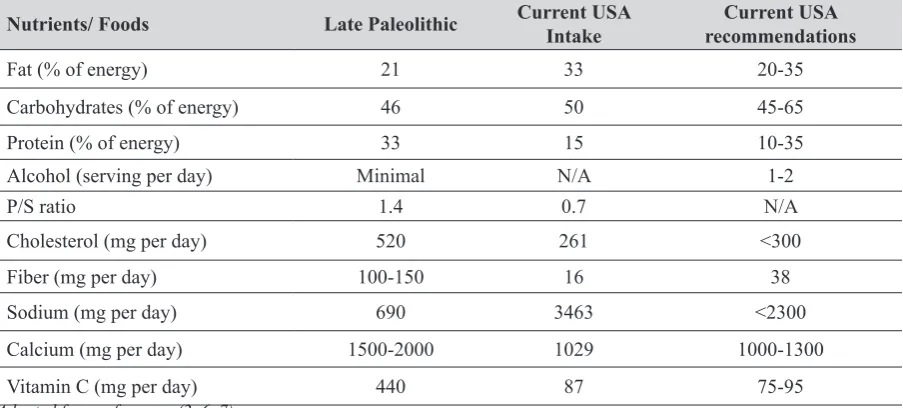
Some nutrients exhibit high discordance regarding their intake in the hominines compared to modern humans that may have contributed to inflammation and subsequent chronic diseases, including obesity and osteoporosis. Of note are the lower consumption of fat, carbohydrates, and sodium (high amounts of the latter might result in negative consequences on bone health via increased calcium excretion) and much higher consumption of calcium and vitamin C (both important in bone health and the former one in weight management). Additionally, with the high intake of plant foods, hominines were consuming much higher amounts of fiber (has a role in weight management) and phytochemicals, known for their anti-oxidative and anti-inflammatory properties. Table 1 compares the intake of hominines and current intake in the USA, as well as the current recommendations of selected nutrients in the USA (adapted from 2, 6, 7).
Changes in fat intake and their subsequent effect on omega-6 (n-6) and omega-3 (n-3) PUFA ratio
Among the most salient changes were those in the dietary fat intake, specifically in the type and amount of fatty acids (1, 3, 8). The amount and kind of fat reflected the consumption of primarily lean meat from
Table 1 Estimated intake of selected nutrients and foods by hominines from the late Paleolithic (~40,000 years ago) and modern USA population and current recommendations
Nutrients/ Foods Late Paleolithic Current USA Intake recommendationsCurrent USA
Fat (% of energy) 21 33 20-35
Carbohydrates (% of energy) 46 50 45-65
Protein (% of energy) 33 15 10-35
Alcohol (serving per day) Minimal N/A 1-2
P/S ratio 1.4 0.7 N/A
Cholesterol (mg per day) 520 261 <300
Fiber (mg per day) 100-150 16 38
Sodium (mg per day) 690 3463 <2300
Calcium (mg per day) 1500-2000 1029 1000-1300
Vitamin C (mg per day) 440 87 75-95
Adapted from references (2, 6, 7)
wild animals, low in saturated fatty acids (SFA) and high in both PUFA and monounsaturated fatty acids (MUFA), with low n-6 to n-3 PUFA ratio. Prior to the Neolithic (agricultural) period, or some 40,000 years ago in the Paleolithic, all animal foods consumed by hominines were limited to wild animals (9). Approximately 50 % of fatty acids in the adipose tissue of wild animals were SFAs, while the dominant type in the muscle and all other organs were PUFA and MUFA. However, for most of the year animals’ subcutaneous and visceral body fat stores were usually depleted, and it was likely that PUFA and MUFA were the predominant fats of the carcass available for hominin consumption. Therefore, high amounts of SFA were probably not available to hominines feeding on these wild animals. Moreover, the consumption of seeds, nuts, various greens, and other wild plants provided the hominines with higher intake of PUFAs and MUFAs and probably with an optimal ratio of n-6 to n-3 (3, 8).
Subsequent changes that occurred with the beginning of animal husbandry and agriculture (in the Neolithic period, some 10,000 years ago) allowed for slaughtering of animals at the peak of body fat accumulation, while the production of grains and other agricultural products with higher SFA content led to an increasing consumption of n-6 PUFAs, creating a less favorable n-6 to n-3 ratio. Technological advances in the early and mid 19th century generated large
quantities of grain (especially corn) for animals and humans, which changed the composition of the meat in the cattle, resulting in “marbled meat” characterized by excessive triglyceride accumulation and fat infiltration into the muscular tissue and higher SFA content (10). This and the modernization of food processing and preservation, as well as changes in food choices have altered the ratio between n-6 and n-3 fatty acids in the modern diet and resulted in its low n-3 fatty acid content (8, 9), favoring the development of chronic diseases.
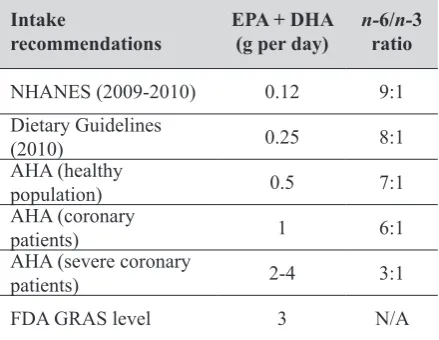
According to numerous anthropological and epidemiological studies, humans evolved on a diet with a n-6 to n-3 PUFA ratio of approximately 1-2:1 (3), whereas this ratio in the current Western-type diet has increased to approximately 10-15:1 (1, 3, 8), as shown in Table 2 (adapted from 1, 3, 8). This suggests that even the current dietary guidelines (except for the recommendations from the American Heart Association for severe coronary patients, who need to lower their triglycerides) fall short of the intake of prehistoric humans. Table 3 (adapted from 1, 3, 8, 11) shows
different recommendations for eicosapentanoic acid (EPA) and docosahexanoic acid (DHA) as well as the n-6 to n-3 ratio. The Lyon Diet Heart Study (12) showed that the ratio of 4:1 could be cardioprotective. The subjects in this study consumed less linoleic acid (n-6) and more of oleic (n-9) MUFA and α-linolenic acid (n-3), which resulted in higher plasma levels of oleic acid, linolenic acid, and EPA and lower levels of linoleic and arachidonic acid (AA), which was ultimately associated with a reduced risk of recurrent heart disease.
Pro- and anti-inflammatory metabolites of n-6 and n-3 fatty acids
It is known that elevated n-6 PUFA levels stimulate pro-inflammatory processes and promote the pathogenesis of many diseases such as cardiovascular, neurological, autoimmune, as well as cancer, arthritis, and diabetes (3, 8). Recently however, it has been realized that various pro-inflammatory actions may
Table 2 Ratio between n-6 and n-3 polyunsaturated fatty acids in different populationgroups
Population group n-6/n-3 ratio
Paleolithic/Neolithic 0.8-1
Mediterranean (prior to 1960) 1-2
Current Northern Europe 15
Current USA 15-20
Adapted from references (1, 3, 8)
Table 3 Intake of eicosapentanoic acid (EPA) and docosahexanoic acid (DHA), the n-6 to n-3 ratio reported by NHANES, and recommendations
Intake
recommendations EPA + DHA(g per day) n-ratio6/n-3
NHANES(2009-2010) 0.12 9:1
Dietary Guidelines
(2010) 0.25 8:1
AHA(healthy
population) 0.5 7:1
AHA (coronary
patients) 1 6:1
AHA (severe coronary
patients) 2-4 3:1
FDA GRAS level 3 N/A
Adapted from references (1, 3, 8, 11)
NHANES - National Health and Nutrition Examination Survey;
foster obesity and osteoporosis as well (11). In contrast, n-3 fatty acids and their derivatives have been shown to promote anti-inflammatory processes and to have some beneficial health effects on cardiovascular disease (8, 9), cognition in aging, function in the brain grey matter, and the development of eye retina (2, 8).
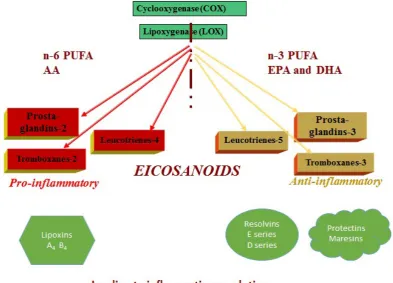
Eicosanoids, the metabolic products of the sequential elongation and desaturation processes of both n-6 and n-3 PUFA, are the signaling molecules responsible for the immune and inflammatory reactions in the body (13). They originate from the essential fatty acids, linoleic (n-6) and alpha linolenic (n-3). The major metabolites of n-6 PUFA are pro-inflammatory eicosanoids and include prostaglandin E2 (PGE2), leukotriene B4 (LBT4), and thromboxane A2 (TXA2), generated by lipid-oxidizing enzyme lipoxygenase-5 (5-LOX) and cyclooxygenase-2 (COX-2) (13). The major metabolites of n-3 PUFA are the anti-inflammatory eicosanoids and include prostaglandin E3 (PGE3), leukotriene B5 (LBT5), resolvins, and protectins, also generated by COX-2 and 5-LOX. During metabolism, n-6 and n-3 PUFAs compete for the desaturation enzymes (13, 14), and the higher amount of n-6 PUFA in the modern diet shifts the balance toward the production of pro-inflammatory eicosanoids (11). Figure 1 illustrates the metabolic pathways of the n-6 and n-3 PUFA series in generating various types of eicosanoids.
Acute and low-grade chronic inflammation and their resolutions
The breakdown of fatty acid metabolites and the conversion of eicosanoids generates different pro- and anti-inflammatory products (Figure 2). The pro-inflammatory lipoxins A4 and B4 are the metabolites of AA, and their action is focused on neutrophil regulation (15), while the E-series resolvins (both E1 and E2) are metabolized from EPA by 5-LOX, and their action is anti-inflammatory (16). Protectins, the D-series resolvins (D1 and D2), and the macrophage-specific maresins are the metabolites of DHA (17), and these are associated with resolving the inflammation (18). Overall, n-3 PUFA are metabolized into anti-inflammatory eicosandoids which are important to resolve inflammation otherwise triggered by any insult on the cell, ranging from a bruise to a bacterial infection or even by inflammatory signals from neighboring cells.
Acute inflammation activates the inflammatory cascade of prostaglandins, leukotrienes, and other inflammatory cytokines such as tumor necrosis
factor-alpha (TNF-α), interleukin-6 (IL-6), and interferon-gamma which recruit neutrophils and macrophages. When the insult is dealt with, either via apoptosis and phagocytosis of the infected cells and foreign bodies or via cleaning the local inflammation, resolvins, protectins, maresins, and lipoxins all work together to stop further recruitment of immune cells and the propagation of pro-inflammatory cytokines, so that the cell can return to its basal state (19, 20).
In contrast, LGCI is a state of persistent and unresolved inflammation, where pro- and anti-inflammatory cytokines are elevated, and inflammation is not resolved (21). In the clinical context, this state results from the continuous presence of specific immune cells leading to 2-4-fold elevations in the circulating levels of pro- and anti-inflammatory cytokines, and more are recruited in a perpetual cycle (21). The exact PUFA metabolite composition of this unresolved or surplus inflammation is unknown (17), but it is likely that there is a bias towards the pro-inflammatory eicosanoids, particularly with higher
n-6 PUFAs intake (Figure 3).
The detrimental role of low-grade chronic inflammation in obesity and osteoporosis
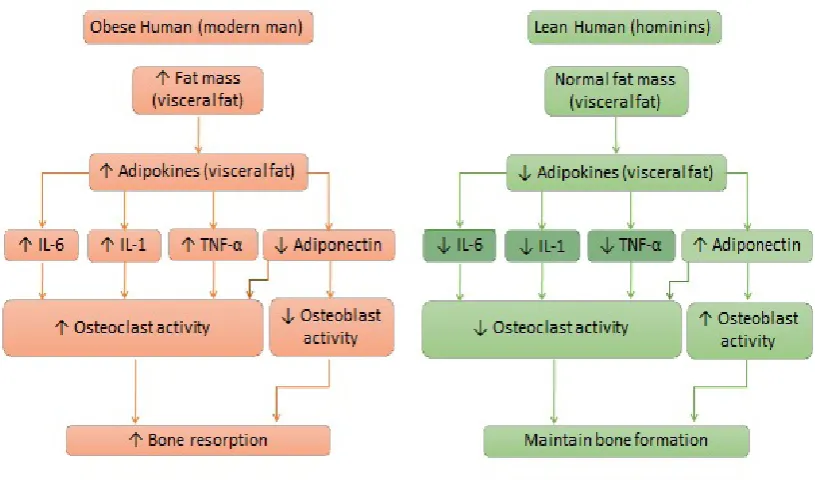
Obese individuals have abnormal circulating levels of TNF-α, IL-6, C-reactive protein (C-RP), adiponectin, and leptin, as these molecules are overexpressed in adipose tissue (22-24). PGE2, a metabolite of AA, has been found to mediate locally the biological action of TNF-α and Interleukin-1 (IL-1) in the cases of fever and local inflammation. Leptin and adiponectin are adipokines produced by adipose tissue that mediate chronic inflammation. Leptin has been found to stimulate inflammatory responses (25, 26), while adiponectin acts as an anti-inflammatory adipokine (27). The constant presence of these inflammatory cytokines associated with increased adiposity promotes persistent LGCI in obese individuals (1), while adipose tissue itself increases their production, resulting in a perpetual feedback cycle from one to another (adiposity↔inflammation). For more extensive review see Kelly, et al. (11).
hematopoietic stem cells as the immune cells (29). In LGCI accompanied by increased T-cell activation, osteoclastogenesis and bone resorption are accelerated, as the osteoclasts are programmed to respond to inflammatory signals. Therefore, in states such as LGCI, osteoclastogenesis and bone resorption are increased (11), leading to a perpetual feedback cycle (bone resorption↔inflammation).
Mesenchymal stem cells (MSC) are the common precursors for osteoblasts (bone forming cells) and adipocytes (30). However, inflammation may deregulate the MSC lineage commitment (11, 31). Even under normal homeostatic conditions, MSC slightly favors adipogenic differentiation. In LGCI, pro-inflammatory mediators in the presence of a high
n-6 to n-3 ratio and reactive oxygen species (ROS), stimulate adipogenesis and suppress osteoblastogenesis, ensuring that MSC are committed to becoming adipocytes. In addition, high levels of IL-6, C-RP, and
TNF-α are associated with lower muscle mass in older people (32). Since muscle and bone mass decline with age, and fat mass increases, it is possible that age-related MSC lineage commitment dysfunction occurring in LGCI and coinciding with obesity causes both osteopenia (loss of bone) and sarcopenia (loss of muscle). For the extensive review on the connection between bone, muscle, and fat, see Ilich et al. (31).
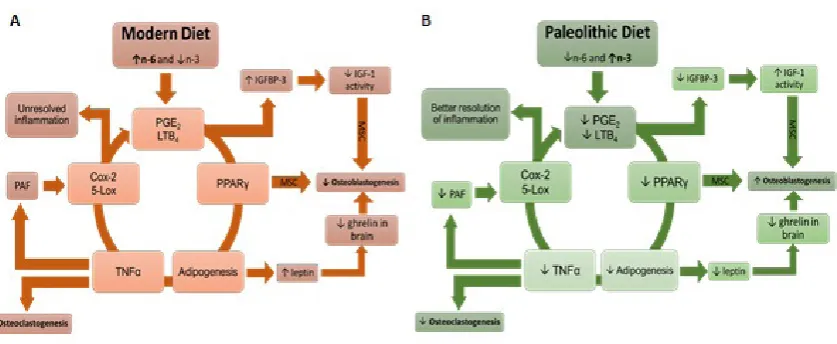
Recently, we investigated the effect of n-6 and n-3 PUFAs in different ratios on MSC proliferation and differentiation and found that the n-6 to n-3 ratio of 4:1 resulted in maximal osteoblastogenesis and minimal adipogenesis in a cell culture system (33). This ratio is higher than in the prehistoric humans (e.g. 1:1), and is feasible for modern humans with some dietary modifications. Figure 5 illustrates the loop effect of modern (A) and prehistoric (B) diet on a d i p o g e n e s i s , o s t e o b l a s t o g e n e s i s , a n d osteoclastogenesis.
Figure 1 Metabolism of essential linoleic (n-6) and alpha linolenic (n-3) fatty acids. An overproduction of arachidonic
acid originating from the high intake of linoleic acid will metabolize into pro-inflammatory eicosanoids, which are implicated in many inflammatory and autoimmune disorders. Eicosapentanoic acid (EPA) and docosahexanoic acid
(DHA), which are the derivatives of the essential n-3 alpha linolenic fatty acid (created from multiple elongation and
Proposed mechanism of action
The enzyme COX-2 has a higher affinity for n-6 than n-3 PUFAs and the former will be metabolized at a higher rate (13, 14). However, higher presence of n-3, especially at the 1:1 ratio, would increase the odds of more n-3 being metabolized, which would lower the production of inflammatory eicosanoids. Some COX-2 inhibitors have been observed to decrease osteoblast differentiation and increase adipogenesis (34). This indicates that COX-2 and its lipid products may have a role in promoting MSC differentiation into adipocytes rather than osteoblasts, and that the ratio between n-6-derived COX-2 and n-3-derived COX-2 products may be important in MSC regulation.
Another proposed mechanism concerns the receptor activated nuclear factor kappa-B (RANK) signaling and osteoprotegerin (OPG). RANK binds to its ligand (RANKL), which is secreted by preosteoblasts, and activates osteoclastogenesis and bone resorption. Conversely, OPG, which is also produced by preosteoblasts, inhibits osteoclastogenesis by binding to RANKL, and thus promotes osteoblastogenesis. Upregulated pro-inflammatory cytokines, including TNF-α, IL-1, and IL-6 in obese
state seem to mediate osteopenia and osteoporosis by regulating the RANKL/RANK/OPG pathway (31, 35).
CONCLUSION
Humans evolved on a diet low in saturated fat, carbohydrates, and sodium and much higher in calcium, vitamin C, fiber, and phytochemicals. Modern humans, however, consume high amounts of n-6 PUFA, about 10-15 higher than hominines. This elevates the ratio between n-6 to n-3 PUFA that stimulates pro-inflammatory processes and LGCI and promotes the pathogenesis of many chronic diseases, including obesity and osteoporosis. In contrast, n-3 PUFA and their derivatives, consumed by hominines in higher amounts, have been shown to promote anti-inflammatory processes and to have multiple beneficial health effects.
Obese individuals, who consume greater amounts of n-6 PUFA and exhibit higher circulating levels of pro-inflammatory cytokines (TNF-α, IL-6, C-RP), create the environment of a persistent LGCI, resulting in a perpetual feedback cycle. Furthermore, some cytokines (e.g. IL-6) stimulate osteoclastogenesis and
Figure 2 Further breakdown of fatty acid metabolites and the conversion of eicosanoids to pro- and anti-inflammatory products and their roles in the resolution of inflammation. PUFA - polyunsaturated fatty acids; AA - arachidonic acid;
Figure 3 Hypothetical representation of acute versus low-grade chronic inflammation. The acute process is linear, since the inflammation is resolved, whereas the chronic process is a constant cycle in which the inflammation is persistent and
unresolved. Cytokines are represented by colored shapes. Adapted from (11)
Figure 4 The increase in fat mass leads to overproduction of interleukin-6 (IL-6), interleukin-1 (IL-1), and tumor necrosis factor
Figure 5 The loop effect of modern (A) and Paleolithic (B) diet on adipogenesis, osteoblastogenesis, and osteoclastogenesis. Over-consumption of n-6 PUFA coupled with under-consumption of n-3 PUFA results in increased synthesis of
pro-inflammatory lipid mediators PGE2 and LTB4 by Cox-2 and 5-Lox, leading to peroxisome proliferator-activated receptor
gamma (PPARγ) signaling, which increases adipogenesis. This in turn produces more TNF-α, resulting in elevated
osteoclastogenesis, and increases Cox-2 expression directly or indirectly via the platelet activating factor (PAF). Increased leptin production by adipose tissue can lower bone formation through its hypothalamic interactions. Furthermore, the elevated PGE2 and LTB4 result in an increase in the insulin-like growth factor-binding protein-3 (IGFBP-3), which
inactivates the insulin-like growth factor-1 and promotes the differentiation of MSC to adipocytes. The net result of these
events is an increased susceptibility to obesity and osteoporosis. For further review, see (11, 31)
are considered osteoresorptive. Both osteoblasts and adipocytes share MSC as their common precursor in the bone microenvironment. In conditions of LGCI, pro-inflammatory mediators in the presence of a high
n-6 to n-3 ratio and reactive oxygen species stimulate adipogenesis and suppress osteoblastogenesis, shifting MSC differentiation toward adipocytes. The presented evidence shows that the increased synthesis of pro-inflammatory cytokines, mediated by the high n-6 to n-3 ratios, propagate obesity and osteoporosis by increasing or maintaining LGCI. In view of the recognized changes in dietary habits of modern humans compared to our ancestors, it would be prudent to decrease the consumption of n-6 fatty acids toward a more beneficial n-6 to n-3 PUFA ratio of 4:1 (as opposed to the current 15:1) in order to reduce obesity and improve bone health.
REFERENCES
1. Cordain L, Eaton SB, Sebastian A, Mann N, Lindeberg S, Watkins BA, O’Keefe JH, Brand-Miller J. Origins and
evolution of the western diet: Health implications for the 21st
century. Am J Clin Nutr 2005;81:341-54. PMID: 15699220
2. Simopoulos AP. The importance of the omega-6/omega-3 fatty acid ratio in cardiovascular disease and other chronic diseases. Exp Biol Med (Maywood) 2008;233:674-88. doi: 10.3181/0711-MR-311
3. Simopoulos AP. Evolutionary aspects of diet, the omega-6/ omega-3 ratio and genetic variation: Nutritional implications for chronic diseases. Biomed Pharmacother 2006;60:502-7. PMID: 17045449
4. Cordain L, Miller JB, Eaton SB, Mann N, Holt SH, Speth JD. Plant-animal subsistence ratios and macronutrient energy
estimations in worldwide hunter-gatherer diets. Am J Clin Nutr 2000;71:682-92. PMID: 10702160
5. Eaton SB, Konner M. Paleolithic nutrition. A consideration of its nature and current implications. N Engl J Med 1985;312:283-9. PMID: 2981409
6. Eaton SB, Eaton SB 3rd, Sinclair AJ, Cordain L, Mann NJ.
Dietary intake of long-chain polyunsaturated fatty acids
during the paleolithic. World Rev Nutr Diet 1998;83:12-23.
PMID: 9648501
7. Rhodes DG, Clemens JC. Goldman JD. LaComb RP, Moshfegh AJ. 2009-2010 What We Eat In America, NHANES Tables 1-36 [displayed 6 June 2014]. Available at: http://afrsweb.usda.gov/research/publications/publications.
htm?SEQ_NO_115=283124
8. Ruiz-Nunez B, Pruimboom L, Dijck-Brouwer DA, Muskiet FA. Lifestyle and nutritional imbalances associated with western diseases: Causes and consequences of chronic systemic low-grade inflammation in an evolutionary context.
J Nutr Biochem 2013;24:1183-201. doi: 10.1016/j.
9. Cordain L, Eaton SB, Miller JB, Mann N, Hill K. The paradoxical nature of hunter-gatherer diets: Meat-based, yet
non-atherogenic. Eur J Clin Nutr 2002;56(Suppl 1):S42-52. PMID: 11965522
10. Whitaker JW. Feedlot Empire: Beef Cattle Feeding in Illinois
and Iowa, 1840- 1900. Ames, Iowa: The Iowa State University Press; 1975.
11. Kelly OJ, Gilman JC, Kim Y, Ilich JZ. Long-chain polyunsaturated fatty acids may mutually benefit both obesity
and osteoporosis. Nutr Res 2013;33:521-33. doi: 10.1016/j. nutres.2013.04.012
12. De Lorgeril M, Salen P. Dietary prevention of coronary heart disease: The lyon diet heart study and after. World Rev Nutr
Diet 2005;95:103-14. doi: 10.1159/000088277
13. Gropper S, Smith J. Advanced Nutrition and Human Metabolism. 6th ed. Belmont: Wadsworth Cengage Learning;
2013.
14. De Gomez Dumm IN, Brenner RR. Oxidative desaturation of alpha-linoleic, linoleic, and stearic acids by human liver microsomes. Lipids 1975;10:315-7. PMID: 1134219 15. Nigam S, Fiore S, Luscinskas FW, Serhan CN. Lipoxin A4
and lipoxin B4 stimulate the release but not the oxygenation
of arachidonic acid in human neutrophils: Dissociation
between lipid remodeling and adhesion. J Cell Physiol
1990;143:512-23. PMID:2162850
16. Tjonahen E, Oh SF, Siegelman J, Elangovan S, Percarpio
KB, Hong S, Arita M, Serhan CN. Resolvin E2: Identification
and anti-inflammatory actions: Pivotal role of human
5-lipoxygenase in resolvin E series biosynthesis. Chem Biol 2006;13:1193-202. doi: 10.1016/j.chembiol.2006.09.011 17. Serhan CN, Chiang N, Van Dyke TE. Resolving inflammation:
Dual anti-inflammatory and pro-resolution lipid mediators.
Nat Rev Immunol 2008;8:349-61. doi: 10.1038/nri2294 18. Ariel A, Serhan CN. Resolvins and protectins in the
termination program of acute inflammation. Trends Immunol
2007;28:176-83. doi: 10.1016/j.it.2007.02.007
19. Ward P. Acute and chronic inflammation. In: Serhan CN, Ward PA, Gilory DW, editors. Fundamentals of inflammation. New York: Cambridge University Press; 2010. p. 1-16. 20. Hotamisligil GS. Inflammation and metabolic disorders.
Nature 2006;444:860-7. PMID: 17167474
21. Woods JA, Wilund KR, Martin SA, Kistler BM. Exercise, inflammation and aging. Aging Dis 2012;3:130-40. PMID:
22500274
22. Endres S. Messengers and mediators: Interactions among lipids, eicosanoids, and cytokines. Am J Clin Nutr 1993;57(Suppl 5):798S-800S. PMID: 8386434
23. Wellen KE, Hotamisligil GS. Inflammation, stress, and diabetes. J Clin Invest 2005;115:1111-9. PMID: 15864338
24. Pradhan AD, Manson JE, Rifai N, Buring JE, Ridker PM. C-reactive protein, interleukin 6, and risk of developing type
2 diabetes mellitus. JAMA 2001;286:327-34. doi: 10.1001/
jama.286.3.327
25. Canavan B, Salem RO, Schurgin S, Koutkia P, Lipinska I, Laposata M, Grinspoon S. Effects of physiological leptin
administration on markers of inflammation, platelet activation, and platelet aggregation during caloric deprivation.
J Clin Endocrinol Metab 2005;90):5779-85. doi: 10.1210/ jc.2005-0780
26. Van Dielen FM, van’t Veer C, Schols AM, Soeters PB,
Buurman WA, Greve JW. Increased leptin concentrations correlate with increased concentrations of inflammatory markers in morbidly obese individuals. Int J Obes Relat Metab Disord 2001;25:1759-66. doi: 10.1038/sj.ijo.0801825
27. Ouchi N, Kihara S, Arita Y, Okamoto Y, Maeda K, Kuriyama H, Hotta K, Nishida M, Takahashi M, Muraguchi M, Ohmoto Y, Nakamura T, Yamashita S, Funahashi T, Matsuzawa Y.
Adiponectin, an adipocyte-derived plasma protein, inhibits
endothelial NF-kappaB signaling through a cAMP-dependent pathway. Circulation 2000;102:1296-301. PMID: 10982546
28. Dodds RA, Merry K, Littlewood A, Gowen M. Expression of mRNA for IL1 beta, IL6 and TGF beta 1 in developing human bone and cartilage. J Histochem Cytochem
1994;42:733-44. PMID: 8189035
29. Teitelbaum SL. Postmenopausal osteoporosis, T cells, and
immune dysfunction. Proc Natl Acad Sci USA 2004;101:16711-2. doi: 10.1073/pnas.0407335101
30. Rosen CJ, Bouxsein ML. Mechanisms of disease: Is osteoporosis the obesity of bone? Nat Clin Pract Rheumatol
2006;2:35-43. PMID:16932650
31. Ilich JZ, Kelly OJ, Inglis JE, Panton LB, Duque G, Ormsbee MJ. Interrelationship among muscle, fat, and bone: Connecting the dots on cellular, hormonal, and whole body
levels. Ageing Res Rev 2014;15C:51-60. doi: 10.1016/j. arr.2014.02.007
32. Beyer I, Mets T, Bautmans I. Chronic low-grade inflammation and age-related sarcopenia. Curr Opin Clin Nutr Metab Care 2012;15:12-22. doi: 10.1097/MCO.0b013e32834dd297
33. Kim Y, Kelly OJ, Ilich JZ. Synergism of alpha-linolenic acid, conjugated linoleic acid and calcium in decreasing adipocyte
and increasing osteoblast cell growth. Lipids
2013;48:787-802. doi: 10.1007/s11745-013-3803-5
34. Kellinsalmi M, Parikka V, Risteli J, Hentunen T, Leskela HV, Lehtonen S, Selander K, Väänänen K, Lehenkari P. Inhibition
of cyclooxygenase-2 down-regulates osteoclast and
osteoblast differentiation and favours adipocyte formation
in vitro. Eur J Pharmacol 2007;572:102-10. PMID: 17632097
35. Khosla S. Minireview: The OPG/RANKL/RANK system.
Sažetak
Stalna kronična upala niskoga stupnja zbog suvremenog načina prehrane potiče pretilost i osteoporozu
Pojedina univerzalna svojstva prehrane hominina prije pojave poljodjelstva izrazito se razlikuju od suvremene prehrane. Prehrambene navike hominina vjerojatno su bile ograničene na plodove divljeg bilja i lovinu; više od 70 % moderne prehrane odnosi se na konzumaciju rafiniranih šećera, biljnih ulja, žitarica i mliječnih prerađevina. Moderna je prehrana s višim unosom masti također dovela do nepovoljnijeg omjera omega-6 i omega-3 višestruko nezasićenih masnih kiselina (engl. krat. PUFA), koji pridonosi održavanju kronične upale niskoga stupnja, a time i nastanku mnogih kroničnih bolesti, uključujući pretilost i osteoporozu. U ovom se preglednom članku opisuju promjene uslijed modernog načina prehrane, s posebnim osvrtom na vrste i količine konzumirane masti. Također se objašnjavaju nedostatci moderne prehrane s obzirom na upalne procese te međusobna povezanost između pretilosti i upalnih procesa, koji su usto i poveznica između pretilosti i osteoporoze. U članku se iznose saznanja o tome da pretjerana konzumacija omega-6 masnih kiselina uz nedostatnu konzumaciju omega-3 masnih kiselina dovodi do kronične upale niskoga stupnja i povišenih vrijednosti reaktivnih kisikovih čestica (ROS), a time i do pomaka u mezenhimskih matičnih stanica (prekursora osteoblasta i adipocita) prema povećanoj adipogenezi i smanjenoj osteoblastogenezi. Uz povećanu sintezu upalnih citokina zbog pretilosti, moderna prehrana s nepovoljnim omjerom omega-6 i omega-3 kiselina u korist prvih nastavlja poticati pretilost i osteoporozu jer održava i pogoršava kroničnu upalu.
KLJUČNE RIJEČI: adipociti; citokini; ikosanoidi; mezenhimske matične stanice; omega-3 masne kiseline; omega-6 masne kiseline; osteoblasti; osteoklasti; polinezasićene masne kiseline
CORRESPONDING AUTHOR:
Jasminka Z. Ilich, PhD, RD, FACN
418 SAN, Nutrition, Food and Exercise Sciences Florida State University, 120 Convocation Way Tallahassee, Fl 32306-1491, USA