72
Determinants of Social Entrepreneurial Intentions of University Students in South Africa Olawale Fatoki
Department of Business Management, University of Limpopo, Sovenga, South Africa [email protected]
Abstract: Entrepreneurial behaviour can be predicted by intentions. The study investigated the determinants of social entrepreneurial intentions (SEI) of university students in South Africa. The study adopted a quantitative research design that involved the use of a survey. The self-administered questionnaire method was used to collect data from the survey participants. The participants in the survey were final year undergraduate students of the Department of Business Management of two South African universities. Reliability was measured using the Cronbach’s alpha. The data analysis methods for the study were descriptive statistics, principal component analysis and regression analysis. The results indicated that empathy, moral obligation, entrepreneurial self-efficacy and perceived social support are predictors of social entrepreneurial intentions. The recommendations to improve the SEI of university students focus on passive and active entrepreneurship teaching methods.
Keywords: Determinants, social entrepreneurial intentions, university, students, South Africa
1. Introduction
Entrepreneurship is a driver of social, economic and technological change and development (Kedmenec et al., 2015). Entrepreneurship can positively affect economic growth in many ways. Entrepreneurship leads to increased diversity in the goods and services available, increased competition, knowledge spillovers, innovations and job creation (Arthur et al., 2013). Entrepreneurs make existing businesses to be efficient through competition and new business creation that increase the pace of creative destruction. Entrepreneurship can positively impact on the economy through income growth and an increase in tax revenue. Entrepreneurship has helped to improve the quality of life of people living in both developing and developed countries (Dees et al., 1998). However, entrepreneurship can also have dysfunctional effects as it may create challenges that may mar societal progress. The net value of the benefits of entrepreneurship should include its social costs. Despite the benefits of entrepreneurship, especially traditional entrepreneurship, the world is inundated with many challenges. These include a volatile world economy, high levels of poverty especially in developing countries, high levels of income inequality, natural disasters, climate change, environmental pollution, crime and corruption (van Praag and Versloot, 2008; Zahra and Wright, 2016). These challenges have facilitated the rise of social entrepreneurship (SE) (Tran and Von Korflesch 2016; Ip et al., 2017). The motivation for SE is the readiness to exploit opportunities to solve societal problems. SE is a response to unsatisfied individual and societal needs through innovative solutions (Zahra et al., 2008). SE involves the search for environmental, social and economic goals. SE uses the business principles of capitalism to establish and manage enterprises with the goal of creating social change.
73
Africa. University students are the future generation of society. University students have a passion for looking at different career options including social entrepreneurship (Ip et al., 2017; Chengalvala and Rentala, 2017).
Objectives of the Study: The objective of the study is to investigate the determinants of SEI of university students. The study will examine the effect of empathy, moral judgement, entrepreneurial self-efficacy, perceived presence of social support and prior experience with social organisations on the SEI of university students. Understanding the determinants of SEI can help to improve study curriculum on entrepreneurship. This can assist universities and policymakers to motivate students to become social entrepreneurs with the goal of improving a country’s economic and social well-being.
2. Literature Review
Entrepreneurship: The term entrepreneurship lacks a precise meaning. The word entrepreneurship is elastics and lacks a well-accepted definition (Peneder, 2009; Mbhele 2012, Eisenmann, 2013). Numerous definitions of entrepreneurship have been offered, but none has prevailed (Venkataraman 1997; Kobia and Sikalieh, 2010). Stevenson (1983) describes entrepreneurship as how individuals and firms search for an opportunity that is beyond resources they control. Entrepreneurship can be linked to innovation. The goal of entrepreneurship is to create new things with the purpose of generating wealth for an individual and producing value for the society (Kao, 1993). According to Venkataraman (1997), entrepreneurship focuses on how new goods and services are created. Schumpeter’s (1965) description of entrepreneurship focuses on innovation such as the introduction of new products, production techniques, markets and ways of organisation. Bolton and Thompson (2000) describe an entrepreneur as an individual that uses innovation to create something of accepted value through perceived opportunities.
Social Entrepreneurship (SE): Social entrepreneurship (SE) lacks a single universally accepted definition (Seelos et al., 2010). According to Ip et al. (2017), there are different conceptualisations of SE. it is regarded as a non-profit organisation with a market-oriented approach. It is also regarded as a profit-making enterprise with a social mission. SE is a subcategory of entrepreneurship (Rahim and Mohtar, 2015). Dees (2001, p2) describes social entrepreneurs as “one species in the genus entrepreneur”. Dees (2001) points out that SE includes social purpose business enterprises and hybrid ventures that mix profit and not-for-profit elements. SE can be linked to innovation, proactiveness and risk-taking (Rahim and Mohtar, 2015). SE can be distinguished from traditional entrepreneurship in many ways. Social entrepreneurs are motivated to discover and pursue a distinct kind of opportunities with a distinct business approach (Mair and Noboa, 2006). In addition, SE involves both economic and social outcomes. Mair and Noboa (2006, p122) define SE as “the innovative use of resource combinations to pursue opportunities aiming at the creation of organizations and/or practices that yield and sustain social benefits”.
Social Entrepreneurial Intentions (SEI): Entrepreneurial intentions can be described is the willingness to perform a certain behaviour that can lead to the start of a new venture or create new core values in the established organisation (Thompson, 2009; Khuong and An, 2016). SEI can be described as the intention of an individual to create a new social enterprise (Tran and Von Korflesch, 2016; Ip et al., 2017).
74
of SEI according to Mair and Noboa’s model are empathy, moral judgement, self-efficacy and perceived presence of social support. Empathy is a substitute for attitudes toward behaviour and moral judgment can be used as a proxy for social norms. Self-efficacy is a substitute for internal behavioural control, and perceived presence of social support can be used as a proxy for external behavioural control. (Hockerts, 2017) added prior experience with social organisations as another antecedent of SEI.
Empathy and SEI: Seddon et al. (2014) describe empathy the understanding of how another individual is likely to feel in a certain situation. Empathy is a powerful emotion that allows people to understand other people, their situation, and their needs (Brinker, 2017). Empathy is vital in the social enterprise creation process. Moral individuals are motivated by interest and concern for other people (Hourdequin, 2012). Empathy can be internal or external. Internal empathy can affect the behaviours of the stakeholders that are involved in the management of the venture. External empathy refers to the interaction between a social venture and its beneficiaries (Seddon et al., 2014). Empathy helps to distinguish a social entrepreneur from a traditional entrepreneur. Empathy can lead to social entrepreneurial intention because emphatic individuals tend to behave in a way that helps other people (1p et al., 2017; Hockerts, 2017; Bacq and Alt, 2018). It is hypothesised that empathy positively affects the SEI of university students. In addition, Hockerts (2017) labels moral judgement as a moral obligation.
Moral Judgement and SEI: Moral judgement encourages an individual to help other people. Moral judgement is a proxy for social norms and can help to distinguish a traditional from a social entrepreneur (Mair and Noboa, 2016), Moral judgement can prosocial intentions and behaviour (Ip et al., 2017). Moral judgement can make an individual feel morally obliged to help in reducing social ills through the formation of a social enterprise (Lacap, 2018). Empirical findings are not conclusive about the effect of the moral judgement on SEI. Hockerts (2017) finds an insignificant relationship between moral judgement and SEI. Ip et al. (2017) find a negative association between moral judgement and SEI. The motive for starting a social enterprise is not always altruistic and may include reasons such as the desire for status and recognition. However, a high level of moral values can positively affect the intention of an individual to start a social enterprise (Kibler and Kautonen, 2016). It is hypothesised that moral judgement positively affects the SEI of university students.
Prior Experience with Social Problems and SEI: Prior experience of a person with social problems can lead to awareness and understanding of social problems. Family exposure and prior work experience can predict entrepreneurial intention. Prior experience can be described as an individual’s practical experience working for social sector organisations (Ip et al., 2017; Hockerts, 2017). Prior experience can improve social networking and help the potential entrepreneur to identify the resources that are needed for entrepreneurial behaviour (Quan, 2012). Difficult childhood experience espe cially poverty positively impacts on perceived desirability of starting own business (Drennan et al. , 2005). Social entrepreneurs often have an understanding of specific social needs and have the ability to discover an opportunity from a painful situation (Kedmenec et al., 2015). Empirical studies such as Tan and Yoo (2015); Ip et al. (2017), Hockerts (2017) and Aure (2018) find a significant positive relationship between intention and prior experience. It is hypothesised that prior experience with social problems positively affects the SEI of university students.
75
Perceived Social Support and SEI: Successful entrepreneurs rely on effective social supports or networks. Social supports can be described as the cooperation obtained from networks (Mair and Noboa, 2006). Social support is necessary for the acquisition of knowledge and resources. There is a significant relationship between family support and entrepreneurial intention (Molino et al. , 2018), social support and entrepreneurial inclination (Sahbar et al., 2016) and social support, entrepreneurial skill and behaviour (Farooq, 2018). There is a significant positive association between perceived social support and SEI (Hockerts 2017, Ip et al., 2017). It is hypothesised that perceived social support positively affects the SEI of university students. Perceived social support is positively associated with the SEI of university students.
3. Research Methodology
The study adopted the quantitative research design that involved the use of a survey. The self-administered questionnaire method was used to collect data. The participants in the survey were final year undergraduate students of the Department of Business Management of two universities located in the Limpopo and Gauteng provinces of South Africa. The study used the non-probability sampling method. The participants were conveniently sampled. Questionnaires were distributed after the lecture with the help of the lecturers. Confidentiality and anonymity of the responses were assured. Reliability was measured using the Cronbach’s alpha. The data analysis methods for the study were descriptive statistics, principal component analysis (PCA) and regression analysis.
Measures: Determinants of SEI: Survey questions to measure the determinants of SEI were adapted from previous studies (Hockerts, 2017; Ip et al., 2017). The two studies had accepted Cronbach’s alpha coefficients (>0.70). Five-point Likert scale with “1 strongly disagrees and “5 strongly agree” were used to word the questions on the determinants of SEI. Questions to measure SEI were adapted from Hockerts (2017) and Ip et al. (2017). The three studies had accepted Cronbach’s alpha coefficients (>0.70). Five-point Likert scale with “1 strongly disagrees and “5 strongly agree” were used to word the questions on SEI.
4. Results and Discussion
Three hundred and twenty questionnaires were distributed and three hundred and one questionnaires were returned. The response rate was 94%. The gender composition of the respondents was 54% female and 47% male. All the respondents were between 20 and 30 years.
Social Entrepreneurial Intention
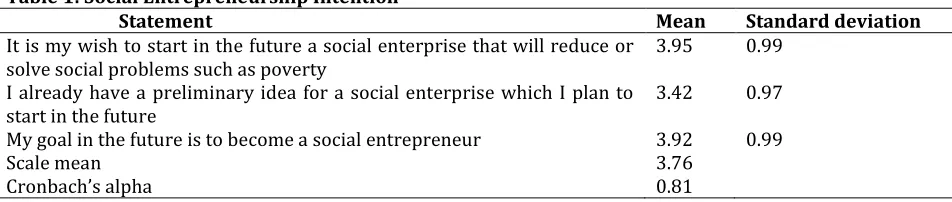
Table 1: Social Entrepreneurship Intention
Statement Mean Standard deviation
It is my wish to start in the future a social enterprise that will reduce or
solve social problems such as poverty 3.95 0.99
I already have a preliminary idea for a social enterprise which I plan to
start in the future 3.42 0.97
My goal in the future is to become a social entrepreneur 3.92 0.99
Scale mean 3.76
Cronbach’s alpha 0.81
76
Principal Component AnalysisTable 2: Principal Component Analysis
Statement 1
Empathy 2 Moral judgement 3 Social entrepreneurial self-efficacy 4 Prior experience 5 Perceived social support
Mean SD
Seeing individuals that are socially disadvantaged generates an emotional response in me
.768 4.35 .98
I feel compassion for individuals that are socially marginalised
,747 4.30 .92
When I think about socially disadvantaged individuals, I try to put myself in their situation
.735 4.33 .89
It is our ethical responsibility to help individuals that are socially disadvantaged
.738 4.05 0.93
We are morally obliged to help individuals that are socially disadvantaged
.691 4.02 0.97
Social justice expects us to help individuals that are less fortunate than ourselves
.642 4.02 0.97
Solving social problems is something that everyone should contribute to
.708 4.28 0.91
I think that I can personally solving social challenges if I put my mind in it
.652 3.96 0.87
I think that I can figure out how to solve social challenges
.601 3.92 0.89
I have some experience trying to solve social problems
.501 3.92 .82
I know a lot about social
organisations .417 2.90 .87
I have worked or volunteered
to work for social
organisations
.309 1.85 .83
I will get the support of people if I desire to start an organisation that intends to solve social problems
.690 3.45 0.91
It I possible to get support from investors for an organisation that intends to solve social problems
.622 3.42 0.84
Variance 29.08% 21.26% 10.65% 7.39% 3.28%
Cronbach’s alpha 0.79 0.72 0.81 0.77 0.72
Items with factor loading lower than 0.300 are removed
77
account for 71.66% of the total variance. Table 2 depicts a five-factor structure of SEI. This is consistent with previous studies such as Mair and Noboa (2006), Hockerts (2017) and Ip et al. (2017). Factor one is named empathy and consists of three items. The percentage of variance explained is 21.26 with a Cronbach’s alpha of 0.79. Factor two is labelled as moral judgement and consists of three items. The percentage of variance explained is 28.26 with a Cronbach’s alpha of 0.72. Factor three is labelled social entrepreneurial self-efficacy and consists of three items. The percentage of variance explained is 10.65 with a Cronbach’s alpha of 0.81. Factor four is labelled prior experience and consists of three items. The percentage of variance explained is 7.39 with a Cronbach’s alpha of 0.77. Factor five is labelled perceived social support and consists of two items. The percentage of variance explained is 3.28 with a Cronbach’s alpha of 0.72.
Regression Analysis
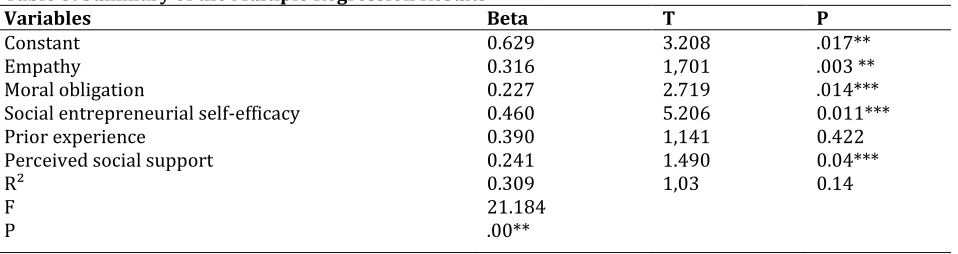
Table 3: Summary of the Multiple Regression Results
Variables Beta T P
Constant 0.629 3.208 .017**
Empathy 0.316 1,701 .003 **
Moral obligation 0.227 2.719 .014***
Social entrepreneurial self-efficacy 0.460 5.206 0.011***
Prior experience 0.390 1,141 0.422
Perceived social support 0.241 1.490 0.04***
R² F P
0.309 21.184 .00**
1,03 0.14
*P<.001, **P<0.01, ***P<.05
Table depicts the results of the multiple regression analysis of the effect of the determinants of the SEI of university students. The R² is 30.9% (0.309) and the F –test achieved a significance level (p <0.01). This confirms the appropriateness of the regression model. The results indicate that empathy (Beta 0.316, P<0.01), moral judgement (Beta 0.227, p<.05), Social entrepreneurial self-efficacy (Beta 0.460, p<.05) and perceived social support (Beta 0.241, p<.05) have significant positive relationships with social entrepreneurship intention. Prior Experience (Beta 0.390, p>0.05) does not have a significant positive relationship with social entrepreneurial intention. Empathy positively affects the SEI of university students. Empathy is one of the key traits that distinguish a social entrepreneur from a traditional entrepreneur. Emphatic individuals tend to behave in a way that helps other people. The findings of this study are supported by previous empirical studies on empathy and SEI (Ip et al., 2017; Hockerts, 2017; Bacq and Alt, 2018). Moral judgement positively affects the SEI of university students. The findings of the study are consistent with Mair and Noboa (2006) and Kibler and Kautonen (2016). However, the findings are inconsistent with Hockerts (2017) and Ip et al. (2017). Hockerts (2017) find an insignificant relationship between moral judgement and social entrepreneurial.
5. Conclusion
78
However, Ip et al. (2017) did not find a significant relationship between the two variables. The results of the effect of prior experience are not significant.
Recommendations: The empirical findings can assist students in understanding the factors that are significant in creating social enterprises. Empathy, moral judgement entrepreneurial self-efficacy and perceived social supports positively affecting the SEI of university students. To improve empathy and moral judgement, training on moral and ethical leadership is important. This will help in providing emphatic experiences to students and improve empathy and moral judgement in the exploitation of business opportunities. To develop entrepreneurial self-efficacy, training on entrepreneurial skill and competencies is important. Entrepreneurship should be made a compulsory model for all university students. To improve perceived social support, it is important for students that are interested in social entrepreneurship to develop networks with existing social entrepreneurs and institutions that support entrepreneurship. Students can go for an internship at successful social entrepreneurs to gain experience. Social entrepreneurs should be invited to universities to provide practical experiences about social entrepreneurship. Social enterprise incubators and centres for social entrepreneurship should be established by universities.
The findings can also help universities in designing a curriculum on social entrepreneurship. In addition, the findings can assist governmental organisations that support the creation of small businesses in understanding the antecedents of SE. This can help to develop training materials aimed at students in the universities. Social entrepreneurship should be included in the curriculum of all university students in South Africa. Competition on entrepreneurship in universities should focus on social entrepreneurship. This will allow students to better understand the theoretical and practical aspects of social entrepreneurship. Both passive and active teaching methods on entrepreneurship in the universities should include the creation and management of social enterprises. The findings are inconsistent with previous studies such as Ip et al. (2017) and Hockerts (2017). Hockerts (2017) and Ip et al. (2017) also find a significant positive association between perceived social support and the SEI of university students.
Limitations and Areas for Further Studies: Data was collected from two universities in South Africa. This may affect the generalisability of the findings of the study. Other studies can explore the effect of entrepreneurship education and culture on the SEI of university students.
References
Ajzen, I. (1991). The theory of planned behavior. Organizational Behavior and Human Decision Processes, 50(2), 179-211.
Ajzen, I. & Fishbein, M. (1980). Understanding attitudes and predicting social behavior. Englewood Cliffs, NJ: Prentice-Hall.
Armitage, C. J. & Conner, M. (2013). Efficacy of the theory of planned behaviour: A meta-analytic review. British Journal of Social Psychology, 1, 471–499.
Arthur, S. J., Hisrich, R. D. & Cabrera, Á. (2012). The Importance of Education in the Entrepreneurial Process: A World View. Journal of Small Business and Enterprise Development, 19(3), 500-514.
Aure, A. D. (2018). Exploring the social entrepreneurial intentions of senior high school and college students in a Philippine university: A PLS-SEM approach. Journal of Legal Ethical and Regulatory Issues, 21(2), 1-11.
Bacq, S. & Alt, E. (2018). Feeling capable and valued: A prosocial perspective on the link between empathy and social entrepreneurial intentions, Journal of Business Venturing, 33(3), 333-350.
Bandura, A. (1977). Social learning theory. Englewood Cliffs, NJ: Prentice Hall.
Bolton, B. & Thompson, J. (2000). Entrepreneurs, Talent, Temperament, Technique, Butterworth Heinemann: Oxford.
Chengalvala, S. & Rentala, S. (2017). Intentions towards social entrepreneurship among university students in India. International Journal of Research - Granthaalayah, 5(6), 406-413.
Dees, J. G. (1998). Enterprising non profits’, Harvard Business Review, 76, 55-67. Dees, J. G. (2001). The Meaning of “Social Entrepreneurship”.
79
Durieux, M. B. & Stebbins, R. A. (2010). Social entrepreneurship for dummies. Hoboken, NJ: Wiley Eisenmann, T. R. (2013). Entrepreneurship: A working definition Online.
Farooq, M. S. (2018). Modelling the significance of social support and entrepreneurial skills for determining entrepreneurial behaviour of individuals: A structural equation modelling approach, World Journal of Entrepreneurship, Management and Sustainable Development, 14(3), 242-266.
Haugh, H. (2007). New strategies for a sustainable society: the growing contribution of social Entrepreneurship, Business Ethics Quarterly, 17(4) 743-749.
Hockerts, K. (2017). Determinants of Social Entrepreneurial Intentions. Entrepreneurship Theory and Practice, 41(1), 105-130.
Hourdequin, M. (2012). Empathy, Shared Intentionality and Motivation by Moral Reasons, Ethic Theory Moral Practice, 15, 403-419.
Ioannidou, F. & Konstantikaki, V. (2008). Empathy and emotional intelligence: What is it really about? International Journal of Caring Sciences, 1(3), 118–123.
Ip, C. H., Wu, S. C., Liu, H. & Liang, C. (2017). Revisiting the Antecedents of Social Entrepreneurial Intentions in Hong Kong. International Journal of Educational Psychology, 6 (3), 301-323.
Kao, R. W. Y. (1993). Defining Entrepreneurship: Past, Present and? Creativity and Innovation Management, 2(1), 69-70.
Kedmenec Rebernik, M. & Periþ, J. (2015). The Impact of Individual Characteristics on Intentions to Pursue Social Entrepreneurship, Ekonomski Pregled, 66(2), 119-137.
Kibler, E. & Kautonen, T. (2016). The moral legitimacy of entrepreneurs: An analysis of early-stage entrepreneurship across 26 countries. International Small Business Journal, 34(1), 34 –50.
Khuong, M. N. & An, N. H. (2016). The factors affecting entrepreneurial intention of the students of Vietnam National University: A mediation analysis of perception toward entrepreneurship. Journal of Economics, Business and Management, 4(2), 104-111.
Kobia, M. & Sikalieh, D. (2010). Towards a search for the meaning of entrepreneurship. Journal of European Industrial Training, 34(2), 110 – 127.
Lacap, J. P. G., Mulyaningsih, H. D. & Ramadani, V. (2018). The mediating effects of social entrepreneurial antecedents on the relationship between prior experience and social entrepreneurial intent: The case of Filipino and Indonesian university students. Journal of Science and Technology Policy Management, 9(3), 329-346.
Mair, J. & Noboa, E. (2006). Social Entrepreneurship: How intentions to create a social venture are formed. In J . Mair, J. Robinson, & K. Hockerts (Eds.), Social Entrepreneurship, 121-136.
Mbhele, T. P. (2012). The study of venture capital finance and investment behaviour in small and medium-sized enterprises, South African Journal of Economics and Management Sciences, 15(1), 93-111. Molino, M., Dolche, V., Cortse, C. G. & Ghislieri, C. (2018). Personality and social support as determinants of
entrepreneurial intention. Gender differences in Italy PLoS ONE, 13(6), e0199924.
Peneder, M. (2009). The Meaning of Entrepreneurship: A Modular Concept. Journal of Industry, Competition and Trade, 9(2), 77-99.
Rahim, H. L., Mohtar, S. & Ramli, A. (2015). The effect of social entrepreneurial behaviour towards organizational performance: A study on Bumiputera entrepreneurs in Malaysia. International Academic Research Journal of Business and Technology.
Schumpeter J. A. (1965). Economic Theory and Entrepreneurial History. In: Aitken HG (ed) Explorations in enterprise. Harvard University Press, Cambridge, MA
Seddon, F., Hazenberg, R. & Denny, S. (2014). Reintegrating socially excluded individuals through a SE intervention’. Social Enterprise Journal, 10(3), 222-238.
Seelos, C., Mair, J., Battilana, J. & Dacin, M. T. (2010). The Embeddedness of Social Entrepreneurship: Understanding Variation Across Local Communities.” Research in the Sociology of Organizations, 33, 333–363.
Sahban, M. A., Kumar, D. & Ramalu, S. (2015). Instrument Development: Entrepreneurial Social Support Assessment Instrument. Research Journal of Economics and Business Studies, 4(3), 21-36.
Shapero, A. & Sokol, L. (1982). Social Dimensions of Entrepreneurship. In: Kent C, Sexton D, Vesper K (eds.), The Encyclopaedia of Entrepreneurship, Prentice-Hall, Englewood Cliffs, pp. 72–90
80
Quan, X. (2012). Prior experience, social network, and levels of entrepreneurial intentions, Management Research Review, 35(10), 945-957.
Tan, W. L. & Yoo, S. J. (2015). Social Entrepreneurship Intentions of Non-profit Organizations. Journal of Social Entrepreneurship, 6(1), 103-125.
Thompson, E. R. (2009). Individual entrepreneurial intent: construct clarification and development of an internationally reliable metric”, Entrepreneurship: Theory & Practice, 33(3), 669-694.
Tran, A. T. & Von Korflesch, H. (2016). A conceptual model of social entrepreneurial intention based on the social cognitive career theory. Asia Pacific Journal of Innovation and Entrepreneurship, 10(1), 17-38. van Praag, C. M. & Versloot, P. H. (2008). The Economic Benefits and Costs of Entrepreneurship: A Review of
the Research, Foundations and Trends in Entrepreneurship, 4(2), 65–154.
Venkataraman, S. (1997). The distinctive domain of entrepreneurship research. US: JAI Press, Greenwich. Yuzhanin, S. & Fisher, D. (2016). The efficacy of the theory of planned behavior for predicting intentions to
choose a travel destination: a review. Tourism Review, 71(2), 135-147.
Zahra, S. A., Rawhouser, H. N., Bhawe, N., Neubaum, D. O. & Hayton, J. C. (2008). Globalization of Social Entrepreneurship Opportunities.” Strategic Entrepreneurship Journal, 2(2), 117–131.