The Open Journal of Occupational Therapy
The Open Journal of Occupational Therapy
Volume 5
Issue 3 Summer 2017 Article 12
July 2017
Occupational Therapy in Primary Care: Structures and Processes
Occupational Therapy in Primary Care: Structures and Processes
that Support Integration
that Support Integration
Brenda Koverman
Rush University - USA, [email protected]
Lydia Royeen
Rush University Medical Center - USA, [email protected]
Mary Stoykov
Rush University - USA, [email protected]
Follow this and additional works at: https://scholarworks.wmich.edu/ojot
Part of the Occupational Therapy Commons
Recommended Citation Recommended Citation
Koverman, B., Royeen, L., & Stoykov, M. (2017). Occupational Therapy in Primary Care: Structures and Processes that Support Integration. The Open Journal of Occupational Therapy, 5(3). https://doi.org/ 10.15453/2168-6408.1376
wmu-Occupational Therapy in Primary Care: Structures and Processes that Support Occupational Therapy in Primary Care: Structures and Processes that Support Integration
Integration
Abstract Abstract
Few studies have outlined the processes and structures needed to develop and integrate occupational therapy into a primary care provider’s office setting. This paper focuses on implementation of the clinic model of occupational therapy in primary care and is intended to address the deficiencies in current literature, including detailed program development steps. Barriers identified in the 8-week pilot program and the successful development of a reimbursable occupational therapy service in primary care will be discussed. The results of the implementation of occupational therapy in primary care are positive. The providers have accepted and embraced the distinct value of occupational therapy in this setting. Occupational therapy in the primary care setting is an emerging area of practice and further research is needed to measure the impact of interventions in this setting and the relationship to outcomes.
Keywords Keywords
primary care, occupational therapy, professional role
Credentials Display
Brenda Koverman, MBA, MS, OTR/L; Lydia Royeen, MOT, OTR/L; Mary Ellen Stoykov, PhD, OTR/L
Copyright transfer agreements are not obtained by The Open Journal of Occupational Therapy (OJOT). Reprint permission for this Primary Care should be obtained from the corresponding author(s). Click here to view our open access statement regarding user rights and distribution of this Primary Care.
DOI: 10.15453/2168-6408.1376
Primary care (PC) was originally defined in 1994 by the Institute of Medicine as “the provision of integrated, accessible health care services by
clinicians who are accountable for addressing a large majority of personal health care needs, developinga sustained partnership with patients, and practicing in the context of family and
community” (p. 15). At the same time, Devereaux
and Walker (1995) published one of the first studies about the role of occupational therapy (OT) in PC. The authors asserted that OT had a role in PC in models of health promotion, wellness, and prevention. These authors also predicted that reimbursement would be a hurdle for this new model but challenged the profession of OT to overcome this barrier. With the advent of the Patient Protection and Affordable Care Act (ACA), the OT profession has once again begun to assert its role in PC. Metzler, Hartmann, and Lowenthal (2012) state “Primary care is a key theme in the Patient Protection and Affordable Care Act” (p. 266).
The role of OT in PC is considered an emerging area of practice, although it is
infrequently reported in the literature (Donnelly, Brenchley, Crawford, & Letts, 2014; Lamb & Metzler, 2014; McColl et al., 2009). A scoping study examined 38 articles from the past 13 years in relationship to the role of rehabilitation and PC (McColl et al., 2009). OT was noted in only two program summary descriptions.
The literature supports a generalist role for the occupational therapist as the best role for this setting, as the occupational therapists works “across the life span with a wide range of client populations
providing many types of interventions” (Donnelly et al., 2014, p. 56). Yet, OT continues to have
difficulty establishing the provision of services in PC. In fact, recent papers demonstrate that the role of the occupational therapist is still emerging in this practice setting, as is evident in title the phrases “defining the value” (Lamb & Metzler, 2014), “is there a role?” (Hughes, 2009), and “the emerging role of” (Donnelly et al., 2014).
The American Occupational Therapy Association (AOTA) and the Canadian
Association of Occupational Therapy (CAOT) both have position papers that identify and support OT’s role in PC, but evidence of specific patient
outcomes is lacking (AOTA, 2014; CAOT, 2013). Donnelly, Brenchley, Crawford, and Letts (2014) mention outcomes, but the authors do not draw any conclusions about implementing OT in PC. Thus, a gap exists in the current literature about the
relationship between OT interventions in PC and patient outcomes. Several articles outline potential intervention strategies and assessments used to evaluate patient populations (AOTA, 2013; Donnelly et al., 2014; McColl et al., 2009). But again, the authors do not note an analysis of patient outcomes, such as falls prevention, social
participation, or occupational performance. The interventions used in PC have been adapted from other settings, and little evidence is present to support any specific intervention
therapist may provide home safety instruction or ideas to engage the patient in productive activity. Both interventions may help the patient remain in the community while reducing caregiver burden.
PC can occur in several settings. McColl et al. (2009) outlined six models of integrated PC that include OT: clinic model, outreach services model, self-management program model, community-based rehabilitation model, case management model, and the shared care model. The typical settings of the clinic model include physician offices or
community centers where a variety of diagnoses and care are provided, including chronic disease management and preventive care. Patients can have a complex array of needs that are best addressed by an interdisciplinary team, and OT can provide a distinct and essential benefit to the patients and their families in this setting.
Although the literature reports that OT has an emerging role in PC, there is an absence of conclusions about implementation of OT services. The purpose of this paper is to identify the
structures and processes that support the integration of OT in the PC setting. These authors are not aware of any other OT services embedded in the PC provider setting. This paper will focus on
implementation of the clinic model of OT in PC and is intended to address the deficiencies in current literature detailing program development steps, including reimbursement issues.
Method
Model Development
The authors explored the integration of OT in PC, specifically in the ambulatory care setting, in April, 2014. A year later, they initiated an 8-week pilot program in a geriatric medical office setting. This practice serves patients aged 65 years and older and is interdisciplinary, including physicians, nurse practitioners, a dietician, a social worker, and a geriatric psychiatrist.
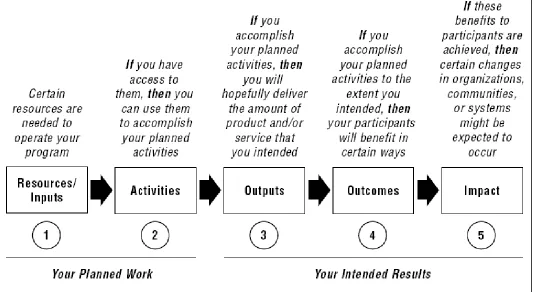
The logic model will be used to describe the planning and implementation process. This model has five areas that represent a systematic way to understand relationships among resources to operate a program, activities used in the program, and the changes achieved (W. K. Kellogg Foundation, 2004). The five areas are: (a) inputs, (b) activities, (c) outputs, (d) outcomes, and (e) impact. As outlined in Figure 1, the inputs and activities are the planned work for the project while the outputs, outcomes, and impact are the intended results of the work.
2 The Open Journal of Occupational Therapy, Vol. 5, Iss. 3 [2017], Art. 12
Figure 1. Schematic of the Basic Logic Model used to describe the planning and implementation of the PC occupational therapy program. Reprinted from W. K. Kellogg Foundation, (2004), Logic Model Development Guide (p. 1). Copyright 2004 by W. K. Kellogg Foundation. Reprinted with Permission.
Resources/Inputs
The director of OT led the operations side of this new venture. Personnel were the largest
resource need of this project, and one occupational therapist was selected to integrate into the PC team and provided direct patient services. Other
resources consisted of easily available items from existing OT areas, including patient education materials, adaptive equipment, and simple therapeutic exercise supplies.
As supported in the literature, a generalist occupational therapist was chosen for the role (Donnelly et al., 2014). This clinician had experience in both acute medicine and psychiatry and demonstrated competencies in a variety of diagnoses and interventions used with the clinic’s
populations, including stroke, orthopedic, general medicine, and psychiatry. The occupational therapist was not only skilled in acute care
interventions across diagnostic groups but also had a demeanor that promoted the integration of OT in the clinic. Her personality traits matched the job environment and facilitated a successful acclimation in this new setting. The five personality traits theory is a well-documented theory outlining different personality characteristics, including extroversion, agreeableness, conscientiousness, emotional stability, and openness to experience (McCrae & Terracciano, 2005). Conscientiousness can be defined with various terms, such as
consistent relations with several occupational groups (Barrick & Mount, 1991). These traits were evident as the occupational therapist demonstrated her dedication in her role development and her success with role integration. The clinician adapted her approach with different providers to gain OT referrals. She continually modified her
interventions to fit individual patient needs so that the role of OT expanded during the 8-week pilot program to include health promotions and chronic care interventions.
Activities
The activities assist with delivering the product (W. K. Kellogg Foundation, 2004) and were grouped into several categories: (a) determine the best clinic fit, (b) market OT service to potential clinics, and (c) solidify and modify OT’s role, including assessments and interventions.
Pre-activities. Before determining the best
fit clinic, the authors conducted a literature review of OT’s role in PC. The literature review concluded that the health care system is fragmented
(Montenegro et al., 2011) and an interdisciplinary team including the occupational therapist is needed to provide comprehensive patient care (Killian, Fisher, & Muir, 2015; Muir, 2012). From this information, the OT director and staff clinician agreed that this was a potential new role that could fit into a provider office practice setting. A short questionnaire was developed and sent to 23
physicians, nurse practitioners, and office managers to assess their opinion about OT and PC. Of the four returned surveys, three stated they believed OT could have a role in PC, two stated they would be willing to have an occupational therapist in their
office, and two stated they would like more information about OT in PC. The OT director decided that this information was positive enough to move forward.
Activity Step 1: Determine the best fit.
The journey to find the best clinic fit was a trial and error process. The director and staff occupational therapist reviewed medical office practices in the Rush University medical system. The search was narrowed down to practices where patients would not receive traditional outpatient OT services. A large internist practice was initially targeted but later ruled out because of billing complications.
At the same time that decisions were being made about potential practices, the occupational therapist shadowed a nurse practitioner in a general medicine practice. This helped to determine specific examples of possible OT interventions that could be used in the marketing process.
Five months after beginning the initial exploration and after erroneously being informed that the patients in the first practice could be billed, the director organized a meeting with the billing and compliance departments to ensure correct practice identification with billing. From this meeting, three practices were chosen based on the number of potential referral sources and common OT
diagnoses. These practices included gerontology, endocrinology, and rheumatology. Gerontology was selected as the focus on the assumption that this would provide the largest volume of potential patients, as the other practices had fewer referral sources and less variety in diagnoses.
Activity Step 2: Marketing—getting in
the door. The second phase of the activities was
4 The Open Journal of Occupational Therapy, Vol. 5, Iss. 3 [2017], Art. 12
promoting OT services. A brief email defining OT in PC was sent with a meeting invitation to the medical director and the office manager. The office manager, acting in a role of gatekeeper, initiated contact with the occupational therapist and director asking for specifics regarding the role of the occupational therapist. This began several months of unresolved dialogue between the director, clinician, and office manager. To clarify OT’s unique role, specific examples of potential OT interventions and assessments were given in an attempt to initiate OT services. However, no action occurred to move the program forward.
After determining that the office manager was not the final decision maker and that perhaps the physicians would be open to the concept of OT in PC, the director requested a meeting to present a pilot program concept directly to the referral sources: physicians, nurse practitioners, and physician assistants. Some providers verbalized reluctance regarding the effectiveness of OT’s role in PC in this meeting. However, the meeting was successful, as the pilot program was approved with cautious agreement. The referral sources had concerns about space, the day of the week that the occupational therapist would be present, and billing. Therefore, the director decided to change the day of the week that services would be provided and to postpone billing during the pilot program.
The occupational therapist used the concept of “intrusionary OT” to integrate successfully into the practice (AOTA, 2013, p. 69). Intrusionary OT is necessary “because physicians don’t know what we do, especially family physicians, we cannot wait for them to invite us in” (p. 69). Part of the
intrusionary OT process is: “asked questions, did assessments, offered suggestions, provided on-demand direct treatment, [and] recap directly with doctor” (p. 69). These practices facilitated the successful integration of OT services into the interprofessional team. The occupational therapist went into the treatment rooms with the physicians and nurse practitioners and asked occupational-based questions. As the pilot program progressed, she would take the patients and caregivers to another treatment room to give specific OT interventions and education. The occupational therapist frequently followed up with the referral source to describe specific assessments or interventions to increase understanding of OT’s unique role in PC.
Activity Step 3: Modifying and
solidifying. The last stage was refining and
solidifying OT’s role in the clinic. After the 8-week pilot program, the OT director and occupational therapist again met with the medical provider office group. Prior to the meeting, the director and the occupational therapist strategized about how best to incorporate billing if the group agreed to a
Table 1
Common Diagnoses in Pilot Program
Diagnosis Frequency Arthritis 9
Low Back Pain/Spine 8
Stroke 8
Dementia 7
Cardiac 6
Cancer 3
Lower Extremity Pain 3 Parkinson’s 2
Obesity 2
Table 2
Common Interventions in Pilot Program
Interventions Frequency ADL training 12
Fall Prevention 12 Routine planning/healthy lifestyle 9 Home exercise programs 8 Body Mechanics Education 4 Caregiver Training 3 Energy Conservation 3 Transfer training 2 Adaptive equipment training 2 Home safety education 2 Vision compensatory techniques 1
Final activities. After receiving approval,
the OT director initiated a meeting to incorporate electronic medical record areas of documentation, patient scheduling, and billing. Several
departments were represented, including information services, patient finance, and compliance. The process went well and a fully operationalized PC OT service began one month later. The director was on site the first day to oversee and solve any billing, scheduling, or
documentation issues. There were a few issues that were readily resolved by the director.
Billing OT services in a medical office setting is a new endeavor. The OT director consulted both the AOTA staff and the Illinois Occupational Therapy Association (ILOTA) staff to get input on proper ways to manage reimbursement issues. The staff occupational therapist discussed possible ethical concerns about billing for OT services in the typical brief encounters that occurred in the PC setting. That matter was resolved, as it was decided that billing would be done in the same manner that occurred in other OT areas in the medical center.
Other activities revolved around specific interventions, assessments, and outcome measures. At present, common interventions include activities of daily living training, routine planning, and fall prevention (see Table 2). An outcome measurement tool is still under consideration as well as
standardized assessment tools. Output
According to the logic model, the output is the volume of work accomplished by the project. The PC output is both tangible and intangible. Tangible output included patients receiving OT services and the therapist maintaining the set productivity standards. The therapist is currently close to meeting both, and there are plans to expand to a second day. Intangible output includes the role identification of OT into PC. This has been
realized, as initially prompts were needed from the occupational therapist for referrals, and now the majority of referrals occur without requests from the occupational therapist.
6 The Open Journal of Occupational Therapy, Vol. 5, Iss. 3 [2017], Art. 12
Outcomes
Outcomes are defined as benefits or changes to the participants according to the logic model. Role integration into the provider office practice is an outcome of the pilot program and evidenced by the providers asking for additional days of OT services. Another outcome was the practice asking for in-service transfer training. This demonstrates OT’s unique contribution to patient and family care. A final outcome was that the director and
occupational therapist were able to overcome barriers of billing and role identification. It was agreed that the patients would be billed after the successful pilot program and OT’s unique role was embraced by the providers.
Impact
Impact is defined as a long-term
consequence either intended or unintended in the logic model. Several have occurred during this process. First, the OT department received an unexpected advocate: the office manager. She has championed the cause and has become this
program’s biggest supporter. Secondly, there is a trickle effect to other areas of OT, including psychiatry and acute medicine. The occupational therapists working in these areas have noted an increased understanding of OT’s multifaceted role. Finally, the Joint Commission reviewed one of the charts where the occupational therapist performed an intervention. The physician highlighted OT’s contribution to the patient andthe interdisciplinary team.
Case Study
This case study illustrates the role of OT in the PC setting and how the processes enhanced team integration. The patient was a 72-year-old woman with a diagnosis of hypertension, stroke, and depression. Her deficits included visual loss related to glaucoma, decreased balance, memory loss, and noncompliance with outpatient physical therapy. The occupational profile showed that the patient lived alone and received assistance with instrumental activities of daily living from family. The occupational therapist focused on activities of daily living training to improve safety secondary to decreased balance and decreased vision. During the treatment session, the patient was initially resistant to adapting compensatory strategies for decreased vision. The occupational therapist used a
mindfulness based approach, employing concepts of Morita Therapy and Acceptance and Commitment Therapy (Harris, 2009; Sugg, Richards, & Frost, 2016) to encourage acceptance of visual deficits and also connected the patient value of independent living to using community resources. The patient was receptive to this education and agreed to contact the community center for low-vision interventions.
Results
The results of the implementation of OT in PC are positive. The providers have accepted and embraced the distinct value of OT in this setting. The close proximity of the OT role integration allowed the providers to witness the interventions. The need for education to the providers has lessened and referrals have increased since the initiation of this pilot program (L. Royeen, personal
communication, September 24, 2015). Discussion
To our knowledge, this is one of the first papers to detail the processes and structures implemented in a PC setting, and one of the first known to detail a successful implementation of OT services in the PC provider office setting.
Implications for clinical practice and future research are two-fold. One is to continue to define OT’s role in PC. This can include strategies for physician or other referral sources to accept and incorporate an occupational therapist as a member of the
interprofessional team in the PC setting.
Reimbursement concerns must also be considered with the referral sources, the patients, and the ethical concerns of the occupational therapist. Unaddressed issues include determining if all insurance providers will reimburse for OT in this setting, if the patients will accept additional charges, and if the occupational therapist feels ethically sound to charge patients in this setting with the brief encounters.
The second area is to determine patient experience and outcomes. The interventions and assessments outlined in the articles examined for this paper can be used to measure patient outcomes.
However, the generalist role does not lead to a consistent set of assessment tools or interventions, and this must be taken into consideration when determining outcome measures. Also, there is a lack of presence in this setting that will make studying a large statistically significant population difficult. Finally, an extension of the patient experience would be to evaluate the referral source perception of OT’s role in this setting.
Conclusion
There is a demonstrated role for OT in PC. Outcomes include preliminary successful billing and acceptance by provider office practice. Unexpected impacts include increased knowledge of OT’s role in other settings and positive feedback from an accrediting body reviewer. It is critical that more occupational therapists begin to practice in this setting, and more research is needed to identify appropriate assessment tools and to analyze
outcomes of OT’s integration in PC.
References
American Occupational Therapy Association. (2013).
Achieving the triple aim of healthcare reform: Occupational therapy’s role in primary care [PDF document]. Retrieved from
http://files.abstractsonline.com/CTRL/F4/C/1D3/504/ 00C/4D4/CAF/FDA/990/F48/DDC/DE/a2056_1.pdf
American Occupational Therapy Association. (2014). The role of occupational therapy in primary care. American Journal of Occupational Therapy, 68(Suppl. 3), S25-S33.
http://ajot.aota.org/article.aspx?articleid=1934865 . Barrick, M. R., & Mount, M. K. (1991). The big five
personality dimensions and job performance: A meta-analysis. Personnel Psychology, 44(1), 1-26.
http://dx.doi.org/10.1111/j.1744-6570.1991.tb00688.x
Canadian Association of Occupational Therapists. (2013).
CAOT position statement: Occupational therapy in primary care. Retrieved from
8 The Open Journal of Occupational Therapy, Vol. 5, Iss. 3 [2017], Art. 12
https://caot.in1touch.org/document/3710/O%20-%20OT%20in%20Primary%20Care.pdf
Clark, F., Jackson, J., Carlson, M., Chou, C. P., Cherry, B., Jordon-Marsh, M., . . . Azen, S. P. (2012).
Effectiveness of a lifestyle intervention in promoting the well-being of independently living older people: Results of the well elderly 2 randomised controlled trial. Journal of Epidemiology & Community Health,
66(9), 782-790.
http://dx.doi.org/10.1136/jech.2009.099754 Devereaux, E. B., & Walker, R. B. (1995). The role of
occupational therapy in primary health care.
American Journal of Occupational Therapy, 49(5), 391-396. http://dx.doi.org/doi:10.5014/ajot.49.5.391
Donnelly, C. A., Brenchley, C. L., Crawford, C. N., & Letts, L. J. (2014). The emerging role of occupational therapy in primary care. Canadian Journal of Occupational Therapy, 81(1), 51-61.
http://dx.doi.org/10.1177/0008417414520683 Harris, R. (2009). ACT made simple: A quick-start guide to
ACT basics and beyond. Oakland, CA: New Harbinger Publications, Inc.
Hughes, J. L. (2009). Chronic fatigue syndrome and occupational disruption in primary care: Is there a role for occupational therapy? British Journal of Occupational Therapy, 72(1), 2-10.
http://dx.doi.org/10.1177/030802260907200102 Institute of Medicine. (1994). Defining primary pare: An
interim report. Washington, DC: National Academy Press.
Killian, C., Fisher, G., & Muir, S. (2015). Primary care: A new context for the scholarship of practice model.
Occupational Therapy in Health Care, 29(4), 383-396. http://dx.doi.org/
10.3109/07380577.2015.1050713 10.31109/0780577.2015
Lamb, A. J., & Metzler, C. A. (2014). Defining the value of occupational therapy: A health policy lens on research and practice. American Journal of Occupational Therapy, 68(1), 9-14.
http://dx.doi.org/10.5014/ajot.2014.681001 McColl, M. A., Shortt, S., Godwin, M., Smith, K., Rowe, K.,
O’Brien, P., & Donnelly, C. (2009). Models for integrating rehabilitation and primary care: A scoping study. Archives ofPhysical Medicine and
Rehabilitation, 90(9), 1523-1531.
http://dx.doi.org/10.1016/j.apmr.2009.03.017 McCrae, R. R., & Terracciano, A. (2005). Universal features
of personality traits from the observer’s perspective: Data from 50 cultures. Journal of Personality and SocialPsychology, 88(3),
547-561. https://doi.org/10.1037/0022-3514.88.3.547
Metzler, C. A., Hartmann, K. D., & Lowenthal, L. A. (2012). Defining primary care: Envisioning the roles of occupational therapy. American Journal of Occupational Therapy, 66(3),266-270. http://dx.doi.org/10.5014/ajot.2010.663001 Montenegro, H., Holder, R., Ramagem, C., Urrutia, S.,
Fabrega, R., Tasca, R., . . . Gomes, M. A. (2011). Combating health care fragmentation through integrated health service delivery networks in the Americas: Lessons learned. Journal of Integrated Care, 19(5),5-16.
http://dx.doi.org/10.1108/14769011111176707 Muir, S. (2012). Occupational therapy in primary health care:
We should be there. American Journal of Occupational Therapy, 66(5),506-510.
http://dx.doi.org/10.5014/ajot.2012.665001 Sugg, H. V. R., Richards, D. A., & Frost, J. (2016). Morita
therapy for depression and anxiety (Morita trial): Study protocol for a pilot randomised controlled trial. Trials, 17, 161. http://doi.org./10.1186/s13063-016-1279-3
W. K. Kellogg Foundation. (2004). Logic model development guide. Retrieved from