G
UIDELINE
1. Introduction
Hepatitis B is an important public health issue in South Africa (SA). Prior to the introduction of the hepatitis B vaccine into the South African Expanded Programme of Immunisation (EPI) in 1995, prevalence rates of this disease were 0.3 - 15%.[1]
However, unlike countries such as Taiwan,[2] SA has had no catch-up
vaccination programme to ensure complete vaccination coverage. In addition, the HIV/AIDS pandemic has had a potentially deleterious influence on the natural history of patients co-infected with HIV and the hepatitis B virus (HBV).[3]
The spectrum of disease and natural history of chronic HBV infection is diverse, ranging from a low viraemic immune control state to progressive chronic hepatitis, with the potential for the ensuing complications of cirrhosis, liver failure and hepatocellular carcinoma (HCC). [4] As understanding of the natural history of chronic hepatitis B
increased over the past decade, there have been significant therapeutic advances. The decision to treat and the choice of therapy is dependent on both the phase of chronic infection and patient factors.
This guideline draws on the recently published guidelines by the American Association for the Study of Liver Disease (AASLD), the European Association for the Study of the Liver (EASL), the Asia-Pacific Association for the Study of the Liver (APASL), National Institutes of Health (NIH) and the World Gastroenterology
Organisation (WGO).[5-9] It serves as an attempt to contextualise
practice guidelines on the management of chronic hepatitis B in SA.
2. Pathogenesis and natural history
See Table 1. Hepatitis is an enveloped partially double-stranded DNA virus belonging to the Hepadnaviridae family. It is 100 times more infectious than HIV and can be transmitted by perinatal, percutaneous and sexual exposure.[10] Close person-to-person contactis an important form of transmission, most notably among children in highly endemic areas, such as in SA.[5,10]
Liver injury due to hepatitis B is mainly caused by cellular immune mediated mechanisms with cytotoxic T lymphocyte lysis of infected hepatocytes. The magnitude of the individual’s adaptive cellular immune response to HBV-related antigens determines the outcome of acute HBV infection, as well as the degree of liver injury. Chronically infected patients are unable to sustain an immune response to HBV and may experience intermittent episodes of hepatocyte destruction in an attempt to clear virally infected hepatocytes, in what can be termed ‘flares’. Note that, during the acute infection, hepatitis B does not appear to induce an intra-hepatic innate immune response. Instead, it acts as a ‘stealth’ virus early in the infection.[9]
Age is also an important host factor determining the risk of chronicity. Following acute exposure to HBV, 90% of neonates born to hepatitis B ‘e’ antigen (HBeAg)-positive mothers, 20 - 50% of
South African guideline for the management of chronic
hepatitis B: 2013
C W N Spearman,1 MB ChB, FCP (SA), MMed, PhD; M W Sonderup,1,2 MB ChB, BPharm, FCP (SA); J F Botha,2,3 MB ChB, FCP (SA);
S W van der Merwe,4,5 MB ChB, MSc, MMed, PhD; E Song,6,7 MB ChB, FCP (SA), FRCP (London); C Kassianides,8,9 MB ChB, FCP (SA);
K A Newton,2,10 MB ChB, FCP (SA); H N Hairwadzi,1 MB ChB, MMed, PhD
1 Division of Hepatology, Department of Medicine, University of Cape Town, South Africa 2South African Gastroenterology Society, Mowbray, Cape Town, South Africa
3 Sandton Clinic, Bryanston, Johannesburg, South Africa 4 Department of Immunology, University of Pretoria, South Africa
5 Department of Clinical and Experimental Medicine, University of Leuven, Flanders, Belgium 6 Department of Medicine, University of the Witwatersrand, Johannesburg, South Africa 7 Donald Gordon Medical Centre, Johannesburg, South Africa
8 Morningside Clinic, Sandton, Johannesburg, South Africa
9 Gastroenterology Foundation of South Africa, Mowbray, Cape Town, South Africa
10 Department of Gastroenterology, Division of Clinical Medicine, University of KwaZulu-Natal, Durban, South Africa
Corresponding authors: C W N Spearman ([email protected]) and M W Sonderup ([email protected])
Hepatitis B remains a significant yet preventable health issue in South Africa. The introduction of the hepatitis B vaccine into the country some 18 years ago has demonstrated benefit, but the exposure to, and prevalence of chronic HBsAg positivity remain unacceptably high. Those with chronic hepatitis B virus infection have an elevated risk of developing cirrhosis with end-stage liver disease and a markedly elevated risk of hepatocellular carcinoma, independent of the presence of cirrhosis.
The challenge in South Africa remains prevention through the universal vaccination coverage of all children and the identification of those with chronic hepatitis B virus infection. Over the last decade our understanding of hepatitis B and its behaviour and natural history in those with chronic infection has significantly improved. This understanding is key to identifying those who warrant further evaluation and therapy. A number of global societies have updated their guidelines in recent years. This document draws on these guidelines and serves to contextualise, for South Africa, practice guidelines for the management of chronic hepatitis B.
G
UIDELINE
infants and children under the age of 5 years, and <5% of adults will develop chronic hepatitis B infection.[11,12] Viral variants may also
influence the course and outcome of the disease. In addition, and only rarely and in the setting of profound immune suppression, the virus can be directly cytopathic.
In choosing an appropriate management strategy, a clear understanding of the process of hepatitis B viral replication, as well as the natural history of chronic hepatitis B, is vital:
Following acute exposure, the HBV enters the hepatocyte and is imported into the nucleus. The partially doubled-stranded DNA is repaired to form a circular extra-chromosomal molecule called the covalently closed circular DNA (cccDNA),[13] which is the
transcriptional template for the viral messenger RNAs (mRNAs). The RNA form of the genome is encapsidated together with the reverse transcriptase, and reverse transcription occurs within the cytoplasm. Cytoplasmic viral capsids containing mature viral DNA are either transported to the nucleus, thereby replenishing cccDNA, or bind to HBV surface antigens which have accumulated in the endoplasmic reticulum, bud through the cellular membranes and are secreted from the hepatocyte non-cytopathically, as virions.
Hence, even if the individual clears hepatitis B surface antigen (HBsAg), the hepatocyte still harbours cccDNA. This is the basis of occult HBV infection, which is defined as detectable HBV DNA in the liver and a very low level (<200 IU/ml) of HBV DNA in the blood of those previously exposed to HBV, viz. HBsAg negative and hepatitis B immunoglobulin G core antibody (anti-HBc IgG) positive. The clinical significance of occult HBV is that immunosuppression may lead to reactivation in these patients. HBV DNA can also integrate into the cellular genome during chronic infection, as a result of random insertion of viral DNA into the host genome, by host processes during failed repair of the partially double-stranded DNA. This integrated DNA plays no role in viral replication, but plays an important and ill-defined role in the development of HCC.
There are 5 phases of chronic infection which are not necessarily sequential and are of variable duration.[6,14]
1. The immune tolerant phase is characterised by HBeAg posi-tivity, high levels of viral replication (high serum HBV DNA), normal transaminases, minimal or no hepatic necroinflammation and no or slow progression to fibrosis. During this phase, the rate of spontaneous HBeAg loss is low. This phase, which is more common and more prolonged in individuals infected perinatally or under the age of 5 years, frequently persists into early adulthood and is frequent in SA.
2. The immune clearance phase (HBeAg-positive chronic hepatitis B) is characterised by HBeAg positivity, but lower levels of viral replication. The transaminases are elevated and histologically there is more severe necroinflammation and more rapid progression of fibrosis. This phase may last several weeks to years and, if successful, a sustained HBeAg seroconversion will occur with the development of anti-HBe. A successful HBeAg seroconversion is more likely to occur in individuals infected during adulthood.
3. The inactive HBV carrier or latency state (immune control phase) follows successful HBeAg to anti-HBe seroconversion and is characterised by very low (<2 000 IU/ml) or undetectable HBV DNA levels and normal transaminases. As a result of immunological control of the infection, these patients have a good prognosis, with a much lower risk of progression to cirrhosis or HCC. HBsAg loss and seroconversion to anti-HBs may occur spontaneously at a rate of 1 - 3% per year.
4. Five to 15% of individuals in the inactive HBV carrier state will develop HBeAg-negative chronic hepatitis B. This reactivation
phase represents a later phase in the natural history of the disease and is more common in older men. Nucleotide substitutions in the precore and/or basal core promoter regions of the HBV genome result in HBV variants that are unable to express HBeAg, or which do so at very low levels. This phase is characterised by HBeAg negativity, fluctuating transaminases and HBV DNA levels, significant necroinflammation and progressive fibrosis. Low levels of hepatitis B immunoglobulin M core antibody (anti-HBc IgM) may be detected.
It is important, but often difficult, to distinguish this phase from the inactive HBV carrier state. Patients with HBeAg-negative chronic hepatitis B have a high risk of progression to cirrhosis, which may in turn lead to decompensation and the risk of HCC. At least 1 year follow-up, with 3 - 4-monthly monitoring of alanine transaminase (ALT) and HBV DNA levels, is required to confidently distinguish these two phases of the disease.[15-17]
Individuals in the inactive HBV carrier state may also revert back to HBeAg positivity and develop HBeAg-positive disease.
5. Occult HBV infection is the term used to describe those cases where patients have cleared surface antigen but have detectable plasma HBV DNA. Serologically they are HBsAg negative, hepatitis B surface antibody (HBsAb) positive and anti-HBc IgG positive, yet they are positive for HBV DNA, albeit at very low levels (invariably <200 IU/ ml). While no liver disease is associated with occult infection, these individuals are at very high risk of reactivation of HBV with immune suppression, e.g. during use of rituximab (MabTheraR), and require prophylactic antiviral therapy.
3. Diagnosis
In diagnosing chronic hepatitis B, HBV serological markers and HBV DNA levels must be carefully and correctly interpreted, to accurately decide on the phase of the chronic infection so that appropriate management, if required, can be instituted.
3.1 HBV serological markers
[5,18]HBsAg:
• General and screening marker of infection • First serological marker to appear
• Surrogate marker for transcriptionally active cccDNA
• Infection is considered chronic if HBsAg persists for >6 months. HBeAg:
• Indicates active replication of virus
• Absent or low in pre-core or basal core promoter mutations. Anti-HBc total (HBcAb total):
• Includes both IgG and IgM HBcAb. IgG anti-HBc:
• Most sensitive marker of past exposure to HBV as anti-HBs may be undetectable if HBV infection was acquired in childhood, as is common in SA.
IgM anti-HBc:
• Marker of acute infection or reactivation
• Strongly positive in acute infection and possible low positivity in reactivation or flare.[19]
Anti-HBs (HBsAb)
• Recovery and/or immunity to HBV
• Detectable after immunity is conferred by HBV vaccination. Anti-HBe (HBeAb)
• Usually indicates HBeAg to anti-HBe seroconversion and that the virus is no longer replicating
G
UIDELINE
3.2 Virological evaluation of HBV infection
• Serum HBV DNA quantification • HBV genotype
• HBV resistance testing.
3.3 Role of HBV DNA testing
[18]• Can differentiate chronic HBeAg-negative disease from the inactive latency state (HBV DNA <2 000 IU/ml)
• Differentiates between occult hepatitis B (IgG anti-HBc positive, HBV DNA positive, but <200 IU/ml) and resolved infection (IgG anti-HBc positive, anti-HBs positive, HBV DNA negative)
• Changes in HBV DNA levels used to monitor response to therapy
• In patients adherent to therapy, increasing HBV DNA levels indicate the emergence of resistant variants
• HBV DNA levels correlate with disease progression.[20-23]
3.4 Immunological markers, DNA levels and ALT in
HBV infection
[16,24]See Table 2.
4. Assessment of liver disease prior to
therapy
[5,6,16]See Table 3.
4.1 Clinical history and physical examination
Include family history of HBV infection and HCC.
4.2 Assessment of the severity of the liver disease
• Liver profile including total bilirubin, conjugated bilirubin, ALT, aspartate transaminase (AST), alkaline phosphatase (ALP) and gamma-glutamyl transferase (GGT)
• Full blood count (FBC) including a differential count
• Serum albumin and international normalised ratio (INR) to assess synthetic function.
4.3 Viral serology
• HBsAg, anti-HBs, HBeAg and anti-HBe
• IgG anti-HBc (if assessing for occult HBV or previous cleared infection).
4.4 Viral replication
Serum HBV DNA quantified with real-time polymerase chain reaction (PCR).
4.5 Look for other co-factors
• Viral co-infection: HCV, HIV
• Non-alchoholic fatty liver disease/alcoholic liver disease • Iron overload
• Drug/toxin-induced injury.
Table 1. Key points: Natural history and pathogenesis
• Hepatitis B is a hepatotropic virus; liver injury occurs through immune-mediated killing of infected hepatocytes
• Chronicity occurs rarely when the HBV infection is contracted in adulthood, but is common in neonates and young children • cccDNA is the transcriptional template for the viral mRNAs
• Newly synthesised cytoplasmic viral capsids containing mature viral DNA are transported to the nucleus, thereby replenishing cccDNA • Cure is dependent on eradicating cccDNA
[image:3.595.68.549.535.677.2]• Understanding the natural history and phases of chronic infection is essential when making management decisions HBV = hepatitis B virus; cccDNA = covalently closed circular DNA; mRNA = messenger RNA.
Table 2. Immunological markers, DNA levels and ALT in HBV infection Acute
hepatitis B Recovery from acute hepatitis B Immune tolerant state
Chronic HBV disease Inactive HBsAg
carrier state Occult hepatitis B HBeAg positive HBeAg negative
HBsAg ü ü ü ü ü
Anti-HBs ü
Anti-HBc IgM ü
Anti-HBc IgG ü ü ü ü ü ü ü
HBeAg ü ü ü
Anti-HBe ü ü ü
HBV DNA (IU/ml) High Negative >20 000 IU/ml >20 000 IU/ml >2 000 IU/ml <2 000 IU/ml <200 IU/ml
ALT Elevated Normal Normal Elevated Elevated Normal Normal
HBsAg = hepatitis B surface antigen; Anti-HBs = detection of hepatitis B surface antibody; Anti-HBc = detection of hepatitis B core antibody; IgM = immunoglobulin M; IgG = immunoglobulin G; HBeAg = hepatitis B ‘e’ antigen; Anti-HBe = detection of hepatitis B ‘e’ antibody; HBV DNA = hepatitis B virus DNA; ALT = alanine transaminase.
Table 3. Key points in assessment of liver disease prior to therapy
• Diagnosis and appropriate management of chronic hepatitis B require the correct interpretation of HBV serological markers and HBV DNA levels • The main parameters generally available include ALT, HBsAg, HBeAg and HBV DNA levels
G
UIDELINE
4.6 Liver biopsy
A liver biopsy is required to assess the degree of necroinflammation and fibrosis and is helpful in assessing the contribution of one or more comorbidities. It is generally indicated if the ALT is elevated and/or HBV DNA is >2 000 IU/ml, or when interferon-based therapy is being considered. A biopsy is useful in the SA context to assess the need for treatment, as there has often been a prolonged immune tolerant phase and liver enzymes may be only marginally elevated. A liver biopsy is not required in patients with clinical evidence of cirrhosis or when nucleos(t)ide analogue (NUC) therapy is indicated, regardless of the grade of activity or stage of fibrosis. The risk of severe complications with liver biopsy is low (1/4 000 - 10 000).
4.7
Ultrasound of the liver and
Doppler studies of the portal vein
5. Goals and endpoints
of therapy
[5,6,16]See Table 4. HBV infection cannot be eradicated completely with current available therapies because of the persistence of cccDNA, which acts as a viral reservoir in infected hepatocytes.[25] Even so, an ideal
endpoint of treatment would be to achieve viral eradication with sustained HBsAg loss, with/without seroconversion to anti-HBs antibodies, as HBsAg is a surrogate marker for transcriptionally active cccDNA. [26,27]
However, this is as yet uncommon and hence a broad goal of therapy is to prevent or reverse disease progression to cirrhosis, end-stage liver disease or HCC. This can be achieved by suppressing HBV replication, with a consequent improvement in necro -inflammation and fibrosis that lowers the risk of cirrhosis and HCC.[20-22,28]
Once cirrhosis is established, preventing decompensation, HCC or death is the primary treatment goal. In those patients with early decompensation, suppression of HBV replication can improve synthetic function and decrease the Child-Pugh/ model for end-stage liver disease (MELD) score, and may delay the need for liver transplantation. In those with end-stage liver disease, suppression of HBV replication prior to transplantation reduces the risk of recurrence.
5.1 Endpoints of treatment:
HBeAg-positive disease
• The ideal endpoint is sustained HBsAg loss due to therapy, with/without the development of anti-HBs
Chronic hepatitis B treatment algorithm
HBeAg positive
HBV DNA
HBV DNA ≥20 000 IU/ml
Normal >ULN
ALT
· Monitor ALT 3 - 6-monthly (? immune tolerance) · If ALT elevated, consider liver biopsy and treatment (≥A2 or ≥F2)
· Consider liver biopsy and treatment (≥A2 or ≥F2)
ALT ULN: 19 IU/ml (female) and 30 IU/ml (male)
HBV DNA <20 000 IU/ml
ALT
Normal >ULN
· Monitor ALT and HBV DNA every 6 - 12 months · If ALT elevated, consider liver biopsy and treatment (≥A2 or ≥F2)
· Consider liver biopsy and treatment (≥A2 or ≥F2)
Chronic hepatitis B treatment algorithm
HBeAg negative
HBV DNA
HBV DNA ≥2 000 IU/ml
Normal >ULN
ALT
· Monitor ALT 3 - 6-monthly · If ALT elevated, consider liver biopsy and treatment (≥A2 or ≥F2)
· Consider liver biopsy and treatment (≥A2 or ≥F2)
ALT ULN: 19 IU/ml (female) and 30 IU/ml (male)
HBV DNA <2 000 IU/ml
ALT
Normal >ULN
· Monitor ALT and HBV DNA every 6 - 12-months to confirm inactive carrier state
· If ALT elevated, consider liver biopsy and treatment (≥A2 or ≥F2)
[image:4.595.214.532.266.494.2]· Consider liver biopsy and treatment (≥A2 or ≥F2)
Fig. 1. Treatment algorithm for HBeAg-positive disease. HBeAg = hepatitis B ‘e’ antigen; HBV DNA = hepatitis B DNA; ULN = upper limit of normal; ALT = alanine transaminase.
Chronic hepatitis B treatment algorithm
HBeAg positive
HBV DNA
HBV DNA ≥20 000 IU/ml
Normal >ULN
ALT
· Monitor ALT 3 - 6-monthly (? immune tolerance) · If ALT elevated, consider liver biopsy and treatment (≥A2 or ≥F2)
· Consider liver biopsy and treatment (≥A2 or ≥F2)
ALT ULN: 19 IU/ml (female) and 30 IU/ml (male)
HBV DNA <20 000 IU/ml
ALT
Normal >ULN
· Monitor ALT and HBV DNA every 6 - 12 months · If ALT elevated, consider liver biopsy and treatment (≥A2 or ≥F2)
· Consider liver biopsy and treatment (≥A2 or ≥F2)
Chronic hepatitis B treatment algorithm
HBeAg negative
HBV DNA
HBV DNA ≥2 000 IU/ml
Normal >ULN
ALT
· Monitor ALT 3 - 6-monthly · If ALT elevated, consider liver biopsy and treatment (≥A2 or ≥F2)
· Consider liver biopsy and treatment (≥A2 or ≥F2)
ALT ULN: 19 IU/ml (female) and 30 IU/ml (male)
HBV DNA <2 000 IU/ml
ALT
Normal >ULN
· Monitor ALT and HBV DNA every 6 - 12-months to confirm inactive carrier state
· If ALT elevated, consider liver biopsy and treatment (≥A2 or ≥F2)
· Consider liver biopsy and treatment (≥A2 or ≥F2)
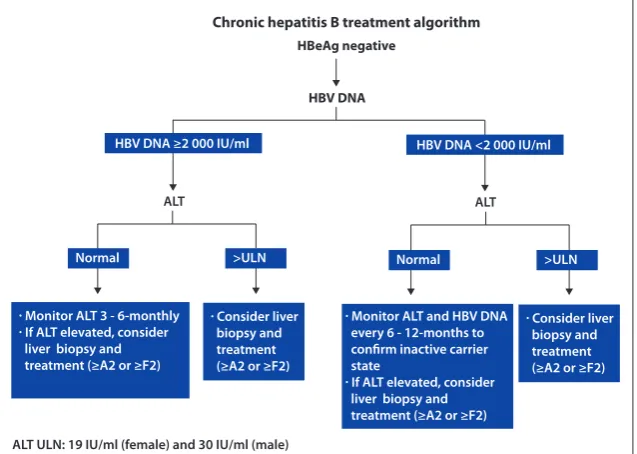
[image:4.595.214.533.531.758.2]Fig. 2. Treatment algorithm for HBeAg-negative disease. Table 4. Key points in goals of therapy
• Chronic hepatitis B infection cannot be eradicated with currently available therapies • In chronic hepatitis B, the goal of therapy is to prevent the progression to cirrhosis • In HBV cirrhosis, the goal of therapy is to prevent decompensation and HCC
• In decompensated liver disease, the goal of therapy is to improve synthetic function through viral suppression
• The ideal endpoint of therapy for both chronic HBeAg-positive and chronic HBeAg-negative disease is HBsAg loss with or without seroconversion to anti-HBs, as this correlates with the loss of transcriptionally active cccDNA
G
UIDELINE
• Durable HBeAg loss and seroconversion to anti-HBe
• Durable suppression of HBV DNA to low or undetectable levels • Normalisation of ALT.
5.2 Endpoints of treatment: HBeAg-negative disease
• The ideal endpoint is sustained HBsAg loss off therapy, with/ without the development of anti-HBs
• Durable suppression of HBV DNA to low or undetectable levels • Normalisation of ALT.
6. Definitions of response
[6]Responses may be biochemical, serological, virological or histological and vary according to the type of therapy.
6.1 Interferon-based therapy
• Primary non-response is not well established
• A virological response is an HBV DNA concentration <2 000 IU/ml, evaluated at 6 months, end of therapy; and at 6 and 12 months after completion of therapy
• A sustained off-treatment virological response is defined as HBV DNA levels <2 000 IU/ml for at least 12 months after completion of treatment
• A serological response in patients with HBeAg-positive chronic hepatitis B is HBeAg seroconversion to anti-HBe positive.
6.2 NUC therapy
• Primary non-response is a <1 log10 IU/ml decrease in HBV
DNA level from baseline at 3 months of therapy.
• A virological response is undetectable HBV DNA by real-time PCR assay within 48 weeks of therapy; evaluated every 3 - 6 months during therapy depending on the severity of the liver disease and type of NUC.
• Partial virological response is a >1 log10 IU/ml decrease in
HBV DNA, but detectable HBV DNA by real-time PCR assay. • A partial virological response should be assessed at 24 weeks
for patients on lamivudine which is moderately potent but has a low genetic barrier to resistance and at 48 weeks in patients on entecavir or tenofovir which are highly potent with a higher genetic barrier to resistance.
• Virological breakthrough is a confirmed increase in HBV DNA level >1 log10 IU/ml compared with the nadir HBV DNA level
on therapy. This usually precedes a biochemical breakthrough. The main causes of virological breakthrough are poor adherence to therapy or the development of resistance. Resistance may result in primary treatment failure or virological breakthrough on therapy.
• A sustained off-treatment virological response is defined as HBV DNA levels <2 000 IU/ml for at least 12 months after completion of treatment.
Histological response is a ≥2 points (histological activity index (HAI)) decrease in necroinflammatory activity without further progression in fibrosis compared to the pre-treatment histology.
Complete response is a sustained off-treatment virological response together with loss of HBsAg.
7. Available therapies
Six drugs are currently available in SA for treating chronic hepatitis B: • Standard interferon alpha-2a and -2b
• Pegylated interferon alpha-2a • Lamivudine
• Entecavir
• Tenofovir, which is available for off-label use alone or in combination with emtricitabine (it is not yet registered for the treatment of hepatitis B in SA, but is registered by both the European regulatory authority and the FDA for hepatitis B). The recommended first-line monotherapies include interferon-based therapy and the NUCs tenofovir and entecavir. It is important to realise that all patients with chronic hepatitis B may be potential candidates for treatment, but it is important to choose the appropriate treatment at the appropriate time.
8. Indications for treatment
The 2008 NIH guideline[8] regarding indications for hepatitis B
treatment suggests the following:
8.1 Patients who must be treated
[6,20,29-33]• Acute liver failure – in order to suppress ongoing HBV replication in an attempt to prevent ongoing hepatocyte necrosis • Decompensated cirrhosis
• Advanced fibrosis or cirrhosis and detectable serum HBV DNA, even if normal ALT
• Patients receiving chemotherapy, rituximab or immuno-suppressive therapy.
8.2 Patients who should be considered for therapy
[5,6,7]• HBeAg-positive chronic hepatitis B • HBeAg-negative chronic hepatitis B.
The decision to treat these patients and the type of treatment is clinically based on the combination of:
• Serum aminotransferase levels • Serum HBV DNA levels
• HBV genotype and HBV mutations • Histological grade and stage of the disease • Race and age of the patient
• Family history of hepatitis B-related cirrhosis and HCC • Co-factors such as alcohol, iron overload, and co-infection with
either the hepatitis C virus (HCV) or HIV.
8.3 Patients who do not require immediate therapy
[6]• Patients in the immune tolerant phase (<30 years with persistently normal ALT, no evidence of liver disease, and no family history of cirrhosis or HCC)
• Patients in the inactive carrier or latency phase (if HBV DNA >2 000 and <20 000 IU/ml and no evidence of liver disease, monitor ALT every 3 months and HBV DNA every 6 - 12 months for 3 years, then lifelong as for inactive carriers) • Occult hepatitis B.
9. Treatment of chronic hepatitis B
Over the past 4 years, the 4 major liver societies – the AASLD, EASL, APASL and WGO – have published their updated guidelines on the management of HBV infection.[5-7,9]9.1 Treatment criteria for chronic hepatitis B
G
UIDELINE
limit of normal (ULN) with high HBV DNA levels. Therefore, liver biopsy plays an important role in determining the need for therapy and the type of therapy. If the liver biopsy shows moderate to severe necro-inflammation and/or fibrosis using a standardised scoring system (≥A2 or ≥F2 on Metavir scoring), patients should be considered for treatment. Other important factors determining the need for therapy and type of therapy include patient’s age and race, potential future pregnancies in females, family history of HCC, co-factors (alcohol, iron overload and viral co-infection) and anticipated compliance with potentially lifelong NUC therapy. Antiviral therapy may also need to be considered in healthcare workers without active liver disease if they are engaged in exposure-prone procedures, in order to suppress viral replication. It is important to continue monitoring all patients with chronic HBV infection who are not on therapy as they may require treatment in the future.
See SA treatment algorithms for chronic hepatitis B (HBeAg-positive and HBeAg-negative disease) (Figs 1 and 2).
10. Management strategies
Once a decision has been made to treat a patient with chronic hepatitis B, all the pros and cons of interferon-based therapy v. NUCs need to be considered and discussed with the patient (Table 6).
10.1 General measures
All patients should be screened for IgG HAV, HCV and anti-HIV before treatment is initiated. Those found not to be immune to hepatitis A should be vaccinated.
10.2 Adverse effects of interferon-based therapy
• Initial influenza-like illness • Fatigue
• Anorexia and weight loss • Alopecia
[image:6.595.52.535.302.787.2]• Myelosuppression with neutropenia and thrombocytopenia • Hypo- and hyper-thyroidism.
Table 6. Interferon-based v. NUC treatment
Treatment Pegylated interferon NUCs
Route Subcutaneous injection Oral
Duration of treatment Finite duration: 12 months Long duration, years to lifelong Antiviral activity Moderate antiviral effects
Mostly immunomodulatory effects Potent antiviral activity HBsAg loss 3 - 7% after 1 year of treatment, depending
on whether HBeAg positive or negative 0 - 3% after 1 year of treatment, depending on agent and whether HBeAg positive or negative HBe seroconversion 25 - 35%, 3 - 5 years after completion of treatment ~20% at 1 year: sustainability poor off treatment
Viral resistance None 0 - 25% after 1 year, depending on agent
Adverse effects Frequent Uncommon
NUCs = nucleos(t)ide analogues; HBsAg = hepatitis B surface antigen; HBe = hepatitis B ‘e’.
Table 5. Major liver society guidelines for treatment of chronic hepatitis B
Major liver society guidelines*
HBeAg positive HBeAg negative
HBV DNA
IU/ml ALT HBV DNAIU/ml ALT
EASL 2012[6] >2 000 >ULN† >2 000 >ULN†
APASL 2012[7] ≥20 000 2 - 5 x ULN† ≥2 000 >2 x ULN†
AASLD 2009[5] >20 000 >2 x ULN‡
Observe for 3 - 6 months Initiate Rx, if no spontaneous HBeAg clearance
Or (+) biopsy
≥20 000** ≥2 x ULN‡ or (+) biopsy
HBeAg = hepatitis B ‘e’ antigen; ULN = upper limit of normal; HBV DNA = hepatitis B virus DNA; EASL = European Association for the Study of the Liver; APASL; Asia-Pacific Association for the Study of the Liver (APASL); AASLD = American Association for the Study of Liver Disease.
* The levels of elevation of ALT and HBV DNA that warrant consideration of treatment and the need for liver biopsy are not agreed upon by the 3 major liver societies.
† Upper limit of laboratory normal. ‡ 30 U/l for men and 19 U/l for women.
** In patients older than 40 years of age, 2 000 IU/ml should be considered as a cut-off for treatment.
AASLD:
HBeAg-positive disease: Recommends liver biopsy if ALT is 1 - 2 x ULN and: (1) HBV DNA > 20 000 IU/ml; (2) >40 years; or (3) family history of HCC. Consider therapy if histological disease.
HBeAg-negative disease: Liver biopsy if ALT 1 - 2 x ULN and HBV DNA 2 000 - 20 000 IU/ml: Consider therapy if histological disease. EASL:
Recommends liver biopsy and treatment if there is moderate to severe necroinflammation and/or fibrosis (≥grade A2 ≥stage F2 by Metavir scoring). If patients meet the treatment criteria for HBV DNA and histological severity of liver disease, treatment can be initiated even if ALT is normal.
APASL:
HBeAg positive disease: Recommends liver biopsy if HBV DNA ≥20 000 IU/ml and: (1) ALT 1 - 2 x ULN and >40 years. Treat if moderate to severe inflammation and/or fibrosis.
[image:6.595.52.527.635.774.2]G
UIDELINE
• Emotional lability and depression • Retinal changes and impaired vision
• Flare in ALT occurs in 30 - 40% of patients on treatment. The main advantages of interferon alpha-based treatment are the lack of resistance, the finite duration of therapy, the possibility of immune-mediated clearance of HBV and the slightly higher probabilities of HBeAg to anti-HBe and HBsAg to anti-HBs seroconversions rates after the 1st year of treatment. There is also a cumulative benefit, as ongoing HBeAg loss continues after cessation of therapy (25 - 35%, 3 - 5 years after therapy)[34] as does HBsAg
loss.
10.3 Interferon alpha and pegylated interferon alpha
therapy contraindications
[5,16]• Decompensated cirrhosis • Fulminant hepatitis B • Pregnancy
• Significant cardiopulmonary disease • Uncontrolled seizures
• Active autoimmune disease • Psychiatric disease • Chemotherapy.
10.4 Factors favouring interferon alpha or pegylated
interferon alpha as initial therapy
[5,6]10.4.1 Favourable predictors of response 10.4.1.1 Pretreatment
HBeAg-positive chronic hepatitis B (predictors of anti-HBe sero-conversion)
• Low viral load: HBV DNA <1 x 10⁷ IU/ml. Note that definitions
of low viral load vary from <2 x 10⁶ to <2 x 10⁸ IU/ml
• ALT >2 - 5 x ULN
• Active necroinflammation on biopsy (Metavir Grade ≥A2) • Genotype A and B > C and D,[35-37] although choice of treatment
should not be based on genotype alone. HBeAg-negative chronic hepatitis B
• No strong pre-treatment predictors of virological response. 10.4.1.2 During treatment
HBeAg-positive chronic hepatitis B
• HBV DNA <20 000 IU/ml at 12 weeks of pegylated interferon alpha therapy is associated with a 50% chance of anti-HBe seroconversion.
• ALT flare followed by an HBV DNA decrease is associated with more frequent anti-HBe seroconversion.
• HBeAg decrease to <100 IU/ml at week 24 may predict anti-HBe seroconversion, if HBeAg quantification is available.[38]
• HBsAg level <1 500 IU/ml at week 12 of pegylated interferon alpha therapy is associated with a 57% chance of sustained immune control (anti-HBe seroconversion 6 months post therapy).[39]
HBsAg >20 000 IU/ml at week 12 is associated with low rate of anti-HBe seroconversion and treatment can be stopped. HBeAg-negative chronic hepatitis B
• HBV DNA <20 000 IU/ml at 12 weeks of pegylated interferon alpha therapy is associated with a 50% chance of a sustained off-treatment response (normal ALT and HBV DNA <2 000 IU/ml)[38,40]
• Decreases in quantified HBsAg levels of >0.5 log10 IU/ml and
>1 log10 IU/ml at weeks 12 and 24 of therapy, respectively, have high predictive values for undetectable HBV DNA 24 weeks post completion of treatment.[41]
10.4.2 Patient demographics[5,34]
Younger patients, and particularly young women wanting future pregnancies.
10.4.3 No co-infection with HIV
10.4.4 HCV co -infection with HBV
10.5 Factors favouring NUC as initial therapy
• High HBV DNA levels (>2 x 10⁸ IU/ml)
• Patient demographics: older patients
• Ability to commit to potentially lifelong therapy • HIV co-infection
• Contraindications to interferon-based therapy • HBV genotype does not influence response to NUCs.
For both interferon-based and NUC therapy: low HBV DNA levels <1 x 10⁷ IU/ml, ALT >2 - 5 x ULN and active necroinflammation on
biopsy are predictive of anti-HBe seroconversion.
10.6 Duration of treatment and dosage regimens
[5,6]10.6.1 Pegylated interferon alpha-2a
A 48-week course of 180 μg pegylated interferon alpha-2a, given subcutaneously weekly, should be considered as first-line therapy in both HBeAg-positive and HBeAg-negative disease in patients with a favourable pre-treatment profile (ALT >3 x ULN, HBV DNA <2 x 10⁶ IU/ml, genotype A and B and active necroinflammation
on liver biopsy).
If the HBV DNA levels are detectable, but <2 000 IU/ml at 48 weeks, there is no need for ongoing NUC treatment unless the patient is cirrhotic or has ≥F3 fibrosis. However, ongoing monitoring is required. If the HBV DNA levels are >2 000 IU/ml at 48 weeks, ongoing treatment with NUCs is required.
10.6.2 Interferon alpha-2a or -2b
Interferon alpha-2a or -2b given subcutaneously 3 times a week for 16 - 24 weeks is less expensive than pegylated interferon alpha and is effective in carefully selected patients.
Potential suitable candidates are HBeAg positive with high baseline ALT levels, low HBV DNA levels and active necroinflammation on biopsy.
The dosage of interferon alpha can be titrated from 1 to 10 MU subcutaneously 3 times a week or 5 MU daily. In the SA setting, dosages seldom exceed 5 million units 3 times a week and are usually 3 million units 3 times a week. The recommended dosage for children is 6 MU/ m2
3 times a week with a maximum dosage of 10 MU 3 times a week. A liver biopsy is mandatory when considering treatment with either pegylated interferon alpha-2a or standard interferon alpha. 10.6.3 NUCs
A finite duration of treatment may be achievable in HBeAg-positive patients who achieve anti-HBe seroconversion and undetectable HBV DNA levels on treatment.
This is only possible with potent NUCs such as entecavir and tenofovir which have a high genetic barrier to resistance. Once HBeAg to anti-HBe seroconversion has occurred, treatment should be consolidated and continued for at least 1 year. Careful follow-up after the cessation of successful treatment is important as follow-up to 20% of patients may relapse and become HBeAg positive again. Continuation of therapy until HBsAg seroconversion is advisable.[42]
G
UIDELINE
Lamivudine: The recommended dosage for adults with normal renal function (creatinine clearance >50 ml/min) is 100 mg/day. Dosage reduction is necessary in patients with impaired renal function. A practical issue is that given the availability and use of lamivudine in the treatment of HIV in SA, the use of the 150 mg tablet daily in the treatment of hepatitis B mono-infection is acceptable.
The recommended dosage for children is 3 mg/kg/day with a maximum dosage of 100 mg/day. A liquid formulation for children is available. Patients who are HIV/HBV co-infected should receive lamivudine 150 mg bd.
Tenofovir: The recommended dosage for adults with normal renal function (creatinine clearance >50 ml/min) is 300 mg per day. It is necessary to reduce the dosage in patients with impaired renal function.
Entecavir: The recommended dosage for adults with normal renal function (creatinine clearance >50 ml/min) is 0.5 mg daily if lamivudine naïve and 1 mg daily if previously exposed to lamivudine or if lamivudine refractory or resistant. Dosage reduction is necessary in patients with impaired renal function.
11. Treatment of patients with
compensated cirrhosis
Treatment should be considered in patients with compensated cirrhosis and detectable HBV DNA levels.[6,20,43]
Interferon-based therapy can be used in compensated cirrhosis, but does increase the risk of infections and decompensation. If interferon-based therapy is used, it is important to titrate the dose of standard interferon/pegylated interferon with careful monitoring of the FBC, differential count and ALT. The duration of therapy (16 - 24 weeks for standard interferon and 48 weeks for pegylated interferon) should be timed from the point that the maximum dosage was achieved during the titration.
NUCs are well tolerated and a potent NUC with a high genetic barrier to resistance should be used, e.g. tenofovir or entecavir. If lamivudine is used, it is advisable that it be combined with tenofovir. Long-term therapy is required and regular monitoring of HBV DNA levels is essential. Any decompensation on NUC therapy could be due to the natural progression of the disease or the development of HCC, but it is critical to first exclude non-compliance or the development of resistance as a factor. Current evidence suggests that prolonged and effective suppression of HBV DNA replication can stabilise and even prevent or delay the need for liver transplantation.[20] NUC therapy is
usually lifelong.
12. Treatment of decompensated
cirrhosis
All patients with decompensated cirrhosis should be considered for urgent treatment. Interferon-based therapy is contraindicated and only NUCs should be used.[5,6,8,16] Treatment is indicated even
if the HBV DNA level is low or undetectable, in order to prevent flares/reactivation. Treatment with NUCs may lead to clinical improvement over a period of 3 - 6 months. If there is ongoing deterioration, treatment with NUCs is important to suppress the HBV DNA and thereby decrease the risk of hepatitis B recurrence post-liver transplantation. In unstable patients with deteriorating renal function, it is advisable to start with lamivudine and add in tenofovir once the clinical condition has stabilised. If entecavir is used, the recommended dosage is 1 mg daily and patients should be monitored for lactic acidosis. Lifelong treatment is recommended.
13. Treatment of patients in the
inactive carrier state or the immune
tolerant phase who require
immunosuppressive therapy,
rituximab or chemotherapy
• HBsAg and IgG anti-HBc should be tested before the introduction of immunosuppressive therapy, rituximab or chemotherapy.[44-46]
• If either HBsAg or IgG anti-HBc is positive, HBV DNA levels should be measured.
• If HBsAg negative, IgG anti-HBc positive and HBV DNA is detectable, NUC therapy is indicated as for HBsAg-positive patients.
• If HBsAg negative, IgG anti-HBc positive and HBV DNA is undetectable, no treatment is needed, but ALT and HBV DNA levels should be monitored at regular intervals (1 - 3-monthly) depending on immunotherapy type; treatment should be initiated when HBV DNA becomes detectable. If regular HBV DNA level monitoring is not possible, NUC therapy is also indicated. • If HBsAg positive and HBV DNA <2 000 IU/ml, then treatment
with an NUC should be continued for 12 months after completion of immunosuppressive therapy. Lamivudine can be used, if anticipated duration of treatment is not >12 months and HBV DNA level is <2 000 IU/ml.
• If HBsAg positive and HBV DNA ≥2 000 IU/ml, an NUC with a high genetic barrier to resistance (tenofovir or entecavir) should be used and continued until the usual treatment endpoint has been achieved. Tenofovir or entecavir should also be used, if lengthy and repeated cycles of immunosuppression are needed.
• Where possible, antiviral therapy should be initiated before the onset of immunosuppressive therapy, rituximab or chemotherapy, and HBV DNA levels should be undetectable.[47]
• IgG anti-HBc-positive patients receiving bone marrow or stem cell transplants should also receive NUC prophylaxis.
14. Combination therapy
There are as yet no data confirming the advantage of combination therapy.
The most commonly used combination therapies are tenofovir plus lamivudine or tenofovir plus emtricitabine, which may be considered in the following situations:[6,48,49]
• Patients with high baseline HBV DNA levels who are at greater risk of developing resistance
• Cirrhotic patients in whom a biochemical breakthrough associated with the development of resistance is potentially life threatening • Post-liver transplantation together with hepatitis B immune
globulin (HBIG)
• HIV/HBV co-infection where there is a risk of resistance with monotherapy
• A suboptimal response to an initial drug, especially in the presence of high HBV DNA levels
• Established resistance to an NUC.
15. Monitoring therapy
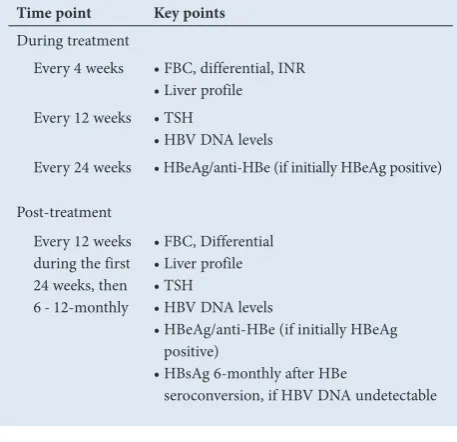
[5,6]15.1 Pegylated interferon alpha (Table 7)
15.1.1. During treatment
G
UIDELINE
• Serum HBV DNA levels should be measured at weeks 12 and 24 on treatment to assess the primary response and at end of treatment. • Serum thyroid-stimulating hormone (TSH) every 12 weeks. • Monitor for known side-effects of interferon.
15.1.2 Post treatment
• FBC, differential count, liver profile, TSH, HBV DNA levels, HBeAg/anti-HBe (if initially HBeAg positive) should be measured every 12 weeks during the first 24 weeks post treatment and then 6 - 12-monthly
• FBC, differential count, liver profile and DNA levels may need more frequent monitoring if patient is unstable • 6 - 12-monthly HBsAg monitoring.
HBeAg-positive disease: Aim for a sustained off-treatment anti-HBe seroconversion, ALT normalisation and HBV DNA <2 000 IU/ml.
Undetectable HBV DNA by real-time PCR is associated with increased chance of HBsAg loss:
• Test for HBeAg and anti-HBe at weeks 24 and 48 of treatment and 24 weeks post treatment. HBsAg should be checked 6 monthly after HBeAg to anti-HBe seroconversion if HBV DNA is undetectable.
• If a 1 log10 reduction in HBV DNA levels is not achieved at 12
weeks, the pegylated interferon alpha should be stopped and an NUC introduced.
HBeAg-negative disease: Aim for a sustained off-treatment virological response with HBV DNA levels <2 000 IU/ml and ALT normalisation.
Undetectable HBV DNA by real-time PCR is associated with increased chance of long-term HBsAg loss:
• Monitor HBsAg 6-monthly, if HBV DNA levels undetectable • If a 1 log10 reduction in HBV DNA levels is not achieved at 12
weeks, the pegylated interferon alpha should be stopped and an NUC introduced.
15.2 NUC therapy (Table 8)
• FBC, differential count, INR, liver profile, amylase and creatinine assessment should be performed at weeks and 4 and then 3-monthly if stable.
• HBV DNA levels are measured at week 12 to assess virological response and then every 12 - 24 weeks.
• HBV DNA monitoring is critical to detect treatment failure. Undetectable HBV DNA levels by real-time PCR (level of detection <10 - 15 IU/ml) need to be achieved to prevent the development of resistance.
• Partial responses (HBV DNA level detectable but <2 000 IU/ ml) are assessed at 24 weeks for lamivudine and at 48 weeks for tenofovir and entecavir. If HBV DNA levels are still positive, but declining at 48 weeks on tenofovir or entecavir, monotherapy can be continued.[49]
• NUCs require dosage adjustments in the setting of renal impairment.
15.2.1 HBeAg-positive disease
• HBeAg and anti-HBe should be measured every 6 - 12 months. Consider stopping NUCs 48 weeks after HBeAg seroconversion; however, this must be carefully considered and if it is stopped, the patient must be monitored closely. In patients with cirrhosis or previous hepatic decompensation, NUCs should never be stopped.
• HBsAg should be checked 6-monthly after anti-HBe sero-conversion.
15.2.2 HBeAg-negative disease
• A virological response (HBV DNA < 2000 IU/ml) is associated with disease remission
• Monitor HBsAg 6-monthly, if HBV DNA levels are undetectable. (See Table 8 for key points for monitoring NUC therapy.)
16. Management of nucleos(t)ide
resistance
[5,6]• Lamivudine resistance: Add tenofovir or switch to tenofovir/ emtricitabine. Screen for tyrosine-methionine-aspartate-aspartate (YMDD) mutations, if available.
• Entecavir resistance: Add or switch to tenofovir or switch to tenofovir plus emtricitabine. The safety of an entecavir/tenofovir combination is not known.
[image:9.595.67.296.129.350.2]• Tenofovir: resistance has not yet been described. Table 7. Key points in monitoring interferon-based therapy
Time point Key points
During treatment
Every 4 weeks • FBC, differential, INR • Liver profile Every 12 weeks • TSH
• HBV DNA levels
Every 24 weeks • HBeAg/anti-HBe (if initially HBeAg positive) Post-treatment
Every 12 weeks during the first 24 weeks, then 6 - 12-monthly
• FBC, Differential • Liver profile • TSH
• HBV DNA levels
• HBeAg/anti-HBe (if initially HBeAg positive)
• HBsAg 6-monthly after HBe
[image:9.595.67.295.369.555.2]seroconversion, if HBV DNA undetectable
Table 8. Key points in monitoring NUC therapy
Time point Key points
Weeks 1 and 4 • Liver profile, serum creatinine and amylase
• FBC, differential, INR Every 12 weeks • Liver profile
• Serum creatinine (if receiving tenofovir or entecavir)
Every 12 - 24 weeks • HBV DNA levels
Every 24 weeks • HBeAg/anti-HBe (if initially HBeAg positive) Every 6 - 12 months • HBsAg in HBeAg-positive patients after
anti-HBe seroconversion
G
UIDELINE
17. Monitoring of patients not
considered for therapy
[5]17.1 Immune tolerant phase (HBeAg positive, HBV
DNA >20 000 IU/ml, normal ALT)
• ALT and HBV DNA levels every 3 - 6 months, more often if ALT becomes elevated.
• HBeAg status every 6 - 12 months.
• If ALT levels are 1 - 2 x ULN, recheck ALT every 1 - 3 months. Consider liver biopsy if the patient is >40 years of age, and if ALT is borderline or mildly elevated on serial tests. Consider treatment if biopsy shows moderate/severe inflammation or significant fibrosis.
• If ALT is >2 x ULN for 3 - 6 months, HBeAg positive and HBV DNA is >20 000 IU/ml, consider liver biopsy and treatment. • Consider screening for HCC in the relevant population.
17.2 Inactive HBsAg carrier state (HBsAg positive, HBV
DNA <2 000 IU/ml, normal ALT)
• Monitor ALT and HBV DNA levels every 3 - 4 months for 1 year. • If ALT is persistently normal and HBV DNA <2 000 IU/ml, then
check ALT and HBV DNA every 6 - 12 months.
• If ALT >1 - 2 x ULN, check serum HBV DNA level and exclude other causes of liver disease. Consider liver biopsy if ALT is borderline or mildly elevated on serial tests, or if HBV DNA is persistently ≥2 000 IU/ml. Consider treatment if biopsy shows moderate/severe inflammation or significant fibrosis.
• Consider screening for HCC in relevant populations.
18. Special patient populations
[5,6]18.1 Pregnancy
Interferon-based therapy is contraindicated in pregnancy and family planning should always be discussed before embarking on therapy.
Lamivudine and entecavir are category C drugs and tenofovir is a category B drug. Data in HIV-positive pregnant women suggest that the use of lamivudine, emtricitabine and tenofovir is safe.[50,51] There is
evidence that in HBsAg-positive women with high levels of viraemia (HBV DNA >2 x 10⁷ IU/ml), treatment with lamivudine during the last
trimester reduces the risk of intra-uterine and perinatal transmission of HBV, when given in addition to HBIG and HBV vaccination at delivery.[52] It is now recommended that lamivudine or tenofovir should
be used in the last trimester in HBsAg-positive women with high viral loads (serum HBV DNA >1 x 10⁶-7 IU/ml), to prevent intra-uterine
and perinatal HBV transmission. NUC therapy can be discontinued 3 months post-delivery if only required for prevention of perinatal transmission.
HBV-infected women should be monitored closely after delivery as flares may occur.[53]
18.2 Healthcare workers
Healthcare workers who are HBsAg positive and have HBV DNA levels ≥2 000 IU/ml should be treated with a potent antiviral agent with a high genetic barrier to resistance, such as tenofovir or entecavir. The HBV DNA level should preferably be undetectable or at least <2 000 IU/ml before such an individual may return to exposure-prone procedures.[6]
18.3 Children
Chronic hepatitis B is typically benign in children as they are usually in the immune tolerant phase. Only standard interferon alpha, lamivudine and adefovir have been evaluated in children.[54,55]
In children with abnormal liver profiles, one should be guided by the histology in determining the need for treatment. In SA the
choice is between standard interferon alpha or lamivudine therapy. Long-term use of lamivudine is associated with the development of resistance (70% at 5 years).
18.4 Dialysis and renal transplant patients
The dosages of lamivudine, tenofovir and entecavir need to be carefully adjusted in patients with impaired renal function. Tenofovir or entecavir can be used in renal transplant patients and the dosage adjusted according to the renal graft function. Interferon-based therapy is not recommended in renal transplant recipients because of the risk of graft rejection. All HBsAg-positive patients undergoing renal transplantation should receive prophylactic NUC therapy.
18.5 Extrahepatic disease
Patients with chronic hepatitis B and active HBV replication who present with extrahepatic disease (polyarteritis nodosa, glomerulo-nephritis) should be considered for therapy with NUCs, but efficacy is variable. Lamivudine has been most widely used, but tenofovir or entecavir are now preferable, provided renal function permits their use. Plasmapheresis and steroids, in combination with an NUC, have been used in the initial phase of treatment. Interferon-based therapy may worsen immune-mediated extra-hepatic manifestations.
18.6 HBV/HCV co-infected patients
HCV co-infection accelerates the progression of liver disease and increases the risk of HCC. However, in co-infected patients, HBV DNA levels tend to be low and the hepatitis C virus is usually responsible for disease activity. Liver biopsy and HBV DNA levels are useful in establishing the contribution of hepatitis B to disease activity. The patient should be treated with pegylated interferon alpha and ribavirin, as indicated for chronic hepatitis C.[56] Sustained
virological responses are similar to reponses in those who are mono-infected.[57-59] In individuals with chronic hepatitis C genotype 2
and 3, if the chronic hepatitis B requires treatment, then pegylated interferon alpha could be continued for 1 year or NUC therapy considered. There is a potential risk of HBV reactivation during treatment or after HCV clearance, which should be treated with NUCs.
18.7 HBV/HIV co-infected patients
HBV/HIV co-infected patients are at greater risk of progression to cirrhosis and have a higher risk of HCC.[3,60-62] As immune reconstitution,
following the initiation of antiretrovirals, can lead to potentially life-threatening flares of hepatitis B, all HBV/HIV co-infected patients with a CD4 count ≤350 cells/ml should receive antiretroviral therapy that is also active against the HBV. Therapy should include lamivudine, tenofovir or tenofovir/emtricitabine, together with a third agent active against HIV.[63] If antiretrovirals need to be changed because of HIV
resistance or drug toxicity, then tenofovir and lamivudine or tenofovir/ emtricitabine should be continued together with the new antiretroviral drugs. Pegylated interferon is only considered in patients who have a CD4 count >500 cells/ml.[16]
18.8 Severe acute hepatitis B
Antiviral therapy is not necessary for uncomplicated symptomatic acute hepatitis B, as >95% of immunocompetent adults will spontaneously clear HBV. It has been reported that lamivudine improves survival in patients with severe or fulminant hepatitis
B.[30,32] Treatment of these patients is also justified, as reducing HBV
G
UIDELINE
(elevated INR >1.5 and marked jaundice persisting for longer than 4 weeks).[11] It is also recommended that elderly or immunosuppressed
patients and those co-infected with HCV should be treated, as they are more likely to have a subfulminant/fulminant course.
Lamivudine can be used in the acute setting as treatment is usually of short duration, unless liver transplantation is required. Entecavir can also be used. However, tenofovir has the potential for nephrotoxicity and should be used with caution when the patient’s clinical condition is unstable in the acute setting. NUC therapy should be continued for at least 3 months after seroconversion to anti-HBs, or 12 months after anti-HBe seroconversion without HBsAg loss, or indefinitely if the patient undergoes liver transplantation.
Interferon-based therapy is contraindicated because of the risk of acute liver failure.
19. Prevention of hepatitis B
19.1 Prevention of transmission of hepatitis B from
individuals with chronic HBV infection
Patients with chronic hepatitis B should receive counselling regarding cofactors likely to accelerate disease progression (such as alcohol), the risk and modes of transmission and the need for long-term follow-up.
The following is advised:
• Abstinence. Significant ethanol intake (>20 g/day in women and >30 g/day in men) is associated with an increased risk of development of cirrhosis.[64,65]
• Household members and sexual partners are at increased risk of HBV infection and should be vaccinated if they are HBsAg, anti-HBs and IgG anti-HBc negative.
• Individuals who are HBsAg positive should:
• Use barrier protection during sexual intercourse if the partner is neither immune nor has been vaccinated
• Not share razors or toothbrushes • Not donate blood, organs or sperm
• Follow standard universal precautions with open cuts or bleeding • Inform their dentist of their HBV status.
19.2 Post-exposure prophylaxis
19.2.1 Needlestick injury/sexual exposure/mucosal or percutaneous (bite) exposure
• Wounds should be washed with soap and water, and mucous membranes flushed with water.
• Source individual should be screened for HBsAg, HIV and HCV Ab.
• Check HBsAg, anti-HBs and IgG anti-HBc in the exposed individual, to assess whether the individual is infected, immune or non-immune to hepatitis B.
• If source individual is HBsAg positive or status is unknown, give HBIG (0.06 ml/kg or 500 IU) intramuscularly and commence active vaccination (0, 1 and 2 months) if exposed individual is non-immune. HBIG and vaccine to be given at different injection sites. Repeat HBIG at 1 month, if the contact is HBeAg positive, has high HBV DNA levels or if this information is not known. If the exposed individual is a known non-responder to HBV vaccination, then 2 doses of HBIG should be given 1 month apart.
• Anti-HBs titres should be measured 1 - 2 months after vaccination.
19.2.2 Babies born to HBsAg-positive mothers
• HBIG (200 IU IM) and hepatitis B vaccine should be administered at different sites within 12 hours of delivery.[66] The vaccine and
immunoglobulin must be given at different injection sites. Thereafter, the same immunisation schedule is followed as for other infants, with additional doses of HBV vaccine given at 6, 10 and 14 weeks according to the South African EPI.
• Ideally the active and passive immunisation should be given within 24 hours of delivery (preferably <12 hours), but immunisation is probably protective if administered up to 72 hours after delivery.
• The combination of active and passive immunisation is 95% effective in preventing perinatal transmission, but this is probably lower if the maternal HBV DNA levels are >2 x 10⁷ IU/ml.
• If the mother is HBeAg positive or has high HBV DNA levels, HBIG can be repeated at 1 month.
• HBsAg and anti-HBs titres should be measured at 9 - 18 months of age. If anti-HBs titres are <10 mIU/ml, a second course of vaccination should be given. If HBsAg positive, the infant should be referred for further monitoring.
19.2.3 Prevention of recurrent hepatitis B after liver transplantation Pre-transplant therapy with a potent NUC and a high genetic barrier to resistance is recommended for all HBsAg-positive patients undergoing liver transplantation, in an attempt to achieve an undetectable HBV DNA level before transplantation.[67-70] Post
transplantation, an NUC must be used in combination with HBIG. To date, lamivudine and/or adefovir have been used in combination with HBIG and this has reduced the risk of recurrent hepatitis B to <10%. However, the more potent NUCs with lower risks of resistance (entecavir, tenofovir) or combination NUC therapy (lamivudine and tenofir or tenofovir/emtricitabine) should now be used together with HBIG. Lifelong antiviral therapy to prevent recurrent hepatitis B is required. The dosage, mode of administration (IVI or IMI) and duration of HBIG therapy in combination with potent NUCs are not yet established.
19.2.4 Prevention of hepatitis B following transplantation of non-hepatic organs from donors who are HBsAg negative and IgG HBcAb positive
• Risk of infection is low, ranging from 0 to 13%[71]
• Should ideally be given to an HBV-immune recipient
• If the recipient is HBV seronegative, antiviral therapy should be given to prevent de novo hepatitis B, particularly if the donor is HBV DNA positive
• Optimal duration of prophylactic treatment is not known, but 6 - 12 months might be sufficient.
19.2.5 Prevention of hepatitis B following the transplantation of livers from donors who are HBsAg negative and IgG HBcAb positive
• Risk of de novo hepatitis B infection is as high as 75%[72-74]
depending on the HBV immune status of the recipient. The risk is particularly high in endemic countries such as SA, where these donors often have occult hepatitis B.
• Lifelong antiviral therapy is recommended.[75]