Supervisor: Ulf Johansson
Multichannel Segmentation vs. Demographic Segmentation
The Establishment of a Multichannel Segmentation Model
for High Involvement Products and a
Comparison to a Demographic Segmentation Model
Master Thesis
MSc International Marketing and Brand Management 2016/2017 Lund University
School of Economics and Management
Abstract
The aim of this study is to generate a multichannel segmentation model for high involvement products and to compare it to the widely spread demographic segmentation. In addition, the study also aims to identify demographic and psychographic profiles to provide a rich descriptive picture of the new customer segments. The study combines the literature of the multichannel and segmentation fields. Moreover, it builds upon the knowledge of previous multichannel segmentation models, which exclusively focused on specific product categories and industries by investigating the effects of a high product involvement on consumers’ channel preferences and channel selections. To accomplish these aims, the study at hand utilizes a quantitative approach within the frame of a single case study that focuses on IKEA Sweden. The analysis reveals that the multichannel segmentation model entails a unique set of segments when looking at high involvement products. These segments are strongly directed towards offline channels as three out of four segments showed preferences for offline channels while only one segment showed a slight preference for online channels. Furthermore, two segments selected offline channels exclusively. The other two segments display a multichannel behavior as they selected both offline and online channels for purchasing high involvement products, yet these two segments selected offline channels more recently than online channels. Additionally, the multichannel segmentation model might be a more contemporary relevant segmentation model than the traditional demographic segmentation model. Even though these findings are only directly applicable to the previous research, these findings nevertheless support both, theoretically and practically, the relevance and topicality of research in this field. First, this paper provides a theoretical basis for further investigations that focus on product involvement and second, it establishes a valuable practical instrument to segment and categorize customers within a multichannel environment.
Keywords
Demographic segmentation; multichannel segmentation; product involvement; retail management
Acknowledgements
This thesis marks the last chapter in our studies by obtaining the Master of Science in Marketing and Brand Management at the Lund University School of Economics and Management. Looking back at the academic rollercoaster that we took throughout our whole studies, the last ten weeks in which we developed this thesis, were one of the most stressful, but also one of the most rewarding times. The development of this thesis took us on a journey full of new, challenging and inspiring experiences. We would like to thank some people that guided, encouraged and motivated us along the way to reach the final destination of the master program.
First, we would like to thank Ulf Johansson, who always gave us valuable and open feedback, inspired us with academically relevant ideas and motivated us to stay in focus throughout the ten weeks.
Further, we would like to thank IKEA Sweden for providing us with the sufficient information and data to make this thesis a success. A special thanks goes to Cecilia Cederlid, Sanna Cronqvist and Peter Nilsson that believed in our ideas and invested a lot of time in answering our questions and helped us to accomplish our goals, which we highly appreciate. And last but not least, we would like to thank our family and friends for the mental support, by listening to our thoughts and problems, throughout the ten weeks and also throughout our whole studies.
Table of Contents
1. INTRODUCTION ... 1
1.1 BACKGROUND ... 1
1.1.1 The Revolution of Segmentation ... 1
1.1.2 The Era of Multichannel ... 3
1.2 PROBLEM DEFINITION ... 5
1.3 PURPOSE OF THE STUDY ... 6
1.4 INTENDED CONTRIBUTIONS ... 7
1.4.1 Theoretical Contributions ... 7
1.4.2 Practical Contributions ... 7
1.5 OUTLINE OF THE THESIS ... 8
2. LITERATURE REVIEW ... 9
2.1 MULTICHANNEL RETAILING ... 9
2.2 CHARACTERISTICS OF THE CHANNELS ... 10
2.2.1 Offline Channel ... 11
2.2.2 Online Channel ... 11
2.3 CHARACTERISTICS OF THE PRODUCT ... 12
2.4 CHARACTERISTICS OF THE CONSUMER ... 13
2.4.1 Demographics ... 13 2.4.2 Psychographics ... 15 2.5 THEORETICAL FRAMEWORK ... 17 2.6 CHAPTER SUMMARY ... 18 3. METHODOLOGY ... 20 3.1 THE PHILOSOPHICAL ASSUMPTIONS ... 20 3.2 RESEARCH STRATEGY ... 21 3.3 RESEARCH DESIGN ... 21
3.4 SAMPLING AND DATA COLLECTION ... 22
3.5 MEASUREMENTS ... 24
3.6 DATA ANALYSIS ... 25
3.6.1 The Multichannel Segmentation Model for High Involvement Products ... 26
3.6.2 Profiling the Segments ... 26
3.6.3 Comparison of the Segmentation Models ... 27
3.7 POTENTIAL LIMITATIONS AND WEAKNESSES ... 27
3.8 CHAPTER SUMMARY ... 28
4. RESULTS AND ANALYSIS ... 30
4.1 THE MULTICHANNEL SEGMENTATION MODEL FOR HIGH INVOLVEMENT PRODUCTS ... 30
4.2 PROFILING THE SEGMENTS ... 34
4.2.1 Uninvolved Offliners ... 36 4.2.2 Ambiguous Onliners ... 36 4.2.3 Strict Offliners ... 36 4.2.4 Ambiguous Offliners ... 36 4.2.5 Demographics ... 37 4.2.6 Psychographics ... 40
4.3 COMPARISON OF THE SEGMENTATION MODELS ... 44
4.4 CHAPTER SUMMARY ... 45
5. CONCLUSION ... 46
5.1 THEORETICAL CONTRIBUTIONS ... 47
5.2 PRACTICAL CONTRIBUTIONS ... 48
5.3 LIMITATIONS AND FUTURE RESEARCH ... 50
6. REFERENCE LIST ... 52
APPENDIX B ... 62 APPENDIX C ... 64
List of Tables
Table 1: Summary of the benefits and disadvantages of each channel ... 12
Table 2: Percentage change in heterogeneity regarding the clustering solutions ... 30
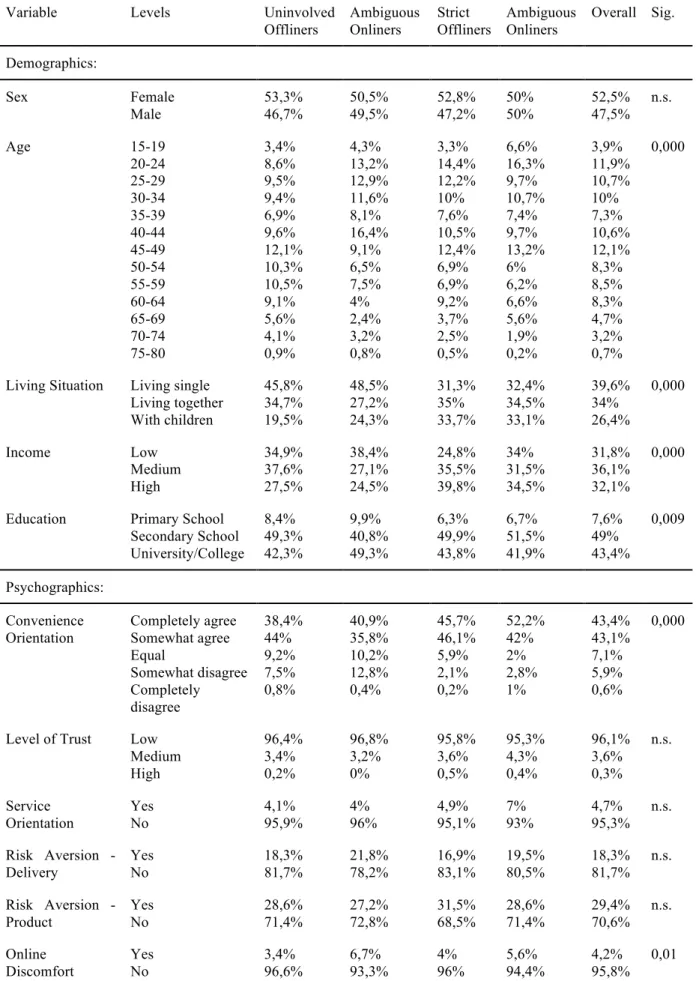
Table 3: Summary statistics of the profiling variables ... 35
List of Figures
Figure 1: Positioning of the research ... 4
Figure 2: Illustration of the aim of the research ... 6
Figure 3: Theoretical framework ... 18
Figure 4: The data analysis procedure ... 25
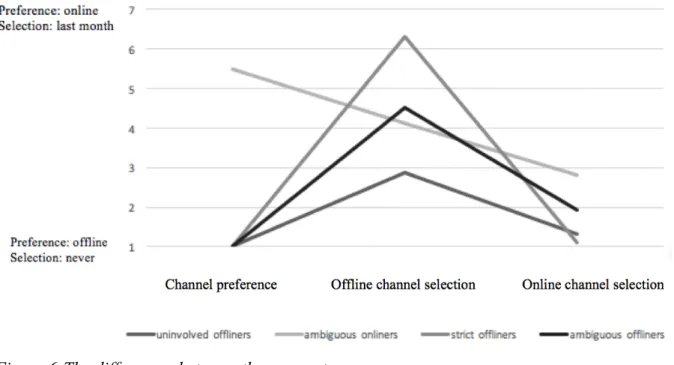
Figure 5: Distribution of the segments ... 31
1. Introduction
The introduction chapter will begin with an introduction of the fields of segmentation and multichannel retailing, emphasizing the challenges of traditional segmentation models as well as the opportunities and challenges that accompany the emergence of multichannel retailing. It will be followed with a description of the positioning of this research and the definition of the problem that the study will investigate. Then, the study’s main and sub purposes will be presented, which will then be followed by the presentation of its intended theoretical and practical contribution. Lastly, the introduction chapter will provide an overview of the structure of the thesis.
1.1
Background
The retail sector is a steadily changing environment, which is governed by different economic, societal and technological factors. Changes in consumption patterns of consumers, as well as developments and trends regarding the way retailers market their products, are tightly connected to the emergence of more diverse lifestyles in Western countries (Wang, Malthouse & Krishnamurthi, 2015; Fuat Firaz & Shultz, 1997). Since retailers offer multiple diverse channels, such as stores, websites or mobile platforms, with which customers interact, consumption is becoming more complex in its nature (Ansari, Mela & Neslin, 2008; Verhoef, Kannan & Inman, 2015; Polo & Sese, 2016). These diverse lifestyles and individualistic consumer behaviors lead to a fragmented market that is characterized by consumers with individual desires and needs. This makes the division and categorization of a market into segments or units increasingly complicated for retailers today (McGoldrick & Collins, 2007; Quinn, Hines & Bennison, 2007).
1.1.1 The Revolution of Segmentation
In the past, traditional market segmentation models were a helpful tool for marketing managers to direct their marketing activities towards homogeneous groups, which gave retailers the advantage of targeting groups with similar needs and consumer behaviors (Söderlund, 1998). The traditional segmentation models find their roots in Smith’s (1956) definition of market segmentation; that is, the division of a heterogeneous market into more homogeneous sub-markets according to their preferences and wants to meet the customer’s expectations more accurately. A market segment is an accumulation of individuals that share the same characteristics, needs and shopping behaviors and that are clearly identifiable as being part of the specific segment (Chin-Feng, 2002). Accordingly, they also clearly distinguish themselves from other market segments. Pride and Ferrell (1983) build on Smith’s (1956) definition and argue that every market segment has to be seen as a market in itself, demanding an adjusted marketing strategy and an exclusive message to satisfy its needs. This allows retailers to target and stimulate their target markets more precisely and effectively, which in turn maximizes profitability, customer satisfaction and the overall growth (Krüger & Stumpf, 2013; Venkatesan, Kumar & Ravishanker, 2007). Thus, segmentation is a key concept within the execution of strategic marketing, supporting companies to adapt and deliver their value propositions to specific groups of customers and to simultaneously distinguish themselves from their competitors (Kamineni, 2005) by understanding the diverse needs of different customer segments and their diverse behaviors (Karimi, Papamichail & Holland, 2015). As a result, these actions add more value to products and services.
Traditionally, and most commonly, the segmentation of a market into sub-markets is based on psychographic, demographic, behavioral and geographical variables. For instance, a psychographic segmentation is based on variables like lifestyles, personalities and social classes, whereas the demographic segmentation includes variables such as an individual’s age, income, sex, household size or stage in life. In addition to these two approaches, a behavioral segmentation captures the usage rate, purchase occasion and purchase frequency. Lastly, according to the geographical segmentation customers get segmented based on characteristics such as country and region specific sizes or densities (Kotler, Wong, Saunders & Armstrong, 2005). Besides these traditional segmentation models, and responding to changes in consumption patterns and retailing, new forms of segmentation models have routinely emerged, like the multichannel segmentation (Konuş, Verhoef & Neslin, 2008; Sands, Ferraro, Campbell, & Pallant, 2016). These are trying to more precisely capture characteristics of various segments in order to better understand the different needs and behaviors than traditional models by taking novel forms of shopping and new retail formats into account. In addition, these new approaches also aim for introducing more suitable tools for companies to make even better business. However, all of the segmentation models that have been introduced in previous literatures assume a heterogeneous market and aim for the division of the whole market into more tangible and homogenous sub-markets.
Within retailing, the demographic segmentation is one of the most popular approaches to segment customers and markets (Fill, 2002; Quinn, Hines & Bennison, 2007; Parment, 2013). Retailers that use demographic variables to segment their customers include for example IKEA, which traditionally segments its customers regarding their living situation (Sanna Cronqvist & Peter Nilsson, personal communication, 21 February 2017), as well as several automotive retailers that separate their markets based on income (McKinsey, 2013). However, using only demographics as the basis for customer segmentation might be inefficient and insufficient to the future of retailing (Parment, 2013; Quinn, Hines & Bennison, 2007). Therefore, customers that share the same demographic variables might still be characterized by various shopping motivations and values, which makes the use of demographics less valuable with regards to the purpose of customer segmentation to form homogeneous segments (Chin-Feng, 2002; Kotler & Armstrong, 1999; Morgan, Levy & Fortin, 2003). Furthermore, demographic segmentation reveals who customers are, but it does not generate deeper insights into their consumer behaviors and interactions with the specific brand (Valentine & Powers, 2013). In this context, Kotler and Armstrong (1999) argue that demographic variables should be accompanied by psychographic variables to generate insights into the psychographic variety within each demographic segment. Thereby, psychographic variables include information about customers’ lifestyles, social classes and personalities (Kotler et al. 2005) to generate a better understanding of consumers’ shopping motivations and values.
Nevertheless, Quinn, Hines and Bennison (2007) counter that the usage of traditional segmentation models, such as the demographic or psychographic, will be less valuable the more that consumers are empowered. In particular, assumptions that limit consumers to consistent ways of behaviors are seen as critical with respect to the increasing process of fragmentation and empowerment among consumers (Quinn, Hines & Bennison, 2007). However, not only do consumers become more and more fragmented themselves, their interactions with retailers on the basis of the channels they visit also are becoming increasingly diverse (McGoldrick & Collins, 2007). Consumers therefore are increasingly choosing a variety of channels for making a purchase. In this context, only using demographic variables for segmenting might lead to a lack of information regarding the ways of how
people buy in today’s market (Nunes & Cespedes, 2003). Schoenbachler and Gordon (2002) even argue that retailers should ground their segmentation on the perception of an empowered and well-informed consumer that prompts a shift away from concentrating on a single retail model and instead to a broader multichannel perspective.
Based on the increasing usage of different channels that come along with the empowerment of consumers, a multichannel segmentation approach has emerged to better meet more digitalized consumer behaviors (de Keyser, Schepers & Konuş, 2015; Konuş, Verhoef & Neslin, 2008; Sands et al. 2016). More specifically, Konuş, Verhoef and Neslin (2008) established a multichannel segmentation model that aimed to group fragmented consumers into homogenous segments based on their preferences and usages of different channels. Their research defined three main segments; these include the multichannel enthusiasts that have a preference for all channels, the store-focused consumers that favor brick-and-mortar stores and lastly the uninvolved consumers that do not favor any of the channels. Moreover, Konuş’, Verhoef’s and Neslin’s (2008) segmentation model describes the segments with both demographic and psychographic characteristics, which provides an in-depth understanding of the purchase behavior of customers. Thereby, this multichannel model generates a broader view on the variety of channels a retailer offers and on how consumers are influenced by those different channels when purchasing products or services (van Bruggen, Antia, Jap, Reinartz, Pallas, 2010; Verhoef, Kannan & Inman, 2015; Sands et al. 2016). Thus, several researchers indicate that multichannel segmentation is a powerful strategy that in relation to other strategies and activities can assist retailers to meet customers with more fragmented needs.
To pursue this strategy, diverse performance measurements should be evaluated to strategically target the needs of customers and to enhance the overall performance. (Konuş, Verhoef & Neslin, 2008; Kumar & Venkatesan, 2005; Neslin, Grewal, Leghorn, Shankar, Teerling, Thomas & Verhoef, 2006; Verhoef, Kannan & Inman, 2015). This research will focus on some of these performance measurements that include brand awareness, customer loyalty, customer retention, sales volume and likelihood of purchase. In this context, brand awareness measures consumers’ basic knowledge and recognition of a brand name (Hoyer & Brown, 1990), which in turn is highly valuable information as a strong brand awareness enables a differentiation from other competitors in a multichannel environment (Keller, 2009). Moreover, the customer loyalty provides indications on a customer's level of loyalty. A high level implies that the customer is more lucrative in the long run and that the retailer does not need to invest as much in obtaining new customers (Reinartz & Kumar, 2002). Another measurement that has become increasingly important within multichannel retailing is customer retention, which measures a customer’s intention to buy again from the same retailer (Bendoly, 2006). Similarly, it is also possible to measure the likelihood of purchase from a specific channel and retailer, which indicates if the consumer is a potentially returning customer. Lastly, sales volume indicates how lucrative the customer is. This is especially interesting to measure for multichannel retailers as Neslin et al. (2006) argue that the usage of multiple channels is positively related to a customer’s sales volume. Thus, all presented performance measurements can be used as references point to better meet the needs of customers and to increase the total performance.
1.1.2 The Era of Multichannel
Focusing on multichannel literature in general, consumer behavior within a multichannel environment is a topic that has received remarkable attention in the past (Verhoef, Kannan &
Inman, 2015). Special emphasis has been placed on channel preferences and the channel adoption of customers during their decision-making process (Montoya-Weiss, Voss & Grewal, 2003; Polo & Sese, 2016; Venkatesan, Kumar, Ravishanker, 2007), their channel migration (Venkatesan, Kumar & Ravishanker, 2007; Verhoef, Neslin & Vroomen, 2007) and the consequences in regard to the cannibalization of specific channels or their integration into a multichannel system (Kollmann, Kuckertz & Kayser, 2012; Montoya-Weiss, Voss & Grewal, 2003; Verhoef, Kannan & Inman, 2015). Furthermore, previous studies have identified underlying driving forces and motivations behind channel preferences and shopping behaviors, which disclosed that they were significantly influenced by demographics such as age, sex or income (Dennis Alamanos, Papagiannidis, & Bourlakis, 2016; Girard, Korgaonkar & Silverblatt, 2003; McGoldrick & Collins, 2007; Neslin et al. 2006; Richard & Purnell, 2017; Thomas & Sullivan, 2005; Vasiliu, Felea, Albăstroiu, & Dobrea, 2015) and psychographics including elements like convenience, shopping enjoyment or price consciousness (Girard, Korgaonkar & Silverblatt, 2003; de Kerviler, Demoulin & Zidda, 2016; McGoldrick & Collins, 2007; Montoya-Weiss, Voss & Grewal, 2003; Richard & Purnell, 2017; Schoenbachler & Gordon, 2002; Schröder & Zaharia, 2008; Verhoef, Neslin & Vroomen, 2007). This motivated some researchers to develop various shopping typologies to profile consumers regarding their shopping motives and channel selection (Angell, Megicks, Memery, Heffernan & Howell, 2012; Kollmann, Kuckertz & Kayser, 2012; Konuş, Verhoef & Neslin, 2008; Nunes & Cespedes, 2003). In addition, previous research has argued that the drivers and motives of channel preferences are dependent on product type (Chocarro, Cortiñas
& Villanueva, 2013) and therefore product involvement (Brunelle, 2009; Zhang & Reichgelt, 2006). However, previous literature emphasized the impact that product involvement has on customers’ preference for online or offline channels, there is still an absence of a multichannel segmentation model that focuses on a certain level of product involvement. The positioning of the research is visualized in Figure 1, which illustrates that the research is positioned in both the segmentation and multichannel literature. Moreover, this research covers the areas of product involvement, psychographics, demographics, channel preference and channel selection.
1.2
Problem Definition
In a retail environment, in which consumption gets more fragmented and consumers are harder to categorize (McGoldrick & Collins, 2007; Quinn, Hines & Bennison, 2007), the traditional demographic segmentation variables are increasingly criticized for not providing sufficient data about consumers in order to form homogeneous sub-groups (Morgan, Levy & Fortin, 2003). As a response, Konuş, Verhoef and Neslin (2008) created a new segmentation model that focused on both, capturing consumers’ multichannel behavior by categorizing the consumers into homogeneous groups according to their channel orientation and describing the segments with demographic and psychographic covariates (Konuş, Verhoef & Neslin, 2008). The model has been replicated in more recent studies (de Keyser, Schepers & Konuş, 2015; Sands et al. 2016), which demonstrates the importance of using multichannel variables and complementing covariates for describing consumers’ behavior in a multichannel environment as it provides a more holistic description of the segments. However, a high focus has been put on creating segmentation models for specific product categories (Konuş, Verhoef & Neslin, 2008) and industries (de Keyser, Schepers & Konuş, 2015; Sands et al. 2016), although findings indicate that consumers differentiate their purchase behavior according to product involvement as well (Karimi, Papamichail & Holland, 2015). Accordingly, consumers choose offline channels when buying high involvement products that are associated with a higher risk (Brunelle, 2009) and online channels for low involvement products (Brunelle, 2009; Zhang & Reichgelt, 2006). Therefore, segmenting for high involvement products in a multichannel environment is relevant as these products have traditionally been associated with consumer preferences for only offline channels, yet it is still uncertain if these previous findings hold as people become more empowered and fragmented in their lifestyles and consumption patterns. In this context, the adjusted multichannel segmentation model builds upon the research of Konuş, Verhoef and Neslin (2008), and identifies how customers behave differently within the multichannel environment when purchasing high involvement products as well as integrate psychographic and demographic covariates to describe the characteristics of the subgroups. In contrast to the previous literature, there will be a focus on the product involvement and particularly on high involvement products. Thus, the formation of an adjusted segmentation model would combine findings of multichannel and segmentation literature, generate a more holistic and contemporary relevant understanding of consumers and formulate more integrated findings that are feasible in practice.
Based on the increasing fragmentation and empowerment of consumers, but also by taking technological advancements within the retailing industry into account, the integration of the demographic and psychographic covariates into the multichannel behavior segmentation will thus be more relevant in future retailing and should be further investigated. Especially when considering that the majority of retailers still segments their customers based only on demographic variables (Quinn, Hines & Bennison, 2007), even while they are increasingly following a multichannel strategy (Konuş, Verhoef & Neslin, 2008; McGoldrick & Collins, 2007; Verhoef, Kannan & Inman, 2015; Polo & Sese, 2016), it is nevertheless valuable to compare the multichannel segmentation model with the traditional demographic segmentation approach. Thus, it is critical to investigate which segmentation model most appropriately fits modern retailing. A comparison allows to test if the multichannel segmentation model is able to cover more variance of consumers’ behaviors and explains their needs and behaviors more appropriately.
1.3
Purpose of the Study
The purpose of this research is to establish a multichannel segmentation model for high involvement products and to compare it to the traditional demographic segmentation.
More specifically, the aim is to extend the area of segmentation by constructing a segmentation model for high involvement products that categorizes customers based on their multichannel behavior. The novel model would build upon the research of Konuş, Verhoef and Neslin (2008) and thus categorize customers based on their preference for and selection of online or offline channels. However, the adjusted model will focus on high involvement products as it is still uncertain if previous findings, which claim that consumers choose offline channels for purchasing these products, are applicable to segmenting more fragmented customers in the multichannel environment. Moreover, to respond to the need of delivering a more detailed and comprehensive picture of customers in the multichannel environment, this research aims to describe and analyze demographic and psychographic characteristics that tend to occur with specific segments. Finally, to analyze the value for retailers, the multichannel segmentation model it will be tested against the traditional demographic segmentation model. This comparison aims to identify which of the segmentation models most appropriately fits modern retailing by comparing how these models explain performance measurements such as customer retention, brand awareness, customer loyalty, sales volume and likelihood of purchase.
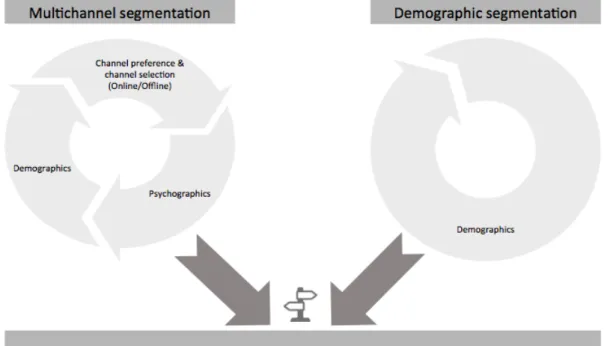
The purpose is visualized in the illustration in Figure 2, which first illustrates the establishment of the multichannel segmentation model for high involvement products that includes descriptions of the segments’ demographic and psychographic characteristics. In addition, it visualizes the comparison of the multichannel segmentation model with the demographic segmentation based on performance measurements.
1.4
Intended Contributions
The findings will contribute both theoretically and practically, as well as generate important insights that are relevant for research and companies operating within a multichannel environment.
1.4.1 Theoretical Contributions
The study at hand will build upon the multichannel and segmentation literature by establishing a multichannel segmentation model based on the findings of Konuş, Verhoef and Neslin (2008). In contrast to previous literature, it will focus on high involvement products, which will provide the field of segmentation and multichannel research with further insights of how customers can be segmented within a high level of product involvement. This in turn will generate knowledge beyond the boundaries of product categories (Konuş, Verhoef & Neslin, 2008) and industries (de Keyser, Schepers & Konuş, 2015; Sands et al. 2016) that
have previously been the focus of the literature. As all products and related industries can be categorized as being or involving either low or high involvement products, the adjusted segmentation model will enable us to establish the basis for the generation of segments that are more generalizable to many product types or industries. Furthermore, this study complements established knowledge since findings of the past might not be applicable for high involvement products.
Moreover, the segments within the multichannel segmentation model will be profiled according to both their demographic and psychographic characteristics, which follows the logic of Chin-Feng (2002) who argues that demographics and psychographics are preferably described together. More specifically, in the previous literature the selected profiling variables have been found to influence the channel preference or the channel selection (Chocarro, Cortiñas & Villanueva, 2013; Dennis et al. 2016; Girard, Korgaonkar & Silverblatt, 2003; de Kerviler, Demoulin & Zidda, 2016; McGoldrick & Collins, 2007; Montoya-Weiss, Voss & Grewal, 2003; Neslin et al. 2006; Richard & Purnell, 2017; Schoenbachler & Gordon, 2002; Schröder & Zaharia, 2008; Thomas & Sullivan, 2005; Vasiliu et al. 2015; Verhoef, Neslin & Vroomen, 2007). The research at hand will use these variables to attain an indication and theoretical basis of which of the variables are valuable when describing the segments of the segmentation model.
Lastly, the comparison with the traditional demographic segmentation allows for the evaluation of the multichannel segmentation model. Even though several studies have found that a multichannel segmentation benefits the understanding of the contemporary needs of
consumers (Konuş, Verhoef & Neslin, 2008; de Keyser, Schepers & Konuş, 2015; Sands et
al. 2016), and that demographic segmentation is in turn criticized for lacking these benefits (Morgan, Levy & Fortin, 2003), these models have not been tested in relation to one another.
Thus, a comparison of the models would be valuable in theory, as it would indicate which of the models more appropriately explains consumption patterns of fragmented customers today.
1.4.2 Practical Contributions
Since the formation of homogeneous target groups is increasingly difficult for retailers today (Quinn, Hines & Bennison, 2007), this research contributes with the introduction of a tool that
aspires to make segmentation within a multichannel environment more effective and feasible than using traditional demographic segmentation. Consequently, the insights from this study will allow for the increase of knowledge on how to design different channels and where and how to target specific customer segments to better meet their needs. In this context, it would allow for stimulating target markets with different multichannel behavior more strategically and effectively by delivering accommodated value propositions to specific groups of customers. This in turn might positively affect profitability, customer satisfaction and overall growth (McGoldrick & Collins, 2007; Kamineni, 2005; Karimi, Papamichail & Holland, 2015; Quinn, Hines & Bennison, 2007). To summarize, this study supports companies in the understanding of fragmented customers and gives guidance to the operation of individualized marketing strategies and the execution of market segmentations to better understand and meet customers’ expectations and needs. Since this research will focus specifically on high involvement products, it strives to establish a more suitable foundation of future customer segmentations for companies offering high involvement products.
1.5
Outline of the Thesis
To achieve the aim of the research, the study is divided into five chapters. While the first chapter discussed limitations of previous literature and stated the purpose and contributions of the study, the second chapter will present a theoretical review of previous research regarding multichannel behavior, psychographic variables and demographic variables. The literature review will provide assumptions based on previous findings and will conclude with a theoretical framework. Third, the research design will be explained, including data collection and analysis methods. Thereafter, the results of the analysis will be presented and discussed in the fourth chapter. Lastly, the fifth chapter will summarize the study and provide insights regarding conclusions, theoretical and practical contributions and suggestions for future research.
2. Literature Review
The focus of the literature review is to first describe the multichannel retailing stream with an emphasis on multichannel segmentation, as this will act as the foundation for the established segmentation model. Second, channel characteristics that were found to have had an impact on channel preference and channel selection will be described. Opportunities and risks that are attached to the selection of a specific channel will also be presented. Third, product characteristics will be evaluated with a focus on product involvement to understand the complexity of customers’ preferences for different channels. Fourth, the influence of selected demographics and psychographics characteristics will be discussed that will function as profiling variables in the clustering of the multichannel purchasing behaviors. This will generate deeper insights regarding the effects of consumer characteristics on channel preferences and channel selections. Lastly, the theoretical framework will be introduced, which is based on the presented models, concepts and theories.
2.1 Multichannel Retailing
To be able to build the foundation of the new segmentation model, it is important to understand the general concept of multichannel retailing as well as consumers’ behavior within this environment. Multichannel retailing incorporates activities that are needed for selling, advertising and distributing services and products to consumers in more than one channel (Levy & Weitz, 2009). This gives retailers the opportunity to provide customers with an integrated shopping experience when using different channels. More specifically, multichannels can provide customers with information that suits their individual interests and needs, but also allows companies to personalize promotional offers and improve the perceived shopping value and overall enjoyment (McGoldrick & Collins, 2007; Sands et al. 2016). Due to an increasing adaptation rate of new technologies in recent decades (Wang, Malthouse & Krishnamurthi, 2015), multichannel marketing has become increasingly important in the retailing industry and has drastically changed the business models of retailers, but also introduced new ways of how consumers shop and consume (McGoldrick & Collins, 2007; Verhoef, Kannan & Inman, 2015; Polo & Sese, 2016). In this context, the number of retailers using multichannel marketing has grown remarkably and is currently seen as the new standard in retailing (Konuş, Verhoef & Neslin, 2008).
This development not only has had an impact on the marketing and sale of products, but it also has had consequences for more strategic questions such as the division of the whole customer base into more concrete sub-units. This is based on the fact that interactions between retailers and customers happen within multiple channels, which in turn are selected by different customers. Thus, a customer’s multichannel behavior got increasingly considered within customer segmentation strategies, in theory as well as in practice. Referring to this, Konuş, Verhoef and Neslin (2008) introduced three main segments that show different channel preferences and that have been adapted in following studies: multichannel enthusiasts, store-focused and uninvolved consumers. In more recent research, the segments of the study of Konuş, Verhoef and Neslin (2008) have been both criticized and supported. Sands et al.’s (2016) findings support the existence of the multichannel enthusiast segment, whereas it is not supported in the study of de Keyser, Schepers and Konuş (2015). Furthermore, Sands et al. (2016) found limited support for the store-focused segment for most product categories in their study, with an exception for consumers within clothing retailing. In
replication of the segmentation approach in the telecom industry. Thus, there are apparent contradictions in the literature of the characteristics of the segment within multichannel segmentation, which implies that there is a need for further investigation within multichannel segmentation. In addition, these contradictions are mainly formulated with regards to specific product categories or industries, yet studies have revealed that the product involvement also highly influences customers in their channel preference and selection (Brunelle, 2009; Konuş, Verhoef & Neslin, 2008). Therefore, it is assumed that the focus on product involvement rather than product categories or industries, will offer different characteristics of the segments in the adjusted multichannel segmentation concept.
2.2 Characteristics of the Channels
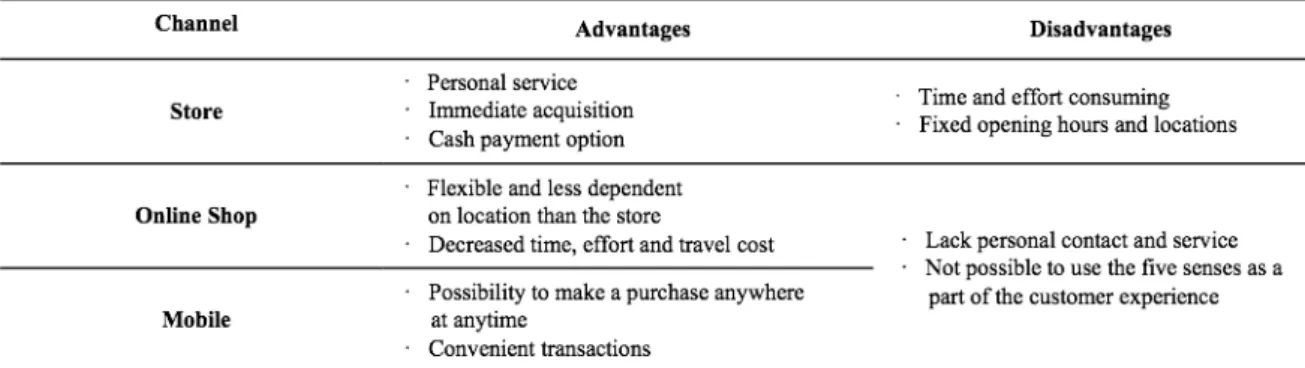
It can be found that the preference and selection of specific channels can be based on characteristics of channels, the products and the customers themselves. In general, a channel preference is based on the individual perception of costs and benefits, which are perceived differently within each channel (Riquelme, Roman & Iacobucci, 2016). Consumers focus on maximizing benefits and minimizing costs, depending on the perceived costs that are attached to an alternative. When the perceived costs are high, the minimization of potential costs is emphasized, while the maximization of benefits is of interest when the perceived costs are low (Polo & Sese, 2016). These findings highlight the nature of the relationship between perceived costs and benefits as being negative, meaning the higher the perceived costs, the lower the perceived benefits and vice versa (de Kerviler, Demoulin & Zidda, 2016). Regarding the different characteristics of every channel, customers continuously evaluate advantages and disadvantages of using diverse channels for purchasing products (Keeney, 1999; Shih, 2004). These channels traditionally include online channels (internet based, such as e-commerce at the online shop or mobile channels at the smartphone) and offline channels (brick-and-mortar stores, further referred to as stores) (Konuş, Verhoef & Neslin, 2008). They function as a medium for retailers to interact with customers in a one-way or two-way communication, or for transactions (Neslin et al. 2006). Recently, new channels have been introduced and added to multichannel retailing such as various social media platforms (Rapp, Beitelspacher, Grewal, Hughes, 2013). These channels act as a platform for marketing, communication and distribution purposes between retailers and customers and allow them to promote products and to create an appealing customer experience (Kaplan & Haenlein, 2010), however the actual purchase is only indirectly possible in these channels as they lead customers to the mobile website or the online store via a link. Thus, although social media channels are an important part within the multichannel environment, they are not seen as being relevant for this study as the purchase stage will be investigated only. Building on the offering of the traditional online and offline channels, customers’ behaviors have become more complex in their nature because customers use a diversity of channels during their purchase process (Ansari, Mela & Neslin, 2008; Verhoef, Kannan & Inman, 2015; Polo & Sese, 2016). Vasiliu et al (2015) go further and argue that customers might even consult both online and offline channels in the same purchasing process, which makes the border between channels more blurred (Sands et al. 2016; Verhoef, Kannan & Inman, 2015). Thus, the advantages and the disadvantages of the different channels will be described in the following paragraphs to better understand the channel characteristics that influence channel preferences. A summarized overview of the advantages and disadvantages of various channels can be found in Table 1.
2.2.1 Offline Channel
One of the most traditional channels in retailing is the store, which still captures 90% of the sales within retail (Sands et al. 2016), and offers customers several benefits. Before making the purchase, customers can touch and feel the products as well as get personal service from the personnel (Sands et al. 2016, Zhang, Farris, Irvin, Kushwaha, Steenburgh, Weitz, 2010). From a risk perspective, these activities actively work to reduce the perceived risk for the customer when doing the purchase. Moreover, stores offer the benefit of immediate acquisition and the option to pay in cash, which is often not possible within online channels (Zhang et al. 2010). Given these points, the offline channel is usually favored by customers when purchasing high involvement products, since the personal service offers a benefit of risk reduction (Brunelle, 2009). However, the disadvantage of the offline channel is that it requires more time and effort on the part of the customer to visit the store, as well as when comparing products’ attributes and prices. Moreover, stores have limited opening hours and a fixed location, which might be inconvenient for the customer (Sands et al. 2016, Zhang et al. 2010). In terms of high involvement products, the decreased risk of purchasing through offline channels outweighs the time-consuming information search process and higher travel costs (Brunelle, 2009).
2.2.2 Online Channel
In Sweden, one of three consumers claimed that their last purchase was made through an online channel (HUI Research, 2017). In this study, the online channels focus on the online shop and mobile channels as both are channels connected to the Internet and show very similar characteristics. In reference to the online shop, it is the second largest retailing channel and it has grown in a rapid rate since it was commercialized 20 years ago (Razak, Ilias & Rahman, 2009). The online shop offers customers benefits in terms of time and effort savings, as the customer does not need to spend time on travelling to the store (Sands et al. 2016; Zhang et al. 2010) and the purchase is more flexible since the online shop does not restrict customers to certain opening hours or locations (Sands et al. 2016; Zhang et al. 2010). The mobile channel, which has the highest expected growth among the retail channels (Sands et al. 2016; Wang, Malthouse & Krishnamurthi, 2015), makes up 35% of the purchases within e-commerce in Sweden (HUI Research, 2017). The mobile channel differs from the website channel since it offers customers the benefit of making a purchase anywhere at any time (Lee, 2009; Shankar, Venkatesh, Hofacker, Naik, 2010). Thus, the mobile channel has transactional capabilities, and it improves the online shopping experience (Wang, Malthouse & Krishnamurthi, 2015). Despite the fact that online channels offer several benefits to the customers, these types of channels are simultaneously associated with more risk (Fernandez-Sabiote & Roman, 2016; Sands et al. 2016). Therefore, it is essential to also take the disadvantages of online channels into consideration, as these are said to highly affect the channel preference and selection when purchasing high involvement products.
The primary disadvantage of online channels is the lack of personal contact, which strengthens the association of online channels with a higher level of risk than offline channels (Fernandez-Sabiote & Roman, 2016; Sands et al. 2016). Although attempts are being made to increase the service level within online channels, such as animated sales agents, online channels are still lacking the emotional and social contact with and advices from personnel, which is an advantage in offline channels (de Kerviler, Demoulin & Zidda, 2016). Given the advantages and disadvantages of online channels, the risk that is associated with both high
involvement products and online channels might outweigh the benefits such as accessibilities and time savings (Brunelle, 2009; Zhang & Reichgelt, 2006).
Table 1: Summary of the benefits and disadvantages of each channel
2.3 Characteristics of the Product
The preference for offline or online channels cannot only be ascribed to characteristics of the channels themselves, but it is also dependent on the level of product involvement. Thereby, the level of involvement that the purchase of a product requires has an impact on a consumer’s decision to prefer one channel over another one (Konuş, Verhoef & Neslin, 2008). This is mainly based on the perceived risk of the customer experiences, which is attached to the characteristics of the product, such as the price, complexity or frequency of the purchase (Brunelle, 2009). According to this, Krugman (1965) was the first one to introduce the two concepts of low involvement products and high involvement products. On the one hand, low involvement products like candles are characterized by a high frequency of purchase and are therefore seen as convenience products that involve low financial or physical risks (Murphy & Enis, 1986). These products are perceived as less important by customers (Elg & Hultman, 2016) and therefore require a shorter information search process and a lower degree of cognitive involvement (Petty, Cacioppo & Schumann, 1983; Leven, 1983). High involvement products, on the other hand, are often special products that are not purchased on a regular basis, such as a sofa. They are characterized by high degrees of risks and costs in terms of money and time (Murphy & Enis, 1986) and involve a longer information search process and a higher degree of cognitive involvement as their purchases are perceived as being riskier (Gilovich, Keltner & Nisbett, 2011; Leven, 1983).
Going back to the fact that the perceived risks are one of the most important factors moderating the impact of product involvement on channel preferences (Brunelle, 2009), several studies find that the likelihood of preferring online channels is higher when customers purchase low involvement products (Brunelle, 2009; Zhang & Reichgelt, 2006). Conversely, customers favor offline channels when buying high involvement products, as these channels allow stronger interactions through personal services, which decrease the risk associated with the purchase (Brunelle, 2009). Accordingly, it is assumed that:
Customers will mainly prefer and select offline channels for purchasing high involvement products.
Furthermore, the level of involvement is also found to influence the strength of channel preferences. Leaning on the uninvolved consumer segment of Konuş, Verhoef and Neslin (2008), it can be anticipated that the absence of involvement when purchasing products favors the occurrence of not preferring any channel within the multichannel environment. On the contrary, Brunelle (2009) argues that a high product involvement leads to stronger channel preferences of consumers. Based on these points, it is assumed that:
In terms of purchasing high involvement products a low amount of customers prefers and uses both online and offline channels.
2.4 Characteristics of the Consumer
In addition to the characteristics of the product and the channel, characteristics of the consumer have also been emphasized within previous literature and researchers could show significant effects for various psychographic and demographic variables. Since the research aims to establish a multichannel segmentation model for high involvement products with a more holistic view of customers, the segments will be profiled according to demographics and psychographics characteristics.
2.4.1 Demographics
In this section, a description of the demographic variables that previously were shown to affect customers’ channel preference is given. The previous literature provides insights into how various demographic variables impact consumers’ channel preferences and selections. However, some demographic variables re-occur in the multichannel literature and were therefore considered to be especially interesting to be further investigated in the context of profiling a multichannel segmentation model for high involvement products. These demographic variables include age (McGoldrick & Collins, 2007; Neslin et al. 2006; Richard & Purnell, 2017), sex (Girard, Korgaonkar & Silverblatt, 2003; Richard & Purnell, 2017; Vasiliu et al. 2015), education (Farag, Schwane & Dijst, 2005; Girard, Korgaonkar & Silverblatt, 2003; McGoldrick & Collins, 2007; Neslin et al. 2006), income (Girard, Korgaonkar & Silverblatt, 2003; McGoldrick & Collins, 2007; Vasiliu et al. 2015), and living situation (McGoldrick & Collins, 2007; Neslin et al. 2006). These five variables will be described in the following to further understand how these occur with different preferences for and selections of online and offline channels. This will act as the basis for assumptions on how segments with different channel preferences should be demographically characterized.
Age
Within the previous literature, age is one of the most widespread predictors for channel selection (McGoldrick & Collins, 2007; Neslin et al. 2006, Richard & Purnell, 2017). Research indicates that young people are more likely to use online channels, since they are seen as belonging to Generation Y, which is characterized by having more online experience, whereas individuals that are older than 45 years tend to show a lower preference for using online channels (McGoldrick & Collins, 2007; Richard & Purnell, 2017; Parment, 2013). The older generation is also less likely to own a smartphone or go online, and have lower trust in technology (Dennis et al. 2016). Based on these findings, it can be assumed that:
Segments that prefer and select online channels contain members of a younger age than segments that prefer and select offline channels, which should accordingly contain members that are characterized by an older age.
Sex
The second demographic variable is sex, which is, according to Girard’s, Korgaonkar’s and Silverblatt’s (2003) research, the strongest predictor for channel preferences. Their study exposed a pattern between the sexes’ channel preferences for specific product characteristics. According to Girard, Korgaonkar and Silverblatt (2003), men have a higher preference for online channels both when the product characteristics are easy and difficult to evaluate in advance than women. These findings also find support in more recent studies, as men have been found to have a higher preference for online channels than women in general (Richard & Purnell, 2017). This might be based on the fact that men are found to be more financially risk-taking than women (Charness and Gneezy, 2012) and are thus more likely to take the risks of selecting an online channel. Thus, it can be assumed that:
Segments that prefer and select online channels for purchasing high involvement products online are expected to contain more male members and, accordingly, segments with predominantly offline preferences and offline channel selections should contain more female members.
Education
Third, there is a debate in the literature whether or not education can explain channel preferences. On the one hand, some research has shown significant relations between using online channels and higher education (Girard, Korgaonkar & Silverblatt, 2003; Neslin et al. 2006) as education is found to trigger more financially risk taking behavior (Black, Devereux, Lundborg & Majlesi, 2015). In this context, one study showed that education and purchasing online is especially related when it comes to goods where the product characteristics can be easily observed prior the purchase (Girard, Korgaonkar & Silverblatt, 2003). On the other hand, some research has not found any significant association between the channel preference and education (McGoldrick & Collins, 2007). As a consequence of the contradictions in the literature, one could assume that:
Segments that prefer and select online channels have more members with higher education, but the education might also only play a minor role in influencing the channel preference.
Income and Living Situation
In prior multichannel research, there are indications that the income and the living situation can have a direct or a moderating effect on the channel preference and are thus suitable variables to describe the segments. According to Girard, Korgaonkar and Silverblatt (2003), income is related to purchasing products with features that are simple to view beforehand. Grable (2000) goes further and argues that people with a higher income are more financially risk taking than people with a lower income. This leads to the assumption that income might positively affect the preference and selection of online channels. However, other researchers
argue that income does not alone have a meaningful impact on the channel choice, and thus it should be complemented by other variables (McGoldrick & Collins, 2007; Blanca, Julio, & José, 2011). Thus, income alone or in combination with other variables appears to influence the channel preference and selection, which makes further investigations interesting in the context of purchasing high involvement products. Likewise, the living situation is mentioned in the literature to have an impact on channel preferences as well as if a person prefers shopping from one or various channels (McGoldrick & Collins, 2007; Neslin et al. 2006). Despite an absence of understanding directly how this characteristic is affecting the channel preference, there are indications that different living situations can influence channel preferences and are therefore expected to trigger various channel preferences, which also makes further investigations interesting in the context of purchasing high involvement products.
However, Blanca, Julio, and José (2011) criticize the argument that demographic variables such as age, income and sex can explain customers’ channel preferences in the multichannel environment alone. Thus, by complementing demographics with psychographic variables, more valuable insights about customers’ behaviors can be generated (Chin-Feng, 2002; Kotler & Armstrong, 1999).
2.4.2 Psychographics
Next to the demographic analysis of customers’ channel preferences and selections within multichannel literature, research argues that psychographics influence customers’ multichannel behavior as they generate diverse shopping motives (Fernandez-Sabiote & Roman, 2016). Thus, a description of the previously studied psychographic variables that have been said to affect the channel preference and selection will be presented in this section and, in the context of this study, they will also serve as profiling variables for the segments of the adjusted segmentation model.
Within previous literature, some psychographic factors were re-occurring and therefore deemed to be more relevant regarding a consumer’s multichannel behavior than others. The factors that were found to greatly influence a consumer’s channel preference for making a purchase include the convenience orientation, service orientation and risk aversion (Kollmann, Kuckertz & Kayser, 2012). Hence, the evaluation and perception of costs and benefits of various channels can be based on consumers’ various needs for services or conveniences, among other factors, which are closely related to their shopping motivations (Konuş, Verhoef & Neslin, 2008). Therefore, the most relevant factors will be discussed more in-depth in the following paragraphs to be able to understand multichannel customers better and to be able to construct a psychographic picture.
Convenience Orientation
Based on previous studies, assumptions can be supported that the convenience orientation of a customer has a significant effect on channel preferences and selections regarding the purchase (Angell et al. 2012; Girard, Korgaonkar & Silverblatt, 2003; Kollmann, Kuckertz & Kayser, 2012; Madlberger, 2006; Schröder & Zaharia, 2008). In this context, a convenience-oriented shopping attitude is defined as a rational approach, in which individuals evaluate costs and benefits by comparing each channel (Kollmann, Kuckertz & Kayser, 2012; Schröder &
Zaharia, 2008). The convenience oriented shopping attitude is embedded in an underlying shopping motivation that is completely controlled by ease of access, including time restrictions, transportation efforts and physical and mental efforts in general (Angell et al. 2012; Rohm & Swaminathan, 2004); Schröder & Zaharia, 2008). In this context, Kollmann, Kuckertz and Kayser (2012) found that customers’ convenience orientation positively affects the decision to purchase a product through an online channel, because online channels are typically associated with convenience, flexibility and availability in comparison to offline channels (Polo & Sese, 2016). This indicates that convenience might be a more important factor in the decision of using an online channel than an offline channel. This assumption is supported by Richard’s and Purnell’s (2017) finding that convenience is not the most important factor in the selection of offline channels, but increases in its importance within the online environment. Thus, it can be assumed that:
Members with higher levels of convenience orientation occur in segments that prefer and select online channels. In contrast, segments that prefer and select offline channels should predominantly contain members that are less concerned about the shopping convenience.
However, the effect is highly dependent on the product type, which influences a customer’s involvement in the purchase and, in turn, affects the perceived risks attached to using a channel. In terms of products types with characteristics that can easily be observed before the purchase, such as a book, convenience is a strong factor leading a consumer’s intention to purchase a good online. However, the risks outweigh the potential benefits especially for products with characteristics and qualities that are difficult to be fully observed prior to the purchase, like furniture. For these product types, the perceived risk of using an online channel increases since a description of essential product attributes might not be available online. Thus, the increased risk of buying these product types often requires other platforms through which information can be obtained, like the human senses or customer services (Chocarro, Cortiñas & Villanueva, 2013). Accordingly, the assumption that segments containing predominantly members with higher levels of convenience orientation should prefer and select online channels, might be less strong or even disappear in the context of purchasing high involvement products.
Service Orientation
Channel preferences according to Kollmann, Kuckertz and Kayser (2012) are also influenced by a customer’s service orientation. Since service is an element that greatly influences the shopping experience, especially in-store (Bäckström & Johansson, 2006), it has a high impact on consumers’ shopping behaviors as well (Vasiliu et al. 2015). In this regard, the service element is a benefit within offline channels that most online channels cannot compete against nowadays with respect to flexible, personalized and emotional expert competencies (Kollmann, Kuckertz & Kayser, 2012). Angell et al (2012) state that customers who have a service oriented shopping attitude value personal services that include interactions with personnel in-store and other influencers. The need for interaction leads to perceptions of higher costs and risks within online channels, due to a lack of personal contact and a lack of perceived competence, which in turn is found to be related to the avoidance of technical devices (Fernandez-Sabiote & Roman, 2016). This can be explained by the decrease of perceived risks within offline channels, which finds its roots in the customer’s evaluation of face-to-face communication as being more reliable and trustworthy (Polo & Sese, 2016). Accordingly, it can be assumed that service oriented consumers are more likely to favor
offline channels since they value personal and individualized service solutions. However, online channels allow more flexible access to services and information without any time-related and geographical restrictions (McGoldrick & Collins, 2007). Thus, this leads to the assumption that:
Segments with preferences and selections of offline channels should contain more service oriented members. However, the convenience orientation among members might have a greater impact on the channel preference than the service orientation of a customer or vice versa.
Risk Aversion
The third factor discussed by Kollmann, Kuckertz and Kayser (2012) as being an important predictor in a consumers’ channel preference is the personal attitude of avoiding risks. A risk-averse personality is characterized as being doubtful and uncertain regarding possible negative effects and consequences of a selected channel (Schröder & Zaharia, 2008). Within the context of multichannel retailing, the perception of risk is one of the most important factors leading consumers to avoid purchasing through an online channel (Kollmann, Kuckertz & Kayser, 2012). The perceived risks of using online channels are often related to the fact that consumers have to rely on illustrations and pre-selected information about the products, rather than observing the product themselves. In addition, the perceived risk could also be delivery-related if consumers are uncertain about factors like quality, completeness or delivery time of the order (Schröder & Zaharia, 2008). Since consumers are perceiving offline channels as being more familiar and less associated with risk (Polo & Sese, 2016), it can be assumed that:
Segments that prefer and select offline channels contain more members with a higher level of risk aversion than the segments that prefer and select online channels when buying high involvement products.
More specifically, Kollmann, Kuckertz and Kayser (2012) found that risk aversion has significant effects on the channel preference within the stage of purchase, whereas the effect of risk aversion cannot be supported in the context of the information search process. In addition, in the same study it could be shown that convenience is a more important factor in the intention of purchasing a product online than risk aversion. Thus, the effect of the risk aversion could be overshadowed by the convenience orientation of members when selecting online channels.
2.5 Theoretical Framework
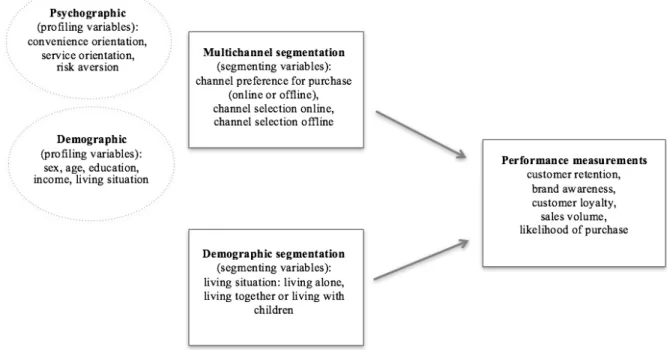
The aforementioned findings of the discussed literature lay the basis for the development of the theoretical framework, which is visualized in Figure 3. The theoretical framework acts as a guide for the following analysis and allows the underlying assumptions to be researched and tested. Furthermore, it builds on the model of multichannel segmentation, which is inspired by Konuş, Verhoef and Neslin (2008), and is amplified by profiling the established segments demographically and psychographically. Additionally, the adjusted multichannel segmentation is compared to the traditional demographic segmentation through selected
performance measurements. The entire theoretical framework is within the scope of high involvement products.
Figure 3: Theoretical framework
2.6 Chapter Summary
Regarding the multichannel segmentation, characteristics of the channels, the product and the consumers are found in previous literature to influence the channel preference and selection. Considering the characteristics of the channels, customers continuously evaluate the different attributes that are attached to the use of diverse channels when purchasing products (Keeney, 1999; Shih, 2004). On the one hand, offline channels have the advantage that they offer personal services, an immediate acquisition and that customers perceive them as more familiar and therefore less risky. However, purchasing a product in this channel is also very time-consuming and requires travel costs. Online channels, on the other hand, are convenient to use as they reduce the required efforts, travel and time costs, and customers can purchase products at any time they want. But online channels are also perceived as lacking personal services and being connected to a higher level of product and delivery related risks. The evaluation of these attributes by consumers represents the basis for the influence of the product and consumer characteristics on channel preferences and selections.
Looking at the product characteristics, the study at hand focuses on high involvement products only. In this context, the previous literature argues that high involvement products are more expensive, more complex and their purchase is less frequent, which influences the perceived risk of purchasing these products positively (Brunelle, 2009). Due to their specific product characteristics and their higher risk perception, the previous literature indicated that customers will mainly prefer and select offline channels for purchasing high involvement products and that these preferences should be quite strong, whereas they are less strong for
low involvement products. These assumptions are tightly connected with the characteristics of the offline channel, as being perceived as less risky and providing elements that additionally reduce the perceived risks, like personal services.
In addition, the characteristics of the consumers themselves were found in previous literature to influence the preferences and selections of channels. Various demographic variables such as a consumer’s sex, age, education, income and living situation, as well as psychographic variables showed significant results in previous research. Regarding the latter ones, Kollmann, Kuckertz and Kayser (2012) established a framework consisting out of three psychographic variables that include a consumer’s service orientation, convenience orientation and risk aversion. These variables were supported in their importance throughout the study of Kollmann, Kuckertz and Kayser (2012). In general, the demographic and psychographic characteristics of the consumer are found in several studies to influence a consumer’s channel preferences for either online or offline channels. In this context, consumers should prefer and select online channels for purchasing high involvement products, when they are male, young, highly educated and convenience oriented, whereas female, older, less educated, risk averse and service oriented people are found to prefer offline channels.