A MULTISITE CASE STUDY OF HIGH-PERFORMING CHARTER SCHOOL BOARDS IN FLORIDA
by Kristine Bennett Liberty University
A Dissertation Presented in Partial Fulfillment Of the Requirements for the Degree
Doctor of Education
Liberty University 2020
A MULTISITE CASE STUDY OF HIGH-PERFORMING CHARTER SCHOOL BOARDS IN FLORIDA
by Kristine Bennett
A Dissertation Presented in Partial Fulfillment Of the Requirements for the Degree
Doctor of Education
Liberty University, Lynchburg, VA 2020
APPROVED BY: Randy Tierce, Ed.D., Committee Chair Eric Dougherty, Ed.D., Committee Member Bonnie Peirano, Ph.D., Committee Member
ABSTRACT
The purpose of this multisite case study was to describe the practices and behaviors of performing charter school boards. Through description of the practices and behaviors of high-performing charter school boards, the impact of charter school board governance on charter school closures in Florida can be better understood. The theory guiding this study was
Coleman’s social capital theory, suggesting that the social capital of members of an organization working towards a common goal through bridging and bonding results in productivity and a positive impact on the organization; in this case study, the organization was the charter school governing board. The central research question for this study addressed the practices and
behaviors of high-performing charter school governing board members. Additional subquestions addressed how bonding practices impact charter school governance; how bridging practices impact charter school governance; and how governance training of board members impact charter school governance. A multisite case study design was used to collect data including documents, interviews, and observations. The targeted participants of the study were 16
members from three different high-performing charter school boards in Florida. The case study data were analyzed using Stake’s approach to organization of data, data analysis and
representation. Findings indicated common practices and behaviors were present among high-performing charter school boards in the areas of their characteristics and board and member role and responsibility. Further research on high-performing charter schools beyond central Florida and on boards of closed charter schools will help solve the problem of charter school closures in Florida.
Keywords: charter schools, charter school boards, charter school governance, high-performing charter school, school boards, school board governance, social capital.
Copyright Page
Dedication
I dedicate this to my supportive husband, my best friend, who encouraged me every step of this dissertation journey. Thank you, Bryan, for always being there for me. I also dedicate this to my wonderful family whom I love dearly.
Acknowledgments
Thank you to Dr. Tierce for the much-needed firm encouragement and continual guidance. Fear of failure and procrastination were challenges for me, and you helped me overcome those obstacles with gentle nudging.
Thank you to Liberty University for providing a Christ-centered doctoral program and community of caring staff members. I very much appreciated the prayers and supportive instructors.
Thank you to the strong, inspirational women in my life.
Thank you to all of the dedicated, caring educators who make a positive difference in this world.
Table of Contents ABSTRACT ... 3 Copyright Page... 4 Dedication ... 5 Acknowledgments... 6 List of Tables ... 12 List of Abbreviations ... 13
CHAPTER ONE: INTRODUCTION ... 15
Overview ... 15 Background ... 16 Historical Context ... 16 Social Context ... 19 Theoretical Context ... 22 Situation to Self... 23 Problem Statement ... 24 Purpose Statement ... 25
Significance of the Study ... 25
Research Questions ... 27
Central Research Question ... 27
Research Subquestions (SQs) ... 27
Definitions... 29
Summary ... 31
Overview ... 32
Theoretical Framework ... 33
Characteristics of Social Capital ... 34
Related Literature... 39
History of Charter Schools... 39
Roles and Responsibilities of Traditional School Boards... 55
Characteristics of Effective School Boards ... 59
Summary ... 63
CHAPTER THREE: METHODS ... 65
Overview ... 65
Design ... 65
Research Questions ... 67
Central Research Question ... 67
Research Subquestions... 67
Setting ... 67
Participants ... 71
Procedures ... 72
The Researcher’s Role ... 74
Data Collection ... 76
Documents ... 76
Interviews ... 77
Observations ... 81
Trustworthiness ... 86
Credibility ... 86
Dependability and Confirmability ... 87
Transferability ... 88
Ethical Considerations ... 88
Summary ... 89
CHAPTER FOUR: FINDINGS ... 91
Overview ... 91 Participants ... 91 Adam ... 93 Delia ... 94 Jean ... 95 Ken ... 97 Marta ... 98 Michael ... 100 Steven ... 102 Angela ... 103 David ... 105 Harris... 107 Maurice ... 108 Nelson ... 110 Wendy ... 112 Carla ... 113
Jerry... 116 Louis ... 118 Case Descriptions... 119 Case 1: AC ... 119 Case 2: LA ... 122 Case 3: SP ... 124 Results ... 126 Cross-Case Analysis ... 127
Major Theme 1: Board Characteristics ... 129
Major Theme 2: Board Role and Responsibility ... 136
Major Theme 3: Member Role and Responsibility... 145
Research Question Responses... 150
Central Research Question ... 150
SQ1 ... 152
SQ2 ... 153
SQ3 ... 154
Cross-Case Synthesis ... 155
Summary ... 157
CHAPTER FIVE: CONCLUSION... 158
Overview ... 158
Summary of Findings ... 158
Discussion ... 162
Empirical Literature ... 167
Implications... 171
Theoretical Implications ... 171
Empirical Implications ... 174
Practical Implications... 176
Delimitations and Limitations ... 179
Recommendations for Future Research ... 180
Summary ... 182
REFERENCES ... 184
APPENDIX A: INSTITUTIONAL REVIEW BOARD PERMISSION LETTER ... 201
APPENDIX B: RECRUITMENT LETTER ... 202
APPENDIX C: CONSENT FORM ... 203
APPENDIX D: INTERVIEW QUESTIONS ... 206
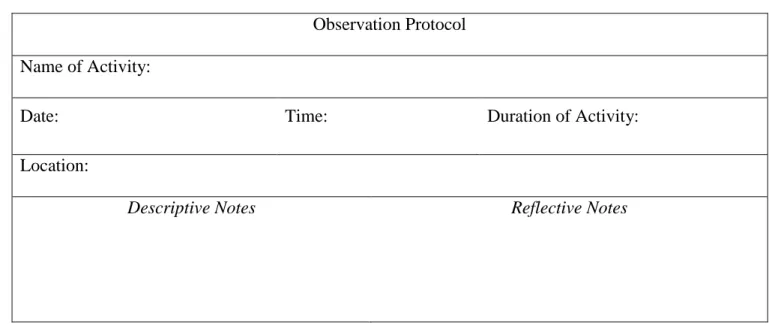
APPENDIX E: OBSERVATION PROTOCOL ... 207
APPENDIX F: MULTICASE STUDY THEME IDENTIFICATION WORKSHEET ... 208
APPENDIX G: CASE ANALYSIS WORKSHEET ... 209
APPENDIX H: ORDINARINESS AND MANIFESTATION ESTIMATE WORKSHEET .... 210
APPENDIX I: ASSERTIONS BY CASE WORKSHEET ... 211
List of Tables
Table 1. Participant Demographics ... 92 Table 2. Themes ... 128
List of Abbreviations Achievement Charter (AC)
charter management organization (CMO) Center for Education Reform (CER) English Language Learners (ELLs)
education management organization (EMO) end-of-course (EOC)
Florida Association of Charter School Authorizers (FACSA) Florida Comprehensive Assessment Test (FCAT)
Florida Consortium of Public Charter Schools (FCPCS) Florida Department of Education (FDOE)
Florida Standards Assessment (FSA) Iowa Association of School Boards (IASB) Leadership Academy (LA)
management organizations (MOs)
National Alliance of Public Charter Schools (NAPCS) National Center for Education Statistics (NCES) National Education Association (NEA)
National School Boards Association (NSBA) National School Board Foundation (NSBF) No Child Left Behind Act of 2001 (NCLB) Parent Teacher Association (PTA)
Success Preparatory (SP)
CHAPTER ONE: INTRODUCTION Overview
There has been a significant increase in the number of charter schools in the United States, driven by the need for an alternative educational choice from teachers, parents,
lawmakers, and citizens (Cannata, Thomas, & Thombre, 2013). In addition, although the impact of school board governance on public school outcomes, specifically student achievement, is a largely researched topic (Asen, Gurke, Conners, Solomon, & Gumm, 2013; Delagardelle, 2008; Land, 2002; Lee & Eadens, 2014; Nkundabanyanga, Tauringana, & Muhwezi, 2015; Plough, 2014; Rhim, Quarles, & Wong, 2013; Roberts & Sampson, 2011; Saatcioglu, Moore, Sargut, & Bajaj, 2011), there is a need to research the impact of charter school governance on charter school outcomes. Although the characteristics of effective traditional school boards have been identified within literature, the characteristics of effective charter school boards have yet to be researched (Ford & Ihrke, 2015). By studying the effective practices of high-performing charter schools, those involved with charter education such as legislators, charter school authorizers, charter school boards, and charter school stakeholders will gain essential knowledge needed to improve charter school governance and, ultimately, the effective operation of the charter school. According to the National Alliance for Public Charter Schools (NAPCS, 2016b), 14% of
Florida’s charter schools closed in 2015. The impact of charter school closures on families, the community, the entities authorizing the charter school, the surrounding schools, and on taxpayers is detrimental.
The focus of this multisite case study was the effective practices of charter school boards. Case studies are used to examine “contemporary events when the relevant behaviors cannot be manipulated” (Yin, 2009, p. 11). Therefore, by investigating the governance behaviors,
practices, and interactions of high-performing charter school boards bound within the same school district, effective practices can be identified, described, and understood.
Chapter One of this study includes the historical, social, and theoretical context for the investigation. In addition, my position within and potential impact on the study, is explained. Chapter One also includes the formal problem and purpose statements, an explanation of the significance of the study, the central research question and subquestions, and important definitions.
Background
Within public education, the history of traditional public schools spans a much longer time period than does the history of charter schools. Charter schools have existed for about 20 years in Florida and have developed a place in American education (Land, 2002; Ziebarth, 1999). Presently, charter schools are well-established in many states as a viable, quality option for public education and more research is needed on these public schools of choice (Land, 2002; Ford & Irhrke, 2015). Although the effective school board characteristics of traditional public school boards have been largely researched within the longstanding history of American public education, there is little research about charter school board governance (Asen et al., 2013; Ford & Irhrke, 2015; Johnson, 2013; Land, 2002; Lee & Eadens, 2004; Maas & Lake; 2015). In addition to the exploration of the social context of traditional board governance and student outcomes, charter school governance in relation to social capital theory has been explored (Burt, 1997, 2005; Coleman, 1988, 1990; Lin, 1999).
Historical Context
According to the Florida Department of Education (FDOE, 2015a), charter schools began in Florida in 1996 to offer parental choice in education and are “among the fastest growing
school choice option in Florida” (para. 1). Furthermore, charter schools are free to be innovative with curriculum and instruction and have flexibility with how they operate within certain
accountability measures (FDOE, 2015a; NAPCS, 2014b). Charter schools may specialize in serving specific populations such as students with varying exceptionalities or at-risk students and may have themed learning curricular programs such as a focus on the arts, sciences, technology, or college and career readiness (NAPCS, 2014c).
Since 1994, the United States Department of Education (USDOE) has spent nearly $4 billion to support charter schools (USDOE, 2016a). The funding for charter schools will likely increase as enrollment increases and the number of charter schools increase. As of 2015, charter school students made up 6% of all public school enrollment, and by 2035, the USDOE (2016b) estimated that charter school students will make up 20–40% of all public school students. The rise of charter schools in Florida has been significant. Since 2010, Florida has increased from 459 charter schools serving 154,780 students to 646 charter schools serving 251,082 in 2015 (FDOE, 2015a). With 20 years of history for charter schools in Florida, charter schools are well established as a public school option and the growth continues.
Although charter school laws vary in states across the United States, charter schools are generally defined as public schools that are operated independently under a charter, or contract, with the authorizing entity (NAPCS, 2014c). The authorizing entity, also known as an
“authorizer,” varies among states and may be a university, a municipality, or a school district (NAPCS, 2014c). Charter schools must abide by all federal and state regulations for health and safety as well as participate in the state’s accountability measures (NAPCS, 2014c).
Nondiscrimination and equal rights policies apply to all charter schools and charter schools must execute a lottery when the number of eligible student applicants exceeds the number of student
spaces. In terms of funding, charter schools typically receive less per-pupil funding than do traditional public schools. According to the USDOE (2016b), charter schools receive 28% less funding than do their traditional public school counterparts. Charter schools must do more with less and governance plays a significant role in the responsible operation of the charter school, especially with fiscal oversight of public funds (Ford & Ihrke, 2015; NAPCS, 2014b).
Once a charter school has been granted a charter by the authorizer, it is up to the charter school board to successfully govern the school (Gewetz, 2008). Most of the literature on the topic of school governance is focused on traditional public school boards (Ford & Ihrke, 2015). For example, in a literature review on the role and effectiveness of school boards spanning 20 years, Land (2002) offered a comprehensive description of the history of school boards, school board reform, and characteristics of effective traditional public school boards. Land also
observed that the major features of local school boards in the United States at that time included local control by democratically elected representatives to meet the needs of the resident
population, reliance on a selected superintendent for management and execution of board policy, boards with between five and seven members, and structure similar to that of a corporate board of directors with a chairman. School board reform in the 21st century has been impacted by federal and state control, particularly the No Child Left Behind Act of 2001 (NCLB), which placed emphasis on student achievement (Land, 2002).
The creation of charter schools is one school reform governance measure meant to catalyze improvements to traditional district schools and to challenge traditional school
governance (Collins, 1999; Land, 2002; Schwartz, 1996). The growing body of research on the impact of effective traditional school boards on schools will support school board reform and improvements for traditional schools within the public education system. While there is a
collection of literature specifically on the efficacy of traditional school boards spanning at least 20 years, there is little research on efficacy of charter school governing boards that would support charter school board reform and improvements for charter schools within the public education system.
Social Context
In the social context of education, effective school board governance has been linked to student achievement (Delagardelle, 2008; Goodman, Fulbright & Zimmeman, 1997; Johnson, 2013; Lamont & Delagardelle, 2009; Leithwood & Jantzi, 2008; Murphy & Hallinger, 2001; Plough, 2014; Roberts & Sampson, 2011), and the characteristics of effective school boards have been identified throughout the body of existing research. In a seminal, comprehensive, mixed-methods study spanning more than 10 years, the Iowa Association of School Boards (ISBA, 2000) and the National School Board Association (NSBA, 2002) examined school governance roles and responsibilities impacting positive student learning outcomes. The IASB and NSBA produced key areas of board performance which include vision, standards, assessment,
accountability, alignment, climate, collaborative relationships, and continuous improvement (IASB, 2016; NSBA, 2002).
Charter schools are growing rapidly with more than 400 new charter schools opening in the 2015–2016 school year alone (National Alliance of Public Charter Schools, 2016b).
According to the National Alliance of Public Charter Schools (2016a), more than 6,800 charter schools in the United States were serving an estimated 2.9 million students in 2015. However, little is known about effective charter school governance. Because an increasing number of children and families are choosing charter schools, research must be conducted to discover the
key characteristics and practices of high-performing charter schools to guide authorizers, state law, federal law, and most importantly, the charter school governing board.
The growing number of charter schools opening corresponds with a high number of charter school closures. For example, in 2015, 404 charter schools opened in the United States, but 272 were closed (NAPCS, 2016a). In Florida, the third most populous charter school state in America behind California and Arizona, 38 charter schools opened in 2015 while 35 closed (NAPCS, 2016a). When a charter school closes, not only does it waste taxpayer dollars, the school closure can be devastating to a family when a child can no longer go to his or her school (Cavanagh, 2012) because the stability of the child’s education is disrupted, and the family is left to find another school (Paino, Boylan, & Renzulli, 2016).
There are various reasons for a charter school closure, but the most common reasons given include low enrollment, financial issues, and low academic performance (NAPCS, 2014b). While charter school supporters argue that charter school closures are reflective of accountability measures being upheld, opponents and proponents of charter schools argue that any school closure is one too many (Carlson & Lavertu, 2016; Cavanagh, 2012). With charter school enrollment increasing, more research is necessary to determine how charter school governance impacts charter school closures. Research on the practices and behaviors of charter school boards can become valuable to guide the decisions of lawmakers, authorizers, parents, and charter school stakeholders.
The body of literature on charter school governance is limited and does not focus on the problem of charter school closures as it relates to charter school board governance. In a
literature review on the role and effectiveness of local school boards on student academic achievement, Land (2002) discovered limited research on charter schools, with mixed evidence
to support the idea that traditional, noncharter schools provide better outcomes or higher academic achievement than do charter schools (Collins, 1999; Education Commission of the States, 1999; Hadderman, 1998; Ziebarth, 1999). However, effective charter schools can be identified in order for their boards to be studied. In Florida, as determined by the state’s accountability system, charters may earn a “high-performing status” when the school earns at least two A grades with no grade lower than a B during each of its previous 3 years and maintains a sound financial status with no emergency conditions (Florida Legislature, 2016). Florida public schools earn an A grade if the school has earned enough points in up to 11 components measuring student achievement, learning gains, middle-school acceleration, graduation rates, and college and career acceleration (FDOE, 2017c). The aim of this current research was that examination of the boards of high-performing charter schools will provide important insight and understanding of how the characteristics and practices of charter school governing boards impact charter schools.
Traditional public school boards typically govern several schools within a region or school district, whereas charter school boards typically govern a single school (Hooge &
Honingh, 2014). The charter school governance structure allows for responsive decision-making freedom that meets specific school needs and more effectively enhances student performance, whereas traditional school governance inhibits decision-making due to constraints associated with overarching district policies and having to meet the different needs of various schools (Hooge & Honingh, 2014; Sell, 2006). Charter school boards are able to directly impact the schools they govern. The complexity of problems facing large school districts requires elected school board members to know the needs of many stakeholders and ample information to make the best decisions. The same complexity of problems is true for charter school boards, but on a
more manageable scale (Ford & Ihrke, 2016). The charter school board must establish the mission and vision for the school, create a budget and financial plan, create policies and procedures, ensure the school is being well operated by holding the school leader accountable, and ensure students are achieving (Forman, 2007). The direct impact a charter school board has on a school is unlike that of a traditional school board.
Theoretical Context
Charter school board members are recruited, selected, and voted into membership. Typically, charter school board members seek to be a part of education innovation and have similar goals for the school as those of the other board members who are currently serving (Johnson, 2013). When individuals come together for a common purpose and their united efforts help further attainment of the organization’s goals and the productivity of the organization, social capital is achieved (Burt, 1997). Social capital, specifically from the work of Burt (1997),
Coleman (1988), and Lin (1999), is the theoretical framework of this current study on charter school governance. The social capital within a high-performing governing board provides the school with new ideas, resources, and purposive actions that ensure the school’s stability and success (Lin, 1999). The structure of charter school governing boards contributes to mobilizing resources and working towards a common purpose. Whereas traditional school boards are elected, charter school board members are recruited. When charter schools recruit board members to fulfill a need within the board, they will typically seek an individual who will be a valuable resource to the organization and to the school.
According to Burt (1997), bridging and bonding behaviors are important for social capital. Bridging, or building relationships outside of the organization, fosters additional resources for the good of the organization. Bonding, or building relationships within the
organization, fosters trust and a common purpose. Both bridging and bonding behaviors are key characteristics of a high-performing charter school board because highly effective groups and teams are motivated and committed to a clear goal: the mission and success of the school (McCormick, Barnett, Alavi, & Newcombe, 2006). Charter schools must be self-sufficient in many ways. For example, while traditional school boards have chief financial officers, attorneys, plant managers, and experts in various fields on staff at the district level to guide decision-making and to oversee those various areas, charter school governing boards must either recruit members with knowledge and experience in those areas, or hire or consult with
individuals in those areas. The theoretical framework of bridging and bonding provides a lens by which to determine how the charter school boards operate to achieve high performance.
Situation to Self
I have 10 years of experience as an English language arts and math teacher in traditional public, private, and charter schools. For 4 years I was an administrator at a high-performing charter school. Currently and for the past 7 years, I have been a principal of a charter school that recently earned high-performing status. While employed at my first charter school, I had the opportunity to work with an effective charter school board. Despite instability with retaining the school principal, the school maintained high levels of performance and after a strong school principal was selected and then retained, the school flourished and achieved higher levels of academic performance and community support. My motivation to research charter school governance was initially due to a desire to discover the characteristics that effective charter school boards exhibit so that charter schools such as the high-performing one I first experienced could be replicated to better serve students and families in other regions of Florida. As I
to ponder how differences in charter school governance practices, behaviors, and belief systems impacted school outcomes. I received training to become an external review team member for school accreditation and served specifically as a reviewer of governance and leadership practices of charter schools. After reviewing several charter school boards, I observed what I interpreted to be a trend in charter school governance characteristics and school performance. Thus, I bring an ontological philosophical assumption to my study in wanting to relate “the nature of reality and its characteristics” (Creswell, 2013, p. 20). I relied on the behaviors, practices, perspectives, and interactions of the participants as well as supporting board documents as multiple forms of evidence to determine themes. A constructivist paradigm was also used to guide this study of individuals that form a group holding similar experiences of membership as charter school governing board members (Guba & Lincoln, 1994). The study was focused on the “global nature of the organization,” therefore, a holistic design was used (Creswell, 2013, p. 50).
Problem Statement
The problem of this multisite case study was the impact of charter school governance on charter school closures in Florida (NAPCS, 2014a). Scholars note the number of charter school closures impacted by board governance is a severe symptom of the charter school closure
problem (NAPCS, 2016b). Additionally, while there is a large body of research on the impact of traditional public school board governance on school performance and student outcomes, there is little research on the impact of charter school governance on charter school closures (Ford & Ihrke, 2015; Maas & Lake, 2015). Furthermore, while existing research describes the characteristics of effective traditional public school boards, there is a gap in the research identifying high-performing charter school board characteristics and practices (Lee & Eadens, 2014; Rhim et al., 2013; Saatcioglu et al., 2011).
Purpose Statement
The purpose of this multisite case study was to describe the practices and behaviors of high-performing charter school boards to understand the impact of charter school board
governance on charter school closures in Florida. In this research, charter schools were generally defined as public schools of choice that must abide by all state assessment and federal
accountability programs with some freedom and autonomy from some state and local regulations in exchange for an approved charter that must be reviewed every few years by an authorizing agency (Center for Public Education, 2014a). High-performing charter schools were generally defined as charter schools that have received at least two consecutive A grades with no grade lower than a B during each of its previous 3 years and no findings for financial audits (FDOE, 2015).
Significance of the Study
The literature clearly presents empirical evidence of school board governance on school outcomes and student achievement (Asen et al., 2013; Delagardelle, 2008; Land, 2002; Lee & Eadens, 2014; Nkundabanyanga et al., 2015; Plough, 2014; Rhim et al., 2013; Roberts &
Sampson, 2011; Saatcioglu et al., 2011). In addition, the literature also includes the key effective characteristics of traditional school boards and the need to study charter school board
characteristics (Ford & Ihrke, 2015; Land, 2002).
The Lighthouse Study by the IASB (2000) is the seminal study on traditional public school board effectiveness and has become the basis for further research on school board characteristics (Delagardelle, 2008; Land, 2002; Lee & Eadens, 2014; Rhim et al., 2013; Saatcioglu et al., 2011). However, there is no empirical research on the characteristics of high-performing charter school boards (Land, 2002). This study helps fill the gap in the research on
understanding the impact of charter school board governance on charter school closures in Florida and could potentially assist other states faced with the problem of charter school closures. For example, California and Texas have the first and second most charter school openings and closings, respectively (NAPCS, 2016a). As the number of charter schools continues to grow in the United States, one can assume that the proportionately increased number of charter school closures will also grow.
Discovering effective charter school governance characteristics could guide charter school authorizers, current and future charter school boards, parents, and stakeholders in ensuring positive school outcomes. Charter schools close because of low enrollment, low
student achievement, financial difficulties, or compliance violations (NAPCS, 2014b). Although charter school authorizers are responsible for oversight, charter school boards have substantial autonomy (Allen & Mintrom, 2010; NAPCS, 2016a).
In addition, literature supports training beyond what is required as a positive board governance attribute (Ehren, Honingh, Hooge, & O’Hara, 2016; Land, 2002; Marino, 2011; Plough, 2014; Rhim et al., 2013; Roberts & Sampson, 2011). Similarly, training on effective charter school governance practices and characteristics in addition to mandatory governance training could improve charter school governance as a whole (Ehren et al., 2016; Land, 2002; Marino, 2011; Plough, 2014; Rhim et al., 2013; Roberts & Sampson, 2011). Reducing charter school closures by improving charter school board practices could save taxpayer dollars, improve the charter system as a whole, and most importantly, ensure children and families are not subjected to the experience of their school closing (Cavanagh, 2012; Paino et al., 2016).
Members of charter school boards are typically motivated to join a charter board because they are attracted to the idea of innovation in education, and they usually have similar ideologies
as the group they wish to join (Ford & Ihrke, 2015). With similar ideologies of charter school board members, the social aspect of this study was deeply rooted in social capital theory, which posits that members bring the value of their own individual human capital to join efforts for the common purpose of benefitting the school.
Research Questions Central Research Question
What are the practices and behaviors of high-performing charter school governing board members?
There is much research on the characteristics of traditional school governing boards in the United States (Asen et al., 2013; Johnson, 2013; Land, 2002; Lee & Eadens, 2014; Marino, 2013; Maas & Lake, 2015; Plough, 2014; Rhim et al., 2013; Roberts & Sampson, 2011; Sheard & Avis, 2011). Although there is an abundance of research on governance practices and behaviors of successful traditional school governing boards, Land (2002) noted there is little research isolating the specific characteristics, practices, and behaviors contributing to their success (Hadderman, 1998; Ziebarth, 1999). Research also does not address the practices and behaviors of charter school governing boards (Ford & Ihrke, 2015; Johnson, 2013; Land, 2002). The central research question of the present study was used to identify the characteristics of effective charter school governing board practices and behaviors.
Research Subquestions (SQs)
SQ1. How do charter school governing board members perceive that bonding practices impact charter school governance? The research on traditional school governing boards identifies various effective practices and behaviors and is being applied to charter school
& Eadens, 2014; Saatcioglu et al., 2011), the governance perceptions of board members as it relates to their ability to work together (Asen et al., 2014; Ford & Irhrke, 2015; Krishnan & Barnett, 2015; Plough, 2014), and their perceptions of charter school governance (Plough, 2014; Rhim et al., 2013). This first subquestion was also focused on the theoretical context of social capital as it relates to charter school governance. Bonding practices are embedded in the relationships formed by charter board members as a resource that furthers the purposive actions of the group (Saatcioglu et al., 2011). The first subquestion helped build an understanding of the governance perceptions of board members regarding their performance and interrelationships. The perception of board members about how they operate and how they work together are key factors in effective school board governance (Asen et al., 2014; Ford & Irhrke, 2015; Krishnan & Barnett, 2015; Plough, 2014).
SQ2. How do charter school governing board members perceive that bridging practices impact charter school governance? Bridging behaviors are also an important component of the social capital theory as it relates to charter school boards (Saatcioglu et al., 2011). A board member’s ability to develop relationships with various stakeholders and to use those
relationships for the benefit of the charter school are valued (Asen et al., 2014; Saatcioglu et al., 2011). The second subquestion helped build the understanding of the governance perceptions of board members regarding the value each board member brings to the organization. The
perception of board members about how board members work with stakeholders is a key factor in effective charter school board governance (Asen et al., 2014; Ford & Irhrke, 2015; Krishnan & Barnett, 2015; Plough, 2014).
SQ3. How do charter school governing board members perceive that governance training impacts charter school governance? The last subquestion helped establish the level of training
each board member has attained and their perceptions of training. Training of board members adds value to the overall social capital of the board and fosters a sense of commitment (Plough, 2014; Roberts & Sampson, 2011). While there is mandatory governance training for charter school board members in the state of Florida, it was helpful to understand if board members found value in other trainings they had attended. By asking board members about their perceptions of training and the impact on charter school governance, a better understanding of charter school governance outcomes was discovered.
Definitions
1. Authorizer–The authorizer is the state-sanctioned entity responsible for approving a charter school to operate. The authorizer monitors the school’s performance and compliance of local, state, and federal requirements. The authorizer also is responsible for renewing or terminating the school’s charter (Finn, Manno, & Wright, 2017).
2. Bonding–Bonding is a concept within the social capital theory that describes individuals within the organization working together to advance the organization (Burt, 1997). 3. Bridging–Bridging is a concept within the social capital theory that describes individuals
within the organization working with other entities to advance the organization (Burt, 1997).
4. Charter–The charter is the contract between the authorizer and the governing board. The charter describes the school’s program and includes all requirements of the authorizer to operate the school (Finn et al., 2017).
5. Charter School–A charter school is a public school of choice (FDOE, 2015a).
6. Florida Department of Education (FDOE)–The FDOE is the state education agency for Florida. The FDOE tracks student performance over time for school districts, state and
community colleges, universities, and independent postsecondary institutions (FDOE, 2016a).
7. Governing Board–The governing board is the school’s board of directors, responsible for oversight of the school as a nonprofit, corporate entity; for student achievement, for fiscal accountability, for following the law, and for hiring the school leader (Finn et al., 2017). 8. High-Performing Charter School–A charter school is named high-performing by the
Florida Department of Education if the school has received at least two school grades of “A” and no school grade below “B” during each of the previous three school years and received an unqualified audit on each financial audit in the most recent three fiscal years with no financial emergency conditions (Florida Statute, 2016).
9. Iowa Association of School Boards (IASB)–The IASB is an organization that is committed to serving Iowa school boards and public schools through education, advocacy, and service. The IASB conducted the Lighthouse Study on school boards (IASB, 2016).
10. Lighthouse Study–This study on school boards and the impact on student achievement was conducted by the IASB. Eight characteristics of effective school boards were established from this seminal study on traditional school boards (Delagardelle, 2008). 11. National Alliance for Public Charter Schools (NAPCS)–The NAPCS is the leading
nonprofit organization committed to advancing the public charter school movement (NAPCS, 2016a).
12. National School Boards Association (NSBA)–The NSBA represents state school board associations and their more than 90,000 local school board members (NSBA, 2016).
13. No Child Left Behind Act (NCLB)–The NCLB Act authorized several educational programs that are administered by the states. The law was a reauthorization of the Elementary and Secondary Education Act (USDOE, 2016a).
14. Social Capital Theory–The social capital theory describes how people work together toward a common goal and resources are embedded in the social structure (Burt, 1997; Coleman, 1988; Lin, 1999).
15. United States Department of Education (USDOE)–The USDOE is the governmental organization created in 1980 for the purpose of establishing policies on federal financial aid for education, distributing and monitoring financial aid funds, collecting and
disseminating research about America’s schools, focusing national attention on key educational issues, and prohibiting discrimination, and ensuring equal access to education (USDOE, 2016a).
Summary
Chapter One included an overview and background for this study. My experiences with charter schools in Florida led me to research the impact of charter school governance on charter school outcomes. This investigation was a multisite case study, and the purpose of the study was to describe the practices and behaviors of high-performing charter school boards. The research from this study can help strengthen charter school governance in order to understand and help address the problem of the high rate of charter school closures in Florida. Chapter Two includes discussion of the theoretical framework of the study and a review of the literature to provide the context for the research and the need to fill the gap for the study problem.
CHAPTER TWO: LITERATURE REVIEW Overview
The theoretical framework and related literature are presented in Chapter Two to provide a greater understanding of this research and to contextualize the research through a theoretical lens. The theory guiding this study was the social capital theory by Burt (1997), Coleman (1988), and Lin (1999). As one of the primary social capital theorist, Burt (1997) contended that social capital is a quality created between people in an organization where opportunities are provided because of the interdependent and trusting relationships. There is also an important aspect of individuals bonding within the organization and bridging with others outside of the organization for the ultimate good of the organization (Burt, 1997). Social capital, including bridging and bonding, from the perspective of these three major theorists, is further explained in this chapter.
Within this chapter, the roles and responsibilities of charter school boards are described to illustrate how the members fulfill a common purpose through governance using social capital. The goal of a charter school board is to govern the school effectively, advancing student
achievement and maintaining financial stability while meeting all compliance requirements. Recent literature shows that boards void of collaborative, trusting relationships are dysfunctional and do not operate effectively (Asen et al., 2013; Austen, Swepson, & Marchant, 2011; Ford & Ihrke, 2015; Krishnan & Barnett, 2015; Lee & Eadens, 2014; Rhim et al., 2013; Saatcioglu et al., 2011; Sheard & Avis, 2011). Chapter Two further elaborates on the importance of bridging and bonding on charter school boards that are “productive, making possible the achievement of certain ends that would not be attainable in its absence” (Coleman, 1988, p. 98). Also explained is the theoretical standpoint of this study whereby the social capital of a charter school board is
demonstrated through practices and behaviors which promote productivity and contribute to the high performance of the charter school. Through the social capital theoretical lens, the members of the charter school board engage with each other and network to yield successful outcomes for the school.
Furthermore, the history of charter schools, specifically charter schools in Florida, is described as well as charter school law in Florida because charter school laws vary among the states. This multisite case study was focused on charter boards of high-performing charter schools because it is critical to understand charter school and board member accountability measures, roles and responsibilities of charter boards, and the landscape of charter school openings and closings in Florida. These topics are presented within the related literature.
Finally, Chapter Two includes literature pertaining to the characteristics of effective traditional public school boards, particularly as it relates to student achievement (Land, 2002; Lee & Eadens, 2014; Nkundabanyanga et al., 2015; Plough, 2014; Rhim et al., 2013; Saatcioglu et al., 2011). However, the literature regarding the characteristics of effective charter school governing boards is missing and must be examined. Therefore, an understanding of the research on effective characteristics of traditional school boards as well as the social capital theory is also presented in this literature review to guide the study.
Theoretical Framework
Social capital is the “engine of action” within an organization and is defined by its function (Coleman, 1988, p. 96). The separate members of the organization do not give each member purpose or direction. Rather, it is within the environment of the organization that “persons’ actions are shaped, redirected, constrained by the social context; norms, interpersonal trust, social networks, and social organization” (Coleman, 1988, p. 96). The relationships
between and among the members of the group are inherent in social capital (Burt, 1997; Coleman, 1988; Lin, 1999).
The three primary social capital theorists, Burt (1997), Coleman (1988), and Lin (1999), presented subtle differences of the social capital theory. The differences relate to the emphasis on various aspects of social capital; however, the common thread is the importance of
relationships. One difference emphasized by Burt (1997) was that having the right people together increases the development of opportunities. The social capital is the value added as a result of identifying and developing the opportunities. On the other hand, Coleman (1988) emphasized the power of norms, expectations of a group, and the productivity dependent on the social structure. In addition, Coleman (1988) asserted that without social capital, productivity would be absent. As the third primary social capital theorist, Lin (1999) expanded on the theory by describing the importance of the social structure of the organization as a valuable resource. Simply stated, Lin (1999) defined social capital as an “investment in social relations with expected returns” (p. 30). In sum, the organization is strengthened through the social capital of its members.
Characteristics of Social Capital
Trust. Social capital is tangible and based on the relationships formed among the members of the group and, if extensive trust is present, the group is more effective (Coleman, 1988). Coleman (1990) posited that trust is built when obligations are clear and met; therefore, members with higher obligations have a higher social capital when their usefulness and
availability is a resource for the social structure. Lin (1999) furthered this notion of
trustworthiness in social capital to when the members of the group endorse other individuals who can help the organization. When individuals fulfill their obligations, trust is fostered and the
organization strengthens. When individuals do not fulfill their obligations, mistrust may ensue, causing conflict. Conflict among school board members has a negative impact on the
performance of the school board (Grissom, 2014). School boards that minimize negative conflict have stronger regenerative and collegial relationships, work more cooperatively, and perform better than school boards that do not minimize conflict (Ford & Ihrke, 2016). Jehn (1997, 1999) established that not all conflict is negative as it may be based on relationships, a task, or a
process. If the school board can maintain trust through the conflict, the performance of the board continues.
In a charter school board, it is essential for individual members to satisfy their
responsibilities, particularly those who are placed in key roles such as the president and treasurer. The leadership provided from the president of the board and the guidance provided on all
financial matters from the treasurer strengthens the board as a whole. When all members fulfill their obligations to the board, trust is established and the board is strengthened (McKormick et al., 2006; Rhim et al., 2013).
Information channels. Within organizations, information provides the basis for action and is viewed as a valuable resource within social capital theory (Burt, 1997; Coleman, 1988; Lin, 1999). The benefit of information includes access, timing, and referrals as well as the diversity of contacts which ultimately helps the organization (Burt, 1997). This flow of information is useful for broadening opportunities and choices which may not have been otherwise available (Lin, 1999). In the context of charter school boards, information sharing is critically important because decisions are made for various areas that require knowledge of the content or at least an understanding of the content. For example, if a charter school needed to purchase a new bus, it would be beneficial if a board member knew the owner of a bus company
to provide advice and guidance on purchasing a new bus in addition to researching options for the school. Similarly, as legislative changes are made impacting the charter school, having that information will help the board govern more effectively because they are equipped with the information needed to follow the law. Information sharing becomes invaluable for remaining in compliance with the law or when securing or expanding resources for the charter school.
Norms and effective sanctions. Norms and effective sanctions within an organization provide an important form of social capital (Coleman, 1988). When the interests of the
collective organization are placed above the interest of the individual members, this type of intentionally established powerful norm contributes to the strength of the social capital. Conversely, the “social support, status, honor, and other rewards” of the collective group reinforces the norm of putting the group’s interests above self-interests (Coleman, 1988, p. 2014). The social relations provide emotional support and public acknowledgement of securing resources; these actions reinforce the identity of the organization while recognizing the
individual (Lin, 1999). Members of the organization are likely to legitimize when good work is performed and because there is no competitive environment, value is placed on the productivity of the group (Burt, 1997).
When members of the group do not adhere to norms, conflict arises. When there is a lack of professionalism and adherence to goals, board effectiveness declines (Grissom, 2010). For example, if a norm is to arrive on time to school board meetings and a board member is
consistently late, social capital dwindles. When a school board is focused on a common goal and works collaboratively, board effectiveness is more likely to be achieved (Delagardelle, 2008). When school board members put the interests of their own above the interests of the
Many charter schools have clear mission statements and charter school boards use this purpose-driven statement to collectively establish the norms of the board. If decisions of the board do not support and reflect the mission of the school, then those decisions are generally not supported. The board then, reinforces the norm of making decisions that support and further the mission of the school. Value is placed on individual members who perform work to help the school and on the collective group when good work has been accomplished for the school.
Bonding and bridging. Theorists recognize the importance of closed structural networks to create social capital (Coleman, 1990; Putnam, 1993, 1995). Within a closed structure, trust, norms, sanctions, mobilization of resources, and flow of information may be strengthened and effectively utilized. This characteristic of social capital is bonding. When school board members do not bond effectively and have relational conflict, it may be a function of clashing personalities rather than the structure or dynamics of the organization (Ford & Ihrke, 2016). Bonding is diminished with relational conflict and as a result, the support for norms, sanctions, mobilization of resources, and flow of information suffers.
While closure of the network is beneficial, there is also benefit to networking outside of the organization to further the purpose of the group through bridging. Bridging, or accessing and obtaining resources outside of the network, is advantageous because it makes the network more useful (Lin, 1999). Therefore, if a member has a powerful social status and can secure resources through direct or indirect ties, the social capital of the group is strengthened. These types of embedded resources are a measure of social capital (Lin, 1999). Governing boards, then, should be viewed as open systems because individuals also have interdependent relationships with other stakeholders (McCormick et al., 2006). The importance of an interdependent relationship is
most critical between a school board and the school leader. A positive, collaborative relationship built with the school leader reduces conflict and improves board performance (Grissom, 2014).
Measuring social capital. Lin (1999) contended that social capital can be measured by examining the three necessary elements of social capital which are resources embedded within the social structure of the organization, the accessibility of resources embedded within the social structure of the organization, and the active use of the resources by the members of the
organization. When observing the interactions, behaviors, and practices of charter school board members, these three elements of social capital became elements to look and listen for during board meetings, interviews, and within documents.
In essence, when there are benefits provided to the organization as a result of social relations and social structures, then social capital is in effect. All theorists of social capital “remain committed to the view that it is the interacting members who make the maintenance and reproduction of this social asset possible” (Lin, 1999, p. 32). Interestingly, Coleman (1988) stressed that social capital is not only present in social structures where resources are used for the benefit of the organization, social capital is public good. Social capital plays an important role in district governance and is positively associated with financial and academic outcomes
(Saatcioglu et al., 2011). Effective school boards must have a shared sense of mission and vision to focus resources and to align goals for improved student outcomes (Saatcioglu et al., 2011). The shared common purpose and the board’s ability to work together are the bonding practices by members that will also allow them to examine performance and to hold the school
accountable for outcomes (Saatcioglu et al., 2011). The bridging behaviors of a school board are characterized by members forging external ties to stakeholders so that resources can be secured, support can be fostered, and new ideas developed (Saatcioglu et al., 2011).
Charter school boards work toward the purpose of creating, sustaining, and elevating their schools for the benefit of children. The boards of the charter schools demonstrate both bonding and bridging behaviors where they must work together for the good of the school, and they must utilize resources outside of the organization for the good of the school. Within a governing board, social capital can be observed by identifying the practices and behaviors as well as the type of relationships formed among board members. If social capital is not present in an organization, then productivity is absent (Coleman, 1988). The research of this study will advance the social capital theory. Currently, there is a need for the study of charter school boards through investigations that will lead to a theoretical framework to guide future research in order to increase understanding of the effectiveness of independent school boards such as charter schools (McCormick et al., 2006). Similarly, the theory of social capital has not been applied to charter school board governance as it is currently absent in the literature.
Related Literature
The following review of related literature aims to establish the history of charter schools in Florida and to synthesize the findings about traditional school boards which will help inform an understanding of charter school boards and to establish the gap in the literature about charter school boards. With limited literature from research-based studies in existence related to charter school board effectiveness, the large body of literature on traditional public school boards became the primary focus.
History of Charter Schools
The first charter school was started in Minnesota in 1992 to provide parents a more innovative choice in education with the hope of improving education overall and advancing student achievement (FDOE, 2012; NAPCS, 2016a; National Education Association [NEA],
2016). Albert Shanker, former President of the American Federation of Teachers, presented the concept of charter schools in a 1988 article about school reform (Shanker, 1988). The school would be created by teachers, and teachers would operate the school on a charter for five to ten years (Shanker, 1988). The important element of school choice and self-governed schools free from strict oversight was later introduced by Chubb and Moe (1990). Today, charter schools are public schools that are privately managed and authorized by a school district, a state education entity, a university, or a municipality (NAPCS, 2014c; NEA, 2016). The authorizer provides oversight of the charter school, and the school must maintain fiscal responsibility, sufficient academic achievement, and compliance with all federal, state, and local requirements. Only seven states do not have charter schools: Kentucky, Montana, Nebraska, North Dakota, Vermont, and West Virginia (Center for Education Reform [CER], 2017).
The initial intent of the charter school movement was to advance student achievement and to meet the local needs of the community through independent, innovative schools (Roch & Sai, 2015). Those in the charter school movement also contend that charter schools offer a more efficient way to educate students with taxpayer dollars for public education by outsourcing functions to nonprofit entities (Ford & Ihrke, 2015; Ford, 2013; Savas, 2000). By centralizing the control of the school to a site-based management structure such as a charter school,
governance is brought closer to those served in the local community and the influence of special interest groups is decreased (Allen & Mintrom, 2010). However, educators sometimes found the complex, arduous task of running their schools was overwhelming, thus management
organizations (MOs) that operate charter schools were developed (Wells, 2002). MOs oversee bookkeeping, payroll, facilities, operations, information management and instructional programs; they often create multiple schools with similar academic and curricular programs that can be
replicated quickly if successful (Bulkley, 2011; Roch & Sai, 2015; Scott & DiMartino, 2010). The MO may operate as a private education management organization (EMO) for profit or as a nonprofit charter management organization (CMO; Roch & Sai, 2015). The rise of EMOs has been criticized as diminishing the voice of the charter school’s stakeholders because the EMO establishes the administrative structures and operations (Allen & Mintrom, 2010). Stand-alone, or independent, charter schools are not operated by an MO and are generally managed by local stakeholders, educators, or parents focused on the charter school and its needs (Roch & Sai, 2015). Charter schools driven by a mission focusing on low-income students, special education students, or English language learners (ELLs) operate with significant responsibility to serve these underrepresented student populations (Forman, 2007). Charter schools enroll a greater number of Black, Hispanic, and low-income students nationally in comparison to traditional public schools (29% compared to 16% for Black students; 27% compared to 23% for Hispanic students; 53% to 48% for low-income students; NAPCS, 2014b).
Typically, CMOs are a network of schools serving disadvantaged, minority students that started as single high-performing charter schools (Stetson, 2013). The CMOs tend to emphasize high expectations for student behavior through the requirement of parent and student contracts, an innovative curriculum and structure that may include longer school days, and intensive teacher coaching and monitoring with competitive salary and reward systems (Stetson, 2013). Students enter a charter school through an application process and when the number of
applicants exceeds the number of student openings, the school holds a lottery. Charter schools are prohibited from selecting students for enrollment (Forman, 2007). Although there is much diversity of charter school laws among the 43 states and District of Columbia, most descriptions
of charter schools include the concepts of flexibility and autonomy (CER, 2017; Fuller, 2000; Shober et al., 2006).
Charter schools in Florida. The first charter school in Florida was opened in 1996 (FDOE, 2016a; NAPCS, 2014a). In the state of Florida, charter schools are authorized by the publicly elected school board within the school district where the charter school will operate (NAPCS, 2014c). In a report by the NAPCS (2016b), Florida ranked ninth in the United States among 43 states with charter school laws on 20 components of a strong charter school law. An area of weakness of Florida’s law was inequitable funding for charter schools (NAPCS, 2016b). The Florida Legislature now appropriates capital outlay funding to charter schools based on student counts and to charter schools that serve mostly low-income students or students with disabilities (SWD) for capital projects such as building and maintenance (Florida House of Representatives, 2017). This funding is a step toward equitable funding for charter schools. Some of the essential components of the NAPCS’s (2016c) Model Law for Supporting the Growth of High-Quality Charter Schools include “fiscally and legally autonomous schools with independent public charter school boards” and “comprehensive charter school monitoring and data collection processes” (pp. 8–9). These two essential components demonstrate the need for strong charter school governance and the need for research in the area of charter school
governance. The state of Florida had strong rankings in comparison to other states with a three out of four score on both of these components within the state charter school law (NAPCS, 2016b). The charter law in Florida provides mechanisms from authorizers to monitor and collect data for various areas of oversight (NAPCS, 2016b). The authorizer has a responsibility to ensure the charter school is using public funds appropriately and is delivering educational opportunities with proof of student achievement to expand diversity of choice in public
education (Allen & Mintrom, 2010). Ultimately, the charter school governing board is responsible for building fiscally sound practices and positive results for student achievement.
As the number of charter schools continues to increase in the state of Florida, many opponents of charter schools fear funds are being diverted from traditional public schools to charter schools due to the growing enrollment among charter schools and citizens’ lack of voice in how public funds are spent (Allen & Mintrom, 2010; Forman, 2007). Opponents of charter schools also fear “cream-skimming,” or attracting students from families “whose race, class, or educational background affords them a better position to navigate the market for schools” (Forman, 2007, p. 840). The fear of cream-skimming was fueled by evidence of the lack of diversity for race, socioeconomic status, and academic levels occurring in international programs and magnet programs in the United States (Forman, 2007; Smith, Wohlstetter, & Farrell, 2011). Evidence of cream-skimming is unfounded for charter schools when examining charter school demographic data (FDOE, 2012; FDOE, 2015b; FDOE, 2017a; Forman, 2007; NAPCS, 2014a, 2014b). A proportionate percentage of students among race and class within the communities they serve are represented in charter schools and traditional public schools (Forman, 2007). One area that remains to be determined due to lack of research is whether there is cream-skimming of parents who have higher levels of education and are more motivated to be engaged with their child’s education (Forman, 2007). Proponents of charter schools argue that magnet programs in traditional public schools selectively admit students based academic criteria or ability and the selection of students who fit the high academic criteria for that particular academic program is counterintuitive to the notion of equity in public education (Forman, 2007; Smith et al., 2011).
High-performing. Charter schools in Florida may become eligible for high-performing status when they follow certain criteria; the school must earn two consecutive A grades and no
grade lower than a B from the FDOE under the state’s school grading system and have no emergency condition findings in their financial audits (FDOE, 2016b). When a school earns high-performing status, quarterly financial records may be submitted to the district versus monthly financial records and the school’s administrative fee to the school district decreases from 5% to 2% of funds received by the state based on per-pupil funding (FDOE, 2016b). When a charter school’s contract is due for renewal, the charter school is eligible for a 15-year contract (FDOE, 2016b). In Florida, there are 183 high-performing charter schools across the state (FDOE, 2015a). For the purpose of this current study on effective charter school boards, high-performing schools were selected. The selected high-high-performing charter schools have
demonstrated high levels of student performance as well as sound fiscal and legal responsibility by their boards.
Accountability in Florida. Charter schools have more autonomy in making curricular and instructional decisions to meet the needs of students than traditional public schools;
however, charter schools are monitored closely for student achievement outcomes and financial responsibilities (Allen & Mintrom, 2010; FDOE, 2012; Forman, 2007). Once a contract has been approved by the authorizer, charter schools may be managed by an independent board or by an educational MO (FDOE, 2012). Charter schools may also be authorized as a conversion public school or by a university as a lab school (FDOE, 2012). Management of the charter school must uphold the charter contract, and in Florida, there are three guiding principles of accountability (FDOE, 2012). The first guiding principle is the expectation for high student achievement standards and parental choice with diverse educational opportunities within the public school system in which the charter school operates (FDOE, 2012). The second guiding principle is alignment of responsibility and accountability for academic success and financial
efficiency. Last of the guiding principles is for student learning gain information to be provided to parents annually (FDOE, 2012).
In Florida, charter school law allows one authorizer. Only having one authorizer is considered a weakness of the charter school law in Florida because fewer authorizers mean less growth of charter schools (NAPCS, 2016c). In Florida, the school district authorizes and monitors charter schools. Critics of this authorizing system contend that districts that are eager to hold onto students for enrollment for funding are less apt to grant a charter for a school that will potentially take funding from the schools they operate (Land, 2002). In other words, by authorizing charter schools, the school district is allowing charter schools that are competing for students to open. Proponents of charter schools believe that more authorizers would help
minimize the type of conflict that can arise from school district authorizers who may bar charters from opening (NAPCS, 2014a). In most other states such as Ohio, there are 65 authorizers including state and local boards, universities, and nonprofit organizations that meet certain prerequisites (Finn et al., 2017; NAPCS, 2014b).
When best practices among authorizers were identified, authorizers with success rates among charter schools “maintain high standards for schools; uphold school autonomy; and protect student and public interest” (National Association of Charter School Authorizers, 2015, para. 2). The authorizer monitors compliance with federal and state laws which includes areas such as finances, health and safety, Sunshine Laws, parent involvement, assessment, student achievement, data reporting, and teacher evaluation (Florida Association of Charter School Authorizers [FACSA], 2016). Authorizers typically require monthly financial statements and require comprehensive site reviews of all compliance areas in order for schools to renew their contracts. Charter schools who meet the requirements will have their contracts renewed, and the
school may request the number of years for the renewal. The contract is negotiated between the charter school board and the district authorizer and then must be approved by the school district board.
In addition to adhering to various accountability measures, charter school boards must also act responsibly (Allen & Mintrom, 2010). The parameter of responsibility is to the parents and students within the charter school and therefore is narrower than that of a traditional school board, which is responsible to the constituents of a much broader community (Allen & Mintrom, 2010). Traditional school boards, as elected officials, are responsible to represent their
constituents, whereas charter school boards are selected to help further the ideologies of the charter school (Allen & Mintrom, 2010).
Charter schools are accountable to the authorizer, to the state, and to the federal government (NAPCS, 2014b). Charter school students take the same state assessments as traditional public students and specifically in Florida, charter schools follow the state’s school accountability system for student performance, teacher value-added model rating system for teacher evaluation, and school grading system. All state and federal regulations must be followed, and authorizers have the autonomy to determine the frequency of financial audits in addition to the minimum requirement of an annual financial audit (NAPCS, 2014b).
Due to the authorizer’s discretion on the frequency of requirements, conflict may arise between a charter school and the district authorizer if the district authorizer imposes
requirements beyond the scope of what is statutorily required. Districts author the contract and may require the charter school to comply with district policies. A charter school board sets policies abiding by charter school law which may differ from laws for non-charter public schools. For example, the authorizing school district may require a specific test for student