1
Improving Women’s Access to Continuum of
Maternity-Care Services: A Maternity-Maternity-Care Model for Rural Sindh,
Pakistan
by
Humaira Maheen
MAppSocRes 2011, MSc Stats 2002
Submitted in fulfilment of the requirements for the degree of Doctor of Philosophy
Deakin University August 2017
4
Acknowledgements
I gratefully acknowledge Deakin University for offering me a scholarship that made it possible for me to work on my PhD course over four years. With this award, I was able to concentrate on my study and make my PhD dream come true.
I would like to express my sincere gratitude to my supervisors, Associate Professor Elizabeth Hoban and Professor Catherine Bennett. The quality of this dissertation was greatly enhanced by their gracious assistance, guidance and encouragement. In particular, when I was sticking to my stubborn ideas and could not move on, they provided me with timely reminders, emotional support, and guidance, so that I could get back on track. Most of the time, they gave me a lot of space to explore the key idea of my research.
I also thank my work colleagues, Professor Tony Lamontagne, and Dr Allison Milner, who allowed flexible working hours so that I could focus on my PhD studies along with work commitments. Also, I wish to thank all the HDR students, Tricia Ong, Sonia Nuttman, Jennifer Marks, and Winda Ng with whom I shared the bittersweet experience of being a doctoral student, during the course of my PhD.
The most special thanks to my family, my husband Shahid, for being present and supportive during my emotional ups and downs, for having my back, and for taking care of my two young girls, Fatima and Amna. I also thank my sister Shahida Maheen who came all the way from Pakistan to support me in my last few weeks and looked after my children so that I could concentrate on the final draft of my thesis. Most especially my mother, who was always there to celebrate my successes and listen to my problems, and who constantly reassured me of the valuable work that I am doing.
I would like to thank all the Pakistani women and health workers and key informants who participated in my study. Without your participation and valuable perspectives, this study would not be possible. My Research Assistant in the field, Uroob Mehmood, who shared a deep interest in this topic and was extremely supportive throughout the field work.
Finally, I would like to dedicate this achievement to Almighty Allah, who gave me the strength and courage to achieve my dream for doctoral studies.
5
List of Publications
Maheen H., Hoban E. Rural Women’s Experience of Living and Giving Birth in Relief Camps in Pakistan. PLoS currents. 2017 Jan 31;9.
Maheen H. Maternity Care Model during a Natural Disaster or Humanitarian Emergency Setting in Rural Pakistan. Prehospital and Disaster Medicine. 2017 Apr;32(S1): S116-.
Conference presentations
Maheen H., Hoban E., Bennett C. Maternity care model during natural disaster setting in Pakistan: Sixth International Conference on Health, Wellness & Society "Evaluating Health Policy and Practice — Wellness and 'Civic' Responsibility" October 20, 2016 - October 21, 2016, Catholic University of America; Washington, D.C.
Maheen H., Participatory workshop: A Data Collection Method. HDR conference 2015, School of Health and Social Development, Deakin University, Australia
Maheen H., Hoban E. Women’s lived experiences during Flood in 2011 in rural Sindh, Pakistan. Global Public Health Conferences International Center for research and Development. December 10-11, 2015, Colombo, Sri Lanka.
Maheen H. . Guest Lecture on “MDG 5, Why Pakistan lags behind?” School of Health and Social Development, Deakin University Australia. September 3, 2014.
6
Dedication
I dedicate this thesis to my husband Muhammad Shahid and my lovely daughters Fatima and Amna, who helped me to achieve my dream of doctoral studies.
7
Glossary of Terms
ANC Antenatal Care
BHU Basic Health Unit
CHW Community Health Worker
CMW Community Midwife
CoC Continuum of Care
DDMA District Disaster Management Authority
DHPMT District Health Planning and Management Team
DHS Demographic Health Survey
EmONC Emergency Obstetric and Newborn Care FWC Family Welfare Counsellor
FWW Family Welfare Worker
IASC The Inter-Agency Standing Committee
ICPD International Conference on Population and Development
LAM Lactational Amenorrhea Method
LHS Lady Health Supervisor
LHV Lady Health Visitor
LHW Lady Health Worker
MCH Maternal Child Health
MDG Millennium Development Goal
MISP Minimum Initial Service Package MMR Maternal Mortality Ratio
MCH Maternal Child Health
MNCH Maternal Neonatal Child Health
NDMA National Disaster Management Authority Network
8
NGO Non-Government Organisation
NHEPRN National Health Emergency Preparedness and Response PDHS Pakistan Demographic Health Survey
PDMA Provincial Disaster Management Authority
PHC Primary Health Care
PNC Postnatal Care
PP Private Practitioner
PPHI People's Primary Healthcare Initiative
PSLM Pakistan Social and Living Standards Measurement
RHC Rural Health Centre
SBA Skilled Birth Attendant
SDG Sustainable Development Goal
SES Socio-Economic Status
SPHC Selective Primary Health Care SRH Sexual and Reproductive Health STI Sexually Transmitted Infection TBA Traditional Birth Attendant
UNDP United Nations Development Program UNICEF United Nations Children’s Fund
VMW Village Midwife
WASH Water, Sanitation and Hygiene
WFP World Food Program
WHO World Health Organization
9
Executive Summary
In this thesis, I provide a parsimonious maternity-care model which can address the gaps and inadequacies of the current maternity-care structure with few modifications to the existing system. The recommended model would utilise the existing health workforce and infrastructure to provide skill-based maternity care in a place (home or facility) of women’s choice to better manage the health-care needs of the mother and her newborn. Furthermore, the proposed model has an extended version that can be applied in natural disaster and emergency settings, where the existing rural health workers can be used as frontline maternity-care providers.
Background
Reducing the global burden of preventable maternal deaths is a major public health priority. In 2016, 193 countries committed to the 17 Sustainable Development Goals in the areas of health, development, environment, and education (1). The third Sustainable Development Goal is to reduce the global maternal mortality ratio to less than 70 per 100,000 live births by the year 2030 (2). In order to achieve the target, there is a global consensus that every pregnant woman and adolescent girl should receive a continuum of maternity care at all stages of their pregnancy. This includes care at preconception stage, during pregnancy, at the time of childbirth, and in the postnatal period (3, 4) According to Sines et al. (5), a well-functioning continuum of care model of service delivery can save the lives of seven million women and neonates every year. The proposed model will broaden the focus of maternal health from “reducing maternal mortality” to “optimal health and wellbeing of the mother” at every stage of the woman’s reproductive life.
Pakistan is one of the ten countries that accounted for 58% of global maternal deaths between 1990 to 2013 (6). The key determinants of maternal mortality in Pakistan are poverty, marginalised castes, lack of female education, early marriage, high fertility rate, inaccessibility to emergency obstetric care, and poor quality of primary and secondary health facilities (7-9). Findings from the recent Pakistan Demographic Health Survey 2012-13, show that only 27% of Pakistani women received continuum of care services in their last pregnancy (10). Women’s utilization of skilled birth attendants for maternity care was low; 37% of women used skilled birth attendant for antenatal care, 48% for delivery, and 47% for postnatal care services (11).
10 Moreover, only 26% of currently married women used postpartum family planning services. The level of education, socio-economic index, and residential location (rural versus urban) significantly influence women’s maternity care utilisation in Pakistan.
In the last decade, Pakistan has experienced a number of natural disasters which include earthquake, floods, and drought (12, 13).The unprecedented flooding caused by the monsoon rains in 2010 caused 1,985 deaths, damaged or destroyed 1.7 million houses and 1.4 million acres (557,000 hectares) of agricultural land (13, 14). Approximately 485,000 pregnant women were affected by floods during 2010-13 and 50,000 required specialised obstetric care (15). Since then, there has been at least one event of flooding annually (riverine, flash, coast dam overflow) in various parts of the country. Recurrent natural disasters had been a significant hurdle for the Pakistan Government as it tried to achieve its Millennium Development Goals to improve maternal and child health (Goals 4 and 5) (16). Despite having a decentralised disaster management system in Pakistan, recent evidence suggests that women were not provided adequate maternity-care services during the floods (12, 17).
Miller et al., (18) argue that in countries with high maternal mortality and mobility rates, the burden is concentrated on vulnerable women who are disadvantaged and face significant barriers seeking health care due to age, marital or migrant status, poverty, or resident of remote geographical locations (19-27). By prioritising interventions on these vulnerable populations, the burden of maternal mortality and morbidity can be significantly reduced, thus providing a way for countries to fulfill their commitments to reduce global maternal mortality (18, 28).
Methods
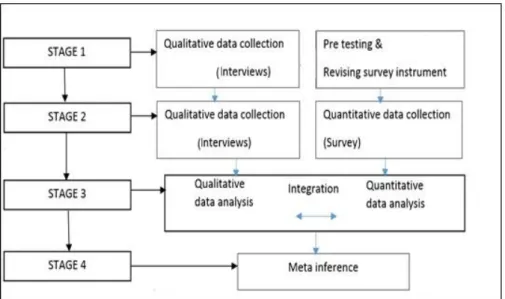
The study was conducted in five flood-affected rural villages of the Tando Muhammad Khan District, in Sindh Province, Pakistan. The villages are located on the river bank of Indus river and are at increased risk to be impacted by annual floods. The study used convergent/parallel mixed-methods design in which data was collected by means of interviews, a face-to-face survey questionnaire, and one participatory workshop. Interviews were conducted with 15 women who gave birth during the floods, 20 health workers who provided MCH services in the study villages, and 25 key informants who are key implementers of MCH program in rural Sindh, Pakistan. I also surveyed 667 women who were pregnant or gave birth during the times of floods
11 in 2011, in the Tando Muhammad Khan district. As a convergent mixed-methods study, data was analysed by using “side by side comparison”, in which qualitative and quantitative data was analysed separately and then synthesised by creating inductive themes and descriptive epidemiology.
Results
The findings show that only 3% of women living in Katcho villages used continuum of maternity-care care services in their last pregnancy. Preconception care was utilised by women with a history of miscarriages or infertility, or by women who had pre-existing medical conditions such as epilepsy or tuberculosis. About 20% of women started to use at least one contraceptive method in the last five years. During pregnancy, women do not seek maternity-care services unless they have complications such as vaginal bleeding or pain that severely affects their daily routine. Moreover, 53% of women visited a health-care provider at least once during their last pregnancy.
Between 2010 and 2014, 50% of births among women in the study villages were attended by a traditional birth attendant, known as a dai. Cultural preference for a dai, women’s limited understanding about birth complications, lack of emergency transportation, and limited personal funds to pay for travel costs to the health facilities were determinants of home births. In this study, 9% of births occurred in a public health facility. The most common reason why women do not use a public health facility during pregnancy and childbirth is the perceived poor quality of care and an absence of respectful maternity care by health staff. Women’s limited use of antenatal and birthing care services in health facilities translates to their poor utilisation of postpartum services. There were 53% of women who used antenatal care from a health-care professional, of them, only 10% continued to seek SBA care for childbirth and the postnatal care period. Women’s understanding of postnatal care services in their area was limited. Katcho women defined postnatal care as part of the package of domestic care services provided in their home by the dai after childbirth. Women used facility based postpartum services when they had life threatening postpartum complications such as a retained placenta, postpartum haemorrhage, and neonatal illnesses such as pneumonia, jaundice, or sepsis. The cost and availability of transport from the village to the health facility are significant barriers to accessing maternity-care services among Katcho women.
12 There are five cadres of health workers who deliver different stages of maternity-care services at “community level” and at “facility level”. The Lady Health Workers and community midwives provide maternity-care services at community level, whereas Lady Health Visitors, midwives, and Family Welfare Counsellors deliver reproductive and pregnancy care services at public health facilities. About 30% of women had at least one interaction with a Lady Health Worker during their last pregnancy. On the contrary, the services of community midwives are unknown to most of the women in Katcho villages. The community midwives do not deliver home-based maternity-care services because they do not have the means to travel to sparsely located villages in Katcho. Moreover, the Maternal, Neonatal and Child Health program does not provide community midwives with a travel allowance to deliver services to hard to reach communities. Despite having 56 community midwives in the District and two community midwives closely located to Katcho villages, only 1.5% of women reported using their services for antenatal care, 0.5% for delivery care, and 1.6% for postpartum care. On the other hand, only 14% women used public health facilities for antenatal, 2% for delivery care, and 5% for postpartum care.
Despite the fact that all five cadres of health workers deliver Maternal and Child Health services, there exists no coordination between them. The lack of coordination translates into fragmented maternity-care service provision for women in Katcho villages. Moreover, the poor relationship between the different cadres of health workers hinders their capacity to work together as a team. In every district, there is a committee called the District Health Planning and Management Team, which sets the district’s health target for each year and supervises health workers. However, in the study district, the ineffective District Health Planning and Management Team was a predominant reason behind poor coordination between the health workers.
In recent years, the floods have negatively affected women’s utilization of skilled birth attendants during childbirth. In this study, women who gave birth during the floods in 2011 stated that they did not have control over key decisions about their health and safety. Decisions about the family’s relocation prior to and during the floods were made by male kin, and pregnant women made no contribution to that decision-making process. There were no skilled birth attendants, ambulances, birthing or breastfeeding stations for women to use in the relief camps where they stayed for six to eight weeks during the floods. Of 37 women who gave birth during floods, 34
13 women (95% CI 78.1-98.2) were assisted by a dai whereas three women (95% CI 1.7-21.9) gave birth in the nearest health facility. Women who gave birth in the relief camps did so in temporary shelters, in unhygienic conditions, because there was no clean physical space for them to birth. None of the cadre of health workers provided maternity-care services for women in the relief camps. The absence of skilled birth attendants and a clean physical space to give birth put women’s and their newborns’ lives at risk.
Conclusion
There is a need to restructure the existing maternity-care services in rural Pakistan. Based on the evidence presented in this thesis, I propose that the five main cadres of health workers can form small health teams, which I call “Health Workers Groups”. I propose that the Health Workers Groups provide maternity-care services from preconception through to postnatal care and ensure continuity of care from home to the health facility at all stages of pregnancy. Each Health Worker Group could be assigned a smaller segment of the population, for example, 1,500 to 3,000 people, which is aligned with the existing population allocation for these health workers. The Health Workers Group may be deployed as frontline maternity-care providers in a natural disaster and emergency settings. In the recommended model, the Health Workers Group would actively participate in the key stages of disaster preparedness, such as providing information during the early warning stage and provide maternity-care services during the flood response. The Health Workers Group could also ensure that every pregnant, birthing and postpartum woman has access to reproductive and maternity-care services during all stages of the natural disaster or emergency.
14
Table of Contents
1.1 Introduction ... 24
1.2 Maternal death – A global perspective ... 24
1.2.1 Historical evolution of Primary Health Care (PHC) ... 25
Alma-Ata Conference ... 26
Challenges to implementing the PHC approach ... 27
1.2.2 Historical development towards Safe Motherhood ... 28
Integration of Safe Motherhood Initiative and PHC ... 29
TBAs’ exclusion as birth attendants ... 30
Millennium Development Goals ... 32
1.3 Continuum of care (CoC) ... 33
1.3.1 Components of CoC ... 34
1.3.2 Key stages of discontinuation of care ... 35
1.3.3 Interventions to support CoC ... 36
Quality of home-based maternity care ... 36
Demand-side financing ... 38
Cash transfer schemes ... 40
Voucher schemes ... 40
15
1.4 Pakistan – A struggling country ... 44
1.4.1 Health system evolution in Pakistan ... 45
1.4.2 Post MDGs – The National MNCH Strategic Framework of Pakistan ... 47
1.4.3 CoC and potential role of rural health workers in Pakistan ... 49
1.4.4 Challenges faced by rural health workers ... 51
1.5 Historical development of reproductive and maternity-care services during conflicts and disasters ... 53
1.5.1 Minimum Initial Service Package ... 54
1.5.2 Pakistan’s maternity-care response during disaster ... 55
1.5.3 Demand-side financing scheme in humanitarian emergencies ... 57
1.5.4 Potential role of CHW during disaster and humanitarian emergency ... 58
1.6 Theories guiding the study – Human Rights Theory ... 59
1.7 Rationale of the study ... 59
1.8 Summary ... 61
2.1 Introduction ... 62
2.2 Pragmatism as a methodological paradigm ... 62
2.3 Mixed-methods research ... 63
2.4 Research design ... 64
2.5 Study site – Tando Muhammad Khan (TMK) ... 66
2.6 Entering the field ... 67
2.7 Selection of villages ... 69
2.8 Data collection methods ... 69
2.8.1 Interviews ... 71
Group based interviews with women ... 71
Sample size for group interviews with women ... 72
Reflexivity – Women’s interviews ... 73
2.8.2 In-depth semi-structured interviews with rural health workers ... 74
Selection criteria and key characteristics of rural health workers ... 75
16
2.8.3 Reflexivity – Health workers’ interviews ... 77
In-depth interviews with key informants ... 77
Recruitment of key informants ... 78
2.8.4 Survey ... 78
Inclusion criterion ... 79
Sample size for survey ... 79
Survey instrument ... 80
Pre-testing of survey instrument ... 81
2.8.5 Participatory learning workshop with health workers ... 83
Logistic challenges to organise the workshop ... 83
Workshop guidelines ... 84
Activity 1: Motivation vs. challenges factors ... 84
Activity 2: Social mapping exercise ... 85
Activity 3: Annual plan ... 87
2.9 Data entry ... 87 2.9.1 Data analysis ... 88 2.9.2 Qualitative analysis ... 88 2.9.3 Quantitative analysis ... 89 2.9.4 Integration ... 90 2.10 Ethical consideration ... 91 2.11 Summary ... 92 3.1 Introduction ... 93
3.2 Poor functioning District Health Program Management Teams (DHPMT) 93 3.3 Rural health workers and their role in the different stages of pregnancy .. 96
3.4 Preconception care services ... 98
3.4.1 Home-based reproductive health services ... 99
Challenges to implement home-based reproductive health counselling .... 99
17
3.5 ANC services ... 102
3.5.1 Home-based ANC services by LHWs ... 103
Challenges to deliver home-based MCH services ... 104
Discontinuation of prenatal vitamins ... 104
Lack of acceptance from community ... 105
3.6 Birthing-care services ... 106
3.6.1 Home-based birthing care ... 106
Challenges faced by the CMW Program ... 107
Poor recruitment strategy for CMWs ... 107
CMWs’ salary ... 108
Lack of transportation support ... 109
Poor infrastructure support from the MNCH program ... 110
3.6.2 Facility-based birthing care ... 111
Challenges to deliver facility-based birthing services ... 111
3.7 PNC services ... 112
3.7.1 Home-based PNC services ... 113
Challenges to deliver home-based PNC ... 114
Power knowledge about PNC services ... 114
Lack of coordination between home-based workers ... 115
3.7.2 Facility-based PNC services ... 116
Challenges to deliver facility-based PNC services ... 117
Lack of understanding about essential PNC services ... 117
Lack of coordination between home and facility-based care ... 117
3.8 Conclusion ... 119
4.1 Geographical landscape of Katcho villages ... 120
4.2 Access to basic facilities in Katcho villages ... 124
4.3 The para system ... 126
18
4.5 Women’s lack of autonomy ... 130
4.6 Summary ... 133
5.1 Introduction ... 134
5.2 Phase 1: Preconception Care ... 134
5.2.1 Negative perception about modern contraception ... 134
5.2.2 Poor access to reproductive health education/counselling ... 135
5.2.3 Desirable family size ... 136
5.2.4 Availability of family planning services ... 138
5.2.5 Contraceptive methods ... 140
5.2.6 Natural contraceptive methods ... 140
5.2.7 Modern contraceptive methods ... 142
Condoms ... 142
Oral contraceptive pill ... 142
Intrauterine devices (IUD) ... 145
Depo-Provera injection ... 146
Implanon or birth control implant ... 146
Tubal ligation ... 148
5.3 Phase 2: Antenatal care ... 151
5.3.1 Lack of knowledge about pregnancy complications ... 151
5.3.2 ANC providers in Katcho villages ... 152
5.3.3 Prenatal vitamins ... 154
5.3.4 Blood transfusions ... 155
5.3.5 Ultrasound ... 156
5.3.6 Tetanus toxoid (TT) vaccinations ... 157
5.4 Delivery care ... 158
5.4.1 Home births and the role of dais ... 160
5.4.2 Accessibility of the dais ... 162
5.4.3 Affordability of maternity care ... 163
5.4.4 Behaviour of staff at public health facilities ... 164
5.4.5 Unsafe practices associated with labour augmentation ... 165
19
5.5.1 PNC providers across villages ... 170
5.6 Continuum of maternity-care services in Katcho villages ... 171
5.7 Summary ... 174
6.1 Introduction ... 175
6.2 Women’s lives during different phases of floods ... 175
6.3 Phase 1: Early warning, relocation, and evacuation ... 176
6.3.1 Early warning ... 176
Relocation decisions ... 177
Low risk perception ... 177
Holding cattle or livestock ... 178
Fear of losing agricultural work ... 178
Families deciding against relocation or evacuation ... 179
6.3.2 Evacuation ... 179
6.4 Phase 2: Response – Experiences of relief camp ... 181
6.4.1 Temporary shelter ... 182
6.4.2 Irregular food supply ... 184
6.4.3 Access to drinking water ... 185
6.4.4 Sanitation conditions ... 186
6.5 Summary ... 186
7.1 Health-care response during floods 2011 ... 188
7.1.1 Training of District Health Officers on humanitarian response ... 188
7.1.2 Insufficient district funds for humanitarian emergencies ... 189
7.1.3 Coordination with the Health Cluster ... 190
7.1.4 District health resources during floods ... 192
7.1.5 Health facilities in the relief camp ... 193
7.2 Phase 3: Reproductive and pregnancy care during floods ... 195
7.2.1 Inaccessibility of reproductive health services ... 195
7.2.2 Referral system for obstetric care in the relief camp ... 195
20
7.2.4 Choice of birth attendants at different phases of floods ... 199
7.2.5 Challenges faced by pregnant and postpartum women in the relief camp ... 200
7.2.6 Social support ... 201
8.1 Background ... 203
8.2 Preconception care – Reproductive health services ... 204
8.2.1 Lack of reproductive health education for young girls ... 204
8.2.2 Poor communication between women and family planning providers ... 206
8.3 Pregnancy care – ANC utilisation ... 210
8.3.1 Home-based antenatal counselling ... 211
8.3.2 Quality of ANC services ... 212
8.3.3 Improving geographical accessibility for ANC services ... 214
8.4 Care during childbirth ... 217
8.4.1 Home-birth with an SBA ... 217
8.4.2 TBAs’ revised role as birth companions ... 218
8.4.3 Poor Access to Emergency Transportation ... 220
8.4.4 Overreliance on the private sector ... 221
8.4.5 Absence of respectful maternity care in public health facilities .... 222
8.5 Postnatal care (PNC) ... 225
8.5.1 Home-based PNC services ... 225
8.6 Maternity care model ... 228
8.7 Maternity care during floods ... 235
8.7.1 Preparedness ... 237
Training HWGs and disaster health experts ... 237
Needs assessment ... 237
Networking and coordination ... 238
Early warning to pregnant women ... 238
8.8.2 Disaster response ... 239
Birthing facilities in relief camps ... 239
21
Women-friendly centres ... 239
8.9 Summary ... 242
9.1 The study ... 243
9.2 Maternity-care model ... 245
9.3 Maternity care model during floods ... 246
9.4 Strengths of the study ... 248
9.5 Limitations of the study ... 248
Appendix 1: Interview guidelines with women ... 250
Appendix 2: Interview guidelines with health workers (LHWs, LHVs, CMWs) ... 255
Appendix 3: Interview guideline with key informants ... 260
Appendix 4: Questionnaire ... 266
Appendix 5: Ethics approval from Deakin University ... 275
Appendix 6: Ethics approval from the National Bioethics Committee ... 276
Appendix 7: Health workers’ qualifications and MNCH tasks ... 277
Appendix 8: Delivery cost break up with health-care provider fees and travel costs ... 278
22
List of Figures
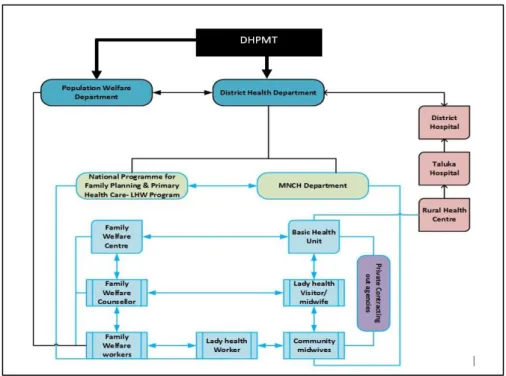
Figure 1.1 The CoC approach ... 34 Figure 2.1 Convergent/parallel mixed-methods design ... 65 Figure 2.2 Convergent Parallel mixed-methods design - data collection stages ... 66 Figure 2.3 District map of TMK ... 67 Figure 2.4 Participatory workshop with health workers ... 86 Figure 2.5 Social mapping exercise ... 86 Figure 2.6 Coding tree model – Nvivo ... 89 Figure 2.7 Meta-inference of women’s maternity care utilisation ... 91 Figure 3.1 District health departments and programs ... 93 Figure 3.2 Health-care facilities at TMK ... 97 Figure 3.3 CMW clinic refurbished by DKT International ... 111 Figure 4.1 Katcho villages in the TMK district ... 120 Figure 4.2 Village composition in study site ... 127 Figure 5.1 Family planning counselling by rural health workers (n=669) ... 138 Figure 5.2 Family planning counsellors’ utilisation across villages (n=669) ... 139 Figure 5.3 Women's utilisation of ANC providers in the Katcho region (n=669) ... 152 Figure 5.4 Women’s ANC utilisation across villages (n = 669) ... 154 Figure 5.5 Women’s utilisation of birth attendants in the Katcho region (n = 2944) 159 Figure 5.6 Women utilisation of birth attendants with respect to villages (n=2,869)160 Figure 5.7 Women's utilisation of PNC providers in the Katcho region ... 170 Figure 5.8 PNC across villages (n=669) ... 171 Figure 5.9 CoC utilisation in births in last five years (n=1,022) ... 172 Figure 5.10 Public vs. private health workers’ utilisation for COC (n=1,022) ... 173 Figure 6.1 Women’s lived experiences in different stages of disaster ... 175 Figure 6.2 Example of temporary shelters during floods in rural Sindh ... 183 Figure 6.3 Food distribution mechanism in the relief camp ... 185 Figure 7.1 Birth attendants’ utilisation during floods period (n=332) ... 200 Figure 8.1 Organisational structure of an HWG ... 229 Figure 8.2 Proposed role of health workers for CoC ... 233 Figure 8.3 Model of pregnant women’s care during emergency settings ... 241
23
List of Tables
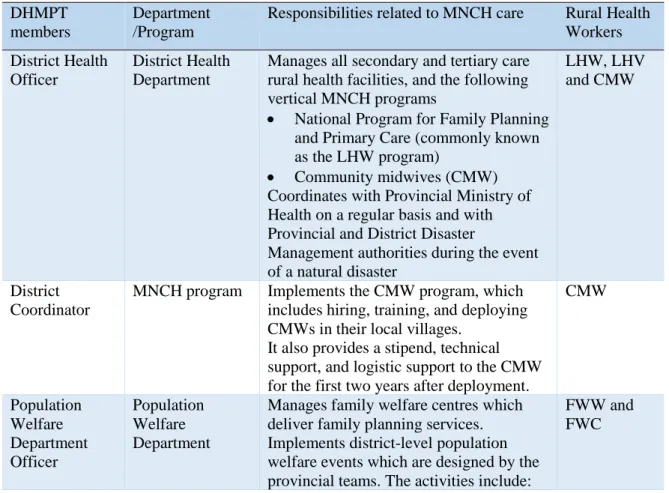
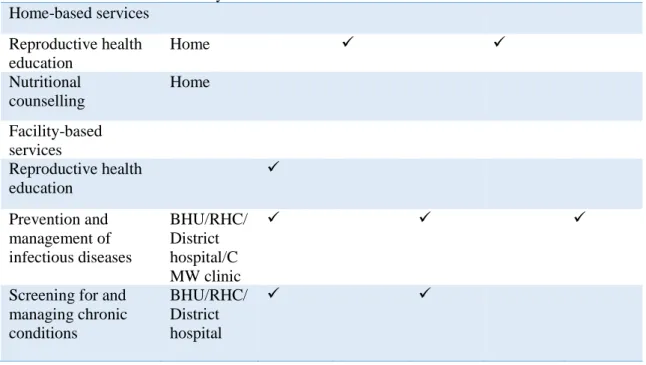
Table 1.1 Overview of health workers engaged in maternity care in rural Pakistan.. 50 Table 2.1 Data collection methods’ matrix ... 70 Table 2.2 Demographic characteristics of participants (n=15) ... 73 Table 2.3 Demographic characteristics of health workers (n=20) ... 76 Table 2.4 Demographic characteristics of key informants (n=21) ... 78 Table 2.5 Actual sample size for each village ... 80 Table 2.6 Demographic characteristics of survey participants (n = 669) ... 81 Table 3.1 Maternal health stakeholders in the TMK district ... 94 Table 3.2 Provision of preconception care services by rural health workers in Katcho
villages... 98 Table 3.3 Provision of ANC services by rural health workers in Katcho villages ... 103 Table 3.4 Provision of delivery services in Katcho villages ... 106 Table 3.5 Provision of PNC services in Katcho villages ... 113 Table 4.1 Study villages and their important characteristics ... 121 Table 5.1 Association between more than six children and adverse outcomes ... 137 Table 5.2 Association between contraceptive utilisation and adverse outcomes ... 137 Table 5.3 Contraception methods being used in study villages ... 140 Table 5.4 CoC utilisation in last five years’ births (n=1,022) ... 172 Table 6.1 Sources of pre-flood warnings (n=332) ... 177 Table 6.2 Relocation during floods (n=332) ... 177 Table 7.1 District health resources during floods in 2011 (N=605,821) ... 192 Table 8.1 Recommendations for preconception care in Katcho villages ... 209 Table 8.2 Recommendations for ANC services in Katcho villages ... 216 Table 8.3 Recommendations for childbirth during Katcho villages ... 224 Table 8.4 Recommendations for PNC in Katcho villages ... 227 Table 8.5 HWGs' recommended actions and responsibilities ... 230
24
Introduction
1.1 Introduction
This chapter provides an account of the historical evolution of maternity-care systems in resource-poor countries and its influence on the provision of maternity-care services in Pakistan. In the last two decades, natural disasters and humanitarian emergencies have become regular and repeat events in many countries with poor maternal health infrastructure and resources. This chapter also includes the global standards of provision of maternity and reproductive health services in natural disaster or humanitarian emergency settings, with the focus on Pakistan’s disaster response system for pregnant, labouring and lactating women.
1.2 Maternal death – A global perspective
Maternal death is a tragedy that extends beyond the loss of one human life to affect families and the community. A mother’s death significantly influences the health of the newborn and the wellbeing of other children. The older siblings are likely to drop out of school to care for the newborn and participate in domestic and agricultural work beyond their age (29). Maternal death is also associated with an economic burden on families as many of the deceased women were productive workers or the main income earners in the family, and their loss has a direct impact on the financial stability of the family unit (30).
Between 1990 and 2015, there has been a steady decline in global maternal deaths from 543,000 (6) in 1990 to 216,000 in 2015 (6). The lifetime risk of a maternal death in resource-poor counties such as countries in the Sub-Saharan Africa is 100 times higher than in high-income countries (28, 31). Every year, of the 125 million women who give birth, 300,000 women die, 43 million do not deliver babies in a health-care facility, and 21 million do not receive specialised care for obstetric complications (32). In resource-poor countries, one in four women give birth alone or with a relative or neighbour who assists them in childbirth, and this situation has not changed since the early 1990s (33, 34).
Many maternal deaths can be prevented if women are provided with adequate maternity care in a timely manner. An efficient maternity-care system offers women centred, safe, effective, timely, efficient, and equitable care with optimal maternal
25 health outcomes (35). In the absence of an efficient maternity-care system, many women in resource-poor countries are unable to recognize their fundamental right of survival at the time of childbirth.
1.2.1 Historical evolution of Primary Health Care (PHC)
Between 1940 and 1960 many resource-poor countries sought independence from former colonial powers. Almost all of these countries adapted western health-care models during the period of colonisation which were based on high cost, advanced technology, and urbanised tertiary level health facilities. In the late 1960s, the failure of western health-care models surfaced because they were too expensive to administer for newly emerging economies with limited national health systems and also for countries that were experiencing ongoing geo-political and economic instability. Moreover, western models could not improve rural women’s maternity care utilisation. Most of the health facilities were built in urban locations, and due to limited geographical access and high travel cost to-and-from urban facilities, rural women were unable to utilise those services (36).
In early 70’s, a number of community health worker (CHW) programs were implemented to reduce physical access barriers to health-care facilities (37-39). The key characteristics of these programs were the provision of health education, immunisation to reduce the incidence of communicable diseases, and provision of first-aid care in rural communities (36, 39).The most notable PHC initiatives during this era were the “barefoot doctors” project in China and the “polyclinics” in Cuba (40). The barefoot doctors were trained in basic health education and treatment for common illnesses, and they provided these services to fellow community members (40). In Cuba, the Government placed auxiliary staff and recent medical graduates in rural polyclinics to serve populations that resided in hard to reach mountainous and coastal areas. The polyclinics provided disease prevention programs and basic PHC services to those who could not avail themselves of health-care facilities in urban centres (40, 41). By removing the access barriers, these grassroots health programs substantially reduced the incidence of malaria, gastrointestinal infections and infectious diseases in infants (40, 42).
26 Alma-Ata Conference
In 1978, the Alma-Ata Conference was held in Kazakhstan where global health leaders from 170 countries declared that access to basic health care was a human right (43). The declaration noted that the goal of PHC was to provide essential care that would be universally accessible at an affordable cost to communities and governments (43). The core values of the PHC approach were social justice, equity, community participation, and disease prevention. Following Alma-Ata, in many resource-poor countries, PHC infrastructure was established to improve access to basic health care. Moreover, CHWs were trained to provide preventative care, health education, and basic curative care at the community level. The proposed Alma-Ata interventions included training of traditional birth attendants (TBAs) and maternal child health (MCH) workers, family planning promotion at community level, and using prenatal risk scoring to manage obstetric complications (44).
Malaysia for example, implemented a PHC approach in 1978, which resulted in the improvement of maternity care access to rural populations (45). Between 1955 and 1975, the Malaysian Government established an extensive three-tier rural health network (main health centre, rural health centre, and midwifery clinic). This was accompanied by a well-functioning MCH program (initiated at the same time) which offered basic MCH care services in all rural facilities (46). During this time, Malaysia’s Gross Domestic Product allocation to health care was 1.7% and the maternal health care allocation of this budget was 0.4%. According to Pathmanathen et al. (47), Malaysia’s maternal health outcomes were exemplary despite a modest financial investment. Following Alma-Ata, the former three-tier health system became two-tier health networks and the midwifery clinics were upgraded to rural health centres. The number of rural health centres and midwives were increased and the midwife-population ratio went from 1:7300 in 1960 to 1:4400 in 1980. To manage the upgraded health services, midwives received additional training on prenatal risk scoring and treatment of common illness and injuries (48). Between 1980 and 1995, the investments resulted in increased skilled birth attendants (SBA) utilisation from 61% to 90%, respectively, a corresponding decline in TBA assisted births from 28% to 6%, respectively, and a reduction of maternal mortality ratio (MMR) from 200 to 37 per 100,000 live births, respectively (46). The results indicated that PHC was not
27 only a cost-effective health service model but with careful planning, PHC in Malaysia had significantly improved women’s utilisation of maternity-care services.
Challenges to implementing the PHC approach
The PHC approach was a significant shift from curative to preventative health care. Many national governments or health stakeholders took time to process the ‘new’ system and acknowledge its potential benefits, especially in countries where the western health-care model had failed. According to Hall and Taylor, since its inception the PHC approach was criticised for being ‘too idealistic’ and ‘expensive’ or ‘unachievable’ (36). The argument was that PHC was an expensive model and the cost associated with establishing rural health networks, training health workers, provision of essential drugs, and salaries for doctors and midwives working in the rural facilities was unachievable for many economically disadvantaged countries (49). In April 1979, the Rockefeller Foundation held a meeting to explore selective PHC (SPHC) as an
interim approach to reach Alma-Ata targets (50). The SPHC largely focused on the
most prevalent causes of infant and child mortality and introduced a package of low-cost technical interventions which included growth monitoring, oral rehydration solutions for diarrhoea, breastfeeding, and vaccination to minimise the incidence of diseases in resource-poor countries (36). The vaccination program was the most significant SPHC intervention as its impact to prevent diseases (of high mortality) was higher than other nutrition-specific interventions (such as growth monitoring or breastfeeding). Between 1985 and 1993, these programs claimed to reduce infant mortality by 1.3 million, however around the same time, more than 12 million infants died; 2.4 million of these deaths were related to vaccine-preventable diseases (51). Magnussen et al. (51) critiqued the SPHC approach stating that it was unable to respond to the interrelationship between health and socio-economic development, as after two decades of investment in SPHC, preventable diseases remained a major challenge in resource-poor countries (51).
Reflecting the past failures of the PHC approach, Rohde et al. held the view that local policy makers in many resource-poor countries considered that it was a ‘second class’ health-care service for poor and rural populations (52). On the other hand, some resource-poor countries embraced PHC, more as an opportunity to minimise the national health expenditure, and did not invest in strengthening the
28 referral system, provision of essential supplies, and equipment in referral facilities (38). In the absence of comprehensive guidelines for community participation in health-care services, community engagement was largely missing from the provision of PHC in resource-poor countries. Hall and Taylor (36) noted that the overly negative attitude towards the community ownership of their health and the lack of political commitment from local and the global health communities to implement PHC inhibited many countries’ ability to integrate a PHC approach into their health system.
The PHC approach was invisible from the global health literature for nearly two decades. In 2007, the new WHO Director, Dr Margret Chan, called for a renewed emphasis on PHC as an approach to strengthen health systems in resource-poor countries (53). Similarly, the Commission on Social Determinants of Health (2008) highlighted the long-neglected PHC approach and emphasised its inclusion in the health system to address the income and geographical inequity in resource-poor countries (54). This was followed by the notable Lancet series called “Alma-Ata: Rebirth and Revision” which analysed past successes and failures of the PHC approach to improve MCH outcomes (51, 55-58). The key recommendations of the series were improving primary health-care infrastructure, regular provision of essential drugs and equipment, overcoming the shortages of the rural health workforce, strengthening the referral system, and remove user fees for PHC services (51, 55-57).
1.2.2 Historical development towards Safe Motherhood
The international literature remained discreet about maternal mortality until the seminal work of Rosenfield and Maine of ‘Where is M in MCH’? in 1985 (59). The authors critiqued the lack of global commitment towards maternal health and argued that, except for family planning, all MCH initiatives focused on the welfare of the infant, overlooking the needs of labouring and postpartum women. In 1987, the first Safe Motherhood Conference was hosted in Nairobi which proposed universal access to a safe birth and to reduce the global MMR by half by the year 2000 (60). Key elements of the Safe Motherhood Initiative included family planning, TBA training, community-based maternity care, and obstetric care for life-threatening complications. The Safe Motherhood program was soon criticised for being similar to the former MCH initiatives due to its primary focus on ‘safe birth’ as an outcome. The program focused more on the needs and care for pregnant and postpartum women, and less on
29 the reproductive health needs of women. Later, two seminal conferences, the International Conference on Population and Development (ICPD), Cairo in 1994 (60), and the Fourth World Conference on Women, Beijing in 1995 (61) advocated for access to modern contraception as ‘a legitimate human right’. Women’s reproductive health rights were redefined as having access to contraception, to make informed sexual and fertility decisions, and to receive optimal maternity-care services during pregnancy and childbirth (61).
Integration of Safe Motherhood Initiative and PHC
Alma-Ata, Safe Motherhood and the ICPD were the key advocacies that established the foundations for the current maternity-care system in many resource-poor countries. The maternal health targets of Alma-Ata and the Safe Motherhood program were easy to integrate into country-level MNCH programs because of their ideological similarities. In the past, countries with a strong political commitment to both these initiatives were able to improve maternity-care services and reduce maternal mortality. For instance, in Malaysia, the pre-existing well-functioning PHC program was integral to the success of Safe Motherhood Initiative. As noted above, Malaysia was on-track to reduce maternal mortality after adapting the PHC model. Since 1950, the Malaysian Government had a well-functioning MCH program implemented in all rural health facilities. Then in 1990, when Safe Motherhood Initiative was introduced in Malaysia, it was integrated into the existing MCH programs to reach the women who were most in need of safe maternity care. Moreover, during 1990-2010, Malaysia initiated the Confidential Enquiry into Maternal Deaths system, which found that in most of the births assisted by TBAs, postpartum haemorrhage and retained placenta were the main causes of maternal deaths. Between 1985 and 1995, the Confidential Enquiry into Maternal Deaths system, along with an integrated PHC approach, further reduced MMR from 37 to 21 per 100,000 live births in Malaysia.
In Indonesia in 1989, as part of their nationwide Safe Motherhood program, a new cadre of village midwife (VMW) was introduced to improve women’s utilisation of SBAs for maternity-care services (62). Between 1989 and 2000, the program substantially improved SBA assisted deliveries (from 36% to 64%, respectively), however, maternal mortality declined by 37% against the expected rate of 50% (6). According to Shankar et al (63), recruiting, training, and deploying 50,000 midwives
30 across the country in seven years was rather ambitious, and it resulted in a poor selection of candidates and compromised on the quality of the SBA training program. The VMWs are supervised by the head of nearest health facility; however, since VMWs are not part of the formal health system, their supervisor does not consider that supervising village midwives is aligned with their facility-based responsibilities (63). Titaley et al. state that young and inexperienced VMWs often delay the referral to health facilities as they fear the loss of a fee for case referrals and being judged on their birthing skills by the facility-based staff (64). The evaluation of the VMW program suggests that while the program was successful in improving women’s SBA utilisation, there is a need to improve the supervision and strengthen the referral process to reduce maternal and neonatal mortality. The examples of Malaysia and Indonesia reinforce the fact that in resource-constrained settings, integration of maternal health initiatives and PHC services is mandatory to ensure the success of a maternal health project.
TBAs’ exclusion as birth attendants
Training TBAs was one of the most crucial elements of maternity-care programs in resource-poor counties as it improved access to safe birthing care for women living in remote and impoverished regions. However, a number of studies found that while training TBAs can improve the number of referrals to health facilities and contraceptive counselling, it does not reduce postpartum infection (65), minimise maternal mortality (66), or alter a TBA’s traditional beliefs and cultural practices of childbirth (67). In three rural districts of India, nearly half of the trained TBAs continues to use non-sterilised blades or bamboo splinters during the delivery (68). The failure of TBAs to adhere to the practices they were taught during TBA training programs in different settings meant that TBA training was an ineffective strategy to reduce maternal mortality. Having said that, in Ghana (69) and Bangladesh (70), trained TBAs self-reported undertaking complicated deliveries, as women refused to seek health care from SBAs in facilities due to financial limitations, lack of transportation, or perceived quality of health facilities. What is important to note is, most TBA training programs were evaluated based on pregnancy outcomes, number of referrals, or neonatal outcomes. The evaluations compared these indicators between trained and non-trained TBAs and overlooked the conditions under which TBAs
31 operated or made decisions. For example, in Ghana (69) and Bangladesh (70), it was women who chose not to go to the health facility to give birth because they did not trust the health provider. Most of the TBAs were relatives of the birthing woman. In situations where the family decided against a hospital birth, the TBAs were often the only person in the community that could manage the delivery, thus their role as a birth provider is imperative in such settings.
Prata et al. argued that the reason that many TBA trials to provide safe birthing care in the past were unable to demonstrate significant reduction in maternal deaths was because the evidence-based community interventions were excluded from the trials (71). In Bangladesh, Ethiopia, Pakistan, and Tanzania, where TBA utilisation was high, the interventions of oral misoprostol and soaking mats (kanga/birthing mat) to measure the blood loss have shown significant reductions in obstetric complications and maternal mortality when used by TBAs (71-74). The examples suggest that in conservative societies TBAs play a significant role in childbirth and therefore their role in maternity care needs to be maintained if global maternal mortality is to be reduced.
In 1997, on the 10th anniversary of the Safe Motherhood Conference in Colombo, the Safe Motherhood Inter-Agency Group recommended that the single most compelling intervention to reduce maternal mortality is to ensure that every birth is attended by a SBA such as a doctor, midwife, or nurse (75). Having a health worker with midwifery skills present during childbirth, backed up by transport in case of emergency referrals to a health facility, can substantially reduce the risk of pregnancy-related deaths. At the conference, the strategy of TBA training was overturned because trained TBAs were not adhering to the medical practices that they were trained to perform and their skills did not meet the essential skills required to manage obstetric complications. Another action message delivered at the conference was to “improve access to quality maternal health services”, which emphasised the importance of both clinical and interpersonal aspects of maternity care, including the capacity to provide emergency obstetric care.
Targets for Safe Motherhood (reduce global maternal mortality by half by the year 2000) and Health for All by 2000 (universal access to basic health care) were not achieved. However, by the year 2000, there had been a reduction in maternal mortality in resource-poor countries, which was a significant achievement. It was agreed that
32 knowing ‘what did not work?’ was insightful and would assist policy makers and national governments to develop maternal health-care policies for the next decade (36).
Millennium Development Goals
In 2000, the UN Millennium Development Goals (MDGs) were developed. Eight international goals were declared, and the improvement of maternal health was one of the eight MDGs. The target of MDG 5 was to reduce the global MMR by two-thirds by 2015 and ensure universal access to contraception (1). To reach to this target, all 189 countries who were signatories to the MDGs made a commitment to ensure that there was universal access to reproductive health. Between 2000 and 2015, MDG 5 remain the benchmark for all MNCH programs in resource-poor countries. In 2004, the World Health Organisation (WHO), International Confederation of Midwives, and International Federation of Gynaecology and Obstetrics produced guidelines on the critical role of SBAs to make pregnancy safe in resource-constrained settings (76). It defined an SBA as:
a skilled attendant is an accredited health professional — such as a midwife, doctor or nurse — who has been educated and trained to proficiency in the skills needed to manage normal (uncomplicated) pregnancies, childbirth and the immediate postnatal period, and in the identification, management and referral of complications in women and newborns. (Source: WHO, page 1, (76))
The guidelines emphasised the provision of SBA care at different stages of pregnancy under a functional health system and stressed the importance of women’s timely transfer for care from the community to facility level. Previously, the referral system was only specific to the patient transfer between health facilities and that transfer from community to facility was not part of it. However, recognising that any delay at the first level would be detrimental to women’s survival, the guideline recommended that ensuring a swift transfer from the community to a facility is essential to prevent obstetric complications that can be caused by delayed care (31, 77). It also proposed the change in the role of a TBA from a birth attendant to a birth companion, as TBAs remain in high demand in culturally conservative and resource-poor communities. Moreover, the SBA will need to collaborate with other cadres in the community such as TBAs, social workers, or community workers who can help
33 the SBA build linkages in the community and counsel women to have SBA assisted births (76).
1.3 Continuum of care (CoC)
The mid-term evaluation of the MDG “Countdown to 2015” showed that of the 68 countries that were responsible for 97% of the global maternal and child deaths in the year 2000, only 14 were on track to achieve the MDGs related to MCH (78). A poor functioning health infrastructure, health worker shortages, and slow adoption of evidence-based health policies were noted as reasons for the slow progress in meeting countries’ MDG targets (50). Lawn et al. (79) estimated that of the four million neonatal deaths between 1996 and 2005, three quarters of them occurred in the first week of life due to the poor provision of neonatal care. Furthermore, the “World Health Report 2000: every mother every child” (80) showed that adolescent pregnancies and unsafe abortions amongst adolescent girls are significant contributors to maternal deaths. Adolescent girls are highly vulnerable to malnutrition, early marriages, forced sex, and unplanned pregnancy, and the global burden of maternal mortality cannot be reduced without addressing the reproductive health needs of adolescent girls (80). Women’s health before pregnancy was also recognised as an important phase of maternity care and an essential Maternal Neonatal Child Health (MNCH) intervention which has long-term benefits for maternal and neonatal health.
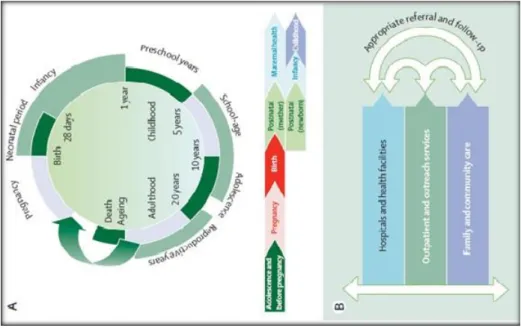
To address the gaps in the standard maternity-care approach (antenatal to postnatal care), the concept of continuum of care (CoC) was introduced as an alternate strategy to reduce maternal and neonatal mortality as well as ensure optimal maternal health during the course of women’s reproductive lives (79, 81, 82). According to Kerber et al. (83)and Johnson et al. (84), an effective CoC connects essential MNCH services throughout adolescence, pregnancy, childbirth, postnatal, the newborn period, and into childhood, on the basis of their natural interactions with health services throughout the lifecycle (82). For instance, access and ability to utilise contraception to delay pregnancy can have a life-long impact on adolescent girls who are vulnerable to forced sex and early marriage (see Figure 1.1). Similarly, utilisation of essential antenatal care (ANC) services leads to optimal health at childbirth and increases the likelihood of utilisation of SBA care for birthing and postpartum period. The linkages between different stages of pregnancy and a timely transfer of women with obstetric
34 complications from the community to the facility results in more lives saved at less cost and builds a more integrated and efficient maternity-care system (83).
Figure 1.1 The CoC approach
(Source: Kerber et al. p. 1360, (83))
As stated by Sines et al. (5) a well-functioning CoC can saves the lives of seven million women and neonates every year. What is significant about the CoC approach is that it broadens the focus of maternal health from “reducing maternal mortality” to “optimal health and wellbeing of the mother” at every stage of her life. Stenberg et al. (85) state that well-targeted investments along with the CoC approach can respond to a fundamental human right; the right to health. The authors noted the economic and social benefits of the CoC approach and argued that while this approach may increase national Gross Domestic Product due to women’s increased participation in the workforce and higher productivity, the social benefits of saving a mother’s life to raise her child and the life of neonate are the most valuable outcomes of this approach(85).
1.3.1 Components of CoC
The CoC approach has two important dimensions: 1) time and 2) space (see Figure 1.1). The time dimension suggests that every woman must attend all essential pregnancy care services including preconception care, and each level of care facilitates woman’s use of another level of care (83). For instance, ANC visits from a health-care provider not only prevent the incidence of obstetric complications or birth defects by early screening, they also encourage pregnant women to seek birthing care from an
35 SBA. The space dimension suggests that the provision of evidence-based reproductive, maternal, neonatal and child health services at home vis-à-vis at the facility level, with the ability of a rapid transfer of care from the community to facility or between facilities. The CoC approach assumes that combining effective care in health facilities, healthy behaviours at home and seeking early care for illness will have the biggest impact on a mother, newborn and a child’s health (86).
1.3.2 Key stages of discontinuation of care
The care that a woman receives at each stage of her pregnancy has an impact on her pregnancy and health-seeking behaviour for the next pregnancy. It is important to identify the stages where women are likely to drop-out from seeking health care and to recognise factors that cause the discontinuation of care. A multi-country Demographic Health Survey (DHS) analysis by Singh et al. (87) reported that of 92% women who attended at least one ANC visit from a health professional, 43% continued to attend more than four ANC visits, 33% continued to seek SBA assistance for childbirth, and 19% continued until postnatal care (PNC). However, only 10% of women received postpartum family planning services, thus receiving all components of CoC. The CoC dropout from one ANC visit to postpartum family planning service was 87% to 16% in South Asia and 93% to 9% in Sub-Saharan Africa. The authors highlighted that women living in an urban area, with secondary school education, who have more than four children and being from the wealthiest socio-economic status are predictors of women’s completion of CoC (87). In another multi-country DHS analysis from 12 Sub-Saharan African countries, Owili et al. (88) showed that a joint family structure and women’s limited autonomy have a negative impact on women’s utilisation of essential maternity-care services.
In a cross-sectional study in Ghana, Yeji and colleagues (89) found that 8% (out of 1,500 women) received the full CoC services. Of the 75% of women who received SBA care, half of them were unable to visit a health facility for the PNC due to the difficult geographical terrain and poor availability of transportation. On the contrary, in Cambodia, Wang and Hang reported the dropout from delivery to PNC was only 11% (90) due to a higher rate of SBA assisted home births and effective counselling from the SBA at the time of childbirth about PNC utilisation. In Tanzania, Mohan et al. (91) identified that postpartum women’s visit to health facilities was not
36 to receive PNC services but to obtain a free immunisation card for the baby. While Mohan et al. noted that a woman is likely to meet with a doctor to receive the immunisation card, however, the study does not provide details about the content of care a woman might receive in such visits (91).
The literature on CoC is limited and is mostly based on DHS data. The studies that used DHS data noted the limitation of using DHS data such as poor framing of a DHS question [Q: did anyone check on your health after delivery?] (90) and self-report bias (88). Moreover, the definition of CoC varies across all studies, specifically to measure PNC, which in some studies was noted as “within 24 hours” (87) some used “within 48 days” (90) and some used the recommended four PNC visits (89). Preconception care is largely absent from the CoC literature except for one study from Pakistan (10) which noted postpartum family planning utilisation within one year after delivery. The literature on CoC shows that prospective cohort studies should be conducted to avoid recall bias. For retrospective studies, a mixed-methods approach would be more beneficial to identify and explain gaps in continuation of maternity-care services.
1.3.3 Interventions to support CoC
In CoC, the continuation occurs from one stage to another and is substantially influenced by income, geographical access to services, and socio-cultural beliefs about pregnancy and childbirth. Recent evidence suggest that home-based maternity-care services (92-95) and demand-side financing (96-99) could improve the continuity of maternity-care services in resource-poor settings. Conversely, the quality of facility-based care has improved through training of medical staff about emergency management of obstetric and neonatal complications and to deliver respectful maternity care to pregnant and postpartum women.
Quality of home-based maternity care
Home-based maternity care is an integral part of CoC as most of the factors that inhibit utilisation of essential maternity care start from home. The essential components of home-based maternity services include counselling for self-care during pregnancy, danger signs during pregnancy, and SBA care during childbirth and in the postpartum period. In addition to counselling services, in some countries health
37 workers also provide clean delivery kits, prenatal vitamins, vaccinations, essential newborn care packages, and bed nets for malaria prevention during and after pregnancy (100, 101). Kikuchi et al. (102) stated that home-based ANC and PNC services by CHWs bridges the gap of health care utilisation between different stages of pregnancy and also facilitates a smooth transfer of care from the community to the facility.
In an intervention study from Bangladesh, CHWs were trained to provide counselling about danger signs during pregnancy and in the postpartum period, use of SBA services for delivery and PNC, family planning, and the benefits of exclusive breastfeeding (93). The intervention resulted in a 36% decrease in perinatal mortality and a 40% increase in ANC utilisation (93). In Ghana, additional training of health workers and frequent group supervision meetings between health workers and supervisor resulted in women’s improved preparedness for childbirth, increased use of SBAs, and early initiation of breastfeeding (95). In a case-control study from Pakistan, Bhutta et al. (101) provided additional training to Lady Health Workers (LHWs) in 315 villages to improve the quality of home-visits and also link the LHW and TBA to penetrate the communities who were reluctant to use SBA services for cultural reasons. This intervention resulted in an increase in utilisation of public health facilities (from 18% to 30%) for childbirth, reduced still births by (from 65.9 to 43.1 per 1000 births) and neonatal mortality (from 57.3 to 41.3 per 1000 live births) in the intervention group. The aforementioned interventions show that with effective training and supervision, CHWs cannot only deliver home-based maternity care, but they can also ensure CoC in hard to reach communities.
However, implementing home-based care by SBAs has its challenges. In Bangladesh, Blum et al. (103) showed that families pressured community midwives (CMW) to induce labour by using oxytocin at home without medical indication to hasten the labour progress. Furthermore, CMWs also criticised the unhygienic environment at women’s homes for birthing purposes. Since the birthing process is considered to be polluted, CMWs often have to conduct deliveries outside the living area (still within house) in a dark and damp room in the absence of family members (103). On the contrary, in Pakistan and Indonesia, communities do not trust the skills and knowledge of young and unmarried female birth attendants (104, 105). However, older women often have minimal or no formal education which means that young
38 unmarried females generally attend the training programs and then after training work at community level.
The CMWs are often required to travel long distances to sparsely located villages and may not be provided with transportation or a travel allowance to cover their transport costs. Hatt and colleagues (106) noted that community midwives in Bangladesh are provided with a cash incentive to do home births, however, the amount is not adequate for the services they provide at night in geographically remote areas when regular transport is unavailable. In Pakistan, Mumtaz et al. (107) highlighted that the gender restricted mobility of young unmarried CMWs affects the services they can provide in their communities. The recent evaluation of the CMW program in Afghanistan by Turkmani et al. suggest a need to incorporate a hardship allowance for CMW who work in geographically or culturally challenging locations (108). Looking at the recent evidence, an additional allowance for CMWs and transportation service to allow them to perform after-hours care is considered best practice.
Demand-side financing
The adverse impact of geographical barriers and financial inequities on women’s health care utilisation is well documented. The mid-term evaluation report of “Countdown to 2015- tracking progress in maternal, newborn & child survival” recommended that health services need to be available and affordable for all and that this can be achieved through free maternal health-care services or financing strategies, based on the needs of the population (109). Similarly, the World Health Report 2005 (80) highlighted that poor access to facilities was a barrier to CoC and emphasised the need for universal health coverage to remove the access barriers for health care utilisation. Rwanda’s innovative health financing strategies for vulnerable segments of the population is considered to be one of the best health care financing models in resource-poor countries because it is embedded in grassroots initiatives and institutions. Rwanda’s financing model constitutes three prominent reforms; health micro-insurance (‘mutuelles’), performance-based financing (PBF) and fiscal decentralization (110). The health financing policies positively influence public facility utilisation which increased from 8% to 19% between 2000 to 2005(110). Maternity care utilisation amongst the poorest quintile was substantially improved, as between 2000 to 2007, the SBA utilisation at birth rose from 12% to 42%, modern
39 contraception utilisation from 1% to 22% and women attending ANC visits in the first trimester increased from 57% to 94% (110, 111). Sekabaraga et al. suggest that not only it had improved health care utilisation, it had also reduced out-of-pocket payments for health care of people from the lowest SES index. Another good example is Cambodia, which is amongst the few resource-poor countries who were able to meet MDG 5 targets. Liljestrand and Sambath (112) stated that using health equity funds to deliver free maternity care services to women from the lowest SES was instrumental to reduce maternal mortality rate in Cambodia. The government in collaboration with donors reimburse the facilities to provide free services to poor women, provide free transport and food for women and caretaker who stay with the person who is hospitalized, and provide monetary incentive for every live-birth to facility-based midwives(113).
Since 2005, a number of countries initiated cash transfer and voucher scheme as demand-side financing schemes to minimise the burden of the cost of care on the most disadvantaged communities, who would otherwise not be able to use the services (114, 115). Under the voucher scheme, women from the lowest Socio-Economic Status (SES) status are provided with a set of vouchers to avail themselves of all maternity-care services including health facilities (public or private) or at home by SBAs, often with a transportation allowance for each visit (115). Vouchers are sometimes distributed free of cost by CHWs (106), and in some projects, women purchase a set of vouchers from CHWs or from a health facility (116, 117). In cash transfer schemes, pregnant women are provided with a cash incentive so that they can eat well during pregnancy and in the postpartum period, and/or receive maternity-care services from the nearest health facility and/or at home by SBAs. In the conditional cash transfer scheme, women are provided cash incentives upon providing a receipt as evidence that they used a maternity-care service. In contrast, unconditional cash transfer schemes provide cash support to pregnant women regardless of their health care utilisation. Some conditional cash transfer schemes provide monthly cash support to pregnant women throughout their pregnancy, whereas others provide short-term payments on the basis of the number of ANC visits made during the pregnancy (118).