South Dakota State University
Open PRAIRIE: Open Public Research Access Institutional
Repository and Information Exchange
Doctor of Nursing Practice (DNP) Practice
Innovation Projects College of Nursing
2014
Implementing a Screening Pathway for Identifying
Patients at Risk for Obstructive Sleep Apnea in
Primary Care
Emily Fett
Follow this and additional works at:https://openprairie.sdstate.edu/con_dnp
Part of theNursing Commons, and theSleep Medicine Commons
This DNP - Open Access is brought to you for free and open access by the College of Nursing at Open PRAIRIE: Open Public Research Access Institutional Repository and Information Exchange. It has been accepted for inclusion in Doctor of Nursing Practice (DNP) Practice Innovation Projects by an authorized administrator of Open PRAIRIE: Open Public Research Access Institutional Repository and Information Exchange. For more information, please [email protected].
Recommended Citation
Fett, Emily, "Implementing a Screening Pathway for Identifying Patients at Risk for Obstructive Sleep Apnea in Primary Care" (2014).
Doctor of Nursing Practice (DNP) Practice Innovation Projects. 33.
Implementing a Screening Pathway for Identifying Patients at Risk for Obstructive Sleep Apnea in Primary Care
BY Emily Fett
A paper submitted in partial fulfillment of the requirements for the degree Doctor of Nursing Practice
South Dakota State University 2014
Implementing a Screening Pathway for Identifying Patients at Risk for Obstructive Sleep Apnea in Primary Care
This Practice Innovation Project is approved as a credible and independent investigation by a candidate for the Doctor of Nursing Practice degree and is acceptable for meeting the project requirements for this degree. Acceptance of this practice
innovation project does not imply that the conclusions reached by the candidate are necessarily the conclusions of the major department.
__________________________________________________ Thomas Stenvig, RN, PhD, MPH, NEA-BC Date
Practice Innovation Project Advisor
__________________________________________________ Nancy Fahrenwald, RN, PhD, APHN-BC Date Dean, College of Nursing
Acknowledgements
I wish to express sincere gratitude to the following people who played a significant role in the completion of this practice innovation project:
Dr. Thomas Stenvig, for his wisdom, encouragement, and enduring support as project advisor;
The Project Committee members, Dr. Gina Rowe and Dr. Lori Hendrickx, for their expert guidance, encouragement, and valuable feedback;
Project stakeholder Siri Heille, for her guidance, support, and continued encouragement;
Dr. Timothy Bachenberg and staff at the project site, for their support and participation in this project;
Dr. Gemechis Djira, for his expertise and assistance with the statistical analysis; Finally, my husband, Ryan, daughter, Jenna, and parents, Ross and Cindy, whose patience, encouragement, and unconditional love sustained me throughout my entire DNP journey.
Abstract
Implementing a Screening Pathway for Identifying Patients at Risk for Obstructive Sleep Apnea in Primary Care
Emily Fett July 16, 2014
Obstructive sleep apnea (OSA) is emerging as a significant health problem largely underrecognized by health care providers in the primary care setting (Pagel, 2008). The intent of this practice innovation project was to change and reduce the variation in practice for OSA screening that did not follow what is known about best practices. In this study, a preexperimental one-group pretest-posttest design was carried out to evaluate the outcomes associated with implementing an evidence-based screening pathway into practice for OSA based on the recommendations set forth in a clinical practice guideline recently published by the American Academy of Sleep Medicine (Epstein et al., 2009).
The intervention consisted of providing education and training to primary care providers and staff for accurately identifying and screening eligible patients according to the pathway. Those individuals who were identified as having symptoms of OSA were referred on for a sleep study. Comparison data consisted of sleep study referral rates over a two month period prior to the intervention and were compared to sleep study referral rates over a two month period after the intervention was implemented into practice. The analysis indicates that there is not a statistically significant difference between the two groups (X2 = 1.091, p = 0.148). However, among the sub-group of patients identified as
eligible for screening through chart review, significantly more patients were referred on for a sleep study during the post-intervention period compared to the pre-intervention period (X2 = 7.815, p = 0.003). Of the 227 patients identified as eligible for screening post-intervention, six were referred on for a sleep study. This result suggests with 95% certainty that the intervention (education and training for the implementation of a screening pathway) led to a statistically significant increase in the number of patients referred on for a sleep study. The majority of patients who were categorized as eligible for screening were White, male, age 50 years or younger, and indicated for screening due to their body mass index (>35 kg/m2).
Results of this study demonstrate a small but clinically significant increase in the number of sleep study referrals after the pathway was implemented into practice. Despite the relatively few successful screenings that were performed in this study, there is still a need for ongoing screening in the primary care setting due to the increasing prevalence and debilitating conditions associated with OSA (Chai-Coetzer et al., 2013a). High patient volumes, time restraints, and neglecting to offer screening to every adult patient were identified as the major barriers to successfully implementing this project.
Continued efforts are needed in educating providers about the importance of screening for OSA in the primary care setting. With the increasing prevalence of OSA, there is hope for earlier detection and prompter treatment with the advent of routine screening in the primary care setting.
Table of Contents Page Abstract ... iv List of Tables ... ix List of Figures ... 10 Chapter 1: Introduction ... 11 Diagnosing OSA ... 12
Systemic Effects of OSA ... 13
Significance of Problem ... 14
PICOT Question ... 18
Purpose of the Study ... 18
Research Questions ... 19
Definitions ... 19
Chapter 2: Review of Literature ... 21
Introduction ... 21
Current Evidence in Support of OSA Screening ... 21
Gaps in the Evidence ... 24
Model of Evidence-Based Care ... 26
Conceptual Framework ... 30
Change Theory ... 32
Chapter 3: Project Design and Methodology ... 34
Study Design ... 34
Sample/Population ... 34
Study Intervention and Integration of Evidence ... 35
Facilitators and Barriers to the Project ... 37
Impact on Health Care for the Rural and Underserved Populations .... 38
Protection of Human Subjects ... 38
Instruments ... 39
Chapter 4: Outcomes & Impact of Practice Innovation Project ... 41
Discussion of Outcomes ... 41
Answers to Research Questions ... 42
Impact of Project on Patient Care ... 45
Chapter 5: Summary ... 47
Conclusion ... 47
Reflections on the Practice Innovation Project ... 47
Implications for Research ... 49
Recommendations for Future Practice ... 49
References ... 51
Appendices A. Human Subjects Form ... 59
B. Approval Letter ... 60
C. Evidence Table ... 61
D. OSA Screening Pathway ... 63
E. Form A ... 64
F. Epworth Sleepiness Scale ... 65
List of Tables
Table Page
1. OSA Symptoms ... 37 2. Number of Sleep Study Referrals ... 42
List of Figures
Figure Page
1. OSA Schematic ... 14
2. Johns Hopkins Nursing Evidence-based Practice Model ... 27
3. Johns Hopkins Nursing Evidence-Based Practice: Practice Question, Evidence, and Translation (PET) ... 29
4. The Chronic Care Model ... 32
5. Plan-Do-Study-Act Cycle ... 33
6. Age ranges of patients identified as eligible for OSA screening ... 43
7. Sex of patients identified as eligible for OSA screening ... 44
8. Race of patients identified as eligible for OSA screening ... 44
Chapter I: Introduction
Obstructive sleep apnea (OSA) is a common medical condition that is associated with poor quality of life and has been linked to many chronic health problems including hypertension, diabetes mellitus, cardiovascular disease, depression, and cognitive
dysfunction (Broström et al., 2012; Culpepper & Roth, 2009; Epstein et al., 2009; Grover et al., 2011; Mold et al., 2011; National Sleep Foundation, 2013; Pagel, 2008; Somers et al., 2008). An estimated 18 million people are living with OSA in the United States, and the incidence of OSA is paralleling the increase in obesity making proper screening and management vitally important for individuals at risk (Broström et al., 2012; Chai-Coetzer et al., 2013b; Culpepper & Roth, 2009; Mold et al., 2011; National Sleep Foundation, 2013; Pagel, 2008; Young, Peppard, & Gottlieb, 2002). Concerns that OSA is
significantly undiagnosed and untreated are confirmed with findings from recent studies in the field (Chai-Coetzer, Antic, & McEvoy, 2013a; Doghramji, 2008; Mold et al., 2011). Findings from one study suggests over 90% of adult participants who visited a primary care provider reported sleep-related symptoms suggestive of OSA, and over one-third of patients were identified as high-risk for OSA (Mold et al., 2011). However, many patients refrained from discussing these symptoms with the provider, and less than one-third of patients had sleep-related symptoms documented in their medical record (Mold et al., 2011).
A uniform approach for OSA screening is lacking as there is no standard of care or well-established tools for screening for OSA in the primary care setting (Chai-Coetzer et al., 2013a). The increasing prevalence of OSA strongly supports the need for a
screening patients (Chai-Coetzer et al., 2013a). Primary care providers are in an ideal position to screen for OSA as patients often seek care in this setting for initial complaints of sleep-related concerns (Chai-Coetzer et al., 2013a; Pagel, 2008). A systematic
approach to screening is vitally important for identifying patients at risk. Individuals who do not have a bed partner rely on the comprehensive evaluation by a provider to detect the symptoms of OSA (Friedman et al., 2010). This project focused on providing
providers and staff with the education and training for implementing a screening pathway into practice to identify patients at high risk for OSA in primary care. A clinical practice guideline (CPG) published by the American Academy of Sleep Medicine (AASM) was distilled down and incorporated into a pathway that was used in this study (Appendix D) (Epstein et al., 2009). Early screening and diagnosis will likely lead to prompter
treatment and better health outcomes for individuals living with OSA (Chai-Coetzer et al., 2013a; Culpepper & Roth, 2009; Pagel, 2008).
Diagnosing OSA
Individuals identified as having sleep-related symptoms or who are identified as high-risk for OSA are encouraged to undergo a sleep study to receive a confirmed diagnosis from a sleep specialist experienced in interpreting sleep study results . Polysomnography (PSG) testing in a sleep laboratory has been the preferred method for diagnosing OSA in the past as many sleep specialists believe the clinical environment provides a controlled setting for evaluating sleep behaviors in someone identified as having symptoms of OSA (Epstein et al., 2009). However, with the increasing awareness of OSA and limited availability of sleep labs and PSG, providers and patients are turning to home studies that are performed with the use of portable monitors and sensors capable
of detecting and recording respiratory events (Epstein et al., 2009). Both types of objective sleep testing are deemed acceptable, however AASM recommends in-laboratory PSG for patients with significant health problems or another type of sleep disorder (Epstein et al., 2009). In addition to establishing a diagnosis, objective sleep testing also categorizes the severity of a patient’s OSA as mild, moderate, or severe based on the number of respiratory events reported per hour of sleep (Epstein et al., 2009). Treatment plans can then be individualized according to the severity of the patient’s OSA. Objective sleep testing is not recommended for individuals in the absence of identified symptoms or known risk factors (Epstein et al., 2009).
OSA is diagnosed in patients with a history of “daytime sleepiness, loud snoring, witnessed breathing interruptions, or awakenings due to gasping or choking in the presence of at least 5 obstructive respiratory events (apneas, hypopneas or respiratory effort related arousals) per hour of sleep” detected during objective sleep testing according to AASM (Epstein et al., 2009, p. 263). An OSA diagnosis should also be made if a patient denies having OSA symptoms but experiences at least 15 obstructive events per hour of sleep during objective sleep testing (Epstein et al., 2009). OSA differs from central sleep apnea that occurs as a result of the brain failing to control breathing during sleep (National Sleep Foundation, 2013).
Systemic Effects of OSA
Individuals with OSA often experience brief periods of apnea and frequent awakenings during sleep as a result of throat muscles that relax and obstruct the airway (National Sleep Foundation, 2013). The reoccurrence of obstructive events during sleep leads to decreased oxygen and increased carbon dioxide levels in the body. Over time,
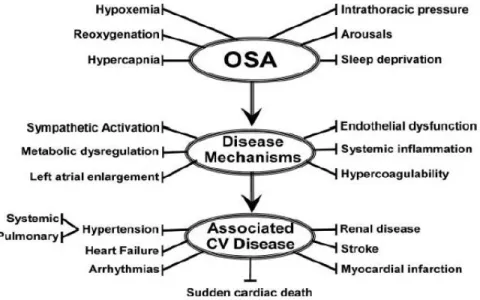
these episodes place significant stress on the body and place the individual at risk for developing cardiovascular disease (Kapur, 2010; Somers et al., 2008). The mechanisms by which OSA may play a role in the development and progression of cardiovascular disease are shown in Figure 1 (Somers et al., 2008).
Figure 1. “Schematic outlining proposed pathophysiological components of OSA, activation of cardiovascular disease mechanisms, and consequent development of established cardiovascular disease”. Adapted from “Sleep Apnea and Cardiovascular Disease: An American Heart Association/American College of Cardiology Foundation Scientific Statement from the American Heart Association Council for High Blood Pressure Research Professional Education Committee, Council on Clinical Cardiology, Stroke Council, and Council on Cardiovascular Nursing,” by V. Somers, D. White, R. Amin, W. Abraham, F. Costa, A. Culebras, . . . T. Young, 2008, Circulation, 118, p. 1085. Copyright 2008 by American Heart Association, Inc. Reprinted with permission.
Significance of Problem
OSA is emerging as a significant health problem largely underrecognized by health care providers in the primary care setting (Pagel, 2008). Results from a survey by the National Sleep Foundation, in 2005, indicate that 26% of people living in the United
States were at high risk for OSA (Hiestand, Britz, Goldman, & Phillips, 2006). A review of epidemiological data by Young, Peppard, and Gottlieb (2002) determined that nearly 1 in 5 adults has mild OSA, and 1 in 15 adults has moderate OSA. However, the true prevalence of this condition is difficult to measure as there is no specific lab test or evidence-based metric available for detecting OSA (Kapur, 2010). Persons of all ages are affected by OSA; however males, individuals with certain medical conditions including obesity, type II diabetes, and heart failure, and those with a positive family history have an increased risk (Culpepper & Roth, 2009; Epstein et al., 2009; Grover et al., 2011; Kapur, 2010; Mold et al., 2011; West, Nicoll, & Stradling, 2006). Limited data exists in support of OSA-associated mortality as it is difficult to establish if negative outcomes are truly caused from OSA or from other disease processes, especially among individuals with underlying cardiovascular disease, obesity, diabetes, or metabolic syndrome (Kapur, 2010; Somers et al., 2008). Familial studies strongly suggest a link between OSA and such genetic factors as body fat distribution, craniofacial anatomy, and obesity; and those at higher risk include males, older adults, and individuals who are obese (Casale et al., 2009; Chai-Coetzer et al., 2013a; Grover et al., 2011; Kapur, 2010; Mold et al., 2011; Somers et al., 2008).
In a recent study, Chai-Coetzer and colleagues (2013b) evaluated the clinical efficacy and cost of diagnosing and treating OSA in primary care centers compared to specialty sleep centers. Outcomes measured at baseline and after 6 months of treatment included scores on the Epworth Sleepiness Scale (ESS) and improved health and quality of life evaluated with various questionnaires, adherence to continuous positive airway pressure (CPAP) therapy, and changes in weight and blood pressure readings
(Chai-Coetzer et al., 2013b). Results from this study showed that both groups experienced significant improvements in the ESS scores and neither group experienced better health outcomes (Chai-Coetzer et al., 2013b). The authors concluded that better access to services and reduced costs associated with the diagnosis and management of OSA may result if providers in the primary care setting are motivated, skilled, and committed to offering these services to patients, especially those living in rural and underserved areas (Chai-Coetzer et al., 2013b).
Persons living with undiagnosed or untreated OSA often experience a poor quality of life related to excessive daytime sleepiness, decreased vitality, poor social functioning, decreased libido, depression, irritability, and other negative health outcomes associated with the disease process (Culpepper & Roth, 2009; Kapur, 2010; Pagel, 2008). The increasing prevalence of OSA is placing great demand on sleep centers and
specialists, resulting in long wait times and delayed diagnosis for many individuals experiencing OSA or other sleep-related symptoms (Chai-Coetzer et al., 2013b). Persons living in rural communities have limited access to sleep centers and may have to travel long distances to seek treatment for a rather uncomplicated condition that could otherwise be ideally treated by a primary care provider capable of screening, diagnosing, and
managing OSA (Chai-Coetzer et al., 2013a; Chai-Coetzer et al., 2013b; Culpepper & Roth, 2009; Doghramji, 2008; Grover et al., 2011; Lieberman, 2009; Pagel, 2008; Rakel, 2009). Better screening practices in primary care will likely demonstrate a need for more diagnostic testing services that are readily accessible to ensure patients receive a
In addition to these concerns, costs associated with management of OSA and the consequences that occur as a result of the disease process have a significant economic impact on the affected individual as well as society (Kapur, 2010; Pagel, 2008). In one study of 238 patients in the United States, the mean medical cost of medical care per patient in the year prior to receiving a diagnosis of OSA was $2,720 as compared to $1,384 for controls matched for sex and age (Kapur et al., 1999).
In the United States in the year 2000, more than 800,000 drivers, 1,400 deaths, and an estimated $15.9 billion in spending were associated with OSA-related motor vehicle accidents (Sassani et al., 2004). A CPG recently published by the American Thoracic Society asserts that sleepiness may be a leading factor in “up to 20% of crashes on monotonous roads, especially highways” (Strohl et al., 2013, p. 1259). The CPG also declares that OSA “is the most common medical disorder that causes excessive daytime sleepiness, increasing the risk for drowsy driving two to three times” (p. 1259). In addition to motor vehicle accidents, individuals experiencing excessive sleepiness or cognitive impairment are at risk for work-related accidents and poor job performance, especially those who operate machinery or work in a high-stress environment (Culpepper & Roth, 2009; Pagel, 2008). More research is needed to better determine the impact that this disorder has on society, the economy, and the health care community at large (Pagel, 2008). Routine screening provides the foundation for improving health outcomes and abating consequences associated with OSA (Culpepper & Roth, 2009; Epstein et al., 2009).
PICOT Question
The formulated clinical question that guided this project is: Among providers and staff who care for adult patients in a primary care clinic (P), does the education and training for the implementation of a screening pathway for OSA (I) compared to the current practice of not using a screening pathway (C) lead to an increase in the number of patients referred on for a sleep study by the provider (O) over a period of two months (T)?
Purpose of the Study
Health care providers at a primary care clinic in a large rural community in southern Minnesota identified a need and were interested in implementing OSA
screening into practice for adult patients. Patients were not routinely screened for OSA, and providers often neglected to address the issue if the patient, family, or nursing staff failed to bring it to the provider’s attention. The intent of this practice innovation project was to change and reduce the variation in practice for OSA screening that did not follow what is known about best practices. This project focused on providing education and training to providers and staff for implementing a screening pathway into practice to identify adult patients at risk for OSA. Those who were identified as having symptoms of OSA were referred on for a sleep study.
Patient referral rates served as the proxy for evaluating the outcomes of this study. The ultimate goal of the screening was to determine if patients, who were referred for objective sleep testing, were actually tested, but this was beyond the scope of the project. Comparison data was obtained through a retrospective chart review at the clinical site. Extrapolating the providers’ behavior prior to implementation required a review of
documentation from patient encounters during a two month period to determine how many sleep study referrals were made by the providers in the intervention group.
Research Questions
1. What percentage of patients, who met inclusion criteria for the study, were appropriately screened for OSA according to the pathway?
2. Of the patients appropriately screened for OSA, how many were referred on for a sleep study by the provider?
3. How many patients were referred for a sleep study by a provider in the intervention group during a two month period prior to implementation of the study?
Definitions
Obstructive sleep apnea (OSA): a sleep disorder that is diagnosed if a patient has a history of “daytime sleepiness, loud snoring, witnessed breathing interruptions, or awakenings due to gasping or choking in the presence of at least 5 obstructive respiratory events (apneas, hypopneas or respiratory effort related arousals) per hour of sleep”, or if a patient denies having OSA symptoms but experiences at least 15 obstructive events per hour of sleep (Epstein et al., 2009, p. 263).
Adult: an individual that is 18 years of age or older.
Sleep study: the use of biosensors to monitor a patient while sleeping to detect episodes of apnea (cessation of breathing) and hypopnea (slow or shallow breathing). Sleep studies can be conducted in a sleep laboratory or via portable monitoring in the home setting. Both types of objective sleep testing are deemed acceptable by AASM (Epstein et al., 2009).
Retrognathia: “malocclusion of the mouth due to an abnormal posterior position of the maxilla or mandible” (Gutierrez & Brady, 2013, p. 566). Patients are evaluated for this condition during the screening process.
Sleep disorder: an encompassing term that refers to any sleep condition defined in the International Classification of Sleep Disorders; “most are marked by one of these symptoms: excessive daytime sleepiness, difficulty initiating or maintaining sleep, or abnormal movements, behaviors, and sensations occurring during sleep” (Institute of Medicine, 2006, p. 56).
Chapter 2: Review of Literature Introduction
A review of literature was conducted using the Cochrane Library, National Guideline Clearinghouse, EBSCO MegaFILE, CINAHL Plus with Full Text, MEDLINE, MasterFILE Premier, Academic Search Premier, and Health Source: Nursing/Academic Edition databases to gather data for this critical literature review. Keywords used in searches include obstructive sleep apnea, OSA, and primary care. These keyword searches resulted in 134 citations. Articles were further limited with the following parameters: articles published between 2003 and 2013 and peer reviewed journals. This search produced 112 citations. Furthermore, 15 studies on children were excluded, 51 studies focused solely on the treatment of OSA were excluded, and five studies focused on a surgical population were excluded. Abstracts were reviewed from the remaining 41 citations, ten articles were retrieved and reviewed, and three articles were retained and synthesized for this paper. Two additional articles were discovered after searching the reference lists of relevant articles and were also synthesized for this paper (Culpepper & Roth, 2009; Grover et al., 2011).
Current Evidence in Support of OSA Screening
Screening in primary care. Several research studies and one systematic review have evaluated the impact of screening for OSA in primary care as shown in the evidence table (Appendix C) (Broström et al., 2012; Chai-Coetzer et al., 2013b; Culpepper & Roth, 2009; Grover et al., 2011; Mold et al., 2011). Culpepper and Roth (2009) systematically reviewed 239 articles to describe the role of the health care provider in assessing for OSA in the primary care setting. This article is appraised as level III
evidence as the authors reviewed randomized controlled trials (RCTs), meta-analyses, clinical trials, and reviews (Culpepper & Roth, 2009; Dearholt & Dang, 2012). In this article, Culpepper and Roth (2009) discussed the importance of screening patients who present with excessive sleepiness, depression, or other comorbid conditions associated with OSA to assist patients in receiving proper treatment and experiencing better health and quality of life. Proper screening and management in all settings, including primary care, will lead to lower morbidity and mortality rates associated with OSA (Culpepper & Roth, 2009; Pagel, 2008).
A quantitative non-experimental study, appraised as level III evidence, was carried out with 249 patients at two primary care sites within the same health care system (Dearholt & Dang, 2012; Grover et al., 2011). The purpose of this study was to evaluate the sensitivity of a review of systems (ROS) form for detecting sleep-related complaints, determine how often providers investigate these complaints, evaluate the prevalence of patients identified as at-risk for OSA, and determine how well patient responses aid in the identification of patients as high-risk for OSA (Grover et al., 2011). Results from this study revealed that 37% of participants had positive responses to sleep-related questions on the ROS form but physicians had documented only 24% of those symptoms (Grover et al., 2011). A total of 33% of patients had an increased risk of developing OSA and 57% of patients identified as high-risk responded positively to an ROS question as compared to 27% identified as lower-risk (Grover et al., 2011). Responses on the ROS form were 73% specific and 57% sensitive for identifying patients at increased risk for OSA (Grover et al., 2011). The authors concluded that sleep-related symptoms were recognized more frequently when physicians used a ROS form (Grover at al., 2011). However, few
complaints from the patients were acknowledged by the provider and the sleep questions on the current ROS form were not sensitive enough to identify patients at increased risk for OSA (Grover et al., 2011).
Screening and sleep testing. Chai-Coetzer et al. (2011) developed a model consisting of a screening questionnaire and subsequent home sleep study to identify patients with OSA in the primary care setting (level III evidence) (Dearholt & Dang, 2012). A total of 157 adult patients (ages 25-70 years) receiving primary care services at one of six clinics in South Australia participated in this study (Chai-Coetzer et al., 2011). The screening questionnaire (OSA50 questionnaire) evaluated witnessed apneas, waist circumference, age and snoring as these factors were determined to be highly predictive of OSA (Chai-Coetzer et al., 2011). The monitoring equipment used in the home sleep studies was also validated against full PSG and found to be predictive of OSA (Chai-Coetzer et al., 2011). Results from this study support the use of this two-stage model to appropriately identify individuals with OSA in the primary care setting (Chai-Coetzer et al., 2011).
Broström and colleagues (2012) implemented a study to screen for OSA in adult patients diagnosed with hypertension in one of four primary care clinics in Sweden (level III evidence) (Dearholt & Dang, 2012). A total of 411 patients, ages 18-65 years,
diagnosed and treated for hypertension, were evaluated for OSA with a series of methods including clinical assessment, questionnaires, and a full-night sleep study (Broström et al., 2012). Results indicated that 29% of the patients had mild OSA and 30% of the patients had moderate/severe OSA (Broström et al., 2012). Obesity was also present in 30% of the patients with mild OSA and 68% of the patients with moderate/severe OSA
(Broström et al., 2012). In this study, the authors discovered that undiagnosed OSA is common in patients with a history of hypertension, and in addition to obesity, male gender, snoring, long sleep duration, and witnessed apneas were the most reliable predictors of OSA (Broström et al., 2012).
Clinical practice guideline. A CPG, appraised as level IV evidence, was released in 2009 by the Adult Obstructive Sleep Apnea Task Force of the AASM to provide health care providers with a general overview on the diagnosis, management and treatment of OSA in adults (Dearholt & Dang, 2012; Epstein et al., 2009). The guideline recommends OSA screening for all patients during routine health maintenance exams and for patients who complain of OSA symptoms or are identified as high risk for OSA in the primary care setting (Epstein et al., 2009). An algorithm is provided to assist providers in screening, diagnosing, and treating individuals identified as high-risk for OSA. The focus of OSA as a chronic disease is emphasized in this article to make providers aware of the need for lifelong, multidisciplinary management for individuals diagnosed with this disorder (Epstein et al., 2009). The intended goal of proper risk identification, diagnosis, and management is to reduce complications associated with OSA, namely cardiovascular disease (Epstein et al., 2009).
Gaps in the Evidence
A current gap identified from the review of literature includes the availability and application of specific tools and precise guidelines for primary care providers to use in identifying individuals at high risk for OSA who may greatly benefit from undergoing further testing (Chai-Coetzer et al., 2011; Mold et al., 2011). The Berlin and STOP-Bang questionnaires, ESS, Mallampati score (evaluation of oropharynx to determine ease of
intubation and risk of sleep apnea), review of systems, and measurement of truncal obesity are some of the tools and methods used by providers to screen for OSA, however no particular method has been found to be specific enough to diagnose the condition (Chai-Coetzer et al., 2011; Chai-Coetzer et al., 2013a; Friedman et al., 2010; Grover et al., 2011; Jacobs & Coffey, 2009; Nuckton, Glidden, Browner, & Claman, 2006; Vana, Silva, & Goldberg, 2013). Questionnaires and screening tools do however assist providers in identifying patients at risk who may benefit from undergoing further
diagnostic testing for OSA or other sleep disorders (Chai-Coetzer et al., 2013a). Studies evaluating the validity and reliability of screening tools often focus on the surgical population as OSA is a significant concern for individuals requiring general anesthesia and sedation for surgery (Abrishami, Khajehdehi, & Chung; 2010; Sundar, Chang, & Smetana, 2011). Limited data exists in support of the best practices for screening in the primary care setting (Chai-Coetzer et al., 2011).
Friedman and colleagues (2010) published a study with promising findings to support the use of multiple instruments in accurately screening and diagnosing patients with OSA, however the proposed algorithm is fairly complex and is more appropriate for use in the specialty setting rather than the primary care setting. Furthermore, the findings from this study cannot be generalized to the population at large due to the relatively small sample size of 223 patients.
A substantial body of research has recently focused on the development and validation of ambulatory models of care for the diagnosis (portable sleep monitoring at home versus PSG testing at a sleep center) and management (auto-titrating CPAP in the home versus CPAP therapy managed by a sleep specialist) of OSA rather than on the
screening process itself for individuals not yet diagnosed with the condition (Antic et al., 2009; Berry, Hill, Thompson, & McLaurin, 2008; Coetzer et al., 2013a; Chai-Coetzer et al., 2013b; Kuna et al., 2011; Mulgrew, Fox, Ayas, & Ryan, 2007; Rosen et al., 2012). Individuals need to be appropriately screened before diagnosis and
management can occur. Chai-Coetzer et al. (2011) note that “suitably simple, accurate and validated strategies capturing both symptomatology and objective signs of overnight breathing disturbances are needed” (p. 213-214). The CPG released by the AASM provides consensus-based recommendations based on expert opinion rather than
empirically-based recommendations supported by sound research (Epstein et al., 2009). It is evident from this critical review of literature that additional research is needed to support a systematic approach and provide clinicians with clearer guidelines for screening for OSA in the primary care setting (Chai-Coetzer et al., 2011; Mold et al., 2011). Providers are in need of a valid and reliable screening pathway that can be incorporated into practice to appropriately identify patients at risk for OSA. A pathway that is valid, reliable, and simple to use will likely lead to provider and staff satisfaction and adherence to its use in the clinical setting.
Model of Evidence-Based Care
Johns Hopkins Nursing Evidence-Based Practice Model. The Johns Hopkins Nursing Evidence-Based Practice (JHNEBP) Model illustrates the key factors and components that are considered to be foundational for evidence-based practice (EBP) in nursing (Dearholt & Dang, 2012; Figure 2). The Model is depicted as an open-system with internal and external factors influencing practice, education, and research (Dearholt & Dang, 2012). At the center of the Model is evidence, consisting of data from sources
that are both research and non-research-based (Dearholt & Dang, 2012). Health care professionals are encouraged to implement guidelines based on the most current knowledge available to them, while also considering the individual needs of the patient and the barriers that may exist in the practice setting. Creating transformational change within a health care system commands support from stakeholders and employees who value the implementation of evidence-based recommendations into practice. Results from this project add support to the current state of the science for screening of individuals with OSA.
Figure 2. JHNEBP Model. Adapted from Johns Hopkins Nursing Evidence-Based Practice: Model and Guidelines, by S. L. Dearholt & D. Dang (Eds.), 2012, 2nd ed., p. 34. Copyright 2013 by The Johns Hopkins Hospital/The Johns Hopkins University. Reprinted with permission.
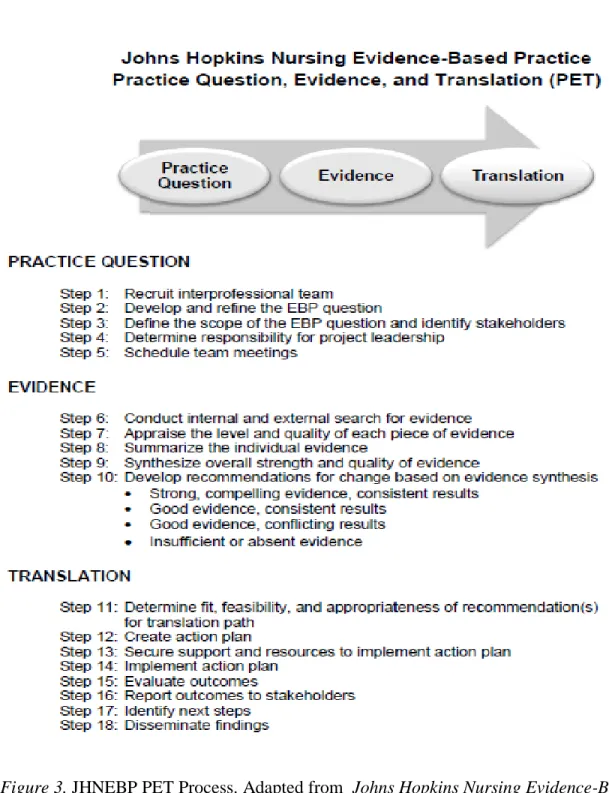
JHNEBP PET Process. The JHNEBP PET process provides the necessary framework for creating evidence-based change within an organization. The stepwise approach consists of 18 steps that carry an individual or team through the stages of developing a practice question, gathering supportive evidence, and translating findings into practice (Dearholt & Dang, 2012; Figure 3). For this project, a team of health care providers and staff participated in the development and refinement of the EBP (PICOT) question. A thorough review of literature was performed to identify the current state of the science regarding OSA screening in primary care, and gaps in the evidence that exist at this time. Recommendations were incorporated into an action plan and approval was sought from the stakeholder and team members prior to implementation of this project.
Figure 3. JHNEBP PET Process. Adapted from Johns Hopkins Nursing Evidence-Based Practice: Model and Guidelines, by S. L. Dearholt & D. Dang (Eds.), 2012, 2nd ed., p. 236. Copyright 2013 by The Johns Hopkins Hospital/The Johns Hopkins University. Reprinted with permission.
Conceptual Framework
The Chronic Care Model. The Chronic Care Model (CCM) provides the structural framework for the treatment and management of chronic illness. When operationalized, the model creates a therapeutic environment for the productive interaction between motivated patients and expert care providers (Watts et al., 2009). The goal of the model is to improve patient outcomes and provider satisfaction, and reduce costs associated with chronic illness care (Improving Chronic Illness Care, 2010).
Health system and community. The CCM consists of six elements that are essential for a health care system to operate effectively and provide quality patient care: delivery system design, decision support, clinical information systems, self-management support, resources and policies, and organization of health care (Figure 4). The CCM guided the development of this project that focused on screening individuals for OSA in the primary care setting.
Patient data was collected during the patient encounter by health care providers and staff involved in the study. The electronic health record was accessed by the principal investigator to identify those who were eligible for screening, as well as those who received sleep study referrals before and after the pathway was implemented into practice. Results from this project were further evaluated by the principal investigator upon completion of the study. Providers and staff remained informed throughout the duration of the study through the use of open communication from the principal investigator. Cooperative patients and a coordinated health care team were crucial for ensuring screening was performed according to the pathway (Appendix D).
Productive interactions and relationships. Productive interactions between the patient and care team are essential for the development and maintenance of patient-centered care. One of the goals of this project was to create a trusting and productive relationship between the patient and provider that allowed for open and honest communication at all times, especially when sharing personal health information. Productive interactions are likely to occur when the patient and family feel informed and empowered, and the provider is prepared to offer evidence-based recommendations for treatment (Watts et al., 2009). Patients who are identified as having symptoms of OSA must be motivated to seek testing and treatment to decrease the likelihood of
experiencing negative health outcomes associated with OSA. Early detection and treatment of OSA by primary care providers will likely lead to patients receiving appropriate therapy and follow-up, as well as to cost savings for the health care system.
Figure 4. The Chronic Care Model. Adapted from “Chronic Disease Management: What Will It Take to Improve Care for Chronic Illness?” by E. H. Wagner, 1998, Effective Clinical Practice, 1, p. 3. Copyright 1998 by American College of Physicians-American Society of Internal Medicine. Reprinted with permission.
Change Theory
Plan-Do-Study-Act cycle. The Plan-Do-Study-Act (PDSA) cycle provides a framework and approach for developing and implementing effective change at an organizational level (Levin, 2009). The Plan phase requires the team to develop
objectives, make predictions about outcomes, and create a plan for implementing a small test of change (Levin, 2009). In the Do phase, the plan is carried out and data is collected (Levin, 2009). Observations are also made to determine what did and did not go well during implementation of the small test of change (Levin, 2009). A thorough evaluation of the data collected in the second phase occurs in the Study phase (Levin, 2009). In
addition, the results are summarized and compared to the predictions or anticipated outcomes from the Plan phase (Levin, 2009). Lastly, the Act phase occurs when team members determine whether or not the results are favorable and decide on what changes need to be made before beginning the next PDSA cycle (Levin, 2009).
System-wide change becomes possible when multiple cycles have produced promising results. The PDSA cycle provided an evidence-based approach for
implementing this project as a pilot test in a large rural primary care practice. Results from this study can be reflected on to determine how to proceed with future projects focused on OSA screening in primary care. The PDSA cycle is depicted in Figure 5.
Figure 5. PDSA Cycle. Available on www.IHI.org. Copyright 2013 by Institute for Health care Improvement. Reprinted with permission.
Chapter 3: Project Design and Methodology Study Design
A preexperimental study with a one-group pretest-posttest design was carried out to evaluate the outcomes associated with implementing a screening pathway into practice for OSA. The intervention consisted of providing education and training to primary care providers and staff for accurately identifying and screening eligible patients according to the pathway (Appendix D). This chapter will discuss the sample, setting, and
methodology of the study. The intervention, instruments, context, and analysis will also be reviewed.
Sample/Population
The population for this study consisted of the providers and staff at a primary care clinic located in a large rural community in southern Minnesota. The intervention group included the providers and staff who participated in the screening process of eligible patients by following the pathway (Appendix D). Patients who were identified as having symptoms of OSA were referred on for a sleep study. In addition to the two primary care providers, those involved with this study included reception and clinical nursing staff. The study took place over a period of approximately two months. There were no exclusion criteria identified as all providers and staff had agreed to participate in this study. Comparison data were obtained through a retrospective chart review at the clinical site. Extrapolating the providers’ behavior prior to implementation required review of documentation from patient encounters during a two month period to determine how many sleep study referrals were made by the providers in the intervention group.
Environmental and Organizational Context
Prior to the commencement of the study, there was no standardized process for OSA screening at the clinic. The key stakeholder, additional provider, and staff were all in support of this project. Staff were notified of the project’s timeline and were kept informed of any changes as they were made during the planning process. The clinic was equipped with the appropriate supplies and information needed for successfully
implementing this project.
Study Intervention and Integration of Evidence
Prior to commencement of the study, providers and staff met one-on-one with the principal investigator to discuss the process that is outlined in the screening pathway (Appendix D). Additional education on OSA and the importance of screening was provided to staff on an individualized basis depending on each person’s familiarity with the condition. Expectations for the project were provided and concerns were addressed before the study began. As is recommended to consider in the Plan phase of the PDSA cycle, minor changes were made to the screening forms based on provider and staff feedback obtained during the educational sessions to enhance usability of the forms (Levin, 2009).
The screening recommendations set forth by AASM’s CPG were implemented into a pathway that was used with adult patients who were identified as eligible for screening (Epstein et al., 2009). The following information was provided to staff to ensure a standardized process was followed throughout the duration of the study:
1. Staff were expected to follow the screening pathway to ensure all steps of the process were carried out in a systematic way for eligible patients (Appendix D).
2. Reception staff were asked to distribute a screening packet to every patient who was 18 years of age or older and English-speaking at the time of check-in. Adult patients who presented for routine health maintenance exams, were being evaluated for symptoms of OSA (Table 1), or who were identified at high-risk, who did not already have a
confirmed diagnosis of sleep apnea, were screened (Appendix E) (Epstein et al., 2009). Instructions for filling out Form A, the ESS, and Form B were highlighted to direct the patient in completing the initial steps of the screening process while he/she was waiting to be seen by the provider (Appendices E, F, & G).
3. Nursing staff were asked to measure the patient’s height, weight, and body mass index, and complete the remaining questions on Form B (Appendix G). A comprehensive sleep evaluation (Appendix H) by a provider was indicated if the patient had answered
positively to one or more of the questions on Form B (Appendix G). The study
concluded for those patients who did not have symptoms of a sleep disorder as indicated by a positive response on Form B (Appendix G).
4. Providers were asked to make a recommendation for a sleep study for any patient whom they felt had symptoms of OSA (Table 1). In addition, providers were asked to identify a level of risk for each patient in whom a sleep study was recommended (Appendix H). The level of risk was determined by findings from the history and physical exam.
5. Patients referred on for a sleep study received an educational pamphlet on OSA from AASM and contact information for setting up a sleep study.
Table 1
OSA Symptoms
Witnessed apneas (episodes of stopping breathing during sleep) Snoring
Gasping or choking at night Memory loss
Decreased concentration
Decreased libido (sexual desire) Irritability
Depression
Morning headaches
Nocturia (waking up from sleep to urinate) Nonrefreshing sleep
Concerns with total sleep amount
Insomnia or sleep fragmentation (frequent awakenings) Excessive sleepiness not explained by other factors
Facilitators and Barriers to the Project
Facilitators. A key stakeholder for this project was a provider who worked at the primary care clinic where the study took place. The success of this project was
dependent on staff and provider adherence to the screening process. Guidance and support were welcomed from a project advisor and committee from the Department of Graduate Nursing at South Dakota State University. Additional facilitators for
implementation of the project included dissemination of evidence in support of this project prior to implementation, excitement and motivation from the providers and staff, and the diffusion of positive messages about this study in the community.
Barriers. Barriers were identified during the planning phase that may have led to resistance, discouragement, or less-than-ideal outcomes throughout the study.
Uninterested patients, inadequate training and education for staff, and incomplete or inaccurate documentation on screening forms were identified as potential barriers to the
successful completion of this project. Concerns were addressed in a timely manner in an attempt to avoid opposition from providers, staff, and patients.
Impact on Health Care for the Rural and Underserved Populations
Prompter treatment and better health outcomes are likely to result from the early detection and diagnosis of OSA in the primary care setting (Chai-Coetzer et al., 2013a; Culpepper & Roth, 2009; Pagel, 2008). This statement is especially true for the rural and underserved populations that often have poor access to specialty care. In addition to being located in large cities that may require patients to travel long distances for care, specialty care centers often have full schedules and patients may have to wait for weeks or months to see a sleep specialist (Chai-Coetzer et al., 2013a; Chai-Coetzer et al., 2013b). The rising costs of specialty care also pose a barrier to individuals experiencing socioeconomic hardships (Chai-Coetzer et al., 2013a). Performing OSA screening in primary care will likely increase patient and family satisfaction with care, improve quality of life for patients living with OSA, improve treatment of comorbid conditions associated with OSA including depression, diabetes, and hypertension, reduce morbidity and mortality associated with OSA, and create cost savings for both the patient and the health care system (Culpepper & Roth, 2009; Epstein et al., 2009; Lieberman, 2009; Pagel, 2008; Rakel, 2009). A reduction in motor vehicle and occupational accidents may also occur as more individuals with excessive daytime sleepiness are identified,
diagnosed, and treated for OSA (Grover et al., 2011; Pagel, 2008, Rakel, 2009).
Protection of Human Subjects
Approval for implementing this project was obtained from the medical director at the clinical site and the Human Subjects Committee at South Dakota State University
(Appendices A & B). Patients had the right to refuse screening at any time without reprimand. Data collected during the study was reviewed and secured by the principle investigator in accordance with the regulations set forth in the Health Insurance Portability and Accountability Act (United States Department of Health & Human Services, 2003).
Instruments
The recommendations outlined in AASM’s CPG support the use of one
instrument in the screening process: the ESS (Appendix F) (Epstein et al., 2009). The main OSA symptom, excessive sleepiness unexplained by other causes, can be evaluated with the ESS (Johns, 2000). A score of 8 or greater may suggest a sleep disorder and should be further evaluated by a provider (Rosenthal & Dolan, 2008). This
recommendation comes from a study by Rosenthal and Dolan (2008) that retrospectively reviewed 268 charts of patients who had filled out the ESS, had been clinically assessed by a sleep specialist, and had been diagnosed with OSA after having undergone PSG testing. With a cutoff score of 8, the ESS had shown to have a sensitivity of 76% and specificity of 31% in the positive identification of a diagnosis of OSA (Rosenthal & Dolan, 2008). The sensitivity and specificity results associated with other cutoff scores were not as optimal as the aforementioned results (Rosenthal & Dolan, 2008).
The ESS has been shown to have good reliability and internal consistency (Gander, Marshall, Harris, & Reid, 2005; Johns, n.d.; Johns, 2002; Ning-Hung Chen et al., 2002). However, a more recent review of literature on the efficacy of the ESS indicates that out of 16 studies meeting inclusion criteria, five established a significant relationship between the ESS and OSA and 11 failed to establish a significant
relationship (Sil & Barr, 2012). Providers must remember that the ESS only measures daytime sleepiness and therefore should not be used as the only tool in assessing for or diagnosing OSA (Jacobs & Coffey, 2009; Rosenthal & Dolan, 2008). Despite the conflicting evidence in support of the ESS, the CPG recommends its use in the screening process (Epstein et al., 2009). The ESS is not intended to predict or diagnose OSA but rather add one factor in support of ordering a sleep study for an individual with OSA symptoms (Epstein et al., 2009; Johns, n.d.).
Chapter 4: Outcomes & Impact of Practice Innovation Project
Data was collected and analyzed by the principle investigator while the study was in progress. The electronic health record of every adult patient being seen by one of the providers in the study was reviewed to determine how many sleep study referrals were made during the pre and post-intervention phases. Additionally, every adult encounter during the post-intervention phase was reviewed to determine if the patient was eligible for OSA screening based on the criteria listed on Form A (Appendix E). Statistical analyses were performed with the assistance of an associate professor of biostatistics at South Dakota State University to evaluate the outcomes of this project. Additional demographic analyses were also performed to evaluate the characteristics of age, race, sex, and indication for screening in patients identified as eligible for screening during the post-implementation phase of this study.
Discussion of Outcomes
A chi-square test of independence was performed to determine if a significant difference in sleep study referral rates existed between the pre and post-intervention groups. Comparison data consisted of sleep study referral rates over a two month period prior to the intervention and were compared to sleep study referral rates over a two month period after the intervention was implemented into practice. The analysis indicates that there is not a statistically significant difference between the two groups (X2 = 1.091, p = 0.148). The data that was analyzed is shown in Table 2. However, among the sub-group of patients identified as eligible for screening through chart review, significantly more were referred on for a sleep study during the post-intervention period compared to the pre-intervention period (X2 = 7.815, p = 0.003). Of the 227 patients identified as eligible
for screening post-intervention, six were referred on for a sleep study. This result suggests with 95% certainty that the intervention (education and training for the implementation of a screening pathway) led to a statistically significant increase in the number of patients referred on for a sleep study. However, the chi-square
approximations may be of limited value due to the sparsity of data in this study. After reviewing data at the end of the study, the principle investigator noted that patient refusals were not recorded and therefore, a complete analysis of data to determine the exact number of missed screenings cannot be performed for this study.
Table 2
Number of Sleep Study Referrals
Referred for Sleep Study
Not Referred for Sleep Study
Pre-Intervention 2 653
Post-Intervention 6 658
Answers to Research Questions
Results indicate that screening was initiated for 9.7% of eligible patients but was only completed for 3.5% of patients. Of the eight patients appropriately screened for OSA, five patients were referred on for a sleep study by the provider. A total of six sleep studies are noted in the post-intervention group due to a patient receiving a referral who was not screened (Table 2). Prior to implementation of the pathway, only 2 patients were referred on for a sleep study by a provider in the intervention group. Seven of the 205 patients who were identified as eligible for screening by the investigator during chart
0 10 20 30 40 50 60 70 80 ≤ 50 51-60 61-70 71-80 > 80 Nu m b e r of P at ie n ts Age (Years)
Age
Agereview responded negatively to all of the questions on the initial screening form and were therefore identified by staff as not being eligible for screening. Demographic data is displayed for patients who were identified as eligible for screening according to the pathway. The majority of patients who were categorized as eligible for screening were White, male, age 50 years or younger, and indicated for screening due to their body mass index (>35 kg/m2).
100 105 110 115 120 125 Male Female Nu m b e r of P at ie n ts Sex
Sex
Figure 7. Sex of patients identified as eligible for OSA screening.
Figure 8. Race of patients identified as eligible for OSA screening. N=227 patients.
White, 192 Hispanic/Latino, 4 Other Pacific Islander, 1 Unknown, 30
Race
Figure 9. Indication for OSA screening.
Impact of Project on Patient Care
An ongoing need for screening in the primary care setting exists due to the increasing prevalence and debilitating conditions associated with OSA (Chai-Coetzer et al., 2013a). Results of this study demonstrate a small but clinically significant increase in the number of sleep study referrals after the pathway was implemented into practice. Despite the relatively few successful screenings that were performed in this study, significantly more patients, who were identified as eligible for screening through chart review, were referred on for a sleep study during the post-intervention period compared to the pre-intervention period. Of the 22 patients in the post-intervention group who were screened according to the pathway, nearly 23% were referred on for a sleep study. Over 34% of adult patients visiting the clinic post-implementation of the pathway were
identified as eligible for screening based on data reviewed in the electronic health record.
Indication for Screening
Body Mass Index > 35 Type 2 Diabetes Mellitus Atrial Fibrillation Yearly Physical Stroke Insomnia
Commercial Truck Driver Depression
Other
This figure is consistent with data that suggests 26% to 32% of patients in the primary care setting have OSA (Hiestand et al., 2006; Netzer et al., 2003). Approximately 46% of patients were identified as eligible for screening based on their body mass index (>35 kg/m2) and 18% of patients had more than one indication for screening. It is evident
from these findings that there is a need for routine screening in this setting.
High patient volumes, time restraints, and neglecting to offer screening to every adult patient were identified as the major barriers to successfully implementing this project. Additionally, the providers and staff noted that screening forms were often set aside or overlooked as much of the visit is spent reviewing and documenting patient information in the electronic health record instead of on paper. The majority of patient visits were limited to fifteen minute time slots leaving very little time to address OSA screening in addition to addressing the patient’s primary health concerns. Two
screenings were not completed due to the nature of the patient’s visit as documented by the provider on the comprehensive sleep evaluation (Appendix H).
The Hawthorne Effect was observed at the beginning of the study. During the middle of the study, there was a period of two and a half weeks when additional staff were assigned to work in the reception area while the business office was under
construction due to unforeseen circumstances. Unfortunately, many patients who were seen at the clinic during this time were not offered screening because the business staff were not informed about the project. Despite these challenges, the principal investigator made multiple attempts to encourage participation throughout the duration of the study by connecting with providers and staff on-site and offering small monetary incentives to all who were involved in helping implement this study.
Chapter 5: Summary Conclusion
The direct and indirect costs associated with OSA are placing great demand on our nation’s health care system and these costs are expected to rise as the prevalence of OSA is paralleling the increase in obesity rates (Broström et al., 2012; Chai-Coetzer et al., 2013b; Culpepper & Roth, 2009; Mold et al., 2011; National Sleep Foundation, 2013; Pagel, 2008; Young, Peppard, & Gottlieb, 2002). Many individuals remain undiagnosed and untreated despite efforts to increase providers’ awareness about the condition and the importance of early screening and detection. Primary care providers are in a favorable position to screen individuals of all ages, especially those who present with sleep-related complaints or who have symptoms of OSA. Continued efforts are needed in educating providers about the importance of screening in this setting. AASM’s CPG provides an algorithm for providers to follow to ensure individuals who meet criteria for screening are evaluated in a comprehensive manner (Epstein et al., 2009). Cost-savings and improved health outcomes are likely to occur as a result of early diagnosis and treatment of individuals with OSA.
Reflections on the Practice Innovation Project
The lessons learned before, during, and after the implementation of this project can be reflected on and shared with others who may be interested in pursuing a similar quest. The initial plan for educating and training the staff and providers was to facilitate a group session for all participants at the clinic. Due to the complexity of staff schedules, the medical director requested that all education and training be performed on an
individual basis. Due to the limited time available for implementation of the project, the decision was made to proceed with the medical director’s request.
Upon completion of a study, the PDSA cycle guides a researcher in determining what went well during implementation, and what needs to be changed before starting the next phase of the cycle (Levin 2009). In considering changes that may be most-effective in improving outcomes of this study, one particular idea comes to mind. Creating a template for screening within the electronic health record would likely decrease the time it takes to perform the screening, and reduce the number of incomplete screens due to the forms being set aside during the visit. Furthermore, keeping patient data in one location (i.e. the electronic health record) is beneficial for the future tracking and reviewing of patient data. Some individuals are not aware of their body mass index and this value would be available in the electronic health record for review by staff to determine if the patient is eligible for screening. The ESS would still need to be distributed at check-in as this information helps in identifying patients with excessive sleepiness, which is one of the symptoms of OSA.
One of the indications for screening is the presence of resistant hypertension or high blood pressure that is hard to treat (Appendix E). This indication is hard to discern with patients who are non-adherent to treatment recommendations or who rarely access health care services. Furthermore, there is not a test to determine if a patient’s high blood pressure has been or will be difficult to treat. Providers need to make an informed
decision on whether or not a patient should be evaluated for sleep apnea due to the concern that long-standing poorly-controlled high blood pressure places an individual at risk for serious cardiovascular complications (Somers et al., 2008). Treating OSA in
individuals with a history of resistant hypertension may prove to be more successful than pharmacologic therapy alone.
Implications for Research
Continued research is needed to determine the best evidence-based approach for OSA screening in primary care. Determining if primary care providers and other health care professionals including nursing staff are capable of diagnosing and managing OSA without supervision from a sleep specialist is vital for improving patient care and creating cost-savings for the patient and the health care system (Coetzer et al., 2013a; Chai-Coetzer et al., 2013b). Previous studies have shown that ambulatory models of care are not clinically inferior to specialty models of care for patients with OSA, however more studies are needed that compare the indirect and direct costs of ambulatory care versus specialty care (Chai-Coetzer et al., 2013a; Kuna et al., 2011). Most importantly, more research is needed in finding a method of screening that can be utilized by all providers that has a high pre-test probability of diagnosing OSA to reduce the likelihood of patients having a negative work- up (Kuna, 2010).
Recommendations for Future Practice
Further research is needed in the clinical setting to develop a better understanding of how providers and staff can implement OSA screening that is feasible and
cost-effective given the barriers of time and high patient volumes that are often present in primary care. Advocating for better reimbursement of OSA management in this setting will also help to improve access to care and reduce costs for those individuals who are uninsured and underinsured, as well as for those living in rural and underserved areas. In regards to current reimbursement for OSA screening in primary care, providers are only
allowed to adjust the evaluation and management coding for a patient visit if the
screening performed justifies charging at a higher level of service (C. Winter-Rosenberg, personal communication, June 10, 2014).
Providers have the opportunity to create positive change within an evolving health care system by advocating for policy change and demonstrating a commitment to
providing evidence-based care. Despite the increasing prevalence of OSA, there is hope for earlier detection and prompter treatment with the advent of routine screening in the primary care setting. Cost savings, improved chronic illness management, and a
reduction in morbidity and mortality associated with OSA will likely result from the early diagnosis and proper treatment of this sleep disorder (Culpepper & Roth, 2009; Giles et al., 2006; Pagel, 2008).
References
Abrishami, A., Khajehdehi, A., & Chung, F. (2010). A systematic review of screening questionnaires for obstructive sleep apnea. Canadian Journal of Anesthesia, 57, 423-438. doi:10.1007/s12630-010-9280-x
Antic, N., Buchan, C., Esterman, A., Hensley, M., Naughton, M., Rowland, S., & ... McEvoy, R. (2009). A randomized controlled trial of nurse-led care for symptomatic moderate-severe obstructive sleep apnea. American Journal of Respiratory & Critical Care Medicine, 179, 501-508. doi:10.1164/rccm.200810-1558OC
Berry, R., Hill, G., Thompson, L., & McLaurin, V. (2008). Portable monitoring and autotitration versus polysomnography for the diagnosis and treatment of sleep apnea. Sleep, 31, 1423-1431.
Broström, A., Sunnergren, O., Årestedt, K., Johansson, P., Ulander, M., Riegel, B., & Svanborg, E. (2012). Factors associated with undiagnosed obstructive sleep apnoea in hypertensive primary care patients. Scandinavian Journal of Primary Health Care, 30, 107-113. doi:10.3109/02813432.2012.675563
Casale, M. M., Pappacena, M. M., Rinaldi, V. V., Bressi, F. F., Baptista, P. P., & Salvinelli, F. F. (2009). Obstructive sleep apnea syndrome: From phenotype to genetic basis. Current Genomics, 10, 119-126. doi:10.2174/138920209787846998 Chai-Coetzer, C., Antic, N. A., & McEvoy, R. (2013a). Ambulatory models of care for
obstructive sleep apnoea: Diagnosis and management. Respirology, 18, 605-615. doi:10.1111/resp.12071
Chai-Coetzer, C. L., Antic, N. A., Rowland, L. S., Catcheside, P. G., Esterman, A., Reed, R. L., & … McEvoy, R. D. (2011). A simplified model of screening questionnaire and home monitoring for obstructive sleep apnoea in primary care. Thorax, 66, 213-219. doi:10.1136/thx.2010.152801
Chai-Coetzer, C. L., Antic, N. A., Rowland, L. S., Reed, R. L., Esterman, A., Catcheside, P. G., & ... McEvoy, R. D. (2013b). Primary care vs specialist sleep center
management of obstructive sleep apnea and daytime sleepiness and quality of life: A randomized trial. Journal of the American Medical Association, 309, 997-1004. doi:10.1001/jama.2013.1823
Culpepper, L., & Roth, T. (2009). Recognizing and managing obstructive sleep apnea in primary care. Primary Care Companion to the Journal of Clinical Psychiatry, 11, 330-338. doi:10.4088/PCC.08m00725
Dearholt, S. L., & Dang, D. (Eds.). (2012). Johns Hopkins nursing evidence-based practice: Model and guidelines (2nd ed.). Indianapolis, IN: Sigma Theta Tau
International.
Doghramji, P. P. (2008). Recognition of obstructive sleep apnea and associated excessive sleepiness in primary care. Journal of Family Practice, 57, S17-S23.
Epstein, L., Kristo, D., Strollo, P., Friedman, N., Malhotra, A., Patil, S., & ... Weinstein, M. (2009). Clinical guideline for the evaluation, management and long-term care of obstructive sleep apnea in adults. Journal of Clinical Sleep Medicine, 5, 263-276.
Friedman, M., Wilson, M., Pulver, T., Pandya, H., Joseph, N., Lin, H., & Chang, H. (2010). Screening for obstructive sleep apnea/hypopnea syndrome: Subjective and