BY ORDER OF THE
SECRETARY OF THE AIR FORCE
AIR FORCE INSTRUCTION 36-2406 2 JANUARY 2013 CORRECTIVE ACTIONS APPLIED ON 5 APRIL 2013 Incorporating Through Change 3, 30 NOVEMBER 2015
Personnel OFFICER AND ENLISTED EVALUATION SYSTEMS
COMPLIANCE WITH THIS PUBLICATION IS MANDATORY
ACCESSIBILITY: Publications and forms are available for downloading or ordering on the e-Publishing website at http://www.e-publishing.af.mil.
RELEASABILITY: There are no releasable restrictions on this publication. OPR: HQ AFPC/DPSID
Supersedes: AFI 36-2406, 15 April 2005; AFI 36-2401, 20 February 2004
Certified by: HQ AF/A1 (Mr Robert E. Corsi, Jr. SES) Pages: 354
This publication implements Air Force Policy Directive (AFPD) 36-24, Military Evaluations. It provides guidance and procedures for implementing Air Force (AF) Evaluation Systems policy for the Officer Evaluation System (OES) and Enlisted Evaluation System (EES). It describes how to prepare, submit, and manage Air Force Forms (AF Forms) prescribed by this Air Force Instruction (AFI).
This publication applies to all major commands (MAJCOM), field operating agencies (FOA), direct reporting units (DRU), and other Air Force activities, as well as Regular Air Force, Air National Guard (ANG), Active Guard/Reserve (AGR), and Air Force Reserve (USAFR) activities, officers, and enlisted. While the philosophy and intent of the OES/EES pertain to the ANG and USAFR, modifications are necessary. This instruction also provides procedures governing evaluation of brigadier and major generals.
This publication is affected by the Privacy Act (PA) of 1974 (DODD 5400.11, DOD Privacy Program), and the Freedom of Information Act (FOIA) (DOD 5400.7-4, DOD Freedom of Information Act Program). Title 10, United States Code, Section 8013 and Executive Order 9397, 22 November 1943, authorize the Air Force to collect and maintain the records in this instruction. System of Records Notice (SORN) F036 AF PC A, Effectiveness/Performance Reporting Systems, is available at http://privacy.defense.gov/notices/usaf/. Evaluators (except civilian and foreign-service evaluators) must provide the last four numbers of social security
number (SSN). Use the SSN to verify the identity of the evaluator for research and accountability. Any requests for records or documents contained in this System of Records Notice will be processed under the Freedom of Information Act guidelines outlined IAW AFI 33-332, Privacy Act Program, Chapter 4, Giving Access to Privacy Act Records and Chapter 12, Disclosing Records to Third Parties.
Ensure that all records created as a result of processes prescribed in this publication are maintained in accordance with AFMAN 33-363, Management of Records, and disposed of in accordance with the Air Force Records Disposition Schedule (RDS) located at https://www.my.af.mil/gcss-af61/afrims/afrims/
Refer recommended changes and questions about this publication to Office of Primary Responsibility (OPR) using the AF Form 847, Recommendation for Change of Publication; route AF Form 847 to AFPC Publishing Office, 550 C Street West Suite 48, Randolph AFB Texas 78150-4750, or email [email protected].
Field agencies will not publish supplements that change basic policies/procedures or merely duplicate the text of these instructions. Supplements initiated at MAJCOM-level or below require HQ USAF/A1PPP and HQ AFPC/DPSIDE approval before publication. Send published copies of approved supplements to HQ USAF/A1PPP, HQ AFPC/DPSIDE, and HQ ARPC/DPB. Field agencies must get HQ AFPC/DPSIDE and AFDPO/PPP approval before using locally created versions of the AF Forms prescribed by this instruction.
Vigilance must be taken to protect Personally Identifiable Information (PII) when submitting or sending nominations, applications or other documents to DoD agencies through government Internet, software applications, systems, e-mail, postal, faxing or scanning.
See attachment 1 for glossary of references and supporting information used in this publication. Attachment 3 is a quick reference subject guide. Attachment 2, Appeal Guidance for Applicants, is a guide to be used when appealing evaluations in accordance with Chapter 10. We recommend you review the attachments before reading this document.
SUMMARY OF CHANGES
This change incorporates and implements new guidance on the Enlisted Evaluation Changes pertaining to the AF Form 910, Enlisted Performance Report (AF thru TSgt) and Forced Distribution and is effective 30 November 2015. In collaboration with the Chief of Air Force Reserve (HQ AF/RE) and the Director of the Air National Guard (NGB/CF), Headquarters Air Force, Deputy Chief of Staff for Manpower, Personnel, and Services (HQ USAF/A1) develops personnel policy for enlisted promotion and demotion programs. A margin bar (/) to the left of the text indicates newly revised material.
Chapter 1—GENERAL CONSIDERATIONS 8
1.1. Purpose. ... 8 1.2. Forms Used--Purpose and Their Use. ... 9
1.3. General Guidelines. ... 10
1.4. Preparing and Processing Evaluations. ... 12
1.5. Evaluator Requirements. ... 20
1.6. Responsibilities. ... 25
1.7. Rating Chain Deviations and Evaluator Changes. ... 36
1.8. Rater/Ratee Accountability. ... 39
1.9. Disagreements. ... 46
1.10. Referral Evaluations. ... 47
1.11. Mandatory Comments. ... 54
1.12. Prohibited Evaluator Considerations and Comments. ... 57
Table 1.3. EFDP Scale. ... 73
1.13. Policy Deviations, Extensions and Waiver Requests. ... 85
1.14. Missing, Late and Removed Performance Evaluations. ... 86
1.15. Administrative Examination for Appropriateness of Evaluations. ... 88
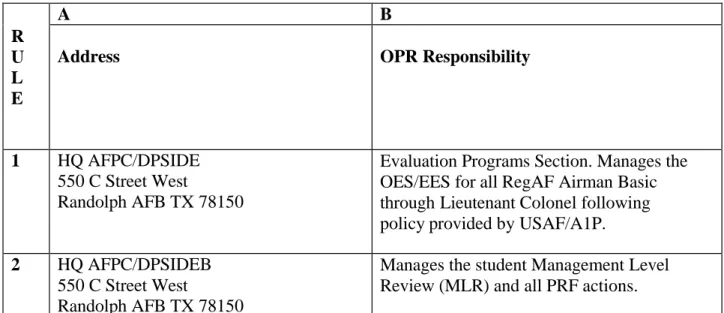
Table 1.1. Mailing Addresses for Correspondence. ... 88
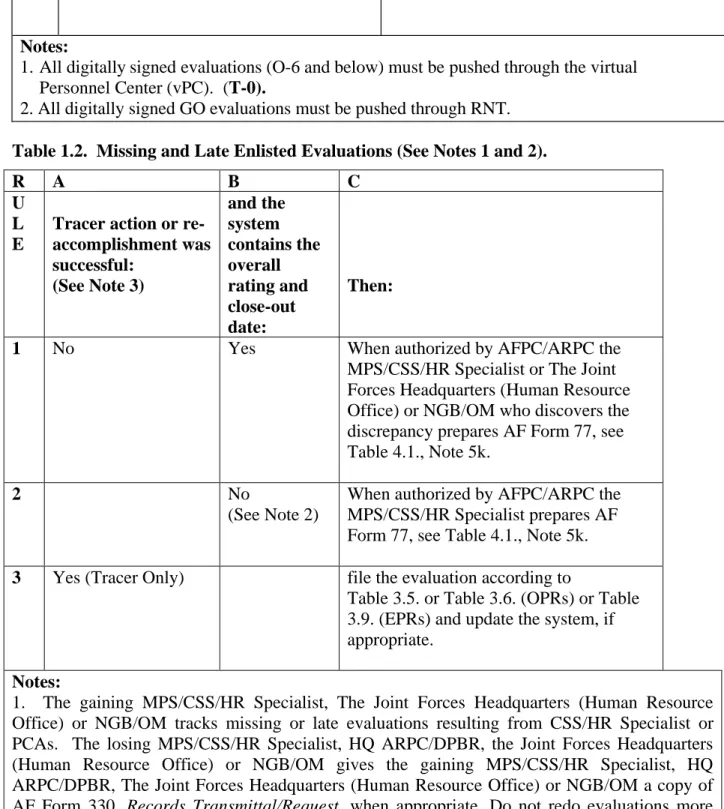
Table 1.2. Missing and Late Enlisted Evaluations (See Notes 1 and 2). ... 92
Figure 1.1. Enlisted Referral Memorandum. ... 94
Chapter 2—PERFORMANCE FEEDBACK PROCESS 95
2.1. Purpose. ... 95
2.2. Responsibilities. ... 95
2.3. Who Requires an ACA. ... 97
2.4. Guidance for Conducting ACA Sessions. ... 97
2.5. When to Hold Documented ACA Sessions. ... 97
2.6. The ACA Notice. ... 97
2.7. Which ACA Form to Use. ... 98
2.8. Preparing the ACA worksheet. ... 98
2.9. Disposition and Access. ... 99
2.10. Failure of Rater to Conduct or Document an ACA Session. ... 100
2.11. Tracking ACA Sessions. ... 100
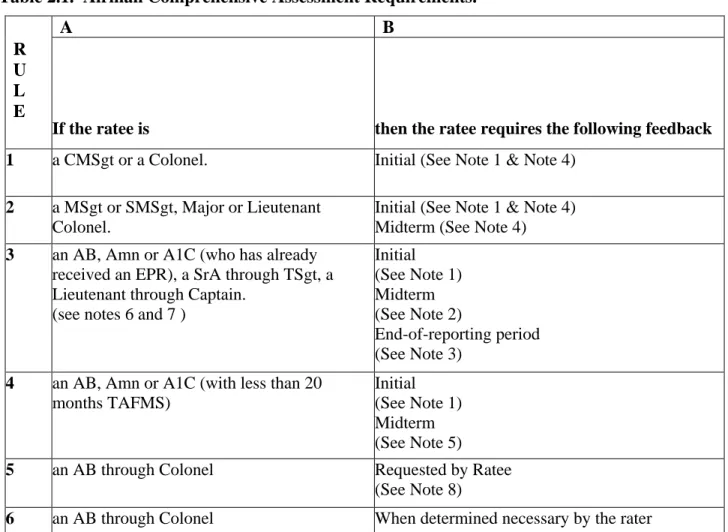
Table 2.1. Airman Comprehensive Assessment Requirements. ... 101
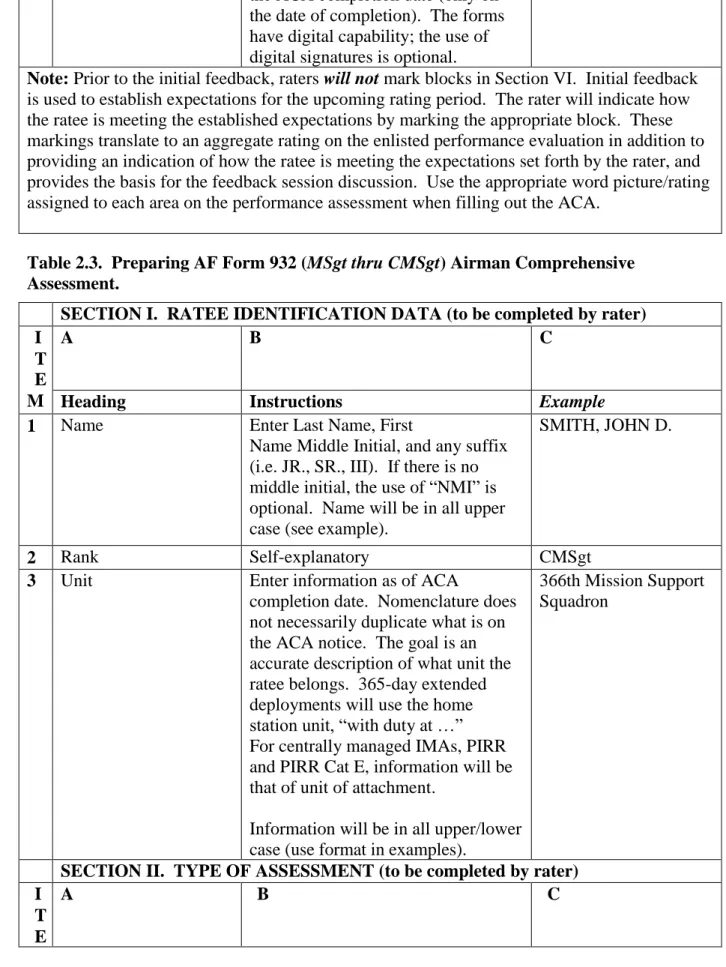
Table 2.2. Preparing AF Form 931 (AB thru TSgt) Airman Comprehensive Assessment. .... 102
Table 2.3. Preparing AF Form 932 (MSgt thru CMSgt) Airman Comprehensive Assessment. ... 108
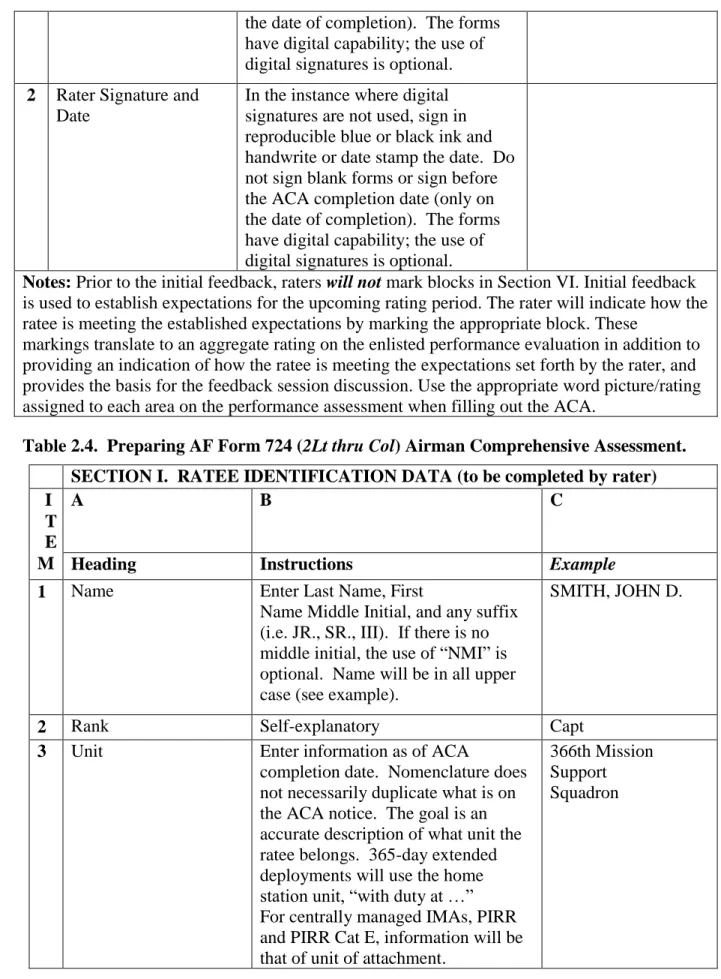
Table 2.4. Preparing AF Form 724 (2Lt thru Col) Airman Comprehensive Assessment. ... 113
2.12. It is mandatory for raters to include expectations for contributing to a healthy organizational climate for Airmen up to the grade of SrA. ... 116
Chapter 3—OFFICER/ENLISTED PERFORMANCE EVALUATIONS (OPRS/EPRS) 117
3.1. General Guidelines. ... 117
3.2. When to Submit an Officer Performance Report (OPR) or Enlisted Performance Report (EPR). ... 135
3.3. Who Requires Performance Evaluations. ... 135
3.4. Who Does Not Require Performance Evaluations. ... 141
Table 3.1. Instructions for Preparing AF Form 707, Officer Performance Report. ... 142
Table 3.2. Instructions for Preparing AF Forms 910, Enlisted Performance Reports, See Chapter 1, General Information. ... 157
Table 3.3. When to Prepare OPRs for Officer on the EAD and ANG Officers. ... 172
Table 3.4. When to Prepare OPRs on USAFR Officers (Lieutenant thru Colonel). ... 174
Table 3.5. Routing of OPRs for ANG and USAFR Officers not on EAD (T-0). ... 176
Table 3.6. Office of Record and Distribution Required for OPRs (See Note 1) (T-0). ... 177
Table 3.7. When to submit EPRs on RegAF and ARC AGR/Stat Tours (T-0). ... 178
Table 3.8. When to submit EPRs on ARC Airmen (Non-AGR). ... 182
Table 3.9. Office of Record and Distribution of EPRs for Total Force See Notes 1 through 4 (T-0). ... 183
Table 3.10. Time-in-Grade (TIG) Senior Rater Eligibility Chart. ... 185
Table 3.11. Instructions for Preparing AF Form 912, CMSgt Enlisted Performance Reports. 187
Table 3.12. Static Close-out Date (SCOD) Enlisted Chart for RegAF. ... 198
Table 3.13. Static Close-out Date (SCOD) Enlisted Chart for AFR. ... 198
Table 3.14. Static Close-out Date (SCOD) Enlisted Chart for ANG Non AGR. ... 198
Table 3.15. Static Close-out Date (SCOD) Enlisted Chart for ANG AGR. ... 199
Table 3.16. Instructions for Preparing AF Forms 911, Enlisted Performance Reports (MSgt Select, MSgt, SMSgt Select, SMSgt) See Chapter 1 for general information NOTE the form is a smart form with specific business rules and programming, therefore each block must be completed in sequential order Certain blocks will not display the drop down options when IAW the AFI the drop down is prohibited or when a previous block has not been completed. ... 199
Chapter 4—AF FORM 77, LETTER OF EVALUATION 214
4.1. Purpose. ... 214
4.3. Who Will Prepare. ... 217
4.4. Administrative Practices. ... 217
4.5. Completing AF Form 77, Letter of Evaluation. ... 217
4.6. Routing, Updating and Disposition Responsibilities. ... 217
4.7. CSS/HR Specialist/MPS/PERSCO Responsibilities: ... 218
Table 4.1. Instructions for Completing the AF Form 77, Letter of Evaluation. ... 219
Table 4.2. When to submit a Letter of Evaluation. ... 223
Chapter 5—CONTINGENCY AND WARTIME PROVISIONS 225
5.1. Purpose. ... 225
5.2. General Guidance. ... 225
5.3. LOEs During Contingency Operations. ... 225
5.4. Deployed Commander Letter of Evaluations (LOEs). ... 226
5.5. 365-day Extended Deployment Officer/Enlisted Performance Reports (OPRs/EPRs). ... 230
5.6. 365-day extended deployment Promotion Recommendation Forms (PRFs). ... 234
5.7. Force Shaping Boards. ... 235
5.8. National Emergency or Wartime Provisions. ... 235
Chapter 6—AF FORM 475, EDUCATION/TRAINING REPORT 239
6.1. When to Use Training Reports (TR). ... 239
6.2. Who Prepares Training Reports. ... 241
6.3. Referral Training Reports. ... 241
6.4. Routing and Responsibilities. ... 241
Table 6.1. Instructions for Completing AF Form 475, Training Report (Officers Only). ... 242
Table 6.2. When to Prepare AF Form 475, Training Report (T-0). ... 246
Table 6.3. Updating Training Reports Pending System Change. ... 249
Chapter 7—GENERAL OFFICER EVALUATIONS 250
7.1. Overview. ... 250
7.2. Forms Used. ... 250
7.3. Reasons for Reports. ... 250
7.4. General Instructions. ... 250
7.5. Processing General Officer Evaluations. ... 252
Table 7.1. Instructions for Completing AF Form 78. ... 253
Chapter 8—PROMOTION RECOMMENDATION AND MANAGEMENT LEVEL
REVIEW PROCESS 258
8.1. AF Form 709 (for Active Duty List [ADL] officers). ... 258
8.2. AF Form 709 (for Reserve Active Status List officers). ... 265
8.3. MLRs (ADL Lieutenant Colonel and Below). ... 268
8.4. Special Provisions (applies to ADL officers only). ... 281
8.5. Correction of Promotion Recommendation Forms (PRF) (ADL Officers) (Stop File process). ... 285
8.6. Promotion Recommendations for Colonels. ... 286
8.7. Supplemental Management Level Reviews (SMLRs) for Recommendation Upgrade (POST-CSB), (For ADL Only). ... 288
Figure 8.1. Officer's Right to Submit a Memorandum to the Central Selection Board (CSB) or ResAF CSB. See AFI 36-2501, Officer Promotions, Chapter 4, for further guidance. ... 290
Table 8.1. Instructions for Completing AF Form 709, Performance Recommendation Forms. ... 290
Table 8.2. What to Enter in Section VI (Group Size) on the PRF (ADL Lt Col and below only). ... 297
Table 8.3. Senior Rater “Definitely Promote” Allocation Rate Table - ADL Officers, see Note. ... 298
Chapter 9—AF FORM 3538, RETENTION RECOMMENDATION FORM 300
9.1. When to Use the AF Form 3538, Retention Recommendation Form (RRF). ... 300
9.2. Responsibilities. ... 300
9.3. RRF Submission. ... 301
9.4. Air Force Advisor Examination. ... 301
9.5. Correction of Retention Recommendation Form (RRF). ... 301
Figure 9.1. Officer's Right to Submit a Memorandum to the Central Selection Board (CSB). 302
Table 9.1. Instructions for Completing AF Form 3538, Retention Recommendation Form (RRF). ... 302
Chapter 10—CORRECTING OFFICER AND ENLISTED EVALUATIONS 305
10.1. Purpose. ... 305
10.2. Program Elements. ... 305
10.3. Correcting Evaluations. ... 308
10.4. Responsibilities. ... 309
10.6. Using Classified, Privacy Act, and Restricted Release Information: ... 313
10.7. Requesting Special Selection Board (SSB) or Supplemental Promotion Consideration: ... 313
10.8. Resubmitting an Appeal: ... 314
Table 10.1. How to Submit Requests for Correction. ... 314
Table 10.2. Correcting Minor Errors on Evaluations. ... 315
Table 10.3. Minor Corrections – Offices Authorized to Make Corrections and Disposition. .. 317
Table 10.4. Board Directed Corrections - Correcting and Disposition of Documents. ... 319
Table 10.5. Correcting AF Form 709, Promotion Recommendation Forms. ... 321
Table 10.6. Instructions For Completing AF Form 948, Application for Correction/Removal of Evaluation Reports. Note: See paragraph 10.4.4. before completing. ... 322
Figure 10.1. Sample, AF Form 948, Application for Correction/Removal of Evaluation Reports. ... 325
Attachment 1—GLOSSARY OF REFERENCES AND SUPPORTING INFORMATION 326
Attachment 2—APPEAL GUIDANCE FOR APPLICANTS (LOCAL REPRODUCTION AUTHORIZED) 342
Attachment 3—SUBJECT MATTER QUICK REFERENCE GUIDE 351
Attachment 4—NON-RATED PERIOD MEMORANDUM 352
Chapter 1
GENERAL CONSIDERATIONS
1.1. Purpose. The Officer and Enlisted Evaluation Systems have varied purposes. The first is to establish performance standards and expectations for ratees, meaningful feedback on how well the ratee is meeting those expectations, and direction on how to better meet those established standards and expectations. The second is to provide a reliable, long-term, cumulative record of performance and promotion potential based on that performance. The third is to provide officer Central Selection Boards (CSB), senior NCO evaluation boards, the Weighted Airman Promotion System (WAPS), and other personnel managers’ with sound information to assist in identifying the best qualified officers and enlisted personnel for promotion, as well as other personnel management decisions. The fourth is to document in the permanent record any substantiated allegation of a sex-related offense against an Airman, regardless of grade, that results in conviction by courts-martial, non-judicial punishment, or other punitive administrative action. For the purpose of documenting sex-related offenses, a punitive administrative action is defined as a Letter of Reprimand. Sex-related offenses include violations of Article 120 of the Uniform Code of Military Justice (rape, sexual assault, aggravated sexual contact and abusive sexual contact), Article 125 (forcible sodomy, which is forced oral or anal sex, and bestiality), Article 120a (stalking), Article 120b (rape and sexual assault of a child), Article 120c (other sexual misconduct, which includes indecent viewing/recording/broadcasting, forcible pandering, and indecent exposure) or attempts to commit any of the above offenses. NOTE: Documenting sex-related offenses in the evaluation will not limit or prohibit the capacity of the Airman to challenge or appeal the placement of a notation or location of placement of a notation in the Airman’s personnel service record.
1.1.1. To accomplish these purposes, the evaluation system focuses on performance. How well the individual does his or her job, and the qualities the individual brings to the job, are of paramount importance to the Air Force. Performance is most important for successful mission accomplishment. It is also important for development of skills and leadership abilities and in determining who will be selected for advancement through assignments, promotions, and other personnel actions. The evaluation system emphasizes the importance of performance in several ways--using periodic performance feedback, as the basis for formal evaluations, and, for officers, through performance-based promotion recommendations. 1.1.2. Effective evaluators must have an adequate understanding of Officer Evaluation System (OES), Enlisted Evaluation System (EES), or both, depending on who they supervise. OES/EES training was implemented in May 96 to help supervisors fulfill their evaluation responsibilities. Unit commanders are responsible for ensuring all first-time supervisors receive mandatory OES/EES training (as appropriate for their position) within 60 days of being appointed as a rater. Additionally, Air Force members should receive annual recurring OES/EES training. How and when this training is conducted is at the discretion of the unit commander. To assist commanders, EES/OES Training Guides are located on the AFPC Website.
1.1.3. Unless stated otherwise, the general guidelines outlined in this chapter apply to all evaluations, (OPRs, EPRs, TRs, PRFs, LOEs, and RRFs).
1.2. Forms Used--Purpose and Their Use.
1.2.1. Performance Evaluation Forms Used:
1.2.1.1. AF Form 77, Letter of Evaluation (LOE), is a multipurpose evaluation form (see Chapter 4 for details).
1.2.1.2. AF Form 78, Air Force General Officer Promotion Recommendation (PRF), used to document performance and promotion recommendations for certain general officers (see Chapter 7 for details).
1.2.1.3. AF Form 475, Education/Training Report (TR), used to document periods when Airmen are in education or formal training (see Chapter 6 for details).
1.2.1.4. AF Form 707, Officer Performance Report (Lt through Col) (OPR); AF Form 910, Enlisted Performance Report (AB through TSgt) (EPR); AF Form 911, Enlisted Performance Report (MSgt thru SMSgt) (EPR), or AF Form 912 Enlisted Performance Report (CMSgt) (EPR), are used to document potential and performance over the course of a ratee’s career. For enlisted only, use ratee’s grade or projected grade on the static close-out date to determine which form to use (see Chapter 3 for details).
1.2.1.5. AF Form 709, Promotion Recommendation Form (PRF), used to assess an officer’s performance-based potential and to recommend promotion from a senior rater (SR) (or in case of Colonel ratees, from the head of the Management Level [ML] or designated representative) to central selection boards (see Chapter 8 for details).
1.2.1.6. AF Form 724, Airman Comprehensive Assessment Worksheet (2Lt thru Col), AF Form 931, Airman Comprehensive Assessment (ACA) Worksheet (AB thru TSgt), and AF Form 932, Airman Comprehensive Assessment Worksheet (MSgt thru CMSgt), (see Chapter 2 for details).
1.2.1.7. AF Form 3538, Retention Recommendation Form (RRF), is used in conjunction with this AFI and HQ AFPC Retirements and Separations Branch guidelines, to document performance-based differentiation and retention recommendations, to assist in involuntary separation and/or retirement boards (Force Shaping, Reduction in Force [RIF], or Selective Early Retirement [SERB] boards). This form is only used at the discretion of the Secretary of the Air Force. See chapter 9 and AFI 36-3603, Service Retirements, for details.
1.2.1.8. AF Form 948, Application for Correction/Removal of Evaluation, is used by Active Duty, and Reserve personnel to substitute, correct or remove an evaluation when the applicant does not have access to the Virtual Military Personnel Flight (vMPF)/Virtual Personnel Center Guard and Reserve (vPC/GR) application process (see chapter 10 for details). Only used when access to the vMPF/vPC or a HR specialist is unavailable, see paragraph 10.4.4.1.2.
1.2.2. Purpose and Their Use:
1.2.2.1. Airman Comprehensive Assessment Worksheet. Airman Comprehensive Assessment Worksheets include the AF Form 724, AF Form 931, and AF Form 932, and are used to document formal communication regarding an assessment of an Airman’s responsibilities, accountability, Air Force culture, critical role in support of the mission,
individual readiness and performance between raters and ratees (see Chapter 2 for details).
1.2.2.2. Performance Evaluations. Performance Evaluations include the AF Form 707 (OPR); AF Forms 910/911/912 (EPRs); AF Form 77 (LOE), AF Form 475 (TR), AF Forms 78/709 (PRFs), AF Form 3538 (RRF), and AF Form 3538E (ERRF). These forms are used to document performance and potential as well as provide information for making promotion recommendation, selection, or propriety actions, selective continuation, involuntary separation, selective early retirement, assignment, school nomination and selection, and other management decisions.
1.2.2.3. Promotion Recommendation Forms (PRF). Use PRFs for promotion purposes only, and include the AF Form 78 and AF Form 709. PRFs are removed from the Officer Selection Record (OSR) following the promotion board which they were accomplished for, and are stored electronically. AF Forms 709 will be used for historical, legal, and appeal purposes only.
1.2.2.4. Retention Recommendation Forms (RRF). Use RRFs (AF Form 3538) for involuntary separation/retirement board (Force Shaping, Reduction in Force [RIF], or Selective Early Retirement [SERB] boards) only. RRFs are removed from the Officer Selection Record (OSR) following the board which they were accomplished for, and are stored electronically. These RRFs will be used for historical, legal, and appeal purposes only.
1.2.2.5. Enlisted Retention Recommendation Form (ERRF). Use ERRFs (AF Form 3538E) for involuntary separation/retirement boards (Force Shaping, Enlisted Retention Board [ERB], Quality Force Review Board [QFRB]). ERRFs are removed from the selection record following the board for which they were accomplished, and are stored electronically. These ERRFs will be used for historical, legal, and appeal purposes only.
1.3. General Guidelines.
1.3.1. Access to Evaluations. Evaluations are For Official Use Only and are subject to the Privacy Act. They are exempt from public disclosure under DoD Regulation 5400.7/Air Force Supplement (AFSUPDODR 5400-7), DoD Freedom of Information Act Program and AFI 33-332, Privacy Act Program. Only persons within the agency who have a proper need to know may read the evaluations. The office with custodial responsibility is responsible for determining if a person's official duties require access. See Chapter two for access to the Airman Comprehensive Assessment (ACA) Worksheets.
1.3.2. Classified Information and Security Classification. Do not enter classified information in any section of the evaluation; this includes any type of evaluation forms, attachments to evaluations, referral documents, or endorsements to referral documents. If an entry would result in the release of classified information, use the word "Data Masked" in place of that entry. The PAS code alone is unclassified, however it will only be entered on the ratee. In the Senior Rater Identification (SRID) block enter five asterisks, (*****). In those cases where the evaluator is with a classified organization or location, enter "Data Masked" for organization nomenclature and nothing more.
1.3.3. Bullet Format. Bullet format is mandatory. Use bullet format as specified in the appropriate table for the evaluation being accomplished. Bullets are limited to a minimum of
one line and a maximum two lines per bullet and white space is authorized. Main bullets begin at the left margin and will have one space after the “-“. If unfamiliar with the proper bullet format, refer to “The Bullet Background Paper” in AFH 33-337, The Tongue and Quill. Although the Tongue and Quill allows three lines per bullet, evaluations will not have more than two lines per bullet.
1.3.4. Special Formatting. Do not underline, capitalize, or use bold print, unusual fonts or characters, multiple exclamation marks, or headings to emphasize comments, except as required to identify proper names, publication titles, etc.
1.3.5. Ratee Identification Data. The name will be in all uppercase. The remaining data (grade, unit, location) will be in upper/lower case.
1.3.6. Type and Font.
1.3.6.1. Type all evaluations using the electronic version of the form from the AF Publications website.
1.3.6.2. Forms will be typed using “Times New Roman.”
1.3.6.3. Forms will be typed using 12-pitch font. You must use computerized versions with proportional spacing, provided a 12-pitch font is used. (T-0)
1.3.6.4. Handwritten Evaluations.
1.3.6.4.1. Evaluations may be handwritten, only when authorized by HQ AFPC/DPSIDE or ARPC/DPB, as appropriate (exception: POTUS/VPOTUS may handwrite evaluations).
1.3.6.4.2. When authorized, print or legibly write entries. 1.3.6.4.3. Use only dark blue or black reproducible ink.
1.3.6.4.4. HQ AFPC/DPSIDE or HQ ARPC/DPB will not approve requests if a computerized form, typewriter, or word processor is available.
1.3.7. Nicknames and Acronyms.
1.3.7.1. Nicknames. Do not use call signs, code names or unusual nicknames on evaluations. However, nicknames which are a form of the ratee’s name are permitted.
Example: Bill/Will for William, Jim for James, Chris for Christopher/Christine, Pat for Patrick/Patricia, etc. are authorized.
1.3.7.2. Acronyms.
1.3.7.2.1. Uncommon acronyms must be spelled out; however, if space is limited, define the acronyms in the proper section of the applicable form. Note: The AF evaluation forms allow the evaluators to explain uncommon acronyms in the Remarks section of the forms. When acronyms are used, the acronyms must be listed in alphabetically.
1.3.7.2.2. When used, first spell out and follow with the acronym; e.g. Personnel Support for Contingency Operations (PERSCO).
1.3.7.2.3. Acronyms or abbreviations common throughout the Air Force, such as CGO, NCO, CONUS, TDY, etc., are not required to be spelled out first.
1.3.8. Optional Notes and Stamps. “Wet Signature Evaluation Only.” When used enter optional notes at base level such as “MilPDS/System Processed,” administrative review initials, date stamps, etc., only in the top margin. AFPC or ARPC level optional notes will be placed only in the bottom margin.
1.3.9. Send requests for deviations or waivers through the wing commander or the comparative level to HQ AFPC/DPSIDE (or appropriate ANG/AFR office stated in paragraph 1.15) who in turn will forward the request to appropriate office of primary responsibility (OPR) listed in Table 1.1.
1.4. Preparing and Processing Evaluations.
1.4.1. OPR/EPR Notices:
1.4.1.1. Ensure the evaluation notice (may be system generated), any LOEs accomplished during the period of the evaluation (deployed LOEs, PCS/PCA LOEs, etc.), midterm ACA, and/or any referral documents, accompany the evaluation through the rating chain. (T-0)
1.4.1.2. Evaluators are permitted to review a career brief when writing an evaluation. For officers, the brief will be used only to aid evaluators in making recommendations for command, assignments, and Developmental Education (DE). For enlisted, the brief may be used as an aid in determining SNCO stratification/endorsement level eligibility or junior enlisted forced distribution promotion recommendation. (see para 1.12.1.6.1). Note: Enlisted only, education (such as CCAF) and professional military education (ILE and ALE) may only be considered for overall senior rater stratification/ endorsement eligibility and as leading indicators of overall performance based on completion during the required window of eligibility and may not be used as a “go/no-go” for forced distribution eligibility or endorsement levels below SRE.
1.4.1.3. The Human Resource (HR) Specialist (local procedures will dictate) forwards the notice to the rater via the virtual Personnel Center (vPC). The rater will coordinate with the Commander Support Staff (CSS) or Military Personnel Section (MPS) personnel to resolve incorrect entries. A copy of the OPR/EPR notice is forwarded with the evaluation through the rating chain to the MPS.
1.4.2. Suspenses.
1.4.2.1. The MPS will set up a monitoring system to ensure prompt performance evaluation submittal.
1.4.2.2. Do not suspense or require raters to submit a completed evaluation with their signature (digital, “wet” or otherwise) on it to the next evaluator in the rating chain any earlier than five duty days after the closeout date. If the rater is not available, extend the suspense. The suspense can be extended to a date that will still allow the evaluation to meet the suspense to AFPC/ARPC 60 days after the closeout date. Note: This does not preclude a draft copy being routed earlier.
1.4.2.3. Completed OPRs/EPRs are due to:
1.4.2.3.2. To AFPC/ARPC or office of record no later than 45 days after close-out, so that it can be placed in the records NLT 60 days after the close-out date. Note: This suspense is to allow for any corrections at the lower level.
1.4.2.3.3. Filed in the Automated Records Management System (ARMS) no later than 60 days after the close-out.
1.4.2.4. OPRs/EPRs directed by HQ USAF or NGB are due to HQ AFPC/DPSIR, HQ ARPC/DPBR, HQ AF/DPE, HQ AF/DPO, HQ AF/DPG respectively by the suspense date established in the directing letter or message.
1.4.2.5. Completed evaluations referred to the ratee IAW paragraph 1.10. will be filed in the appropriate record and/or placed into ARMS NLT 70 days for active duty personnel and 90 days for non-EAD personnel, after the close-out date of the evaluation.
1.4.2.6. Performance evaluation suspenses are set such that the evaluation should be closed out prior to evaluators or the ratee departing. It is the unit commander’s responsibility to ensure evaluations are completed within the suspense, especially for those separating/retiring or PCSing.
1.4.3. When an Evaluation Becomes a Matter of Record.
1.4.3.1. All signed evaluations (digitally or “wet” signed) are considered a matter of record once they are uploaded into ARMS. All evaluations are considered “working copies” until they are made a matter of record.
1.4.3.2. Once transmitted to HQ AFPC or HQ ARPC, an evaluation can no longer be accessed for correction. Corrections must be submitted through the Evaluation Reports Appeal Board (ERAB) IAW Chapter 10.
1.4.4. Attachments to Evaluations. Only those documents authorized by this AFI will be accepted for file and attached to the applicable evaluation. Example: Referral memorandums, materials and attachments; rebuttals to referrals; endorsement memorandums; and AF Forms 77.
1.4.5. Reproducing, Copying and Printing Evaluations.
1.4.5.1. Printing/Reproducing. When printed, all evaluation forms will be printed in the head-to-foot format. Both sides of the forms will be printed whether used or not. The form will not be altered, (i.e., reduce or enlarged), other than from authorized administrative corrections, (i.e., white out on a date change for “wet” signed evaluations). The quality of the form will be as close to the original form as possible; sharp, free of excessive smudges, and suitable for scanning.
1.4.5.1.1. Do not reproduce copies for purposes other than those noted below without the approval of HQ AFPC/DPSIDE or HQ ARPC/DPB. Do not reproduce and or print evaluations except:
1.4.5.1.2. For official actions such as courts-martial; awards and decoration recommendations; promotion processing, demotion, elimination, release, and appeal actions; and appropriate assignment actions by AFPC/ARPC/AFRC/RMG or AF/DPO/DPG/DPE/RE assignment personnel. Copies will be provided only to authorized personnel.
1.4.5.1.3. On written authority of AF/DPG for general officers; AF/DPO for officers on EAD in the grade of colonel; HQ AFPC/DPSID for officers on EAD in the grades of lieutenant colonel and below; or the HQ ARPC/DPBR for ANG officers in the grades of colonel and below, USAFR officers not on EAD, and AGR or Limited Extended Active Duty (LEAD) officers.
1.4.5.1.4. As authorized by AFI 33-332 when requested by the ratee or his or her designated legal representative.
1.4.5.1.5. As required by Table 3.5, Table 3.6, and Table 3.9 or to provide copies for file in ARMS, the OSR/NSR, the OCSR, or Adjutant General (AG) or NGB/OM record file.
1.4.5.1.6. To replace missing or lost documents in the MPerRGp. Ensure copies are the same size as the printed document. Additionally, if the form is not a digitally signed form it must be certified as a true copy (see paragraph 1.14. and paragraph 1.4.5.2. and table 1.2).
1.4.5.2. Certified True Copies (CTC). A CTC is a certified unchanged copy of the original document. When authorized by HQ AFPC/DPSID or HQ ARPC/DPB, personnel making certified copies will enter the statement “Certified True Copy” with the certifying official’s grade, name, signature, duty title, unit, and the date, on the front left margin of the evaluation. Printed copies from Automatic Records Management System (ARMS) with all digital signatures included will be considered “Certified True Copies” of the electronic record.
1.4.5.3. Corrected Copies (CC). A CC may be either a copy or an original document which contains changes, from the original document. Corrections authorized by the AFBCMR or ERAB on “wet signature” evaluations may require a corrected copy. In these cases, the following statement will be entered on the reverse bottom margin: “CC, HQ AFPC/DPSIDEP or HQ ARPC/DPB, XX XXX XX., certifying official’s signature.” (CC is “corrected copy”, office doing correction, date correction made, and signature of person making the correction.)
1.4.5.4. Quality and Legibility. The MPS returns copies that are difficult to read or do not comply with paragraph 1.4.5.
1.4.5.5. Showing and/or providing copies to the ratee. Unless the evaluation is a referral evaluation, evaluators are not required to show or provide a copy of the evaluation to the ratee, until specified in the applicable chapter; OPRs/EPRs Chapter 3; Airman Comprehensive Assessment Worksheets Chapter 2; Training Reports Chapter 6; Letters of Evaluation Chapter 4; Promotion Recommendation Forms Chapter 8; Retention Recommendation Forms Chapter 9 and/or the current program guidance.
1.4.6. Evaluation Notifications. Review evaluation notices when applicable for ratee identification data. If any data is incorrect on the evaluation notification, notify the Military Personnel Section (MPS) to ensure the correct data is updated. Abbreviations on the evaluation notification may be expanded for clarity on the evaluation.
1.4.7. Organization. Enter Ratee’s organizational information as of the close-out date or, for those enlisted Airman with a PCS or PCA after the established accounting date (120 days
prior to the Static Close Out Date (SCOD), use the organizational information as of the established accounting date for the specific enlisted grade.
1.4.7.1. Enter the organizational designation, MAJCOM (if applicable) and location. For active duty and ARC personnel on active duty orders, do not enter the component. If classified, refer to AFI 36-2406, paragraph 1.3.2. Example: 190th Air Refueling Squadron (AMC), ANG.
1.4.7.2. If the command of assignment is an integral part of the organization name, such as “HQ AMC/A1,” it is not necessary to repeat the command (AMC) within parentheses. 1.4.7.3. On EAD (RegAF and ARC), enter organizational designation, MAJCOM (if applicable) and location as of the close-out date or for those enlisted Airman PCSing after the established accounting date (120 days prior to the Static Close Out Date), use the organizational information as of the established accounting date for the specific enlisted grade.
1.4.7.4. On EAD (active duty and reserve) and performed duty in an organization other than his or her assigned PAS code, enter the assigned information, followed by “with duty at . . .” to indicate the organization where the ratee actually performed duty. This includes personnel on 365-day extended deployment billets. Example: 341st Security Forces Squadron (AFSPC), Malmstrom AFB MT, with duty at 447 ESFS (USAFCENT), Baghdad International Airport, Baghdad, Iraq. Note: Do not use this section to enter a second organization if the ratee is filling a dual-hatted role. Mention it in the job description or elsewhere in the evaluation.
1.4.7.5. An AGR Program member under Title 10, U.S.C., Sections 8033, 10211, 10305, 12310 and 12402 or Title 32, U.S.C., Section 708 (Property and Fiscal Officers), enter organizational designation, MAJCOM (if applicable), state affiliation and location.
Example: 190th Air Refueling Group (AMC), Forbes Field, Topeka, Kansas, KS ANG (AGR).
1.4.7.6. A Non-EAD ANG member, enter organizational designation, MAJCOM (if applicable), state affiliation, location, and component. Example: 190th Air Refueling Group (AMC), Forbes Field, Topeka, Kansas, KS ANG (Non-EAD).
1.4.7.7. A Non-EAD USAFR member, enter organizational designation, MAJCOM (if applicable), location, and (if applicable) organization and location of attachment, followed by the component. Example: 9019th ARS (ARPC), 6760 East Irvington Place, Denver CO 80280 w/Atch unit at 12 FTW, Randolph AFB TX (Non-EAD).
1.4.7.8. A Limited EAD program member on EAD under Title 10, U.S.C. Section 12301(d), enter organizational designation, MAJCOM (if applicable), location, and (if applicable) organization and location of attachment, followed by the component.
Example: 9019th ARS (ARPC), 6760 East Irvington Place, Denver CO 80280 w/Atch unit at 12 FTW, Randolph AFB TX (LEAD).
1.4.8. Duty Air Force Specialty Code (DAFSC). The DAFSC is based on the unit manning document (UMD) authorization or the unit personnel management roster (UMPR) position.
1.4.8.1. Officers: Use the DAFSC the officer is approved for by HQ AFPC and assigned against as of the close-out (“Thru”) date of the evaluation, as reflected on the evaluation
notice. This is not to be confused with an officer’s awarded AFSCs (PAFSC, 2AFSC, etc.). If the DAFSC listed on the evaluation notice is incorrect, initiate corrective action immediately, annotate the correct DAFSC on the notice, and attach a copy of the documentation reflecting the requested change to the evaluation notice. MPS personnel must confirm the requested change was approved and that the effective date of the change was on or before the close-out date of the evaluation before forwarding the evaluation to HQ AFPC/HQ ARPC. If the requested change has not been approved by the date the evaluation is ready to send to HQ AFPC/HQ ARPC, MPS personnel must change the DAFSC on the evaluation to match the DAFSC approved in the personnel data system (and should advise the unit of the change).
1.4.8.2. Enlisted: Use the DAFSC as of the established SCOD; if the Airman has a PCS or PCA, use the DAFSC as of the established accounting date (120 days prior to the SCOD); as reflected on the evaluation notice. This is not to be confused with the PAFSC, CAFSC, or 2AFSC, etc. If the DAFSC listed on the evaluation notice is incorrect, initiate corrective action immediately, annotate the correct DAFSC on the evaluation notice, and attach a copy of the documentation reflecting the requested change to the evaluation notice. MPS personnel must ensure the correct information is reflected and/or updated in the system.
1.4.8.3. An authorized 365-day extended deployment billet: Use the DAFSC assigned to the position and/or billet that the ratee is officially filling in the deployed location.
1.4.9. Grade Data.
1.4.9.1. For officer grades, the grade must be the grade that the ratee actually holds as of the close-out date of the evaluation. Even if an officer has been “frocked,” you must enter his or her actual grade, regardless of the billet being filled. For enlisted ranks, the rank must be the rank the ratee actually holds as of the static close-out date of the evaluation or the projected rank (RegAF only) (i.e., TSgt-select) the ratee holds as of the SCOD date.
1.4.9.2. Use the drop down menu to select the appropriate grade entry.
1.4.9.3. For ANG/AFR the component will be added in Block 7 for officers, and in Block 5 for enlisted personnel.
1.4.10. Fitness Data.
1.4.10.1. The Ratee’s fitness status, IAW AFI 36-2905, Fitness Program, during the entire reporting period as well as of the close-out date will be considered when completing the evaluation. See AFI 36-2905, Table A14.1. and A14.2. for MANDATORY and OPTIONAL command actions upon fitness failure.
1.4.10.1.1. Comments regarding unit fitness achievements are authorized for Airmen who have a key role in the success of unit PT programs. This may include PTLs, UFPMs, First Sergeants, Superintendents, Section Commanders, Flight Chiefs, Commanders, and other members deemed integral to a particular organization's successful Fitness Program. Example of authorized comment: "Implemented rigorous squadron PT program; drove unit pass rate from 75% to 100%" or "Ensured accountability-98% readiness rate, zero overdue/expired tests." Note: Comments on
an evaluation regarding an Airman's individual fitness score or fitness category remain prohibited.
1.4.10.1.2. Unit commanders may request close-out date extensions of up to 59 days for officers to ensure resolution of any administrative, or other significant issues. See paragraph 1.13 for details.
1.4.10.1.3. DELETED 1.4.10.1.4. DELETED 1.4.10.1.5. DELETED 1.4.10.1.6. DELETED
1.4.10.2. When considering adherence to standards, fitness is one of many standards to be evaluated. Accordingly, Airmen exhibiting unacceptable performance, actions incompatible with AF standards and expectations, and/or Airmen who have routinely (a repeated inability to meet standards that would render the aggregated performance assessment over the entire reporting period as below AF standards and expectations) and/or significantly (a single instance where failure to meet standards is either egregious in nature or so far short of a standard that it impacts overall aggregated performance assessment) failed to adhere to established AF standards and expectations will be considered as not meeting standards.
1.4.10.2.1. Enlisted evaluations with a "Met Some But Not All Expectations" will be referred as an AF standard was not met.
1.4.10.2.2. Officer evaluations with a “Does Not Meet Standards” will be referred as an AF standard has not been met.
1.4.10.2.3. DELETED 1.4.10.3. Fitness Comments.
1.4.10.3.1. It is prohibited to put an individual’s fitness score or fitness category on an evaluation, unless the “Does Not Meet Standards” or "Met Some But Not All Expectations" block is marked and the evaluation is being referred. This does not prevent an evaluator from documenting referral comments in other areas outside of the fitness area when an Airman displays a negative attitude or has not demonstrated fitness improvement. In those cases, the referral comments may address the reasons or behavior and will not document the score. (T-0)
1.4.10.3.2. Comments on members not meeting current fitness standards are authorized on the AF Form 709/3538.
1.4.10.3.3. Do not comment on any reason for exemption. 1.4.11. Signatures, Signature Elements and Dates.
1.4.11.1. General Signature and Date Guidelines.
1.4.11.1.1. Do not sign or date before the close-out. Sign on or after the close-out date.
1.4.11.1.2. Do not sign before previous evaluators. Exception: When a rater or subsequent evaluator is across the international dateline or in cases where paragraph 1.4.11.1.7. apply.
1.4.11.1.3. Do not sign blank forms or forms not containing ratings.
1.4.11.1.4. Do not use “auto-signature” pens or delegated “CAC” signatures.
1.4.11.1.5. Do not delay signing an evaluation due to pending personnel changes, promotions, approval of a more prestigious duty title, and so forth.
1.4.11.1.6. Do not “back date” the signature. Exception: If, after referring an evaluation to the ratee, the evaluation is reprinted for the purpose of including all evaluator comments or for making minor administrative corrections that don’t require an additional referral to the ratee, all signature dates, up to and including the referring official(s), should reflect the date it was originally signed. This is necessary to show the dates each referral action actually occurred to ensure the evaluation was properly processed. All evaluators, subsequent to the (last) referring official will use either original signature dates or current signature dates.
1.4.11.1.7. If the Unit Commander/Military or Civilian Director/Other Authorized Reviewer is junior in grade to the Rater/Additional Rater/Reviewer/Final Evaluator, they must discuss any non-concurrence with the Rater/Additional Rater/Reviewer/Final Evaluator prior to signing the evaluation.
1.4.11.1.8. If an evaluator is both the Functional/Acquisition Examiner and the Air Force Advisor, then both positions will be identified. Example: On the OPR/EPR, you would place an “X” in both blocks the examiner and the advisor block.
1.4.11.1.9. Do not sign as “Select” unless authorized by paragraph 1.4.11.5. 1.4.11.2. Digital Signatures and Dates.
1.4.11.2.1. Forms must be digitally signed with a Common Access Card (CAC). 1.4.11.2.2. Digital signatures must be used by all evaluators and reviewers, unless one or more of the following applies:
1.4.11.2.2.1. In the few instances where CACs or CAC reader access is not available. Example:
1.4.11.2.2.1.1. At least one evaluator does not have a CAC. If one evaluator or reviewer is unable to access digital signature, all evaluators and reviewers must “wet” sign and date the evaluation.
1.4.11.2.2.1.2. At least one evaluator does not have access to a CAC enabled computer. If one evaluator or reviewer is unable to access digital signature, all evaluators and reviewers must “wet” sign and date the evaluation.
1.4.11.2.2.1.3. The AF Form 707, 910, 911, and 912 will be printed and signed with “wet” signatures (handwritten) and dates will be handwritten, stamped or typed.
1.4.11.2.2.2.1. DELETED 1.4.11.2.2.2.2. DELETED 1.4.11.2.2.2.3. DELETED
1.4.11.2.3. The form is enabled with digital signature and auto date capability. Forms will be auto-dated only when digital signature is applied.
1.4.11.2.4. Evaluators cannot sign before the previous evaluator due to the security features associated with the digital signature capability. Example: Additional rater cannot sign before the rater, or the reviewer cannot sign before the additional rater due to security features associated with digital signature capability.
1.4.11.2.4.1. Each evaluator’s digital signature will lock their comments and ratings; additionally it will unlock the digital signature feature for the next evaluator. Example: Rater’s digital signature will unlock the digital signature feature in the additional rater’s block; or the additional rater’s digital signature will unlock the digital signature feature in the reviewer’s (OPR) or unit commander/military or civilian director/other authorized reviewer’s block (EPR). 1.4.11.2.4.2. The AF advisor/functional examiner and unit commander/military or civilian director/other authorized reviewer digital signature capabilities are independent of evaluator signatures and may be signed at any point.
1.4.11.2.5. Once transmitted to HQ AFPC through the virtual Personnel Center (vPC), a digitally signed form can no longer be accessed for correction. Corrections must be submitted through the Evaluation Reports Appeal Board (ERAB) IAW Chapter 10. See paragraph 10.3. (T-0)
1.4.11.3. Handwritten “Wet” Signatures and Dates. (Dates may be handwritten, stamped or typed).
1.4.11.3.1. Must be payroll signature.
1.4.11.3.2. Must be in reproducible blue or black ink.
1.4.11.4. Signature Blocks. Use the following guidelines when entering identification data:
1.4.11.4.1. Enter only the last four digits of the SSN. If the evaluator is a civilian or a member of a foreign service entry is OPTIONAL.
1.4.11.4.2. When the evaluator is an Air Reserve Technician (ART) or ANG Military Technician use the military grade and duty title.
1.4.11.5. General Officer (GO) Signature Blocks. The CSAF approved a standardized signature block for GOs to eliminate confusion for those generals performing duties at the higher level. This signature block will not impact the signing of legal documents for disciplinary (UCMJ) or pay purposes. In these instances, the member’s signature will reflect their rank commensurate with their pay grade. Base legal office should be contacted where clarification is required.
1.4.11.5.1.1. Selects: Upon Senate confirmation, selects may sign all evaluations as “Brig Gen (Sel)” if serving in a SR/reviewer position or assigned to an authorized Brig Gen officer position. If not in a SR/reviewer position or assigned to an authorized Brig Gen officer position, sign as “Col.”
1.4.11.5.1.2. Frocked: For all evaluations sign as “Brig Gen.”
1.4.11.5.1.3. Upon Senate confirmation of selection to Brigadier General of a Colonel who is already the designated senior rater for the Lieutenants through Majors in an organization, the ML must realign their SRIDs and re-designate the selectee as the SR for the Lieutenant Colonels of the organization.
1.4.11.5.2. For Maj Gen:
1.4.11.5.2.1. Selects: Upon Senate confirmation, selects may sign all evaluations as “Maj Gen (Sel).”
1.4.11.5.2.2. Frocked: For all evaluations sign as “Maj Gen.” 1.4.11.5.3. All Others:
1.4.11.5.3.1. Single Evaluator only. An evaluator must be an O-6 or a GS-15 (or equivalent). If the rater is a SR, the evaluation must close out at this level unless it is a referral evaluation. Individual must meet both grade requirements and the evaluator requirements for each section of the applicable evaluation form (Example: must meet both grade requirements as an O-6 [or equivalent/higher grade] and must meet the definition of a “unit commander/military or civilian director/other authorized reviewer”). An O-6, or equivalent, in and of themselves meets the grade requirement to serve as a final [deputy] evaluator on the AF Form 911, and/or as a final [senior rater] evaluator on the AF Form 911 and AF Form 912, provided they are designated as a senior rater by the ML; however they must also meet the necessary requirements as a “unit commander/military or civilian director/other authorized reviewer” (see definition of unit commander/military or civilian director/other authorized reviewer) to sign the entire evaluation as a “single evaluator”). Also, see definition of final evaluator.
1.4.11.5.3.2. Only one general officer or equivalent will sign an evaluation as an evaluator/reviewer. Exception: See paragraph 1.7.1.7.
1.4.11.5.4. Senior Executive Services (SES)/General Officer (GO) Equivalents. SES positions are typically GO equivalent and for some, SR positions. On evaluations, if an SES is a SR then a GO cannot sign the report. However, if an SES is not a SR and falls under a GO who is a SR, based on their position, then both the SES and GO signatures are authorized on the evaluation. There can be two SES signatures on an evaluation report as long as only one of them is designated by the ML as a SR and a GO who is not a SR is not signing the report. SES is only required to use the term “SES” and the level is optional in the signature element. Bottom line: There can only be one SR on a report, see paragraph 1.7.1.7 for exceptions.
1.5. Evaluator Requirements.
1.5.1.1. OPRs will have three evaluators, unless the rater or additional rater is also the reviewer/senior rater.
1.5.1.2. EPRs will have at least two evaluators, unless the rater qualifies as a single evaluator.
1.5.1.2.1. For CMSgt, no more than two evaluators (the rater and senior rater) will evaluate the ratee’s performance.
1.5.1.2.2. For MSgt through SMSgt, no more than four evaluators (the rater, additional rater, unit commander/military or civilian director/other authorized reviewer and final evaluator) will evaluate the ratee’s performance.
1.5.1.2.3. For AB through TSgt, no more than three evaluators (rater, additional rater, and unit commander/military or civilian director/other authorized reviewer) will evaluate the ratee’s performance.
1.5.1.3. AF Form 78 and AF Form 3538 forms require two evaluators.
1.5.1.4. PRFs and TRs only require one evaluator. Exceptions: The preceding requirements must be strictly adhered to, unless: commander disagrees with the ratings (paragraph 1.9); the evaluation is referred and the commander is not the evaluator named in the referral document, Referral Reviewer, (paragraph 1.10); or the reviewer is senior to the commander and refers the evaluation.
1.5.2. Evaluators and Minimum Grade Requirements.
1.5.2.1. Rater. The official in the rating chain designated by management to provide periodic ACA and initiate performance evaluations. Typically the ratee’s immediate supervisor.
1.5.2.1.1. Military Raters.
1.5.2.1.1.1. For officers. The rater must be an officer of the United States or a foreign military service serving in a grade equal to or higher than the ratee.
1.5.2.1.1.2. For enlisted. The rater must be an officer or an NCO of the United States or a foreign military service serving in a grade equal to or higher than the ratee.
1.5.2.1.1.2.1. The rater must be at a minimum, in the grade of E-5 or higher. 1.5.2.1.1.2.2. SrA (E-4), RegAF and ARC may serve as raters only if they have completed Airmen Leadership School.
1.5.2.1.1.2.3. DELETED 1.5.2.1.2. Civilian Raters.
1.5.2.1.2.1. For Officers.
1.5.2.1.2.1.1. Under the General Schedule (GS) system, raters must be a civilian serving in a grade equal to or higher than the ratee.
1.5.2.1.2.1.2. DELETED 1.5.2.1.2.2. For Enlisted.
1.5.2.1.2.2.1. A civilian rater must be at least a GS-5 or a comparable grade or higher and must be in a position higher than the ratee in the rating chain. 1.5.2.1.2.2.2. For MSgt – CMSgt, a civilian rater must be at least a GS-11 or above.
1.5.2.1.3. For IMAs. The rater will not normally be another IMA. However, if circumstances require that an IMA must directly supervise another IMA, the rater will be the official appointed by the respective Commander/Director of that unit in coordination with the IMA’s Detachment Commander. IMAs (or Traditional Reservists) may write an evaluation on RegAF personnel only if the IMA (or Traditional Reservist) was on consecutive active duty Military Personnel Appropriation (MPA) orders for a minimum of 120 days and supervised/rated the RegAF member for the required number of days needed to render the report. AGR members or members on statutory tours may supervise RegAF members under their command.
1.5.2.1.4. Management may appoint a rater of the United States or a foreign military service serving in the same grade as the ratee without regard to date of rank.
1.5.2.2. Additional Rater (Rater’s Rater).
1.5.2.2.1. The official designated by management to provide periodic ACA and initiate a performance evaluation on a rater and will be no higher in organization than the reviewer/senior rater.
1.5.2.2.2. The second evaluator in the rating chain, after the rater, to endorse a performance evaluation. The second evaluator in the rating chain must be the rater’s rater unless paragraph 1.7. or one of the exceptions listed in the definition of Rating Chain in Attachment 1 applies.
1.5.2.2.3. Military Additional Raters.
1.5.2.2.3.1. For officers. The additional rater must be an officer of the United States or a foreign military service serving in a grade equal to or higher than the rater, and in a grade higher than the ratee. An O-6 of the United States or a foreign military service may be the additional rater for an O-6.
1.5.2.2.3.2. For enlisted.
1.5.2.2.3.2.1. When the rater’s rater does not meet this requirement, the additional rater will be the next evaluator in the rating (supervisory) chain that meets the requirement.
1.5.2.2.3.2.2. DELETED 1.5.2.2.3.2.2.1. DELETED 1.5.2.2.3.2.2.2. DELETED. 1.5.2.2.3.2.2.3. DELETED.
1.5.2.2.3.2.3. For AB through TSgt (AF Form 910). The additional rater must be an officer, SNCO (E-7 or above) of the United States or a foreign military service serving in a grade equal to or higher than the rater.
1.5.2.2.3.2.4. For MSgt select, MSgt, SMSgt select, and SMSgt (AF Form 911). The additional rater must be equal or higher in grade than the ratee and a SNCO (E-7) or above; or an officer of the United States or a foreign military service serving in a grade equal to or higher than the rater.
1.5.2.2.3.2.5. For CMSgt select and CMSgt (AF Form 912). The rater must be an E-9 (CMSgt or equivalent) or above; or an officer of the United States, or a foreign military service serving in a grade equal to or higher than the ratee. The final evaluator must be the senior rater; final evaluator may not be delegated to a lower level evaluator.
1.5.2.2.4. Civilian Additional Raters.
1.5.2.2.4.1. For Officers. The additional rater must be an officer of the United States or a foreign military service serving in a civilian grade equivalent equal to or higher than the rater, and in a grade higher than the ratee.
1.5.2.2.4.1.1. Under the General Schedule (GS) system, additional raters must be at least a GS-9 or equivalent for company grade officers and GS-11 or equivalent for field grade officers.
1.5.2.2.4.1.2. DELETED
1.5.2.2.4.2. For enlisted. A civilian additional rater must be serving in a civilian grade equivalent, equal to or higher than the rater.
1.5.2.2.4.2.1. For TSgt and below. A civilian Additional Rater must be at least a GS-7 (or equivalent) or above.
1.5.2.2.4.2.2. For MSgt-SMSgt. A civilian Additional Rater must be at least a GS-12 (or equivalent) or above.
1.5.2.2.5. For ARC personnel AB through TSgt. The additional rater will be the rater’s-rater as determined by the unit commander. The additional rater (rater’s-rater) for AB through TSgt must be a member of the United States or a foreign military service serving in the grade of MSgt (E-7) or above or civilian equivalent. The additional rater (rater’s-rater) for MSgt through SMSgt must be equal or higher in grade than the ratee and a SNCO (E-7) or above or an officer of the United States or a foreign military service serving in a grade equal to or higher than the rater or civilian equivalent of the United States or a foreign military service.
1.5.2.2.6. For EAD officers and all IMAs. The additional rater is defined in the paragraphs above and must be in the active duty rating chain.
1.5.2.3. Reviewer/Senior Rater/Final Evaluator. All senior raters must be the person holding the senior rater position designated by the Management Level (ML) for the ratee’s assigned organizational Personnel Accounting Symbol (PAS) (see paragraphs 8.1.4.3.1 and 8.1.4.3.2).
1.5.2.3.1. Senior Raters/Reviewer/Final Evaluator. Note: The Head of a Management Level (normally MAJCOM/CC) must designate all SR positions. Appointment of command (G-Series orders) does not authorize Senior Rater status.
the final evaluator on the OPR. Exceptions: When the rater or additional rater is also the senior rater, the OPR will close-out at this level (see Table 3.1). Also, when a senior rater refers the evaluation, the officer named in the referral memorandum becomes the final evaluator, unless he/she refers the evaluation again (see paragraph 1.10. and Table 3.1.). See definitions of Reviewer, Senior Rater, Final Evaluator and Rating Chain in Attachment 1 for additional information.
1.5.2.3.1.1.1. For Lieutenant Colonels and Colonels (except ANG). The reviewer must be the first general officer (includes a Brigadier General select confirmed by the senate), or equivalent, in the rating chain who has been designated as a senior rater by the ML.
1.5.2.3.1.1.2. For Lieutenants through Majors (except ANG). The reviewer must be the first Colonel (or equivalent) in a wing commander (or equivalent) position who has been designated as a senior rater, as determined by the ML. 1.5.2.3.1.1.3. For ANG Colonels, the first GO in the rating chain will review the OPR.
1.5.2.3.1.1.4. For ANG officers, Lieutenant Colonel and below, the reviewer will be the wing or group commander. For a member assigned to a unit where there is no parent wing or group headquarters in-state, the state Adjutant General will establish an equivalent command-level review authority.
1.5.2.3.1.1.5. HQ AFRC may deviate and assign SR levels as appropriate for USAFR unit assigned Majors and below.
1.5.2.3.1.2. For enlisted.
1.5.2.3.1.2.1. MSgt through SMSgt. The final evaluator must be, at a minimum, an officer serving in the grade of O-4, civilian equivalent, (GS-12), or higher, but no higher in organization than the senior rater. For ANG AGR and non-AGR, the final evaluator must be at a minimum the full-time unit commander. If there is no full-time unit commander, the final endorser will be the senior full-time officer serving in the grade of O-4, civilian equivalent, (GS-12), or higher, but no higher in organization than the senior rater. Exception: The CMSAF may endorse EPRs as a senior rater and may also serve as the final evaluator.
1.5.2.3.1.2.2. An additional rater who meets the minimum grade requirement may close out the evaluation. However, an official higher in the rating chain than the additional rater, may serve as the reviewer/final evaluator, if authorized. In any case, the reviewer/final evaluator may not be higher in the organizational structure than the senior rater.
1.5.2.3.1.2.3. If the member is time-in-grade (TIG) eligible for a senior rater endorsement see paragraph 3.1.11 and Table 3.10.
1.5.2.3.2. Civilian Raters 1.5.2.3.2.1. For officers.
1.5.2.3.2.1.1. For Majors and below. A civilian SR/Reviewer/Final Evaluator must be serving as a wing commander or equivalent in a SR position designated by the Management Level and at least a GS-15.
1.5.2.3.2.1.2. For Lieutenant Colonels and Colonels. A civilian SR must be the first SES or equivalent in the rating chain in a SR position designated by the Management Level.
1.5.2.3.2.2. For enlisted.
1.5.2.3.2.2.1. For MSgt – SMSgt. A civilian final reviewer must be at least a GS-12.
1.5.2.3.2.2.2. For MSgt – SMSgt. A civilian SR must be serving as a wing commander or equivalent, in a SR position designated by the Management Level and at least a GS-15.
1.6. Responsibilities.
1.6.1. Commander: The commander of a unit must review the record of all personnel, regardless of grade, assigned to and/or transferred into his or her command to ensure knowledge of and familiarization with the Airman’s history of sex-related offenses resulting in conviction by courts-martial, non-judicial punishment, or other punitive administrative action in order to reduce the likelihood of repeat offenses will escape the notice of current, subsequent, or higher level commanders. This responsibility will be conducted by the immediate commander of the Airman at the lowest unit level. Sex-related offenses include violations of Article 120 of the Uniform Code of Military Justice (rape, sexual assault, aggravated sexual contact and abusive sexual contact), Article 125 (forcible sodomy, which is forced oral or anal sex, and bestiality), Article 120a (stalking), Article 120b (rape and sexual assault of a child), Article 120c (other sexual misconduct, which includes indecent viewing/recording/ broadcasting, forcible pandering, and indecent exposure) or attempts to commit any of those offenses. These responsibilities will not be delegated.
1.6.1.1. DELETED 1.6.1.2. DELETED 1.6.1.3. DELETED 1.6.1.4. DELETED 1.6.1.5. DELETED 1.6.1.6. DELETED 1.6.1.7. DELETED
1.6.2. General Evaluator/Reviewer Responsibilities. All evaluators and reviewers are responsible for performing an administrative review of all evaluations and if necessary, return them for correction/completion before sending them to the next level. As a minimum, this review must ensure:
1.6.2.2. Evaluations contain accurate information (particularly in the rate identification and job description sections).
1.6.2.3. Spelling accuracy and proper bullet structure.
1.6.2.4. Evaluations do not contain inappropriate comments or recommendations. 1.6.2.5. The information in the evaluation is accurate and not inflated.
1.6.2.6. Evaluations are properly referred, when necessary. 1.6.2.7. Evaluations are accomplished IAW this AFI. 1.6.2.8. DELETED
1.6.2.9. DELETED 1.6.2.10. DELETED 1.6.2.11. DELETED 1.6.3. Rater.
1.6.3.1. For officer evaluations, there must be a minimum number of days supervision; see the applicable Table for the type of evaluation being prepared. There is no minimum number of days supervision required for enlisted evaluations.
1.6.3.2. Ensures the ratee is aware of who is in his or her rating chain.
1.6.3.3. Must provide an Airman Comprehensive Assessment IAW Chapter 2. Official documented ACA does not preclude a rater from performing day-to-day verbal assessments. Additionally, raters are required to perform an assessment at the time the evaluation is presented to the ratee. This assessment at the time the evaluation is presented, may be, but is not required to be officially documented on the ACA worksheet. If geographically separated, assessments can be performed electronically or telephonically.
1.6.3.4. Must consider the contents of any Unfavorable Information File (UIF) and/or Personal Information File (PIF), if applicable, before preparing the performance evaluation.
1.6.3.5. Assess and documents the ratee’s performance, what the ratee did, how well he or she did it, and the ratee’s potential based on that performance, throughout the rating period. The rater differentiates through an evaluation of performance.
1.6.3.6. Receives meaningful information from the ratee and as many sources as possible (i.e. LOEs from those who previously supervised the ratee during the reporting period, the First Sergeant, etc.), especially when the rater cannot observe the ratee personally. The ratee is encouraged to provide the rater with inputs on specific accomplishments. For Reservists, they should provide information to the supervisor to assist in the preparation of the evaluation. This may include end-of-tour evaluations.
1.6.3.7. Considers the significance and frequency of incidents (including isolated instances of poor or outstanding performance) when assessing total performance.
1.6.3.8. Differentiates between ratees with similar performance records; especially when making promotion, stratification, assignment, Developmental Education (DE) and