International Journal of Pure and Applied Sciences and Technology
ISSN 2229 - 6107Available online atwww.ijopaasat.in
Research Paper
Information Technology Adopting by Doctors
Adnan Ali Baddour1 and Anas Serag Dablool 2,*
1
Assistant Professor, College of Applied Medical Science, Umm Al-Qura University, KSA
2
Makkah Public Health Department, Ministry of Health, Makkah, Kingdom of Saudi Arabia
* Corresponding author, e-mail: ([email protected])
(Received: 30-5-12; Accepted: 11-7-12)
Abstract: Physicians are critical, vital and essential among human resources and play an important role in success of information technology adoption in medical practices. The aim of the present study was to assess physicians' use of, knowledge about and attitudes toward computer applications in public and private hospitals. The study was conducted at 45 hospitals, where twenty of them were private (for-profit) hospitals. Self-administrated questionnaire was distributed to all physicians who were available during the period of study in study hospitals; physicians were requested to report their use of computers applications and attitude toward these applications. In addition respondents were asked to answer some questions to determine their knowledge with computer applications. Regarding computer usage, results showed that more than half of respondents (53.6 %) were regular computer users. Younger group of physicians use computer more than others, male physicians used computer more than female physicians and the proportion of computer users was higher among physicians who had attended computer training courses. As regards physician’s knowledge about computer applications among computer users, the knowledge level was good for 13.8% of users. In addition, study revealed that 55.9% of respondents showed positive attitude toward computer applications.
Keywords: Computer applications, knowledge about computer applications, attitude toward.
1. Introduction:
In recent years, computer applications have become increasingly common in hospitals worldwide [1]. The adoption of these applications offers many advantages for improving the clinical and administrative performance within a hospital to promote quality and safely care [2]. Computer-based applications in hospitals are adopted to provide better information for all administrative and patient care activities. Typical computer-based applications can gather, organize, and process administrative
and patient related data, retain data for retrieval and analysis, and summarize data into reports, to
assist in achievement of hospital functions [3].These applications are used to make available the right
information and knowledge at the right time and at the right place to the right people in the right form,
so that these people can make the right decisions [4].Computer-based applications could be classified
to clinical applications, administrative applications and strategic decision support systems [5,6]. Clinical applications involve the organized processing, storage and retrieval of information to support patient care activities [7]. They cover a broad range of functions such as computer-based patient
record, order entry and results reporting, and clinical decision support systems [8].The most recent
and sophisticated technology is handheld computer, a quarter of US doctors used handheld computers (personal digital assistants) in 2004. Many uses have been found for these devices in clinical practice. The common uses of handheld computers include five categories: point of care assistance (drug information, clinical guidelines, decision aids, patient education), patient information (patient tracking, clinical results), administration functions (electronic prescribing, coding, tracking schedules), research activities (data collection, participant education) and medical education (lecture notes, presentations, photographs and diagrams) [9]. The benefits of computer applications to medical care are well recognized; however, physicians must adopt and utilize computer technology as a part of their practices if these benefits are to be realized. Unfortunately, the medical fields which have responded most negatively to computerization are hospital doctors. Most excuses against computerization come down to “We’re doctors; we’ve not been trained to use computers.” Almost all British general practitioners use computers in their consulting rooms, but most hospital doctors do not. In 2000, a study noted that although the offices of primary care doctors in both the UK and USA have computers, using computers at work is uncommon. For example, 62% of Californian medical doctors rarely or never used computers at work and only 27% of offices were connected to the Internet [10]. Research noted many attributes which affect adoption of computers by physicians. These attributes include how physicians currently use computers and how much they know about
computer applications, as well as their relevant beliefs and attitudes [11,12]. Attitudes have been
defined as the summation of an individual’s feelings and inclinations towards a topic [13]. Over the past 30 years, many surveys have been conducted to investigate physicians' attitudes toward computers in medical care. Studies have addressed a wide variety of constructs, which may be categorized as opinions on computer characteristics, computer effects on health care, computer effects on health care personnel, prior computer experience, general attitudes towards computers, attitudes toward computer use, attitudes toward computer use in medicine, and user characteristics [14,15]. The objective of this study was to assess physicians' knowledge about, attitudes toward, and the use of computers in general, as well as its applications in medicine; in public and private hospitals.
2. Materials and Methods:
Study Setting: The study was conducted at Ministry of Health and Population (MOHP), Health
Insurance Organization (HIO), and private hospitals in Alexandria.
Study Design and Target Population: The type of study design was descriptive using cross-sectional
approach, and target population comprised all physicians who were available during study period in the study hospitals.
Sampling Design: All MOHP, HIO and private hospitals in Alexandria with a number of bed
complement of twenty five or more were included in the study. These amounted to forty-five hospitals. Fifteen of them were MOHP hospitals, three were HIO hospitals, seven were voluntary (not
for profit)hospitals, and twenty were private (for profit) hospitals. One thousand questionnaires were
distributed to all physicians who were available at period of study in each study hospitals (3 days). Overall response rate was 52.6%. Thus, 526 physicians completed the questionnaire, 376 of them were working in MOHP hospitals, 77 in HIO hospitals, 18 in voluntary hospitals, and 55 in private hospitals. There were 27 physicians were working in governmental (MOHP or HIO) hospitals and voluntary or private hospitals, those physicians were classified as were working in voluntary or private hospitals.
Data Collection Methods and Tools: Self-administrated questionnaire was structured and distributed
to physicians in the study hospitals. The questionnaire covered the following:
− Name and ownership of hospital where physician works.
− Demographics: age, gender, and the specialty of physician.
− Number of years of computer use and Computer training courses attended.
− Use of computer for word processing and preparing slides of presentation and statistical
tables.
− The usage of Internet to access to bibliographic databases, electronic versions of journals,
medical textbooks and clinical guidelines.
− The availability of computers at working place at the hospital, private clinic and at home.
− Physicians’ usages of computers to perform clinical tasks in patient care; including writing
medical history and findings of medical examination, ordering diagnostic investigations, prescriptions, writing discharge summary and clinical decision support systems.
− Physicians’ attitude towards computer applications was assessed using a five-part Likert
type scale, respondents were asked to indicate the degree to which they agreed or disagreed with six positive and six negative statements that were presented in mixed order. Physician's knowledge: Of the 526 respondents, 282 (53.6 %) were regular computer users. To assess knowledge of regular computer users about general computer applications and medical applications, they were asked to write the names of computer applications that were used for word processing, preparing slides of presentation, preparing statistical tables and computerized clinical decision support systems. In addition, they were asked to write names of Internet sites that were used to access clinical journals, medical books and clinical guidelines.
Statistical Analysis
Data management: Physicians’ attitude: Physicians’ attitude scores could range from 12 to 60.The score was then divided by 12 to range 1-5, and used to categorize physicians’ attitude level as follows:
Physicians’ Knowledge: Knowledge scores could range from 0 to 8. Physicians’ knowledge level
was categorized based on knowledge score as follows:
Data Analysis: Statistical analyses were conducted using personal computer with the software: SPSS
(Statistical Package for the Social Sciences) version 12.0. The level of significance for the statistical tests was 0.05.The following statistical techniques have been used to test the significance of results: Pearson Chi- square test was used if 20% of cells or less had expected count less than 5. On the other hand, Mont Carlo and Fisher exact techniques were used if more than 20% of cells had expected count less than 5.
Attitude Score < 1.5 1.5- 2.5- 3.5- 4.5+ Attitude Level Strongly Negative Negative Neutral Positive Strongly Positive Knowledge score 0-1 2-3 4 5-6 7-8 Knowledge level Very Poor Poor Fair Good Very Good
3. Results and Discussion:
Physicians are critical, vital and essential among human resources and play an important role in success of computer adoption in hospitals. In this study, physicians’ computer use of, knowledge about, and attitude toward computer applications were measured. Although, the majority of respondents had computers in their homes (68.1%), but only half (53.6 %) of respondents used computers regularly (Tables 3 and 6). The previous studies indicated the most common barriers of computer use by physicians include the lack of time, the fear of approaching computers, and considering the age as an obstacle [16,17].
Table (1): Distribution of study hospitals according to ownership.
The most commonly used applications by respondents were the traditional applications of word processing (59.9%), spreadsheets (36.9%) and presentation graphics (33.7%). A greater proportion of Internet users (80.3%) utilize the Internet for e-mail use (Table 4).
These results are similar to results of previous studies [14,15]. For example, results of study among
American physicians showed that the majority of physicians used computers to perform statistical analysis, prepare presentation slides, search the medical literature, and write documents [13]. Of the 54 physicians who had computers in their hospitals about half of them used computer to enter and retrieve medical information. Thus, 27 (50.0%) used the computer at hospital to write discharge summaries, 24 (44.4%) to enter medical information (history) and write results of clinical examination, and 22 (40.7%) to review patient information from previous admission. On the other hand only, 7 (13.0%) used computerized clinical decision support system (CDSS) and only 3 (5.6%) used computerized physician order entry system (CPOE) to order laboratory tests, x-rays, ultrasound, or CT investigation, and to write prescriptions (Tables 7).
Table (2): Distribution of physicians according to demographic and professional characteristics
Characteristic No. (n=526) % Hospital Ownership MOHP HIO Voluntary Private 376 77 18 55 71.5 14.6 3.4 10.5 Age (Years) 55+ 175 172 150 29 33.3 32.7 28.5 5.5 mean ± SD 39.7±9.2 Gender Male Female 314 212 59.7 40.3 Ownership Total No. % MOHP HIO Voluntary Private 15 3 7 20 33.3 6.7 15.6 44.4 Total 45 100.0
Specialty: General Practitioner (GP) Internal Medicine Surgery Radiology Clinical Pathology Obstetrics & Gynecology Pediatrics E.N.T Ophthalmology 42 148 124 13 27 58 61 27 26 8.0 28.1 23.6 2.5 5.1 11.0 11.6 5.1 4.9
The low utilization of CDSS may be due to the fact that these systems are very expensive, making them not popular among physicians. On the other hand, usage of CPOE requires that hospitals should adopt these expensive applications and make them available for their physicians. While physicians increasingly use computers for various purposes, evidence suggests that few have incorporated these innovations into daily practice. Many physicians and their support staff are initially resistant to adopting computerized records, feeling that their meager computer experience is inadequate to master a system and that adoption would require too much time. They also fear that the system will crash and all data will be lost. Studies show that the most limiting factor in realizing the full potential of
computerized medical records is physician reluctance to adopt these applications [18]. Studies
indicated that physicians in UK, other European, Australian and US hospitals adopted computerized
medical records more than physicians in our hospitals [14,19].
Countries like Sweden, the Netherlands, and Australia have more than half of their physicians using the computerized medical records. In Sweden, 90% physicians use it, in Denmark the figure is 62%, and in Australia it is 55%. In these countries, the first uses of the computerized medical records tend to be documenting the clinical encounter and writing prescriptions [20]. Although the majority of physicians responded favorably to the value and potential applications of Internet in medical research, but low proportion used electronic publications of clinical journals and medical books that are available at Internet sites.
As regards to the Internet, 37.6% agreed and 28.9% strongly agreed that the Internet use is easier than paper resources for medical research, and 41.9 % strongly disagreed and 16.2% disagreed that the accuracy and reliability of Internet's information is an important problem for medical research (Table 12). Of the 526 respondent physicians, 175 (33.3%) used Internet to access clinical journals, 113 (21.5%) to retrieve and download text articles, 54 (10.3%) to access clinical guidelines, and 47 (8.9%) to download free medical books (Table 4).
The findings of other studies reported that the main reason for not using the Internet was time pressure; it is likely that electronic journals will initially be preferred only by some physicians (such as those with unlimited Internet access who enjoy working at the computer). The market share of electronic journals will likely increase in the coming years, but the death of printed biomedical journals may not occur for some time [21]. Many factors affect the use of computers by physicians, including personality characteristics, specialty, prior computing training, and attitude toward
computers and medical computing [11].
In our study, statistical significance testing was performed to determine the association between use of computer among respondent physicians and some characteristics, namely, the demographic characteristics (age and gender of respondent), and attending computer course (Table 5).
Results indicated that the age and gender of respondent were significantly associated with the computer use. Younger group of physicians use computer more than others, where 61.1% of respondents with age less than 35 years used computer compared to 41.4 % of physicians who were over 55 years. Concerning gender, 59.2% of male physicians used computer compared to 45.3% of female physicians. It is not surprising, that the proportion of computer users was higher among physicians who had formal training in computers, where 79.5% of physicians who had attended a computer training course were regular computer users, compared to 45.4% who had not attended any
computer training course (Table 5). These results agree with a survey that was conducted among Hong Kong physicians [22].
In contrast to this, a survey conducted to investigate the use of electronic medical records systems by Norwegian doctors, showed no association between computer use and respondents' age, gender, or
work position [19]. The present study investigated the association between the age, gender, and
specialty with the knowledge level of computer users. Results indicated that the knowledge was very poor among 69.0% of obstetrics and genecology specialists, 66.7% of pediatricians, 65.4% of GPs, 55.7% E.N.T specialists, 43.7% internal medicine specialists, 40.0% ophthalmologists, 37.3% of surgeons, 27.3% of radiologists and 21.1% of clinical pathologists(Table 10). Like previous studies
[15], Concerning age, our study revealed no significant associations between age of physician and his
or her knowledge level, these results agree with results of many studies that noted that elder respondents did not know less or more about computers than younger respondents [14].
The present study also investigated the association between attitude level of respondent physicians toward computers and their age, gender, specialty, computer use, and attending computer course.
Results indicated that unlike previous investigations, gender and specialty are not significantly
associated with the level of physicians' attitudes (Table 13). For example, results of study among American physicians showed that there was a significant difference between specialty groups in their attitude; surgeons rated the effects of computers as more negative than other groups [13]. On the other hand, results indicated that like previous investigations, that there was significant association between attitude level and computer usage and attending computer course. Our results indicated a greater proportion of computer users had positive attitude toward computers, where the attitude was positive among 63.5% of physicians who they were computer users compared to 47.1% of non users (Table 13). These agree with all studies in this field, many studies emphasized the importance of the change of attitude toward computers among hospital staff as the key factor to reduce the resistance and improve the level of computer usage [15].
Our results indicated a higher proportion of those who showed positive attitudes toward computers had prior formal training in computer usage, where the attitude was positive among 64.6% of physicians who had attended computer training course compared to 53.1% of those had not attended such a course (Table 13). Similarly, a study among American physicians showed that physicians with prior computer training and greater knowledge of computer technology concepts had more favorable attitudes towards computers in health care [13]. Thus, it is a positive sign that attitude can be influenced by education and training, at least in the short term. Training can provide better understanding of computer applications and produce a positive effect on attitudes toward computer and a significant reduction on computer anxiety. There is a great need to emphasize automation in the undergraduate and postgraduate medical training to cope with improved technology in the practice of medicine. In fact, computer training and applications must be introduced in the medicine curriculum either at undergraduate, postgraduate or both levels. Finally, an important finding of our results is that the ownership of hospital where the physician works has significant association with computer usage by physician and his or her knowledge and attitude toward computer in general and computer applications in medicine.
Thus, the percentage of computer users was higher among physicians working in voluntary and private hospitals (66.7% and 63.6% respectively), than among those working in MOHP and HIO hospitals (54.3% and 40.3% respectively) (Table 5). The percentage of physicians whose computer knowledge was very poor was higher among physicians working in MOHP and HIO hospitals (53.9 % and 38.7% respectively), than among those working in private and voluntary hospitals (33.3% and 17.1% respectively) (Table 10). The attitude was positive among a higher percentage of physicians working in private and HIO hospitals (70.9% and 64.9% respectively), compared to those working in voluntary and MOHP hospitals (55.6% and 51.9% respectively) (Table 13). Accordingly, it appears that physicians working in private hospitals used computers and had better knowledge and more positively attitude than physicians in other hospitals. Our results showed that physicians had little definite expectations regarding the effects of computer applications on health care, a considerable percentage of physicians were undecided about whether these systems will enhance their patient management capabilities. Thus, 51.0% were undecided about the positive effects of computerized decisions support systems on quality improvement, 55.9% were undecided about the positive effects of computerized prescription systems on medical errors reducing, and 35.6% were undecided about
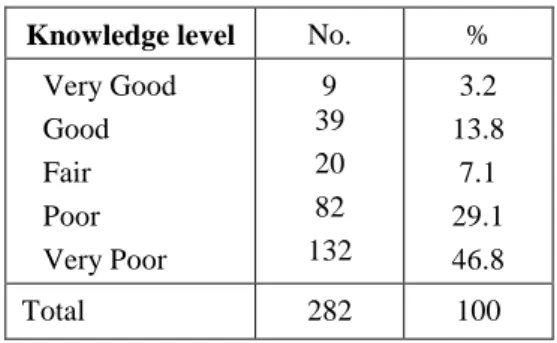
the positive effects of computerized medical records on patient information availability. However, physicians tend to disagree with these systems will detriment the relationship with patients and physician's autonomy. Thus, 38.4% and 33.5% strongly disagreed that computerized decisions support systems and computerized medical records had negative effects on the rapport between clinicians and patients and on the clinician autonomy respectively (Table 12). These results lead to the conclusion that physicians had no clear view of what could be expected after introducing computers into their daily work. This may be related to fact that the physicians did not have sufficient knowledge related clinical applications of computer technology. Actually our results indicated that the physician’s knowledge level about computer applications among computer users was very poor for approximately half of users (46.8%), poor for 29.1%, good for 13.8%, fair for 7.1%, and very good for only 3.2% (Table 9). Hence, there is a great need to increase the efforts to involve and inform the physicians as the key users of potential computer applications, so that they would act as change agents in their hospitals. In contrast to this, several studies conducted in western countries showed that physicians considered the impact of clinical computerization on health care to be generally beneficial [21,23].
For example, results of study among American physicians showed that overall respondents viewed computers as being beneficial to health care. They perceived self-education and access to up-to-date information as the most beneficial aspects of computers, and were most concerned about privacy
issues and the effect of computers on the doctor-patient relationship [13].
Table (3): Distribution of physicians in study hospitals according to some variables related to
computer use.
Variable No. %
Regular computer user:(n=526)
Yes No 282 244 53.6 46.4
Years of computer use:(n=282)
<1 1- 3- 7- 10+ 29 96 107 37 13 10.3 34.0 37.9 13.1 4.6 Number of hours per week spent using computer:(n=282) <1 1- 5- 10- 20+ 4 93 69 70 46 1.4 33.0 24.5 24.8 16.3
Attended computer course: (n=526) Yes No 127 399 24.1 75.9
Self assessment of computer
skills:(n=282) High Moderate Low 74 145 63 26.2 51.4 22.3
Table (4): Distribution of physicians using computers according to the type of computer applications
used.
Table (5): Distribution of physicians in study hospitals according to computer use and some
characteristics
Variable No. %
Used computer applications*:(n=282)
Word processing Spread sheet Presentation Regular Internet use
169 104 95 234 59.9 36.9 33.7 83.0
Used Internet applications: (n=234)
Access clinical journals
Access to clinical practice guidelines Download full text articles
Download free medical books Buying supplies/equipments 188 175 54 113 47 7 80.3 74.8 23.1 48.3 20.1 3.0 p Computer Use Characteristic YES No % % .029 45.7 59.7 33.3 36.4 54.3 40.3 66.7 63.6 Hospital Ownership MOHP HIO Voluntary Private .003 38.9 42.4 57.3 58.6 61.1 57.6 42.7 41.4 Age (years) 55+ .002 40.8 54.7 59.2 45.3 Gender Male Female .000 20.5 54.6 79.5 45.4
Attended training course
Yes No .001 38.1 52.0 35.5 15.4 29.6 50.0 55.7 66.7 61.5 61.9 48.0 64.5 84.6 70.4 50.0 44.3 33.3 38.5 Specialty GP Internal Medicine Surgery Radiology Clinical Pathology Obstetric& Genecology Pediatric E.N.T Ophthalmology
Table (6): Distribution of physicians according to some variables related to availability and use of
computer systems.
Table (7): Distribution of physicians who used computer in the hospital according to computer use
for clinical purposes.
Table (8): Distribution of physicians who used computers according to their response to knowledge
questions related to computer applications.
Variable No. %
Computer available at home: (n=526) Yes No 358 168 68.1 31.9 Computer available at private clinic: (n=526)
Yes No 49 477 9.3 90.7 Use of computer at private clinic: (n=49)
• To enter and display medical information • For patient scheduling
• To enter administrative information (billing) 39 14 19 79.6 28.6 38.8 Computer available at hospital: (n=526)
Yes No 54 472 10.3 89.7 Place where computer is available in
hospital: (n=54) Ward Office Outpatient department 16 39 23 29.6 72.2 42.6
Use computer at hospital No.
n=54
%
To enter medical information and results of examination To review patient information from previous admission To order laboratory tests
To order x-rays, ultrasound, or CT investigation To write prescriptions
To write discharge summary
Use of computerized clinical decision support system (DSS)
24 22 3 3 3 27 7 44.4 40.7 5.6 5.6 5.6 50.0 13.0 Knowledge Questions Physicians' Response (n = 282)
Correct Incorrect Blank
% % %
Name of program for • Word processing • Spread sheet • Presentations 55.3 31.9 30.5 0.4 2.8 0.4 44.3 65.2 69.1
Name of medical sites for • Access to clinical journals
• Retrieve clinical guidelines
• Download of full text articles
• Download of free medical books
43.6 11.3 32.3 11.3 1.8 .7 .4 0.0 54.6 88.0 67.3 88.7
Table (9): Distribution of physicians who used computers according to their knowledge related
computer applications.
Table (10): Distribution of physicians who use computer according to their knowledge level and
some variables.
Knowledge level No. %
Very Good Good Fair Poor Very Poor 9 39 20 82 132 3.2 13.8 7.1 29.1 46.8 Total 282 100 Variable
Knowledge level Mont
Carlo
Sig.
Very Poor
Poor Fair Good Very
Good % % % % % Hospital Ownership MOHP HIO Voluntary Private 53.9 38.7 33.3 17.1 27.0 32.3 33.3 37.1 12.9 12.9 8.3 5.7 10.3 9.7 16.7 37.1 2.5 6.5 8.3 2.9 .001 Age:(years) 55+ 36.4 49.5 57.8 58.3 36.4 21.2 26.6 41.7 9.3 6.1 6.3 0.0 13.1 20.2 7.8 0.0 4.7 3.0 1.6 0.0 .093 Gender: Male Female 49.5 41.7 23.7 39.6 8.1 5.2 15.1 11.5 3.8 2.1 .091 Specialty GP Internal Medicine Surgery Radiology Clinical Pathology Ob/GYN Pediatric E.N.T Ophthalmology 65.4 43.7 37.5 27.3 21.1 69.0 66.7 55.6 40.0 30.8 21.1 33.7 63.6 47.4 17.2 22.2 44.4 10.0 3.8 9.9 6.3 9.1 15.8 3.4 3.7 0.0 10.0 0.0 21.1 20.0 0.0 5.3 10.3 7.4 0.0 20.0 0.0 4.2 2.5 0.0 10.5 0.0 0.0 0.0 20.0 .003
Attending computer course
Yes No 43.6 48.6 39.6 23.2 5.0 8.3 7.9 17.1 4.0 2.8 .017
Table (11): Distribution of physicians according to their attitude level toward computer and computer
applications.
.
Table (12): Distribution of physicians according to their response to attitude statements related to
usage of general and medical computer applications.
Attitude Level No. %
Strongly Positive Positive Neutral Negative Strongly Negative 78 294 66 56 32 14.8 55.9 12.5 10.6 6.1 Total 526 100 statements Physician's response (n=526) Strongly Disagree Disagree
Undecided Agree Strongly Agree
Positive statements % % % % %
It is necessary for all physicians to learn how to use computer.
13.7 4.0 2.5 48.3 31.6
It is expected that computer use will be increasing in medical practice.
15.2 3.8 19.4 33.5 28.1
The use of computerized decisions support systems will improve the quality of medical service through helping physicians to know the right diagnosis and choose the best treatment
14.4 9.5 51.0 20.2 4.9
The use of computerized prescription systems will reduce medical errors from medication's use
16.3 9.5 55.9 8.6 9.7
The use of computerized medical records will save time and allow rapid access to patient information.
12.5 15.4 35.6 11.2 25.3
The access to the scientific subjects by using Internet is easier than the search in paper books and journals.
14.4 3.6 15.4 37.6 28.9
Negative statements
The potential effects of use of computerized medical records and decisions support systems will be detrimental on the rapport between clinicians and patients.
38.4 12.2 16.5 19.6 13.3
The potential effects of usage of decisions support systems will be detrimental on clinician autonomy.
33.5 4.0 31.0 23.8 7.8
The traditional method in using paper medical records is easer than the usage of computerized medical records.
43.0 18.1 21.9 10.5 6.7
The important problem in the search for scientific subjects in Internet is how to assure the accuracy and reliability of the information.
41.9 16.2 23.0 12.5 6.5
Computer use is boring for you 53.0 23.2 17.9 0.4 5.5
Table (13): Distribution of physicians according to their attitude level toward computer and computer
applications and some variables.
4. Conclusions:
Based on the results, the present study concluded that the half of respondent physicians use computers regularly, The most commonly used application by physicians is word processing and the majority of respondents utilize the Internet for e-mail use, a small proportion of physicians use clinical applications, and the knowledge level is very poor for approximately half of physicians who use computer. In addition, the attitude of half of the respondent physicians is positive toward computer applications. The major limitation to this study is that it did not compromise university hospitals. On the other hand, its main strength, is that included the private hospitals, and covered the main heath care sectors, namely, MHOP and HIO hospitals.
Variable
Attitude Level Mont
Carlo
Sig.
Strongly Negative
Negative Neutral Positive Strongly Positive % % % % % Hospital Ownership MOHP HIO voluntary Private 6.4 6.5 11.1 1.8 13.6 5.2 5.6 0.0 12.0 14.3 5.6 16.4 51.9 64.9 55.6 70.9 16.1 9.1 22.2 10.9 .007 Age:(years) 25- 35- 45- 55+ 4.6 4.7 8.0 13.8 9.1 11.0 12.7 6.9 10.3 12.8 13.3 20.7 59.4 57.6 52.7 41.4 16.6 14.0 13.3 17.2 .497 Gender: Male Female 7.0 4.7 9.6 12.3 15.3 8.5 53.8 59.0 14.3 15.6 .105 Specialty GP Internal Medicine Surgery Radiology Clinical Pathology Obstetrics Pediatrics E.N.T Ophthalmology 4.7 7.4 7.3 0.0 14.8 6.9 0.0 3.7 3.8 11.9 12.2 7.3 0.0 11.1 10.3 18.0 7.4 7.7 11.9 15.5 8.9 15.4 7.4 6.9 16.4 25.9 7.7 69.0 47.3 62.1 61.5 48.1 58.6 47.5 51.9 76.9 2.4 7.6 14.5 23.1 18.5 17.2 18.0 11.1 3.8 .079 Use of computer Yes No 2.5 10.2 3.9 18.4 11.3 13.9 63.5 47.1 18.8 10.2 .000 Attending computer course Yes No 1.6 7.5 7.1 11.8 6.3 14.5 64.6 53.1 20.5 13.0 .000
References
[1] R. Lenz and K. Kuhn, Towards a continuous evolution and adaptation of information systems
in healthcare, Int J Med Inf., 73(2004), 75-89.
[2] E. Ammenwerth, A. Buchauer and B. Bludau, Mobile information and communication tools in
the hospital, Int J Med Inf., 57(2000), 21-40.
[3] R. Haux, A. Winter, E. Ammenwerth and B. Birgl, Strategic information management in
hospitals, An Introduction to Hospital Information Systems, New York, 2002.
[4] C. Austin and S. Boxerman, Information Systems for Health Service Administration (5th ed.),
Health Administration Press, Chicago, 1998.
[5] T. Benson and R. Neama, Healthcare Computing: A Guide to Health Management and
Systems, London, Longman, 1994.
[6] G. Vlahos, T. Ferratt and G. Knoepfle, The use of computer-based information systems by
German managers to support decision making, Information & Management, 41(2004), 763-79.
[7] R. Miller, J. Hillman and R. Given, Physician use of IT, results from the Deloitte Research
Survey, J Healthc Inf Manag, 18(2004), 72-80.
[8] S. Geyer, Physicians: the key to IT success, Trustee, 57(2004), 6-10.
[9] A. McAleaney, S. SchweiKhart and M. Medow, Doctors' experience with handheld computers
in clinical practice, qualitative study, BMJ, 328(2004), 1162-6.
[10] D. Detmer and D. Gillings, Information technology for quality health care, A summary of
United Kingdom and United States experiences, Quality in Health Care, 9(2000), 181-9.
[11] A. Berger, R. Neame and L. Kluge, Why do people worry about computers? BMJ, 319(1999),
1295.
[12] R. Hoell, Determinants of union member attitudes towards employee involvement programs,
Dissertation submitted to the Faculty of the Virginia Polytechnic Institute and State University in Partial Fulfillment of the Requirements for the Degree of Doctor of Philosophy in Management, 1998.
[13] W. Detmer and C. Friedman, Academic physicians' assessment of the effects of computers on
health care, Eighteenth Annual Symposium on Computer Applications in Medical Care, Washington, 1994.
[14] S. Jwayyed, T. Park and M. Blanda, Assessment of emergency medicine residents' computer
knowledge and computer skills, Academic Emergency Medicine, 9(2002), 138-45.
[15] R. Cork, W. Detmer and C. Friedman, Development and initial validation of an instrument to
measure physicians' use of, knowledge about, and attitudes toward computers, JAMIA, 5(1998),164-76.
[16] T. Benson, Why general practitioners use computers and hospital doctors do not – Part 1,
BMJ, 325(2002), 1086-9.
[17] T. Benson, Why general practitioners use computers and hospital doctors do not – Part 2,
BMJ, 325(2002), 1090-3.
[18] H. Sanderson, T. Adams and M. Budden, Lessons from the central Hampshire electronic
health record pilot project: Evaluation of the electronic health record for supporting patient care and secondary analysis, BMJ, 328(2004), 875-8.
[19] H. Lærum, G. Ellingsen and A. Faxvaag, Doctors' use of electronic medical records systems
in hospitals: Cross sectional survey, BMJ, 323(2001), 1344-8.
[20] J. Ash and D. Bates, Forces affecting EHR system adoption, JAMIA, 12(2005), 8-12.
[21] S. Wright and W. Tseng, Physician opinion about electronic publications, Am J Med,
110(2001), 373-7.
[22] G. Leung and J. Johnston, Computerization of clinical practice in Hong Kong, Int J Med Inf,
62(2001), 143-54.
[23] H. Murff and T. Gandhi, Primary care physician attitudes concerning follow-up of abnormal