University of Wisconsin Milwaukee
UWM Digital Commons
Theses and DissertationsMay 2016
Making Test Batteries Adaptive By Using
Multistage Testing Techniques
Wen Zeng
University of Wisconsin-Milwaukee
Follow this and additional works at:https://dc.uwm.edu/etd
Part of theEducational Assessment, Evaluation, and Research Commons, and theEducational
Psychology Commons
This Dissertation is brought to you for free and open access by UWM Digital Commons. It has been accepted for inclusion in Theses and Dissertations by an authorized administrator of UWM Digital Commons. For more information, please [email protected].
Recommended Citation
Zeng, Wen, "Making Test Batteries Adaptive By Using Multistage Testing Techniques" (2016).Theses and Dissertations. 1236.
MAKING TEST BATTERIES ADAPTIVE BY USING MULTISTAGE TESTING TECHNIQUES
by
Wen Zeng
A Dissertation Submitted in Partial Fulfillment of the Requirements for the Degree of
Doctor of Philosophy in Educational Psychology
at
The University of Wisconsin-Milwaukee May 2016
ABSTRACT
MAKING TEST BATTERIES ADAPTIVE BY USING MULTISTAGE TESTING TECHNIQUES
by Wen Zeng
The University of Wisconsin-Milwaukee, 2016 Under the Supervision of Cindy M. Walker
The objective of this dissertation research is to investigate the possibility to improve both reliability and validity for test batteries under the framework of multi-stage testing (MST). Two test battery designs that incorporate MST components were proposed and evaluated, one is a multistage test battery (MSTB) design and the other is a hybrid multistage test battery (MSTBH) design. The MSTB design consists of three tests: The first test used the AMI (approximate maximum information) method as the routing strategy; and as for the second and third, the “On-the-Fly” strategy (OMST) was employed. The MSTBH design also consists of three tests; the first two are administered via MST while the third one via CAT.
This dissertation presents a new test battery design by combining the strengths from different testing models. To improve estimation precision, each subsequent test in the test battery for an examinee was assembled according to the examinee’s previous ability estimate. A set of simulation studies were conducted to compare MSTB, MSTBH with two baseline models for both measurement accuracy and test security control under various conditions. One of the baseline models is a MST design consisting of three MST procedures without borrowing information from each other’s; the other is a computerized adaptive test battery (CATB) design consisting of 1 to 3 CAT procedures, being the second and the third procedures borrowing
information from the previous ones. The results demonstrated that the test battery designs yielded better measurement accuracy when considering previous subtest score as a predictor for the current subtest. All designs yielded acceptable mean exposure rates, but only the CATB design had ideal pool utilization. Finally, the discussion section presents some limitations on current studies
© Copyright by Wen Zeng, 2016 All Rights Reserved
To my parents
TABLE OF CONTENTS
ABSTRACT ... ii
LIST OF FIGURES ... viii
LIST OF TABLES ... ix
ACKNOWLEDGEMENTS ... x
I. INTRODUCTION ... 1
II. LITERATURE REVIEW ... 7
Computerized Adaptive Testing (CAT) ...7
Item Pool Framework ... 8
Item Selection Algorithms and Ability Estimate Methods ... 8
Multistage Testing (MST) ... 11
Important Components of Building MSTs ... 12
Practical Issues to be Addressed ... 19
Item Exposure Control ... 20
Item Pool Stratification ... 20
Evaluation Index ... 22
Development of New Test Model ... 23
On-the-Fly Multistage Test (OMST) ... 23
Development of Test Battery Design ... 24
Summary of Previous Studies ... 26
Statement of Question ... 31
II. METHODOLOGY ... 33
Design of Overview ... 33
Item Pool Framework ... 34
Test Sequence ... 36
Manipulated Conditions ... 37
Data Generation ... 37
Test Battery Simulation Study ... 38
Multistage Test Battery (MSTB) Design ... 38
MST Procedure Design ... 39
Test Administration ... 46
Hybrid MSTB (MSTBH) Design ... 48
Baseline Models Simulation Study ... 49
CATB Design ... 49 Data Analysis ... 50 Measurement Precision ... 50 Test Security ... 50 IV. RESULTS ... 51 Measurement Precision ... 53
Test Security Properties ... 59
V. DISCUSSION ... 65
Conclusions ... 65
Limitation and Directions for Future Research ... 68
LIST OF FIGURES
Figure 1.1: Structure of a 1-3-3 MST Design ... 3
Figure 1.2: General Procedure of OMST Strategy, Zheng & Chang (2014) ... 5
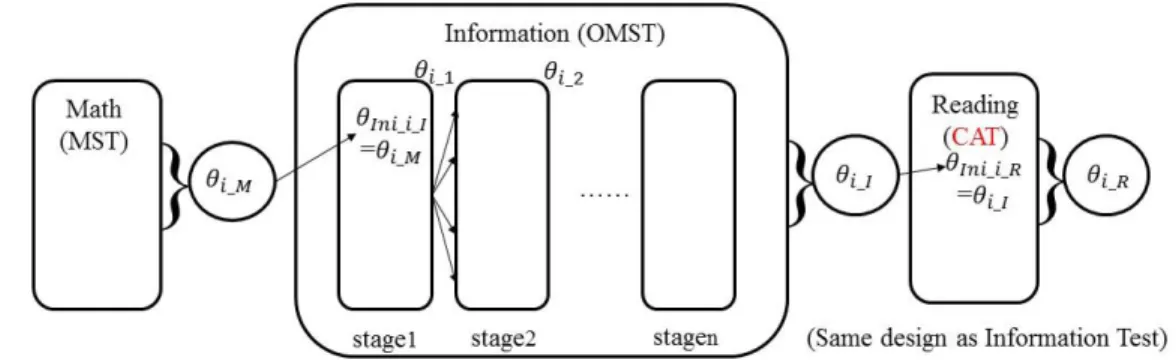
Figure 3.1: Construct of the MSTB Design ... 39
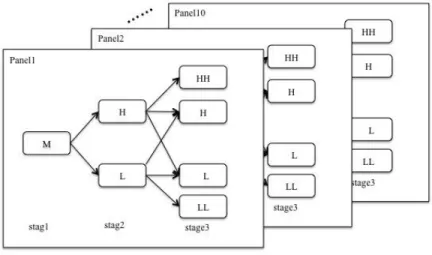
Figure 3.2: Structure of 1-2-4 MST test ... 40
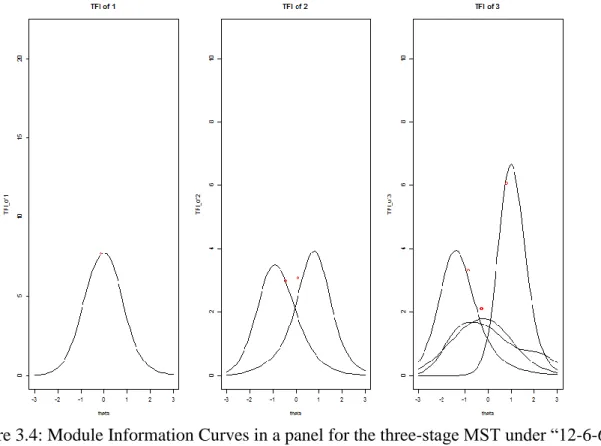
Figure 3.3: Module Information Curves for the three-stage MST under “12-6-6” condition. ... 43
Figure 3.4: Module Information Curves in a panel for the three-stage MST under “12-6-6” condition .... 44
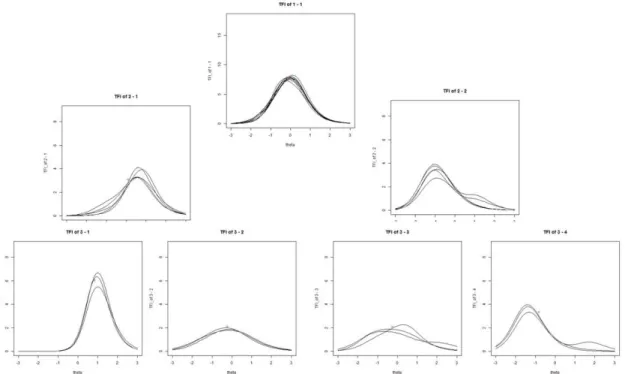
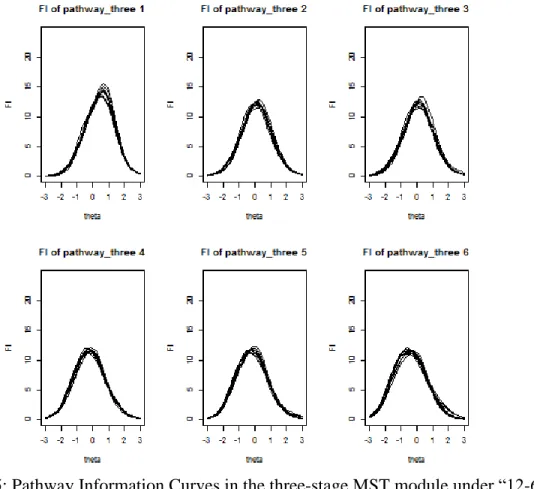
Figure 3.5: Pathway Information Curves in the three-stage MST module ... 45
LIST OF TABLES
Table 3.1: General Framework of All Designs ... 34
Table 3.2: Descriptive Statistics for Three Item Pools ... 35
Table 3.3: Item Parameter for Each Content Constraint ... 35
Table 3.4: Inter-correlation of three tests ... 36
Table 3.6: Anchor Points for Each Test ... 49
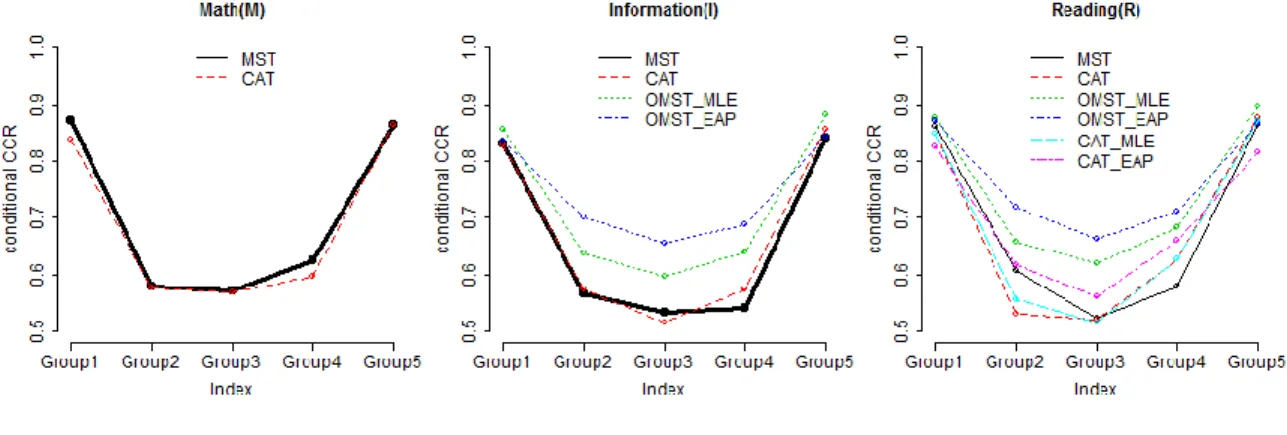
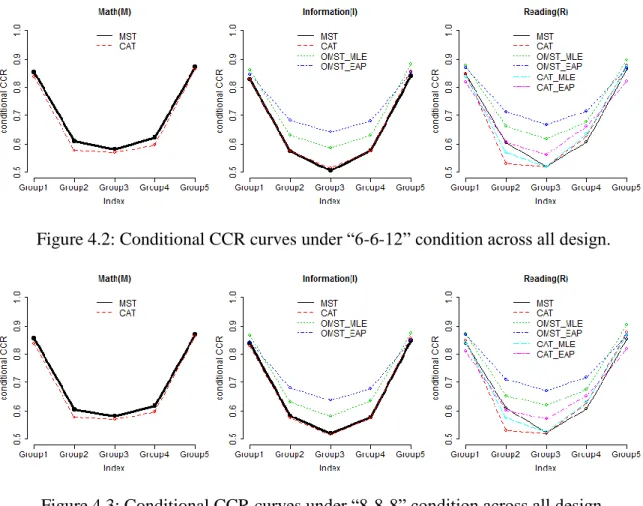
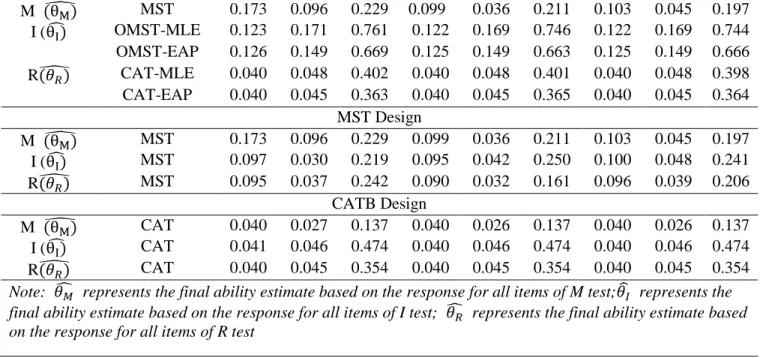
Table 4.1: RMSE and CCR of the estimated θ ... 55
Table 4.2: Statistics of Item Exposure Rates ... 60
ACKNOWLEDGEMENTS
This dissertation would not have been possible without the help of so many people. First, I would like to express my great appreciation to my advisor, Dr. Cindy M. Walker, for recognizing my potential in the field of Educational Statistics and Measurement studies. I have always
appreciated her knowledge, plus offering very helpful strategies for my dissertation. Second, I wish to acknowledge the help provided by Dr. Bo Zhang, Dr. Razia Azen and Dr. Timothy Hass. I am particularly grateful for their helpful comments and feedbacks during the time when I was writing my dissertation. Third, tremendous thanks to Dr. Hua-hua Chang who provided me with very valuable and professional advice, and offered his perspective on ways to tie my research to the latest measurement development. Last but not the least; my special thanks are extended to Haiyan Lin, PhD. from ACT, Inc. for inspiring my interests in this dissertation topic and sharing her experiences and knowledge with me, plus for assisting with the collection of my data.
I could never finish this dissertation without the love of my parents and my fiancé. Your support and blessings always gives me courage to overcome all difficulties. I love you!
I. INTRODUCTION
Under the Race to the Top initiative, two promising testing models have been endorsed: linear tests and Computer-based tests (CBT). Over the past few decades, paper and pencil (P&P) was the most commonly used format of linear tests. With the development of the computer, CBT has become popular in current testing systems. CBT can be either linear or adaptive. During a linear CBT test, all examinees take the same items and the ability of each examinee is going to be obtained by examinees’ performance on these items, which leads to less accurate estimates. During an adaptive CBT test, examinees take different items according to their ability levels. Thus, adaptive CBTs have been widely used in recent assessment tests because they show more efficient and precise measurement of examinees’ performance (Hendrickson, 2007; Lord, 1980). Computerized Adaptive Testing (CAT) and Multistage Testing (MST) are two major test models in adaptive CBTs. In particular, a CAT is designed to select each item from an item pool according to each examinee’s current ability estimate, and then update that estimate after each item response. In other words, the administration test algorithm of this procedure is framed to adapt at the item level to choose an item with a difficulty parameter that is near the current estimate of an examinee’s ability. Ability estimates are updated after each item response, and this step is repeated until a stopping criterion is met. In practice, many applications have adopted CAT designs because it can provide the more precise measurement for all examinees than linear tests can provide (Hendrickson 2007; Lord 1974; Wainer, Kaplan, & Lewis, 1992). Another important CBT model is MST. The main difference between MSTs and CATs is that in a MST, examinees always receive a set of pre-assembled items that are matched to their provisional
ability estimates (Hendrickson, 2007), but in a CAT, only a single item is selected to match the ability estimates.
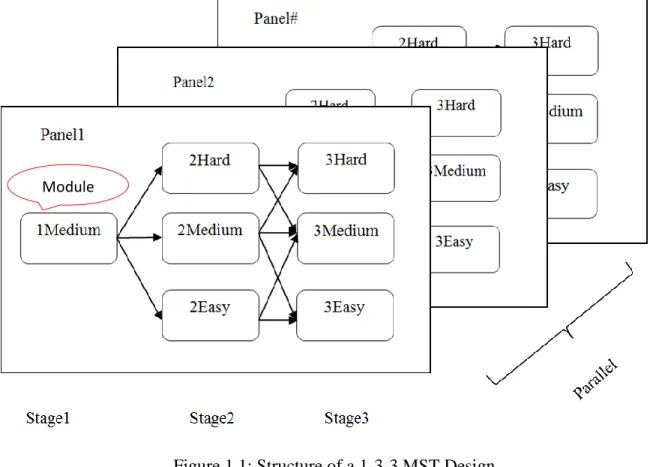
Usually, a MST is composed of several stages, and, within each stage, several bundles of items are pre-assembled before test administration. Each module is constructed based on item difficulty levels so that the information for a particular ability level can be maximized. Once all of the modules are pre-assembled, the modules in different difficulty positions can be bundled together in a unit called “panel”. Figure 1 illustrates a 1-3-3 MST design (e.g., Luecht, Brumfield & Breithaupt, 2006; Zenisky, 2004). It is a MST design that includes three stages and ten parallel panels. Each panel includes seven modules varying difficulty. In addition, there are seven available pathways for each examinee; they are 1M+2H+3H, 1M+2H+3M, 1M+2M+3H, 1M+2M+3M, 1M+2M+3E, 1M+2E+3M and 1M+2E+3E. Specifically, “1” represents first stage, “2” and “3” represent second and third stage, respectively. The E, M, and H represent the difficulty level easy, medium, and hard, respectively. To prevent examinees from making extreme jumps between difficulty levels, 1M+2H+3E and 1M+2E+3H pathways are not possible paths. There can be many parallel panels in MST. However, once a panel is selected for administration to an examinee only those items within that particular panel will be administered to that examinee. During test administration, each examinee is administered one of the parallel panels starting with a module of medium difficulty in stage 1 at random. This stage is called the routing stage. After the first module is finished, one of the modules in stage 2 is administered depending on the examinee’s current proficiency estimation. As shown in Figure 1.1, there are three modules (2H, 2M, and 2E) in stag2, varying by their item difficulties. Once stage 2 is finished, similar routing process will be used for routing examines from stage 2 to stage 3. The final ability estimate for each examinee is based on his or her responses to the whole test. The
unique feature of pre-assembling items at the stage-level allows better test quality control while sustaining the measurement advantages of CATs (Patsula 1999; van der Linden & Glas 2010). Therefore, considerable attention has been paid to MST designs.
Figure 1.1: Structure of a 1-3-3 MST Design
To conduct the performance of different test models, several studies have compared the benefits of CATs and MSTs (e.g., Kim & Plake, 1993; Luecht et al., 1996; Patsula, 1999). Previous studies concluded the major advantage of a CAT is that more efficient latent trait estimates are obtained with fewer items than would be required in linear tests, but the major advantage of a MST is that it provides a relatively lower chance of getting unreliable ability estimates when estimating examinees’ latent traits based on a group of items. Since each kind of test model has its advantages and disadvantages, rather than selecting between only CAT and
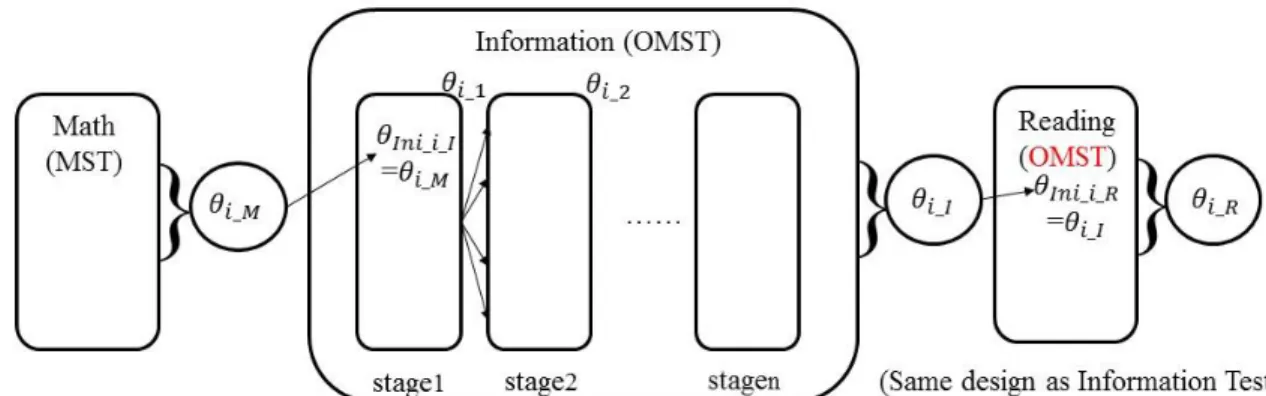
MST, researchers have been trying to find a new framework to overcome the limitations and improve the benefits of these two models at the same time. Zheng and Chang (2014) proposed a multistage assembly paradigm called “On-the-Fly” multistage (OMST) adaptive testing, which merges a CAT and a MST into one big flexible framework. In an OMST, instead of assembling all modules and panels before the test, a group of items is contiguously selected based on examinees’ current ability estimate and administered together after the selection. One OMST can include multiple stages according to the administration goal. Figure 1.2 illustrates the general process of an OMST obtains three stages. First, each examinee is administered one of the preassembled module that provides moderate difficulty level, and then the initial ability estimate is updated based on the responses of the certain module. Second, after completing stage 1, an individualized module is assembled at stage 2 for the examinee, based on his or her initial ability estimate. Third, the stage3 is assembled based on the examinee’s updated ability estimate from stage 2. Finally, repeating this process until the whole test completed. As stage length decreases, an OMST transforms smoothly from a MST to an adaptive format, and researchers treat this kind of design as a hybrid design. Given that not much information about an examinee’ s ability level can be provided at the beginning of a test, there are substantial measurement errors in the early stages of a CAT. In an OMST, rather than maximizing test information for each single item, optimizing the test information within an interval around the provisional ability estimate can decrease measurement errors, especially those obtained early in the test administration phase.
Figure1.2: General Procedure of OMST Strategy, Zheng & Chang (2014)
Test batteries can also be realized for testing programs in which a set of tests has to be administered in a single session, but the testing time has to remain constant (e.g., Boughton, Yao, & Lewis, 2006; Yao & Boughton, 2007). The major advantage of utilizing test batteries is that several tests measuring different subjects can be administered simultaneously to provide profile scores within a single session. The Armed Services Vocational Aptitude Battery (ASVAB) is a well-known example of test battery designs. It is a multiple aptitudes battery that measures ten distinguished subtests (abilities) to predict future academic success in the military. After several years of evaluation, the CAT-ASVAB was one of the first large-scale adaptive test batteries. While changing the testing model from linear to adaptive in a test battery adds a layer of complexity, in terms of the development and evaluation of a new score scale, it also allows the combined benefits of less testing time and greater score accuracy.
Collateral information (Stout et.al., 2003) is an important statistical notion in many CATB types of research, which can be explained as the suspected information about an
examinee's ability measured by one test that is suspected based on the examinee’s responses to items on other tests. Since many test batteries include a cluster of different subjects but strongly related, such as a battery consisting of a mathematics subtest and a logical skill subtest, the amount of collateral information among these subtests can be substantial and these correlations should not be ignored (van der Linden, 2010). Therefore, the collateral information among different subtests is useful component to improve measurement accuracy in test batteries. Moreover, the amount of collateral information relates to the strength of the correlation among the tests within the battery. These high correlations imply that the performance on one test is a good predictor of ability for the remaining tests (Wang et al., 2012). Some other positive findings associated with the use of test batteries include the enhanced feasibility of administration, decreased testing cost, and reduced examinees’ testing burden (e.g., Boughton, Yao, & Lewis, 2006; Yao & Boughton, 2007).
Since MST has become one of the most prominent testing models used in large-scale state assessments, it is interesting and important to extend such study to battery formats. Therefore, the primary purpose of this study was to investigate the possibilities to making test batteries adaptive by using multistage testing techniques. Although many testing programs have effectively used both CATs and MSTs, the usage of using these procedures within the context of administering test batteries is not well developed. Another purpose of this dissertation was to investigate if the reliability and validity of the administration of a test battery could be improved by utilizing different testing models. Two battery designs were constructed; a MST battery design (MSTB) and a hybrid MST battery (MSTBH) design. The MSTB design was administered using three highly correlated tests with multistage design. The MSTBH also
consisted of three tests. However, the first two tests were administered as multistage tests while the third one was administered as an adaptive test.
II. LITERATURE REVIEW
The following literature review describes the background and previous researches relevant to this dissertation. The first section involves an overview of conceptions and technologies that related to traditional CAT and MST designs. The second section focuses on introducing the practical issues that need to be address in adaptive test designs. The third section reviews the development of test batteries and some issues that emerged from large-scale implementation. The final section summarizes some previous studies and emphasizes the research questions of this dissertation.
According to Lord (1970), the most effective test should provide neither too difficult nor too easy items for examinees. To obtain certain goal, researchers are continuously looking for applied testing models for educational scale testing. Among them, numerous studies proposed the performance of using CATs and MSTs. In the following section, commonly used techniques in CAT designs will be reviewed first; subsequently the development of MST designs will be described.
Computerized Adaptive Testing (CAT)
A CAT is a prominent testing model of test administration that has been widely applied in large-scale educational assessment, such as the Graduate Management Admission Test (GMAT) and the National Council of State Boards of Nursing (NCLEX). The main difference between a CAT and a linear test is that each item in a CAT is selected sequentially according to the current performance of an examinee; while in a linear test, each examinee takes the same preassembled items in the same order, and the final estimate of ability is based on the answers of
these items. Based on the adaptive feature, the item selection process of CAT tailors a test to each examinee according to his or her ability level. Particularly, if the examinee answers an item correctly, the next item should be more difficult. Otherwise, the next item should be easier. On the one hand, CATs reflect several distinct features compared to linear tests. First, they provide higher or equivalent measurement precision with shorter tests when compared with conventional linear tests, especially for examinees with extreme ability levels (e.g., Lord, 1974; Loyd, 1984; Weiss, 1982). On the other hand, CATs also have some potential problems, such as lacking the review opportunity for examinees within tests; and requiring relatively complicated item selection algorithms to satisfy content balance and control item exposure rates for test security (e.g., Hambleton, Swaminathan, & Rogers 1991; Hendrickson 2007; Vispoel 1998; Wainer & Kiely 1987). Several components need to be considered when designing CATs, including having a feasible item pool, appropriate item selection algorithms, and ability estimation methods. Item Pool Framework
In a computer-based test, an item pool contains numerous items that are calibrated based on a particular distribution (Weiss & Kingsbury, 1984). An ideal items pool is designed for examinees of average ability levels and as well as those have extreme ability levels. According to Bergstrom & Lunz (1999) and Parshall et al. (2002), many components can influent item pool size, including content areas, test length, the size of examinee population, and many psychometric properties of items.
Item Selection Algorithms and Ability Estimate Methods
The Maximum Fisher Information method (MFI, Thissen & Mislevy, 2000) is one of the most commonly used item selection method in CAT designs. The main goal of this method it is to accumulate as much test information (TI) as possible in the most efficient manner (Parshall et
al., 2002). During the processing of MFI, an item j will be selected if it obtains the maximum Fisher item information on the corresponding 𝜃 scale, defined as
𝐼𝑗(𝜃) =
[𝜕𝑃𝜕𝜃 ]𝑗(𝜃)
2
𝑃𝑗(𝜃)[1 − 𝑃𝑗(𝜃)]
(1)
In addition, since the contribution of each item to the total information is additive, then the Fisher test information is equal to the sum of all Fisher item information, which is denoted as
𝑇(𝜃) = ∑ 𝐼𝑗(𝜃) 𝑛
𝑗=1
(2)
To maximize Fisher information is to match the item difficulty parameter directly with the latent trait level of a test taker. The MIF approach has become one of the most popular item selection algorithms for the last three decades. Alternative selection algorithms for item selection include the approximate Bayes procedure (Owen, 1969, 1975), the maximum global information criterion (Chang & Ying, 1996). The ability estimation methods in CAT designs include maximum likelihood estimation (MLE; Birnhaum, 1968), expected a posteriori (EAP; Bock & Mislevy, 1982), maximum posteriori (MAP; Samejima, 1969). Among them, MLE and EAP are two most commonly used methods.
Maximum Likelihood Estimate (MLE) Method
In the 3PL-IRT (Birnbaum, 1968) model, the probability of a correct response on a dichotomously scored item i at ability level theta is defined by
𝑃𝑖(𝜃) = 𝑐𝑖 +
1 − 𝑐𝑖
1 + exp [−𝐷𝑎𝑖(𝜃 − 𝑏𝑖)]
where D is the scaling constant equal to 1.702, and 𝑎𝑖, 𝑏𝑖, 𝑐𝑖 are the discrimination parameters, difficulty parameter, and guessing parameter of item i, respectively. To introduce random error, this probability was compared against a randomly generated value between 0 and 1 from the uniform distribution. An examinee received a score of 1 if the random value was less than or equal to the probability; otherwise the examinee received a score of 0. The likelihood estimation is obtained by maximizing the following likelihood:
L(θi) = P(Y|θi) = ∏ Pij(θi)YijQij(θi)1−Yij j
(4)
where L(θi) denote the probability of observing the set of item response; Yij denotes the
response matrix, which contains the response of each item;
Yij= {1, if the examinee i gave correct response on item j0, otherwise, (5)
In addition, 𝑃𝑖𝑗(𝜃𝑖) denotes the conditional probability of examinee i answering item j correct given that the examinee’s ability level is 𝜃𝑖, in contrast, 𝑄𝑖𝑗(𝜃𝑖) represents the conditional probability of examinee i answering item j incorrect given that the examinee’s ability level is 𝜃i.
To search for the solution of theta that maximizes the likelihood, first, taking the natural logarithm on both sides of Equation (4) gives
L=Log [(θ|u)]=∑mi=1∑Jj=0YijlogPij(θ) (6)
The Newton-Raphson equation for estimation ability at iteration t is given by
[θ̂]t = [θ̂]t−1−
L′
Expected A Posteriori (EAP) Method
The EAP method uses the mean of the posterior distribution as examinees’ ability estimates. It follows the Bayes’ theorem: posterior distribution ∝ likelihood function×prior distribution (Chen & Choi, 2009).
P(θ|u) = P(u|θ)P(θ)
∫ 𝑃−11 (u|θ)dθP(θ) (8)
where P(𝜃) represents the prior information of 𝜃 and 𝑃(𝜃|𝑢) is the posterior distribution of given u which is frequency data of two variables. 𝑃(𝑢|𝜃) is the same likelihood function L in the ML method.
Then, the EAP (i.e., the mean of the posterior distribution) can be simply expressed as:
ρEAP = ∫ θP(θ|u) dθ1
−1
(9)
Then, Equation (9) can be re-expressed as:
P(θ|u) = P(θ)P(u|θ) ∑𝑘 𝑃 𝑖=1 (𝜃𝑖)P(u|𝜃𝑖) (10) ρ̂ = ∑EAP 𝜃𝑖P(𝜃𝑖|u) 𝑘 𝑖=1 (11)
Both the MLE procedure and the EAP procedure have been applied in the studies of many CATs (e.g., Chang & Ying, 1999; Chen et al., 1997).
Multistage Testing (MST)
A MST is a compromise between a CAT and a traditional linear test (Jodoin et al., 2006), in which the adaptive feature occurs at the level of stages instead of the level of individual items. Therefore, MSTs have become a prominent testing model, especially since some assessments have switched from CAT versions to the MST versions, such as the National Assessment of
Educational Progress (NAEP) and the Graduate Record Examinations (GRE). After various research and development, it has been determined that MSTs have some advantages over CATs. First, since a MST’s routing algorithm only happens between stages, it allows examinees to go back to review questions within their current stage. Therefore, examinees may feel less stress during the test. Second, rather than simply relying on the adaptive algorithm, the pre-assembled structures of stages and modules in MSTs allow test developers to review items prior to test administration (e.g., Wainer & Kiely, 1987; Luecht & Nungester, 1998; Wainer, 1990). As Wainer & Kiely (1987) summarized “(multistage) testlets are a scheme that can maintain the CAT advantages while still using the wisdom of experts.” However, compared to CATs, MSTs also have some disadvantages, such as less accuracy in proficiency estimation and less efficiency (e.g., Kim & Plake 1993; Loyd 1984; Luecht and Nungerster 1998).
Important Components of Building MSTs
Modules, panels, and pathways are the three basic components of any MST design (Luecht, 2000). In particular, a module is composed of a set of items that stand on particular content specifications or reliability requirements (Wainer & Kiely, 1987), such as content balancing or maximizing the test information function at a particular theta value. After grouping items into different modules based on distinguishing difficulty levels, distinct modules are further grouped into different paths to optimize parallel forms for all possible routes. These routes refer to panels. Usually, one MST can have several parallel panels that contain different items but reflect the same objective ability level. Pathways are all possible sequences of certain modules to which examinees may assign (Luecht & Nungester; 1998). When pre-assembled all modules and panels, the adaptive nature of MSTs allows the routing decision between stages to occur through different pathways. For instance, if an examinee gets a high estimated ability level after finishing the first module, he or she will be routed to a pathway leading to a relatively hard
module at next stage. Otherwise, he or she will be routed to a pathway leading to a relatively easy module at next stage. The first stage of a MST design can be referred to as the routing stage (Kim & Plake, 1993), and increasing the length of the first-stage modules is an effective way to reduce proficiency estimation errors. Similar to the design of a CAT, there are various decisions that need to consider before implementing a MST. Overall, the complicated framework of any particular MST design starts with determining a wide variety of test design elements, including the number of stages, the number of alternative modules and items in each stage, and the difficulty anchor and target information setting(e.g., Breithaupt, Ariel, & Veldkamp 2005; Zheng et al., 2012).
Number of Stages
Two-stage and three-stage designs are the two commonly used MST structures. For example, a two-stage design structure includes one routing stage and one measurement stage for each examinee. During the administration process, since there is only one decision point about how to route examinees, it is possible that some examinees are unable to recover if the decision is made inappropriately (Zenisky, Hambleton, & Luecht, 2010). Therefore, unitizing a three- or four-stage design structure, instead of a two-stage structure, in a MST is an appropriate way to overcome this disadvantage (Pastula, 1999; Hendrickson, 2007), but the increase the number of stages should be done under the control of balancing the content specifications and the complexity of the test structure (Luecht et al., 1996; Luecht & Nungester, 1998).
Length of Modules and Number of Items
Patsula (1999) found that increasing the number of modules from three to five in later stages could increase the accuracy of ability estimation, but at the expense of increasing the complexity of the MST. Therefore, to balance the measurement precision with the complexity of
the test structure, it is important to consider the number of modules per stage in MST designs. According to Loyd (1984) and Kim & Plake’s (1993) findings, administering a longer first-stage module can provide more information in the routing decision for the following stages, which results in a positive impact on the measurement precision of MST designs. In summary, the length of the modules should vary across the stages, depending on the specifications of a test. As noted in Figure 1.1, the three stages 1-3-3 structure is a common implementation of a MST design.
Anchor Points for Modules
Modules are groups of items that built together to meet specific anchor points. Among them, the test information functions (TIFs) is a commonly used target anchor points format. Since it is hard to control the TIF at every point along the ability scale, test developers always focus on deciding a few discrete ability points to identify certain critical ability levels (van der Linder & Boekkooi-Timminga, 1989). In classification tests, the final classification boundaries provide natural anchors points, such as easy, moderate and hard modules (Luecht & Nungeter, 1998). Thus, the TIF values can be set to maximize the information at those boundaries. The most commonly used approach is to maximize the TIF at the corresponding difficulty anchors through assembling several alternative forms for each module sequentially. The optimized TIF values are calculated by averaging all the values of the assembled alternative forms (Luecht 2000; Luecht & Burgin 2003; Zheng et al. 2012). Choosing appropriate methods for technique design is the next important component of MST designs. This includes the selection of test assembly methods, panel assembly methods, and routing methods.
Test Assembly Methods
primary goal of ATA algorithms is to optimize the information obtained for examinees by matching their estimate of ability to the average item difficulty within the module. There are two kinds of ATA methods: linear programming methods (e.g., van der Linden, 2005) and heuristic methods (e.g., Swanson & Stocking, 1993; Luecht, 1998; Cheng & Chang, 2009). Linear programming methods try to find a single optimization procedure to assemble all test forms simultaneously. In contrast, the heuristic methods separate test assembly into several local optimization problems, and sequentially solve them one by one (Acherman, 1989). Among all heuristic methods, the normalized weighted absolute deviation heuristic method (NWADH;) has been readily adapted to build multiple test forms for MSTs (e.g., Luecht & Nungester, 1998; Patsula, 1999; Hambleton & Xing, 2006; Jodoin et al., 2006; Zheng et al., 2012). The unique feature of the NWADH is that it treats all constraints as targets and normalizes the deviations for each constraint (Yan et al., 2014). The statistics constraints usually include item-test correlations and information functions, which are functionally, related to one or more target measurement properties for specific test (Luecht & Hirsch, 1992; Stocking, Swanson, & Pearlman, 1993). The non-statistical constraints represent the test-level constraints that built the test specifications, such as the required frequencies or proportions of item from different subject areas, item type codes, and item author identification codes. The main advantage of normalization is that dividing the di variables by their sum over all eligible items transforms the absolute different function into a proportional quantity. Hence, many different types of criterion can be treated simultaneously to minimize the potential effects.
For a test includes n items, i=1,2 ,.., I denote one of the I items in the item bank; j=1,2,..,J denote one of the J items needed to be selected into each optimization model; n=1,2,.., N denote one of the N constraints; 𝑇𝑛 denotes all the constraints target function of the test. Therefore, to
function.
∑ eixi I
i=1
(12)
and Equation 12 is explained through Equation 13 to Equation 18.
∑ xi = j I i=1 (13) xi1 = xi2 = ⋯ = xij−1=1 (14) xi ∈ {0,1}, i=1,…,I (15)
The local normalized absolute deviation for each candidate item t in the remaining item pool is calculated by ei=1-∑ di d i i∈Rj−1 , i∈ Ri−1 (16) and di=|(T−∑ ukxk I k=1 n−j+1 ) − ui| i∈ Ri−1 (17)
where 𝑅𝑖−1 is defined as a set of indexes for the remaining items in the item pool after excluding the selected items. 𝑑𝑖 is defined as the absolute difference between the candidate item’s contribution under the control of constraint T and the contribution necessary for each remaining item to achieve the target, then the item with the smallest normalized absolute deviation, 𝑒𝑖, will be selected into the test. As each new item is selected, the current value of the target function after removing previously selected item is calculated by
T − ∑I ukxk
k=1
Panel Assembly Methods
Two major strategies for achieving parallelism across panels are referred to as the “bottom-up” approach and the “top-down” approach (Luecht & Nungester, 1998). In the “bottom-up” panel assembly approach (e.g., Luecht, Brumfield & Breithaupt, 2006), parallel forms of each module are first assembled and then mixed-and-matched to build parallel panels, which results in panels that are constructed according to module-level specifications (Keng, 2008) to satisfy statistical targets. Hence, all modules are independent of one another and exchangeable regarding the statistical specifications (e.g., item difficulty, item discrimination, module information) across panels. In the “top-down” approach, all panels are built based on test-level specifications (e.g., content coverage), which means that modules are dependent on one another and must be combined to satisfy the specification table for the whole test. In addition to use the “bottom-up” or “top-down” approach individually, they can be utilized together in one design as well (e.g., Guo et.al, 2012). If both statistical and non-statistical constraints are imposed in one MST design, the “bottom-up” approach can be used to assemble the test regarding the statistical constrain such as, test information function; therefore, modules at the same difficulty level are exchangeable based on the modules information to match the statistical constraints. Meanwhile, the “top-down” approach can be used to assemble the test in terms of the non-statistical constrain such as the content specification.
In MSTs, in addition to assigning modules and panels appropriately, it is also important to ensure a balanced representation of content and exposure control when assembling a MST. To control the distribution of item characteristics, there may need to be a large number of constraints to identify all item properties and algorithms for item selection must incorporate all of these constraints. The content balancing will occur at the module-level if use the “bottom-up” method.
The content balancing will occur at the test-level by obtaining the proportional distribution of each content area if use the “top-down” method. Therefore, in the case of a MST, test developers can preassemble test forms to control both statistical and non-statistical constraints by taking advantage of assembly processes from both linear tests and CATs, prior to test administration.
Routing Methods
The main propose of routing in MSTs is to classify examinees to different next-stage modules based on their current performances. The approximate maximum information method (AMI; Leucht, Brumfield, & Breithaupt, 2006) is a commonly used routing strategy in MST designs. This method is analogous to the maximum information criteria used in CAT designs, which routes examinees to a module providing the maximum information at the corresponding theta scale. The main goal of using the AMI method is to identify the optimal decision point (θ) on the theta scale for module selection by calculating the cumulative test information functions (TIFs). This procedure routes examinees to a module that will provide the maximum information. If an examinee’s current ability estimate is higher than the optimal decision point θ, then the module located at a higher difficulty level provides more information. Likewise, if an examinee’s current ability estimate is lower than optimal decision point θ, then the module located at a lower difficulty level provides more information. Given that the way to route each examinee appropriately is an important topic in MST designs; more studies that are systematic need in the future (Stark & Chernyshenko, 2006).
Ability Estimate Methods
The same methods that CATs always use, such as MLE and EAP, can be applied to MSTs as well. Numerous studies have conducted these two methods in MST researchers (e.g. Davis & Dodd, 2003; Kim & Plake, 1993; Hambleton & Xing, 2006; Jodoin, 2003).
Practical Issues to be Addressed
As pointed out by Chang (2004), security gaps caused by item-sharing activities among examinees are obviously, especially after the Kaplan-ETS incident happened in 1994 (Davey & Nering, 2002). Afterwards, researchers also found that the results obtained from the GRE-CAT did not produce reliable scores for thousands of examines in early 2000 (e.g., Carlson, 2000 & Merritt, 2003). Therefore, with the wide recognition and implementation of the computer-administered test, test security has been a major concern in large-scale educational assessments. Usually, researchers apply item exposure rate and item usage rate to evaluate the test security statement of a test. The item exposure rate is defined as the ratio of the number of times an item is implemented to the total number of examinees (Stocking & Lewis, 1998); the item usage rate is calculated the ratio of the number of items are administered and the total number of items in certain item pool.
During the selection of CAT tests, items that contain high discriminant parameters (a-parameters) always selected to maximize precision in estimating ability, and this leads to uneven item exposure rates across all items because certain items with higher a-parameters tend to be used more often than others (Chang & Zheng, 2007). This may lead to examinees that take the test earlier may share information with those who take it later, which may increase the risk that items may expose to many examinees before they take the test. Thus, addressing test security issues in adaptive tests administrations is of great importance. For years, researchers have proposed that item exposure control and content balancing as the two main ways of helping to improve test security in adaptive tests.
Item Exposure Control
When using information-based item selection methods, some items might seldom be unexposed, whereas other might never be exposed. Hence, items with high exposure rates can decrease test security because these items may become popular to subsequent examinees. To address this issue, researchers proposed several exposure control procedures (e.g. McBride & Martin, 1983; Sympson & Hetter, 1985; Chang & Ying, 1996). Among them, the Sympson-Hetter method (SH, Sympson & Hetter, 1985) is one of the most popular methods, which can present reliable results for reducing over-exposure in CAT designs (Chang & Ying, 1999). The unique characteristic of the SH method is that it distinguishes item selection process from item administration process through pre-setting an maximum exposure rate to limit the exposure rates of all items. For CAT designs without considering the SH method, the probability of selecting an item equals to the probability of administrating certain item. However, when applying the SH method to CAT designs, the maximum exposure rate of all items is calculated to determine if the selected item should be administered to the test. For example, in the maximum fisher information item selection method with using SH algorithm, if the selection of item j for a randomly sampled examinee denotes as 𝑆𝑗, then the administration of item j for this examinee denotes as 𝐴𝑗. Therefore, at a specific ability interval P(𝐴𝑖) represents the probability of
administering item i, P(𝑆𝑖) represents the probability of selecting item i, and P(𝐴𝑗|𝑆𝑗) represents the probabilities of administering an item given its selection. Following the Equation 19, if item i meet this relationship between probabilities, it will be administered to the examinee. Otherwise, item i+1 will be evaluated. The main strength of this method is that it is able to maintain the maximum item exposure rates at a desirable level without sacrificing too much measurement precision.
P(𝐴𝑖) = P(𝐴𝑗|𝑆𝑗)P(𝑆𝑖) (19)
Item Pool Stratification
Items with high a-parameters close to the examinee’s true ability and provide the most information (Hambleton & Swaminathan, 1991). Therefore, item with high a-parameters are always been administered during the selection process, which lead to the overexposure for these items. To prevent overexposure of high a-parameter items and increase the item usage rate of less often-administered items, Chang and Ying (1999) first suggested the a-stratified selection method (AST) to control item exposure rates. Davey and Nering (2002, p. 181) wrote the following: “Highly discriminating items are like a tightly focused spotlight that shines intensely but casts little light outside a narrow bean. Less discriminating items are more like floodlights that illuminate a wide area but not too brightly. The idea is to use the floodlights early on to search out and roughly locate the examinee, and then switch to spotlights to inspect things more closely.” This vivid explanation reflects the affirmation of using a-stratified method. Also, evenly selecting all items in an item pool is a significant way to improve test security. The main purpose of this method is to force items with a low discrimination parameter to be administered at the beginning of the test where the accuracy of the ability estimation is low, thus saving highly discriminating items to be administered at the end of the test where the estimation accuracy increases. The item pool is partitioned into n strata by the a-parameter, with the smallest and the largest a- parameter items.
Step1. The item pool is partitioned into n strata by the a-parameter, with the first and last strata containing, respectively, the largest and the smallest a items.
Step2. Accordingly, the testing process is also partitioned into k stages to match the n item strata.
Step3. At the k-th stage, several items are selected from the k-th stratum. The examinee’s ability is updated by the MLE. Then items of difficulty parameter equal to the estimated ability are selected and administered as the next item.
Step4. Step 3 is repeated for k = 1 through k = n stages.
To further satisfy other constraints in a practical testing situation, researchers explored the a-stratified design to also control the difficulty parameter (b-parameter), which is called “a-stratified with b blocking” (Chang, Qian, & Ying, 1999). The basic idea of this method is to force each stratum of the a-stratified design to have a balanced distribution of b-parameter values. Moreover, to protect items from being overexposed to examinees, items are selected and administered based on controlling content balance such as Yi and Chang (2003)’s method that blocks content effect by a pre-stratification process; Cheng, Chang and Yi (2007)’s procedure specifically deals with content balancing in CATs.
Evaluation Index
Researchers have suggested a variety of statistical indices to quantify test security, such as item exposure rate, item usage rate, and item overlap rate. Recently, Wang, Zheng and Chang (2014) proposed the use of the “standard deviation” (SD) to quantify the security of multistage testing. The major difference between quantifying test security for a CAT, as opposed to a MST, is that CATs select every item adaptively based upon examinees’ previous performance while MSTs select preassembled modules and then administers the modules adaptively as a unit. Therefore, CATs and MSTs can have different SDs for the distribution of test overlap rate even if they have the same mean. Therefore, reporting the standard deviation of test overlap rate is a
more reliable index for quantifying test security for both CATs and MSTs (Wang et.al, 2013). In particular, a larger SD implies that certain groups of examinees share a larger number of common items than other groups. If this occurs, examinees may have an unfair advantage if they take the test later. Otherwise, a small SD indicates that item sharing between any two examinees is consistent, and thus few examinees will profit by taking the test later. Hence, the SD of test overlap rate represents a reliable index to measure test security for adaptive administrations.
Development of New Test Model
On-the-Fly Multistage Test (OMST)
In a MST, by utilizing the adaptive feature between each stage, it can provide examinees with shorter tests and fewer burdens. What’s more, it allows examinees to skip or change question answers within each stage (Zheng et al., 2014). However, a MST may not provide satisfactory trait estimates for those examinees at the extreme ability groups. In addition, the usage of a MST reflects less secure than the use of a CAT because when items are administered in bundles, in a MST, examinees of similar ability may share the same panel and pathway items. While the wide application of CATs and MSTs have been proposed, there is no single design that can adequately serve all assessments universally, and the appropriateness of different testing designs must be evaluated case by case (Yan, Lewis, & von Davier, 2014). To overcome the limitations and gain the benefits of using MST, Zheng and Chang (2011) designed a new framework by combining the features of MSTs and CATs, which they refer to as “On-the-fly” multistage testing (OMST). The main advantage of using OMSTs is that it maintains the multistage structure of the classical MST design, but examinees receive more individualized tests at the same time (Zheng et al., 2014). In terms of measurement accuracy, since the selection process is adaptive, in terms of test security control, since the selection process is on the fly, it is
less likely that two examinees will share the same items OMSTs than in MSTs. The unique framework of OMSTs is providing various potential research directions for further test development, which opened a new avenue for more flexible hybrid adaptive test designs to meet new measurement challenges.
Development of Test Battery Design
In the wake of developing a testing model, the test battery is another important test format, in which different subjects could be administrated in one test. Transforming a testing program from a linear to an adaptive format is a feasible way to increase test efficiency and estimate accuracy, which also happens in a test battery setting. As demonstrated in the study by Brown and Weiss (1977), Gialluca, and Weiss (1979), test batteries stand to profit substantially from administering in an adaptive setting. Through utilizing the adaptive feature of a CAT, researchers have found that test batteries delivered via adaptive feature have shown great improvement in estimation accuracy and test efficiency when compared to linear form test batteries. For example, the CAT-ASVAB was one of the first adaptive test battery administered. The official report indicated that the newly CAT version ASVAB took about half the time of the linear form ASVAB. Therefore, more research need to be address practical issues such as further improving measurement efficiency, content validity, and test security of test battery designs.
As Stout et al. (2003) pointed out: “Collateral information refers to the additional estimation information derived from variables that are distinct from, but correlated with, the studied relevant variable of interest.” It is not common to use collateral information in the traditional linear testing model, but it is relatively straightforward to incorporate the collateral information as a prior for estimating ability in an adaptive test because of its adaptive feature. Since test batteries usually measure a set of related but distinct abilities in the real world, these correlations are important during the assembly process (Van der Linden, 2008). In other words,
utilizing these correlations could be understood as incorporating the collateral information among subtests. Some assessments procedures calibrate the items and make use of collateral information to estimate all sub-scores in one large iterative estimation system, such as the National Assessment of Educational Progress (NAEP, Mislevy, Johnson, & Muraki, 1992). Therefore, researchers noted that the impact of these correlations could be used in the context of the test battery to improve its measurement precision. Overall, previous literature proposed two types of approaches to incorporating collateral information. First, as demonstrated in studies by Brown and Weiss (1977), predicting the current subtest score using the previous subtest score can help to reduce estimation error. Stout et al. (2003) further emphasized the advantages of borrowing information from previous subtests to improve pretest item calibration through ordering subtests according to their inter-correlation matrix. In particular, the two subtests that have the highest bivariate correlation are selected as the initial two subtests, and then the subtest that has the highest multiple correlations with the two initial subtests is selected as the third subtest, and repeating this procedure until all subtests are selected. Van der Linden (2010) introduced an approach to optimize individualized subtest sequence for each examinee through utilizing a multidimensional normal distribution as a prior distribution. Although this approach introduces a more flexible framework for a test battery setting, it is less favorable in practical applications because it is easy to lead to unknown context effects if the order of subtests of each examinee is flexible. Moreover, using this approach may increase test anxiety for examinees because of the unpredictable order of subtests. Previous studies also noted that directly borrowing collateral information from a previously administered test is a simple and straightforward way to improve measurement precision for the entire battery of tests (e.g., Brown & Weiss, 1977; Stout et al., 2003; Wang et al., 2013).
Summary of Previous Studies
Many studies have investigated computer-based testing from different aspects. Some of them emphasized the outperformance of using MST by comparing it with CAT and linear tests; while others investigated the performance of using combined different measurement approaches in one test design, such as hybrid testing designs and test battery designs. The following parts provide an overview of this research. The first part contains one study that comparing CATs and MSTs. The second part discusses some studies that conducting the development of hybrid designs and test battery designs. The third part reviews some new approaches for addressing test security. The final part describes the goals of this dissertation followed by a summarization of previous studies.
For years, researchers published different MST framework designs (e.g., Lord, 1971; Kim & Plake, 1993). Hedrickson (2007) proposed a comprehensive summary to explain the advantages and disadvantages of using multistage tests, as compared to linear tests and item-level CATs. Besides describing concepts and structures for the test models, this study also indicated some impotent components for building a MST, such as, how to decide the number of stages, and how to assemble the test appropriately. To summarize, the advantages of using MSTs, as compared to linear tests, include offering score that are more reliable, more precise measurement accuracy and more efficient testing time management. Moreover, two major advantages of MSTs, as compared to CATs, include providing more accurate estimates of test scores; allowing examinees to skip or revisit the completed items within a stage. However, the two main disadvantages of MSTs when compared to CATs include requiring more items to obtain the same measurement accuracy as CATs; requiring a lot of time on assembling modules for test developers before the administration.
Zheng et al. (2014) presented the “On-the-Fly assembled multistage testing” (OMST), which maintains the advantages and offsets the disadvantages of individual MSTs and CATs. The unique feature of OMSTs is that the adaptive process occurs between stages instead of at the item level. This study not only compared OMSTs with CATs and MSTs theoretically, but also conducted a simulation study to investigate measurement accuracy and test security of these three frameworks. Eight simulated conditions were explored that varied regarding the constrained item selection approach used (0-1 programming selection vs. heuristic selection), exposure control algorithm (SH vs. MSH), and item pool stratification (stratified vs. non-stratified). During the administration process of an OMST, a pre-assembled module with moderate difficulty level was randomly administered to each examinee at the first stage and the provisional ability estimate was calculated based on the response to the items of the selected module. Then, a group of items was assembled together at the second stage to match this provisional ability estimate. After examinees completed the second stage, repeating this process until the whole test was terminated. The item pool used in this study consisted of 352 multiple-choice items retired from a large-scale computerized adaptive English language proficiency test, which contains eight content categories, and all examinees were calibrated using the 3PL-IR model. The results indicated that in this study, OMSTs not only provided comparable measurement accuracy to both CAT and MST design but also decrease the item exposure rate when controlled by the SH method. Besides these practical values, the unique feature of OMSTs opened a door for hybrid designs.
To explore the possibly of different hybrid designs, Wang et al. (2015) investigated the measurement properties of administering a test using a MST step and a CAT step in one test, referred to as Hybrid Adaptive Testing (HAT). To illustrate the applicability of this hybrid design, this study proposed some the use of principles that influenced the further development, in
terms of measurement precision, of various HAT designs. To verify the performance of different number of steps, different stage-length, and different transition points from the MST step to the CAT step , a simulation study was conducted to compare these three designs: a combined MST and CAT design (PMCAT), a combined OMST and CAT design (FMCAT), and a CAT design. The PMCAT design was composed of a pre-assembled MST step and a CAT step that used a predetermined transitions point setting. The FMCAT design consisted of an On-the-Fly multistage testing step and a CAT step with an automatic transition point. 22 simulated conditions were conducted that varied in terms of the length of the MST step (20 or 30 items), the number of stages (Descending Two-Stage, Ascending Two-Stage, Descending Three-Stage) and the stage length combination in the MST step. The item pool used in all of the designs considered included 600 multiple-choice items that were calibrated using the 3PL-IRT model. Several criteria were considered to evaluate the estimation accuracy and efficiency, such as the root mean square error (RMSE) of the theta estimates and the correct classification rate (CCR). The results indicated that both the FMCAT and the PMCAT improved the item selection process, especially during the early stage of a CAT. Therefore, merging CATs and MSTs opened a new door for adaptive testing designs.
Wang et al. (2013) conducted a study to investigate the performance of a CAT in a test battery setting. They explored the impact of using collateral information in the context of a CAT battery and proposed several different ways to incorporate collateral information in a test battery design. The main purpose of this study is to investigate the performance of applying different collateral information strategies to CATB designs. In particular, a simulation study was conducted to investigate different ordering of subtests, entry points for estimation, and different estimation methods. The item pool used for all of the designs considered consisted of three item pools that measured three different subject areas, which were calibrated by the 3PL-IRT model.
The total test length of the CATB was 60 items, resulting in 20 items for each test. Through evaluating the subtests and total-test correct classification rates (CCR), the results indicated that utilizing collateral information improved the classification accuracy in the context of a test battery design. Specifically, directly borrowing ability estimation from the previous subtest as a prior was the most reliable and simplest method for using collateral information. In addition, either Bayesian estimation procedures or MLE performed quite well when utilizing the collateral information.
To address the test security issue in computer-based test designs, researchers have paid much attention to the development of ideal item selection algorithms. Typically, many item selection methods are based on providing maximum information for an examinee’s current estimated trait level. However, these methods always select items for administration that have high discrimination parameters, which may lead to the overexposure of these items. Chang and Ying (1999) first published the design and analysis of the item-pool stratification method with constraining the a-parameters. In this study, they proposed a notable process of item selection that administers items with relatively lower a-parameters early in the test administration and employed those with higher a-parameters later in the test administration. Simulation studies were conducted to compare this method with some CAT designs based on other stratification methods such as SH method varied in test length (short and long test lengths). The results indicate that the item-pool stratification method successfully equalized item exposure rate for all items by decreasing rates for items that have high possibility to be overexposed and by increasing rates for those have high possibility to be underexposed. Chang et al (2001) and Chang and Yi (2003) continually extended the a-stratified method by adding difficulty parameters (b-parameters) or content blocking. The a-stratified with b blocking method separates item pool into several strata according to items’ a-parameter values with blocking their b-parameters across all strata. In
Chang’s study, a simulation study was conducted to compare the performances of different
a-stratified methods, in terms of both measurement accuracy and test security control. This study used 360 item parameters obtained from the GRE item pool, a fixed test length of 40 items, and 3000 examinees simulated from a standard normal N (0, 1) distribution. MLE was used to estimate the examinees ability using both methods. The results indicated that with stratifying
a-parameter, these new approaches provided an efficient solution to reduce item exposure rate. Moreover, the a-stratified with c blocking method is designed to consider extra content balances. In Chang and Yi (2003)’s study, some simulation studies were conducted to explain the advantages of using this new approach. Through comparing the performance of using three item selection methods: the a-stratified method, the a-stratified with a b-blocking method and the maximum Fisher information method with Sympson-Hetter exposure control. The results demonstrated that the modified a-stratified method resulted in better item usage balance and measurement precision in a situation where content balancing was required for the test. In sum, the aforementioned a-stratified methods provided the development of stratification methods of CAT designs.
Lately, Guo et al. (2013) investigated the effect of using the a-stratified method with extra content blocking in the test assembly procedure of different MST forms. The primary goal of this study was to investigate the performance of using stratification method by building a MST component. Two MST structures including different stage lengths were simulated to compare to a traditional linear form test. All conditions were generated from an item pool that consisted of 600 polytomous items from an actual large-scale test. Within the MST design, ten parallel panels were assembled using the heuristic method. After the whole test was finished, each examinee was then classified into one of five classification categories, based on the range in which the final ability estimate fell. This study also investigated the feasibility of using these two
panel assembly algorithms together for a large-scale classification test. In this study, there were one statistical constraint and two non-statistical constraints imposed during the test assembly procedure. The non-statistical constraints included a content coverage constraint in which all pathways needed to have at least one item from each of the five content categories. To maintain both the statistical constraints and the non-statistical constraints, a combination of bottom-up and top-down assembly algorithms for a large-scale classification test was used by using a revised version of the NWADH heuristic method. In particular, the “bottom-up” approach was used to assemble the test in terms of the test information function; therefore, modules at the same difficulty level were exchangeable based on the modules information to match the statistical constraints. This study incorporated the “top-down” strategy to satisfy the content and answer key specification in this study. Through comparing the measurement precision and test security control, the results not only confirmed the outperformance of MSTs to linear tests but also indicated the possibility of utilizing combined assembly algorithm (“bottom-up” and “top-down” ) in MST designs.
Statement of Question
Reviewing previous studies, lots of them focused on investigating the performance of different computer-based testing modes, such as CATs, MSTs. On the one hand, the development of CAT designs is primarily based on psychometric advantages, such as more accurate ability estimates. On the other hand, the development of MSTs are primarily based on non-psychometric advantages, such as more administrative control over content and the ability for examinee to review items (Mead, 2006; Hendrickson, 2007). Additionally, previous studies also conducted the performance of utilizing a combination of different testing frameworks (CATs and MSTs) (e.g., Zheng et al. 2012). Besides that, some studies have focused on test battery designs, which explored the possibility to improve both reliability and validity for test
batteries by utilizing the adaptive feature (e.g., Wang et al., 2012). Test security is a big concern in the areas of computer-based assessment and adaptive testing. Of the literature reviewed, Patsula (1999) and Jodoin (2003) proposed that CATs with conditional exposure control procedures performed better than the various MST designs in both measurement characteristics and exposure control, when considering exposure control as a manipulated condition. In comparing the security of various conditions, different a-stratified designs outperformed the use of stratification methods in MSTs, CATs or hybrid designs. (e.g., Chang & Ying, 1996; Davey & Nering, 2002; Leung, Chang & Hau,1999; Yi & Chang, 2000). Researchers also explored the issues of the multistage test security control in various directions (e.g., Lee, Lewis & von Davier, 2011; Below & Armstrong, 2008; Edwards, Flora, & Thissen, 2012).
To summarize, the goal of this dissertation was to investigate the performance of two battery-based multistage testing designs under different manipulated test conditions (e.g., module length and estimation method). It is expected that the new measurement techniques can reflect great practical values, and utilizing the collateral information from previously administered test(s) is a reliable approach to obtaining estimation accuracy for either classical or hybrid test battery designs. One battery design was administered using three MST models; another battery design was administered using a hybrid model, which consisted of two MST models and one CAT models. For each test in both batteries, a sequential testing design was employed to utilize collateral information between tests. Each subsequent test in the battery for an examinee was assembled according to the examinee’s previous ability estimate. Research questions addressed by this study included: 1) How does the MST battery design compare to the hybrid MST battery design, in terms of measurement precision and test security control? 2) What’s the impact of collateral information on measurement accuracy (estimation accuracy and classification accuracy) of MST battery designs? 3) What effect does the On-the-Fly routing strategy have on the