The Influence of Human Factors on
Users’ Preferences of Web-Based
Applications: A Data Mining
Approach
A Thesis submitted for the degree of Doctor of Philosophy by
Natalie Christine Clewley
School of Information Systems, Computing and Mathematics
Brunel University
Abstract i
Abstract
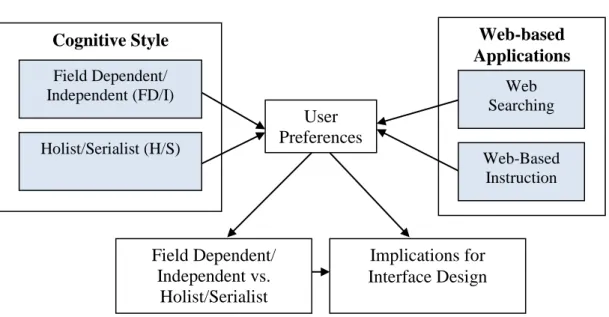
As the Web is fast becoming an integral feature in many of our daily lives, designers are faced with the challenge of designing Web-based applications for an increasingly diverse user group. In order to develop applications that successfully meet the needs of this user group, designers have to understand the influence of human factors upon users‘ needs and preferences. To address this issue, this thesis presents an investigation that analyses the influence of three human factors, including cognitive style, prior knowledge and gender differences, on users‘ preferences for Web-based applications. In particular, two applications are studied: Web search tools and Web-based instruction tools.
Previous research has suggested a number of relationships between these three human factors, so this thesis was driven by three research questions. Firstly, to what extent is the similarity between the two cognitive style dimensions of Witkin‘s Field Dependence/Independence and Pask‘s Holism/Serialism? Secondly, to what extent do computer experts have the same preferences as Internet experts and computer novices have the same preferences as Internet novices? Finally, to what extent are Field Independent users, experts and males alike, and Field Dependent users, novices and females alike? As traditional statistical analysis methods would struggle to effectively capture such relationships, this thesis proposes an integrated data mining approach that combines feature selection and decision trees to effectively capture users‘ preferences. From this, a framework is developed that integrates the combined effect of the three human factors and can be used to inform system designers.
The findings suggest that firstly, there are links between these three human factors. In terms of cognitive style, the relationship between Field Dependent users and Holists can be seen more clearly than the relationship between Field Independent users and Serialists. In terms of prior knowledge, although it is shown that there is a link between computer experience and Internet experience, computer experts are shown to have similar preferences to Internet novices. In terms of the relationship between all three human factors, the results of this study highlighted that the links between cognitive style and gender and between cognitive style and system experience were found to be stronger than the relationship between system experience and gender.
This work contributes both theory and methodology to multiple academic communities, including human-computer interaction, information retrieval and data mining. In terms of theory, it has helped to deepen the understanding of the effects of single and multiple human factors on users‘ preferences for Web-based applications. In terms of methodology, an integrated data mining analysis approach was proposed and was shown that is able to capture users‘ preferences.
Publications ii
Publications
The following publications have resulted from work conducted related to the investigation undertaken in this thesis.
Journal Papers
Clewley, N., Chen, S. Y., and Liu, X. (2010). Cognitive styles and search engine preferences: Field dependence/independence vs. holism/serialism. Journal of Documentation, Vol. 66 No.: 4, pp. 585-603.
Clewley, N., Chen, S. Y., and Liu, X. (Accepted). Mining the Relationship between Cognitive Styles and Web-based Instruction: Holists vs. Serialists. Educational Technology and Society.
Clewley, N., Chen, S. Y., and Liu, X. (2009) Evaluation of the credibility of internet shopping in the UK, Online Information Review, Vol. 33 No. 4, pp. 805-826.
Conference Papers
Clewley, N., Chen, S. Y., and Liu, X. (2009). Cognitive styles and web-based instruction: field dependent/independent vs. Holist/Serialist. In Proceedings of the 2009 IEEE international Conference on Systems, Man and Cybernetics, San Antonio, TX, USA, October 11 - 14, 2009.
Book Chapters
Clewley, N., Chen, S. Y., and Liu, X. (2009). Applications for Data Mining Techniques in Customer Relationship Management, Encyclopedia of Information Science and Technology, 2nd Edition. Idea Group Publishing,
Acknowledgements iii
Acknowledgements
There are a number of people for whom I am very grateful and without their support this thesis would not have been possible. My first thanks goes to both my supervisors, Professors Sherry Y. Chen and Xiaohui Liu. Their continued support, encouragement and guidance has challenged my thinking and allowed me to develop both as a person and as a researcher.
I am forever grateful to the School of Information Systems, Computing and Mathematics for giving me the opportunity to study for this PhD and also to my fellow members of the Centre of Intelligent Data Analysis group for making the office a warm and friendly environment.
Table of Contents iv
Table of Contents
Abstract ... i Publications ... ii Acknowledgements ... iii Table of Contents ... ivList of Figures ... viii
List of Tables ... ix
List of Abbreviations and Acronyms ... xi
Chapter 1 – Introduction ... 1
1.1 Context ... 1
1.2 Motivations ... 2
1.3 Aims and Research Questions ... 3
1.4 Contributions ... 4
1.5 Structure of Thesis ... 5
Chapter 2 – Related Literature ... 6
2.1. Introduction ... 6
2.2. Web-based Applications ... 7
2.2.1 Web Search Tools ... 7
2.2.2 Web-Based Instruction Tools ... 7
2.3. Human Factors ... 8 2.3.1. Cognitive Style ... 8 2.3.1.1 Field Dependence/Independence ... 9 2.3.1.2 Holist/Serialist ... 13 2.3.2 Prior Knowledge ... 15 2.3.3 Gender Differences ... 18
2.3.4 Cognitive Style vs. Prior Knowledge vs. Gender Differences ... 21
2.4 Analysis of Human Factors ... 22
2.4.1 Classification ... 24
2.4.2 Clustering ... 25
2.4.3 Association Rules ... 25
2.4.4 Information Visualisation ... 26
Table of Contents v
Chapter 3 – Study 1: Field Dependent/Independent vs. Holist/Serialist ... 30
3.1 Introduction ... 30
3.2 Data Collection: Dataset 1 – Web Search Tools ... 31
3.2.1 Participants ... 31
3.2.2 Research Instruments ... 32
3.2.2.1 Cognitive Styles Analysis (CSA) ... 32
3.2.2.2 Study Preference Questionnaire (SPQ) ... 33
3.2.2.3 Exit Questionnaire ... 34
3.2.3 Experimental Procedure ... 35
3.3 Data Collection: Dataset 2 – Web-Based Instructional Tools ... 36
3.3.1. Participants ... 36
3.3.2. Research Instruments ... 37
3.3.3. Experimental Procedure ... 38
3.4 Data Analysis ... 39
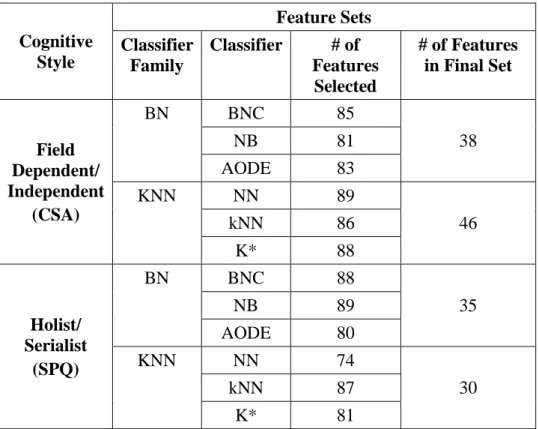
3.4.1 Feature Selection ... 40
3.4.2 Decision Tree Classification ... 42
3.5 Findings: Dataset 1 ... 42
3.5.1. Feature Selection ... 42
3.5.1.1.Field Dependence/Independence ... 43
3.5.1.2.Holist/Serialist ... 43
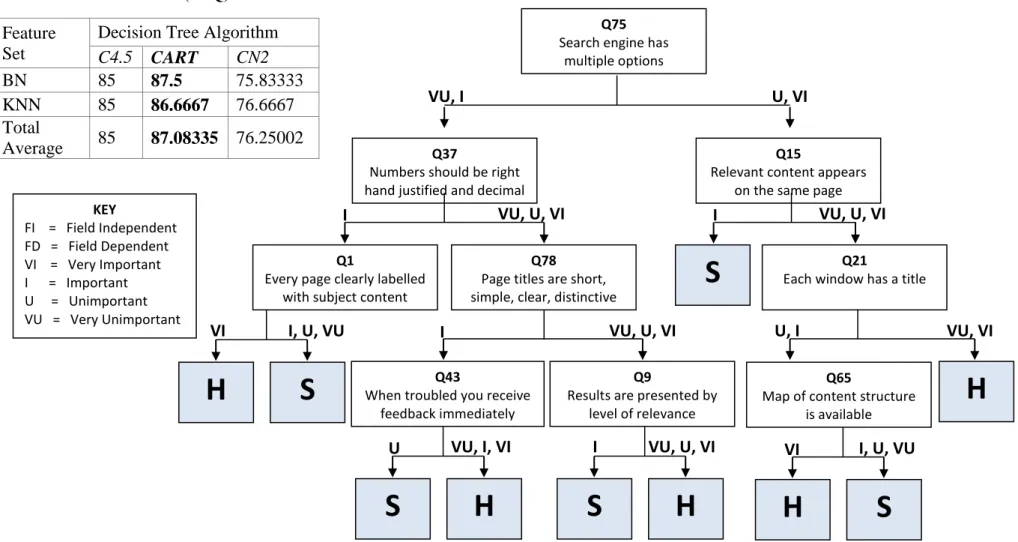
3.5.2. Decision Tree Classification ... 44
3.5.2.1 Field Dependent/Independent ... 46
3.5.2.2 Holist/Serialist ... 48
3.5.2.3 Field Dependent/Independent vs. Holist/Serialist ... 51
3.5.3 Statistical Significance ... 52
3.5.4 Summary ... 53
3.6 Findings: Dataset 2 – Web-Based Instruction Tool ... 54
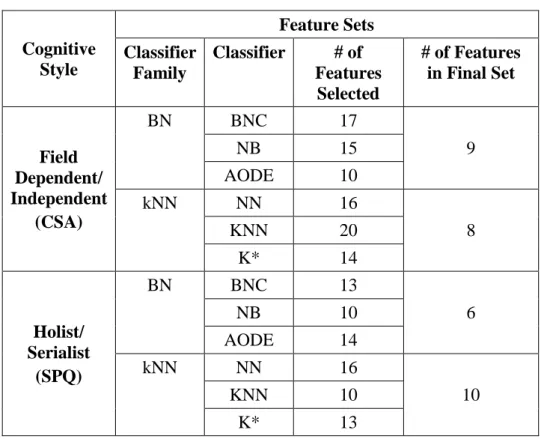
3.6.2 Feature Selection ... 54
3.6.2.1 Field Dependent/Independent ... 54
3.6.2.2 Holist/Serialist ... 54
3.6.2.3 Field Dependent/Independent vs. Holist/Serialist ... 55
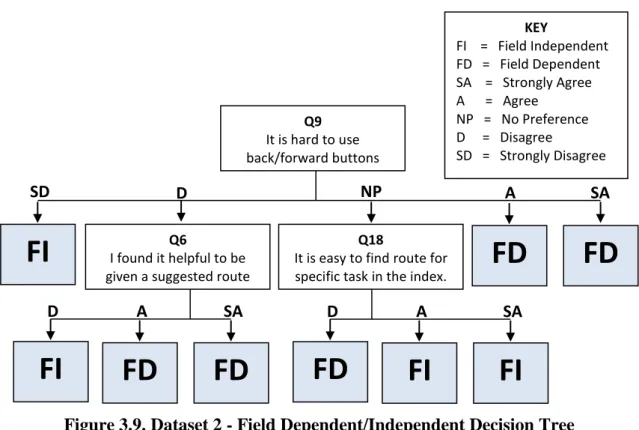
3.6.3 Decision Tree Classification ... 55
3.6.4 Statistical Significance ... 60
3.6.5 Summary ... 61
Table of Contents vi
Chapter 4 – Study 2: Internet Experience vs. Computer Experience ... 63
4.1. Introduction ... 63
4.2. Data Collection ... 64
4.2.1 Personal Information Sheet ... 64
4.2.1.1 Dataset 1: Web Search Tools ... 65
4.2.1.2 Dataset 2: Web-Based Instruction Tools ... 65
4.3 Data Analysis ... 66
4.4 Findings – Dataset 1: Web Search Tools ... 66
4.4.1 Feature Selection ... 68
4.4.1.1 Internet Experience ... 68
4.4.1.2 Computer Experience ... 68
4.4.1.3 Internet Experience vs. Computer Experience ... 69
4.4.2 Decision Tree Classification ... 69
4.4.2.1 Internet Experience ... 69
4.4.2.2 Computer Experience ... 72
4.4.2.3 Internet Experience vs. Computer Experience ... 73
4.4.3 Statistical Analysis ... 76
4.5 Findings – Dataset 2: Web-Based Instruction Tools ... 77
4.5.1 Feature Selection ... 77
4.5.1.1 Internet Experience ... 77
4.5.1.2 Computer Experience ... 77
4.5.1.3 Internet Experience vs. Computer Experience ... 78
4.5.2 Decision Tree Classification ... 79
4.5.2.1 Internet Experience ... 79
4.5.2.2 Computer Experience ... 81
4.5.2.3 Internet Experience vs. Computer Experience ... 83
4.5.3 Statistical Significance ... 84
4.6 Findings: Dataset 1 vs. Dataset 2 ... 85
4.6.1 Internet Experience ... 85
4.6.2 Computer Experience ... 85
4.6.3 Internet vs. Computer Experience ... 85
4.7 Summary ... 86
Chapter 5: Study 3 – Cognitive Style vs. Previous Experience vs. Gender ... 88
5.1 Introduction ... 88
5.2 Data Collection ... 90
Table of Contents vii
5.3 Results: Dataset 1 – Web Search Tools ... 90
5.3.1 Feature Selection ... 90
5.3.2 Decision Tree Classification ... 91
5.3.3 Statistical Significance ... 94
5.4 Results: Dataset 2 – Web-Based Instruction Tools ... 94
5.4.1 Feature Selection ... 94
5.4.2 Decision Tree Classification ... 95
5.4.3 Statistical Significance ... 97
5.5 Dataset 1 vs. Dataset 2 ... 97
5.6 Results: Cognitive Style vs. Previous Experience vs. Gender ... 98
5.6.1 Dataset 1 – Web Searching ... 98
5.6.2 Dataset 2 – Web-Based Instruction ... 102
5.6.3 Dataset 1 vs. Dataset 2 ... 104
Chapter 6 – Development of an Integrated Model ... 106
6.1. Introduction ... 106
6.2. Development of an Integrated Model ... 106
6.2.1 Dataset 1: Web Search Tools ... 106
6.2.2 Dataset 2: Web-based Instruction Tools ... 108
6.3. Implications for System Design ... 113
6.4. Benefactors ... 113
Chapter 7 – Conclusion ... 117
7.1 Introduction ... 117
7.2 Investigating the Relationships Between Human Factors ... 117
7.2.1 Research Question 1 ... 117
7.2.2 Research Question 2 ... 118
7.2.3 Research Question 3 ... 119
7.3 Identifying a Suitable Analysis Method ... 119
7.4 Significance of Thesis ... 120
7.5 Limitations and Suggestions for Future Work ... 121
References ... 123
Appendices ... 136
Appendix A ... 137
List of Figures viii
List of Figures
Figure 3.1: The framework of Study 1 ... 31
Figure 3.2. Dataset 1 - Participants' Cognitive Style Distributions ... 34
Figure 3.3. Dataset 2 - Participants' Cognitive Style Distributions ... 37
Figure 3.4: WBI Interface ... 39
Figure 3.5. Data Analysis Framework for Study 1 ... 40
Figure 3.6. Four Step Feature Selection Method ... 41
Figure 3.7: Dataset 1 - Field Dependent/Independent Decision Tree ... 47
Figure 3.8: Dataset 1 Holist/Serialist Decision Tree ... 49
Figure 3.9. Dataset 2 - Field Dependent/Independent Decision Tree ... 57
Figure 3.10. Dataset 2 - Holist/Serialist Decision Tree 1 ... 59
Figure 3.11. Dataset 2 - Holist/Serialist Decision Tree 2 ... 59
Figure 3.12. Relationship between Field Dependence/Independence and Holism/Serialism . 62 Figure 4.1: Framework for Study 2 ... 64
Figure 4.2: Likert scale for rating Internet and computer experience ... 65
Figure 4.3. Data Analysis Framework for Study 2 ... 67
Figure 4.4. Dataset 1 - Internet Experience Decision Tree ... 71
Figure 4.5. Dataset 1 – Computer Experience Decision Tree ... 74
Figure 4.6: Dataset 2 - Internet Experience Decision Tree ... 80
Figure 4.7: Dataset 2 - Computer Experience Decision Tree ... 82
Figure 4.8. Relationship between Internet Experience and Computer Experience ... 87
Figure 5.1: Study 3 Framework ... 89
Figure 5.2. Participants' Gender Distributions ... 90
Figure 5.3: Gender - Dataset 1 Decision Tree ... 92
Figure 5.4: Gender - Dataset 2 Decision Tree ... 96
Figure 5.5: Relationship between Cognitive Style, Gender, System Experience ... 105
Figure 6.1. Integrated Model of the Influence of Human Factors on Users‘ Preferences of Web Search Tools ... 111
Figure 6.2. Integrated Model of the Influence of Human Factors on Users‘ Preferences of Web-Based Learning Tools ... 112
List of Tables ix
List of Tables
Table 2.1. Differences between FD/FI characteristics (Witkin et al., 1977) ... 10
Table 2.2. Differences between Holist and Serialist characteristics (Pask, 1979) ... 14
Table 2.3. Differences Between Novice and Expert Characteristics ... 17
Table 2.4: Differences between male and female characteristics ... 20
Table 2.5. Statistical Methods of Analysis in Previous Studies ... 23
Table 3.1. Examples of the questions in the questionnaire ... 35
Table 3.2: Classifier Families ... 41
Table 3.3: Dataset 1: Number of Features Selected per Family ... 45
Table 3.4: Commonly Selected Features ... 45
Table 3.5. Field Dependent/Independent (CSA) Classification Accuracies ... 46
Table 3.6. Decision Rules for Field Dependent/Independent Decision Tree ... 47
Table 3.7: Holist/Serialist (SPQ) Classification Accuracies ... 49
Table 3.8. Decision Rules for Holist/Serialist Decision Tree ... 50
Table 3.9. Distribution of Participants‘ Cognitive Styles ... 52
Table 3.10. Statistical Significance of Features (p<0.05) ... 53
Table 3.11: Dataset 2 - Number of Features Selected per Family ... 55
Table 3.12: Field Dependent/Independent (CSA) Classification Accuracies ... 56
Table 3.13. Decision Rules for Field Dependent/Independent Tree ... 57
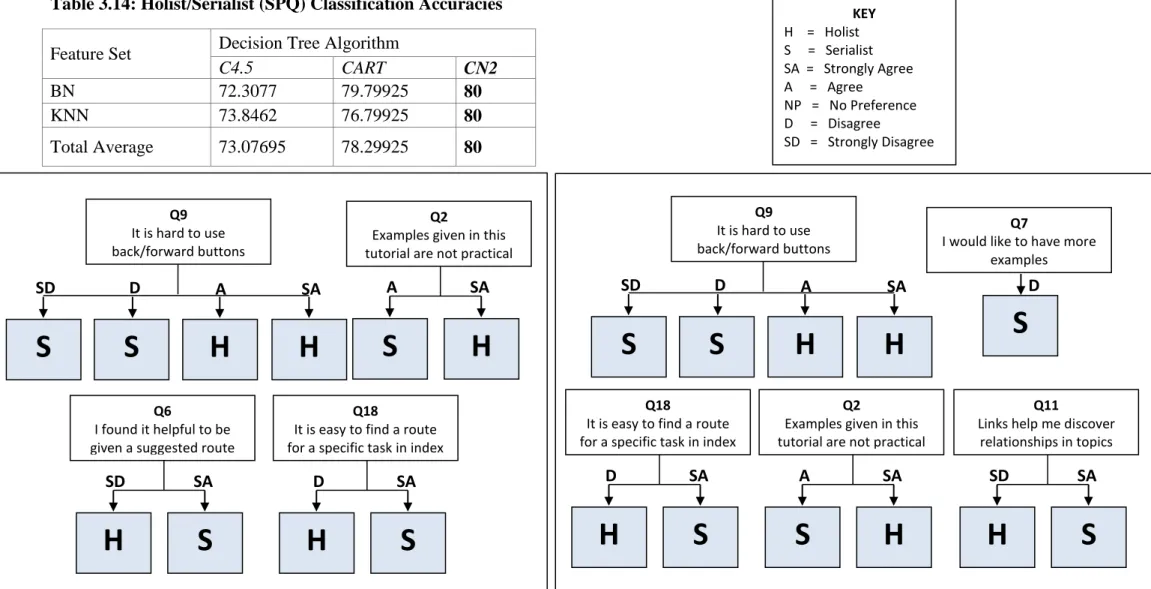
Table 3.14: Holist/Serialist (SPQ) Classification Accuracies... 59
Table 3.15. Decision Rule Table for Holist/Serialist Trees ... 60
Table 3.16. Distribution of Participants‘ Cognitive Styles ... 60
Table 3.17: Statistical Significance of Dataset 2 ... 61
Table 4.1. Dataset 1: Participants‘ Level of Experience ... 65
Table 4.2. Dataset 2 - Participants‘ Level of Experience ... 66
Table 4.3. Dataset 1: Number of Features Selected per Family ... 68
Table 4.4. Internet Experience Classification Accuracy (%) ... 69
Table 4.5. Decision Rules for the Internet Experience Decision Tree ... 71
Table 4.6. Computer Experience Classification Accuracy (%) ... 72
Table 4.7. Decision Rules for Computer Experience Tree ... 75
Table 4.8: Dataset 2: Number of Features Selected per Family ... 78
Table 4.9. Internet Experience Classification Accuracy (%) ... 79
Table 4.10. Decision Tree Rules for Internet Experience Tree ... 81
Table 4.11. Computer Experience Classification Accuracy ... 81
List of Tables x
Table 5.1: Dataset 1: Number of Features Selected per Family ... 91
Table 5.2. Decision Rules for Gender Decision Tree ... 93
Table 5.3. Statistical Significance of Features for Gender ... 94
Table 5.4: Dataset 2: Number of Features Selected per Family ... 95
Table 5.5. Statistical Significance for Gender ... 97
Table 5.6: Dataset 1 - Table of Commonly Selected Features ... 100
Table 5.7. Dataset 1 - Classification Results ... 100
Table 5.8. Dataset 2 - Table of Commonly Selected Features... 103
List of Abbreviations and Acronyms xi
List of Abbreviations and Acronyms
Acronym Explanation
AODE Averaged One Dependent Estimates
BN Bayesian Network
BNC Bayesian Network Classifier
CE Computer Experience
F Female
FD Field Dependent
FD/FI Field Dependent/Field Independent
FI Field Independent
H Holist
H/S Holist/Serialist
HCI Human-Computer Interaction
IE Internet Experience K* k-Star KNN k-Nearest Neighbour M Male NB Naive Bayes NN Nearest Neighbour S Serialist
WBA Web-Based Application
Chapter 1 - Introduction 1
Chapter 1 – Introduction
This chapter will introduce the thesis context, the motivations and state the research aims of the thesis. The contributions of this work will be clearly stated and the structure of the thesis will be detailed.
1.1 Context
This thesis presents a work that encompasses multiple disciplines, touching upon elements from data mining, digital learning, human-computer interaction (HCI) and information retrieval. Whilst attempting to provide some answers to key questions that have eluded researchers in the field of HCI, a novel data mining analysis approach is employed that integrates feature selection and data mining techniques. The following section provides an introduction to each of these research areas. The field of human-computer interaction is concerned with how different users interact with computer applications (Frias-Martinez, et al., 2007). Its aim is to provide more user-friendly systems that are efficient and effective, with popular studies choosing Web search engines and Web-based instruction (WBI) tools. An important vein of HCI research is that of human factors, those individual human characteristics that affect our interaction with computer systems (Treu, 1994). Among many human factors, previous research suggests that cognitive style (Chen and Macredie, 2004; Ford, Miller and Moss, 2005), previous experience (Mitchell, et al., 2005; Liaw and Huang, 2006; Castañeda, Muñoz-Leiva, and Luque, 2007) and gender differences (Roy and Chi, 2003; Ford and Miller, 1996) significantly influence users‘ interactions with Web-based applications. Research into the relationship between these factors and their effect on users‘ preferences can help us to understand and develop more effective Web-based applications.
The field of data mining overlaps with areas in many other fields, including information systems, statistics and mathematical sciences (Bohen et al., 2003). Data mining is the search for valuable information within large volumes of data (Hand, Mannila, & Smyth, 2001). This valuable information can then be used to predict,
Chapter 1 - Introduction 2 model or identify interrelationships (Urtubia et al., 2007) without the need to predefine underlying relationships between dependent and independent variables (Chang and Chen, 2005). When current datasets can include hundreds or even thousands of data items, or features, this is a very useful technique. However, human preferences data is often ‗noisy‘ and full of inaccurate information, which can lead to biased results. Therefore, a pre-processing step, such as feature selection, is necessary to sift through the data so that only the most relevant subsets are included in the mining process (Crysostomou, et al., 2008).
The aim of this chapter is to introduce the areas of investigation, beginning in Section 1.2 with defining the problem area. Following on from that, Section 1.3 outlines the main aims and research questions investigated in this thesis. Section 1.4 describes the contributions of this thesis before detailing the thesis structure.
1.2 Motivations
As the Web is fast becoming an integral feature in our daily lives, more and more users are using Web-based applications to support their online tasks. There are many different Web-based applications, with Web search engines and Web-based instruction (WBI) programs being two of the most studied in previous research. With the Web becoming increasingly accessible to a wider audience, a broad range of users from all over the globe are now using the same applications. Each of these users has a different background, different skills and levels of previous experience, and thus will have different expectations and needs when using Web-based applications. This diversity presents a challenge to designers as the effectiveness of such applications relies upon understanding and providing interfaces that support each user‘s needs and preferences. As mentioned above, cognitive style, previous experience and gender differences have been shown to have a significant influence on users‘ preferences. These human factors have been widely studied in previous research. However, the majority of these studies have concentrated on a single human factor, with the researchers rarely investigating the relationship between the three. Every user will always have all three to some extent, so it is vital that their relationship, if any, is ascertained so that we can identify the combined effect they have on users‘ preferences. Some researchers have proposed theoretical links
Chapter 1 - Introduction 3 between these three human factors, both in terms of dimensions within human factors (i.e. Field Dependent = Holist; Field Independent = Serialist; Internet expert = computer expert; Internet novice = computer novice) and in terms of the relationship between human factors (i.e. Field Independent = expert = male; Field Dependent = novice = female). The significance of an investigation that aims to identify such relationships would not only help to inform designers to develop more effective applications, but we will also gain a deeper understanding of human factors and the interactions between them.
Many previous studies have used traditional statistical methods (e.g. ANOVA) to analyse the relationship between human factors and user preferences (e.g. DeTure, 2004). Human factors data is by nature very ‗noisy‘, meaning that it can contain data items that are considered outliers or inaccurate data. The aforementioned statistical methods are not designed to cope with this issue, neither with the large and ever increasing amount of data that is often associated with human factors. Additionally, these methods require predefined assumptions to be made about dependent and independent variables, which could introduce bias if not accurate, especially if not much is known about the relationships between the variables beforehand. Furthermore, these methods are not able to cope with the analysis of multiple human factors at the same time. Therefore, a new method is needed that can overcome these issues.
1.3 Aims and Research Questions
The main aims of this thesis are twofold:
1) To investigate the relationship between the three human factors, cognitive style, system experience and gender differences using users‘ preferences of Web-based applications.
2) To identify a suitable methodology that can a) overcome the natural fuzziness of human preferences data, b) avoid the need to make predefined assumptions about the data, and c) have the ability to compare multiple human factors at the same time.
Chapter 1 - Introduction 4 These aims will be accomplished through investigating a number of research questions. The three research questions (RQ) are as follows:
a) In terms of cognitive style, to what extent is the similarity between the two dimensions Witkin‘s Field Dependence/Independence and Pask‘s Holism/ Serialism? (RQ1)
b) In terms of system experience, to what extent do computer experts have the same preferences as Internet experts and computer novices have the same preferences as Internet novices? (RQ2)
c) In terms of the relationship between the three human factors, to what extent are Field Independent users, experts and males alike, and Field Dependent users, novices and females alike? (RQ3)
1.4 Contributions
Due to the multidisciplinary nature of this study, this thesis makes a contribution to two different communities, including human factors and data mining. These contributions are described below.
Human Factors (HCI)
With regards to the human factors community, this thesis presents a work that analyses not only single human factors, but also the relationships between human factors. This in turn provides a deeper understanding of each human factor and also the interactions between human factors. In this way, this work helps to provide answers to some key questions within the field and provide more detailed guidance for designers of Web-based applications.
Data Mining and Feature Selection
This thesis presents a novel method that integrates feature selection and decision tree classification. In addition to proving that this method can effectively capture user preferences, it is also able to effectively examine the relationships between multiple human factors. This work will also add to the body of understanding the nature of different classifiers and decision tree algorithms.
Chapter 1 - Introduction 5
1.5 Structure of Thesis
Following on from this introductory chapter, Chapter 2 presents a detailed review of the three human factors, cognitive style, system experience and gender differences, and how they influence users‘ preferences for Web-based applications. In particular, two types of based application will be examined: Web search engines and Web-based instruction programs (WBI). In addition, modern data mining and feature selection techniques will be introduced and their strengths and weaknesses examined. Chapter 3 presents the first of the three studies analysed in this thesis: cognitive style. In this study, the effect of cognitive style on users‘ preferences will be investigated. More specifically, Witkin‘s Field Dependence/Independence will be compared with Pask‘s Holism/Serialism with the aim of discovering their similarities and differences. This chapter aims to answer RQ1.
Chapter 4 presents the second of the three studies analysed in this thesis: system experience. In this study, the effect of system experience on users‘ preferences will be investigated by comparing Internet and computer experience. This chapter aims to answer RQ2.
Chapter 5 presents the third and final study analysed in this thesis and combines the results from Chapter 3, cognitive style, and Chapter 4, system experience, with gender differences. This study aims to discover the relationship between the three human factors by identifying their similarities and differences. This chapter aims to answer RQ3.
After summarising the results from the three studies presented in this thesis, Chapter 6 presents a framework for designers of Web-based applications. This framework provides support for the considerations of the three human factors examined in this thesis. Such a framework is valuable in the development of effective Web-based applications.
Finally, Chapter 7 presents the conclusions for this thesis with regard to the influence of human factors on user preferences of Web-based applications. This chapter will also discuss limitations of these studies and propose directions for future research.
Chapter 2 – Related Literature 6
Chapter 2 – Related Literature
2.1. Introduction
Having previously given an introduction to the aims of this thesis, this chapter will present a detailed review of past research regarding the influence of human factors on users‘ preferences of Web-based applications. In particular, three human factors, i.e., cognitive style, system experience and gender differences, and two Web-based applications, i.e., Web search engines and Web-based instruction (WBI) tools, will be included in this review. Furthermore, modern data mining and feature selection techniques will be introduced and their benefits and weaknesses explored.
The aims of this chapter are therefore:
• To review, analyse and present the current and existing literature regarding human factors and their effect on users‘ preferences of Web-based applications. • To review the different analysis techniques used in current literature to examine
the effects of human factors on user‘s preferences of Web-based applications. • To review, analyse and present the current and existing literature regarding data
mining and feature selection techniques.
• To discover a data mining framework that can be used to analyse the effect of human factors on user preferences for Web-based applications.
This chapter is organised as follows. Firstly, the chapter starts by defining Web-based applications and describes the challenges faced by designers in regards to users‘ preferences. More specifically, two types of Web-based application are introduced: Web search engines and Web-based instruction (WBI) tools. Subsequently, the relationships between Web-based applications, human factors and user preferences are then introduced and the three human factors analysed in this study are explored. The following section then describes past and current methods of analysing the effects of human factors on user preferences, before reviewing and presenting different data mining techniques that could be used in the analysis stage.
Chapter 2 – Related Literature 7
2.2. Web-based Applications
In the last two decades, we have seen the World Wide Web grow and evolve to the point where it has now become a primary source of information in our day-to-day lives (Bar-Ilan, 2005). Modern advancements in technologies mean that users now rely on the Web for an increasingly broad range of tasks. There have been many applications designed to make such tasks easier on the user, with two of the most widely studied being Web search tools and Web-based instruction tools. The next two sections describe their purposes and the current challenges that designers face.
2.2.1 Web Search Tools
The Web enables the wide dissemination of information and services (Ivory and Megraw, 2005) and has evolved to become the largest man-made repository of information with more than tens of billions of pages (Baeza-Yates and Raghavan, 2010). Since the middle of the 1990s, there has been an increasing trend toward reliance on the Web for information needs, with the Web becoming a major information source in our daily life (Bar-Ilan, 2005). In particular, millions of people use search engines every day to locate information (Spink et al., 2006). Search engines are complex information retrieval tools because they index documents worldwide and are used by users with diverse backgrounds. Due to such complexity, efforts have been made to understand how individuals look for information and what factors influence their behaviour (Kim, et al., 2007). Thus, Web search engines are not only very widely used, but they are also increasingly studied (Spink et al., 2002).
2.2.2 Web-Based Instruction Tools
Web-based instruction (WBI) has been described as ‗a hypermedia based instructional programme which utilises the attributes and resources of the World Wide Web to create a meaningful learning environment where learning is fostered and supported‘ (Khan, 1998, p.63). WBI tools have become a popular alternative to the traditional classroom teaching methods because these virtual learning spaces are far more accessible to a much wider range of learners (Khan, 2005). More and more educational establishments, as well as companies responsible for providing training, are adopting this technology and are offering online learning programmes. Furthermore, students expect educational and training establishments to employ the
Chapter 2 – Related Literature 8 latest technologies to provide high quality instruction and 24/7 support (Khan, 2005). WBI tools provide flexible teaching and learning environments for students through the provision of non-linear learning (Pituch & Lee, 2006). Students have the ability and freedom to control their own learning (Farrell and Moore, 2000), for example, through the use of different navigational tools, such as a main menu, a hierarchical map or an alphabetical index. This ability to match their design with students‘ preferences is vital in ensuring the users can interact with the WBI tool in a manner that is effective, efficient and satisfying (Dillon and Zhu, 1997). Therefore, it is essential for designers to understand how students learn and what factors affect the ways in which they learn.
In summary, it is clear that the success of both types of application relies upon the ability of the application to meet the needs and preferences of each individual from a diverse user group. If users‘ needs are successfully met, they will have a more effective interaction with Web-based applications and complete their tasks with more efficiency. There are many different factors that influence the preferences of users, with human factors being perhaps the most basic distinction between users.
2.3. Human Factors
Research in the area of human factors has flourished in the past two to three decades, especially when the World Wide Web made computing technologies accessible to a wider audience. Human factors can be described as those individual human characteristics that can affect the way we interact with computer systems (Treu, 1994). There are many human factors, for example, age, gender, cognitive style or level of experience. Previous research has found that the latter three have been shown to significantly affect users‘ influence on preferences for the interface design of Web-based applications (Chen and Macredie, 2010). The following three sections will present a detailed explanation and analysis of each of these human factors.
2.3.1. Cognitive Style
Cognitive style is concerned with an individual‘s consistent approach to organising and representing information (Riding and Rayner, 1998). It is a relatively stable human trait as it is based upon physiological elements that are fixed or inherited and
Chapter 2 – Related Literature 9 therefore cannot be acquired by teaching (Jonassen and Grabowski, 1993). Research in the 1960s and 1970s identified a multitude of different dimensions of cognitive style, which included, for example: divergent/convergent (Hudson, 1966), reflection/impulsivity (Kagan, 1966), adaptor/innovator (Kirton, 1976), holism/serialism (Pask, 1976), visualizer/verbalizer (Richardson, 1977), field dependent/independent (Witkin et al., 1977). Among these, a large number of studies that investigate user preferences for Web-based applications have focussed on the dimensions that can be described as wholist/analytic (Riding and Sadler-Smith, 1992), which describes the tendency for individuals to process information either as an integrated whole or indiscrete parts of that whole (Graff, 2003). Perhaps the most prominent and well-established of these dimensions is Wikin‘s Field Dependence/Independence (Witkin, et al., 1977). This dimension has been widely studied over the last three or four decades and has been proposed to share several similar characteristics with the lesser studied Holism/Serialism (Pask, 1979; 1988). The reasons for researching the Holist/Serialist dimension are threefold. Firstly, this dimension has been suggested to have conceptual links to the Field Dependent/Independent dimension. As previous studies (e.g. Chen and Macredie, 2004; Chen and Liu, 2008) have shown that the Field Dependence/Independence dimension has significant effects on learners‘ preferences for the design of WBI, it can be assumed that the Holist/Serialist dimension is also significant because of such links. Secondly, previous literature has paid less attention to the Holist/Serialist dimension. Thirdly, and perhaps most importantly, Ford (2000) argues that the Holist/Serialist dimension shows potential when adapting information systems to the individual needs of the learners. The next two sections will introduce these two cognitive styles.
2.3.1.1Field Dependence/Independence
Field Dependence refers to the ‗degree to which a learner‟s perception or comprehension of information is affected by the surrounding perceptual or contextual field‘ (Johanassen and Grabowski, 1993, p. 87). Within this dimension, users can be split into three categories: Field Dependent, Field Independent and Field Intermediate. Field Dependent individuals tend to perceive objects as a whole, whereas Field Independent individuals focus more on individual parts of the task
Chapter 2 – Related Literature 10 (Witkin, et al., 1977). Furthermore, Field Independent individuals prefer an analytical approach and can extract relevant cues to complete their tasks, whereas Field Dependent individuals prefer a more passive approach and tend to focus on the most salient cues, regardless of relevancy (Witkin, et al., 1977). In addition, Field Dependent individuals are more externally directed, whereas Field Independent individuals are more internally directed. Intermediate individuals are neither wholly Field Dependent nor wholly Field Independent, but their preferences tend to lie in between these two extremes. In this way, Intermediate users can have both Field Dependent and Field Independent characteristics. Table 2.1 provides a summary of the differences between Field Dependent (FD) and Field Independent (FI) individuals.
Table 2.1. Differences between FD/FI characteristics (Witkin et al., 1977)
Field Dependent (FD) Field Independent (FI)
Externally directed
Easily influenced by salient cues in the interface
Focus on global experience and struggle with individual elements
Prefer to work in groups
Find it difficult to process information and link with existing knowledge
Demonstrate fewer reasoning skills
More likely to accept ideas as presented to them
Internally directed
Influenced less by social reinforcement
Focus on analytical experience, good at taking individual elements out of context
Prefer to work alone
Process information with own structure from previous knowledge
Demonstrate greater reasoning skills
More likely to accept ideas through strengthened analysis
A number of tools have been developed to measure a users‘ level of Field Dependence. The Group Embedded Figures Test (GEFT; Witkin, 1976) and the Cognitive Styles Analysis (CSA; Riding, 1991). These are described in the next chapter, where their advantages and limitations are analysed in terms of this study.
Chapter 2 – Related Literature 11 The Field Dependence/Independence dimension is widely studied in the area of Web searching and Web-based instruction because it shows the extent to which a learner is able to restructure information using salient cues and field arrangement (Weller, Repman, & Rooze, 1994). In addition to the table above (Table 2.1), previous research shows that Field Dependent and Field Independent users have clearly distinctive characteristics, which result in them having different preferences when it comes to using Web-based applications. These differences can be broadly grouped into three categories: content organisation, information format and information search strategy.
Content Organisation
In terms of content organisation, Field Independent individuals prefer it if they are able to choose the order in which they can process the content, whereas Field Dependent individuals will become confused if presented with such a choice (Chen and Macredie, 2004). Palmquist and Kim (2000) also found that Field Dependent users preferred content that provided them with a well-structured route. Direct guidance aids the more passive Field Dependent users to avoid experiencing lack of comprehension (Chen, 2000). In addition, Field Independent users prefer to have a larger viewing window, more so than the Field Dependent users (Riding and Grimley, 1999).
Navigational Strategy
Many studies have found that cognitive style is influential in deciding users‘ preferred navigational strategy. For example, Liu and Reed (1995) conducted a study involving sixty-three international college students in a hypermedia assisted learning language environment. Their findings showed that Field Independent users tended to jump from point to point using links in the index, whilst Field Dependent users closely followed the menu sequence provided by the authors. Dufresne and Turcotte (1997) also found that Field Dependent individuals prefer to have a fixed path to navigate in a WBI program. In another study, sixty-five postgraduate students took part in a hypermedia-based tutorial (Ford and Chen, 2000). Similar findings were identified, as Field Independent users were found to make greater use of the index to find information, whereas Field Dependent users preferred to acquire a more global
Chapter 2 – Related Literature 12 understanding from the map. Furthermore, Lee, Chen and Liu (2007) found that Field Independent users tended to use the main menu more than Field Dependent users. In addition, they also found that Field Independent users spent less time navigating the area than Field Dependent users. Lee et al. (2005) found that Field Dependent users preferred linear navigation, whilst Field Independent users preferred non-linear methods. This finding agrees with that of Frias-Martinez et al. (2007), who examined the effect of individual differences on users‘ behaviour in a Web-based digital library. They found that Field Dependent users frequently used the back and forward buttons, therefore following a linear style navigation pattern. In their comparative review, Chen and Macredie (2002) conclude that previous research suggests that navigational tools, such as the map, index or find function, should be provided for Field Independent users. On the other hand, a more structured, step-by-step approach should be provided for Field Dependent users that includes additional guidance in the form of menus or map structures.
Information Seeking Strategies
In addition to content organisation and navigational strategy, cognitive style has also been found to have a significant effect on users‘ information seeking strategies (Ford, Wood and Walsh, 1994). Field Independent users are thought to be more active in their information seeking strategies than Field Dependent through seeking out related links, such as using more references within the content (Lee, Chen and Liu, 2007). Kim (1997) also found that Field Independent users were more actively engaged in their searching tasks as they tended to use search engines, the find function and input URLs more frequently. In addition, Palmquist and Kim (2000) conducted an investigation involving 48 undergraduate students, categorising them into Field Dependent, Field Independent, novices and experts using the GEFT. Students were asked to perform factual and topical search tasks on a university website. Their findings indicated that Field Dependent users made more frequent use of embedded links. However, Chen and Liu (2008) found that Field Independent users browsed less pages than Field Dependent users. This suggests that Field Independent users have the ability to focus on the more relevant information applicable to their tasks, which could be because of their ability to be analytical and task orientated (Ford et al, 1994). Kim et al. (2004) compared the search strategies of fifty users from
Chapter 2 – Related Literature 13 different cognitive style groups using Web search engines. Their results showed that the Field Dependent group significantly demonstrated more repeated search attempts and total search attempts than the Field Independent group. In addition, the Field Dependent group also made more use of search operators. Additionally, Ford et al. (2005) conducted a study involving two hundred and fifty postgraduate students. Their results indicated that Field Dependent users used a higher level of Boolean searching while Field Independent users tended to use a higher level of Best Matching in their search queries. Furthermore, Field Independent users were found to make more use of the advanced search functionalities (Frias-Martinez et al., 2007). Despite the multitude of literature supporting the argument that cognitive styles have a significant effect on the way users interact with a system, there are a few studies that have failed to find a significant effect on behaviour. Shih and Gamon (2003) investigated this issue using the t-test and their findings suggested that Field Dependent and Field Independent individuals did not differ significantly in their learning patterns. Similarly, Huang et al. (2007) failed to find any significant differences between Field Dependent and Independent users.
2.3.1.2Holist/Serialist
The Holist/Serialist construct was originally conceived by Pask (1979) and classifies users into Holists or Serialists. Holists are global in their approach to information seeking and will look for an overall picture of any given topic before focussing on the detail of specific parts. On the other hand, Serialists are more analytical, requiring in-depth detail of individual parts of a topic before seeking out links to achieve a broader understanding of how everything is connected (Sternberg and Lubart, 1996). Holists seem to be able to multitask with efficiency, focusing on many different aspects from different areas at the same time, whereas Serialists work from the bottom up, concentrating on small parts one-by-one before synthesising the material to gain a global understanding (Jonassen and Grabowski, 1993). A summary of the main differences between Holists and Serialists can be seen in Table 2.2.
Chapter 2 – Related Literature 14
Table 2.2. Differences between Holist and Serialist characteristics (Pask, 1979)
Holists Serialists
Take a global approach and create conceptual links between objects early on.
Is able to move between theory and real world examples from the beginning.
Broad focus: likes to have more than one thing on the go at the same time.
Internally directed.
Take an analytical approach, examining individual topics before forming conceptual links.
Analyse theory or real world examples separately, only joining together if necessary.
Narrow focus: prefers to focus on completing one task before moving onto the next.
Externally directed.
If we compare Table 2.1 and Table 2.2, it is clear that there are some basic similarities between the two cognitive style dimensions. More specifically, Field Dependent users and Holists show similarities, as do Field Independent users and Serialists. For example, both Field Dependent users and Holists prefer to take a global approach, whereas Field Independent users and Serialists prefer a local analytical approach. However, this is not universally true as there are some contradictions to this rule. For example, Field Independent users and Holist individuals have a tendency to be internally motivated. Thus, this suggests that although there are some similarities, the relationship is not strictly Field Dependent = Holist and Field Independent = Serialist.
As mentioned in the introduction to this section, cognitive style is thought of as a relatively stable trait and cannot therefore be ‗learned‘ by an individual. As the aforementioned studies suggest, individuals with different cognitive styles will have different preferences when using Web-based applications. Therefore, these applications need to be designed in a way that is flexible enough to support users with all types of cognitive style. More specifically, even though Field Dependent users are thought to be like Holists, the differences between these may influence the effectiveness of interaction if the same interface is provided for both of these types of users. For example, Field Dependent users tend to be externally directed and will tend to follow the structure of the content presented to them (Witkin et al., 1977).
Chapter 2 – Related Literature 15 Holists, on the other hand, tend to be more internally directed and prefer to explore the content in their own preferred manner (Pask, 1979). Following these characteristics, if a suggested route is imposed upon a Holist or a Field Dependent user is left to explore content at their will, this could leave users feeling frustrated or confused and thus reducing the effectiveness of the Web-based application. Therefore, further research into the differences between these dimensions of cognitive style would be advantageous for a number of reasons. Firstly, with regards to practical applications, such research would help designers to create more effective Web-based applications. Secondly, in regards to theory, this type of research would help add to the body of knowledge of user characteristics that belong to each of these cognitive styles. Thirdly, as the Holism/Serialism dimension is less studied than the comparatively more popular Field Dependence/Independence dimension, studying the relationship between these would enable researchers to overcome this gap in research and perhaps begin to infer characteristics from the latter to the former.
2.3.2 Prior Knowledge
As well as cognitive style, a user‘s level of prior knowledge has been shown to influence their preferences for interaction in a Web-based application (Gauss and Urbas, 2003; Ford and Chen, 2000; Reed, Oughton, Ayersman, Giessler and Ervin, 2000). Prior knowledge is made up of both system experience and domain knowledge. The former refers to users‘ knowledge of the system being used whereas the latter refers to users‘ understanding of the content area. As Web-based applications are online and involve elements of both computing and the Internet, previous research demonstrates that system experience, which in this case specifically refers to users‘ experience with using computer and Internet based systems (Lazonder, 2000). In addition, it has a particularly influential effect on students‘ learning (Minetou, Chen and Liu, 2008).
The level of system experience is not necessarily shown to impact upon students‘ learning outcomes. However, it has been shown to affect the way that students go about organising their tasks (Gauss and Urbas, 2003). In their study, Shih, Munoz and Sanchez (2006) analysed one hundred and twenty undergraduate students who participated in a Web-based course that was designed to train personnel trainers to
Chapter 2 – Related Literature 16 apply ICT in training. They found that users with more experience took less time and visited fewer pages per work session to complete their tasks when compared to those with less experience. Similarly, Lazonder et al. (2000) used twenty five pre-university students to examine the differences between novices, those users with low levels of previous experience, and experts, those users with high levels of previous experience. They found that users with higher levels of Web experience performed their tasks quicker, more accurately and in fewer actions than those with lower levels of experience. Furthermore, Ford and Chen (2000) found that users with higher levels of experience could reach a more detailed level of subject content than those with lower levels of experience. Hölscher and Strube (2000) found that users with lower levels of experience were less flexible in their searching strategies, preferring to return to previous stages in their search rather than attempting a new approach. In addition, users with high levels of knowledge have been shown to perform searches that are content driven and use technical terms (Marchionini, 1998). Jenkins, Corritore and Wiedenbeck (2003) investigated the different search strategies employed by novices and experts when searching for medical data using search engines. They found that experts used depth-first strategies, following links one after another until detailed information was located. Novices, on the other hand, employed breadth-first strategies, using the hierarchical menu to build up an overview of the content without exploring content in any great detail.
In addition to task organisation, previous experience has been shown to have an effect on the way that users approach their tasks. For example, eighteen graduate students took part in a study by Reed, Oughton, Ayersman, Giessler and Ervin (2000) that aimed to identify the extent to which prior computer-related experiences affected navigational patterns of students in a learning environment. They found that a more linear approach to navigation was taken by those that had lower levels of previous experience. Comparatively, those that had higher levels of previous system experience took a more non-linear approach.
Table 2.3 summarises the differences between novices and expert characteristics. These studies suggest that students with higher levels of previous system experience have the ability to organise their tasks in a more efficient manner and are able to
Chapter 2 – Related Literature 17 navigate their environment in a way that suits their learning style more effectively than those with lower levels of system experience. It is therefore important to identify where the weaknesses lay in those students with lower levels of system experience so that interface features can be customised to support them.
Table 2.3. Differences Between Novice and Expert Characteristics
Novice Expert
Local mental models
Undirected search (trial and error)
Surface features
Mental simulation of isolated functions
Incomplete analysis
Breadth-first strategies
Design pieces
Failure to integrate pieces into a whole
Find a (any) solution
Global mental models
Directed search
Deep structures
Mental simulation of integrated functions and whole application
Complete analysis deferring details
Depth-first strategies
Design whole and add pieces
Integrated whole throughout the process
Find the best solution
* Minetou, Chen and Liu (2008), adapted from Chen, Fan, and Macredie (2006) However, the term ‗system experience‘ used in the aforementioned studies includes both computer and Internet related experiences. The former is a general term that describes knowledge of any computer related experiences, whereas the latter is more specific and covers knowledge of the Internet and the things an individual can do using the Internet (Potoksky, 2007). Internet experience is concerned specifically with previous Internet usage, e.g. browsing the Web whereas computer experience is a more general term that can encompass anything from burning a DVD to setting up networks (Schumacher and Morohan-Martin, 2001). Up until recently, access to the Internet was through a keyboard and computer monitor (Durndell and Haag, 2002) and it was also necessary to have the knowledge of how to connect to networks. Therefore, it was more common to find users with more computer experience than Internet experience. This is due to the fact that users with lesser computer experience not only face difficulties in learning how to set up a keyboard and monitor, but they
Chapter 2 – Related Literature 18 found the technical barriers associated with connecting to the network hard to overcome (Kraut, et al., 1996). However, the widespread availability of home computing and more recent technological advances mean that users can now connect to the Internet without as much technical know-how, and as such it is becoming increasingly common to find users with equal or more Internet experience than computer experience.
Regardless of whether currently students have more Internet experience than computer experience, it seems that these two types of experience involve different skill sets. Some research has suggested that these two types of knowledge are distinctive from each other (Bradlow et al., 2002), even though Internet experience is technically a type of computer experience. As a consequence, the majority of tools designed to identify users‘ previous experience include both Internet experience and computer experience. Furthermore, they only roughly consider the differences between novices or experts, instead of the different types of experience and associated characteristics that they have. Such a mixture may cause students to feel frustrated when using WBI tools because the design of these tools is not matched with the computing or Internet skills that they specifically have. Therefore, it is necessary to conduct further studies to identify the preferences of students with differing types of system experience, i.e. Internet experience and computer experience. Furthermore, this information will help to determine if computer experience and Internet experience can really be categorised together or whether they should be separated and treated as different factors. The benefit of doing this will help designers to provide the necessary level of support for students with differing levels of computer experience and Internet experience, and thus aid in the development of more effective Web-based application tools for the future and enabling students to be more confident and successful in their learning.
2.3.3 Gender Differences
Among the many individual differences, gender is perhaps the most basic and obvious difference between users. In the past, there has been a great divide between male and female usage of technology. Morahan-Martin (1998) states that, from childhood to adulthood, males are more likely than females to use and have more
Chapter 2 – Related Literature 19 favourable attitudes towards computers. In addition, previous research often found that males tend to have more computer experience, use many different computer applications and voluntarily choose to use the computer more than females (Modianos & Hartman, 1990; Morahan-Martin et al., 1992). Nowadays, this gap is rapidly disappearing as female presence increases in a multitude of professions (Moss et al., 2006) and women are now more likely to use the Internet at work (Kominski & Newburger, 1999). Indeed, Katz, Rice & Aspden (2001) report that women accounted for the majority of new Internet users during the period of 1997-2000. More recent research has found that males and females have been shown to use computers and the Internet for different reasons. For example, males tend to use the Internet mainly for entertainment and leisure, whereas women tend to use it for interpersonal communication and for educational purposes (Weiser, 2000). Jackson et al. (2001) also found that women tend to use the Internet to communicate, whereas males tend to use it more to search for information.
Despite prominent physiological differences between the sexes, Hyde (2005) argues that males and females generally show similar abilities on the majority of psychological variables. However, males and females have been shown to process information in very different ways. Meyers-Levy (1988) conducted a study that examined the effect of gender differences on information search behaviour. They found that males tended to process only highly available information and relied upon their own opinions to make faster decisions. On the other hand, females followed a more exhaustive search pattern and relied more on a broad variety of information from a wide range of external sources. This is echoed in the findings of Riding and Rayner (1998), where males were shown to process information to a superficial level, whilst females processed information to a much deeper level. Such different approaches to information processing mean that the two sexes will have different preferences for information searching tools when using Web-based applications. However, past research into the effects of gender on users‘ preferences of Web-based applications presents many conflicting and inconclusive results. The majority of previous research follows with the general idea that females experience more anxiety and thus encounter more problems whilst interacting with the application than males, who are more confident in such an environment (e.g. Gunnmales, McSporran,
Chapter 2 – Related Literature 20 MacLeod & French, 2003; Morahan-Martin, 1998; Ford & Miller, 1996). For example, Shashanni (1994) found females reported more feelings of fear and helplessness when interacting with computers, whilst males showed more interest in learning about computers. Furthermore, it has been shown that males are more likely to attribute failure to external factors, whilst women are shown to look initially to internal factors (Lufkin & Wiberg, 2007). In addition, many studies have found that men and women show different preferences in terms of layout and presentation. For example, female users prefer the layout to uses lighter colours, whilst male users prefer darker colours, i.e. black and blue (Moss et al. 2006). Another study found that boys preferred green and blue, whereas girls preferred red and yellow (Passig & Levin, 1999).
In terms of content organisation, it has been found that gender is influential in deciding users‘ navigational patterns (Roy, Taylor & Chi, 2003). Several studies have found that a simple navigational system that is easy to use is very important to female users (e.g. Oser, 2003). Males tend to navigate in a much broader and non-linear approach than females (Large et al, 2002). Furthermore, these authors also discovered that male users also tend to be more actively involved than female users, as they had more page jumps and spent less time viewing pages. Table 2.4 summarises the differences in characteristics between males and females.
Table 2.4: Differences between male and female characteristics
Male Female
Broad, non-linear navigational approach
Rapid search strategies
Active
High confidence, blame external factors for errors.
Narrow, linear navigational approach
Exhaustive search strategies
Passive
Low confidence, blame internal factors for errors.
Chapter 2 – Related Literature 21
2.3.4 Cognitive Style vs. Prior Knowledge vs. Gender Differences
In summary, it is clear that the three human factors, cognitive style, system experience and gender differences, have a significantly influential effect on users‘ preferences of Web-based applications. The previous three sections also identify links between different dimensions of cognitive styles (i.e. Field Dependence/Independence and Holism/Serialism, and Internet experience and computer experience). In addition to this, previous research has also highlighted the interaction between these three human factors. For example, Novices, Females and Field Dependent users are purported to display similar behaviour and preferences (Chen, 2000). For instance, Field Dependent users are externally directed, preferring to be given a suggested route through content (Witkin et al., 1977). Likewise, novice users lack previous experience in an environment and therefore prefer to be given a suggested route to help them orientate themselves. Females are generally less confident about using technology (Abbott & Bienvenue, 2007) so therefore they perform more efficiently when they have been given a suggested route. Likewise, this is purportedly the same for Experts, Males, and Field Independent users (Fan, 2005). For example, Field Independent users, experts and males all have been shown to prefer non-linear approach to navigation (Lee et al., 2005; Large et al., 2002; Reed, et al., 2000). Despite these similarities, there are, however, some differences. For example, both Field Dependent users and males are generally more holistic in their approach in that they prefer to attain an overview early on and then process information at a more detailed level (Witkin et al., 1977; Riding, 1998). Expert users, on the other hand, prefer more of a depth-first approach (Jenkins, Corritore & Wiedenbeck, 2003), exploring each topic in detail before moving on to the next. These differences show that just because these types of user exhibit similar behaviours, it is not always correct to say that they are totally equal. Therefore, investigations that aim to identify the extent of the relationships between these factors can help to identify the needs of each type of user and thus help designers to increase the effectiveness of Web-based applications.
The next section will describe the methods of analysis that have been and are currently used in studies that investigate the relationship between human factors and users‘ preferences for Web-based applications.
Chapter 2 – Related Literature 22
2.4 Analysis of Human Factors
As is evidence in the previous section, a multitude of studies have investigated the influence of cognitive style, prior knowledge and gender differences on users‘ preferences for Web-based applications. The majority of these studies employ statistical tests to analyse relationships and find correlations between human factors. As can be seen from Table 2.5, which presents a sample of these studies, popular statistical methods include ANOVA or T-Tests (e.g. Mitchell, Chen & Macredie, 2005), Pearson‘s Correlation (e.g. Chen, 2005), Multiple Regression (e.g. Ford, Miller & Moss, 2001) and Factor Analysis (e.g. Chuang and Tsai, 2005). Although many meaningful results have been found regarding the influence of a single human factor on users‘ preferences for Web-based applications, these statistical tests seem to lack the power to perform when comparing multiple human factors.
There can be a number of possible reasons for this. Firstly, these techniques lack methods to control the quality of the data. In other words, if the quality of the data input into the analysis is low, the results will not accurately represent users‘ true preferences. In particular, human preferences data is by nature very ‗noisy‘, meaning it will often include data items that can be considered outliers. Consequently, the inclusion of these data items in the statistical analyses can introduce bias in the results achieved through such techniques. These data items might be colouring the results in a way that users‘ true preferences are hidden and thus might explain why some studies (e.g. Huang, et al., 2007) fail to find correlations between human factors or dimensions within human factors.
Another possible reason lies within the requirement to make assumptions before running some of these tests, for example, defining dependent and independent variables. The chances of discovering relationships between the data are slim if they are neglected in the process of making assumptions (Lee, et al., 2009).
Furthermore, these statistical techniques do not have the ability to sufficiently capture relationships between different variables. As is often the case with human factors, it is the interaction of one or more factors that affect user preferences. Therefore, a method is needed that a) is able to filter out the noisy data, b) overcome
Table 2.5. Statistical Methods of Analysis in Previous Studies
Authors Web Applications Human Factors Method of Analysis
Web Search Tools Web-Based Instruction Tools Cognitive Style Prior Knowledge Gender Differences
Chen (2005) X X X X Pearson‘s Correlation
Chen, Magoulas and Dimakopoulos (2004)
X X Frequency tables
Chuang and Tsai (2005) X X X Factor Analysis
Cutmore, et al. (2000) X X X ANOVA
Ellis, Ford and Wood (1992)
X X Chi Squared, Pearson‘s, ANOVA
Ford and Chen (2001) X X X ANOVA/T-Tests
Ford, et al. (2002) X X Spearman test
Ford, Miller and Moss (2001)
X X X X Multiple Regression, Factor Analysis
Graff (2003) X X MANOVA
Lu, et al. (2003) X X Frequency, Percentage, Pearson‘s
Correlation Mitchell, Chen and
Macredie (2005)