Concordia University St. Paul Concordia University St. Paul
DigitalCommons@CSP
DigitalCommons@CSP
CUP Ed.D. Dissertations Concordia University Portland Graduate Research
8-29-2016
A Case Study of the Impact of Peer-to-Peer Mentoring on Mentors
A Case Study of the Impact of Peer-to-Peer Mentoring on Mentors
in a Rural High School Setting
in a Rural High School Setting
Darlene M. GeddesConcordia University - Portland, [email protected]
Follow this and additional works at: https://digitalcommons.csp.edu/cup_commons_grad_edd Part of the Curriculum and Social Inquiry Commons, and the Other Education Commons
Recommended Citation Recommended Citation
Geddes, D. M. (2016). A Case Study of the Impact of Peer-to-Peer Mentoring on Mentors in a Rural High School Setting (Thesis, Concordia University, St. Paul). Retrieved from
https://digitalcommons.csp.edu/cup_commons_grad_edd/48
This Dissertation is brought to you for free and open access by the Concordia University Portland Graduate Research at DigitalCommons@CSP. It has been accepted for inclusion in CUP Ed.D. Dissertations by an authorized
Concordia University - Portland
CU Commons
Ed.D. Dissertations Graduate Theses & Dissertations
8-29-2016
A Case Study of the Impact of Peer-to-Peer
Mentoring on Mentors in a Rural High School
Setting
Darlene M. Geddes
Concordia University - Portland
Follow this and additional works at:https://commons.cu-portland.edu/edudissertations
Part of theCurriculum and Social Inquiry Commons, and theOther Education Commons
This Open Access Dissertation is brought to you for free and open access by the Graduate Theses & Dissertations at CU Commons. It has been accepted for inclusion in Ed.D. Dissertations by an authorized administrator of CU Commons. For more information, please contact [email protected].
CU Commons Citation
Geddes, Darlene M., "A Case Study of the Impact of Peer-to-Peer Mentoring on Mentors in a Rural High School Setting" (2016).Ed.D. Dissertations. 2.
Concordia University – Portland College of Education Doctorate of Education Program
WE, THE UNDERSIGNED MEMBERS OF THE DISSERTATION COMMITTEE CERTIFY THAT WE HAVE READ AND APPROVE THE DISSERTATION OF
Darlene Marie Geddes
CANDIDATE FOR THE DEGREE OF DOCTOR OF EDUCATION
Marty A. Bullis, Ph.D., Faculty Chair Dissertation Committee Erin Mueller, Ph.D., Content Specialist
Cindy Coe, Ed.D., Content Reader
ACCEPTED BY Joe Mannion, Ed.D.
Provost, Concordia University – Portland Sheryl Reinisch, Ed.D.
Dean, College of Education, Concordia University – Portland Jerry McGuire, Ph.D.
A Case Study of the Impact of Peer-to-Peer Mentoring on Mentors in a Rural High School Setting
Darlene Geddes, Ed.D. Concordia University – Portland
College of Education
Dissertation submitted to the Faculty of the College of Education in partial fulfillment of the requirements for the degree of
Doctor of Education in Educational Leadership
Marty A. Bullis, Ph.D., Faculty Chair Dissertation Committee Erin Mueller, Ph.D., Content Specialist
Cindy Coe, Ed.D., Content Reader
ABSTRACT
Existing research on peer-to-peer mentoring has focused mainly on cross-age peer mentoring with several years’ difference between mentor and mentees (Karcher, 2005, 2007; Lawon, 2014; Willis, Bland, Manka, & Craft, 2012) and the impact of peer mentoring on the mentee. I aimed to examine the relationship of participating in a high school based peer-to-peer mentoring program and the impact on the high school upperclassmen mentors in this study. School is a social organization where peers can develop school connectedness and expand their prosocial skills and through their social networks increase social capital. The impact of peer mentoring programs on high school peer mentors is an area that has not been sufficiently investigated. The current exploratory case study used data from surveys, interviews, and field notes to understand the experiences of mentors and the impact of peer mentoring in a high school mentoring program on these mentors in terms of their school connectedness, social capital, and prosocial skill
development. Researchers have identified increases in mentees who are involved in peer
mentoring programs (Karcher, 2005, 2007). Further research is needed to investigate the impact of these social connections on high school peer mentors. In this study, data was collected from the Hemingway Survey, mentor interviews, and field notes. Findings of this study support the conclusion that the peer mentors’ prosocial skills of school involvement, school connection, and social capital increased as a result of participating in a peer-to-peer mentoring
program. Additionally, mentors did not report identifiable differences between matches that were same gender or different genders. Results from this study demonstrate the impact of increases in the development of prosocial skills and social capital in peer mentors.
DEDICATION
ACKNOWLEDGMENTS
I wish to express my deepest gratitude to my advisor and the chair of committee, Dr. Marty A. Bullis for his patience and encouragement throughout my dissertation process. He exemplifies the true spirit of a mentor. Likewise, additional gratitude and special appreciation is due to my other committee members Dr. Erin Mueller and Dr. Cindy Coe for their support and assistance in this project. Appreciation is due to several individuals without whose help this study would have never have been completed: Dr. Jerry McGuire, Dr. Angela Owusu-Ansah, Dr. Anne Grey, Steve Spencer, Kelli McGuire, Julie Schneidecker, and Jessica Lowry. To my editor, encourager, and dearest friend, Bob Bizjak, you are a blessing to me. I would also like to thank my family for their patience, encouragement and love which has remained constant throughout my life.
Finally, I wish to thank God for providing the perfect example of teaching through mentorship to His people.
Table of Contents ABSTRACT...ii DEDICATION………...iii ACKNOWLEDGMENTS ... iv LIST OF FIGURES………...ix LIST OF TABLES………....x Chapter 1: Introduction ...1
Introduction to the Problem ...1
Background, Context, History, and Conceptual Framework for the Problem ...3
Purpose of the Study……… 9
Research Questions ...9
Sub-Questions ... 10
Rationale, Relevance, and Significance of the Study ... 10
Nature of the Study ... 13
Definitions of Terms ... 13
Assumptions and Limitations ... 15
Chapter 1 Summary ... 16
Chapter 2: Literature Review ... 18
Historical Foundations of Mentoring ... 18
Conceptual Framework ... 21
Psychosocial Theoretical Frameworks ... 22
Erikson ... 22
Coleman ... 23
Bandura ... 25
Review of the Research Literature and Methodological Literature………29
Common Forms of Mentoring ... 29
School-based Mentoring ... 34
Psychosocial Outcomes ... 36
Synthesis of Research Findings ... 43
Critique of Previous Research ... 45
Chapter 2 Summary ... 46
Chapter 3: Methodology ... 48
Introduction to the Research Design ... 48
Research Design... 48
Purpose of the Study ... 49
Research Question ... 51
Sub-Questions ... 51
Research Design... 51
Target Population, Sampling Method, and Related Procedures ... 53
Instrumentation ... 56
Data Collection ... 56
Data Analysis Procedures ... 57
Limitations of the Research Design ... 61
Expected Findings ... 61
Ethical Issues….……… 62
Chapter 3 Summary ... 65
Chapter 4: Data Analysis and Results ... 66
Introduction to Chapter 4 ... 66
Description of Purpose ...67
Overview Description of Data Analysis, Results, and Findings ...68
Researcher’s Role ...68
Description of the Sample ...69
Research Methodology and Analysis...74
Description of Analysis Method’s Fit for the Study ...74
Case Study…... ...75
Hemingway Survey Analysis ...79
Other Sources of Data ...80
Protections of Participants ...81
Coding Process Overview ...82
Creation of Pre-Set Codes ...82
Emergent Categories ...83
Organizing and Verifying the Data ...83
ATLAS.ti Categories ...86
Stage 1A: Mentors’ Responses ...92
Stage 1B: Describing and Interpreting Mentors’ Experiences ...92
Stage 2: Analyzing the Interview ...93
Stage 2A: Describing the Content of the Categories ...95
Stage 2B: Describing and Interpreting Mentors’ Perspectives ...95
Stage 3: Combining Results of the Previous Steps ...96
Results and Analysis ...97
Research Question One ...97
Research Question Two ... 104
Research Sub-Question B ... 113
Research Sub-Question C ... 118
Chapter 4 Summary of the Findings ... 121
Chapter 5: Discussion and Conclusion ... 124
Introduction to Chapter 5 ... 124
Summary of the Results ... 126
Sub-Questions ... 127
Discussion of the Results ... 130
Discussion of the Results in Relation to the Literature... 136
Limitations……….….……. .. 144
Implications of the Results for Practice, Policy, and Theory ... 146
Recommendations for Future Research ... 148
Chapter 5 Summary ... 151
References…… ... 152
APPENDICES ... 178
APPENDIX A: Mentor Application ... 178
APPENDIX B: Informed Consent Form ... 181
APPENDIX C: Timeline of Events ... 184
APPENDIX D: Field Notes Template ... 186
APPENDIX E: Interview Questions and Protocol... 187
APPENDIX F: The Hemingway Measure of Adolescent Connectedness... 189
LIST OF FIGURES
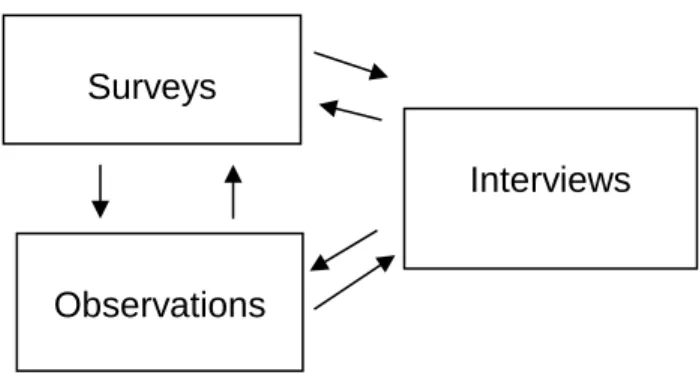
Figure 1 Triangulation by Method ... 85
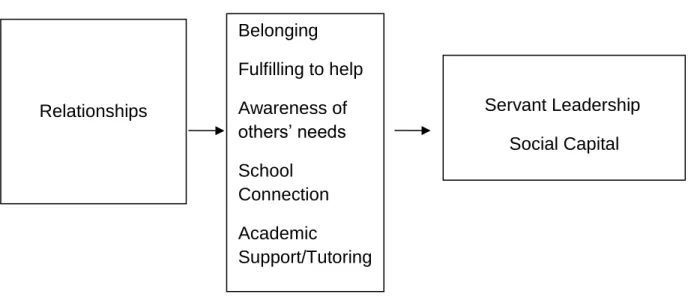
Figure 2 Relationship Development ...92
Figure 3 Initial Codes ... 192
Figure 4 Final Codes ... 193
Figure 5 Student Leadership and Social Capital ... 194
Figure 6 School Connection through Activities and Social Capital ... 195
Figure 7 Belonging/Sense of Family and School Connection through Activities ... 196
Figure 8 Relationship and Servant Leadership ... 197
Figure 9 Social Capital and Awareness of Others’ Needs ... 198
LIST OF TABLES
TABLE 1 Mentor/Mentee Configurations ... 74 TABLE 2 Means and Standard Deviations Scores for Peer, Self-in-Present, and
Chapter 1: Introduction Introduction to the Problem
High school marks a shift in which students are experiencing more independence yet, there are significant declines in supports designed for student success once they enter high school. Researchers at the Consortium on Chicago School Research have suggested as students transition from middle school to high school they experience shifts in their school environments different from their previous school experiences (Roderick, 2006). First, incoming ninth grade students’ school schedules shift with increased number of classes and teachers. Second, the size of their school increases from the middle school setting. Finally, their peer group size can increase, significantly expanding the number of peers that they know and have contact with on a daily basis. For students who are already identified as at-risk, this transition may depend upon additional supports to ensure a successful high school experience. Currently, there are Link Crew programs in some American high schools. These programs serve just over 2,000 schools of approximately 26,000, showing that there is still a need for transition programs for incoming high school freshman (“Link Crew’s Reach,” n.d.). Through the Link Crew programs,
upperclassmen implement a one-day orientation training day which provides all freshmen a tour of the school, a quick review of the basic rules and a few “getting to know you” activities. For a majority of freshman, this orientation day is a fun day that begins their initiation into connecting to their high school home. For students who are socially at-risk, the information can be
overwhelming, they may feel more confused, and lost in the larger high school setting before the year begins. Another component of Link Crew can include cross-age peer mentoring. With cross-age peer mentoring high school mentors assist in building personal skills and
leadership groups to organize a transition program similar to Link Crew. Still others have shorter morning orientation or advisory classes to show freshman their new schools. “Incoming freshman face navigating a new school, making new friends in unfamiliar classes, and getting to know new teachers” (Winters, 2013). All of the academic, social, and behavioral expectations may feel overwhelming without having an older, more experienced student assisting them (Karcher, 2007).
Cross-age peer-to-peer mentoring at the high school setting is a viable way to utilize a resource available in schools, by having more experienced students helping less experienced students. Here, upperclassmen provide incoming students with the information and support that they need in order to navigate this new environment in a proactive and prosocial manner. Additionally, peer-to-peer mentoring opportunities can build the leadership capacity of
upperclassmen which encourages their school connection, prosocial behaviors, and involvement in human and social capital (Garringer & MacRae, 2008; Karcher, 2007). Peer-to-peer
mentoring programs provide opportunities for youth to network with others, build leadership skills, and increase school connections. Karnes and Beanem (2010) explain that “it is clear that more serious attention should be given to developing young leaders—influential people who are critical thinkers, creative problems solver, and strong communicators” (p. vii). Peer mentoring develops leadership skills and allows youth to practice critical skills necessary for academic and social success.
Helms and Marcelo (2007) analyzed volunteering across states and age groups between 2002 and 2006 and found that 8% of high school graduates who did not attend college reported some kind of volunteer activity, compared with 31% of college graduates, 26% of current college students, and 23% of young people who had some college experience but were not currently
enrolled. Marcelo (2007) determined that it is evident that high school programming does not currently produce graduates who have high rates of voting or volunteering. Also, significant, was that Oregon had the largest decrease-16 percentage points (Helm & Marcelo, 2007). Peer-to-peer mentoring may utilize social capital already accessible and provide opportunities for upperclassmen to build leadership capacity prior to graduation.
The research study that is presented in this dissertation was designed to provide greater understanding of matches between peer-to-peer mentors and mentees at the high school level. I initially sought to understand the effectiveness of different mentoring matches and the impact of mentoring. The research presents the perspectives and experiences of peer mentors at the high school level with regard to their sense of connection to the school, their overall perception of their engagement in prosocial activities, and their involvement in building social capital.
Background, Context, History, and Conceptual Framework for the Problem
Mentoring relationships have long been utilized to provide a framework in which either formal or informal relationships are structured so that one individual supports, encourages, and advises another. Mentoring in the United States has been documented over the past 200 years in a variety of structures and organizations. Formal mentoring programs in the United States were established in the mid-to-late 1800s to assist individuals with daily trials related to joblessness, poverty, and immigration (Freedman, 2008). Although the type, format, purpose, length, and nature of the type of relationship may vary, mentoring can be found in the literature from many disciplines: art, music, business, community service, education, and science. In the field of education, mentors have been used to support beginning teachers, college freshmen, gifted students, at-risk students, and special needs students (Brown, 1995).
Within the high school setting considered for this study, the opportunity for peer-to-peer mentoring relationships allows for more experienced youth to provide support and guidance to less experienced youth as they transition into the high school setting. Based on the research, students are more likely to connect with and have regular contact with their peers allowing for natural relationships to occur during the transition process. Peer relationships are easier for students to establish and maintain due to the frequency of contact and close proximity
(Bukowski, Newcomb, & Hartup, 1996). For the mentors, the cross-age peer mentoring allows the upperclassmen opportunities to build self-confidence, decision-making, planning and
personal leadership. Komives, Nance, and McMahon (2007) share that peer-to-peer interactions also can promote leadership and personal empowerment. Garringer and MacRae (2008) have indicated that peers are more likely to engage with other peers than adults. Based on these descriptions and claims, it is fair to conclude that peer mentoring provides significant social support to high school youth.
Each high school setting has its own set of academic, social, and behavioral expectations. Certain school districts may ascribe to similar expectations; however, there are different nuances from school to school, district to district, and state to state. The academic expectations are different than those found in elementary and middle school. “Expectations are part of the culture that plays a particularly powerful role in school. Expectations are grounded not only in each individual’s experiences but in how each individual interprets experiences” (Osher, Sprague, Weisseberg, Azelrod, Keenan, Kenzsiora, & Zins, 2007, p. 4). Students are expected to manage their own study and homework schedules, keep track of assignments and projects, and prepare for assessments with little, if any, guidance from teachers and staff. Ruiz (2012) discusses the transition into high school stating, “it is essential for teachers to set high expectations for all their
students and expect students to reach these standards” (p. 1). Benner (2011) connected these expectations to ninth graders’ lack of true understandings about school success stating, “More concretely, students may want to do well in school, but when faced with the choice of either doing their homework or hanging out with friends, they may opt for the option with the more immediate reward” (p. 303). High school students also are expected to know the classroom academic and behavioral norms, whether or not they have been explicitly taught or stated. Students face multiple pressures to perform, often in a public venue, at a time in their life when they are particularly sensitive to how they are being perceived by others (Manning, Bear, & Minke, 2006). This transition can disrupt already established social relationships and in a new social context, freshman may struggle with balancing social and academic expectations and behaviors.
Most of the prosocial behaviors that lead to academic and social success are implicit, that is, students are expected to discern from experience as a student or from watching those around them what the appropriate behaviors to engage in should be. Many students who enter the high school setting already identified as at-risk are at a disadvantage in the areas of academic and social skill development (Hammond, Linton, Smink, & Drew, 2007). These at-risk students can benefit from the assistance of a more experienced peer to provide them with explicit instruction and advising in academic and social skill development. Mentoring serves to promote social relationships and a sense of attachment to others that helps at-risk youth develop strong
connectedness and development (Karcher, 2002). According to Karcher (2005a) the opportunity to receive support through peer mentoring relationships is an important factor in promoting positive outcomes for cross-age peer mentoring relationships. The activities that students choose to become involved in throughout their high school years lay the groundwork for other activities
promoting prosocial skills, social capital connections, and behaviors in the future (Reeves, 2008). Peer mentoring may provide a context that helps build skills, positive attitudes, and confidence in social interactions that may lead to increased social capital over time. Karcher’s (2005a)
research has indicated thatfor the more experienced individual, such as an older student who is a peer with a couple of years in age or grade level, the connections that mentoring provides
increases involvement in building social capital. Finally, there are social behaviors expected and adhered to in the high school setting both as students and among peers in social and academic activities. An investigation of school-based peer-to-peer cross-age mentoring is important because high school students spend most of their time in in school, and mentoring in schools may provide a form of social support leading to high school success for both mentor and the mentee.
The theory of social learning provides understandings of how social skills are developed and internalized. Several key social learning theorists provide lenses in which to view the high school adolescent and social skill development. Additionally, these same social learning theories can be utilized to develop a framework for understanding school-based mentoring in the peer-to-peer context. There are four key theorists addressed for this purpose. Erik Erikson, Albert Bandura, Carol Gilligan, and James Coleman are social learning theorists who provide theories that relate to the development of the adolescent, social learning, social skill acquisition, and the development of social capital.
One of the theories that provides a framework through which to view school-based mentoring in relation to adolescents and the importance of social skill acquisition is that of Erik Erikson. Erikson (1968) described the impact of social experiences across the lifespan.
for development. The psychosocial learning comes from the successful adaptation of the self, but this must be reaffirmed and nurtured continuously (Erikson, 1968). According to Erikson, positive social learning allows the adolescent to experience a sense of mastery. Furthermore, negative experiences cause the individual to emerge with a sense of inadequacy and poor self-esteem. Each of Erikson’s stages allows for an opportunity for adolescents to be exposed to additional social learning skills and experiences.
Another of the theories that provides a framework through which to view school-based mentoring in relation to adolescents and the importance of social skill acquisition is that of James S. Coleman. Like Erik Erikson, James S. Coleman also believed in the importance of the social experiences for adolescents. Coleman (1988) described social capitalas the resource that is created by investing in relationships with others through processes of reciprocal trust. Coleman further defined social capital as “any kind of social relationship that is a resource to the person” (Coleman 1990, p. 35). Coleman’s theory (1988) claimed that positive, supportive relationships with parents represent a significant resource to developing adolescents. Coleman extended the concept of social capital when he asserted that it serves as a mechanism to transmit the effects of human capital from parents to children. Coleman (1988) theorized that parents possess social capital that they can invest in their children through the positive relationships and interactions that they have with their children. Additionally, the intellectual skills and career experiences that parents have, allow them to further create a cycle of human capital in adolescents. Such social capital can also be developed through other positive relationships. Strong bonds of trust and affection, which are directly related to social capital, are established when parents are active and involved in their children’s lives. Mentoring can be an important element in creating self-esteem and guiding young people into developing into strong and successful adults. Coleman’s theory
implies that positive parent relationships, along with mentoring relationships, allow for the creation of social capital (Coleman, 1988). In the situations where mentoring exists within the school setting and a parent is unavailable, not present, or lacking in skills, youth benefit when mentors provide necessary supports that are otherwise absent or weak.
A different social learning theory that provides a framework through which to view school-based mentoring in relation to adolescents and the importance of social skill acquisition is that of Albert Bandura. Albert Bandura’s social learning theory focused upon the process of
observational learning as the manner in which individuals learn how to function in society. Bandura (1977) stated that behavior is learned from the environment through the process of observational learning. Bandura’s theory may explain how adolescents rely on mentorships to develop their ability to be motivated and create positive change in their life. His ideas can be applied to students who model the behaviors of those around them. Bandura’s theory applies to the student mentor who engages in a leadership role and extends into a role of empathy, support, and encouragement. Many academic, classroom, and school related behaviors can be learned through modeling, imitation, and observation (Quigley, 2004). Upperclassmen in high school have previously experienced the transition from middle school to high school and may be able to provide prosocial skill and academic skill support, social engagement, and encouragement to incoming students. Peer mentors encourage, model, and teach students specific skills to assist them in becoming successful through inclusion in activities, observation, and imitation of appropriate social behaviors necessary for success in the high school system (Garringer & MacRae, 2008). The psycho-social theoretical frameworks of Erikson, Coleman, and Bandura were used to view and analyze this peer-to-peer mentoring program case study.
Purpose of the Study
The central purpose of this case study was to examine the experiences of high school peer mentors in a cross-age peer mentoring program in a rural high school setting in Oregon. The secondary purpose of the study was to identify issues related to mentoring matches related to age and gender. Student matches were based on four groupings: male to male, female to female, female (9th) to male (11th) and male (9th) to female (11th). Student contacts were monitored by staff during a specifically scheduled class time and extra-curricular school activities are
supervised by staff to eliminate any potential risks to participants.
The study examined what aspect of relationship, school connectedness, self-esteem, and efficacy were influenced in mentors as they exercised their role in the peer mentoring
relationship. Peer mentoring in this study referred to high school mentors who were mentoring other high school students in one-to-one relationships. The study examined mentoring
relationships in which a more experienced high school student of junior standing mentored ninth grade students. The mentoring relationships focused on the prosocial skills needed by ninth graders to succeed in high school. The case study explored the personal reflections, experiences, and perspectives of the participants; in particular, those of the mentors in relationship to their school connectedness, thoughts about their personal self-esteem, and involvement in social capital were examined.
Research Questions
The case study was guided by two research questions from the perspective of the peer mentor.
1) To what extent does peer mentoring increase the peer mentors’ prosocial skills of school involvement, school connection, and social capital?
2) Do mentors report identifiable differences between matches that are same gender or different gender, or differences between age differences and different gender? If so, what are the reported differences? If they do not, what are the reasons for the lack of reportable differences?
Sub-Questions
a. What is the impact or effect of mentoring on the youth mentor?
b. What effect does the quality of training of mentors prior to the mentorship match have on the mentoring relationship?
c. Why is it important to support and provide ongoing training for peer mentors?
Rationale, Relevance, and Significance of the Study
Serving as peer mentorscan be an important component in bolstering self-confidence, self-esteem and guiding youth towards developing into independent, healthy and successful adults. It assists youth in becoming self-sufficient, experiencing educational achievement, and attaining social/emotional well-being. Peer mentoring provides opportunities for adolescents who are transitioning into the high school to develop a sense of connection and capability by learning what mores are expected of the high school student. Seita and Brendtro (2005)
indicated the importance of peer connections among adolescents. Seita and Brendtro explained that peer influence is a strong force in the lives of adolescents. Seita and Brendtro stated that peer bonding meets important social needs, in particular with adolescents who are vulnerable and struggling. Given that contact with members of their peer group is important during
adolescence, peer relationships meet powerful social needs with at-risk youth who find
themselves disconnected with family, school, and the community. The relationships established through peer mentoring provide an opportunity for students to be engaged in positive
relationships that increase the self-efficacy of students who have low social skills and low esteem when transitioning into the high school setting. Peer mentors engage in modeling and imitation that allows students to collaborate on joint decisions, express empathy, and deepen their
perspectives (Krueger, 1992; Wentzel & Caldwell, 1997). Successful interaction and
relationships with peers can facilitate the social skills and confidence of students including those of the peer mentors.
Moreover, researchers have identified that positive academic performance, including increased school attendance, and a more positive attitude has been attributed to connected mentoring relationships (Foster, 2001; Green, Mitchell, & Taylor, 2011; Karcher, 2009).
Serving as a peer mentor is connected with increases in academic connectedness and self-esteem (Green et al., 2011; Karcher, 2009), academic engagement, (Crooks, Chiodo, Thomas, &
Hughes, 2009) and empathy for others (Carter, Hughes, Copeland, & Breen, 2001). While the literature search executed for this study only found limited research regarding the impact of peer mentoring on the upper class peer mentor at the high school level when mentoring high school 9th grade peers, other research indicates that volunteering leads high school students to feel more connected and competent in regard to their school (Solomon, Watson, Delucchi, Schaps, & Battistich, 1988; Joselowsky, 2005, 2007). It is possible that the mentors themselves may experience these same reactions or feelings about peer mentoring relationships. High school students who feel better about themselves and their school will want to be at school and become involved in activities both in and out of the classroom (Deci, Vallerand, Pelletier, & Ryan 1991; McNeely, Nonnemaker, & Blum 2002; Schaps & Solomon, 2004).
One area of research that appears to be unaddressed in the literature is how peer mentors within the high school experience grow in esteem, connectedness, and confidence through
providing guidance and leadership to other less experienced peers. An additional area that appears unaddressed is the social growth and leadership that peer mentors engage in that may be related to increases in their own confidence, competency, and connectedness to their school. The investigations in this study sought to reveal the answers to these important questions.
Students involved in school-based mentoring programs increased their connections to their schools because they understand the roles and expectations at school and associate positive feelings with this connectedness (Karcher, 2005). According to Karcher (2005), connectedness raises the motivation for engaging in prosocial skills by students. The effects of connectedness are comparable to the positive effects of those reported by youth who engage in volunteerism (Snyder, Clary, & Stukas, 2000). Cross-aged tutoring or mentoring pairs a student with either higher grades or simply greater age or maturity with a younger student who may have a lower degree of academic success; this is often done for the purpose of academic tutoring and
development of the younger student (Garringer & MacRae, 2008). While Garringer and MacRae (2008) stated that “some programs draw both mentors and mentees from the same school (for example, high school juniors mentoring incoming freshman)” (p. 3), they did not refer to specific studies or programs that had these mentoring configurations in order to establish this claim. The literature review for this study identified studies describing examples of cross-age peer
mentoring between high school students and middle school or elementary school students, however, there were references to only a few studies that focused on the mentoring of the ninth grade student transitioning into the high school by an upper classman. Additionally, detailed studies identifying the use older high school students as mentors to ninth graders are unclear on the types or degrees of outcomes peer mentors might receive. Literature is available that outline the effects of mentoring on adult mentors. However, my review of the literature did not isolate
studies discussing the effects of mentoring on those engaging as a high school mentor with another high school peer. This study may add to the understanding of the effects on mentors as well as the benefits for both peer mentees and mentors.
Nature of the Study
Inorder to obtain information about the experiences of high school mentors as a result of their involvement with the peer mentoring program, a qualitative case study research design was selected. This research design was chosen because the investigation will examine constructed meaning within a bounded system of a specific group of individuals during a specific time frame (Yin, 2014). An exploratory case study research design was planned for addressing the research questions considered for this study because it could provide the most information about the perspectives of the participants as a result of their participation in the mentoring program. Peer mentoring relationships are specialized and involve the experiences of both the mentees and the mentor. There was a need to obtain information about the experiences of each mentor and
identify if the experience of individuals promoted self-esteem, prosocial, and social capital skills. Interviews allowed the peer mentors to consider their activities and perceptions as peer mentors and consider their impact on the peers who they mentor.
As the primary researcher, I was the main instrument of data collection, recording, analyzing, and interpreting data. Data collection methods included surveys, interviews,
documentation review, observation, and may include the collection of physical artifacts such as mentor notes of meetings with mentees.
Definition of Terms
At-risk students are defined as being at risk for “interpersonal problems and
threaten to jeopardize developmental processes or academic success” (Karcher, Davis, & Powell, 2002, p. 35).
Mentoring is a form of human connection where one person invests time, energy, and personal expertise in assisting the growth and ability of another (Holmes, Hodgson, Simari, & Nishimura, 2010).
Mentors, for the purpose of this study, are the high school juniors occupying the role of the facilitators of growth and ability of another.
Mentees, for the purpose of this study, are the high school freshman occupying the role of the less experienced student in need of guidance.
Peer-to-Peer Mentoring is the high school mentoring program in which freshmen are the mentees and juniors are the mentors.
Positive psychosocial development outcomes include an improved self-esteem, increased sense of social and personal competency, and school connectedness (Karcher, 2009).
Positive outcomes in terms of behaviors refers to decreases in risk behaviors such as trying or engaging in drug and alcohol use, sexual experimentation and poor peer group interactions (Jekielek, Moore, & Hair, 2002).
Positive outcomes, of those who have been mentored, refer to increases in academic performance including improvements in homework turn-in, classroom participation, and formative and summative assessments (Jekielek, Moore, & Hair, 2002).
Prosocial skills are “a set of competencies and behaviors that a) allow an individual to initiate and maintain positive social relationships, b) contribute to peer acceptance and to a satisfactory school adjustment, and c) allow an individual to cope effectively with the larger social environment” (Walker & Holmes, 1987, p. 27).
Schoolconnectedness is “when a person is actively involved with another person, object, group, or environment, and that involvement promotes a sense of comfort, well-being, and anxiety reduction” (Townsend & McWhirter, 2011, p. 193). For the adolescent, school connectedness is characterized by “being close to people” and “feeling a part of” the school environment, contexts, and relationships (Resnick, Bearman, Blum, Bauman, Harris, & Jones, 1997, p. 825).
Self-efficacy is defined as the belief in one’s ability to create certain outcomes (Bandura, 1977).
Social capital is “any kind of social relationship that is a resource to the person” (Coleman 1990, 35). It is created by developing relationships with others through facilitating trust and reciprocity within the relationship (Coleman, 1988).
Assumptions and Limitations
It was expected that peer mentoring would increase the peer mentors’ reported prosocial skills, as reported and described through the surveys and interviews. These increases were related to school involvement, school connection, and social capital as measured by the
Hemingway Connectedness Survey-Short Version. It was anticipated that the act of cultivating a relationship with a younger student and the process of developing a relationship and engaging in the mentoring activating would build social capital, self-esteem, and efficacy in the mentor as measured by the Hemingway Connectedness Survey Short Version. The details of these expectations are discussed in Chapter 2 of this document.
The present study has a number of factors that are potential limitations. The study had a small sample (7 mentees and 7 mentors) and short duration (a single academic semester). A study with a larger set of participants and a longer time span for data collection, with several
program cycles of mentors and mentees, could provide a more robust base of data from which to better understand the research problem. Additionally, participants in the present study may have reported more positive responses than they actual felt or experienced. As the students became more involved in the program, they expressed more positive results, perceptions, and feelings about the mentoring program even when particular activities were challenging or mentees appeared unengaged or uncooperative. It may be that mentors felt that by reporting notable results, whether or not these were perceptions they actually held, would reflect more positively on them as a group or individually. Another limitation may have been in the quality of the relationships. Mentoring relationships require time to cultivate (Clutterbuck & Lane, 2005). Given that this study was relatively short, there may have been a perceived or actual conflict between participants since they were still early in establishing their relationships.
Chapter 1 Summary
This chapter provided an introduction to the problem. It discusses the transition of freshman student into the high school setting and the role that junior level high school student can play in providing mentoring to aid in a successful transition to the high school setting. Cross-age peer mentoring was discussed as a potential format in delivering mentoring to youth.
The background, history and conceptual framework for the problem was discussed in this chapter to provide context to the study. The central purpose of this case study is to examine the experiences of high school peer mentors in a cross-age mentoring program in a rural high school setting in Oregon. The study examined what aspects of peer mentoring relationships, school connectedness, and the development of social capital occurred in mentors who were participants in this case study. Research questions of interest to the me in this case study include the impact of mentoring on the youth mentor, the quality of training of mentor prior to the mentorship
match, the support and ongoing training for mentors in the high school setting. The rationale for exploring this particular research was discussed in terms of the potential importance that peer mentoring may be for peer mentors in building prosocial skills, school connectedness, and social capital.
Chapter 2: Literature Review Introduction to the Literature Review Historical Foundations of Mentoring
Mentoring has been found in virtually every culture as a means through which humans engage in relationships of support and help with other humans. Stories can be found of various mentorships throughout historical literature. One such story is that found in Homer’s The Odyssey, in which Odysseus charges Mentor, his oldest friend, with the task of caring for his
household. While Odysseus is away at war, Mentor serves as a teacher and guide to Odysseus’ son, Telemachus. Mentor supports and helps Telemachus as a de facto parent and advisor.
History offers other examples of mentoring relationships: Socrates and Plato, Naomi and Ruth, Hayden and Beethoven, Freud and Jung, and Anne Sullivan and Helen Keller. Mentoring is a form of human connection where one person invests time, energy, and personal expertise in assisting the growth and ability of another. “Mentoring requires dedication to the process, which includes substantial investments of time, energy, and resources—physical, emotional and
intellectual” (Holmes, Hodgson, Simari, & Nishimura, 2010, p. 336). Through their time and work, mentors help move mentees towards competency, self-efficacy, and social growth. There is no single archetypal mentor. Many kinds of mentors can be seen in the news, on television, and throughout everyday life. For example, many celebrities have mentored young people or have used their power, fame, and finances to encourage and mentor others during times of trouble or tragedy. There are countless ordinary individuals who have served as an example to one or two people—a retiree who works with a homeless adolescent rebuilding his self-esteem and confidence or a restaurant manager who provides skill and opportunities to others in the store. In each case, mentors have worked with others to teach skills, build confidence and pass
on knowledge. Mentors seek to facilitate the learning and growth of a mentee, while the mentee seeks the experience and encouragement of the mentor to assist in his or her growth and skill development. Merriam, Caffarella, and Baumgartner (2007) stated that, “The mentor serves as guide, cheerleader, challenger, and supporter during the learning process” (p. 138). Mentoring relationships are similar to friendships in that they emphasize personal interactions. The
difference, however, is that a mentorship’s direct emphasis on personal or professional growth is something not required within a friendship.
Formal mentoring programs in the United States date back to the late 19th century and were developed to counter the risks individuals faced in their daily lives (Freedman, 2008). The Friendly Visiting Campaign recruited hundreds of upper middle class women to work with poor and immigrant communities in order to assist them in developing vocational and cultural training skills for every day functioning (Freedman, 2008). Today, one of the oldest and largest
programs of mentoring is the Big Brothers Big Sisters, which originated in New York City at the beginning of the 20th century as separate organizations, providing mentoring for disadvantaged boys and girls who had been involved in the city’s children’s court. In 1997, the two groups joined and have a common goal of connecting middle class adults with at-risk, disadvantaged youths to provide them with socialization, guidance, and positive role models. The Big Brothers Big Sisters mentoring program model has been utilized to establish various mentoring program throughout the United States due to its success with youth.
As the largest youth mentoring program in the Unites States, Big Brothers Big Sisters of America have a network of over 375 agencies across the country and serve more than 210,000 children (Blakeslee & Keller, 2012). Big Brother Big Sisters also involve youth mentoring other youth. The Big Brother Big Sisters do have mentoring that target schools that “serve students
who are economically disadvantaged or have special academic needs” (Herrera, Grossman, Kauh, Feldman, & McMaken, 2007, p. 24). By partnering with target schools, Big Brothers Big Sisters can access large groups of young people who may be able to benefit from the program. The volunteer mentors in the Big Brother Big Sisters program are referred to as “Bigs.” In a recent study of school based mentoring Big Brother Big Sister programs, half of the Bigs were 18 years old or younger, and an additional 17% were 19 to 24 years old. Over 66%of the mentors were enrolled in either high school or college (Herrera, et al., 2007). However, the majority of students who were mentored were in elementary school (Herrera, et al., 2007). The results of this study provide evidence of positive outcomes for both mentors and mentees in school based partnerships. The success of the Big Brother Big Sisters programs highlights the positive impact tht mentoring can have for youth.
In the United States today, many mentoring programs concentrate on specific segments of high risk populations including abused and neglected youth, youth with disabilities, pregnant and parenting adolescents, at-risk youth (Keating, Tomishima, Foster, & Alessandri, 2002), children of prisoners (Goode & Smith, 2005), and adolescents in the juvenile justice system (Britner, Balcaza, Blechman, Blinn-Pike, & Larose, 2006). Many school, juvenile justice and department of human services mentoring programs are supported by federal, state, local and private funding sources. With the support of foundations and corporations such as Fannie Mae, Commonwealth Fund, United Way of America, Chrysler, Procter and Gamble, and the National Urban League, the contemporary youth mentoring movement was established in the late 1980s (Fernandes-Alcantara, 2012). The federal government also began supporting structured mentoring program and initiatives at this time. “At that time, mentoring was becoming
address the isolation of youth from adult contact, and provide one-to-one support for the most vulnerable youth” (Fernandes-Alcantara, 2012, p. 4). With government support, structured mentoring programs had the ability to establish themselves throughout the country.
More recently, federal legislation has provided ongoing, stable funding for mentoring programs since 2001 including: (a) The Mentoring Initiative for System-Involved Youth for youth in foster care and juvenile justice systems; (b) The Safe and Drug-Free Schools Mentoring program for youth at-risk of educational failure, dropping out of school, or involvement in delinquent activities; and, (c) The Mentoring Children of Prisoners Program for children of incarcerated parents to provide social, emotional, and academic support (Fernandes, 2008). Private mentoring programs are established in schools, through community organizations, and by church organizations throughout the nation and secure funding through grants, donations, and private individuals (Dubois, Portillo, Rhodes, Silverthorn, & Valentine, 2011).
Based on these historical foundation descriptions and claims, it is reasonable to conclude that mentoring may provide a significant form of social support to adolescents in high school. This conclusion led me to think that an investigation of school-based mentoring literature would be important given that adolescents spend most of their time in school and mentoring in schools may provide a form of social support leading to high school success.
Conceptual Framework
A conceptual theory that draws on both cognitive and behavior influences relevant to mentoring is that of social learning theory. Learning occurs through social interactions and influences from those with whom one comes in contact. Through social interactions learning occurs and meaning is constructed from these interactions (Vygotsky, 1978). There are
with peers. Peer mentoring relationships is one way in which to enhance the social learning in school. Social learning theories are based on the idea that people learn indirectly by observing and modeling the behaviors with whom the person identifies (Bandura, 1977). In school-based peer mentoring, peers observe their peers behaving in specific ways and seek to emulate these peers. Peer support is a crucial part of the learning process for adolescents, especially through modeling (Bowers-Campbell, 2008). Modeling, along with other social interaction, creates an opportunity for adolescents to engage in active learning. “Social activities allow students to express and develop their understandings with peers as they pursue projects through
conversations that stimulate examining and expanding their understandings” (Sherman & Kurshan, 2005, p. 12). Through peer-to-peer mentoring, social learning theory is evident as the ongoing assimilation of skills and confidence is built. This allows individuals to engage in new behaviors independently with success.
Psychosocial Theoretical Frameworks
Erikson. The social learning theory of Erik Erikson is one framework through which to view school-based mentoring in relation to adolescents and the importance of social skill
acquisition. Erikson described the impact of social experiences across the lifespan. In Erikson’s (1968) psychosocial learning theory, he explained that the development of the ego identity through a progression of stages that an individual progresses through. The development of the ego identity is the sense of self that is developed through social interactions and is constantly changing, according to Erikson, through new experiences, interactions and information that is acquired. The formation of this ego identity is particularly important during adolescence and provides the adolescent with a cohesive sense of self that will allow the individual to progress through each stage and achieve the final stage of development. The description of Erikson’s
stages focused on developing competency and new learning both which are needed for development. The psychosocial learning comes from the successful adaptation of the ego but this must be reaffirmed and nurtured continuously (Erikson, 1968). Adolescents who engage in positive social learning experience a sense of proficiency in their skills. Negative experiences cause the individual to emerge with a sense of inadequacy. For each stage, there is an
opportunity for adolescents to be exposed to additional social learning activities. From this perspective, peer mentors provide direction and guidance surrounding
expectations of the roles of a student and prosocial functioning of an adolescent. Targeted skill development can occur in a supportive and encouraging manner through peer-to-peer
interactions. As a result, adolescents absorb these norms and engage in practicing positive prosocial behaviors and activities. For Erikson’s social learning theory to be applied appropriately to a mentoring relationship, it is ideal for the mentoring relationship to exist
beyond a year in length. Studies have shown that the positive effects on youth outcomes became progressively stronger as relationships lasted for longer periods of time and were greatest when relationships were maintained for at least one year (Grossman, Chan, Schwarts, & Rhodes, 2012; Grossman & Rhodes, 2002; Rhodes, 2001; Sparks, 2010). This type of extended period provides the time for the movement through the stages of industry and ego identity formation and
provides evidence of the adolescent engaging in the application of social skills required for mastery of these stages.
Coleman. While James Coleman did not necessarily build on Erikson’s theories, like Erikson, he did ascribe to the importance of sustained relationships and connections within social groups. The foundation to Coleman’s theory (1988) was that strong sustained relationships with parents represent a critical resource for developing adolescents. Coleman (1988) described
social capital as the value that is created by generating relationships with others engaging in processes of trust and reciprocity.
The foundation of social capital occurs when parents are positively involved in adolescent’s lives responding in a reciprocal relationship with trust and affection. Coleman asserted that social capital as a process serves as a mechanism to transmit the effects of human capital from parents to children. Coleman (1988) theorized that parents have human capital that they can invest in their children through positive interactions. Additionally, the cognitive skills and employment experience that parents have allows them to further invest in adolescents creating a cycle of human capital. Mentoring can be an important component in promoting self-esteem and helping youth develop into independent and successful adults. The cornerstone of Coleman’s theory is that the positive parent relationships, along with mentoring relationships, allow for “closure of the social structure . . . permits the existence of effective norms and also for another form of social capital: the trustworthiness of social structures that allow the proliferation of obligations and expectations” (Coleman, 1988, p. 107). In the situations where mentoring exists within the school setting and a parent is not available, is not present, or is lacking in skills, youth benefit because mentors provide necessary supports that are otherwise absent or weak. Other researchers have built upon Coleman, finding that mentoring does not occur in isolation. “Parents, teachers, mentors, and other services providers . . . are all important agents in helping to develop youth. Each needs to understand and practice methods for support the
development of healthy identities” (Ferguson & Snipes, 1994, p.22). Research shows that
“supportive older adults…can lead to positive outcomes among youth living in high-risk
circumstances” (Rhodes, Reddy, Rofman, & Grossman, 2005, p. 147). Both Erikson and Coleman believed that social learning allows for mentoring to contribute to creating a legacy of social capital
skills that one person passes on to the next. Mentoring assists youth in becoming self-sufficient, experiencing educational achievement and attaining social/emotional well-being. Future
generational outcomes happen not only at school, but within an “ecosystem of learning in the home, at the computer, on athletic fields and in community clubs, churches, museums theaters, and a variety of other places” (McCluskey & Treffinger, 1998, p. 86). Mentoring allows the facilitation of social learning that is carried over into many of these experiences. While both Erikson and Coleman supported social learning, their theories extend across the lifespan and did not seem to fully address the short term assimilation of social behaviors that allow an individual’s overall success and achievement in the educational setting.
Bandura. AlbertBandura’s (1977) Social Learning Theory focuses on the
internalization of modeled social behaviors and explains the mentoring relationship. According to Bandura’s, the mentor is the model and the mentee is the observer. Bandura claims that the highest level of observational learning happens when the observer, or mentee in this case, practices the social behavior symbolically, and then reenacts it in other situations (Bandura, 1977). In Bandura’s framework the observer, or mentee, is more likely to adopt and imitate the modeled behavior if they are similar to the model, in this case, the mentor. This theory may help influence the implementation of mentoring programs, pairing of mentors to mentees, and how the mentoring relationships should be developed.
Bandura defined mentoring as “exposure to actual or symbolic models who exhibit useful skills and strategies that raise the observer’s beliefs in their own capabilities” (Bandura, 1997, p. 93). Peer mentoring provides a vehicle in which youth transitioning into the high school setting can develop a sense of belonging and competency by internalizing the values and norms that are socially expected of the high school student. Given that peer influence is especially
strong in adolescence, peer bonding meets important social needs, in particular with vulnerable adolescents who find themselves disconnected with family, peers and school (Seita & Brendttro, 2005). According to Quigley (2004), young people who are considered high risk will naturally seek those with whom they can relate, especially if they feel wanted by a person or a group. Upperclassmen are in the unique position of having experienced the transition and can provide support and encouragement to incoming students. Bandura’s ideas can be applied to students who model the behaviors of those around them. Students who are struggling with behavior or social skills can learn behavioral skills by watching and imitating other people they admire. A wide variety of classroom and school related behaviors can be facilitated, strengthened, learned through modeling, imitation, and observation (Quigley, 2004). Peer mentors encourage, model, and teach students specific skills to assist them in becoming successful through inclusion in activities, observation, and imitation of appropriate social behaviors necessary for success in the high school system.
Bandura (1977) believed self-efficacy determines one’s behavior and well-being. Self-efficacy refers to the personal belief in one’s own ability to organize and manage a successful course of action. Bandura’s (1977) explained self-efficacy as the personal belief in one’s ability to plan and create specific outcomes. The ability to cope with or overcome adverse situations determines the extent in which to make an effort to do so. Individuals determine how much personal commitment to invest, effort to expend, and how long to remain persistent (Bandura, 1977). Many individuals cite self-efficacy as directly correlated to positive experiences within mentoring relationships (Parra, DuBois, Neville, Pugh-Lilly, & Povinelli, 2002). Peer mentoring provides an opportunity for students to be engaged in positive relationships that increase the self-efficacy of students who have low social skills and low esteem when transitioning into the high
school setting. Modeling and imitation allows for students to engage in collaborative decisions, express empathy, and deepen their perspectives (Krueger, 1992; Wentzel & Caldwell, 1997). Successful interaction and relationships with peers can facilitate the social skills and confidence of students including those of the peer mentor (Garringer & MacRae, 2008). These can
contribute to building “knowledge bases that help them [students] navigate social situations” (Tate, 2006, p. 215). Bandura’s theory may explain how adolescents rely on mentorships to develop their ability to become motivated and create positive growth in their life.
Bandura’s Social Learning Theory is based on the idea that people construct a reality similar to what they see around them. Additionally, this reality becomes reinforced by what an individual observes of those around him or her who are most similar to him or her (Copple & Bredekamp, 2009). This theory of social learning implies that if an adolescent lives in a family of poverty, for example, where no one has graduated from high school and a limited work ethic is observed, then this behavior will be imitated. However, it also allows for the different opportunities and experiences that individuals may become exposed to as they construct this reality. The thought of contributing to others and improving one’s situation or environment is not directly considered by Bandura despite his reference to self-efficacy.
Bandura’s ideas can easily be applied to students who model the behaviors of those around them involved in mentoring programs. Many students involved in mentoring programs are first generation high school or college graduates breaking cycles of low academic
achievement, poverty, and low motivation. Adults such as teachers, mentors and coaches who have encouraged, modeled, and taught students specific skills to assist them in becoming successful allow students the opportunity to observe and imitate appropriate social behaviors in the educational system necessary for success and acceptance. Bandura (1977) refers to this
concept as modelling. When mentees interact with mentors, they are socialized and as a result, adopt what has been observed from the mentor. Additionally, this theory applies to the student mentor who is engaging in a leadership role and extending him/herself into a role of empathy, support, and encouragement.
Gilligan. While Carol Gilligan has criticized Erikson’s stages specifically regarding adolescent identity formation, she may have important contributions around the development of relationships and social capital. Erikson’s stages, she claimed, largely ignore the importance of relationship and shows “the interference of human life and reliance of people on one another… [is] largely unrepresented” (1987, p. 68). Gilligan also suggested that Erikson does not place enough emphasis on the female in his stages of identity formation. Erikson did not believe that there were significant differences between males and females in adolescent development so did not address differences such a male and female gender role development. Gilligan noted female identity is integrated in the cultural norms and in establishing close intimate relationships. The gender differences in identity formation are keys to her argument against Erikson’s; however, they do not negate the idea of the social learning that takes place in the stage of Erikson’s theory that corresponds with adolescence. In fact, these gender differences in identity formation
provide an area in which to expand Erikson’s ideas and an arena in which to highlight the psychosocial aspects of social learning for adolescents as they develop their identities and fulfill their roles. A majority of Gilligan’s work is centered on the development of caring behaviors among peers.
Review of Research Literature and Methodological Literature Common Forms of Mentoring
Issues of accessibility and support for vulnerable populations have created a need for mentoring programs where youth are during the majority of their time. While many youth are involved in site based activities, high school youth are not typically involved in afterschool programs outside of their home school of attendance (Lauver, Akiba, Wilkerson, Apthorp, Snow, and Martin-Glen, 2006). This explains the reason why, to date, 70% of site-based mentoring programs are school-based (Karcher, Kupermire, Portwood, Sipe, & Taylor, 2006). Schools provide the convenience and environment for mentors and mentees to develop and sustain relationships in a protected and structured setting for both the mentors and mentees. They also provide a perfect context for developmental mentoring because of the availability of volunteer mentors, the availability of a regular place to meet, and the opportunity for school personnel to assist in providing a structure the mentoring (Karcher, et al., 2002a). In my experience, a school’s mentoring program provides a setting for training of mentors and mentees, ongoing support structures, and a location for overall supervision and implementation of the mentorship. School-based mentoring programs assume a variety of formats. One-to-one mentoring programs typically consist of an adult mentor matched to a youth. In one-to-one mentoring relationships, an older, more experienced person voluntarily gives time to teach, support, and encourage a younger person (Courtney, 2000). Traditionally, this has been one of the most common mentoring matches investigated by researchers in school-based mentorships (Herrera, 1999). In my investigation, school-based one-to-one mentorships has been clearly identified as the most common. However, because studies and research surrounding other forms of mentoring appear to be limited, it is difficult to know for certain if this form of mentoring is, in fact, the
most common. Additionally, there is limited research regarding national and state statistics on peer mentor and peer mentee involvement in mentoring programs at the high school level between ninth grade students and upperclassmen.
School-based mentoring occurs at the school site and either during or after school hours and includes activities such as tutoring, playing sports, or engaging in other activities or games (Herrera, 2004). School-based mentoring also can include job shadowing and college and career exploration. Online mentoring occurs over the Internet. This form of mentoring allows
relationships to be developed through exchanging online communications. This can allow youth to develop technology skills, connect with a mentor around a potential careers or special project (Sinclair, 2013). Group mentoring relationships are where more than one young person is matched with one or more mentors. Here the mentor/s and mentee engage in a variety of activities including tutoring, career exploration, life skill development, sports, games, and other forms of entertainment (Jekielek, Moore, & Hair, 2002).
Included in the research about one-to-one school-based mentorships were the following primary elements: time to develop meaningful connection, frequency of contact, continuity and longevity (de Anda 2001; Dubois, Holloway, Valentine, and Cooper, 2002, Grossman & Rhodes, 2002; Schultz, 1999). It has been found that one-to-one mentorships are generally only
successful when reasonable efforts are made to match mentors and mentee after the
consideration of social and cultural contexts (Salinas & Reyes, 2004; Guetzloe, 1997). One-to-one mentoring works best when matches meet for at least four hours a month and relationships remain intact for at least one year (Grossman et al., 2012). Youth mentoring programs face the demand of establishing mentoring matches that will last long enough for the youth to gain benefits that quality relationships with mentors can produce. Grossman and Rhodes (2002)
indicated that youth may benefit most from matches that are at least one year in length, however, most school-based mentoring programs generally result in relatively short matches, culminating at the end of the school year. I have found that it is often difficult to recruit volunteers to commit beyond the regular school year, and students are involved in other activities during the summer and find it difficult to maintain contact with their mentors. The benefits of this type of mentoring program do not appear to persist beyond the school year (Aseltine, Dupre, & Lamlein, 2000). The research does not seem to specifically address the duration or quality of high school mentorships, instead grouping all school-based mentorships within one category. While this study was less than a year, the mentorships in this study are designed to last for two years.
Online mentoring is a form of school-based mentoring typically used at the college level that occurs online between mentor and mentee in the form of email, instant messaging, audio, video conferencing, and online discussion boards. While online mentoring exists as a form of mentoring, it typically is not used at the high school level for various reasons. First, it is difficult to recruit and maintain strong volunteers into a program that they have not grown up with (O’Neill, 2001). As comfort with technology increases, it is likely that the ability to recruit strong volunteers into online mentoring will also increase. As more adults are familiar with technology such as email and chat rooms, this may change and competent volunteers may be more available to engage in this form of mentoring (Woodward, Freddolino, & Wishart, 2013).
At this time more traditional forms of volunteerism and mentoring are easier to execute by schools because they are more familiar to current volunteer pools and prospective mentors. Volunteers must overcome the uncertainty of how online mentoring looks and works (O’Neill, 2001). There are a variety of organizations that sponsor online mentoring programs. However, these are associate with a cost. Schools may or may not have a budget for to participate in this.