University of Huddersfield Repository
Hayek, Ali
An Evaluation of Islamic versus Conventional Banks’ Efficiency: A Global Study
Original Citation
Hayek, Ali (2016) An Evaluation of Islamic versus Conventional Banks’ Efficiency: A Global
Study. Doctoral thesis, University of Huddersfield.
This version is available at http://eprints.hud.ac.uk/id/eprint/30305/
The University Repository is a digital collection of the research output of the
University, available on Open Access. Copyright and Moral Rights for the items
on this site are retained by the individual author and/or other copyright owners.
Users may access full items free of charge; copies of full text items generally
can be reproduced, displayed or performed and given to third parties in any
format or medium for personal research or study, educational or notforprofit
purposes without prior permission or charge, provided:
•
The authors, title and full bibliographic details is credited in any copy;
•
A hyperlink and/or URL is included for the original metadata page; and
•
The content is not changed in any way.
For more information, including our policy and submission procedure, please
contact the Repository Team at: [email protected].
http://eprints.hud.ac.uk/
An Evaluation of Islamic versus Conventional Banks’
Efficiency: A Global Study
©
Ali Hayek
A thesis submitted to the University of Huddersfield in partial fulfilment of the requirements for the degree of Doctor of Philosophy
STATEMENT OF COPYRIGHT
The copyright of this thesis rests with the author. No quotation from it should be published in any format, including electronic and internet, without the author’s prior written permission. All information derived from this thesis must be acknowledged appropriately.
Abstract
The study compares the efficiency of Islamic and conventional banks, during the period 2006-2012, by employing a non-parametric approach- the Data Envelopment Analysis (DEA). In order to minimise the bias resulting from the inherent dependency in the first stage of the DEA, the DEA outcomes were replaced with the bootstrapped estimators and replicated them 500 times. Accordingly, confidence intervals are constructed for efficiency measures, which subsequently, improved further the accuracy of the findings and provided more reliable arguments for policy implications.
The study applies a two-stage Data Envelopment Analysis. The first stage of the DEA compares banks based on their Overall Technical Efficiency (OTE) and its components (Pure Technical Efficiency (PTE) and Scale Efficiency (SE)). Although proven to be more resilient during the financial crisis (Farooq and Zaheer, 2015), the research found that Islamic banks to be normally on a par with their conventional counterparts in terms of PTE and that they were significantly higher in terms of OTE and SE . In addition, according to the study’s results, both Islamic and conventional banks suffered from managerial underperformance rather than a failure in operating at optimal production levels. In other words, Islamic and conventional banks were managerially inefficient in controlling their operating costs and utilising their resources.
The second stage of the DEA, which accounts for the country- and bank- specific factors, confirms the findings that there was no significant difference in PTE between Islamic and conventional banks. Moreover, the findings imply that Islamic banks have no significance on pooled PTE and show no significant difference in PTE when compared to conventional banks during the entire period of the study including the financial crisis (2007-2009). In the light of the study’s empirical findings, Islamic banks should explore the benefits of moving to more diversified investments and tools in order to make use of their liquidity. Moreover, Islamic banks have to employ more solid risk management techniques in order to limit the number of risks, including credit risk, market risk, liquidity risk and operational risk, which may arise in the shari’ah banking industry.
The research is extended to study the PTE determinants of four regions, namely, MENA, East Asia and Pacific, South Asia, and Europe and Central Asia. The outcomes show that PTE had a different significance for each region’s determinants related mainly to the levels of the indicators of governance, namely, Voice Accountability (VACC) and Regulation Quality (REGQ). The findings suggested that the more developed and democratic countries were favourable to banks having more operations that are efficient. In addition, these countries’ excessive regulation and supervision (i.e. limited financial freedom), encouraged financial institutions to create unclear new instruments and misjudge the risks. These resulted in the banks being less efficient. The study found, also, that there were different determinants for Islamic and conventional banks operating in Muslim and non-Muslim countries.
PLAGIARISM POLICY COMPLIANCE STATEMENT
I certify that I have read and understood Plagiarism Policy. I understood that failure to comply with this policy can lead to academic and disciplinary actions against me. This work is substantially my own, and to the extent that my part of this work is not my own. I have indicated that by acknowledging its sources.
In loving memory of my grandmother, Fatima Kawtharani
(1935–2014)
ACKNOWLEDGEMENT
I would like to express my deepest gratitude and appreciation to Prof. Hussein Abdou and Prof. Jill Johnes for supporting me during my doctorate studies. They helped me develop my thesis with constructive comments, encouragement, and curiosity. Moreover, I want to thank particularly Prof. Hussein Abdou for his guidance, support, and inspiration, which have provided me an invaluable experience and knowledge that will help me in my career. It has been a privilege to be supervised by him. In addition, I would like to thank my former co-supervisor, Dr. Jacinta Nwachukwu, for her support and her valuable advice.
I am deeply thankful to my parents, Issam and Izdihar, who have always guided my way and who made me the person who I am now and will become. They have sacrificed their lives for my sisters and me. They provided us with unconditional love and care, and encouraged us to acquire knowledge. Their prayers for me are what have sustained me thus far. I thank them for their faith in me and for allowing me to be as ambitious as I wanted. I cannot forget the days when my mom was waking up at the crack of dawn and spending nights to review my studies during my school years. She is a devoted and patient mother and wife. My father has also always believed in my capabilities and me and has been a big supporter financially and emotionally. I love them so much, and I would not have made it this far without them. I am especially grateful to my lovely sisters, Maha and Mona, who have always been there for me throughout my life. Their unfailing love and support have always been my strength. They are parts of my soul. I love them dearly and thank them for their care and support, and I am blessed to have them as my sisters.
The best outcome from these past three years is finding my best friend, soulmate, and fiancée. There are no words to convey how much I love her. Racha has been a faithful and great supporter and has unconditionally loved me during my good and bad times. She has been helping me achieving my goals in life, supporting me when I'm broken, pushing me to be successful, and showering me with positive energy. She had faith in my intellect and me even when I did not have confidence in myself. She has been non-judgmental of me and instrumental in instilling confidence. These past several years have not been a smooth ride, both academically and personally. I sincerely
thank Racha for sticking by my side, even when I was irritable and depressed. She has been my greatest fan, my motivator, and my major strength. Without her help, I would not have been able to complete much of what I have done. My sincere regard goes to my caring parents-in-law, Mr. Mohamad and Mrs. Feryal El-Taouil, who have provided me with endless encouragement and support. They have always been there for me, as a father and mother, whenever I have needed them. I am blessed to have them, and I know that I have a second family that I can count on during hardships. Special thanks go to my aunts- Samar, Sahar, and Samah- for their love and affection. They have always been like a mother to me. My aunt Samar has been a good listener and a motivator for me during my entire life. Moreover, I am deeply thankful to my uncle Abdel Hamid for being supporting and caring unconditionally.
Finally yet importantly, I would like to thank God for strengthening me through all the difficulties, and for providing me with patience and persistence. Pains have been relieved, and challenges have become easier when seeking his refuge and his help. God, you are the one who let me finish my doctorate. God, I will always be putting my trust and reliance on you. Thank you God for all the blessings I have in my life. This thesis is dedicated to the memory of my beloved grandmother, Fatima Kawtharani, and my dear uncle, Abdel Hakim Kawtharani. I miss them so much, and their memories will always have a unique place in my heart and my mind.
Table of Contents
STATEMENT OF COPYRIGHT... 2
PLAGIARISM POLICY COMPLIANCE STATEMENT... 4
ACKNOWLEDGEMENT ... 6
List of Figures ... 14
LIST OF ABBREVIATIONS... 15
List of Arabic terms... 18
Chapter 1 Introduction ... 20
1.1 Introduction ... 20
1.1 Motivations... 22
1.2 Contribution and objectives... 23
1.3 Research approach... 26
1.4 Structure of the thesis ... 27
Chapter 2 Origin and Development of Islamic Banking... 29
2.1 Introduction ... 29
2.2 Shari'ah(Legal Code of Islam) ... 29
2.3 Definition of Islamic banking... 31
2.4 principles of Islamic finance: The basis ... 32
a) Prohibition of interest (Usury)... 32
b) Reasons for Interest prohibitions... 33
d) Prohibition ofMayssir... 35
2.5 Islamic banking: modes of operation... 35
2.5.1 Sources of funds ... 35
2.5.2Origin and development of Islamic Banks………40
2.6 Comparison of Islamic and conventional banks... 44
2.7 Chapter Summary... 46
Chapter 3 Literature review: Efficiency of Islamic and Conventional Banks... 47
3.1 Introduction ... 47
3.2 Measurement of performance... 47
3.3 Theoretical Literature: Efficiency and Productivity... 48
3.3.1 The Brief Theory of Production Efficiency... 50
3.3.2 Efficiency Measurement in Banking Industry Literature ... 51
3.3.4 The Empirical Literature on the Efficiency Studies ... 61
3.3.6 Parametric versus non-Parametric approaches ... 67
3.3.7 Specification of Input-output approaches and Variables:... 68
3.4 Returns to Scale... 76
3.5 Regression analyses... 77
3.7 Chapter Summary... 79
Chapter 4 Background: Socio-Economic background of each of the 21 countries ... 81
1.Bahrain ... 81 2.Kuwait ... 82 3.Lebanon ... 83 4.Tunisia ... 84 5.Sudan ... 84 6.Oman ... 86 7.Indonesia ... 86
8.United Arab Emirates (UAE)……….87
9.Qatar ... 88 10.Saudi Arabia……….89 11.Malaysia ... 90 12.Iraq... 91 13.Singapore... 92 14.Syria... 93 15.Bangladesh ... 94 16.Philippines... 95 17.Pakistan ... 96 18.Turkey ... 97 19.Yemen ... 98 20.Egypt ... 99 21.United Kingdom……….100 Chapter Summary... 103
Chapter 5 Research Methodology and Data ... 104
5.1 Data Envelopment Analysis (DEA) ... 105
5.1.1 DEA- Input and Output orientation... 108
5.1.2 Bootstrap technique (Re-sampling) ... 108
5.1.3 DEA- CRS and VRS models ... 111
5.2 Measurement of Overall Technical, Pure Technical, and Scale Efficiencies... 113
5.5 Second stage analysis: determinants of efficiency ... 120
5.5.1 Bank-specific and Country variables... 127
5.6 Chapter Summary... 136
Chapter 6 Findings and Discussion... 138
6.1 First stage analysis: Estimation of DEA-Efficiencies ... 139
6.2 Second-stage results: PTE Determinants... 148
6.2.1 Regional Analyses ... 156
6.2.2 Analyses of Muslim versus non-Muslim Countries ... 163
6.3 Chapter Summary... 171
Chapter 7 Conclusion... 174
7.1 Summary of the Research Questions, Objectives and Methodology ... 175
7.1.1 Research Questions: ... 175 7.1.2 Objectives ... 177 7.1.3 Methodology... 177 7.2 Summary of findings ... 178 7.3 Research Implications ... 181 7.4 Research contributions ... 182 7.5 Research Limitations ... 182
7.6 Recommendations for future research... 183
References... 185
Appendices ... 213
Appendix 1: OTE, PTE and SE for banks in 21 countries ... 213
Appemdix 2; Descriptive statistics for different regions and countries based on Logarithm of total assets (in USD millions) ... 244
Appendix 4: Frequency of Inputs & Outputs used in literature review... 248
Appendix 6: Determinants of PTE including only one of the 6 WGI (Government Effectiveness) ... 251
Appendix 7: Determinants of PTE including only one of the 6 WGI (Rule of Law)... 252
Appendix 8: Determinants of PTE including only one of the 6 WGI (Corruption Control) ... 253
Appendix 9: Determinants of pooled PTE of Islamic and conventional banks, including each year dummy variable... 254
Appendix 10: Determinants of PTE including dummy variables for 4 regions ... 255
Appendix 11: Determinants of PTE including dummy variables for MENA ... 256
Appendix 12: Determinants of PTE including dummy variables for East Asia and Pacific ... 257
Appendix 13: Determinants of PTE including dummy variables for South Asia ... 258 Appendix 14: Determinants of PTE including dummy variables for Europe and Central Asia... 259 Appendix 15: Sample Distribution by Country and Year: number of observations... 260 Appendix 16: Determinants of PTE including dummy variables for Conventional banks in Muslim (CBINMC) and Non-Muslim (CBINNMC) countries ... 261 Appendix 17; Determinants of PTE including dummy variables for Islamic banks in Muslim (IBINMC) and Non-Muslim (IBINNMC) countries... 262
LIST OF TABLES
2.1 Difference between Islamic & conventional banks' financial instruments……….…42
2.2 Differences between Islamic & Conventional Banking system………...45
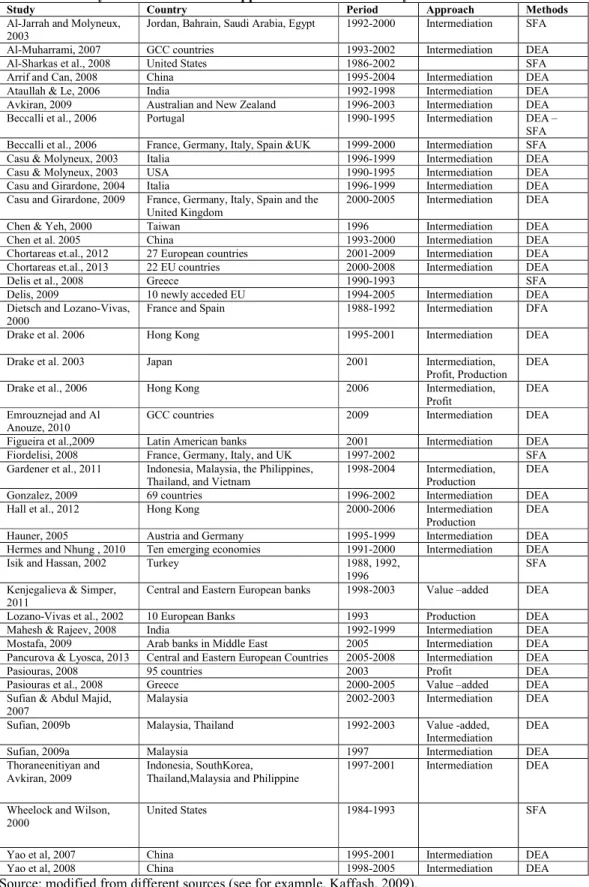
3.1 Survey of the most common approaches used in DEA………...……...70
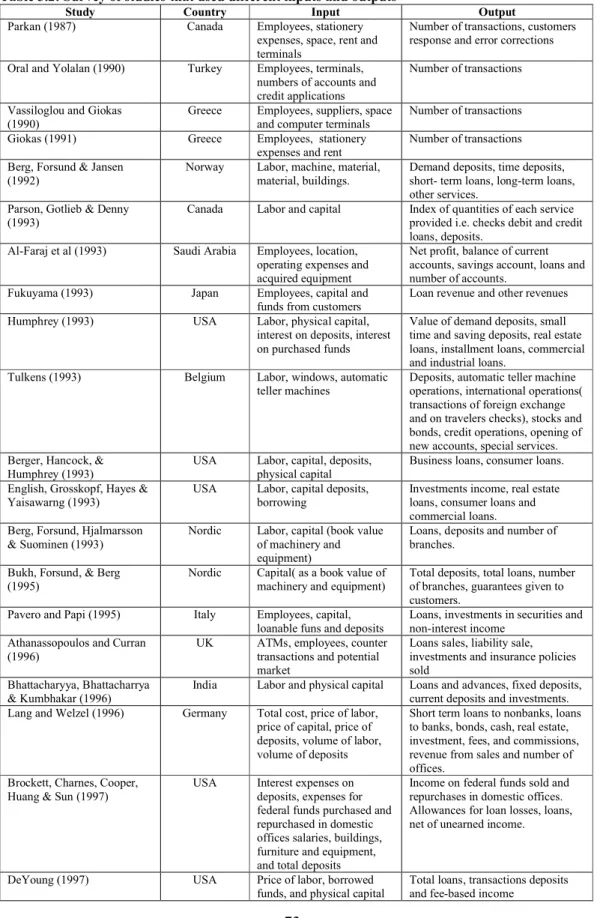
3.2 Survey of studies that used different inputs and outputs ………...73
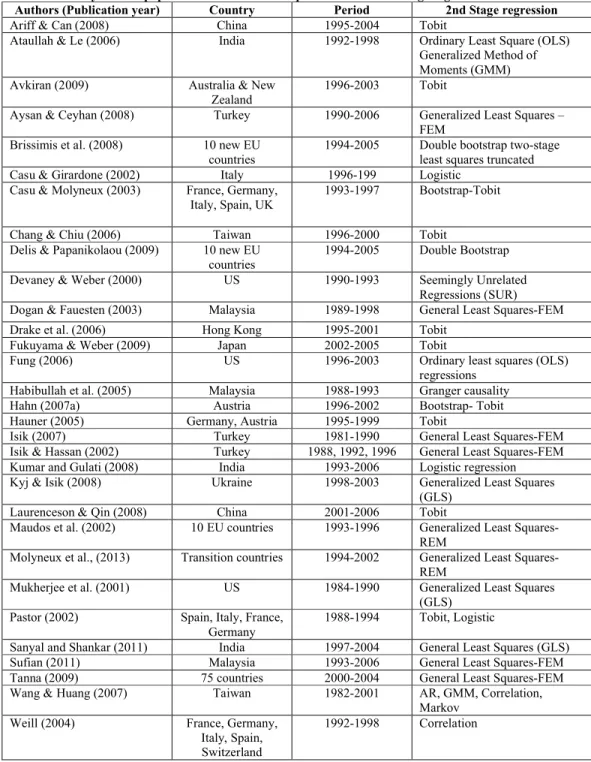
3.3 Survey of most popular econometric techniques used in second stage regression…...78
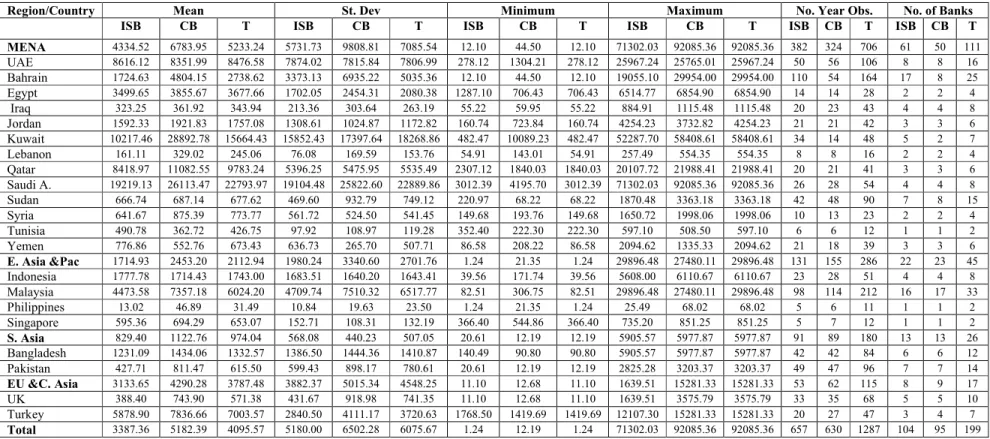
4.1 Descriptive statistics for different regions and countries based on total assets (in USD millions)………...102
6.1a Descriptive statistics for the first stage variables' original values (three inputs and two outputs)………....140
6.1b Descriptive statistics for the first stage variables' adjusted positive values (three inputs and two outputs)………..140
6.2 Correlation coefficient between inputs and outputs………..140
6.3 Average Overall Technical Efficiency (OTE) for Islamic and conventional bank……...145
6.4 Average Pure Technical Efficiency (PTE) for Islamic and conventional banks………..146
6.5 Average Scale Efficiency (SE) for Islamic and conventional banks………....147
6.6 Correlation analyses for bootstrapped PTE scores, at 150, 250, 500, 750 & 1000 replica………..148
6.7 Correlation analyses for bootstrapped OTE scores, at 150, 250, 500, 750 & 1000 replicas…...149
6.8 T-test results (between VRS500 and YFIT)……….…....149
6.9 Correlation matrix of WGI………...150
6.10 Correlation analyses of the 6 WGI and potential explanatory variables used in the second stage analysis………...151
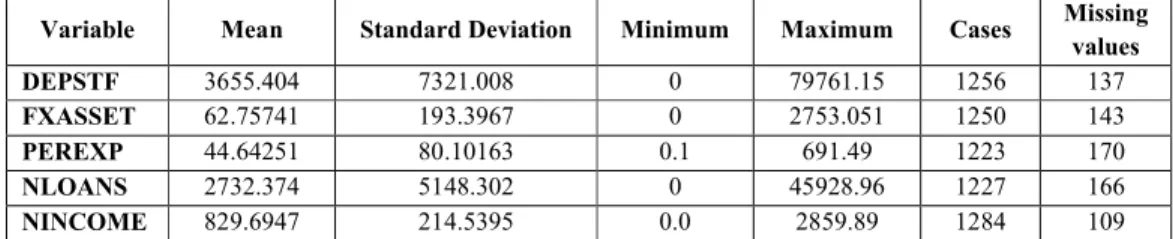
6.11 Descriptive statistics for the second-stage variables (three inputs and two outputs)………..………..152
6.12 Random Effects model to study the determinants of the pooled PTE………...153
6.13 Determinants of PTE of MENA………...157
6.14 Determinants of PTE of East Asia and Pacific countries………...158
6.15 Determinants of PTE of South Asia countries...159
6.16 Determinants of PTE of EU and Central Asia countries………....160
6.17 Determinants of PTE of MENA-East Asia and Pacific-South Asia region………..…..162
6.18 Sample Distribution by Region and by Type of Bank……….…….…..164
6.19 Determinants of PTE of conventional banks in non-Muslim countries………...165
6.20 Determinants of PTE of conventional banks in Muslim countries………...167
6.21 Determinants of PTE of Islamic banks in Muslim countries……….…….…169
List of Figures
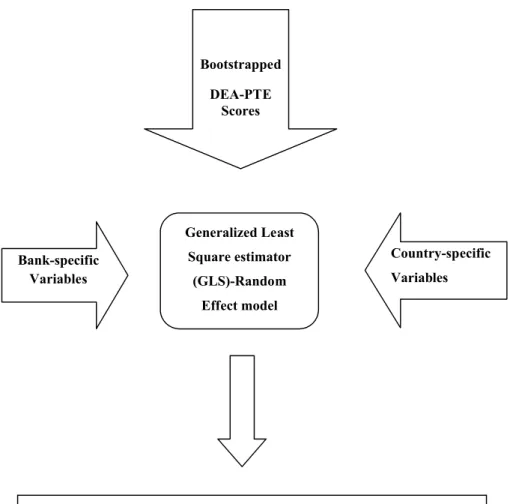
3.1 Methods of evaluating performance……….49 5.1 Detailed conceptual framework determining the impact of macroeconomics variables (country-specific factors) and financial variables (Bank-specific factors) on pure technical efficiency (PTE)……… ……….……….………...118 5.3 Detailed conceptual framework determining the impact of macroeconomics variables (country-specific factors) and financial variables (Bank-specific factors) on pure technical efficiency (PTE)………..122 6.1 Average Overall Technical Efficiency (OTE): Islamic versus Conventional Banks….145 6.2 Average Pure Technical Efficiency (PTE): Islamic versus Conventional Banks……….146 6.3 Average Scale Efficiency (SE): Islamic versus Conventional Banks………...147 6.4 Pure Technical Efficiency (PTE) for each country ………...………...…………148
LIST OF ABBREVIATIONS
AE Allocative Efficiency
BCC Banker, Charner and Cooper
BDL Banque Du Liban
BMA Bahrain Monetary Agency
BSP Bangko Sentral ng Pilipinas
BTI Bertelsmann Stiftung
C. Asia Central Asia
CB Conventional Bank
CBO Central Bank of Oman
CCR Chames, Cooper and Rhodes
CII Council of Islamic Ideolog
CORRUP Control of Corruption
CRS Constant Returns to Scale
DEA Data Envelopment Analysis
DEPSTF Deposits and short-term funding
DFA Distribution Free Approach
DIFE Dubai International Financial Exchange DIFC Dubai International Financial Centre
DMU Decision Making Unit
DRS Decreasing Returns to Scale
EE Economic Efficiency
EIU Economist Intelligence Unit
EMH Efficiency Market Hypothesis
EQ/TA Equity to Total Assets
EU European Union
FCA Financial Conduct Authority FCRIS Financial Crisis Dummy Variable
FDH Free Disposal Hull
FE Fixed Effects
FXASSET Fixed assets
GCC Gulf Cooperation Council GDP Gross domestic product GLS Generalized Least Square
GOVEFF Government Effectiveness
HDI Human Development Index
HHI Herfindahl–Hirschman Index
IB Islamic Bank
IFRS International Financial Reporting Standards IMF International Monetary Fund
INFL Inflation
IRS Increasing Returns to Scale
ISFCRIS Islamic Banks during Financial Crisis ISMDUM Islamic Dummy Variable
NINCOME Net income
NL/TA Net Loans to Total Assets NLOANS Net loans
LLP/GL Loan Loss Provision to Gross Loans MAS Monetary Authority of Singapore MENA Middle East and North Africa MKTCY Market Capitalization
NCB National Commercial Bank
NIRS Non-Increasing Returns to Scale
OBU Offshore Banking Unit
OLS Ordinary Least Square
OECD Organization for Economic Cooperation & Development
OTE Overall Technical Efficiency
PEREXP Personnel expenses
PIRI Prudential Information and Regulations for Islamic Banks POLTC Political Stability and Absence of Violence/Terrorism
PTE Pure Technical Efficiency
PTIE Pure Technical Inefficiency
QMA Qatar Monetary Agency
QCB Qatar Central Bank
RE Random Effects
REGQ Regulatory Quality
ROA Return On Asset
ROE Return On Equity
SAMA Saudi Arabian Monetary Agency
SCPR Syrian Centre for Policy Research
SE Scale Efficiency
SFA Stochastic Frontier Approach
SIE Scale Inefficiency
SIZERT logarithm of Total Asset
TFA Thick Frontier Approach
TFP Total Factor of Productivity
UAE United Arab Emirates
UK United Kingdom
UN United Nations
UNDP United Nations Development Programme
VACC Voice and Accountability
VRS Variable Returns to Scale
VRS500 Pure Technical Efficiency bootstrapped at 500 replicas
WBG World Bank Group
WGI Worldwide Governance Indicators
YBRD Yemen Bank for Reconstruction and Development
YFIT Estimated Model
YGR Growth in GDP
List of Arabic terms
Al-Anssab Sacrifices at altars
Al-Azlam Arrows for seeking luck or decision
Ahkam (plural of Hukum) Shari’ah ruling associated with rules, provisions and laws Bai’ Salam Advanced payment/forward buying (purchasing contract)
Fiqh corpus of Islamic jurisprudence
Gharar Uncertainty, risk, hazard, speculation Haram Forbidden in Islam (unlawful)
Ibadat Worship of Ritual act
Ibaha permissibility
Ijarah Leasing contract Ijara wa iktinaa Lease purchase financing
Khamr Alcohol
Mayssir Gambling
Mu’amalat Dealing between the humans
Mudarabah Profit sharing, trust finance (financing contract) Mudareb Entrepreneur, agent manager
Murabaha Cost plus financing, financing resale of goods
Musharaka Partnership, participating partner (partnership contract) Qard al Hassan Interest-free loan
Quran The sacred book of Islam
Rabb-al-mal Lendor, investor Riba al-fadl Usury of increase Riba al-nassiah Usury of deference
Sadaqah Charitable giving (act of charity)
Shirkah Sharing, A contract between persons who launch a business shirkat al 'aqd Same as ‘ shirkah’.
Shirkat al-mulk Partnership by ownership
Shari’ah Islamic law
Sukuk Similar to bond in conventional finance
Wadi’ah Custody
Zakat Islamic wealth tax
Chapter 1 Introduction
1.1 Introduction
Banks are one of the most significant contributors to a modern economy and an integral part of the infrastructure of today’s society. They carry out some very vital tasks in society and, accordingly, they have a significant effect on the level of economic activity. According to Iqbal and Molyneux (2005), banks carry out the
following four major tasks: firstly, it is considered that banks ar play the role of financial intermediary in channeling funds from depositors (lenders) to investors (borrowers). The financial intermediation develops the efficiency of the procedure of savings and investments by removing the existing mismatches in the need of an economy to have surplus and deficit units (Iqbal and Molyneux, 2005). Secondly, banks offer a broad variety of further financial services which are not linked to the banks’ main role of financial intermediation. These services include payment services, insurance asset management etc. (Iqbal and Molyneux, 2005). Thirdly, banks initiate a wide range of assets and liabilitieswhich have distinct features concerning liquidity, maturity, returns, and risk-sharing (Iqbal and Molyneux, 2005). A bank’s fourth essential task is the initiation of motivations for an efficient allocation of the resources used inside an economy and the allocation of insufficient financial and actual resources between rivals (Iqbal & Llewellyn, 2002). In other words, banks make accurate assessments and efficient valuations of risk. These are reflected in the interest rate (in conventional banking only) and fixed (profit-sharing) and variable (market-up) returns (in Islamic banking).
The traditional banking system has existed since the 13th century and depends on applying interest to loans which is monitored by the commercial regulations of the hosting country (Iqbal and Molyneux, 2005). However, in the Muslim beliefs system, which follows Shari'ah (the legal code of Islam), interest is prohibited. Therefore, during the golden ages (known in Europe as the dark ages) of the Islamic civilization and countries, there was a quite effective system of merchandising recourses to finance productive activities and consumer needs was free from interest (Iqbal and Molyeux, 2005).
During the 12thand 13thcenturies in the Mediterranean region, partnership and profit-margin sharing constituted the basis of commerce and trading activities rather than interest-based borrowing and lending (Goitem, 1971; Igbal and Molyneux,2005). However, as some countries’ focus on the world’s economic activities shifted to the western world, western financial initiations and practices became more influential while Islamic practices became dormant (Igbal and Molyneux, 2005).
As a result, Muslim people have avoided dealing with interest-based commercial banks since this is an inherent contradiction to their values and Islamic standards. Therefore, they have expressed their reservations regarding the financial intermediation model of commercial banking (Wilson, 2007).
Thus, this has generated a high demand for a banking system that does not oppose their religious beliefs and has called for an attractive mechanism to function as financial intermediation in Muslim societies. Such a mechanism began with theoretical and model discussions among Muslims economists and banks. Nevertheless, Islamic banks did not exist until the second half of the 20th century (Iqbal and Molyneux, 2005). Following the Second World War and the independence of most Muslim countries from colonial rule, Shari'ah-compliant financing began to be practiced on a small scale before expanding into formal banking institutions in many countries in the Middle East and Asia regions (Wilson, 2007).
In the early 1980s, as Islamic banks grew and required tools for managing liquidity, a number of banks, based in London, offered Shari'ah-compliant deposits through mark-ups generated from short-term trading transactions at the London Metal Exchange (Wilson, 2007). At the same time, European banks dealing with Gulf Islamic banks, which were involved in imports from Europe, started to learn Islamic finance in order to understand the working mechanism (Wilson, 2007). According to Kuwait Finance House (KFH), in terms of assets, the Islamic finance market realized a total of USD 2.4 trillion in 2015. Moreover, based on The Economist (2012 and 2014), since 2006 the total value of Shari'ah–compliant assets has increased by 150% and will grow by an average of 19.7% a year to 2018. Globally, Islamic banks hold nearly 80 per cent of these assets (Economist, 2014).
Although Islamic banks are considered sometimes to have limited options, in fact, it is widening the banking choice of both Muslims and non-Muslims (conventional users). Furthermore, Islamic banks are not regarded as a threat to the current traditional system. Alternatively, Islamic banks are considered to offer available opportunities for new investments since its tasks fall within the scope of socially responsible banking operations (Wilson, 2007). Therefore, multinational and domestic conventional banks have opened Shari'ah-compliant windows in meeting demand from the Muslim communities as well as, particularly in countries with a mixed environment, offering both Muslim and non-Muslim customers an alternative to interest-based banking .
1.1 Motivations
As Islamic banks are part of a country’s banking system of a country, its performance may affect the soundness and stability of the banking system as well as a country’s economic development. Moreover, for conventional banks with Islamic windows, the performance of these windows has a certain influence on the performance of conventional banks. Consequently, the assessment of the performance of Islamic banks, relative to their conventional counterparts, will help policy makers in formulating strategies. These strategies may improve the performance of a country’s banking system and may minimize any future failure leading to financial crisis. Additionally, the information, which is obtained from the evaluation of bank performance, may help to ameliorate managerial performance by determining “best” and “worst” practice banks (Berger and Humphry, 1997).
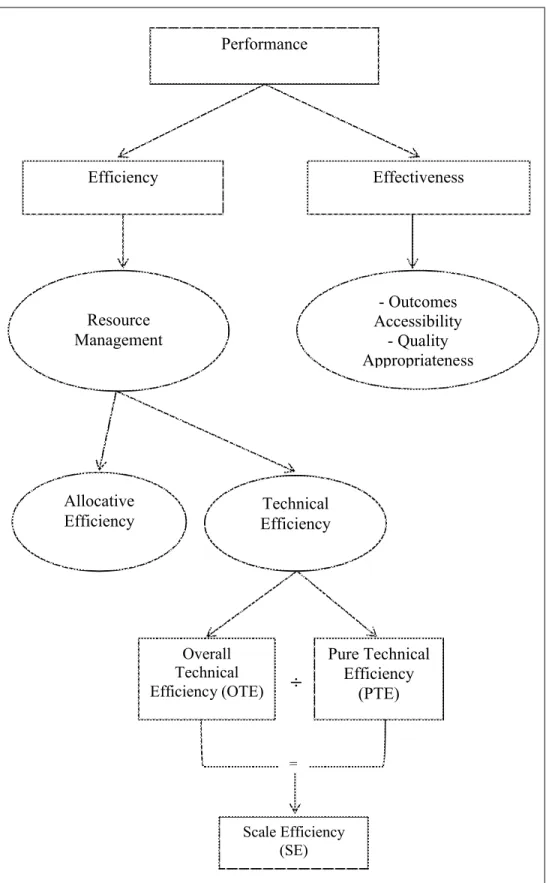
The increasing number of Islamic banks - 145 full-fledged Islamic banks operating globally including banks in Iran (Bankscope, 2013) – has also heightened the competition between fully-fledged Islamic banks and conventional banks. Thus, the determination of the relative performance will encourage both fully-fledged Islamic and conventional bank managers to improve their respective bank performances in order to compete with each other. Performance is measured through efficiency and productivity and Chapter 3 explains this in detail.
Furthermore, since modern Islamic banks have been in operation for over 30 years, the performance of its operations needs further evaluation. Moreover, as an alternative to the well- established interest-based banking, it is rational to compare the performance of Islamic banks with their conventional counterparts. Although, the nature of mechanism, i.e. Shari'ah-compliance, involved in Islamic bank is different from interest-based banking, it would be significant to find a mutual ground to compare their respective performances. Given the above reasons, the evaluation of how Islamic banks perform globally, when compared to conventional banks, is significant and requires further investigation in order to provide the latest empirical evidence on the relative performance of Islamic banks.
1.2 Contribution and objectives
This study is unique and differs from others in the literature review for the following reasons. Firstly, the study covers all Islamic banks in the world, as found in BankScope database, including those operating in countries that have both Islamic and conventional banks. During the period of the data collection (i.e. late 2013), the BankScope indicates that 28 countries host fully-fledged Islamic banks in the world. However, we exclude the following countries Brunei, Cayman Island, Gambia, Iran, Mauritania, Palestine, and Russia from the study. Based on BankScope database, Islamic banks operating in Brunei, Gambia, Mauritania and Russia either were withdrawn or were marked as Inactive by BankScope, or covered less than 4 years of the study’s timeline (2006-2012), or had more than 4 years of not available data. Cayman Island and Palestine were removed too since no economic and governance indicators existed for both countries, mainly in the World Bank databases. Moreover, Iran did not take part of this study as its banking system consists only of banks that comply with Islamic laws (i.e. Shari’ah principles). Consequently, the study includes 21 countries worldwide and, in particular, four different regions.
Secondly, the study observe the potential determinants of Islamic and conventional banks’ efficiency in Muslim and non-Muslim countries. Finally, to the best of the researcher’s knowledge, none of the pervious researchers examined the existence of association between the WGIs and the efficiency of Islamic and conventional banks.
Consequently, our study is the first to use the WGIs for this purpose. In summary, this study seeks to address the following questions:
1. Do the scale efficiency and the overall and pure technical efficiency vary across the two different bank types over 2006-2012?
2. How efficient are Islamic banks at the global level when compared to conventional banks during 2006-2012, particularly during the financial crisis (i.e. 2007-2009)? In other words, is there any significance between both types of banks?
3. What are the determinants of efficiency for Islamic and conventional banks, at the pooled level?
4. Do the determinants of bank efficiency differ across regions and in Muslim countries when compared to non-Muslim countries? Do the determinants of Islamic and conventional banks vary in Muslim countries and in non-Muslim ones?
5. Do the World Governance Indicators (WGIs) have any influence on the pure technical efficiency of banks?
Given the above research questions, the study aims to compare the efficiency of Islamic banks relative to conventional banks over 2006-2012. The study’s objectives are to:
Measure the efficiency of Islamic banks compared to their conventional counterparts in countries operating Islamic banking.
Assess the efficiency of Islamic banks compared to conventional banks prior to the financial crisis (up to 2006), during the crisis (2007-2009) and after the crisis (2010-2012).
Determine the factors that influenced the efficiency of Islamic and conventional banks. Although extensive literature had examined bank efficiency, mainly in the U.S and European banking sectors, there were few empirical researches which had evaluated the global performance of Islamic banks compared to conventional banks and these produced contradictory results.
Investigate whether there are different determinants of bank efficiency for Islamic and conventional banks operating in Muslim countries1 and non-Muslim countries. This is done by dividing our sample into Muslim countries and non-Muslim countries, and conducting many regression models to capture any significance on PTE. Some authors concluded that there were no significant efficiency differences between the Islamic and conventional banks (e.g. Abdul-Majid et al., 2005b; El-Gamal and Inanoglu, 2005; Mokhtar et al., 2006; Bader, 2008; Hassan et al., 2009; Shahid et al., 2010) and others found that Islamic banks were significantly less efficient than conventional banks (e.g. Mokhtar et al., 2007, 2008; Srairi, 2010). On the other hand, Al Al-Muharrami (2008) stated that Islamic banks were significantly more efficient than conventional banks Investigate possible regional influences on the PTE determinants. The study
classifies the 21 countries2 into four regions: Middle and North Africa, East Asia & Pacific, South Asia, and Europe & Central Asia. We captured potential influence by conducting regression models with dummy variables (as explanatory variables) for the four regions.
Examine any potential effect from the WGIs on the banks’ PTE. Previous research used different bank efficiency determinants. However, for the first time, a study investigates the influence of the World Bank governance indicators on the efficiency of Islamic and conventional banks-at the global level.
Moreover, the study aims to integrate more than one approach and statistical techniques in order to generate robust results for policy makers to regulate effectively the productivity of the banking industry; for bankers to improve their bank performance; and for the investors to maximizing their benefits. For the first stage, we used Data Envelopment Analysis (DEA) to calculate various efficiency scores -Overall Technical Efficiency (OTE), Pure Technical Efficiency (PTE) and Scale Efficiency (SE). For the second stage, we used an appropriate regression model, i.e. the random effects model.
1The researcher refers to Muslim countries as those countries where Islam is the main religion (at least 60% of the total population).
2The 21 countries are countries that cover all Islamic banks in the world up to year 2012, and in which Islamic and conventional banks operate. Iran is excluded as it only operates Islamic banking.
1.3 Research approach
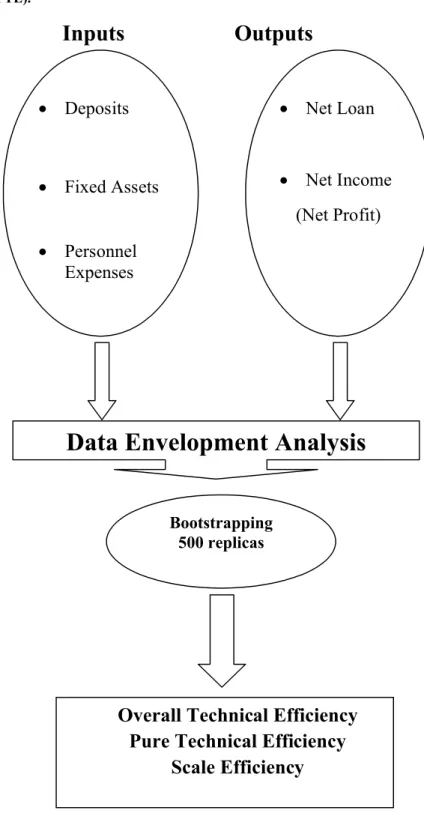
In this study, we tackled the research objectives by implementing distinct data sets and methodologies. The research methodology starts with employing a literature review of theories concerning the determinants of bank performance. In order to address the first research objective, the research conducts the DEA to evaluate the efficiency of Islamic banks relative to conventional banks. Three distinct types of efficiency scores (OTE, PTE and SE) are obtained, and the overall measure of each efficiency type are analysed over the research period (2006-2012). The research period is divided into three stages: prior to crisis, during-crisis and post-crisis. The study measures the efficiency scores by selecting appropriate inputs and outputs, and uses the intermediate approach rather than the production approach for the variables included in the DEA. The intermediate approach sees a bank as a financial go between which employ inputs (e.g. deposits) to produce outputs (e.g. loans).
Afterwards, the bootstrapped technical efficiency scores, extracted from the Data Envelopment Analysis, is regressed on environmental (i.e. bank and country- specific) variables. The PTE is selected as the only dependent variable since, unlike OTE, this type of efficiency computes each bank’s efficiency relative to other banks of a similar size. On the other hand, normally the OTE measures the efficiency of a particular bank against all banks. The Constant Return to Scale (CRS) specification given by Charnes et al. (1978) provides misrepresenting estimates of technical efficiency. In other words, the OTE scores, extracted from the CRS model, are biased by the scale efficiency. Another reason for selecting PTE, derived from Variable Return to Scale (VRS), as the dependent variable is that the CRS assumption is used in DEA when banks are operating at an optimal scale. However, frequently in real life, this optimal performance is rejected by a diversity of conditions such as different level of market power, monopoly, diseconomies of scale, different regulations and supervisions, imperfect competition etc.
The following two types of environmental variables are included in the regression analysis: (I) the Bank-specific variables, namely, Net Loans to Total Assets (NL/TA), the ratio of Equity over Total Assets (EQ/TA), Bank Size (SIZERT), and Loan Loss
Provision to Gross Loans (LLP/TA). (II) the country-specific variables which are Inflation (INFL), Growth In Real GDP (YGR), Per Capita GDP (YPCRAT), the Herfindahl–Hirschman Index (HHI) (or market concentration), and Market Capitalization (MKTCY), Voice and Accountability index (VACC) and Regulation Quality (REGQ).
The dataset covers 104 Islamic banks and 95 conventional banks in 21 countries (i.e. Arab Emirates, Bahrain, Bangladesh, Egypt, Great Britain, Indonesia, Iraq, Jordan, Kuwait, Lebanon, Malaysia, Pakistan, Philippines, Qatar, Saudi Arabia, Singapore, Sudan, Syria, Tunisia, Turkey, and Yemen) hosting Islamic banking between 2006 and 2012. This provides a sample of 1125-year observations. The inputs and outputs, used in the computation of efficiency scores, are extracted from the banks’ financial statements held on the BankScope database while macroeconomic data are obtained from the World Bank International Financial Statistics.
1.4 Structure of the thesis:
This thesis is divided into 7 chapters including the introductory chapter outlining the motivation and aims of the study. Chapter 2 provides detailed background of Islamic banking and discusses the issue of Riba (interest) and other prohibitions and the various modes of Islamic financing. The background focuses particularly on the Islamic rationale for the prohibition of interest, the legal basis of Islamic banking and its origin and development. Moreover, Chapter 2 lists the main principles of the Islamic jurisprudence concerning financial contracts and presents the alternative financial instruments and finances on which Islamic banks depend. In addition, it includes a brief comparison of Islamic and conventional banks. Consequently, this provides the necessary religions and pragmatic framework to understand the Islamic banks and allows the reader to appreciate the primary differences with conventional banks. The final section tries to depict the diverse socio-economic backgrounds of the countries included in the study.
Chapter 3 presents the reader with a critical review of the existing conventional and Islamic bank efficiency literature. Within the area of relative efficiency of Islamic banks compared with conventional banking, by using various techniques, this
Chapter presents a wider review of previous research to provide a basic understanding of how we measured this relative efficiency . Moreover, there is a review of research on how environmental factors were considered in single and cross-country bank efficiency studies with the objective of modelling a function in order to measure the efficiency of Islamic and conventional banks.
Chapter 4 focuses on the introduction and description of the frontier technique, namely the Data Envelopment Analysis (DEA), implemented in several studies in order to evaluate the performance of different countries’ conventional and Islamic banks between 2006 and 2012 (This period is dependent on the age of the required financial data on Islamic banks held by BankScope).
Chapter 5 concentrates in conducting the mathematical approach, DEA, and reporting and analyzing the generated results of the calculations for the efficiency scores for both Islamic and conventional banks at the global level. We analyzed empirically over the period from 2006 to 2012 the output efficiency of banks in 21 countries operating Islamic banking.
Chapter 6 examines banking environment and bank-level characteristic, through employing generalized least squares- random effects models, in order to understand the determinants of pure technical efficiency (PTE) and control for environmental factors which influence the bank’s efficiency. We based our analysis of the regressions on pooled model, regional models, and Muslim versus non-Muslim countries models. The chapter ends by outlining the major findings.
Finally, the concluding Chapter 7 summarizes the main findings of the thesis with related policies and makes suggestions and directions for future areas of research.
Chapter 2 Origin and Development of Islamic Banking
2.1 Introduction
The chapter aims to provide the basic concept of Islamic banking and the background of countries involved in this research. It defines Islamic banking and its objectives; explains the legal basis of Islamic banking; discusses its origin and traces its development; and describes the modes of operation of Islamic banking. Moreover, this chapter assesses the importance of Islamic banking and compares it with the conventional banking system. Furthermore, it briefly discusses the socio-economic background of countries under study.
2.2 Shari'ah(Legal Code of Islam)
A Muslim is expected to lead their life according to theShari'ah extracted from the Quran and the Sunnah (the sayings and practices of the Prophet Mohammed). Although often assigned as Islamic Law, Shari'ah can be described as either moral guidance or a series of principles monitoring all aspects of the day-to-day activities of Muslims (Kashyap, 2014). It has been more than 1400 years since the Quran was revealed; in the Muslim belief system, the message from the Quran is applicable to all people and times. Besides the above two main sources of Shari'ah, there are Ijmaa
(the consensus among Islamic scholars) and Qiyas (reasoning by taking analogy). Islam does not distinguish spiritual from worldly affairs, hence business is considered as ethics and is subject to Shari'ah. Hence, Shari'ah governs Islamic banking in addition to the regulations set up by the host country (Karim, 2001).
The most significant values on which the modern Islamic financial structure depends on are:
Prohibition of the payment or receipt of interest(Riba):
Money itself is assumed to have no essential value. It is considered to be only a store of wealth and a medium of exchange (Kashyap, 2014). Interest, which is the pre-determined return on financial transaction required by the lender from the borrower over and above principal amount being lent, is forbidden but not the uncertain rate of
return on the transaction represented by profit. The Shari’ah definesribaas a premium that is obliged to be paid by the borrower to the lender together with the face value of the borrowed sum as a condition for the loan or for extending date of repayment (i.e. maturity date) (Abu Umar Faruq & Hassan, 2007).
Prohibition of uncertainty or speculation(Gharar):
Any participant engaged in financial transactions must be sufficiently informed and not cheated or deceived (Kashyap, 2014).
Prohibition of funding particular businesses:
Investments, which are not permitted in activities, are believed to be socially damaging and that are not compliant with Islamic principles. These businesses comprise gambling, pornography, alcohol trading and production, and armaments (Iqbal and Molyneux, 2005).
Significance of profit and loss sharing:
The entrpreneur (borrower) and capital provider (lender) are obliged to share the risk of all financial transactions (Iqbal and Molyneux, 2005). The principle of profit and loss sharing (PLS) is considered as one of the most significant characteristics of Islamic finance (Khediri et al., 2015). The lenders (funders) and borrowers (investors) share risk arisen from given investment in exchange for sharing profits and losses (Iqbal and Molyneux, 2005). This PLS principle opposes the principles of conventional banks which depend on defining a pre-agreed fixed rate prior to any financial transaction (Khediri et al., 2015).
Assets-banking principle:
Any financial transaction has to be given security by a known and tangible asset. It is the responsibility ofShari'ahscholars to evaluate whether a financial instrument or service complies with the Shari'ah codes (Kashyap, 2014). The explanation of Shari’ah is recognized to be eitherFiqh, or Islamic Jurisprudence, and is performed by Islamic scholars (Iqbal and Molyneux, 2005). Although there are many areas of consensus, the opinions of scholars vary occasionally based on their ways of analysis.
In other words, this means that some scholars may regard some contractual terms of Islamic finance as being permissible under Shari'ah, whereas others may consider them to be inappropriate (Kashyap, 2014).
2.3 Definition of Islamic banking
An Islamic bank is described as a financial institution with the objectives to employ the economics and financial principles of Islamic banking (Hassan, 1999). The financial transactions of an Islamic bank are in compliance with the principles
Shari'ah (i.e. Islamic laws). As a financial business, the primary objective of an Islamic bank is seeking to maximize profit in order to increase shareholders’ value. As a development financial institution, an Islamic bank helps economic development as well as ensure justice and fairness in the society including mobilizing savings, maintain sectoral balance of the economy, developing labor skills through training, mobilizing non-human resources such as Sadaqah( Islamic voluntary contribution) and Zakat(Islamic wealth tax), maintaining equitable income and wealth distribution, and providing efficient banking services. An example that an Islamic bank tries to establish an equitable income distribution is the availability of interest-free loans for the needy, in which the consumer has to pay only the principal amount and the administrative costs. Although the contribution of interest-free loans to total financing of the Islamic banking operation is very minimal, still the reason behind the establishment of an Islamic bank is not solely to maximize profit or revenue – the major features of Islamic banking are to avoid interest in all transactions and avoid unethical activities such as prostitution, gambling ,alcoholism etc. Accordingly, Muslims should certainly invest their funds in businesses that comply withShari'ah, and they must obtain Halal earnings on their investments (Iqbal and Molyneux, 2005). Therefore, the two major aims of an Islamic bank are to maximize profit for shareholders and depositors and to achieve their social obligations.
2.4 principles of Islamic finance: The basis
Two sorts of rulings, or “ahkam”, are present in the Islamic jurisprudence. The first type is known as “Ibadat” (worship) which monitors the relationship of a human towards God (Iqbal and Molyneux, 2005). A traditional principle of “ibadat” is that nothing is permissible unless backed by clear or analogical permission from Shari’ah
(Iqbal and Molyneux, 2005). The second type of “ahkam”, also known as “mu’amalat” (or mutual dealings), rules overs, also, the relationship of mankind . Two major principles rule the Islamic theory of contracts including: “Ibaha”
(permissibility) which states that all is allowed unless clearly forbidden by God. This is referred as the “doctrine of universal permissibility” (Iqbal and Molyneux, 2005). “The Golden Principle of free choice” allows the parties, participating in transactions or contracts, to consent to any circumstances since they do not breach any rule of
Shari'ah(Iqbal and Molyneux, 2005).
Islam forbids few activities and the reason for such prohibition is to protect the interest of weaker parties and to ensure justice and fairness among participants in transactions or investments. Moreover, this also ensures joint interests for all parties and promotes social harmony (Iqbal and Molyneux, 2005). The next paragraph examines the restrictions, imposed by Shari’ah, that are applicable when initiating financial transactions and contracts between participants.
a) Prohibition of interest (Usury)
Islam forbids all types of interest, also called "riba".Literally, the term"riba" means an increase, or the act of increasing (Iqbal and Molyneux, 2005). This term is used in the Quran to reflect the modern theory of interest. According to Quran, "Zulum"
which is arisen from the practice of applying interest is the main reason for prohibiting the interest. Zulum refers to the spiritual, moral, and socio-economic injustice brought by charging interest in society (Iqbal and Molyneux, 2005).
Shari’ah does not permit any premium or reward or pre-fixing positive return, whether big or small, on any type of loan. According to Iqbal and Molyneux (2005), the definition of riba is anything pecuniary or non-pecuniary in addition to the face
value of a loan that the borrower is obliged to pay to the lender together with the principal as a condition. On the other hand, any surplus is not considered as riba if provided by the borrower out of his own agreement without the presence of any norm or tradition that requires him to offer such excessive amount (Iqbal and Molyneux, 2005).
b) Reasons for Interest prohibitions
According to Siddiqi (2006), an interest-based transaction may be unfair to one of the engaged parties (i.e. lender or borrower). The borrower or the investor may encounter injustice when performing riba-based contract. For instance, the investor will always be entitled to pay the interest and the initial value of the loan even if the business, financed by this loan, ends up with losses (Iqbal and Molyneux, 2005). In other words, the lender will always obtain this money along with the interest regardless the financial position of the underlying business. Accordingly, generally this transaction is considered to be unjust and unfair. On the other hand, the interest-based transaction may also be unfair to the lender. For instance, if the inflation rate increases and becomes greater that the initial return rate of loan, the real rate of interest turns into negative. Moreover, the borrower or the investor, who may earn large profit from an investment financed by the loan, is only entitled to pay back smaller amount reflected by interest rate cost (Iqbal and Molyneux, 2005). However, if these invested funds were based on the profit and loss sharing ratio, which is an essential principle in Islamic banking, the depositor would have earned a better return.
Riba, which is used as broad term, can be divided into two subsidiaries that are included in the category of ribaof al-baye' (Iqbal and Molyneux, 2005). Riba of al-baye'refers to the interest that is associated with sales transactions. The type of riba discussed previously is known as riba al-qurudor riba al-nassiah or riba al-quran. The first type of riba is riba al-nassiahwhich is discussed in previous paragraphs. It refers to the increase in place of delay or postponement of payment of outstanding charges (Ariff et al., 2012). In other words, it stands for the pre-fixed excess or premium that the borrower should pay on a loan as a reward for waiting (Chapra, 1985).
The second type of riba is called riba al-fadl which results in barter exchange of commodities. It represents the excess obtained by one of the trading parties when dealing in commodities of similar or equal kind (Iqbal and Molyenux, 2005).
Riba al-nassiahand riba al-fadlare considered to be crucial counterparts of the verse of Quran: “Allah has permitted trade and has forbidden riba” (2:275), where riba al-fadlis linked to trade whileriba al-nassiahis linked to loans (Ariff et al., 2012).
c) Prohibition of Gharar
The second major prohibition in contractual deals is gharar trading. The literal meaning of gharar is to make oneself or a party’s property vulnerable to hazard (Iqbal and Molyneux, 2005). Nevertheless, ghararmay be regarded as the acts and conditions that are engaged in exchange contracts but are unclear and uncertain to other participants (Ariff et al., 2012). This is considered to be very equivalent to asymmetric information (Iqbal and Molyneux, 2005). According to Shari’ah, the principle of voluntary consent of all participants is violated if any party possesses inferior information about a transaction relative to other involved parties (Ariff et al., 2012). In other words, any party has the right not to engage in a contract if full knowledge about the implications of this contractual transaction is acquired.Gharar
can be divided into two types: gharar fahish (extensive) and gharar yassir (minor) (Iqbal and Molyneux, 2005). The first is forbidden in Islam whereas the latter is permitted since this may be inevitable without substantially harming one of the parties (Iqbal and Molynenux, 2005).
Frequently, it is difficult to disclose all information concerning a contractual transaction since it is in the nature of the subject (Ariff et al., 2012). Gharar has always been a hard term to comprehend among Islamic scholars. Nevertheless, Islamic jurisprudence counts on the general conditions of honesty and transparency of participants in a contract to manage this (Iqbal and Molyneux, 2005).
d) Prohibition ofMayssir
Islam forbids all sorts of gambling and games of chance. This is illustrated in the following clear text in the Quran (5:90):
"O, you who believe! Intoxicants (Alcohols) (Arabic: Khamr), and gambling, and Al-Anssab (animals that are sacrificed in the name of idols on their altars) and Al-Azlam (arrows thrown for seeking luck on decisions) are on abomination of Satan’s handiwork. So avoid that (abomination) in order that you may be successful”
On the other hand, it is significant to distinguish between pure games of chance, and tasks and businesses that are associated with life uncertainty and include element of chance and risk-taking (Ariff et al., 2012). For instance, one of the major principles of Islamic banking is the risk-sharing aspect which implemented between fund providers (lenders) and investors or entrepreneurs (borrowers).
2.5 Islamic banking: modes of operation
The Islamic economic model depends on judgment of Shari'ah. Two of the major features, which manage modern Islamic finance, are presented as follows:
a) Financial instruments or contracts have to be collateralized always by physical (i.e. tangible) assets in order to avoid speculation.
b) As discussed earlier,Shari'ah strictly and clearly forbidsriba ; this includes the interest payments and the exchanging of any positive fixed return.
These fundamental rules have made Islamic financial instruments to be mainly assets-backed and to be dependent on the performance of the underlying assets (Iqbal and Molyneux, 2005).
2.5.1 Sources of funds
Modern Islamic finance has initiated many methods to substitute interest return for cash flows (incomes) generated from investments and business activities (DTZ, 2008). These include returns from trading in real assets and rental income obtained
from leasing of assets, etc. There are three main modes of Islamic financing which include:
1. Debt-based: refers to the loans initiated through a repurchase agreement transaction or back-to-back trades of borrower or third parttheld assets (DTZ, 2008). The most famous type of debt-based financing is Al-Murabahah produced from the acquisition and resale of a current or future asset at a mark-up (i.e. initial price plus a margin) instead of interest payments (Jobst, 2007).
Al-Murabahah
Often called the ‘mark-up’ or ‘cost-plus’ sale, Al-Murabahah is analogous to buy – sell back or back-to-back sales arrangements. It is a contract where a customer willing to buy an asset (such as apartment, equipment, etc.) request from an Islamic bank to buy it for him. Afterwards, the bank sells this asset to the borrower at a price that include the face value of this given asset, any charges or expenses applied for the asset’s acquisition and an additional pre-agreed reasonable profit. The total price is made usually through a series of installments
The basic features of Al-Murabahahare outlined below (Shinger, 1994):
(i) The buyer should know about all associated costs and the initial price of the asset. The profit (or markup) should be displayed as a percentage of the total price plus costs.
(ii) The subject of the sale should be tangible assets or goods against money; (iii) The seller should hold and own the asset, which underpins the contract.
Moreover, the seller should be able to deliver the asset to the buyer. (iv) The repayment should be delayed postponed.
2. Asset-based:also referred to as lease contract where a sale-leaseback (i.e. operating lease) agreement is put in place . It also includes the lease of a third party asset with option of purchase it. Such a type of lease contract is known as financing lease. The most common type of asset-based financing is Al-Ijarah. Based on Al-Ijarah contract,
credit is received in exchange for rental fees during the temporary use of an asset (Jobst, 2007). The borrower (or entrepreneur) also has an option to purchase this asset at maturity (Jobst, 2007).
Al-Ijarah
This Islamic method of financing is equivalent to operating leases (sale-leaseback/lease-buyback) or financing leases (lease-purchase). The investor rents a given project or asset for a definite amount and over a specific period of time. The investor retains ownership of the asset during the transaction where he sustains all the expenses related to the asset’s ownership. On the other hand, the lessee has to cover all the costs resulting from utilizing the asset. In the case of a lease-purchase, each payment presents a portion of the final price of purchase and transfer of ownership of the asset. Two types of leasing finances are promoted by Shari’ah:
1) Ijarah(simple leasing)
2) Ijarah Wa Iqtinaa(purchase lease)
Ijarah depends on a contract between the lesser (Investor) and the lessee (client) (DTZ, 2008). The investor, represented by the Islamic bank in our case, buys a capital asset and rents it to a client. In return, the client should pay the bank a pre-agreed regular rental fees during the period of the transaction. The maturity of the contract depends on the requirement of the lessee, the lifetime of the capital asset, and the agreement between the investor (i.e. Islamic bank) and the customer (i.e. lessee). During the period of the transaction, the ownership of the asset remains with the Islamic bank but the customer has the limited right to utilize this asset in return for rental fees. At the maturity of the contract, the asset is returned to the bank.
Ijarah Wa Iqtinaa is equivalent to hire-purchase arrangement. The rental payments are recovered by the lesser throughout the contract period in series of periodical installments. At maturity, the lessee obtains ownership of the given asset after the amount of the contract is paid in full (Chapra, 1985). In our case, the Islamic bank purchases equipment and leases it to the customer. The latter makes a yearly payment that represents a portion of the total price of the equipment owned by the lessee when the entire amount of the contract is paid.
The advantages of finance leasing
In a leasing contract, there is a chance that the lessee misuses the leased asset as the lessor takes the total risk (Iqbal and Molyneux, 2005). However, the Islamic financial leasing, known by Al-Ijarah, has many features that may tackle this problem (Iqbal and Molyneux, 2005):
(I) The period of a leasing contract is sufficiently long to permit the lessor to amortize the cost of the asset with additional profit. The length of Al-Ijarah
generally covers the complete service life of a leased asset (Ariff et al., 2012).
(II) At maturity of a leasing contract (Al-Ijarah), the lessee has the option to buy the leased asset from the lessor at fair market value (Iqbal and Molyneux, 2005).
(III) The contract cannot be before the expiry date without the agreement of both participants.
(IV) In a case of default, the lessor is able to repossess the equipment without the need to a court order.
(V) The high level of depreciation associated with the equipment helps the lessor to decrease his tax obligations towards authorities.
(VI) The lessor has the right to sell the equipment during the term of a contract. Consequently, the new owner collects any leasing fees. This enables the lessor to get cash liquidity.Shari’ahallows only the trading of physical assets and, exceptionally, any monetary debts can be sold at their nominal values.
3. Equity-based: this is regarded as profit and loss sharing contract where investors
(i.e. financers) and entrepreneurs make an agreement to distribute any gain or loss resulting from the underlying project or business (DTZ, 2008). The profit or loss is shared based on the level of participants’ ownership or the portions of capital provided by each party (DTZ, 2008). The two most frequently exercised equity-based contracts are Al-Mudarabahand Al-Musharakah.
Al-Mudarabah
This method of Islamic financing is treated as a contract between two parties. In this transaction, the investor, known asrabb-al-mal, provides money to expertise, referred to as Mudareb, for the purpose of business and trading management (Iqbal and Molyneux, 2005). One of the major features of this contract is that any potential profit is split between the investor and the Mudareb according to a pre-agreed ratio (DTZ, 2008). However, uniquely the investor absorbs any resulted loss. (Saeed, 1996)
In Al-Mudarabahfinancing, the bank does not play a part in the management of the investment being financed. However, it sufficiently regulates the underlying business to assure that funds are used in compliance with Al-Mudarabah agreement. This is what has come to be termed two tiers Mudarabahin current Islamic literature. Out of the total funds assigned to the financed business, a share might be given for the complete agreed term, whereas another share might be available for a short period as an overdraft to counterbalance the funds being in route to Mudareb and to manage any potential or seasonal deficiency in liquidity (Chapra, 1985).
Al-Musharakah (partnership)
It is the second Islamic financing method and is based on profit and loss sharing (PLS) concept (Iqbal and Molyneux, 2005). In Arabic Literality, Al-Musharakah
means sharing, and its financial term is extracted from the Islamic legal wordshirkah. In fiqh, shirkah consist of two types: (i) shirkat al-mulk refers to joint ownership of two or more participants in a specific property. This kind of partnership may arise through either inheritance or joint purchase. (ii) Shirkah al 'aqd stands for a partnership and is originated through a contract. This contractual PLS generally exists for commercial reason and takes several forms such as partnership in the capital of the enterprise, partnership in labor and management, mutual goodwill or a combination of these elements. (Iqbal and Molyneux, 2005)
Al-Mudarabah differs from Al-Musharakah in at least one aspect. In the latter, the financier is allowed to engage in the management of the business in which he invested i. On the other hand, in Al-Mudarabah, the investor is unable to participate in managing the business or project that he is funding (Iqbal and Molyneux, 2005).
These two types of partnership have a common feature that is the provider of funds share the profits and tolerates any possible losses resulting from his investment. Based on this fact, these two methods of financing are referred as to profit and loss sharing method (Khan, 1995).
The fundamental principles regulatingAl-Musharakahare as follows:
(i) Profits, generated from the underlying business, are shared based on a pre-agreed proportion. However, no party is allowed to receive any fixed lump amount of profit .
(ii) Any possible loss should be shared in accordance with each party’s capital contribution.
(iii) All partners should generally contribute capital and management in the business. However, a partner may be exempt from participating in the management, but the profit should be distributed always according to the capital contribution of each partner.
(iv) All partners are unlimitedly liable.
2.5.2 Origin and development of Islamic Banks
Major experiments of exercising the Islamic principles into financial transactions have started with the setting-up of the Mit-Ghamr Saving Association in a small Egyptian village called Mit-Ghamrfrom 1963 to 1967 (Iqbal and Molyneux, 2005). Moreover, in 1962, another Islamic implication was a saving organization, called Tabung Haji,
located in Malaysia for Muslims who are willing to perform pilgrimage to Mecca (IFSB, 2007).
The Mit-GhamrSaving Association derived the concept from German saving banks. It used to hold small savings, mainly through interest-free saving accounts, from the rural areas (Ariff et al., 2012). Nevertheless, depositors willing to invest in productive sectors were entitled to small, short-term, and interest-free loans as incentives (Iqbal and Molyneux, 2005). They were allowed, also, to withdraw their savings on demand. Moreover, investment accounts, based on the profit and loss sharing concept, began to finance particular projects of entrepreneurs (Iqbal and Molyneux, 2005).