Page | 1
Middlesex University
Determinants of E-government Services Adoption in
Developing Countries (Egypt)
Submitted in partial fulfilment of the requirements of the degree
of Doctor of Philosophy
By:
Sara AbdelSalam ElKheshin
Supervisors:
Dr. Noha Saleeb
Dr. Mark Springett
Dr. Penny Duquenoy
Page | 2
Abstract
Electronic government (e-government) was established as an effective mechanism for increasing government productivity and efficiency and a key enabler for citizen-centric services. E-government services are yet to be universally accepted as a medium for accessing online public services since its inception more than a decade ago.
Both governments and academic researchers recognise the problem of low-level adoption of e-government services among citizens; a common problem in both developed and developing countries. E-government adoption, unlike most of IT adoption by employees in private-sector organisations, is voluntary and occurs often in turbulent social-political environments. Therefore, the problem needs to be addressed comprehensively from technological, social, political, and cultural perspectives.
E-government adoption research currently lacks a comprehensive conceptual framework for explaining citizen adoption of e-government services. To fill this gap, this study investigates determinants and factors necessary to enhance citizen adoption of e-government services, by extending the Technology Acceptance Model (TAM) using a set of social, political, and design constructs that are derived from different research literatures.
The research adopted a multi-method approach (combining quantitative and qualitative methods) to explore practices and experiences of implementing and adopting e-government systems in Egypt.The results of this research, in terms of a new customised e-government adoption model and recommendations made for e-government will directly benefit the Egyptian government and developing Arab world countries that share similar circumstances in creating a more efficient e-government adoption strategy..
Page | 3
Acknowledgment
Praise to Allah the Almighty, Creator and Sustainers of the Universe, and prayers and blessings are sent on His Prophet.
Firstly, I would like to express my deepest gratitude and appreciation to Dr. Noha Saleeb, my director of studies, for her excellent supervision, guidance, invaluable feedback, and encouragement. I greatly appreciate my thesis supervisors, Dr. Mark Springett and Dr.
Penny Duquenoy, for their constructive feedback, generous time, kind support, and advice during my PhD. Thanks a lot.
To Professor Ray Adams, I am particularly grateful for helping clear the initial ideas behind the current work and especially for encouraging and supporting my efforts at the beginning of the thesis till the transfer.
My greatest indebtedness is to my husband, and I cannot find adequate words to express how essential his inspiration and support were to bring me to this point. I would not be here if it was not for his patience, continuous encouragement and thoughtful advice during my work. Also, I owe special thanks to my mother, my daughter, my son and my brother for their moral support, continuous prayers, and endless patience.
Page | 4
Table of Contents
Abstract ... 2 Acknowledgment ... 3 Table of Content ... 4 List of Figures ... 7 List of Tables ... 9 Publications ... 10 Glossary ... 11 Chapter 1: Introduction ... 121.1. Research Problem and Rationale ... 12
1.2. Scope of the Study ... 15
1.3. Research Questions ... 15
1.4. Research Objectives ... 16
1.5. Research Significance, Benefits and Beneficiaries ... 19
1.6. Research Methods ... 20
1.7. Research Contribution to Knowledge ... 21
1.8. Thesis Structure... 22
1.9. Summary ... 25
Chapter 2: Literature Review ... 26
2.1. Introduction ... 26
2.2. E-government Overview ... 26
2.3. E-government Definitions and Perspectives ... 28
2.4. E-government Domain ... 30
2.5. E-government Around the World... 33
2.5.1. Developed Countries versus Developing Countries ... 33
2.5.2. E-government in Egypt ... 35
2.6. E-government Adoption ... 41
2.7. Models of Technology Adoption ... 43
2.7.1. Theory of Reasoned Action (TRA) ... 45
2.7.2. Theory of Planned Behaviour (TPB) ... 46
2.7.3. Unified Theory of Acceptance and Use of Technology (UTAUT) ... 47
2.7.4. Technology Acceptance Model (TAM) ... 48
2.8. Determinants of e-government adoption ... 54
2.9. E-government adoption and TAM ... 56
Page | 5
Chapter 3: Research Model and Hypotheses ... 61
3.1. Introduction ... 61
3.2. Research model ... 62
3.2.1. Hypotheses related to TAM‟s variables ... 64
3.2.2. TAM extension ... 68
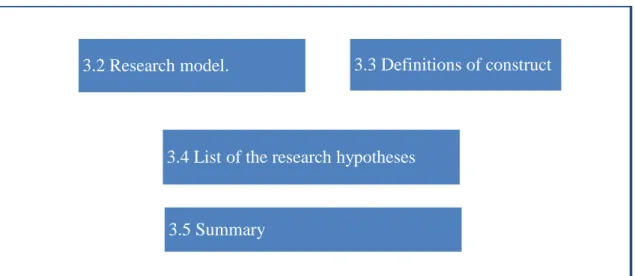
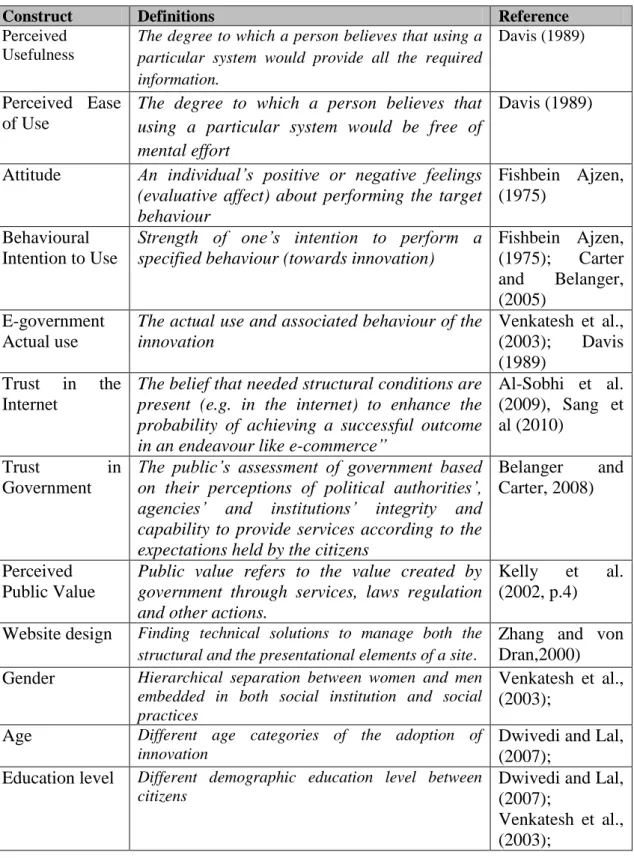
3.3. Definitions of constructs ... 81
3.4. List of the research hypotheses ... 82
3.5. Summary ... 84
Chapter 4: Research Methods Implementation ... 85
4.1. Introduction ... 85
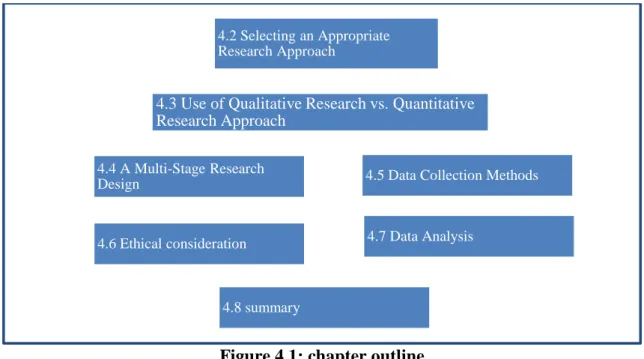
4.2. Selecting an Appropriate Research Approach ... 86
4.3. A Multi-Stage Research Design ... 88
4.4. Data Collection Methods ... 91
4.4.1. Questionnaire-based Survey design ... 92
4.4.1.1. Qualitative Research Methods – Interviews ... 99
4.4.1.2. Survey administration ... 102
4.4.2. Qualitative Research Methods – Interviews ... 105
4.5.Data Analysis ... 108
4.6. Ethical consideration ... 112
4.7. Summary ... 113
Chapter 5: Quantitative Data Analysis and Discussion ... 114
5.1. Introduction ... 114
5.2. Preparation of the survey data for statistical analysis ... 115
5.3. Response Rate and Respondents‟ Profile ... 115
5.4. Instrument validation ... 126
5.4.1. Reliability ... 126
5.4.2. Factor analysis ... 127
5.5. Structural Model ... 129
5.5.1 Basic Concepts of Structural Equation Modelling ... 130
5.5.2 Structural Equation Modelling Advantage ... 131
5.5.3 Result of Structural Equation Modelling ... 132
5.6. Discussion ... 139
5.7. Summary ... 148
Chapter 6: Qualitative Analysis and Discussion ... 150
6.1. Introduction ... 150
6.2. Government Interviews ... 151
Page | 6
6.2.2. Interview data analysis ... 153
6.2.3. Qualitative Data Analysis with NVivo ... 155
6.2.4. Data interpretation- bringing it all together ... 156
6.3. Citizens Interviews ... 167 6.3.1. Introduction ... 167 6.3.2. Analysis Results ... 167 6.4. Discussion ... 185 6.5. Summary ... 187 Chapter 7: Conclusion ... 189 7.1. Introduction ... 189
7.2. Research Summary and Answering Research Questions ... 190
7.3. Research Contribution ... 194
7.4. Practical implications and beneficiaries ... 197
7.5. Recommendation for Egyptian government ... 199
7.6. Scope of research ... 203
7.7. Model Future work ... 204
7.8. Concluding comments ... 205 References ... 207 Appendix A ... 227 Appendix B ... 233 Appendix C ... 234 Appendix D ... 235 Appendix E ... 236 Appendix F... 237
Page | 7
List of Figure
Figure 1.1: Chapter outline ... 12
Figure 1.2: The relationship between the research question, sub-questions, objectives and methods ... 18
Figure 1.3: Relationship between Contributions to Knowledge and Research sub- question .... 22
Figure 1.4: Thesis outline ... 24
Figure 2.1: Chapter outline ... 26
Figure 2.2: Theory of Reasoned Action (TRA) ... 46
Figure 2.3: Theory Planned Behaviour (TPB) ... 47
Figure 2.4: Unified Theory of Acceptance and Use of Technology (UTAUT) ... 48
Figure 2.5: Technology Acceptance Model ... 50
Figure 3.1: Chapter outline ... 61
Figure 3.2: Proposing new model with new variables ... 63
Figure 3.3: E-government Adoption Research Model ... 64
Figure 4.1: Chapter outline ... 86
Figure 4.2: Epistemological Assumption for Qualitative and Quantitative Research ... 86
Figure 4.3: Research design activities and methods of the study ... 91
Figure 4.4: Five point Likert scales ... 94
Figure 4.5: Survey administration process in the selected colleges ... 103
Figure 4.6: Survey administration process in the selected Internet cafes ... 103
Figure 4.7: The Quantitative Research Process ... 110
Figure 4.8: NVivo coding with sources ... 110
Figure 5.1: Chapter outline ... 115
Figure 5.2: The way of conducting transaction with public sector ... 123
Figure 5.3: The period citizens have been using governmental websites ... 124
Figure 5.4: common reasons for visiting government websites ... 124
Figure 5.5: reasons for not using e-services on governmental websites ... 125
Figure 5.6: Hypotheses testing results of e-government portals success model ... 136
Page | 8
Figure 6.1: Chapter Outline model ... 149
Figure 6.2: Organisation chart of MCIT ... 150
Figure 6.3: NVivo model for Egypt‟s e-government main challenges ... 154
Figure 6.4: NVivo model for factors that affect citizens‟ adoption of e-government ... 160
Figure 6.5: Female distribution ... 168
Figure 6.6: Male distribution ... 169
Figure 6.7: Integration of the research findings ... 187
Figure 7.1: chapter outline ... 189
Figure 7.2: Integration between research questions, objectives and contribution ... 192
Figure 7.3: Final Model ... 196
Figure 7.4: Final adoption model ... 196
Page | 9
List of Tables
Table 2.1: Definitions of E-government ... 29
Table 2.2: Developed vs. developing countries ... 35
Table 2.3: Findings related to the TAM core variables ... 56
Table 2.4: Findings related to the external variables to TAM ... 58
Table 3.1: Model constructs definitions. ... 80
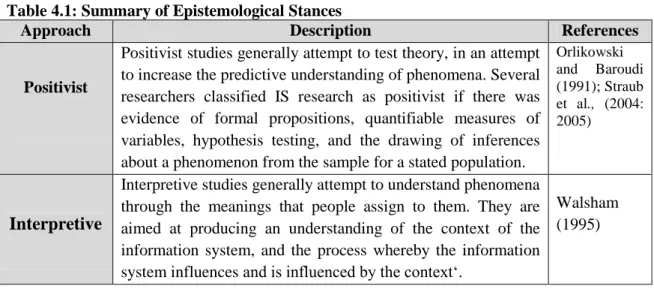
Table 4.1: Summary of Epistemological Stances. ... 87
Table 4.2: Construct items questions. ... 96
Table 4.3: Summarizes the selected branches. ... 101
Table 5.1: Gender as a determinant of E-government adopters and Non-adopters. ... 116
Table 5.2: Spearman's rho Correlations between Gender and E-government Adopters. ... 119
Table 5.3:Age as a determinant of E-government adopters and Non-adopters. ... 119
Table 5.4: Spearman's rho Correlations between Age and E-government Adopters. ... 121
Table 5.5: Education as a determinant of E-government adopters and Non-adopters. ... 122
Table 5.6: Spearman's rho Correlations between Age and E-government Adopters. ... 122
Table 5.7: Reliability test result. ... 127
Table 5.8: Factor analysis ... 129
Table 5.9: Model Fit indices for the research model ... 133
Table 5.10: Summary of hypotheses tests ... 134
Table 5.11: Squared multiple correlations of the research model ... 135
Table 6.1: Free nodes assigned to tree nodes representing e-government in Egypt. ... 152
Page | 10
Publication
ElKeshin, S., Saleeb, N., 2014. Investigating Suitability of Technology Adoption Models for E-government Implementation. In Computer Engineering & Systems (ICCES), 2014 9th International Conference (pp. 434-438). IEEE, 22-23 Dec. 2014, Cairo, Egypt.
ElKeshin, S, 2016. Factors for E-government Model Optimisation – Case Study Egypt. Presentation in ABRM – AASTMT International Conference on Globalisation, Entrepreneurship and Emerging Economies, 15-16 Feb. 2016, Alexandria.
To be published:
ElKeshin, S., Saleeb, N., 2016. A Conceptual Model for E-government Adoption in Egypt. In Computer Engineering & Systems (ICCES), 2016 11th International Conference. IEEE, 20-21 Dec. 2016, Cairo, Egypt
Page | 11
Glossary
ICT Information Communication Technology
G2C Government-to-citizens
G2B Government-to-business
G2E Government-to-Employee
G2G Government-to-government
MCIT Ministry of Communication and Technology CRM Citizen Relationship Management
MSAD Ministry of State for Administrative Development
TRA Theory of Reasoned Action
TPB Theory of Planned Behaviour
UTAUT Unified Theory of Acceptance and Use of Technology
TAM Technology Acceptance Model
PEOU Perceived Ease of Use PU Perceived Usefulness PPV Perceived Public Value TI Trust in Internet TG Trust in Government
WD Website Design
ATU Attitude
BI Behavioural Intention
PMO Program Management Office
Page | 12
1.
Introduction
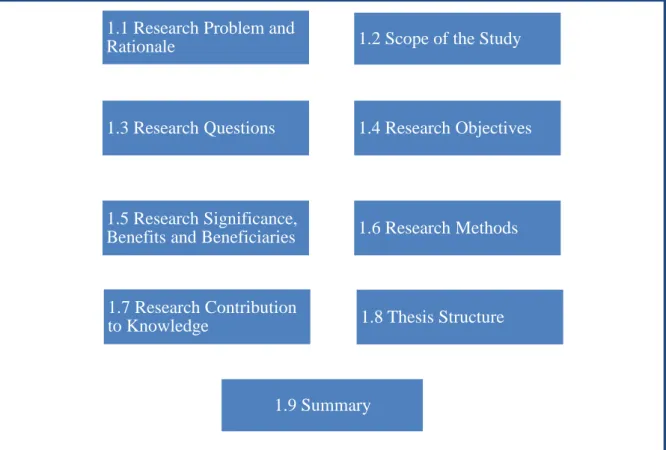
This chapter presents an introduction to the research problem undertaken by this study by first providing an overview of the importance of e-government adoption and rationale behind the study. It then presents the research scope, questions, research design, methods, contribution to knowledge and an outline for the whole thesis structure as shown in the following Figure 1.1.
Figure 1.1: Chapter outline
1.1. Research Problem and Rationale
Information and Communication Technology (ICT) can be considered as a vital enabler towards the development of any society. With the majority of countries across the globe having embraced new technologies and having connections to the Internet and the
1.1 Research Problem and
Rationale 1.2 Scope of the Study
1.3 Research Questions 1.4 Research Objectives
1.5 Research Significance,
Benefits and Beneficiaries 1.6 Research Methods
1.7 Research Contribution
to Knowledge 1.8 Thesis Structure
Page | 13
World Wide Web, more and more governments nowadays are looking at engaging these technologies in an effort to improve the way they offer services to citizens.
E-government is the use of information and communication technologies (ICT), especially the Internet and world-wide-web, to improve the efficiency, cost and quality of the government information and services provided to its stakeholders: citizens, businesses, employees and other government agencies (Srivastava and Teo, 2007). However, although the adoption of e-government has the potential to provide better services to citizens at lower costs, it has acceptance problems.
The acceptance and success of e-government is dependent upon citizen willingness to adopt this innovation (Carter and Balanger, 2005). However, many governments around the world still face the problem of low-level of citizen adoption of e-government services (Belanger and Carter, 2008, Lee et al., 2011, Hofmann et al., 2012, Muhammad et al., 2013, Rana et al. 2015).
E-government adoption occurs in a varying social political environment. Consequently, it must be carefully addressed not only from technological perspectives, but also from social, political and cultural perspectives. Without understanding what motivates the public to use e-government services, governments will not be able to take strategic actions to increase the e-government up-take (Gilbert et al., 2004). However, our understanding of citizen adoption of e-government services is currently lacking due to the following reasons:
Although technology adoption from the user perspective has been extensively studied in contexts such as e-commerce and the Internet (Tung and Rieck, 2005), relatively few studies have focused on citizen adoption of e-government services (Hofmann et al., 2012, Muhammad et al., 2013).
Page | 14
There is a lack of empirical research that considers not only technological issues of e-government adoption, but also behavioural issues (Hung et al., 2006, Al-Hujran et al., 2015).
Hence, more empirical studies are required in the area of e-government adoption to help governments to improve their understanding of the issues that affect citizen adoption of e-government services.
In addition, a careful review of the e-government adoption research shows that a large portion of the published research was conducted in developed countries. Hence, little is written about the factors influencing e-government adoption in developing countries. This knowledge gap is particularly apparent in the Arab world (Alhurjan and Chatfield, 2008, Al-Hujran et al. 2015, Rana et al. 2015). Therefore, the major objective of this research is to fill this gap in the literature by conducting empirical field research on e-government adoption in the Arab World, especially Egypt.
Furthermore, grounded in the Technology Acceptance Model (TAM) (Davis et al., 1989), as explained henceforth, this study develops a new conceptual model for factors affecting e-government services adoption by integrating the TAM with a set of social, political and design variables derived from the different research literatures: government and internet trust, perceived public value of e-government (which is the value that the public can acquire through the use of e-government services), and website design. This extended TAM model is to examine the impact of these factors upon citizen adoption of e-government services in developing countries with different national cultures and values, by specifically applying the new model to assess Egyptian e-government adoption.
Egypt has been selected for investigation as a representative of a developing country, which has a running e-government program since 2001 and offers many transactional
Page | 15
services (Sayed, 2004). Despite the high number of services offered online, limited numbers of users are using the services (MSAD, 2010, El Baradei1.L et al., 2012, Elkadi, 2013), Therefore, a better understanding of the factors that influence citizen adoption of e-government services is critically important in Egypt. This research can also have important implications for other Arab countries with similar circumstances.
1.2.
Scope of the Study
Two streams of e-government adoption research have been found in the literature: supply side and demand-side (Reddick, 2005). The first stream studies e-government adoption from a supply-side perspective (local and national government), which explores factors that affect the adoption and the implementation of e-government services by the government itself (Reddick, 2005). These factors include IT infrastructure, financial resources, skilled personnel, resistance to change, and red tape. The second stream studies e-government adoption from a demand-side perspective, which examines the factors that influence citizens to adopt and use e-government services. These factors include trust in Internet, trust in government, attitude, perceived usefulness, perceived ease of use, website design, and perceived public value.
However, while a large portion of the academic literature focusing on e-government adoption to date has focused on the supply-side of e-government adoption, relatively little is known about why, and under what circumstances, citizens adopt e-government services (Alhujran and Chatfield, 2008; Kumar et al., 2007; Muhammad et al., 2013, Rana et al. 2015). Therefore, the scope of this study is only computer literate citizens and the citizen‟s (demand-side) adoption of e-government.
Page | 16
1.3.
Research Questions
This study aims to address the following main research question and its sub questions:
How can citizen adoption of E-Government services in Egypt be enhanced? 1. What is the current state of e-government services adoption in Egypt? 2. What are the factors that influence the citizens' acceptance and adoption of
e-government services in Egypt?
3. What is the relative importance of these factors and the relationship between them?
4. How can the findings of this research assist Egyptian government and other Arab countries government in similar circumstances in planning and
implementing e-government adoption?
1.4.
Research Objectives
Building upon the research questions, the overall aim of this research is to identify the factors that influence citizens‟ adoption of e-government services in Egypt, and methods to enhance adoption. The following are the objectives of this research to achieve the main aim and answer the research questions:
1. Define the challenges that face the implementation of e-government in Egypt from government perspective.
2. Define the factors affecting citizen adoption of e-government from user and managerial perspectives
3. Develop and test a customised theoretical model depicting the main factors influencing citizen adoption of e-government services in Egypt. (This model integrates the TAM framework with a set of important factors identified from
Page | 17
literature to be most relevant to e-government adoption, namely website design, Government and Internet Trust, Perceived Public Value and demographic factors.)
4. Explore the relative importance of each factor for citizen adoption of e-government services.
5. Generate insight into the e-government phenomenon by providing some explanations for the findings, and suggesting some recommendations, and future directions.
Figure 1.2 below demonstrates the relationship between the research objectives and the research question, sub-questions, and research methods
Page | 18 Figure 1.2: Diagram showing the relationship between the research question / sub-questions, objectives and methods
Page | 19
1.5.
Research Significance, Benefits and Beneficiaries
Although the literature reports, as shown in the next chapter, that there are several studies on the e-government adoption conducted in the developed countries, there is a lack of empirical e-government adoption research that focuses on the adoption of such services in the Arab world including Egypt as will be demonstrated in the consequent chapter. Filling this gap in the literature is one of the benefits for conducting this study in a country such as Egypt, with different cultures and social values.
In addition, as mentioned earlier in this chapter, the literature reports the low level of citizen adoption of e-government services. The global average for government website usage by citizens is about 50% (UN E-Government Survey 2014). This low rate of e-government adoption is particularly noticeable in Egypt, as evidenced later. Therefore, empirical research in this area is a significant benefit, since it is likely that it will shed light on the important factors that may influence citizen adoption of e-government services. Identifying such factors will improve the likelihood of increasing the adoption rate of these services, by deepening the knowledge about the factors, which facilitate or hinder the adoption process.
The outcomes of this research are also believed to be of possible interest to the following beneficiaries:
1. Government officials who are managing e-government projects. The study as a whole is directed to meet the needs of this group by identifying the factors affecting citizen adoption of e-government services.
2. Officials responsible for e-commerce from the private sector. Considering the similarities between e-government and e-commerce, (as they both are services
Page | 20
offered to citizens online) they could benefit from the outcomes of this study to increase the rate of adoption of e-commerce services.
3. Researchers in the e-government area. The outcomes of this research will highlight the critical factors associated with e-government adoption in Egypt. Scholars may further explore in depth each factor, and its effects on different societies, and / or attempt to cover more variables.
4. The ultimate beneficiaries would be the users / citizens who will have more efficient e-government online systems to deliver their required services.
1.6.
Research Methods
Choosing appropriate research methods to conduct the study is an essential part in defining the steps to be taken to answer the research questions (Leedy, 2005). The combination of qualitative and quantitative research methods has received increased attention from IT/IS researchers (Myers, 1997). Diversifying the research methods is known as triangulation, which allows a better understanding of the research phenomenon, as multiple research methods increase the validity of the collected data and derived outcomes (Bouma, 1996). Therefore, a combined approach of qualitative and quantitative research strategies were used to explore the objectives of this research. They were used in complementary manner as described in the Methods chapter
(section 4.3,4.4).
Generally Quantitative research enabled the researcher to test the relationship between the research model variables and to provide evidence to support or disprove the research hypothesis (will be explained later in chapter 3)(Lee et al., 2005; Moon and Kim, 2001). This was done by analysing the results of an administered survey questionnaire to a random sample of the population in Egypt (adopters and non-adopters of
e-Page | 21
government) as explained in the subsequent Methods chapter(section 4.4.1, 4.4.2) and utilising statistical analysis techniques to test the derived model. Qualitative research was hence conducted in 2 forms.
1. Through semi-structured interviews with the e-government officials in the Ministry of Communication and Information Technology (MCIT), the National Information Technology Centre in Egypt (NITC)
2. Through semi-structured interviews with Egyptian citizens.
These enabled the researcher to understand in depth, the factors that influence the adoption of e-government services by the Egyptians from managerial and customer perspectives. It also provided an insight into the main challenges facing e-government implementation and provided up to date information about e-government in Egypt. The semi structured interviews allowed the comparison of the theoretical findings with the actual practice. The researcher administered the survey, and then conducted both kinds of interviews as shown in Figure 1.2 above.
1.7.
Research Contribution to Knowledge
The contributions to knowledge in the field of Information Systems made by this research are (as illustrated in Figure 1.3):
1. A conceptual model of user-related factors to enhance citizens‟ e-government adoption. This is developed and empirically validated, integrating a well-known and widely used adoption model (TAM) with a set of existing and new external factors identified in the literature, that are considered to be the most relevant to e-government adoption.
2. An inventory of governmental, political and social factors, that impact the citizens‟ decision to adopt e-government services, provided for both practitioners and researchers. This could help them to better position their nation-wide strategies to encourage faster and more efficient adoption of these services.
Page | 22 Figure 1.3: Relationship between Contributions to Knowledge and Research sub- questions
1.8.
Thesis Structure
This section provides an overview of the entire contents of the thesis, which starts with this chapter. The structure of the thesis is represented in Figure 1.4 below.
Chapter 2‘Literature Review’: The chapter provides a critical review of the existing literature in order to present what is already known about e-government adoption, and to identify any important issues related to e-government adoption. The chapter is organised as follows. First, it provides an overview of e-government, its definition, and its benefits and limitations. Second it talks about the model of technology adoption in order to identify the most appropriate theoretical background for this research.
Chapter 3 ‘Research Model and Hypotheses’: describes the development of the research model that will be the theoretical base for this research. After a short
Page | 23
discussion of the theoretical model components, the rationale for the relationships within the proposed theoretical model and research hypothesis are discussed.
Chapter 4 ‘Research Methods’: discusses the research methods and design of this study. The chapter is organised as follows. First, a brief overview of different research approaches, methods and strategies is given, followed by a justification for the choice of methods for this research, the data collection techniques, sampling strategy, instrument design, and sample techniques are then presented and details of the two phases (quantitative and qualitative) in which the research was conducted are explained. Then it describes the analysis approach for both methods. The chapter also discusses ethical consideration pertaining to the data collection methods.
Chapter 5 ‘Quantitative Data Analysis and Discussion’: provides a description of empirical data findings and analysis of data collected from the questionnaires. The chapter shows how the analysed results are linked to the research question by testing the research hypotheses. Finally, a discussion of the empirical findings and interpretation of results is provided including the differences between e-government adopters and non-adopters.
Chapter 6 ‘Qualitative Analysis and Discussion’: presents the results of analysing the semi-structured interviews conducted with key e-government officials in Egypt and Egyptian citizens. The aim of conducting these interviews was to supplement the findings of the questionnaire survey. As they are responsible for e-government planning, development and management in Egypt, senior managers from the e-government Program Management Office (PMO) at the Ministry of Communication and Information Technology (MCIT) and The National Information Technology Centre (NITC) in Egypt were interviewed to explore important issues of e-government
Page | 24 Chapter One Introduction Chapter Two Literature review Chapter Three
Research model and hypotheses
Chapter Four Research methodology
Chapter Five Survey data analysis
Chapter Six Interviews data analysis
Chapter Seven Discussion and conclusion
adoption in Egypt from a managerial perspective. Finally it provides a discussion of the empirical findings and interpretation of results.
Chapter 7 ‘Conclusion’: Summarizes the research, shows how the implications of the findings affect the adoption of e-government as well as discusses implications and contributions to knowledge. The chapter also discusses future works, strengths and limitations.
Page | 25 Figure 1.4: Thesis outline
1.9.
Summary
In this introductory chapter, the foundation for the thesis investigation has been outlined and justified. The research questions, objectives and methods were briefly discussed in order to shed more light on the way data were collected and analysed. In addition, research scope, implications and the study significance, contributions to knowledge and beneficiaries were also covered before the thesis outline concluded this chapter.
Page | 26
2
Literature Review
2.1
Introduction
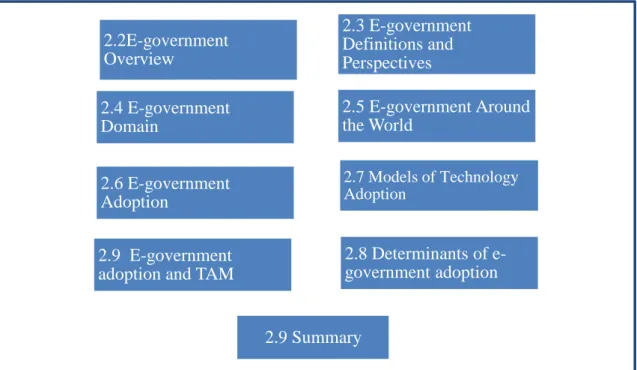
This chapter seeks to define the e-government concept and its key characteristics, including: definitions, benefits, challenges and stages of e-government maturity. It investigates the state of e-government development in developing countries, with a focus on the Arab World and Africa. It also examines existing technology adoption models in order to identify the most appropriate theoretical background for this research. The following diagram shows the chapter outline
Figure 2.1: Chapter Outline
2.2
E-government Overview
The first decade of the 21st century has witnessed the confluence of two powerful, long-term trends in the business world: the shifting of the economy from goods to services,
2.2E-government Overview 2.3 E-government Definitions and Perspectives 2.4 E-government Domain 2.5 E-government Around the World 2.6 E-government Adoption 2.8 Determinants of e-government adoption 2.9 E-government
adoption and TAM
2.7 Models of Technology Adoption
Page | 27
and the rapid expansion of the information economies and electronic networks. This has given rise to the era of “e-service”. In the academic community there is an increased interest among researchers in understanding how e-servicing impacts on citizens; their satisfaction, their loyalty, their service quality expectations, and how this knowledge leads to better frameworks for e-service provision (Rust and Kannan, 2002; Boyer et al., 2002; Chatfield and Al Hujran, 2007; Esteves and Joseph, 2008, Abdel-Fattah, 2015).
In the government context, the evolution of “e-government” can be attributed mainly to the prevalence of the information age, since the expansion of Information Communication Technology (ICT) has affected the functions and roles of governments (Palanisamy, 2004). ICT is becoming a need not a choice for government to survive in the digital economy (AL-Rababah & Abu-Shanab, 2010). That is why e-government has been identified as one of the top priorities for governments across the world. Although ICT has been utilised in government for more than 30 years, the e-government era from 2000 onwards, in particular, has been seen as a breakthrough for those with technology-driven views on change in government (Andersen et al., 2010). On a global scale, there is a set of labels, such as e-government, e-governance, one-stop government, digital government, and online government that reveal the governmental quest for transformation. This is done by pushing and pulling those within government, citizens and relevant private sector actors to adapt to the use of ICT in actions such as the use of online government services.
Organisations and agencies are rapidly setting up e-government systems to provide effective services not only to citizens, but also to private businesses and public administration (Chen et al., 2006). It is an opportunity for governments to take advantage of the new opportunities offered by this expansion of ICT. This would help them embrace remarkable processes of reformation to improve their performance, enhance transparency and provide greater simplicity in their relations with citizens and
Page | 28
businesses, after suffering from administrative incompetence and a lack of fast and effective services.
2.3
E-government Definitions and Perspectives
There are many definitions of e-government that have emerged and been dealt with in papers published over the past decade. Despite its relatively short history, research on e-government has been strongly characterised by a multidisciplinary nature (Lee et al., 2008). Therefore, the definition of e-government is a diverse and debatable issue, with a broad range of authors, papers, and disciplines contributing to it. The definitions also differ depending on e-government interests and perspectives as well as the community goals and values (Lowery, 2001). With all these definitions, Halchen (2004) claims that there is no universally accepted definition of the e-government concept. However it is argued that when the government is electronic, that means it has electronic databases and communication channels so that the public organisations and agencies can exchange information electronically not manually or paper-based.
Table 2.1 illustrates the different definitions of e-government found in literature. Although it is beyond the scope of this thesis to investigate all e-government definitions, the aim behind illustrating those definitions is to explore the main e-government characteristics (highlighted in red) identified from these definitions to aid in identifying the characteristics to be investigated in this research that affect e-government services‟ adoption.
For the purpose of this research, the researcher defined e-government as the use of ICT in the government organisation to improve efficiency and effectiveness in government administration; and to provide electronic services to other stakeholders including citizens and businesses.
Page | 29 Table 2.1: Definitions of E-government
Authors Definition
Belanger and Carter, 2008
The use of information technology to enable and improve the efficiency with which government services are provided to citizens, employees, businesses and agencies.
Chen et al., 2007 “Digital” government is the initiative taken by governmental agencies and organisations to use the Internet technology in increasing their working
effectiveness and efficiency.
Jones et al., 2007 Constitutes a burgeoning phenomenon with huge investments being made to modernise public sector institutions at all levels. It is a dramatic change and problematic in any organisation, and the political, managerial and cultural environments set within government present an additional challenge.
Gunter, 2006 The use of information and communication technologies (ICT) in orders to deliver public services to citizens and businesses, and entails the transformation of public services available to citizens using new organisational processes as well as new technological trends.
InfoDev, 2002 The use of (ICT) to transform government by making it more accessible, effective and accountable.
Aldrich et al., 2002 Exploiting the power of information to help transform the accessibility, quality, and to help revitalize the relationship between customers/citizens and public bodies who work on their behalf.
United Nations, 2002 The use of all information and communication technologies, from fax machines to wireless palm pilots, to facilitate the daily administration of government. AFFIRM, 2001 Electronic government should enhance the ability of citizens, business and
government to engage in transactions with the public sector. It is also about
saving money and increasing efficiency.
Some of the characteristics that had been extracted from those definition to be used in this research were the accessibility of the website , the values gained by the customers from using electronic government for example saving money, the effectiveness of the data in the website
Page | 30
The absence of agreement on the definition of e-government could also be the result of viewing e-government from different perspectives, for example, those of societies, businesses, economies, services, organisations and politics. The definition could also vary according to the values, goals and cultures of a community as the United Nations (2002) argues that due to some economic and cultural conditions in some countries, electronic government could be the only means of reaching a reasonable level of electronic transaction with different stakeholders (Stoltzfus, 2005; Yildiz, 2007).
2.4
E-government Domain
The relevant stakeholders are not just those who make use of the service. They can be involved in any stage of electronic service development and delivery for example those who are responsible for organising and supervising public services (Vassilakis et al., 2005) or those who possess and provide the necessary background knowledge for designing and implementing services. Also they can be those who provide the necessary technological knowledge or the development of the service, adopters who contribute to getting others ready for the electronic service (Heeks, 2006), or end-users who make use of the service. Even the end users being served by government can be grouped according to the extent to which the service is designed to help them.
Most of the existing literature refers to four types of e-government interactions (Rust and Kannan, 2002; Seifert and Petersen, 2002; Evans and Yen, 2005; Siau and Long, 2005):
1. Government-to-citizens (G2C): government aims to interact with citizens.
2. Government-to-business (G2B): government aims to interact with business enterprises.
3. Government-to-government (G2G): government aims to make services more friendly, convenient, transparent, and inexpensive.
Page | 31 4. Government-to-Employee (G2E): government aims to empower employees to
assist citizens in the fastest and most appropriate way, speed-up administrative processes, and optimise governmental solutions.
Among the four areas, G2C and G2E involve interaction and cooperation between government and individuals, while G2B and G2G deal with the relationship between government and organisations. Moreover, G2C and G2B involve external interaction and collaboration between government and outside institutes, such as individual citizens and businesses; while G2E and G2G involve the internal interaction and cooperation between governments and their employees, as well as between governments at different levels and distributed locations.
This research will focus on G2C. Bonham et al., (2001) report that G2C initiatives are designed to facilitate citizen interaction with government, which is what some observers perceive to be the primary goal of e-government (Seifert, 2008; Carter and Bélanger, 2005). These initiatives attempt to make transactions, such as renewing licenses and certifications, paying taxes and applying for benefits, less time consuming and easier to carry out. G2C initiatives also often strive to enhance access to public information through the use of dissemination tools, such as Web sites and/or kiosks. Some e-government advocates suggest that one of the goals of implementing these initiatives should be to create a "one-stop shopping" site where citizens can carry out a variety of tasks, especially those that involve multiple agencies, without requiring the citizen to initiate contacts with each agency individually. A potential outgrowth of G2C initiatives is that they may facilitate citizen-to-citizen interaction and increase citizen participation in government by creating more opportunities that overcome possible time and geographic barriers, thereby connecting citizens who may not ordinarily come into contact with one another (Seifert and Petersen, 2002). Although e-government has clear benefits for businesses and governments themselves, citizens may actually receive the
Page | 32
widest array of benefits from e-government. G2C initiatives can facilitate involvement and interaction with the government, enhancing the “degree and quality of public
participation in government” (Kakabadse et al., 2003). G2C interactions can allow citizens to be “more informed about government laws, regulations, policies, and services” (Muir and Oppenheim, 2002).
For the citizen, e-government can offer a huge range of information and services, including information for research, government forms and services, public policy information, employment and business opportunities, voting information, tax filing, license registration or renewal, payment of fines and submission of comments to government officials‟. To provide citizens with personalised services, governments must make all information and services available from a single-integrated source (Reffat, 2003). Through portals and one-stop shops, the web can be used to create a single face to the public, hiding the internal complexity of government. Also, through a single access point, citizens can better articulate their expectations and needs from government. It reinforces their participation in local community life and the democratic process since they can interact with government and access public information, official documents and administrative proceedings (Reffat, 2003). For those who do not have time to go to city hall or committee hearings to participate in public debates, they can instead send an email or contribute to an online discussion forum. Based on the aforesaid G2C conceptions, the following objectives can be related to the G2C dimension:
To provide one-stop, on-line, access to information to individuals. Citizens should be able to find what they need quickly and easily. Receiving services should be citizen-focused and not agency focused.
Disintermediation of civil service staff, i.e. delivering services directly to citizens.
Page | 33
Building and enhancing trust.
As a summary, the previous section provides evidence for the importance of enhancing adoption of electronic government services which is the focus of this research.
2.5
E-government Around the World
Growing access to ICT has encouraged many governments to integrate new technology into their national economic development strategies (Tahrani, 2010). It is becoming an increasingly important public service tool for many governmental departments around the world (Nour et al., 2008), and the scale of activity on the part of public sectors in leveraging IT has increased in volume (Smith, 2008). The vast majority of public organisations around the world have established websites and provide public information to citizens (98% with website – 2% without websites) (United Nation, 2010). In addition, many transactions are now conducted online; these include, applying for jobs, completing tax returns and renewing drivers‟ licenses (West, 2004). However, financial transactions and opportunities for interactive political and policy participation are limited (Holden, 2003, Šèeulovs et al., 2015).
There are differences in the adoption and implementation of e-government within government organisations at a national and international level (Heeks, 2002; Moon, 2002). These differences can be attributed to the individual organisational requirements, circumstances, readiness, structure, size and cultures (Lam, 2005).
This section describes the e-government experiences of several governments. It begins by presenting experiences from both developed and developing countries, and then it moves to the e-government initiative in Egypt.
2.5.1 Developed Countries versus Developing Countries
Although e-government technologies have the potential to improve the lives of the world‟s population, particularly those who live in developing countries, the developed
Page | 34
countries such as the U.S., Canada, UK, Australia, Norway and Germany have so far been the leaders in e-government (Accenture, 2010), reaping the vast majority of initial gains of e-government implementation. The developed countries continue to launch multi-year programs to create more citizen-centred, effective and efficient governments using web technology (Chan et al., 2010).
Actually, the gap between developed and developing countries in Internet technological infrastructures, practices and usage has been wider rather than narrower over years (Chen et al., 2006, Khoury et al., 2015). Besides the lack of sufficient capital to build up an expensive national information infrastructure on which e-government is based, developing countries also lack sufficient knowledge and skill to develop suitable and effective strategies for establishing and promoting e-government (Khoury et al., 2015).
Every year, the UN releases a report on the developing countries and compares their economic conditions in several different categories. These countries were chosen based on their low GDP per capita, their weak human assets and their high degree of economic vulnerability (Chen et al., 2006). For example : According to its recent release (United Nations, 2010), it has found that many developing countries have been investing in streamlining their national and ministry portals and websites to offer more e-services and more actively engage citizens in dialogues with government. Also, the digital divide between the developed countries and developing countries is gradually closing in the e-government arena.
Page | 35 Table 2.2: Developed vs. developing countries Source: (Chen et al., 2006, Diaz et al., 2015)
Differences Developed Developing
Technical Staff Has a current staff, needs to increase technical abilities and hire younger professionals
Has outsourcing abilities and financial resources to outsource;
Current staff would be able to define requirements for development
Does not have a staff, or has very limited in-house staff
Does not have local outsourcing abilities and rarely has the financial ability to outsource;
Current staff may be unable to define specific requirement
Infrastructure Good current infrastructure High Internet access for employees and citizens
Bad current infrastructure
Low Internet access for employees and Citizens
Citizens High Internet access and computer literacy; still has digital divide and privacy issues
Relatively more experienced in democratic system and more actively participate in governmental policy-making process
Low Internet access and citizens are reluctant to trust online services; few citizens know how to operate computers Relatively less experienced in democratic system and less active participation in governmental policy-making process
Government Officers
Decent computer literacy and dedication of resources; many do not place e-government as a high priority
Low computer literacy and dedication of resources; many do not place e-government at a high priority due to lack of knowledge on the issue
As we can see lack of technical staff, infrastructure, citizen and government officer IT literacy all have an adverse effect on e-government adoption, which is to be investigated in this research
2.5.2 E-government in Egypt
In order to understand the key factors that affect e-government development in Egypt, it is useful to provide a description of the current Egyptian approach to e-government. This description will begin with a brief history of the country‟s background to set the scene for the environment that e-government adoption resides in, and then focus on the e-government programme background, the ICT initiatives within the Egyptian government and its partnership with international corporations.
Page | 36
Background of Egypt
Egypt possesses a diversified economy, with sectors such as tourism, agriculture, and industry. The Egyptian economy is rapidly developing, due in part to legislation aimed at luring investments, coupled with both internal and political stability, along with recent trade and market liberalisation. Economic conditions have started to improve considerably after a period of stagnation from the adoption of more liberal economic policies by the Government, as well as increased revenues from tourism and the stock market
The IMF report (2010) indicated that Egypt‟s economy is elastic to the economic crises. Sustained and wide-ranging reforms have reduced fiscal, monetary, and external vulnerabilities, and improved the investment climate. These reforms have bolstered the economy‟s durability and provided breathing space for appropriate policy responses. These developing conditions have encouraged the government to implement an e-government services strategy, the efficiency of which is under investigation in this research.
ICT Initiatives and government reform
The Government of Egypt realised that the development of a strong ICT sector is its key to fostering local competitiveness in the global arena. The ICT sector has expanded, operating with companies such as Microsoft, Oracle and other major corporations, as well as many small and medium enterprises. The sector has been stimulated by new Egyptian entrepreneurs with Government encouragement. To back up the sector, the government established the Ministry of Communication and Information Technology (MCIT) in October 1999. Empowered by strong executive privileges, the Ministry had two mandates. The first was to convert Egypt into an information society, and the second to create a vibrant and exportable ICT industry. Upon establishment, the Ministry laid down the national plan for ICT, which focused mainly around defining a
Page | 37
clear road map for Egypt to integrate smoothly in the global economy (MCIT, 2004). The Egyptian Information Society Initiative (EISI) was a major milestone for Egypt to bridge the digital divide and to convert to an Information Society.
E-government Initiative
Egypt has taken the e-government initiative, since the introduction of MCIT in 1999, as part of its plan to turn Egypt into an information-based society (Azab et al., 2009). Egypt's commitment to utilising technology for the purpose of economic and social progress was further realised when the Egyptian government announced an effective e-government program that integrates ICT technologies to deliver e-government services at citizens‟ convenience (MCIT, 2004).
The program officially started in July 2001 but had been planned since October 2000. The vision of the e-government initiative in Egypt was “delivering high quality government services to the public in the format that suits them”. Such vision relied mainly on three principles (MCIT, 2004) that include:
Citizen-centric service delivery: The program slogan is "government now delivers" which reflects the government‟s intention to develop a one-stop shop e-services approach focused on citizens' needs.
Community participation: The EISI Government program is a project with nationwide impact, thus community participation is a must. Citizens' demands are constantly being analysed and reflected upon, and private/public sector companies are active participants in the project's implementation and management.
Efficient allocation of government resources: The project proposes techniques for increasing the level of efficiency of the Egyptian Government. Productivity,
Page | 38
cost reduction, and efficient allocation of resources are among the major expected outcomes from project implementation.
The official inauguration of the Egyptian e-Government portal (www.egypt.gov.eg) took place on 25 January 2004, which was a major first step in coordinating and integrating government information and services. Available in both Arabic and English, the user-friendly portal targeted citizens, foreigners and businesses alike (United Nations, 2004). The target was making the beneficiaries feel a positive change by facilitating the services provided to them. The portal tailored government services to meet citizens‟ and investors‟ needs and expectations. The portal also introduced the Citizen Relationship Management culture (CRM) to the government, where citizens are viewed as customers and government organisations are constantly seeking their satisfaction. Investors came out as the main beneficiaries from that project.
Among the services that were placed in the portal as pilots were telephone e-billing and birth certificate issuing (Microsoft Egypt Press, 2004). Telecom Egypt (the national telephone service provider) offered online invoice query and payment via credit cards. Although payment online is still 5% of query transactions, it is considered a notable figure, given that credit card penetration in Egypt is still low and culture awareness of e-services is still in its infancy. Although at first the Egyptian e-government portal was not well integrated with, or promoted at other Egyptian government sites, this was the stage of e-maturity that Egypt had reached.
In 2004, the Ministry of State for Administrative Development (MSAD) became the organisation responsible for the e-Government program in Egypt. The MSAD perceived Information and Communication Technology (ICT) as a strategic tool that could be used in implementing the National Development Program, which seeks to raise the efficiency of the State‟s administrative bodies, and deliver governmental services to
Page | 39
citizens at a fast pace in an environment that is highly efficient and effective through various interactive service channels at their convenience (MSAD, 2010). Therefore, the Ministry now develops and implements a number of projects that achieve this vision through a system of integrated management for the modernisation of the Egyptian Government.
The first services offered through Egypt's gateway were electricity and telephone billing, and payment of traffic fines. MSAD moved in many areas for speedy implementation and launch of this strategic project. This included setting up the required infrastructure, i.e. laws and regulations, technological frameworks, government website, rules and specifications. This axis included issuance of four documents concerning government networks, security systems, safety and document handling systems. This is in addition to putting licence contracts for personal computer programs into effect in cooperation with Microsoft. The other axis included services surch as electronic payment of telephone and electricity invoices and the like. The third axis focused on the mechanisation of ministries' Cabinets and affiliated authorities. Contracts were concluded for the implementation of related applications on resource planning and management, including inventory, purchases, budget accounts, and personnel affairs. MSAD made great strides in the implementation of e-government.
Similar strides to overcome some barriers are needed so that Egyptian society can benefit from the services offered by the project. MSAD also included a special track for the automation of local governorates in the e-government project. This track aimed at simplifying procedures for local government bodies and establishing backend systems to support the online delivery of government services. Through this project, rural area residents would not have to go to service providers in the capital or the big cities and waste time and money.
Page | 40
Egypt‟s e-government program has identified a number of objectives to realise a successful implementation of e-government (MCIT, 2004; Azab et al., 2009) including:
Delivering services to the public where they are, in the format that suits them, at the right time and allowing them to share in the decision making process.
Creating an environment conducive to investors by streamlining procedures, easing access to government services and providing one-stop shopping for essential business services, thus encouraging foreign and local investment. Providing accurate and updated information to support the decision making
process, and to help in planning and following up on the different long-term development initiatives.
Deploying new philosophies and practices of modern management in the government in a mode that will make government operations more efficient and cost effective.
Reducing government expenditure by introducing new models for procurement, and Enterprise Resource Planning.
Fostering local competitiveness and increasing globalisation readiness to ensure the smooth integration of the Egyptian government in the global community, both regionally and internationally.
Egypt‟s e-government programme is in continuous progress , according to the united nation e-government survey (2014) report, Egypt was found from the countries with high e-government development index (EGDI) between 0.50-0.75. The report also stated that those countries with high EGDI have considerable opportunity to advance their e-government development. With clear strategies, smart investment in ICT infrastructure, continued investment in primary, secondary and tertiary education, as well as through radical transformation in offering online public services, governments
Page | 41
can achieve more to follow the upward trend. Which lead to the one of the importance of this research output which put eyes on the problems and that face the government in the implementation of e-government as will be explained in the qualitative result chapter and introduced solutions.
Government main objectives was to implement e-government successfully in order to deliver the services to the citizen and convince them to use it, but actually this is not the case , government had obstacles in the implementation process (explained in chapter 6 section 6.2.4) which lead to low level of e-government adoption. As stated in chapter one(section 1.2) the scope of this research investigate the adoption and implementation problem from both citizen and government point of views.
2.6
E-government Adoption
There is no clear definition of Government-to-Citizens (G2C) e-government adoption (Kumar et al., 2007). Researchers refer to it as the „intention‟ (Carter and Belanger, 2005; Warkentin et al., 2002) or „willingness‟ (Gilbert et al., 2004) to use e-government information and services. Warkentin et al. (2002) define e-government adoption as “the intention to engage in e-government, which encompasses the intentions to receive information, to provide information and to request e-government service”. Similarly, Kumar et al. (2007) define it as “a simple decision of using, or not using, online services”. For the purposes of this study, e-government adoption refers to the intention of citizens to use e-government information and services.
However, despite the diffusion of e-government websites and the growing investment in e-services at both national and local government levels, several researchers reported the problem of low level of citizen adoption of e-government services (Belanger and Carter, 2008; Kumar et al., 2007,Fu et al., 2006, , Hofmann et al., 2012, Lee et al., 2011, Muhammad et al., 2013, Rodrigues et al., 2016).
Page | 42
For example, Belanger and Carter (2008) found that despite the governments‟ growing investment in electronic services, citizens are still more likely to use traditional methods, e.g., phone calls or in person visits, than the internet to interact with government. While Kumar et al. (2007) also highlighted this problem when they found that the rate of adoption of e-government has globally fallen below expectations, although some countries are doing better than others and Muhammad et al (2013) discovered that despite the readily available tax preparation software and its promotion by the government, only 40% of all taxpayers switched to eTax and most taxpayers were unwilling to give up their paper forms. Thus, the problem of underutilisation still remained and plagued governments. The problem of low G2C e-government adoption also motivated Choudrie and Dwivedi (2005) to empirically examine the citizen awareness and adoption of e-government initiatives in the United Kingdom (UK). They concluded from the results of this research, that the government agencies could better understand the problem of low adoption of e-government.
In addition, prior research provided empirical evidence of a less than desired level of G2C e-government adoption in both developed, and developing countries. As expected, researchers who conducted G2C e-government adoption studies in developing countries reported significantly low levels of G2C e-government adoption.
Similarly, Jordan faces the problem of low level G2C adoption of e-government services. The Jordanian government announced some statistics about ICT usage by households in Jordan (MOICT, 2007). These results showed that only 31% of the households are aware about e-government services in Jordan. Another study in Kuwait also showed that only 23.6% of the respondents were using e-government services (AL-Awadhi and Morris, 2008).
Page | 43
Due to the notable low level citizen adoption of e-government information and services worldwide, several researchers (Hofmann et al., 2012, Lee et al., 2011) were suggesting the need for more research in the area of G2C e-government adoption. According to these researchers, this research assists governments to improve their understanding of the factors that affect citizen adoption of e-government services, and therefore take the necessary strategic actions to meet their citizens‟ needs.
From the light of the above discussion, it can be concluded that governments still face the challenge of the low level of G2C e-government adoption. However, while a large portion of the e-government adoption academic literature to date has focused on the national and local government‟s adoption of e-government, relatively little is known about why, and under what circumstances, citizens adopt e-government services (Alhujran and Chatfield, 2008; Carter and Belanger, 2005; Choudrie and Dwivedi, 2005; Gilbert et al., 2004; Tung and Rieck, 2005). Therefore, the main focus of this study is to investigate the determinants that influence citizen‟s adoption of e-government information and services in developing countries (Egypt).
2.7
Models of Technology Adoption
This section highlights the need for studies that investigate the adoption and citizens‟ „behaviour‟ of e-government services, examines the theories that explain technology adoption that are relevant for this research, differences between them, and reasons behind using TAM theory in particular. The study of adoption, and its usage, is considered to be a mature area of research within the IS discipline (Venkatesh et al., 2003; Hu et al., 1999). Over the last three decades, a number of researchers have adopted, modified and validated many theoretical models in order to understand and predict technology acceptance and usage (Venkatesh et al., 2003; Hu et al., 1999). The
Page | 44
models that have been taken and used from another discipline and developed by IS researchers, include:
Theory of Reasoned Action (TRA) (Fishbein and Ajzen, 1975); Innovation Diffusion Theory (IDT) (Rogers, 1995);
Theory of Planned Behaviour (TPB) (Ajzen, 1991; 1985; Ajzen and Fishbein, 1980);
Technology Acceptance Model (TAM) (Davis, 1989; Davis et al.,1989); Diffusion of Innovation Theory (DOI) (Rogers, 1995).
Venkatesh et al., (2003) argue that researchers are able to choose a suitable and favoured model and ignore the contributions from alternative models. This led Venkatesh et al., (2003) to review, discuss and integrate elements across eight prominent user acceptance models (TRA, TAM, the Motivational model, TPN, a model combining the Technology acceptance model and the TPB; MATH, DOI, and the Social cognitive theory) that resulted in proposing:
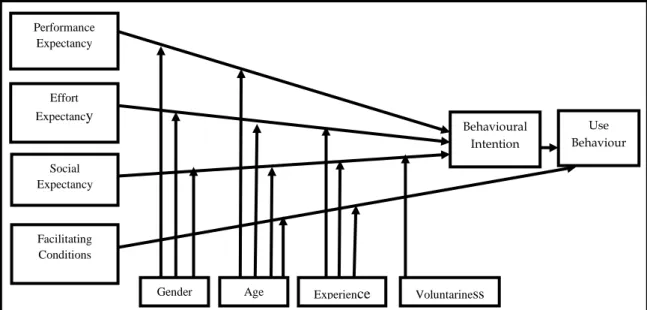
Unified Theory of Acceptance and Use of Technology (UTAUT) (Venkatesh et al., 2003).
Some of these theoretical models are considered and believed to be the most robust and significant in describing IT/IS adoption behaviour. The following paragraphs offer a brief explanation of these technology acceptance theories.
Page | 45
2.7.1 Theory of Reasoned Action (TRA)
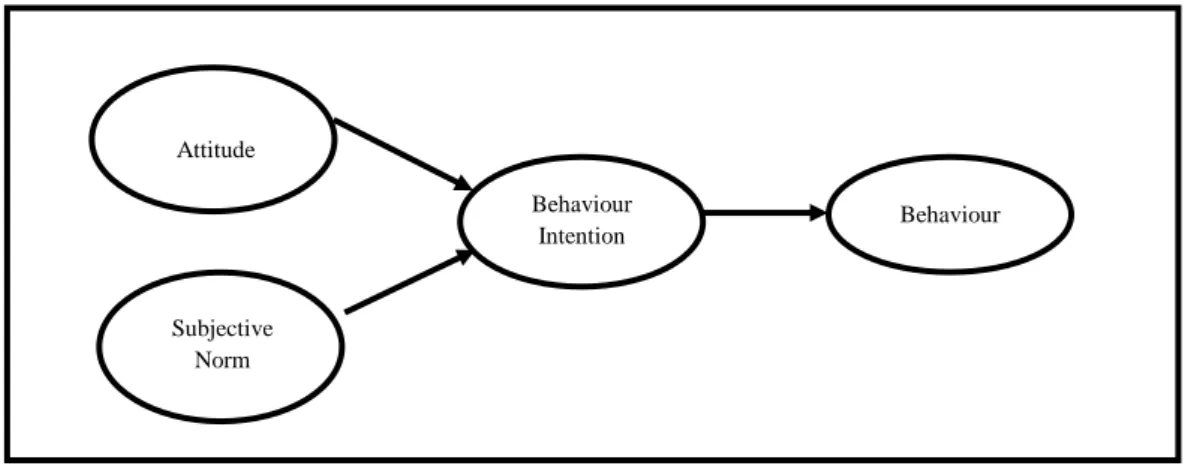
Figure 2.2: Theory of Reasoned Action (TRA). Source: Ajzen & Fishbein, (1980)
TRA (Fishbein and Ajzen, 1975; Ajzen and Fishbein, 1980) is a well-accepted and widely studied intention model that has been used successfully to explain behaviour across a wide variety of settings (Chau, 1996; Chen et al., 2002, Davis et al., 1989; Karahanna et al., 1999; Venkatesh and Smith, 1999). According to TRA (Figure 2.2), an individual„s behaviour is best predicted by his/her behavioural intention, which in turn is determined by the person‟s attitudes and subjective norm. Behavioural intention refers to the strength of one‟s intention to perform a specified behaviour (Davis at al., 1989). Subjective norm is defined as beliefs about what others will think about the behaviour (Fishbein and Ajzen, 1975). That is if an individual believes that most of the people who are important to him perceive the outcome of performing the behaviour as positive, he/she will be more likely to perform the behaviour. TRA is originally based upon the aim to explain strong-willed behaviour. TRA scope of behaviours therefore excludes a wide range of behaviours that are for instance impulsive, spontaneous, the result of cravings, or simply mindless because their performance may not be completely voluntary or because the engagement into these behaviours is not out of conscious intention of the actor to do so (Beekens, 2011). Also, TRA excludes behaviours that require specific skil