University of Reading
Building Energy Management and Occupants’ Behaviour
-
Intelligent Agents, Modelling Methods and Multi-objective
Decision Making Algorithms
A thesis submitted in partial fulfilment of the requirements for
the degree of Doctor of Philosophy at the
School of Built Environment
Lai Jiang
I
Declaration
I confirm that this is my own work and the use of all material from other sources has been properly and fully acknowledged.
II
Acknowledgements
I would like to extend thanks to people who have helped me during my PhD period. First of all, my deepest gratitude goes to my first supervisor, Professor Runming Yao, for the patient guidance and suggestions she has provided. Without her support and encouragement this project goal would not have been achievable. I would also like to express my sincere thanks to my other supervisors, Professor Kecheng Liu and Professor Rachel McCrindle for their valuable comments at various stages during this project.
Thanks must go to Dr. Marylin J. Williams and Mr. Sandro Leidi for their advice at the initial stage of this research. I would like to thank Mr. Shaoxing Zhang for his assistance during the experimental period. I have great pleasure in acknowledging Howard Billam, Roger Townsend and Lucina Cruickshank, who proofread the thesis. I greatly appreciate the UK Engineering and Physical Sciences Research Council (EPSRC) Doctor Training Grant / The University of Reading International Research Studentship, not only for providing the scholarship which allowed me to undertake this research, but also for funding me to attend conferences and meet people in the similar research field. Data supporting the results reported in this thesis can be accessed from the University of Reading Research Data Archive at http://researchdata.reading.ac.uk/id/eprint/78 ( http://dx.doi.org/10.17864/1947.78). Finally, I would like to thank my parents and my wife Feifei Song for the love, encouragement and support from them.
III
List of Publications
Jiang, L., Yao, R., Liu, K., and McCrindle, R., (2013) Energy Management System Design for Energy Efficient Buildings. Proceedings of 6th International Conference on Sustainable Development in Building and Environment, Chongqing, China Yao, R., Luo, Z., Jiang, L., Luo, Q., Yang, Y. and Gao, Y., (2013) Urban microclimates and urban heat island in Chongqing, China. Report. RICS, London. Yao, R., Luo, Q., Luo, Z., Jiang, L. and Yang, Y. (2015) An integrated study of urban microclimates in Chongqing, China: historical weather data, transverse measurement and numerical simulation. Sustainable Cities and Society, 14. pp. 187-199. ISSN 2210-6707 doi: 10.1016/j.scs.2014.09.007
Yang, Y., Yao, R., Li, B., Liu, H. and Jiang, L. (2015) A method of evaluating the accuracy of human body thermoregulation models. Building and Environment, 87. pp. 1-9. ISSN 0360-1323 doi: 10.1016/j.buildenv.2015.01.013
Jiang, L. (2015) A Personal Thermal Sensation Model Based on Occupants’ Feedback. Proceedings of 7th International Conference on Sustainable Development in Building and Environment, Reading, UK
Jiang, L. and Yao, R. (2016) Modelling personal thermal sensations using C-Support Vector Classification (C-SVC) algorithm. Building and Environment, 99. pp. 98-106. ISSN 0360-1323 doi: 10.1016/j.buildenv.2016.01.022
IV
Table of Contents
Declaration ...I Acknowledgements ... II List of Publications ... III Table of Contents ... IV List of Figures ... VIII List of Tables ... XI List of Abbreviations ... XII Abstract ... XIV
Chapter 1 : Introduction ... 1
Background and Research Question ... 1
Aims and Objectives of the Research ... 5
Applied Research Approaches ... 6
Thesis Structure ... 7
Output of the Research ... 10
Chapter 2 : Literature Review and Research Methodology ... 11
Literature Review ... 11
2.1.1 Building Energy Management Systems ... 11
2.1.2 Data collection and Storage Technologies for BEMS ... 13
2.1.3 The Control of HVAC System in BEMS ... 15
2.1.4 Applications of Agent based Technologies in the Built Environment 16 Research Methodology ... 24
2.2.1 Research Design ... 24
2.2.2 Experiment and Data Collection ... 25
2.2.3 Experiments and Data Collection in Chongqing ... 26
2.2.4 Experiments and Data Collections in Reading ... 28
2.2.5 The Data Process and System Development Platform ... 36
Summary ... 36
Chapter 3 : A Building Energy Management System Based on the Multi-Agent Approach and EDA Agent Model ... 38
Introduction ... 38
Literature Reviews on Agent Structure and Rational Agent Development in BEMS ... 40
V
3.2.1 A Review of Multi-Agent System Architecture ... 40
3.2.2 A Review of Rational Agent Development in BEMS ... 41
The Architecture of the Multi-Agent System ... 43
Development of the Local Agent and Personal Agent ... 45
3.4.1 Abilities Needed by the Agents in the BEMS ... 45
3.4.2 Functions of Local agents and Personal Agents in an Open-plan Office 46 3.4.3 Functions of Local agents and Personal Agents in a Single Occupancy Office 47 3.4.4 The Local Agent and Personal Agent based on the EDA model ... 48
Summary: ... 50
Chapter 4 :The Personal Thermal Sensation Model ... 52
4.1 Introduction ... 52
4.2 Related Work ... 53
4.3 The Modelling Method and Algorithm ... 59
4.1.1 Regarding Personal Thermal Sensation Modelling as a Classification Problem 59 4.1.2 The Background of the C- SVC Algorithm ... 60
4.4 Data Process and Model Training for Chinese Data ... 63
4.5 Verifications of the Model for Chinese Subjects ... 66
4.6 Comparison Studies ... 78
4.7 The Data Process and Model Training for UK data ... 79
4.8 Summary ... 90
Chapter 5 : Developing a Thermal Comfort Model for a Group of People in an Air-Conditioned Office ... 92
Introduction ... 92
Literature Review ... 93
Research Method ... 95
5.3.1 Group-of-People-based Thermal Sensation Model Developed using Personal Thermal Sensation Models ... 95
5.3.2 The Group-of-People-based Thermal Sensation Model Based on the SVR Algorithm ... 96
Verification of the Developed Models ... 99
5.4.1 Data Used for Training and Testing ... 99
5.4.2 Thermal Comfort Models Developed from Data Set One ... 99
VI
5.4.4 The Thermal Comfort Zone Derived from Data Set Two ... 116
Summary ... 117
Chapter 6 : Decision-making Algorithms Based on the Lexicographic Method, the ϵ-constraint Method, the Grid Search Method and Condition-Action Rules .... 118
Introduction ... 118
Literature Review ... 119
Development of Decision-making Algorithms ... 122
6.3.1 A Mathematical Description of the Multi-objective Optimisation Problem 122 6.3.2 Multi-objective Optimisation Methods ... 122
Multi-objective Decision-making Aided by the Lexicographic and Grid Search Methods ... 124
Optimisation with the ϵ-constraint and Grid Search Methods ... 127
The Combination of the Lexicographic and the ϵ-constraint Methods .... 129
A Decision-making Algorithm with Condition-Action Rules ... 130
Summary ... 131
Chapter 7 : Multi-agent BEMS Operation Process and Energy Management Performances133 Introduction ... 133
Objective Functions for the Decision-making Algorithm ... 133
7.2.1 Objective Function Development for Thermal Comfort ... 133
7.2.2 The Heating and Cooling Load Models of the HVAC System ... 134
7.2.3 Objective Function for Behaviour ... 138
Decision-making Process Development for the BEMS ... 140
7.3.1 Problem Analyses ... 140
7.3.2 Operation Process of the Multi-agent BEMS in Single-occupancy Offices 142 7.3.3 Decision-making process in Open-Plan Offices ... 145
Illustrating the Operations of the BEMS by Case Studies ... 147
7.4.1 The Building Model and Characteristics of the Occupants ... 147
7.4.2 Case Studies in Single-occupancy Offices ... 150
7.4.3 The Open Plan Office with Multi-occupant Scenario ... 165
Energy Management Performance of BEMS ... 170
Summary: ... 179
Chapter 8 : Conclusions and Future Work ... 180
VII
Achievement of the Objectives ... 181
8.2.1 Achievement of Objective One ... 181
8.2.2 Achievement of Objective Two ... 182
8.2.3 Achievement of Objective Three ... 182
8.2.4 Achievement of Objective Four ... 182
8.2.5 Achievement of Objective Five ... 183
8.2.6 Achievement of Objective Six ... 183
8.2.7 Achievement of Objective Seven ... 184
Scientific Contributions to the Knowledge of BEMS Development ... 185
Contributions to Theories ... 185
8.4.1 BEMS based on Adaptive Comfort Theory ... 185
8.4.2 The Proof of Successful Functioning of EDA Agent Model ... 186
Limitations and Future Work ... 187
References ... 189
Appendix A: General Questionnaire ... 200
VIII
List of Figures
Figure 1.1. Relationship between the Decision-making Algorithm, the Settings of
the HVAC system and the Actuator of the HVAC System ... 3
Figure 1.2 The Structure of the Thesis ... 9
Figure 2.1Photos of the Experiment in Chongqing, China (Yang et al., 2015) ... 26
Figure 2.2 Number of data sets collected from each subject and time of experiments in Chongqing ... 28
Figure 2.3 the HBS building ... 29
Figure 2.4 Air Temperature and Humidity Sensor ... 30
Figure 2.5 Globe Temperature and Air Velocity meters ... 31
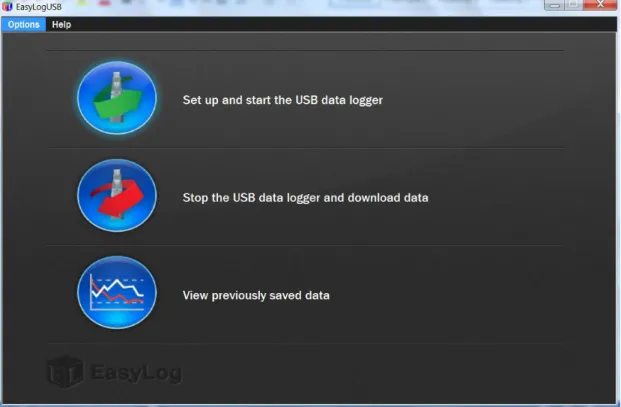
Figure 2.6 The User Interface of Easylog USB ... 32
Figure 2.7 The User Interface of Tinytag Explore 4.6 ... 33
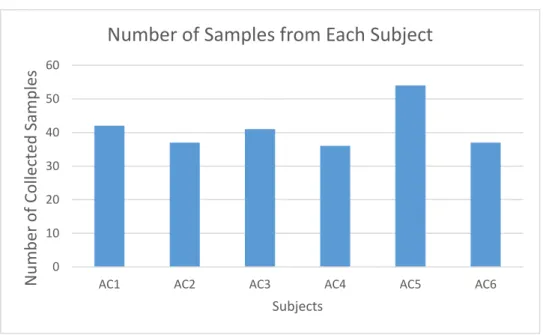
Figure 2.8 Number of samples collected from each subject in Reading ... 35
Figure 2.9 Experimental Data Collection in Reading ... 36
Figure 3.1 Structure of the EDA Agent Model (Liu et al., 2011) ... 42
Figure 3.2 The Architecture of the Multi-Agent System ... 45
Figure 3.3 Structure of the Local Agent ... 49
Figure 3.4 Structure of the Personal Agent ... 50
Figure 4.1 ANN structure ... 55
Figure 4.2 Support vectors and hyperplane ... 61
Figure 4.3 Training process of the personal thermal sensation model ... 64
Figure 4.4 Performance of different (𝐶, 𝛾) pairs ... 66
Figure 4.5 Models predicted TSV vs. subjects’ actual TSV for Chinese Subjects .. 77
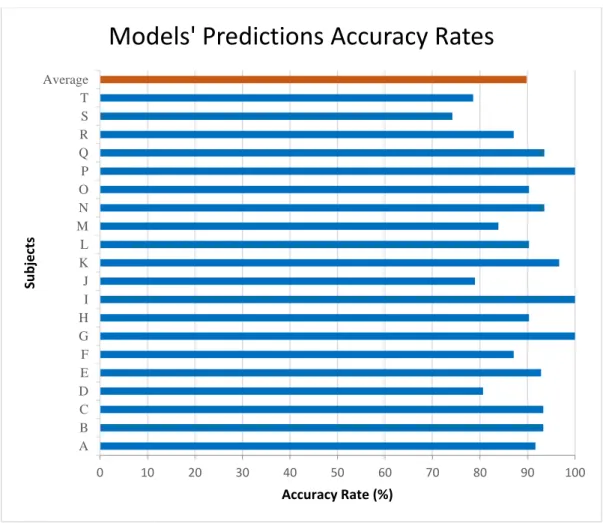
Figure 4.6 Model’s prediction accuracy rates for Chinese Subjects ... 78
Figure 4.7 Mean accuracy of PMV and C-SVC based models ... 79
Figure 4.8 Air Temperature and Relative Humidity in ACzone 1 ... 80
Figure 4.9 Air Temperature and Relative Humidity in ACzone 2 ... 81
Figure 4.10 Air Temperature and Relative Humidity in ACzone 3 ... 82
Figure 4.11 Distribution of the votes from the AC environment in the UK ... 84
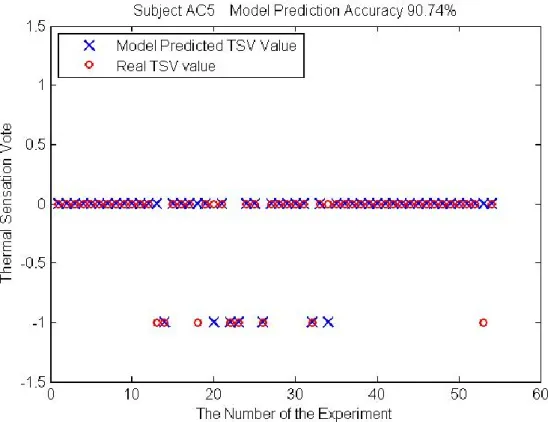
Figure 4.12 Models predicted TSV vs. subjects’ actual TSV for UK subjects ... 88
Figure 4.13 Model’s prediction accuracy rates(UK Data) ... 88
Figure 4.14 Model Predicted Thermal Sensation Level vs. subjects’ actual TSV for subjects AC1 (ASHRAE Seven Point-scale) ... 89
Figure 4.15 Model predicted Thermal Sensation Level vs. subjects’ actual TSV for subjects AC3 (ASHRAE Seven Point-scale) ... 90
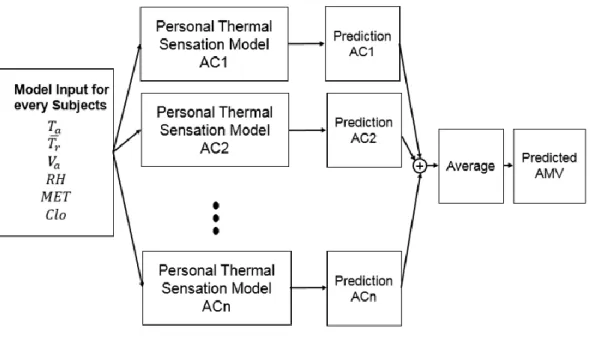
Figure 5.1 The Prediction Process of the Model Developed by Method One ... 95
Figure 5.2𝜖-insensitive loss function (Haykin, 1999) ... 97
Figure 5.3 The Modelling Process Based on the SVR algorithm ... 98
Figure 5.4 The Prediction Process of the Model Developed by the SVR algorithm ... 99
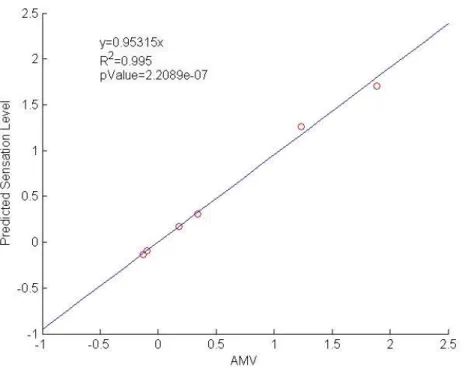
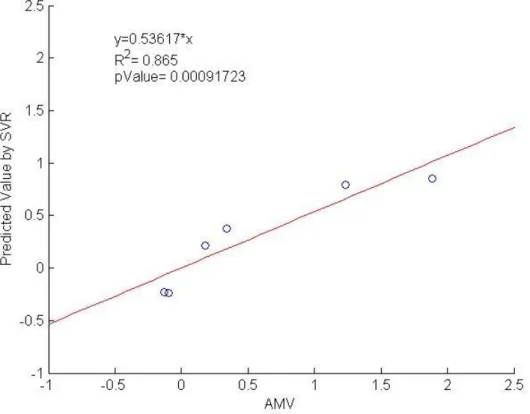
Figure 5.5 The Fit between AMV and Model-predicted Values (Personal-Model-Based Method, Data Set One. Test Data) ... 101
Figure 5.6 Model-predicted Values and AMV against PMV (Personal-Model-Based Method, Data Set One, Test Data) ... 101
IX
Figure 5.7 The Fit between AMV and Model-Predicted Values (SVR Method with
Linear Kernel, Data Set One Test Data) ... 103
Figure 5.8 AMV and Model-predicted Values aginst PMV (SVR Method with
Linear Kernel, Data Set One Test Data) ... 103
Figure 5.9 The Fit between AMV and Model-Predicted Values (SVR Method with
Polynomial Kernel, Data Set One Test Data) ... 104
Figure 5.10 AMV and Model-Predicted Values aginst PMV (SVR Method with
Polynomial Kernel, Data Set One Test Data) ... 104
Figure 5.11 The Fit between AMV and Model-predicted Values (Method Two with
RBF Kernel, Data Set One Test Data) ... 105
Figure 5.12 AMV and Model-predicted Values aginst PMV (Method Two with RBF
Kernel, Data Set One Test Data) ... 106
Figure 5.13 The Fit between AMV and Model-predicted Values (Method Two with
Sigmoid Kernel, Data Set One Test Data) ... 106
Figure 5.14 AMV and Model-predicted Values aginst PMV (Method Two with Sigmoid Kernel, Data Set One Test Data) ... 107
Figure 5.15 The Fit between AMV and Model-predicted Values (SVR Method with
Linear Kernel, Data Set Two Test Data) ... 109
Figure 5.16 AMV and Model-predicted Values aginst PMV (SVR Method with
Linear Kernel, Data Set Two Test Data) ... 109
Figure 5.17 The Fit between AMV and Model-predicted Values (SVR Method with
Polynomial Kernel, Data Set Two Test Data) ... 110
Figure 5.18 AMV and Model-predicted Values aginst PMV (SVR Method with
Polynomial Kernel, Data Set Two Test Data) ... 110
Figure 5.19 The Fit between AMV and Model-predicted Values (SVR Method with
RBF Kernel, Data Set Two Test Data) ... 111
Figure 5.20 AMV and Model-predicted Values aginst PMV (SVR Method with
RBF Kernel, Data Set Two Test Data) ... 111
Figure 5.21 The Fit between AMV and Model-predicted Values (SVR method with
Sigmoid Kernel, Data Set Two Test Data) ... 112
Figure 5.22 AMV and Model-predicted Values aginst PMV (SVR Method with
Sigmoid Kernel, Data Set Two Test Data) ... 112
Figure 5.23 The Fit between AMV and Model-predicted Values (SVR Method with
Linear Kernel, LOOCV, Data Set Two) ... 114
Figure 5.24 AMV and Model-predicted Values aginst PMV (SVR Method with
Linear Kernel, LOOCV, Data Set Two) ... 114
Figure 5.25 The Fit between AMV and Model-predicted Values (SVR Method with
RBF Kernel, LOOCV, Data Set Two) ... 115
Figure 5.26 AMV and Model-predicted Values aginst PMV (SVR Method with
RBF Kernel, LOOCV, Data Set Two) ... 115
Figure 5.27 The Comfort Zone developed by the PMV model and the SVR
Developed Model ... 117
Figure 6.1 The Decision-making Process aided by the Lexicographic and Grid
Search Methods ... 126
Figure 6.2 Example Diagram of Changes of Search Area when Applying the
X
Figure 6.3 Decision-making Process with the ϵ-constraint Method ... 128
Figure 6.4 Converting theObjective Function into Constraints when Applying the ϵ-constraint Method with the Grid Search Method ... 128
Figure 6.5 the Lexicographic Method with the ϵ-constraint Method... 130
Figure 7.1 The Relationship between the Factors and Objective Functions ... 142
Figure 7.2 Operation Process in Single-occupancy Offices ... 144
Figure 7.3 Decision-making Process in Open-plan Offices ... 146
Figure 7.4 Values of objective functions of AC1 (Heating Mode) ... 153
Figure 7.5 Values of objective functions of AC1 (Cooling Mode) ... 154
Figure 7.6 Values of objective functions of AC2 (Heating Mode) ... 156
Figure 7.7 Values of objective functions of AC3 (Heating Mode) ... 158
Figure 7.8 Values of objective functions of AC3 (Cooling Mode) ... 161
Figure 7.9 Values of objective functions of AC4 (Heating Mode) ... 163
Figure 7.10 Values of objective functions of AC5 (heating Mode) ... 165
Figure 7.11 Decision-making Outcomes in an Open Plan Office (PMV Model-Based BEMS) ... 168
Figure 7.12 Decision-making Outcomes in an Open Plan Office (Group People’s Model-based BEMS) ... 169
Figure 7.13 Hourly Heating or Cooling Load for Single Occupancy Offices ... 172
Figure 7.14 Required Heating and Cooling Energy in March (Single-Occupancy Office) ... 174
Figure 7.15 Hourly Heating or Cooling Loads for Single Occupancy Offices ... 177 Figure 7.16 Required Heating and Cooling Energy in March (Open-plan Office) 178
XI
List of Tables
Table 2.1 the Properties of the Existing Agents in Building Management Research
Area ... 21
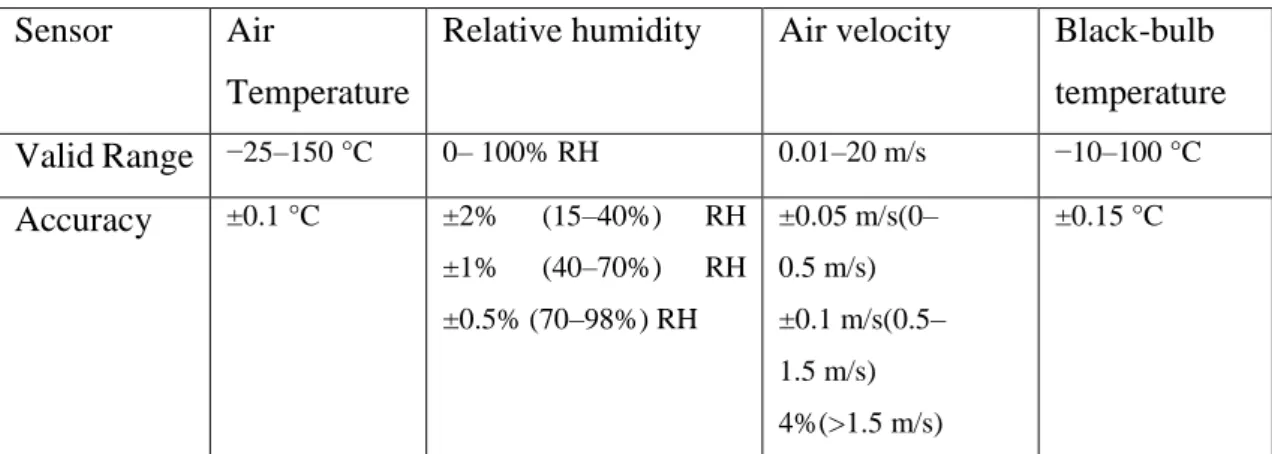
Table 2.2 Specification of the sensors used in experiments in China (Yang et al., 2015) ... 27
Table 2.3 Range of environmental parameters in the controlled environment ... 27
Table 2.4 the Specification of the Instruments and Dataloggers ... 31
Table 4.1 Properties of existing thermal sensation models ... 54
Table 4.2 the general air temperature and relative humidity condition of the air-conditioned space ... 82
Table 4.3 Measured Environmental Parameters and Personal Factors in air-conditioned areas ... 82
Table 5.1 The Absolute Error of the Predictions (Personal-Model-Based Method, Data Set One) ... 102
Table 5.2 MSE Values of SVR Models with Different Kernels (Data Set One) .... 107
Table 5.3 The Absolute Error of the Predictions (SVR with RBF Kernel, Data Set One) ... 108
Table 5.4 MSE Values of SVR Models with Different Kernels (training data set from Data Set Two) ... 113
Table 5.5 The Absolute Error of the Predictions (SVR with Linear Kernel, Data Set Two) ... 116
Table 5.6 The Comfort Zone Conditions ... 116
Table 7.1 The Factors Used to Calculate the Cooling Load (sensible heat only) .. 135
Table 7.2 The Factors Used to Calculate the Cooling Load Caused by People, Lights and Equipment ... 136
Table 7.3 The factors used to calculate the heat loss ... 137
Table 7.4 Parameters of the Studied Rooms ... 148
Table 7.5 Confidences of Association Rules of the Sensations and the Adaptations ... 150
Table 7.6 Predicted Personal Thermal Sensations ... 170
Table 7.7 Optimised Set Point and the Detailed Monthly Required Heating and Cooling Energy Values ... 175
Table 7.8 Optimised Set Point and the Detailed Monthly Heating and Cooling Load Values in an Open-Plan Office ... 178
XII
List of Abbreviations
AC Air-conditioning
ARI Air-Conditioning and Refrigeration Institute
A-HEM/BEMS Adaptive Home/Building Energy Management System
ANN Artificial Neural Network
AMV Actual Mean Vote
BAS Building Automation System
BACS Building Automation and Control System
BEMS Building Energy Management System
BMS Building Management System
BRE Building Research Establishment
BREXBAS Building Research Expert Building Automation System
Btu British Thermal Units
C-SVC C-support Vector Classification
Cf Contents Factor
EDA Epistemic-Deontic-Axiologic
ELM Extreme Learning Machine EMS Energy Management System
FCAs Fuzzy Controller-agents
GDP Gross Domestic Product
Gf Glass Factor
HBS Henley Business School
HVAC Heating, Ventilation and Air-conditioning
Hw Window Height
LOOCV Leave-one-out Cross-validation
MASBO Multi-agent System for Building Control
MOPSO Multi-objective Particle Swarm Optimization
MSE Mean Squared Error
NNEM Neural Network Evaluation Model
NSGAII Nondominated Sorting Genetic Algorithm II
PDA Personal Digital Assistants
PDTC Personalised Dynamic Thermal Comfort
XIII
PLC Power Line Communication
PMV Predict Mean Vote
PPD Predicted Percentage Dissatisfied
PPV Predicted Personal Vote
PSO Particle Swarm Optimization RBF Radial-basis Function
Rw Room Width
SCME School of Construction Management and Engineering
SMODIC Smart Sensor System, Optimum Decision Making System and Intelligent Control System
SVM Support Vector Machine
SVR Support Vector Regression
TSV Thermal Sensation Vote
UN United Nations
UNFCCC United Nations Framework Convention on Climate Change
W Watts
Wf Wall Factor
WSAN Wireless Sensor Actuator Network
Ww Window Width
XIV
Abstract
In the UK, buildings contribute around one third of the energy-related greenhouse gas emissions. Space heating and cooling systems are among the biggest power consumers in buildings. Thus, improvement of energy efficient of HVAC systems will play a significant role in achieving the UK carbon reduction target.
This research aims to develop a novel Building Energy Management System (BEMS) to reduce the energy consumption of the HVAC system while fulfilling occupants’ thermal comfort requirements. The proposed system not only considers the occupants’ adaptations when making decisions on the set temperature, but also influences occupants’ behaviours by providing them with suggestions that help eliminate unnecessary heating and cooling.
Multi-agent technologies are applied to design the BEMS’s architecture. The Epistemic-Deontic-Axiologic (EDA) agent model is applied to develop the structure of the agents inside the system. The EDA-based agents select their optimal action plan by considering the occupants’ thermal sensations, their behavioural adaptations and the energy consumption of the HVAC system. Each aspect is represented by its relevant objective function. Newly-developed personal thermal sensation models and group-of-people-based thermal sensation models generated by support vector machine based algorithms are applied as objective functions to evaluate the occupants’ thermal sensations. Equations calculating heating and cooling loads are used to represent energy consumption objectives. Complexities of adaptive behaviours and confidence of association rules between behaviours and thermal sensations are used to build objective functions of behavioural adaptations. In order to make decisions by considering the above objectives, novel multi-objective decision-making algorithms are developed to help the BEMS system make optimal decisions on HVAC set temperature and suggestions to the occupants. Simulation results prove that the newly-developed BEMS can help the HVAC system reduce energy consumption by up to 10% while fulfilling the occupants’ thermal comfort requirements.
1
Chapter 1
: Introduction
Background and Research Question
Global warming has become one of the international issues that the world is facing. Scientists have proved this is caused by greenhouse gas emissions (Houghton et al., 1990). To help solve this problem, the United Nations (UN) passed the United Nations Framework Convention on Climate Change (UNFCCC), which proposed tackling the global warming problem by stabilising the greenhouse gas level in the atmosphere (United Nations, 1992). A document published in 2003 shows that the UK government planned to decrease CO2 emissions by 60% by 2050 on the basis of
the emissions level in 1990 (DTI, 2003). The later Climate Change Act passed by the UK parliament in 2008 set the rule that greenhouse gas emissions should be at least 80% less than the emissions level in 1990 (HM Government, 2008). The Chinese government aims to reduce the carbon emission per unit of gross domestic product (GDP) by 40% to 45% before the year 2020 on the basis of the emission level in 2005 (Wang et al., 2011a, Yi et al., 2011).
Buildings have been regarded as one of the major carbon emission sources due to their high levels of energy consumption. It has been reported that, globally, more than 30% of total energy is consumed by buildings and consequently they account for one third of energy-related greenhouse gas emissions (Urge-Vorsatz et al., 2013). The UK government reported that 37% of emissions were produced from heating and powering homes and buildings in 2009 and, in the same report, it is recommended that the emissions from buildings should be around zero by 2050 (HM Government, 2011). In 2015, buildings still contributed 33% of UK greenhouse gas emissions (Committee on Climate Change, 2016). In all developed countries, building energy usage accounts for 20% to 40% of total energy consumption (Perez-Lombard et al., 2008). It has been suggested that a 50% to 90% reduction of building energy consumption should be targeted in the next three decades (Arens et al., 2010). Thus, cutting energy consumption in buildings is a feasible way to decrease carbon emissions caused by them.
Space heating and cooling systems are among the biggest power consumers in buildings (Wu and Noy, 2010). The Heating, Ventilation and Air-conditioning
2 (HVAC) system contributes around 50% energy consumption in non-domestic buildings (Perez-Lombard et al., 2008). In the UK, 60% of household energy consumption can be attributed to space heating (Palmer and Cooper, 2013). Consequently, efficient control of the HVAC systems in buildings is crucial for energy saving and reaching the 80% greenhouse gas emission reduction target. On the other hand, providing a comfortable environment is one of the primary purposes of HVAC systems which should not be ignored (Atthajariyakul and Leephakpreeda, 2005). However, such a purpose is not always in accord with the energy saving goal because maintaining the built environment within a comfortable zone is usually energy-consuming. How to deal with the challenge of fulfilling occupants’ thermal comfort requirements while achieving energy saving remains a question.
It has been revealed that inappropriate operation of HVAC systems may result in 89% more energy consumption in some built environments (Hong, 2014). Therefore, it is reasonable to control the operation of HVAC systems to avoid unnecessary energy wastage. In modern buildings, the HVAC system can be managed by the Building Energy Management System (BEMS). The energy management system was first developed in the 1970s to monitor and control the operation of HVAC systems. Its control range was later extended to other services such as lighting and alarm systems (Levermore, 2000). Thus the system controls the service plants to provide a comfortable built environment for occupants. Hence, improving the performance of the energy management system is an effective way to promote the energy efficiency of the HVAC system as well as guaranteeing the occupants’ comfort.
In order to choose the appropriate settings for the HVAC system, the BEMS needs to understand the thermal comfort requirements from the occupants to whom the HVAC system provides services. The term ‘appropriate settings’ refers to the targeted environmental conditions generated by the decision-making algorithm in the BEMS system. The relationship between this algorithm and the actuator of the HVAC system is shown in Fig 1.1. The details of how the actuator operates the HVAC hardware to make the indoor environment reach the target, is beyond the scope of this research.
3
Figure 1.1. Relationship between the Decision-making Algorithm, the Settings of the HVAC system and the Actuator of the HVAC System
The comfort zone is defined by the models and indices proposed by international standards which are used for the ‘evaluation of moderate thermal environment’ (ISO7730, 2005, ANSI/ASHRAE55-2010, 2010). It has been pointed out that these models and indices in some circumstances do not accurately estimate the thermal sensation of an occupant (Gao and Keshav, 2013, Zhao et al., 2014) or a particular group of people’s actual mean vote (AMV) in a certain built environment in real time (Yang et al., 2015). This may cause BEMS to overshoot the settings of the HVAC system, which leads to extra and unnecessary energy consumption while decreasing the comfort level of the occupants. In some situations, a 1℃ room temperature difference will cause 10% energy consumption variation for the HVAC system (Humphreys and Hancock, 2007). One potential solution is that the BEMS system makes decisions for the HVAC system according to occupants’ sensation feedback (Moreno et al., 2014) (Erickson and Cerpa, 2012); (Jazizadeh et al., 2014). But how to process and utilise the collected information remains a problem. Once the BEMS understands the needs of the occupants, how to apply the information to decide the HVAC system’s settings is another question.
Besides the HVAC system, the impact of the HVAC system’s end-users should not be ignored. It is sometimes difficult for an energy management system to decide a set point that will satisfy all the occupants because the algorithm in the system only aims
4 to predict the thermal sensation level in general, regardless of individual differences. To further increase the occupants’ thermal comfort level, the solution can be to improve the interaction between the occupants, their personal devices and the BEMS to affect occupants’ actions. This solution is based on the adaptive comfort theory: people are not just passively affected by the ambient environment, but actively restore their comfort conditions (Nicol and Humphreys, 2002). In other words, occupants’ adaptive behaviours will also change their thermal conditions. Moreover, the occupants’ behaviour sometimes directly affects the operation of HVAC systems and their energy consumption. Therefore, people’s adaptive behaviours have an effect on both their thermal comfort and energy consumption. So, potentially, it is possible to provide personalised services, such as suggestions to an individual occupant on reactions to their ambient environment in an appropriate way to achieve their thermal comfort sensation, without causing energy wastage. Again, because of individual differences, the suggestions to every occupant should be personalised. How the BEMS decides and provides such suggestions is another question worth looking into. Finally, it can be found that other than a pure HVAC controller, the BEMS system needs to provide personalised services to all occupants. It collects information from the environment and feedback from occupants, then it feeds forward decisions based on this information to the HVAC system and the occupants. It has already been revealed that the controller in BEMS can be regarded as an agent (Dounis and Caraiscos, 2009), so agent-based technologies can be adapted into the BEMS system development. This research needs to solve the problem concerning how to develop a BEMS, which fits the requirements by using agent-based technologies.
It can be concluded that, in order to reach the energy-saving and the thermal comfort targets, it is reasonable to build up a novel energy management system, which is able to understand the real-time thermal comfort requirements of occupants in the built environment and provide personalised suggestion services to increase the thermal comfort level of each individual who feels uncomfortable.
To build such a system, the following research questions need to be answered.
How can the energy management system understand occupants’ real-time thermal comfort needs in a real building environment?
5
How can the energy management system further eliminate the energy wastage of the HVAC system by using information from the occupants and the environment?
How can the energy management system increase the thermal satisfaction level of occupants whilst avoiding energy wastage by improving the interaction between the buildings and the occupants?
How to develop an energy management system to take care of the operation of the HVAC system whilst simultaneously addressing the thermal comfort issues of all the occupants?
Aims and Objectives of the Research
As discussed in the background section, in order to reach the carbon emission reduction objective, it is important to reduce the energy consumption of the HVAC system in buildings. But at the same time, the HVAC system needs to provide a thermally comfortable environment for occupants. Developing a novel energy management system is an effective way to hit both targets, so the main aim of this research is to develop an energy management system to minimise the energy consumption of the HVAC system while satisfying the thermal comfort requirements of the occupants. Such an energy management system fulfils the aim of this research by applying the following method: It chooses the optimal set points for the HVAC plants and it also has the ability to interact with the end-users to provide personalised suggestions on adaptive behaviours. Being guided by the suggestions, each individual can obtain their thermal comfort requirements. The research questions arising from the application of these methods are also demonstrated in the last section. The problems pointed out in the questions can be solved if the developed energy management system obtains the following abilities:
1. Sensing the current environmental conditions in real time
2. Collecting personal factors and occupants’ responses to the current thermal conditions
3. Learning occupants’ thermal comfort preferences 4. Identifying occupants’ adaptive behaviour patterns
6 6. Providing personalised suggestions to the occupants
As shown later in the Literature Review and Research Methodology Chapter, the first and second functions can be realised by the sensor, monitor and human-machine interface hardware, which are not the main focuses of this research. The objectives of this research are as follows:
1. To develop the architecture and identifying the key components, especially the software components, of the energy management system.
2. To develop a modelling method for the system to dynamically predict the personal thermal comfort level for each occupant.
3. To find a method to estimate the thermal sensation level of a group of occupants in the same built environment in real time.
4. To develop a method to numerically analyse and evaluate occupants’ behavioural adaptations.
5. To develop optimal decision-making algorithms for the system to decide the set point for the HVAC system.
6. To develop an optimal decision-making algorithm for the system to provide personalised suggestions for the occupants.
7. To integrate the developed models and the decision-making algorithm together into the energy management system architecture and evaluate its performance.
Applied Research Approaches
In general, the literature review, the experimental method, the questionnaire survey, the statistical analysis, the modelling method and the simulation method are applied in this research to solve the research questions.
The literature review identifies the gap between the existing BEMS research and the BEMS proposed in this research. It also highlights the potential ways to improve the existing BEMS.
In order to enable the BEMS to learn the thermal preferences and behavioural habits of the occupants, both experimental and questionnaire survey research methods were conducted. The experimental field studies were carried out to collect data in real built
7 environments. These studies collected the environmental data from an air-conditioned built environment. The surveys were used to gather the information about the occupants’ personal factors as well as their thermal sensations.
The collected data were processed by modelling methods from machine learning and statistical analysis methods from data-mining. The generated model and analysis outcomes allow the system to understand the thermal comfort needs of the occupants and provide the foundations of the decision-making process.
Finally, the simulation method was applied to test the operation process of the developed BEMS and its performance on energy saving and maintaining a thermally-comfortable environment.
Thesis Structure
The first chapter is this introduction chapter. Following the introduction chapter, the second chapter is the literature review and research methodology chapter in which a comprehensive literature review of the existing building energy management system research is performed. The software and hardware components of the energy management systems are reviewed and their functions summarised. Then the research methodologies for system development, the data collection and data process are discussed.
In the third chapter, the architecture of the multi-agent energy management system is developed. The detailed structures of the personal agent and the local agent are also designed. The chapter realises research objective one.
The fourth chapter develops personal thermal sensation models. The support vector machine algorithm is applied as the modelling method to generate the models. This part of the research fulfils research objective two.
The fifth chapter uses a method based on the personal thermal sensation model and another method based on the support vector machine to develop models to evaluate the thermal sensation level for all the occupants in a built environment. The research concerning objective three is finished in this chapter.
The sixth chapter generates the decision-making algorithms for the personal agent and the local agent in both open-plan and single-occupancy offices. These algorithms
8 are developed particularly for the decision-making process in the proposed energy management system. Objectives five and six are realised in this chapter.
The seventh chapter firstly builds models to simulate the needed cooling and heating loads for an air-conditioned built environment. Then the chapter proposes ways to numerically evaluate how the suggested reactions fit an occupant’s usual behaviour patterns. The chapter integrates the models and algorithms developed in previous chapters and above into the agents in the building energy management system. The abilities and the performances of the building energy management system are tested in both single-occupancy and open-plan offices. The chapter completes objectives four and seven.
The eighth chapter concludes the research findings and suggests future research directions.
9
10
Output of the Research
In summary, the innovations made by this research are:
A novel, multi-agent, BEMS system with agents developed using newly-developed rational agents (Chapter 3).
A new modelling method to develop the personal thermal sensation models utilising feedback from the occupants (Chapter 4).
A new modelling method to develop the model estimating the thermal comfort level for a group of people using their feedback (Chapter 5).
The decision-making algorithms and decision-making process in the new BEMS to make decisions on settings for the HVAC system and personalised suggestions for the occupants (Chapter 6).
Methods to numerically analyse and process the behavioural adaptations (Chapter 7).
11
Chapter 2
: Literature Review and Research Methodology
Literature Review
2.1.1 Building Energy Management Systems
The building energy management system (BEMS) ‘is a computer-controlled system that may be used to monitor and control a building’s power systems including lighting, heating, ventilating and air conditioning’ (Thorpe, 2014). The early version of such systems was introduced into builds in the 1970s to control and monitor the operation of HVAC systems, then the system continued to be upgraded with the advance of electronic technologies and computer science (Levermore, 2000). The objectives of energy management include optimising energy usage as well as decreasing greenhouse gas emissions (Capehart et al., 2008). The system works with HVAC plants to provide a comfortable environment for the occupants. Because of this, in recent years, the system has been regarded as a key component of intelligent buildings, which consider ‘environmental and social needs, and occupants’ well-being’(Clements-Croome, 2014).
The BEMS is found to be a part of the building automation system (BAS), and its functions overlap with the so-called energy management system (EMS), building automation and control system (BACS) and building management system (BMS) (Capehart et al., 2008, Clements-Croome, 2013). For consistency, in this research, the name Building Energy Management System (BEMS) is used.
A traditional BEMS is introduced in Levermore (2000). The system consists of one central station and multiple outstations. The function of the outstation is to control plants using the input from the switch and sensors. For HVAC plants, the control target is defined by a fixed set point represented by an operative temperature. The central station is responsible for running the user software and storing the data about the plants and the buildings for the administrator of the system.
The Building Research Establishment (BRE) developed a BEMS which is used to control the operation of the heating system called ‘Building Research Expert Building Automation System’ (BREXBAS) (Ashworth and Hogg, 2000, Gilmore, 1989). This
12 system is a knowledge-based system, or so-called expert system, which is able to make certain decisions such as determining if the current environment is acceptable and analyses the reason for any current problem (Levermore, 2000). One outstanding point of this system is that it is able to interact with its users about its decisions and advice via a user interface. It has been pointed out that such a system depends on its programmer to pre-set the knowledge into the system and the information provided needs to be interoperated by a professional person such as an experienced energy manager (Scott et al., 1988).
The examples above indicate that these BEMS do not take energy consumption as well as real time occupants’ comfort needs into account when controlling the HVAC plants. Abilities of these BEMSs were restricted by their designed function and the technologies they applied. To achieve the goal of energy efficiency and occupant thermal comfort, researchers propose models of new BEMS systems with more functional modules, which are aided by advanced technologies.
Computer technologies, telecommunications and information technologies are applied to upgrade the ability of the BEMS. (Doukas et al., 2007). Based on this idea, in the same literature, a structure of a new BEMS is proposed. Being improved by the suggested technologies, the BEMS integrates a decision making support to achieve a comfortable building environment and efficient energy consumption. In detail, the system contains the following components: indoor and outdoor sensor systems, controllers, decision unit and database. The sensor systems are used to monitor the real time environmental conditions. The decision making model considers requirements from users in the built environment as well as pre-set rules to make decisions for the controller. By applying the decision support model, the BEMS should be able to reduce the energy consumption.
Another BEMS model constructed by a smart sensor system, an optimum decision making system and an intelligent control system (SMODIC) is illustrated in Yao and Zheng (2010). Having been upgraded from the previous BEMS models, the system’s decision making relies on accurately estimating occupants’ comfort requirements by acquiring their physiological, psychological and behaviour patterns and co-operating with real time environmental data such as temperature, humidity and air velocity. This needed information is collected by sensor networks and human machine interfaces.
13 With all the information needed, the optimum decision module provides optimised control decisions to the control system to accomplish the best power consumption result. Furthermore, the system is also designed to provide occupants with adaptive behaviour advice in order for them to feel comfortable in their building environment. These proposed BEMSs provide insight into some of the key elements of the BEMS, including the theoretical basis, the subsystems structure, the input and output of the main system and subsystems and their functions. The insight provides guidance for the BEMS development in this research. Concluded from previous research, an ideal BEMS system should include the following components:
Sensor Networks
Human Machine interface
Decision Making Module
Actuator
Data Storage.
By utilising the hardware and software components listed above, the BEMS should realise the following functions:
1. Sensing the current environmental conditions in real time
2. Collecting personal factors and occupants’ responses to the current thermal condition
3. Learning occupants’ thermal comfort preferences 4. Identifying occupants’ adaptive behaviour patterns
5. Calculating the desired set points for the built environment 6. Providing personalised suggestions to the occupants.
Existing attempts to develop the software and hardware components in the BEMS and realise the functions mentioned above are illustrated in the next few sections.
2.1.2 Data collection and Storage Technologies for BEMS
There have been a number of research focuses on effectively collecting information in buildings using advanced sensor technologies. Smart sensor systems are an important subsystem of a building management system to acquire information. Technology developments in the areas of microprocessors, and sensor devices enable
14 sensor networks to have strong information detection and collection abilities. Therefore, sensor networks are applied in many research areas including farming and agriculture etc. (Priyanandhan, 2012, Yu et al., 2013) and have been proven to be ideal for environmental information collection such as temperature monitoring, noise detection and target tracing (Veerasingam et al., 2009, Bell and Galatioto, 2013, Dai et al., 2013). These functions and abilities are in high demand by building energy management systems. There are many research outcomes in application sensor networks inside buildings. For the indoor environment, it is necessary to use wireless communication technologies to realise the communication between the sensors and other parts of the BEMS. Therefore, the wireless sensor nodes are applied. These nodes can be based on technologies such as WiFi (IEEE 802.11) or Zigbee (IEEE 802.15.4) standard defined by IEEE (Erol-Kantarci and Mouftah, 2010). For example, a wireless sensor network based on the Zigbee standard are recommended to be applied in an energy management system in Wang and Wang (2010). The system is developed to audit energy consumption of home appliances. The sensor network comprises a base station and multiple remote sensors. The remote sensors collect the information from the field then transmit it to the base station, which then forwards the data from the sensors to the main server of BEMS. Based on the test result, the data transmission distance can be as long as 50 meters. Shen et al. (2011) applied Extensible Markup Language (XML) formatted data to solve the connectivity problem between the environmental sensors and the air-conditioner controller. This constructs a heterogeneous system in which different components use different communication standards. The research settled the problem of how these components communicate with each other. Fortino et al. (2012) suggest a building management framework which integrates a network of heterogeneous networks containing wireless sensors as well as actuators. The research demonstrates a very detailed layered design of the network system for both base station and sensor node sides. Supported by the wireless sensor network, the building management framework is claimed to be able to monitor buildings and control the equipment inside (Fortino et al., 2012).
Other sets of research not only apply the sensor network in the BEMS, but also use personal devices as well as databases to further extend the abilities of the system. Personal devices can be employed as media-rich interfaces among users, environment
15 control systems and wireless sensor networks. Clements-Croome (1990) suggests a Sense Diary system to take care of the occupants’ well-being in energy efficient buildings. It is proposed that the system utilises the WSN to collect environmental information. Occupants’ reactions to the ambient environment are also collected and saved by the system. In the system, mobile phones, personal digital assistants (PDA), PCs and TVs are recommended as media to communicate with the occupants (Mao et al., 2007). Mineno et al. (2010) developed an adaptive home/building energy management system (A-HEM/BEMS). In the research, the sensor network applies both the power line communication (PLC) technology and wireless communication following the Zigbee standard to solve the communication problem caused by distances, obstacles and so on. In a prototype system, the sensor network aims to collect and transmit the information about temperature, humidity, illumination and energy consumption. The PostgreSQL is used to realise the integrated database. Mobile phones and webpages are used to display the information from the system. Similarly, the energy management system proposed in Anastasi et al. (2011) also employed the WSN, the human-machine interface and the database technologies. In this research, WiSensys sensors are applied to fulfil monitoring requirements while the database is being developed by MySQL in the server of the system. Webpages on PCs and interfaces on mobile phones are responsible for the interaction between the system and end users. There are abundant suggestions for realising sensor networks, the human-machine interfaces and the databases in the building energy management systems. Therefore, in this research I will not peruse this in depth.
2.1.3 The Control of HVAC System in BEMS
A number of efforts have been made to develop technologies to control the HVAC system. Calvino et al. (2004) propose a fuzzy proportional–integral–derivative (PID) controller to control HVAC plants. Instead of using a set temperature, this research directly applies PMV value as a control target. A neural network controller is proposed to control the HVAC system (Argiriou et al., 2004). The artificial neural network (ANN) module in the controller is developed from the feed forward back propagation method. ANN technology is also proposed to be used by a model based control method (Marvuglia et al., 2014). In the control method, fixed room air temperatures in summer and winter are used as control targets for the fuzzy logic
16 control unit. A similar control system applied in a hospital is also suggested by Papantoniou et al. (2015). The system applied the fuzzy controller aided by a temperature predicting model developed by ANN. Web-based technologies are introduced into the system. The web page interfaces are responsible for interaction between users and system. Default settings are fixed indoor air temperatures, but they can be overridden by the users.
From the review above, it can be found that technologies such as PID, Fuzzy Logic and ANN are suggested for applications of the controllers/actuators so that either the controllers or the actuators will guide the HVAC plants to meet the set target. On the other hand, the methods used by the BEMS to decide the set point of the HVAC is still under discussion. Some existing systems work with fixed set points and settled schedules. Other systems may adaptively change their set points calculated by a thermal comfort model such as Predict Mean Vote (PMV). The question has been raised: whether the fixed set point or the thermal comfort model reflect the true thermal comfort needs for the group of people that the BEMS provides services to. Furthermore, it is still uncertain how the existing systems deal with individual differences in thermal comfort. In order to provide personalised services, the BEMS should be able to make decisions for each localised environment and individual occupant. The question built up on the previous one is how controllers in the BEMS provide personalised service to every user in the built environment. This complex problem may potentially be solved by agent technologies and multi-agent systems, which are reviewed in the next section.
2.1.4 Applications of Agent based Technologies in the Built Environment
Agent based technologies have been widely applied in the building management and control related research field. The intelligent room developed by the MIT artificial intelligence lab is realised by embedding multiple agents into a built environment (Brooks et al., 1997). With the help of the agents, the intelligent room gains abilities such as speech recognition and machine-occupant interaction in the room etc. The agents used in this intelligent room project are not particularly developed for energy management, but researchers on this project prove that the complex tasks of intelligent building control is better conducted by distributed multiple software agents,
17 not a central controller (Coen, 1997). This research shows the complex problem solving ability of the multi-agent system in the building management area.
Sharples et al. (1999) proposed a multi-agent system, which is called ‘Essex IB Model’ used inside intelligent buildings. This has been developed to provide assistance to elderly and disabled people. The structure of the agent system is arranged in a distributed way so that one agent is installed per room and all agents are connected via a network. Agents applied in the system are room controller agents based on ‘embedded agent’ technology. These agents are hardware entities with embedded micro-processors. In general, it is claimed that the system provides a real-time control response on the basis of information continuously learned from the environment and individual occupants rather than using models developed in advance (Hagras et al., 2003b). In this case, the system has the ability to deal with the situation the system developer did not programme into the system in advance. It is also claimed that functions of the agent include taking care of occupants’ comfort and energy saving. Later research (Hagras et al., 2003a) indicates that for the embedded agents, the decision making criteria including occupants’ thermal comfort preferences can be learnt by the fuzzy logic method supported by a genetic algorithm. This method is from earlier mobile robot research (Hagras et al., 2000). A similar fuzzy logic based method can also be found in the agent based application in Wang et al. (2006). The multi-agent system with hardware agents is applied in the intelligent building’s control system, which is called iDorm (Hagras et al., 2004). However, for the embedded agents, some researchers have pointed out that they might not be suitable for a complicated agent platform due to the limit of hardware abilities (Liu et al., 2008).
A multi-agent system used for deciding the settings of indoor thermostats is illustrated in van Breemen and de Vries (2001). In the research, the control problem is regarded as complex, and divided into several sub-problems. In this case, each sub-problem is solved by a controller and the agent is used to support the process of autonomous decision making of a controller. A fixed comfort zone with temperature ranges is used to define if a user is comfortable or not. It is claimed that such a system is able to avoid overshooting by automatically deciding the settings of the thermostats.
18 Mo (2002) also suggests considering the individual differences in the agent development process, particularly in illumination and thermal comfort aspects. A case study of an illumination control agent is given in the research. Differing from previous research, the multi-agent system contains several categories of agents arranged into different levels. There are ‘occupant agents’ which aim to serve individual occupants, while higher level agents such as ‘operator agents’ focus on the general performances of the buildings. A similar agent hierarchy is applied in later developed multi-agent building management systems. This research also suggests that the agent’s decision making algorithm considers a trade-off among the different comfort aspects and the energy consumption but how to measure the occupants’ comfort level is not clearly indicated in this research.
Davidsson and Boman (2005) also proposed a control system for office buildings aided by a multi-agent system. The objective of the system is to save energy and improve occupants’ thermal comfort. The system applies power lines as communication links between agents and electrical devices such as actuators for lighting and heating. The multi-agent system is also a decentralised system integrated by different types of agents. It contains personal comfort agents for personal preference, room agents for deciding indoor environmental data and environmental parameter agents to control indoor environment (Davidsson and Boman, 1998) (Davidsson and Boman, 2000). However, personal interests such as the preferred temperature is a fixed figure (22 C ̊) and it is assumed that at 22 C ̊ the thermal comfort satisfaction rate is 100%. This assumption does not correspond with indoor environmental standards such as ASHRAE and ISO7730 or to the adaptive comfort theory.
A multi-agent framework for energy management control is established in Rutishauser et al. (2005). This framework proposes the use of a fuzzy logic controller to manipulate the service plants. Setting decisions are made by fuzzy logic rules, which are generated by an unsupervised online learning method. The research encounters difficulties in testing learning results of comfortable rules with the real thermal comfort data from the occupants because of restrictions brought by the online learning method itself.
19 A Multi-agent system for Building Control (MASBO) has been proposed and discussed in several research articles (Qiao et al., 2006, Yong et al., 2007, Liu et al., 2008, Liu et al., 2011). This system contains four kinds of agents: the personal agent, the central agent, the local agent, and the monitor and control agent. By applying these agents, the system aims to adaptively change control instructions based on human behaviour and ambient environment changes in order to save energy and meet occupants’ well-being (Liu et al., 2008). The MASBO research provides theoretical guidance on how to develop an agent working for building energy management. It is illustrated that the developed agent should have common properties including: ‘reactivity, pro-activeness, social ability and persistence’ which is defined in Wooldridge (2009) and Qiao et al. (2006). Moreover, an EDA (epistemic, deontic, axiologic) (Filipe and Brito, 2005) agent model is suggested to define the structure of an agent in the building energy management system (Qiao et al., 2006, Liu et al., 2011). In a MASBO based system, to generate the occupants’ personal profiles, the system firstly develops a pre-defined fixed profile for general occupants, then adds personal preference values into the range for each occupant (Yong et al., 2007). The MASBO implies the pervasive informatics theory regarding buildings to have complex signs to improve the interaction between the building and occupants (Liu et al., 2011). The prototype design of this system is described in detail in Liu et al. (2011) but the performance of the system needs to be further investigated.
Dounis and Caraiscos (2007) developed fuzzy controller-agents (FCAs) to control the indoor environment, which is based on ‘3-D fuzzy comfort sets’. The controller takes into account both occupants’ comfort and energy saving. The system contains two types of agents: master agents and slave agents. The master agent is responsible for calculating the set point of the controllers while the slave agent works to avoid the conflict among FCAs (Dounis and Caraiscos, 2008). For occupants, thermal comfort, illumination comfort and air-quality are considered and represented by 3-D fuzzy comfort sets (Dounis et al., 2011). The occupants’ preference in this research is derived from the PMV index.
Wu and Noy (2010) also suggested a multi-agent based system to reconcile the occupants’ well-being and energy consumption in the domestic area. The proposed prototype system model is integrated with a wireless sensor actuator network (WSAN) to collect environmental information. Personal agents are suggested to play an
20 important role in helping the system to fulfil individual requirements. Personal agents estimate people’s preferences and behaviours on the basis of the occupants’ profiles, generated from both environmental and personal information.
Rogers et al. (2011) propose a home energy management agent to optimise the use of the heating system on behalf of the householder. Their research developed a model which predicts the thermal property of the target house. The agent considers the comfort, carbon emissions and cost of energy to make control decisions. Feedback from the system sent to the occupants contains the cost and carbon emission information.
Yang and Wang (2013b) present a multi-agent system with their own design of agents’ algorithms and case studies. The system is also designed to solve conflicts between saving energy and obtaining occupants’ satisfaction. Similar to the multi-agent system proposed in Qiao et al. (2006), the system in Yang and Wang (2013b) also incorporates personal agents, local agents and central agents. The central agent controls the local agents who play a significant role as they make decisions for the energy management system. The personal agent is responsible for communicating with the occupants. A Gaussian function is used to express the occupants’ thermal comfort. In another paper, authors claim that occupants’ behaviour in adjusting the set point of HVAC helped to generate the thermal comfort function (Yang and Wang, 2012a). If the occupants do not actively change the temperature setting, the set point is regarded as the preferred temperature. However, it does not provide a quantitative mathematical derivation or test why the thermal comfort feelings follow such a function. Other research indicates more case studies on how the control agent organises the power distribution for different zones in a built environment (Yang and Wang, 2013a). Earlier research discusses how the local agent makes control decisions (Yang and Wang, 2012b). The agents are developed for and verified by specific case studies, the general structures of components inside the central, local and personal agents are not fully discussed.
A number of research projects have attempted to further extend the ability of multi-agent based building energy management systems by introducing the energy resource side management into the function list of the system (Simoes and Bhattarai, 2011) (Rogers et al., 2012) (Mokhtar et al., 2013) (Mokhtar et al., 2014). The multi-agent
21 energy management system is considered to work with a smart grid (Rogers et al., 2012). It is demonstrated that the electronic grid can be controlled by an electronic agent working with heating/cooling agents and comfort agents (Simoes and Bhattarai, 2011). Alternatively, other renewable sources of power can be managed by a source agent (Mokhtar et al., 2013) (Mokhtar et al., 2014). However, in the above research, the thermal comfort levels of every occupant are represented by one fixed model or even one unchanged set point. The individual differences of occupants are not considered.
It can be concluded from the existing literature that the key characteristics of BEMS include:
Application of multi-agent technologies
Consideration of both thermal comfort and energy consumption
Consideration of individual thermal preference differences
Provision of feedback to occupants
Consideration of adaptive behaviours in the decision making process. Table 2.1 summarises the features of the reviewed agent modules.
Table 2.1 the Properties of the Existing Agents in Building Management Research Area Paper Applicat ion of multi- agent technolo gy Consideratio n of both thermal comfort and energy consumption Consideratio n of individual thermal preference differences Provision of feedback to occupants Consideratio n of adaptive behaviours in the decision making process (Brooks et al., 1997)
(Coen, 1997)
(Davidsson and Boman, 1998)
(Sharples et al., 1999)
22 (Davidsson and Boman, 2000).
(van Breemen and de Vries, 2001)
(Mo, 2002)
(Hagras et al., 2003a)
(Hagras et al., 2003b)
(Hagras et al., 2004)
(Rutishause r et al., 2005).
(Davidsson and Boman, 2005)
(Qiao et al., 2006)
(Yong et al., 2007)
(Dounis and Caraiscos, 2007)
(Liu et al., 2008)
(Dounis and Caraiscos, 2008)
(Wu and Noy, 2010)
(Liu et al., 2011)
(Dounis et al., 2011)
(Rogers et al., 2011)
(Simoes and Bhattarai, 2011)
(Yang and Wang, 2012a)
(Rogers et al., 2012)
23 (Mokhtar et al., 2013)
(Yang and Wang, 2013b)
(Mokhtar et al., 2014)
The table illustrates a number of researchers from building management research areas who propose that multi-agent technologies should be applied by the management system. Energy savings and thermal comfort are two key elements that should be considered in the BEM research that were not popularly considered in early research before 2000. To realise human-centralised control, feedback is suggested to be collected from occupants. However, the information provided from the system only contains the environmental information from the sensors and the current decided settings. Very few systems tend to provide advisory information on the energy management system. In some of the research, the users’ profiles and comfort models are developed to support the agents’ decision making process. But the accuracy of such profiles and models needs to be verified and improved. Few researchers have tried to involve the behavioural adaptations in the decision making process and use them as effective ways of changing the thermal condition for individuals. Moreover, personal behavioural pattern differences are not considered by the agents in the research shown in the above table, so personalised suggestions based on personal preferences and personal behaviour patterns cannot be performed by these agents. In conclusion, research into building energy management systems has provided scholars with a lot of interest. A novel BEMS still needs to be developed to have all six functions including: sensing environmental parameters in real time, collecting occupants’ personal factors and their thermal feelings, learning occupants’ thermal comfort preferences, identifying occupants’ adaptive behaviour patterns, calculating the desired set points for the built environment and providing the personalised suggestions to the occupants.
Through a comprehensive literature review, it is concluded that the following four functions of the BEMS are still under investigation: learning occupants’ thermal comfort preferences, identifying occupants’ adaptive behaviour patterns, calculating the desired set points for the built environment and providing the personalised
24 suggestions to the occupants. There is a need to develop personal thermal models and models to estimate all individuals’ thermal sensation levels in order to learn the occupants’ thermal comfort preferences. The developed models need to be verified and new decision making algorithms are needed to aid the BEMS to make multiple decisions for different HVAC systems and individual people. Finally, on the system level, agent technologies should be applied to integrate all the software and hardware resources in the BEMS, in order that it can be constructed under multi-agent architecture.
Research Methodology
2.2.1 Research Design
In general, research and design of a novel BEMS falls into to the realm of design science research. Design science research focuses on creating innovative artefacts for solving problems in the real world (Simon, 1996). Therefore design science methodologies are applied in this research. Based on the design process model proposed in Takeda et al. (1990), the research process and relevant research approaches are arranged as the following sequence: firstly a literature review was carried out to identify gaps between the existing BEMS research and the BEMS proposed in this research, then aspects that needed to be improved or re-developed were considered. The literature review of the BEMS is already illustrated in the last section.
Subsequently the research entered the development stage, which involv