Fiscal transparency, its determinants and consequences for
developing countries
Yves Mathurin Tehou Tekeng
A Thesis
In the Department of Economics
Presented in Partial Fulfillment of the Requirements
For the Degree of
Doctor of Philosophy (Economics) at
Concordia University, 2014.
Montreal, Quebec, Canada
May 2014
CONCORDIA UNIVERSITY
SCHOOL OF GRADUATE STUDIES
This is to certify that the thesis prepared
By:
Yves Mathurin Tehou Tekeng
Entitled:
Fiscal transparency, its determinants and consequences for
developing countries
and submitted in partial fulfillment of the requirements for the degree of
DOCTOR OF PHILOSOPHY (Economics)
complies with the regulations of the University and meets the accepted
standards with respect to originality and quality.
Signed by the final examining committee:
_____________________________________Chair
Dr. Wei Sun
_____________________________________External Examiner
Pr. Jagdish Handa
_____________________________________External to Program
Pr. Axel Huelsemeyer
_____________________________________Internal Examiner
Dr. Dan Otchere
_____________________________________ Internal Examiner
Dr. Damba Lkhagvasuren
_____________________________________Thesis Supervisor
Pr. Eckhard Siggel
Approved by ___________________________________________
Dr. E. Diamantoudi, Graduate Program Director
May 15, 2014 ______________________________________
Dr. Joanne Locke, Dean, Faculty of Arts and Science
Abstract
Fiscal transparency, its determinants and consequences for developing
countries
Yves Mathurin Tehou Tekeng, Ph.D.
Concordia University, 2014
.
This thesis has addressed the issue of fiscal transparency for developing
countries in three essays. The first essay
provided a
n o
verview of the existing
literature
on fiscal transparency and related questions, focusing on different
angles and measurement methodologies involved. Our review was
structured
around
four
p
rinc
ip
al axes that include the determinants of fiscal transparency;
the links between
fiscal transparency and some selected institutional factors
relating to international capital markets, and fiscal discipline, corruption, and
economic growth.
One
of th
e major shortcomings discovered in the literature is
t
he lack of exclusive attention devoted to developing countries on this important
issue of fiscal transparency and how this could affect their growth potential.
The second essay proposed a new, replicable and more objective index of
fiscal transparency based on criteria of developing countries as used by the
World Bank in 2009. We also provided an analysis of the determinants of fiscal
transparency based on information from 27 developing countries, taking into
account a number of institutional and socio-economic determinants of fiscal
transparency. For example, we examined the impacts of natural resources
(wealth), quality of institution, openness on the above-mentioned index of fiscal
transparency by the means of OLS and Two-Stage Least Square methods. Our
empirical findings indicated that the performance of our proposed index
appeared to be consistent with other existing indices.
The third essay presented an analysis of some potential consequences of
fiscal transparency for developing countries.
M
or
e specifically, based on the
availability of data across the 27 countries of the sample, it was found that
fiscal
transparency can have some impact on
the structure of government spending,
education and health outcomes, attraction of international capital, but not
economic growth.
Acknowledgements
This PhD program has been a long journey, and I reached this end thanks to numerous supports. First of all, I would especially like to thank the supervisor of this thesis, Professor Eckhard Siggel for trusting, guiding, encouraging, and advising me for nearly three years. Since I started this work, Prof. Eckhard Siggel has been more than a supervisor in regards to the humility and kindness that he has expressed to me.
To Prof. Luc Savard, no words can express my gratitude. I thank Professor Nikolay Gospodinov for his support and his advices. I want to thank from the bottom of my heart these two persons for the opportunity that they have givenme to get into this program, and the trust the have bestowed on me.
My thanks also go to Professor Dan Otchere and Professor Damba Lkhagvasuren. They have contributed to improve the quality of this thesis through their comments and suggestions, for which I am very grateful.
I also thank Professor Effrosyni Diamantoudi, the graduate program director; Prof. Greg LeBlanc, the chairman of the department, Mrs. Elise Melancon, Mrs. Lucy Gilson, Mrs. Lise Gosselin, and Mrs. Bonnie Janicki, the kind staff members of the department, as well as all the professors of the department for the welcome, support, and incentives that I have had the honor to receive from them.
I want to extend a special thank to all the wonderful classmates and colleagues that I had the pleasure of knowing during these few years in the Department of Economics at Concordia University, especially Amin Karimu, Mesbah Sharaf, Sunday Azagba, Shadi ElRamli, Sharif Faisal, Di Liu, Uma Kaplan.
To my beloved wife, Claire, thank you for your encouragement, comprehension, and support. To my daughter, Ann-Lucy, just your presence was enough to keep me on the right track. I also relied on the support of my parents and siblings. They believe in me and I hope to be always up to their belief. A special thanks goes to my father, who passed away a few months ago. I also thank all my friends in Africa and in Canada, for accompanying me and helping me over the recent years.
I dedicate this dissertation to God almighty for this opportunity, to my wife, to my daughter and to my late father, Victor Tehou.
Contribution of Author
Essay 1
: Tehou contributed to a large review of the literature, investigating
several angles undertaken by the authors in the new field.
Essay 2
: Tehou conceived the study of the determinants of fiscal transparency for
developing countries. He developed a new index of fiscal transparency, designed
the methodology, conducted data management, performed the estimation,
interpreted the results and wrote the essay.
Essay 3
: Tehou conceived the study of consequences of fiscal transparency for
developing countries, developed the study design and methodology, conducted
data management, performed the estimation, interpreted the results and wrote
the essay.
Contents
List of tables ix
List of Figures x
Introduction 1
Essay 1. The Issue of Fiscal Transparency: Where is the literature headed?
1.1. Introduction 5
1.2. The determinants of fiscal transparency 7
1.3. Fiscal transparency, budget cycles, and institutional issues 10
1.4. Fiscal transparency and international capital markets 17
1.5. Fiscal transparency, fiscal discipline, corruption, and growth 25
1.6. Conclusion and few limits of the literature 29
Reference 31
Essay 2. The Determinants of Fiscal Transparency: The Evidence from 27 Developing Countries
2.1. Introduction 35
2.2. Literature review: determinants and measurement of fiscal transparency 36
2.2.1. Determinants of fiscal transparency 36
2.2.2. Measurement of fiscal transparency 38
2.3. Construction of the fiscal transparency index 39
2.3.1. Definition of the modules 39
2.3.2. Calculation of the fiscal transparency index 41
2.3.3. Correlation among the indices 42
2.3.4. Comparison with other indices 44
2.4. Empirical Analysis of the determinants of fiscal transparency 47
2.4.1 Choice of variables 47
2.4.1.1. Natural wealth and Fiscal transparency 48
2.4.1.2. Quality of the institution and fiscal transparency 49
2.4.1.3. Literacy and fiscal transparency 50
2.4.1.4. Openness and fiscal transparency 52
2.4.1.5. Control variables 55
2.4.2. The empirical model 57
2.5. The Findings 59
2.6 Conclusion 62
Reference 64
Appendix 67
Essay 3. Fiscal transparency: its consequences for economic development, the Evidence from 27 Developing Countries
3.1. Introduction 71
3.2. Review of the literature 73
3.3. Model and Data 76
3.3.1. The Model 76
3.3.2. Data and measurements 77
3.3.2.1. Fiscal transparency 77
3.3.2.2. Structure of public spending 78
3.3.2.3. Education outcomes 80
3.3.2.4. Health outcomes 81
3.3.2.5. Foreign direct investments 82
3.3.2.6. Growth 84
3.3.2.7. Control variables 85
3.4. Estimation and results 86
3.4.1. Model estimation 87
3.4.2. Results 87
3.4.2.1. Structure of public spending 87
3.4.2.2. Education outcomes 89
3.4.2.3. Health outcomes 89
3.4.2.4. Foreign direct investment 90
3.4.2.5. Growth 90 3.4.3. Robustness check 90 3.5. Conclusion 91 Reference 93 Appendix 91 97
List of tables
Table 2.1. Fiscal transparency modules 67
Table 2.2: Indices of fiscal transparency 68
Table 2.3. Correlation among our fiscal transparency indices 43
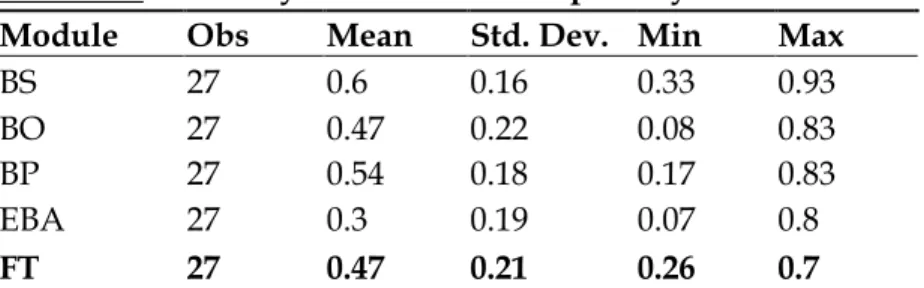
Table 2.4. Summary of our fiscal transparency indices 43
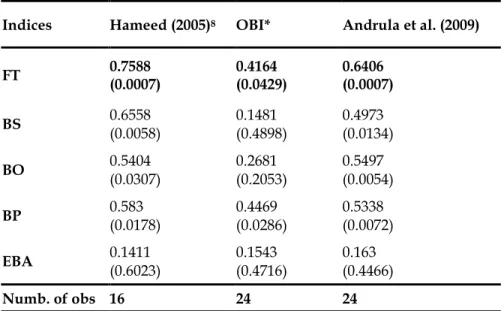
Table 2.5. Spearman rank correlation between our index and other indices 46
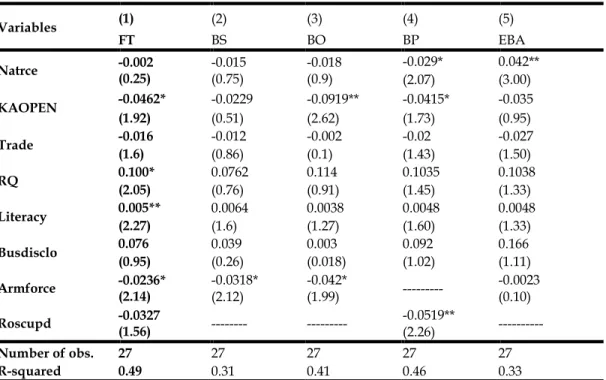
Table 2.6. Determinants of Fiscal Transparency 59
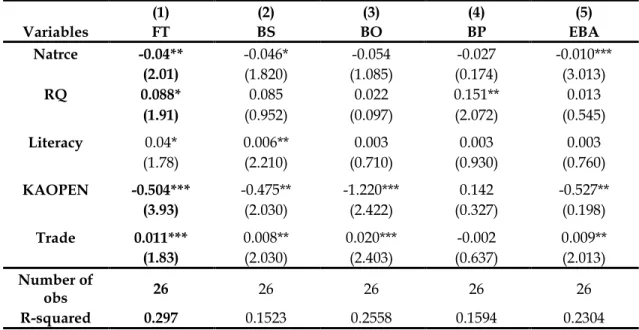
Table 2.7. Two Stage Least Squares models of the determinants of Fiscal Transparency 60 Table 2.8. Determinants of fiscal transparency: Robustness check using other indices 70 Table 3.1. Consequence of fiscal transparency, cross-section analysis 88 Table 3.2. Consequence of fiscal transparency, robustness check using Andrula index 97 Table 2.3. Consequence of fiscal transparency, robustness check using OBI 98
List of figures
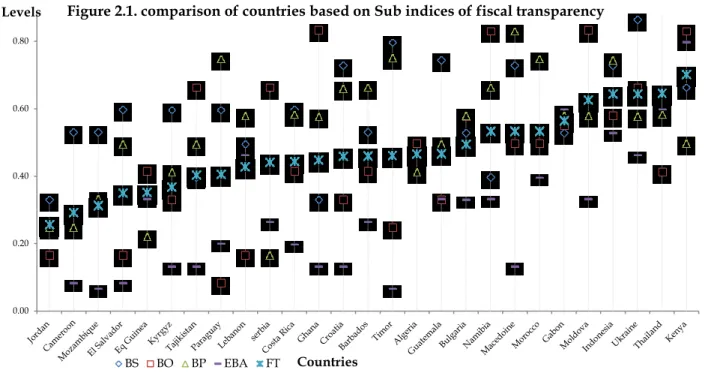
Figure 2.1. Comparison of countries based on Sub indices of fiscal transparency 69
Figure 2.2: Comparison of the fiscal transparency indices 47
Figure 2.3. Natural resources and fiscal transparency 49
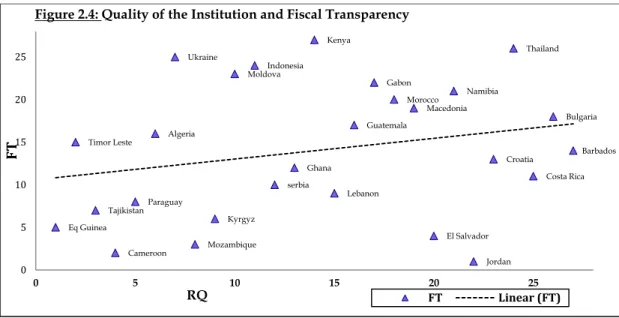
Figure 2.4: Quality of the Institution and Fiscal Transparency 50
Figure 2.5: Literacy level and Fiscal Transpaency 52
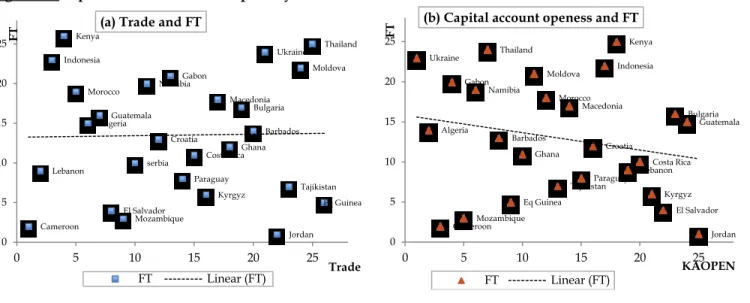
Figure 2. 6: Openness and Fiscal Transparency 54
Figure 3.1: Fiscal transparency and structure of government spending 79
Figure 3.2: fiscal transparency and education 81
Figure 3.3: Fiscal transparency and health 82
Figure 3.4: Fiscal transparency and FDI 83
GENERAL INTRODUCTION
The objective of this thesis is to explore the extent to which a specific definition and a measure of fiscal transparency (based on a new index) can exclusively be applied to developing countries. Such approach is consistent with the methodology used by international organizations such as the International Monetary Fund (IMF) and the World Bank. For example, based on the Report on the Observance of Standards and codes (ROSC), we build a new and replicable index of fiscal transparency that can be
used to evaluate the determinants as well as the consequences of fiscal transparency in a sample of twenty-seven developing countries1. The issue of fiscal transparency has
recently become an important aspect of public governance, particularly, after the Mexican and the Asian crises at the end of 1990s. This has generated a lot of attention on the definition and measures of fiscal transparency. Moreover, a number of studies have emerged that distinguish among countries on the basis of their respective political, financial, and fiscal discipline outcomes of fiscal transparency. Most of these studies show that different definitions or measures of fiscal transparency produce not only different determinants but also different policy outcomes for different groups of countries.
Although a comprehensive literature review is among the essays of my thesis, it may be necessary to present some of the weaknesses of the existing literature that justify my work. First, the available data on fiscal transparency are too general, as they tend to cover not only developed countries and emerging countries, but also developing countries together. In addition, the existing literature tends to evaluate the performance of a country’s fiscal transparency on the basis of a set of criteria related to its fiscal budget performance (including its degree of adherence to a set of international principles) without taking into account the country’s stage of economic development. However, as far as developing countries are concerned, it seems appropriate to consider their relative stage of economic development in any performance evaluation exercise. In
1 Low-income and middle-income economies, such as classified by the World Bank in 2009. See http://web.worldbank.org/. That classification reflects well the development statuses that most of the countries of our sample have at the time their ROSCs were published, even though the statute of some of them, such as Croatia, have changed since then. My focus is on developing countries that are either democratic or undemocratic.
other words, consideration should be given to the stage of a developing country’s economic development as the most fundamental way of differentiating among the developing countries and their levels of fiscal transparency. Because past studies do not focus on the role of this criterion, the existing literature has tended to conclude that developing countries generally represent the group of countries with low levels of fiscal transparency.
Second, the analytical framework in the literature does not tend to be completely applicable to the case of developing countries. For example, several past studies conclude that fiscal transparency is associated with political budget cycles. Such a conclusion may be biased because the studies do not consider either the weakness or the absence of democratic regimes that characterize most developing countries. Furthermore, the literature finds that the level of fiscal transparency of a country negatively affects its perception by international markets measured by the credit ratings given by formal agencies like Standard & Poors or Moody’s. All such conclusions are questionable on many grounds: first, the studies do not consider the fact that when it comes to investment in developing countries, one must emphasize the role of foreign direct investment (FDI) (which have been shown to depend, to a large extent, on the availability of natural resources), rather than other types including portfolio investment. Second, whereas in the past, developed countries like US or UK were the types of countries that would undertake foreign direct investment in developing countries, now, these investments emanate mostly from emerging countries like China, Brazil or India. Certainly, the latter countries are less careful in the area of public governance. Lastly, instead of their investment performance being assessed by formal agencies like Standard & Poors or Moody’s, developing countries are covered by such institutions as Euro money, Institutional Investor, or Economist Intelligence Unit.
Accordingly, this thesis seeks to investigate how socioeconomic circumstances in developing countries would affect the level of fiscal transparency and how their economic performances might differ under alternative levels of transparency. In particular, we seek to determine how differences in magnitude of fiscal transparency would influence their respective economic outcomes. To achieve these objectives, the thesis is organized around three separate but interlinked essays.
Essay one presents the different directions taken by the existing literature on the topic of fiscal transparency. It is structured around four principal axes that include the determinants of fiscal transparency; the links between fiscal transparency and such variables as institutional issues, international capital markets, and fiscal budget discipline, corruption and economic growth. The general finding for most of the studies tend to support the view that the lack of transparency in most countries is due to poor quality of administration and institutions, and to high level of corruption.
However, some studies also focus on the analyses of the effect of fiscal transparency on the scale of government and gubernatorial popularity, and the electoral cycle of debt management. In particular, we examine several other theoretical and empirical frameworks that also address the effects of fiscal transparency on public decisions and public actions, by identifying conditions under which different levels of fiscal transparency can be associated with different levels of population welfare.
When it comes to the relationship between fiscal transparency and investor-behaviour in financial markets, most of the studies assume that the riskiness of a country’s financial securities and therefore the interest rate attached to these instruments are highly determined by its level of fiscal transparency. Accordingly, it is concluded that fiscal transparency can help to support the external borrowing facilities of countries, thereby improving their sovereign ratings and preventing them from potential financial crises. In other words, fiscal transparency can improve the credit-worthiness of a country.
Overall, because fiscal transparency is defined and measured differently by different authors, Essay one finds that there is lack of consensus concerning the relationship between fiscal transparency and fiscal discipline, corruption and economic growth.
In Essay two, we intend to focus attention on the determinants of fiscal transparency with regard to only developing countries. To that end, we construct a new index of fiscal transparency (consistent with the definition provided by the IMF in both its 2001 and the 2007 Manuals of Fiscal Transparency) and describe additional determinants of fiscal transparency that are exclusively relevant in the study of developing countries. In particular, we introduce such factors as natural resources, the
openness of the economy, the literacy rate of the population, and the quality of institutions.
After specifying a model based on the above determinants, we perform regression estimations of the resulting equation using the ordinary least squares (OLS) approach using our newly-constructed index for fiscal transparency. However, we did not find the model to perform nicely because of possible endogeneity arising from interdependence among some variables. Accordingly, we applied the two-stage least squares (2SLS) method to ensure that the estimators are consistent. As a robustness check, the same estimation procedure was replicated by replacing our index of fiscal transparency with respectively the index of Andreula et al. (2009) and the Open Budget Index, both of which use a significant similar number of developing countries in our selected sample. Interestingly, the results provide additional credence to our suggested procedure.
Essay three provides an estimation framework to determine the potential consequences of fiscal transparency on the objectivity of government spending, education and health, attraction of foreign direct investment (FDI), and economic growth for a sample of twenty-seven developing countries. In the empirical analysis, we adopt the same estimation techniques (i.e., OLS and two-stage least squares methods) used in Essay two, first, to determine the extent to which fiscal transparency can impact the objectivity of government spending, measured as the ratio of government spending on education and health to its spending on defence. Second, since it is a moot question as to whether fiscal transparency can independently affect education and the health status of the population, separate regressions are estimated for these two variables. For simplicity, spending on education is measured as the literacy rate of adults and the rate of primary school enrollment; and health outcomes considered are the life expectancy at birth and the infant mortality rates2.
2As a robustness check, we once again replicated the same estimation procedures, by replacing our fiscal
transparency index respectively by the index of Andrula et al.’s (2009) and the Open Budget Index, for the reason mentioned above. The results are very similar to the findings obtained using our index of transparency, in terms of the direction and the significance of the relationships.
Essay 1
The Issue of Fiscal Transparency: Where is the literature headed?
1.1. Introduction
Fiscal transparency is becoming one of the most discussed topics in economics and finance since lack of transparency was cited as a factor of financial crises. Precisely, several international organizations such as the IMF and OECD considered fiscal transparency as an important feature of fiscal policy. These organizations widely believe that a lack of transparency was among the causes of these crises, according to authors like Jarmuzek et al. (2006). In this regard, the IMF initiated the Code of Good Practices on Fiscal Transparency - Declaration on Principles in 1998 (revised in 2007), followed in 2001 by the OECD’s Best Practices for Budget Transparency andbythe multistakeholder Extractive Industries Transparency Initiative (EITI), which was launched in 2002 to address resource revenue transparency issues in resource-rich countries. Furthermore, the IMF and the World Bank have been jointly publishing the "Reports of the Observance of Standards and Codes" (ROSCs), in which they undertake a large number of summary assessments of the observance of standards relevant to private and financial sector development and stability, and public sector transparency. So far, there is growing academic research in the field, most of which supports the importance of fiscal transparency in both developed and developing countries.
Fiscal transparency can be defined as the public availability of information regarding governments’ decision-making procedures and transactions. But the most cited definition in the literature is that provided by Kopits and Craig (1998 p.1-2). According to these authors, fiscal transparency can be defined as the openness toward the public at large about government structure and functions, fiscal policy intentions, public sector accounts, and projections. It involves ready access to reliable, comprehensive, timely, understandable and internationally comparable information on government activities – whether undertaken inside or outside the government sector – so that the electorate and financial markets can accurately assess the government's financial position and the true costs and benefits of government activities, including their present and future economic and social implication.
From this definition, it follows that budgets that include numerous special accounts and that fail to consolidate all fiscal activity into a single “bottom line” measure are not transparent (Poterba and von Hagen, 1999). In contrast, budgets that are easily available to the public and to participants in the policymaking process, and that do present consolidated information, are transparent.
In the same order, Alt and Lassen (2006a) distinguish four main characteristics of transparent procedures: (1) openness and ease of access and monitoring, in the sense that more transparent procedures should process more information in fewer documents, other things equal. (2) The content and the release of information, in which words and classifications should have clear, shared, and unequivocal meanings. (3) The possibility of independent verification, which has been shown experimentally to be a key feature in making communication persuasive and/or credible. (4) The presence of more justification to make the budget document easily understandable.
Therefore, budget transparency becomes a matter of actors in the socio-political system. In fact, if it is accepted as the systematic and timely release of all relevant fiscal information, fiscal transparency requires the presence of two important actors: an effective legislation that scrutinizes budget reports, and discusses budget policy; an effective civil society through the media and nongovernmental organizations that can influence budget policy and hold government accountable, such as defined by Bernardino and Bastida (2009). This is why, based on the principal-agent framework, Prat (2005) defines fiscal transparency as the ability of the principal (population) to observe both how the agent (government) behaves and the consequences of the agent’s behaviour.
However, despite the great theoretical analysis developed to present the causes and the impacts of fiscal transparency, the construction of a unique index measuring different dimensions of fiscal transparency is still one of the most important challenges of the empirical literature on the topic. The indices proposed by the literature differ from each other on a number of points including the reference documents used, the methodologies of construction, the coverage in terms of countries and aspects. This partly explains the relative disparity or subjectivity of conclusions drawn from these indices. De Simone (2009) shows that there is no significant correlation among these indices. Moreover, the ranking of countries varies considerably across indices.
The present paper discusses different directions taken by the literature on this topic. The objective is to provide an overview and a critical comparison of a set of works related to fiscal transparency as well as the measurement of fiscal transparency done to date. One justification for such activity is that the subject of fiscal transparency is still very new. Thereby a review of previous research on this issue gives background information that helps to identify aspects that require further investigation.
It is clear from the above that the topic of fiscal transparency is still developing and evolving in several directions. Some authors bring fiscal transparency into the area of bureaucratic behaviour, according to which the lack of transparency is caused by the poorness of the administration and the institutions, which in turn explains several political decisions. Another angle consists of showing that fiscal transparency affects financial markets, as it can help some emerging countries to support their external borrowings by increasing their sovereign ratings and prevent them from financial crises by reducing spreads or by fostering more international capital inflows. In addition, several scholars show that fiscal transparency leads to other important economic outcomes, such as fiscal discipline, sustained growth rate of output, stable inflation rate, and development.
This survey is organized as follows. The first section presents literature on the determinants of fiscal transparency. The next four sections discuss the literature on the respective links between fiscal transparency and institutional and political issues; budget cycles; international capital markets; and other economic outcomes, including fiscal discipline, corruption, and growth. Section six concludes by raising a few of the points that deserve further attention.
1.2. The determinants of fiscal transparency
The following analyses consider that some political, institutional and socio-economic facts should be seen as determinants rather than outcomes of fiscal transparency.
Alt et al. (2006) investigate, conceptually and empirically, the political and economic determinants of fiscal transparency. In other words, they analyze the causal effects of political and fiscal factors on transparency in the United States. Using a model of accountability, they explore two broad sets of explanatory factors under which
politicians might implement more transparent budget procedures: the political setting and the fiscal environment.
For the political setting, these authors define political polarization within a state measured by the liberal-conservative axis as a dependent variable. As such, they calculate average ideology scores based on roll-call voting in the U.S. Congress (following Hanssen, 2004), according to the data taken from Poole and Rosenthal (1997). For each year and state, they measure policy distance by the absolute difference between average ideology scores. The fiscal variables of interest include the deficit, debt, and general revenues, all of which are measured in real per capita terms. Socioeconomic controls include real per capita income, income squared, population size, population squared, percent elderly, and percent school-aged.
Alt et al. (2006) construct an index of fiscal transparency by extending Alt et al.’s (2002) index data back in time. In doing so, they obtain an annual score for each year between 1972 and 2002 based on survey responses to a questionnaire previously sent to the budget officers of 38 states. This allows them to estimate the model with a panel data analysis with a state fixed. Then they consider a dynamic panel data analysis estimated by GMM for the robustness check.
As a result, they find that both political and fiscal outcomes affect the level of transparency; that political competition tends to increase the level of fiscal transparency; and that fiscal imbalance, in the form of higher surpluses or deficits, also contributes to higher transparency.
Andreula et al. (2009) extend the above analysis, but focus on the relation between institutional factors and fiscal transparency. The specification of the paper considers fiscal transparency as the dependant variable and the explanatory variables include the quality of the institutions associated with GDP, inflation, and some political controls.
To measure fiscal transparency, Andreula et al. (2009) use the IMF Manual (2007) and define four sub-indices dealing with clarity and assurances of information, roles and responsibility, open budget preparation, and public availability of information (following Hameed, 2005). These main aspects guide them in extracting information from each of 82 countries’ ROSCs corresponding to the divisions of these sub-indices. The authors then defined an index as the mean of the marks assigned to each practice: 0
(code not observed at all), 2 (minimal adherence to IMF suggestions), 4 (adherence limited), 6 (Code partly followed), 8 (Code mostly followed), and 10 (Code totally followed).
For the quality of institutions, the authors relay to the governance indicators developed by Kaufmann, Kraay, and Zoido-Lobatón (2002), who combine both large opinion surveys and measures based on polls of experts and define governance using six clusters of variables: voice and accountability, political instability and violence, government effectiveness, regulatory burden, rule of law, and control of corruption. The governance indicators are the aggregate of each of the six dimensions mentioned, for each of the 82 countries.
Andreula et al. (2009) apply OLS and two-stage least square (2SLS) regressions to control for the endogeneity problem encountered also in much of the earlier studies. They find that higher levels of institutional quality or governance give way to better fiscal transparency indicators. This may be the reason why several authors explicitly or implicitly link the lack of fiscal transparency to corruption (see Mauro, 1995; Hameed, 2005; Ellis and Fender, 2006).
The main instructions recommended in order to achieve a greater level of fiscal transparency are proposed by the IMF Manuals on Fiscal Transparency (2001 and 2007), which contain the Code of Good Practices on Fiscal Transparency (the Code). The organizational framework for the Code is provided in four interlocking general principles that aim to capture the essential elements of fiscal transparency: (1) the clarity of roles and responsibilities, which requires clear identification of the boundary between public and private sectors, and of the roles within the government, together with a clear legal and administrative framework for fiscal management. (2) The public availability of information, which covers the need for the timely provision of information. (3) The openness of the budget preparation, execution, and reporting, which deals with budget process, and thus goes to the core of fiscal transparency and specifies that budget data should be presented in a way that promotes accountability; procedures for the execution and monitoring of approved expenditures should be clearly specified; and fiscal reporting should be timely, comprehensive, and reliable. (4) The independent assurances of integrity, which requires that fiscal information (including related
statistical and macroeconomic information) should be open to independent external scrutiny.
1.3. Fiscal transparency, budget cycles, and institutional issues
The common point of the works presented in this section is the analysis of the issue of fiscal transparency using the bureaucratic behaviour models or the theory of fiscal illusion (see Benito and Batista, 2009). First, the lack of transparency is connected to the bureaucratic behaviour model, as bureaucratic management hides inefficiency by means of poor financial reporting, such as stated by Bennett and String (2005). Second, the theory of fiscal illusion may explain the failure to disclose the future consequences of current expenditure policies, which is an outcome of information asymmetry, such as studied by Puviani (1897), Niskanen (1974), Kress (1989). The result can be expressed in terms of the moral hazard problem between voters and politicians, as voters’ ability to control the actions of their elected representatives may be eventually improved by fiscal transparency.
Alt et al. (2002) analyze the effect of fiscal transparency on the scale of government and gubernatorial popularity for 48 states in the United States. They estimate a formal model of accountability, which was divided into two sub-models. The first considers the scale of the government as the dependent variable; the independent variables are the fiscal transparency and control variables, including real per capita income, unemployment, and government ideology index. Both the total revenues and the total spending per capita measure the scale of government. Fiscal transparency is measured by an index that sums the number of transparent procedures that each state has out of the nine measures published by the National Association of State Budget Offices (1995, 1999) and the National Conference of State Legislatures (1998). Then the authors code states as having low transparency with an index value of less than 4, medium transparency with an index value of 4 or 5, and high transparency with an index value of 6 or greater.
The dependent variable in the second sub-model is the popularity of the government, whose data are taken from the Job Approval Ratings (JAR) 3 database.
From the variety of different question types contained in the JAR database, Alt et al. (2002) analyze only the “standard job performance” question, the ratings for which were then redefined as “positive” for “excellent,” and “good” and “negative” for “fair” and “poor,” respectively. Then the popularity of the governor is the (average) percentage rating the governor “positive” out of all responses. The estimations are based on cross-sectional data averaged over 1986-1995. The explanatory variables are the transparency index as defined above and several economic and institutional controls.
Alt et al. (2002) find that fiscal transparency increases both the scale of government and the gubernatorial popularity. In others words, institutions (that define the transparency of the budget process) affect the popularity or the average job performance ratings of the state governors in the long run. However, along with Poterba and Reuben (1999), the paper does not solve the endogeneity problem concerning fiscal institutions at the state level due to the lack of panel data.
In the same vein, Alt and Lassen (2005, 2006a) analyze whether and how the transparency of fiscal policy affects the scope for electoral cycles. In their specification, the authors consider the central government fiscal surplus (as a percentage of GDP) as the key dependent variable. The main independent variables are binary “pre” and “post” election measurements which are respectively equal to one in the year of and the year following an election for the executive, and zero otherwise.
The transparency index is used in the first model as interacting with the above “post” and “pre” election variables. But in the second model, the transparency index is used as a separated independent variable. That transparency index is constructed based on four distinct categories that are: the ease to access and monitor fewer documents or places, the commitment to non-arbitrary language, the presence of more justifications of decisions, and the independent verification of the above. Based on these criteria, Alt and Lassen (2005, 2006a) define eleven items, ten of which are taken from OECD’s Best Practices for Budget Transparency (OECD, 2001) to which the authors add a measure of whether financial statements are prepared using accrual accounting. The other control variables include real GDP per capita; the share of population aged 15 to 64; the share above age 64; trade openness (exports plus imports as a share of GDP); and the output gap, a measure of country-idiosyncratic shocks constructed as the deviation from the country’s trend of real GDP.
Alt and Lassen (2005, 2006a) estimate the dynamic panel data model using first-differences for 19 advanced industrialized OECD economies over the 1990s. The main results of the paper are that the scope for electoral cycles in fiscal balance depends on the degree of fiscal policy transparency and that the access to information about fiscal policy impacts the existence of electoral cycles in public finances. In other words, the authors found that there exists a persistent pattern of electoral cycles in low transparency countries, while no such cycles can be observed in high transparency countries and that these electoral cycles are larger in more politically polarized countries. In addition, Alt and Lassen (2005) end with an important question of whether fiscal transparency also affects policy outcomes such as participation rates.
Furthermore, Alt and Lassen (2006b) analyze the effects of fiscal transparency on public debt accumulation. The paper investigates whether and how greater levels of fiscal transparency are associated with lower debt, whether a higher degree of political polarization is associated with higher debt, and whether governments that prefer low public spending also have more public debt. Before empirical testing, they present a career-concerns theoretical model with political parties (referring to Persson and Tabellini, 2000; Shi and Svensson, 2002). In that model, the authors integrate three important results of the literature on deficit and debt accumulation. The results that (1) fiscal transparency decreases debt accumulation at least by reducing an electoral cycle in deficits; (2) right-wing governments tend to have higher deficits than left-wing governments; (3) increasing political polarization increases debt accumulation.
The theoretical model considers an economy that consists of voters and political parties: the voters who want more competent politicians and the incumbent (a political party), which has at its disposal two policy instruments: taxes and debt. A political party can use both instruments to appear competent, even when it is not. This situation holds only if transparency is low, that means the probability that debt is observed before voters decide whether to re-elect the current incumbent or not is also low. In the equilibrium of the model, the authors show that transparency unambiguously decreases deficits and debt, which are costly and have no other function than transmitting information about incumbent competence. But this has no effect, as voters correctly foresee it, which implies the existence of an electoral cycle in fiscal imbalance.
The empirical analysis that follows is twofold. First, Alt and Lassen (2006b) test the existence of an electoral cycle in debt and its relationship with budget process transparency. For that aim, the authors replicate the Persson–Tabellini (2003) regression as described in Alt and Lassen (2006a). Second, using instrumental variable regressions, the authors examine the long-run relationship between budget transparency and general government debt in more detail by controlling for additional factors. Here, the dependent variable is the general government debt (as a percentage of GDP). In addition to the fiscal transparency index, the model includes two other key independent variables: the measure of political polarization and the average frequency of right-wing governments. The transparency index used is the same as in Alt and Lassen (2005, 2006a). The measure of political polarization comes from party-by-party raw scores, such as in Laver and Hunt (1992), while the average frequency of right-wing governments comes from the 1998 European Journal of Political Research Political Yearbook. The authors control for political and economic variables, such as the federalism, the effective number of legislative districts, the economic openness and the terms of trade, the proportions of young and old in the population, the income inequality, the income per capita, and the level of spending. To correct the problem of endogenity associated with fiscal transparency, the authors estimate a system of two equations using both two-stage and three-stage least squares estimations.
The prediction of the theoretical model (according to which fiscal transparency leads to substantially lower deficits and debt accumulation) received a strong empirical support. In other words, Alt and Lassen (2006b) determine that increasing the level fiscal transparency is an important way to improve fiscal performance. They also find that fiscal institutions significantly affect fiscal outcomes. In addition, they claim that incumbents in reasonably competitive political systems, such as common law countries and presidential systems, have incentives to establish fiscal transparency.
A solution to such a situation of information asymmetry may come from Fox (2007), who analyzes the potential interaction between fiscal transparency and informational asymmetries between office holders and the public. He uses a two-period model of lawmaking and elections to identify conditions under which government transparency can actually lower the voter’s welfare. To do so this author analyzes two different situations. In the first situation, the electorate knows the state of the world and
the incumbents are not better informed than the electorate about the relationship between policies and outcomes. In the second situation, the electorate does not know the state of the world and the incumbents have a better understanding of the effects of policies than the public. Fox (2007) determines that when incumbents have a better understanding of the effects of policies compared to the public, and most politicians share the electorate's policy preferences, transparency can have negative consequences. This result supports that under these conditions, the public may be better off delegating policymaking to office holders such as judges with lifetime appointments, civil servants, or politicians limited to few terms in office, whose tenure does not depend on public opinion.
Prat (2005) also supports that point of possible negative consequence of fiscal transparency. In that way, he distinctively studies the effects of fiscal transparency on consequences of public decision and public actions. Relating his work to Prendergast (1993) and Avery and Meyer (1999), Prat constructs a career concerns model where both voters and the politician are assumed to be uncertain about the politician’s type. Also, the author assumes that improving the transparency of the consequences public actions is always beneficial to voters. But in this model, more information about the agent’s actions can be detrimental if it causes the agent to disregard private informative signals in order to appear a certain way to the public. Prat’s results support the informal arguments that have been used to justify certain forms of secrecy, according to which transparency on (fiscal) decisions should go hand in hand with transparency on the consequences of these decisions. In other words, citizens should not have the right to obtain information about a public decision until that decision is implemented, following Frankel (2001).
Gavazza and Lizzeri (2008) follow the same idea of defining the conditions under which fiscal transparency can be counterproductive. The authors study the impact of transparency on budget deficits, on the size of government spending, and on the timing and efficiency of taxation system. These authors consider the static model of redistributive politics provided by Lindbeck and Weibull (1987). The paper introduces endogenous labour supply and considers two elections with an intertemporal linkage provided by debt. Also, in order to understand the role of transparency, the authors assume that voters imperfectly observe the electoral promises made to other voters. In
this way, an economy is assumed to be populated by voters who have the same utility function over consumption and labour, pay distortionary taxes on labour, and receive lump-sum transfers. These voters are divided into groups of the same number of individuals. The candidates are in turn identified according to their strategies in terms of tax rates or in terms of tax revenues. In this way, the issue of fiscal transparency is also divided into transparency of spending and transparency of revenues. Therefore, Gavazza and Lizzeri (2008) show that transparency of the political system does not unambiguously improve efficiency since transparency of spending is beneficial while transparency of revenues can be counterproductive because it leads to increased wasteful spending.
Benito and Bastida (2009) provide an answer to the question raised by Alt and Lassen (2005) as to whether fiscal transparency also affects political outcomes. To do so, the authors explore empirically the relationships between budget transparency, fiscal outcome, and political turnout. That empirical analysis is twofold: first, it focuses on the univariate relationships between fiscal transparency and respectively government debt, government balance, voter turnout in parliamentary elections, using a parametric correlation analysis. Then a multivariate analysis, such as OLS regressions, is applied to study the relationship between these variables as a whole, using fiscal transparency as the dependent variable. Second, the paper explores a cluster analysis in order to get groups of homogeneous countries by means of ANOVA tests for the “between-clusters” heterogeneity significance.
The voter turnout in parliamentary elections data comes from International Institute for Democracy and Electoral Assistance (IDEA). But to measure transparency, Benito and Bastida (2009) construct an index by matching the World Bank Budgeting Database questionnaire items with the “OECD Best Practices for Budget Transparency” features based on a sample of 41 countries. That led to 40 dummy variables, each of which takes the value 1 when the country accomplished the corresponding best practice and 0 otherwise. The transparency index for each country is then obtained simply by the sum of the 40 values. Therefore, that index ranges from 0, when the country does not meet any recommendation, to 40, when the country does meet all recommendations.
The authors find a positive relationship between the national government fiscal balance and budget transparency: The more information the budget discloses, the less
the politicians can use fiscal deficits to achieve opportunistic goals. The authors agree with Reviglio (2001) that improving public expenditure management by enforcing budgetary procedures and removing gimmicks that bypass fiscal constraints will foster transparency, improve budgetary credibility, and encourage further public expenditure reform.
Andersen and Nielsen (2010) also set a theoretical model and subsequently testing its implications (following the approach of Alt and Lassen (2006b)) to analyze the conception of fiscal transparency. The paper uses fiscal transparency to explain the procyclical nature of fiscal policy. In other words, the objective of the study is to use fiscal transparency to propose a new explanation of the procyclical nature of fiscal policy in both developed and developing countries.
The theoretical approach uses a model of retrospective voting, following Barro (1973), with two periods. In this model an incumbent politician sets fiscal policy and faces a trade-off between pleasing voters and abusing his or her powers for personal gain. In the first period, the incumbent chooses fiscal policy and the voters decide whether or not to re-elect the politician for the second period. After the second period, the incumbent has no possibility of re-election. The lack of transparency in the budget process is introduced by assuming that the size of the deficit is not necessarily observable to the voters. As a result, the government can hide information about its borrowing needs from the public. But Andersen and Nielsen (2010) assume that a deviation between the true deficit and the officially reported deficit is detected with a positive probability, which does everyone know and which becomes a measure of the degree of fiscal transparency. The result of this model is that fiscal policy is only procyclical in good times because the temptation to cheat voters is stronger in booms. This means that when the level of income rises, the incumbent can deliver the same levels of consumption with less effort, requiring a less careful conduct of fiscal policy and with more room for superfluous spending on “ego-boosting” projects.
To test the implications of the theoretical model, Andersen and Nielsen (2010) apply the panel data analysis on two sets of countries. The first set covers 21 OECD countries in the period 1989-2003 and the second set covers 59 countries in the years between 1980 and 1998. They regress a fiscal indicator variable (government expenditure) on a cyclical indicator (output gap) interacted with fiscal transparency and
a range of control variables using OLS and GMM. The fiscal transparency index used is the one proposed by Alt and Lassen (2006a). The authors find that a lack of fiscal transparency gives scope for rent-seeking behaviour in fiscal policymaking. In addition, the procyclical bias of fiscal policy in good times should be less severe in countries where fiscal transparency is high4, since a transparent budget practice reduces the moral
hazard problem between voters and politicians by improving voters’ ability to monitor the actions of their elected representatives.
In sum, as suggested by Alt et al. (2006b), politicians might dislike fiscal transparency for several possible reasons: Rent-seeking politicians do not wish to be disciplined; bad politicians do not wish to be distinguished from good politicians; re-election-minded politicians want to generate political business cycles; myopic politicians want to run bigger deficits than the public would like. These factors militate against improving fiscal transparency and might even motivate discourage transparency. However, more transparency might trade off the value of sunlight with the danger of over-exposure, such as claimed by Heald (2003). According to this author, too high degree of transparency can produce excessive “politicization” and reduce flexibility.
1.4. Fiscal transparency and international capital markets
The analysis of the impact of fiscal transparency on the behaviour of capital markets is based on the fact that capital inflows, such as aid and foreign direct investments, may be negatively correlated with opacity, such as stated by Alesina and Weder (1999), or Drabek and Payne (2001). In theory, firms should be less likely to enter a non-transparent country because of the increased risks, uncertainty, and high costs of doing business. The analogous situation is that countries that maintain and promote transparent policies and structures will attract more investments. Linking corruption and international aid, Alesina and Weder (1999) even recommend that donors should rethink their aid policies if they are truly serious about fighting against corruption and encouraging good governance.
Drabek and Payne (2001) evaluate the effects of transparent policy regimes on Foreign Direct Investments (FDI) inflows. The authors assume that transparency in economic policy-making and in the activities of government institutions are vital in
attracting foreign investment. To test that, they develop a simple econometric model that considers foreign investment inflows as depending on the degree of transparency, the level of economic activity, the level of interest rates, the inflation and exchange rate changes, and the level of openness of the trade regime in the host country.
For the FDI variable, Drabek and Payne (2001) pooled the aggregate bilateral FDI flow data from 52 countries between 1991 and 1995. Their transparency measure is obtained by combining two measures into a unique index. One is the Political Risk Services (PRS) ranking that considers the level of corruption, law and order, bureaucratic quality, and contract viability and the other one is the risk of government expropriation of private assets. A higher number indicates higher transparency in the host country. The paper uses ordinary least square (OLS) and two-stage least square (2SLS) estimations.
Despite the elusiveness their transparency index, Drabek and Payne (2001) obtain from the estimation that lack of transparency is negatively correlated with the level of FDI inflows into a host country. More specifically, on average, a country could expect a 40 percent increase in FDI from a one-point increase in their transparency ranking. Thus, a lack of transparency in a host country affects FDI inflow. In this way, the more the country is transparent, the more the FDI inflows into that country are important.
Gelos and Wei (2002) also support that conclusion. The paper provides a very detailed analysis of the behaviour of international investors, well strengthened by a great theoretical literature on information asymmetry as discussed in corporate finance literature. The paper is concerned with four key questions: The first is whether, relative to a benchmark, funds tend to be undervalued in less transparent countries; The second is whether herding is more prevalent in less transparent countries; The third is whether the funds react differently to a country’s news about the degree of transparency; The fourth is whether transparency help to explain the size of fund outflows across countries during the Asian and Russian crises. For each of these questions, the authors present a specific empirical analysis.
For the first question, Gelos and Wei (2002) present a panel data regression model for almost 40 emerging market economies with fund-fixed effect and country random effect where the country weights on the benchmark index depend on a measure
of transparency. The country weights are computed in terms of implied flows from the asset position data. Here the authors assume that funds hold a portfolio of stocks that is well approximated by International Finance Corporation (IFC) total return investable index. They use the Morgan Stanley Capital International (MSCI) index for the countries not covered by IFC.
For the fiscal opacity, Gelos and Wei (2002) build two separated indices: the cooperate opacity index and the macro policy opacity index. The first is constructed based on the yearly Global Competitiveness Report produced by the World Economic Forum. The second is obtained by summing the two measures of macroeconomic policies transparency produced by Oxford Analytica, and the corresponding value is subtracted from ten. In addition to these two opacity variables, the authors consider a composite opacity index generated by Price water house Coopers (2001) based on survey bureaucratic practice, legal system, government macroeconomic policies, accounting standards and practices, and regulatory regime. The authors control for the following variables: the average turnover given by the average monthly value traded divided by the mean market capitalization; the variable on minority shareholder rights; the measure of closely held shares; the GDP per capita; the economic, financial, and political risk produced by the International Country Risk Guide; and a three-year moving average of mean returns to capture the possibility that fund managers are return chasing. Their results suggest that corporate and macro-policy opacities impact asset allocation.
For the second question, Gelos and Wei (2002) compute an indicator of herding using the statistic of trading comovement initially introduced by Lakonishok et al. (1992). This is to determine whether funds move in the same direction more often than expected if they are traded independently and randomly. That indicator is a function of the proportion of buyers out of all funds active in the country. The authors then analyze the correlation between herding and transparency using the same control variables. The paper finds that herding is higher in less transparent countries.
For the third question, Gelos and Wei (2002) regress changes in country portfolio weights on revision in consensus GDP forecasts that they multiply with the various opacity variables. The consensus GDP forecasts are obtained by computing a weighted average of the current year and the year-ahead. Again, the authors strengthen their estimation with the use of almost the same controls as in the previous estimations. The
results here show in general that fund reaction to news is more muted in more opaque countries.
For the forth concern, Gelos and Wei (2002) link the cumulative net outflows of individual funds during the Asian and Russian crises to the opacity indices across countries. Particular attention is paid to the months of largest outflows by emerging market equity funds, meaning September to December 1997 for the Asian crisis and May to September 1998 for the Russian crisis. Controlling for the same variables, they find a strong link between the degree of opacity and the size of net outflow in both crisis.
In sum, Gelos and Wei (2002) show that international markets equity funds prefer to hold more assets in more transparent countries’ markets and that herding among funds is somewhat less prevalent in transparent countries. In addition, their paper supports the point that international investors tended to flee more opaque markets during the Russian and Asian crises. Gelos and Wei (2005) confirm the latter result even with new measures of transparency.
Indeed, Gelos and Wei (2005) further examine whether and how the holdings of international investors can be affected by country transparency and whether this effect can become more pronounced during crises. To analyze the first part of the question, the authors consider the international capital asset pricing model, where the dependent variable is a country’s weight in a given fund’s portfolio and the main independent variable is transparency (opacity).
As an empirical proxy for the world market portfolio, the authors choose the Morgan Stanley Capital International (MSCI); Emerging Markets Free (EMF) Index produced by Morgan Stanley. The transparency variables are constructed in the same way as in Gelos and Wei (2002), distinguishing government transparency from corporate transparency. But, for government transparency, they now cover two separate aspects. One is the data transparency index obtained by scoring the IMF survey responses for frequency and timeliness on a scale of 0–10, with 10 being the most transparent, meaning conformation with the IMF’s Special Data Dissemination Standards (SDDSs). The other aspect is the macroeconomic policy transparency, for which they construct two separate indices. The first one, called “Macro policy opacity I”, is obtained by summing the two measures of macroeconomic policies transparency produced by Oxford Analytica and subtracting the corresponding value from ten. The
second one, called “Macro policy opacity II”, is obtained by using the standard deviation of the expected inflation rates. This index is based on the dispersion of beliefs about macroeconomic outcomes. For the corporative opacity, they first form two variables: one is obtained by subtracting from 8 the numbers that correspond to the level of Financial Disclosure provided by the Global Competitiveness Report for 2000 and 1999. The second is obtained by subtracting from 8 the numbers that correspond to the level of availability of information, still for 2000 and 1999. Then the Corporate Opacity Index is the simple average of the two indices. For the composite opacity, they use a composite index provided by PricewaterhouseCoopers (2001), following Christofides et al. (2003).
The main control variable is the MSCI weight. Once again, for robust estimation, the authors control for low liquidity, capital controls, limited float of shares, closely held ownership, transaction costs and taxation, or insufficient protection of minority shareholders, among others. In addition, the paper includes the exchange rate regimes to capture the fact that fund managers may have a preference for certain exchange rate arrangements. The estimations methods include OLS regression, vector auto regression, and many other techniques.
For the second part of the question, that is whether transparency measures explain the differential loss of confidence across countries during crisis, Gelos and Wei (2005) combine the size of monthly fund flows during the Asian and Russian crises to their measures of country transparency. But the independent variable is an interaction term of the opacity indices with a dummy variable, which takes the value of 1 during the crisis period and 0 otherwise.
The overall result confirms the results of Gelos and Wei (2002). In other words, the paper finds that international funds prefer to hold more assets in more transparent markets and that international investors tend to flee more opaque markets during a crisis. In this way, becoming more transparent can be an effective way for countries to benefit from international financial integration while avoiding excessive volatility during turbulent times.
Glennerster and Shin (2003) specifically analyze the effect of a move towards transparency procedures introduced by the IMF on emerging market bond spreads. More specifically, these authors examine three issues: (1) the medium-term effect of the transparency reforms on the spreads and volatility; (2) the short-term effect or news
effect of these reforms; and (3) the reason why markets might respond to the adoption of these reforms.
For the first issue, that is to test the relationship between the level of transparency and the volatility in the sovereign debt market, Glennerster and Shin (2003) specify a quarterly panel model. The dependent variable is the sovereign bond spread provided by the JP Morgan’s Emerging Market Bond Index (EMBI) spread data. As independent variables, Glennerster and Shin (2003) construct three zero/one dummies, which take the values of one for any quarter after a country has published an Article IV report or the Reports on the Observance of Standards and Codes (ROSCs), or has come into compliance with the Special Data Dissemination Standard (SDDS). They also include interaction variables between the different measures of transparency. Empirically, the authors apply a quarterly panel estimation with a country fixed effect, strengthened by the use of two-stage least squared for 23 (and after for 32) emerging market economies. In addition and for robustness check, they control for the price inflation, the current account balance as percentage of GDP, the fiscal balance as share of GDP, the size of debt market, the rule of law, voice and corruption, and the regional dummies.
For the second issue, Glennerster and Shin (2003) use the same EMBI spread data in another panel regression with 32 emerging market economies and they test whether greater transparency leads to lower spreads. Now the specification considers two equations: the first is a stationary auto regression that relates the dependant variable, the absolute value of the percent change in daily credit spread, to its own lags. The second equation is the law of motion for the conditional variance of the error term of the first equation to which they add as independent variables the dummy variable (that is equal to one for both the publication date and the day after and zero otherwise) and the lagged dependent. This time, they apply the GARCH model estimation, as the credit spread data exhibits volatility clustering and fat-tails.
Glennerster and Shin (2003) use two ways to approach the third issue, which is whether there is a difference in news effect for different types of countries and for different types of documents: First, they examine whether markets respond to the content of reports or to the decision to publish. Second, they test whether the information on the likely actions of the IMF about disbursement (program) is the
primary reason why the published documents affect the markets. More specifically, they estimate separate coefficients for the publication effect of documents for program and nonprogram countries. A program country is either those that have a program with the IMF during their sample period or those that have a program at the time the document was issued. They use is almost the same specification as in the second issue. The paper also analyzes the impact of end-of-mission press conferences and mission statements on the price of emerging market bonds, as well as the impact of publication of a change in a country’s credit rating on emerging market sovereign bond spreads.
The results of this paper support the evidence that transparency can reduce borrowing costs in capital markets in some cases by substantial amounts, that the IMF recommended reforms have contributed to better-informed markets, and that improving fiscal transparency in transition economies can help to lower their borrowing cost. The paper concludes that the movement in spreads immediately following publication is largely a response to the content of the report rather than the decision to publish. According to these findings, Glennerster and Shin (2003) suggest that the IMF should be a provider of information to the market on behalf of transparent countries with smaller debt market where the private sector may have less incentive to undertake its own research.
Christofides et al. (2003) also obtain the same result. These authors propose an empirical analysis of the link between the adoption of standards proposed by IMF and the cost of capital in the case of emerging market economies. More specifically, they analyze the link between adherence to IMF standards and both the foreign exchange spreads and the sovereign ratings. For the first relation, the authors propose a panal data analysis where the country foreign exchange spread is a function of a range of fundamental macroeconomic variables, including inflation, investment, GDP growth rate, fiscal balance, inflation, terms of trade, external debt ratio, and indicators of adherence to IMF standards. These indicators were obtained from a full range of measures most closely related to the authors international standards categorized as transparency and as the financial sector or market integrity. Particularly, the authors transparency indicators are found by matching the international standards such as Special Data Dissemination Standard (SDDS); the fiscal and monetary codes as compiled by many sources such as Wilshire Associates, Price Waterhouse-coopers (PWC),