2020 Hui Fan
FACTORS AFFECTING
TRAINING EFFECTIVENESS AT
SUNING.COM
– An Employees’ Perspective
2020| 55 Pages
Hui Fan
FACTORS AFFECTING TRAINING
EFFECTIVENESS AT SUNING.COM
- An Employees’ Perspective
Training is effective when recently trained employees understand the requirements of their job better and can apply the skills and knowledge what they learned into their day-to-day work activities. The current study sought to explore the factors influencing the effectiveness of training from employee’s perspective. To achieve this aim, the current study used a quantitative research method, and data was collected from sample employees who work in Chinese retailer Suning.com.
Data was collected using a questionnaire survey filled by the sample of respondents. The results showed that less than half of employees at Suning.com believed the training provided by company is effective. There are few key factors that hiding the training effectiveness. First one is a majority of employees indicated that absence of training needs analysis, and results training content was not relevant to employee’s current job. In addition, more than 40% of respondents indicated that the required training materials were not provided during the training process. Training schedule is one of the factors influencing the training effectiveness, respondents argued that training took place did not during the normal work time, and the time allocated to training was insufficient. Moreover, employees were unsatisfied with trainer performance, such as trainer’ s presentation was not easy to understand, and trainer cannot keep the training session interesting. Finally, some of employees indicated that the organization/trainer did not evaluate training effectiveness after training completed. Those are the main factors hindering effective training at Suning.com from employee’s perspective.
Opinnäytetyön valmistumisajankohta | xx sivua, xx liitesivua
Tekijä(t)
OPINNÄYTETYÖN NIMI
- mahdollinen alaotsikko
Kirjoita tiivistelmä tähän, merkkimäärä on enintään 2000 merkkiä. Ohjeita tiivistelmän kirjoittamiseen löytyy Messin opinnäytetyön ohjeista.
ASIASANAT:
Kirjoita 3–7 opinnäytetyösi sisältöä kuvaavaa asiasanaa tähän. Käytä sopivien asiasanojen etsimiseen sivustoa http:/finto.fi/fi/. Jos sivustolta ei löydy työsi sisältöä vastaavia asiasanoja, site asiasanoina työsi keskeisiä termejä.
LIST OF ABBREVIATIONS (OR) SYMBOLS 8
1 INTRODUCTION 6
1.1 Research background 6
1.2 Research objective and research questions 7
1.3 Research Structure 8
2 LITERATURE REVIEW 9
2.1 Chapter introduction 9
2.2 Definition of terms 9
2.3 Siginificance of effective training to employees and organizations 10
2.4 The process of effective training 11
2.5 Assessing training effectiveness 13
2.6 Factors influencing the effectiveness of training from employee’s perspective 14
3 RESEARCH METHODOLOGY 17 3.1 Research methodology 17 3.2 Questionnaire survey 17 3.2.1 Questionnaire design 17 3.2.2 Sampling 18 3.2.3 Questionniare administration 18
3.3 Research reliability and Validity 19
4 DATA ANALYSIS 21
4.1 Introduction 21
4.2 Introduction of Suning.com 21
4.3 Sample characteristics 22
4.4 Training at Suning.com 25
4.5 The effectiveness of employee training at Suning.com 30 4.6 Factors influencing the effectiveness of training at Suning.com 32
4.6.1 Training content 32
4.6.2 Training environment 33
4.6.3 Training materials 34
5 CONCLUSION AND RECOMMENDATIONS 39
5.1 Research findings 39
5.2 Recommendation 41
REFERENCES 43
APPENDICES
Appendix 1. Heading of appendix
FIGURES
Figure 1:Sample gender profile 22
Figure 2: Sample age profile 23
Figure 3: Sample marital status 23
Figure 4: Sample education level 24
Figure 5: Length of stay at Suning.com 25
Figure 6: Proportion of employees that have received formal training 25
Figure 7: Frequency of training 26
Figure 8: Where the last training took place 27
Figure 9: When the last training took place 27
Figure 10: The last training who is the trainer 28
Figure 11: Who wanted employee to take part in training 28 Figure 12: Whether the training needs investigation conducted in the last training 29
Figure 13: Training administration 30
Figure 14: Measure of training effectiveness from employee's perspective 31
Figure 15: Training content 33
Figure 16: Training environment 34
Figure 17: Training materials 35
Figure 18: Training schedule 36
Figure 19: Trainer performance 37
Figure 20: Training evaluation 38
Figure 21: Sammarizes of training effectiveness results from employee's perspective 39 Figure 22: Barriers that hinder the effective training at Suning.com 41
Equation 1. Example of an equation (Source). Error! Bookmark not defined.
PICTURES
Picture 1. Section break. Error! Bookmark not defined.
Picture 2. Clicking the cursor to the right place to remove the section break. Error! Bookmark not defined.
Picture 3. Fn and Backspace keys. Error! Bookmark not defined.
Picture 4. Selecting Format Page Numbers. Error! Bookmark not defined.
Picture 5. Page Number Format window. Error! Bookmark not defined.
Picture 6. Adding the name for the picture. Error! Bookmark not defined.
Picture 7. Adding the new type of Label. Error! Bookmark not defined.
TABLES
1 INTRODUCTION
1.1 Research background
Dessler (2017) described employees as one of the most essential resource of an organization. As a result, training is a critical investment since it improves the productivity of human resources and profitability of organization. The primary objective of training is to enhance job related skills and knowledge, and reduce or eliminate job performance difficulties for employees (Surbhi 2017). Dessler (2017, 271) stated that training is the process of providing fundamental and necessary skills to new and existing employee to do tasks successfully. Therefore, training is effective when trained employees understand the requirements of their jobs and can apply the knowledge and skills learned to their day-to-day activities.
Enterprises and businesses in general use training to enhance employee performance. Further, training is used to induct new employees to understand company or business. According to Dessler (2017,269), through training new employee who need to understand the organization (such as information, culture and functions), to know what of expected in work and behavior. In general, training helps new employee to feel welcome and to start getting easily attached to the organization and current employees. Moreover, training helps employees, especially employees who are in the leadership positions, to transfer knowledge and skills to other employees (Sudhakar, 2017). As a result, properly trained employees contribute to the success of an organization in many ways.
Furthermore, providing employee training can improve employee job satisfaction (Punia and Kant, 2013, 152). Training give advantages to employee to update their knowledge and skills, and keep up with the daily demands of the job. According to Eades (2014), providing employee training has a psychological effect on employees which improve their performance. For example, when an organization provides training to employees, it demonstrates the company commitment, and employees feel they are valued by the organization. Therefore, employee feel valued, appreciated and challenged to perform to their level best. And which can boost employee job satisfaction and reduce labor turnover.
Training is one of the most important parts of HRM in the contemporary world. Employee training is a vital factor influencing the productivity of human resources. Training equips employees with the skills necessary to perform their work. In today’s highly dynamic operating environment, training is required to update employees’ skills and knowledge to adapt to changes in the operating environment. Regarding the World Economic Forum report (2018), 54% of employees in the survey who require to reskilling and upskilling through learning. The Modern businesses invest large amounts of money in the employee training program. For instance, More and more organizations prefer to investment on training rather than hiring new talents (Deloitte Global Human Capital Trends, 2019, 80). 84% of organization in the survey indicated that they will increase investment on training to update employee’s skills, and 53% of originations explained that they will increase budget of employee training by 6% or more (Deloitte Global Human Capital Trends 2019, 80).
Regarding the efforts and investment being made on the employee training, and the importance of training in enhancing the productivity of human resources, and it is important for business management to adopt an effective training program. This will ensure that the investments in employee training benefits the organization. Therefore, through exploring the factors that influencing training effectiveness from the perspective of employees in this study, to know how to structure effective training programs to realize maximum benefits for organization.
1.2 Research objective and research questions
The aim of the current study is to investigate the factors affecting the effectiveness of training. Specifically, to study the subject from the perspective of employees. In the other words, the aim of the analysis is to determine the characteristics of training that employees consider to be the most important in an effective training program. The study takes the form of a case study and look at the company Suning.com. As a result, the specific aim is to determine the factors influencing the training effectiveness from the employees’ perspective at the case company.
Based on the above objectives, the study answers the following questions:
• What are the factors affecting training effectiveness from employees’ perspective?
Suning.com?
• What are the barriers that hinder effective training in the case company Suning. com from employees’ perspective?
1.3 Research Structure
This research is organized into five chapters. The introduction chapter presents a background of the analysis, the research objective and research questions. The second chapter explore literature reviews about research topic. Then followed by research methodology chapter identifies, and presents the research method choices and research design which are adopted to conduct the study. The fourth chapter illustrates the data collection and analysis, the discussion of results from analysis is presented, the questionnaire survey taken to collect data form the employees working for the case company. The fifth chapter present the conclusion of main findings from the data analysis, and presents the recommendation regarding how Suning.com can be improve the effectiveness of their training program.
2 LITERATURE REVIEW
2.1 Chapter introduction
This chapter presents a review of literature and concepts relevant to the research topic of the employee training effectiveness. Due to the scope of the study, the research focuses on the literature that has studies the effectiveness of training from employees’ perspective, This chapter begins with the definition of a few key terms about topic. Moreover, a brief review of literature the siginificance of training is outlined. This is followed by the process of effective training, and discussion on how the effectiveness of training is evaluated. Finally, a dicussion of the key findings by prior researchers regarding the factors influencing training effectiveness from the perspective of the employees is presented.
2.2 Definition of terms
A conceptual definition of a few key term about topic is necessary to undersantd the ideas presented in this study, the definitions presented in this section are made in the context of human resources management and the current study.
• Training: training is an approach to improve people’s performace, when the employee lack of skill or knowledge who not able to perform a job, training is a bridge to deliver the required knowledge and skills to employees (Silberman, 2015, 1). Buckley. R (2009, 6) indicated that training is learning process to obtain knowledges, skills and attitude by experience learn instruction and refelction. Effective training will enable employees to acquires and apply whatever they are taught during the training ( Edralin 2004, 1).
• Content of traning: the contents of training are the specific skills, abilities and knowledge deliver during the training percess. Foshay and Tibkey explained (2007,7) that the content of effective training should be applicable to the specific job and undestandable by the trainees.
• Training environment and facilities refer to the space where training take place and the materials used during the training process, those include training space
such as computer rooms, and rooms equiped with audio, visual presentation devices and training laboratories a among others ( Foshay and Tinkey 2007, 7). • Regarding the training schedules Hughey and Musnug indicated that the training
scheduel is the program followed for training , in the fromal training programs, training schedules take the form of class timetables in the schools, and schedules include the job specific practice learning outcomes in each training activities or sessions.
• Trainer performance: the trainer performance refers to how the trainer delivers the training contents, knowledge and skills to the trainees and which undersdandable for trainees, how to motivate trainees to learn (Kirkpatrick 2016, 7)
• Training needs analysis: Gary Dessler (2017, 273) presented that training needs analysis include objective of training needs analysis, long-term training needs analysis, current training needs for employee or organization, task needs analysis. Moreover, Arthur Jr and Winfried (2003) illustrated based on the different employees and job, analysis which individual need training and training for what.
• Training evaluation: training evaluation is the process taken to dertermine the value of training to employee and organzaition, and training program can be improved through evaluation. This process is crucial determining whether investment in training have meaningful benefits to an organzaition ( Foshay and Tinkey 2007, 7).
2.3 Siginificance of effective training to employees and organizations
Training is defined as a process to update skills and knowledge for employee to perform their job. Jehanze and Bashir (2013. 249) states that training benefits the trainees and organizations in many ways, the main concern for an employer is to increase employee productivity. When an employee produces higher quality products, employee brings better value to the organzaition ( Dessler 2017, 30). There are several ways that employee productivity can be improved through effective training, and which includes standardization of production, low need for supervision, lower rate of accidents, improving employee ability and satisfaction, and reducing employee turnover.
Training helps an organzaition to teach all of employees to do work in a standardizated way. Therefore, an employee can replace another job position and reproduce the work done by the other employees ( Hughey and Musnug 2006, 56). Such standardition of production is used in many industries where many employees perform the same or closely similar tasks (Surbhi 2017). In the retail business, a majority of the employees perform repetitive routine tasks. For istance, a cashier spends his/her entire time at the checkout point. Training can facilitate the standardization of such activities.
Properly trained employees required lesser supervision to perform their tasks, due to they have specific knowledge about how to perform their routin tasks. Training always involves information regarding safety at the workplace (Hughey and Musnug 2006, 57), and which can reduce the number of accidents occuring at the workplace.
Moreover, training enhances the ability of an employee to do daily tasks. This implies that there will be lesser dissatisfaction with a well-trained employee. Lesser dissatisfaction with work enhance job satisfaction and morale among employees (Vinesh, D 2014, 215). Training gives an employee a career advancement opportunity to improve job satisfaction, a well-trained employee can handle more responsibilities than an untrained employee (Punia and Kant 2013, 152), therefore a well-trainied employee who have more opportunity to present their potential.
Furthermore, organizations in the same industry compete for highly qualified and talented professionals in the field. Regarding Dessler (2017) shows that training can increase employee engagement and retention. Moreover, Leidner (2013) argues that training can increase employee loyalty for organization to reduce employee turnover. Effective training is one of the human resources practices which can increase employees commitment and retain workforce (Brum, Scott 2007). For a large employer like Suning.com, high employee turnover rates are undesirable because they increase costs and interrupt work. Effective training can enhance employee retention thereby keeping costs low.
2.4 The process of effective training
The process of training influences the effectiveness of the training program (Pradhan 2012, 2). Hughey and Musnug (2006) explained that an effective training program follows a four stage process, and which includes training needs analysis, training program
design, training implementation and training effectiveness evaluation. Each of these stages had unique contribution to the success of training. As a reslut, an effective training program should include all four stages.
In the training needs analysis stage, analyze and slove the long-term training needs and current training needs for employees and organzaition ( Dessler 2017, 272). The assessment includes an analysis of the organziation, task analysis (identify what specific skill and knowldege the job requieres) and person analysis (what the specific knowledge and skills help employees to improve their performance). The goal of these analyses is to identify organziational, task specific and individual employee training needs ( Punia and Kant 2013, 153). The training needs identified at this stage are used in the designing a training program, and serve as a standard for evaluating the success the effectiveness of training. Furthermore, HR managers use the findings from training needs analysis form the employee’s perpective to draft training budgets and demonstrate the need for training to management. Demonstrating the need for training is crucial to get management support for proposed training programs.
The next stage is the training program designing, this stage which based on the findings from the training needs analysis phase. The first step in designing a training program is to set the training objectives and goal (Edralin 2004, 2). The training program designer then who chooses a trainers, the training topics, training methods and program evaluation methods regarding the real training needs from employee’s perspective. At the same time, the design phase should considerition how the plan to motive trainees to learn and to transfer what they learned to the job (Dessler 2017, 275). Moreover, the training design plan should include scheduling the training, and manager should review the training program plan and draft a finacial budget for the program. Therefore, the traning program designing stage is a detailed plan specifying the training needs, training activities, training schedule and training budget for the program among others regarding the training needs from employee’s perspective.
The implementation of the training program is the third phase in the effective training process. In this stage, the training methods specified in the training program design are used to facilitate learning among the training. According to Dessler (2017) states that organziations typically deliver trainig through employee orentation training, on the job training and off the job training. Regrading to Edralin (2004) illustrated that depending on the nature of training and where the training provided, there are several factors that an organzaition should consideration during the training implementation process, such
as training space, training equipment, training budget, human resources needs, participants, and which are keys to the effective training during the implementation phase. The effectiveness and success of this stage is dependent on the quality of training program design and how well it is executed to meet employees needs.
Finally, the evaluation phase is a last training stage in the process. The goal of this stage is to determine the effectiveness and success of training program (Edralin 2004, 3). The evaluation process enables the trainer/organizaition to determine whether training goals met, explore the proc and cons of the training methods, determine trainnes respons of the training, measure the finacial costs and benefits of training , and identify areas for future improvement in training (Noe, Hollenbeck and Gerhart 2011, 217). During this stage, training effectiveness is measured through training objective, employee satisfation, changes in the behaviour on the job and job performance improvements besed on the employee’s perspective. Specifically, the study explores whether training needs analysis is done before a training program is created, the program design process, and the evaluation of training programs post training at Suning.com. The next section presents a detailed dicussion about how the training effectivenenss is measured.
2.5 Assessing training effectiveness
Competemporary business are increasingly investing into employee training (Global Human Capital Trends 2019, 80), which has incresed the need to find a standard way to measure the effectiveness of training. Effectiveness is the ability of something to produce the desired/intended outcomes. In training, the desired outcome is an improvement in prodcutivity and benefits to employees and organizations (Tarik 2018, 251).
Kirkpatrick (2016) proposed a commonly used approach to measuring the effectiveness of training comprises of four stages. In the first step, the reaction of the employees during and at the end of a training program is collected and analysed. Collecting trainee reactions (positive attitude or negative attitude about training) after training allows the trainer/organization to understand how well trainnes obtained the training (Kirkpatrick 2016, 4). An employee who expresses positive reaction to training is more likely to apply the training at work (Pradhan D 2014). Insights gathered during this phase can be used to improve future training program according reaction of trainees.
In the second stage, the extent to which trainees learned the training content is measured. This step usually takes the form of a test or a queationnaire survey which conducted on a sample of the employees after training completed, to measure of the learning outcomes of training program (Kirkpatrick 2016, 5). In this step, the HR department at a organziaiton can know what the employee learned and what they did not.
In the third step, the change in employee behavior following training is evaluated. Changes in behavior is essential indicators about how employees apply the training in the day to day job related activities. This phase is usually conducted after some time following the completion of training, and which provides time for employees to implement the training materials on their job (Pradhan D 2014, 3). To meaure the changes in employee behaviors after training, an trainer/organization can use questionnaire surveys, obsevation, or interviews among other measure methods. The current study shall explore whether training evaluation is performed at Suning.com.
Finally, the last stage involves measuring the resluts from training. Regarding organzaition’s productivity and profitability which is the most conprehensive method to evaluate the effectivenness of the training (Arthur & Winfred 2003, 235). However, the evaluation of the results from training should include a review of how training affected all stakeholder to an organization. The degree of effective and success of a particular training programs measured by the extent to which it enables the firm to advance its organizational strategy (Kirkpatrick 2016, 7). In the current study, the Kirkpatrick approach to measuring the effectiveness of training is used. To discover how do the employees perceive the training effectiveness at Suning.com based on those 4 measuring level.
2.6 Factors influencing the effectiveness of training from employee’s perspective
There are a few factors influencing the effectiveness of training from the point of view of the employees/trainees identified in literature. Chief among these factors is the training content. Training content implies the specific ideas passed through training and the form in which the material is presented. Krause (1999) illustrates that keeping training content interesting and fresh helps trainees who are willing to participate in training to remain attentive. Moreover, training content should be based on real needs, making sure the
trianing relevant for individual which is viatl to ensure training effectiveness (Krause 1999, 415).
The training environment has been indentified as a factor influencing the effectiveness of trianing. The training environment refers to the general atmosphere in the sapce where training takes palce. This includes factors such as the training room, trainer attitudes, seating arrangement, training equipements and environment considration such as lighting and felling among others (Foshay and Tinkey 2007) which should meet employee’s needs. According to Punia and Kant (2013) the trainer attitude is central to create a positive training environment. In the context of formal training, the trainer acts as a leader and role model to the trainees. The training environment is influenced by how the trainer handles himslef and interacts with trainnes. Therefore trainer lead the process of creating a positive training environment.
The facilities and materials used in training can also influence the effectiveness of the training program from employee’s perspective. Regarding the Punia and kant (2013) present that a training facility should have technological features that simplify learning and enhance flexibility in the learning environment, and flexibility implies that the facillity is equipped to enable the trainnes to undertake the various training activities. In addition, the facility should be accessible by all trainnes, confortable and safe. The training materials are any used for the purpose of instruction to the trainnes, and those include textbook, video clips, charts and other materials (Punia and Kant 2013, 157), and trainees need sufficient relevent materials to undertand the training content. The quality of training materials can influence how effective training is in producing the desired resluts.
According to Stuart (2013) states that the trainer performace is a factor affecting the training effectiveness from employee’s perspective. The way of material is presented to the trainees influence the extent to which the concepts are understood. Training seesions typically involve long hours of learning new knowldege and skills, and the process can be tiresome and boring to some employees. Threfore, the trainer’s approach to hold the attention of the trainnes is key to deliver messenge, and the trainees need trainer to inspire them to learn new things during the training process.
Hughey and Musnug (2006) identified the training schedule as a factors influencing training effectiveness. The trianing schedule which need timing of the training activities and the sequence in which the activities follow each other. Training scheduel can affect
the effectiveness of training in servral ways. For instances Punia and Kant (2013) found that scheduling a training seesion after working hours is less effective than scheduling training during nomral work hours, and this could be attributed to the fact that employees are tires or the trainee attention could be elsewhere after work. Therefore, a properly designed trainig schedule can enhance the effectiveness of training.
Furthermore, the reception of training and its application at the workplace is influenced by whether the training addresses trainee needs (Rao 2009, 16). Rao presents that addressing employee legitimate training needs increase employee willings to learn and actively participate in the training. One of the main identifies reasons for the ineffectiveness of training is a mismatch between training needs and the training provided. Faliure to match training with training needs results in giving employees knowledge and skills that employee do not need. Therefore, the most practical way to ensure that training addresses a legitimate need is to conduct a training needs analysis in the process of designing a training program.
Training evaluation is another factor to determine the effectiveness of training from employee’s perspective. Evaluation is a final training activity in the organzaitions measure the effectivenenss of training (Foshay and Tinkey 2007, P4), and the one of the main reason for conducting evaluation is to explore what was learned and properly intergrated into practice and what was not learnt or not properly integrated into the job. In addition to this, evaluaiton helps the training team to understand the strength and weaknesses of the past training program which employee undergone, and used to improve future training program. Therefore, Kirkpatrick (2016) presents that in the absence of training evaluation, trainer trains their employees on topics what they are completed in advance, and fail to address topics that were not properly understood previously, then repeat the same ineffective training procedure in subsequent training program, and which can reduce enthusiasm for training among employees and culminating in low training effectiveness (Kirkpatrick 2016, 5).
From the foregoing, there are several factors that influence how effective training is from the perception of the employees. The preceding review identified the training content, training environment, training materials and facilities, trainer performance, training schedule, training needs analysis and training evaluation as the perceived factors influencing training effectiveness. Therefore, the current study will explore whether these factors influence the effectiveness of the training according to the employees at Suning.com in the below
.
3 RESEARCH METHODOLOGY
3.1 Research methodology
The current research sought to establish the perceived factors influencing the effectiveness of training among the employees at Suning.com. Based on this, the population for the research was the group of employees at case company Suning.com. These employees hold the information needed to find answers to the research questions. As a result of this, a quantitative research method was adopted in the current study. Bryman (2001) illustrates that quantitative research method is focusing on the collection number and figures, and then analysis data. Data includes number, percentages and figure which can be caculated by computer, and can save time and resources. In addition, quantitative research method can protect the privacy of repondents when looking at sensitive toipcs because questionnaires are filled anonymously. Finally, a researcher can perform the research remotely using quantitative method, conduct through online survey and other remote approach (Fox Jezz 2003, 167). Therefore quantitative research method carried out in this study.
3.2 Questionnaire survey
3.2.1 Questionnaire design
The most common methods of data collection in quantitative research studies is through a questionnaire. In the current study, the data collection process sought to collect factual data and employee evaluations/opinions of past training programs at Suning.com. As a result, it is expected that the possible answers to the survey questions are finite. As a result, closed-ended questionnaire design approach was adopted in the current study. The goal of the analysis is to explore how employees evaluate training program in Suning.com, and find answers for reasearch questions, Therefore, there are two types of questions in the questionnaire survey. First is multiple choice queations, and respondents pick one option denpending on themselves. The second one is a likert scale with five levels (1=strongly disagree to 5=strongly agree) was used for questionniare.
The research questions asked employees to rate a variety of statements regarding their most recent training at Suning.com. The questionnaire was designed in English and Chinese, to ensure the content of questionnaire can be undestandable by repondents, and more details of questionnaire can be discovered in the Apendix 1.
3.2.2 Sampling
In most empirical studies in social sciences, the research population is usually a larger number of subjects. For instance, the research population for the current is the number of employees at Suning.com. Currently, the company has more than 130,000 employees. Surveying all these employees is not feasible given the limited time and resources available within the scope of the current study.
To solve the problem, researcher typically used a sample of the population. The goal of sampling is to arrive at a conveniently small but representative number of survey subjects. The survey is then administrated to this group of respondents. If the sample is sufficiently representative, the finding from the sample data can be generalized over the population.
In the proposed study, a random sampling procedure was used to sample respondents for the survey. In random sampling every member of the sample population is equally likely to be included in the sample. To arrive at a random sample, the researcher approached Suning.com human resources management for permission to recruit a sample of respondents from the company. An email requesting a respondent’s participation in the survey was then sent out to a sample of 400 employees at Suning.com. The employees were told to respond within a set deadline (one week) confirming their participation or unwillingness to participate. Any employee that did not respond to the email wad deemed to have refused the request to participate. Through this process, a total of 99 participation confirmation were received.
3.2.3 Questionnaire administration
The questionnaire was administrated through Chinese survey platform (WJX), to ensure questionnaire can be accessible by Chinese respondents. The survey platform created a survey link after designing, and then survey link sent to HR assistant by researcher.
After that 99 respondents were received survey via email, and requesting them filled questionnaire within 4 days, and respondents were instructed to send back the completely filled questionnaire.
3.3 Research reliability and Validity
A few measures were taken to ensure that the data and the subsequent results from data analysis were valid and reliable. First, the research instrument was designed to reflect the salient factors identified in prior literature (Foshay and Tinkey 2007; Hughey and Musnug 2006; Kirkpatrck 2016; Punia and Kant 2013; Rao 2009) as influencers of the effectivenness of training from an employees’ perspective. By so doing, the research focussed on the main factors that have been established to have a significant effect on the effectivenness of training thereby, enhancing the validity of the results. This allows the research findings to be comparable to the findings from prior research studies on the same topic.
Moreover, data was collected from fully filled questionnaires alone. According to Taherdoost (2016, 29), including incomplete questionnaires in a questionnaire survey can distort the findings from a given research. Incomplete questionnaires give partial information regarding a research topic. The findings from the analysis of incomplete are also incomplete. To avoid this problem, the study only included questionnaires that were completely filled and without multiple answers to any given question. Eliminating questionnaires that contain multiple answers removes ambiguity in the findings.
In addition, this study is limited to studying the factors influencing the effectiveness of training as perceived by employees. Therefore, the analysis does not attempt to establish the factors affecting training effectiveness from other perspective including organization management or trainers. Any discussion from this angel will be made where nectary to support or complement the discussion on the factors influencing training effectiveness for employees’ perspective. Further, the current research will take the form of a case study, and conduct in the case company Suning.com. No attempts to determine the factors influencing training effectiveness in another organization or business.
Finally, the research design eliminated bias in the interpretation of results. Being a quantitative study, objective statistical tests were used to analyse data. As a result, the subjective views of the researcher did not influence the data collection and analysis
process. According to Taherdoost, a research study can be duplicated without significant deviations in the results and findings in the absence of subjective data evaluation and interpretation. As a result, the inclusion criteria used enhanced the reliability and validity of the research findings by eliminating ambiguity in the data and results.
4 DATA ANALYSIS
4.1 Introduction
During the survey, 99 questionnires were sent out, and 76 fully filled questionnaire were received back. This represents a 77% response rate. The high response rate could be attributable to the questionnaire administration method. Being an online questionnaire, the research subjects were at liberty to complete the survey at a time and place of their own choosing during the data collection period. This flexibility could have encourage participation. In addition to this, the research subjects were encouraged to complete the survey to facilitate the completion of an academic project. This encouragement could have boosted the response rate.
The summarised data was then used to conduct the analysis for this study. This chapter begains with introduction about the case company Suning.com, and then a brief outline of the sample demogrphic characteristics. This is followed by a dicussion of the charateristics of training provided by Suning.com. Next, a dicussion of the employee evaluation of the effectiveness of trainng at Suning.com is prsented. Finally, the factors influencing employee effectiveness are presented.
4.2 Introduction of Suning.com
Suning.com is chain retailers of household appliances, electronic products, office equipment and communication products, operates nearly 13,000 chain stores in more than 700 cities in China with over 130,000 employees. Suming.com is the second the largest non-state owned enterprise in China, and the business in headquartered in Nanjing, Jiangsu province. Suing.com is committed to offer various assortments of high quality and reasonable price products as well as pre-sale, sale and after –sale with the perfect combination of brand, prices and service. Suning.com with professional Self-marketing as its consistent policy and chain store services as its guidance, has set up its own logistics center, after-sales service and customer service center, so as to provide customer with convenient and fasting retailing, distribution and delivering service, comprehensive and professional appliance installation and maintenance service.
4.3 Sample characteristics
Question one to question five in the survey questionnaire collected sample demographic
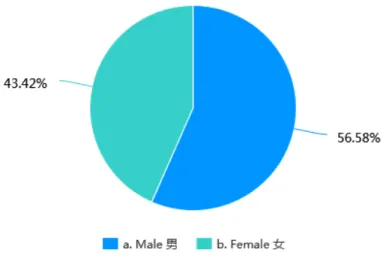
data. Figure 1 shows the sample gender profile information. More than half the
respondents (56.58%)were male. This observation is anticipated because the population
of male employees is typically higher than female employees in most industries. In
addition, the fact that women tend to do high amount of domestic work which leaves them
less time to work for pay. Therefore, it is expected that more men will be present in the
fomal labour force than women.
Figure 1:Sample gender profile
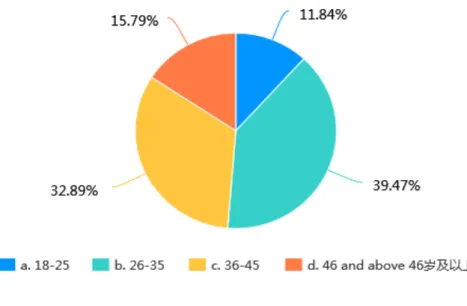
Figure 2 below summarizes the sample age profile information. From the chart, the largest percentage (39.47%) of the sample employees at Suning.com are 26-35 years old. This class is closely followed by the age group 36-45 years old which accounted for 32.89% of the sample. Together, the two group accounted for more than 72% of the employee population at Suning.com. The respondent age distrubution appears to be normally distributed since the modal class is nearly at the cneter of the range of ages used, and the majority of the respondents fall within the two middle age categories.
Figure 2: Sample age profile
The figure 3 which presents that the marital status of sample in the below. Approximately 54% of the respodents were married. Again, the observation that a majority of the employee at Suning.com are married was anticipated because of the age profile. A majority of the repondents were 26-45 years old. This class of perople typically comprises of young families. In general, married employee demand a higher work life from their jobs. Therefore, these employees are more likely to disapprove of training scheduels that interfere with their families responsibilities.
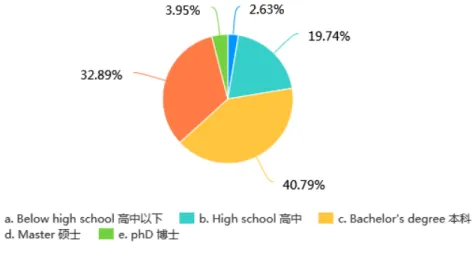
Figure 4 below summarizes the information regarding the education of the sample surveyed for the study. Form the sample, about 40.79% of employees at Suning.com have bachelor’s degree. An additional 32.89% have a master degree, while 3.95% have phD. About 19,74% of repeondents have high school educational backgournd. 77.63% of the labour force has bechelor’s degree and above. These results suggest that the employees at Suning.com are highly educated. The high levels of education are possibly attributable to the composition of workers at retail outlets. Many employees at retail outlets such as Suning.coom stores work part time or work while loooking for other work. These are typically recently graduated young people or recently retired professionals. The two groups are highly educated. High level of education suggest that employees are highly trainable because they have a better educational background.
Figure 4: Sample education level
Form the figure 5, 39.47% of the repondents had worked for Suning.com for 3 years or less. Next, 27.63% and 28.95% of the repondents had worked for company for 2-6 years and 7-10 years respectively. 0% of the repondents had worked for company for more than 14% years. Therefore, 67.1% of the respondents had worked experience for Suning.com for 6 years and less at the time of the survey.
The trend in length of stay at the company suggests a high rate of employee turnover. Generally, a high turnover rate illustrates low job satisfaction among employees, such as limited career growth, poor quality training, underpaid, work and life balance and so on.
Figure 5: Length of stay at Suning.com 4.4 Training at Suning.com
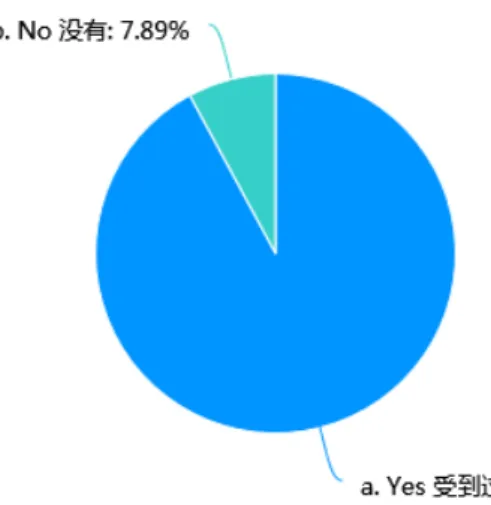
Question 6-13 in the survey queationnaire sought information regarding the charaterastics training at Suning.com. Question 6 asked employees to indicate whether they had received any formal training during their time at Suning.com. Analysis of the data showed that 92.11% of the respondents had received some form of fromal training while working at Suning.com.
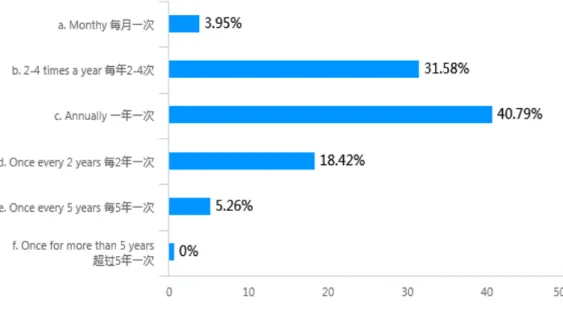
Next, the study sought to determine the frequency of training at Suning.com. Figure 7 below summarizes the findings regarding how frequently employees are trained at Suning.com. The chart shows that a majority (40.79%) of employee at the company received training annually. And 31.58% of respondents presented that they were trained 2-4 times a year. Only a small proportion of respondents (3.95%) indicated that they were trained monthly, and 5.26% of employees were trained once evey 5 years. 0% trained once more than 5 years. These finding suggest that training is frequent at Suning.com compared to the average Chinese business.
Figure 7: Frequency of training
Next, Figure 8 shows a majority of the respondents (63.16%) indicated that the last training they took part in was offered within Suning.com company, and 36.84% of repondents illustrated that the last time they undergone the training outside the Suning.com company. Obviously, organzaition held most of trainng seesions within the company because it can save time and costs (such as rental fee, transporation fee and time). Offering training within the company premises is advantages to employees because it reduces the need to travel to other unfamiliar locations, and which can increase the engagement of employee training.
Figure 8: Where the last training took place
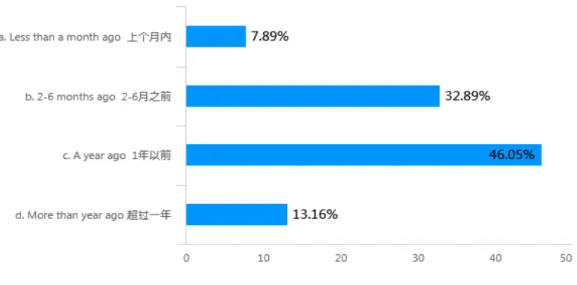
The largest proportation of the respondents (46.05%) in the firgure 9 indicated that they received the last training about a year ago from the data of the survey. This observation reinforces the finding that a majority of the employees indicated that they received training annually from Figure 7.
Figure 9: When the last training took place
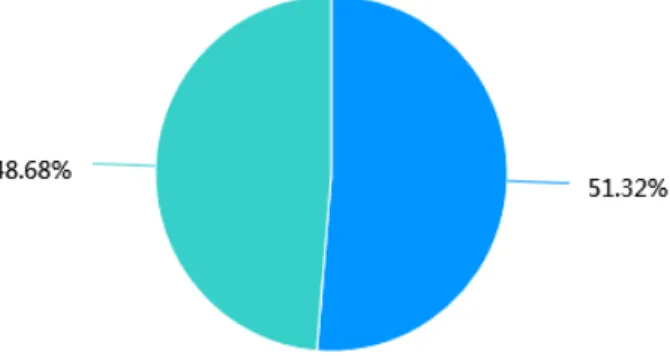
Next, the analysis suggests tha Suning.com uses internal and external trainer to nearly equal extent (Figure10). 51.32% of the repondents indicated that the last training they attended was facilitied by a Suning.com employees, and 48.68% of the respondents presents that a professional trainer outside the company.
Figure 10: The last training who is the trainer
Moreover, figure 11 shows that a majority of respondents (59.21%) indicated that they were obliged to participate in the last taining they took part in. The remaining 40.79% chose the training programs they wanted to participate in. In general, employees willingness to particaipate in training is enhanced when they are allowed to choose the programs they would like to take part in.
Figure 11: Who wanted employee to take part in training
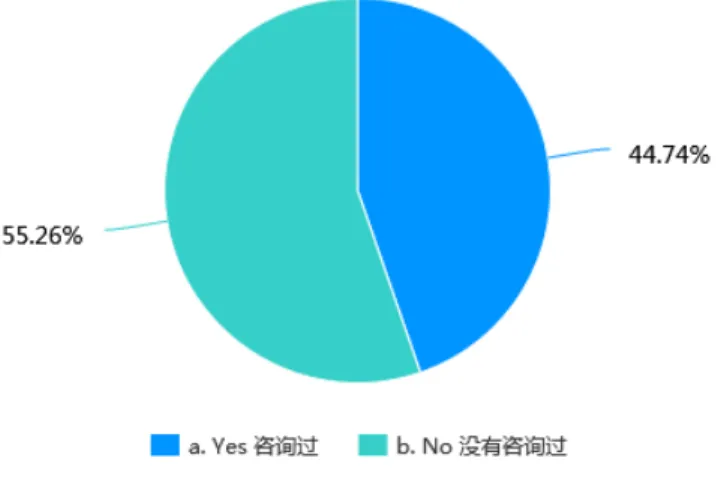
In addition, figure 12 below indicates that Suning.com conducts a training needs analysis less often than it does before training implementation. A majority of the repondents (55.26%) argued that they did not believe the company conducted a needs assessment analysis before the last training program they attended was implemented. Therefore, the company implements training program without the needs for training from the
employees’ perspective. In general, in absence of training needs analysis which will result the low training effectiveness.
Figure 12: Whether the training needs investigation conducted in the last training Finally, the question 13 asked the respodents to indicate how the last training they took part in was administrated. Figure 13 below summariszes that a majority (55.26%) of training programs at Suning.com are administrated through lectures in a classroom seeting. Practice demonstrations and self-paced learning were the next most common training administration methods accounting 23.68% and 14.47% respectively. And only 3.95% of respondents indicated they took part in last training through one-on-one coaching. Therefore, Lecture training with trainer is the most common training method used in Suning.com, and trainer performance is the key factors to ensure training effectiveness.
Figure 13: Training administration
4.5 The effectiveness of employee training at Suning.com
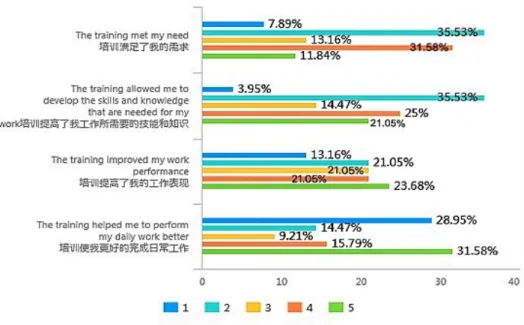
From the literature review chapter, effective training gives employees job relevant knowledge and skills. In addition to this, effective training should translate to improvement in job performance. The ability of training to improve on the job performance is determine by trainees can understand the trainng contents,concepts and can apply the knowledge and skills what they learned to their day-to-day work activities. To assess the effectiveness of the training provided at suning, the questionnaire asked the respondents to rate four statements regarding the effectiveness of training at the company on a scale of 1-5. Figure 14 below summarizes the resluts from theis section of the questionnaire.
Form the chart, approximately equal proportions of the respondents indicated that the last training they attended met or not meet their trianing needs. Specifically, 43.82% of the repondents indicated that the training did not meet their training needs (7.89% strongly disagree and 35.53% disagree). On the other hand, 43.42% (31.58% agree and 11.84% strongly agree) indicated that the last training they attended met their trainng needs. The rest of the respondents (13.16%) learned towards neutrality. These satatistics suggest that approximately 43% of the employees at the organzaition do not think the training provided by Suning.com company meet their needs.
Furthermore, about 46.05% (25% agree and 21.05% strongly agree) of the respondents indicated that the last training they received the knowledge and skills relevant for their daily jobs, which are needed for their current job. This is compared to 39.48% (3.95% strongly disagree and 35.53% disagree) who felt that the training provided did not add them job related knowledge and skills. Therefore, a larger proportion of the reespondents agreed that training at Suning.com gives employees job relevant knowledge and skills. Moreover, 44.75% ( 21.06% strongly agree and 21.05% agree) of the respondents indicated that the last training they received helped them to improve their performance at work. On the other hand, 34.21% (13.16% strongly disagree and 21.05% disagree) argued that the last training received had no effect on their performance at work. Obviously, there was 21.05% of the respodents who were undecided as to whether training recieved improved job performance. Overall, these results indicate that less than
half the employees at the organization felt that the training provided improved their job performance.
Finally, 47.37% (31.58% strongly agree and 15.79% agree) of the respondents believed that the training they undergone helped them ro perform their job better. This statement sought to know whether the training helped employees to perform their daily task more easily. 43.42% (28.95% strongly disagree and 14.47% disagree) indicated that they did not think that the last training provided made their job easier.
Form the above, a few observations can be made regarding the effectiveness of training at Suning.com from the employees’ perspective. First, less than half of respondents believed that the training met their needs, and the training allowed them to develop the skills and knowledge that are needed for thie job. Moreover, around 45% of employees presented that the training improved thirwork performance and helped them to perform their daily work easier. Therefore, less half of repodnents indicated the training is effective, this suggests a majority of employees at Suning.com believed the the training is ineffective. Hence, it is imporant to conduct training needs analysis from employee’s perspective before training implementation to ensure training effectiveness at Suning.com. The subsequent subsection discusses the factors that influence the effectiveness of training fom the perdpective of employees at Suning.com.
4.6 Factors influencing the effectiveness of training at Suning.com
The literature review identified several factors influencing the effectveness of training from employee’s perspective. Form the previous section, approximately 40% of the respondents believed that the training was effective. Moreover, approximately 20% of the repondents indicated that they were undecided about that, which suggests they were not believe that training is effective. Therefore, a majority employees indicates that training is ineffective. This section sought to determine the cause for the high number of employees at the Suning.com who felt that was ineffective. The factors investaged in this study are discussed in the subsection below.
4.6.1 Training content
Taining content is evaluated on the basis of relevance to the trainee’s job, orgaznaition and manner in which it is presented. Figure 15 below summarises the findings for the three measures. From the chart, 43.42% (10.53% strongly agree and 32.89% agree) of the repondents agreed that the training content was relevant to their jobs. The number of repondents 43.42% felt that the training content in their last training was irrelevant to their jobs. This is because the company implements training program without the needs for training from the employees’ perspective. As presented before, more than 55% of the respondents did not believe that the company conducts a training needs analysis before creating a training program.
Moreover, 60.53% (26.32% strongly agree and 34.21% agree) of repondents indicates that the trianing content was organized in a logical sequence. This is compared to 26.53% who felt that the content was not well organized, and which reflectes that a majority employees in Suning.com believed the training content was organized in a logical sequence. Finally, 44.74% (17.11% strongly agree and 27.63% agree) felt that the training content was interesting and fresh, while 42.11% felt that the content was not intersting and fresh. These finding shows that there is high disagreement regarding the relevance and attractiveness of the training content for training program offered by Suning.com among its employees.
Figure 15: Training content 4.6.2 Training environment
Next, the analysis used the availability of space and comfort of the training space to assess the effect of the training environment on training effectiveness. The chart in Figure 16 below summarizes the findings from this section of the questionnaire. The chart shows that 61.84% (18.42% strongly agree and 43.42% agree) of the repondents agree that the training sapce for their last training offered enough for every trainee, and which suggest that a majority of employees at Suning.com believed there is sufficient space trainees. Moreover, in the training atmosphere aspect, less than half of the respondents (31.58% strongly agree and 15.79% agree) agree that their last training was provided in a comfortable and positive environemnt. 36.84% (7.89% strongly disagree and 28.95% agree) indicated that their last trainig was not provided in a confortable and positive environment. It shows that the average evaluation of the training environment is positive at Suning.com.
Figure 16: Training environment 4.6.3 Training materials
Figure 17 below presents that measures used to evaluate the use of training meterials in the employee training at Suning.com. From the chart, 65.79% (13.16% strongly agree and 52.63% agree), 43.42% (10.53% strongly agree and 32.89% agree) and 52.79% (32.89% strongly agree and 25% agree) of the respondents indicated that they agreeded the training room was equipped with the required technology for training, relevant training materials were provided and that training aids were used in the training. On the other hand, 19.74%, 40.79% and 26.31% indicated tha the room was not fitted with the required technology, relevant training materials wee not provided and the taining aids wer not used respectively. Expecially 40.79% (10.53% strongly disagree and 30.26% disagree) of respondents argued that they were not provided with relevant training matrials in the last trianing. Therefore, the absence of relevant training materials provided during training is most prominet problem in this case.
Figure 17: Training materials 4.6.4 Training schedule
The appropriateness of the training schedule was assessed using the four measures shown in Figure 18 below. 38.16% of the respondents strongly agreed that the trianing schedule was clearly defined in their last training program. Cumulatively, 67.15% of the repondents felt that the trianing schedule was clearly defined, Howere, smallest porporation (19.74%) of respondents presented that trianing schedule was not clearly defined, and 9.21% indicated they were undecided about that. Some reasons can explain that such as they did not take part in the last trainig which training schedule defined is unnecessary, like self-paced learning. Form the above, a majority of employees at Suning.com believed that the training had a clearly defined schedule. In addition, 44.74% (31.58% strongly agree and 13.16% agree), 43.42% (14.47% strongly agree and 28.95% agree), and 50% (17.11% strongly agree and 32.89% agree) of the respondents indicated that the last training took palce during normal working hours, the training was allocated sufficient time and there were clear training objectives respectively. On the other hand, 46.05% (11.84% strongly disagree and 34.21% disagree), 44.74% (35.53% strongly disagree and 9.21% disagree) and 25% (6.58% strongly disagree and 18.42% disagree) presented that their training was not conducted during the normal working hours, training was insufficient and the training objectives were not clearly defined. Specially 46.05% of the respondents illustrated that the last
trianing took palce were not during the normal working time, and which results the low trianing effectvness. In general, scheduling a training seesion after working hours is less effective than scheduling training during nomral work hours. Moreover, about a half of respodents believed that the training time are insufficient, which will results low training effectiveness. According to Figure 7 most of respondents indicated they received training annually.
Figure 18: Training schedule 4.6.5 Trainer performance
The trainer performance refers to how the trainer introduces the training content and concept which are understandable by trainees, how to hold the trainees’ attention and engage the audiences, and how to effective use training aids and materials. The chart in figure 19 below presents the results for the trainer performac at Suning.com.
Form the chart, 43.42%, 42.1%, 44.74% ,and 56.58% of the respondents indicated that the trainer presented in an easily understandable style, kept the session interesting, engaged trainees in the training program and used trianing aids and materials respectively. However, 42.11% (6.58% strongly disagree and 35.53% disagree) of respondents argured that trainer’s presentation was not easy to understand, 40.78% (7.89% strongly disagree and 32.89% disagree) indicated that the trainer can not manage to keep the session interesting and lively, and which results the trainees cannot udenrstand training content quickly, and loose interest in training.
Figure 19: Trainer performance 4.6.6 Training evaluation
Finally, the questionnaire included a question inquiring whether trainer or the company evaluated the trianing after the last training was completed. 46.05% (25% strongly agree and 21.05% agree) of the repindets indicated that the training program was evaluated after the training was over. On ther other had 35.84% (7.89% strongly disagree and 28.95% agree) indicated that the last training program they took part in was not evaluated for the effectiveness, and the rest of the respondents (17.11%) were unsure whether evaluation was done or not, the reason for that the some trainees did not received training feedback from company or trainer after training complete. Therefore, more than a half of employees at Suning.com unbelieved the training effectiveness was evaluated by the trainer or companys after training was over.
5 CONCLUSION AND RECOMMENDATIONS
5.1 Research findings
l How do the employees perceived the training effectiveness at Suning.com?
From the previous chapters, the evaluation of training program in Suning.com are diverse. The summarizes of training effectiveness results in Figure 21 below indicated that less than half of the respondents sampled in this study believed that training provided by Suning .com was effective. For instances, less than half of respondents indicated the training met their needs, the training allowed them to develop the skills and knowldege that are needed for their job, the training helped them to do their daily tasks easily and the training improved their work performance respectively. Therefore, a majority of employees at Suning.com argued that the training is ineffective.
Figure 21: Sammarizes of training effectiveness results from employee's perspective l What are the barriers that hinder the training eefectivess at Suning.com from
employee’s perspective?
There are a few key factors identifie as hindering effective employee training at Suning.com regarding the data analysis above. There were the areas in which many of respondents felt the company’s training programs had shortcomings, and the
47.37% 44.70%
46.05% 43.42%
The training improved my work performance The training helped me to do my daily tasks
more easily
The training allowed me to develop the skills and knowledge that are needed for my work
The trainig met my need
Training effectiveness
summarizes of the barriers that hinder the effective training at Suning.com from the employee’s perspective in Figure 22 below:
Ø First, from this chart there was a notable abservation that a large proportion (55.36%) of the repondents indicated training needs investigation was not conducted before trianing implementation, and then which results around 45% of respondents believed that the training content was not relevant to their current job. Providing employees training that is not relevant to their current job which wastes time and money, and results in no performance improvement and low training effectiveness. A possible explanation for the mismatch between training needs and training content is lack of training needs assessment.
Ø Furthermore, more than 40% of the respondents argued that the required materials were not provided during the trianing. The lack of the training materials or insufficient materials makes training harder to undertsnad and less effective.
Ø With regards to the trianing schedule, it was found tha more than 40% of the respondents indicated the training took place not during the normal work hours. However, around 50% of the samples who got married, and married employees demand higher work life balance, and training took place after work time is less effective than training during the normal work time. In addition, more than 40% of repondents stated that the time for the training insufficient.
Ø In addition, more than 40% of the repondents were unsatisfied with trainer performance, such as trainer’ s presentation was not easy to understand, and trainer cannot keep the training session intersting and lively, and which results trainees lose interest in trianing and low training effectiveness.
Ø Finally, it was found that the organzaition/trainer did not evaluate the training effectiveness after training completion, More than 50% of respondents indicated that the last training they took part in was not evaluate, and trainees did not get feedback after training from organziation.
Figure 22: Barriers that hinder the effective training at Suning.com 5.2 Recommendation
Training requires financial resources, time and effort to implement. When companies invest more on the employee training, and they expect to create some benefits. However, the benefits are only relized when trainng is effective. The analysis presented in theis study shows that the training at Suning.com is not effective accoring to only about 45% of the employees states the training is effective. The following recommendations are made to Suning.com on how the company can improve the training effectivenss:
Ø Conduct employee training needs analysis before designing a training program, to find out what the employee real trianing needs and then provide the relevant training content to them. The findings indicate that there is a trianing needs mismatch with the training provided for a majority employees. Conducting a needs assessment will reduce or elimate the mismatch.
Ø Provide sufficient training materials of all training program for all trainees, and to ensure the sufficient materials assist trainees to understand trianing content.
53.95% 40.78% 42.11% 44.74% 46.05% 40.79% 43.26% 55.26% 0.00% 10.00% 20.00% 30.00% 40.00% 50.00% 60.00%
The training effectiveness was not evaluated by company/trainer
The trainer can not keep the session interesting and lively
Trainer's presentation was not easy to understand The time for the training was not sufficient Training took place not during the normal working
hours
Trainees were not provided with relevant training materials
The training content was not relevant my current job
Employee training needs investigation was not conducted before training implementation
Ø Schedule training during the normal work time and schedule sufficient time for training. The analysis shows that the trianing progrmas are not scheduled during the normal work hours and insufficient time is allocated. The company should find ways to scheduel training during the normal office hours or provide incentive to employees to attend training during non working hours if there is no option. For intance, the company can pay an compensation to employees that attend training during non-work hours.
Ø Pay attention to trainer performance when choosing trainer, trainer is not only to present the training content to trainees, and also considerate how to present that can be understandable by trainees, and how to hold trainee’s attention to learn new knowledge and skills.
Ø Conduct training evaluation after training is completed. This will allow the trainees to know how is the training performance, and allow the company to assess the trianing effectiveness, and to understand what trainees learned from training and what did not, and identify areas of future training improvement.
REFERENCES
Arthur Jr, Winfred, et al. "Effectiveness of training in organizations: A meta-analysis of design and evaluation features." Journal of Applied psychology 88.2 (2003): P234.
Buckley, Roger, and Jim Caple. The theory and practice of training. Kogan Page Publishers, 2009.
Brum, Scott. "What impact does training have on employee commitment and employee turnover?" (2007).
Bryman, A. (2001). Social Research Methods. New York: Oxford University Press
Deloitte Global Human Capital Trends 2019.
https://www2.deloitte.com/content/dam/insights/us/articles/5136_HC-Trends-2019/DI_HC-Trends-2019.pdf
Dessler, Gary. Human Resource Management . Boston: Pearson, 2017.
Eades, J. 3 ways organizations can improve the way they measure training effectiveness. 2014. 15Th December 2019. <https://elearningindustry.com/3-ways-measure-training-effectiveness>.
Edralin, D. “Training: A Strategic HRM function.” Notes on Business Education (2004): 1-6.
Emerson, L. “The effects of employee satisfaction and customer retention on corporate profitability: An analysis of the service-profit chain.” PhD Thesis . 2007.
Foshay, Wellesley R. and P Tinkey. “Evaluating the Effectiveness of Training Strategies: Performance Goals and.” ILAR Journal (2007).
Hughey, Aaron W and K Musnug. “Designing effective employee training programmes.”
Training for Quality (2006): 52-57.
Jehanze, Khawaja and Nadeem Ahmed Bashir. “Training and Development Program and its Benefits to Employee and Organization: A Conceptual Study.” European Journal of Business and Management (2013).