EXPLORING THE IMPLICATIONS OF SUPPLY RISK ON SUSTAINABILITY PERFORMANCE
Asad Shafiq, P. Fraser Johnson, Robert D. Klassen, Amrou Awaysheh ABSTRACT:
Purpose – Firms are increasingly being pressured by the public, regulators and customers to ensure that their suppliers behave in a socially and ecologically sound manner. Yet, the complexity and risks embedded in many supply chains makes this challenging, with monitoring practices offering one means to attenuate supply sustainability risk. Drawing on agency theory, this research examines the relationship between sustainability and operations risk, supplier sustainability monitoring practices, supply improvement initiatives and firm performance.
Design/methodology/approach – This research uses data from a survey and archival sources from a sample of large U.S. firms to empirically examine the relationship between sustainability and operations risk, supplier sustainability monitoring practices, supply improvement initiatives and firm performance.
Findings – Findings indicate that higher levels of perceived sustainability risk is related to greater monitoring of supplier sustainability practices by focal firms. Perceptions of higher operations risk are indirectly related to greater social monitoring through investment in supply improvement initiatives. Monitoring of supplier sustainability practices is also found to have a positive effect on focal firm performance.
Practical implications - Findings suggest that managers process operations risks and sustainability risks independently. Greater sustainability risk leads to increased sustainability monitoring, while greater operations risk leads to increased investment in supply improvement initiatives, which in turn leads to increased social monitoring. The research also indicates that behavior-oriented approaches, such as monitoring of supplier environmental and social practices,
___________________________________________________________________ This is the author's manuscript of the article published in final edited form as:
Shafiq, A., Johnson, P. F., Klassen, R. D., & Awaysheh, A. (2017). Exploring the implications of supply risk on sustainability performance. International Journal of Operations & Production Management, 37(10), 1386–1407.
2
are an effective approach to improving firm sustainability performance. However, due to resource constraints, a challenge for supply chain managers is where and when to invest in behavior-oriented approaches for suppliers.
Originality/value – This research advances supply risk literature by exploring the effects of supply sustainability risk on the use of monitoring practices to manage supplier environmental and social behavior. Using a combination of survey and archival data to independently assess the implications of sustainability monitoring practices on firm sustainability performance, this study provides a methodology for evaluating the impact of sustainability monitoring practices on the triple bottom line in supply chain management.
1.
Introduction
Trends of outsourcing and global sourcing have increased supply chain complexity for many organizations (Wagner and Bode 2008). At the same time, competition places pressure on firms to keep supply chain costs low and provide excellent customer service, while offering products and services with flawless quality. In navigating the challenges of global supply chains, every organization faces a variety of risks associated with the acquisition of goods and services from suppliers. Such problems can affect costs, customer service and investments in inventory. Consequently, a critical aspect of supply management is the ability to identify possible sources of supply disruptions and manage risks. Research on supply risk has traditionally focused on operations risks related to costs (e.g., increased prices, foreign exchange exposure), delivery (e.g., delays due to extended global supply chains, supplier capacity constraints), and quality (e.g., defects, use of out-of-spec raw materials) (Ellis, Shockley, & Henry, 2011; Zsidisin & Ellram,
3
2003; Zsidisin, 2003). Moreover, research has shown that supply chain disruptions can have a significant effect on firm profitability and shareholder value (Hendricks and Singhal 2003).
More recently a new layer of complexity has been added to how companies manage their supply chains. Motivated by a variety of factors, including consumer pressures, government regulations and a desire to reduce their environment impacts, organizations are embracing sustainability. Firm performance is no longer solely measured by the income statement and balance sheet – organizations are also paying close attention to their environmental and social performance, which when considered jointly with financial performance is termed the triple bottom line (TBL) (Elkington 1998). The added complexity of sustainable supply chain management is forcing firms to re-evaluate their supply risk assessment (Harwood & Humby 2008), and the confluence of operations with sustainability has made supply risk assessment a strategic priority for firms ( Ellis et al., 2011).
Previous research on supply risk has mostly focused on either supply market failures (e.g. material shortages, upstream operations breakdowns) or natural disasters and how such factors impact the operations of a buyer firm. This study focuses on how firms manage operations and sustainability risks and the implications for firm performance. More specifically, this research examines the relationship between elements of supply risk, supplier sustainability monitoring practices, supply improvement initiatives and firm sustainability performance. For the purpose of this research, ‘supply risk’ represents risk associated with upstream disruptions and occurs when a commercial transaction involving a supplier will have material consequences to the organization (Hult et al, 2010) while ‘supplier sustainability monitoring practices’ represent a set of practices adopted by a firm to observe its supplier’s environmental and social performance. In doing so, the research makes three primary contributions. First, the existing literature on supply risk has tended
4
to focus mostly on operations risks, while research on supply sustainability risk management has not been adequately addressed. Drawing from agency theory, this study advances supply risk literature by exploring the effects of supply sustainability risk on the use of monitoring practices to manage supplier environmental and social behavior.
Second, we seek to better understand the association among operations risk and supplier sustainability monitoring practices. Specifically, we propose that supply operations risk prompts supply improvement initiatives and that such initiatives promote increased social and environmental monitoring. While previous supply research has explored a variety of approaches to managing the effects of supply risks, this is the first study to explore the mediating effects of supply improvement initiatives on sustainability monitoring practices.
Lastly, several studies in operations and supply chain management have examined the association among environmental practices, environmental performance and financial performance (e.g., Montabon et al. 2007) and the relationship between social practices and firm performance (e.g., Klassen and Vereecke 2012). However, absent from the literature is research that examines the relationship between sustainability monitoring practices and firm sustainability performance. This research uses the agency theory lens to evaluate the impact of behavior-oriented approaches, such as monitoring of supplier environmental and social practices, on sustainability performance of a firm. The research uses a combination of survey and archival data to independently assess the implications of sustainability monitoring practices on firm sustainability performance. In doing so, the research provides a methodology for evaluating the impact of sustainability monitoring practices on the TBL in supply chain management.
The rest of the paper is organized as follows. In the following section, we briefly outline the existing literature on supply risk and monitoring of supplier sustainability practices. This section
5
also develops hypotheses, drawing on agency theory, to link supply risk to supplier sustainability monitory practices, supply improvement initiatives and firm sustainability performance. Section 3 outlines the methodology, while Section 4 provides the results and Section 5 provides the discussion of the findings. Section 6 is the concluding section, including limitations of the study and opportunities for future research.
2. Conceptual Development
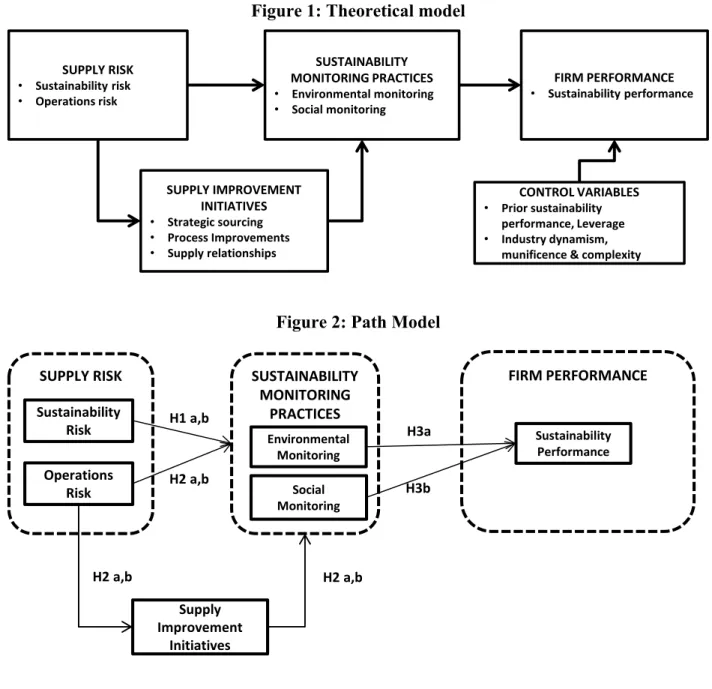
The theoretical model proposed in this research is provided in Figure 1 and its development in discussed in the following section.
--- Insert Figure 1 Here --- 2.1 Supply risk
Risk is a broad construct with a variety of meanings depending on the field of research. For example, risk has received a great deal of attention within the fields of finance and accounting, where it can be equated to variance with an expected outcome representing the potential for upside and downside in risk-return models. However, research in supply management mostly focuses on the downside consequences of risk for the firm and strategies to mitigate the negative outcomes (Wagner and Bode 2008). Kraljic (1983) was one of the first to identify supply risk as a critical factor in developing a firm’s supply strategy and discussed the role of supplier mix, extent of contractual coverage, regional spread of supply sources, and availability of scarce materials as potential areas for supply disruptions.
‘Supply risk’ and ‘supply disruption risk’ are two terms that have been used interchangeably in the operations management literature to represent risk associated with upstream disruptions. Supply risk occurs when a commercial transaction involving a supplier will have material
6
consequences to the organization (exposure) and the outcome cannot be predicted (uncertainty) (Hult et al, 2010). Trends of outsourcing and globalization of supply chains has increased both the exposure and uncertainty elements for organizations, which has resulted in academics and practitioners placing greater attention on issues related to supply risk (Wagner and Bode 2008). Research has found that supply disruptions can negatively impact shareholder value and long-term firm stock price performance (Hendricks and Singhal 2003, 2005).
Several studies have examined supply risk, using a variety of frameworks that categorize risks by source and potential impact on the firm. Kleindorfer and Saad (2005) categorized supply risks into two broad categories: risks from coordinating supply and demand and risks from disruptions to normal activities. The first category represents normal supply-demand coordination risks (e.g., delivery and quality), while the second category are risks that occur relatively infrequently but with catastrophic consequences for the firm (e.g., natural disasters and terrorism). Research by Wagner and Bode (2008) separated supply risks into five categories: demand side; supply side; regulatory, legal and bureaucratic; infrastructure; and, catastrophic. The first two risk sources are internal to the supply chain, while the last three risks can originate internally or externally to the supply chain.
Work by Ellis et al. (2011) proposed a comprehensive framework that synthesizes elements of supply risk research from 79 studies. The framework identified three broad external factors of supply risk: geopolitical, supply and product factors. In research that provided a grounded definition of supply risk, Zsidisin (2003) found that supply risk was a multi-faceted concept that included sources and outcomes of risk. His findings identified 14 different supply risks grouped into two broad categories, individual supplier failures (e.g., delivery failures and price increases) and market characteristics (e.g., market shortages and commodity price increases).
7
Given the breadth of supply risks facing organizations, it was impractical for the purposes of a single research project to incorporate every dimension of supply risk, and it was, therefore, necessary to limit our scope. This research investigates two aspects of supply risk: operations risk and sustainability risk. As described previously, research has identified a broad range of operations risk factors in supply chain management, and it was therefore necessary to narrow the number of supply operations risk variables for the purposes this study. Our research used four operations risk factors – supplier capacity, supplier cost competitiveness, supplier lead times and supplier on-time delivery. These four variables are included in research by Zsidisin (2003) under the category of individual supplier failures and in the supply factors in the Ellis et al. (2011) framework. While arguments could be made for the inclusion of other operations risk factors, these variables align with competitive priorities of cost, capacity and delivery, and therefore represent three important operational aspects of the supply chain. A description of sustainability risk is provided in the following section.
2.2 Sustainability risk
In addition to operations risk factors, the supply function is confronted with an emerging category of risk – sustainability risk. Stakeholders are putting pressure on firms to manage the social and environmental performance of their suppliers. This pressure is exerted predominantly from external stakeholders, such as customers, investors, regulators, media, and the public, who expect firms to assure ecologically and socially sound behavior from their suppliers (Kocabasoglu et al. 2007).
Social and environmental issues in supply chains have received considerable attention in academic research during the past two decades. Recent research on social issues has explored a number of topics, including community relations, labor practices, worker safety and product safety
8
(Shafiq et al. 2014). Similarly, environmental management research has included a wide range of topics, including energy conservation, minimization of the load of human activities on the natural environment and investments in environmental technologies for pollution prevention and control (Gavronski et al. 2012). Both social and environmental issues represent considerable supply chain risks, with the potential for government-imposed financial penalties, negative public image and consumer backlash, loss of market share, higher costs and reduced shareholder value (Klassen and Vereecke 2012).
In this study, we conceptualize supplier sustainability risk as the potential occurrence of an incident associated with social and/or environmental shortcoming or failure by a supplier. Although supplier sustainability risk has not been directly addressed in the supply risk literature, recent focus on sustainability issues in the supply chain warrants inclusion of supplier sustainability risk in the overall supply risk assessment of a firm (Paulraj 2011).
2.3 Agency theory
This research uses agency theory (Eisenhardt, 1989) as the theoretical lens to investigate the relationship between supply risk, supplier sustainability monitoring practices and firm sustainability performance. Agency theory is concerned with the study of the relationship between entities that cooperate and engage in a relationship in which one party (the principal) delegates work and decisions to another party (the agent) (Eisenhardt, 1989; Rungtusanatham et al. 2007). In the context of our research, the buying firm is the principal that delegates authority for services or production to the supplier, who represents the agent (Zsidisin and Ellram 2003; Zu and Kaynak 2012). The two potential problems that arise from the principal-agent relationship are the agency problem and the risk-sharing problem. The agency problem results from the inability of the principal to verify what the agent did in performing the delegated work (moral hazard) and the
9
expertise of the agent to perform the delegated work (adverse selection). The problem of risk sharing stems from different perspectives towards risks by the principal and agent that may result in differences in behavior (Rungtusanatham et al. 2007).
The unit of analysis is the metaphor of the contract between the principal and the agent, with the focus on determining the most efficient governance structure. Typically, the principal will strive to minimize agency costs, while the agent will attempt to maximize rewards and minimize principal control. Agency theory prescribes two types of contracts to govern the principal-agent relationship: behavior-based contracts and outcome-based contracts. The type of contract used is determined by assessing the trade-offs between the costs of monitoring the agent’s behavior versus the costs of measuring outcomes (Eisenhardt, 1989).
Agency theory has been used in previous supply chain research as the theoretical foundation for the study of a number of operations and supply chain management topics, including supplier quality management (e.g., Zu and Kaynak 2012), vendor-owned inventory management arrangements (e.g., Rungtusanatham et al. 2007), metrics and performance measurement (e.g., Melnyk et al. 2004) and distribution strategy (e.g., Lassar and Kerr 1996). Recent work by Fayezi et al. (2012) highlighted opportunities to use agency theory in supply chain management research. Agency theory posits that effective monitoring may reduce supplier opportunism by increasing pressure to comply with agreements and relationship norms, making it attractive for use in analyzing supply risk (Morgan et al. 2007). Consequently, agency theory provides a useful theoretical context for analyzing supply risk and has also been used in several studies in this field (e.g., Zsidisin and Ellram 2003; Zsidisin and Smith 2005; Cheng and Kam 2008).
10
2.4 Supply sustainability risk and sustainability monitoring practices
In recognition of the growing importance of sustainability risks in the supply chain, firms are increasingly incorporating supply chain sustainability risk assessments as part of their supplier management activities. Harwood and Humby (2008) observed that, for more than one-fifth of firms surveyed, sustainability risk was rated as their largest supply risk and more than one-quarter of respondents required suppliers to follow their social and environmental standards.
In a principal-agent relationship, information asymmetry and misaligned interests may provide an incentive and opportunity for the agent (supplier) to behave inappropriately. Supplier environmental and social sustainability practices represent one form of moral hazard for the buyer, whereby it is difficult to verify the behavioral practices of suppliers. In the context of a global supply chain, information asymmetry and the moral hazard problems may be exacerbated by the distance between the buyer and supplier, as a result of cultural differences, alternate perceptions on governance, and weaknesses in legal infrastructure and enforcement of sustainability regulations (Steven et al. 2014).
To overcome these problems, agency theory proposes that the principal select between two types of contracts to govern the principal-agent relationship: behavioral-based contract (e.g., monitoring) or outcome-based contract (Eisenhardt, 1989). Outcome-oriented activities emphasize results, regardless of how they are achieved (Eisenhardt, 1989). In the context of supply management, outcome-oriented mechanisms represents a focus on supplier performance (e.g., on-time deliveries and defect rates), without intervention into the operations of the supplier. This approach is appropriate when uncertainty is low (Zsidisin and Ellram 2003). In contrast, oriented activities focus on evaluating the agent’s processes and activities. Examples of behavior-oriented approaches in previous research include supplier quality certification, supplier quality
11
audits and target costing. Specifically, previous research has found that firms increase behavior-oriented techniques as supply risk increases (Ellis et al, 2011; Ellis et al, 2010; Zsidisin & Ellram, 2003)
Monitoring is a key element of buyer-supplier relationships and partner-specific experiences facilitate adjustments in monitoring mechanisms that form the basis of long-term collaborative relationships (Krause et al. 2007). Furthermore, research in the sustainability field has found that monitoring suppliers is an effective means of reducing irresponsible supplier behavior (Hill et al. 2009). For example, in order to verify that suppliers meet established requirements as set forth in their Responsible Sourcing Program, Walmart conducts regular supplier factory assessments, performing more than 20,000 audits each year (Walmart 2014 Global Sustainability Report).
Consequently, our expectation is that supply sustainability risk will affect the level of firm investment in behavior-based resources, and we propose:
Hypothesis 1a: As perceived supply sustainability risk increases, the use of supplier environmental monitoring practices increases.
Hypothesis 1b: As perceived supply sustainability risk increases, the use of supplier social monitoring practices increases.
2.5 Operations risk, supply improvement initiatives and sustainability monitoring practices
Several studies, dating back two decades, have examined supply improvement initiatives, with the objective of providing insights about trends and the future direction of supply (e.g. Trent and Monczka 1998). Unfortunately, these studies generated a large number of categories and lacked common terminology. In order to address this shortcoming, research by Johnson et al. (2007)
12
synthesized previous research on supply improvement initiatives and proposed a theoretically derived scheme, underpinned in resource based view (RBV) and social network theory literatures. Johnson et al. (2007) identified five dimensions of investment in major supply chain initiatives: strategy, processes, network, organization and measurement. Our conceptualization of supply improvement initiatives is based on the work of Johnson et al. (2007), focusing on supply process improvements (process), expansion of the prominence and responsibilities of supply (organization), supply performance measurement systems (measurement) and improvement of relationships with suppliers and customers (network).
As described earlier, this research investigates two aspects of supply risk, sustainability risk and operations risk. Previous research has found that supply operations risk is a major factor influencing investments in supply improvement initiatives (Zsidisin and Smith 2005). Examples include strategic sourcing initiatives to assure supply during periods of increasing demand, global sourcing programs to avoid supplier price increases, and investments in new technology to improve product quality or to lower costs (Zsidisin 2003). Therefore, a positive association among supply operations risk and supply improvement initiatives is expected.
However, the benefits of supply chain improvement initiatives extend beyond reductions in supply risks. Such initiatives improve the overall firm performance through enhanced visibility within the supply chain and better working relationships with suppliers (Johnson et al. 2007). Exchange of information can also help align interests of the buyer and supplier. Consequently, we posit that investment in supply improvement initiatives lays the foundation for building collaborative buyer-supplier relationships by reducing barriers to behavior-based approaches to supplier sustainability practices as prescribed by agency theory. For example, Jiang (2009) argued that collaboration with overseas suppliers has a positive impact on suppliers’ compliance with
13
codes of conduct. From a principal-agent perspective, supply chain improvement initiatives can reduce information asymmetry, which decreases the risk of moral hazard. Therefore, we expect that implementation of supply chain improvement initiatives can lead to stronger buyer-supply relationships, improved supply processes and more effective measurement systems, which in turn reduces barriers to supplier monitoring. More recently, research has found that supply improvement initiatives are also directed towards reducing sustainability related incidents (Johnson and Leenders, 2012). For example, supplier evaluation, including auditing for sustainability conformance, has been found to affect supplier sustainability performance (Foerstl et al. 2010). Similarly, investments in new technologies targeted at decreasing the environmental footprint of the supply chain have been found to reduce sustainability risk (Roehrich et al. 2014). Consequently, our expectation is that supply operations risk will have an indirect effect on supplier sustainability monitoring practices through investments in supply improvement initiatives. As a result, we propose:
Hypothesis 2a: Supply improvement initiatives mediate the relationship between supply operations risk and supplier environmental monitoring practices.
Hypothesis 2b: Supply improvement initiatives mediate the relationship between supply operations risk and supplier social monitoring practices.
2.6 Sustainability monitoring practices and sustainability performance
As discussed previously, firms are increasingly held accountable for the behavior of their suppliers. Performance is no longer exclusively measured on the balance sheet and income statement, but through the concept of the TBL, which is comprised of the three Ps of people, profit, and the planet. The goal is to maintain a healthy financial cash flow without compromising on social (e.g., labor rights, well-being of employees) and ecological (e.g., waste generation,
eco-14
friendly products etc.) principles (Kleindorfer et al. 2005). Consequently, sustainability performance has become an important component of overall firm performance. However, such goals cannot be achieved unless there is a common understanding of sustainability performance between the focal firm and its suppliers. Previous research has established that in dyadic exchange contexts, strong relationships lead to better performance for both parties involved (Liu et al, 2009; Pieter van Donk et al, 2010). Prior relational activity predicts the future strength of the dyadic relationship and strong supply relationships not only improve firm performance but also self-correct over time (Autry & Golicic 2010). As discussed earlier, behavior-oriented activities focus on evaluating the agent’s processes and result in stronger ties between the principal and the agent. Therefore, it can be argued that such behavior-oriented activities result in improved performance for the buyer firm.
Porter’s (1991) ‘‘win–win’’ argument for wider adoption of environmental practices was among the first wave of research addressing the link between sustainability practices and firm performance. Since then, numerous studies in operations and supply chain management have focused on the association among environmental practices, environmental performance and financial performance (e.g., Klassen and Vachon 2003; Montabon et al. 2007). More recently, research has also examined the relationship between social practices and firm performance (Klassen and Vereecke 2012). However, absent from the literature is research that examines the relationship between sustainability monitoring practices and firm sustainability performance.
We posit that socially responsible firms emphasize monitoring of supplier sustainability processes to augment their own sustainability performance. Effective monitoring requires a certain skillset to gauge the appropriateness of actions and behaviors being scrutinized and firms develop
15
such capabilities through continuous learning that results in improved performance. Thus, we propose:
Hypothesis 3a: As monitoring of supplier environmental practices increases, firm sustainability performance improves.
Hypothesis 3b: As monitoring of supplier social practices increases, firm sustainability performance improves.
3. Methodology
3.1 Data collection and Sample
This study is part of a larger research program to investigate purchasing trends among large North American firms from 18 industry groups: manufacturing (NAICS codes 31-33) and services, excluding the retail and wholesale sector. Issues such as supply risk and social responsibility tend to be significant for large manufacturing and service organizations, hence providing the required sampling frame for this study. The relationships among supply risk, supplier sustainability monitoring practices, supply improvement initiatives, and firm performance were explored using a combination of survey and archival data sources. The inclusion of sustainability performance data from the Environmental, Social and Governance (ESG) databases respectively, reduced the effective sample to only large U.S. firms.
The Title 1 membership list of the Institute of Supply Management (ISM) and the Center for Advanced Purchasing Studies (CAPS) Research membership directory were used to identify U.S. respondents from the Fortune 1000 list. Considerable time was invested prior to the questionnaire mailing to ensure that the appropriate contact person was identified and questionnaires were only sent to a senior supply executive who could be identified by name and title. The final sampling
16
frame, which satisfied the aforementioned criteria of identifying the contact person, consisted of 643 firms. In an effort to increase the response rate, a modified version of Dillman (2000) method was followed. In 2011, questionnaires were mailed along with a cover letter and stamped return envelope to 643 organizations. From the initial sample frame of 643, 20 were dropped because they had ceased operation, had been inadvertently duplicated in the database, or could not be delivered. Consequently, the effective sample frame was 623 organizations.
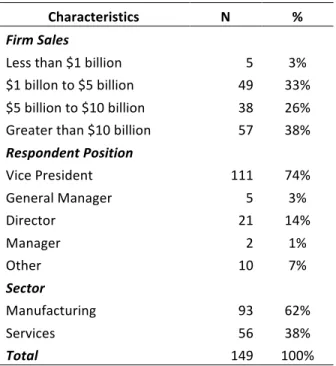
Respondents were given four options to respond: postal mail; fax; email (with a scanned copy of the survey); webpage. Two weeks after the initial mailing, reminder e-mails were sent to all non-respondents, followed by a second mailing four weeks after the initial mailing. Finally, six weeks after the initial mailing, a reminder telephone call was made to each non-respondent. Of the 623 potential respondents, 183 completed surveys were returned, resulting in a response rate of 29.4%. In the process of merging sustainability performance data from secondary sources, another 34 responses had to be dropped from the sample, resulting in final sample size of 149 firms and an effective response rate of 23.9%. The summary statistics for the sample are provided in Table 1.
--- Insert Table 1 Here ---
To examine possible response bias, the respondents were compared to the pool of non-respondents in terms of sales and industry (Lessler and Kalsbeek 1992). Early and late non-respondents were also compared using the same criteria. No evidence was found that the respondents were not representative of the target sample.
3.2 Common method bias
Because the data was obtained from single respondents and during the same period of time with cross-sectional research design, common method variance may cause systematic
17
measurement error (Podsakoff et al. 2003). The two primary ways to control for method biases are through (a) the design of the study’s procedures and (b) statistical controls (Podsakoff et al. 2003). In this research, the procedural remedies included (i) obtaining performance related criterion variables from archival sources (details in the section on secondary data), (ii) using a cover story to make it appear that the measurement of the predictor variables is not connected with or related to the measurement of the criterion variables, (iii) allowing respondents complete anonymity and assuring them that there are no right or wrong answers, and finally (iv) by gathering data from a second respondent from the firm. Interested readers are encouraged to read Podsakoff et al. (2003) for a detailed account of various techniques to handle common method bias in survey research. Data was collected for a second respondent from approximately twenty percent of randomly selected respondent firms. A total of 35 surveys were mailed; 31 were returned. The measures for dual-respondents were compared, at the construct level, using inter-rater reliability (IRR) coefficient and were significant at the p< 0.001 level, with an average value of 0.734 for supply risk constructs and 0.670 for monitoring of supplier sustainability practices, indicating minimum comprehension or judgment bias by the respondents.
Statistical methods were also employed to check for the presence of common method bias. First, the results of Harman’s (1967) single factor approach indicated lack of a common factor. However, Podsakoff et al. (2003) warns against the usefulness of this test. Therefore, a different approach of testing for bias was adopted, as suggested by Podsakoff et al. (2003). Using this approach, a first-order factor was added to the measurement model and indicators were allowed to load on this factor as well as their hypothesized constructs. The results indicated that the path coefficients and significance to the original constructs were not different between the two models, suggesting that the measures are robust in spite of the inclusion of a method factor. Based on the
18
procedural and statistical remedies employed, we could reasonably conclude that the results were not inflated due to the existence of common method variance in the data.
3.3 Measures
This study uses constructs related to supply risk, supplier sustainability monitoring practices and supply improvement initiatives. Since the constructs of supply risk are relatively new within the context of supply chain literature, we adopted the two-stage approach for new multi-item measurement scale development as recommended by Menor and Roth (2007). For supply risk related constructs, theoretical work of Ellis et al. (2011) and Zsidisin (2003) coupled with use of industry experts, aided initial item generation. Item generation is the most critical step while developing new scales and theory along with context specificity are regarded as an aid to generate the initial pool of items (Devellis 2011). As our constructs were driven by theory, we used a deductive approach to generate the initial pool of items to help assure content validity. To evaluate the content validity of these items, the list was distributed to five business managers and two academics who were asked to classify the randomly ordered items into respective constructs. Both the academics and business managers were experts in the field of operations and supply chain management. The items that were assigned to the proper a priori category more than 80% of the time by the judges were retained. This classification procedure is similar to the Q-sort method and has been suggested by Devellis (2011). Through this process, tentative reliability and validity of the supply risk measures were established prior to the field survey implementation. In the second stage, using responses from the survey data, the psychometric properties of each multi-item measurement scale were confirmed. The details of the second stage follow later in the section.
In order to capture supplier sustainability monitoring practices, two constructs from earlier research, covering the domain of social and environmental monitoring, were adopted. For
19
environmental monitoring of suppliers, a scale developed by Klassen and Vachon (2003), consisting of five items, was used. Environmental monitoring refers to evaluating supplier’s adherence to environmental guidelines using arm’s-length transactions and controls (Klassen and Vachon 2003). For social monitoring, a scale developed by Awaysheh and Klassen (2010) was used. Formally, social monitoring is defined in a manner similar to environmental monitoring. Social monitoring refers to auditing of social activities of suppliers using arm’s-length transactions and controls. Lastly, for supply improvement initiatives items developed by Johnson et al. (2007) were used. These four items that make up this measure collectively represent a generalizable framework to categorize initiatives aimed at streamlining supply chain operations. Appendix A lists the details of all items corresponding to each construct.
We employed confirmatory factor analysis (CFA) using AMOS v21.0.0 and the ML estimator to evaluate the validity and reliability of the resulting multi-item measurement scales (Anderson and Gerbing 1988). One of the assumptions of the maximum likelihood estimator is multivariate normality of the data. With multivariate statistics, the assumption is that the combination of normally distributed variables follow a multivariate normal distribution. The two indicators used for assessing normality are skewness and kurtosis. Curran, West, & Finch (1996) recommend values of skewness between ±2 and kustosis between ±7 to be indicative of univariate normality. All items in the study were found to be within the prescribed limits.
Given that each of the major scales was drawn from a published source, CFA is the preferred approach in recent operations management studies to evaluate convergent and discriminant validity of constructs (e.g. Menor et al. 2007) as many authors have identified several limitations in the exploratory factor analysis (Paiva et al. 2008). These limitations include, but are not limited to, threats to validity due to cross-loading in a multiple-indicator measurement model (Anderson
20
and Gerbing 1988) and limitation of Cronbach’s alpha under certain conditions (Kline 2011). The fit statistics for the measurement model indicate a good fit (χ2 = 192.36, df = 124, p < 0.001; χ2/df = 1.55; CFI = 0.952; GFI = 0.880; RMSEA = 0.061) (Kline 2011).
We assessed the reliability of each multi-item scale using the CFA standardized factor loadings and calculating the composite reliability. Nunnally (1978) recommends that for the purpose of basic research, a reliability score of 0.70 is adequate. All our constructs exceeded the suggested 0.8 standard for composite reliability (details in Appendix A). This indicates that the indicators used are sufficient in their representation of respective constructs. Average variance extracted (AVE) is a good indicator of convergent validity (Devellis 2011) and it represents the amount of variance that is captured by the construct in relation to the amount of variance due to measurement error. Appendix A provides the AVE values and all constructs except one had AVE values exceeding 0.50, indicating that a large amount of variance is captured by each construct rather than by measurement error. Supply improvement initiatives construct had an AVE value of 0.44 and future studies could look into refining this measure further. Convergent validity for the constructs was also assessed by the magnitude and sign of the factor loadings of the measurement items (see Appendix A). Inspection of the standardized loadings indicate that each was in its anticipated direction (e.g., positive correspondences between constructs and their posited indicators), and was statistically significant at p < 0.01.
Discriminant validity refers to the independence of the dimensions, i.e., the extent to which measures of different constructs in the study are distinctly different from each other (Devellis 2011). The most commonly used method to establish discriminant validity considers two constructs simultaneously and determines whether the items that make up the two constructs, load onto respective constructs rather than being represented by a single construct. The test is carried
21
out by first allowing the constructs to freely correlate and then constraining the correlation between the constructs to one. If the difference between the two chi-square (χ2) values is significant with one degree of freedom (d.f. = 1), discriminant validity is established as the hypothesis that the two constructs can be combined into a single construct is rejected. A total of 10 pair-wise tests were run, representing all possible construct pairs and discriminant validity was established for 9 out of 10 possible pairs at a significance level of 0.01. The details of the discriminant validity tests are provided in Appendix B.
3.4 Use of Secondary Data
One of the contributions of this study is the simultaneous use of primary and secondary data in the model to validate its hypotheses. In order to link supply risk to sustainability performance of firms, we used the Environmental, Social and Governance factors (ESG) database provided by Morgan Stanley Capital International (MSCI Sustainability Indices 2013). ESG Indices are the continuation of indices developed over the past 20 years by Kinder, Lydenberg, and Domini (KLD), which became part of Morgan Stanley Capital International following its acquisition in June 2010 of RiskMetrics, which had acquired KLD in 2009 (Tang et al. 2012). In order to obtain the sustainability performance metric, we followed the methodology used by previous studies to calculate the KLD score for each firm (e.g. Tang et al. 2012; Hull and Rothenberg 2008). There are seven main dimensions of sustainability performance in the ESG database, each divided into strengths (positive score) and weaknesses (negative score). The summed score of all dimensions provides the overall KLD score, representing a firm’s aggregate sustainability performance.
3.5 Control variables
Several control variables were added to the analysis to ensure robustness of results. This study included two sets of control variables namely firm-level and industry-level control variables. Since
22
sustainability performance measures were used as dependent variables in the model, we needed to control for factors influencing these measures. Consistent with previous research, the firm-level control variables included leverage and prior performance related measures (Hull and Rothenberg 2008; Lanier et al. 2010). For prior performance, KLD score for year 2009 was included. This year represents two years prior to conducting the research study and the timeline is in-line with questions in the survey. For leverage, debt-to-equity ratios was used as a proxy. All archival data was extracted from COMPUSTAT and KLD databases.
To control for industry-level effects, we included three commonly used variables in the model: environmental munificence, environmental dynamism, and environmental complexity (Fernhaber & Patel, 2012). All three industry-level measures were assessed over a five-year window (2007– 2011) through data obtained from the COMPUSTAT database. To allow for comparisons across appropriate industry sectors, the North American Industrial Classification System (NAICS) codes were used at the three-digit level and yearly aggregated sales were computed for each industry group.
Environmental munificence is a measure of growth in the industry and environmental dynamism is a measure of industry volatility (Keats & Hitt, 1988). These measures were obtained by regressing aggregated industry sales between 2007 and 2011. The regression coefficient (β) for sales divided by the average industry sales over five years provided munificence values and the standard error of regression coefficient divided by average sales provided dynamism values. Higher β represents higher growth and higher standard error represents greater turbulence in the industry. Environmental complexity indicates the trend towards or away from large firm market dominance. As the industry moves away from large firm dominance (lower concentration index), industry complexity increases and vice-versa. Environmental complexity was computed by taking
23
the sales of the top four firms in an industry and dividing the sum by the total industry sales. A higher number represents less complexity while a lower number represents high complexity, which indicates the presence of a large number of competitors in an industry.
4. Results
We carried out path analyses of the hypothesized model (Figure 2) using the statistical software package Amos 21.0.0. Path analysis is used when there are multiple predictions of multiple variables in a model. Since, the focus of analysis was on the relationships, we replaced each construct with the average of its scale items. This is also appropriate, given the number of constructs, hypothesized relationships, and sample size. This estimation method has been employed in earlier operations management studies (e.g. Paiva et al. 2008) where reliability of constructs is high, as is the case in our study.
--- Insert Figure 2 and Table 2 Here
---
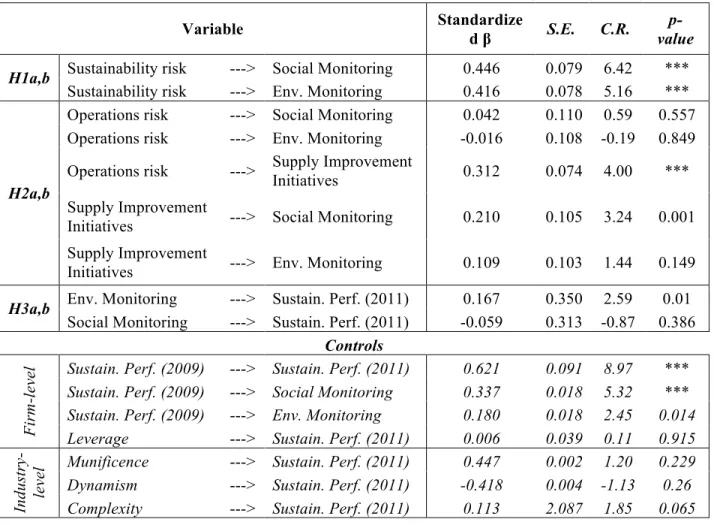
The structural model results indicate good model fit (χ2 = 27.00, df = 18, p = 0.079; χ2/df = 1.50; CFI = 0.989; GFI = 0.970; RMSEA = 0.058) (Kline 2011). Table 2 contains the correlations among composite scores of all constructs in this study while Table 3 has the results for the regression paths.
--- Insert Table 3 Here ---
The results of our statistical analyses provided support for several of the hypothesized relationships in our proposed model. The first set of hypotheses (H1a and H1b) explored the influence of supply sustainability risk on supplier sustainability monitoring practices. Sustainability risk was found to be significantly and positively related to both dimensions of supplier sustainability monitoring practices, signifying that firms that assessed sustainability risk
24
from suppliers to be high, tended to engage in higher environmental monitoring (β = 0.416, p < 0.05) and social monitoring (β = 0.446, p < 0.001).
The second set of hypotheses (H2a and H2b) related to supply improvement initiatives acting as a mediator between supply operations risk and supplier sustainability monitoring practices. In order to find support for Hypothesis 2, three separate paths need to be tested. For H2a, the relationship between operations risk and supply improvement initiatives was found to be significant (β = 0.312, p < 0.001); the direct path between operations risk and supplier environmental monitoring was found to be non-significant (β = -0.016, p = N.S.), while the path between supply improvement initiatives and supplier environmental monitoring was also found to be non-significant (β = 0.109, p = N.S.). Therefore, we could not find support for H2a. For H2b, operations risk was found to be positively related to supply improvement initiatives (β = 0.312, p = 0.001) and supply improvement initiatives was found be significantly related to supplier social monitoring (β = 0.210, p = 0.001), while a relationship between operations risk and supplier social monitoring could not be established (β = 0.042, p = N.S.). Therefore, we found support for full mediation of supply improvement initiatives onto the relationship between operations risk and supplier social monitoring. The Sobel test for mediation (Sobel, 1982) confirmed full mediation. Hypothesis 3 related supplier sustainability monitoring practices of a firm to its sustainability performance. Environmental monitoring practices were found to be positively related to sustainability performance (H3a: β = 0.84, p < 0.05), but the impact of social monitoring on sustainability performance could not be established (H3b: β = -0.059, p = N.S.).
5. Discussion
The empirical results point to several important findings that contribute to a better understanding of supply risk, monitoring of supplier sustainability practices and investment in
25
supply improvement initiatives. The first hypothesized relationship was between supply sustainability risk and monitoring of supplier sustainability practices. Monitoring practices were represented by two separate dimensions of social monitoring and environmental monitoring. Sustainability risk was positively associated with both dimensions of supplier sustainability monitoring, supporting our hypotheses that firms increase behavior-oriented techniques as supply risk increases as prescribed by agency theory. This finding is consistent with earlier research that has examined supply risk from a principal-agent perspective (Zsidisin and Ellram 2003). Our study advances supply risk literature by expanding on consideration of sustainability risk as a contributing factor to overall supply risk assessment.
The results also strengthen the view that firms are increasingly becoming conscious of their responsibility towards various stakeholder groups, and that this responsibility has shifted beyond organizational boundaries, covering broader supply chain relationships. Previous research has also highlighted the need for firms to rigorously monitor the social and environmental conduct of suppliers in order to maintain legitimacy as socially responsible organizations (Castelló and Lozano 2009).
Furthermore, findings suggest that managers process operations risks and sustainability risks independently. Greater sustainability risk leads to increased sustainability monitoring, while greater operations risk leads to increased investment in supply improvement initiatives, which in turn leads to increased social monitoring. The study also established that supply improvement initiatives acted as a full mediator between operations risk and supplier social monitoring. Our explanation is that supply improvement initiatives lead to more collaborative buyer-supplier relationships, thereby reducing barriers to behavior-based approaches to managing supplier
26
sustainability practices, as prescribed by agency theory. Improvements to supply chain operations processes can reduce information asymmetry and decrease the risk of moral hazard.
We also hypothesized that monitoring practices aimed at improving sustainability performance of suppliers should result in improved sustainability performance of the buyer firms. We found partial support for this claim as environmental monitoring practices were found to be significantly related to sustainability performance but a relationship between social monitoring and performance could not be established. Previous research has found that processes to evaluate supplier adherence to environment guidelines are better established than social audits (Klassen and Vereecke 2012) and a large gap exists between managerial understanding of social versus environmental issues and practices (Linton et al. 2007). This could be one of the reasons for difference in results for social versus environmental monitoring practices.
An interesting insight provided by the findings is the influence of prior sustainability performance on current sustainability practices of firms. Prior sustainability performance, indicated by KLD performance in year 2009 (refer to Table 3), was significantly related to the two dimensions of monitoring of supplier sustainability practices, which leads to two conclusions. First, firms who have invested in developing their sustainability programs demonstrate higher levels of emphasis on practices, which in turn resulted in further performance improvement. Second, a more general conclusion is related to path dependence. Path dependence theory suggests that as a firm accumulates knowledge and investment, this accumulation either constrains or opens up the available options that the company can choose in the future (Garud et al. 2010). Thus, a firm’s actions and behaviors carry a history with them and the set of capabilities acquired by firms are path-dependent.
27
The results of this study also have important managerial implications. It is interesting to note that among the two factors contributing to supply risk, supplier operations risk was rated higher, with a mean composite score of 3.84 (S.D. = 0.77), while supplier sustainability risk had a composite score of 2.55 (S.D. = 1.03). This finding indicates that large firms, which make up the sample of this study, placed greater emphasis on risk arising from disruption in supplier operations as compared to supply sustainability risk factors. Despite the difference in assessment of supply risk factors, the correlation among the two is significant (refer to Table 2), suggesting that although firms put a different emphasis on each factor, generally when one factor is rated as high, there is an inherent realization that it will affect the other supply risk factor as well.
Secondly, our research indicates that behavior-oriented approaches, as prescribed by agency theory, such as monitoring of supplier environmental and social practices, are an effective approach to improving firm sustainability performance. Outcome-oriented approaches, such as contracts, are relatively easy to implement. However, the disadvantage of this approach is that the buying firm cannot validate supplier sustainability performance, raising the potential for future non-compliance. Behavior-oriented approaches, on the other hand, ensure that supplier sustainability processes are stable and reliable. This approach requires a long-term investment in resources to support effective monitoring of suppliers. However, from a practical standpoint, resource constraints make it impractical for an organization to audit all of its suppliers on a consistent basis. Consequently, a challenge for supply chain managers interested in controlling sustainability risk is where and when to invest in behavior-oriented approaches for suppliers. Factors such as goal conflict and length of the buyer-supplier relationship can be taken into account when establishing differentiated supplier management approaches. From an agency theory
28
perspective, behavior-oriented approaches will help to reduce information asymmetry, align objectives and program supplier activities (Zsidisin and Ellram 2003).
Lastly, these findings reinforce the benefits of risk assessment for both operations and sustainability risk. Therefore, as the complexity of supply management keeps increasing, both proper risk assessment and the development of sound monitoring practices are required. These are not simple requirements that can be easily added to the already ambitious agenda of sound supply management.
6. Conclusion
Recent business trends, such as increases in outsourcing and greater reliance on suppliers for specialized capabilities and innovation, have made supply chains more complex, and their effective management essential. Vulnerabilities enter organizations and systems as they grow more complex, increasing the likelihood of disruptions. At the same time, increased complexity of supply chains results in higher exposure to irresponsible sustainability-related behavior by supply chain partners.
Effects of supply disruptions on supply chain performance (Wagner and Bode 2008) and on financial performance (Hendricks and Singhal 2005) have been documented in operations management research. Further investigation into wider consequences of supply risk, such as its effect on sustainability and supply chain practices, still is required. In this study, we investigated how supply risk assessment effects monitoring of supplier sustainability practices and simultaneously drives organizational effectiveness through various supply chain initiatives. In doing so, this paper contributes to research on socially responsible operations and supply risk by establishing that increasing levels of perceived sustainability risk are related to greater monitoring of supplier sustainability practices, as prescribed by agency theory. However, it was important to
29
note that perceptions of increasing operations risk also are indirectly related to greater monitoring through investment in supply improvement initiatives. When considered in light of stronger firm sustainability performance, we suggested that efforts to respond to sustainability and operational risks can be aligned, even if operational risk is perceived to be higher than sustainability risks. Furthermore, we established that prior sustainability performance can help develop better sustainability monitoring mechanisms for suppliers.
Several limitations of this study are important to note. First, due to our small sample size, statistical power may be insufficient to detect smaller effects related to hypotheses for which no support was found. As such, the main contribution here is the identification of factors that were significantly related to each other, rather than establishing those that were not. Second, because performance measures were assessed for a 3-year time frame, there may be concerns that some investments in supply improvement initiatives or sustainability monitoring might not have materialized during this period. Third, the sampling frame for the study consisted of firms operating in North America only and the wholesale and retail sectors were not represented in the sampling frame. Therefore, generalizability to other geographical regions and to the wholesale and retail sectors should be carried out with caution.
There are a number of other exciting avenues for future research in this topic. First, only ‘supply factors’ contributing to supply risk in the Zsidisin (2003) and Ellis et al. (2011) frameworks were considered in this research. Future research could also include geopolitical and product factors alongside supply factors to present a more comprehensive assessment of environmental factors contributing to supply risk. Recent research has also pointed out that probability of disruption and magnitude of disruption contribute differently to an overall assessment of supply risk and future research should decompose supply risk assessment into separate elements of
30
probability and magnitude. For sustainability practices, this study only focused on monitoring practices and future work should consider including a broader set of sustainability related practices to gain more insights into association between supply risk and sustainability practices. Lastly, this study examined supplier sustainability practices through the lens of agency theory focusing on behavior-oriented mechanisms. Future research can also explore opportunities to use outcome-oriented approaches and the impact on firm performance.
31
References
Anderson, J.C. & Gerbing, D.W., 1988. Structural equation modeling in practice: A review and recommended two-step approach. Psychological Bulletin, 103(3), pp.411–423.
Awaysheh, A. & Klassen, R.D., 2010. The impact of supply chain structure on the use of supplier socially responsible practices. International Journal of Operations & Production Management, 30(12), pp.1246–1268.
Bode, C. and S. Wagner, 2015. “Structural Drivers of Up Stream Supply Chain Complexity and the Frequency of Supply Chain Disruptions,” Journal of Operations Management, 36, pp. 215-228. Castelló, I. & Lozano, J., 2009. From risk management to citizenship corporate social responsibility:
analysis of strategic drivers of change. Corporate Governance, 9(4), pp.373–385.
Cheng, S.K. and B.H. Kam, B.H., 2008. “A Conceptual Framework for Analyzing Risk in Supply Networks”, Journal of Enterprise Information Management, 22(4), pp. 345-360.
DeVellis, R.F., 2003. Scale development: Theory and applications, Sage.
Eisenhardt, M., 1989. Agency Theory : and Assessment Review. Academy of Management Review, 14(1), pp.57–74.
Ellis, S.C., Henry, R.M. and Shockley, J., 2010. Buyer perceptions of supply disruption risk: a behavioral
view and empirical assessment. Journal of Operations Management, 28(1), pp.34-46.
Ellis, S.C., Shockley, J. & Henry, R.M., 2011. Making Sense of Supply Disruption Risk Research: a Conceptual Framework Grounded in Enactment Theory. Journal of Supply Chain Management, 47(2), pp.65–96.
Fayezi, S., O’Loughlin, A. & Zutshi, A., 2012. Agency theory and supply chain management: a structured literature review. Supply Chain Management: An International Journal, 17(5), pp.556–570.
Fernhaber, S. & Patel, P., 2012. How do young firms manage product portfolio complexity? The role of absorptive capacity and ambidexterity. Strategic Management Journal, 1539(July 2010), pp.1516– 1539.
Foerstl, K., Reuter, C., Hartmann, E. and Blome, C., 2010. Managing supplier sustainability risks in a dynamically changing environment—Sustainable supplier management in the chemical
industry. Journal of Purchasing and Supply Management, 16(2), pp.118-130.
Garud, R., Kumaraswamy, A. & Karnøe, P., 2010. Path Dependence or Path Creation? Journal of Management Studies, 47(4), pp.760–774.
Gavronski, I., Klassen, R.D., Vachon, S. and do Nascimento, L.F.M., 2012. A learning and knowledge approach to sustainable operations. International Journal of Production Economics, 140(1), pp.183-192.
Harrison, J.S. and S.L. Berman, 2015, “Corporate Social Performance and Economic Ethics,” Journal of Business Ethics, forthcoming.
Harwood, I. & Humby, S., 2008. Embedding corporate responsibility into supply: a snapshot of progress. European Management Journal, 26(3), pp.166–174.
Hendricks, K.B. and V.R. Singhal, 2003, “The Effect of Supply Chain Glitches on Shareholder Wealth,” Journal of Operations Management, 21(5), pp. 501-522.
Hendricks, K. and V.R. Singhal, 2005, “Association Between Supply Chain Glitches and Operating Performance,” Management Science, 51(5), pp. 695-711.
Hill, J.A., Eckerd, S., Wilson, D. and Greer, B., 2009. The effect of unethical behavior on trust in a buyer–supplier relationship: The mediating role of psychological contract violation. Journal of Operations Management, 27(4), pp.281-293.
Hull, C. & Rothenberg, S., 2008. Firm performance: The interactions of corporate social performance with innovation and industry differentiation. Strategic Management Journal, 789(December 2007), pp.781–789.
Hult, G.T.M., Craighead, C.W. & Ketchen, D.J., 2010. Risk uncertainty and supply chain decisions: A real options perspective. Decision Sciences, 41(3), pp.435–458.
32
empirical examination of compliant and non-compliant suppliers. Journal of Operations Management, 27(4), pp.267–280.
Johnson, P.F. and M.R. Leenders, Supply’s Organizational Roles and Responsibilities, Tempe, AZ: CAPS Research, May 2012.
Johnson, P.F., Klassen, R.D., Leenders, M.R. and Awaysheh, A., 2007. Selection of planned supply initiatives: The role of senior management expertise. International Journal of Operations & Production Management, 27(12), pp.1280-1302.
Klassen, R.D. & Vachon, S., 2003. Collaboration and evaluation in the supply chain: The impact on plant-level environmental investment. Production and Operations Management, 12(3), pp.336–352. Klassen, R.D. & Vereecke, A., 2012. Social issues in supply chains: Capabilities link responsibility, risk
(opportunity), and performance. International Journal of Production Economics, 140(1), pp.103– 115.
Kleindorfer, P., Singhal, K. & Van Wassenhove, L., 2005. Sustainable operations management. Production and Operations Management, 14(4), pp.482–492.
Kleindorfer, P.R. and G.H. Saad, 2005, “Managing Disruption Risks in Supply Chains,” Production and Operations Management, 14(1), pp. 53-68.
Kline, R.B., 2011. Principles and Practice of Structural Equation Modeling 3rd ed., New York: The Guilford Press.
Kocabasoglu, C., Prahinski, C. & Klassen, R.D., 2007. Linking forward and reverse supply chain investments: The role of business uncertainty. Journal of Operations Management, 25(6), pp.1141– 1160.
Kraljic, P., 1983. Purchasing must become supply management. Harvard Business Review, 61(5), pp.109–117.
Krause, D.R., Handfield, R.B. & Tyler, B.B., 2007. The relationships between supplier development, commitment, social capital accumulation and performance improvement. Journal of Operations Management, 25(2), pp.528–545.
Lassar, W.M. and J.L. Kerr, 1996, “Strategy and Control in Supplier-Distributor Relationships: An Agency Perspective”, Strategic Management Journal, 17(8), pp. 613-632.
Lanier, D., Wempe, W.F. & Zacharia, Z.G., 2010. Concentrated supply chain membership and financial performance: Chain- and firm-level perspectives. Journal of Operations Management, 28(1), pp.1– 16.
Lessler, J., W. Kalsbeek, Nonsampling Error in Surveys, New York: Wiley, 1992.
Linton, J., Klassen, R.D. & Jayaraman, V., 2007. Sustainable supply chains: An introduction. Journal of Operations Management, 25(6), pp.1075–1082.
Melnyk, S.A, D.M. Stewart and M. Swink, 2004, “Metrics and performance measurement in operations management: dealing with the metrics maze,” Journal of Operations Management, 22(3), pp. 209-217.
Menor, L.J., Kristal, M.M. & Rosenzweig, E.D., 2007. Examining the Influence of Operational Intellectual Capital on Capabilities and Performance. Manufacturing & Service Operations Management, 9(4), pp.559–578.
Montabon, F., Sroufe, R. & Narasimhan, R., 2007. An examination of corporate reporting, environmental management practices and firm performance. Journal of Operations Management, 25(5), pp.998– 1014.
Morgan, N.A., A. Kaleka, and R.A. Gooner, 2007, “Focal Supplier Opportunism in Supermarket Retailer Category Management”, Journal of Operations Management, 25(2), pp. 512-527.
MSCI Sustainability Indices, Retrieved from MSCI:
http://www.msci.com/products/indices/esg/sustainability/#, September 2013
Paiva, E.L., Roth, A. V. & Fensterseifer, J.E., 2008. Organizational knowledge and the manufacturing strategy process: A resource-based view analysis. Journal of Operations Management, 26(1), pp.115–132.
33
supply management and organizational sustainability. Journal of Supply Chain Management, (January), pp.19–37.
Podsakoff, P.M., MacKenzie, S.B., Lee, J.Y. and Podsakoff, N.P., 2003. Common method biases in behavioral research: a critical review of the literature and recommended remedies. Journal of applied psychology, 88(5), p.879.
Porter, M.E., 1991. America’s green strategy R. Welford & R. Starkey, eds. Scientific American, 264(4), p.168.
Ritchie, B. & Brindley, C., 2007. Supply chain risk management and performance: A guiding framework for future development. International Journal of Operations & Production Management, 27(3), pp.303–322.
Roehrich, J.K., J. Grosvold and S.U. Hoejmose, 2014, “Reputational Risks and Sustainable Supply Chain Management: Decision Making Under Bounded Rationality,” International Journal of Operations & Production Management, 34(5). pp. 695-719.
Rungtusanatham, M., Salvador, F., Forza, C. and Choi, T.Y., 2003. Supply-chain linkages and operational performance: a resource-based-view perspective. International Journal of Operations & Production Management, 23(9), pp.1084-1099.
Steven, A.B., Y. Dong and T. Corsi, 2014, “Global Sourcing and Quality Recalls: An Empirical Study of Outsourcing-Supplier Concentration-Product Recalls Linkages,” Journal of Operations Management, 32(5), pp. 241-253.
Tang, Z., Hull, C.E.C. & Rothenberg, S., 2012. How Corporate Social Responsibility Engagement Strategy Moderates the CSR–Financial Performance Relationship. Journal of Management Studies, 49(November), pp.1274–1303.
Trent, R.J. & Monczka, R.M., 1998. Purchasing and supply management: trends and changes throughout the 1990s. Journal of Supply Chain Management, 34(4), pp.2–11.
Wagner, S.M. & Bode, C., 2006. An empirical investigation into supply chain vulnerability. Journal of Purchasing and Supply Management, 12(6 SPEC. ISS.), pp.301–312.
Walmart 2014 Global Responsibility Report, http://www.corporatereport.com/walmart/2014/grr/, accessed January 5, 2016.
Zsidisin, G., 2003. A grounded definition of supply risk. Journal of Purchasing and Supply Management, 9(5-6), pp.217–224.
Zsidisin, G. & Smith, M., 2005. Managing supply risk with early supplier involvement: a case study and research propositions. Journal of Supply Chain Management, (November), pp.44–57.
Zsidisin, G.A. & Ellram, L.M., 2003. An Agency Theory Investigation of Supply Risk Management. Journal of Supply Chain Management, 39(3), pp.15–27.
Zu, X. & Kaynak, H., 2012. An agency theory perspective on supply chain quality management. International Journal of Operations & Production Management, 32(4), pp.423–446.
34
Table 1: Sample Demographics
Characteristics N %
Firm Sales
Less than $1 billion 5 3%
$1 billon to $5 billion 49 33%
$5 billion to $10 billion 38 26% Greater than $10 billion 57 38%
Respondent Position Vice President 111 74% General Manager 5 3% Director 21 14% Manager 2 1% Other 10 7% Sector Manufacturing 93 62% Services 56 38% Total 149 100%
Table 2: Construct-level Correlation Table
1 2 3 4 5
1 MSIb 4.08a
2 Environmental Monitoring .188 2.35
3 Social Monitoring .300 .447 2.51
4 Supply Sustainability Risk .213 .455 .550 2.55 5 Supply Operations Risk .301 .174 .259 .425 3.84 aThe diagonal has the mean composite scores for constructs