Abstract
Mergers across the businesses take place for several reasons such as consolidation of businesses, expansion by entering into new markets, increasing the product line, Synergies etc. Synergy refers to the greater combined value of merged firms than the sum of the values of individual units.
The India Banking Sector has undergone a major transformation, with several Policy Initiatives and Positive Business Environment. Enhanced spending on infrastructure, speedy implementation of projects and continuation of reforms are expected to provide further impetus to growth. All these factors suggest that India's banking sector is set for a robust growth with the increasing business opportunities. The technological advancements have brought the mobile and internet banking services to the forefront which also includes a slew of improved services for giving the maximum satisfaction to the customers. In this context, the study of trends in mergers in Banking Sector in India assumes importance.
The objectives of the Study are
• To present an overview of Phase wise Mergers in the Banking Sector • To analyse the Sector wise & time wise performance of the Mergers
• To analyse the trends in mergers in Banking Sector in India
The study is based on secondary data. Simple percentages; 'F' and 'T' test are employed for analysing the data.
Keywords: Banking Sector, Mergers, Nationalisation Period, Liberalisation Period, Public Sector & Private Sector
Introduction
Mergers across the businesses take place for several reasons such as consolidation of businesses, expansion by entering into new markets, increasing the product line, Synergies etc. Synergy refers to the greater combined value of merged firms than the sum of the values of individual units.
* Professor in Commerce Principal University College for Women Koti, Hyderabad, Telangana State. Email : [email protected]
** Research Scholar PP. COM. 107, Commerce Rayalaseema University Kurnool Id: [email protected]
Trends in Mergers in Banking Sector in India: An Analysis
The India Banking Sector has undergone a major transformation, with several Policy Initiatives and Positive Business Environment. Enhanced spending on infrastructure, speedy implementation of projects and continuation of reforms are expected to provide further impetus to growth. All these factors suggest that India's banking sector is set for a robust growth with the increasing business opportunities. The technological advancements have brought the mobile and internet banking services to the forefront which also includes a slew of improved services for giving the maximum satisfaction to the customers (www.iebf.org).
Mergers in Banking Sector in India have initially taken place to strengthen the banking system by merging the weak/ loss making and inefficient banks with other profit making and strong banks. But in recent times some mergers have taken place between profit making banks for availing the benefits by way of synergies to mergers. Indian Banking system has witnessed several mergers that have taken place for various reasons over a period of time. In this context, the study of trends in mergers in Banking Sector in India assumes importance.
Review of Literature
1. Kamatam Srinivas1, in his book, "Mergers and Acquisitions in Indian Banking Sector- A Study of Selected Banks" studied the impact of Mergers and Acquisition on Physical and Financial Performance of Merged Banks.
2. Pradeep Kumar2, in his thesis, "Bank Mergers and Cost Efficiency Gains in Indian Commercial Banks" studied the cost efficiency gains in select merged banks.
3. A. Kaleichelvan3, in the thesis "Efficacy of Merger and Acquisition in Indian Banking Industry" (A Study With Reference to Select Merged Banks in India) has looked at the M&A activity in the banking industry during the period 1993-94 - 2004-05.
4. K. Anthony4 (2011) studied about the gains from consolidation exercise in terms of profitability of banks, and arrived at the result that the consolidation of banks did improve the profitability of banks in India, due to an increase in employee turnover and the subsequent reduction in operating expenses.
5. Pawan Sharma & Dr. D. P. Warne5 (2012) in their paper made a brief attempt to analyze the impact of merger with reference to successful movements of merger in between two banks and studied the pre and post merger impact of share price fluctuations.
7. A. N. Tamragundi& Devarajappa. S7 (2015) in their article " Trends and Progress of M & A in Indian Banking Sector" analyses the trends and progress of mergers and acquisitions in Indian Banking Sector and examines the impact of economic reforms in merger deals.
Research Gap
The above review of literature points to the fact that, studies have been made on Mergers relating mainly to the pre and post merger financial performance of select banks; analyse the impact of merger; Financial performance of the transferee bank after the merger on the basis of CAMEL models etc. However, an analysis of mergers phase - wise, type - wise and sector wise has not been done. Hence the study is undertaken to fill the research gap.
Objectives of the Study
The objectives of the Study are
• To present an overview of Phase wise Mergers in the Banking Sector
• To analyse the Sector wise and time wise performance of the Mergers
• To analyse the trends in mergers in Banking Sector in India
Methodology
• Sources of Data: The study is based on Secondary Sources which includes the Annual Reports of the Select Banks; RBI Database; research publications etc.
• Period of Study: The Period of the Study is from 1961 to 31st March 2017, as a maximum number of mergers have taken place in Indian Banking sector during 1961.
• Sample Selection: Several Mergers have taken place in the Banking Sector in India between various Banks for various reasons. The study has taken up all those Banks who have participated in the Merger activity since the year 1961 to 31st March 2017.
Hypothesis
1. Ho: There is no significant difference in the number of bank mergers between bank groups and between the liberalisation period
H1: There is a significant difference in number of bank mergers between bank groups and between the liberalisation period
2. Ho: There is no significant difference in the number of Mergers across the sectors (public and private)
Tools for Analysis: The following tools are used for the analysis of the data.
• F test: to test the Hypothesis as to whether there is any significant difference in number of bank mergers between bank groups and between pre and post economic reforms period
• T test: to test the Hypothesis as to whether there is any significant difference in number of Mergers taken place in Public Sector and Private Sector
Mergers in Banking Sector
To study the trends in mergers, the period from 1961 to 2017 is divided into various phases on the basis of time frame in line with the policy initiatives of the Government. The overall mergers in the banking sector and the trends are presented in the following tables. Phase wise mergers in Banking Sector in India are presented in table 1.
Table 1
Sl. No Phase Period No. of Mergers
1 I- Pre Nationalisation Period Mergers during 1961 to 1969 46 2 II- Post Nationalisation Period Mergers during 1969 to 1991 13 3 III- Post Liberalisation Period Mergers during 1991 to 2015 22 4 IV- Consolidation of Banks Mergers during 2015 till date
March 2017
5
Total 86
Source: Compiled by the Author
Phase I - Pre Nationalisation Period (1961 - 1969)
The above classification is made on the basis of the time frames during which various changes have taken place on account of Governmental Policy initiatives in the Banking Sector.
The period before 1969 is considered as Pre Nationalisation period, during which several banks were operating in the Private Sector excepting for a few banks in the Public Sector. During this period a major chunk of mergers i.e. 46 mergers have taken place.
The major initiatives in the Banking Sector was the establishment of Reserve Bank of India in the year 1935 followed by the enactment of Banking Regulation Act in the year 1949; Nationalisation of Imperial Bank of India and renaming it as State Bank of India in the year 1955 which acted as the principal agent of RBI to handle the banking transactions of both the Central and State Governments; followed by nationalising the subsidiaries of SBI in the year 1959.
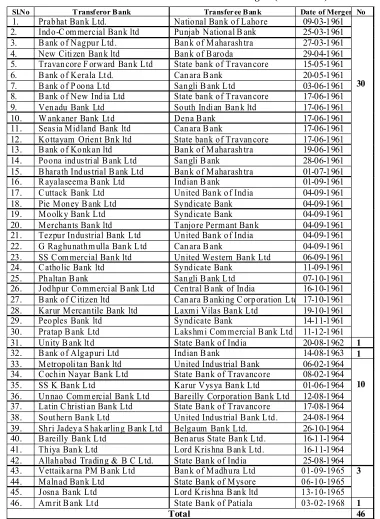
Table 2: Phase I: Pre Nationalisation Phase Mergers (1961 - 1969)
Sl.No T ransf eror B ank Transfer ee B ank Date of Merger No
1. Prabhat Bank Ltd. National Bank of Lahore 09-03-1961
30
2. Ind o-C om mercial Bank ltd Punjab National B ank 25-03-1961 3. B ank o f Nagpur Ltd . Ban k of M aharash tra 27-03-1961 4. New Citi zen Ban k ltd Ban k of B aroda 29-04-1961 5. Travan core F orward Bank Ltd State bank of Travan core 15-05-1961 6. B ank o f Kerala Lt d. Can ara B ank 20-05-1961 7. B ank o f P oona Ltd Sangli B ank Ltd 03-06-1961 8. B ank o f New Ind ia Ltd State bank of Travan core 17-06-1961 9. Ven adu Bank Ltd South Indi an Ban k ltd 17-06-1961 10. W ankaner Bank Lt d Dena B ank 17-06-1961 11. Seas ia M idland Bank ltd Can ara B ank 17-06-1961 12. Kottayam Orient Bnk ltd State bank of Travan core 17-06-1961 13. B ank o f Konkan ltd Ban k of M aharash tra 19-06-1961 14. Poona ind us tri al B ank Ltd Sangli B ank 28-06-1961 15. B harath Indus trial B ank Ltd Ban k of M aharash tra 01-07-1961 16. R ayalaseema B ank Ltd Indian B ank 01-09-1961 17. C uttack Bank Ltd United Bank o f India 04-09-1961 18. Pie M oney B ank Ltd Syndicate Bank 04-09-1961 19. M oolk y Bank Ltd Syndicate Bank 04-09-1961 20. M erchants Bank ltd Tanjore Permant Ban k 04-09-1961 21. Tezpur Industrial Bank Ltd United Bank o f India 04-09-1961 22. G Raghunathm ulla Ban k Ltd Can ara B ank 04-09-1961 23. SS C om mercial Bank ltd United Western Bank Ltd 06-09-1961 24. C atholic Bank ltd Syndicate Bank 11-09-1961 25. Phaltan B ank Sangli B ank Ltd 07-10-1961 26. Jodhpur Commerci al B ank Ltd Cen tral B ank of India 16-10-1961 27. B ank o f C itizen ltd Can ara B anki ng C orp oration Ltd 17-10-1961 28. Karur M ercantile Bank ltd Laxm i Vilas Bank Ltd 19-10-1961 29. Peo ples Bank ltd Syndicate Bank 14-11-1961 30. Pratap B ank Ltd Laks hm i Com mercial B ank Ltd 11-12-1961 31. Unity B ank lt d State Bank of Ind ia 20-08-1962 1
32. B ank o f Algapuri Ltd Indian B ank 14-08-1963 1
33. M etropoli tan Ban k ltd United Ind us trial B ank 06-02-1964
10
34. C ochin Nayar Bank Ltd State Bank of Travancore 08-02-1964 35. SS K Bank Ltd Karur Vys ya Ban k Ltd 01-06-1964 36. Unnao Comm ercial Bank Ltd Bareilly Corporation Bank Ltd 12-08-1964 37. Latin C hristi an Bank Ltd State Bank of Travancore 17-08-1964 38. Sout hern Bank Ltd United Ind us trial B ank Ltd. 24-08-1964 39. Shri Jadey a S hak arling B ank Ltd Belgaum Bank Ltd. 26-10-1964 40. B areilly Bank Ltd Ben arus State Ban k Ltd. 16-11-1964 41. Thiya Ban k Ltd Lord Krishna B an k Ltd. 16-11-1964 42. Allahabad Trading & B C Ltd. State Bank of Ind ia 25-08-1964 43. Vettaikarna PM B ank Ltd Ban k of M adhura Ltd 01-09-1965 3
44. M alnad Bank Ltd State Bank of M ysore 06-10-1965 45. Josna Bank Ltd Lord Krishna B an k ltd 13-10-1965 46. Am rit B ank Lt d State Bank of Patiala 03-02-1968 1
Total 46
The process of strengthening the banking structure through a process of merger and amalgamation of the weaker units with stronger institutions, following the failure of certain banks in 1960, was continued during the year 1961. From the table 2, it can be seen that, in total, forty six bank mergers have taken place in India from the period between 1961 to 1968; out of which thirty mergers have taken place in the year 1961 itself; another ten mergers have taken place in the year 1964; three in the year 1965 and one each in the years of 1962, 1963 and 1968. The major reason for these mergers was the restructuring of weak banks in order to protect the customers' interests. Most of these mergers were between private banks.
Phase II - Post Nationalisation Period (1969 - 1991)
The period from 1969 to 1991 is Post Nationalisation Period. During this period the Government of India has nationalised 14 commercial banks with total deposits of Rs. 50 crores in the year 1969, which gave Government a control over 84% of total branches; 6 banks with a total deposits of Rs. 200 crores were nationalised in the year 1980 which increased the total branch network of the nationalised banks to 91%.
These banks were nationalised with the objectives to prevent few big business houses from controlling the banks; to prevent the concentration of economic power and maximisation of wealth in few hands; to mobilize savings from all sections of people throughout the country. The active participation of the nationalised banks in the mergers is seen during this phase. The bank mergers in India during the Post Nationalisation Period are presented in table 3.
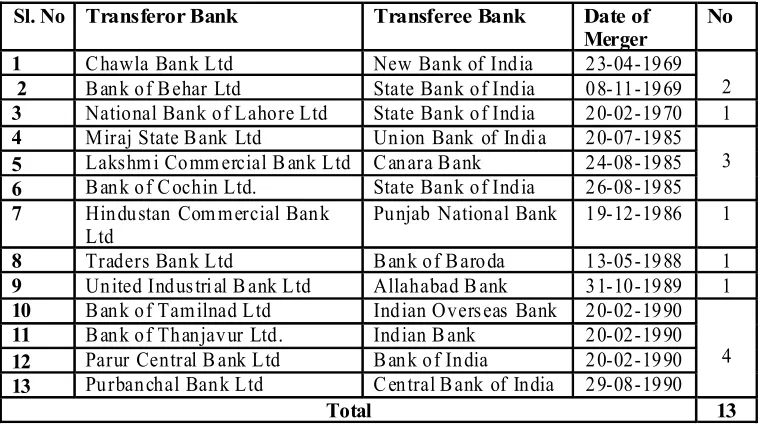
Table - 3: Phase II: Post Nationalisation Mergers (1969 - 1991)
Sl. No Transferor Bank Transferee Bank Date of
Merger
No
1 C hawla Ban k Ltd New Bank of Ind ia 2 3-04-19 69
2 2 B an k o f B ehar Ltd State Bank o f Ind ia 0 8-11-19 69 3 National Bank o f Lahore Ltd State Bank o f Ind ia 2 0-02-19 70 1 4 Miraj State B ank Ltd Un ion Bank of In di a 2 0-07-19 85
3 5 Lakshm i Co mm ercial B ank Ltd C an ara B ank 2 4-08-19 85 6 B an k o f C ochin Ltd. State Bank o f Ind ia 2 6-08-19 85 7 Hin du stan Com m ercial Ban k
Ltd
Pu njab National Bank 1 9-12-19 86 1
8 Traders Ban k Ltd B an k o f B aro da 1 3-05-19 88 1
9 Un ited Ind us tri al B ank Ltd Allahabad B ank 3 1-10-19 89 1 10 B an k o f Tam ilnad Ltd Ind ian Overs eas Bank 2 0-02-19 90
4 11 B an k o f Th anjav ur Ltd. Ind ian B ank 2 0-02-19 90 12 Parur Central B ank Ltd B an k o f In dia 2 0-02-19 90 13 Pu rban chal Ban k Ltd C en tral B ank of India 2 9-08-19 90
Total 13
During the Post Nationalisation Period, thirteen bank mergers have taken place from 1969 to 1990. All these mergers were between the Public Sector and Private Sector Banks. Out of these thirteen mergers, State Bank of India topped the list with three mergers to its credit during the years 1969; 1970 and again in the year 1985. Remaining ten mergers took place between the nationalised banks and other banks in the private sector.
Year wise analysis of the mergers points to the fact that two out of fourteen mergers have taken place in the year 1969; one merger by State Bank of India and the other one was by New Bank of India (nationalised in the year 1980); again after a gap of fifteen years three mergers have taken place with Union Bank of India; Canara Bank & State Bank of India; after a gap of five years in the year 1990, four mergers have taken place just before the liberalisation of economy.
Phase III - Post Liberalisation Period (1991 - 2015)
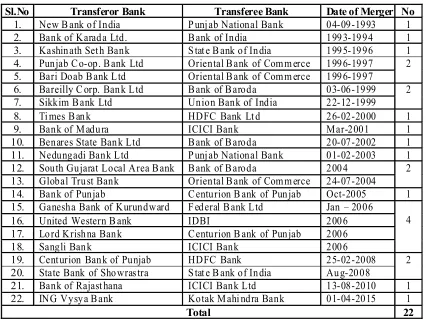
Table 4: Phase III: Post Liberalisation Mergers (1991 - 2015)
Sl.No Transferor Bank Transferee Bank Date of Merger No
1. New B ank of India P unj ab National Bank 04-09-1993 1
2. Bank of Karad a Ltd. B ank of India 199 3-19 94 1
3. Kashin ath Set h Bank S tat e B ank of In dia 199 5-19 96 1 4. Punjab C o-op. B ank Ltd Oriental B ank of Com m erce 199 6-19 97 2 5. Bari Doab B ank Ltd Oriental B ank of Com m erce 199 6-19 97
6. Bareilly C orp. Ban k Ltd B ank of B aroda 03-06-1999 2 7. Sikkim B ank Ltd Union Bank of India 22-12-1999
8. Ti mes B an k HDFC Bank Lt d 26-02-2000 1
9. Bank of M adu ra ICICI Bank Mar-2001 1
10. Benares State Ban k Ltd B ank of B aroda 20-07-2002 1 11. Nedungadi Bank Ltd P unj ab National Bank 01-02-2003 1 12. South Gujarat Local Area B ank B ank of B aroda 200 4 2 13. Global Tru st Bank Oriental B ank of Com m erce 24-07-2004
14. Bank of Punjab C enturion B ank of Pun jab Oct-2005 1 15. Ganesha Bank of Kurundward F ed eral B ank Ltd Jan – 20 06
4
16. United Western B ank IDBI 200 6
17. Lo rd Krish na Ban k C enturion B ank of Pun jab 200 6
18. Sangli Ban k ICICI Bank 200 6
19. Cent urion Ban k of Punjab HDFC Bank 25-02-2008 2 20. State Bank of Sho wras tra S tat e B ank of In dia Au g-20 08
21. Bank of Rajast hana ICICI Bank Ltd 13-08-2010 1
22. ING Vysy a B ank Kotak M ahi ndra Bank 01-04-2015 1
Total 22
Source: K. Srinivas: M & A in Indian Banking Sector - A Study of Select Banks
It is seen in table 4, that, in total twenty two mergers have taken place during the Post Liberalisation Period from 1991 to 2015. One interesting merger that took place was between two nationalised banks Punjab National Bank and New Bank of India the reason being high Non Performing Assets. Thirteen mergers have taken place between Public Sector Banks and Private Sector Banks; eight mergers have taken place amongst the Private Sector Banks. Out of these twenty two, twelve mergers were forced mergers because of the financial sickness of the banks; eight have taken place voluntarily; and two were in the lines of consolidation.
Phase IV: Consolidation of Banks (2015 - 2017)
latest one being the consolidation of banks. Five Associate Banks of State Bank of India viz, State Bank of Bikaner and Jaipur; State Bank of Mysore; State Bank of Travancore; State Bank of Hyderabad and State Bank of Patiala merged with their parent bank i.e. SBI on 1st April 2017. On the same day state owned Bharatiya Mahila Bank also merged with SBI. With the merger of associate banks, India's largest Public Sector Bank SBI becomes one of the top 50 Banks in the world.
Sector wise & Period wise number of mergers that took place in Indian Banking Sector from 1961 to 31st March 2017 is presented in table 5.
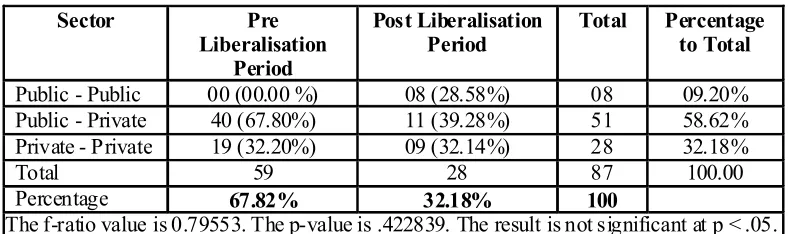
Table 5 : Number of Mergers: Sector wise - Period Wise Analysis (1961 - 2017)
Sector Pre Liberalisation
Period
Post Liberalisation Period
Total Percentage to Total
Public - Public 00 (00.00 %) 08 (28.58%) 08 09.20%
Public - Private 40 (67.80%) 11 (39.28%) 51 58.62%
Private - Private 19 (32.20%) 09 (32.14%) 28 32.18%
Total 59 28 87 100.00
Percentage 67.82% 32.18% 100
The f-ratio value is 0.79553. The p-value is .422839. The result is not significant at p < .05.
Source: Compiled by the Author
The study period from 1st April 1961 to 31st March 2017 is classified into two Phases; Pre Liberalisation Period i.e., from 1st April 1961 to 31st March 1991and Post Liberalisation Period i.e., from 1st April 1991 to 31st March 2017. Mergers have taken place amongst Public Sector Banks; between the Public Sector Banks & Private Sector Banks and Private Sector Banks & Private Sector Banks.
It is seen in table 5 that, total mergers taken place in Indian Banking Sector across the Sectors under different Periods are 87 (46+13+22+5 Associates +1 Bharatiya Mahila Bank). Out of 87 mergers, the mergers amongst the Public Sector Banks during both the periods accounted to 9.20 %; Public -Private Sector Banks 58.62% and -Private - -Private Sector banks 32.18 %; the highest number of mergers has taken place between Public Sector & Private Sector Banks (51/87) the reason might be bailing off weak Private Banks in the interest of the customers.
During the Pre Liberalisation Period, 59 mergers have taken place and not a single merger has taken place amongst the Public Sector Banks during this Period; 67.80 % of 59 mergers have taken place between Public Sector & Private Sector Banks and 19 mergers accounting to 32.20 % have taken place between the Private Sector Banks.
ANOVA is run to test the Hypothesis as to whether there is any significant difference in the number of bank mergers between the Bank groups and between Liberalisation Period. The p values as per 'f' test at 5% significance level are > .05 indicating that there is no significant difference.
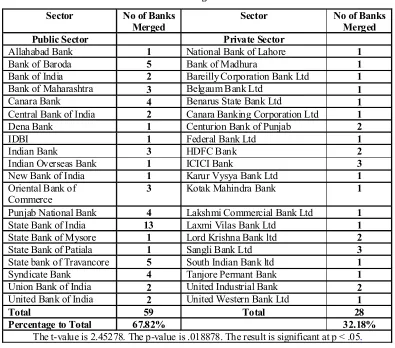
Sector wise mergers that took place in the Indian Banking Sector are presented in table 6.
Table 6 : Bank Mergers: Sector Wise
Sector No of Banks
Merged
Sector No of Banks
Merged
Public Sector Private Sector
Allahabad Bank 1 National Bank of Lahore 1
Bank of Baroda 5 Bank of Madhura 1
Bank of India 2 Bareilly Corporation Bank Ltd 1
Bank of Maharashtra 3 Belgaum Bank Ltd 1
Canara Bank 4 Benarus State Bank Ltd 1
Central Bank of India 2 Canara Banking Corporation Ltd 1
Dena Bank 1 Centurion Bank of Punjab 2
IDBI 1 Federal Bank Ltd 1
Indian Bank 3 HDFC Bank 2
Indian Overseas Bank 1 ICICI Bank 3
New Bank of India 1 Karur Vysya Bank Ltd 1
Oriental Bank of Commerce
3 Kotak Mahindra Bank 1
Punjab National Bank 4 Lakshmi Commercial Bank Ltd 1
State Bank of India 13 Laxmi Vilas Bank Ltd 1
State Bank of Mysore 1 Lord Krishna Bank ltd 2
State Bank of Patiala 1 Sangli Bank Ltd 3
State bank of Travancore 5 South Indian Bank ltd 1
Syndicate Bank 4 Tanjore Permant Bank 1
Union Bank of India 2 United Industrial Bank 2
United Bank of India 2 United Western Bank Ltd 1
Total 59 Total 28
Percentage to Total 67.82% 32.18%
The t-value is 2.45278. The p-value is .018878. The result is significant at p < .05. Source: Compiled by the Author
The table 5 is a consolidated picture of all the mergers that have taken place in India during the last 58 years from 1961 to 2017 across the Public Sector Banks and Private Sector Banks.
Of the twenty eight Public Sector Banks, twenty banks have taken active part in the merger activities. State Bank of India topped the list with thirteen mergers during the study period followed by Bank of Baroda and Bank of Travancore with five mergers each; Canara Bank, Punjab National Bank and Syndicate Bank stood at third place with four mergers each to their credit; seven of the banks have only one merger each in the last 58 years.
In total, twenty banks have gone for fifty nine mergers out of eighty seven accounting for 67.82% of the total mergers which only proves that Public Sector Banks in India played a very important role in protecting the economy from tumbling down and for safeguarding the interests of the customers.
In the Private Sector Indian Banks, ICICI Bank and Sangli Banks have been the leaders with three mergers each to their side followed by Centurion Bank of Punjab, HDFC, Lord Krishna Bank and United Industrial Bank with two mergers each and remaining fourteen banks have gone for only one merger each. In total, Private Sector Banks have twenty eight out of eighty one mergers with 32.18% of the total mergers which only proves that the regulatory policies were not very favourable for the Private Sector and till recently, their entry was also restricted. It is only after the New Economic Policy in the year 1991, the increased participation is seen.
T test is employed to test whether there is any significant difference between the Public Sector Mergers and Private Sector Mergers. The t-value is 2.45278 indicating that there is a significant difference between the mergers of both the sectors at 5% significant level indicating that the Public Sector Banks dominated the scenario of mergers.
Conclusion
The India Banking Sector has witnessed several changes over the years. The participation of Public and Private Sector Banks in the merger activity all through the study period is seen. The Public Sector Banks dominated the merger Scenario, with more number of mergers to its credit. During the Post Liberalisation period increased participation of Private Sector Banks in merger activity is evident. Mergers are now being considered as an important strategy for consolidation and expansion which is the reason why a few profit making Banks in the Private Sector have shown interest in the merger activity.
References
1. Kamatam Srinivas1,Mergers and Acquisitions in Indian Banking Sector- A Study of Selected Banks", Himalaya Publishing House, ISBN: 978-93-5024-810-2
2. Pradeep Kumar2, "Bank Mergers and Cost Efficiency Gains in Indian Commercial Banks"
4. K Antony Akhil4 (2011), Post-Merger Profitability of Selected Banks in India, International Journal of Research In Commerce, Economics & Management, Volume No. 1 Issue No. 8 (December) ISSN 2231-4245.
5. Pawan Sharma & Dr. D. P. Warne5 (2012), Banks Perspective in Mergers: A Case Study on Merger of the Bank of Rajasthan Ltd. With ICICI Bank Ltd, International Journal of Marketing, Financial Services & Management Research Vol.1 Issue 10, October 2012, Issn 2277 3622
6. Sohini Ghosh, Sraboni Dutta6 (2015) IOSR Journal of Business and Management (IOSR-JBM) e-ISSN: 2278-487X, p-ISSN: 2319-7668. Volume 17, Issue 3.Ver. II (Mar. 2015), PP 01-09 www.iosrjournals.org
7. A. N. Tamragundi, Devarajappa. S7 (2015) Trends and Progress of M & A in Indian Banking Sector, EPRA International Journal of Economic and Business Review, Vol- 3, Issue-10, October 2015, e-ISSN: 2347 -9671, p-ISSN: 2349 - 2015.
8. Impact of New Economic Policy Liberalization, Privatization, and Globalization-www.iasscore.in
Webliography
2. www.ibef.org