ORIGINAL ARTICLE
Tetsuya Takahashi · Yuji Aso · Wakako Kasai Tetsuo Kondo
Synergetic deodorant effect and antibacterial activity of composite paper
containing waste tea leaves
Abstract Composite paper containing waste tea leaves was prepared to investigate the effective utilization of waste tea leaves as deodorant material. Paper containing waste green tea leaves did not have increased deodorizing ability com-pared with controls either against acidic odors such as hydrogen sulfi de and acetic acid gases or against neutral odors such as formaldehyde and acetaldehyde gases. In con-trast, the paper had excellent deodorizing ability against basic odors such as ammonia and trimethylamine gases. It was observed during additional tests conducted on paper samples containing 60 wt% waste leaves of oolong tea, black tea, pu-erh tea, or hojicha, that all the samples reduced the ammonia concentration to below 1 ppm, which is the threshold concentration for olfactory recognition, within 30 min. Further, paper containing waste green tea leaves was found to decrease the odor residual rate to 5.1% in 30 min even for a waste tea leaf content of 10 wt%. The excellent deodorizing ability of the paper could be attrib-uted to the chemical reactions between odorous substances and the catechins found in tea leaves. After the deodoriza-tion of ammonia, paper containing waste green tea leaves was found to have increased antibacterial activity against Staphylococcus aureus.
Key words Waste tea leaves · Composite paper · Deodorant effect · Ammonia gas
T. Takahashi (*)
Faculty of Education, Shimane University, 1060 Nishikawatsu-cho, Matsue, Shimane 690-8504, Japan
Tel. +81-852-32-6350; Fax +81-852-32-6350 e-mail: [email protected] Y. Aso
Department of Biobased Materials Science, Kyoto Institute of Technology, Kyoto 606-8585, Japan
W. Kasai · T. Kondo
Faculty of Agriculture, Kyushu University, Fukuoka 812-8581, Japan
Introduction
The present authors have examined composite paper con-taining waste tea leaves with the objective of effectively utilizing industrial drink wastes.1–5
Composite paper con-taining waste leaves of green tea, oolong tea, black tea, hojicha, and pu-erh tea were found to possess antibacterial activities.1,3 The deodorizing action of waste tea leaves is well known, and waste tea leaves are used in several appli-cations in everyday life. For example, waste tea leaves used to be strewn over fl oors before sweeping or to remove the smells of raw fi sh and meat after cooking. The deodorizing action of tea leaves has attracted much attention for its application in environmental hygiene.6
Thus, the number of applications of composite paper containing waste tea leaves, which possess a deodorizing ability in addition to antibacte-rial activity, is expected to rise. In this study, the authors examined the deodorant effect of composite paper contain-ing waste green tea leaves against a variety of odorous substances. The authors also examined the synergetic effect on antibacterial activity of composite paper containing waste tea leaves after the deodorization of odorous sub-stances, as previously reported.
Materials and methods
Preparation of waste tea leaves
The study involved the following fi ve kinds of tea leaves: green tea (sencha), oolong tea, black tea, pu-erh tea, and hojicha. These tea leaves are fermented to different degrees by different methods. Green tea leaves were obtained from Ito En, oolong tea leaves were from Nihon-cha Hanbai, black tea leaves were from Mitsui Norin, hojicha leaves were from Nihon-cha Hanbai, and pu-erh tea leaves were from Tenjin Seicha.
To prepare waste tea leaves, a prescribed amount of tea leaves was added to a specifi c volume of hot distilled water in an enamel kettle and boiled for 30 min. To 4.0 l of
distilled water, 400 g of green tea (sencha) leaves was added and the mixture was heated to 70°C for extraction of tea. In the case of oolong and black teas, the heating tempera-ture was set to 90°C for the extraction. For hojicha, 300 g of tea leaves was added to 3.0 l of distilled water, and the mixture was heated to 90°C for the extraction. In the case of pu-erh tea, 250 g of tea leaves in 2.5 l of distilled water was heated to 90°C for the extraction. A fi ne stainless steel mesh ball was used to fi lter the liquid.
Preparation of paper containing waste tea leaves
Paper containing waste tea leaves was prepared by the method reported previously.1
Briefl y, waste tea leaves were ground under wet conditions with a mass colloider (stone mill type crusher) with a clearance of 40 μm, before blend-ing with desired amounts of pulp and latex binder. The leaf content was adjusted to 60 wt% in the formulation, whereas the latex binder content was 0.3 wt% of the total amount of the waste tea leaves and the pulp in all the formulations. The pulp used was prepared by refi ning Canadian bleached conifer kraft pulp to a Canadian freeness of 550 ml with a refi ner. A latex binder (Aica Aibon RAX117 from Aica Kogyo) made of styrene-butadiene rubber (SBR) was used to improve the adhesion between pulp and waste tea leaves. The binder is mainly used for paper processing, which com-monly involves strengthening and coating of paper. After distilled water was added to the above mixtures, they were stirred with a mixer for 10 s to obtain slurries of homoge-neous dispersion. An angular-sheeting machine (PU-401) from Tester Sangyo was used to adjust the slurries to a basis weight of 100 g/m2 and to prepare paper sheets of size 25 × 25 cm. The sheets were pressed at a pressure of 410 kPa at room temperature and dried at approximately 120°C with a rotating drier.
Preparation of odorous gases
A stainless-steel teaspoon was used to transfer four spoon-fuls of hydrogen sulfi de to a rubber-stoppered test tube. The test tube was heated on a gas burner to produce hydrogen sulfi de gas. The hydrogen sulfi de gas was captured in a tube, and its concentration was adjusted to 20 ± 2 ppm with pure air. A quantity of 400 ml each of acetic acid, ammonia, tri-methylamine, acetaldehyde, and formaldehyde was placed in a separate 500-ml glass bottle at room temperature. A 2.0-ml syringe was used to take an appropriate amount of saturating vapor from the bottle via suction.
Each of the highly concentrated odorous gases men-tioned above was injected via a syringe into a separate Tedlar bag containing 20 l of pure air. Additional pure air was added to the Tedlar bags to adjust the concentra-tions of the gases to the following values: acetic acid, 25 ± 0.5 ppm; ammonia, 60 ± 2 ppm; trimethylamine, 60 ± 2 ppm; acetaldehyde, 20 ± 2 ppm; and formaldehyde, 5.0 ± 0.1 ppm.
Evaluation of deodorizing ability
A 1 ± 0.0001 g sample of paper or natural fi ber cloth (cotton, silk, or wool) was placed in a 5-l Tedlar bag, to which 3.0 l of an odorous gas, at the concentrations specifi ed in the previous section, was transferred at a fl ow rate of 500 ml/ min with a measuring pump. The gas concentration in the bag was measured using a Gastec gas detector tube at 10 min, 30 min, 1 h, 3 h, 6 h, and 24 h from the time of the gas injection into the Tedlar bag. To evaluate the deodor-izing effect of a composite paper sample on formaldehyde, 5.0 l of the gas, adjusted to 5 ppm concentration, was injected to a Tedlar bag containing a 1.7 ± 0.0001 g paper sample. The initial concentration of the gas was converted to 100% and a plot of the odor residual rate was mapped against time. The odor residual rate of the sample was cal-culated by the equation given below.
Odor residual rate
The measured gas concentration Initi
% ( )=
a
al concentration ×100
Equilibrium regain
Samples of paper and natural fi ber cloth weighing approxi-mately 5.0 g were dried in a dryer at 70°C for 3 h; the sample weight was measured in grams, accurate to four decimal places, before moisture absorption took place. Dried samples were placed in desiccators set at different levels of relative humidity and left in the same condition for 3 days. Samples were then taken out of the desiccators for weight measure-ment. The equilibrium regain of the samples was calculated by the equation given below. Different mixing ratios of dis-tilled water and glycerin were used to adjust the humidity with the saturating vapor in the desiccators.
Equilibrium regain B A A %
( )= − ×100
where A is the sample weight before moisture absorption and B is the sample weight after moisture absorption
pH of aqueous extracts of paper
A piece of paper was fi nely cut into a piece approximately 5 × 5 mm2
, corresponding to an absolute dry weight of 1 g. The sample was shaken for 60 min with 25 ml of distilled water in a 100-ml weighing bottle. It was left stand-ing for 1 hour at 23°C. The supernatant was used for the measurement of pH at 23°C with a glass electrode pH meter.
Tests of antibacterial properties
and Evaluation. The bacterium is a gram-negative coccus and is known as a source of purulent diseases as well as a pathogen of food poisoning. Japanese Industrial Standards were used as the reference for testing antibacterial proper-ties. A sample of 0.20 g of composite paper containing waste tea leaves was transferred into a vial. Vials containing samples were autoclaved in a BS-245 autoclave from Tomy Kogyo at 121°C for 15 min. Peptone (1.0 wt%) and yeast extract (0.5 wt%) from Becton Dickinson and sodium chlo-ride (0.5 wt%) were used to prepare peptone water of a prescribed concentration. The peptone water was used to prepare a Staphylococcus aureus (NBRC 12732) suspension at a concentration of 1.0 ± 0.3 × 10⁵
colony forming units / milliliter (CFU/ml). Each autoclaved sample was inoculated with 0.10 ml of the suspension, tightly sealed, and incubated at 37° ± 1°C for 18 h.
To each of the incubated vials, 10 ml of a rinsing physi-ological saline, adjusted to a prescribed concentration with sodium chloride (0.85 wt%) and Tween 80 (0.20 wt%) from Sigma Chemicals, was added and the vials were shaken to disperse the bacterial cells. A physiological saline prepared with sodium chloride (0.85 wt%) was added to the stock dispersion of each sample to dilute them to the desired concentrations of up to 107
-fold. A mannitol salt medium (Ganule) from Nissui, adjusted to 11.1 wt%, was inoculated with each of the diluted bacterial suspensions. The adopted inoculation method7 involved dropping 5 μl of the diluted suspension at fi ve locations in each of the four sections of the medium, as described previously.1
The Petri dishes were placed inverted in an incubator at 37° ± 1°C for 44 h. Grown colonies were counted and multiplied by the dilution ratios to calculate the numbers of viable cells.
log C = the common logarithm of the viable cell number Bacteriostatic activity = log N2 − log N3
Bactericidal activity = log N1 − log N3
where N1 is the initial cell number, N2 is the viable cell number dropped on 100-wt%-pulp paper after 18 h of incu-bation, and N3 is the viable cell number dropped on paper samples after 18 h of incubation.
Thin-layer chromatography for examining changes in epigallocatechin gallate
Epigallocatechin gallate [(−)-EGCg] was dissolved in diethyl ether and spotted on a thin-layer chromatography (TLC) aluminum sheet of silica gel 60F254 (Merck, Japan) for thin-layer chromatography. After confi rming that the spots were completely dry, the thin-layer chromatography sheets were slowly placed in a glass container with a solvent for separation. The solvent used was a mixture of chloro-form, methanol, and distilled water (59 : 32 : 9).8
The thin-layer chromatography sheets were dried and then photographed under an incandescent UV light source (254 nm). (−)-EGCg (99.8% purity) from Nagara Science was used.
Mass spectrometry
The molecular mass of (−)-EGCg adsorbed ammonium gas was determined by using an Agilent LCMSD mass spec-trometer equipped with an electrospray ionization source (Agilent Technologies, Type 6320, United States). Before injection, the (−)-EGCg sample was dissolved in 50% ace-tonitrite/0.05% trifl uoroacetic acid.
Results and discussion
Deodorant effect of composite paper containing waste tea leaves
Effect on acidic odors
A variety of smells are recognized in our daily lives, some of which people fi nd displeasing. The olfactory sense in human beings is responsible for assessing the magnitude and nature of different smells. However, various analytical techniques have been devised for the assessment of smells to simplify and improve the reproducibility of measure-ments.9
In this study, a gas detector tube was employed to measure the concentrations of odorous substances. The odors were categorized into acidic, basic, and neutral odor groups according to their chemical properties. First, hydro-gen sulfi de gas, which has an offensive acidic odor, was used to test the deodorizing ability of the composite paper con-taining waste green tea leaves. To obtain a reference, similar tests were performed with cloths made of natural fi bers, such as cotton, silk, and wool. The measurements in the case of the cloths were taken using a Tedlar bag without paper samples.
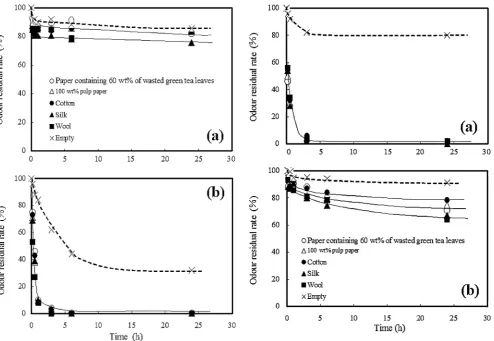
Figure 1a indicated that silk and wool had a relatively good deodorant ability for hydrogen sulfi de gas. The odor residual rate for silk decreased to 75.6% after 24 h. There was no clear difference in the deodorizing ability of cotton and that of paper made from 100 wt% pulp paper. The composite paper containing 60 wt% waste green tea leaves had an odor residual rate of 81.9% even at 24 h after gas injection. This rate was almost the same as that of paper made from 100 wt% pulp paper. The 85.6% odor residual rate in the case of the empty bag was not substantially dif-ferent from that of the composite paper, indicating that the waste green tea leaves did not have a deodorizing effect on hydrogen sulfi de gas.
to be adsorbed by the bag relatively easily since the odor residual rate in the case of an empty bag decreased to 32% in 24 h.
Effect on neutral odors
Formaldehyde is a neutral odor associated with the “sick building syndrome.” It is released into the air by construc-tion materials such as adhesives, paints, and preservatives. It can cause the sick house syndrome even at low concentra-tion values. Therefore, it would be benefi cial if composite paper containing waste green tea leaves could adsorb form-aldehyde. Figure 2a shows the odor residual rate against time for each sample. The results clearly show that all tested fi brous samples had good deodorant effects on formalde-hyde and decreased its odor residual rate to as low as 2.0% in 3 h after gas injection. Natural fi bers and 100 wt% pulp paper were similar to the composite paper containing waste green tea leaves in deodorant ability, i.e., composite paper containing waste green tea leaves did not have improved deodorant ability. It may be safe to state that waste tea leaves do not deodorize formaldehyde.
In the case of acetaldehyde, as shown in Fig. 2b, the natural fi bers and the composite paper containing waste green tea leaves exhibited different deodorant effects against formaldehyde. Judging from the above results, com-posite paper containing waste green tea leaves did not have a substantially enhanced deodorant effect on neutral odors.
Effects for basic odors
Ammonia gas, as a basic odor, is one of the 22 offensive odorifi c substances specifi ed by the Offensive Odor Control Law.10
Ammonia gas is a component of the objectionable smells that emanate from feces, rotten meat, and tobacco. Ammonia gas is also the main component of smells emanat-ing from the body, such as urine, sweat, and body odor.
As shown in Fig. 3a, ammonia gas was adsorbed to the empty bag relatively easily, reaching residual rates of 75.6% in 10 min and 53.3% in 24 h. Among natural fi bers, animal fi bers such as wool and silk were found to have higher deodorant abilities that decreased the residual rates to 8%–10% in 24 h; in contrast, the residual rate in the case of cotton, which is a natural plant fi ber, decreased to 36.1% in 24 h. Among natural fi bers, the residual rate in the case of
Fig. 1a,b. Time dependence of odor residual rate for acidic odors. a
Hydrogen sulfi de gas (initial concentration: 20 ± 2 ppm), b acetic acid gas (initial concentration: 25 ± 0.5 ppm)
Fig. 2a,b. Time dependence of odor residual rate for neutral odors. a
wool was 7.5% (4.42 ppm); wool had the highest deodor-izing ability according to the results of the 24-h test.
According to the Weber–Fechner law, the perceived odor intensity is proportional to the logarithm of the concentra-tion of the odorous substance.11
When wool, which has a good deodorizing ability against ammonia gas, decreased the odor residual rate from 100% to 7.5%, the perceived odor intensity would decrease to approximately half its value in accordance with the Law. This implies that even wool does not deodorize ammonia gas suffi ciently.
In contrast, composite paper containing 60 wt% waste green tea leaves decreased the odor residual rate to 2.9% in 6 min and to 0% in 1 h; for paper made from 100 wt% pulp, the odor residual rate remained at 19.1% after 24 h. This result suggests that the waste tea leaves in the compos-ite paper can absorb ammonia gas.
The composite paper showed a similar superior deodor-izing ability against trimethylamine, as shown in Fig. 3b. For natural fi bers, the odor residual rate remained greater than 50%. The above results clearly show that composite paper containing waste green tea leaves potentially has a very high deodorizing ability against basic odors.
Deodorant effects of composite paper containing different waste tea leaves on ammonia gas
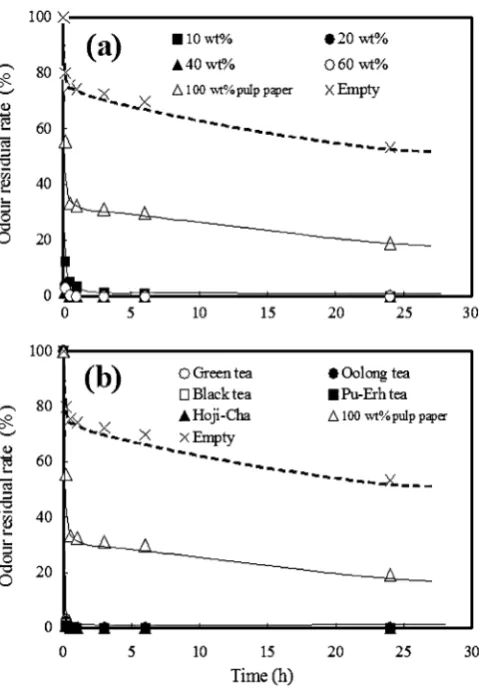
As previously described, composite paper containing waste green tea leaves had a good deodorizing ability against ammonia gas. Paper composites with several kinds of waste green tea leaves at ratios varying from 10 to 60 wt%, showed excellent deodorant abilities on ammonia gas as shown in Figs. 4a and b.
Ammonia gas at a concentration of 1 ppm (the threshold concentration) is known to be detectable by the human olfactory system.9
According to the evaluation method stip-ulated for deodorant fi bers by the Japan Textile Evaluation Technology Council, a fi ber material that can reduce the concentration of ammonia gas originally at 40 ppm or more to the detection threshold concentration level, or lower, within 24 h, is considered to be a deodorant fi ber.6
There-fore, all the composite paper examined in this study can be considered deodorant fi ber materials with a good deodor-izing ability against ammonia gas.
Fig. 3a,b. Time dependence of odor residual rate for basic odors. a
Ammonia gas (initial concentration: 60 ± 2 ppm), b trimethylamine gas (initial concentration: 60 ± 2 ppm)
Fig. 4a,b. The deodorant properties of papers containing waste tea
leaves against ammonia gas (weight of paper sample: 1 ± 0.0001 g, container: 5 l bag, size of container: 3 l, initial concentration of ammonia: 60 ± 2 ppm). a For different values of waste green tea leaf contents,
Next, the dependence of the deodorizing ability of tea leaves on their fermentation level was examined, as shown in Fig. 4b. All types of tea leaves in the composite paper, including green tea, oolong tea, black tea, pu-erh tea, and hojicha, reduced the initial concentration of ammonia gas [60 ± 2 ppm (100%)], to 2 ppm (3%) or less within 10 min. Thirty minutes after gas injection, very little ammonia gas remained in the bags because of the deodorizing effect of the leaves. The teas did not differ in deodorant ability, showing good deodorant action within a short time. The fact that the waste tea leaves took a short time to act on the ammonia gas indicates that they have a good deodorizing ability against this substance. To study the deodorizing ability of each kind of tea in composite paper containing waste tea leaves in the future, it is planned to adopt mea-surement methods of higher precision than the gas detector tube method.
Feasible reasons for the superior deodorizing ability of composite paper containing waste tea leaves
As described above, composite paper containing any kind of waste tea leaves has a good deodorizing ability against basic odors. The following three factors can be considered as feasible reasons for the deodorizing ability of composite paper containing waste tea leaves: (1) the effect of the porous surface structure of waste tea leaves may have induced the physical adsorption of odors,12,13
(2) the high equilibrium regain of waste tea leaves may have contributed to the adsorption of odorous substances dissolved in mois-ture in the air, and (3) the chemical reactions of waste tea leaf components with basic odorous substances incorporate the odorous substances into waste tea leaves.
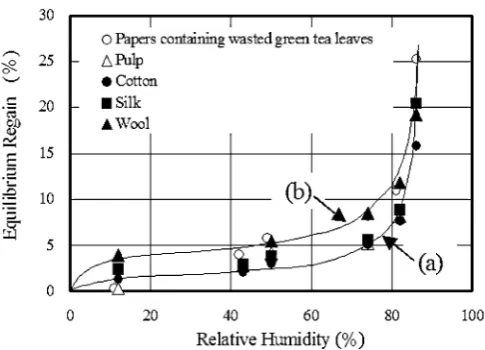
Considering that composite paper has a deodorizing ability against basic odors and no clearly enhanced deodor-ant effect on acidic or neutral odors, reasons (2) and (3) could, in theory, be the cause of the deodorizing ability of composite paper containing waste tea leaves. Therefore, to examine the probability of reason (2) being the cause of the deodorizing ability, equilibrium regain against the relative humidity of the atmosphere was calculated for composite paper containing waste green tea leaves. Composite paper containing 60 wt% waste tea leaves and natural fi bers, such as cotton, silk, and wool, were used as test samples. Paper made from 100 wt% pulp was also used as a sample for comparison. As shown in Fig. 5, composite paper containing 60 wt% waste green tea leaves has a higher equilibrium regain than paper made from 100 wt% pulp and other natural fi bers, indicating that the waste tea leaves cause an increase in the equilibrium regain value. Presumably, this is because the composite paper is superior, in a hygroscopic sense, than the other natural fi bers, which can be considered nearly equal as far as their hygroscopic properties are con-cerned. Therefore, the cause of the superior deodorizing ability of composite paper containing waste green tea leaves, as compared to natural fi bers, is understood to be due to some other factors.
As described above, the chemical reaction between odorous substances and waste green tea leaves in composite paper was considered the most feasible factor for the excel-lent deodorizing ability of the composite paper. The odorous substances adsorbed by the composite paper were extracted using distilled water. The measured pH value of the extracts helps determine whether an acid/base neutralization reac-tion took place between the composite paper containing waste green tea leaves and odorous substances. If an acid/ base neutralization reaction took place between the odorous substances and composite paper containing waste green tea leaves, the extract from the composite paper that adsorbed basic ammonia gas would have a nearly neutral pH value. For comparison, a similar measurement was taken for 100-wt%-pulp paper.
Table 1 gives the pH values of distilled-water extracts of paper after the adsorption of acetic acid and ammonia gases. The pH values of the extract from the composite paper containing waste green tea leaves was not neutral, indicating that no acid/base neutralization reaction took place between the odorous substances and the composite paper. Thus, it was proven that deodorization by composite paper containing waste green tea leaves does not takes place as a result of a simple acid/base neutralization reac-tion. However, from the pH measurement of paper extract alone, it can be qualitatively concluded that no neutraliza-tion reacneutraliza-tion takes place but the data are not suffi cient for quantitative discussion. The authors plan to use other means, such as titration methods, in future studies.
Fig. 5. Moisture absorption behavior of paper samples. a, Natural fi ber
fabrics; b, paper containing 60 wt% wasted green tea leaves
Table 1. pH values of the distilled-water extract of paper that has
adsorbed different gases
Sample Adsorption gas Acetic acid gas
Ammonia gas
Air
Paper containing 60 wt% of waste green tea leaves
The change in hue of the composite paper was then examined after ammonia gas was deodorized. Composite paper containing 60 wt% waste green tea leaves was left in a desiccator fi lled with saturated aqueous solutions for 24 h to fully adsorb the ammonia, trimethylamine, and acetic acid odors. The photographs in Fig. 6 show that the compos-ite paper turned dark brown in hue after adsorbing the basic odors of ammonia and trimethylamine gases. In contrast, the hue of the paper did not change signifi cantly after treat-ments with acetic acid gas as an acidic odor. The results indicate that the constituents of the waste tea leaves reacted with ammonia and trimethylamine gases.
Catechins are one of the main constituents of tea leaves and are known to convert into theafl avins through the process of fermentation in the presence of polyphenol oxidase. Chlo-rophyll is another important constituent in the leaves and is relatively stable in alkaline environments. In contrast, poly-phenols, including catechins, are unstable and are easily decomposed during the color development in alkaline envi-ronments. It is also known that a part of the polyphenols undergoes oxidation polymerization.14
In particular, cate-chins are supposed to be polymerized in alkaline environ-ments without an oxidase. The compounds in waste green tea leaves are likely to be involved in the deodorization of basic odors. The following process has been proposed as the mech-anism responsible for the deodorizing ability of catechins toward ammonia gas: phenolic hydroxyl groups of catechins form hydrogen bonds with ammonia molecules from the air to produce an adduct (O−NH4+
) salt.15
The catechins are thus considered to be polymerized by oxidation.
Therefore, it was necessary to further study the chemical changes in catechins due to the adsorption of ammonia. Epigallocatechin gallate [(−)-EGCg] is known to be the most abundant constituent in green tea. It was spotted on thin-layer chromatography plates left in desiccators fi lled with ammonia gas for 24 h until the complete adsorption of the ammonia odor.
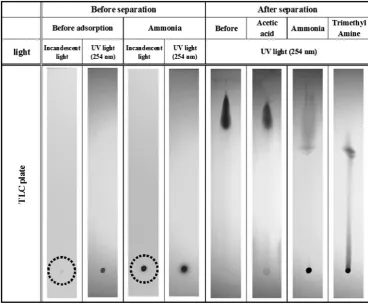
Figure 7 shows photographs of the thin-layer chromatog-raphy plates with ammonia odor adsorbed before
separa-tion (on the left) and after separasepara-tion (on the right). The samples were observed under incandescent light and 245-nm ultraviolet light for easier observation. The (−)-EGCg was clearly detected at the starting point before separation (on the left, Fig. 7). The (−)-EGCg turned dark brown after ammonia adsorption; therefore, it was detectable even under an incandescent light (circled by a broken line). A similar result was obtained when trimethylamine odor was adsorbed. In contrast, the (−)-EGCg remained too white on the TLC plate after the adsorption of acetic acid odor to be detected by visual inspection.
The solvent water was then used for separation in thin-layer chromatography in a subsequent experiment (on the right in Fig. 7). After development, the upward migration of (−)-EGCg alone was confi rmed from the thin-layer chroma-tography plates. After the adsorption of acetic acid, an upward migration of (−)-EGCg was found in the plates after separation, indicating that the acetic acid gas had under-gone no signifi cant chemical reaction with the (−)-EGCg.
When either ammonia gas or trimethylamine gas was adsorbed, the (−)-EGCg still remained at the starting point and an upward migration of the compound was observed. In other words, when basic odors were adsorbed, the (−)-EGCg was chemically modifi ed. This was because the com-pound did not migrate on the TLC plate even when a mixture of chloroform, methanol, and distilled water was used as a solvent for separation.
To identify the compound, mass spectrometry was employed. Unfortunately, the spectrum of the modifi ed (−)-EGCg showed a large number of peaks in the molecular weight range 500–1500; owing to their large number, these peaks could not be identifi ed. These results indicate that the catechins adsorbed basic odors to form many complex structures. (−)-EGCg treatment of ammonia is estimated to form a very large number of substances that have complex structures. The authors have searched in vain for examples of related studies and would like to study the relationship between the structures and antimicrobial activity of the substances in the future.
Fig. 6. Paper containing 60 wt%
As described above, the incorporation of waste tea leaves into paper dramatically increased the level of deodorant effect of the paper. The phenomenon seems to involve chemical reactions; however, it is also necessary to examine the effects of the paper surface area on the deodorant effect. The authors plan to study the effects of the paper surface area in the future.
Antibacterial activity of composite paper containing waste tea leaves after deodorization of ammonia gas
Composite paper containing waste green tea leaves was left in a desiccator fi lled with ammonia gas for saturation, and then for 24 h after the saturation for the complete adsorp-tion of ammonia gas. Staphylococcus aureus was used to evaluate the antibacterial activity of the composite paper
Table 2. Antibacterial properties (toward Staphylococcus aureus) of paper containing 60 wt% of waste green tea leaves after adsorbing ammonia
gas
Sample Adsorption of ammonia gas
Incubation time (h)
Antibacterial properties Viable bacteria (CFU/ml)
Log C Bacteriostatic activity
Bactericidal activity
0 1.00 × 10⁵ 5 –a –
Paper containing tea leaves Before 18 5.00 × 10⁵ 5.70 2.79 −0.70
100-wt%-pulp paper 3.08 × 10⁸ 8.49 – –
Paper containing tea leaves After 18 <4.40 × 10² <2.64 >5.85 >2.36
100-wt%-pulp paper 6.48 × 10⁸ 8.81 −0.32 −3.81 a Non-numerical value
C, viable cell number
Fig. 7. Changes in
(−)-epigallocatechin gallate on silica gel thin-layer
chromatography (TLC) plates coated with a fl uorescent reagent after ammonia adsorption (i.e., after 24 h in a saturated gas desiccator). The extraction solvent was diethyl ether; the separation solvent was
chloroform, methanol, and water (59 : 32 : 9); and the separation time was 210 min. The (−)-EGCg turned dark brown after ammonia adsorption and was detectable even under an incandescent light (circled by a
broken line)
containing waste green tea leaves. As a reference, paper made from 100 wt% pulp was allowed to achieve complete adsorption of ammonia gas; it was also subjected to evalu-ation of its antibacterial activity. Table 2 lists the evaluevalu-ation results of the antibacterial activities.
The number of viable bacteria in the culture at 18 h increased from 1.00 × 10⁵ to 5.00 × 10⁵
CFU/ml for a bacte-rial suspension that was dropped on the composite paper containing waste green tea leaves before ammonia gas adsorption. In contrast, it increased to 3.08 × 10⁸
When the above experiments were repeated with paper samples that had been used to deodorize ammonia gas, no viable bacteria were found in the composite paper contain-ing waste green tea leaves after culture for 18 h. Further-more, the antibacterial activity had increased to a higher level than that of the reference. This could be due to the polymerization of catechins in the ammonia environment because these polymerized compounds are believed to increase the hydrophobicity of cell walls and enhance the interactions between the polymer and the cell membrane of the bacterium. Here, since the number of viable bacteria (6.48 × 10⁸
CFU/ml) in the paper made from 100 wt% pulp that had adsorbed ammonia gas was almost the same as that in the paper made from 100-wt%-pulp paper without adsorbed ammonia gas, it was evident that the ammonia gas itself had little antibacterial effect on Staphylococcus aureus.
From the above experimental results, the catechins con-tained in waste green tea leaves were inferred to have polymerized in the alkaline environment with ammonia gas. During the chemical reaction, some OH groups in the cat-echins supposedly got chemically transferred into O−NH4+ as an intermediate for holding ammonia gas in the molecu-lar structure; this was indirectly confi rmed by mass spectrometry. As described previously, the details of the molecular structures of the compounds formed in the reac-tions between catechins and ammonia remain unknown and will be a subject for future research. The characteristics elucidated in these experiments are very useful and indicate that composite paper containing waste tea leaves can be used effectively in different applications.
Conclusions
Composite paper containing waste tea leaves was prepared and its deodorizing ability was examined in an effort to promote the effective utilization of used tea leaves. The paper showed excellent deodorizing ability against ammonia gas and trimethylamine gas, both of which are basic odors. As described above, composite paper containing waste tea leaves was found to possess not only good deodorizing ability but also exhibited improved antibacterial activity after it had adsorbed gas during deodorization. Thanks to
these characteristics, composite paper containing waste tea leaves has several potential applications.
Acknowledgments We would like to thank Mr. Hiroshi Yokota and
Mr. Tetsunori Kunitake of Ehime Paper Mfg. Co., Ltd., for their kind cooperation in providing samples and in measurement of physical properties.
References
1. Takahashi T, Kondo T, Kasai W (2010) Improving the antibacterial activity in Staphylococcus aureus of composite sheets containing wasted tea leaves by roasting. J Wood Sci 56:403–410
2. Takahashi T, Kondo T, Kasai W (2010) Effect of light irradiation on the antibacterial activity of composite papers containing wasted tea leave. J Wood Sci 56:299–306
3. Takahashi T, Kondo T, Kasai W, Yokota H, Kunitake T (2007) Prep-aration of composite paper using waste tea leaves (in Japanese). Sen’i-Gakkaishi 63:256–263
4. Takahashi T, Kasai W, Kondo T, Yokota H, Kunitake T (2008) Struc-ture and mechanical properties of paper containing ground waste tea leaves (in Japanese). Sen’i-Gakkaishi 64:252–258
5. Takahashi T, Kasai W, Kondo T, Yokota H, Kunitake T (2008) Anti-bacterial activity of composite paper using waste green tea leaves produced by a paper-making method (in Japanese). Sen’i-Gakkai-shi 64:358–365
6. Yasuda H, Arakawa T (1995) Deodorizing mechanism of (-)-epigal-locatechin gallate against methyl mercaptan. Biosci Biotechnol Biochem 59:1232–1236
7. Gohya Y, Nakamura S (1994) Simplifi ed and rapid enumeration of proteolytic bacteria in water using the plate-MPN technique. Sui-sanzoshoku 42:567–570
8. Amarowicz R, Shahidi F (1996) A rapid chromatographic method for separation of individual catechins from green tea. Food Res Int 29:71–76
9. Okamura M (1999) End-use performances and new test methods. Evaluation and test methods for deodorant fi bers (in Japanese). Sen’i Seihin Shohi Kagaku 40:45–51
10. Yamamoto S (1996) Amendment of Offensive Odor Control Law (in Japanese). J Resour Environ 32:189–192
11. Fox EA, Gex VE (1957) Procedure for measuring odor concentra-tion in air and gases. J Air Poll Control Assoc 7:60–61
12. Pereira MFR, Soares SF, Orfao JJM, Figueiredo JL (2003) Adsorp-tion of dyes on activated carbons: infl uence of surface chemical groups. Carbon 41:811–821
13. Kametani K (1997) Technology of deodorizing and an actual example. (3). Adsorption method (in Japanese). J SHASE 71:781– 784
14. Kimura S, Nakamura T, Kato H (1995) Shokuhin no henshoku no kagaku (in Japanese). Korin, Tokyo, pp 94–97, 161–163