6 1
Peer Mentoring Works!
How Peer Mentoring Enhances Student Success in
Higher Education
Jane Andrews & Robin Clark
Engineering Education Research Group Aston University
Birmingham
Jane Andrews and Robin Clark: Peer Mentoring Works! Page 2
What Works? Student Retention and Success Programme
This report is a project output as part of the ‘What Works? Student Retention and Success Programme’. This three year evaluative programme has been initiated and funded by the Paul Hamlyn Foundation and the Higher Education Funding Council for England (HEFCE). The seven projects in the programme, involving 22 Higher Education Institutions, have been evaluating effective strategies and interventions to ensure high student continuation and completion rates. The projects have been working to generate practical outputs including reports that enhance practice and associated toolkits and resources to assist other institutions to learn from their work and improve student retention and success. It is anticipated that the outputs of this programme will be particularly significant in the context of the current changes facing Higher Education.
This project could not have been successful without the assistance and enthusiasm of our project partners. We would particularly like to thank:
Aston University: Mandy Ingleby: Stephen Burrell: Mohsin Khan: Ellen Pope: Baljit Gill: Paul Gorman.
Bangor University: Kim Davies
London Metropolitan University: Dr Kathy Harrington
Liverpool Hope University: Professor Lyn Norton: Julian Brassington
Sheffield University: Ian Munton: Emma Jeggo:
Oslo and Akershus University College: Magritt Lundestad
Our thanks also go to Professor Liz Thomas, Higher Education Academy, for the support and advice she has proffered throughout this project; and to Mandy Archer & Rob Drake, Oxford Brookes University who acted in the capacity of external advisors in the area of student support.
Jane Andrews and Robin Clark: Peer Mentoring Works! Page 3
Contents
Section Title Page
1 1.1 1.2 1.3 2 2.1 2.2 2.3 Foreword Abstract Executive Summary
Background and Literature Review Background
Peer Mentoring, Peer Learning and Peer Tutoring Peer Mentoring and Peer Tutoring in Higher Education
Project Framework
Typology of Peer Mentoring The Conceptual Framework Research Questions 5 6 7 14 14 15 18 21 21 22 23 3 3.1 3.2 3.3 3.4 3.5 3.6 Methodology
Defining Peer Mentoring The Project Partners
Approaches to Peer Mentoring Included in the Project The Research Approach
Research Schedule Ethical Issues 24 24 24 25 26 30 30 4 4.1 4.2 4.3 4.4 4.5
The Study Findings: Evidence from the Surveys Introduction
Demographic Details
How Information About Peer Mentoring is Communicated
The ‘Transition Period’
Following Transition – Term 1 and Beyond
32 32 32 34 34 37 5 5.1 5.2 5.3 5.4 5.5 5.6
In the Students’ Own Words
Tackling the Trials and Tribulations of Transition Academic Support and Peer Mentoring
On-going Support and Peer Mentoring Benefits for Peer Mentors
Challenges of Peer Mentoring
The Functions and Challenges of Peer Mentoring: Summary of Section 5
44 45 49 55 59 63 68 6 6.1 6.2 6.3
Writing Peer Mentoring: In the Students’ Own Words What Do Writing Peer Mentors Do?
Pastoral Support in Writing Peer Mentoring The Challenges of Writing Peer Mentoring
Jane Andrews and Robin Clark: Peer Mentoring Works! Page 4 7
7.1 7.2 7.3 7.4
Discussion
The Constituents of Transition+ Peer Mentoring Final Project Typology of Peer Mentoring
Recommendations What Next?
Conclusion
References
Further Outputs and Publications
Authors’ Details
Appendix 1: Case-Study Organisations
2: Properties of Programmes Analysed 3: Mapping to ‘What Works’ Target Groups
82 84 86 87 89
90
91
95
96
Jane Andrews and Robin Clark: Peer Mentoring Works! Page 5
Foreword
Making the decision to attend university to embark on a course of study is a significant step in a person’s life, whatever their background. The conflicting emotions of apprehension and excitement that accompany this decision indicate that for many, the transition into university life is far from easy. As we enter a new era in UK higher education, the demands on institutions to support student success are likely to increase. Much is at stake for all of the parties involved. As such, mechanisms that can aid student transition and promote student success are going to become ever more important in the higher education landscape. Having said this, it is important that the interventions are underpinned by evidence that they are going to impact the student experience at transition in a positive way and are not simply a passing fad or ‘knee jerk reaction’ to a perceived problem.
In considering ways to support students at transition, universities are not awash with money, consequently innovation is critical. By exploring the use of an institution’s key asset, its own students, there is an opportunity for the creation of a true ‘win-win-win’ situation in which new students belong, existing students develop new skills and institutions experience minimal student attrition. Peer mentoring offers an approach whereby students help students discover the new world of university life through the formation of safe and supportive peer relationships. This report and its associated outputs provide evidence that peer mentoring works; offering universities a way forward in supporting their students at transition. The study makes clear that the introduction of a peer mentoring programme needs to be well thought through and supported with student training and a level of on-going care and maintenance. For a modest investment, the benefits realised in terms of student success at transition are considerable. The institutions involved in this study believe that peer mentoring is key in addressing the challenge of encouraging student success at transition. The evidence presented here confirms this belief.
Jane Andrews and Robin Clark: Peer Mentoring Works! Page 6
Abstract
This report draws on the findings of a three year study into peer mentoring conducted at 6 Higher Education Institutions (HEIs), 5 of which were in the UK, 1 of which was in Norway.
Following a multiple case-study design, quantitative and qualitative research was conducted in collaboration with the project partners. The research findings provide empirical evidence that peer mentoring works! In particular the report provides:
An Executive Summary outlining the main project findings
A synopsis of the relevant literature – and a link to a much larger
literature review undertaken at the beginning of the study
A working conceptual framework and set of research questions
An overview and rationale of the methodological approach and tools
Evidence of the value of peer mentoring in promoting a ‘smooth’
transition into university
Evidence that peer mentoring works by providing the means by which
new students can access peer support in both social and academic spheres throughout their first year
Identification of the main challenges of peer mentoring
Evidence of the manner in which writing peer mentoring works by
providing bespoke help for individual students
A discussion section in which a new approach to peer mentoring,
Transition+, is proposed.
Jane Andrews and Robin Clark: Peer Mentoring Works! Page 7
Executive Summary
This report provides a detailed and in-depth analysis of the value of peer mentoring in promoting student success in higher education. Commencing with a brief overview of the relevant literature, attention is paid to the role that public policy has played in shaping higher education over the previous three decades. It is argued that the face of higher education has been irrevocably changed by policies resulting in unprecedented increases in the number of students. On the positive side, such change has resulted in the opening up of the opportunities afforded by higher education to people from a wide-range of social and demographic backgrounds. Conversely, whilst such policies have done much to promote equity with regards to access to higher education, contemporary policies leading to the forthcoming increase in student fees, mean that more Higher Education Institutions [HEIs] than ever are facing a challenging and uncertain future.
It is within this environment of uncertainty that issues of retention and attrition arise. Indeed, pedagogical concerns about the growth in the numbers of students within the classroom are contextualised by issues of transition and retention. Thus the need for HEIs to put into place mechanisms to both support students and to address issues of retention has never been more important. Peer mentoring represents one such mechanism. It provides the means by which students can make friends, acclimatise to university life, and come to terms with their new student identity.
In seeking to identify students’ perceptions of the value of peer mentoring, this study provides evidence that, in today’s ever-changing and increasingly challenging academic environment, students represent an institution’s most valuable asset.
Jane Andrews and Robin Clark: Peer Mentoring Works! Page 8
Methodological Approach
Commencing with the hypothesis that ‘peer support impacts positively on students’ experiences by engendering a greater sense of belonging both socially and academically’, the study set out to analyse pastoral peer mentoring and writing peer mentoring activities in 6 different HEIs.
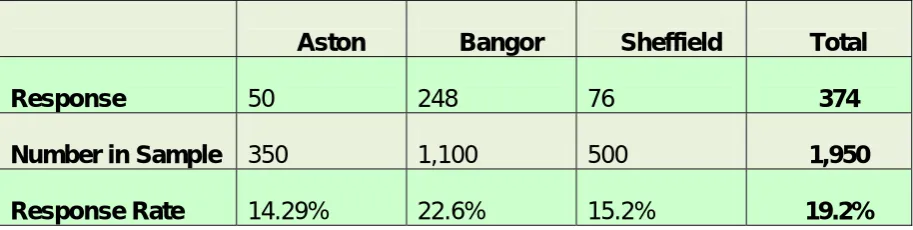
The research approach involved a multiple case-study design, in which a mixed methodological approach was adopted. The research was conducted in four separate stages. The first stage took the form of a pilot survey administered across all partner HEIs in 2009-2010. This resulted in a response rate of 302 completed questionnaires (just under 10% of the sample). This was followed by a follow-on survey that was administered in 2010-2011 at three of the partner institutions focusing on pastoral peer mentoring. This resulted in 374 completed questionnaires (just over 19% of the sample).
The third part of the study comprised in-depth qualitative interviews and focus groups which were conducted at all institutions with a total of 97 student peer mentors and peer mentees. Of these 61 were involved in pastoral or transitional mentoring programmes (29 peer mentees and 32 peer mentors), and 36 were involved in writing peer mentoring (16 writing peer mentors and 20 peer mentees). The quantitative data was coded and analysed using SPSS. The qualitative data was analysed following a grounded theory approach, in which the main themes and sub-themes were coded then analysed in some depth.
The final part of the project involved non-participant, overt observations of peer mentoring activity undertaken during ‘welcome’ weekend in September 2010. Data was recorded and analysed using an observational framework specifically developed for the project out of the emergent findings of the quantitative and qualitative research.
Jane Andrews and Robin Clark: Peer Mentoring Works! Page 9
The Study Findings: Pastoral Mentoring
- The Transition Period
The first few days and weeks at university are widely acknowledged as being crucial to student success. In looking closely at ‘transitional peer mentoring’ this project identifies and analyses how reciprocal peer support can provide new students with a solid foundation to their university careers.
By looking at what students concerns are, and by showing how peer mentoring helps new students address such concerns, this study highlights the value of peer mentoring both during the transition period and also into the first year of their studies. Furthermore, by analysing the data collected, this report highlights the value of peer mentoring both during the transition period and also into the first year.
A significant majority of the students surveyed were particularly concerned about making friends once they started university. Indeed, it is the ‘social’ aspects of university life that concern students the most – particularly in relation to settling in and adjusting to university life. Conversely, despite such worries before starting university, most of the students were confident that they had the ability to succeed academically, as such they were committed to completing their university studies. The study shows that transitional peer mentoring works by providing the means by which new students quickly gain a sense of ‘belonging’. Indeed, it is in the key transition phase that peer mentoring first begins to make a difference to new students’ lives. University-wide ‘opt-out’ programmes in which peer mentoring is offered to all new students, are particularly successful because in capturing the whole population of new starters peer mentoring is not viewed by students as a ‘deficit model of provision’ but is instead seen and accepted as part of the university culture.
Jane Andrews and Robin Clark: Peer Mentoring Works! Page 10
Another type of peer mentoring, longer-term pastoral mentoring is successful because it offers on-going, long-term support to those students who need it. Both transitional and pastoral peer mentoring provide a valuable ‘safety-net’ for students making those first few tenuous steps into university life. Transitional peer mentoring works best when the relationship does not simply end after a few weeks, but instead continues into the first term. Such relationships are built on the success of the first few days and evolve to become mutually beneficial.
- Following Transition – Term 1 and Beyond
In offering continual support in Term 1 and beyond, the study revealed that peer mentoring works by helping students make the most of the academic opportunities available at university. It affords new students the means by which they can make good use of the social support available at university by allowing them to build a one-to-one relationship within a semi-formal and supported environment. By meeting individual needs and assisting students in the development of positive learning relationships, peer mentoring engenders a reciprocal relationship in which students, both peer mentors and peer mentees, are able to grow as individuals and succeed at university.
- Academic Support – Belonging & Peer Mentoring
Having made the initial transition into university from a social perspective, despite their previous confidence about their academic ability, many students find the ‘academic transition’ difficult. Indeed, the findings revealed that for many the ‘academic shift’ from studying at school or college level to studying at a higher level can be very challenging. One of the most valuable roles undertaken by peer mentors is that they can help fellow students ‘learn how to learn’ at a higher level. Indeed, the use of more experienced students to guide and advise newer students does much to promote independent learning; enriching the overall student experience by nurturing a sense of belonging through offering on-going support and friendship.
Jane Andrews and Robin Clark: Peer Mentoring Works! Page 11
- Benefits for Mentors
The study revealed that participation in peer mentoring results in some benefits that are experienced by peer mentors alone. In particular, student peer mentors are able to develop valuable transferable employability skills such as self-management, leadership and communication skills. Additional personal and social benefits experienced by individual peer mentors include personal satisfaction and the opportunity to ‘give something back’.
- The Challenges of Peer Mentoring
In focusing primarily on the student experience, one of the weaknesses of the study is that it did not capture in-depth, the challenges of peer mentoring from an institutional perspective. From the students’ perspectives the challenges generally focused on institutional issues and communication problems. Some additional difficulties were identified with some approaches to training.
- Turning the Challenges Around
One unexpected finding of the study was raised by a few mentors who had experienced a negative time as a mentee. Determined to do things differently, such individuals identified the need to make things better for new students as a strong motivating factor.
- Transition+ Approach to Peer Mentoring
Based upon the study findings a new approach to peer mentoring has been developed and is recommended for use in the HE Sector. This approach,
Transition+ Peer Mentoring, provides social support during the initial transition
period and then evolves and develops to encompass academic and longer-term support needs.
Jane Andrews and Robin Clark: Peer Mentoring Works! Page 12
The Study Findings: Writing Peer Mentoring
- Practicalities & Pastoral Support
The findings show that by providing advice and support in all aspects of writing, writing peer mentors provide a distinctive service that helps students improve their overall academic portfolio. Whilst the focus of writing peer mentoring is by necessity practical in nature, it also provides a ‘safe’ environment in which students can find someone to listen to their problems and help them work through university life. Writing peer mentors, the majority of whom are undergraduates, provide bespoke support and advice for students irrespective of year of study or subject studied (indeed many of the mentees were postgraduates).
- The Challenges of Writing Peer Mentoring
The study found that most of the challenges experienced by writing peer mentors and mentees centred around balancing the often differing expectations of both parties. Mentees would often expect mentors to proofread or comment on the content of their work – neither of which they are in a position to do. Furthermore, many of the writing peer mentors reported that students would often seek advice on a ‘last minute’ basis. For writing peer mentoring to work, mentees need to be counselled to seek advice about their writing in plenty of time.
The Study Findings: Recommendations
One of the key aspects of the project is that the recommendations made prioritise the student perspective. In listening to higher education students, the report writers have developed recommendations for Higher Education Institutions, policy makers, students and for colleagues wishing to pursue further research in this area. The most pertinent of which, for HEIs, are summarised overleaf.
Jane Andrews and Robin Clark: Peer Mentoring Works! Page 13
- Recommendations for HEIs
1. Consider embedding peer mentoring as part of an institutional retention strategy 2. Decide on the form of mentoring programme to be introduced
3. Design a robust and well structured programme
4. Appoint a dedicated person, or persons, to manage the programme 5. Ensure effective marketing of the programme
6. Introduce a rigorous mentor selection and training process
7. Take care in pairing mentees and mentors to ensure a good match 8. Make clear the availability of on-going support (if needed)
9. Evaluate the programme at an appropriate point or points in the year 10. Consider academic credit / recognition for mentors.
Concluding Remarks
This report begins by reaffirming the belief that making the decision to attend university to embark on a course of study is a significant and often difficult step in a person’s life, irrespective of social background or level of previous study. This study represents the most in-depth investigation of peer mentoring in higher education conducted within the UK to date. Over the course of three years the study has captured and recorded the perceptions and experiences of close to 800 students. For the majority of students who participated in this project the most difficult aspect of making the transition to university reflects fears about whether they will settle in and make friends. This study has shown that peer mentoring works by addressing such fears and by providing the means by which new students quickly feel as if they belong. In addressing both academic and social issues, this project provides evidence that the value of peer mentoring in higher education is not just reflective of the support given to new students in the first few days and weeks of university. Instead it is indicative of the longer-term reciprocal relationships made between peers in which both benefit and both succeed.
Jane Andrews and Robin Clark: Peer Mentoring Works! Page 14
Section 1: Background and Literature Review
1.1 Background
The massification of Higher Education (HE) has resulted in increased pressure for Universities to provide a service that is seen to offer ‘value for money’ (Capstick & Fleming, 2002; Fox & Stevenson, 2006). In the UK, such pressure has originated both from the students and from the government (Johnston, 2001). Two of the most obvious changes over the past few decades reflect an increase in student numbers and alterations to the demographic makeup of the student body (in terms of age, culture, ethnicity and social standing). A more contentious and recent issue, which looks set to radically alter how higher education is managed and perceived relates to how universities are funded – with student fees due to increase to a maximum of £9,000 per year from 2012 (Cable, 2010) and government funding being drastically reduced. In addition to increased financial pressure, government demands that universities wishing to charge over £6,000 should put into place tangible measures to widen participation in higher education are causing considerable consternation across the Sector (for further discussion see Vasagar, 2011).
Jane Andrews and Robin Clark: Peer Mentoring Works! Page 15 critical to student retention (Pitkethly and Prosser, 2001) and as such is an issue that needs urgently addressing.
1.2 Peer Mentoring, Peer Learning and Peer Tutoring
One of the main difficulties in defining mentoring and peer mentoring is that across the literature various terminologies are used to describe mentoring activities. Such terminologies include: Guiding: Tutoring: Assisted Learning: Coaching and Sponsorship. One of the main difficulties with such wide-ranging terms is reflected in the fact that they are frequently mixed-up or used interchangeably (for further discussion regarding this area see Woodd, 1997; Gray, 1988; Keele et al, 1987; Yoder, 1995; Chao, 1988). Moreover, whilst the array of different terminologies used may reflect the complexities of the role, the resultant lack of clarity causes confusion and disagreement (D’Abate et al, 2003). Indeed, when considering ‘traditional’ mentoring it is important to note that mentors tend to be higher up the hierarchical ladder than the mentee (Gulam & Zulfiqar, 1998). This perspective is discussed by Clutterbuck (1991) who argues that traditionally a mentor is perceived to be an older, more experienced individual passing down knowledge of how a task is done to a younger less experienced colleague. The hierarchical nature of mentoring is also discussed by Joyce et al (1997, p 2) who argue that mentoring represents ‘an intense interpersonal exchange between a senior experienced colleague (mentor) and a less experienced junior colleague (protégé) in which the mentor
provides support, direction, and feedback regarding career plans and personal
development’ (for further literature in this area see Dalton et al, 1977; Hall, 1976; Levinson et al, 1978; Kram, 1983).
An alternative perspective is offered by Megginson (1994) who in discussing the ‘helping’ nature of the mentoring relationship defines a mentor as a ‘person who helps another individual to address the major transitions or thresholds that the
Jane Andrews and Robin Clark: Peer Mentoring Works! Page 16
opportunities for whatever period the mentor and protégé deem this help to be
necessary’ (p 214). Burlew’s perspective builds on previous work by Pedler (1983) who, in coining the term ‘critical friend’ summarises what may arguably be the ‘core’ of the mentoring relationship.
Literature focusing on peer mentoring specifically is scarce. However, one definitive conceptualisation of peer mentoring is given by Topping (2005) who argues that… ‘Peer mentoring is typically conducted between people of equal status’ (p 321). This definition moves away from the traditional view of mentoring in that it suggests peer mentoring involves a relationship between equals, rather than between a senior, more experienced person and a less experienced, often younger individual. The importance of ‘equality’ within the peer mentoring relationship is also discussed by Blackwell & Mc Clean (1996) who argue that … ‘the more interactive and collaborative the approach of the mentor, and to a lesser extent the mentee, the more likely the pairs are to view
themselves as peers’ (p 36). Conversely, an alternative perspective is offered by Kennedy (1980) who suggests that peer mentoring involves a ‘delayed’ reciprocal relationship whereby the peer mentor shares interests and knowledge with the mentee on the understanding that it will be reciprocated at a later time. This viewpoint appears contradictory in nature, describing what may arguably be a more traditional mentoring relationship.
Jane Andrews and Robin Clark: Peer Mentoring Works! Page 17 A more functional approach comes from Kram and Isabella (1985) who identify three types of peer relationships: Information Peers, for information sharing: Collegial Peers, for career support: and Special Peers, for confirmation, emotional support, personal feedback and friendship (pp 110-132). When considering the function of peer mentoring in higher education it may be argued that both Information Peers and Special Peers are relevant.
Additionally, work by Vygotsky (1978) is useful in encapsulating and defining the pedagogical value of peer learning. Vygotsky (1978) introduced the concept of the ‘zone of proximal development’ in which student learning is prompted and enhanced by interaction with peers arguing that … ‘an essential feature of learning is that it creates the zone of proximal development; that is learning
awakens a variety of internal developmental processes that are able to operate
only when the [student] is interacting with people in his environment and in
cooperation with his peers. Once these processes are internalised, they
become part of the [student’s] independent developmental achievement . . . .
developmental processes do not coincide with learning processes. Rather, the
developmental process lags behind the learning process; this sequence then
results in zones of proximal development (1978, p 90).
Whilst Vygotsky’s (1978) theory of the ‘zone of proximal development’ suggests that an individual can enhance the cognitive level they are able to achieve on their own by learning with a more capable peer, it is evident that difficulties continue in conceptualising exactly what is meant by the term ‘peer tutoring’ (for further discussion see for example, Anderson & Boud, 1996; Topping, 1996; Reid et al, 1997; Topping & Ehly, 2001). One formal definition of peer tutoring is proposed by Topping who argues that peer tutoring is ‘the acquisition of knowledge and skill through active helping and supporting among status equals
or matched companions. It involves people from similar social groupings who
are not professional teachers helping each other to learn and learning
Jane Andrews and Robin Clark: Peer Mentoring Works! Page 18 (1996) who highlight the importance of flexibility and the need for mutual emotional support within peer tutoring.
1.3 Peer Mentoring and Peer Tutoring in Higher Education
Within higher education, peer mentoring relationships are built upon equality in terms of ‘power’ (Cropper, 2000). At its widest, peer mentoring provides a wide range of support and consciousness-raising. By using reflection, mentors are able to challenge mentees perspectives and deal with difficulties and challenges as they arise. Thus, through consciousness-raising student mentors enable mentees to develop the structural context of academia (Cropper, 2000, p. 603).
In discussing the value of peer mentoring in higher education Jacobi (1991) adopts a functional approach arguing that relationships within mentoring serve three main functions: (a) emotional and psychological support (b) direct assistance with career and professional development (c) role modeling (p 510). In the UK, it is the first and the third of these three categories that are particularly relevant to peer mentoring in the transition period and first academic year of higher level study.
An alternative perspective comes from Anderson & Boud (1996) who in discussing the reciprocal value of peer learning, as opposed to peer mentoring, argue ‘It is this type of mutual, complementary or reciprocal learning which, if properly managed, holds much potential for extending the range of learning
activities. It offers a means of dealing with educational issues difficult to handle
in other ways and of restoring and enhancing some of the social dimensions of
Jane Andrews and Robin Clark: Peer Mentoring Works! Page 19 Whilst the above perspectives provide some insight into the value of peer mentoring and peer tutoring in higher education what is evident is that the two are not the same thing, neither are they mutually exclusive. In order to gain a fuller picture about the benefits of each, it is necessary to consider why university students ask for a mentor. The literature provides a detailed analysis of students’ reasons for requesting a mentor which may be summarised thus: the opportunity to make friends before starting university; assistance with acclimatising to university life; help coming to terms with the new identity of ‘university student’; help dealing with personal problems; the opportunity to discuss difficulties or concerns over academic work; assistance with understanding vocational or professional demands; help with non-study related matters including personal problems and difficulties with culture or language) (for further details see Cropper, 2000; Peyton, 2001; Fox & Stevenson 2006).
Whilst it is argued that peer mentoring is useful in that it provides social or pastoral support for new students, peer tutoring provides an equally valuable function by providing academic support. Indeed, the role of peer tutoring in promoting academic success within higher education has long been recognised in the literature (see for example Astin, 1977, 1984; Topping, 1996, 2005; Topping & Ehly, 2001). Work by Topping (1996) draws attention to the pedagogic value of peer tutoring noting that it is particular useful for students who gain from being given the opportunity to participate in active learning within an interactive environment. peer tutoring provides the means by which students are able to receive immediate feedback in a manner that lowers anxiety and promotes independent learning. Moreover, many students believe peer tutors are better than staff tutors at understanding their problems as they are easier to relate to and are more interested in their personal lives (Topping, 1996)
Jane Andrews and Robin Clark: Peer Mentoring Works! Page 20 highlighted by Fox & Stephenson (2006) who draws attention to issues around trust and confidence – pointing out that difficulties arise when students lack confidence in the quality of their partners work within a peer tutoring setting (Fox & Stephenson, 2006, p 3)
Across all higher education mentoring programmes one of the main challenges reflects the academic, social and personal boundaries between mentor and mentee. In discussing this, Anderson & Shore (2008) argue that despite the fact that the boundaries may be indistinguishable at times, it is the mentors responsibility to maintain clear academic and personal boundaries between themselves and the mentee (for further details see Bowman et al., 1995; Plaut, 1993).
This literature review has provided a brief synopsis of the extant literature in this area. A much wider literature review about reciprocal peer learning and support has been undertaken as part of this project and can be found at
Jane Andrews and Robin Clark: Peer Mentoring Works! Page 21
Section 2: Project Framework: Typology, Conceptual
Framework & Research Questions
2.1 Typology of Peer Mentoring
Having analysed the literature, and undertaken a ‘mapping’ of peer mentoring activities across the UK, a Typology of Peer Mentoring was developed prior to the fieldwork commencing, in which the various types of peer mentoring were classified according to ‘form’ and ‘constituents’. This is given below in Figure 1.
Figure 1: Typology of Peer Mentoring
Type of
Peer Mentoring
Form of Mentoring Constituents
Pre-entry peer mentoring
Generally offered via social network sites or e-mail. Existing students mentor future students.
- Targeted or generic [all first years]
One-to-one Peer
Mentoring at transition
Generally offered to particular individuals or groups depending on individual and institutional needs and norms. More experienced students mentor new arrivals.
- Resource intensive in terms of organisation
and administration
- Requires careful ‘matching’ in terms of
cultural and, if appropriate, academic requirements.
One-to-group Peer
Mentoring at transition
Often known as ‘Peer Guiding’ this form of Peer Mentoring has the advantage of providing a ‘friendly face’ upon arrival making transition positive for students (and in many cases their parents) More experienced students mentor new arrivals
- Often offered on an ‘opt-out’ basis
- Institutional, School or Departmental
- Can be ‘targeted’ depending on institutional
needs
- Some matching may be possible
- Generally one mentor to four or five mentees
(in some cases this is higher) One-to-one
longer term Peer Mentoring
Pastoral in nature this form of peer mentoring tends to be carefully managed. It can involve an element of informal peer counselling. More experienced students mentor their less experienced peers - or mentoring peers at same level.
- Resource intensive, usually offered on an
opt-in basis. Mentoropt-ing pairs carefully matched.
- Needs close supervision of student pairings
- Student peer mentors may additional support
- Can be cross-university or school focused
- Relationships often last throughout the
mentees university career and beyond. One-to-group
longer term Peer Mentoring
Pastoral in nature this form of peer mentoring tends to be less formal than one-to-one longer term mentoring. Often school focused. Mentoring partners can be at same or different levels of study
- Less resource intensive than one-to-one peer
mentoring
- Mentors may need support with group
dynamics
- Usually put in place within [across] a year
group
‘Partnership-led’ Peer Mentoring
Two nominated ‘peer mentors’ lead a small group of between four and ten (possibly more). Can be long or short term. Mentors at same or higher level in their studies than mentees.
- Can be offered on an inter or intra year basis
- Offered on a long or short term basis
- Particular useful at transition into university
Group Peer Mentoring
A group of students specifically placed together with the purpose of mutual support. This form of mentoring relies on group cohesion and reciprocity. Usually mentors and mentees from same year.
- Can be resource intensive as management of
peer support groups may be problematic
- Generally School or subject focused.
- Usually offered on a short term basis [one
Jane Andrews and Robin Clark: Peer Mentoring Works! Page 22 The above Typology was used both in framing the methodology in terms of selecting the sample and classifying the various mentoring programmes offered by the partner institutions.
2.2 The Conceptual Framework
Whilst some challenges to peer mentoring and peer tutoring exist, they are clearly outweighed by the benefits. The literature suggests that peer mentoring programmes help students make the transition into university by providing social support. Peer tutoring on the other hand promotes success by offering individual academic support. Having undertaken a brief analysis of the literature it is evident that government policies pertaining to widening participation and issues of retention and attrition are interconnected. The conceptual framework given below depicts this connection in a diagrammatic format.
Widening Participation Student
Retention
Peer Mentoring and Peer Tutoring
Student Success and
Achievement
Jane Andrews and Robin Clark: Peer Mentoring Works! Page 23
2.3 Research Questions
Taking into account the issues raised in the literature the primary research question was articulated thus:
From the Students’ Perspectives How do Peer Mentoring Programmes
Work in Promoting Student Success?
Four sub-research questions were also developed:
… From the students’ perspectives…
1. What are the main issues impacting student transition into higher
education?
2. How can peer mentoring promote a smooth transition into higher
education?
3. How do peer mentoring programmes support students within
higher education?
4. How does writing peer mentoring support students within higher
Jane Andrews and Robin Clark: Peer Mentoring Works! Page 24
Section 3: The Peer Mentoring Study: Methodology
3.1 Defining Peer Mentoring: What is Peer Mentoring in Higher
Education?
Having critiqued the literature the following definition of peer mentoring was articulated for use within the project:
Within the UK Higher Education context, peer mentoring relates
To the concept of reciprocal peer support and learning whereby
A peer mentor helps to enhance and promote the overall
university experience of either an individual student, or group of
fellow students. Peer mentors are generally (but not always)
slightly more advanced in their studies than peer mentees. By
using their own experiences and insights, peer mentors help
newer students settle into, and succeed at, university; building
relationships that often last through the first year – and in many
cases beyond.
Depending upon the individual HEI, peer mentors may be known by a range of titles including: peer guides: peer coaches: peer supporters: peer leaders: and student guides or student leaders.
3.2 The Project Partners
Commencing with the hypothesis that ‘peer support impacts positively on students’ experiences by engendering a greater sense of belonging both socially and academically’, the project set out to clearly identify and critically analyse the key determinants of two different types of peer support: pastoral peer mentoring, and, writing peer mentoring in six different Higher Education Institutions1.
1
Jane Andrews and Robin Clark: Peer Mentoring Works! Page 25 The decision to conduct the research in a number of institutions rather than just one reflected the research need to gain the widest possible picture of students’ experiences of peer mentoring. The five UK universities were purposively selected to reflect the sector as a whole. The Norwegian University was included as at the beginning of the project it was in the very early stages of setting up a small mentoring programme in one of its schools2:
3.3 Approaches to Peer Mentoring Included in the Project
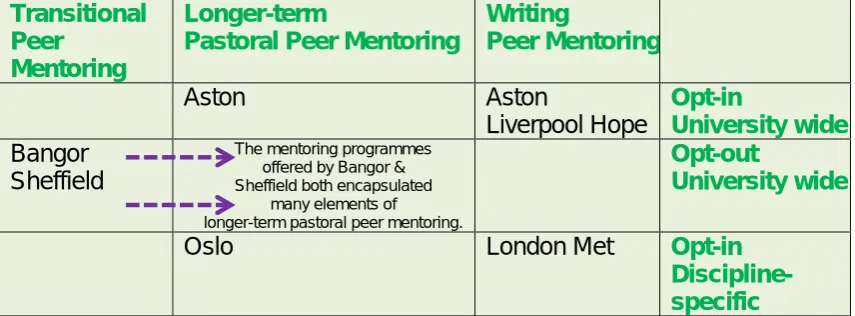
In total, at the beginning of the study five different approaches to peer mentoring were identified within the six HEI’s in the study. All of these fell within one or more of three categories:
1. Transitional university-wide opt-out peer mentoring: This initially involves
peer mentoring during ‘welcome’ or ‘freshers’ week. Second and final year students act as peer mentors to first years. Pairing of mentoring couples can be discipline-specific, or based on other demographic characteristics (age, gender, religion, language). Training is compulsory and comprises a single session. Support is given by a centrally appointed person and backed-up by individuals within each School or Faculty. In many cases the mentoring relationships continue into the first term and beyond. Peer mentors are unpaid.
2. Longer term university-wide opt-in pastoral peer mentoring: Peer
mentors and mentees are paired in the first few weeks of term. The aim of the programme is to offer on-going support throughout the first year. Pairing of mentoring couples is carefully done to optimise the chances of success. Training is compulsory and comprises two or three two hour-long sessions. Support is given by a centrally appointed team or individual . Peer mentors are unpaid.
3. Writing peer mentoring: Peer mentors are recruited and employed by the
university. Writing peer mentors receive in-depth initial and then on-going support. Writing mentoring can be offered on a university-wide or on a more
Jane Andrews and Robin Clark: Peer Mentoring Works! Page 26 local, school-wide basis. The focus of the relationship is writing. Peer mentors are paid.
Figure 3 below shows the approaches to peer mentoring in each of the HEIs identified at the beginning of the study for inclusion within the study.
Figure 3: Approaches to peer mentoring identified at the beginning of the
study.
Transitional Peer
Mentoring
Longer-term
Pastoral Peer Mentoring
Writing
Peer Mentoring
Aston Aston
Liverpool Hope
Opt-in
University wide
Bangor Sheffield
The mentoring programmes offered by Bangor & Sheffield both encapsulated
many elements of longer-term pastoral peer mentoring.
Opt-out
University wide
Oslo London Met Opt-in
Discipline-specific
It should be noted that within the HEIs included in the study an additional 8 other programmes to peer mentoring and peer tutoring were offered to the students. However, in order to assure the comparability of the data, and to maintain the internal validity of the sample (the need to compare like-with-like) it was decided to focus the study in the areas identified above.
3.4 The Research Approach
Jane Andrews and Robin Clark: Peer Mentoring Works! Page 27
phenomenon under study is not readily distinguishable from its context… [and there] exists a complex interaction between a phenomenon and its [ ] context
(Yin, 2003, p 4). Furthermore, the fact that each of the HEI’s in the study was set within its own … temporal, geographical, organisational, institutional and other contexts’ meant that boundariescould be drawn around each case which could then be conceptualised with reference to characteristics defined by individuals and groups involved; and they can be defined by participants’ roles
and functions… (Cohen et al, 2007, p 253).
Taking into account Yin’s (2003) description of the necessary criteria needed for multiple case-study research to be undertaken successfully the following commonalities were identified across all of the HEI’s involved in the study:
o Common Exemplar Phenomena (In all of the institutions the concept of students helping students succeed was central. For the purposes of the study it was decided to concentrate on pastoral peer mentoring and writing peer mentoring).
o Comparable organisational / institutional characteristics and features: All of the organisations in the study are Higher Education Institutions – with a shared emphasis on student support and success).
o Similar regulatory frameworks / constraints: The five UK HEI’s share similar regulatory frameworks; additionally all six HEI’s are governed by the Bologna Treaty.
o Shared objectives (KPIs / Outputs / Outcomes): All of the HEI’s award Bachelors, Master’s and PhD level Degrees. Additionally, as the study progressed the UK Institutions introduced Foundation Degrees.
o Shared Interests (policy / practice / purpose): All of the partners share an interest in student success. All of the HEI’s in the study are expected to meet externally driven targets and all are committed to enhancing student learning.
o Theoretical linkages: higher education theory links all HEI’s in the study.
Jane Andrews and Robin Clark: Peer Mentoring Works! Page 28 partners at the Institution’s concerned to make sure that the methodological tools were suitable for each mentoring environment.
The study began with a pilot survey. A survey tool was developed aimed at capturing the value of mentoring from the perspectives of the student peer mentors and mentees. Following a period of consultation amongst the partners it was decided not to differentiate between the different types of mentoring programmes offered by the institutions but instead to concentrate on the commonalities across each of the programmes. The pilot survey covered both academic and social issues and encapsulated four distinctive areas of university life: thoughts and anxieties before starting university: the social impact of participation in the mentoring programme: the academic impacts of participation in the mentoring programme: relationships and peer mentoring. It was conducted at all of the UK institutions participating in the Project and resulted in a total of 302 completed questionnaires – a response rate of just under 10%.
Following administration of the survey, the data was coded and exported to SPSS for analysis. All results were generated using SPSS and the percentages were rounded to one decimal point. Following the descriptive analysis, the statistical significance of the results was established using ANOVA (showing variance) and t-tests (showing statistical difference). The results of the pilot study are not given in this report but can be found at
http://www1.aston.ac.uk/eas/research/groups/eerg/
Jane Andrews and Robin Clark: Peer Mentoring Works! Page 29 The largest part of the project involved undertaking qualitative interviews and focus groups at all of the universities included in the study. Including writing peer mentors a total of 97 one-to-one and focus group interviews were conducted over a 9 month period. The interviews were recorded contemporaneously and then transcribed.
Undertaken during the same time period as interviews and focus groups, the fourth part of the project involved undertaking qualitative non-participant, overt observations of peer mentors activities during welcome week. An observational framework was developed and observations made at two of the partner institutions.
Following a grounded theory approach, the qualitative findings were analysed utilising simple and axial coding (Strauss & Corbin, 1998). Grounded theory provides a useful set of research strategies with which to undertake social investigation into education (Cummings, 1985). It proved particularly useful in this project as it allowed for the qualitative data analysis to commence once the first few interviews and process groups had been completed. Thus the analytical process involved a critical, comparison of the data that continued through to the end of the analysis.
The analysis was undertaken by the project leaders, who, initially working independently, undertook a micro-analysis of the data in which they each identified the main concepts and sub-concepts. Following this, and in order to assure internal validity and reliability of the findings, the two researchers analysed the data again working together as a team.
Jane Andrews and Robin Clark: Peer Mentoring Works! Page 30 using the data to develop knowledge about students’ experiences. In critiquing the relationships between themes, and subthemes, the researchers were able to identify similarities and differences between the dimensions and properties of the students’ perceptions. Having reached a mutual agreement in respect of the key emergent themes and sub-themes, selective coding was used to again re-analyse all the data by the researchers working in collaboration. This final stage of the analysis process involved an interpretation of the relationships and linkages between the concepts and sub-concepts.
By undertaking a constant comparative analysis of the data, the analysis process afforded the opportunity for the researchers to develop knowledge, grounded in data, about how peer mentoring impacts the student experience.
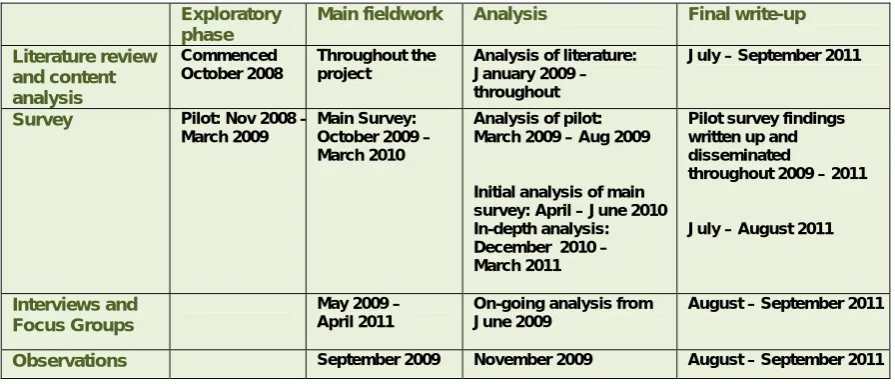
3.5 Research
Schedule
Figure 4: Activities and Schedule
Exploratory phase
Main fieldwork Analysis Final write-up
Literature review and content analysis Commenced October 2008 Throughout the project
Analysis of literature: January 2009 – throughout
July – September 2011
Survey Pilot: Nov 2008 – March 2009
Main Survey: October 2009 – March 2010
Analysis of pilot: March 2009 – Aug 2009
Initial analysis of main survey: April – June 2010 In-depth analysis: December 2010 – March 2011
Pilot survey findings written up and disseminated
throughout 2009 – 2011
July – August 2011
Interviews and Focus Groups
May 2009 – April 2011
On-going analysis from June 2009
August – September 2011
Observations September 2009 November 2009 August – September 2011
3.6 Ethical Issues
Jane Andrews and Robin Clark: Peer Mentoring Works! Page 32
Section 4: The Study Findings: Evidence from the
Surveys
4.1 Introduction
This section provides an overview of a comparative quantitative analysis of data obtained through surveys conducted by Aston, Bangor and Sheffield Universities. It comprises a descriptive analysis of the survey findings. Accompanying each question is a bar chart that depicts the combined responses in percentages from all three universities. On each graph, the Y axis represents the percentage of responses and the X axis represents the response itself, such as strongly disagree, disagree, no opinion etc. Where there were significant anomalies between each university, one graph for each institution’s responses has been displayed to demonstrate the differences between them.
4.2 Demographic Details
Figure 5: Response Rate (Mentors and Mentees)
Aston Bangor Sheffield Total
Response 50 248 76 374
Number in Sample 350 1,100 500 1,950
Response Rate 14.29% 22.6% 15.2% 19.2%
Jane Andrews and Robin Clark: Peer Mentoring Works! Page 33 mentoring for the role than their male counterparts (around 75% of the peer Mentors were female, 25% male). This is somewhat different to the gender distribution noted in recent wider studies of student peer mentoring in the UK which found that amongst student peer mentors, the gender division is relatively small with just under 56% of student peer mentors being female and just over 44% being male (Holdsworth, 2010).
- Ethnicity
Across all three universities, the majority of respondents (80%) define their ethnicity as being white. Aston University was by far the most diverse of the three institutions with 55% of the respondents being from British Black or Minority Ethnic backgrounds (the vast majority of these classified themselves as British Asians). At Sheffield 20% of students classified themselves as being from a BME background, with the largest group being of Chinese origin (7%). Conversely, almost all of Bangor University’s respondents defined themselves as White (93%), with Chinese students again making up the next largest ethnic group.
- Other Relevant Demographic Characteristics
Jane Andrews and Robin Clark: Peer Mentoring Works! Page 34
4.3 How Information About Peer Mentoring is Communicated:
Student Perspectives
There were similarities between Aston and Sheffield in how respondents found out about the peer mentoring / guiding programmes. At both universities, e-mail was the most successful method of promotion for the programme. This was followed by the Virtual Learning Environment at Aston and websites at Sheffield. In stark contrast to these two institutions, at Bangor the most effective methods of promotion were at fresher’s week, on open days, and in prospectuses.
4.4 The
‘Transition
Period’
At all three universities, the majority of students (just under 75%) agreed that they were anxious about making new friends before starting university. Figure 6 shows students responses to the statement ‘Before coming to university I was concerned about making friends…’
Figure 6: Students’ Concerns about Making Friends
The importance of the transition in shaping the student experience is discussed in the literature (see for example, Cropper, 2000; Pitkethly & Prosser, 2001;
Jane Andrews and Robin Clark: Peer Mentoring Works! Page 35 Sanchez et al., 2006) which identifies the first few days and weeks as being crucial in determining both student retention and student success. The majority of respondents indicated that in starting university they were mostly concerned about whether they would adjust to the social aspects of university life (in particular the majority were worried about ‘fitting in’ and ‘adjusting’).
Conversely, whilst the majority of students were worried about the non-academic aspects of university life, 70% were confident they had the ability to succeed in their chosen area of study. Figure 7 provides a graphical representation of student responses to the statement ‘I am confident that I have the ability to succeed in my chosen area of academic study’.
Figure 7: Students’ confidence in their ability to succeed academically
In addition to having confidence in their abilities to succeed academically, there was a considerable level of strong agreement when participants were surveyed about whether they were committed to completing their studies at university. This is shown below in Figure 8.
Jane Andrews and Robin Clark: Peer Mentoring Works! Page 36
Figure 8: Students Commitment to Completing their Studies
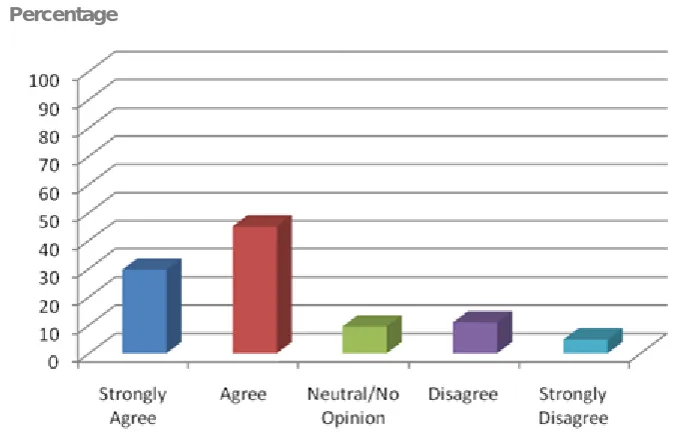
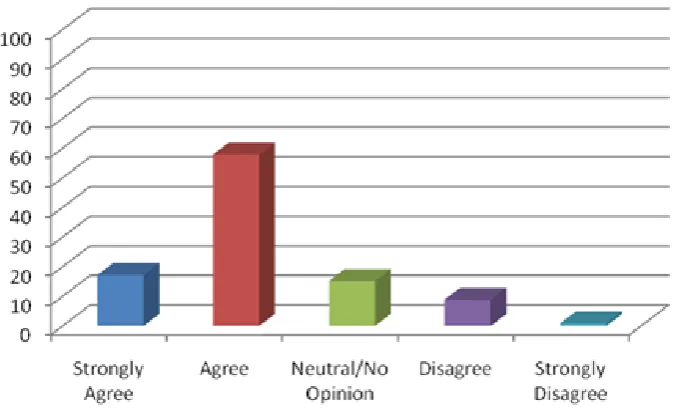
Taking the above research findings together, it is evident that the majority of new students are not concerned about the academic side of university at transition, but are in fact worried about whether they will settle in and make friends. One of the strengths of peer mentoring is that it engenders a sense of belonging right from the onset. Indeed, just under 75% of the students surveyed agreed that becoming involved in peer mentoring had helped them feel part of the university. This is depicted below in Figure 9.
Figure 9: Participation in peer mentoring Helped Me Feel Part of the
University
Percentage
Jane Andrews and Robin Clark: Peer Mentoring Works! Page 37 The study findings support previous work (see for example Jacobi, 1991; Pitkethly & Prosser, 2001; Fox and Stephenson, 2006) and show how important a sense of belonging is in making students feel part of the university.
In addition to providing the ideal mechanism by which new students are able to make friends and settle in, participation in peer mentoring enables new students to gain a good insight into what studying at university level will require. Such insights helps students’ better prepare for the demands of their course and reinforces individual’s commitment to completing their studies.
4.5 Following Transition – Term 1 and Beyond
Across the three universities, peer mentoring relationships continued well after fresher’s week and into the first term. At Aston this is indicative of the way in which the programme is managed – peer mentoring partnerships are established in the first few weeks of term and students are encouraged to develop a reciprocal relationship throughout the year. At Bangor and Sheffield although the emphasis is on the ‘transition period’ the vast majority of participants indicated that having made a ‘connection’ the peer mentoring relationship continued throughout the first term – often into the second term and beyond.
Jane Andrews and Robin Clark: Peer Mentoring Works! Page 38
Figure 10: Participation in Peer Mentoring Helped Me Make Better Use of
the Academic Opportunities Available at University
Further qualitative investigation (see section 4) suggests that peer mentoring supports students in making the most of academic opportunities by providing the ideal forum in which they can learn from each other’s experiences with regards to all aspects of their university experience.
In addition to providing the means by which students can make the most of academic opportunities, the survey revealed that participation in peer mentoring encourages new students to make the most of the support offered by student services. This is shown below in Figure 11.
Jane Andrews and Robin Clark: Peer Mentoring Works! Page 39
Figure 11: Participation in Peer Mentoring Helped Me Make the Most of the
Support Offered By Student Services
Irrespective of area of study or social-demographic background it is widely acknowledged that communication skills are crucial to student success.
The nature of peer mentoring means that it is built upon reciprocal communication between the mentee and mentor. Indeed the majority of both mentees and mentors agreed that peer mentoring helped them improve and develop their communication skills as is shown overleaf in Figure 12.
Figure 12: Participation in Peer Mentoring Helped me Develop my
Communication Skills
Percentage
Jane Andrews and Robin Clark: Peer Mentoring Works! Page 40 Whilst transitional / pastoral peer mentoring are not academically focused, for the majority of students, participation in peer mentoring proved to be a positive learning experience as depicted in Figure 13.
Figure 13: Participation in Peer Mentoring Has Been a Positive Learning
Experience
Critical to successful peer mentoring relationships is the fact that they are reciprocal in nature. Such reciprocity entails both parties being responsive to each other’s needs. Figure 14 shows the importance placed on responsiveness to individual needs.
Jane Andrews and Robin Clark: Peer Mentoring Works! Page 41
Figure 14: Participation in Peer Mentoring Has Met My Individual Needs
In order to identify how peer mentoring meets individual needs a series of questions were developed to look at the issues a little deeper. These focused on the nature of the relationship between mentor and mentee.
Peer mentoring differs from traditional mentoring because it is centred upon a relationship between ‘equals’, thereby alleviating the issues around hierarchy that might be experienced in a traditional mentoring relationship.
One of the ways in which peer mentoring meets individual student needs is to afford the opportunity for students to work on a one-to-one basis in a semi-formal and supported manner. Figure 15 shows the importance of developing one-to-one relationships in peer mentoring.
Jane Andrews and Robin Clark: Peer Mentoring Works! Page 42
Figure 15: The Opportunity to Develop a One-to-One Relationship is an
Important Part of Peer Mentoring
Associated with the opportunity to build one-to-one relationships, is the way in which students relate to each other during mentoring sessions. Figure 15 shows that just under 75% of the students agreed or strongly agreed that they were able to relate to their mentor or mentee. This is depicted below in Figure 16.
Figure 16: During Mentoring Sessions I Felt Able to Relate to My Peer
(Mentor / Mentee)
Percentage
Jane Andrews and Robin Clark: Peer Mentoring Works! Page 44
Section 5: In the Students’ Own Words
Using the students’ own words, this chapter provides a unique insight into how and why transitional and longer-term pastoral peer mentoring ‘works’ in enhancing the student experience and, in doing so, promotes success.
In total 61 students, of whom 29 were peer mentees and 32 peer mentors, were interviewed in four different HEIs. In each Institution the peer mentoring Programme differed slightly in the way that mentoring was managed and administered. The below table provides details of the programmes included within the study in each Higher Education Institution3.
Figure 14: A Comparative Table of Four Mentoring Programmes
Aston University
University wide pastoral peer mentoring [non-discipline specific]
- Voluntary participation: Both mentors and mentees ‘Opt In’
- Peer mentors and mentees paired together in the first few weeks of term
- All mentoring relationships are one-to-one – most students select to have a mentor from their own area of study.
- Programme lasts for the duration of the first year
- Programme covers all academic years.
Oslo and Akershus University College Recently established pastoral peer mentoring in one Faculty [Pre-School Education]
- Voluntary participation: Both mentors and mentees ‘Opt in’
- Targeted ostensibly at students from a ‘non-traditional’ or ‘minority’ background
- Most mentoring relationships are one-to-one although some are two-mentees to one mentor.
- Programme lasts for the duration of the first year
Bangor University
Pastoral peer mentoring across the whole University – ‘Opt-Out’ Programme
- All first year students allocated a ‘Peer Guide’ on their first day
- One peer Guide takes responsibility for a small group of students
- Peer guiding tends to be ‘Faculty Based’
- Peer guides welcome students as they move into their accommodation – providing a friendly face and an instant link with the University
- Peer mentoring relationships often
continue beyond the first few weeks of term into the first few months and beyond
- Welsh-speaking mentors available
Sheffield University
Pastoral peer mentoring across the much of the University – ‘Opt-Out’ Programme
- All first year students allocated a ‘peer guide’ on their first day
- The aim of the programme is to provide mentors for the whole of the 1st year.
- Some targeting of ‘non-traditional’, ‘minority’ and ‘at risk’ students for longer term
mentoring programmes.
- One peer guide takes responsibility for a small group of students.
- Peer guiding tends to be ‘Faculty Based’
- Peer relationships often continue beyond the first few weeks of term into the first few months and beyond
3
Jane Andrews and Robin Clark: Peer Mentoring Works! Page 45 In undertaking the interviews, and writing-up the findings, the need for the research team to guarantee institutional and individual confidentiality was paramount. Thus all of the quotes in this report are anonymised in terms of institutional and individual details. The types of mentoring programme analysed were purposively selected so as to elicit comparable data. Thus, the interview questions were written in such a way so as to be applicable to both types of mentoring, and the same interview guide was used for all participants – irrespective of institution.
This section shows that peer mentoring works in four distinctive areas: Transition: Academic support: On-going support, and: Benefits for peer mentors alone. In addition to highlighting the benefits of peer mentoring, the final part of the section looks at the challenges.
5.1 Tackling the Trials and Tribulations of Transition
Relating to the first few days and weeks of the first term, the period of transition can potentially be one of the most challenging experiences a new university student has to face. Almost all of those interviewed described their main concerns about starting university as being related to whether they would fit in and make friends.
The ‘fear’ experienced by students manifest by worries about making friends was raised by the majority of interviewees with one student describing succinctly how it felt to make the transition to university:
Anyone that says they’re not scared is lying because there is that fear.
Everyone has those giant fears of am I going to be liked, am I going to
make friends, how am I going to feel living away from home… … you
Jane Andrews and Robin Clark: Peer Mentoring Works! Page 46 The first few weeks can be difficult for all students; even the more mature students can feel intimidated and somewhat isolated:
In the first few days for me it was feeling out of it… I felt even more
intimidated because being a mature student, I am forty odd and
they are all so young… they were all in groups and groups...
[2nd Year: UK ‘Mature’ Student: Female: Mentor]
Fears of isolation and of not fitting in were not uncommon; indeed, for the majority of those interviewed such fears were the main area of concern irrespective of nationality, age or gender. As such they were expressed over and over again:
As an international student I was thinking to myself … … am I going to
make new friends, am I going to cope, am I going to settle there?.
[1st Year: International Student: Female : Mentee].
I was worried about like getting on with other people and fitting in… …
I wasn’t worried about the work or anything, it was just fitting in.
[2nd Year: UK Student: Female: Mentor]
The main concern in my first year was just that I was going to form
some good relationships with friends - the course didn’t come into it.
[2nd Year: UK Mature Student: Male: Mentor]
Transitional peer mentoring works because it provides new students with a key person who befriends them and makes them feel welcome right from day one of the new term giving them the confidence to succeed:
Peer guiding gives people a friend before they arrive at uni, because like
I was talking to my peer guide the summer before I came, so when I got
to uni, it’s like yeah, I know someone and like they’ll help me meet the
other people.
Jane Andrews and Robin Clark: Peer Mentoring Works! Page 47
It gave me the confidence to talk to other people, because I’d had that
first conversation with my peer guide, so it made me feel like I could
do it.
[1st Year: UK Student: Female: Mentee]
… you’re given a friend on the first day… … your peer guide is given
to you, and they’re trained to get on with you and put lots of effort into
getting on with you. And if you don’t you can change peer guide, but
ultimately you’re given somebody who is going to be your friend in those
first few days.
[1st Year: UK Student: Male: Mentee]
For many of the students interviewed, transitional mentoring tended not only to focus on the first two weeks in term, but, having built a strong relationship, continued into the first year becoming more akin to longer-term pastoral mentoring as time went on. Longer-term pastoral mentoring captures those students, who having made it through the first week, then experience difficulties in settling down on their course:
… in the first few weeks you don’t have friends on your course.
Your mentor is someone to talk with, you feel relaxed actually.
You can share with someone. It’s not only mentoring. It’s friendship. [1st Year: UK Student: Male: Mentee]
I think it helps more people to stay in university and not drop out because
they don’t feel as lonely when they first arrive… They’ve always got
someone to text or to talk to……
[1st Year: UK Student: Female: Mentee]