G. Vijaya Kumar et al. J Sci Res Pharm, 2018;7(7):79-83
World Inventia Publishers
J
ournal of
S
cientific
R
esearch in
P
harmacy
http://www.jsrponline.com/
Vol. 7, Issue 7, 2018 ISSN: 2277-9469
USA CODEN: JSRPCJResearch Article
EVALUATION OF ANTIDEPRESSANT ACTIVITY OF MIMOSA PUDICA IN EXPERIMENTAL MICE
Gampa Vijaya Kumar 1 *, Dr. Y. Sridhar 2, A. Mounika 3
* 1 Professor and Head, Dept. of Pharmacy, KGR Institute of Technology and Management, Rampally, Kesara, Rangareddy, Telangana, INDIA.
2 Professor, KGR Institute of Technology and Management, Rampally, Kesara, Rangareddy, Telangana, INDIA.
3 KGR Institute of Technology and Management, Rampally, Kesara, Rangareddy, Telangana, INDIA.
Received on: 21-06-2018; Revised and Accepted on: 23-07-2018
ABSTRACT
D
epression is the most common of the affective disorders (disorders of mood rather than disturbances of thought or cognition); it may rangefrom a very mild condition, bordering on normality, to severe (psychotic) depression accompanied by hallucinations and delusions. There are two types and they are Unipolar and Bipolar. The pharmacological evidence does not enable a clear distinction to be drawn between the noradrenaline and 5-HT theories of depression. Clinically, it seems that inhibitors of noradrenaline reuptake and of 5-HT reuptake are equally effective as antidepressants though individual patients may respond better to one or the other. Drugs that inhibit 5-HT uptake (termed SSRI) include fluoxetine, fluvoxamine, paroxetine, citalopram and sertraline. Fluoxetine is currently the most prescribed antidepressant. As well as showing selectivity with respect to 5-HT over noradrenaline uptake, they are less likely than TCA to cause anticholinergic side-effects and are less dangerous in overdose. In contrast to MAOI (see below), they do not cause 'cheese reactions'. They are as effective as TCA and MAOI in treating depression of moderate degree but probably less effective than TCA in treating severe depression. Mimosa pudica L. (Mimosaceae) also referred to as touch me not, live and die, shame plant and humble plant is a prostrate or semi-erect subshrub of tropical America and Australia, also found in India heavily armed with recurved thorns and having sensitive soft grey green leaflets that fold and droop at night or when touched and cooled. These unique bending movements have earned it a status of ‘curiosity plant’. It appears to be a promising herbal candidate to undergo further exploration as evident from its pharmacological profile. It majorly possesses antibacterial, antivenom, antifertility, anticonvulsant, antidepressant, aphrodisiac, and various other pharmacological activities. The herb has been used traditionally for ages, in the treatment of urogenital disorders, piles, dysentery, sinus, and also applied on wounds. This work is an attempt to explore and compile the different pharmacognostic aspects of the action plant M. pudica reported till date.
KEYWORDS: Mimosa Pudica, Antidepressant Activity, 5-HT, etc.
INTRODUCTION
D
epression is the most common of the affective disorders(disorders of mood rather than disturbances of thought or cognition); it may range from a very mild condition, bordering on normality, to severe (psychotic) depression accompanied by hallucinations and delusions.
There are two types and they are Unipolar and Bipolar [1-4].
Unipolar depression is commonly (about 75% of cases) non-familial, clearly associated with stressful life-events and accompanied by symptoms of anxiety and agitation; this type is sometimes termed reactive depression. Other patients (about 25%, sometimes termed endogenous depression) show a familial pattern, unrelated to external
stresses, and with a somewhat different symptomatology [2]. This
distinction is made clinically, but there is little evidence that antidepressant drugs show significant selectivity between these conditions [5, 6].
Bipolar depression, which usually appears in early adult life, is less common and results in oscillating depression and mania over a
*Corresponding author:
Dr. Gampa Vijaya Kumar,
Professor and Head, Dept. of Pharmacy,
KGR Institute of Technology and Management, Rampally, Kesara, Rangareddy, Telangana, India
* E-Mail: [email protected]
DOI:https://doi.org/10.5281/zenodo.1326512
period of a few weeks. There is a strong hereditary tendency, but no specific gene or genes have been identified either by genetic linkage studies of affected families, or by comparison of affected and non-affected individuals [7-9].
Depression is one of several disorders affecting mood, along with mania, hypomania, and bipolar disorders. The present chapter focuses on behavioral assessment of antidepressant action in animals with a focus on simple tests performed in rodents. Many of the primary symptoms of depression (depressed mood, low self-esteem, guilt, difficulty in concentration, suicidal ideation, thoughts of death) are by their nature difficult to model in animals. This problem is further confounded by their unknown etiology. Several theories have been proposed but most theories of depression concur in suggesting that stressful life events play an important role. There is also a small genetic component, as demonstrated by substantially increased risk in families with heritability being estimated at between 40% and 70%, leading to a much greater incidence than observed in the general population, which is nevertheless very high at around 10% [10, 11].
MATERIALS AND METHODS
Drugs and Chemicals:
Thiobarbituric acid and DTNB reagent (HiMedia Laboratories Ltd., Mumbai), Trichloroacetic acid (Qualigens Fine Chemicals, Mumbai), Riboflavin (Astra IDL, Bangalore), Sodium dihydrogen phosphate and Disodium hydrogen phosphate (S.D. Fine Chemicals, Mumbai),
Lorazepam (Ranbaxy, India), 1,1,3,3,-Tetraethoxy propane,
O-Dianisidine, Imipramine hydrochloride, 5-Hydroxy Tryptophan (5-HTP),
Clonidine and L-DOPA (Sigma, St. Louis, USA) were used in the study. The other chemicals and solvents used were of analytical grade and
purchased from commercial suppliers. Imipramine (IMP), 5-HTP,
clonidine, L-DOPA, Lorazepam was administered intraperitoneally by dissolving in normal saline.
Methods:
Collection and Authentification of Plant Material:
The Aerial Parts of Mimosa Pudica were collected and
authenticated.
Extraction of Plant Material:
The plant is grinded in to a coarse powder with the help of suitable grinder.
Cold Extraction (Methanol Extraction): [13]
In this work the cold extraction process was done with the help of ethanol. About 200gms of powdered material was taken in a clean, flat bottomed glass container and soaked in 750 ml of ethanol. The container with its contents were sealed and kept for period of 7 days accompanied by continuous shaking with the shaker. The whole mixture then went under a coarse filtration by a piece of a clean, white cotton wool.
Evaporation of Solvent: The filtrates (methanol extract) obtained were evaporated using Rotary evaporator in a porcelain dish. They rendered a gummy concentrate of greenish black. The extract was kept in vaccum dissecator for 7 days.
Preliminary Phytochemical Screening: Preliminary phytochemical
screening of the Mimosa Pudica extract was carried out for the analysis
of Alkaloids, Carbohydrates, Tannins, Saponins, Steroids, Phenols,
Flavonoids. as per the standard methods [14].
Animals:
Healthy Adult Male rats of 5 weeks old with Average weight in the range of 40-60gms were selected. Animals are housed 4 per cage
in temperature controlled (27 0C ±3 0c) room with light/dark cycle in a
ratio of 12:12 hrs is to be maintained. The Animals are allowed to acclimatize to the environment for seven days and are supplied with a
standard diet and water ad libitum. The prior permission was sought
from the Institutional Animal Ethics Committee (IAEC) for conducting the study.
Acute toxicity studies: [15]
Acute toxicity studies will be performed for ethanolic extract according to the acute toxic classic method as per OECD guidelines. Male mice were used for acute toxicity study. The animals were kept fasting for overnight providing only water, after which the extract will be administered orally at the dose of 300mg/kg and observed for 14 days. If mortality was observed in two animals out of three animals, then the dose administered was assigned as toxic dose. If the mortality was observed in one animal, then the same dose was repeated to confirm the toxic dose. If mortality was not observed, the procedure was repeated for further higher doses such 50,200 & 2000mg/kg body weight. The animals were observed for toxic symptoms for 72 h.
1. Forced swimming test (FST):
Procedure:The procedure was described by Porsolt et al. (1978) was used. Swimming sessions were conducted by placing rats in individual glass cylinders (45 cm high×20 cm in diameter) containing (25±2 °C) water 38 cm deep, so rats could not support themselves by touching the bottom with their feet. Two swimming sessions were performed between 12:00 h and 19:00 h, an initial 15 min pretest followed 24 h later by a 6 min test.
Doses were given once daily for 7 days. On the 7th day rats
were subjected to 15 min pretest. After 15 min, in the water the rats were removed and allowed to dry in a heated enclosure (32 °C) before being returned to their home cages. They were again placed in the cylinder 24 h later and the total duration of immobility was measured during a 6 min test. Floating behavior during this 6 min period had been found to be reproducible in different groups of rats. An animal was judged to be immobile whenever it remains floating passively in the water in a slightly hunched but upright position, its nose just above the surface. The total immobility time for the period of 6 min was recorded with the help of stopwatch.
2. Tail suspension test (TST):
Principle: The “tail suspension test” has been described by Steru et al. (1985) as a facile means of evaluating potential antidepressants. The immobility displayed by rodents when subjected to an unavoidable and inescapable stress has been hypothesized to reflect behavioral despair which in turn may reflect depressive disorders in humans. Clinically effective antidepressants reduce the immobility that rats display after active and unsuccessful attempts to escape when suspended by the tail.
Doses are given once daily for 7 days. On the 7th day, 1hr after
the administration of the test and standard drugs, rats were suspended on the edge of a table 50 cm above the floor by the adhesive tape placed approximately 1 cm from the tip of the tail. Immobility time was
recorded during a 6 min period.29Animal was considered to be immobile
when it did not show any movement of body and hanged passively.
3. 5-HTP induced head twitches in rats:
Principle: According to the monoamine hypothesis of depression compounds exert antidepressant activity because they are capable of enhancing central noradrenergic and/or serotoninergic functions. Several antidepressant agents potentiate serotonin effects by a block of the re-uptake of serotonin. DL-5-Hydroxytryptophan is used as the precursor of serotonin. Enzymatic breakdown is inhibited by the MAO-inhibitor pargyline. In rats the characteristic symptom of head twitches is observed.
Doses were given once daily for 7 days. On the 7th day, 1hr
after the administration of the test and standard drugs, rats were treated with 5-HTP (100 mg/kg i.p.) and the numbers of head twitches performed by each rats was counted by staggering method using three 2 min periods (19–21 min), (23–25 min), (27– 29 min) after 5-HTP administration and number of head twitches were scored live by a blind observer.
4. Clonidine-induced aggression in rats:
The method of Morpurgo (1968) was used. Rats were divided into 5 groups of 8 each (n=8), each group contain 4 pairs of rats, two pairs from each sex (each pair contained same sex of rats).
Doses were given once daily for 7 days. On the 7th day,
Clonidine was given 1 h after the administration of the test and standard drugs. The animals were then caged in bell shaped glass jar with a floor
area of approximate 16 cm2. The biting/fighting episodes were recorded
live by a blind observer over a period of 30 min, in each pair.
5. L-DOPA induced hyper activity and aggressive behavior in rats (LHA):
Rats were treated with L-DOPA (100 mg/kg i.p.) and the experiment was performed according to the method of. Rats were divided into 5 groups of 8 each (n=8), each group contain 4 pairs of rats, two pairs from each sex (each pair contained same sex of rats).
Doses were given once daily for 7 days. On the 7th day,
L-DOPA was given 1 h after the administration of the test and standard drugs, Stages of activity and aggressive behavior were recorded live every 10 min for 30 min after L-DOPA administration by the blind observer. The different parameters of observation were piloerection, salivation, increase in motor activity, irritability, reactivity, jumping squeaking, and aggressive fighting. The scores were graded in the following manner:
Statistical Analysis:
Results were expressed as mean ± S.E.M. Statistical analysis was performed using one-way analysis of variance (ANOVA). If the overall P-value was found statistically significant (P < 0.05)
RESULTS AND DISCUSSION
%
Yield value of Ethanolic Extract from Aerial Parts ofmimosa pudica was found to be 26.1%
Preliminary Phytochemical Screening:
Investigation revealed the presence of steroid, Alkaloid,
saponins, Tannins, phenols & Flavonoid in Ethanolic Extract of mimosa
pudica.
Acute toxicity studies:
As per (OECD) draft guidelines 423 Female albino rats were
administered mimosa pudica and doses was be selected in the sequence
(1.75- 5000) using the default dose progression factor, for the purpose of toxicity study. Animals are observed individually at least once during the first 30 minutes after dosing, periodically during the first 24 hours and daily thereafter, for a total of 14 days,. In all the cases, no death was observed within 14 days. Attention was also given to observation of tremors and convulsions, salivation, diarrhoea, lethargy, sleep and
coma. Overall results suggested the LD50 value as 2000 mg/kg. Hence
therapeutic dose was calculated as 1/10th and 1/20th i.e. 100mg/kg and
200 mg/kg of the lethal dose for the purpose anti-depressant investigations.
1. Forced Swim Test (FST):
The results (Table. 1) showed that both MP (100, 200 and 400
mg/kg, p.o.) and imipramine (15 mg/kg, i.p.) significantly decreased the duration of immobility time in a dose dependent manner in FST model.
Post-hoc analysis showed that the MP (100, 200 and 400 mg/kg) and
Imipramine (IMP) treated groups were significantly different (p<0.001) from the vehicle treated group (Fig. 1).
2) Tail Suspension Test (TST):
The results (Fig. 2) showed that both MP (100, 200, 400
mg/kg, p.o.) and imipramine (15 mg/kg, i.p.) significantly decreased the duration of immobility time in a dose dependent manner in TST model.
Post-hoc analysis showed that the MP (100, 200 and 400 mg/kg) and
IMP treated groups were significantly different (p<0.001) from the vehicle treated group.
3) 5-HTP induced head twitches in rats:
Fig. 3 illustrates the effect of MP and IMP on 5-HTP-induced
head twitches in rats. Post-hoc analysis revealed that three doses of AC
(100, 200 and 400 mg/kg, p<0.01, p<0.001) significantly increased the 5-HTP-induced head twitches in comparison to control group. Further, the dose of 400 mg/kg was more effective than 100, 200 mg/kg. Similarly, IMP treated group showed significant increase (p<0.001) in the 5-HTP-induced head twitches compared to control. However, the
effect of 400 mg/kg of MP was significantly higher than IMP (p<0.001).
4) L-DOPA induced hyperactivity and aggressive behavior in rats:
The effect of MP and lorazepam on L-DOPA-induced
hyperactivity and aggressive behavior is shown in Table 4. Post-hoc
analysis revealed that three doses of MP (100, 200 and 400 mg/kg,
p<0.001) significantly increased the L-DOPA-induced hyperactivity and aggressive behavior (LHA) in comparison to control group (Fig. 4).
5) Clonidine induced aggression in rats:
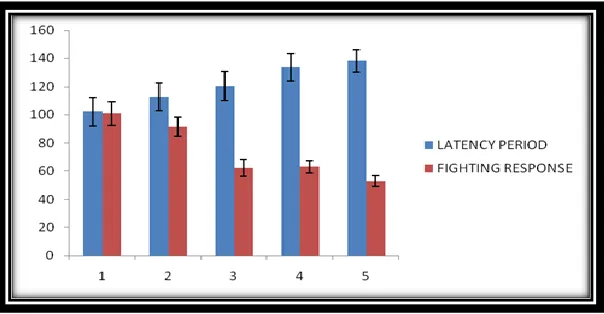
Fig. 5 indicates the effect of MP (100, 200 and 400 mg/kg, p.o.) and lorazepam (LA; 2.5 mg/kg) on the latency to first attack and the number of bouts in the clonidine induced aggressive behavior in
rats. Post-hoc analysis showed that MP (p<0.001) significantly increased
the latency to first attack and decrease the no. of bouts compared to control.
Fig. 1: Effect of MP (100, 200 and 400 mg/kg, p.o.) and Imipramine (IMP; 15 mg/kg) on forced swim test (FST) in rats. Each column represents mean ± S.E.M. of immobility period (sec), n = 6. *= p<0.001 compared to control
Fig. 3: Effect of MP (100, 200 and 400 mg/kg, p.o.) and Imipramine (IMP; 15 mg/kg) on 5-HTP-induced head twitches in rats. Each column represents mean ± S.E.M. of number of head twitches, n = 6. a = p<0.01, b = p<0.001, compared to control
Fig. 4: Effect of MP (100, 200 and 400 mg/kg, p.o.) and Lorazepam (2.5 mg/kg) on L-DOPA-induced hyperactivity and aggressive behavior in rats. Each column represents mean ± S.E.M. of number of head twitches, n = 6. a = p<0.001, compared to control
Fig. 5: Effect of MP (100, 200 and 400 mg/kg, p.o.) and Lorazepam (2.5 mg/kg) on clonidine induced aggression in rats. Each column represents mean ± S.E.M, n = 6. a = p<0.01, b = p<0.001 compared to control
CONCLUSION
T
he results from the present study confirm the antidepressant activity of M. Pudica, since it reduced the immobility in both FST and TST. In the present study, M. Pudicasignificantly increased the frequency of 5-HTP induced head twitches, Clonidine induced aggression and L-DOPA induced hyperactivity and aggressive behavior indicating its enhanced activity on serotonergic, noradrenergic and dopaminergic pathways respectively. Our results also confirm the involvement of serotonergic, noradrenergic and dopaminergic pathways in depression. Pretreatment with M. Pudica, also significantly increased the levels of SOD and Catalase with simultaneous decrease in LPO levelsin rat brain, suggesting its strong antioxidant activity. Since oxidative stress is reported to play an important role in depression, the antioxidant activity of M. Pudicamight be a part of the mechanism for its antidepressant activity. Results from behavioral experiments indicate that the antidepressant activity of M. Pudica, might be due to the facilitatory effect on serotonergic, noradrenergic and dopaminergic systems apart from the antioxidant activity.
REFERENCES:
1. Anderson IM. SSRIs versus tricyclic antidepressants in
depressed inpatients: a metaanalysis of efficacy and tolerability.
2. Manji HK, Drevets WC, Charney DS. The cellular neurobiology of
depression. Nat Med 2001;7:541-547
3. Miller HL, Delgado PL, Salomon RM, Berman R, Krystal JH,
Heninger GR, Charney DS. Clinical and biochemical effects of catecholamine depletion on antidepressant-induced remission
of depression. Arch Gen Psychi 1996a;53:117-128.
4. D'Aquila PS, Collu M, Gessa GL, Serra G. The role of dopamine in
the mechanism of action of antidepressant drugs. Eur J
Pharmacol2000;405(1–3):365–73.
5. Anguelova M, Benkelfat C, Turecki G. A systematic review of
association studies investigating genes coding for serotonin
receptors and the serotonin transporter: I. Affective disorders.
Mol Psychi2003a;8:574–91.
6. Esplugues JV. NO as a signalling molecule in the nervous system.
Brit J Pharmacol2002;135:1079–1095.
7. Hayley S, Poulter MO, Merali Z, Anisman H. The pathogenesis of
clinical depression: stressor- and cytokine-induced alterations
of neuroplasticity. Neurosci2005;135:659-78.
8. Cryan JF, Mombereau C, Vassout A. The tail suspension test as a
model for assessing antidepressant activity: review of
pharmacological and genetic studies in mice. Neurosci Biobehav
Rev 2005;29:571.
9. Borsini F, Meli A. Is the forced swimming test a suitable model
for revealing antidepressant activity? Psychopharmacol (Berl)
1988;94(2):147–160.
10. Butterweck V, Christoffel V, Nahrstedt A, Petereit F, Spengler B,
Winterhoff H. Step by step removal of hyperforin and hypericin: activity profile of different hypericum preparations in
behavioral models. Life Sci2003;73:627–639.
11. Ozan Ruhoglu, Zuhal Özdemir, Ünsal Çalis, Bülent Gümüsel and
Abdullah ltan Bilgin. Synthesis of and Pharmacological Studies on the Antidepressant and Anticonvulsant Activities of Some
1,3,5-trisubstituted pyrazolines. Arzneim Forsch / Drug Res
2005;55(8):431-6.
12. Bhattacharya SK, Bhattacharya A, Sairam K, Ghosal S.
Anxiolytic-antidepressant activity of Withania Somnifera
Glycowithanolides: an experimental study. Phytomed
2000;7:463-9.
13. Chatterjee SS, Bhattacharya K, Wonnemann M, Singer A, Müller
W E. Hyperforin as a possible antidepressant component of
Hypericum extracts, Life Sci1998;65:2395-2405.
14. Santosh P, Venugopl R, Nilakasha S, Kunjbiharis, Dr. Mangala.
Antidepressant activity ofmethanolic extract of PassifloraFoetida
leaves in mice. Int J Pharm Pharm Sci2011;3(1):112-115.
15. Machado DG, Bettio LEB, Cunha MP, Capra JC, Dalmarco JB,
Pizzolatti MG, et al. Antidepressant-like effect of the extract of Rosmarinus Officinalis in mice: involvement of the
monoaminergic system. ProgNeuropsychopharmacol Biol Psychi
2009;33:642-50.
How to cite this article:
G. Vijaya Kumar et al. EVALUATION OF ANTIDEPRESSANT ACTIVITY OF MIMOSA PUDICA IN EXPERIMENTAL MICE. J Sci Res
Pharm 2018;7(7):79-83.DOI:https://doi.org/10.5281/zenodo.1326512
Conflict of interest: The authors have declared that no conflict of interest exists.