Simulation of Planar Micro Coil Design for
MEMS Bladder Pressure Sensor
Norliana Yusof1,4, Badariah Bais2∗, Norhayati Soin3, Jumril Yunas1 and Burhanuddin Yeop Majlis1
1Institute of Microengineering and Nanoelectronics (IMEN), Universiti Kebangsaan Malaysia,
43600, Bangi, Selangor, Malaysia
2Centre of Advanced Electronic and Communication Engineering (PAKET),
Faculty of Engineering and Built Environment, Universiti Kebangsaan Malaysia,
43600, Bangi, Selangor, Malaysia
3Department of Electrical Engineering, Faculty of Engineering, University of Malaya,
50603,Kuala Lumpur,Malaysia
4Faculty of Innovative Design and Technology, Universiti Sultan Zainal Abidin,
Gong Badak Campus, 21300 Kuala Terengganu, Malaysia
This paper presents a study of a copper-based planar micro inductor. The objective of this study is to investigate the performance of square planar micro coil which to be integrated with MEMS capacitive bladder pressure sensor. The micro coil structure was designed and simulated by using Computer Simulation Technology (CST) software. The investigation of the quality factor (Q -Factor), inductance and resistance of the coil was analyzed prior to the optimal geometrical dimensions. After considering the fabrication constraints, the optimal geometrical dimension of the micro coil was analyzed, and the parameters were chosen with width = 50 µm, gap = 50 µm, thickness = 3 µm, number of turns = 25 and inner diameter= 1000 µm. The Q-Factor, inductance and resistance value of micro coil were obtained at 69.2, 2.2 µH and 10 Ω, respectively at a 50 MHz operating frequency.
Keywords: square micro coil, quality factor, MEMS bladder pressure sensor
I. INTRODUCTION
In recent years, the demands for monolithic planar micromachined inductors have been greatly increased due to the rapid growth of wireless MEMS biomedical applications. The MHz range of frequency operation allows the reduction of the inductor size (Zhai et al., 2010). For in-vivo wireless measurements, the suitable and safe operating frequency is in the range of 10-100 MHz (Luo et.al, 2014). In term of size, the monolithic inductor should be designed with less than the diameter of a human intra-urethral catheter which is in the range of 7-8 mm (Alan Wein et. al, 2015). This is to make the catheterization process less painful and to provide a non-surgical option by inserting the sensor into the bladder.
In an LC resonant sensor, Q-factor is an important parameter as it measures energy transmission efficiency of the wireless system (Huang et. al, 2016).
High Q-factor is required as it will give better efficiency in energy transmission. The equation of Q-factor is given in Eq.1 where Ls and Rs are self-inductance and resistance of the coil, respectively.
(1) The equation used to calculate the inductance are given by Eq. 2. (Neagu, 1998) (M Nabipoor & B Y Majlis, 2006)
(2)
In which µ is the relative permeability of air, s is the distance between two wires, N is the number of turns and w is the width of the coil. The inductance value can be calculated associated with capacitance changes value of the pressure sensor. This gives changes in resonant frequency as shown in Eq.3:
(3)
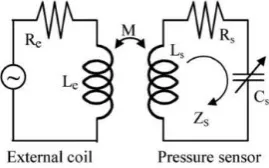
Fig.1 illustrates the circuit model of an LC pressure sensor. The sensor is modelled using an inductor, Ls, a series resistance of the inductor, Rs and a variable capacitor, Cs.
Fig. 1. Circuit model for LC pressure sensor (Huang et al., 2016)
II. MATERIALS AND
METHOD
The Computer Simulation Technology (CST) software was applied to simulate the square planar micro coil. With the use of CST, the inductor parameters; Q-Factor, inductance and resistance values were analysed. The simulation setting for the finite element analysis is shown in Table 1. In this study, copper is a chosen material for the inductor due to its high conductivity. The 7740 glass substrate is used to decrease the parallel parasitic capacitance of the inductor (Zheng et al., 2016). Fig.2 shows the square micro coil design using CST software. Table 2 represents the value for the geometrical parameter of the planar coil. In this study, the geometrical parameters design (width, gap, thickness, number of turns and inner diameter) is investigated to achieve high Q-Factor for wireless bladder pressure detection application.
Table 1. The parameters setting for the finite element analysis
Table 2. Parameter value of square planar micro coil
III. RESULTS AND
DISCUSSION
A. Geometrical Parameter Analysis
of Micro Coil
The Q-Factor and the outer diameter of the micro coil were analysed due to the changes of coil geometry as shown in Table 2. The Q-Factor value was analysed prior to the changes of the number of turns as presented in Fig.3. From Fig.3, the Q-Factor was increased as the number of turns increased. This due to the increasing of inductance value which makes the increment in Q-Factor (Yunas et.al, 2010). The Q-Factor increases rapidly at low frequency region compared to the high frequency region. This is due to the skin effect phenomenon. The skin effect causes the effective resistance of the conductor to increase at higher frequencies where the skin depth is smaller, thus reducing the effective cross-section of the conductor (Akar et.al, 2001). Increasing the winding numbers would also increase the Q-Factor, however, it leads to a bigger size of the micro coil. The outer diameter of the coil should be at least 6 mm to enable it to be integrated with MEMS bladder pressure sensor application. Fig. 4 shows the plotted graph of the number of turns versus the outer diameter of the coil. From Fig. 4, the outer diameter of the coil is compensated at 25.5 number of turns and this gives the outer diameter approximately 6000 µm.
Parameter Value
Resistivity, ρ 1.72 x 10 -8Ω.m Young Modulus, E 120 kN/mm2 Poisson’s Ratio, ѵ 0.33 Port Reference Impedance, Z 50 Ω
Parameter Value
Width 50 µm
Gap 50 µm
Thickness 3 µm Number of turns 15,20,25,30 Inner Diameter 1000 µm s
s
Figure 3. Q-Factor of the micro coil versus frequency with various number of turns
Figure 4. Number of turns versus outer diameter of the coil
B. Optimized Parameter of the Micro coil
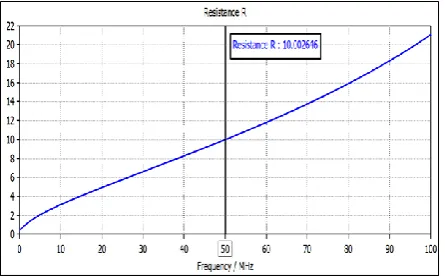
From geometrical parameter analysis of the micro coil, the suggested parameters of coil width = 50 µm, coil gap=50 µm, coil height = 3 µm, number of turns = 25 and inner diameter = 1000 µm. By utilizing this combination, the output response of the Q-Factor, inductance and resistance of the coil was simulated and presented in Fig 5, 6 and 7, respectively. The value of Q-Factor, inductance and resistance value was obtained as 69.2, 2.2 µH and 10 Ω at 50 MHz, respectively.
Figure 5. Q-Factor of the coil for optimized parameters
Figure 6. Inductance of the coil for optimized parameters
Figure 7. Resistance of the coil using optimized parameters
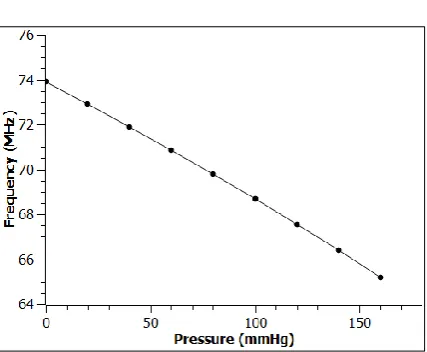
Figure 8.Frequency responseversus applied pressure
IV. CONCLUSION
Analysis of a planar micro coil design was presented in this
study. The coil Q-Factor, inductance and resistance were analyzed using computer simulation technology (CST) software. The optimal geometric parameters of width = 50 µm, gap = 50 µm, thickness = 3 µm, number of turns = 25 and inner diameter= 1000 µm of micro coil after considering the trade-off between the micro coil size and coil Q-Factor. From this study, it can be concluded that the geometrical parameters suggested are suitable for designing the monolithic micro coil with implantable MEMS bladder pressure sensor. Future works will focus on the fabrication of micro coil for wireless MEMS bladder implants.
V. ACKNOWLEDGEMENT
The authors would like to acknowledge the GUP-2017-031 grant for funding this project.
VI. REFEREENCES
Akar, O., Akin, T., & Najafi, K. , 2001 , ‘ A wireless batch sealed absolute capacitive pressure sensor’, Sensors and Actuators, A: Physical, vol.95, no.1, pp 29–38. Alan Wein ,Louis Kavoussi, Alan Partin & Craig Peters,
2015, Campbell-Walsh Urology. (A. J.Wein, Ed.) (11th ed.). Elsevier.
Huang, Q., Dong, L., & Wang, L., 2016, ‘LC passive wireless sensors toward a wireless sensing platform : status, prospects, and challenges’, Journal of
Microelectromechanical Systems, vol. 25, no.5, pp
822–841.
Luo, M., Martinez, A. W., Song, C., Herrault, F., & Allen,
M. G., 2014, ‘A microfabricated wireless RF pressure sensor made completely of biodegradable materials’,
Journal of Microelectromechanical Systems, vol. 23,
no.1, pp 4–13.
Elwenspoek, 1998, ‘Characterization of a planar microcoil for implantable microsystems’, Sensors
and Actuators A:Physical, vol.62, pp. 599-611.
Yunas, J., Sulaiman, N., Sugandi, G., Hamzah, A. A., & Majlis, B. Y, 2010, ‘Geometrical analysis of planar
coil design for fluxgate magnetometer’,
Microsystem Technologies, vol.16, no.11, pp. 1939–
1944.
Yusof, N.,Bais, B., N.Soin & B.Y Majlis, 2018,
‘Sensitivity and Q - factor trade - off analysis of MEMS pressure sensor for bladder implants’,
Proceeding of the International
NanoelectronicsConference (INEC), Malaysia. pp
49-50.
Zhai, J., How, T. V., & Hon, B, 2010 , ‘Design and modelling of a passive wireless pressure sensor’,