ISSN (e): 2250-3021, ISSN (p): 2278-8719
Vol. 08, Issue 10 (October. 2018), ||V (II) || PP 06-12
Modification of Properties of Hot Mix Asphalt Using Pyrolized
Carbon Black As Modifier
Eme, D.B
a, Nwaobakata, C.
ba,b
Civil Engineering department, University of port Harcourt, Rivers state, Nigeria Corresponding Author: Eme, D.B
Abstract: Over the decades, there had been several attempts to commercialize the product of the pyrolysis of
scrap tyres and also other carbonaceous materials but none had really recorded a boom. This is because the pyrolyzed carbon black and the other products of the pyrolysis of scrap tyres lacked market demand. Thus, this study presents an overview of the laboratory demonstration work with beneficial use of pyrolyzed carbon black (CBP) as a modifier in hot mix asphalt (HMA). The Marshall stability and flow test were carried out on theunmodified HMA to determine the optimum bitumen content (OBC) which is found at 5.2%. The OBC is then used to calculate the modified HMA specimen with varying percentage of modification ranging from 2% to 10%. From the Marshall Mix design for the laboratory test results, the Marshal test showed stability values of 8020N at 2%, 8120N at 4%, 8240N at 6%, 8205N at 8%, and 8100N at 10% of the modified sample. The increase in the Marshall Stability values up to 6% indicates increase in the potential of the HMA to resist unacceptable distortion and displacement during application of loads. From 6% and above, the sample becomes brittle. The Marshal Flow results also showed slight improvement. Hence, pyrolysis carbon black can have the following benefits on HMA. Improved workability, improved asphalt aging resistance, reduction in age-related cracking, thermal stress relief, reduced potential for cracking, and reduction in pollution of environment.
Keywords:
PyrolyzedCarbon black, Marshall Test, Softening Point--- --- Date of Submission: 08-10-2018 Date of acceptance: 23-10-2018 --- ---
I.
INTRODUCTION
Pavement failure is a phenomenon attributed to the inability for a pavement to meet its minimum desirable standard during pavement navigation and usage. Asphalt pavements, which are pavement composed mainly of aggregate and asphalt binder are constructed depending on the thermo-plasticity of asphalt which is the property of softening by heat and hardening by cooling. However, these effective properties become disadvantages for in-service periods, as rutting and cracking of pavements occur in the hot and cold weather conditions respectively. This is one major mode of failure of asphalt pavements in Nigeria.
Other modes of failure are caused by the increasing human population which eventually increases the use of vehicles and in turn increases the wheel loading on the flexible pavement. To this effect there is a high demand for a better and more durable road pavement which can withstand all harsh condition.
The improvement of an asphalt pavement can be established through the modification of the constituent elements. Here, the modification is made on the fine aggregate. This modification should be achieved keeping in mind the financial involvement on the road construction systems. In this study, the pyrolysed carbon black (CBp) obtained from pyrolysis of scrap tyres is employed in aggregate modification.
Asphalt modification is not a new ideology.Inthe 1930’s test project were constructed in Europe (Yildrim, 2007; Astana, 2009). In the mid 1980’s, Australia started using polymers in bituminous mixtures, which is evident from the current specifications. Emesiobi (2000), stated that bituminous materials obtained from different sources contain different proportions of different constituents and hence, different properties to judge their suitability. Some properties such as flash point, softening and penetration tests need to be carried out. Tayfu et al. (2007) from their study, noted that an asphalt pavement with a high tensile strength corresponds to a stronger cracking resistance. At the same time, mixtures that are able to tolerate higher strain prior to failure are more likely to resist cracking than those unable to tolerate high strains. The ageing effect on physical and rheological properties of Asphalt pavement was reduced using tyre rubber as modifier (Nuha and Mohamed, 2012)
waste disposal problem, the huge financial involvement in road construction and at the same time improve the quality of our road pavements.
Scrap tyres are a source of energy and chemicals.Bythermal decomposition, it is possible to recover useful products. Although, the end product differ, typical yields from scrap tyres are approximately 30% light hydrocarbonwhich can be refined, and serve as fuel, 25% carbon black, 15% gas, 20% steel, 5% sludge and 2% water (Gaines and Wolsky, 1981). Roy et al., (1995), worked on the physiochemical properties of carbon black from vacuum pyrolysis of used tyres and their findings agreed to the fact that the carbon black obtained from scrap tyres contain several impurities, which makes it difficult to be reused commercially.
Concept of the use of carbon clack as a reinforcing agent was first introduced by Alliotti and Martur (1962). Ever since, researchers have been studying and testing the use of carbon black to improve binder properties so that cracking at low temperature and rusting at high temperature is reduced. Some of the major properties of carbon black are: hydrophobic nature, infinite variety of geometric form and also possessing less than 3% impurities (Donnet and Voet 1976). Thus, this study is geared towards investigating the properties of carbon black (CBp) modified asphalt pavement against unmodified or conventional asphalt pavement as this would go a long way to curbing the environmental pollution currently rampaging the society.
II.
MATERIALS AND METHODS
2.1 Materials
The materials used for the essence of this research are outlined below;
i. Bitmen used for this study was without debris and adulterants and was sources from a local shop in Port Harcourt, Rivers State.
ii. The coarse aggregate and fine aggregate (filter) was obtained from a construction site in Port Harcourt, Nigeria. The coarse aggregate is crushed granite.
iii. The carbon black (CBp) used was locally produced from pyrolysis of scrap tyres obtained from a scrap tyre dump located in Port Harcourt.
2.2 Equipment and Apparatus
The equipment and apparatus used for this study are well outlined below. i. The Rings and Ball apparatus used for the softening point test. ii. Standard Tar. Penetrometer Apparatus used for the penetration test.
iii. Marshall test machine used for the determination of stability and flow values of modified and unmodified asphalt specimen
iv. Other apparatus include; flame source, thermometers,cleavered cups, gloves, tongues, set of tag sieves, hand brush, pan, scoop, sensitive weighing balance, etc.
2.3 Methodology
2.3.1 Experimental Mix Design
The whole experimental set up was designed for the medium traffic category. The bitumen and aggregate were subjected to preliminary tests to ensure that they met the specification needed for the medium traffic criteria. The aggregate obtained (coarse and fine) were subjected to gradation tests in order to obtain the right mix design. The straight line graphical method was employed in the proportion analysis and the right blend was obtained after the third trail. The Marshall Mix Design procedure was then employed in the determination of optimum bitumen content. The fine aggregate portion of the optimum mix design was then systematically and partially replaced by pyrolyzed carbon black (CBp) at 2%, 4%, 6%, 8% and 10% by weight of the finer aggregate portion. Laboratorytests such as softening point tests and Marshall stability and flow tests were employed in evaluating the effect of pyrolyzed carbon black as mineral filler on. Hot Mix Asphalt concrete.
2.3.2Aggregate Proportion Blend
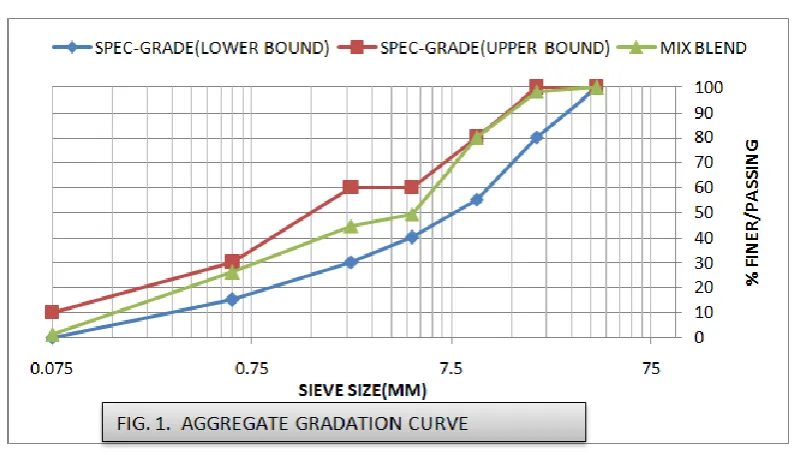
The coarse and fine aggregate was properly combined to meet gradation specification using the straight-line graphical method after subjecting the aggregate to sieve analysis or gradation test. The optimal combination was obtained after the third trial with 60% for coarse aggregate portion and 40% for fine aggregate portion. This is presented in Table 1 and Figure 1
Table 1. Optimum Aggregate Combination
Sieve(mm) 40 20 10 4.75 2.36 0.600 0.075
A * 0.60 60 58.20 40.20 10.20 7.20 3.60 0.60
B * 0.40 40 40 39.60 39.20 37.20 22.40 0.40
Total 100 98.20 79.80 49.40 44.40 26.0 1.00
2.3.3 Optimum Bitumen Content Determination
The Marshall Mix Design procedure was employed on the determination of the optimum Bitumen content (OBC). Series of test were performed on a three (3) sets of sample per experiment for 4%, 4.5%, 5%, 5.5% and 6% bitumen content. The experiment involved were stability and flow tests specific gravity test, percentage air void determination. Each test sample weighed 1200g. The optimum mix design for the unmodified HMA is presented in Table 2 with the results represented in Figure 2 (a-e).
Table 2. Mix Ratio for obtaining OBC for Unmodified HMA
% Bitumen Content Bitumen Weight(g) Aggregate Weight(g) % Blend of Aggregates(g)
4% 48 1151 A(60%) 691.2
B(40%) 460.8
4.5% 54 1146 A(60%) 687.6
B(40%) 458.4
5% 60 1140 A(60%) 684.0
B(40%) 456.0
5.5% 66 1134 A(60%) 680.4
B(40%) 453.6
6% 72 1128 A(60%) 676.8
The optimum Bitumen content was then obtained as the arithmetic average of asphalt content at maximum stability value, asphalt content at maximum density value and asphalt content at median limits of air voids as obtained from figures above and as calculated using Equation1
OBC = 𝐴𝑆𝑃.𝐶𝑂𝑁𝑇 .𝐴𝑇 𝑀𝐴𝑋 .𝑆𝑇𝐴𝐵 .𝑉𝐴𝐿 .+𝐴𝑆𝑃 𝐶𝑂𝑁𝑇 .𝐴𝑇 𝑀𝐴𝑋 .𝐷𝐸𝑁 .𝑉𝐴𝐿 .+𝐴𝑆𝑃.𝐶𝑂𝑁𝑇 .𝐴𝑇 𝑀𝐸𝐷 .𝐴𝐼𝑅 𝑉𝑂𝐼𝐷
3 (1)
2.3.4 Experimental sample preparation
The trial specimen were prepared with the aggregate asphalt binder percentage blends by weight of a total mix of 1200g.
i. The proportioned aggregate were mixed and heated to a temperature of 1600C-1800C. ii. The required bitumen is heated to a temperature of 1200-1450C for both the mines
iii. The heated bitumen is added to the heated aggregates and thoroughly mixed at a temperature of about 1650 -1750C
iv. The mix is placed in a preheated mold of 10.16cm diameter and 6.35cm height with base plate and collar. v. After poking the specimen by the sides and at the center, the top surface is leveled, and covered with
compacting papers to prevent loss of aggregate materials.
vi. The carbon black was also heated and added in partial proportions to the Hot Mix Asphalt, after which the required laboratory tests were performed.
2.3.5Softening Point Test
This test involves a ring and ball arrangement. A steel ball of specific weight is placed on dish of sample contained within a horizontal shouldered, metal ring of specified dimensions. The sample was heater in a liquid bath of ethylene glycol to fluid state ready to flow. The temperature at which the sample becomes soft enough to allow the ball to fall a distance of 2.54mm was recorded as the softening point.
2.3.6 Marshall Test
The Marshall Test is used in predicting the performance of asphalt using the marshall test apparatus according to ASTM (2006). The stability portion of the test measure the maximum load supported by the test specimen at a loading rate of 50mm/minute. The load is increased until it reaches a maximum value after which the load just begin to decrease.The maximum load is thus recorded.
During loading, an attached dial gauge measured the specimen’s plastic flow as a result of the loading. The flow value was measured in 0.25mm increments at the same time the maximum load is recorded.
III. RESULTS AND DISCUSSION
3.1 ResultThe results of tests conducted are presented in this section.
3.1.1Marshall Test Result
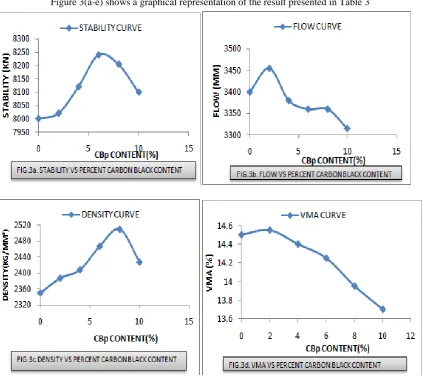
Table 3. Modified HMA Marshall Test Results
%CBp MARSHALL TEST RESULTS
Stability (N)
Flow (mm)
Density (Kg/m3)
VMA %Air Voids
0 8000 3400 2350 14.50 2.75
2 8020 3455 2387 14.55 2.80
4 8120 3380 2408 14.40 2.65
6 8240 3360 2467 14.25 2.50
8 8205 3360 2509 13.95 2.20
10 8100 3315 2427 13.70 1.95
Figure 3(a-e) shows a graphical representation of the result presented in Table 3
3.1.2 Softening Point Test Result
The result of the softening point test for modified asphalt is presented in Table 4
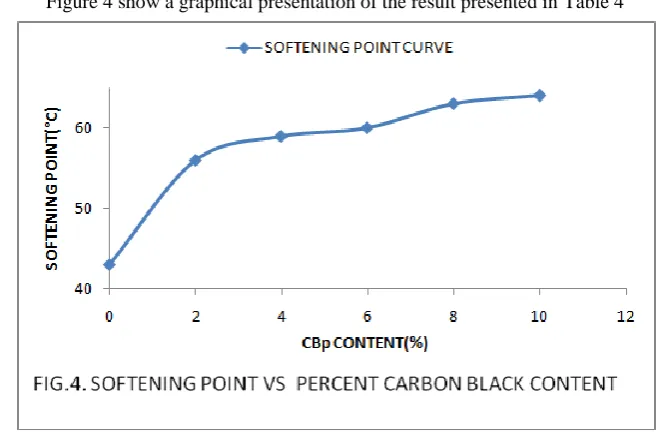
Table 4. Softening Point Results % CBp Content Softening Point(0C)
0 43
2 56
4 59
6 60
8 63
Figure 4 show a graphical presentation of the result presented in Table 4
3.2Discussion
The properties of Hot Mix Asphalt modified with pyrolyzed carbon black (CBp) showed improvement as depicted by the study.
Figure 3 (a) showed that the stability of hot mix asphalt increaseswith increase pyrolyzed carbon black content to a percentage addition of 6%. This increment in stability could be attributed to increase in adhesive properties of HMA due to modifier addition.This improvement help to prevent unacceptable distortion and displacement that may arise for the case of unmodified hot mix asphalt.
The flow values of the modified HMA reduces as the carbon black content increases (Figure 3b). This may be due to reduction in viscosity of HMA arising from carbon black introduction.
The density of the modified HMA increase with increment in carbon black content (Figure 3c) to a percentage addition of 6%. The density of the modified HMA is a strength parameter. Indicating that the modified HMA becomes stronger with addition of carbon black or to an optimum percentage of 6%.
The air voids of modified HMA reduces with carbon black (CBp) increment (Figure 3d). This is an improvement but the carbon black increment should be limited to the optimal value of 6%, such that adequate voids is permitted for effective compaction of HMA.
The voids filled with bitumen also increase with increase in carbon black content addition (Figure C). This is a positive result as it is an indication of improvement in resistance against binder ageing
The softening point as noticed from Figure 4 increases with increase in addition of modifier. This is attributed to the adhesive forces between the composite materials that have increased.
IV.
CONCLUSION AND RECOMMENDATIONS
4.1Conclusion
From results obtained during the course of the study, the following conclusions are hereby made;
i. The stability of modified HMA using pyrolyzed carbon black (CBp) increases as the modifier content increases.
ii. The flow values of modified HMA decreases as the CBp content increases.
iii. The softening point values of modified HMA also decreases with increment in CBp content. iv. The optimum replacement of fine aggregate with CBp is found to be 6%.
4.2 Recommendations
The following recommendation are hereby made for further studies
v. The useful potential of other possible environmental threatening substances should be checked.
International organization of Scientific
Research 12 | P a g e
REFERENCE
[1]. Alliot, A. and Martin, (1962). “Evaluating the effect of commercial carbon black as a reinforcing agent in Asphalt road pavements.
[2]. American society for Testing and Material (2006). Standard Test Method for Marshall stability and flow of Bituminous Mixtures. Philadelphia, ASTM D6927.
[3]. Astana, D.A. (2009). The effect of Epoxy Bitumen Modification on Hot Mix Asphalt Properties and Rut Resistance University Technology, Malaysia. PP 5-6.
[4]. Donnet, G and Voit, H., (1976). Comparison of carbon black from pyrolyzed tyres to other filler as Asphalt Rheology Modifier.
[5]. Emesiobi F.C. (2000). Bitumen and Tar. Testing and Quality control of material in civil and highway engineering. Blues print limited Port Harcourt, Nigeria.
[6]. Gaines, L.L, and Wolsky A.M. (1981). “Discarded Tyres. A Potential source of Hydrocarbon to replace petroleum” resource and energy vol.3, No. 3, 1981.
[7]. Nuha S.M. and Mohamed R.K. (2012). Using tyre Rubber as a modifier in Asphalt to improve ageing Resistance International Journal of Nano and Material sciences. 1(2); 68-73.
[8]. Roy C. (1995). “Physiochemical properties of carbon black from vacuum pyrolysis of used tyres” plastic, rubber and composite processing and applications.
[9]. Tayfur, E., Zaniccwski, J.P and srinivan G. (2007). “Evaluation of Indirect tensile strength to identify Asphalt concrete rutting potential”. Asphalt Technology Program, Department of civil and environmental engineering, West Virginia, USA.
[10]. Yildirim, Y. (2007). “Polymer modified Asphalt Binders” construction and building materials: 21(1): 66-72.