L
Advanced Drug Delivery Reviews 27 (1997) 161–170
The barrier function of CYP3A4 and P-glycoprotein in the small bowel
1
Paul B. Watkins
General Clinical Research Center, University of Michigan Medical Center, A7119 University Hospital, 1500 E. Medical Center Drive,
Ann Arbor, MI 48109-0108, USA Received 1 March 1997; accepted 17 March 1997
Abstract
CYP3A4 present in small bowel enterocytes can catalyze substantial metabolism of some orally administered drugs and, thus, exerts a first-pass effect. Recent data indicate that the P-glycoprotein (the MDR 1 gene product) in the enterocyte brush border also limits the bioavailability of many of the same drugs that interact with CYP3A. It has been proposed that P-glycoprotein and CYP3A4 may be functionally linked because (a) the two proteins are co-localized within the digestive tract and within enterocytes, (b) they share many of the same substrates and (c) they are co-inducible in response to at least some xenobiotics. There are several potential mechanisms whereby the functions of P-glycoprotein and CYP3A4 could be complimentary. First, Pgp may limit absorption in the proximal small bowel, shifting it to more distal, less catalytically efficient segments that contain lower amounts of CYP3A4. Second, Pgp may function to prolong the duration of absorption. This might increase the duration of exposure of drug to and, hence, the extent of metabolism by enterocyte CYP3A4. Finally, Pgp may preferentially remove from the enterocyte primary drug metabolites that are themselves substrates for CYP3A4. This would limit product inhibition and facilitate primary metabolism catalyzed by CYP3A4. Characterization of the roles of CYP3A4 and Pgp in limiting oral drug availability may be aided by recent success in the development of human intestinal cell lines that stably express both CYP3A4 and Pgp. 1997 Elsevier Science B.V.
Keywords: P-glycoprotein; Cytochrome P450; CYP3A4; Bioavailability; Drug transport; Drug metabolism; Human small intestine
Contents
1. Introduction ... 162
1.1. Intestinal cytochrome P450 3A4... 162
1.2. Intestinal P-glycoprotein ... 162
2. Transport function of intestinal Pgp ... 163
2.1. Effect on drug absorption ... 163
2.2. Studies with Caco-2 cells... 164
2.3. In vitro–in vivo correlations ... 165
3. Mechanism of intestinal Pgp action ... 165
3.1. Effect on cyclosporine bioavailability ... 165
3.2. Interaction of Pgp with other CYP3A4 substrates / metabolites... 167
4. Future directions ... 167
References ... 168
1
Tel.: 313-936-8080.
0169-409X / 97 / $32.00 1997 Elsevier Science B.V. All rights reserved.
1. Introduction kinetic properties of the reactions, appear to be essentially identical in human small bowel and liver 1.1. Intestinal cytochrome P450 3A4 [3–6]. It therefore appears that catalytic properties of CYP3A4 determined in human liver microsomes, or There is now overwhelming evidence that some in recombinant systems, can generally be extrapo-orally administered drugs that are substrates for lated to the small bowel.
cytochrome P450 3A4 (CYP3A4) can undergo sig- The related enzyme, CYP3A5, is also detectable in nificant first-pass metabolism within small intestinal enterocytes in about 70% of adults, and is not co-epithelial cells (enterocytes). These data are reviewed regulated with CYP3A4 [7–10]. Its structure, func-elsewhere in this volume and will not be discussed tion and contribution to first-pass metabolism has not extensively here. CYP3A4 appears to be the most been established. However, CYP3A5 appears to be a abundant cytochrome P450 present in human small minor enterocyte enzyme in most individuals [7]. bowel [1,2]; it is found only in the mature
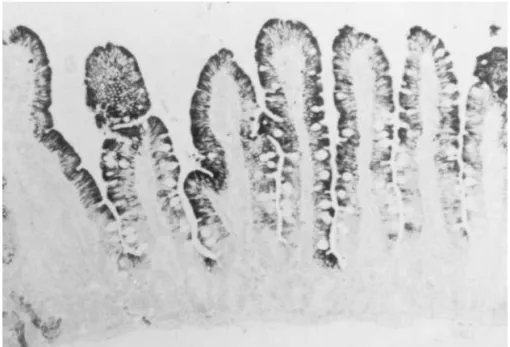
en-terocytes lining the villus and is not present in crypt 1.2. Intestinal P-glycoprotein cells (Fig. 1). CYP3A4 present in human enterocytes
appears to be functionally and structurally identical The potential role of P-glycoprotein (Pgp, the to CYP3A4 present in human liver. The complete MDR-1 gene product) in determining oral availabili-coding region of intestinal CYP3A4 cDNA has been ty of some drugs has only recently been appreciated. sequenced in our laboratory and determined to be Pgp is a versatile xenobiotic pump that was first identical to its liver counterpart (unpublished ob- discovered in cancer cells (reviewed in [11]). Pgp servations). In addition, the pattern of metabolites functions to make certain cancer cells resistant to produced from several CYP3A4 substrates, and the several chemotherapeutic agents by pumping them
out of the cells, maintaining intracellular concen- can therefore not be assumed at present that charac-trations at sublethal levels (MDR stands for multiple teristics of Pgp transport determined in cells other drug resistance). Pgp is expressed in a variety of than enterocytes will be directly applicable to oral normal (non-cancerous) human tissues, including drug absorption.
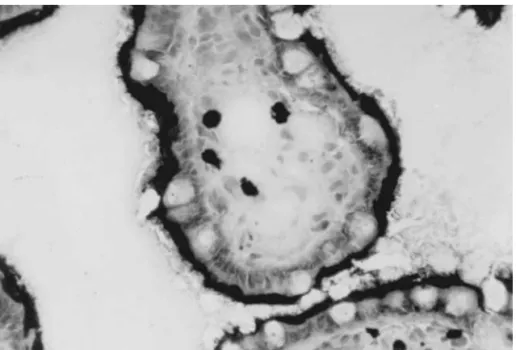
liver, brain, adrenal gland, kidney and intestinal tract epithelia [12]. In the small bowel, Pgp is present on
the apical membrane of the mature epithelial cells 2. Transport function of intestinal Pgp and is not detectable in the crypt cells (Fig. 2). Pgp
is oriented in the apical membrane to pump xeno- 2.1. Effect on drug absorption biotics from inside the cells back into the lumen of
the intestine (i.e., a ‘‘countertransport’’ function) The demonstration of Pgp in enterocytes provides [13]. In humans (as opposed to rodents), there is only a mechanism to account for prior observations one MDR1 gene, and it is generally assumed that concerning intestinal (non-biliary) excretion for cer-intestinal Pgp is functionally identical to Pgp present tain xenobiotics. For example, erythromycin [24], in other epithelial cells and in cancer cells. Pgp digoxin [24] and some b-blockers [25] and anti-appears to have approximately the same molecular biotics [26–29] undergo active secretion from blood weight in human intestinal cells as in other cell types into the small bowel intestinal lumen, and appear to (as judged by mobility on polyacrylamide gels) [14– be substrates for Pgp [5,21,30]. Direct evidence that 16]. However, the complete coding region of human Pgp inhibits the absorption of orally administered intestinal Pgp cDNA has not been sequenced to the drugs comes from several sources. First, several author’s knowledge. Kinetic data regarding chemical investigators have used isolated loops of rat jejunum inhibition of enterocyte Pgp vs. Pgp in other cell to study the absorption of compounds in the absence types is sparse and somewhat conflicting [16–23]. It and presence of inhibitors of Pgp. One study [31]
showed that the absorption of etoposide was sig- 2.2. Studies with Caco-2 cells nificantly enhanced in the presence of an antibody
directed to Pgp (applied to the luminal surface). The human colon cancer cell line, Caco-2, has also Other studies have tested the ability of chemical been used to study the potential role of Pgp in inhibitors of Pgp to influence the absorption of influencing the oral absorption of drugs. Caco-2 cells xenobiotics in isolated loops of rat jejunum. In their form confluent and polarized monolayers when recent review, Tsuji and Tamai [32] presented a maintained in culture and differentiate towards the figure (reproduced in Fig. 3) that summarized data mature small bowel enterocyte phenotype. A variety indicating that certain drugs have slower rates of of devices are commercially available to facilitate the absorption across rat intestinal mucosa than would be establishment of polarized monolayers of Caco-2 predicted by their lipophilicity alone. Many of these cells with separate apical (corresponding to the drugs are now known to be substrates for Pgp, and lumen of the intestinal tract) and basal (corre-most were shown to have more rapid absorption sponding to the serosal side) compartments. Drugs when administered with the Pgp inhibitor cyclos- are then added to one side of the monolayer (usually porin A (Fig. 3). It is interesting that the presence of the apical side to mimic absorption) and the rates of cyclosporin A did not result in a shift back to the transport or diffusion to or from either media com-absorption rate predicted by lipophilicity alone in partment is measured. Functional Pgp is expressed most cases (Fig. 3). It is possible that the inves- along the apical surface of Caco-2 cell monolayers tigators did not use sufficiently high concentrations and has been shown to mediate efflux from the of cyclosporin A to achieve complete inhibition of basolateral to apical media compartments of some Pgp function (the concentrations used were not drugs in this model [17,18,20–22,25,33]. Recent data given). Alternatively, it may be that Pgp is one of support the idea that countertransport proteins other multiple countertransport proteins responsible for the than Pgp are also present in Caco-2 cells, and may relatively poor absorption of these compounds. be involved in the transport of xenobiotics that are
also transported by Pgp [21,34]. A countertransport patient variation in oral clearance of cyclosporin A. protein termed MRP (multidrug resistance-associated Patients with higher enterocyte concentrations of Pgp protein) has recently been reported to be present in tended to have lower oral clearances (Cl / F) of Caco-2 cells [35]. cyclosporin A. Variation in enterocyte concentrations of Pgp accounted for 17% of the variation in oral 2.3. In vitro–in vivo correlations clearance in this patient population, and the contribu-tion of Pgp was highly significant ( p,0.001). The most direct data supporting a role for intesti- Interestingly, a 10-fold inter-patient variation in nal Pgp in limiting the oral availability of drugs in enterocyte content of CYP3A4 had no detectable man has been provided recently from our research effect on the oral clearance of cyclosporin A in these group [36]. We have developed techniques that allow studies.
quantitation of the enterocyte content of Pgp in patients and in normal healthy volunteers [7]. A
fiberoptic endoscope is passed through the subject’s 3. Mechanism of intestinal Pgp action mouth into the first portion of the small bowel (the
duodenum) and several small (,5 mg wet weight) 3.1. Effect on cyclosporine bioavailability ‘‘pinch’’ biopsies of duodenal mucosa are obtained.
The subject’s throat is sprayed with an anesthetic and The simplest explanation for the observed in vivo the subject receives light sedation prior to the findings with cyclosporin A is that Pgp functions to procedure, which lasts for about 15 min. The mucos- prevent the complete absorption of the drug and that al biopsies obtained are then homogenized and the the vast majority of metabolism of cyclosporin whole homogenate is subjected to immunoblot analy- occurs in the liver. Although this may be the case, sis. The blots are simultaneously developed with several studies have suggested that the intestine can antibodies to Pgp, CYP3A4 and villin [7,14]. Villin be a very substantial site for metabolism of orally is a constitutive enterocyte-specific protein whose administered cyclosporin A [6,39–41]. An alternate level of expression appears to be relatively constant possibility is that Pgp may not prevent complete across individuals [7]. Enterocyte levels of Pgp and absorption of cyclosporin A, but may control the CYP 3A4 can therefore be estimated by normalizing extent of intestinal metabolism of the drug. Although the signals on the immunoblots for biopsy content of this is largely speculation, there are some data that villin. This is necessary because the number of intact support this theory.
enterocytes can vary substantially among biopsies First, CYP3A4 and Pgp appear to be functionally from the same individual [7]. For example, a deep integrated, as there is great overlap between sub-biopsy will have much fewer enterocytes than a strates for CYP3A4 and Pgp [42–44]. For example, shallow biopsy. Without correction for biopsy villin cyclosporin A is a well characterized substrate for content, biopsies obtained from the same patient can both CYP3A4 [45] and P-glycoprotein [46]. Indeed, have a several-fold variation in the content of to the author’s knowledge, there has not yet been a CYP3A4 or Pgp. single compound identified that is transported by Pgp Using this technique, we have shown that the that has been shown not to be a substrate for enterocyte concentrations of CYP3A4 and Pgp vary CYP3A4. Likewise, the author is unaware of a by up to 10-fold among kidney transplant recipients substrate of CYP3A4 that has been conclusively [14], and vary somewhat less among normal healthy shown not to be transported by Pgp. It should be adults not taking medication [37]. This technique has noted, however, that one recent study has suggested also allowed us to begin to define the roles of Pgp that the CYP3A4 substrate, midazolam, may not be (and CYP3A4) in determining the oral availability of transported by Pgp [34], and relatively few drugs drugs. In a recent study of 20 stable renal transplant have been tested in this regard.
en-zymes are localized primarily at the apex of the enterocytes, just below the brush border containing Pgp [10,47]. Although CYP3A4 is presumably bound within the endoplasmic reticulum (ER), much of the ER containing the enzyme appears to be closely associated with the apical plasma membrane. Finally, Pgp and CYP3A4 appear to be coordi-nately regulated in some instances [48]. It has been pointed out that CYP3A4 and Pgp genes are located close to one another on the same chromosome, and
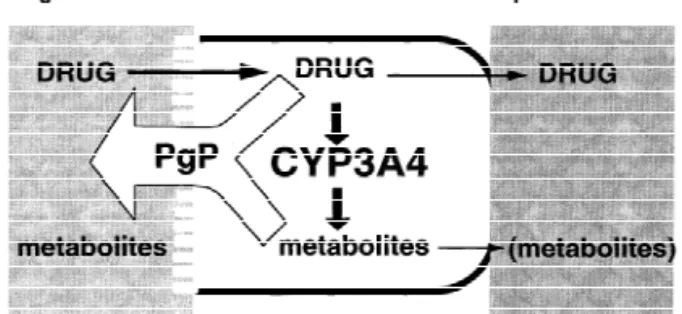
Fig. 4. Potential functional relationships between enterocyte P-that tumors expressing Pgp tend to also express glycoprotein and CYP3A4. In order to gain entry into the body CYP3A4 [43]. In addition, at least some xenobiotics (and into portal blood), most CYP3A4 and Pgp substrates must have been shown to be inducers of both CYP3A4 traverse small bowel epithelial cells (enterocytes) located near the tips of the intestinal villi. It appears that most drugs that are and Pgp in human enterocytes in vivo [37] or in a
substrates for CYP3A4 are also transported by Pgp. In addition, human intestinal cell line [48]. However, there does
metabolites generated by CYP3A4 may have higher affinity for not appear to be a correlation between the relative Pgp than for the parent compounds (see discussion in text). The levels of expression of CYP3A4 and Pgp in a given relative level of activity of Pgp may potentially influence the individual. That is, a person can have relatively high extent of oral availability of CYP3A4 substrates by (a) preventing parent drug diffusion across the apical brush border membrane enterocyte CYP3A4 expression while having
rela-(i.e., preventing absorption), (b) prolonging the duration of tively low enterocyte Pgp expression (and vice versa)
absorption (and hence increasing the extent of exposure of drug to [14]. One confounding issue is that there does not enterocyte CYP3A4), or (c) by selectively removing metabolites appear to be a correlation between enterocyte levels from within the enterocyte (that are themselves substrates for of CYP3A4 mRNA and CYP3A4 protein [7], in- CYP3A4), preventing product inhibition of primary drug
metabo-lism. dicating that regulation of the enzyme is not at the
level of transcription. This conclusion is also sup-ported by the recent observation that grapefruit juice
logical-ly result in pumping of the metabolites into the however, that a similar human study with nifedipine intestinal lumen and elimination in stool. (a well characterized CYP3A4 substrate) failed to show enhanced availability after distal small bowel 3.2. Interaction of Pgp with other CYP3A4 administration [55]. A confounding factor is that the substrates /metabolites absorptive surface area per centimeter of bowel is considerably lower in the distal small bowel com-There are several potential mechanisms whereby pared to the proximal small bowel, and the levels of Pgp could influence the extent of metabolism of Pgp may be increased [56]. These factors may CYP3A4 substrates during absorption. Based on a function to reduce absorption of some CYP3A4 variety of data outlined above, Pgp appears to substrates in distal small bowel, off-setting the effect influence the rate of absorption of several substrates. of reduced CYP3A4 levels.
By prolonging absorption, the duration of exposure The third way in which Pgp could influence first-of the drug to the enzyme within the enterocyte is pass metabolism might be by pumping primary prolonged. If the enzyme is saturated during absorp- metabolites out of the enterocyte, preventing sec-tion, prolonging absorption should increase the ex- ondary metabolism of substrates by CYP3A4. This tent of metabolism at the level of the intestine. For could have the effect of accelerating the rate of example, if the duration of absorption of cyclosporin primary metabolism if the affinity of the metabolites A is largely determined by the level of P-glycopro- for Pgp transport was greater than that for the parent tein, patients with relatively high enterocyte Pgp drug. For example, data outlined above suggests that levels could have increased intestinal metabolism of primary metabolites of cyclosporin A are selectively cyclosporin A simply as a result of a prolonged transported out of enterocytes into the gut lumen and absorption phase. Therefore, the effect of high that the affinity for transport is greater for the enterocyte Pgp levels would be reduced oral availa- metabolites than for parent cyclosporin A. Secondary bility of parent cyclosporin A, even though absorp- metabolism of cyclosporin A is extensive, and tion could ultimately be complete. Gan et al. [51] CYP3A4 appears to be the principal enzyme in-noted that the rate of metabolism of cyclosporin A volved in secondary metabolism [57]. Hence, pa-was greater when the drug pa-was added to the apical tients with high Pgp expression might have relatively (compared to the basolateral) side of Caco-2 cells, high rates of primary metabolism (and lower oral and proposed that this was due to an effect of Pgp in availability of parent cyclosporin A) but relatively determining the ‘‘residence time’’ of the drug in the low rates of secondary metabolism as a consequence cells. of the rapid transport of metabolite out of the The second way in which the level of P-glycopro- enterocyte. In this case, the level of Pgp would affect tein in the enterocyte could control the extent of the extent of product inhibition and influence the oral metabolism of a substrate would be if, by reducing availability of a drug, without necessarily changing the rate of absorption, the result was to shift absorp- the duration of the absorption phase, or the ana-tion from the proximal small bowel to more distal tomical site of absorption.
segments. The total mass of CYP3A4 per gram of mucosa falls significantly in distal areas of the small
bowel [52]. Hence, moving absorption to more distal 4. Future directions areas may result in less first-pass metabolism. This
Fang, S.A. Wrighton, R.M. Merion, P.B. Watkins, CYP3A both protein functions are not generally available.
gene expression in human gut epithelium, Pharmacogenetics Native Caco-2 cells express adequate levels of
4 (1994) 247–259.
functional Pgp, but do not appear to express [11] M.M. Gottesman, I. Pastan, Biochemistry of multidrug CYP3A4 [34,58]. Recently, CYP3A4 has been ge- resistance mediated by the multidrug transporter, Ann. Rev.
Biochem. 62 (1993) 385–427. netically engineered into Caco-2 cells [59]. In
addi-[12] F. Thiebaut, T. Tsuruo, H. Hamada, M.M. Gottesman, I. tion, our group has reported culturing techniques that
Pastan, M.C. Willingham, Cellular localization of the multi-restore relatively high levels of functional CYP3A4 drug-resistance gene product P-glycoprotein in normal to these cells [34]. Such modified Caco-2 cells would human tissues, Proc. Natl. Acad. Sci. U.S.A. 84 (1987) appear to be the most promising model currently 7735–7738.
[13] S. Hsing, Z. Gatmaitan, I.M. Arias, The function of Gp170, available to dissect the roles of CYP3A4 and Pgp,
the multidrug-resistance gene product, in the brush border of and to determine mechanisms of their potential
rat intestinal mucosa, Gastroenterology 102 (1992) 879–885. synergy in limiting the oral availability of xeno- [14] K.S. Lown, R. Mayo, D.S. Blake, L.Z. Benet, P.B. Watkins, biotics. Interpatient variation in intestinal Pgp expression contributes to variable oral kinetics of cyclosporin A, Clin. Pharmacol. Ther. (1997) in press.
[15] H.C. Lin, J.H. Meyer, Disorders of gastric emptying, in: T. References Yamada (Ed.), Textbook of Gastroenterology, Lippincott,
New York, 1991, pp. 1215–1230.
[1] P.B. Watkins, S.A. Wrighton, E.G. Schuetz, D.T. Molowa, [16] J. Hunter, B.H. Hirst, N.L. Simmons, Epithelial secretion of P.S. Guzelian, Identification of glucocorticoid-inducible cyto- vinblastine by human intestinal adenocarcinoma cell (hct-8 chromes P-450 in the intestinal mucosa of rats and man, J. and t84) layers expressing p-glycoprotein, Br. J. Cancer 64
Clin. Invest. 80 (1987) 1029–1036. (1991) 437–444.
[2] J.C. Kolars, P. Schmiedlin-Ren, J.D. Schuetz, C. Fang, P.B. [17] J. Hunter, M.A. Jepson, T. Tsuruo, N.L. Simmons, B.H. Watkins, Identification of rifampin-inducible P450IIIA4 Hirst, Functional expression of p-glycoprotein in apical (CYP3A4) in human small bowel enterocytes, J. Clin. Invest. membranes of human intestinal Caco-2 cells: kinetics of
90 (1992) 1871–1878. vinblastine secretion and interaction with modulators, J. Biol.
[3] M.F. Paine, D.D. Shen, K.L. Kunze, J.D. Perkins, C.L. Chem. 268 (1993) 14991–14997.
Marsh, J.P. McVicar, D.M. Barr, B.S. Gillies, K.E. Thummel, [18] J. Hunter, B.H. Hirst, N.L. Simmons, Drug absorption First-pass metabolism of midazolam by the human intestine, limited by p-glycoprotein-mediated secretory drug transport Clin. Pharmacol. Ther. 60 (1996) 14–24. in human intestinal epithelial Caco-2 cell layers, Pharm. Res. [4] F.E. Fitzsimmons, J.M. Collins, Selective biotransformation 10 (1993) 743–749.
of the HIV protease inhibitor saquinavir by human small [19] H. Saitoh, B.J. Aungst, Possible involvement of multiple intestinal cytochrome P450 3A4, Drug Metab. Dispos. 25 P-glycoprotein-mediated efflux systems in the transport of
(1997) 256–266. verapamil and other organic cations across rat intestine,
[5] I.A.M. de Lannoy, M. Silverman, The MDR1 gene product, Pharm. Res. 12 (1995) 1304–1310.
P-glycoprotein, mediates the transport of cardiac glycoside, [20] P.F. Augustijns, T.P. Bradshaw, L.-S.L. Gan, R.W. Hendren, digoxin, Biochem. Biophys. Res. Commun. 189 (1992) 551– D.R. Thakker, Evidence for a polarized efflux system in
557. Caco-2 cells capable of modulating cyclosporin A transport,
[6] J.C. Kolars, W.M. Awni, R.M. Merion, P.B. Watkins, First- Biochem. Biophys. Res. Commun. 197 (1993) 360–364. pass metabolism of cyclosporin by the gut, Lancet 338 [21] J. Karlsson, S.-M. Kuo, J. Ziemniak, P. Artursson, Transport
(1991) 1488–1490. of celiprolol across human intestinal epithelial (Caco-2)
[7] K.S. Lown, J.C. Kolars, K.E. Thummel, J.L. Barnett, K.L. cells: mediation of secretion by multiple transporters includ-Kunze, S.A. Wrighton, P.B. Watkins, Interpatient hetero- ing p-glycoprotein, Br. J. Pharm. 110 (1993) 1009–1016. geneity in expression of CYP3A4 and CYP3A5 in small [22] P.S. Burton, R.A. Conradi, A.R. Hilgers, N.F.H. Ho, Evi-bowel. Lack of prediction by the erythromycin breath test dence for a polarized efflux system for peptides in the apical [published erratum appears in Drug Metab. Dispos. (1995) membrane of Caco-2 cells, Biochem. Biophys. Res. Com-23(3), following the table of contents]. Drug Metab. Dispos. mun. 190 (1993) 760–766.
22 (1994) 947–955. [23] E.G. Chikhale, P.S. Burton, R.T. Borchardt, The effect of
[8] S.K. Janardan, K.S. Lown, M. Ghosh, J.C. Kolars, P.B. verapamil on the transport of peptides across the blood–brain Watkins, CYP3A5 expression in human enterocytes, Gas- barrier in rats: kinetic evidence for an apically polarized troenterology 106(4) (1994) A241. efflux mechanism, J. Pharmacol. Exp. Ther. 273 (1995) [9] K.T. Kivisto, G. Bookjans, M.F. Fromm, E.-U. Griese, P. 298–303.
Munzel, H.K. Kroemer, Expression of CYP3A4, CYP3A5 [24] J.H. Caldwell, P.B. Caldwell, J.W. Murphy, C.W. Beachler, and CYP3A7 in human duodenal tissue, Br. J. Clin. Phar- Intestinal secretion of digoxin in the rat, Arch. Pharm. 312
macol. 42 (1996) 387–389. (1980) 271–275.
demonstration of small intestinal secretion and site-depen- enzyme induction, Clin. Pharmacol. Ther. 52 (1992) 453– dent absorption of the beta blocker talinolol in humans, Clin. 457.
Pharmacol. Ther. 59 (1996) 541–549. [40] M.F. Hebert, J.P. Roberts, T. Prueksaritanont, L.Z. Benet, [26] L. Rabbaa, S. Dautrey, N. Colas-Linhart, C. Carbon, R. Bioavailablity of cyclosporine with concomitant rifampin Farinotti, Intestinal elimination of ofloxacin enantiomers in administration is markedly less than predicted by hepatic the rat: evidence of a carrier-mediated process, Antimicrob. enzyme induction, Clin. Pharmacol. Ther. 52 (1992) 453–
Agents Chemother. 40 (1996) 2126–2130. 457.
[27] J. Ramon, S. Dautrey, R. Farinoti, C. Carbon, E. Rubinstein, [41] C.Y. Wu, L.Z. Benet, M.F. Hebert, S.K. Gupta, M. Rowland, Intestinal elimination of ciprofloxacin in rabbits, Antimicrob.
D.Y. Gomez, V.J. Wacher, Differentiation of absorption and Agents Chemother. 38 (1994) 757–760.
first pass gut and hepatic metabolism in humans: Studies [28] E. Rubinstein, L. St. Julien, J. Ramon, S. Dautrey, R.
with cyclosporine, Clin. Pharmacol. Ther. 58 (1995) 492– Farinotti, J.-F. Huneau, C. Carbon, The intestinal elimination
497. of ciprofloxacin in the rat, J. Infect. Dis. 169 (1994) 218–
[42] L.Z. Benet, C.-Y. Wu, M.F. Hebert, V.J. Wacher, Intestinal 221.
drug metabolism and antitransport processes: a potential [29] N.M. Griffiths, B.H. Hirst, N.L. Simmons, Active intestinal
paradigm shift in oral drug delivery, J. Control. Release 39 secretion of the fluoroquinolone antibacterials ciprofloxacin,
(1996) 139–143. norfloxacin and pefloxacin; a common secretory pathway?, J.
[43] V.J. Wacher, C.Y. Wu, L.Z. Benet, Overlapping substrate Pharmacol. Exp. Ther. 269 (1994) 496–502.
specificities and tissue distribution of cytochrome P4503A [30] A. Tsuji, I. Tamai, A. Sakata, Y. Tenda, T. Terasaki,
and P-glycoprotein: implications for drug delivery and Restricted transport of cyclosporin A across the blood–brain
activity in cancer chemotherapy, Mol. Carcinog. 13 (1995) barrier by a multidrug transporter, P-glycoprotein, Biochem.
129–134. Pharmacol. 46 (1993) 1096–1099.
[44] E.G. Schuetz, K.N. Furuya, J.D. Schuetz, Interindividual [31] B.-L. Leu, J. Huang, Inhibition of intestinal P-glycoprotein
variation in expression of P-glycoprotein in normal human and effects on etoposide absorption, Cancer Chemother.
liver and secondary hepatic neoplasms, J. Pharmacol. Exp. Pharmacol. 35 (1995) 432–436.
Ther. 275 (1995) 1011–1018. [32] A. Tsuji, I. Tamai, Carrier-mediated intestinal transport of
[45] T. Kronbach, V. Fischer, U.A. Meyer, Cyclosporine metabo-drugs, Pharm. Res. 13 (1996) 963–977.
lism in human liver: identification of a cytochrome P-450III [33] L.-S.L. Gan, A. Moseley, B. Khosla, P.F. Augustijns, T.P.
gene family as the major cyclosporine-metabolizing enzyme Bradshaw, R.W. Hendren, D.R. Thakker, CYP3A-like
cyto-explains interactions of cyclosporine with other drugs, Clin. chrome P450-mediated metabolism and polarized efflux of
Pharmacol. Ther. 43 (1988) 630–635. cyclosporin A in Caco-2 cells. Interaction between the two
[46] T. Saeki, K. Ueda, Y. Tanigawara, R. Hori, T. Komano, biochemical barriers to intestinal transport, Drug Metab.
Human P-glycoprotein transports cyclosporin A and FK506, Dispos. 24 (1996) 344–349.
J. Biol. Chem. 268 (1993) 6077–6080. [34] P. Schmiedlin-Ren, K.E. Thummel, J.M. Fisher, M.F. Paine,
[47] J.C. Kolars, P. Schmiedlin-Ren, W.O. Dobbins III, J. Schuetz, K.S. Lown, P.B. Watkins, Expression of enzymatically active
S.A. Wrighton, P.B. Watkins, Heterogeneity of cytochrome CYP3A4 by Caco-2 cells grown on extracellular
matrix-P450IIIA expression in rat gut epithelia, Gastroenterology coated permeable supports in the presence of 1a
,25-102 (1992) 1186–1198. dihydroxyvitamin D , Mol. Pharmacol. 51 (1997) 741–754.3
[48] E.G. Schuetz, W.T. Beck, J.D. Schuetz, Modulators and [35] R. Evers, G.J.R. Zaman, L. van Deemter, H. Jansen, J.
substrates of P-glycoprotein and cytochrome P4503A coordi-Calafat, J.C.J.M. Oomen, R.P.J.O. Elferink, P. Borst, A.H.
nately up-regulate these proteins in human colon carcinoma Schinkel, Basolateral localization and export activity of the
cells, Mol. Pharmacol. 49 (1996) 311–318. human multidrug resistance-associated protein in polarized
[49] K.S. Lown, D. Bailey, R. Fontana, S. Janardan, C.H. Adair, pig kidney cells, J. Clin. Invest. 97 (1996) 1211–1218.
L.A. Fortlage, M.B. Brown, W. Guo, P.B. Watkins, Grapefruit [36] V. Spaldin, S. Madden, D.A. Adams, R.J. Edwards, D.S.
juice increases felodipine oral availability in man by decreas-Davies, B.K. Park, Determination of human hepatic
cyto-ing intestinal CYP3A protein expression, J. Clin. Invest. 99 chrome P4501A2 activity in vitro. Use of tacrine as an
(1997) 2545–2553. isoenzyme-specific probe, Drug Metab. Dispos. 23 (1995)
[50] J.C. Kolars, P.L. Stetson, B.D. Rush, M.J. Ruwart, P. 929–934.
Schmiedlin-Ren, E.A. Duell, J.J. Voorhees, P.B. Watkins, [37] K.S. Lown, J.C. Kolars, M. Ghosh, P. Schmiedlin-Ren, P.B.
Cyclosporine metabolism by P450IIIA in rat enterocytes — Watkins, Induction of MDR1 expression in normal rat and
another determinant of oral bioavailability?, Transplantation human intestine in vivo, Gastroenterology 110 (1996) A344.
53 (1992) 596–602. [38] P.B. Watkins, S.A. Murray, L.G. Winkelman, D.M. Heuman,
[51] L.S. Gan, A. Moseley, B. Khosla, P. Augustijns, T. Brad-S.A. Wrighton, P.S. Guzelian, Erythromycin breath test as an
shaw, W. Hendren, D. Thakker, Formation and polarized assay of glucocorticoid-inducible liver cytochromes P-450.
efflux of cyclosporin A metabolites in the in vitro Caco-2 Studies in rats and patients, J. Clin. Invest. 83 (1989)
cell culture system, FASEB J. 9 (1995) A367. 688–697.
extrahepatic tissues, J. Pharmacol. Exp. Ther. 253 (1989) [56] A.E.O. Trezise, P.R. Romano, D.R. Gill, S.C. Hyde, F.V.
387–394. Sepulveda, M. Buchwald, C.F. Higgins, The multidrug
[53] W. Homsy, G. Caille, P. duSouich, The site of absorption in resistance and cystic fibrosis genes have complementary the small intestine determines diltiazem bioavailability in the patterns of epithelial expression, EMBO J. 11 (1992) 4291–
rabbit, Pharm. Res. 12 (1995) 1722–1726. 4303.
[54] P.H. Marathe, D.E. Salazar, D.S. Greene, J. Brennan, U.A. [57] U. Christians, K.F. Sewing, Cyclosporin metabolism in Shukla, R.H. Barbhaiya, Absorption and presystemic metab- transplant patients, Pharmacol. Ther. 57 (1993) 291–345. olism of nefazodone administered at different regions in the [58] V. Carriere, T. Lesuffleur, A. Barbat, M. Rousset, E. Dus-gastrointestinal tract of humans, Pharm. Res. 12 (1995) saulx, P. Costet, I. deWaziers, P. Beaune, A. Zweibaum,
1716–1721. Expression of cytochrome P-450 3A in ht29-mtx cells and
[55] H. Bode, E. Brendel, G. Ahr, U. Fuhr, S. Harder, A.H. Staib, Caco-2 clone tc7, FEBS Lett. 355 (1994) 247–250. Investigation of nifedipine absorption in different regions of [59] C.L. Crespi, B.W. Penman, M. Hu, The development of the human gastrointestinal (gi) tract after simultaneous Caco-2 cells expressing high levels of cDNA-derived
cyto-13 12