Preconception Health in North Carolina:
A brief history, examples of successful interventions, and a preconception health curriculum for UNC Women’s Hospital
Alisha Wolf, MSW/MPH Candidate 2013 The University of North Carolina at Chapel Hill PID 720239054
July 12, 2013
Reader 1
Preconception health is an emerging area of Maternal and Child Health that seeks to improve both birth outcomes and long-term health outcomes for two generations – a mother and her child. Because preconception health is a relatively new area of public health, this paper seeks to introduce the reader to the topic through defining
preconception health and giving a brief history of its increasing role in the world of public health. It then outlines a successful North Carolina preconception health initiative to illustrate preconception health in practice. Finally, this paper describes a new
educational preconception health program entitled “Preparing for Pregnancy: Mind, Body, and Spirit” to be implemented at the Women’s Health Information Center at the
University of North Carolina at Chapel Hill’s Women’s Hospital. The facilitator’s guide, class materials and recruitment materials and evaluation are included as appendices. DEFINITION
In 2006, Centers for Disease Control (CDC) published a seminal issue of the Morbidity and Mortality Weekly Report (MMWR) that focused on the science and importance of preconception health. In that article, preconception health is defined as “a set of interventions that aim to identify and modify biomedical, behavioral and social risk to a woman’s health or pregnancy outcome through prevention and management.”1(p.3)
Preconception health works to maximize a woman’s health before pregnancy in order to
minimize the risk of adverse outcomes for moms and babies during and after pregnancy. HISTORY
Women have long been advised to be healthy before becoming pregnant. In the early years of recorded history, Plutarch wrote that the ancient Spartans “ordered the
the dart to the end that the fruit they conceived might, in strong and healthy bodies, take firmed root and find better growth.”2
In more modern times, this pre-conceptional focus was replaced with idea that good obstetric care centered around prenatal care.3 However, in the past thirty years, a shift toward attending to a woman’s health before she is
pregnant has re-emerged.3 In the early 1980s, leaders in maternal and child health realized that the promise of reduced fetal anomalies through prenatal care was not being realized as they had anticipated. These leaders advocated for a redefinition of the United States’ perinatal prevention paradigm, asking that preconception health be included.3
initiative, and in 1989 the Expert Panel on the Content of Prenatal Care stated that the preconception visit may be the single most important health care visit in order to ensure a healthy mom and healthy baby.6
Starting in the 1990s, the importance of preconception health became more widely recognized. Healthy People 2000, published in 1990, mentioned preconception health in its list of the country’s most highly prioritized health goals for the next ten years.7 It included preconception care as both a service and protection objective, stating the goal that at least 60% of primary care providers provide age-appropriate
preconception care and counseling.7 In 1995, ACOG published a technical bulletin on preconception care that had a novel interpretation of who preconception health can benefit.8 In ACOG’s reframing of the subject, they argue that rather than simply increasing healthy birth outcomes for the baby, preconception health empowers women and their partners to make informed reproductive choices. They state that, “After women
have been informed of the increased risk pregnancy may pose to their health or the health of a fetus or both, they can accept the increased risks, choose to modify their risks or opt to avoid childbearing.”8(p.2) This new understanding saw the role of preconception health evolve from not only protecting the health of future children but also allowing women to make more educated choices about their reproductive health.
Healthy People 2010 was released in 2010. While it did not use the term “preconception health” in its goals, health outcomes that require preconception action
appeared, such as reducing the occurrence of neural tube defects and reducing the number of babies born with low birth weight.9 Ten years later Healthy People 2020 was
Child Health section to preconception health.10 The objectives of this subsection echo many of those in Healthy People 2010, but also include increasing the proportion of women who give birth who discussed preconception care with a health care provider prior to pregnancy and reducing the proportion of persons age 18-44 with impaired fecundity as specific issues to be addressed through preconception health.10
In 2004, a public-private partnership was formed called the Preconception Health and Health Care Initiative (PHHCI).11 The initiative is composed of a steering committee and five workgroups: consumer, clinical, public heath, research and surveillance, and policy and finance.11 The initiative’s vision included high reproductive awareness among men and women of childbearing age, that all pregnancies be intended and planned, and that all women of childbearing age have health coverage and receive the screenings and services they need to improve their health and reduce the risk of a poor birth outcome.11 The initiative has made huge strides for the preconception health movement, including publishing a series of special journal issues that made information on preconception health accessible to untold numbers of health professionals.11
Preconception Care. 13 AJOG’s articles provide clinical preconception guidelines for practitioners. The articles focus on various high-risk consumers such as those with psychiatric conditions, chronic disease, and obesity, while also addressing clinical guidance on immunizations, vitamin intake and common substance exposures during the preconception period.13 Women’s Health Issues’s special issue was published in
December 2008 as well.14 This issue focused on the systemic issues of preconception health, including how best preconception health could reach consumers with Medicaid, those utilizing community health clinics and those receiving Title V funding.14 These three articles triangulated the challenges of preconception care by addressing the various health workers that all have a place in increasing access to and knowledge of
preconception care. The articles highlighted its importance and provided a call to action for all public health workers, clinicians and policy makers to prioritize this emerging field.
With an increasing amount of research supporting that benefits of preconception health, preconception health interventions are being implemented across the country. Preconception health has become so central to the world of public health that it has been repeatedly and increasingly highlighted in the Healthy People national series, one of the flagship documents of our health goals as a country. It is evident that preconception health is only gaining ground, and becoming a central aspect of maternal and child health. Life-course Perspective and Looking toward the future
In the early 2000s, a new theory called the life-course perspective emerged and began to gain attention and popularity in the field of maternal and child health.15 Lu and Halfon’s interpretation of life-course involves the understanding that an individual’s
mother’s and grandmother’s health.15
In their seminal 2003 work on the subject,Lu and Halfon explain that a woman’s health before she becomes pregnant is a central predictor of her baby’s health.15
The article also introduced the idea of allostatic load, the notion that chronic stress over a lifetime can impact birth outcomes.15
The life course perspective offers new insight to the importance of preconception health. It affirms that a woman’s health is integrally related to the health of her child. Additionally, it introduced the important role of factors not traditionally associated with pregnancy health, such as stress. The life course perspective can be used as a tool for understanding and relaying the importance of preconception health. Lu and Halfon’s publication and its positive reception by the world of Maternal and Child Health has encouraged many public health officials to view preconception health through the life-course perspective. It has also inspired a novel way of conceptualizing preconception health so that it addresses generational and life-long health.
The field of preconception health continues to grow. The CDC has acknowledged over six new scholarly articles on preconception health per month for the past year. With growing evidence of its power to influence our next generation, preconception health has captured the attention of the field of Maternal and Child Health. With more research articles and studies being conducted all over the country, the CDC is constantly scanning for new articles that point to new and exciting preconception health findings.
Why is preconception health important?
Premature birth and fetal anomalies are the two most prevalent poor birth outcomes.16 The 2006 MMWR on preconception health, a publication led by the PHHCI, addresses this problem, along with providing recommendations to improve preconception health in the U.S.1 The report states that preconception health is critical because several risk behaviors and exposures affect fetal development and subsequent outcomes. The report further explains that exposures early in pregnancy result in the greatest adverse effects, all too often before women enter prenatal care and often before they even know they are pregnant.1
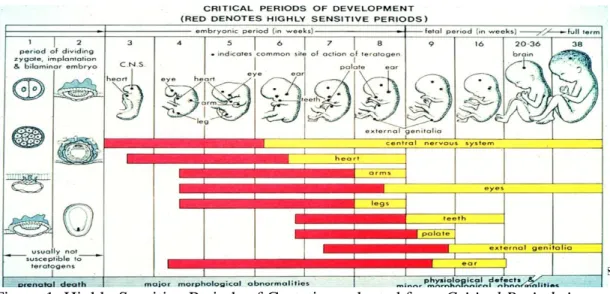
According to the 2011 Pregnancy Risk Assessment Monitoring System (PRAMS), 37.7% of pregnant women in North Carolina knew they were pregnant before four weeks gestation, and 87.3% knew by eight weeks gestation.17 Looking at the chart below
(Figure 1), a large proportion of highly sensitive periods of development occur before four weeks gestation, with almost all occurring before eight weeks.18 This leaves women little time to stabilize their health after conception, even if she is aware of her pregnancy. If women are healthy before pregnancy, then their developing fetuses will be less
18
Figure 1: Highly Sensitive Periods of Gestation, adapted from Critical Periods in Development18
A critical piece of preconception health is the goal of reducing unplanned pregnancies. The CDC defines unplanned pregnancy as a pregnancy that is mistimed, unplanned, or unwanted at the time of conception.19 In 2006, 49% of pregnancies in the U.S. were unintended.19 According to PRAMS, 42.7% of live births in 2011 in North Carolina were the result of unintended pregnancies.20 Women experiencing unintended pregnancy are less likely to obtain early prenatal care and their babies are at an increased risk of both low birth weight and premature birth.21 Preconception health addresses this problem by including family planning as a central tenant, and it seems to be having a positive effect. A clinical trial completed by Moos and Cefalo has shown that the provision of preconception care in the clinical setting can increase pregnancy planning and intention.22
in their baby’s development. Preconception care addresses unplanned pregnancies in two ways: it encourages women to use contraception until they are ready to get pregnant, and it also gives women the tools to be healthy before pregnancy, so that if an unplanned pregnancy occurs, the mother will be in good health.
Another example of a preconception health intervention that has well-documented and far-reaching positive effects for the next generation is the need for folic acid
supplementation. Folic acid is extremely important because it can help prevent major birth defects of the baby’s brain and spine including anencephaly and spina bifida.23
Folic acid has such strong evidence that is lowers the rates of Neural Tube Defects that in 1992, the U.S. Food and Drug Administration mandated adding folic acid to all enriched cereal grain products.24 In the years following the mandatory fortification, Spina Bifida rates went down 30%. 24 However, most women need more than the amount provided in cereal. In order to reduce the chances of a neural tube defect by 50-70%, women are advised to take 400 mcg of folic acid daily for one month before pregnancy, with higher doses recommended for women who have had a neural tube defect with a previous pregnancy.24 Preconception care provides an opportunity to inform women of the importance of taking folic acid before pregnancy to maximize their chances of having a healthy baby.
Chronic conditions such as diabetes and PKU can have devastating effects on a developing baby if they are managed incorrectly during pregnancy. Poorly controlled diabetes in the first weeks of pregnancy can increase the risk of having a baby with a birth defect by 30-40% as compared to a 2% increased risk for women with
for pre-eclampsia, premature birth and fetal death.25 Babies of women with poorly controlled PKU are at an increased risk for mental retardation, poor head growth, heart defects and other birth defects.26 Helping women control these chronic conditions is a central part of preconception health. Preconception counseling that assists women in controlling these chronic conditions can help avoid these devastating effects on developing babies. Additionally, helping women to better manage their chronic
conditions will improve their own health and quality of life, whether or not she chooses to have children.
These are only a few examples of the many risk factors that can be mitigated with preconception health care. The CDC’s 2006 MMWR lists fourteen conditions, exposures or medications that, when addressed in the preconception period, can minimize poor birth outcomes. These conditions include obesity, anti-epileptic drugs, folic acid deficiency, Hepatitis B, HIV/AIDS, diabetes, STDs, alcohol misuse, isotretinoins, oral anticoagulant, hypothyroidism, maternal phenylketonurea, rubella seronegativity, and smoking.1 Each of these conditions, exposures, or medications can be addressed during preconception care, minimizing the risk that it poses to a developing baby in the earliest stages of pregnancy.
being implemented into programs and interventions, preconception health promotion in North Carolina will examined next.
Preconception Health Promotion in North Carolina
The March of Dimes North Carolina Preconception Health Campaign (NCPHC) is an initiative aimed at improving birth outcomes in North Carolina by reaching out to women with important health messages before they become pregnant.27 This campaign was formerly the North Carolina Folic Acid Campaign, which primarily sought to improve birth outcomes through folic acid awareness and use. The new campaign seeks to address a wider range of issues, including reducing infant mortality, birth defects, and chronic health conditions in women. The campaign also aims to increase planned pregnancies in North Carolina.27
general preconception health. These four initiatives represent the goal of addressing preconception health through many venues, including public health initiatives, clinical initiatives and media campaigns.
Healthy Before Pregnancy, an educational intervention for young women, is another of NCPHC’s new and far-reaching initiatives.28 As most women in North Carolina have their first child in their young adult years, the Healthy Before Pregnancy curriculum targets high school students. The curriculum consists of a teacher’s guide, a
pretest and posttest, activities, handouts and five lesson plans. The lesson plans are titled: Pathways to Poor Birth Outcomes, Multivitamins: Take Them for Life, Healthy Weight Matters, Preventable Factors That Can Lead to Poor Birth Outcomes, and Reproductive Life Planning.28 The entirety of the Healthy Before Pregnancy is available on the Every Woman North Carolina website free of charge. As few other curriculums exist for a high school target audience, this resource fills a gap in the preconception health toolbox. While it is impossible to know exactly how many schools have utilized the Healthy
Before Pregnancy curriculum, the March of Dimes Statewide Coordinator estimates that it has been introduced in over 100 classrooms since it’s inception in March 2012 (Amy
Mullenix, written communication, June 2013).
community at large, and offers the opportunity for individuals and couples to learn from one another. This curriculum was also references in the development of “Preparing for Pregnancy.”
Preconception Health Promotion at UNC Women’s Hospital
Given the significant opportunities for improving health outcomes and the ground breaking work already in place in North Carolina, leaders at UNC Women’s Hospital felt it was time to develop and offer a class to prospective parents on preconception health. This would add to the existing courses offered that focus on pregnancy and the
postpartum period at UNC. The Preparing for Pregnancy: Mind, Body and Spirit class is being developed as a part of a grant the Center for Maternal and Infant Health received from the March of Dimes.
Why a class for preconception health?
This class directly addresses many of the preconception health recommendations made by the CDC. As a flagship research university, the University of North Carolina at Chapel Hill aims to set the example of putting research into practice. The 2006 MMWR on preconception health includes the recommendation to encourage every woman, man and couple to have a reproductive life plan.1 To operationalize this recommendation, the report suggests developing and disseminating reproductive life plan materials to people of reproductive age. “Preparing for Pregnancy” will introduce its participants to the
including an action step to develop, evaluate and disseminate educational curricula.1 “Preparing for Pregnancy” takes this action step by making preconception health
information available to the general public through a brief education intervention. A class is uniquely suited for a preconception intervention. Because
preconception health is an emerging field, much of the information about preconception health is simply not widespread knowledge. Only 12% of women know that they need to take folic acid before pregnancy, but 86% of women said they would take folic acid supplements if their doctor recommended it.29 “Preparing for Pregnancy” is taught by a clinician, giving women and their partners an opportunity to learn about safe and healthy pregnancy from a health practitioner.
The class is designed to give women information about how to have a safe pregnancy and healthy baby, as well as present risk factors for an unhealthy pregnancy and poor birth outcomes. The participants will be able to complete an informal mental “self risk assessment” throughout the class. If they find they do possess risk factors for a
complicated pregnancy, they will be given the assistance to seek out resources to mitigate those risk factors. An important aspect of the class is encouraging participants to engage with their health provider before getting pregnant, especially if they have risk factors for a high-risk pregnancy. This addresses the CDC’s preconception recommendations of increasing preventative visits, interventions for identified risks, interconception care, and prepregnancy check ups.11
Preparing for Pregnancy: Mind, Body, and Spirit
national initiative that encourages engaging in healthy behaviors before the decision to conceive a child.16 It was developed by the PHHCI in partnership with the Rhode Island Department of Health.29 The campaign encourages women to “show their love” to
themselves, their partners and their future children by getting healthy before pregnancy.16 The campaign utilized research on the most common and most serious health problems that can be mitigated with intervention to compose a list of the most important topics to address preconceptionally.16 The topics are as follows:
1. Plan pregnancies 2. Eat healthy foods 3. Be active
4. Take 400 mcg of folic acid daily
5. Protect myself from STIs and other infections
6. Avoid harmful chemicals, metals and other toxic substances around the home and in the workplace.
7. Make sure my vaccinations are up-to-date
8. Manage and reduce stress and get mentally healthy
9. Stop smoking (and get partners and family members to stop smoking too) 10. Stop using street drugs as well as prescription medicine that are not mine. 11. Reduce my alcohol intake before I try to get pregnant, and stop drinking while
trying to get pregnant. 12. Stop partner violence
15. Get regular checkups. See my doctor as needed.
The goal of the class is to provide a space in which participants can learn from an instructor and from one another about how to have a safe and healthy pregnancy. The objectives of the class are as follows:
Class Objectives:
1. Introduce participants to the concept of reproductive life planning
2. Address all 15 of the Center for Disease Control’s steps for preparing for a healthy pregnancy
3. Provide referrals for participants who, after learning about how to plan for a pregnancy, feel they need more specialized information from specialists such as Maternal and Fetal Medicine specialists, geneticists, or mental health providers 4. Create a safe space in which all of the participants can have their questions
answered, or can receive a referral to a specialist who can answer their questions
The class will be held at the Women’s Health Information Center (WHIC) at UNC
Hospital. The WHIC provides many different classes about women’s health including childbirth classes, CPR classes, baby massage classes and a group called Mentoring Other Moms. “Preparing for Pregnancy” will fit well into this organization, as it aligns
that not all of their questions were answered in one session, the possibility of meeting more than once will be explored.
Kim Hamden, CNM, RN, will teach “Preparing for Pregnancy.” Hamden is a
Certified Nurse Midwife and has a wealth of experience working with families. Hamden delivered babies early in her career, and she has worked the past six years as a
postpartum nurse at UNC Women’s Hospital. She is passionate about spreading information about preconception and interconception health. Her experience working with women’s health, maternity, and infant medical practitioners in the hospital will
allow her to make appropriate referrals for class participants. Most importantly, her work with this project is strongly supported by her colleagues and leaders in the Division of Midwifery.
Recruiting Participants
The class will be open to women and their partners, but the recruitment process will make clear that women without partners, or who have a partner who cannot attend, are encouraged to attend. While the class addresses many issues that involve only women, aspects of the class include reproductive life plans and talking to your partner about your readiness to have a child.
The class was written with the understanding that there is no way to guarantee a healthy pregnancy, there are only ways of maximizing the chance of having a healthy pregnancy by minimizing risk factors. This message will be relayed to participants, and discussed during the class’s introduction.
Class Structure
When deciding on the class’ structure, we sought out a style that facilitated
conversation, allowed participants to learn from one another, and promoted comfort in order to address challenging material. “Preparing for Pregnancy” borrowed aspects of CenteringPregnancy®, an evidence-based group care intervention that has been proven to increase participants comfort level and has shown promise in improving birth outcomes as compared to women who receive individual care.31 At its most basic level,
class does not deliver heath services directly and does not meet more than once. The elements of CenteringPregnancy® that will occur in Preparing for Pregnancy are:
1. A facilitative leadership style is used
2. Attention is given to core content, although emphasis will vary 3. The group is conducted in a circle
4. Group conduct honors the contribution of each member 5. Group size is optimal to promote the process
6. Involvement of support people is optional 7. There is an ongoing evaluation of outcomes32
Using these evidence-based elements as a guide, the class will be a combination of instruction, discussion, and addressing participants’ questions. Upon arriving, each class
participant will complete an intake survey about questions and concerns they have about preparing for a first or subsequent pregnancy.
spend additional time addressing common areas of interest, as per the Centering model. Demographic information will also be collected for evaluation purposes.
As with most CenteringPregnancy® classes, the class will open with an icebreaker. With the participants sitting in a circle, the participants will be asked the following two questions, which will appear on the first page of the flipbook:
1. What is your happiest memory as a child?
2. What would you like to be doing when your youngest child is 20 years old? The facilitator will remind the participants to think about families and what they hope for the future. This icebreaker will allow participants to get to know one another while getting into the family oriented mindset for the class.
The full presentation prepared for the class, along with speaker notes and more detailed information is in Appendix 3.
Challenges of “Preparing for Pregnancy: Mind, Body, and Spirit”
While the class provides many opportunities, it also poses challenges. First, preconception health and risk factors are different for each woman or couple. With the patient-specific nature of preconception care, it is difficult to address all of the possible risk factors in their entirety in a group setting. The CDC guidelines for the most
Another challenge of “Preparing for Pregnancy” is that its participants will be planning for pregnancy, and planned pregnancies have a lower risk of many
complications such as prematurity, low birthweight and fetal anomalies.21 This class may not reach the group that is at heightened risk for poor birth outcomes. A common
problem in preconception health is reaching women who do not believe they will get pregnant. However, this class is essential for the preconception health movement as well as for UNC Hospital. Women who are planning pregnancies may not have crucial information about how to best prepare for pregnancy or are aware that they have risk factors that can be minimized before pregnancy. As stated earlier, 57.3% of the live births in North Carolina in 2011 were the result of an intended pregnancy, but only 29.2% of North Carolina’s pregnant women took multivitamins one month prior to pregnancy.32 There is a need for educational intervention for all women, even those who are planning pregnancies.
Evaluating “Preparing for Pregnancy: Mind, Body, and Sprit”
At the end of the class, participants will be asked to fill out a short survey about their experience in the class. This exit survey can be found in Appendix 4. The survey asks participants what they learned from the class, if anything in the class affected their plans about when to get pregnant, and what concrete steps the participants plan to take when they leave the class. Finally, the survey will ask if the class affected the
participant’s decision about when to start trying to become pregnant. Because much of the class will be driven by the participants’ interests and questions, the evaluation seeks
The demographic information collected at the beginning of the class will be used to identify who the class is reaching. If we find that any age groups, racial groups, or groups of a certain insurance status are underrepresented, we will make a greater effort to reach those groups with expanded recruitment strategies.
Conclusion
The University of North Carolina at Chapel Hill is a flagship research university. It is important that the institution offer venues for the general public to learn about the latest research, especially when this research offers the possibility of better health for individuals and their families. While preconception health has only been in the public health spotlight for only twenty years, the evidence of its effectiveness is continually demanding more attention from clinicians and public health workers nationwide.
APPENDIX 1
APPENDIX 2 Intake Survey
These questions are for research purposes only: 1. How old are you? ________
2. How many children do you already have? ________
3. What kind of insurance do you have? ______________________________ 4. What is the highest level of education you have completed? ________________ 5. Why did you decide to take this class? __________________________________ ________________________________________________________________________ ________________________________________________________________________
Please circle the numbers of the questions you would like addressed.
1. Are the medications that I am currently taking safe for pregnancy? Are there medications that I should avoid?
2. Should I begin taking prenatal vitamins or folic acid before becoming pregnant? If so, when should I begin taking them?
3. Are there things I can do to improve my diet to help increase my chances of a health pregnancy? What about caffeine? Alcohol? Cigarettes?
4. Do I have any health problems (such as diabetes, high blood pressure, thyroid problems, asthma, depression, obesity, epilepsy, lupus, sickle cell disease…) that should affect a pregnancy? If so, what steps can I take to minimize their effect? Do I need a referral to a Maternal Fetal Medicine specialist to discuss my health issues before getting pregnant?
5. I had complications with a previous pregnancy (such as preeclampsia, preterm labor, gestational diabetes). What steps can I take to help ensure that my next pregnancy is as healthy as possible? Do I need a referral to a Maternal Fetal Medicine specialist prior to my next pregnancy?
7. Could my pregnancy be at risk because of genetic conditions that run in my family? Would I benefit from a referral to a genetic counselor?
8. Are my immunizations up to date?
9. How will a pregnancy and having a baby affect my home life and work? Are there long term plans I should be considering now?
10. What can I do to improve my chances of conceiving? When should I go off the birth control I’m using in order to conceive?
11. What other steps can I take to help me have the best possible pregnancy?
APPENDIX 3 - TAKE HOME INFORMATION
WHAT SHOULD I EAT?
Eating healthy is a great habit to get in before becoming pregnant. Healthy
weight is extremely important to achieve before pregnancy; physicians
recommend a BMI between 18.5 and 25. You can calculate your BMI
online using your height and weight.
Top 10 “brain foods” (good for your brain, and your
future baby’s brain too!)
1.
Legumes
2.
Eggs
3.
Nuts and seeds
4.
Olive oil
5.
Alaskan wild salmon
6.
Yogurt and kefir
7.
Whole grains
8.
Dark green vegetables (spinach, collards, kale and broccoli)
9.
Prunes, raisins and blueberries
10.
Oranges, red bell peppers and tomatoes
Top 10 “toxic foods”
1.
Swordfish, shark, king mackerel, and tilefish
2.
Soft cheeses and unpasteurized milk
3.
Hot dogs, lunch meats, deli meats, raw or smoked seafood
4.
Raw or undercooked meats
5.
Unwashed vegetables, raw vegetable sprouts, and
unpasteurized juices
6.
Liver
7.
Saturated fats, trans fats, and partially hydrogenated oils
8.
Added sugars
9.
Refined flour
T
HE“J
UST BEFORE WE GET PREGNANT”
CHECKLIST I have been taking at least 400 mcgs of folic acid daily for at least one month (once you get pregnant, increase from 400 to 600 mcgs)
I have talked to my doctor and I am up to date on all my vaccines (remember, you can’t get some vaccines while you’re pregnant!)
I don’t smoking and no one in my home smokes
I am not drinking alcohol
If I have any chronic health conditions, they are well controlled. I have also talked to my doctor about controlling them now and during pregnancy.
I am currently avoiding: -Changing cat litter
-Hot baths, hot tubs and saunas
-Lead exposure from old pipes and faucets -Mercury from broken bulbs and thermometers -Pesticides and certain chemicals (check labels)
I have talked to my doctor about all medications I am on and how safe they are during pregnancy.
I am not taking any medications that were not prescribed to me or any street drugs
I have lowered my stress levels and feel mentally healthy I have had a preconception appointment with a health provider I feel safe in my home
Resources
Prenatal Appointment—Make one as soon as you learn that you’re pregnant!
NC Women’s Hospital: (919) 966-2131
UNC at Timberlyne: (919) 843-7005
Women’s Health Information Center—offering pregnancy and birth classes (919)843-8463
nchealthywoman.org
Smoking
NC Quit Line is a great, free resource for people looking to quit
smoking. Telephone Service is available 24/7 toll-free at
1-800-QUIT-NOW (1-800-784-8669)
. Quit coaching
is available by phone in English and Spanish, with
translation service available for other languages.
Partner Violence
Chapel Hill—Compass center for children and families: (919)
929-7122
Durham—Durham Crisis Response Center: (919) 403-6562.
If you need another area, you can call either if these numbers
and they can direct you to a resource in your area.
Substance Use
Horizons—substance use and abuse services for pregnant
woman and women who and trying to get pregnant.
APPENDIX 4 – EXIT SURVEY
Thank you for attending “Preparing for Pregnancy: Mind, Body, and Spirit.” Please
answer the following questions so we can continue to improve our class.
1. What are three things you learned during this class? ________________________ _____________________________________________________________________ _____________________________________________________________________
_____________________________________________________________________ _____________________________________________________________________ 2. What are three concrete steps you will take to improve your own (or your
family’s) preconception health upon leaving this class? _____________________
_____________________________________________________________________ _____________________________________________________________________ _____________________________________________________________________ _____________________________________________________________________ 3. Did taking this class change your mind about when you plan on getting pregnant? Why or why not? ______________________________________________________ _____________________________________________________________________________________________ _____________________________________________________________________________________________ _____________________________________________________________________________________________
References
1. Centers for Disease Control and Prevention (CDC). Recommendations to Improve Preconception Health and Health Care—United States, 2006. MMWR Morb Mortal Wkly Rep. 2006;55(6)
2. Plutarch: Lycurgus 14 (trans. John Dryden). New York: Random House; 1932. P. 59-60.
3. Freda MC, Moos MK, Curtis M (2006). The History of Preconception Care: Evolving Guidelines and Standards
4. US Department of Health, Education and Welfare (PHS) HAS/BCHS. Primary care effectiveness—An approach to clinical quality assurance in BCHS programs and projects, Washington, DC: Author; January, 1979.
5. Institute of Medicine Committee to Study the Prevention of Low Birthweight. Preventing low birthweight. Washington, DC: National Academy Press; 1985. 6. U.S Public Health Service Expert Panel on Prenatal Care. Caring for our future:
the content of prenatal care. Washington, DC: Public Health Service. Department of Health and Human Services, 1989.
7. U.S Department of Health and Human Services, Public Health Service, Healthy People 2000. DHHS Publication No (PHS) 91-50212; 1990.
8. American College of Obstetricians and Gynecologists. Preconception Care. ACOG Technical Bulletin number 205; May 1995.
9. U.S. Department of Health and Human Services. Office of Disease Prevention and Health Promotion. Healthy People 2010. Washington, DC. Available at http://www.healthypeople.gov/2010/topicsobjectives2010/overview.aspx?topicid. Accessed July 1, 2013.
10. U.S. Department of Health and Human Services. Office of Disease Prevention and Health Promotion. Healthy People 2020. Washington, DC. Available at http://www.healthypeople.gov/2020/topicsobjectives2020/overview.aspx?topicid =26. Accessed July 3, 2013
11. Johnson KA, Floyd RL, Humphrey JR, et al. Action Plan for the National Initiative on Preconception Health and Health Care. 2011. Available at
http://www.cdc.gov/preconception/documents/actionplannationalinitiativepchhc2 012-2014.pdf. Accessed July 2, 2013.
12. Boulet SL, Parker C, Atrash H. Preconception care in international settings. Matern child healt j. 2006;10:S29-35.
13. Ruhl C, Moran B. The clinical content of preconception care: preconception care for special populations. Am J Obstet Gyneco2008;199:S384-S388.
14. Johnson K, Atrash H, Johnson A. Policy and Finance for Preconception Care: Opportunities for Today and the Future. Women Health Iss. 2008(18)6.
15. Lu MC, Halfon N. Racial and Ethnic Disparities in Birth Outcomes: A Life-Course Perspective. Maternal and Child Health Journal. 2003;7:13-30. 16. Center for Disease Control. Show Your Love. Preconception Care and Health
Care. February 1, 2013. Available at
17. North Carolina State Center for Health Statistics. 2011. 2011 North Carolina PRAMS Results: Knowledge of Pregnancy. North Carolina State Center for Health Statistics. 6 March, 2013. Available at
http://www.schs.state.nc.us/schs/prams/2011/SURE_MO2.html. Accessed June 25, 2013.
18. Office of Children’s Health Protection. Critical Periods in Development.
Children’s Health and the Environment; 2003. Available at
http://aquaticpath.umd.edu/appliedtox/paper2_v3.pdf. Retrieved June 29, 2013. 19. Center for Disease Control. Unintended Pregnancy Prevention. 12 February, 2013.
Available at http://www.studygs.net/citation/ama.htm. Accessed July 5, 2013. 20. North Carolina State Center for Health Statistics. Intendedness of Pregnancy.
2011 North Carolina Pregnancy Risk Assessment Monitoring System Survey Results. 2011. Available at http://www.studygs.net/citation/ama.htm. Retrieved on June 20, 2013.
21. D’Angelo DV, Gilbert, BC, Rochat, R, Santelli, JS, & Herold, JM. (2002) Differences between mistimed and unwanted pregnancies among women who have live births. Perspectives on Sexual and Reproductive Health; 36(5):192-197. 22. Moos MK, Bangdiwala SI, Meibohm AR, Cefalo RC. The impact of a
preconceptional health promotion program on intendedness of pregnancy. Am J Perinatol 1996;13:103–8.
23. Centers for Disease Control. Facts About Folic Acid. Folic Acid. January 13, 2013. Available at http://www.cdc.gov/ncbddd/folicacid/about.html. Accessed June 15, 2013.
24. Centers for Disease Control. Data and Statistics. Spina Bifida. 18 March, 2011. Available at http://www.cdc.gov/ncbddd/spinabifida/data.html. Accessed July 7, 2013.
25. Brown F. Managing Diabetes During Pregnancy. Joslin Diabetes Center. 13 November, 2006. Available at
http://www.joslin.org/info/Managing_Diabetes_During_Pregnancy.html. Accessed June 29, 2013.
26. Pridjian G. Pregnancy and Phenylketonuria. LSU Health Sciences Center. 2006. Available at
http://www.medschool.lsuhsc.edu/genetics_center/louisiana/article_pregnancy_P KU.htm. Accessed July 10, 2013.
27. Every Woman North Carolina. About the March of Dimes Preconception Health Campaign. Every Woman North Carolina. Published March 2012.
http://everywomannc.com/about-us/nc-preconception-health-campaign. Updated March, 2013. Accessed June 27, 2013.
28. Every Woman North Carolina. Our Curriculum, Healthy Before Pregnancy. http://everywomannc.com/educators/our-curriculum. Published March 2012. Updated March 2013. Accessed June 27, 2013.
30. Centers for Disease Control. Data and Statistics. Folic Acid. July 7, 2010. Available at http://www.cdc.gov/ncbddd/folicacid/data.html. Accessed June 20, 2013
31. Centering Healthcare Institute. Model Overview. Centering Healthcare. 2012. Available at http://centeringhealthcare.org/pages/centering-model/model-overview.php. Accessed June 10, 2013.
32. Centering Healthcare Institute. Essential Elements. Centering Healthcare. 2012. Available at http://centeringhealthcare.org/pages/centering-model/elements.php. Accessed June 12, 2013.
33. Centers for Disease Control. Facts About Folic Acid. Folic Acid. January 13, 2013. Available at http://www.cdc.gov/ncbddd/folicacid/about.html. Accessed June 15, 2013.
34. North Carolina Health Start. Ready, Set, Plan! North Carolina Public Health.