Household food insecurity, anemia, and overweight/obesity in mothers in Ecuador: a mixed methods approach and analysis
by
Norman Trevor Archer
Senior Honors Thesis Department of Nutrition
University of North Carolina at Chapel Hill 2018
Approved:
Advisor: Margaret E. Bentley
ACKNOWLEDGEMENTS
I would first like to thank Dr. Margaret E. Bentley and Dr. Amanda Thompson for their guidance on this project and for being such tremendous mentors to me during my two years in the School of Public Health. I would also like to thank Hannah Jahnke for her constant support of this project and friendship throughout. I am very grateful to the Galápagos Science Center, the Morehead-Cain Foundation, and the University of the San Francisco Quito, especially Dr. Jaime Ocampo, for the support I have received during this project. I thank Dr. Byron Tobar for his instrumental support in allowing me to live at Hospital Oskar Jandl last summer and conduct interviews with the wonderful doctors and nurses there. Finally, I would like to thank my parents, Janet and Trevor, who inspired me to pursue science and public health, my sisters, Isabella, Eva, and Helena, for being strong and intelligent role models, and my kind and clever friends here at Carolina.
TABLE OF CONTENTS
List of Tables and Figures………...………...…………...….4
Introduction and Study Aims………...………..…...……….5
Methods………...…...9
Results: Quantitative Analysis………...…...………...…...16
Results: Qualitative Analysis……….……...………...………27
Discussion………..………...……33
Strengths and Limitations……….………....……35
Conclusions………..……...….36
LIST OF TABLE AND FIGURES Tables
Table 1………...…20
Table 2………...……21
Table 3………...……22
Table 4………...……23
Table 5………...……24
Table 6………...……25
Table 7………...……31
Figures Figure 1………...…..9
Figure 2………...…10
Figure 3………...…26
Figure 4………...…26
Figure 5………...…31
INTRODUCTION & STUDY AIMS Introduction
Household food insecurity (HFI) causes individuals to have limited availability, access, and utilization of appropriate, safe, and nutritious food to meet their dietary needs for a healthy life (Food and Agriculture Organization, 2013). In particular, HFI adversely affects the nutritional status and health of women, especially those of reproductive age. In low-income countries, HFI is an integral determinant of malnutrition, and is commonly associated with inadequate dietary intake and poor diet quality (Anderson, 2012). In high-income countries, HFI is associated with overweight (Townsend, 2001) and obesity (Dinour, 2007) in women; additionally, adults with HFI from high-income countries are more likely to have decreased intake of fruits and vegetables that provide essential micronutrients, dietary fiber and antioxidants (Kendall, 1996; Kirkpatrick, 2008; Smith, 2008).
Recent studies show that HFI increases the risk of inadequate dietary intake in mothers and increases the risk of adopting risky coping mechanisms, such as compromising quality of diet and limiting food intake, to ensure that children are well fed (Hamelin, 2002; Radimer, 1992; McIntyre, 2011). HFI has also been associated with poor pregnancy outcomes, including preterm births, low birth weight, and gestational diabetes (Laraia, 2011). Furthermore, the long-lasting effects of early prenatal and postnatal metabolic conditions caused by malnutrition predispose developing fetuses to increased body weight and related comorbidities later in life (Tanumihardjo, 2007).
middle-income countries (LMICs) and has been examined a national, household, and individual levels. On the individual level, studies have illustrated the increasing prevalence of iron deficiency amongst obese adolescents (Nead, 2004) and an increasing prevalence of micronutrient deficiencies and the metabolic syndrome amongst women (Zeba, 2012). Furthermore, it has been shown that maternal iron deficiency contributes substantially to maternal death and is associated with babies with low birth weight and that maternal overweight/obesity is associated with maternal morbidity, preterm birth, and increased infant mortality (Black, 2013).
In Ecuador, micronutrient deficiencies have been observed for at least two decades (Freire, 1988), and recent studies have also found high rates of overweight/obesity in women of reproductive age as well as in older adults (Ordoñez, 2005; Freire, 2010). A recent study demonstrated evidence of the coexistence of high rates of undernutrition and overweight/obesity in Ecuador at the individual, household and national levels (Freire, 2014), however little research has examined the potential role of HFI in shaping the dual burden of malnutrition in Ecuador. A recent study in Ecuador found that HFI was positively associated with anemia and urban women and that these women had lower quality and less diverse diets; the study did not find an association between excess body weight or abdominal fat (Weigel, 2016).
environmental change, and dependence on mainland imported foods make the islands a tremendous case study for research on the HFI and the dual burden.
Study Questions and Aims
This project plans to employ quantitative and qualitative methods to address the following research questions:
1) Is anemia related to overweight/obesity and abdominal obesity in Ecuador? Does this relationship differ by geographic location?
2) Is household food insecurity related to anemia and overweight/obesity and abdominal obesity in Ecuador? Does this relationship differ by geographic location?
3) What are perceived challenges for diet and nutrition in mothers, especially pregnant women, according to healthcare providers in the Galápagos Islands?
To address these questions, the research study will investigate four main aims as described below:
AIM 1: Use quantitative methods to assess the prevalence of household food insecurity, anemia, overweight/obesity, abdominal obesity, and various sociodemographic factors in Ecuador. It is hypothesized that household food insecurity and the described health outcomes will be common across Ecuador. Data from 2012 ENSANUT survey, disaggregated by three geographic locations: the
AIM 2: Use quantitative methods to investigate two associations: (a) the
association of anemia and overweight/obesity and (b) the association of anemia and abdominal obesity. It is hypothesized that there is a negative association between both anemia and overweight/obesity and anemia and abdominal obesity.
Data from 2012 ENSANUT survey, disaggregated by three geographic locations: the
Galápagos Islands, urban mainland Ecuador, and rural mainland Ecuador.
AIM 3: Use quantitative methods to investigate the association of household food insecurity and (a) anemia (b) overweight/obesity (c) abdominal obesity (d) the concurrence of anemia and overweight/obesity and (d) the concurrence of anemia and abdominal obesity. It is hypothesized that there is a positive association between household food insecurity and the described health outcomes.
Data from 2012 ENSANUT survey, disaggregated by three geographic locations: the
Galápagos Islands, urban mainland Ecuador, and rural mainland Ecuador.
AIM 4: Use qualitative methods to assess the perspective of hospital personnel on diet and nutrition for mothers, especially pregnant women, in the Galápagos Islands. Research question: what is the effect of geographic isolation on food security, diet quality, and related health outcomes?
Data collected through semi-structured interviews conducted at Hospital Oskar Jandl in
METHODS Quantitative Methods:
Sample
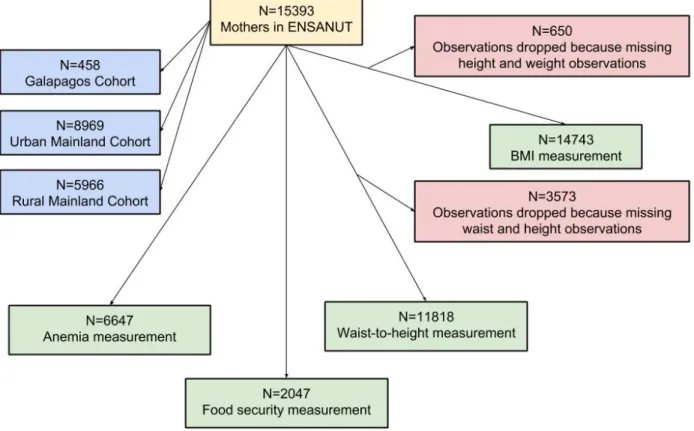
Data came from Encuesta Nacional de Salud y Nutrición (ENSANUT) 2012, Ecuador’s nationally-representative health and nutrition survey. The sample included women ages 13 to 49 who gave birth at least once (hereafter: “mothers”). The survey was used to analyze how anemia and obesity are associated with one another and how anemia and obesity are associated with household food insecurity (HFI) alongside sociodemographic characteristics within Ecuador. The survey was also used to determine health behaviors of food insecure households in which mothers lived.
Variables and Measures
The sample of mothers was disaggregated into three groups based on geographic location: the Galápagos Islands, urban mainland Ecuador, and rural mainland Ecuador.
Two questions from the 2012 ENSANUT survey were used to determine HFI of households [Figure 2]. Responses of “no” to the question, “during the last 2 weeks, did you have sufficient food to feed all the members of the household?” or responding “yes” to the question, “during the last two weeks, has the household had any difficulties paying for food?” indicated a moderate level of HFI. Responses of “no” and “yes” to these questions, respectively, indicated a high level of HFI. Responding, “yes” and “no”, respectively, indicated no HFI. In the analyses, food secure refers to no HFI and food insecure refers to either moderate or high HFI.
Anemia was defined as an altitude-adjusted hemoglobin concentration <12 g/dl, and classified as mild (³11 g/dl & <12 g/dl), moderate (³18 g/dl & <11 g/dl) and severe (<8 g/dl) according to the International Nutritional Anemia Consultative Group and World Health Organization standards (International Nutritional Anemia Consultative Group, 2002; World Health Organization, 1992).
Body weight (kg), height (cm), and waist circumference (cm) were used to calculate the body mass index (BMI) of participants (kg/m2) and waist-to-height ratios (WHtR). BMI was classified according to World Health Organization standards to assess underweight (BMI < 18.5), normal weight (18.5 ≤ BMI < 25), overweight (25 ≤ BMI < 30), and obesity (BMI ≥ 30) among adult women (World Health Organization, 2000). The fixed 0.5 WHtR cut-off was used to characterize abdominal obesity, and participants with a WHtR of greater than 0.5 were categorized as abdominally obese (Browning, Hsieh, & Ashwell, 2010).
The individual-level dual burden was defined in two different ways: the concurrence of anemia with overweight or obesity according to BMI, or the concurrence of anemia with abdominal obesity.
Statistical Analyses
Statistical analyses were carried out using STATA v. 13.1 (StataCorp, College Station, TX, USA). Descriptive statistics were used to describe the characteristics of mothers and to assess the prevalence of food insecurity, anemia, overweight/obesity, abdominal obesity, and the dual burden as defined above based on geographic location and urbanicity. Chi-squared tests were run to determine associations between sociodemographic characteristics and geographic location. Chi-squared tests were also run to determine associations between anemia with (a) overweight/obesity and (b) abdominal obesity
Logistic regression was used to determine association of HFI and sociodemographic characteristics with anemia, overweight/obesity, abdominal obesity, and the dual burden. Unadjusted logistic regression was used to select covariates, and to adjusted logistic regression was used to estimate odds ratios (ORs) with 95% confidence intervals (CIs) for the relationship between (a) anemia and overweight/obesity and (b) anemia and abdominal obesity. The model was adjusted for the selected covariates: maternal age, ethnicity, and marital status.
anemia was adjusted for maternal age, ethnicity, and marital status; the model estimating the relationship between HFI and overweight/obesity was adjusted for maternal age, language, ethnicity, marital status, education, and income quintile; the model estimating the relationship between HFI and abdominal obesity was adjusted for maternal age, language, ethnicity, marital status, and income quintile; the model estimating the relationship between HFI and the concurrence of anemia and overweight/obesity was adjusted for maternal age, language, ethnicity, marital status, education, and income quintile; the model estimating the relationship between HFI and the concurrence of anemia and abdominal obesity was adjusted for maternal age, language, ethnicity, marital status, and income quintile.
Qualitative Methods:
In order to gain a more comprehensive understanding of the relationship between food insecurity in the dual burden for mothers in the Galápagos Islands, qualitative methods were used to understand these phenomena from the perspective of local healthcare providers.
Ethical Considerations
The study was approved by the Institutional Review Board at the University of North Carolina at Chapel Hill. Additionally, permission was received from collaborators, including the director of Hospital Oskar Jandl and colleagues at Universidad San Francisco de Quito (USFQ) in Ecuador. All participants provided written informed consent to participate in the study. All interviews were conducted in Spanish.
Setting and Population
The study site was the Island of San Cristóbal, Galápagos. According to the 2010 census, San Cristóbal was home to about 7,000 people (Granda & Salazar, 2013). Our data were collected from Hospital Oskar Jandl in Puerto Baquerizo Moreno.
Participants
specialties of hospital personnel will not be included with their quotes in order to maintain anonymity.
Data Collection and Analysis
All interview guides focused on themes of health and nutrition for pregnant women and mothers. All interviews were audio-recorded. Recordings were transcribed, translated and coded for themes. Hospital personnel were selected using purposeful sampling (Bernard, 2011) and were interviewed at their places of work. Hospital personnel were recruited and interviewed by a public health student. Hospital personnel were asked about their perceptions of the maternal nutrition on the island.
RESULTS: QUANTITATIVE ANALYSIS Sample characteristics and the dual burden
Before disaggregation by geographic location, anemia significantly differed by overweight/obesity and abdominal obesity [Table 2]. Following disaggregation, anemia did not significantly differ by either overweight/obesity or abdominal obesity in the Galapagos Islands. In urban mainland, anemia significantly differed by overweight/obesity but not abdominal obesity. In rural mainland, anemia significantly differed by abdominal obesity but not overweight/obesity.
Food insecurity and the dual burden
age 20 and over were significantly more likely to be abdominally obese and black mothers and single mothers were significantly less likely to be abdominally obese. In rural mainland, mothers over age 20 were significantly more likely to be abdominally obese and indigenous speaking mothers, indigenous mother, divorced/single/widowed mothers, and mothers from the lowest income quintile were significantly less likely to be abdominally obese.
In logistic regression models adjusting for potential confounding covariates, anemia was not significantly associated with overweight/obesity or abdominal obesity in the Galapagos Islands [Table 4]. However, among urban and rural mainland, there was a consistent negative association of anemia and overweight/obesity and abdominal obesity. Compared to non-anemic mothers, the odds of overweight/obesity and abdominal obesity for were 32% lower (OR: 0.68, 95% CI: 0.56, 0.82) and 27% lower (OR: 0.73, 95% CI: 0.55, 0.97), respectively, among anemic mothers in urban mainland; the odds of overweight/obesity and abdominal obesity were 26% lower (OR: 0.74, 95% CI: 0.58, 0.96) and 51% lower (OR: 0.49, 95% CI: 0.34, 0.71), respectively, among anemic mothers in rural mainland. Amongst mothers in urban mainland, black mothers and divorced mothers were significantly more likely to be overweight/obese and abdominally obese, and mothers 40 and older are significantly more likely to be obese. Amongst mothers in rural mainland, black mothers were significantly more likely to be overweight/obese and abdominally obese and mothers age 20 to 29 are significantly less likely to be overweight/obese.
mainland, HFI was not significantly associated with overweight/obesity, but the odds of abdominal obesity for mothers with HFI were 50% higher (OR: 1.50, 95% CI: 1.01, 2.24). In rural mainland, HFI was not significantly associated with abdominal obesity, but the odds of overweight/obesity for mother with HFI were 38% lower (OR: 0.62, 95% CI: 0.39, 0.98). HFI was not significantly associated with the concurrence of anemia and overweight/obesity or the concurrence of anemia and abdominal obesity.
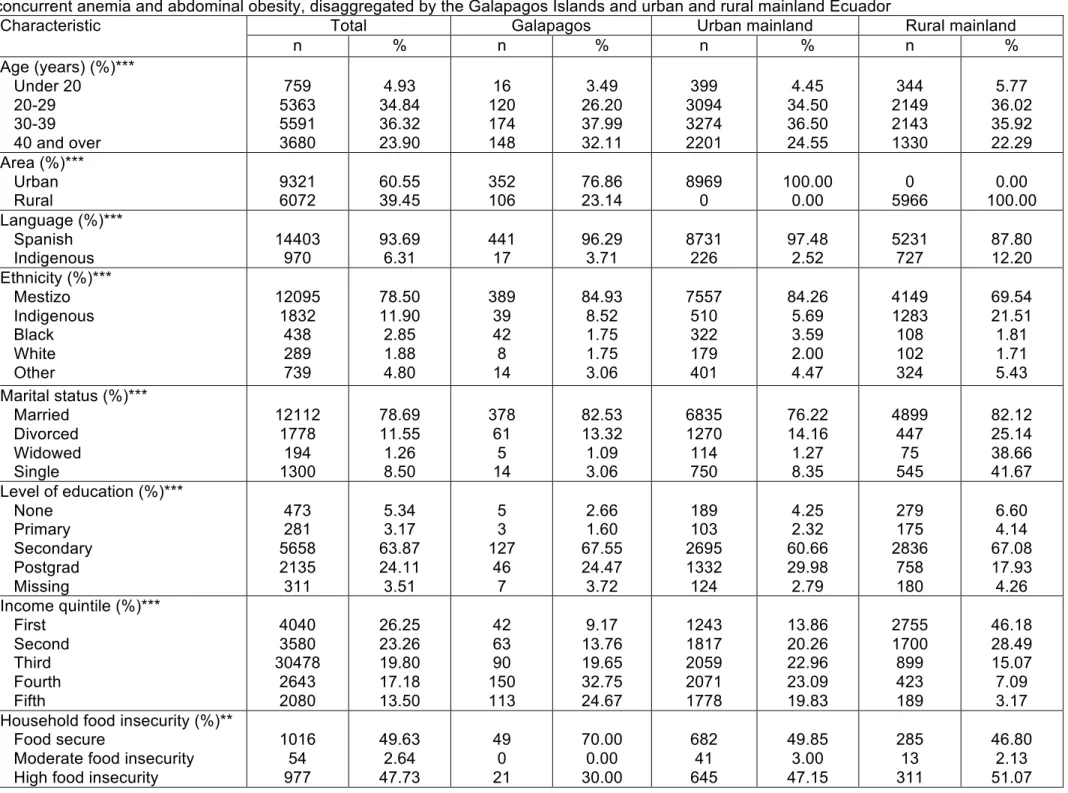
Table 1. Descriptive statistics and food insecurity, anemia, BMI, and waist-height ratio, concurrent anemia and overweight/obesity, and concurrent anemia and abdominal obesity, disaggregated by the Galapagos Islands and urban and rural mainland Ecuador
Characteristic Total Galapagos Urban mainland Rural mainland
n % n % n % n %
Age (years) (%)*** Under 20
20-29 30-39 40 and over
759 5363 5591 3680 4.93 34.84 36.32 23.90 16 120 174 148 3.49 26.20 37.99 32.11 399 3094 3274 2201 4.45 34.50 36.50 24.55 344 2149 2143 1330 5.77 36.02 35.92 22.29 Area (%)*** Urban Rural 9321 6072 60.55 39.45 352 106 76.86 23.14 8969 0 100.00 0.00 0 5966 0.00 100.00 Language (%)*** Spanish
Indigenous 14403 970 93.69 6.31 441 17 96.29 3.71 8731 226 97.48 2.52 5231 727 87.80 12.20 Ethnicity (%)*** Mestizo Indigenous Black White Other 12095 1832 438 289 739 78.50 11.90 2.85 1.88 4.80 389 39 42 8 14 84.93 8.52 1.75 1.75 3.06 7557 510 322 179 401 84.26 5.69 3.59 2.00 4.47 4149 1283 108 102 324 69.54 21.51 1.81 1.71 5.43 Marital status (%)***
Married Divorced Widowed Single 12112 1778 194 1300 78.69 11.55 1.26 8.50 378 61 5 14 82.53 13.32 1.09 3.06 6835 1270 114 750 76.22 14.16 1.27 8.35 4899 447 75 545 82.12 25.14 38.66 41.67 Level of education (%)***
None Primary Secondary Postgrad Missing 473 281 5658 2135 311 5.34 3.17 63.87 24.11 3.51 5 3 127 46 7 2.66 1.60 67.55 24.47 3.72 189 103 2695 1332 124 4.25 2.32 60.66 29.98 2.79 279 175 2836 758 180 6.60 4.14 67.08 17.93 4.26 Income quintile (%)***
Anemia (hemoglobin) (%) Normal (hb ³12 g/dl) Mild ((³11 g/dl & <12 g/dl) Moderate ((³18 g/dl & <11 g/dl) Severe (<8 g/dl)
5542 738 330 37 83.38 11.10 4.96 0.56 172 20 8 0 86.00 10.00 4.00 0.00 3221 459 198 28 82.46 11.75 5.07 0.72 2149 259 124 9 84.57 10.19 4.88 0.35 BMI (%)*** Underweight (<18.5)
Normal weight (³18.5 & <25) Overweight (³25 & <30) Obese (³30)
215 4951 5933 3644 1.46 33.58 40.24 24.72 3 110 201 139 0.66 24.28 44.37 30.68 139 2770 3442 2273 1.61 32.12 39.91 26.36 73 2071 2290 1232 1.29 36.55 40.42 21.74 Abdominal Obesity*
Waist to height ratio ≤ 0.5 Waist to height ratio > 0.5
1558 10260 13.18 86.82 37 352 9.51 90.49 977 6098 13.81 86.19 544 3810 12.49 87.13 Concurrent anemia and
overweight/obesity (%)* 574 9.08 21 10.55 364 9.78 189 7.88
Concurrent anemia and
abdominal obesity (%)* 640 12.28 22 12.64 417 13.32 201 10.54
Significant differences in chi-square tests by geographic location are denoted by: *p<0.05, **p£0.01, ***p£0.001
Table 2. Associations between anemia and BMI and anemia and abdominal obesity, disaggregated by the Galapagos Islands and urban and rural mainland Ecuador
Characteristic Total Galapagos Islands Urban mainland Rural mainland
Normal a
n (%)
Anemic b
n (%) Normal n (%) Anemic n (%) Normal n (%) Anemic n (%) Normal n (%) Anemic n (%) BMI (%)
Underweight (<18.5) Normal weight (³18.5 & <25) Overweight (³25 & <30) Obese (³30) 80 (1.47)** 1768 (32.40)** 2249 (41.21)** 1360 (24.92)** 16 (1.67)** 369 (38.52)** 367 (38.31)** 206 (21.50)** 1 (0.58) 40 (23.26) 84 (48.84) 47 (27.33) 0 (0.00) 7 (25.00) 14 (50.00) 7 (25.00) 45 (1.42)** 971 (30.56)** 1308 (41.17)** 853 (26.85)** 12 (2.00)** 225 (37.44)** 219 (36.44)** 145 (24.13)** 34 (1.61) 757 (35.91) 857 (40.65) 460 (21.82) 4 (1.22) 137 (41.64) 134 (40.73) 54 (16.41) Abdominal Obesity (%)
Waist to height ratio ≤ 0.5 Waist to height ratio > 0.5
536 (12.11)*** 3890 (87.89)*** 125 (16.47)*** 4524 (87.25)*** 15 (10.20) 132 (89.80) 3 (12.00) 22 (88.00) 319 (12.12) 2313 (87.88) 73 (14.99) 414 (85.01) 202 (12.26)*** 1445 (87.74)*** 49 (19.84)*** 198 (80.16)***
a Normal hemoglobin is defined by the WHO as having hemoglobin ³12 g/dl b Anemia is defined by the WHO as having hemoglobin <12 g/dl
Table 3. Unadjusted logistic regression analyses of the association of household food insecurity and sociodemographic factors with anemia, overweight/obesity, and abdominal obesity, among mothers in the Galapagos Islands and urban and rural mainland Ecuador
Dependent Variables Anemia OR (95% CI) Overweight/obesity OR (95% CI) Abdominal obesity OR (95% CI) Urban mainland Rural mainland Urban mainland Rural mainland Urban mainland Rural mainland Household food insecuritya
Food secure (reference)
Food insecure 1.25 (0.84,1.86) - 0.71 (0.37,1.37) - 1.06 (0.83,1.35) - 0.92 (0.65,1.30) - 1.66**(1.15, 2.39) - 1.37 (0.79, 2.37) - Age (years)
Under 20 (reference) 20-29
30-39 40 and over
- 0.78 (0.52,1.16) 0.75 (0.51, 1.11) 0.88 (0.59, 1.32)
- 0.64* (0.41, 0.99)
0.67 (0.43, 1.04) 0.83 (0.52, 1.31)
-
2.06*** (1.63, 2.59) 4.53*** (3.59, 5.71) 7.27*** (5.70, 9.28)
-
2.72*** (2.09, 3.55) 6.08*** (4.65, 7.94) 7.65*** (5.78, 10.12)
-
2.02*** (1.44, 2.82) 4.83*** (3.43, 6.80) 8.69*** (6.04, 12.51)
-
2.02*** (1.36, 3.01) 4.45*** (2.96, 6.68) 8.06*** (5.17, 12.56) Language
Spanish (reference) Indigenous
- 0.80 (0.46, 1.38)
- 1.13 (0.83, 1.56)
-
0.60*** (0.46, 0.79)
-
0.51*** (0.43, 0.60)
- 0.73 (0.48, 1.10)
-
0.66** (0.50, 0.87) Ethnicity Mestizo (reference) Indigenous Black White Other - 1.02 (0.71, 1.47) 1.67* (1.10, 2.54) 0.96 (0.52, 1.74) 1.29 (0.89, 1.86)
- 1.18 (0.91, 1.54) 2.75** (1.44, 5.26)
1.78 (0.58, 2.77) 1.18 (0.73, 1.90)
- 0.63*** (0.52, 76)
1.11 (0.86, 1.44) 1.05 (0.76, 1.47) 0.95 (0.76, 1.19)
-
0.49*** (0.43, 0.56) 0.89 (0.59, 1.34) 1.12 (0.72, 1.75) 1.29 (1.00, 1.67)
- 0.77 (0.57, 1.03) 0.61** (0.44, 0.84)
0.91 (0.58, 1.44) 0.93 (0.68, 1.28)
-
0.74** (0.59, 0.93) 0.51* (0.30, 0.88) 0.92 (0.47, 1.80) 0.74 (0.52, 1.05) Marital status Married (reference) Divorced Widowed Single -
1.34** (1.08, 1.68) 1.20 (0.55, 2.62) 1.07 (0.80, 1.44)
- 1.04 (0.70, 1.52) 1.13 (0.43, 2.98) 0.84 (0.57, 1.24)
- 0.98 (0.86, 1.11) 1.38 (0.89, 2.12) 0.54*** (0.46, 0.63)
- 0.87 (0.71, 1.07) 1.06 (0.65, 1.72) 0.57***(0.47, 0.68)
- 0.86 (0.71, 1.04) 2.10 (0.97, 4.53) 0.47*** (0.38 0.59)
-
0.60*** (0.45, 0.81) 0.53* (0.29, 0.99) 0.64** (0.48, 0.86) Level of education
None (reference) Primary Secondary Postgrad Missing - 1.25 (0.50, 3.15) 1.08 (0.61, 1.92) 0.98 (0.54, 1.79) 1.37 (0.60, 3.14)
- 1.01 (0.44, 2.37) 1.09 (0.62, 1.93) 1.25 (0.67, 2.33) 1.24 (0.55, 2.80)
- 1.45 (0.83, 2.54) 1.17 (0.84, 1.63) 0.89(0.63, 1.24) 1.73* (1.00, 2.98)
- 1.07 (0.70, 1.61) 0.09 (0.68. 1.17) 0.69* (0.52, 0.93) 0.91 (0.61, 1.36)
- 1.58 (0.55, 4.52) 1.03 (0.59, 1.79) 0.66 (0.38, 1.16) 1.16 (0.49, 2.78)
- 1.55 (0.66, 3.64) 0.86 (0.53, 1.39) 0.74 (0.44, 1.25) 0.99 (0.47, 2.06) Income quintile First Second Third (reference) Fourth Fifth
1.22 (0.93, 1.59) 0.87 (0.68, 1.12)
- 0.85 (0.66, 1.09) 0.88 (0.69, 1.13)
1.31 (0.93, 1.82) 0.98 (0.68, 1.42)
- 0.99 (0.60, 1.63) 1.16 (0.60, 2.24)
0.76*** (0.65, 0.88) 0.89 (0.77, 1.01)
- 1.19* (1.04, 1.37)
1.11 (0.96, 1.27)
0.56*** (0.48, 0.67) 0.83* (0.69, 0.99)
- 0.95 (0.73, 1.23) 1.13 (0.69, 1.62)
0.84 (0.66, 1.06) 1.02 (0.82, 1.26)
- 1.04 (0.85, 1.27) 0.88 (0.72, 1.07)
0.75* (0.58, 0.99) 0.93 (0.70, 1.24)
- 0.78 (0.53, 1.16) 0.95 (0.54, 1.65) a Food insecure is defined as moderate or high household food insecurity
Table 4. Unadjusted and adjusted logistic regression analyses of the association of anemia with overweight/obesity and abdominal obesity among mothers in the Galapagos Islands and urban and rural mainland Ecuador
Dependent Variables Overweight/obesity OR (95% CI) Abdominal obesity OR (95% CI)
Galapagos Islands Urban mainland Rural mainland Galapagos Islands Urban mainland Rural mainland Unadjusted analyses
Anemia status Normala
Anemicb 0.95 (0.54, 1.64) - 0.84** (0.76, 0.94) - 0.84* (0.72, 0.98) - 0.83 (0.22, 3.11) - 0.78 (0.59, 1.03) - 0.56*** (040, 0.80) - Adjusted analyses
Anemia status Normal
Anemic 0.83 (0.31, 2.20) - 0.68*** (0.56, 0.82) - 0.74* (0.58, 0.96) - 0.86 (0.22, 3.48) - 0.73* (0.55, 0.97) - 0.49*** (0.34, 0.71) - Age (years)
Under 20 (reference) 20-29
30-39 40 and over
-
1.14 (0.09, 14.21) 0.76 (0.07, 8.82) 0.78 (0.06, 8.35)
- 0.96 (0.60, 1.55) 1.11 (0.69, 1.77) 1.51 (0.93, 2.45)
- 0.59* (0.36, 0.98)
0.74 (0.44, 1.22) 1.01 (0.60, 1.69)
- 1.31 (0.40, 4.28) 1.19 (0.44, 3.22)
-
- 1.68 (0.74, 3.77) 1.94 (0.86, 4.34) 2.65* (1.18, 5.97)
- 1.00 (0.42, 2.35) 1.43 (0.61, 3.35) 2.05 (0.87, 4.83) Ethnicity Mestizo (reference) Indigenous Black White Other - 0.51 (0.11, 2.37) 1.39 (0.12, 15.46)
- -
- 0.93 (0.62, 1.40) 1.78* (1.13, 2.80) 0.89 (0.46, 1.71) 1.27 (0.85, 1.89)
- 1.04 (0.77, 1.40) 2.48** (1.24, 4.96)
1.33 (0.58, 3.06) 1.15 (0.68, 1.94)
- 0.69 (0.14, 3.26) 1.39 (0.12, 16.20)
- -
- 0.81 (0.49, 1.35) 1.93** (1.19, 3.1) 0.78 (0.38, 1.59) 1.04 (0.66, 1.66)
- 1.08 (0.76, 1.55) 2.80** (1.31, 5.97)
1.69 (0.72, 3.95) 1.09 (0.60, 1.96) Marital status Married (reference) Divorced Widowed Single - 1.82 (0.65, 5.11)
- -
-
1.45** (1.14, 1.83) 0.94 (0.39, 2.27) 1.27 (0.93, 1.73)
- 1.06 (0.70, 1.61) 1.00 (0.34, 2.91) 0.91 (0.60, 1.39)
- 1.48 (0.46, 4.74)
- -
-
1.51*** (1.17, 1.93) 1.13 (0.49, 2.62) 1.36 (0.96, 1.95)
- 1.13 (0.73, 1.76) 1.45 (0.54, 3.90) 1.01 (0.62, 1.66) a Normal hemoglobin is defined by the WHO as having hemoglobin ³12 g/dl
Table 5. Unadjusted and adjusted logistic regression analyses of the association of household food insecurity with anemia, overweight/obesity, and abdominal obesity among mothers in urban and rural mainland Ecuador
Dependent Variables Anemia OR (95%) Overweight/obesity OR (95%) Abdominal obesity OR (95%)
Urban
mainland mainland Rural mainland Urban mainland Rural mainland Urban mainland Rural
Unadjusted analyses
Household food insecuritya
Food secure (reference) Food insecure - 1.25 (0.84,1.86) - 0.71 (0.37,1.37) - 1.06 (0.83,1.35) - 0.92 (0.65,1.30) - 1.66**(1.15, 2.39) - 1.37 (0.79, 2.37)
Adjusted analyses
Household food insecurity Food secure (reference) Food insecure
- 1.24 (0.83, 1.86)
- 0.72 (0.36, 1.45)
- 0.97 (0.67, 1.40)
- 0.62* (0.39, 0.98)
- 1.50* (1.01, 2.24)
- 1.11 (0.61, 2.01) Age (years)
Under 20 (reference) 20-29
30-39 40 and over
- 0.28 (0.02, 4.79) 0.24 (0.02, 4.09) 0.24 (0.01, 3.95)
- 0.13 (0.01, 2.48) 0.12 (0.01, 2.29) 0.15 (0.01, 2.82)
- 1.36 (0.39, 4.72) 3.66* (1.10, 12.72) 5.86** (1.64, 20.90)
- 3.87 (0.36, 42) 8.19 (0.76, 88.87) 12.44 (1.13, 136.85)
- 3.95 (0.96, 16.17) 11.79*** (2.86, 48.61) 17.18*** (4.06, 72.53)
- 0.41* (0.19, 0.88)
0.92 (0.46, 1.84) - Language
Spanish (reference) Indigenous
Not included in model Not included in model -
0.53 (0.17, 1.69)
- 1.17 (0.50, 2.75)
- 0.51 (0.16, 1.69)
- 0.12* (0.03, 0.49) Ethnicity Mestizo (reference) Indigenous Black White Other - 0.67 (0.27, 1.64) 1.78 (0.65, 4.86) 0.82 (0.23, 2.95) 1.02 (0.20, 2.63)
- 1.76 (0.77, 4.01) 5.57* (1.3, 23.05) 6.56 (0.84, 51.40) 1.59 (0.18, 14.51)
- 1.42 (0.59, 3.41) 0.55 (0.26, 1.19) 2.19 (0.45, 10.70)
0.88 (0.44, 1.80)
- 0.59 (0.29, 1.19) 0.84 (0.23, 3.03) 0.37 (0.10, 1.34) 1.91 (0.40, 9.19)
- 0.91 (0.34, 2.41) 0.40* (0.20, 0.81)
0.66 (0.22, 1.99) 0.71 (0.30, 1.65)
- 3.86 (0.93, 16.04) 0.13* (0.08, 0.46)
- - Marital status Married (reference) Divorced Widowed Single - 1.07 (0.62, 1.85) 0.93 (0.35, 2.46) 0.84 (0.42, 1.71)
- 1.26 (0.46, 3.45) 1.18 (0.26, 5.31) 1.54 (0.54, 4.37)
- 1.16 (0.69, 1.94) 1.53 (0.66, 3.57) 0.80 (0.43, 1.48)
- 1.06 (0.54, 2.08) 0.55 (0.23, 1.34) 0.60 (0.29, 1.22)
- 0.70 (0.39, 1.27) 1.69 (0.53, 5.41) 0.50 (0.26, 0.97)
- 0.32 (0.10, 1.02) 0.19* (0.05, 0.74)
0.35 (0.10, 1.17) Level of education (%)
None (reference) Primary Secondary Postgrad Missing
Not included in model Not included in model
- 1.77 (0.46, 6.82) 1.32 (0.61, 2.84) 0.72 (0.32, 1.61) 0.90 (0.27, 2.99)
- 1.29 (0.38, 4.42) 1.23 (0.53, 2.82) 1.36 (0.51, 3.58) 1.41 (0.43, 4.66)
Not included in model Not included in model
Income quintile First Second Third (reference) Fourth Fifth
Not included in model Not included in model
0.85 (0.51, 1.42) 0.93 (0.56, 1.54)
- 1.26 (0.68, 2.35) 1.14 (0.46, 2.84)
1.69 (0.82, 3.47) 1.38 (0.66, 2.91)
- 2.05 (0.54, 7.80) 1.90 (0.16, 22.42)
1.02 (0.56, 1.86) 1.11 (0.62, 1.98)
- 0.79 (0.44, 1.43) 0.52* (0.28, 0.96)
1.40 (0.53, 3.70) 1.25 (0.46, 3.39)
- 0.72 (0.21, 2.51))
0.53 (0.04, 6.54)
a Food insecure is defined as moderate or high food insecurity
Table 6. Unadjusted and adjusted logistic regression analyses of the association of household food insecurity with the concurrence of anemia and overweight/obesity, and the concurrence of anemia and abdominal obesity among mothers in the Galapagos, urban mainland Ecuador, and rural mainland Ecuador
Dependent Variables Anemia & Overweight/obesity OR (95%) Anemia & Abdominal obesity OR (95%)
Urban Mainland Rural Mainland Urban Mainland Rural Mainland
Unadjusted analyses Household food insecuritya Food secure (reference)
Food insecure 1.31 (0.81, 2.10) - 0.81 (0.32, 2.06) - 1.13 (0.73, 1.77) - 0.63 (0.28, 1.44) - Adjusted analyses
Household food insecurity Food secure (reference) Food insecure
- 1.71 (0.83, 3.51)
- 0.33 (0.09, 1.17)
- 1.31 (0.81, 2.12)
- 0.45 (0.18. 1.12) Age (years)
Under 20 (reference) 20-29
30-39 40 and over
- - 1.27 (0.45, 3.36) 1.10 (0.38, 3.13)
-
0.52 (0.089, 3.06) 0.39 (0.09, 1.73)
-
- - 0.95 (0.48, 1.90) 1.00 (0.50, 1.97)
- - 1.70 (0.38, 6.54) 2.44 (0.58, 10.22) Language Spanish (reference) Indigenous - - -
1.08 (0.05, 24.96)
- 1.38 (0.29, 6.63)
-
5.74 (0.73, 45.05) Ethnicity Mestizo (reference) Indigenous Black White Other - - 1.84 (0.41, 8.24) 1.70 (0.29, 9.96) 1.50 (0.44, 5.01)
- 0.83 (0.08, 8.52) 3.70 (0.30, 45.79) 2.87 (0.20, 41.68)
-
- 0.41 (0.09, 1.88) 2.04 (0.88, 7.13) 0.56 (0.12, 2.60) 0.92 (0.30, 2.83)
- 0.65 (0.10, 4.28) 1.18 (0.12, 11.26) 15.18 (1.15, 199.60)
2.31 (0.23, 23.35) Marital status Married (reference) Divorced Widowed Single - 1.83 (0.70, 4.83) 1.53 (0.31, 7.53) 0.97 (0.26, 3.59)
- 0.92 (0.14, 5.84) 1.0 1(0.06, 17.82)
0.56 (0.06, 4.96)
- 1.20 (0.64, 2.27) 1.06 (0.36, 3.12) 0.96 (0.41, 2.26)
- 1.03 (0.27, 3.96) 0.99 (0.14, 6.76) 1.12 (0.27, 4.62) Level of education (%)
None (reference) Primary Secondary Postgrad Missing -
1.68 (0.22, 13.13) 1.30 (0.34, 4.91) 0.36 (0.08, 1.72) 0.48 (0.04, 5.82)
- - 0.63 (0.05, 7.55) 0.76 (0.04, 13.14)
-
Not included in model Not included in model
Income quintile First Second Third (reference) Fourth Fifth
0.96 (0.35, 2.63) 1.25 (0.50, 3.12)
- 2.97 (0.66, 5.84) 2.64 (0.66, 10.58)
0.43 (0.08, 2.39) 0.25 (0.04, 1.45)
- - -
0.85 (0.41, 1.73) 0.63 (0.32, 1.24)
- 1.39 (0.71, 2.73) 1.16 (0.55, 2.44)
0.60 (0.12, 2.94) 0.75 (0.16, 3.51)
Figure 3. Actions of households with insufficient food.
Figure 4. Actions of households with not enough money to pay for food.
0 10 20 30 40 50 60
Other Decrease the amount to women Decrease the amount to children Decrease the amount to adults Decrease the amount of all meals equally Decrease the amount of daily meals
Percentage
When there isn't sufficent food, what does the household do?
Galápagos
Urban Mainland
Rural Mainland
0 10 20 30 40 50 60 70 80
Other Spent from your savings Sold some good or animal Stop buying some products Trust in the store Ask for a loan from a friend Ask for a loan from a relative
Percentage
What action did you take to cover paying for food?
Galápagos
Urban Mainland
RESULTS: QUALITATIVE
Co-occurrence of Themes and Mention of Theme by Occupation and Gender
The most common themes mentioned throughout the interviews were poor diet
quality (n=8), overweight/obesity (n=7), and geographic isolation (n=5), each of which
were mentioned in at least half of the interviews. The most common co-occurrence of two
themes within an interview excerpt were food insecurity and geographic isolation (5
mentions), poor diet quality and food insecurity (4 mentions), and poor diet quality and
geographic isolation (3 mentions) [Table 7].
Overall, male participants mentioned poor diet quality, overweight/obesity,
geographic isolation, and food insecurity at a greater percentage, and female participants
mentioned diet misconceptions and anemia at a greater percentage [Figure 5].
Participants that were physicians mentioned all six themes at a higher percentage than
participants that were nurses [Figure 6].
Anemia and Overweight/Obesity
Anemia was only mentioned in thirty percent of interviews (n=3). Furthermore,
anemia was not mentioned in concurrence with any of the other five themes. One
participant did identify anemia as a health problem in the Galapagos Islands, while
another participant mentioned it when discussing appropriate diets for women.
“Especially when a woman with anemia is detected, they are given diet
recommendations, especially focused in proteins, red meats, and vegetables, and
“We have big problems with pregnant women as far as developing anemia during
pregnancy.” [Nurse]
Although one physician did not perceive overweight/obesity to be a major health concern,
all other mentions of overweight/obesity expressed concern. The only mention of
underweight was observed when one participant pointed out the lack of underweight and
did not identify it as a major health concern.
“It’s a topic that’s trying to get reinforced, nutrition, not only in pregnant women, but in
all of the population because, there is obesity. Look at us.” [Physician]
“Here, the rate of obesity, from origin until the reception of the pregnant woman is already
high. We’re talking about greater than 50 percent of local women are already overweight
since before pregnancy.” [Physician]
“It could be, but there isn’t a great rate of overweight in pregnant women.” [Physician]
“The rate of low weight gain during the pregnancy is really not so noticeable. It’s very
low. It’s under 10 percent, I’d consider, in women.” [Physician]
Poor Diet Quality and Dietary Misconceptions
Two main themes related to diet quality arose throughout the interviews: first, a
lack of fruits and vegetables and second, a surplus of carbohydrates.
“The greatest challenge I consider at the social level that pregnant mothers have in San
Cristobal is nutrition.” [Nurse]
“Foods aren’t available throughout the entire year in order to have a balanced diet of
vegetables rich in protein.” [Physician]
“We have a lot of scarcity of food, especially of fruits and vegetables, which are not
“Some patients eat a lot of carbohydrates, things that do not benefit them, that are not
very nutritional.” [Physician]
“Here, they have habit of eating a lot of carbohydrates.” [Physician]
“Too much fried food…too much carbohydrates.” [Physician]
In three interviews, the phenomenon of pregnant women “eating for two” was mentioned.
The participants mentioned that it was a common belief for women and expressed their
disagreement with said belief.
“It’s clear that they should not eat for two, as many people think.” [Physician]
“Everyone tells them, ‘you’re pregnant, you have to eat double.’ So, they take advantage,
and they eat everything they want, or anything they can.” [Physician]
“They have beliefs of that since they’re pregnant, they should eat for the baby, and for
themselves.” [Physician]
Geographic Isolation & Food Insecurity
The geographic isolation of the Galápagos Islands was mentioned as a challenge
several times and it was often mentioned alongside food insecurity and poor diet
quality. The geographic isolation was perceived to affect not only the cost of food but
also the availability and diversity of food.
“The greatest challenge to us, in medical attention to women and children is the
geographical isolation.” [Nurse]
“Our greatest limitation is where we’re at, our geographical location.” [Physician]
“Here, diet is a little complex, and we go back to the topic of geographical isolation.
Because of the continent being far way, and nothing is produced on the island.
“Sometimes, we have the money, but you don’t find appropriate things at the store, or
what you want, not even in the state you need them in, fresh, such as vegetables.”
[Physician]
“Well, with nutrition, the government is in charge of providing Galapagos with food. But,
really, there are private companies who bring in food. We have had several occasions
on which the ships have sunk, or that the airlines for some reason do not want to bring
in food.” [Nurse]
Improving Education
In response to the challenges the islands face, several hospital personnel noted the
importance of education to change the culture around diet and nutrition. One noted that
education should serve as a preventative measure, happening before the onset of
diet-related health issues.
“It’s the culture. It’s like lack of education, guidance on nutrition that does not correspond
to us, but at the first stage.” [Nurse]
“Even when working in that direction, information to patients has to be improved
regarding food, calories, diet, based on their weight, at the beginning of pregnancy. But,
yes, the information must be improved, the education on diet must be improved.”
[Physician]
“Despite Galapagos not apparently having a greater poverty rate than the Continent’s,
but however, there isn’t a good education from the home, their origin about an adequate
Table 7. Co-occurrence of themes in semi-structured interviews
Figure 5. Mention of theme by gender of physician/nurse
0 10 20 30 40 50 60 70 80 90
Anemia Diet misconceptions Food insecurity Geographic isolation Overweight/obesity Poor diet quality
Percentage
Mention of theme by gender
Male Female Theme An emi a D ie t mi sco nce pt io ns F oo d in se cu rit y G eo gra ph ic iso la tio n O ve rw ei gh t/o be si ty Po or di et q ua lit y Totals Theme Anemia
Diet misconceptions 1 2 3
Food insecurity 5 2 4 11
Geographic isolation 5 1 3 9
Overweight/obesity 1 2 1 3 7
Poor diet quality 2 4 3 3 12
Figure 6. Mention of theme by occupation
0 10 20 30 40 50 60 70 80
Anemia Diet misconceptions Food insecurity Geographic isolation Overweight/obesity Poor diet quality
Percentage
Mention of theme by occupation
DISCUSSION
In this nationally representative sample of mothers from Ecuador, nearly 1 in 10
women were concurrently anemic and overweight/obese (9.1%) and over 1 in 10 women
were concurrently anemic and abdominally obese (12.3%). In urban and rural mainland
Ecuador, we observed a negative association between anemia and overweight/obesity
and anemia and abdominal obesity. Anemia was not significantly associated with
overweight/obesity or abdominal obesity in the Galápagos Islands. In rural main Ecuador,
HFI was negatively associated with overweight/obesity and not significantly associated
with abdominal obesity. In urban mainland Ecuador, HFI was positively associated with
abdominal obesity and not significantly associated with overweight/obesity. There was
not a significant association between HFI and the concurrence of anemia and
overweight/obesity or the concurrence of anemia and abdominal obesity.
The inverse association between anemia and overweight/obesity or abdominal
obesity was consistent with other studies (Hemamalini, 2013). On the other hand, the
inverse association was not consistent with literature that suggests a positive relationship
between obesity and iron-deficiency (Cepeda-Lopez, 2011; Garter, 2014). These studies
suggest that obesity may actually be a risk factor for anemia, however this study did not
support that theory.
The positive association between HFI and abdominal obesity un urban mainland
was consistent with other literature (Jones, 2017). However, another study that found HFI
to be associated with undernutrition but not overnutrition in Ecuadorian women form
low-income urban household demonstrates the diversity of conclusions that can found in the
A similar study Mexico found significant positive associations between HFI and the
co-occurrence of overweight and anemia among women of reproductive age, but not
female adolescents (Jones, 2017). Although our study did account for age as a covariate
within the models that were separated by geographic location, a limitation of our study is
that it is difficult to account for the buffering of the negative effects of HFI on adolescent
by adults (Dixon, 2001).
In the Galápagos Islands, anemia and overweight/obesity were both perceived by
hospital personnel as a health challenge for mothers and pregnant women. Geographic
isolation and nutrition were perceived as the biggest challenge to women of reproductive
age and were frequently mentioned in relation to food insecurity and lack of education.
One possible manifestation of a lack of education on the Islands was the perceived
misconception among mothers that they should “eat for two” during pregnancy, which is
known not to be true; in fact, over-eating during pregnancy due to a woman’s concern to
support a healthy baby has been associated with excessive weight gain during pregnancy
(Kraschnewski, 2014).
The perceived negative effect of HFI on diet quality and obesity in the Galápagos
reflects previous literature in which HFI was associated with a higher burden of obesity
and dietary inadequacies (Jomaa, 2017). Furthermore, the perception of hospital
personnel that geographic factors were a determinant of food security is consistent with
other literature that determined that food affordability and quality may deter
healthier food choice in geographically isolated communities (Pollard, 2014). Finally,
although the dual burden was not explicitly mentioned, anemia and obesity both emerged
STRENGTHS AND LIMITATIONS
The current study had several strengths, including the use of mixed methods and
the collection and analysis of primary data, but also presented some limitations.
Quantitatively, the measurement of HFI was not as robust or comprehensive as similar
studies (Jones, 2017). Although the measurement of HFI account for the sufficiency of
food and the ability to pay for food, it did not account for diet variety or quality.
Furthermore, the measurement of HFI was limited in its ability to measure the severity of
HFI. Qualitatively, the sample of hospital personnel was small, and response bias may
have influenced personnel to lean towards what they thought the correct response should
be. Additionally, the interviews conducted only took place on one of the islands in the
Galápagos and thus the response may not be generalizable to the entire population of
CONCLUSIONS
The dual burden of anemia and obesity is an emerging phenomenon in Ecuador.
Given the high prevalence of household food insecurity in Ecuador, it is important to
consider how it may interact with the dual burden, in all persons but especially in women
of reproductive age, whose health is critical determinant for the health of future
generations. The results from this study can provide a background for future analyses
and comparison regarding the prevalence of household food insecurity and its
ramifications for the nutritional and health outcomes of women.
Within Ecuador, the Galápagos Islands present unique situation in which the
geographic isolation presents another variable that may contribute to poor diet quality and
perhaps the dual burden. Based on the observed perceptions of hospital personnel on
the diet and health of women of reproductive age, a few recommendations can be made.
First, that more resources need to be devoted towards nutritional education, especially in
early childhood and in prenatal care. Second, that the Galápagos Islands need more
support from the mainland to ensure the influx of affordable and healthy food, namely
fresh fruits and vegetables, in order to increase diet quality and reduced the financial
burden of eating a nutritious diet.
In future studies, more rigorous measurement of household food insecurity is
needed to better understand it’s impact on nutrition-related health. This is will ideally allow
for a more comprehensive understanding of food insecurity and how it interacts with the
REFERENCES
Anderson LC, Tegegn A, Tessema F, Galea S, Hadley C. Food insecurity, childhood
illness and maternal emotional distress in Ethiopia. Public health nutrition.
2012;15(04):648-655.
Bernard, H. R. (2011). Research Methods in Anthropology: Qualitative and Quantitative
Approaches (Fifth Edit). Lanham, MD: AltaMira Press.
Black, R. E., Victora, C. G., Walker, S. P., Bhutta, Z. A., Christian, P., De Onis, M., Ezzati,
M., Grantham-McGregor, S., Katz, J., Martorell, R., Uauy, R. (2013). Maternal and
child undernutrition and overweight in low-income and middle-income countries. The
Lancet, 382, 427–51.
Browning, L., Hsieh, S., & Ashwell, M. (2010). A systematic review of waist-to-height ratio
as a screening tool for the prediction of cardiovascular disease and diabetes: 0·5
could be a suitable global boundary value. Nutrition Research Reviews, 23(2),
247-269.
Cepeda-Lopez A.C., Osendarp S.J., Melse-Boonstra A., Aeberli I., Gonzalez-Salazar F.,
Feskens E., Villalpando S., Zimmermann M.B. Sharply higher rates of iron
deficiency in obese Mexican women and children are predicted by obesity-related
inflammation rather than by differences in dietary iron intake. Am. J. Clin.
Dinour, L. M., Bergen, D., & Yeh, M. C. (2007). The food insecurity-obesity paradox: A
review of the literature and the role food stamps may play. Journal of the American
Dietetic Association, 107, 1952–1961.
Dixon, L. B., Winkleby, M. A., & Radimer, K. L. (2001). Dietary intakes and serum nutrients
differ between adults from food-insufficient and food-sufficient families: Third
National Health and Nutrition Examination Survey, 1988–1994. Journal of
Nutrition, 131, 1232–1246.
FAO, IFAD and WFP. 2013. The State of Food Insecurity in the World 2013. The multiple
dimensions of food security. Rome, FAO.
Freire WB, Silva-Jaramillo KM, Ramírez-Luzuriaga MJ, Belmont P, Waters WF. The
double burden of undernutrition and excess body weight in Ecuador. The American
journal of clinical nutrition. 2014;100(6):1636S-1643S.
Gartner A., el Ati J., Traissac P., Bour A., Berger J., Landais E., el Hsaini H., Ben Rayana
C., Delpeuch F. A double burden of overall or central adiposity and anemia or iron
deficiency is prevalent but with little socioeconomic patterning among Moroccan
Granda, L. M., & Salazar, G. C. (2013). Population and migration in Galapagos. In
Galapagos Report 2011-2012 (pp. 44–51). Puerto Ayora, Galapagos, Ecuador:
GNPS, GCREG, CDF, and GC.
Hamelin A-M, Beaudry M, Habicht J-P. Characterization of household food insecurity in
Quebec: food and feelings. Soc Sci Med. 2002;54(1):119–132.
Hemamalini J (2013) Anemia in Relation to Body Mass Index and Waist Circumference
among Andhra Pradesh Women. J Obes Weight Loss Ther 3:173.
International Nutritional Anemia Consultative Group. (2002). Adjusting Hemoglobin
Values in Program Surveys. Washington, D.C., USA: International Nutritional Anemia
Consultative Group.
Jomaa, L., Naja, F., Cheaib, R., & Hwalla, N. (2017). Household food insecurity is
associated with a higher burden of obesity and risk of dietary inadequacies among
mothers in Beirut, Lebanon. BMC Public Health, 17, 567.
Jones AD, Mundo- Rosas V, Cantoral A, Levy TS. Household food insecurity in Mexico
is associated with the co- occurrence of overweight and anemia among women of
Kendall, A., Olson, C. M., & Frongillo, E. A. (1996). Relationship of hunger and food
insecurity to food availability and consumption. Journal of the American Dietetic
Association, 96, 1019–1024.
Kirkpatrick, S. I., & Tarasuk, V. (2008). Food insecurity is associated with nutrient
inadequacies among canadian adults and adolescents. Journal of Nutrition, 138,
604–612.
Kraschnewski, J. L., & Chuang, C. H. (2014). “Eating for two”: Excessive gestational
weight gain and the need to change social norms. Women’s Health Issues: Official
Publication of the Jacobs Institute of Women’s Health, 24(3), e257–e259.
Laraia BA, Siega-Riz AM, Gundersen C. Household food insecurity is associated with
self-reported pregravid weight status, gestational weight gain, and pregnancy
complications. J Am Diet Assoc. 2010;110(5):692–701.
McIntyre L, Glanville NT, Raine KD, Dayle JB, Anderson B, Battaglia N. Do low-income
lone mothers compromise their nutrition to feed their children? Can Med Assoc
J. 2003;168(6):686–691.
Nead, K. G., Halterman, J. S., Kaczorowski, J. M., Auinger, P., & Weitzman,M. (2004).
Overweight children and adolescents: A risk group for iron deficiency. Pediatrics, 114,
Page, Rachel; Bentley, Margaret E.; & Waldrop, Julee. (2013). People Live Here:
Maternal and Child Health on Isla Isabela, Galapagos. In Walsh, Stephen J. &
Mena, Carlos F. (Eds.), Science and Conservation in the Galapagos Islands:
Frameworks & Perspectives (pp. 141-53). New York: Springer.
Pollard, C. M., PhD., Landrigan, Timothy John, BSc,Grad Cert Statistics, Ellies, P. L.,
M.P.H., Kerr, D. A., PhD., Lester, Matthew Langdon Underwood,B.Pharm M.P.S.,
& Goodchild, Stanley Edward,Dip Env Health. (2014). Geographic factors as
determinants of food security: A western australian food pricing and quality
study. Asia Pacific Journal of Clinical Nutrition, 23(4), 703-713.
Radimer KL, Olson CM, Greene JC, Campbell CC, Habicht J-P. Understanding hunger
and developing indicators to assess it in women and children. J Nutr
Educ. 1992;24(1):36S–44S
Smith, C., & Richards, R. (2008). Dietary intake, overweight status, and perceptions of
food insecurity among homeless Minnesotan youth. American Journal of Human
Biology, 20, 550–563.
Tanumihardjo SA, Anderson C, Kaufer-Horwitz M, Bode L, Emenaker NJ, Haqq AM, Satia
JA, Silver HJ, Stadler DD. Poverty, obesity, and malnutrition: an international
Townsend, M. S., Peerson, J., Love, B., Achterberg, C., & Murphy, S. P. (2001). Food
insecurity is positively related to overweight in women. Journal of Nutrition, 131,
1738–1745.
Weigel, M. M., Armijos, R. X., Racines, M., & Cevallos, W. (2016). Food Insecurity Is
Associated with Undernutrition but Not Overnutrition in Ecuadorian Women from
Low-Income Urban Neighborhoods. Journal of Environmental and Public
Health, 2016, 8149459.
World Health Organization. (2000). Obesity: Preventing and Managing the Global
Epidemic, Report of a WHO Consultation on Obesity. Geneva, Switzerland: World
Health Organization.
Zeba, A. N., Delisle, H. F., Renier, G., Savadogo, B., & Baya, B. (2012). The double
burden of malnutrition and cardiometabolic risk widens the gender and socio
-economic health gap: a study among adults in Burkina Faso (West Africa). Public