Prevalence
of
pharmacogenomic
variants
affecting
the
efficacy
of
clopidogrel
therapy
in
the
Hispanic
Community
Health
Study
/
Study
of
Latinos
cohort
KyleMelin*,1, Jee-YoungMoon2, QibinQi2, DagmarFHernandez-Suarez3, Jorge Duconge4, SiminHua2, SaraGonzalez2, DonglinZeng5&RobertCKaplan2,6
1DepartmentofPharmacyPractice,SchoolofPharmacy,UniversityofPuertoRicoMedicalSciencesCampus,SanJuan,PR00936, USA
2DepartmentofEpidemiology&PopulationHealth,AlbertEinsteinCollegeofMedicine,Bronx,NY10461,USA
3DivisionofCardiovascularMedicine,DepartmentofMedicine,SchoolofMedicine,UniversityofPuertoRicoMedicalSciences Campus,SanJuan,PR00936,USA
4DepartmentofPharmaceuticalSciences,SchoolofPharmacy,UniversityofPuertoRicoMedicalSciencesCampus,SanJuan,PR 00936,USA
5DepartmentofBiostatistics,UniversityofNorthCarolinaatChapelHill,ChapelHill,NC27599,USA 6PublicHealthSciencesDivision,FredHutchinsonCancerResearchCenter,Seattle,WA98109,USA *Authorforcorrespondence:Tel.:+17877582525ext.3711;[email protected]
Purpose:AlthoughclopidogrelisthemostwidelyusedoralP2Y12receptorantagonist,upto10%ofacute coronarysyndromepatientstreatedwithclopidogrelwillexperiencearecurrentmyocardialinfarctionand 2–3%willexperiencestentthrombosiswithin1year.Thepurposeofthisresearchistodescribethe preva-lenceofpharmacogenevariantsassociatedwithclopidogrelresponsiveness(CYP2C19,B4GALT2,ABCB1, PON1,CES1andP2RY12) in Hispanic/Latinopatientsofdiversebackgrounds.Methods:Minorallele fre-quenciesofninevariantsfromparticipantsofHispanicCommunityHealthStudy/StudyofLatinoswere comparedbetweensubpopulationsaswellastocontinentalancestryreferencesusingz-testfor indepen-dentproportions.Results:MAFsforsixoutofninevariantsdifferedbetween CaribbeanandMainland subpopulations(p< 0.05).ComparedwithEuropeanreferencegroup,MAFsof ABCB1,CES1andPON1 werehigherinHispanicCommunityHealthStudy/StudyofLatinos,whereasB4GALT2andCYP2C19*2and * 17were lower. Conclusion: Significant differences in the prevalence of most pharmacogenomic variants related to clopidogrel response provide a foundation to better inform ongoing and future clinicalstudiesofclopidogrelpharmacogeneticsintheUSHispanic/Latinopopulations.
Firstdraftsubmitted: 31August2018;Acceptedforpublication: 26October2018;Publishedonline: 6December2018
Keywords: ABCB1• B4GALT2• CES1 • clopidogrel • CYP2C19• Hispanic• Latino• P2RY12• pharmacogenes
•PON1
Antiplatelet therapy is pivotal in the acute and long-term treatment of patients with acute coronary syndrome (ACS)
following percutaneous coronary intervention[1–3]. The robust clinical trial data supporting the benefit of dual
antiplatelet therapy (DAPT) with aspirin and a P2Y12 receptor antagonist has made this regimen the cornerstone for the acute treatment and secondary prevention of atherothrombotic events. Clopidogrel is the most widely used
oral P2Y12 receptor antagonist, largely attributed to its lower cost as a generic drug in the US [4,5]. However,
although clinical trials have shown the benefit of DAPT, up to 10% of acute coronary syndrome patients on
aspirin+clopidogrel will experience a recurrent myocardial infarction (MI) within 1 year, with 2–3% experiencing
stent thrombosis[6].
Genes involved in drug metabolism and activity differ in frequency among ancestral populations[7,8]. When
compared with non-Hispanic Whites, Hispanics have different responses to some cardiovascular (CV) drugs, a
studies have shown that patients of minority racial groups with CV disease are less likely to be treated with
evidence-based medications and were less compliant with secondary prevention medications[11–15]. Notably, there
is limited data on antiplatelet drug response in Hispanics, who are often under-represented in clinical studies of antiplatelet agents.
The poor response to DAPT in some patients has been attributed to variability in clopidogrel responsiveness.
In fact, evidence suggests up to 73% of the variability in clopidogrel response is heritable[16]. Among the genetic
contributors to this variability, variants located within theCYP2C19locus have most consistently shown to affect
clopidogrel activity and impact clinical outcomes [16,17]. In particular, the CYP2C19*2 and *3 alleles confer
loss of enzyme function which leads to attenuated bioactivation of clopidogrel and increased platelet reactivity.
Numerous studies have confirmed a gene-dose effect of CYP2C19 loss of function (LOF) alleles on ischemic
outcomes, primarily in Caucasian populations. As a result, the clopidogrel label was revised twice by the US FDA to
include ‘diminished effect in poor metabolizers’[18]. Importantly, racial differences in the distribution ofCYP2C19
polymorphisms have been demonstrated[10,17,19], as has a tendency for higher levels of markers of platelet reactivity
among African ancestry patients compared with non-Hispanic Whites[20].
Beyond theCYP2C19locus, several other gene variants may be predictors of poor outcomes for patients treated
with clopidogrel. TheABCB1C3435 polymorphism has been associated with reduced bioavailability and increased
the risk of CV death, MI or stroke for patients taking clopidogrel[21]. More recently, genetic variation inB4GALT2
has been identified as contributing to reduced pharmacodynamic response to the drug, although the effect on clinical
outcomes has not yet been documented[22]. Additional reports of polymorphisms in other genes (e.g.,P2RY12,
CES1,PON1) may also affect clopidogrel responsiveness, but further studies are warranted[23]. Again, such data
from Hispanics are scarce.
The aim of this study is to determine the frequency of clinically relevant CYP2C19, B4GALT2, ABCB1,
PON1, CES1andP2RY12allele/haplotype variants and genotypes in the Hispanic/Latino population in the USA.
Individuals who identify as Hispanic/Latino possess a complex genetic structure reflecting a trihybrid admixture as
a result of widespread geographic origins within the Americas and variation in patterns of immigration from other
continents such as Europe and Africa[24–26]. There is a high and variable degree of admixture, and the percentage of
contribution of each ancestry may vary substantially across Hispanic populations (i.e., ethno-geographic regions). We hypothesized that due to this significant genetic heterogeneity in the US Hispanic population, the prevalence of SNPs of clinically relevant pharmacogenes would vary significantly across Hispanic backgrounds as well as differ
from that previously established in non-Hispanic, white populations. We stratified the Hispanic/Latino population
by national background and region of origin, expecting to find genetic differences that might be attributed to admixtures of Amerindian, African and European backgrounds. Describing these genetic differences will help better understand the utility of genetic testing for personalized antiplatelet therapy in US Hispanics with the goal of preventing future adverse CV events in clopidogrel-resistant patients.
Methods
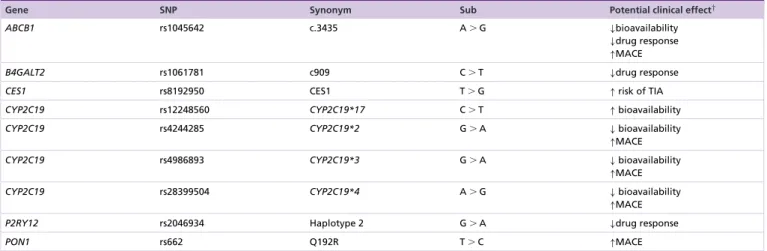
To measure the frequency of the genetic variants of interest (Table 1), we performed a cross-sectional study of
the Hispanic Community Health Study/Study of Latinos (HCHS/SOL) cohort. Genetic variants of interest were
those with previously documented effects on individual response to clopidogrel based upon Clinical Annotations
from PharmGKB database[23]. This study is the largest Hispanic/Latino cohort study to date with over 16,000
participants recruited from four US metropolitan areas: the Bronx, San Diego, Chicago and Miami[27]. The
primary goals of HCHS/SOL are to identify risk factors for multiple diseases and determine the role of genes and
environment, including acculturation, in the occurrence of diseases. The full details of the HCHS/SOL sample
design and cohort selection have previously been described[27,28]. Adult Hispanic/Latino participants aged 18–74
from a random sample of households were recruited between 2008 and 2011. Participants have various self-reported backgrounds, with the primary groups being Central American, Cuban, Dominican, Mexican, Puerto Rican and South American. In order to resolve participants who reported multiple backgrounds or who declined to identify a
national background, we used genetic ancestry markers to stratify the HCHS/SOL population into genetic analysis
groups[26]. The six genetic analysis groups were further classified into two regional groups: Mainland (Mexican,
Central American and South American) and Caribbean (Cuban, Dominican and Puerto Rican). Ethical oversight
of HCHS/SOL activities was conducted by the Institutional Review Boards of each field center as well as the study
coordinating center. All participants included in this analysis provided written informed consent for genetic studies
Table 1. Genetic variants affecting clopidogrel response.
Gene SNP Synonym Sub Potential clinical effect†
ABCB1 rs1045642 c.3435 A⬎G ↓bioavailability
↓drug response ↑MACE
B4GALT2 rs1061781 c909 C⬎T ↓drug response
CES1 rs8192950 CES1 T⬎G ↑risk of TIA
CYP2C19 rs12248560 CYP2C19*17 C⬎T ↑bioavailability
CYP2C19 rs4244285 CYP2C19*2 G⬎A ↓bioavailability
↑MACE
CYP2C19 rs4986893 CYP2C19*3 G⬎A ↓bioavailability
↑MACE
CYP2C19 rs28399504 CYP2C19*4 A⬎G ↓bioavailability
↑MACE
P2RY12 rs2046934 Haplotype 2 G⬎A ↓drug response
PON1 rs662 Q192R T⬎C ↑MACE
†Potential clinical effects based upon Clinical Annotations from PharmGKB database [23].
Sub: Nucleotide substitution.
Procedures
All genotypic information from HCHS/SOL was extracted from blood specimens collected at baseline and analyzed
using a custom version of the Illumina HumanOmni2.5-8v1-1 array, consisting of∼150,000 custom variants
added to the standard Omni2.5M array selected to include ancestry-informative markers, variants characteristic
of Amerindian populations [26]. Genotype data cleaning (missing call rate, Mendelian errors, duplicate-sample
discordance and deviation from Hardy–Weinberg equilibrium (p<10-5in a meta-analysis of genetic backgrounds)
and imputation analyses were previously performed at the HCHS/SOL Genetic Analysis Center at the University
of Washington. In this study, frequency distributions of observed genotypes in genetically unrelated individuals
consenting to genetic studies were compared within subgroups in the HCHS/SOL population as well as to the
frequencies reported for various continental ancestry populations from Phase III of the 1000 Genomes project[29].
These reference populations were used to better compare the observed prevalence in HCHS/SOL with populations
representative of the following continental ancestry groups: Africa, Americas, east Asia, Europe and south Asia. Of
note, the reference population that might closely resemble the HCHS/SOL population is the Americas population:
a composite of Puerto Ricans in Puerto Rico; Colombian in Medellin, Colombia; Peruvian in Lima, Peru; and Mexican Ancestry in Los Angeles, CA, USA.
Statistical Analysis
The variants were tested for Hardy-Weinberg equilibrium (HWE) for each genetic analysis group byχ2
goodness-of-fit test or alternatively Fisher’s Exact test for frequencies lower than 5% as the departure from HWE indicates
potential genotyping error. A threshold of p<10-5was chosen because SNPs with p-value below this threshold
were frequently artifacts in the genetic data of the HCHS/SOL while those above were not from the genotype
cluster plots. For those variants satisfying the HWE, the allele frequency and its 95% CI of genetic variants were
estimated for six genetic analysis groups and two regional groups in genetically unrelated individuals in HCHS/SOL
population. Frequency distributions were compared between the two regional groups in HCHS/SOL and between
these regional groups in HCHS/SOL and reference continental ancestry groups using z-test for independent
proportions with statistical significance determined by p-value<0.05.
Results
The demographic makeup of the HCHS/SOL cohort has been previously reported [30,31]. Genetic data were
available for 12,633 participants who agreed to participate in genetic studies of HCHS/SOL and 10,496 unrelated
individuals were included in our final analysis (after removing related individuals). All nine of the genetic variants of
interest were found to be HWE for each self-identified background group.Table 2reports the minor allele
frequen-cies (MAFs) for the genetic variants of interest related to the activity of clopidogrel across each of the HCHS/SOL
subgroups. MAFs for six out of nine pharmacogene variants differed significantly between the Caribbean Hispanic
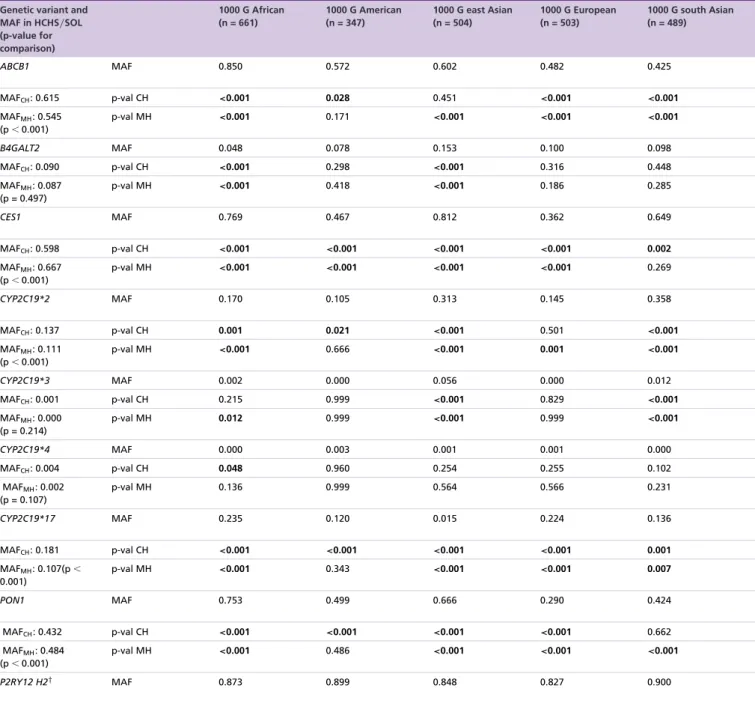
Table 3. Minor allele frequencies of genetic variants of Hispanic Community Health Study/Study of Latinos Region Groups versus Reference Populations.
Genetic variant and MAF in HCHS/SOL (p-value for comparison)
1000 G African (n = 661)
1000 G American (n = 347)
1000 G east Asian (n = 504)
1000 G European (n = 503)
1000 G south Asian (n = 489)
ABCB1 MAF 0.850 0.572 0.602 0.482 0.425
MAFCH: 0.615 p-val CH <0.001 0.028 0.451 <0.001 <0.001
MAFMH: 0.545
(p⬍0.001)
p-val MH <0.001 0.171 <0.001 <0.001 <0.001
B4GALT2 MAF 0.048 0.078 0.153 0.100 0.098
MAFCH: 0.090 p-val CH <0.001 0.298 <0.001 0.316 0.448
MAFMH: 0.087
(p = 0.497)
p-val MH <0.001 0.418 <0.001 0.186 0.285
CES1 MAF 0.769 0.467 0.812 0.362 0.649
MAFCH: 0.598 p-val CH <0.001 <0.001 <0.001 <0.001 0.002
MAFMH: 0.667
(p⬍0.001)
p-val MH <0.001 <0.001 <0.001 <0.001 0.269
CYP2C19*2 MAF 0.170 0.105 0.313 0.145 0.358
MAFCH: 0.137 p-val CH 0.001 0.021 <0.001 0.501 <0.001
MAFMH: 0.111
(p⬍0.001)
p-val MH <0.001 0.666 <0.001 0.001 <0.001
CYP2C19*3 MAF 0.002 0.000 0.056 0.000 0.012
MAFCH: 0.001 p-val CH 0.215 0.999 <0.001 0.829 <0.001
MAFMH: 0.000
(p = 0.214)
p-val MH 0.012 0.999 <0.001 0.999 <0.001
CYP2C19*4 MAF 0.000 0.003 0.001 0.001 0.000
MAFCH: 0.004 p-val CH 0.048 0.960 0.254 0.255 0.102
MAFMH: 0.002
(p = 0.107)
p-val MH 0.136 0.999 0.564 0.566 0.231
CYP2C19*17 MAF 0.235 0.120 0.015 0.224 0.136
MAFCH: 0.181 p-val CH <0.001 <0.001 <0.001 <0.001 0.001
MAFMH: 0.107(p⬍
0.001)
p-val MH <0.001 0.343 <0.001 <0.001 0.007
PON1 MAF 0.753 0.499 0.666 0.290 0.424
MAFCH: 0.432 p-val CH <0.001 <0.001 <0.001 <0.001 0.662
MAFMH: 0.484
(p⬍0.001)
p-val MH <0.001 0.486 <0.001 <0.001 <0.001
P2RY12 H2† MAF 0.873 0.899 0.848 0.827 0.900
CH=Caribbean Hispanics (n=5661); MAFCHstands for MAF in Caribbean Hispanics; p-val CH stand for p-value for comparison between Caribbean Hispanics and reference population; MH=Mainland Hispanics (n=6,972); MAFMHstands for MAF in Mainland Hispanics; p-val MH stand for p-value for comparison between Mainland Hispanics and reference population; 1000 G=1000 Genomes Phase III Superpopulation;
†tagSNP for calling (defining) the P2RY12haplotype 2.
MAF: Minor allele frequency.
Note: Statistically significant differences between groups (p-value⬍0.05) are indicated with bold.
c.3435 andCYP2C19*2(previously associated with poorer treatment outcomes) andCYP2C19*17(associated with
increased clopidogrel bioavailability) [16,17,21]. Mainland Hispanics, however, had a higher prevalence of CES1
(rs8192950), PON1Q192R andP2RY12haplotype 2 (all associated with decreased platelet inhibition and/or
Table 3. Minor allele frequencies of genetic variants of Hispanic Community Health Study/Study of Latinos Region Groups versus Reference Populations (cont.).
Genetic variant and MAF in HCHS/SOL (p-value for comparison)
1000 G African (n = 661)
1000 G American (n = 347)
1000 G east Asian (n = 504)
1000 G European (n = 503)
1000 G south Asian (n = 489)
MAFCH: 0.873 p-val CH 0.989 0.056 0.026 <0.001 0.020
MAFMH: 0.892
(p⬍0.001)
p-val MH 0.042 0.588 <0.001 <0.001 0.472
CH=Caribbean Hispanics (n=5661); MAFCHstands for MAF in Caribbean Hispanics; p-val CH stand for p-value for comparison between Caribbean Hispanics and reference population; MH=Mainland Hispanics (n=6,972); MAFMHstands for MAF in Mainland Hispanics; p-val MH stand for p-value for comparison between Mainland Hispanics and reference population; 1000 G=1000 Genomes Phase III Superpopulation;
†tagSNP for calling (defining) the P2RY12haplotype 2.
MAF: Minor allele frequency.
Note: Statistically significant differences between groups (p-value⬍0.05) are indicated with bold.
For the purposes of comparison with the continental reference populations, data were available for 2504 unrelated individuals from the 1000 Genomes project. Significant differences were observed for all genetic variants between
both regional groups from HCHS/SOL and other continental groups (Table 3), apart fromCYP2C19*4. Both
Mainland and Caribbean HCHS/SOL regional groups had lower MAFs forCYP2C19genetic variants associated
with poorer treatment outcomes but higher MAFs forABCB1c.3435 when compared with the European continental
group.
Discussion
Our cross-sectional study describes the frequency distribution of nine relevant pharmacogenetic markers in six candidate pharmacogenes associated with clopidogrel effectiveness. To our knowledge, this is the largest such
descriptive study of these variants in the US Hispanic/Latino population. As can be observed inTable 2, MAFs
varied significantly within the HCHS/SOL subpopulations. For many of the variants, important differences
between the regional groups of Caribbean Hispanics/Latinos and Mainland Hispanics/Latinos emerged. As such,
we chose to compare the MAFs for each of these regional groups independently to the continental reference populations from 1000 Genomes.
For these comparisons, the American continental superpopulation of Phase III of 1000 Genomes might have
been expected to be the closest estimate of the HCHS/SOL. Nonetheless, we observed statistically significant
differences in MAFs in five of the nine variants of interest when comparing the Caribbean Hispanic/Latino
population of HCHS/SOL to this American continental group. When comparing the Mainland Hispanic/Latino
population, only one variant (CES1) differed significantly from this reference population. This suggests that data
from the American continental group of Phase III of 1000 Genomes may not be the best proxy for prevalence of
pharmacogenes in Caribbean Hispanics/Latinos living in the US.
CYP2C19locus
As has been previously reported, loss of function (LOF) alleles of theCYP2C19pharmacogene are most strongly
associated with decreased efficacy and poorer CV outcomes [17,21] In the HCHS/SOL cohort, we observed a
3% absolute increase in the MAFs of these LOF alleles in the Caribbean Hispanic population compared with
Mainland Hispanics. However, we also observed a 7% absolute increase in theCYP2C19*17gain of function allele
in this population as well. Although data on the mixed*2–*8/*17is limited, current evidence suggests the*17
increased function allele is unable to completely compensate for the*2LOF allele, thus suggesting the Caribbean
Hispanic population may be at an increased risk of treatment failure compared with Mainland Hispanics due to
genetic variation in theCYP2C19 pharmacogene. TheCYP2C19*3LOF allele was rare across all subgroups of
the HCHS/SOL population, consistent with the 1000 Genome data that this allele is not usually found outside
the East Asian population. TheCYP2C19*4LOF allele, although rare, was observed at rates consistent with the
American continental group from 1000 Genomes. Interestingly, the highest observed MAF for this LOF allele
was in the Dominican subgroup of HCHS/SOL (a group not included in the American superpopulation of 1000
ABCB1locus
Although there is less data on the ABCB1 c.3435 allele (rs1045642) than that which exists for the CYP2C19
locus, it too may contribute to poor clopidogrel responsiveness and CV outcomes [21,32]. In fact, one of the
few pharmacogenomic outcome studies conducted in a Hispanic/Latino population (Mexican) demonstrated an
association with rs1045642 and poor platelet response to clopidogrel[32]. Interestingly, this previous study presented
a lower frequency of the allele (44%) compared with our observed 55% in the Mexican subgroup of HCHS/SOL.
Furthermore, we observed a 7% absolute increase in the MAF of this allele in Caribbean Hispanics when compared with Mainland Hispanics. Compared with the 1000 Genome continental groups, Caribbean Hispanics had the second highest prevalence of this allele behind only Africans as Caribbean Hispanics have higher proportion of African genetic ancestry than Mainland Hispanics.
B4GALT2, CES1, PON1&P2RY12Loci
Although several studies have examined the association between polymorphisms in B4GALT2, CES1, PON1
and P2RY12, data is inconsistent regarding their significance in clinical outcomes. Nonetheless, we observed a great amount of variability in the MAFs for these variants between Caribbean and Mainland Hispanics as well as when compared with other continental groups. In particular, the 24–31% absolute increase in prevalence of
CES1(rs81929500) compared with the European continental group is noteworthy. Similarly, an 14–19% absolute
increase was also observed for the T allele ofPON1(rs662). Ongoing clinical studies of clopidogrel effectiveness in
Hispanic/Latino populations will help further elucidate the significance of these variants in this population[33].
Study limitations
Our study has several limitations. First, because HCHS/SOL recruits from four major urban areas in the continental
US, the cohort may not necessarily be representative of the overall US Hispanic/Latino population. However, as
the largest US Hispanic/Latino cohort to date, we believe the prevalence data reported are robust. Additionally,
the pharmacogene variants of interest described in this study are based on clinical trial and genetic association studies comprising primarily white, North American and European patient populations. Therefore, it is possible that these variants may not confer the same magnitude of clinical effect in other continental ancestry groups,
including Hispanic/Latinos. Ongoing clinical studies in this patient population should further define the effect of
these pharmacogene variants on clopidogrel effectiveness.
Conclusion
In summary, we describe the prevalence of nine allelic variants and resulting genotypes in six pharmacogenes (ABCB1, B4GALT2, CES1, CYP2C19, PON1 and P2RY12) in the HCHS/SOL cohort and compare them to continental reference populations to reveal genetic differentiation with regard to clopidogrel response among these groups. Our comparison between Mainland and Caribbean regional groups highlights the genetic differences even
within the US Hispanic/Latino population, often considered and labeled as a monolithic group.
Future perspective
Poor response to clopidogrel in some patients is due to the highly heritable variability in clopidogrel responsive-ness. In this report, we describe the diversity in prevalence of genotypes in six relevant pharmacogenes to clopidogrel
responisveness in HCHS/SOL. These data provide a foundation to better inform ongoing and future clinical studies
of clopidogrel pharmacogenetics in the US Hispanic/Latino populations.
Acknowledgements
The authors thank the staff and participants of HCHS/SOL for their important contributions.
Financial & competing interests disclosure
Other Communication Disorders, National Institute of Dental and Craniofacial Research, National Institute of Diabetes and Diges-tive and Kidney Diseases, National Institute of Neurological Disorders and Stroke, NIH Institution-Office of Dietary Supplements. This project was also partially supported by The National Institute of Health Award Numbers: HCTRECD R25MD007607 and HiREC S21MD001830 from the National Institute on Minority Health and Health Disparities.
No writing assistance was utilized in theproduction of this manuscript.
Ethical disclosure
The authors state that they have obtained appropriate institutional review board approval. Ethical oversight of all HCHS/SOL activities was conducted by the Institutional Review Boards of each field center as well as the study coordinating center. All participants included in this analysis provided written informed consent for genetic studies at their baseline visit to a HCHS/SOL field site
References
1. Levine GN, Bates ER, Bittl JAet al.2016 ACC/AHA Guideline Focused Update on Duration of Dual Antiplatelet Therapy in Patients With Coronary Artery Disease: A Report of the American College of Cardiology/American Heart Association Task Force on Clinical Practice Guidelines: an update of the 2011 ACCF/AHA/SCAI Guideline for Percutaneous Coronary Intervention, 2011 ACCF/AHA Guideline for Coronary Artery Bypass Graft Surgery, 2012 ACC/AHA/ACP/AATS/PCNA/SCAI/STS Guideline for the Diagnosis and Management of Patients With Stable Ischemic Heart Disease, 2013 ACCF/AHA Guideline for the Management of ST-Elevation Myocardial Infarction, 2014 AHA/ACC Guideline for the Management of Patients With Non–ST-Elevation Acute Coronary Syndromes, and 2014 ACC/AHA Guideline on Perioperative Cardiovascular Evaluation and Management of Patients Undergoing Noncardiac Surgery.J. Thorac. Cardiovasc. Surg.134(10), e123–e155 (2016).
2. Amsterdam EA, Wenger NK, Brindis RGet al.2014 AHA/ACC Guideline for the Management of Patients With Non-ST-Elevation Acute Coronary Syndromes A Report of the American College of Cardiology/American Heart Association Task Force on Practice Guidelines.J. Am. Coll. Cardiol.64(24), E139–E228 (2014).
3. O’Gara PT, Kushner FG, Ascheim DDet al.2013 ACCF/AHA guideline for the management of ST-elevation myocardial infarction: a report of the American college of cardiology foundation/american heart association task force on practice guidelines.J. Am. Coll. Cardiol.
61(4), 78–140 (2013).
4. Karve A, Seth M, Sharma Met al.Contemporary use of ticagrelor in the community: insights from the blue cross blue shield of michigan consortium registry (BMC2).J. Am. Coll. Cardiol.65(10 Suppl. 1), A116 (2015).
5. Bueno H, Sinnaeve P, Annemans Let al.Opportunities for improvement in anti-thrombotic therapy and other strategies for the management of acute coronary syndromes: insights from EPICOR, an international study of current practice patterns.Eur. Heart J. Acute Cardiovasc. Care5(1), 3–12 (2016).
6. Cuisset T, Morange PE, Alessi MC. Recent advances in the pharmacogenetics of clopidogrel.Hum Genet.131(5), 653–664 (2012). 7. Weinshilboum R. Inheritance and drug response.N. Engl. J. Med.348(6), 529–537 (2003).
8. Johnson JA. Influence of race or ethnicity on pharmacokinetics of drugs.Science86(12), 1328–1333 (1997).
9. White RH, Dager WE, Zhou H, Murin S. Racial and gender differences in the incidence of recurrent venous thromboembolism.
Thromb. Haemost.96(3), 267–273 (2006).
10. Cresci S, Depta JP, Lenzini PAet al.Cytochrome P450 gene variants, race, and mortality among clopidogrel-treated patients after acute myocardial infarction.Circ. Cardiovasc. Genet.7(3), 277–286 (2014).
11. Sabatine MS, Blake GJ, Drazner MHet al.Influence of race on death and ischemic complications in patients with non-ST-elevation acute coronary syndromes despite modern, protocol-guided treatment.Circulation111(10), 1217–1224 (2005).
12. Sonel AF, Good CB, Mulgund Jet al.Racial variations in treatment and outcomes of black and white patients with high-risk non-ST-elevation acute coronary syndromes: insights from CRUSADE (Can Rapid Risk Stratification of Unstable Angina Patients Suppress Adverse Outcomes With Early Implementation of the ACC/AHA Guidelines?).Circulation111(10), 1225–1232 (2005). 13. Johansen ME, Hefner JL, Foraker RE. Antiplatelet and statin use in US patients with coronary artery disease categorized by
race/ethnicity and gender, 2003 to 2012.Am. J. Cardiol.115(11), 1507–1512 (2015).
14. Khambatta S, Seth M, Rosman HSet al.The association between patient race, treatment, and outcomes of patients undergoing contemporary percutaneous coronary intervention: insights from the blue cross blue shield of michigan cardiovascular consortium (BMC2).Am. Heart J.165(6), 893–901 (2013).
15. Newby LK, Allen LaPointe NM, Chen AYet al.Long-term adherence to evidence-based secondary prevention therapies in coronary artery disease.Circulation113(2), 203–212 (2006).
16. Shuldiner AR, O’Connell JR, Bliden KPet al.Association of cytochrome P450 2C19 genotype with the antiplatelet effect and clinical efficacy of clopidogrel therapy.JAMA.302(8), 849 (2009).
18. Center for Drug Evaluation and Research. Postmarket Drug Safety Information for Patients and Providers – FDA Drug Safety Communication: reduced effectiveness of Plavix (clopidogrel) in patients who are poor metabolizers of the drug.
https://www.fda.gov/Drugs/DrugSafety/PostmarketDrugSaf etyInf ormationforPatientsandProviders/ucm203888.htm
19. Pendyala LK, Torguson R, Loh JPet al.Racial disparity with on-treatment platelet reactivity in patients undergoing percutaneous coronary intervention.Am. Heart J.166(2), 266–272 (2013).
20. Lev EI, Bliden KP, Jeong Y-Het al.Influence of race and sex on thrombogenicity in a large cohort of coronary artery disease patients.J. Am. Heart Assoc.3(5), e001167–e001167 (2014).
21. Mega JL, Close SL, Wiviott SDet al.Genetic variants inABCB1andCYP2C19and cardiovascular outcomes after treatment with clopidogrel and prasugrel in the TRITON-TIMI 38 trial: a pharmacogenetic analysis.Lancet (London, England)376(9749), 1312–1319 (2010).
22. Scott SA, Collet JP, Baber Uet al.Exome sequencing of extreme clopidogrel response phenotypes identifies B4GALT2 as a determinant of on-treatment platelet reactivity.Clin. Pharmacol. Ther.100(3), 287–294 (2016).
23. PharmGKB. https://www.pharmgkb.org/
24. Bryc K, Velez C, Karafet Tet al.Colloquium paper: genome-wide patterns of population structure and admixture among Hispanic/Latino populations.Proc. Natl Acad. Sci. USA107(Suppl. 2), 8954–8961 (2010).
25. Claudio-Campos K, Duconge J, Cadilla CL, Rua˜no G. Pharmacogenetics of drug-metabolizing enzymes in US Hispanics.Drug Metab. Pers. Ther.30(2), 87–105 (2015).
26. Conomos MP, Laurie CA, Stilp AMet al.Genetic diversity and association studies in US Hispanic/Latino populations: applications in the Hispanic Community Health Study/Study of Latinos.Am. J. Hum. Genet.98(1), 165–184 (2016).
27. Sorlie PD, Avil´es-Santa LM, Wassertheil-Smoller Set al.Design and implementation of the Hispanic Community Health Study/Study of Latinos.Ann. Epidemiol.20(8), 629–641 (2010).
28. LaVange LM, Kalsbeek WD, Sorlie PDet al.Sample design and cohort selection in the Hispanic Community Health Study/Study of Latinos.Ann. Epidemiol.20(8), 642–649 (2010).
29. Auton A, Abecasis GR, Altshuler DMet al.A global reference for human genetic variation.Nature526(7571), 68–74 (2015). 30. Daviglus ML, Talavera GA, Avile MLet al.Prevalence of major cardiovascular risk factors and cardiovascular diseases among Hispanic/
Latino individuals of diverse backgrounds in the United States.Jama308(17), 1775–1784 (2012).
31. National Heart, Lung and Blood Institute.Hispanic Community Health Study/Study of Latinos (HCHS/SOL) Data Book: A Report to the Communities (NIH Publication No. 13–7951).Bethesda, MD, USA (2013).
https://www.nhlbi.nih.gov/files/docs/resources/NHLBI-HCHSSOL-English-508.pdf
32. Calder´on-Cruz B, Rodr´ıguez-Galv´an K, Manzo-Francisco LAet al.C3435T polymorphism of the ABCB1 gene is associated with poor clopidogrel responsiveness in a Mexican population undergoing percutaneous coronary intervention.Thromb. Res.136(5), 894–898 (2015).