A Nation’s Charge: Cherokee Social Services, 1835-1907
Julie L. Reed
A dissertation submitted to the faculty of the University of North Carolina at Chapel Hill in partial fulfillment of the requirements for the degree of Doctor of Philosophy in the
Department of History.
Chapel Hill
2011
Abstract
Julie L. Reed: A Nation’s Charge: Cherokee Social Services, 1835-1907 (under the direction Theda Perdue and Michael D. Green)
This dissertation explores the development of social services within the
Cherokee Nation between removal and allotment. The specific services included in this work are poor relief, care of orphans and the disabled, and the imprisonment of
criminals. The introduction of state-‐mediated guardianship marked a shift from
traditional practices in which matrilineal clans cared for their members. Culture change plus the upheavals of removal and the Civil War required the Cherokee government to
begin providing social services for its citizens. Using the methodology of ethnohistory, this study moves beyond the interactions between federal and Cherokee Nation officials to examine the ways in which broad cross sections of Cherokee people understood the profound social changes taking place. It also explores the degree to which Cherokee people integrated these new institutions into a society that traditionally relied on family and community to provide material, medical, and familial protection to one another.
The dissertation addresses the role of social services in defining citizenship, since these programs were available only to citizens. Finally, this project examines the role of these institutions as an expression of tribal sovereignty and the effect of their dissolution in 1907 on Cherokee national identity.
Dedication
Acknowledgements
A dissertation requires solitary work, but it is not a solitary process, nor is it chronologically bound by the years spent in graduate school. I owe thanks to the many
educational institutions that have built me up over the years. Within institutions I have also had the opportunity to educate and be educated by students who often taught me more than I could have offered them. To the students and colleagues whose lives have touched mine at Hillsborough High School, Memorial Middle School, East Bay High School, and the University of North Carolina at Chapel Hill know that this dissertation is
as much a product of your lives as it is of mine. Throughout my life I have been blessed with friendships and colleagues that have shaped my personal and educational path for the better. Each of these individuals deserves their name on this page as much as mine: Stewart Slayton, Lynn Burke-‐Bogner, Bethany VanDyke-‐McCormack, Tara Kiene, Valerie
Lopez-‐Stern, Michele Alvarez-‐Hardin, Deb Langshaw, Crystal Feimster, Malinda Maynor-‐Lowery, Katy Smith, Rose Stremlau, Karla Martin, Mikaela Adams, Courtney Lewis, Jean Dennison, Christy Mobley, Waitman Beorn, Christina Snyder, Kristina Jacobsen, Tol Foster, Brandi Brooks, and Miguel & Jill LaSerna.
A special thanks is due to numerous people within the Cherokee Nation. I offer
Heritage Center and Don Franklin at Sequoyah Schools. Thank you to Tom Belt and Hartwell Francis at Western Carolina for our many discussions of Cherokee language and culture.
To my family, there is no amount of thanks that can truly be offered that
adequately expresses what I owe to you. My parents, Douglas & Martha Reed, and my husband, Nick Thompson, have taken this educational journey with me. I am sure my parents have often wondered if there would ever be an end. Nick has uprooted his life
more than once to follow me on my winding academic path and I hope my path has enriched his life in the process. An additional thanks is due to my family in Oklahoma who have improved this project and supported me in countless ways, from a night on a sofa to bail, should it have come to that, these contributions have supported me
economically, spiritually, and intellectually, so to my Quinton, Smith, Reed, and Duffield families I say, “Wado.”
Preface
“A Nation’s Charge” takes a historical approach to topics I feel passionate about because they form the backdrop to the people, places, and experiences that have most
shaped my life. My father spent his career in the military, my mother in the public school system and the church. I thrived in public school and attended a Methodist seminary after my undergraduate education. I graduated from seminary, where I came to appreciate fully the incredible power the church wields as an institution in this country. I am married to a high school science teacher and I am the mother of a child about to enter school. I spent six years as a public school teacher to a variety of
underserved populations, inner-‐city students, non-‐English speaking students,
undocumented students, drop-‐out prevention students, and rural poor students, who often have difficult relationships to institutions, yet often become the recipients of the social services that institutions offer. And now here I am about to embark on a career in the academy, another institution. What I know is that I love institutions and I hate
exposes the power of institutions and the limits of that power. It highlights the interdependency between institutions and the people they seek to serve.
It is through institutions this dissertation received its greatest financial support.
During my time at UNC, I have received tremendous financial support from the Graduate School including the Ethics in Society Fellowship, the Interdisciplinary Research Fellowship, and most recently the Royster Society of Fellows’ Sequoyah Dissertation Writing Fellowship. From the Department of History, I received the
Mowry Dissertation Fellowship and my annual Teaching Assistantship. For the past three years, the Cherokee Nation Education Corporation awarded me the Nell D. Brown Memorial Award. The bulk of my summer research funds came from two awards, the Frances C. Allen Fellowship from the Newberry Library and the Phillips Fund for Native American Research from the American Philosophical Society. The Western History Association also awarded me the Indian Student Conference Scholarship to present my
TABLE OF CONTENTS
INTRODUCTION……….. 1
CHAPTER
I. Poor Relief………. 14
II. Orphan Asylum……….. 32
III. Crime & Punishment……….. 77
IV. Public Health………. 117
CONCLUSION……….... 157
List of Illustrations and Tables
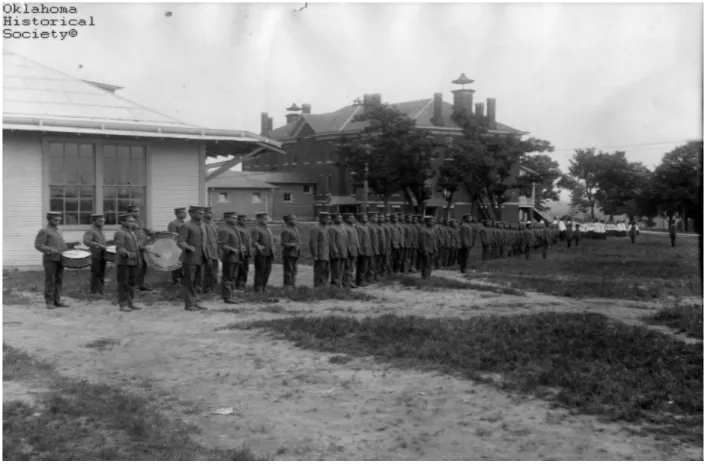
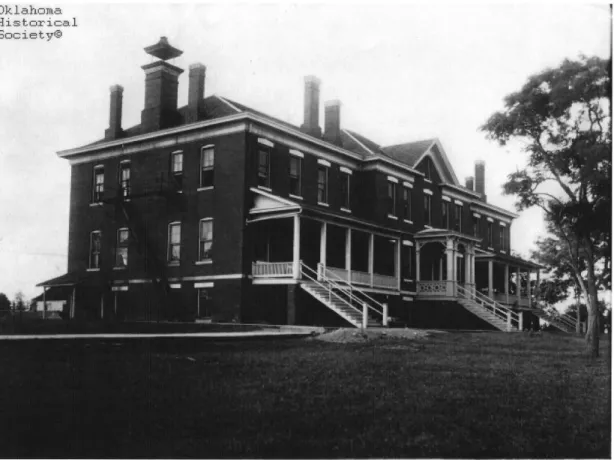
Figure 1. Cherokee Orphan Asylum at Salina, Cherokee Nation. ... 47
Figure 2. Kindergarten Class at the Cherokee Orphan Asylum, Salina, C.N. ... 62
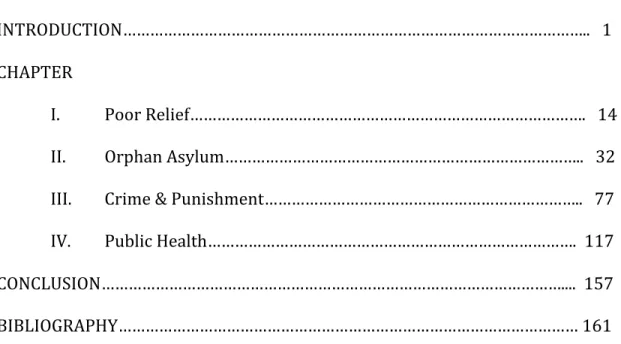
Figure 3. Cherokee Orphan Asylum, Park Hill, Oklahoma, circa 1920-21... 74
Figure 4. Cherokee National Penitentary, corner of Choctaw and Waters Streets, ... 92
Figure 5. Inmates. Cherokee National Prison, Tahlequah, Cherokee Nation, circa 1900. . 104
Figure 6. Asylum for the Deaf, Dumb, Blind, and Insane, circa 1921. ... 128
Introduction
Before removal in 1838-39, the Cherokee Nation played little role in caring for the helpless. Missionaries provided some services, but primarily Cherokees depended on family to care for them, educate them, and redress wrongs against them. The Cherokee National Council focused its efforts on legal codes to protect the nation’s communal land holdings and articulate laws that protected the economic interests of an elite class of Cherokee people. The written constitution of 1827 and the political institutions it created reaffirmed these priorities and ignored questions related to establishing social services. The removal treaty of 1835 laid the groundwork for national social services and usurped a key role played by the missionaries by providing a fund for education, poor relief, and orphan care. In the post-removal Cherokee Nation, the funds existed to nationalize institutions previously controlled by non-Cherokees. Removal forced the nation to re-evaluate its obligations for the economic and social stresses placed on society as a whole.
who removed.1 The United States government viewed these killings as an indication of the inability of the Cherokee people to manage their affairs. However, even in the midst of this internal discord, the Cherokee Nation began to build its economic and social structures,
including the establishment of the town of Tahlequah, its capital.2
In 1841, the council passed the Public School Act that legislated the financial support of national schools. If a community located a structure for use as a school, the nation paid teachers’ salaries and provided materials to that school. The Public School Act faced revision several times, but the number of common schools increased from 1841 to the outbreak of the Civil War. In pursuit of its goal to educate its young people, the nation authorized seminaries to provide high school education and university preparation. In 1850, the nation completed the Female Seminary, and in 1851 the Male Seminary opened. The seminaries trained Cherokee
teachers for the nation’s public schools.3
The outbreak of the Civil War agitated old animosities stemming from removal. Although Principal Chief John Ross attempted to maintain neutrality, Confederate
sympathizers and Ross detractors advocated alignment with the Confederacy. Ross, unsure of the ability of the Union to live up to its financial obligations to the nation and wishing to maintain a unified Cherokee Nation, concluded a treaty with the Confederacy in 1861. Ross repudiated the treaty the next year, and Cherokee people fought on both sides. The war produced economic, social, and political chaos for the second time in thirty years. Cattle
1
Morris L Wardell, The Political History of the Cherokee Nation, 1838-1907 (Norman:
University of Oklahoma Press, 1938). 2
William G McLoughlin, After the Trail of Tears: The Cherokees Struggle for Sovereignty,
1839-1880 (Chapel Hill: University of North Carolina Press, 1993). 3
Devon Mihesuah, Cultivating the Rosebuds: The Education of Women at the Cherokee
thieves depleted herds; guerilla tactics destroyed the infrastructure; women, children, and the elderly proved unable to sustain crops during wartime. Thousands of Cherokees sought refuge behind Union and Confederate lines. With war settled in a treaty between the
Cherokee Nation and the United States in 1866, the National Council turned to rebuilding the nation and its institutions. The nation became the protector of its citizens by granting support for the poor and pressing for pensions from the federal government. The council also moved toward a system of public health by regulating the practice of medicine and initiating
vaccination campaigns. Addressing the needs of its most disadvantaged citizens, the council opened the Cherokee Orphan Asylum in 1872 and the Asylum for the Deaf, Dumb, Blind, and Insane in 1874, the same year as the National Penitentiary. These institutions employed and served Cherokee populations. They provided housing, subsistence, and education for people unable to care for themselves.
Access to these institutions was a right of citizenship and, consequently, an indication of who Cherokees considered citizens. The Treaty of 1866 extended citizenship rights to Shawnee and the Delaware people residing in the Cherokee Nation and the former slaves of Cherokees. Many Cherokees resented the federal interference with their sovereignty, and in succeeding years the council took measures to undercut the citizenship privileges of non-Cherokees. Studying the social service agencies of the Cherokee Nation after the Civil War sheds important new light on the contentious issue of citizenship, especially as it applied to
the Freedmen.4
4
McLoughlin, After the Trail of Tears, 340-341; Daniel F. Littlefield, Jr., The Cherokee
In addition to the threats to sovereignty that federally imposed citizenship
requirements presented, the Cherokee Nation faced other challenges. Railroad corporations, eager to open Indian Territory for right of way purposes, joined forces with reformers and
politicians who favored individual land allotments for Indian peoples.5
Resisting allotment preoccupied the nation for the final two decades of the century. The goal of allotment was to do away with tribalism by obliterating tribal social and political institutions and by
distributing tribal lands to individual Indian owners. The 1887 Dawes General Allotment Act made this program official government policy, but because the Cherokee Nation and the others of the Five Tribes in Indian Territory held their lands in fee simple title, the law exempted them. To force the Five Tribes into conformity with federal allotment policy, in 1893 Congress created a commission to negotiate voluntary allotment agreements with their governments. Frustrated by the refusal of the tribes to negotiate allotment agreements, in 1898 Congress enacted the Curtis Act, which forced them to do so. Allotment led to increased white settlement, the dissolution of tribal government, United States control over Indian Territory, and the admission of Oklahoma to the Union. Among the casualties of allotment was the Cherokee Nation’s social service system that then transferred to the state.
Social services remain a debated and yet essential part of modern society; the
Cherokee Nation’s introduction of these services signified the modern state, but the services also provided stability to a nation ravaged by removal, the Civil War, and political
factionalism. Although orphan care and funds for post-removal poor relief finds their roots
5
Andrew Denson, Demanding the Cherokee Nation: Indian Autonomy and American
Culture, 1830-1900. (Lincoln: University of Nebraska Press, 2004), 202-208; H. Craig
Miner, The Corporation and the Indian: Tribal Sovereignty and Industrial Civilization in
in the Treaty of 1835, the penitentiary and a home for the disabled did not.6 What then are the historical underpinnings of these social services and how did they develop? Within this central question a variety of more specific cultural questions emerge. Although the
institutions originated in political decision-making, the populations they served were a cross-section of Cherokee people. How widespread were the problems of orphans, poverty, crime, and insanity throughout the period from removal to Oklahoma statehood? What effect did the understandings of gender, race, class, and citizenship play in the delivery of these services? What consideration, if any, was given the institutions on allotment or statehood?
Social services legislated, funded, and administered by the Cherokee Nation
exemplify the political autonomy exercised by the sovereign Cherokee Nation in the period after the Civil War. Yet, they also represent a clear break with traditional clan practices that included children’s care and education and the responsibility of clan members to provide for the social, physical, and material well-being of all members. The establishment and
evolution of Cherokee institutions are the subjects of my dissertation. In addition to the political machinations of the Cherokee Nation, I contend that social services can offer important understandings of how the Cherokee Nation articulated its political autonomy and its role as a sovereign governing body in the nineteenth century. The institutions also provide an opportunity to evaluate how Cherokee people understood the nation and their rights within it.
Ethnohistory provides the most appropriate methodological approach for this project. Ethnohistory uses historical documents to better understand and record culture change from
6
Treaty with the Cherokee, 1835, Article 10, Article 12, Charles J Kappler ed., Indian
the perspective of American Indian communities. Ethnohistory combines the written record used by historians with the anthropologist’s emphasis on culture and society to strengthen historical analysis and reinvigorate the use of familiar documents for unfamiliar purposes. Ethnohistorians, in more than an attempt to understand change over time, want to interpret how Indians resisted, participated in, or modified the outcomes of their experiences.
Ethnohistorians examine changes over time, but they also ask questions that establish cultural continuities. They study the social organization of the community and how the community governed itself and they establish the fundamental values and beliefs of the community and how that community defined itself. These inquiries begin in the historical past and move forward through time to allow the ethnohistorian to look at older patterns of behavior and determine how those patterns changed, what the causes of change were, and
what elements of the culture continued.7
Historians of American Indians employ ethnohistory because it respects the primacy of the American Indian community in the narrative and allows documents, often produced by non-Indians with cultural biases, to be read against the culture itself. The outcome is a history that captures the actions and words of Indian peoples that, at first glance, appear absent from the written record.
This work builds on previous scholarship. Early twentieth-century historians explored the political negotiations between the Cherokee Nation and the United States government in the period after removal, but scholars privileged the actions and decisions of the United States and failed to offer insight into Cherokee decision-making beyond a few key political leaders. Morris L. Wardell recounted a history of acculturated Cherokee political leaders undermined by deteriorating political conditions in the Nation and the need for federal
7
intervention.8 Grant Foreman also provided a history of negotiations between internal factions and the United States government. Foreman viewed most Anglo officials as
destructive and praised the intelligence of many Cherokee officials, but he argued that white intervention, especially by missionaries, was the key ingredient in the ability of the Cherokee
people to rebuild their lives after removal.9
My work departs from studies that emphasize political questions and key political leaders by taking a social history approach to political issues and seeking to understand how the nation coped with human, economic, and
geographic problems.
I draw upon a range of Cherokee scholarship including studies that address legal history. John Phillip Reid and Rennard Strickland both examined the legal foundations of Cherokee society. Reid’s work still stands as the definitive text to understand matrilineal descent and the role of Cherokee clans in maintaining societal order in the eighteenth
century. 10 Strickland rejected Reid’s secular view of clan structure and argued that spiritual
connections continued to be integrated into the clan system through the adoption of written
laws.11
Unlike Wardell and Foreman, whose histories privileged the role of non-Indians, Reid and Strickland delved into the political and spiritual world views that formed the legal backdrop to Cherokee society. Reid and Strickland paved a new way.
8
Wardell, A Political History of the Cherokee Nation.
9
Grant Foreman, The Five Civilized Tribes (1934; Oklahoma: University of Oklahoma Press,
1972). 10
Reid, Law of Blood: The Primitive Law of the Cherokee Nation (New York: New York
University Press, 1970). 11
Rennard Strickland, Fire and Spirits: Cherokee Law from Clan to Court (Norman:
More recent scholars have returned to the nature of the relationship between the Cherokee Nation and the United States government and scrutinized Cherokee actions to
better understand the period. In Demanding the Cherokee Nation, Andrew Denson examined
the discourse used by Cherokee Nation officials to articulate sovereignty to outsiders and to promote a sovereign national identity, but he did not ask how those messages were received
or interpreted by the communities they represented.12
Similarly, After the Trail of Tears by
William G. McLoughlin argued that the major theme throughout the post-removal era was the reconciliation of political hostilities that existed between removal treaty signers and the
National Party that opposed removal.13
McLoughlin examined the interaction of Christian
missionaries and the Cherokee people in both Cherokees and Missionaries and Champions of
the Cherokees.14
The former work studied the relative successes and failures of various denominations within the Cherokee Nation prior to removal. Through exploration of
factionalism within the tribe, Champions of the Cherokees built upon his former work and
emphasized the efforts of the two most successful missionaries, Baptist father and son, Evan and John B. Jones. In both works, the Cherokee people chose to accept, reject, or adapt the religious and political tools offered by the missionaries. This work reconsiders some of the same questions McLoughlin and Denson posed but seeks evidence of unity and nation-building in social services rather than political rhetoric, factionalism, or religion. How did the Nation overcome internal political turmoil in the wake of major challenges that included
12 Denson, Demanding the Cherokee Nation: Indian Autonomy and American Culture,
1830-1900. 13
McLoughlin, After the Trail of Tears.
14
McLoughlin, Cherokees and Missionaries, (New Haven Yale University Press, 1984);
removal, civil war, and threats of United States territorialization? What role did social services play?
Fay Yarborough, author of Race and the Cherokee Nation, argued that nineteenth-
century Cherokee sovereignty can best be understood through its construction of racial hierarchies. For Yarborough, late nineteenth-century Cherokee constructions of citizenship based on racial ideology superseded traditional understandings of blood, descent, and clan
membership.15
Tiya Miles’s Ties That Bind also placed racial ideology at the center of her
narrative by tracing the lives of Shoe Boots and his slave/wife Doll and their family. Miles argued that in the period of Shoe Boots lifetime racial ideology in the Cherokee Nation hardened and provided fewer opportunities for the off-spring of Cherokees and
African-Americans to be acknowledged and protected in Cherokee society.16
Did racial ideology supersede traditional understandings of Cherokee identity rooted in culture? What can social services tell us?
Denson, Yarborough, and McLoughlin agree that Cherokee national sovereignty and its defense were crucial to the decision-making processes of late nineteenth-century
Cherokee officials. All rely on the words and actions of legislative bodies and political leaders to express Cherokee sovereignty, but all fail to consider how a wider variety of
citizens interpreted and participated in the Cherokee Nation. In Cultivating the Rosebuds,
Devon Mihesuah examined the experiences of three thousand nineteenth-century Cherokee women who attended the Cherokee Female Seminary over the course of its fifty-eight years
15
Yarborough, Race and the Cherokee Nation: Sovereignty in the Nineteenth Century
(Philadelphia: University of Pennsylvania Press, 2008). 16
Miles, Ties that Bind: The Story of an Afro-Cherokee Family in Slavery and Freedom
of operation.17 She argued the “rifts” in Cherokee society based on race, language, and socioeconomics became more apparent because of the seminary’s adoption of values and goals based on Eastern educational practices. In her epilogue, Mihesuah invited other scholars to determine how these “progressive seminarians” interacted with other groups of
people.18
“A Nation’s Charge,” in part, will answer this call. Like Mihesuah, this work uses Cherokee institutions to better understand changes in Cherokee society. Rather than focus on an institution of higher learning that catered to elites, however, it explores institutions aimed at indigent people or those excluded from mainstream society.
The Cherokee Nation’s social services offer an additional means for social historians, political scientists, social theorists, and philosophers to understand the rise of institutions in
the United States. British social historian Roy Porter, author of Madness: A Brief History,
read the rise of nineteenth-century institutions as the means by which nation-states sought to
answer the dilemmas posed by demographic change, urbanization, and industrialization.19
Philosopher Michel Foucault wrote extensively on the rise of institutions as a means for the state to control the masses and to exercise power over individuals’ freedom and their claims to knowledge. American social historian David Rothman interpreted the 1820s and 1830s as a time when Americans in the early Republic feared social disorder and devised moral
therapies as solutions to the problems of social deviance.20
If, as Rothman contends, the
17
Mihesuah, Cultivating the Rosebuds, 2.
18 Ibid., 113-115.
19
Roy Porter, Madness: A Brief History (New York: Oxford University Press, 2002),
112-122. 20
David J. Rothman, The Discovery of the Asylum: Social Order and Disorder in the New
asylum was an “imagined” institution turned into “reality,” then it is possible the Cherokee
Nation imagined its institutions differently. 21
The Cherokee Nation’s adoption of these institutions in the 1870s tests the validity of the essential features of United States’
institutions. This work asks why the Cherokee Nation adopted institutions for criminals, the disabled, and orphaned children. How did the Cherokee Nation construct these categories? How did it treat the people confined to its institutions? What role did these categories and institutions play in the development of a national identity? In order fully to understand the rise of institutions in American history, the Cherokee Nation’s use of institutions must be included.
The first chapter focuses on poor relief. In the period before removal, the Cherokee national government made very few concessions to the poor. In some instances,
impoverished Cherokees sought aid from the missionaries, but mostly Cherokee people continued to rely on kin to support one another when needs arose. Removal challenged the ability of kin networks to provide support, and many missionaries fell under suspicion and withdrew from the nation. Between removal and the Civil War, the Cherokee Nation legislated annual payment for Cherokees unable to earn a living either because of disability or lack of family resources. These annual payments offer the initial evidence of the nation’s acknowledgement of the unmet needs of citizens from informal networks. Following the Civil War, the nation expanded its use of pensions for disabled people and expected the federal government to deliver pensions due to Cherokee Union veterans and their families.
21
Michel Foucault, Discipline and Punish: The Birth of the Prison (New York: Vintage
Books, 1977); Madness and Civilization: A History of Insanity in the Age of Reason (New
York: Random House Inc., 1965); The Birth of the Clinic (New York: Random House Inc.,
The Orphan Asylum, the subject of the second chapter, provided institutionalized care and education to its orphaned and half-orphaned children in the post-Civil War years. The asylum employed a large and diverse staff and served a population of children who ranged widely in their cultural orientation. The nation and its representatives heralded the asylum as a shining example of a modern nation-state. Though the asylum seemed superficially at odds with the key features of traditional notions of child-rearing and the responsibilities that belonged to adult kin, it became a site for cultural transmission that included language, kinship obligations, and a strong community identity at the same time that it helped the Cherokee Nation lay claim to modernity.
The third chapter examines crime and punishment. Railroads, traders, and white settlers created numerous jurisdictional challenges in Indian Territory that served the interests of federal, state, and corporate officials who desired control over Indian Territory and territorialization. In an effort to assert its sovereign authority over its criminal
proceedings and to counteract the images portrayed to outsiders, the Cherokee Nation established the position of high sheriff and constructed a prison. The prison both housed Indian criminals and taught them vocational skills. It also served as a challenge to those who claimed the nation was unable to manage its own affairs.
Chapter 1
Poor Relief
In 1829, nine years before the Cherokee Nation’s removal to Indian Territory, the National Council granted a $1 monthly payment to Kahateehee “to take good care of an old blind man, named Big Bear.” This payment, two years after the Cherokee Nation’s adoption of its constitution, marked the first documented time the nation assumed fiscal responsibility for one of its citizens. In exchange for the financial support, Kahateehee consented to “supply [Big Bear] with food, wash his person and clothes, and keep him in a decent
condition at his house.”1
Within the Cherokee Nation, this payment signaled a changing Cherokee society. In a relatively short period of time, the Cherokee people had centralized their government, adopted written laws, established a judicial system, developed a written language, and published a bilingual newspaper to defend their sovereignty and their rights to historic homelands. This payment to Kahateehee on behalf of Big Bear indicated a shift in the understanding of communal responsibility and kinship obligations on the part of Cherokee people. Although this payment was exceptional, the council established a
precedent for one form of poor relief for Cherokee people before the challenges wrought by
1
“Resolved by the National Council,” 9 November 1829, Laws of the Cherokee Nation:
removal, political violence, and the Civil War. The Cherokee Nation would expand its poor relief in a number of ways in the late nineteenth century.
Until the nineteenth century, Cherokee society’s system of communal land holdings and its adherence to kinship obligations protected Cherokee people from individual poverty. Communal land holdings gave all Cherokee people access to hunting grounds and fields. This system enabled matrilineal kin to establish households and share agricultural
responsibilities. The rules of kinship obligated Cherokee people to provide for kin, and a hospitality ethic extended that obligation to neighbors if crops failed or towns suffered pestilence or drought. Towns pooled their collective resources when necessary and
redistributed food appropriately. If town resources proved inadequate, clan kin turned to kin in other towns for support. Even as towns became less densely populated in the late
eighteenth century, Cherokee people continued to band together in times of need. This ethic prevented individual poverty and insured that families, neighbors, and communities suffered or prospered together. Kahateehee’s request for financial assistance from the National Council to aid Big Bear acknowledged the inability of the kinship system, communal land holding, and redistribution to provide for all Cherokee people by the 1820s. The adoption of patriarchal family systems by some Cherokees and the continuation of matrilineal systems by others muddied kinship obligations, and the dispersal of the population onto individual homesteads weakened a sense of communal responsibility. As Big Bear’s case illustrates, individual poverty became a real possibility.
communal landholdings from loss when individual Cherokees chose to emigrate west. To discourage emigration, in 1821 the nation imposed fines on any emigrant selling his
improvements.2
Instead, those improvements reverted to the nation. Four years later the council forbade any sale of improvements to citizens of the United States and made clear that “the legislative council of the Nation shall alone possess the legal power to manage and
dispose of…the public property of the Nation.”3
Those who chose to emigrate or move beyond the boundaries of the Cherokee Nation, the council decreed in 1828, “forfeit[ed] all right, title, claim and interest that he, she, or they may have or be entitled to as citizens of this
Nation.”4
These laws discouraged removal through financial penalties, but they also
reiterated the importance of common landholdings to the larger body of Cherokee people. Efforts to avoid removal failed, and the Cherokees suffered terribly from confinement in stockades while they awaited deportation and on the way west. The loss of the land, which had been able to support the people, and the disruption of families, who had taken care of one another, meant that the prospect of poverty haunted Cherokees. Even the United States recognized the danger. The Treaty of New Echota, under which the Cherokees removed, provided $100,000 “for the benefit of the poorer class of Cherokees” and offered protection to the federal pensions of Cherokee soldiers who had fought in the Creek War. The treaty
2 “Resolved by the National Committee and Council,” 27 October 1821, LCN (1852)19.
3
“For the better security of the common property of the Cherokee Nation,” 15 June 1825,
LCN (1852), 46.
4
“Resolved by the Committee and Council, in General Council Convened” 17 November
obligated the federal government to provide a year’s worth of rations to Cherokee people
giving them time to re-establish their farms and yield crops. 5
Removal reunited Old Settlers, those Cherokees who had emigrated earlier, with the Cherokee Nation and forced a legal reconciliation “essential to the general welfare.” Despite clear understandings that each group could continue to negotiate “all unsettled business” with the federal government based on their respective treaties, the 1839 Act of Union reiterated that the “title to public Cherokee lands shall henceforward vest entire and unimpaired in the
Cherokee Nation.”6
To avoid any ambiguity about ownership of their territory, Article I, Section 2 of the constitution that reunited them confirmed that “the lands of the Cherokee
Nation shall remain common property.”7
Despite measures intended to ease the suffering of removal and the reestablishment of Cherokees in their new homes, Cherokee people found themselves in a dire situation once they arrived in Indian Territory. Unscrupulous federal agents and contractors short measured promised corn, delivered flour ruined by water, and charged excessive prices for meat. Distributions occurred once a month, a schedule that required food storage facilities
Cherokee families did not have. On some occasions, the rations were not available at all and
agents issued credits in hopes those denied would not return to claim their rations.8
These
5 “Treaty With the Cherokee, 1835,” Charles J. Kappler, ed., Indian Affairs Laws and
Treaties (2 v.; Washington: Government Printing Office, 1904), 2: 445. 6
“Act of Union Between the Eastern and Western Cherokees,” 12 July 1839, LCN (1852),
3-4. 7
“Constitution of the Cherokee Nation,” 6 September 1839, LCN (1852), 5.
8
“Right of the President to Withhold Papers—Frauds on Indians. Message from President of the United States, Transmitting Report of Lieutenant Colonel Hitchcock, Respecting the
Affairs of the Cherokee Indians, &c.,” H. doc. 219, 27th
Cong., 3rd
frauds made the difficult first years in the west unnecessarily severe, particularly for the poorest Cherokee citizens.
As a result of the political fall-out of removal, particularly the executions of treaty signers and the violent repercussions that followed, the federal government froze the
Cherokee treasury. This act forced the nation to operate on credit that required the payment of interest from the depleted national treasury and deprived Cherokee citizens of payments for property lost in the east that were crucial to their re-establishing themselves.
Nevertheless, the Cherokee Nation supported the most vulnerable people by subsidizing families who housed orphans so that they could attend public schools and issuing per capita
payments to blind and crippled citizens.9
Despite the impoverished conditions created by removal, communal land ownership coupled with traditional ethics sustained families during the challenging post removal years. The average Cherokee cultivated a combination of corn, wheat, and hay on approximately 8-10 acres using a single horse, mule, or ox. Families constructed double-log cabins and women cooked over an outdoor hearth. They slaughtered animals in the winter for meat, and women maintained small vegetable gardens that included potatoes, peas, pumpkins, and melons. Some planted peach or apple trees for fruit. Communal land ownership offered the flexibility necessary for Cherokee families to relocate if a tract of land failed to produce. These conditions allowed Cherokee people to thrive in good years, but left them vulnerable when harvests failed. In 1845, the Nation experienced widespread crop failure. In response,
9
An Act for the Benefit of Ke-ti-kes-ki,” 7 December 1843, LCN (1852), 99; “An Act for
the Cherokee national government distributed corn to the most destitute.10 The following year the Cherokees concluded the Treaty of 1846, which halted the political violence, integrated the three political factions, settled the matter of removal finances, and freed the funds to pay spoliation claims from the east. When a drought occurred in 1852, the nation was able to distribute funds received under the removal treaty and stave off more serious deprivation.
The outbreak of Civil War erased the short-term peace and prosperity achieved by the Treaty of 1846. Although Principal Chief John Ross hoped to avoid participation in the Civil War, pressure from Indian Territory neighbors, the inability of the federal government to guarantee security, and the prospect of political division persuaded Ross to conclude an alliance with the Confederacy in 1861. One of the first actions of the Cherokee soldiers was to pursue Creek leader Opothle Yahola’s group of loyal families making their way to Kansas. Cherokees had agreed to fight Union soldiers threatening the Cherokee Nation, but they did not anticipate attacking their Indian neighbors. Consequently, many Cherokee soldiers
switched sides, which plunged the Cherokee Nation into its own civil war. 11
Ross repudiated the Confederate treaty in 1862.
Neither the Union nor the Confederacy provided Indian Territory soldiers with adequate supplies, which forced soldiers to pillage and steal food, equipment, and supplies. Civilians who remained faced the depredations of the soldiers. Although soldiers directed physical violence toward men, they stole food and clothing from women and children, rustled
10
William McLoughlin, After the Trail the Tears: The Cherokees’ Struggle for Sovereignty,
1839-1880, (Chapel Hill: University of North Carolina Press, 1993), 69-71. 11
Clarissa Confer, The Cherokee Nation in the Civil War (Norman: University of Oklahoma
livestock, laid waste to farms, and burned houses. Food was soon in short supply, and people turned to seed corn for food, a decision that left women without seed to plant for the next year. During the war, women who adhered to subsistence-based farming and more traditional understandings of gender probably felt less disruption to their daily lives than women whose
husbands adopted agricultural pursuits. 12
However, all women feared for the lives of their male relatives and struggled to provide adequate food, shelter, and warmth to the family members who depended on them. These anxieties cut across class and political boundaries.
In the period immediately following the Civil War, the Cherokee Nation launched its first large-scale form of poor relief to adults. In 1866, the Cherokee Nation began
distributing twenty-dollar annual pensions to those in need. On November 21, 1866, for example, the National Council authorized an annual pension to Jackin, “whose feet are partly
off, having been frost-bitten while on a journey on foot to Tahlequah for official business.”13
Unlike Jackin’s pension that stemmed from service to the Nation, most pensions derived from need. From 1866 to 1876, the Nation regularly awarded pensions to crippled, blind,
elderly, and infirm persons.14
The council also authorized at least one payment to a widow, but the vast majority of recipients suffered from some form of disability that limited their
12
Ibid., 113-115. 13
“An Act Allowing a Pension to Jackin,” 21 November 1866, Laws of the Cherokee Nation
Passed During the Years 1839-1867 (1868; Wilmington: Scholarly Resources Inc., 1973), 108.
14
“An Act for the Relief of Big Ellis, a Cripple, of Sequoyah District,” 10 December 1867, “An Act for the Benefit of Goo-di-ee, a Cripple, Granting a Pension,” 19 October 1866, “An Act Allowing Annual Pension to Charlotte,” 18 November 1867, “An Act for the Relief of Cha car lac tah, A Blind Man of the Flint District,” 22 November 1867, “Act for the Benefit
of Thomas Burtholph, A Blind Person,” 10 December 1867, LCN 1839-1867, 123, 146, 148,
ability to work. 15 These payments imply the absence of family members to underwrite their care. In two instances, the Nation even paid for funeral expenses. One of these funerals was for “Wah la ne da, a stranger, who was temporarily in Tahlequah…and there is no
person…present to take charge of the corpse.”16
Family was unable to assume responsibility for burial, so the nation stepped in.
The Civil War left many families unable or unwilling to provide for relatives. This reality forced the Cherokee national government to take action in a way that forty years earlier was uncharacteristic. Not only did the nation offer support, but Cherokee people also solicited help from the National Council. This change may have been because Cherokee citizens learned that those who had joined the Union army in the Civil War were eligible for pensions from the federal government. Both veterans and widows petitioned the federal government for pensions. The U.S. Indian agent compiled lists of applicants which he submitted to the Interior Department for forwarding to the War Department. He also acted as
a liaison for Cherokee people in their applications for pensions.17
The nature of Cherokee service in the war plus features of Cherokee culture complicated the application process for federal pensions. Indians who had served in the Indian Home Guard not only received inferior supplies, substandard, if any, weaponry, and
15
“An Act for the Benefit of Persons Herein Named,” 25 November 1872, Laws and Joint
Resolutions of the National Council Passed and Adopted at the Regular and Extra Sessions of 1870-72 (1871,Wilmington: Scholarly Resources Inc., 1975), 26.
16
“Resolution of Respect to Daniel Backbone,” 26 November 1867, LCN 1839-1867, 151;
“An Act to Defray the Funeral Expenses of Wah la ne da,” 8 December 1870, LJR 1870-72,
28. 17
Cherokee Advocate, 14 January 1871; “Alleged Frauds Against Certain Indian Soldiers,” 8
June 1872, Committee on Indian Affairs, H. Report 96, 42nd
Cong., 2nd
inadequate rations, many in the cavalry companies also had to supply their own horses. This deprived families with few horses the means of transportation and the aid of the animals in farming. Personal illness and family obligations forced many soldiers to return home to be cared for by or take care of family. These absences, misinterpreted by white officers as desertion followed by inadequate record keeping upon their return, compromised Cherokee
Union soldiers’ access to pensions in the postwar period. 18
Pension laws lacked any inherently discriminatory stipulations, but Cherokee soldiers faced a pension process that limited their ability to receive pensions. Widows had to prove
the legality of their marriages and children had to prove they were legitimate heirs.19
Despite an 1855 law that required Cherokee couples to marry and divorce before a recognized
authority that could document the actions, Cherokee people continued to make and break unions without government sanction. Cherokee married couples commonly had different surnames or no surnames at all, a situation that complicated applications. Despite the difficulties of securing petitions under these circumstances, an 1866 list of eligible
pensioners submitted to the Department of the Interior included, Akego, widow of Swimmer, Betsey Glass, widow of Henry Morgan, Ca her kah, minor of Middlestriker, and Grass, an
invalid.20
The Cherokee national press assumed responsibility for disseminating important
information regarding pensions. In January of 1871, the Cherokee Advocate printed a
comprehensive list of the names of pensioners on whose behalf a payment was made in order
18 Confer, 99-102.
19
For the impact of these rules on African-Americans see Donald R. Shaffer, “ ‘I Do Not Suppose That Uncle Sam Looks at the Skin:’ African-Americans and the Civil War Pension
System, 1865-1934,” Civil War History 46 (2000): 132-147.
20
to determine whether payments went “to the rightful claimants or not.” A secondary list of claimants whose applications had been filed in the Washington, D.C. pension office but not
yet evaluated also appeared. 21
Petitioners for pensions in the Cherokee Nation often relied on assistance from other Cherokee Nation citizens to assist them in the process. Betsey Still, widow of Cook Still, sought the aid of Spencer Stephens, a graduate of the male seminary and a public school
teacher to “make out the necessary papers.”22
She later called upon “Allen Ross and
Hendrix” to act as witnesses on her behalf. 23
James Hendrix, a Cherokee judge, kept records
of Cherokee pensioners and copies of federal pension laws in his files. 24
The expenses related to pension applications proved prohibitive to many Cherokees. Betsey Still made five separate trips to Ft. Gibson, a distance of fifty miles from her home, to attend to her application. She also presumably had to bear the cost of witnesses who
appeared on a claimant’s behalf. When, on one trip to Ft. Gibson, Mrs. Still presented herself to collect the money she was due, the attorney handling the claim asked her “ to go and get two loyal men” to verify her husband’s enlistment. She secured witnesses, but instead of asking them any questions, the attorney informed Mrs. Still that her husband was a
deserter and she was not entitled to payment.25
Like many Cherokees he had probably
21Cherokee Advocate, 14 January 1871. 22
H.R. 96, 33. 23
Ibid. 24
“Pension claims, including correspondence, affidavits, and legal forms regarding the collection of pensions for veterans, 1878-1894,” James R. Hendrix Collection, Box H 31 Folder 16, Western History Collection, University of Oklahoma, Norman. Hereinafter Hendrix Collection.
25
returned home to help with his family without a formal discharge. Another challenge to
many petitioners was access to a board of physicians to validate injuries related to service. 26
In 1873, to aid Cherokees in gaining access to the “Examining Surgeon for Pensions,” the
Advocate published the name and location to “all concerned” of the newly appointed
physician. 27
The daunting pension process led many people to rely on the services of attorneys, notaries, and claim agents who filled out the paperwork and forwarded it to Washington, D.C
to be processed.28
Claim agents and attorneys proved to be problematic. In 1872, for example, the federal government launched an investigation into the activities of attorney John W. Wright. In 1865, Wright had presented himself to the Office of Indian Affairs on behalf of the Cherokee Nation and Cherokee Nation citizens to collect bounties, back pay, and pensions due them. He posted bond in the amount of $100,000. Seven years later, federal authorities suspected Wright of fraud in excess of $150,000. Such claims agents often preyed upon legitimate claimants. Even more scrupulous men sought to increase
payments to claimants and therefore their share, which was a percentage of the lump sum.29
Fraud exasperated an already challenging pension process given the failure of pension laws to match the realities of Cherokee society. Principal Chief William P. Ross, in an 1874 petition to Congress, challenged the large numbers of Indian soldiers marked as deserters and denied pensions as a result. Ross pointed out that many soldiers possessed “a very imperfect
26 Larry M. Hogue and Peter Blanck, “‘Benefit of the Doubt’: African-American Civil War
Veterans and Pensions,” Journal of Interdisciplinary History 38 (2008): 377-399.
27
Cherokee Advocate, 13 September 1873. 28
Shaffer, 138. 29
knowledge of the English language” and when they requested short-term leave to care for family or be treated for illness, white officers marked them as deserters. Furthermore, Cherokees did not normally receive medical treatment from military hospitals, so there was
no documentary record of their illnesses as there would be for white soldiers. 30
The
investigation into Wright’s activities acknowledged that the “peculiar habits of the Indians, the character of their marriage laws, and the difficulty of settling questions involving the legitimacy of their children” prevented many Indians and their families from receiving the
pensions to which they were entitled.31
Cherokee soldiers represented a broad cross-section of Cherokee society and no one group was spared the difficulties of receiving their pensions. As late as 1882, then deceased Principal Chief Lewis Downing’s war records and pay
remained contested.32
Pension laws ultimately adapted to realties. The pension modifications, approved in June 1874, included several sections aimed at non-white pensioners, and two of the
provisions applied specifically to Indians. The first one, which concerned “widows of colored and Indian soldiers,” accommodated undocumented marriages of couples who “were joined in marriage by some ceremony deemed by them obligatory, or habitually recognized each other as man or wife, and were so recognized by their neighbors.” Another section, “Indian claims,” extended the application period for two years and validated documentation
30
“Indian Home-Guard Regiments, Petition for the Relief of Certain Soldiers of the Indian
Home-Guard Regiments,” 14 May 1874, H. misdoc. 276, 43rd
Cong, 1st
sess. (1873-1874), Serial 1621, 1-2.
31
H.R. 96, 3-4. 32
“Bills and joint resolutions introduced in the United States Senate, first and second
sessions, Forty-seventh Congress,” 26 July 1882, S. misdoc.48, 47th
Congress, 2nd
by Indian agents or an “officer of any tribe, competent according to the rules of said tribe to
administer oaths.”33
The Cherokee Nation had a vested interest in securing pensions and preventing fraud. The Treaty of 1866, which officially renewed the relationship between the Cherokee Nation and the United States, allocated the pensions of deceased soldiers without heirs to a fund for orphans. The nation needed this money for the construction of an orphanage. The nation also had an interest in individual Cherokee citizens who needed to re-establish their homes, farms, and businesses following the devastation of the Civil War. Pensions, therefore, were both an individual and a national economic issue. If the Cherokee Nation hoped to rebuild,
individual families needed aid.
The Cherokee Nation needed to rebuild its economy so that it could take care of Cherokee citizens. Two key provisions in the Treaty of 1866 had important implications for the economy, one obvious and one less so. The Treaty provided rights-of-way for North-South and East-West railroads. Railroads held the promise of economic development, but they also carried the risk of intruders streaming into the nation. The second and more foreboding provision left open the possibility of the Cherokee Nation uniting with other Indian nations to become a formal United States territory. Such a move threatened the sovereignty of the Cherokee Nation and its commonly held land, which served to protect Cherokee citizens from poverty.
The land belonged to all Cherokees, and citizenship assured them of the right to derive a living from it. The assumption was, however, that citizens would work the land for
33
themselves. Individual Cherokees were free to employ non-citizens if they wished, but Council policy required that such employers post a bond for each employee. During the 1870s, the National Council increased the cost of bonds in order to deter citizens from employing large numbers of non-citizens. This measure angered many Cherokees who sought to rent their lands to non-citizen tenant farmers and live off the income. The requirements favored wealthy men and widened the gap between rich and poor in the
Cherokee Nation.34
In 1877, a widow petitioned the national council for permission to hire laborers, “not citizens, to make an improvement for her upon the common domain.” The council assured her that allowances could be made to waive bonds but, without the ability to
remove intruders, advised that a concession of this type was unwise.35
The woman’s request
ignited a public debate about the nature of common land-holdings. The Cherokee Advocate
insisted that any “declaration that the land belongs to the men only and not the women and the children, would be denied and resented as untrue.” Instead, the newspaper asserted, “It belongs to them as much as it does to any other class of citizens of the Nation.” The land “is claimed for them, held for them and tenaciously defended for them, in the common right and title of all.” Even though some Cherokees were rich and some poor, the land available to each was “amply sufficient, if properly managed, to support each one in comfort.” No
Cherokee citizen lived in “dependency and pauperism”36
Cherokees defended women’s right to property, but this article also invoked the claims of United States reformers that women, “must have aid from some quarter” as a dependent class. Therefore, the nation had a duty to
34
Khaled J. Bloom, “An American Tragedy of the Commons: Land and Labor in the
Cherokee Nation, 1870-1900,” Agricultural History 76 (2002): 497-523.
35
Cherokee Advocate, 18 April 1877. 36
protect women’s “right to the public domain.” If the benefits of common landholding could not be accessed by all of the nations’ citizens, then common land holdings ceased to operate as the superior system that the nation argued it was.
Most Cherokees supported laws that limited access to the nation by non-citizens and the practice of holding land in common with each citizen possessing the right to use what he or she wished, as long as no one infringed on the rights of others or resources reserved for the benefit of all. Allotment threatened to dismantle this system.
Cherokees opposed allotment for many reasons, one of which was because they recognized the connection between holding land in common and the absence of poverty, a relationship that was not apparent to critics because money was scarce and consumerism low. A lack of money and store-bought goods, however, did not necessarily mean a person was poor. Catcher Rock, who was born in the Saline District of the Cherokee Nation in March of 1877 at the peak of the Cherokee institution building, later recalled a life of plenty despite his apparent poverty. Despite the presence of twenty-four stores throughout the Cherokee
Nation, including at least six in nearby Tahlequah, Catcher Rock “seldom went to these
places because they did not have any money to spend.”37
Catcher Rock’s lack of money did not constitute an impoverished condition. Instead it highlighted basic features of late-nineteenth century agrarian living. People worked hard, produced what they consumed, and used their marketable skills to earn a few dollars for the few items (coffee, sugar, and nails) a store might provide. Catcher Rock’s daily diet consisted of “bean-bread, dried pumpkin,
37
hominy, sweet potatoes, and wild meats.”38 Catcher Rock did not describe a life of poverty; he described a life that resembled the lives of the majority of nineteenth-century Americans.
The overt poverty that existed in the United States, however, was largely absent in the Cherokee Nation. In 1892, Walter Adair Duncan, first superintendent of the Cherokee
Orphan Asylum, explained why in the Cherokee Advocate: “[t]he title in common to our
lands is the strongest guarantee against the homelessness of many of our people.” Duncan opposed allotment, not because he feared that backwards or uncivilized Indians could not manage their affairs, but because he knew that “owning land in severalty has the effect to exclude so many people among the whites from the enjoyment of a home.” The poverty white men, women, and children endured was not, in Duncan’s opinion, something Cherokee
people should risk by embracing private land ownership.39
When one considered poverty in relative terms, the Cherokee Nation was far from impoverished.
Despite the efforts of men like Duncan to look comparatively at poverty, the United States pressed ahead with the plan to allot Cherokee land. The Curtis Act of 1898 seized the treasury of the Cherokee Nation, forcing Cherokee officials to petition the Secretary of the Interior to approve expenditures and release funds. This act not only compromised social service institutions, it left the nation unable to provide the necessary relief when natural disasters arose. In 1901, in the midst of efforts to stall incorporation of the Cherokee Nation into the state of Oklahoma, the nation faced an “almost unprecedented drought” leaving the “class of [Cherokee] people who have always relied upon corn crops for sustenance”
38
“Catcher Rock,” IPP. 39
face with the possibility of starvation.40 In an attempt to fulfill the nation’s responsibility to its citizens, Principal Chief Thomas Buffington traveled to Washington to “secure aid” for
the “Cherokee fullbloods many of whom are in want.”41
Chief Buffington discovered “that nothing could be done as the governmental red tape could only be unwound by having a
request for help come from the Cherokee council.”42
From April 15, 1902 to June 8, 1902, the U.S. agent to the Cherokees traveled to eighteen communities in the Cherokee Nation to distribute funds to heads of household. A total of 4,189 people received money. Although federal oversight of those funds weakened its exercise of sovereignty, the money distributed came from the Cherokee Nation’s coffers. One of the final expenditures before the nation’s legal dissolution was poor relief.
In the wake of removal and civil war, the Cherokee Nation had sought ways to relieve the poverty of individual citizens. A disparity between rich and poor existed in the Cherokee Nation, but abject poverty was unknown. Common landholding and a redistributive economy had provided a safety-net before removal and these continued afterwards. When
circumstances rendered families unable to care for impoverished kin, the Cherokee Nation stepped in and furnished direct aid. The nation also defended its practice of holding land in common against critics who promoted private ownership. Therefore, poor relief was an exercise of tribal sovereignty rooted in traditional culture but with the tools of modern states, such as pensions. The Treaty of 1866 afforded some financial means to rebuild the Cherokee
40
Tahlequah Arrow, 9 November 1901. 41
The Vinita Leader, 13 November 1902. 42
Chapter 2
Orphan Asylum
On November 17, 1903, fifteen miles from the nearest railway station and fifty miles northwest of the capital of the Cherokee Nation in Tahlequah, a fire engulfed the Cherokee Orphan Asylum. The inferno threatened the lives of the 149 resident orphans, many of whom were feverish and bed-ridden from measles. Despite the dire possibilities, every person in the building survived. The stately three story structure built on the banks of the Grand River in Salina had housed Cherokee orphans for thirty-one years. After the fire the Cherokee Nation relocated the homeless children to the Nation’s Insane Asylum in
Tahlequah where Sequoyah School stands today.1
The fire occurred as allotment threatened Cherokee sovereignty, tribal land-holdings, and Cherokee-controlled political, legal, and social institutions, including the Orphan Asylum. The assumption of orphan care by the nation coincided with the development of political and social institutions in the years after Cherokee removal from the Southeast just as the destruction of the orphanage paralleled the demise of the late nineteenth-century Cherokee Nation. The Orphan Asylum demonstrated the nation’s ability to transform ancient familial responsibilities into modern social
institutions in a way that adhered to Cherokee cultural values while meeting the needs of the modern world.
Superficially, the Cherokee Orphan Asylum fits a pattern of orphan care that emerged in non-Indian communities. The first North American orphan asylum opened in New Orleans
1
N. B. Johnson, "The Cherokee Orphan Asylum,” Chronicles of Oklahoma 44(1966–67):