BEYOND “OVER-THE-TOP” TELEVISION: CIRCUITS OF MEDIA DISTRIBUTION SINCE THE INTERNET
Ian Murphy
A dissertation submitted to the faculty at the University of North Carolina at Chapel Hill in partial fulfillment of the requirements for the degree of Doctor of Philosophy in the Department
of Communication.
Chapel Hill 2018
© 2018 Ian Murphy
ABSTRACT
Ian Murphy: Beyond “Over-the-Top” Television: Circuits of Media Distribution Since the Internet
(Under the direction of Richard Cante and Michael Palm)
ACKNOWLEDGEMENTS
First and foremost, I would like to thank my incredible advisors, Richard Cante and Michael Palm, who were with me from the very beginning of my time as a graduate student. I am lost without your tireless efforts, encouragement, advice, critiques, and friendship, and I am exceedingly proud to have had the opportunity to work with each of you.
I would also like to thank my committee members, Victoria Ekstrand, Jennifer Holt, Daniel Kreiss, Alice Marwick, and Neal Thomas. Your feedback has been invaluable to me, and you have all been so generous with your time. I left my defense feeling so grateful to have had such an intellectually inspiring group of people evaluate my work.
To my partner, my wife Jessica Adams: thank you for keeping me afloat throughout this process. We have eclipsed so many life milestones together. Here’s to one more, and to many future milestones to come.
LIST OF FIGURES
Figure 1-1: Broadcast retransmission fees in the U.S. from 2006 to 2021...60
Figure 2-1: Netflix Core Strategies as listed in Form 10-K, 2007-2010...69
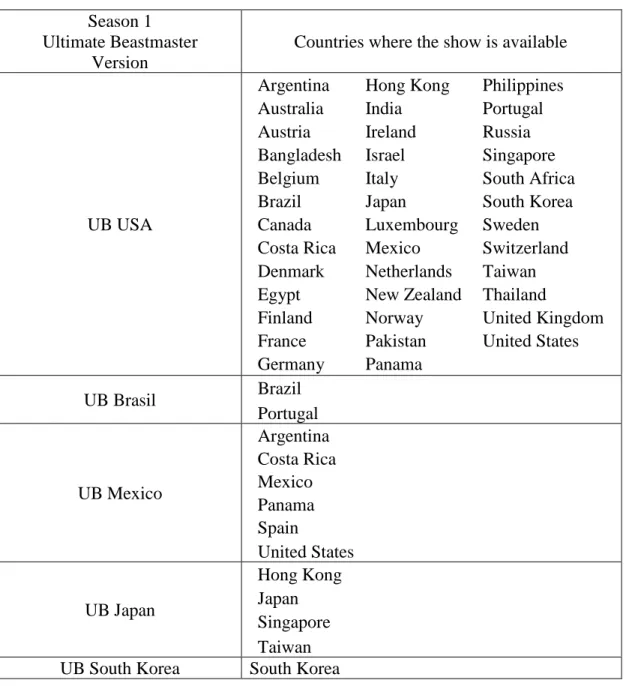
Figure 2-2: Availability of Ultimate Beastmaster...90
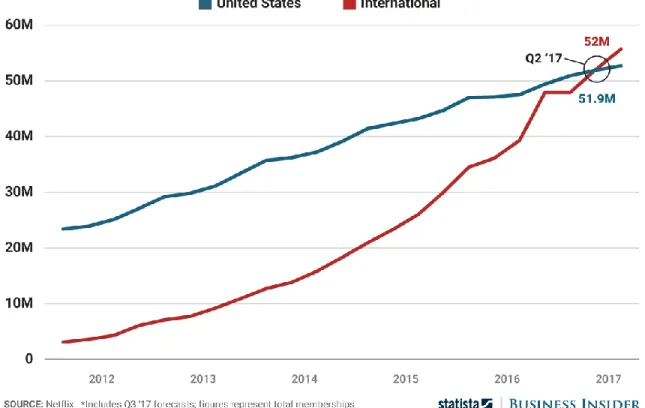
Figure 2-3: International Netflix Subscriptions Surpass U.S...96
Figure 2-4: Playstation 3...100
Figure 2-5: Smart TV...100
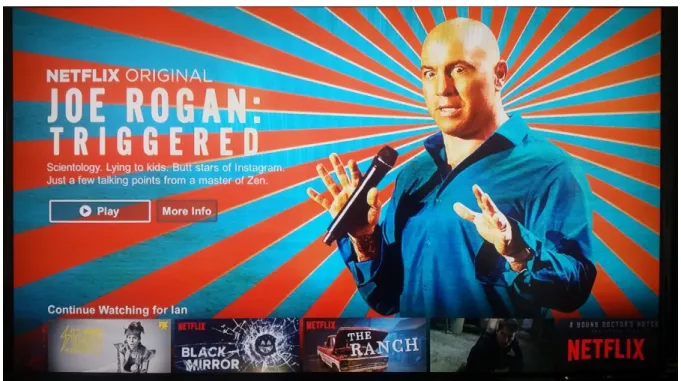
Figure 2-6: Netflix website via HP Laptop...101
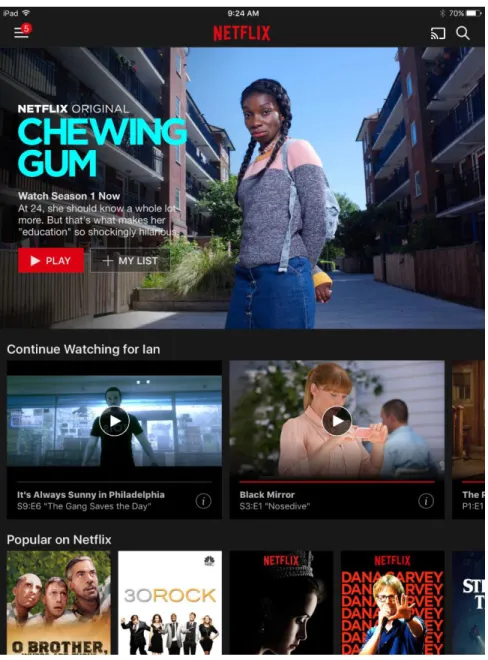
Figure 2-7: Samsung Galaxy S5 phone...102
TABLE OF CONTENTS
INTRODUCTION………...1
Overview: Distribution from Broadcast to Broadband………1
Online Streaming and New Power Brokers of Media……….3
Reconfiguring Content Access………6
Dissertation Structure……….11
INTERNET TELEVISION DISTRIBUTION AND THE LAW: THE CASE OF ABC V. AEREO...24
Broadcast vs. Broadband...24
Aereo’s History...29
Retransmission Consent Fees: From 1992 Cable Act to the Present...33
Temporary Broadband Victories: Aereo in the Lower Courts...38
Aereo and the Supreme Court...43
From Aereo to YouTube TV: The “Broadcastification” of Internet Television...49
Conclusion...57
GLOBAL INTERNET TELEVISION DISTRIBUTION: GEOBLOCKING AND THE INTERNATIONAL EXPANSION OF NETFLIX, 2010-2016...61
A Global Network in a Fragmented World: How Netflix Navigates Differential Access to Content...61
Geoblocking and Netflix’s International Expansion...67
Global Content in Local Contexts: Cultivating the Netflix Originals Brand...77
Conclusion: Responses to Geoblocking and to Circumvention...111
INTERNET TELEVISION GOES SOCIAL: TWITTER LIVESTREAMS THE NFL...119
Marrying Social Media and Television...119
Reimagining Twitter from Second Screen to Livestream...122
The Twitter Deal with the NFL...129
Twitter as Gatekeeper...132
Assembling a Hybrid Technical Infrastructure: BAMTech, Artificial Intelligence, and Twitter’s Livestreaming System...137
Periscope and the User-Generated Broadcast...144
Tech Infrastructures and Livestreaming at the Interface...150
Conclusion...156
MOVING DISTRIBUTION FORWARD: AMAZON VS. GOOGLE AND THE BATTLE OVER “INTELLIGENT” DISTRIBUTION...159
From Distributor to Destination...164
Amazon’s Alexa and the Rise of Voice-Activated Operating Systems...168
Internet Distribution 2.0: Blockchain and Distributed Decentralization...175
AFTERWORD...181
Introduction
Overview: Distribution from Broadcast to Broadband
My dissertation analyzes the evolution of contemporary, cross-platform and international circuits of media distribution since the internet. A circuit of media distribution refers to both the circulation of media content as well as the underlying ecosystem that facilitates that circulation. In particular, I focus on the development of services for streaming television over the internet. I examine the circulation paths that either opened up or were foreclosed by companies that have been pivotal in shaping streaming economies: Aereo, Netflix, Twitter, Google, and Amazon.1 Television—and in particular streaming television over the internet—serves as a useful point of entry for cataloguing and analyzing the levels of upheaval in post-internet circuits of distribution for popular entertainment. Television is situated between the power structures of Hollywood and Silicon Valley, and the changes inherent to internet television therefore become a testament to the level of influence that each sector has over the other.
In addition, I describe and analyze the maturation of the underlying contemporary ecosystem for media distribution. Within this system, particular circuits of distribution are characterized by a convergence of legacy media sectors—in particular those involving television—with a multitude of developing formations of networked technologies. These convergences encompass everything from social media platforms to automated advertising systems, from personalization and curation algorithms to geolocation tracking software, from
live local broadcast feeds to global streaming initiatives, from major corporate entertainment regimes to informal networks of content access, and from artificial intelligence to the so-called Internet of Things. This dissertation is broken into a series of four case studies, one per chapter, to document and analyze the technological, economic, sociocultural, and regulatory stakes of contemporary content distribution.
The first chapter focuses on ABC v. Aereo—a 2014 U.S. Supreme Court case about unauthorized retransmission of local broadcast signals over the internet by Aereo, a streaming service startup—in order to establish how federal regulatory policies for legacy media like broadcast television continue to shape the conditions for contemporary media distribution. In the second chapter, I analyze Netflix’s international expansion of its streaming service and highlight another pivotal issue for online distribution: geoblocking, or the regional fragmentation of content access throughout the world. The third chapter examines Twitter’s foray into livestreaming, in order to document how social media companies are experimenting with integrating broadcast programming into preexisting platforms and services that distribute more than just television. The final chapter presents a case study about a dispute between Amazon and Google over the compatibility of cross-platform streaming media in the “smart home.” These two corporations are each building all-purpose distribution ecosystems, of which their streaming media platforms and devices are only a small part. This dissertation thus builds a distribution circuit that begins from an older media formation—over-the-air broadcasting—and culminates in an analysis of how the circulation of television fits into a much larger distribution ecosystem that extends far beyond traditional media industries.
range from sectors of legacy television—for instance, broadcast networks, cable companies, and production studios—to a variety of new media and technology industries, including social media, e-commerce, internet search, and artificial intelligence. Second, I identify the ways in which these power brokers are reconfiguring content access. I highlight a series of technological, financial, geographic, and regulatory factors that authorize or facilitate access, in order to better understand how contemporary circuits of media distribution are constituted. Moreover, my analysis details how distribution circuitry comes to be increasingly interconnected. I consider access as a regulatory issue, a foundation of business models, a design concern, and as a function of interoperability that facilitates communication amongst platforms, devices, and other systems of networked technologies. In the next two sections, I expand on distribution power brokers and then content access, situate them within existing debates about media distribution, and explain my own intervention into these debates.
Online Streaming and New Power Brokers of Media
The second decade of the twenty-first century has seen an acute increase in commercial online video streaming services. Broadcast and cable networks certainly have helped influence the shape of these services. So too have the various multichannel video programming distributors (MVPDs), the umbrella term given to cable, satellite, and telecom companies that provide
for selling and renting physical media forms like DVDs, as well as a working interface and infrastructures for data collection and storage. Google parlayed its dominance in search to provide, alongside data analytics firms and other facilities that manage internet traffic, crucial backbones for the distribution of data rich media, like video. Internet-enabled video gaming consoles offered set-top boxes that provided some of the initial alternatives for porting content to the television set beyond those means dictated by cable companies. In addition, video games and social media offer important gateways to a younger generation of television fans, the so-called cord cutters and cord-nevers.
I focus on identifying the key actors for media distribution circuits and situating them within the broader distribution ecosystem. One upshot of this focus is that it renders distribution visible. Distribution has been largely understudied relative to consumption and production. This dissertation thus joins in existing academic debates that argue for the importance of continuing to foreground distribution in studies of media and popular culture. For instance, Josh Braun (2015) notes that people have little sense of the path that media takes in getting to us when we access content through mobile devices or our televisions: the nature of the delivery path, what types of businesses and entities are involves in the transmission, what sorts of algorithms are
recommending content to us and why, what data is being generated in the act of distribution (the search for content, the transmission of content, and so on), and what is being done with that data. This dissertation, then, is in part an act of discovery and description, of uncovering these
“invisible” linkages that remain concealed through some combination of complicated technical pathways; interface design; marketing and other business strategies; and legal policies.
interconnectedness—and the complexity—of contemporary distribution. The cases center on different kinds of companies: a now defunct technology startup, Aereo; an international
entertainment corporation, Netflix; a social media platform, Twitter; and two multinational tech conglomerates, Amazon and Google. Individually, each case study spotlights how specific content producers, distributors, regulatory bodies, technologies, material infrastructures, and consumer-users are arranged in circuits of distribution. Collectively, the case studies illuminate how circuits of media distribution are increasingly embedded within emerging systems of networked technologies. Each case study isolates distinct portions of contemporary circuits of distribution to analyze some of the unique ways that individual companies—namely Aereo, Netflix, Twitter, Amazon and Google—have influenced the development of content circulation.
Moreover, identifying the sectors and entities paramount to contemporary distribution reveals the still relevant influence of mass media sectors. The distribution circuits analyzed in this dissertation are all hybrids of both older, mass media formations and emergent broadband models. This focus on hybridity extends calls from Andrew Chadwick (2017) for media research to account for how “older” and “newer” media practices intersect, where such distinctions matter, and where they no longer matter. Chadwick uses hybridity to explain the media’s role in political life and political communication. My dissertation takes steps in extending these
Identifying the actors and entities who facilitate circulation—the corporate circuitry— also entails classifying them in some way. It is important to recognize not only who the critical players in contemporary distribution are, but also what they do. How these companies operate— and what kind of companies they are—can have profound economic and regulatory implications. Debates over classification typically fall into binaries. Businesses are framed as either platforms or publishers (Gillespie 2010), technology companies or media companies (Napoli 2016), conduits or distributors (Kimball 2015). Recent debates about net neutrality center in large part around distinctions between Title I telecommunications services and Title II information services. Traditionally in the United States, the former categories—platform, tech company, conduit, telecom service—bear much lighter regulatory burdens than the latter categories. Such categories thus become attractive to Silicon Valley companies who claim they are in the business of facilitation, or who serve “merely” as intermediaries, even as they move more aggressively into commissioning, licensing, or producing programming and other forms of content. This dissertation moves these debates forward by illustrating the extent to which such binary
categorizations are misleading, as the companies in this dissertation perform a number of roles— indeed, a “hybrid” of roles—across multiple contexts in contemporary distribution circuits.
Reconfiguring Content Access
Identifying and analyzing the power brokers addresses who or what controls distribution. I use this section to define how I deploy the term distribution in the first place. In this
dissertation, distribution encompasses the processes of commercialized digital content
Specifically, I concentrate on how these companies gain access to content themselves, how they build their streaming services for access by consumer-users, and which sectors of the distribution circuit they target and operate in (for instance, platforms, consumer electronic devices, software applications, content ownership, and geographic markets).
Distribution, as Curtin et al (2014) note, has served as the cornerstone of financial success for content industries like Hollywood. This success is built on business models that stagger access to content, so that content is only available in certain places at certain times for a certain predefined duration. The proliferation of delivery platforms, screens, and streaming services complicates how media and tech companies conceive of access. For each of the companies in this dissertation, access itself becomes the fulcrum point around which such companies operate. They built streaming services (Aereo and Netflix), open social media platforms (Twitter), and entire distribution ecosystems (Amazon and Google) with distinct strategies for convincing people to use or join, keeping people inside, encouraging people to use in certain ways, and preventing people from entering or using in other ways. Access thus
becomes a useful point of analysis for understanding how post-internet distribution circuits are constructed and operate.
I analyze access in four ways. First, access is a regulatory issue, both in terms of legal statutes and licensing agreements between content rights holders, distributors, and consumers. Second, managing access is a fundamental principle for the business models of these companies. Third, access is a matter of design, whether through content curation, recommendation
algorithms, how consumers control or otherwise interact with content, or mechanisms of
Together, these four conceptions of access help to explain how businesses deploy technologies to control the conditions under which distribution takes place. Below I briefly elaborate on how I foreground each conception in a single chapter; however, all four are present across all chapters.
Considering access in terms of regulation directly relates to the task of classifying
distribution actors. For one, the capacity to reconfigure access is inextricably tied to the roles that the corporate circuitry play as, for instance, intermediaries of circulation or as active producers or publishers. This relationship between access and the role of distribution channels looms large in discussions over the regulation of media that are germane to this dissertation, including Jennifer Holt (2016) on cloud policy, Danny Kimball (2015) on net neutrality, and Philip Napoli (2017) on the policy distinctions between media companies, social media platforms, and online content aggregators. This dissertation adds to the study of regulation by foregrounding a largely ignored policy, retransmission consent, in the first chapter. Aereo attempted to argue in court that it was merely facilitating the retransmission of broadcasts by its users, rather than actively
circulating the feeds, to defend itself against the charge that it did not obtain consent from
broadcasters to do so. Requiring such permission by leveraging the retransmission consent policy has become an incredibly lucrative revenue source for broadcast networks. However, making money from retransmission consent represents a failure of regulatory oversight, as broadcast networks have coopted power over content access by overriding the protections that such policies were meant to implement. While I foreground this particular policy in the first chapter, the general concern over regulatory failure and its relationship to the circulation of television programming (and other digital content) permeates all of the case studies to some degree.
businesses (through the terms of licensing agreements) and between businesses and consumers (through paid subscriptions, for instance). Attention in academic research to business models of contemporary distribution tend to either note how media companies are experimenting with new revenue models (see Curtin et al 2014) or become entrenched in old ones (see Mann et al 2014). In this dissertation, I focus on how issues of access can create simultaneously conflicting
financial incentives. For instance, online streaming services face complicated questions about how differential access to content relates to revenue. In the Netflix case, geoblocking erects digital fences around the company’s content libraries across the world, based on the terms dictated by the licensing agreements. Regional windows allow content rights holders to generate revenue from a variety of geographic markets. Netflix is asked to police these borders, as
consumers actively evade them to gain unauthorized access to shows and films not available in their area. At the same time, Netflix stands to profit from this circumvention, because those people who successfully circumvent the geoblock end up paying for the service. This analysis connects corporate strategies of content circulation to video streaming infrastructures, and unequal content access. However, there are similar stories across the four case studies, where elements of a streaming service upend distribution conventions, which can lead to costly conflicts, while also offering opportunities for generating revenue.
open-access platform running on user-generated content. Twitter then became an insular ecosystem for television programming, where users could watch, comment on, and follow
journalistic coverage of live sports in “real time.” This arrangement created design complications for syncing up the flow of the game with the tweeted commentary on the game. Moreover, the authorized broadcast would now intermingle with unauthorized, user-generated retransmissions that also existed on Twitter and Twitter-owned Periscope. The integration of these components creates a hybrid distribution circuit, mixing the formal with the informal, as well as the approved and unapproved. The other case studies also consider the design of a hybrid distribution circuit: Aereo built its service by attempting to retransmit programming without permission; Netflix subscribers circumvent geofences; Amazon and Google deploy technical workarounds for unblocking the interconnection between streaming platforms like YouTube and smart speaker devices like the Amazon Echo Show.
surface, their dispute is about Google removing YouTube from Amazon’s Echo Show smart speaker. But for both Google and Amazon, streaming video is only one part of a conglomerated, diversified set of business interests centered on technologies of the home. The conflict over YouTube thus becomes part of a much larger power struggle between two tech giants who are both working to build entire an entire ecosystem of interoperable technologies in the home, all funneled through a central device like the smart speaker.
Conceiving of access in terms of interoperability broadens the scope of this dissertation project beyond conventional media industries. Existing work on media distribution tends to keep its analysis within the discrete parameters of such industries and media forms, including music, movies, television, video games, news and journalism, and so forth. For the most part, this dissertation also remains within the bounds of such conventions, by focusing so much on internet television. However, I lay the groundwork within these four case studies for expanding beyond such constraints, while also never losing sight of them.
Dissertation Structure: Case Studies and Sources
I use “circuit of distribution” to examine the issues in this dissertation. I draw the “circuit” from previous work in media and cultural studies, which has been used as a tactic of visualizing what is being studied, while also pointing to the way it is studied.2 My interest here is in the processes of distribution, how such processes operate, who or what kinds of institutions, companies, and regulatory bodies are instrumental to such operations, and the strategies at play in implementing such processes. The circuit becomes a useful heuristic for visualizing processes
of distribution, as well as a grounding framework of analysis for understanding these processes in relation to each other. Its flexibility allows me to capture the complexity of contemporary distribution while also attending in part to the some of the historical antecedents at play in the case studies—like broadcasting and cable regulations for Aereo; traditions of content licensing practices and copyright policies for Netflix; evolving stances on informal distribution
technologies from protective media organizations like the NFL and broadcast networks for Twitter; and the role that circulating conventional media programming plays within much larger distribution ecosystems for Google and Amazon.
I extend the concept of the circuit to focus more explicitly on distribution. In doing so, I amend previous conceptions of the circuit, which tend to be largely circular. My own circuit would be illustrated more as a Venn diagram than as a circle, by exploding the more
conventional “sites” in previous circuit models—like production or cultural artifacts—to see how the cites on the circuit come to be constituted through processes of distribution. In this
media institutions that penetrates every public domain and dominates its organizing structures” (3).
I examine here some of the principles that govern the management of resources in economic terms, for example by analyzing how each company in the four case studies works to enact boundaries of artificial scarcity to exercise more control over the circulation of content, in the face of (and sometimes using) technologies of distribution that are built to cultivate
abundance. At the same time, I analyze media logics that manifest in terms of organizational hierarchies and power structures, as with the notions of centralized versus decentralized mechanisms of control. My research details the establishment, maintenance, and evolution of contemporary content delivery circuits, which are comprised of a complicated network of
telecommunications infrastructures that interact with social media and streaming platforms. This dissertation emphasizes that these circuits are entry points to underlying processes of digital distribution, whereby legacy mass media logics become intertwined with newer logics of social media and internet-based technologies. For instance, the centralized control over content
circulation that characterized traditional mass media confronts the programmability of web-based applications, where consumer-user interactions on such platforms can reroute content in ways as significant as the decisions of producers, and that are anticipated by producers in advance. These paradigms consist of a host of infrastructures, technologies and processes of distribution. In addition, I focus on a series of companies and industries that regulate the circulation of media content.
reduced to their binary code in digital form, and then how multiple end points of distribution came together into a single consumer electronic device or a single medium. Alongside this older thinking about convergence by media theorists stood those attending to the rash of mergers between legacy media paradigms and telecommunications or internet technology companies. These mergers illustrated a concentration of ownership over different kinds of media content, as well as over different forms of media distribution. This form of thinking about convergence seemed to shift during the early 2000s, and especially with Henry Jenkins’ work on convergence culture from 2006. New media was no longer thought to subsume or displace older or legacy forms. Instead, for Jenkins convergence referred to “the flow of content across multiple media platforms, the cooperation between multiple media industries, and the migratory behavior of media audiences who will go almost anywhere in search of the kinds of entertainment experiences they want” (2006, 2). For Jenkins, convergence allowed for more grassroots and participatory forms of media to emerge, alongside and within networks of consumer
empowerment. One of the main factors that distinguishes this dissertation from Jenkins’s model is that I am more interested in the systems of distribution beyond consumer empowerment.
What I am doing here is a more descriptive project of a few specific processes of
distribution, as instantiated through corporate entities. I am confining the scope of my conception of media—or more abstractly, of that which is distributed—largely to television programming over the internet. Doing so lays down a solid foundation from which to build off in future
projects, by incorporating for instance different conceptions of the distributed like “information” or “data.” It does so through an acknowledgement that, for instance, the major cable and
abstract products like information and data flow—are in many ways the focal points of the distribution circuit. As such, grounding the analysis within the confines of conventional media is an essential first step to understanding the constitution and operations of such distribution circuit to begin with.
means of distribution, and the media programming (that which is distributed) as these developments since over-the-top television continue to take shape.
In the first chapter, I use the Supreme Court case ABC v Aereo to trace the rise of retransmission fees within the context of the emergence of broadband distribution and internet-based television. Aereo was a technology startup that captured broadcast television signals and retransmitted them over the internet. They charged users a subscription fee, but did not ask for permission from, or offer payment to, the broadcast networks. The networks then sued Aereo, and the case went all the way to the Supreme Court before Aereo was forced to shut down. In this chapter, distribution becomes a matter of threading discrete but overlapping technical infrastructures—broadcast, cable television, and broadband internet—through a web of business-to-business financial contracts. These contracts are dictated by retransmission consent, a
provision of the 1992 Cable Act that dictates rules about content circulation between networks and distributors. Retransmission consent is at the heart of the first chapter’s case study, the Supreme Court case ABC v. Aereo. Using retransmission consent as an analytical focus underscores the issue of carriage, which indicates which parties are responsible for carrying a televisual signal, what imperatives drive those responsibilities, and what kinds of contractual agreements stitch them together.
standards that dictate rules about how television programming can circulate over the internet. ABC v. Aereo serves as a landmark moment in the history of internet-based streaming media, when internet television graduated from being a threat to legacy media companies to a mode of circulation that is officially sanctioned by broadcasters and cable networks.
To support this claim, I first document Aereo’s company history and the underlying technological makeup of its streaming service, which demonstrates the connections between legacy media like broadcast television and Silicon Valley both in the makeup of Aereo’s executive board and its technical infrastructure. I then offer a history of the retransmission consent policy and the rise of retransmission fees, which I cobbled together from academic histories of cable, broadcasting, and media policy; news stories about programming blackouts from the past decade; and reports from congressional and regulatory bodies on media policy. This history allows me to illuminate the importance of broadcast-era regulatory policies for contemporary broadband distribution, and account for how broadcast networks have coopted federal regulations for financial gain. I then analyze the rulings of the lower Circuit Court as well as the Supreme Court by reading the arguments made by both the broadcast networks (the
plaintiffs) and Aereo (the defendant), the written decisions from the Circuit Court judge and the Supreme Court justices, and news stories written about the case. By doing so, I show how legal decisions—and popular discourse around legal decisions—come to influence the structure of distribution circuits.
protocol address databases to determine a user’s physical location via internet-connected devices. For people who stream media, geoblocking manifests itself most explicitly when access to
certain content is blocked, and viewers are instead met with a message on their screen that says “this video is not available in your location.” It is common practice for a streaming service like Netflix to offer dissimilar content libraries in different countries and regions. Such an
arrangement requires international distributors to negotiate for multiple content licenses of the same show, while also offering opportunities for service customization based on language or territory. On the other hand, Netflix users often circumvent geographic restrictions to gain access to content unavailable in their area. Content rights holders pressure Netflix to regulate such circumvention efforts, which they characterize as a form of piracy. However, these “pirates” are in fact paying Netflix subscribers, creating a dilemma that partly incentivizes Netflix to ignore its policing responsibilities. These new policies and practices are restructuring the international circulation of television programming.
streaming service. Netflix works to effectively manage both the massive flow of data traffic that its service generates and the circumvention of filtering technologies that map geographic borders onto digital spaces.
To build this analysis, I organize a collection of disparate sources, including Netflix’s financial reports and regulatory filings, their public correspondence and recordings, their marketing materials, news reports about them, and popular and academic business histories of the company. By reading these sources together, I analyze how Netflix has operated in light of the many complications involved in running an internationally expanding video streaming service. I contextualize these analytical insights by drawing from academic work on differential content access across geopolitical regions, international regulatory regimes, and the evolving business of licensing, production, and distribution of television programming.
While geopolitical borders continue to complicate the distribution of television
this transformation means bringing together a popular medium for user-generated content, where the barrier to entry for new users is so low that people do not even have to sign up for an account to use the service, with broadcast television, an industry that is notoriously consolidated and operates on a model that bottlenecks the flow of information down to a few select “voices.”
The Twitter case highlights the evolution of the distribution circuit to include social media platforms. Initially useful for television distribution as a second screen—a place for content owners to publish supplemental content and for fans to interact with the show and with each other—Twitter morphed into its own version of a television screen for live content on an international scale. The Twitter case study expands the distribution circuitry to include platforms that initially operated adjacent to or wholly apart from conventional television, but which have come to experiment with its delivery over the internet. By integrating its livestreaming initiative into its platform for user-generated content, Twitter created an entire ecosystem of the television experience by facilitating the ability to watch, react to, and follow journalistic coverage of programming—and even generate unauthorized retransmissions—all in the same place.
In this chapter, my primary sources are news articles about Twitter’s experiments with livestreaming. In particular, I focus on stories about Twitter’s acquisitions of, and partnerships with, technology startups in video streaming, artificial intelligence, and user-generated
through academic work that documents: broad paradigms of media and tech sectors like broadcasting, broadband, and social media; the development and deployment of second screen technologies by tech and legacy media companies; and characteristics of formal and informal screen distribution. By reading news articles in light of these academic sources, I am able to further narrate the overall arc of the dissertation by analyzing in this chapter Twitter’s shift from the second screen to a full ecosystem for television programming.
The final chapter expands this circuitry even further, as I progress from a television ecosystem (in the case of Twitter) to investigate how streaming TV programming fits into a much larger distribution ecosystem that extends far beyond traditional media industries. I use as a case study a conflict between Google and Amazon over the compatibility of cross-platform streaming media, in order to analyze the emergence of smart home devices—especially smart speakers like the Amazon Echo and the Google Home—as vehicles for media distribution. This chapter focuses on consumer electronic devices and the systems of networked technologies that undergird their increased interconnection in the still-nascent “smart home.” I analyze how Google and Amazon are attempting to turn the smart speaker into the main hub of this
interconnection. Not only does the smart speaker serve as a control center for the circulation of media, it also represents a gateway to other smart home devices that might monitor and regulate the other household appliances, not to mention heating and lighting. As with the other chapters, here I draw largely from news reports and company blogs and websites that document the conflict between Google and Amazon, as well as the growth and development of their smart speakers. I read these sources in order to analyze the strategic moves taken by Google and Amazon as they enter a wide range of tech sectors, including voice-operated artificial
Internet Television Distribution and the Law: The Case of ABC v. Aereo
Broadcast vs. Broadband
On June 25, 2014, the Supreme Court ruled in ABC v. Aereo that the television streaming service Aereo had violated copyright laws by retransmitting broadcast signals without
programming norms of traditional television by signing deals to stream pre-existing live network feeds.
This chapter uses the Aereo case to analyze how broadcast networks leveraged existing copyright and telecommunications policies that dictate rules about the circulation of live, linear television programming, in order to enhance their power over internet distribution, at a time when that power was thought to be waning. ABC v. Aereo establishes a central tension for contemporary media distribution between broadcast-era policy and business models based on principles of scarcity, and broadband-era logics grounded in abundance. In particular, I focus on how broadcasters turned the issue of retransmission consent to their advantage. Retransmission consent is a clause of the 1992 Cable Act that set terms about the conditions under which cable providers can distribute broadcast network signals. As the Aereo case and its aftermath
demonstrate, when broadcast signals are transmitted via broadband internet, their legal status and proprietary standing continue to be called into question by distributors, content rights owners, and regulatory bodies.
becomes overshadowed by a different role: that of a guardian of financially lucrative, privately owned intellectual property.
Several important factors play a role in this shift. First, several decades of deregulatory policies and a general political and cultural shift towards privatization—and away from public service liberalism—helped to engender the conditions for this shift. Another related factor is the continued convergence of broadband, broadcast, cable (and satellite), and mobile technologies. A third development is the ongoing digitization of content, which allows for increased
“networkability” and compression (easy and efficient distribution through a network), density (how much information can be stored), and manipulability (the flexibility to shift content to multiple formats and platforms) (Burroughs 2015, Flew 2002). A fourth component involves the calculated cultivation, via internet streaming, of specific viewer behaviors and expectations for accessing, watching, interacting with, and paying for content, both from consumers (the “demand side”) and through media industry practices (the “supply side”). Finally, broadcasters can
successfully exploit regulatory policy, effectively weaponizing certain aspects of the law for monetary gain. These factors came to a head in the Aereo case, forming a context in which streaming video helps to expose some of the gaps in the policy foundations of legacy media formations like broadcast and cable, in particular as those foundations are built into regulation on emerging distribution schematics.
through cable and satellite packages. In 2005, cable and satellite distributors paid $28 million in retransmission consent fees to local stations. In June 2016, media research firm SNL Kagan expected retransmission fees to reach $7.7 billion by the end of the year, and projected $11.6 billion would be collected by 2022 (Twomey 2016). These fees were in the foreground of the Aereo case, as the broadcasters fought to ensure they were paid, Aereo worked to keep from paying them, and the courts mused about what such fees signify in the context of technological change. Dozens of amicus briefs were filed on behalf of both sides by trade associations, major league sports, law associations, major media companies, national and international federations for copyright reform, and digital advocacy groups. In the meantime, outside the courtroom policymakers debated the merits and necessity of such legal provisions in the first place.
Retransmission consent fees have been consistently overlooked within media studies, even media policy studies, and media journalism. When it is mentioned in the press, it is typically in the context of public blackouts of popular programming, stemming from disputes between a distributor and a network. Similarly, media scholarship tends to consider
retransmission consent in terms of the various, and very public, television blackouts that result from disputes between networks like CBS and multichannel video programming distributors (MVPDs), a legal definition of television distributors that serves as an umbrella term for cable, satellite, telecom, and so forth. In this context, as Jennifer Holt, et al (2012) have described, the focus tends to be on the loss of access to favorite programming. Susan Crawford (2013) expands the scope of analysis somewhat by considering retransmission consent in terms of broader
context, by drawing parallels between television networks and affiliates with early relationships between radio networks and affiliates. Rob Frieden (2015) addresses retransmission as a
regulatory matter, by discussing the extent to which the FCC can and should exercise its authority. Phillip Napoli (2011) also tackles retransmission as a matter of public policy, by dissecting whether or not it lives up to its original mandate: to protect the principle of localism. Here, I build off these varied and important approaches to retransmission consent, in order to examine how preexisting regulatory policies for “old media” like broadcasting are brought to bear on post-internet circuits of distribution.
The rise in retransmission fees suggests a push by major content owners to co-opt, graft onto, and normalize a legacy business model for broadband television distribution in the face of what these companies see as profound change. The irony is that the policy tool that they are using to extract that preservation, retransmission consent, was meant to do quite the opposite: to preserve the local voices in the face of consolidated control over the major conduits for
television. In addition, the ability to retransmit existing signals is precisely how cable television itself came to be in the first place. It is from that relatively straightforward action, of plugging into an existing distribution infrastructure, that cable distribution grew into its own dominant paradigm.
have come to shift their traditional revenue models by leveraging both the retransmission consent clause of the 1992 Cable Act and existing copyright law. Finally, I conclude by speculating about how the implications of the Aereo decision will continue to shape broader trends in broadband distribution.
Aereo’s History
Chaitanya “Chet” Kanojia launched a company called Bamboom in 2011. Within a year, Bamboom had financial backing from a major media mogul, and its name changed to Aereo. Kanojia was a former chief executive of Navic Networks, which delivered interactive
advertisements across cable networks via technology that was embedded in set-top cable boxes (Healey 2011).This technology enabled cable and broadcast networks to measure audience demographics in “real time,” and then provided the capacity for those networks to deliver demographic-targeted ads to match those measurements. His time at Navic Networks taught Kanojia that around half of pay-TV viewers were actually watching local broadcast channels at any given point in time. These channels could otherwise be watched for free—or at least without a monthly cable subscription—with a digital antenna.
The idea behind Bamboom/Aereo came from what Kanojia saw as several important conditions about television, the internet, and media culture more generally. Cable companies had shown that people were interested in paying for television, even if in aggregate they largely watched channels they could otherwise get for free. Moreover, people prefer the flexibility of being able to watch when they want. In addition, for many people the television set was no longer the primary device through which they wanted to watch broadcast and cable
the public airwaves, and can be accessed for free via any digital antenna. Kanojia reasoned that his company could harness the public airwaves to become a middleman between viewers and network feeds. Doing so would solve the problem of paying for content to distribute, which for distributors is an exorbitant cost. Rather than become an internet-based cable company, Aereo could get into the antenna rental business. This distinction, Kanojia thought, would allow the company to bypass the restrictions of the Transmit Clause of the Copyright Act, which gave networks and other content owners the exclusive right to publicly distribute their content.
Media mogul Barry Diller bought into this business plan as well, and agreed to finance Aereo. On Valentine’s Day 2012, Diller introduced Aereo at a press conference in the Manhattan headquarters of IAC/InterActiveCorp, Diller’s media and internet company. For $12 a month (this would later drop to $8 during the lawsuits), subscribers received access to broadcast television streams through the internet that they could watch through multiple devices. In addition, Aereo offered a cloud-based DVR system so that subscribers could record shows they did not want to watch when they aired. At the time of its launch, Aereo positioned itself in a few unique ways. For the consumer, Aereo represented an alternative to expensive cable
Diller is no stranger to legacy media in the United States, having worked in film and television for over 50 years. He has served as the Vice President of Development for ABC and launched what was seen as a new form of programming in “The Movie of the Week.” Later, he became Chairman and CEO of Paramount Pictures from 1974 to 1984, at a time when the company was one of the first and most successful at branching out into the emerging markets of video cassette sales and rentals (Salmans 1983). He then moved to the same position at Fox, Inc, where he helped build Fox into what was essentially the fourth major broadcast network
alongside CBS, ABC, and NBC and spearheaded the push to make that network more “youth-oriented” with programming like The Simpsons and Married, with Children. In the mid-1990s, Diller took over control of USA Network, Inc. from Seagram, a company owned by the
Bronfman family, which made much of its wealth selling booze during Prohibition. In short, Diller is well-versed in acting as a kind of “pioneer,” in particular with respect to his own media image. The internet is riddled with archives of news articles going back to the 1970s about Diller’s business savvy, ruthlessness (or hardheadedness), and his various cutting-edge deals.
Aereo’s service was cobbled together as an amalgam of broadcast and broadband-era technologies. Aereo operated using dime-sized antennas to pick up the broadcast signals from nearby stations and transmit them to its users. Each antenna was assigned to an individual user at the moment that user started to use the service. When they stopped watching, the antenna went back into circulation, and could be assigned to any other user. These signals were then
transcoded from over-the-air television signals into a delivery format that various
and thus the antennas only began to pick up the spectrum, once the users decided to watch something on the service (Roberts 2012). Aereo could afford to house a large amount of these antennas in a single place in each of the cities where the service operated. To store the antennas in New York City, its first launch site, Aereo rented the top floor of a government building on Vanderbilt Avenue in Brooklyn. The site was chosen because it had a direct and unencumbered line of sight to the Empire State Building, the city’s largest transmission tower. Aereo’s small antennas would each pick up the broadcast from the Empire State Building, and then transmit those signals to user devices throughout the five boroughs.
system to decentralize that control, whereby a single antenna was assigned to a single user. In this way, Aereo reasoned, any use of its service was strictly a private rather than a public performance. Setting aside the legal distinctions between private and public performances, the larger point here is Aereo’s clear deference to broadcast-era policies about how television content is allowed to circulate, even as they sought ways to circumvent those policies in their attempt to successfully crack the code of live, linear television online.
The major broadcast networks disagreed with Aereo’s logic, and on March 1, 2012 they filed a lawsuit against Aereo for copyright infringement. ABC v. Aereo was legally predicated on an accusation of copyright law infractions. However, broadcasters fought to protect the possible loss of retransmission fees. Distributors pay these fees to broadcasters in exchange for the right to circulate broadcast channels to consumers through cable, satellite, and now broadband streaming services. Before proceeding with an analysis of Aereo’s case progression from the lower courts to the Supreme Court, and a discussion of its implications for these subsequent developments in retransmission fees, it is necessary to explain the emergence of the fees
themselves. The next section offers a primer on what these fees are, why they are rising, and how they relate to the stakes of the Aereo case.
Retransmission Consent Fees: From 1992 Cable Act to the Present
operators were not obliged to compensate for the right to retransmit these signals. As a
regulatory matter, this is because cable was viewed by policymakers in the 1940s and 1950s as a useful extension of broadcasting, rather than a threat that might undercut its existing revenue streams. Cable extended the reach of both the programming and the advertising of broadcasts. As a result, the FCC understood cable to be a “functional technology” that spread broadcast signals, rather than a new medium for regulation, which would have qualified it for status as either a common carrier or as a broadcaster in its own right (Lubinskey 1996).
It was not until 1965 that the FCC determined that all forms of CATV (cable antenna television) could be regulated. In 1968 this decision was upheld by the Supreme Court in United States v. Southwestern Cable Co., in which the court determined that the FCC’s had the authority to regulate cable under the Communications Act. The court restrained this authority “to that reasonably ancillary to the effective performance of its responsibilities of television
regulators express unease about the consequences of vertically integrated corporations distributing their own content.
During the 1960s and 1970s, however, much of that regulation emerged not from federal but from county and municipal authorities that granted (often exclusive) local cable franchises and enforced the cable rate rules, which were implemented because cable was thought to be a natural monopoly. The first major national cable television policy by the federal government came about in 1984 with the enactment of the Cable Communications Policy Act. This Act deregulated cable rates in areas with “effective competition,” a rather vague term that was defined as “any franchise area where three or more unduplicated broadcasting signals were available within a cable operator’s service area” (Parsons 2008). Nearly all cable systems qualified under this definition for rate deregulation. Cable prices subsequently rose throughout the rest of the decade, until Congress responded with the 1992 Cable Act.
free broadcasting remains vibrant, and not be replaced by a system which requires consumers to pay for television service” (Vogt 2013). To compensate for a perceived power imbalance that seemed to favor large-scale nationalized programming over local broadcast programming, Congress imposed “must-carry” provisions in the 1992 Cable Act. These provisions took one of two forms. Either cable companies were required to carry all local broadcast stations within a given market without payment, or a broadcast station could waive that right and negotiate compensation from cable systems. For several years after the implementation of retransmission consent, most broadcasters either opted for must-carry or negotiated with the cable company for some form of non-monetary compensation: advertising time, cross-promotions, and carriage of affiliated channels. A 2005 FCC-commissioned report to Congress argued that “cash still has not emerged as a principal form of consideration for retransmission consent. Today, virtually all retransmission consent agreements involve a cable operator providing in-kind consideration to the broadcaster” (FCC Retransmission Consent 7).
Since 2005, broadcasters have become much more aggressive in incorporating
revenue source to not only keep them afloat, but to strengthen their position. More importantly, networks found in retransmission consent (and in retransmission fees) an effective policy vehicle for normalizing more traditional distribution practices onto broadband-era television distribution.
Broadcasters have exercised their considerable authority to take control over the publicly-owned airwaves. In particular, they have leveraged their power of the airwaves to enhance their ability to dictate terms over the rules about how broadcast content—and broadcaster feeds—can circulate on the internet. This has happened in large part through their manipulation of the retransmission consent clause of the Cable Act to generate the massive increases in
retransmission fees. To reiterate, these fees totaled $28 million in 2005, but by the end of 2016, broadcasters had raised $7.7 billion. In the network era, relationships among stakeholders in television distribution were relatively straightforward because of the limited supply of channels and the restrictions in linear programming and scheduling. The proliferation of content
distribution outlets on the Internet reduces the scarcity that cable companies leveraged against broadcasters. As such, the rise of retransmission fees is partly the result of a reversal of power relations between broadcast networks and distributors (Multichannel Video Programming
Distributors, or MVPDs, to use the legal term). Cable networks are currently paid by distributors for their content, and broadcast networks have for the past decade fought to establish a similar relationship with distributors. Their networks, broadcasters (correctly) argue, have larger
Temporary Broadband Victories: Aereo in the Lower Courts
stored in the cloud. The legal question here centered around whether Aereo itself actively (or directly) infringed the copyright when its subscriber hits “record” on its service, or whether the individual consumer was personally responsible for calling forth those recordings.
Judge Nathan’s reasoning here is instructive for understanding how decisions about the legality of media distribution are made. The principles at stake in the rules of content circulation come from a desire on the part of the broadcasters to commodify the means of transmission by controlling the circulation of the broadcast feed and the nature of the storage of that feed’s content. Even as Aereo emerged from the Second Circuit victorious, the terms of the debate were couched in language that privileged the rights of major content owners to control distribution over the rights of upstart companies looking to transform and innovate broadcast television. Broadcast television has for decades served a role as a “public trustee,” or at least such a designation has served as a useful rhetorical device for media policy makers, journalists who cover the media, and for broadcasters themselves. In the Aereo case, the discursive position of the broadcaster’s traditional role as public trustee of the airwaves becomes overshadowed by a different role: that of a guardian of financially lucrative, privately owned intellectual property.
The figure of the cloud in the Aereo case, as in the Cablevision decision, plays an important role that helps to unpack one of the most important stakes here: the commodification of the means of transmission itself. Traditional industry knowledge holds that media are typically defined as “dual-product” markets: the audience market and the content market. This is an oversimplified characterization, one that ignores the value of distribution itself. Instead media markets should be thought of as tri-product markets: audiences, content, and modes of
of transmission does not simply mean the signal. Included here also are the modes of data storage (for Aereo, the cloud-based DVR service) as well as the nature of the nodes in the
transmission chain. In a Forbes column written during the window of the first round of the Aereo case, Professor Peter Decherney (2014) argues that one of the major implications of the
Cablevision case is that the cloud would be included in the legal definition of the home,
ostensibly for the first time. This is because the court ruled that content stored via the cloud by a DVR service was part of a private rather than a public performance.
While this may be true, the consumer-viewer continues to shift in interesting ways as pure broadcast and cable services give way to hybridized broadband-based services. It used to be that the consumer node was “the home.” This node was geographically static. Signals were beamed to a home antenna or satellite dish, or the home was wired with cables. Aereo and other broadband-based services opened up the node to a more “mobile” target: from the home to the subscriber. Although geographic restrictions for service access still very much apply, the way those restrictions are managed through the law and by the corporate entities who offer such access is in conflict, as both the law and the companies reconcile a desire to sometimes apportion scarcity and other times manage abundance. Part of how this happens is through arguments over the tools of transmission.
service). Barry Diller used Radio Shack as an analogy for Aereo’s service, arguing that by the broadcasters’ logic, any company that sold antennas should have to pay retransmission consent fees because the antennas facilitate the distribution of the broadcast feeds to viewers. Rather than selling antennas, Aereo was selling an antenna rental service, and was as such acting as an intermediary exempt from copyright infringement liability. This raises the issue of the
gatekeeper role for distributors. Under the court’s ruling that the recording is private, it is in fact the consumer who would seem to become the gatekeeper to content access, in the sense that the consumer makes the decision about when access is granted. Moreover, Aereo (and Cablevision before it) would be considered a neutral conduit. Such logic detaches distribution technologies from the contents they carry. This defense has been a common refrain in debates about the circulation of content over the internet, including debates on net neutrality and with the recent controversies over “fake news” and social media. It isolates the technical problems over the control of the flow of information on the internet from the social or cultural problems. For the people who work on these platforms to begin to make editorial decisions about the kind of content therein would be to assume an uncomfortable level of “bias.” Philip Napoli and Robyn Caplan (2016) call this phenomenon the technocratization of communications policy discourse. In the Aereo case, this discourse framing becomes even more complicated because the first key mode of twenty first century media distribution—broadband—butts up against what is perhaps the preeminent mode of twentieth-century distribution in broadcast.
copyright restrictions. There is an irony in this argument and in its inverse (which the
broadcasters represent). In the Aereo case, shifting from a broadcast-based distribution model to an internet-based model of distribution means shifting from television as a publicly-owned infrastructure to a privately-owned infrastructure. Retransmission consent is one policy whose original mandate—to preserve and ensure that the broadcasters who have been entrusted with the use of public airwaves—has essentially been inverted. So Aereo is using a public good argument to justify their privatization of television: it is simply facilitating access to what are free (and public) broadcasts. On the other hand, the broadcasters themselves argued to preserve their right to control the public performances of their privately owned intellectual property even as they built their businesses on the back of a public distribution system in the airwaves.
There is also a clear upsetting here in the precise meaning of the term “private” as broadband and broadcast paradigms intersect. At stake for instance in the designation of a cloud-based DVR service as a privately protected action are a couple of issues. Because the court relies upon precedence to rationalize its rulings, it often analogizes different generations of what seem to be similar technologies without fully taking stock of some important ways in which they are different. For instance, cloud-based DVR service are compared to set-top box-based DVR services, as well as earlier forms of recording technologies like the VCR. The point of comparison here is in the primary function of the technology: the ability to time shift and to make a copy of a piece of content for private consumption. One of the key components of a broadband-based logic of distribution is an “always on” or “always connected” component. With the cloud-based DVR, then, there is an extra level of monitoring since consumer-viewer
the protections of privacy have been subsumed by the contractual terms of service that subscribers agreed to in signing up to use Aereo (or something similar).
There is also a sense in which this always on characteristic becomes implicitly articulated to the notion of “public” in public performance, in particular as the broadcasters are leveraging it to defend against unauthorized retransmission of their copyrighted work. The threat here is larger than Aereo, but rather comes from the ease with which such retransmission can occur through the various forms of broadband-internet distribution. Any number of Aereo-like startups have attempted to pick up broadcasts and distribute them over the internet. Some of them try to grow into legitimate businesses, while others operate through smaller peer-to-peer networks, but are typically quite easily accessible with a simple Google search: “Watch such-and-such online.” More recently, social media services have begun to offer broadcast capabilities to individual users with the introduction of applications like the Twitter-owned Periscope and Facebook Live. And while these mostly supersede the Aereo case, they are precisely the kind of threat that broadcasters fought against: the normalization of private broadcasts being transmitted into a realm deemed public on the way to private consumption. In other words, not only were the broadcasters fighting to defend their right to control the “performances” of their work to a public audience, they were also attempting to prevent such technologies from being able to operate in public, hidden in plain sight.
Aereo and the Supreme Court
over-the-air broadcast feeds without paying to do so. Perhaps more importantly, the ruling represented a hazard to broadcaster desire to dictate terms about the future of television distribution on the internet, by dislodging a major part of their ability to control how their content circulates. Seeking an appeal, broadcasters escalated the case to the Supreme Court. On October 11, 2013, council for the broadcasters filed a petition for a writ of certiorari, in which it asked the Supreme Court to rule on “whether a company ‘publicly performs’ a copyrighted television program when it retransmits a broadcast of that program to thousands of paid subscribers over the Internet” (ABC v. Aereo p. 3). In a six to three decision delivered on June 25, 2014, the Supreme Court ruled in favor of the broadcasters, thereby reversing the lower court ruling and rendering Aereo guilty of violating the Transmit Clause of the Copyright Act.
As in the lower courts, the Supreme Court ruling hinged in large part on an analysis of the relationship between the content and the conduit. The conduits in this case are the various forms of material infrastructures that make up the distinct-but-interrelated distribution
The potency of the retransmission consent clause—the ability to extract a large amount of revenue through by exploiting retransmission consent—is predicated on the persistence of the relationship between the “content” and the “conduit.” The rights to the content are controlled under the compulsory licenses as dictated in section 111 of the Copyright Law. On any given television signal one finds multiple shows, the copyright to each of which could is most likely owned by multiple parties (although it is worth noting that in 2013 nine companies owned 90 percent of professionally produced video content in the United States (Lotz 2014). Instead of having to negotiate with each copyright owner on a given stream, distributors (cable and satellite companies) can simply file for a compulsory license and pay a standard fee for the right to transmit the content on that signal. Those compulsory license fees are then distributed to the various associated parties to the copyright.
The broadcasters played into this assumption, arguing that the mode of transmission is part and parcel of the content. People do not simply turn on any old channel; they turn on specific channels with specific programs. In its petition to the Supreme Court, for instance, the broadcasters tried to paint a picture of the lunacy of the Circuit Court’s ruling in favor of Aereo: “When tens of thousands of Aereo subscribers all simultaneously watch the same broadcast of the Super Bowl using Aereo, Aereo is not publicly performing the Super Bowl. It is merely making tens of thousands of simultaneous ‘private’ performances to its subscribers” (Liptak and Carter 2014). The content is everything, but the underlying assumption here is that the content matters in the context of its distribution. The Super Bowl example is of course used as an
In the Supreme Court ruling, the connection between the content and conduit manifested in the difference between the majority opinion, written by Justice Breyer, and the dissent opinion written by Justice Scalia. In its write-up of the case, the Harvard Law Review described this difference as a debate between “formalism” and “functionalism.” Justice Breyer, the
functionalist, based his decision on an analysis of what Aereo’s service actually does, rather than how it works. He emphasized Aereo’s commercial effects, the user’s experience of the service, and whether or not broadcasters considered Aereo to be somehow fundamentally distinct from a cable provider. By contrast, Justice Scalia paid more attention to the technical aspects of Aereo’s system (Harvard Law Review 371). Whereas Breyer and the majority of the court’s justices embraced the analogy of Aereo as an internet-based cable company, given Aereo’s subscription-based business model, Justice Scalia focused more on the differences between how a cable company worked and how an internet-based antenna rental service with a cloud-based digital video recorder worked. The majority decided this way despite the fact that cable television and broadcast television are themselves considered to be distinct kinds of entities under the law. Such distinctions matter because they shape the policy grounds under which media infrastructures are regulated. By siding with the broadcasters, the Supreme Court took a major step in foreclosing certain possibilities for the development of internet television distribution at a time when that development was quickly evolving.
Another related example stems from the retransmission consent clause. In large part, instituting the retransmission consent policy was motivated by a core principle for
marketplace (Napoli 2011). Retransmission consent is a policy that was born out of concerns over the overlapping power of two distinct distribution paradigms in cable and broadcast. In other words, how to keep “broadcast” while at the same time making room for cable. The fear— however unfounded that it may have been—was that cable would usurp broadcast, and the losers would be those local affiliates, the local voices. The conduit becomes an expression of market power, bringing with it the “voices” of the national networks to overshadow those of the “community.”
But what does a localism principle look like with the emergence of internet-based television distribution? In the shift from a broadcast model to a broadband video streaming model, one way of understanding this is to look at how space is configured. In many of the early conflicts that arose between cable operators and broadcasters, these conflicts would arise as broadcasters would try to restrict cable operators from transmitting “distant signals,” which are signals that are otherwise unavailable through over-the-air broadcasts in a given area. The problem with distant signals, from the point of view of broadcasters, is that they were adding value to cable services by providing more programming in addition to the over-the-air signals that the cable services were able to retransmit. A consumer could conceivably choose between a free over-the-air service that only offers a few channels and a paid service that offers those channels plus other “distant signals”; the fear for broadcasters is that more people would choose cable.
was in a prolonged and ugly negotiation with Sinclair Broadcast Group, which owned affiliate stations for ABC, Fox, and CBS. There were threats to consumers that Time Warner would have to blackout those stations because it refused to pay the retransmission fees that Sinclair
demanded. Turns out that Fox had negotiated a separate deal with Time Warner in the midst of the Sinclair negotiations, which would allow Time Warner to purchase Fox’s national network programming in the event that it lost access to the station feeds. What this essentially means is that the nationally televised shows would remain on the air for people in those “problem areas,” but the locally-produced or licensed programming—like the local news—would be inaccessible. Such an agreement also severely diminishes the negotiating power for the stations (and the broadcast group), while also creating a scenario where there is a two-front war: the fight over the mode of transmission (the feed) and the fight over access to the programming itself, which in the separate negotiation for Fox’s national content essentially unbundled the shows from the
broadcast. As in the example of the public performance right, the content blackouts also work to maintain the necessity of the content-conduit articulation.