AFEASIBILITYSTUDYOF21ST-CENTURYSANITATIONINNORTHCAROLINA
Sarah E. A. Long
A thesis submitted to the faculty of the University of North Carolina at Chapel Hill in partial fulfillment of the requirements for the degree of Master of Science in the Department of
Environmental Sciences and Engineering in the Gillings School of Global Public Health.
Chapel Hill 2018
Approved by:
iii ABSTRACT
Sarah E. A. Long: A Feasibility Study of 21st-Century Sanitation in North Carolina (Under the direction of Jamie Bartram)
There is growing recognition among practitioners and government officials, of the human right to safe water and sanitation. As the United States of America invests in its water and sanitation infrastructure over the next decade, it is worth exploring opportunities to the limitations of conventional systems. Sewer systems are costly to install and maintain, while septic systems are prone to poor maintenance and made challenging by not suitable soil conditions. Inspired by examples of sanitation innovation abroad, I explore what a 21st century sanitation system, that both meets sanitation gaps and improves upon conventional systems, would look like in the U.S. using the case of the state of North Carolina. I conducted a literature review of sanitation alternatives and conceptualized the design of a system that meets the health, economic, and environmental needs of a range of communities within the state. I conducted qualitative analysis of a series of interviews to examine incentives, barriers, and perceptions among key stakeholders. I explored the financial feasibility of such a system, for communities in North Carolina with a range of available resources.
Results suggest that the primary incentives for a conceptualized alternative are environmental, and economic, particularly in comparison to septic systems. The biggest
iv
v
ACKNOWLEDGEMENTS
University of North Carolina, Chapel Hill, specifically:
Jamie Bartram, PhD, Don and Jennifer Holzworth Distinguished, Director Water Institute at UNC, Dept. of Environmental Sciences and Engineering, Gillings School of Global Public Health.
Courtney G. Woods, PhD, Assistant Professor, MPH Program Director of Environmental Science and Engineering, Gillings School of Global Public Health.
Todd K. BenDor, PhD, Professor, Director of Ph.D. Program, Dept. of City and Regional Planning, Interim Director of the Odum Institute
Danielle Spurlock, PhD, MPH, MCRP Assistant Professor Dept. of City and Regional Planning
Fellow Students: K.D. Brown, Sarah Rhodes, Diamond Holloman, and many others. Danielle Purifoy PhD., for providing personal and professional guides, and an excellent model to follow.
Initiative for Minority Excellence, especially Kathy Wood.
vi
TABLE OF CONTENTS
LIST OF TABLES ... viii
LIST OF FIGURES ... ix
CHAPTER 1: INTRODUCTION ... 1
Background ... 4
CHAPTER 2: METHODS... 9
Conceptual Design Development ... 9
Community Scenarios ...13
Financial Analysis ...14
Qualitative Analysis ...15
Stakeholder Selection ...17
CHAPTER 3: RESULTS ...18
Conceptualized Design ...18
Qualitative Analysis ...21
CHAPTER 4: DISCUSSION ...29
A Robust Sanitation Alternative ...29
Economic Feasibility in Community Scenarios ...30
vii
Limitations ...32
CHAPTER 5: CONCLUSION ...33
Future Research...33
Concluding Thoughts ...34
APPENDIX 1: JMP WASH DATA1 ...35
APPENDIX 2: 2018 NORTH CAROLINA DEVELOPMENT TIER DESIGNATIONS ...36
APPENDIX 3: MAP OF CHATHAM COUNTY SHOWING SUB DIVISIONS WITH INDEPENDENT SEWER WASTE WATER SYSTEMS ...37
APPENDIX 4: SUN-MAR COMPOSTING TOILET ...38
APPENDIX 5 EPA MUNICIPAL SOLID WASTE MANAGEMENT COSTS ...39
APPENDIX 6: INTERVIEW GUIDE ...40
viii LIST OF TABLES
TABLE 1:STAKEHOLDER INTERVIEWED AND COMMUNITY SCENARIOS DISCUSSED ...17
TABLE 2:CAPITAL AND MONTHLY OPERATION AND MAINTENANCE COSTS FOR CONCEPTUAL ALTERNATIVE, MODELED FROM COMMERCIALLY AVAILABLE PRODUCTS ...20
TABLE 3:CAPITAL AND CONNECTION COST COMPARISON FOR THE CONCEPTUALIZED ALTERNATIVE SEWER AND SEPTIC FOR THE THREE SCENARIOS OF LOW, MEDIUM, AND HIGH RESOURCE COMMUNITIES. ...21
TABLE 4:CODE PRESENCE OF INITIAL RESPONSES TO CONCEPTUALIZE SYSTEM ...22
TABLE 5:CODE PREVALENCE OF INTERVIEWS ...25
ix LIST OF FIGURES
FIGURE 1:WATER AND SEWER UTILITIES OPERATION REVENUES VS. OPERATING EXPENDITURES IN NORTH CAROLINA ... 6
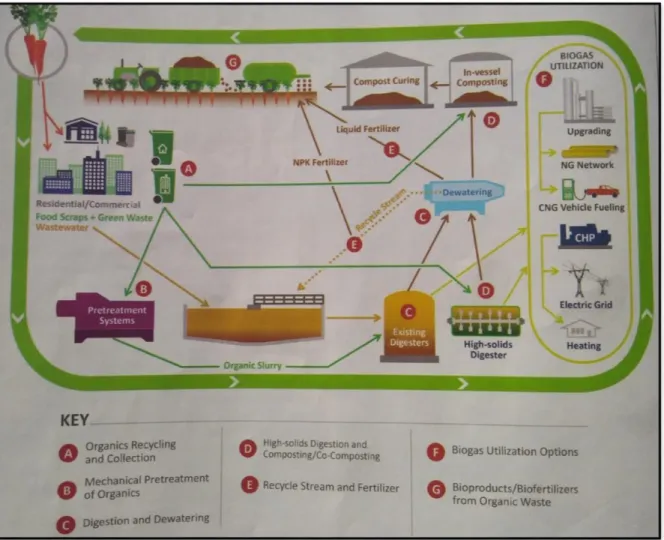
FIGURE 2:THE URBAN BIOCYLE. ... 8
FIGURE 3:CONCEPTUALIZED ALTERNATIVE COMPONENTS ...10
FIGURE 4:SUN-MAR COMPOSTING TOILET WITH COLLECTION AND STORAGE INFRASTRUCTURE SIMILAR TO THE PROPOSED SYSTEM ...19
1
CHAPTER 1: INTRODUCTION
There is growing recognition of access to safe water and sanitation as human right. The United States of America (US) will need to invest in its water and sanitation infrastructure over the next decade. Although the US has boasted 99% water and 89% sanitation service coverage for more than a decade, a deeper examination shows systems in need of repair and
replacement, and over 10% (33 million) of the population on basic sanitation systems, which typically treat on site and provide less of a barrier to contaminated waste 1. These realities present serious public health, economic, and environmental concerns
The American Society of Civil Engineers (ASCE) gave US wastewater infrastructure a nearly-failing (“D+”) rating in its 2017 infrastructure report 2. They estimate that an investment of $271 billion is needed for wastewater infrastructure to meet the growing demand of 56 million new connections to centralized wastewater treatment systems by 2032, as well as increasing the capacity of existing infrastructure and replacing antiquated systems 2. In fact, much of the water and sanitation infrastructure is in need of renewal, creating opportunity room for innovation and design. The improvement of US water and sanitation infrastructure is such a big endeavor that it warrants an examination of our approach to sanitation, including what works, and where we can improve.
Engineers often focus on three main areas for design improvement: increasing
2
can improve our design solutions and lessen our risks of disaster caused by failed
infrastructure3. Given the size of the US economy, one could consider any gap in sanitation coverage as a failure in design as opposed to a problem of available government funding. In this way, we can look at gaps as opportunities for gathering essential information that can help us improve technology and the systems of support around it. Such an awareness of sanitation gaps as produced from both failures in design and sociopolitical failures is increasing in the face of highly publicized cases such as Flint, Michigan, and Lowndes County, Alabama 4.
In part, this research seeks to extend this growing national awareness to consider local cases in North Carolina. In the case of North Carolina, extraterritorial jurisdictions, often used as a form of de jure segregation in the mid-20th Century 5, have been linked to a systematic denial of basic services including water and sewer 6. As will be explored further, these
communities include historically African American communities outside of Mebane, NC, and the Rogers Road-Eubanks community of North Chapel Hill, NC.
These gaps in access to adequate sanitation are tied to complicated and nuanced problems that require comprehensive solutions. Sanitation is a fundamental need for the anthropogenic environment, and requires a holistic and innovative approach to meet
contemporary needs of communities. In fact, the ASCE recommends the further development of green infrastructure that meets economic and environmental, as well as public health needs 7. Despite the calls by the ASCE to improve municipal sanitation infrastructure, however, there have been very few sanitation alternatives presented over the last half century.
3
development for decades 8. It has focused on decentralized composting toilets, meeting the needs of those without access to sanitation technology as opposed to a system that would replace conventional infrastructure. The main idea of EcoSan is sanitizing urine and feces and recovering the nutrients for goods production 8. In doing so, it meets socio-economic and environmental, in addition to sanitation, needs 8. In addition to the Eco San is the Bill and Melinda Gates Foundation Reinvent the Toilet Challenge 9. Since 2011, the Gates Foundation has issued grants focused on reinventing the toilet to address a lack of adequate technology to address gaps in sanitation in low and middle income countries. The projects are non-sewered sanitation approaches, and include advocating for public policy that support improved sanitation
9. Most of these projects have focused on addressing gaps in access to sanitation in Sub-Saharan Africa, and concern onsite collection and processing 9.
Inspired by these examples, in this paper, I explore what a 21st century sanitation system that both meets sanitation gaps and improves upon conventional systems would look like in the U.S., using the case of North Carolina. To analyze the case of North Carolina, I conducted a literature review of sanitation alternatives. I then developed design criteria for a system based on a simple gap analysis for the state. I focused on specific cases where health, economic, and environmental concerns could be generalized for the state and the country. Using these criteria I developed a conceptualized design of a system that meets the health, economic, and environmental needs of a range of communities. I then conducted qualitative analysis of a series of interviews to examine the incentives, barriers, and perceptions among key stakeholders. Finally, I explored the financial feasibility of such a system for communities in North Carolina with a range of available resources.
4
communities in North Carolina? And what are incentives, barriers, and perceptions of this system among various stakeholders?
Background
Limitations of Conventional Sanitation
The improvement of conventional sanitation approaches, such as sewered municipal systems and septic tanks with drain fields, requires analysis of public health, economic, and environmental concerns. With respect to public health, management of human waste provides an essential barrier to the spread of disease. Failure in the management of human waste can lead to major public health crises. For instance, according to the ASCE, “deficiencies in the systems used for the pubic-provision of drinking water and handling of wastewater and storm water can trigger bacterial and viral outbreaks.” Incidence of water-borne bacterial and viral illnesses has been tracked by the EPA and CDC for the last 30 years 7. These problems are often compounded when paired with the disproportionate disease burden caused by structural inequalities such as infrastructure funding gaps. Recent reports of the return of diseases such as hookworm, previously considered eradicated, heightens concerns regarding sanitation and the possibility of water-borne illnesses4. Not only are failures in sanitation that cause water-borne illnesses costly in the sense of health, they are economically costly: per capita, worldwide effects of water-borne illness cost a projected $98 billion 7.
5
systems, which are costly and require frequent maintenance. In their Failure to Act report of 2011, ASCE warned of the potential negative impacts of not investing in US infrastructure: “Although access to centralized treatment is widespread, the condition of many of these systems is poor, with aging pipes and inadequate capacity leading to the discharge of an estimated 900 billion gallons of untreated sewage each year 7.” Thus, there are economic challenges to providing equitable access to sanitation and, in turn, improved public health and a healthy environment.
Beyond being economically unsustainable, current wastewater management systems are proving to be environmentally unsustainable. Water is an increasingly scarce resource, and we contaminate water more than we can treat it. Other environmental challenges include that, in some areas, the physical environment restricts the performance of currently available
technologies. For example, soils with poor permeability restrict the use of septic systems.
The Case of North Carolina
Given the public health, environmental, and economic effects of our current approaches to sanitation, what is getting in the way of change? To determine this let us first look at the problems of the current approach to sanitation in the US and specifically North Carolina. For the purposes of this study, North Carolina-specific water and sanitation problems are critical in underscoring the importance of exploring sanitation alternatives to our current system. North Carolina’s history of droughts, particularly in the 1970s and 1980s, make it especially important to save water in areas that get rain and thus explore sanitation options that are not heavily reliant on water. On the other end of the precipitation spectrum, North Carolina has
6
using combined sewers, high precipitation events and flooding are also linked to water body impairment through nutrients loading and eutrophication 11.
Water and Sanitation Challenges in North Carolina
In North Carolina, over 20 percent of utilities have operating revenues that exceed expenditures, and loan payments12. This prevents these utilities from making essential infrastructure improvements and extensions without raising rates to an extent that could be unaffordable for users. Many of these utilities are in counties designated as “distressed” by the NC Department of Commerce, based on their average unemployment, median household income, population growth, and property tax base per capita 12 (See APPENDIX 2).
Figure 1: Water and Sewer Utilities operation revenues vs. operating expenditures in North
7
Based on the above challenges faced by North Carolina Wastewater Treatment systems, I explored the opportunities to use dry sanitation, or a system that conveys waste without the use of water.
The Urban BioCycle
8
9
CHAPTER 2: METHODS
The research consisted of three parts: literature review and specification of a conceptual design; a quantitative financial analysis comparing the cost of conventional systems and the conceptual conceptualized alternative; as well as collection and qualitative analysis of
stakeholder interviews;. The design specification was conducted first to provide a concept for discussion during the qualitative data collection, and to develop costs for the alternative dry system in the quantitative financial analysis.
Conceptual Design Development
10
All of these technologies exist in some form and through the study I specified which technologies would be most appropriate.
Figure 3 displays the dry sanitation system components and there order in the process. These components were specified, and optimized based on the aspects in parenthesis:
Figure 3: Conceptualized Alternative Components
The first component is the commode. This mimics the conventional, commercially available, home toilet as much as possible. Also like the conventional unit, the goal of the commode is to capture and remove waste without exposing the user. Instead of a piped system, the commode will connect to a chute that leads to the storage unit. There are two design options available: a commode with biodegradable bags, and a commode attached to a chute with suction.
Component two, Storage and Containment, consists of a storage unit at the household level. This outdoor storage is designed to reduce odor, is sealed to prevent water intrusion, and secured from pests. There are two options for this design: a removal pod storage and a
Commode (user interface) Storage (size optimization and determine volume) Collection and Transport (storage
volume and labor costs of pick-up)
Processing (Energy production or
11
single storage container. For the removable pod option, there would be one active pod and a back-up pod for over flow, or delayed service.
Component three, Collection and Transport, consists of the regular collection of the waste (in bag or pod form) by a sanitation system that transports the waste to a nearby processing center. This system requires transport logistics and modification of existing solid waste management trucks. Future research and design could explore the optimization of the collection system, including the potential use of sensors to detect the need for pick-up.
Waste Processing is the final component of the proposed conceptualized alternative. The goal of this component is to neutralize the waste and recover value through either a composting or an energy conversion process. For this project, the processing section was only explored to understand the potential waste flow and cost recovery in existing systems, as opposed to a design of a processing system.
I first developed a mind map of the conceptualized alternative sanitation system working with Dr. Jamie Bartram. This initial brainstorming process included the identification of four key components of the system, commode & collection, storage, transportation, and processing. Based on these identified components, the overarching problem, and the objectives of an alternative system, I conducted a literature review. During the interviews, there components were shown and discussed (See APPENDIX 6: INTERVIEW G).
Storage Tank Capacity
One key design component was the capacity of the storage tank (v). To determine this I used the average daily weight of feces and urine and determined the volume:
v = w ⁄ ρ
12
Weight “w” is equal to the average combined feces and urine per person per week multiplied by number of persons per household (n). For this project, I assumed five persons per household.
Optimization
The pilot design developed from the above estimate leaves room for optimization of the collection and storage process. The optimization of collection would depend on the amount of time waste can safely be stored at the household level, and the economic feasibility of pick-up frequency.
Development of Interview Guidelines
The qualitative analysis began with the development of an interview guide and a series of mock interviews. The mock interviews included two interviews with graduate students in the Department of City and Regional Planning recording feedback about the system and interview, and applying the feedback to the system design and interview guide (See APPENDIX 6:
INTERVIEW G). These graduate students were chosen for given their familiarity with the planning process and infrastructure, and unfamiliarity with sanitation outside of personal experience. From their feedback I refined the interview guide for clarity of questions, and provided additional details in the presentation of the conceptualized alternative.
A deductive approach was used to create codes and develop the interview guide. The initial interview questions concerned the stakeholder’s role in their organization, their
13 Community Scenarios
The community scenarios represent community-types interested in alternatives to sewer or septic connections. All are represented by real communities in North Carolina’s Research Triangle Area in Chapel Hill, Chatham, and Durham Counties. Located outside of urban areas, these communities are near municipalities with high density and full municipal water and sewer services. They have similar geographic characteristics and climate conditions, making their sanitation options technically comparable. For the analysis I consulted existing master plans and studies when available.
For one community, their interest is the result of gaps in access to sanitation due to economic, social, and political factors. It is outside of urban areas and could be considered peri-urban and typically contain modest population density. In this study, I selected this
community to be representative of communities with low resource access, and I categorize it as “low resource community. “ The analysis for this community scenario was based on community-based reports along with Orange County Health Department documentation16.
14
as “middle resource community.” The analysis for this community scenario was based on data from an interview with a land cooperative stakeholder.
The final community is a dense greenfield development that desires independent waste water utilities due to distance from sewer systems and the additional cost of connections. This community is being constructed by real-estate developers who work directly with local
government. I selected this community as representative of communities with high-level resource availability. In my data, I categorize them as a “high resource community.” The analysis for this scenario was based on data collected from the Chatham County 2017 Comprehensive Plan, and public connection cost data17.
Financial Analysis
A financial feasibility study was conducted for the conceptual system described above. The capital costs, operation and maintenance, and monitoring costs were estimated and
compared to either sewer or septic system costs depending on geographic factors. This analysis was conducted on the three scenarios ranging from low, middle, to high resource availability.
The first step of the cost analysis was the costing of the conceptual system.
Like conventional sanitation systems, its costs have two portions that determines the management and who is responsible for the costs. The system is privately managed at the household level, until the point of transport. The transportation off the property and the
15
For the household expenses, I sourced materials for the first two components of the conceptualized alternative sanitation system, Commode & Collection and Storage. For the transport expense, I explored municipal solid waste costing. The monthly cost for bi-weekly pick was given a high value similar to that of Chapel Hill yard solid waste pick-up. This number was estimated high to allow for greater labor costs including safety and training of workers. The processing costs are tied to separate facilities and markets. For the scope of the study, I explored only the entry points into these systems. Therefore, the outputs, which allow for the possibility of resource recovery are not explored. Finally, the three cost scenarios were explored to determine the financial feasibility of the conceptualized alternative.
Qualitative Analysis
To address questions about the conceptualized design and the planning process around sanitation, I developed a questionnaire addressing both system design and planning concerns. Feedback on the design and interview questions was recorded and applied prior to the
commencement of the stakeholder interviews.
The qualitative portion of the study included interviews with six professional working as either planners or engineers, and a farmer and a member of a land cooperative with interest in sanitation alternatives. Prior to conducting interviews, I submitted and IRB application to the UNC Office of Human Research Ethics where it was determined that no that the project did not require an IRB.
16
conceptualized alternative sanitation system were extracted. From these data, a qualitative analysis of stakeholder interviews was conducted. To identify the validity of the stakeholder viewpoints I explored the following characteristics of each stakeholder: stakeholder role, experience working with sanitation, understanding of conventional sanitation systems,
Interactions with conventional sanitation systems, household and personal use of conventional systems.
Using qualitative analysis software Dedoose, I coded the interview transcripts. The following parameters were used as codes for the qualitative analysis:
Initial Responses to Conceptualized alternative sanitation System Commode
Storage Transport Processing Possibility of general use Permits and Regulations
How to discuss this with others (how would they describe it to colleagues) Planning aspects
Marketability Overall Feasibility
Comparison to conventional systems Cost to Household
Cost to local governments and developers
The first four codes concerned the responses to the four components of the
17
alternative, permits and regulations around sanitation alternatives, how the stakeholder would describe or discuss the system to others, planning aspects associated with sanitation, and the marketability of the conceptualized alternative.
Stakeholder Selection
The interviewed stakeholders were selected based on their professional capacity, and experience with sanitation or housing, and their familiarity to the scenario areas. Table 1 shows the range of stakeholders and the range of community scenarios discussed during the
interviews. Note the PLAN2 interview included two planners working at the county level. All stakeholders had some experience working with conventional or alternative sanitation systems, except for the interviewee from the PLAN1 interview who primarily worked in affordable
housing.
Table 1: Stakeholder Interviewed and community scenarios discussed
Stakeholder Interviews Community Scenarios discussed ENG1 PLAN1 (Private Sector) Land Cooperative Member ENG2 (Independent Water Authority) PLAN2 (County)
N = 2
Low
Resources x x x
Medium
Resources x x x x x
High
18 CHAPTER 3: RESULTS
Conceptualized Design
Commode Design
To address concerns of cleanliness and odor, I incorporated a bagged design for collection at the commode level 18. There were previous concerns about the impact of
biodegradable bags on the waste processing, however high solids digestions can handle these items 14. If co-composting were used without digestion however, the bags would need to be composting approved, which may increase cost.
Tank Capacity
19
Figure 4: Sun-Mar Composting Toilet with collection and storage infrastructure similar to the proposed system19.
Financial Analysis
20
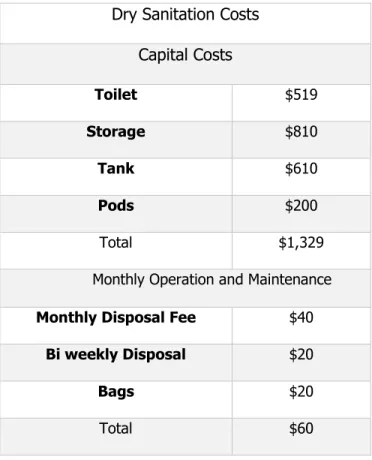
Table 2: Capital and Monthly Operation and Maintenance Costs for Conceptual Alternative, modeled from commercially available products 21
Dry Sanitation Costs
Capital Costs
Toilet $519
Storage $810
Tank $610
Pods $200
Total $1,329
Monthly Operation and Maintenance
Monthly Disposal Fee $40
Bi weekly Disposal $20
Bags $20
Total $60
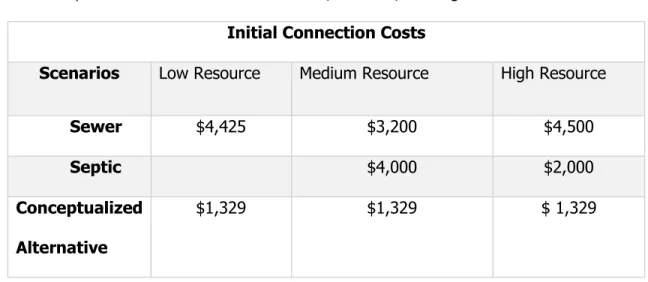
Table 3 shows the capital and connection costs of the conceptualized alternative and conventional systems for each of the community scenarios. The low resource community
21
Table 3: Capital and Connection Cost Comparison for The Conceptualized Alternative Sewer and Septic for the Three Scenarios of low, medium, and high resource communities.
Initial Connection Costs
Scenarios Low Resource Medium Resource High Resource
Sewer $4,425 $3,200 $4,500
Septic $4,000 $2,000
Conceptualized
Alternative
$1,329 $1,329 $ 1,329
Operation and maintenance costs are $720 yearly for Conceptualized Alternative and $160.50 for septic systems with similar capacity. Yearly septic costs were based on North Carolina State University’s Septic Maintenance guidance 22.
Qualitative Analysis
Stakeholders
All stakeholders had some experience working with conventional or alternative sanitation systems, except for the interviewee from the PLAN1 interview who primarily worked in
22
This portion of the interviews also yielded responses about how respondents saw their individual and society’s link to the environment. These statements set the stage for the interviewee’s position on environmental conditions and was usually followed by approval for alternatives for sanitation. Example include:
“We just recently shifted? Our mission and it is now to reimagine, remember our relationship to ourselves and each other, to the land in pursuit and practice of collective liberation. And when we're talking about the land we're not just talking about soil and rock, we're talking about water and all the implication of what it means to be in a relationship with water in a way that is honoring us, honoring water itself as a resource, and understanding that we, in taking care of our resources like water, we are in fact taking care of ourselves, and taking care of each other.” COOP1
“We're told to be wise stewards of the resources that have been given globally. Unfortunately we fall far short of that.” ENG2
The goal questions related to the initial responses to the conceptual system was to determine which components of the system caught the attention of the interview and where they focused the majority of their attention. To provide a general overview of themes covered in the interview I extracted the frequency of code presence in interviews. Tables 2,
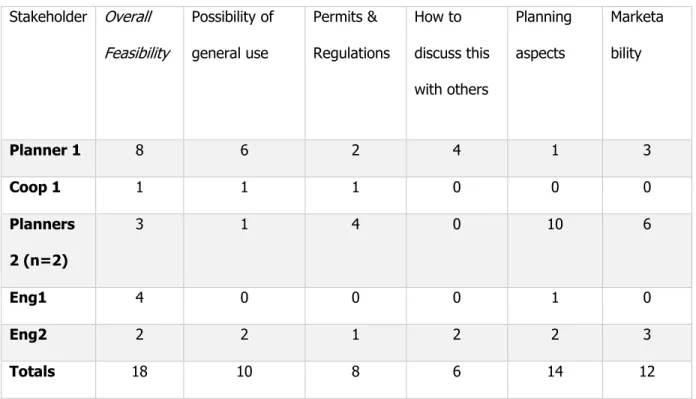
Table 5, and Table 6 show the number of times codes were mentioned during the respective stakeholder interview, based on the transcript analysis. Table 4 shows the commode and storage components received the majority of coded comments.
Table 4: Code Presence of Initial Responses to Conceptualize System
Initial Responses to Conceptualized System
Stakeholder Commode and
Collection
Storage Transport Processing
23
Coop 1 3 3 1 2
Planners 2
(n=2)
7 5 3 2
Eng1 1 1 2 2
Eng2 0 0 2 4
Totals 14 16 10 10
The planners interviewed were particularly interested in construction at the household level, and how this would impact aesthetics, odor, home values, and ultimately marketability of the conceptualized alternative (See table 3). These comments primarily focused on the design of these system components.
Processing
As a farmer who grows and sells produce, the land cooperative member was interested in a system that would allow compost fertilizer to be used on crops.
Both engineers had concerns about mixing waste collected from multiple locations with the certified Class A bio solids in the OWASA Mason Farm plant.
Engineer 2 expressed general concern about land applying bio solids, based on his experience since the 1980’s working with OWASA’s wastewater bio solids in its Agricultural Nutrients Recycling Program (ANRP).
24 Comparison to conventional systems
In comparison to conventional systems several of the interviewees brought up the importance of the cost comparison. As an example one of the county planners for the PLAN2 interview stated:
“I think this is this is a great idea. Implementation might be the hard
part as far as cost and use in how people, because we've got somebody that
approaches and says "I want to go with your most environmentally friendly
septic system. I want a treat ahead of it I want a drip disposal. And then they
find out the cost is $35000 compared to $12000 system. And they're not as
interested but they were extremely interested to begin with that they knew was
going to cost a bit more than just realized how much more and the cost of this
I don't know if it's prohibitive. But I think the usefulness of why someone would
use it over a flush toilet. We all know it's saving all that water. It's huge. It's
our number one resource that I think is going to be jeopardized in the future.
25 Possibility of general use
Table 5: Code Prevalence of Interviews Stakeholder Overall
Feasibility Possibility of general use Permits & Regulations How to discuss this with others Planning aspects Marketa bility
Planner 1 8 6 2 4 1 3
Coop 1 1 1 1 0 0 0
Planners
2 (n=2)
3 1 4 0 10 6
Eng1 4 0 0 0 1 0
Eng2 2 2 1 2 2 3
Totals 18 10 8 6 14 12
On the feasibility of the Conceptualized Alternative, particularly for lower income or affordable housing Planner 1 expressed concern:
“…personally I would probably advocate for comparable services for people that have been excluded from those services. As oppose to, you have, I don't want to call them make shift solution, but this doesn't feel like it's going to increase the value of someone's home. Well it might increase their value, but in terms of the perception of others…
If you're choosing, if you're looking for a new house. Are you going to go with one that's tapped into the traditional water and sewer infrastructure or something like this?
26
what can we do to make sure that people's investments in their homes are advantageous. So I'd be worried because if it's the people in the ETJ [Extra Territorial Jurisdictions] that are given this the white people up the street that are tapped into infrastructure will not find it worth moving into this.”
One of the planners from PLAN2 mentioned the possibilities for state regulations to support sanitation initiatives like the one proposed:
“And so not wasting water to flush toilets is a great plan. I love it. And mean that's I think this is where planning and environment health come into play where planning they can provide incentives for homes or for subdivisions that incorporate this type of plumbing or you'll have conservation subdivisions now that they can incorporate our state regulations are what we can do at that they can put on some additional requirements or incentives to communities to incorporate and I would guess you'd also have a dual system working here so this is just dealing with the toilet.”
When asked if they ever participate in the design process the interviewees responded:
“ Interviewee 2: We've got a couple of engineers that come in and say that they can answer all the problems of a subdivision with engineering and design but they are not brainstorming with us. “
“Interviewee 1: Well they brainstorming like in planning for our long range planning but not on things that are like to this level, this granular level. We're looking at the stuff that's got a bigger picture. Interesting concept. The regulatory piece is always the hurdle of work. If we could change the world here and everybody listened but what we always run up against us in our minds. I think sometimes it's always the regulatory framework and what it's going to take to get the legislature to do this to get the rules written. And this as well, the other piece of these types of activities this is more private sector. Because we're not making a product. We're inspecting or regulating a product. “
27
systems (particularly septic); and the carbon footprint associated with the transport of the dry waste.
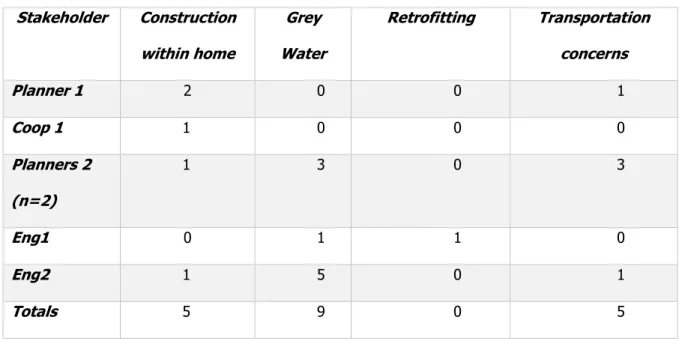
Table 6: Code Prevalence of Additional Themes
Stakeholder Construction
within home
Grey
Water
Retrofitting Transportation
concerns
Planner 1 2 0 0 1
Coop 1 1 0 0 0
Planners 2
(n=2)
1 3 0 3
Eng1 0 1 1 0
Eng2 1 5 0 1
Totals 5 9 0 5
Table 6 shows the code prevalence of additional themes. Questions about grey water and non-toilet wastewater was the most prevalent.
ENG2 in particular, stated the importance of addressing all wastewater in the home. He proposed the concept of planning water net zero communities that could manage waste near the site and use the energy bi-product to support potential economic development initiatives.
While PLAN1 was less optimistic about alternatives, and concerned about the perception of septic systems by real estate developers, and potential buyers of homes.
28
with a $15000 replacement cost. As opposed we can buy something across the street and be fully tapped in to water and sewer.
29
CHAPTER 4: DISCUSSION
This study serves as an initial exploration of municipal-scaled sanitation systems that provide a alternative to the conventional septic and sewer systems. The study explored the following: design specifications of a feasible sanitation alternative in North Carolina; the
economic feasibility of the conceptualized design for three community scenarios; as well as the incentives, barriers, and perceptions of this system among sanitation and housing professionals.
A Robust Sanitation Alternative
The conceptualized system diverges from the heavy, expensive infrastructure and introduces to a highly adaptive, more economically efficient solution. In addition to the providing high-level sanitation services, this system holds the possibility of value recovery through energy production and nutrient recovery as a product. With wide spread application of this approach, economies of scale and the establishment of component supply chains will aid in affordability.
30 Economic Feasibility in Community Scenarios
The conceptualized alternative connection cost appears to be cheaper based on the study estimates (Table 3: Capital and Connection Cost Comparison for The Conceptualized Alternative Sewer and Septic for the Three Scenarios Table 3). However, maintenance costs make it a less attractive alternative. This is particularly relevant for the low resource community or Rogers Road. Given the poor conditions for their septic systems, and the proximity of
drinking water well, continued septic use is not an option 23. If retrofitting the septic tanks for greywater treatment were possible, conceptualized alternative would be a more attractive option.
The middle resource community or, Land Cooperative, is in the unique position of having some flexibility with land use, and interest in sanitation alternatives. A larger scale
conceptualized alternative program would likely benefit the Coop if they were able to meet regulations for approved bio solid application, like that of OWASA’s bio solids program.
Finally, the high resource community, or Green-field development, may have the most reasons to consider conceptualized alternative. The connection costs are highest, and many Chatham County developments are connected to private independently managed sewage system (See APPENDIX 3) 17. The biggest advantage of the conceptualized alternative over septic would be the decreased minimum lot size due to the elimination of a septic drain field. This would allow for smaller lost sizes, and thus more lots per development.
Perceptions of the Proposed Sanitation Alternative
31
to a processing system that provides productive outputs. These type of incentives could be explored in dense development with support from planning and regulatory agencies.
Additional design and planning work would also be required to explore a holistic wastewater approach. There is a need to address all of the water waste from households and commercial building, including toilets, sinks, and other appliances. Retrofitting septic tanks as an option and would require design, financial analysis, and pilot scale systems.
Barriers to Municipal Waste Services
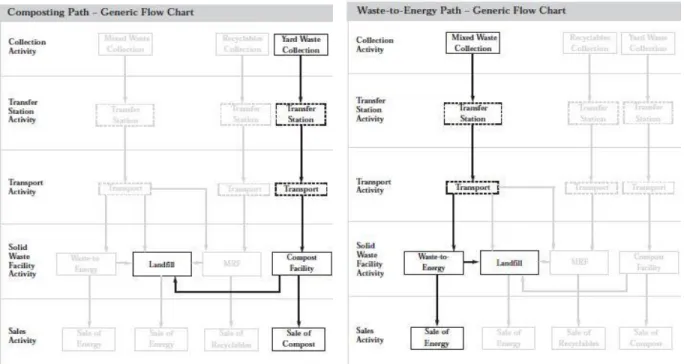
I explored the possibility of expanding the municipal waste service to include transport of conceptualized alternative waste to facilities for compost and waste to energy facilities.
These options include revenue streams from compost and energy. However, land application of bio solids is not currently a revenue generating exchange in North Carolina. The bio solids from wastewater treatment plants are typically given away to agricultural partners.
32
There are also concerns from the interviewed engineers about taking waste from multiple households and directly adding it to the OWASA bio solids without pretreatment.
Limitations
This project does not address the additional water waste from sinks, showers, and other household water sources. A holistic sanitation system would need to include grey water
treatment. It would have been helpful during interviews to have compared existing alternative sanitation systems with the conceptualized alternative described above. This same comparison would have been useful in the quantitative analysis to explore, more broadly, if any other sanitation alternatives would be financially feasible for communities in North Carolina.
This study made use of a form of snowball sampling, which has limitations in the various and frequency of the results in a larger population, and thus the generalizability. For the
purpose of this study, however, the snowball sampling allowed for identification of key stakeholders who provided useful insight into the topic of sanitation alternatives.
33
CHAPTER 5: CONCLUSION
The findings of the initial work serve to provide an introduction to the exploration of a conceptualized alternative. Its scope serves as a meaningful as a survey that will guide future research. These finding show a clear interest among stakeholders to explore sanitation
alternatives, and specifically explore the removal water from the waste conveyance system. The capital and installation cost comparison shows promise for the use the conceptualized system, however higher operation and maintenance costs result in an overall higher cost for the conceptualized system. The potential benefits of resource recovery in the conceptualized, however, provide opportunity for the system to provide revenues that counter increased operation and maintenance costs. This resource recovery is particularly compelling due to the impact of essential nutrients found in human waste, on food production8,24,25. Pared with concerns about the scarcity of these resources, the study of new sources in low and high income countries is compelling24. Recent studies on phosphorus flows for major metropolitan areas confirm this interest26.
Future Research
Future research should further explore the options for optimizing the return on end products. One potential line of research could explore the application of ecological sanitation alternatives on other wastes (ie animal). It would be additionally important explore the
34
the environmental justice complaints and lawsuits against the pork industry for their waste management practices.
Some planning options include identifying the collaborative design process as a key stakeholder interaction in the early stages of development. This type of participatory design could help create more robust technical solutions that better fit within the regulatory framework and planning process.
It would be beneficial to do a survey of multiple regions to explore the geographic and climatological variations and how those impact the feasibility of sanitation alternatives. For example, the coastal areas of North Carolina would have distinct needs from North Carolina’s western mountain region based on the soil and climate differences
Concluding Thoughts
35
APPENDIX 1: JMP WASH DATA1
Year Service Type Service Level Value Country Residence Type Population
2015 Sanitation Basic service 10.47 USA total 33,689,948
2015 Sanitation Limited service 0.00 USA total 0
2015 Sanitation Open defecation 0.00 USA total 0
2015 Sanitation
Safely managed
service 89.50 USA total 287,985,707
36
37
38
39
40
APPENDIX 6: INTERVIEW GUIDE
Part 1: Introductory
1. Can you tell me about your role in local/state government? 2. Do you have any experience working with sanitation systems?
a. Can you tell me more about that? b. Can we talk about A first?
c. Can you tell me about how it worked? d. Did you have any interactions with it? e. Did you play any role in making this work? f. Did you play a role in the design of it?
3. Can you talk about the current sanitation system you use at home? 4. Can you talk about the town’s system
Part 2: The Interviewer will describe the system and shows the diagram.
Diagram:
Would you like to comment on this?
Part 3: Specific Questions
1. Are you a homeowner?
2. Would you want this to be in your home? a. Can you tell me more?
3. What, if anything, would it take for you to add this your property? 4. Compared to what’s out there, how, if at all, is this better?
41
6. Do you see this as something that could be used by people in general? a. Where?
7. If you were to talk about this with your colleagues, what kinds of things would you talk about?
8. Would you describe this system as “feasible”?
9. What, if anything, would you change about the system?
a. Are there any parts or components that you see as problematic? i. Commode
ii. Storage
iii. Collection and transport iv. Processing
10.What do you think the planning phase would look like for a system like this? a. Do you think it would meet requirements?
b. What problems do you think could arise? 11.Do you consider this a marketable system?
a. Could you see other local government entities accepting this system? 12.What do you think the implementation phase would look like?
a. Do you think it would meet permit/regulatory approval? i. Can you tell me more?
ii. What, if anything, would need to change? b. What problems do you think could arise?
13.What do think about the financial viability?
42 c. If not, would be required for it to be so?
43 REFERENCES
1. Ecodev. WHO & UNICEF Joint Monitoring Programme - table. (2015).
2. American Society of Civil Engineers. 2017 Infrastructure Report Card: Wastewater. (2017).
3. Petroski, H. Success through Failure. in Success Through Failure 1–33 (Princton Unveristy Press, 2018). doi:10.1021/np050005f
4. McKenna, M. L. et al. Human Intestinal Parasite Burden and Poor Sanitation in Rural Alabama. tpmd170396 (2017). doi:10.4269/AJTMH.17-0396
5. Lichter, D. T., Parisi, D., Grice, S. M. & Taquino, M. Municipal underbounding: Annexation and racial exclusion in small southern towns. Rural Sociol. 72, 47–68 (2007).
6. Mcgurty, E. M. Policy Review Warren County, NC, and the Emergence of the Environmental Justice Movement: Unlikely Coalitions and Shared Meanings in Local Collective Action. Soc. Nat. Resour. 13, 373–387 (2000).
7. American Society of Civil Engineers. Failure to Act: The Economic Impact of Current Investment Trends in Waste Water Treatment Infrastructure. 56 (2011).
doi:10.1016/j.njas.2015.09.002
8. Haq, G. & Cambridge, H. Exploiting the co-benefits of ecological sanitation. Curr. Opin. Environ. Sustain. 4, 431–435 (2012).
9. Hanak, D. P. et al. Conceptual energy and water recovery system for self-sustained nano membrane toilet. (2016). doi:10.1016/j.enconman.2016.07.083
10. Cogger, C. G. & Carlile, B. L. Field Performance of Conventional and Alternative Septic Systems in Wet Soils1. J. Environ. Qual. 13:137-142. J. Environ. Qual. 13, (1984). 11. Arnone, R. D. & Walling, J. P. Waterborne pathogens in urban watersheds. J. Water
Health 5, 149–162 (2007).
12. North Carolina Department of Commerce. 2018 North Carolina Development Tier Designations. (2018).
13. Environmental Finance Center, U. S. The State of Full Cost Pricing: Full cost pricing among public water & sewer utilities in the Southeast 1. (2008).
14. Ellen McArthur Foundation. Urban Biocycles. (2017).
15. Greenwood, N. N. & Earnshaw, A. Chemistry of the Elements. (Butterworth – Heinemann, 1997).
16. Campbell, R. & Dowling, R. Rogers Road Small Area Plan Task Force Final Report. (2009).
44
18. Lenau, T. & Hesselberg, T. Dry sanitation concepts with inspiration from nature. J. Water, Sanit. Hyg. Dev. Vol 5, 330 (2015).
19. Anand, C. K. & Apul, D. S. Composting toilets as a sustainable alternative to urban sanitation – A review. Waste Manag. 34, 329–343 (2014).
20. Home Advisor. How Much Does It Cost To Install Or Replace A Toilet? Home Advisor (2018). Available at: https://www.homeadvisor.com/cost/plumbing/install-a-toilet/. 21. National Tank Outlet. North Carolina Septic Tanks. National Tank Outlet (2018). Available
at: https://www.ntotank.com/north-carolina-septic-tanks.
22. Hoover, M., Konsler, T. & Godfrey, J. Septic Systems and Their Maintenance. NC State Extension (2016). Available at: https://content.ces.ncsu.edu/septic-systems-and-their-maintenance.
23. Orange County Health Department. Rogers - Eubanks Area Survey Report Well and Septic System Asessment. (2010).
24. Cordell, D., Rosemarin, A., Schröder, J. J. & Smit, A. L. Towards global phosphorus security: A systems framework for phosphorus recovery and reuse options. Chemosphere 84, 747–758 (2011).
25. Langergraber, G. & Muellegger, E. Ecological Sanitation—a way to solve global sanitation problems? Environ. Int. 31, 433–444 (2005).
26. Metson, G. S. et al. Socio-environmental consideration of phosphorus flows in the urban sanitation chain of contrasting cities. doi:10.1007/s10113-017-1257-7
27. Werner, C., Panesar, A., Rüd, S. B. & Olt, C. U. Ecological sanitation: Principles,
technologies and project examples for sustainable wastewater and excreta management. Desalination 248, 392–401 (2009).
28. Cordova, A. & Knuth, B. A. Barriers and strategies for dry sanitation in large-scale and urban settings. Urban Water J. 2, 245–262 (2005).
29. Fittschen, I. & Niemczynowicz, J. Experiences with dry sanitation and greywater treatment in the ecovillage Toarp, Sweden. Water Sci. Technol. 35, 161–170 (1997). 30. Anand, C. K. & Apul, D. S. Composting toilets as a sustainable alternative to urban
sanitation – A review. Waste Manag. 34, 329–343 (2014).