BODY MASS INDEX AND SELF-PERCEIVED WEIGHT: ARE THEY ASSOCIATED WITH SEXUAL AND RELATIONSHIP HEALTH?
Khadija R. Turay
A dissertation submitted to the faculty of the University of North Carolina at Chapel Hill in partial fulfillment of the requirements for the degree of Doctor of Philosophy in the
Department of Maternal and Child Health.
Chapel Hill 2013
Approved by:
ABSTRACT
KHADIJA R. TURAY: Body Mass Index and Self-Perceived Weight: Are They Associated with Sexual and Relationship Health?
(Under the direction of Carolyn Tucker Halpern)
This dissertation explores associations between body mass index (BMI) and self-perceived weight during adolescence and two health outcomes during young adulthood: 1) testing positive for one or more of three sexually transmitted diseases (STD)
(Chlamydia trachomatis, Neisseria gonorrhoeae, and Trichomonas vaginalis) and 2) reporting intimate partner violence (IPV) victimization. Both papers use National Longitudinal Study of Adolescent Health (Add Health) data from Waves 1, 2, and 3.
In the first paper, logistic regression models examined associations between overweight BMI, self-perceived overweight, correct overweight perceptions, and
associations of interest in this paper with different adolescent body image measures and a wider variety of STD outcomes to determine if associations exist.
In the second paper, logistic regression models examined the effects of
adolescent overweight BMI and self-perceived overweight on the odds of experiencing IPV victimization during young adulthood. Overweight BMI and self-perceived
overweight during adolescence were not significantly associated with IPV victimization during young adulthood among males. Among females, when pooled by adolescent BMI and race, adolescent overweight BMI was associated with increased odds of IPV
ACKNOWLEDGEMENTS
This research uses data from Add Health, a program project directed by Kathleen Mullan Harris and designed by J. Richard Udry, Peter S. Bearman, and Kathleen Mullan Harris at the University of North Carolina at Chapel Hill, and funded by grant
P01-HD31921 from the Eunice Kennedy Shriver National Institute of Child Health and Human Development, with cooperative funding from 23 other federal agencies and foundations. Special acknowledgment is due Ronald R. Rindfuss and Barbara Entwisle for assistance in the original design. Information on how to obtain the Add Health data files is available on the Add Health website (http://www.cpc.unc.edu/addhealth). No direct support was received from grant P01-HD31921 for this analysis. The UNC-Chapel Hill Institutional Review Board did not consider this dissertation project to be human subjects research.
My dissertation project was supported in part by a predoctoral fellowship provided by the National Institute of Child Health and Human Development (T32-HD07376) through the Center for Developmental Science and the University of North Carolina at Chapel Hill, as well as the University of North Carolina at Chapel Hill
Graduate School Buckley Summer Research Fellowship in the Humanities. I would like to extend my gratitude to my dissertation committee (Carolyn T. Halpern, Penny
TABLE OF CONTENTS
LIST OF TABLES ... viii
LIST OF FIGURES ... xii
CHAPTER 1: Introduction ... 1
Research Aims ... 10
Practice Implications ... 13
CHAPTER 2: Theoretical Overview ... 16
CHAPTER 3: Adolescent Overweight Body Mass Index and Self-Perceived Overweight: Do They Predict Sexually Transmitted Disease Status During Young Adulthood? ... 22
Introduction ... 22
Methods ... 24
Results ... 30
Discussion ... 34
Chapter Three Tables ... 40
CHAPTER 4: Adolescent Overweight Body Mass Index and Self-Perceived Overweight: Do They Predict Intimate Partner Violence Victimization During Young Adulthood? ... 54
Introduction ... 54
Methods ... 59
Results ... 64
Chapter Four Tables ... 71
CHAPTER 5: Conclusions ... 86
APPENDIX 1: Paper One Additional Analyses ... 91
APPENDIX 2: Paper Two Additional Analyses ... 98
LIST OF TABLES TABLE 1: Percentage distribution of the analytic sample
from the National Longitudinal Study of
Adolescent Health, by gender unweighted n (Weighted %),
Paper 1 ... 40
TABLE 2: Odds Ratios and 95% confidence intervals
for the association between adolescent overweight BMI, self-perceived overweight, and STD status during young
adulthood, males (n=1,278) ... 42
TABLE 3: Odds Ratios and 95% confidence intervals for
the association between adolescent overweight BMI, self-perceived overweight, and STD status during young
adulthood, females (N=1,769) ... 43
TABLE 4: Odds Ratios and 95% confidence intervals for
the association between adolescent overweight BMI, self-perceived overweight, and STD status during
young adulthood, non-Hispanic White Males (n=975) ... 44
TABLE 5: Odds Ratios and 95% confidence intervals for the association between adolescent overweight BMI, self-perceived overweight, and STD status during young
adulthood, non-Hispanic Black Males (n=303) ... 45
TABLE 6: Odds Ratios and 95% confidence intervals for the association between adolescent overweight BMI, self-perceivedoverweight, and STD Status during young
adulthood, non-Hispanic White Females (n=1,344) ... 46
TABLE 7: Odds Ratios and 95% confidence intervals for the association between adolescent overweight BMI, self-perceived overweight, and STD Status during
young adulthood, non-Hispanic Black Females (n=425) ... 47
TABLE 8: Odds ratios and 95% confidence intervals for
the association between self-perceived overweight during adolescence and STD status during young adulthood,
males, by adolescent BMI ... 48
TABLE 9: Odds ratios and 95% confidence intervals for
the association between self-perceived overweight during adolescence and STD status during young adulthood,
TABLE 10: Odds ratios and 95% confidence intervals for
the association between self-perceived overweight during adolescence and STD status during young adulthood,
by adolescent BMI, non-Hispanic Black Males ... 50
TABLE 11: Odds ratios and 95% confidence intervals for
the association between self-perceived overweight during adolescence and STD status during young adulthood,
females, by adolescent BMI ... 51
TABLE 12: Odds ratios and 95% confidence intervals for the association between self-perceived overweight during adolescence and STD status during young adulthood, by adolescent BMI,
non-Hispanic White females ... 52
TABLE 13: Odds ratios and 95% confidence intervals for
the association between self-perceived overweight during adolescence and STD status during young adulthood, by adolescent BMI,
non-Hispanic Black Females ... 53
TABLE 14: Percentage distribution of the analytic sample
from the National Longitudinal Study of Adolescent Health,
by gender unweighted n (Weighted %), Paper 2 ... 71
TABLE 15: Odds Ratios and 95% confidence intervals for the association between adolescent overweight BMI, self-perceived overweight, and IPV victimization during
young adulthood, males (N=1,039) ... 73
TABLE 16: Odds Ratios and 95% confidence intervals for
the association between adolescent overweight BMI, self-perceived overweight, and IPV victimization
during young adulthood, females (N=1,680) ... 74
TABLE 17: Odds Ratios and 95% confidence intervals for
the association between adolescent overweight BMI, self-perceived overweight, and IPV victimization
during young adulthood, males, by race ... 75
TABLE 18: Odds Ratios and 95% confidence intervals for the association between adolescent overweight BMI, and self-perceivedoverweight, and IPV victimization
during young adulthood, females, by race ... 77 TABLE 19: Odds ratios and 95% confidence intervals for
the association between self-perceived overweight during adolescence and IPV victimization during young adulthood,
TABLE 20: Odds ratios and 95% confidence intervals for the association between self-perceived overweight during adolescence and IPV victimization during young adulthood, non-Hispanic White males,
by adolescent BMI ... 80
TABLE 21: Odds ratios and 95% confidence intervals for the association between self-perceived overweight during adolescence and IPV victimization during young
adulthood, non-Hispanic Black males, by adolescent BMI ... 81
TABLE 22: Odds ratios and 95% confidence intervals for
the association between self-perceived overweight during adolescence and IPV victimization during young adulthood,
females, by adolescent BMI ... 82
TABLE 23: Odds ratios and 95% confidence intervals for
the association between self-perceived overweight during adolescence and IPV victimization during young adulthood,
non-Hispanic White females, by adolescent BMI... 83
TABLE 24: Odds ratios and 95% confidence intervals for
the association between self-perceived overweight during adolescence and IPV victimization during young adulthood
non-Hispanic Black females, by adolescent BMI ... 84
TABLE 25: Odds Ratios and 95% confidence intervals
for the association between adolescent overweight BMI and IPV victimization during young adulthood controlling
for self-esteem Wave 2, females (N=1,680) ... 85
TABLE 26: Analytical Sample of National Longitudinal
Study of Adolescent Health Respondents (Paper 1) ... 91
TABLE 27: Odds ratios (95% Confidence Intervals) from
logistic regression of association between Wave 3 STD
status and potential control variables (Paper 1) ... 93
TABLE 28: OLS regression for association between
adolescent self-esteem and adolescent self-perceived
overweight, by race, among males (Paper 1) ... 94
TABLE 29: OLS regression for association between
adolescent self-esteem and adolescent self-perceived
overweight, by race, among females (Paper 1) ... 95
TABLE 30: Weighted Column Proportions, Selected
TABLE 31: Analytical Sample of National Longitudinal Study
of Adolescent Health Respondents in (Paper 2)... 98
TABLE 32: Odds ratios (95% Confidence Intervals) from
logistic regression of association between Wave 3 IPV
Victimization and potential control variables (Paper 2) ... 99
TABLE 33: Weighted Column Proportions, Selected
LIST OF FIGURES
CHAPTER 1: Introduction
Young adults are disproportionately affected by sexually transmitted diseases (STDs) and intimate partner violence (IPV) when compared with other age groups. In 2011, the annual chlamydia rate among 20-24 year olds was 1,343.3 per 100,000 among males and 3,722.5 per 100,000 among females, compared to rates ranging between 689.7 and 44.8 per 100,000 among males and 1,343.6 and 35.8 per 100,000 among females ages 25 to 54 (1). Gonorrhea rates have similar age disparities. Intimate partner violence is also higher among young adults. Between 2001 and 2005, the
average annual nonfatal IPV victimization rate was 11.3 per 1,000 persons for females and 1.8 per 1,000 persons for males ages 20-24, compared to 4.4 per 1,000 persons among females and 1.2 per 1,000 persons among males ages 35-49 (2).
STDs and IPV have many negative effects on well-being. Untreated STDs are associated with reproductive problems like infertility, poor birth outcomes, and
pregnancy complications (3). Further, untreated STDs like trichomoniasis can increase the likelihood of acquiring HIV (4). IPV victimization has negative implications for physical, mental, and reproductive health. Men and women experiencing IPV
childhood abuse and adolescent dating violence have increased odds of experiencing IPV victimization during young adulthood (8).
More young adult women than men experience STDs and IPV victimization. For example, the 2011 chlamydia rate was higher among females ages 20-24 (3,722.5 per 100,000) than males (1,343.3 per 100,000) within the same age range (1). Gonorrhea rates had similar gender disparities. In Wave 3 of Add Health, the prevalence of
trichomoniasis is 2.8% in females and 1.7% in males (9). Also, women are more likely to experience nonfatal IPV victimization and be killed by an intimate partner. Between 2001 and 2005, intimate partners committed 30% of all homicides among females, compared to 5% of all homicides among males (2). Further, in opposite sex couples, violence perpetration by a man is associated with a higher odds of injury (10).
Racial differences in STDs and IPV also exist among young adults. The Centers for Disease Control and Prevention estimate that in 2011 chlamydia rates in Black females (7,680 per 100,000) ages 20-24 were higher than among White females (1,595 per 100,000) of the same age (1). Gonorrhea rates had similar patterns (1). The lifetime prevalence of intimate partner rape, physical violence, and/or stalking victimization is higher among non-Hispanic Black than non-Hispanic White females (43.7% vs. 34.6%) and males (38.6% vs. 28.2%) (11).
It is important for the public health community to understand factors contributing to STD and IPV rates during young adulthood given their negative effects on health and existing gender and racial disparities. A better understanding of adolescent factors that predict STD infection and IPV victimization during young adulthood can help develop prevention programs and policies.
adolescent physical appearance has been used to predict an STD diagnosis during young adulthood, usually self-perceived pubertal status has been examined rather than related indicators such as self-perceived weight (12). Research about young adulthood IPV victimization typically examines the predictive abilities of childhood mistreatment experiences (8, 16). Further, most existing research about violence and BMI has focused on associations between adolescent BMI and bullying or teasing (17, 18).
However, it is unknown if overweight, whether real or perceived, during
adolescence could have a long-term effect on STD and IPV risk. Such an association is plausible because adolescence is a significant time in the life course when expectations about sexual and intimate relationships are first tested and established, pubertal
changes prompt appearance comparisons, and appearance assumes a social meaning within the realm of romantic relationships (19). According to life course theory,
collectively, these experiences could influence health later in life (20). Specifically, adolescent overweight may have lasting influences on health by creating power
BMI, Body Image, and Sexually Transmitted Diseases
There has been some work examining associations among measured BMI, body image, and sexual health. However, findings are mixed, depending on age, gender, race, sampling, and type of risk-taking examined. Specifically, two studies using nationally representative adult samples found no relationship between BMI and select STD outcomes. Using a sample of men (mean age 34.43) and women (mean age 33.60) from the 1999-2000 National Health and Nutrition Examination Survey (NHANES), Nagelkerke et al. (2006) found in adjusted analyses that being classified as overweight or obese was not a statistically significant predictor of Herpes Simplex Virus type II serostatus among men or women (23). Another analysis using a sample of women ages 20-59 from the 1999-2004 NHANES also found in an adjusted analysis that BMI was not associated with testing positive for human papilloma virus (24). However, one study of 704 females (mean age 21.4 years) followed 12 months postpartum, found in adjusted analyses that women classified as overweight or obese had higher odds of incident chlamydia and gonorrhea when compared with women classified as normal weight (25).
themselves as about the right weight (26). When stratified by race, weight perception accuracy, but not self-perceived weight, was a statistically significant predictor of sexual risk behaviors examined among Whites. Specifically, when compared with an accurate weight perception, weight overestimation was associated with lower odds of having used a condom at last sex (26). Among Blacks, the only statistically significant finding was that self-perceived overweight was associated with increased odds of having four or more lifetime partners. These findings suggest that patterns of associations may vary by race, body image measure, and type of risk behavior examined.
their counterparts with a normal BMI, but did not find an association between body image satisfaction and risky sexual behaviors like being intoxicated at last intercourse, not using a condom, or not using a method to prevent unintended pregnancy (29). No statistically significant relationships between BMI and sexual risk behaviors, or body satisfaction and sexual risk behaviors were found among males.
In summary, these studies show that statistically significant associations between BMI, body image, and sexual health vary when BMI (as indicted by self-reported or measured height and weight) or a body image measure is the independent variable of interest. The two studies using NHANES data did not find an association between BMI (as indicated by height and weight) and STD status (23, 24), but did not include a body image measure. Eisenberg et al. (2005) found statistically significant associations between overweight/obese BMI and being intoxicated at last intercourse, but not body image satisfaction and sexual risk behaviors (29). However, Wingood et al. (2002) and Akers et al. (2009) found associations between a body image measure and sexual risk behaviors (21, 26). These findings suggest that BMI and body image may influence sexual health differently, and signal a need for further empirical investigation that examines the influence of an overweight BMI measure and a body image measure separately in one analytic sample.
interchangeably (31). However, specifically, weight stigma refers to sharing a trait with a population that experiences prejudice, and weight bias refers to being judged based on appearance in ways that may lead to experiencing prejudice and maltreatment (31). Concurrently with physical changes and potential experiences of weight stigma or bias, adolescents form opinions and expectations about sexual and intimate relationships, establish identities, and experience fluctuations in self-esteem as they cognitively adjust to differences between their ideal and real appearances (32).
Secondly, past research utilizing samples of adolescents shows that there are associations between BMI, body image, and adolescent sexual risk behaviors. However, it is not known whether adolescent BMI and body image influence sexual health during young adulthood. Researchers who have found that BMI or body image influences adolescent sexual behaviors have called for longitudinal research that will help clarify the developmental significance of adolescent weight-related factors (26, 33). This
dissertation’s first paper will use a longitudinal dataset rather than a cross-sectional dataset to address these existing literature gaps.
BMI, Body Image, and Intimate Partner Violence
Research has established that as a form of interpersonal violence, weight-based teasing can negatively affect well-being (34-36). Despite known vulnerabilities to
mistreatment among those with higher BMIs in interpersonal contexts, conclusions are not consistent or clearly established about the role of weight bias in intimate
Little is known about how overweight BMI and/or self-perceived overweight may contribute to IPV victimization, although most existing studies of adults have not
identified statistically significant associations. For example, a cross-sectional study using 2005 Behavioral Risk Factor Surveillance System data found that men and women over age 18 who have ever experienced any type of IPV in their lifetime do not have higher odds of having a current BMI greater than 25 (overweight) when compared with those who have never experienced IPV. However, findings for women just missed significance at the 0.05 level (AOR: 1.1, CI: 1.0-1.2) (41). Another population-based sample of 13,978 Australian women (average age 47.7) found in a univariate analysis that women with a BMI classified as underweight, overweight, or obese did not differ from those with a BMI classified as normal in their odds of having a history of domestic violence (42). In bivariate analyses, a study of 382 women’s medical charts found that BMI did not significantly differ between IPV victims of emotional abuse, victims of physical/and or sexual abuse, and nonvictims (43). However, in a bivariate analysis using a sample from a large Health Maintenance Organization, Bonomi et al. (2006) found that women who reported any IPV victimization during adulthood had a higher mean BMI than those who did not (44).
Despite the lack of associations noted above, a body of literature has identified associations between weight and non-physical conflict in couples. However, the conflict is not operationalized in terms of verbal abuse. A study by Eisenberg et al. (2011) found that adolescent experiences with weight-teasing are associated with higher odds of receiving hurtful weight-related comments from a significant other in young adulthood among females, but not males in adjusted models (47). Other studies have found that weight is associated with discord in romantic relationships. Falkner et al. (1999) found that among the heaviest male and female participants, spouses were a common source of weight related mistreatment among a sample of adults enrolled in a weight gain prevention intervention (48). Other studies have found that perceived weight evaluation by a husband is associated with body dissatisfaction among wives, and that mixed weight couples (combination of overweight and healthy weight individuals) have more conflict than matched weight couples (22, 49). Yet, in multivariate analyses, another study found no association between BMI and quality of a person’s relationship with their spouse as characterized by factors like perceived understanding of feelings, reliability, and believing that the other person cares (50).
It is important to understand the association between overweight, as indicated by BMI or self-perceptions, and IPV for several reasons. First, weight stigma and IPV are associated with negative mental health outcomes. Studies have found that
consequences of experiencing weight stigma in its various forms include lower self-esteem and depressive symptoms throughout the life course (34, 55). Secondly, research has given attention to associations between overweight and stigma in healthcare and workplace settings during adulthood (37), but it is important to explore other interpersonal situations in which overweight BMI, or history of overweight BMI, may be a risk factor for maltreatment. It has been suggested that overweight individuals may unreasonably perceive that they deserve mistreatment or feel peer pressure to have a partner in young adulthood even if the partner treats them poorly (47). Other research has found that overweight women attribute rejection in relationships to their weight (56). Third, history of overweight and IPV victimization can decrease access to social support. Overweight youth experience decreased emotional support from family during adulthood as their BMI increases (50). Simultaneously, IPV victimization
experiences can decrease access to support from friends and family (57). Research Aims
This dissertation examines whether measured overweight BMI and self-perceived overweight during adolescence are associated with two outcomes in young adulthood 1) diagnosis with an STD (Chlamydia trachomatis, Neisseria gonorrhoeae, and Trichomonas vaginalis) as indicated by a urine test administered at Wave 3 of Add
Health and 2) reporting IPV victimization during the last 12 months at Wave 3.
do you think of yourself in terms of weight?” Respondents could answer very
underweight, slightly underweight, about the right weight, slightly overweight, or very overweight. The implications for overweight BMI and self-perceived overweight for sexual debut and health can differ between sexes and races. For cultural reasons, measured overweight BMI and self-perceived overweight are likely to have a differential influence on outcomes for males and females. Although males are the target of cultural messages about an unrealistic appearance, for females, traditionally a greater emphasis has been placed on thinness (59, 60). There are also racial disparities in both of the outcomes of interest. Therefore, in both dissertation papers, analyses will be stratified by gender and race.
The dissertation consists of two papers and a conclusions section. Both papers are guided by objectification and life course theories.
Paper 1 of this dissertation examines associations between measured
overweight BMI and self-perceived overweight during adolescence and having a positive urine test for one or more of three STDs (Chlamydia trachomatis, Neisseria gonorrhoeae, and Trichomonas vaginalis) in young adulthood.
Paper 2 examines if measured overweight BMI and self-perceived overweight during adolescence are associated with reporting IPV victimization during the last 12 months in young adulthood.
The conclusions section summarizes findings and provides recommendations for public health practice and future research.
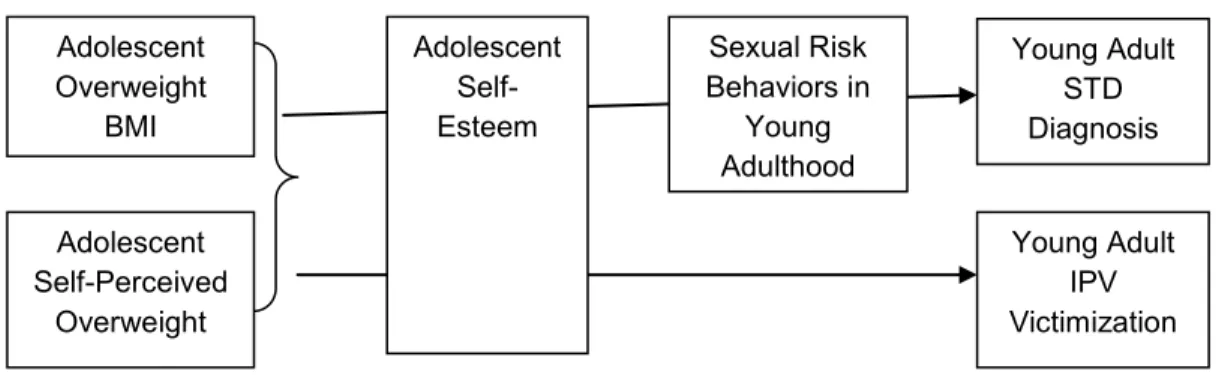
young adult health outcomes. Although not shown in the conceptual model, various factors may act as confounders (e.g., race, young adult measured BMI, parent
education, child physical/sexual abuse, self-perceived pubertal timing, respondent age at Wave 2, respondent intimate relationship characteristics at Wave 3, parent’s highest level of education, family structure during adolescence, and the Add Health Peabody Vocabulary Test Score (a proxy for verbal intelligence)). These factors will be controlled for statistically in analyses.
FIGURE 1: Dissertation conceptual model
It is possible that associations between adolescent measured BMI or
self-perceived weight and adolescent self-esteem in the conceptual model are bi-directional. However, the theoretical basis of the study (explained in Chapter 2) suggests that during adolescence, appearance influences self-esteem, not the reverse. Also, given the social context of adolescence, in part defined by appearance comparisons and the
commonality of weight-teasing, it is possible that measured overweight BMI and self-perceived overweight contribute to lowered self-esteem. This pattern is most closely reflected in research showing that weight-teasing during adolescence predicts negative outcomes like lowered self-esteem (35). Exploring the mediating role of self-esteem in the associations of interest in both papers of this dissertation is important because efforts can be implemented to change self-esteem in ways that are protective against negative sexual and relationship health outcomes. Understanding the role of self-esteem
Adolescent Self-Perceived
Overweight
Young Adult STD Diagnosis Adolescent
Overweight BMI
Young Adult IPV Victimization Sexual Risk
Behaviors in Young
Adulthood Adolescent
in the associations of interest is also important because it can improve the public health community’s understanding of how measured overweight BMI and self-perceived overweight during adolescence influence well-being.
Data will be stratified by adolescent measured BMI (normal BMI as indicated by greater than or equal to the 5th percentile and less than the 85th percentile on the CDC growth curves and overweight/obese BMI as indicated by greater than or equal to the 85th percentile on the CDC growth curves) to assess associations between correctly perceived and misperceived overweight during adolescence and young adult health. In models among those who had a normal measured adolescent BMI, a dichotomous adolescent self-perceived weight variable indicating “about the right weight” perception or “slightly/very overweight” perception will indicate misperceived overweight. In models among those who had an adolescent measured overweight/obese BMI, a dichotomous self-perceived weight variable indicating “about the right weight” perception or
“slightly/very overweight” perception will indicate correct overweight perception. Practice Implications
Research has often explored linkages between adolescent overweight BMI (based on measured or self-reported height and weight) and eating behaviors (61, 62) as well as adolescent body image and eating behaviors (63, 64). However, it is important to understand how overweight BMI and perceived overweight during adolescence
influence other aspects of well-being like sexual health and intimate relationships, both of which are a normative part of development. Further, it is important to learn more about the sexual and relationship health trajectories of adolescents with an overweight BMI given recent increases in the prevalence of adolescent overweight (65, 66).
change among overweight females, but declined among overweight males (67). Among adults between the ages of 35 and 65, weight/height (body size) discrimination rates increased between survey periods in 1995-1996 and 2004-2006 (68). Therefore, even if overweight has become normative across the lifespan, it is still a visual cue that carries stigma in America.
International and national recommendations for sexuality education already suggest that youth should understand what influences how they feel about their bodies. The Guidelines for Comprehensive Sexuality Education published by the Sexuality Information and Education Council of the United States suggest that human
development education efforts that target adolescents discuss body image and its ability to influence behavior (69). Guidelines for sexuality education published by the United Nations Educational, Scientific, and Cultural Organization recommend that adolescents learn skills and concepts related to body image and bodily integrity like “a person’s value is not determined by their appearance (p.24);” “one’s body image can affect self-esteem, decision making, and behavior (p.24);” and “men’s and women’s bodies are treated differently and double standards of sexual behavior may impact upon social and sexual interactions (p.25)” (70).
promise to serve as intervention points for long term health. If this dissertation identifies self-perceived overweight as a predictor of sexual risk, it will offer additional intervention options. Also, given the recent increase in adolescent obesity, it is important to
understand normative aspects of development like sexual and intimate relationship health among this population.
In 2013, the United States government reauthorized the Violence Against Women Act to improve community services and legal frameworks related to IPV. However, more IPV research is needed to inform prevention programming. The field of IPV public health research has only gained momentum during the last 40 years, making it a relatively new field when compared with other public health matters (73). Findings from the second paper of this dissertation could help identify points for IPV prevention related to appearance stereotypes and intimate relationships, and effective
communication within relationships about appearance. Some adolescent IPV prevention curricula like Safe Dates already address the role of gender stereotypes in dating
CHAPTER 2: Theoretical Overview
This dissertation uses two theoretical perspectives to examine how adolescent measured BMI and self-perceived weight may be associated with young adult health: life course theory and objectification theory. The life course theory concept of “sensitive periods” informs the longitudinal nature of both papers. A sensitive period is a time in the life course “when an exposure has a stronger effect on development and subsequent disease risk than it would at other times” (p. 781) (74). In this dissertation, I
conceptualize adolescence as a sensitive period due to the unique social and physical changes that happen during that time. Objectification theory offers hypotheses about how measured overweight BMI and self-perceived overweight may be associated with sexual and relationship health, as well as the mediating properties of adolescent self-esteem.
Objectification Theory and Adolescent Development
Traditionally, outcomes like the internalization of the thin ideal, eating disorders, and body satisfaction have been explored using objectification theory (75, 76). The theory posits that women are socialized to view themselves as objects whose value is derived from aesthetic appeal to others (77). Also, as a result of intensified
appearance and body dissatisfaction is mediated by the internalization of appearance ideals (79). According to objectification theory, when individuals assume the viewpoint of others they begin to engage in “spectatoring,” or self-objectification. Spectatoring is a cognitive process that involves closely monitoring one’s physical appearance to the point where concerns about appearance may manifest (77, 80, 81).
Objectification theory can be applied to the developmental context of
adolescence. Specifically, developmental processes occurring in adolescence can be conceptualized as catalysts for objectification and spectatoring. For example,
appearance awareness may be increased by differences in pubertal timing that prompt social comparisons and peers may unjustly base social acceptance on appearance. Perception of, or increased awareness of, a socially stigmatized appearance like overweight, is also likely to occur during adolescence because of physical and social changes during that time. Feminist perspectives have suggested that understanding interactions between physical changes related to puberty and a society that supports physical objectification is a critical developmental task during adolescence (82, 83). Further, Lerner (1985) posits that demands on an adolescent to cognitively reconcile their changing appearance with social values makes adolescence an ideal “natural laboratory” for examining interactions between biological changes and psychosocial functioning (84).
Life Course Theory and Potential Long-Term Consequences of Measured Overweight
BMI and Self-Perceived Overweight During Adolescence
During adolescence, individuals likely receive feedback about appearance from actual or potential intimate partners for the first time. Such situations and feedback potentially received during those situations have been hypothesized to influence how an adolescent views their own appearance (19). For example, among a sample of
sexual intercourse was associated with an increased likelihood of dieting (33). The authors hypothesized that girls were dieting to keep the interest of the partner with whom they had not had sex.
Overall, research concludes that overweight BMI is inversely associated with the likelihood of dating and sexual activity (33, 38, 85, 86). These findings suggest that overweight BMI is stigmatized within the context of intimate relationships during adolescence, especially among females. Given that adolescence is a context when appearance concern is heightened, higher BMI is stigmatized in intimate relationships, expectations about partner behaviors begin to develop, and sexual negotiation skills are learned, life course theory would predict that these events would have a long-term effect on young adult health. Specifically, life course theory would suggest that socialization related to appearance and intimate relationships during adolescence would establish a precedent for future sexual health and intimate relationship outcomes (20). Stigma associated with overweight, measured or self-perceived, could theoretically contribute to power differentials within relationships throughout the life course. Overweight/obese teens rarely transition to a healthy weight during young adulthood (87). Therefore, it is likely that weight stigma, either self-imposed or from others, can persist from
adolescence to young adulthood. Simultaneously, it is likely that experiences with weight bias within the context of intimate relationships during adolescence can also occur during young adulthood. Studies with college students have shown that young adult men and women rank obese individuals as being less desirable sexual partners than those with a mental illness, and that obese individuals are rated as less sexually attractive and desirable than their normal weight counterparts (88, 89).
person’s self-esteem may be reduced if they have or perceive themselves to have a stigmatized appearance like overweight. Cross-sectional research, where directionally cannot be determined, has shown that correctly perceived overweight can be predicted by lower self-esteem during adolescence, specifically among females (91).
The influence of a stigmatized appearance, real or perceived, during
adolescence on self-esteem may increase the likelihood that individuals will engage in risky sexual behaviors because they believe doing so will avoid adverse relationship events (21), or they may enter relationships with power differentials associated with IPV victimization in order to feel accepted or perhaps to avoid social exclusion during the life course (47).
Extensions of objectification theory have suggested that associations between appearance and sexual behaviors may occur when an individual assumes that their appearance is the reason a potential or current partner is not interested in them (92). Particularly during adolescence, individuals may be encouraged to objectify their appearance and view their bodies in ways that they believe potential or actual partners view their bodies (19). Wingood et al. (2002) found that Black female adolescents who were more dissatisfied with their body image had a higher odds of engaging in sexual risk behaviors, perceiving that they had limited control in their sexual relationships, and fewer options for sexual partners (21). However, existing literature about how self-esteem is associated with sexual health is mixed. Literature about self-self-esteem and sexual health is often restricted to adolescence, and therefore, not generalizable to young adulthood. Ethier et al. (2006) found that lower self-esteem predicted an increased likelihood of unprotected sex among a sample of sexually active Black adolescent females at the six-month follow-up (93). Also using a sample of sexually active Black adolescent females, Salazar et al. (2005) did not find a statistically
compared with lower self-esteem, higher self-esteem significantly predicted protective behaviors like greater confidence in using condoms (94). The authors of these studies state that the analyses could not explain causal mechanisms between self-esteem and sexual risk behaviors due to the temporality of data collection.
Other research suggests that there is an inverse association between self-esteem and risk of mistreatment in intimate relationships. Foshee et al. (2004) found in bivariate analyses that lower self-esteem predicted physical partner violence
victimization among adolescent males and sexual dating violence among adolescent females (95). However, in multivariate analyses, self-esteem was a statistically
significant predictor only among males. Another study found that self-esteem played a role in relationship investment among a sample of college aged females who reported abuse in their current relationship (96). The authors found that higher self-esteem was associated with women’s perceptions that they have higher quality alternative partners, which in turn was associated with a lower level of relationship commitment, and
subsequent higher likelihood of a terminated relationship at the end of the 10 week follow-up period.
In this dissertation it is hypothesized that, given the stigma associated with overweight BMI, imposed from others or self-imposed, and heightened appearance concern during adolescence, a sensitive period in the life course, those with a measured overweight BMI and those who perceive themselves to be overweight during
CHAPTER 3: Adolescent Overweight Body Mass Index and Self-Perceived Overweight: Do They Predict Sexually Transmitted Disease Status During Young
Adulthood? Introduction
Research has not explored how overweight BMI or self-perceived overweight during adolescence influence young adult sexual health. However, it is important to fill this literature gap because adolescence is a period in the life course when appearance is salient and plays a role in intimate partnering. During an important developmental time like adolescence, these characteristics and perceptions could have long-term effects on sexual health.
Nevertheless, research focusing on weight-related factors and adult STD outcomes has not considered the developmental significance of adolescence and its potential long-term influence on adult sexual health (23, 24). Other research has
considered the influence of youth factors like age at first intercourse, partner age during adolescence, and adolescent family structure on young adult sexual health (12-14). Some research suggests that there is an association between BMI, self-perceived weight, and sexual health. However, findings vary depending on sampling and type of risk-taking examined. Two studies using the Youth Risk Behavior Surveillance System (YRBS) have found associations between BMI and sexual risk behaviors during
adolescence. One YRBS study using only females, found that among Blacks, those who perceived themselves as overweight rather than about the right weight had higher odds of having four or more lifetime partners (26). In the same study, Whites who
the 99th percentile of the growth charts, thus rendering the findings subject to criticism, the other study using YRBS data found that adolescent females with a BMI greater than or equal to the 99th percentile have higher odds of having used alcohol or drugs before last intercourse when compared to those with a BMI between the 5th and 84th percentile (27). Another small sample study by Wingood et al. (2002) found that girls between the ages of 14 and 18 with low levels of body satisfaction had higher odds of having unprotected vaginal sex in the last six months and never using condoms in the last 30 days (21).
Findings among adults are mixed. A study of college students found that women with an overweight or obese BMI had higher odds of being intoxicated at last intercourse than their counterparts with a normal BMI, but did not find an association between body image satisfaction and high-risk sexual behaviors (29). One study using a nationally representative sample of adult females (24), and another using an adult sample
containing both sexes (23), did not find a relationship between BMI and STD outcomes. However, a small sample study of post-partum women (ages 14-25) found an inverse association between BMI and STD status (25).
These studies show that associations between BMI, body image, and STDs vary with sampling and the outcome of interest. The studies also reveal several literature gaps. First, most research focusing on weight-related factors and adult STD outcomes has not considered the developmental significance of adolescence and its potential longitudinal influence on adult sexual risk behaviors. Yet, adolescence is a
appearance (17, 59). The current study seeks to fill gaps in the current literature and answer the following research questions: First, are measured overweight BMI and self-perceived overweight during adolescence associated with testing positive for one or more of three STDs (Chlamydia trachomatis, Neisseria gonorrhoeae, and Trichomonas vaginalis) in young adulthood? Second, are misperceived overweight and correctly
perceived overweight during adolescence associated with testing positive for one or more of three STDs (Chlamydia trachomatis, Neisseria gonorrhoeae, and Trichomonas vaginalis) in young adulthood? In addition, are these associations different for males and
females, and non-Hispanic Whites and non-Hispanic Blacks? This study also explores whether adolescent self-esteem mediates the association between adolescent
overweight, as indicated by BMI or self-perceptions, and sexual risk behaviors in young adulthood, and whether young adult sexual risk behaviors mediate the association between adolescent self-esteem and STD status in young adulthood. A subset of respondents enrolled in the National Longitudinal Study of Adolescent Health is used to explore these associations.
Methods
Data and Sample
completed Wave 2 in-home questionnaires were in grades 8-12. In 2001 and 2002, Wave 3 interviews were conducted with 15,197 respondents who were between the ages of 18 and 26 at the time (response rate=77.4%). At all waves, questions about sensitive information like sexual activity were self-administered using computer-assisted self-interviewing (CASI) technology. Other information about the design of Add Health is documented elsewhere (97).
The present analytical sample consists of 3,047 respondents (1,278 males and 1,769 females). A number of eligibility criteria were applied (see Appendix 1 for detailed information about the construction of the analytic sample). First, because combining individuals within the underweight and normal BMI range during adolescence would not create a meaningful referent group for the analyses assessing misperceived overweight; individuals with an underweight BMI at Wave 2 were excluded from the sample. To create a meaningful referent group, those who perceived themselves as very or slightly underweight at Wave 2 are also excluded.
Individuals with zero vaginal intercourse partners in the past 12 months were also excluded from the analytic sample. By questionnaire design, in Wave 3,
respondents who had no vaginal sex partners in the last 12 months were not asked about condom use and partner STD history. Further, respondents were excluded from the analytic sample if they did not have a valid Wave 3 cross-sectional weight, were pregnant at Wave 2 or Wave 3, were virgins at Wave 3, were in a same-sex relationship at Wave 3, were missing information on relationship type (marriage, cohabiting, dating) at Wave 3, or were missing values on any of the covariates of interest.
refused to provide a urine sample and 19% could not be located to participate (98). Overall, test results were available for 87.6% of Wave 3 participants (98).
Because the analyses were stratified by gender, race within gender, and measured BMI at Wave 2 within gender and race, small cell sizes only allowed for the inclusion of Non-Hispanic Whites and Non-Hispanic Blacks. Overall, there was a substantial loss of the sample because individuals who were seniors in high school at Wave 1 were not interviewed at Wave 2, but were interviewed at Wave 3. These individuals were missing on measured height and weight at Wave 2 and excluded from the analytical sample. Although self-reported height and weight at Wave 1 can be used to calculate BMI and classify individuals as having an obese BMI in Add Health data (99), Wave 2 measured height and weight were used for additional accuracy. Measures
Dependent Variable
The outcome of interest in this study is a positive test for one or more of three STDs included in the Wave 3 Add Health urine test. In this study, a respondent was coded as 1 (yes) if they tested positive for one or more of the STDs of interest even if they were missing a value on a test. A respondent was only coded as 0 (no) if they had a negative test for all three diseases.
Independent Variables
respondent was overweight/obese (greater than or equal to the 85th percentile). At Wave 2 respondents were asked: “How do you think of yourself in terms of weight?”
Categorical response choices were: very underweight, slightly underweight, about the right weight, slightly overweight, very overweight. Responses were dichotomized with 0 indicating self-perceived “about the right weight” and 1 indicating self-perceived
slightly/very overweight.
Socioeconomic and Demographic Characteristics
Demographic characteristics from Waves 1, 2, and 3 were included as control variables. A continuous variable for respondent age at Wave 2 was constructed by subtracting date of birth reported at Wave 2 from the Wave 2 interview date. The respondent’s race was classified as Non-Hispanic White or Non-Hispanic Black based on Wave 1 self-reported race and ethnicity. Cognitive ability has been associated with adolescent sexual behaviors, so statistical models include a continuous variable based on the Wave 1 Add Health Picture Vocabulary Test Score (PVT Score), a measure of oral vocabulary based on a modified Peabody Picture Vocabulary Test (100).
A dichotomous variable indicating overweight/obese BMI at Wave 3 was included to control for appearance during young adulthood. Young adulthood measured BMI was calculated with the following formula: weight (lb) / [height (in)]2 x 703. Those with a BMI less than 25 were coded as 0 indicating normal/underweight during young adulthood, and those with a BMI greater than or equal to 25 were coded as 1 to indicate
overweight/obese. Using the respondents’ relationship history reported at Wave 3, respondents were coded as 0 indicating currently in an intimate relationship of any type (dating, cohabitation, or marriage) or 1 indicating not currently in any relationship of these types.
Potential Mediator: Adolescent Self-Esteem
A continuous self-esteem variable was created by summing responses to the six Rosenberg Self-Esteem scale questions that were asked at Wave 2. Higher scores indicate higher self-esteem levels because responses were reverse coded.
Potential Mediators: Sexual Risk Behaviors during Young Adulthood
The mediating properties of the following sexual risk behaviors measured at Wave 3 were of interest: the proportion of the time the respondent used condoms out of all the times that he/she had sexual intercourse in the last 12 months (none, some, half, most of the time or all of the time); if he/she had four or more partners in the last 12 months (yes/no); and if he/she had intercourse with a partner who had a history of STDs in the last 12 months (yes/no).
Analysis
All models were stratified by gender and race within gender because 1) associations between overweight BMI, self-perceived overweight, and well-being
logistic regression models to examine the relationship between measured adolescent BMI, adolescent self-perceived weight, and young adulthood STD status.
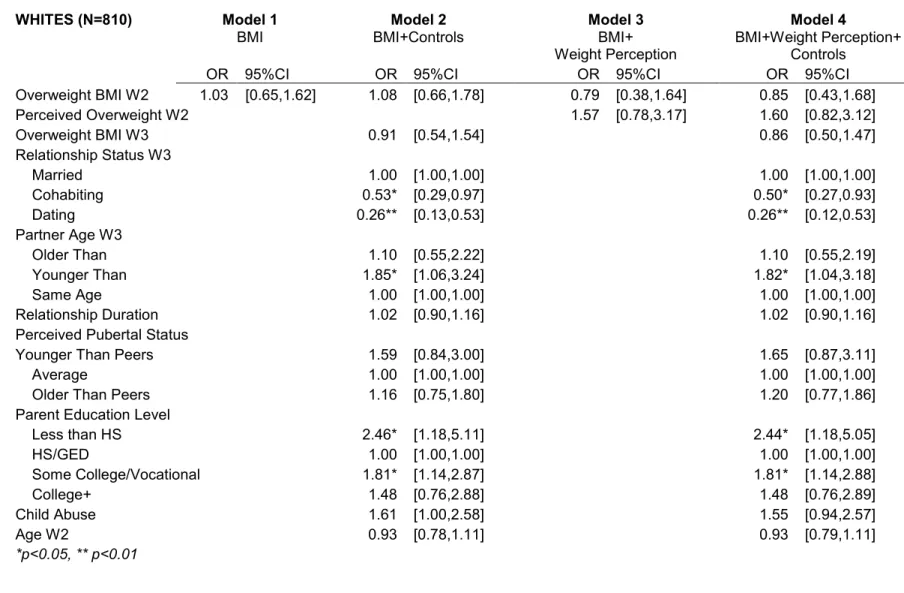
The main hypotheses will be addressed in two ways because BMI and self-perceived weight are correlated. First, Model 1 examines the unadjusted relationship between measured adolescent BMI and young adulthood STD status. Then, in Model 2, demographic and socioeconomic proxy controls (adolescent family structure, age at Wave 2, BMI at Wave 2, intimate relationship status at Wave 3, parent education level at Wave 1, and Add Health PVT Score at Wave 2) are added to the model that contains measured adolescent BMI. Model 3 examines the relationship between adolescent self-perceived overweight and young adulthood STD status while controlling for measured adolescent BMI. Measured BMI is controlled for in the assessment of self-perceived weight to represent potential social vulnerability to weight stigma and provide an objective assessment of what informs self-perceptions and the perceptions of others during adolescence. Model 4 contains measured adolescent BMI and self-perceived weight, as well as socioeconomic proxy and demographic controls. Bivariate models examining the association between self-perceived weight and STD status, as well as a fully adjusted model with self-perceived weight as the main variable of interest were run when the analytic sample was stratified by measured adolescent BMI (normal and overweight/obese) to assess the effects of correctly perceived overweight and
misperceived overweight at Wave 2 on young adult STD status. These models were also stratified by gender and race within gender.
between measured BMI or self-perceived weight during adolescence and each of the young adulthood sexual risk behaviors and 2) the ability of each young adulthood sexual risk behavior to mediate the association between adolescent self-esteem and STD status during young adulthood.
As cell sizes allowed, potential mediators were assessed when data were stratified by gender, race within gender, measured adolescent BMI within gender, and measured adolescent BMI within each race for each gender. All analyses were
conducted with Stata 12. Survey commands were used to accommodate the complex survey design of Add Health, and sampling weights were applied. A significance level of p<0.05 was applied for all analyses.
Results
Descriptive Analyses
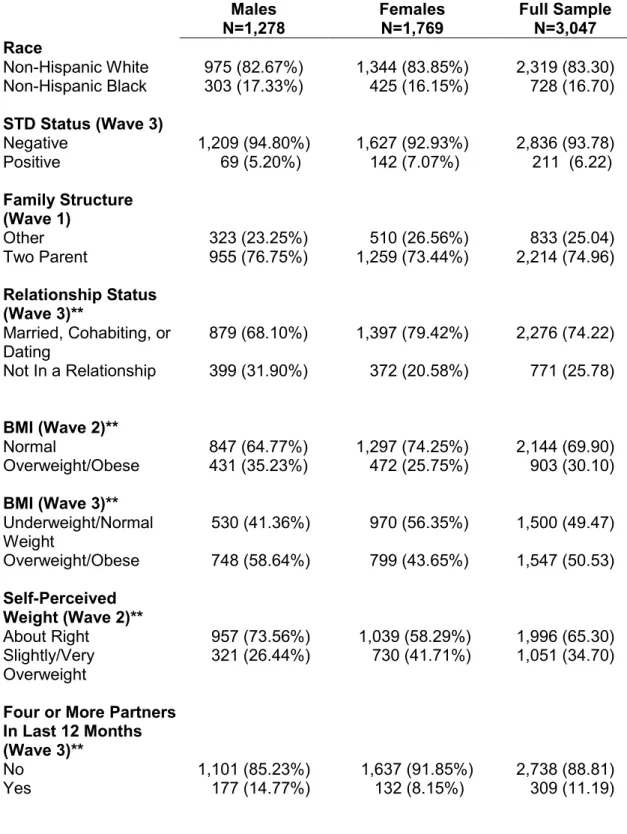
17-138). The PVT scores are standardized (mean= 100 and standard deviation=15). Analysis Stratified by Sex
Among males, in bivariate analyses there was not a statistically significant
association between measured overweight BMI at Wave 2 and testing positive for one or more of the three STDs of interest during young adulthood (Table 2). When controlling for measured overweight BMI, there was not a statistically significant association
between self-perceived overweight at Wave 2 and testing positive for one or more of the STDs. Measured BMI and self-perceived overweight during adolescence did not achieve statistical significance when the socioeconomic proxy and demographic factors were added (Table 2). In adjusted models, being non-Hispanic Black and older at Wave 2 were associated with a statistically significant higher odds of testing positive for an STD. However, the confidence interval for the race variable is wide, requiring careful
interpretation of the odds ratio. Not being in a current intimate relationship (i.e., not in a current marriage, current cohabitation, or current dating relationship) at Wave 3 was associated with a statistically significant lower odds of testing positive for one or more of the STDs examined in the Wave 3 urine test.
Among females, in bivariate analyses, there was not a statistically significant association between measured overweight BMI and STD status during young adulthood (Table 3). There was also not a statistically significant association between adolescent self-perceived overweight and young adulthood STD status when controlling for
was wide, requiring careful interpretation of the odds ratio. Analysis Stratified by Race and Sex Simultaneously
Among non-Hispanic White (Table 4) and non-Hispanic Black (Table 5) males, there was not a statistically significant association between measured overweight BMI during adolescence and the STD outcome in unadjusted models. In addition, within both groups, self-perceived overweight during adolescence was not associated with the STD outcome when controlling for measured overweight BMI at Wave 2. Neither measured BMI nor self-perceived weight was significantly associated with STD status in young adulthood in fully adjusted models in either racial group. Among non-Hispanic White males, age at Wave 2 was associated with higher odds of testing positive for an STD during young adulthood, and not being in a current intimate relationship at Wave 3 was associated with decreased odds of testing positive for an STD during young adulthood in adjusted models. Overweight BMI at Wave 3 was associated with lower odds of testing positive among non-Hispanic Black males in adjusted Models 2 and 4.
Among non-Hispanic White (Table 6) and non-Hispanic Black (Table 7) females, measured overweight BMI was not associated with testing positive for an STD. In all models, among non-Hispanic White and non-Hispanic Black females, self-perceived overweight was not significantly associated with the STD outcome. For both races, when controls were added, neither measured BMI nor self-perceived weight was associated with the STD outcome. Not currently being in any type of intimate relationship at Wave 3 increased the odds of testing positive for one or more of the three STDs of interest among non-Hispanic White females in adjusted models (Table 6: Odds Ratio [OR]=2.28, CI:1.12-4.64) and (Table 6: OR:2.27, CI:1.11-4.63). None of the control variables
Association With Correct Overweight Perceptions and Misperceived Overweight
at Wave 2
Among males, correct overweight perception during adolescence was associated with lower odds of testing positive for an STD during young adulthood in the unadjusted model (Table 8: OR=0.22, CI: 0.05-0.96). However, the association was not statistically significant in the adjusted model. Misperceived overweight was not associated with STD status in unadjusted or adjusted models. Being non-Hispanic Black was associated with higher odds of having a positive STD test among males who had a normal or overweight measured BMI during adolescence. However, the confidence interval for the race
estimate was wide, indicating a need for careful interpretation.
When stratified by race, correct overweight perception was associated with lower odds of an STD diagnosis at Wave 3 among non-Hispanic Black males in the unadjusted model (OR=0.11, CI: 0.01-0.91), but not in the adjusted model (Table 10). Misperceived overweight did not achieve statistical significance in adjusted or unadjusted models. Due to the small number of non-Hispanic White Males with an STD, adjusted models
estimating the association between self-perceived weight and STD status do not have a meaningful interpretation (Table 9).
When females were pooled by race, there was not a statistically significant association between correct overweight perception and weight overestimation during adolescence with the STD outcome in the unadjusted and adjusted models (Table 11). Among females who had a measured overweight BMI at Wave 2, not being in an intimate relationship at Wave 3 was associated with higher odds, and being overweight at Wave 3 was associated with lower odds of testing positive for an STD of interest during young adulthood. Among overweight Hispanic White (Table 12) and non-Hispanic Black females (Table 13) correct overweight perception and weight
non-Hispanic Black females who had an overweight BMI at Wave 2, age was significantly and inversely associated with testing positive for an STD. The small number of non-Hispanic White females who had a measured overweight BMI at Wave 2 and who had an STD at Wave 3 yielded wide confidence intervals, preventing meaningful
interpretation of the results for Models 3 and 4 (Table 12).
Mediation by Self-Esteem During Adolescence and Sexual Risk Behaviors During Young
Adulthood
There was not a statistically significant association between measured BMI nor self-perceived weight during adolescence and STD status during young adulthood in adjusted models. Therefore, the hypothesized associations were not candidates for mediation analyses.
Discussion
This study explores associations between measured overweight BMI and self-perceived overweight during adolescence and young adult STD status. Adjusted results show that there is not a statistically significant association between measured
overweight BMI, self-perceived overweight, correct overweight perception, or
misperceived overweight during adolescence and testing positive for an STD of interest during young adulthood. This finding held among both genders, and among
non-Hispanic Whites and Blacks of both genders.
associations between overweight BMI, self-perceived overweight, and sexual risk behaviors that have been identified in other research with adolescent samples (21, 26). It is also possible that superficial concerns that can dictate partner selection during adolescence, like popularity and socially esteemed appearance, may decline during the transition to young adulthood as individuals seek more meaningful and monogamous relationships or focus on status indicators other than appearance (e.g., income and education). As suggested by the theory of Emerging Adulthood, during the transition from adolescence to young adulthood individuals often begin seeking more meaningful and emotionally intimate relationships (103). In the context of such relationships, the associations between appearance concerns and sexual risk behaviors from adolescence may not carry forward due to partner selection.
When data from our sample were pooled by race, non-Hispanic Blacks had higher odds of testing positive for one or more of the three STDs during young
adulthood. This finding is consistent with surveillance trends (1). Lack of a statistically significant association between measured BMI and self-perceived weight during adolescence and STD status during young adulthood among both races could indicate that despite racial differences in body size preference (104) and self-perceived weight (105), higher BMI and self-perceived weight during adolescence may not have
differential implications for sexual health among Whites or Blacks during young
ethnic identity have greater body dissatisfaction (21), and that racial socialization (engaging in activities that promote cultural awareness and pride) is positively
associated with positive social self-image among Black girls with larger body sizes (107). Examining the moderating effects of ethnic identity and racial socialization may reveal different results.
Mediation analyses were not rigorously pursued because the main hypothesized association was not statistically significant. However, in additional analyses we found that, among females of both races, self-perceived overweight was inversely associated with self-esteem during adolescence when controlling for adolescent BMI and socio-demographic factors (Appendix 1: Table 29). The inverse association was also statistically significant among non-Hispanic White, but not non-Hispanic Black males (Appendix 1: Table 28). This finding demonstrates some support for our hypothesized pathway informed by objectification theory regarding the association between perceived appearance and self-esteem during adolescence. However, the self-perceived weight and self-esteem measures are from Wave 2, which prevents an understanding of the directionality of the association. Other cross-sectional research using self-esteem as a predictor of self-perceived weight during adolescence has also found inverse
associations, but could not determine directionality due to the temporality of the measures (91). Additional research is needed to understand directionality or perhaps reciprocity in the association between overweight, as indicated by BMI or self-perceived, and self-esteem during adolescence.
Strengths and Limitations
First, sexual risk behavior reports may not be accurate because they address behavior over one year, and like all self-report measures of sexual behavior, their accuracy cannot be tested. Secondly, the Add Health sample at Wave 2 was smaller than Wave 3 by design. Therefore, older individuals were excluded from the analytical sample because they lacked a Wave 2 BMI value, likely reducing statistical power. Excluding those with perceived underweight BMI due to the need to create a meaningful referent group limits the generalizability of these findings. The exclusion of those with a slightly underweight perception at Wave 2 did not create substantive differences in the sample composition with regards to race, STD status, parent education, or family structure (see Appendix 1, Table 30). The only notable significant difference was that a greater proportion of males and females who perceived themselves to be slightly underweight at Wave 2 had a normal measured BMI than an overweight/obese BMI at Wave 2 and Wave 3.
STDs that disproportionally affect young adults were not included in the Add Health STD urine test. It is possible that measured adolescent BMI and self-perceived weight are associated with these excluded STDs. More research is needed on the associations of interest in this paper using a wider variety of STD outcomes.
Overall, findings of this study must be interpreted carefully. Self-perceived weight as defined in this study is not a measure of “negative body image.” It cannot be assumed that the two concepts are correlated, or that “overweight BMI” indicates “body
dissatisfaction.” There are many ways to measure and conceptualize body image including in terms of affect, perception, mental evaluation, and worry about body size (111). Other studies also support using body image measures specific to the context of sexual intimacy, or a state measure of body image, to fully understand its association with sexual behaviors (112, 113). The Body Exposure during Sexual Activities
Questionnaire has been developed for such purposes. Therefore, in this study, some degree of measurement error may be associated with the Add Health weight perception measurement and the theoretical constructs.
This study contributes to the literature about measured overweight BMI, self-perceived overweight, and sexual health. Results document that measured adolescent overweight BMI and self-perceived overweight are not associated with STD status during young adulthood. The findings from this paper indicate that while associations between BMI and/or self-perceived weight may influence sexual risk behaviors during
adolescence, they do not ultimately influence STD status, at least those tested here, during young adulthood. Therefore, it may be important for comprehensive sexual health education curricula and health promotion efforts to address associations between
appearance and sexual risk behaviors among adolescents throughout the BMI
testing throughout the life course, how to access testing and treatment during young adulthood, and how to establish monogamous and meaningful relationships during the transition to young adulthood. Some research has shown that condom use declines when young adults enter more committed relationship types like cohabitation (114). Further, that young adults decrease condom use in relationships because they trust their partner or incorrectly estimate the prevalence of STDs in their sexual network (115, 116).
Chapter Three Tables
TABLE 1: Percentage distribution of the analytic sample from the National
Longitudinal Study of Adolescent Health, by gender unweighted n (Weighted %), Paper 1 Males N=1,278 Females N=1,769 Full Sample N=3,047 Race
Non-Hispanic White 975 (82.67%) 1,344 (83.85%) 2,319 (83.30) Non-Hispanic Black 303 (17.33%) 425 (16.15%) 728 (16.70) STD Status (Wave 3)
Negative 1,209 (94.80%) 1,627 (92.93%) 2,836 (93.78)
Positive 69 (5.20%) 142 (7.07%) 211 (6.22)
Family Structure (Wave 1)
Other 323 (23.25%) 510 (26.56%) 833 (25.04)
Two Parent 955 (76.75%) 1,259 (73.44%) 2,214 (74.96)
Relationship Status (Wave 3)**
Married, Cohabiting, or Dating
879 (68.10%) 1,397 (79.42%) 2,276 (74.22) Not In a Relationship 399 (31.90%) 372 (20.58%) 771 (25.78)
BMI (Wave 2)**
Normal 847 (64.77%) 1,297 (74.25%) 2,144 (69.90)
Overweight/Obese 431 (35.23%) 472 (25.75%) 903 (30.10) BMI (Wave 3)**
Underweight/Normal Weight
530 (41.36%) 970 (56.35%) 1,500 (49.47) Overweight/Obese 748 (58.64%) 799 (43.65%) 1,547 (50.53) Self-Perceived
Weight (Wave 2)**
About Right 957 (73.56%) 1,039 (58.29%) 1,996 (65.30) Slightly/Very
Overweight
321 (26.44%) 730 (41.71%) 1,051 (34.70)
Four or More Partners In Last 12 Months (Wave 3)**
No 1,101 (85.23%) 1,637 (91.85%) 2,738 (88.81)
Condom Use In Last 12 Months (Wave 3)**
Inconsistently/Never 956 (74.60%) 1,436 (81.23%) 2,392 (78.19) All of The Time 322 (25.40%) 333 (18.77%) 655 (21.81) Sex with a Partner
with a History of STDs in Last 12 Months (Wave 3)**
No 1,202 (95.06%) 1,578 (89.54%) 2,780 (92.08)
Yes 76 (4.94%) 191 (10.46%) 267 (7.92)
Parent Education (Wave 1)
Less than High School 109 (9.40%) 210 (11.98%) 319 (10.79) High School or Higher 1,169 (90.60%) 1,559 (88.02%) 2,728 (89.21)
TABLE 2: Odds Ratios and 95% confidence intervals for the association between adolescent overweight BMI, self-perceived overweight, and STD status during young adulthood, males (n=1,278)
Model 1 BMI Unadjusted
Model 2 BMI+Controls
Model 3
BMI+Weight Perception
Model 4 BMI+Weight Perception+Controls
OR 95%CI OR 95%CI OR 95%CI OR 95%CI
Overweight
Perception W2 0.34 [0.11,1.02] 0.53 [0.18,1.57]
Overweight
BMI W2 0.50 [0.23,1.08] 0.72 [0.32,1.62] 0.76 [0.29,1.99] 0.86 [0.35,2.08]
Non-Hispanic Black 6.60** [2.80,15.53] 6.33** [2.74,14.69]
Age W2 1.28** [1.07,1.53] 1.27** [1.06,1.53]
Overweight BMI W3 0.50 [0.24,1.01] 0.53 [0.25,1.09]
No Intimate
Relationship W3 0.53* [0.29,0.97] 0.55* [0.31,0.98]
Two Parent Household 2.16 [0.88,5.29] 2.12 [0.87,5.20]
PVT Score 0.98 [0.96,1.01] 0.98 [0.96,1.01]
Parent Education
High School+ 0.78 [0.29,2.08] 0.79 [0.29,2.90]
*p<0.05, **p<0.01