Development of a High Throughput Method
For the discovery of selective propene oxidation catalysts
Dissertation
zur Erlangung des Grades
des Doktors der Ingenieurwissenschaften
der Naturwissenschaftlich-Technischen Fakultät III
Chemie, Pharmazie, Bio- und Werkstoffwissenschaften
der Universität des Saarlandes
von
Su, Woongsik
Saarbrücken 2012
Tag des Kolloquiums: 26. 02. 2013
Dekan:
Prof. Dr. V. Helms
Berichterstatter:
Prof. Dr. W.F. Maier
Prof. Dr. J. Jauch
Vorsitz:
Prof. Dr. E. Heinzle
To my beloved mother
&
Acknowledgement
First of all, I would like to express my sincere and deepest gratitude to my Prof. Dr. W. F. Maier for giving me the opportunity to work in his department under his excellent supervision. His expert guidance, advice, support, open mind, encouragements, and suggestions throughout the whole thesis have been crucial for the completion of the work described in thesis.
Secondly, I thank Prof. Dr. J. Jauch for his agreement to review this dissertation.
I would like to thank Prof. Dr. K. Stöwe for his advice during the project as well as for his assistance with the XRD measurements.
I also thank Mr. R. Richter for his perceptive comments and his ongoing efforts to help me in the high-throughput reactor development. In addition, I thank Mrs. H. Höltzen for her helpful feedback and for enriching my understanding of analytic method, and Mr. C. Thome for his technical support concerning the development of the required software.
I gratefully acknowledge financial support to this project from the Deutscher Akademischer Austauschdienst (DAAD).
In addition, special thanks go to Dr. Bauke Albada for putting a lot of effort and time into reading and correcting the manuscript—Thanks you so much!
I thank all my colleagues, especially, William, Nicola, and Katrina, for their support and helpful suggestions. I would like to extend my undying gratitude to my mother, Lee younghae, for her love and support. Also, I wish to thank my father, Su seongdo, who I would give anything to have seen me finish this project.
There have been a number of people whose names are not mentioned, but without whom this thesis could not have been completed. I would like to express my deepest gratitude to all of them.
Abstract
The main focus of this thesis lies in the development of a high-throughput method for the discovery of catalysts for selective oxidation of propene. For this, a new 10-fold parallel reactor was constructed, validated, and tested for selective oxidation of propene to acrolein or propene oxide. Catalysts for these conversions were prepared by combinatorial chemistry approaches and subsequently screened in high-throughput techniques. Following a sol-gel procedure approximately 2200 catalysts have been prepared, and they were tested with the help of a stage robot reactor as primary screening and a 10-fold parallel reactor as secondary screening. Using the stage robot reactor, several catalysts consisting of Cu-containing mixed oxides have been discovered that were active for propene-oxide production, but they could not be confirmed by conventional tests. In the case of acrolein-production, a Pd10Ga45Cu45 catalyst has been found with the best activity.
Among Mo-based catalysts, Mo94Ru4Te2 and Mo88Sn8Te4 showed very high propene
conversion to acrolein with yield of 25% at 375 °C and yield of 28% at 400 °C, respectively.
Der Schwerpunkt dieser Arbeit liegt in der Entwicklung einer Hochdurchsatz-Methode für die Entdeckung selektiver Propen-Oxidationskatalysatoren. Dafür wurde ein neuer 10-fach-Parallelreaktor entwickelt, validiert und getestet für selektive Oxidation von Propen zu Acrolein oder Propenoxid, indem kombinatorische chemische Vorgehensweisen zusammen mit Hochdurchsatz-Screening-Techniken genutzt wurden. Einem Sol-Gel-Verfahren folgend, wurden etwa 2200 Katalysatoren mit Hilfe eines Stage-Robot-Reaktors als primäres Screening und eines 10-fach-Parallelreaktors als sekundäres Screening vorbereitet und getestet. Durch einen Stage-Robot-Reaktor wurde entdeckt, dass einige Katalysatoren, bestehend aus Cu-fassenden vermischten Oxiden, aktiv Propen-Oxide produzieren, jedoch wurde es nicht durch herkömmliche Tests bestätigt. Bezüglich Acrolein-Produktion wurde ein Pd10Ga45Cu45-Katalysator aufgrund seiner Aktivität als
bester befunden. Unter den Mo-basierten Katalysatoren zeigten Mo94Ru4Te2 und
Mo88Sn8Te4 sehr hohe Propen-Konversion in Bezug auf Acrolein mit einer Ausbeute von
Contents
Ⅰ. Introduction ... 1
1 Combinatorial chemistry ... 2
1.1 Synthesis ... 3
1.1.1 Preparation of the sol-gel ... 4
1.1.2 Synthetic methods in combinatorial chemistry ... 8
1.2 Information technology ... 9
1.2.1 Computational Chemistry ... 10
1.2.2 Design of the catalyst library ... 11
1.2.3 Visualization of the data obtained in HTE ... 12
1.3 Testing for HTE that is needed in catalyst design ... 14
1.3.1 High-throughput experimentation (HTE) ... 14
1.3.2 Analysis of conversion... 15
1.3.3 Expected tendency of future development in HTE ... 16
2 Selective oxidation of propene... 17
2.1 Selective oxidation of propene to propene oxide ... 18
2.2 Selective oxidation of propene to acrolein ... 19
Ⅱ. Result and discussion ... 21
3 Development of a high-throughput reactor ... 21
3.1 Motivation for the work described in this thesis ... 21
3.2 Reactor design issues that need to be considered... 23
3.3 New developing concept ... 24
3.4 Schematic design of the reactor system ... 26
3.4.1 Overall system design ... 26
3.4.2 10-fold parallel reactor design ... 27
3.5 Consecutive parallel reactor ... 28
3.5.1 Design of splitting module ... 29
3.5.2 Comparison of two methods ... 31
3.6 Automation of the reactor ... 32
3.6.1 Main control box ... 33
3.9 Operation concepts ... 44
3.10 Design of new rack ... 45
3.10.1 Concept ... 45
3.10.2 Ternary composition ... 47
3.11 Conclusion ... 49
4 Discovering catalysts for propene to propene oxide conversion ... 50
4.1 Primary generation by using binary composition ... 50
4.2 Instrument setup ... 52
4.3 Experimental setup and results ... 53
4.4 Secondary generation ... 56
4.5 Hit validation by conventional test ... 58
4.6 Discussion ... 59
5 Catalyst for propene to acrolein ... 60
5.1 Primary screening in ternary composition ... 60
5.1.1 1G3L ... 60
5.1.2 1G4L ... 62
5.2 The check of hit validation ... 62
5.3 Discussion ... 65
6 Mo based catalyst for propene to acrolein ... 67
6.1 Primary screening ... 67
6.1.1 First library ... 68
6.1.2 Instrument setup ... 70
6.1.3 Test by the Stage Robot Reactor ... 70
6.1.4 Hit validation ... 73
6.1.5 Second library... 75
6.1.6 Screening of the stage robot ... 75
6.1.7 Hit validation ... 76
6.1.8 Ternary composition (Mo-Ru-Te) ... 79
6.2 Secondary screening ... 80
6.2.2 Experimental procedure ... 81
6.2.3 Catalysts preparation ... 82
6.2.4 The result concerning the temperature range ... 83
6.2.5 The result of selectivity vs. yield with increasing generations ... 85
6.2.6 Characterization of surface area ... 86
6.2.7 Effects of parameter variation for catalytic activity ... 86
6.2.8 The result of generation 12 ... 90
6.3 Discussion ... 92
Ⅲ. Experiment ... 93
7 Work flow overview... 93
7.1 Work stream ... 94
7.2 Stage robot reactor ... 95
7.3 10-fold parallel reactor... 97
7.3.1 Preparation of tube reactor ... 98
7.3.2 Cleaning process ... 99
7.4 Catalyst preparation ... 100
7.4.1 Sol-gel synthetic recipes ... 101
Ⅳ. Summary and conclusions ... 107
Ⅴ. Zusammenfassung und Ausblick ... 109
Approval ... 112 List of Tables ... 118 List of Figures ... 119 Ⅳ. Appendix ... 122 A List of abbreviations ... 122 B List of libraries ... 124
C Used chemicals for libraries ... 137
D Sketch of splitting module in the 10-fold parallel reactor ... 138
E Ignition ... 139
F List of products ... 141
1
Ⅰ
. Introduction
Nowadays, developments in computer-technology related to automation and data mining has opened the door to high-throughput experimentation in both industry and academy. Reducing the scale of experimentation has many advantages in terms of cost and safety. Hence there is no need in catalyst testing on a larger scale than necessary. However, high-throughput testing of catalysts has to provide meaningful and reliable data.
Our group has developed several high-throughput methods using spectroscopic methods and a stage robot reactor for the discovery of catalysts. Although methods are successful in primary screening, their application is limited when applied to selective reaction like complex partial oxidation reactions. Therefore, a new 10-fold parallel reactor that is suitable as a second screening method and which includes a Micro-GC for analysis has been developed. The developed reactor has been validated for feasibility and reliability by analyzing the test-results at each channel.
In order to study the performance of the new 10-fold parallel reactor, selective oxidation of propene has been chosen as test-reaction. The results show that it is possible to optimize catalyst composition and oxidation-protocol via secondary screening after hits obtained in the primary screening.
This thesis is outlined as follows. At the beginning of chapter 1, combinatorial chemistry including synthesis, information technology and testing is briefly reviewed. Chapter 2 will touch on selective oxidation catalysts.
In the ‗Result and Discussion‘ part, chapter 3 will show how the new high-throughput reactor based has been developed. Subsequently, the experimental results of catalyst-discovery for the oxidation of propene to propene oxide in chapter 4, propene to acrolein in chapter 5, and propene to acrolein with molybdenum in chapter 6 will be reported.
Lastly, the experimental setup and the catalyst preparation method based on sol-gel will be described in detail in chapter 7.
1 Combinatorial chemistry
2
1
Combinatorial chemistry
The application of catalyst technology in the chemical industry is essential for maintaining our current level of development. In fact, more than over 90% of all chemical processes utilize catalysts and 60% of chemical productions of over 7000 compounds worth over $3 trillion per annum are produced using catalysis. At the moment, about 100 catalyst manufacturing companies exist globally[1]. It is clear that catalytic technologies have a vital role in the economic development of the chemical industry in the 21th century. Controlling selectivity and conversion of new catalytic processes can enhance the chemical productivity by reducing production costs and saving resources. This contributes to the world Gross National Product (GNP) by driving environment friendly and energy-efficient technologies, which later on can provide new challenges for catalysis research[2, 3]. In spite of this importance, finding or developing new catalysts is a difficult procedure since it relies on a number of scientific disciplines covering at least chemistry, physics, and mechanics.
Therefore, it is expected that combinatorial methods can be very useful for the discovery of new catalysts in a reliable and efficient way since many different aspects of catalyst-design can be screened simultaneously in a parallel manner. For example, researchers in the pharmaceutical industry have reduced both time and cost for producing effective and competitive new drugs. Combinatorial chemistry is regarded as one of the major technologies developed[4], and it has become an integral part of drug discovery in intelligent and systematic searches of large-parameter spaces based on the screening of diverse chemical libraries[5, 6]. Although the concept of combinatorial chemistry originated from combinatorics in drug discovery, these days combinatorial analysis is widely applied to life sciences or engineering such as semiconductors, superconductors, catalyst, polymers, materials, fuel cell, coating and organic dyes[7-12].
3
Figure 1.1 Key areas of combinatorial chemistry [1]
Combinatorial chemistry is an innovative methodology to find activity or selectivity among large diversities of libraries, which are synthesized, analyzed, and tested as shown in Figure 1.1 left. Apart from synthesis and testing, the development and use of a sophisticated high-capacity information-management system are essential for this procedure because of the vast amount of data generated. Eventually, successful implementation of combinatorial approaches requires all components, such as rapid library synthesis, large-scale information management and high-throughput testing. These components must function smoothly so that bottlenecks will not control the speed of an entire process[1].
1.1
Synthesis
Since the synthesis of new materials is often the rate-limiting step, speeding up this process can increase the chance of discovering totally new and unexpected catalytic materials compared to the classical methods. Combinatorial approaches in this regard include several manners of the substance preparation and systematic synthesis.
Synthesis
Information
Testing
Large-Scale Information Management High Throughput Testing Rapid Library Synthesis Combinatorial Chemistry1.1 Synthesis
4
Figure 1.2 Information of library synthesis[13]
For catalyst synthesis, impregnation, multiple co-precipitation, evaporation, extrusion, spray-drying, ionic exchanges, sol–gel synthesis and hydrothermal synthesis have been applied to combinatorial chemistry[14]. However, in this thesis, the focus will be on sol-gel synthesis for catalytic preparation. 1.1.1 Preparation of the sol-gel
Sol-gel synthesis is a well-known bottom-up method to produce nanoparticles[15, 16] in various fields such as optical materials, protection films, porous films, thin films, coating for fiber optics, carbon nanotubes, window insulator, polymers, micro-capsulation, and biomaterial[17-21]. M. Ebelmen in France reported the first silica gels in 1845[22, 23] and Faraday synthesized the oldest sols prepared in a laboratory[24]. The sol-gel process has advantages such as high purity, good homogeneity of raw material, low processing temperature, good shape ability, and easy control of new composition. In contrast, high cost of raw materials, health hazards of organic solution, cracking during the drying phase, long processing time and sensitivity to atmosphere conditions are the main disadvantages[25].
5
Figure 1.3 Detail information of sol-gel process with steps[26]
As is shown in Figure 1.3, depending on the conditions used in each, the sol phase can be converted into dense films, dense ceramics, aerogels, uniform particles and ceramic fibers. While the sol state represents a stable state in which colloid particles in the liquid phase are distributed with mobility for a long period of time, the gel state results in solidification through hydrolysis and condensation, ultimately resulting in the loss of mobility. Metal alkoxides like LiOCH3 and NaOCH3, and silicium-
or germanium-based sol-gel precursors like Si(OC2H5)4 and Ge(OC2H5)4, are well-known starting
materials for sol-gel synthesis because of their high solubility in water.
Sol-gel processes of amorphous or crystalline materials are based on low-temperature hydrolysis and condensation of hydrolysable precursors as in the following figures.
1.1 Synthesis 6 Si OR OR OR RO + H O H Hydrolysis Reesterification Si OR OR OH RO + R O H
Figure 1.4 Hydrolysis on sol-gel process
The hydrolysis reaction replaces alkoxide groups (OR) with hydroxyl groups (OH) as depicted in the above reaction scheme.
Si OR OR OH RO + Water Condensation Hydrolysis Si OR OR O RO Si OR OR OH RO Alcohol Condensation Alcoholysis Si OR OR OR HO Si OR OR OH + HOH Si OR OR O RO Si OR OR OH + ROH + Si OR OR OR RO
Figure 1.5 Condensations on sol-gel process
In the condensation reactions (water condensation or alcohol condensation), the silanol groups (Si-OR) produce siloxane bonds (Si-O-Si), ultimately resulting in a process of polymerization that leads to larger silicon-containing molecules[27]. Sol-gel synthesis can be classified as ‗acidic‘ (pH 1.5-6), ‗basic‘ (pH 8-11), or ‗neutral‘ (pH 7), depending on the pH value of the solution in which the reaction is performed. Although hydrolysis or condensation can occur without adding catalyst, acid or basic catalyst can accelerate the hydrolysis or condensation reaction. Hydrochloric acid (HCl) and ammonia (NH3) are generally used in acid- and base-catalyzed methods, respectively. Apart from
these, acetic acid, KOH, amines, KF, and HF can be used as a catalyst[28].
Figure 1.6 and Figure 1.7 describe the synthesis of amorphous porous silica prepared by either the acid- or base-catalyzed hydrolysis of tetraethoxysilane (TEOS)[29], a starting material that is often used in the preparation of silica aerogels[30].
7
Figure 1.6 Acid-catalyzed hydrolysis
In the acid-catalyzed process, the oxygen atom of the silylether is rapidly protonated. As a result, 1) electron density is withdrawn from the silicon atom making it more susceptible to attack from water, and 2) the R-O fraction of the molecule is already turned into a good leaving-group.
Base-Catalyzed Mechanism
Figure 1.7 Base-catalyzed hydrolysis
In contrast, the base catalyzed sol-gel formation is caused by a hydroxylion. Because the hydroxide-ion is nucleophilic, it can attack the electropositive silicon atom[31] as shown in Figure 1.7.
The relative rate of hydrolysis and condensation in the sol-gel process is dependent on the pH in the solution. Under acidic conditions, the rate of hydrolysis is faster than condensation, resulting in a poorly branched gel. On the other hand, under alkaline conditions the hydrolysis rate is slow and the dissociation of water is rapid, resulting in a highly branched gel[32]. Although many factors affect the structure of the sol-gel network, the difference of gelation between acid- and base-catalyzed conditions is dominant and can be visualized as in Figure 1.8. The former yields linear or randomly branched polymers, which entangle and form additional branches, whereas the latter yields more highly branched discrete clusters.
1.1 Synthesis
8
Figure 1.8 Effect of pH on sol-gel network formation[33]
1.1.2 Synthetic methods in combinatorial chemistry
Similar to the synthesis of combinatorial libraries, there are two main methods by which sol-gels can be prepared: a split & pool and parallel synthesis.
9
Houghton published a ―tag-bag method‖ for the rapid synthesis of multiple peptides in 1985, which is nowadays referred to as the split & pool methodology. In this method, each bag contains polymeric resin ―beads‖ for separation and isolation, wherein the mean bead diameter exceeds the mean pore diameter of the polymeric membrane of the bag. After repeating split and pool steps for several times, where during each step a different monomer is coupled, a highly diverse library is produced covering a wide range of samples. Immobilization of the discrete members of this library on solid-supports like resin-beads allows the efficient testing of libraries[34, 36]. Other commonly used synonyms in the field of combinatorial chemistry are ―split-mix‖, ―split-combine‖, ―one bead – one compound‖ and ―selectide-process‖[37].Importantly, the identity of the library member has to be identified after the screening by either a direct determination of the structure of the member or by and indirect method in which tags, that were introduced during the synthesis, could be deciphered after screening of the library.
Alternatively, parallel synthesis allows different chemical compositions to be prepared in parallel, using a number of reaction vessels and a robot programmed to add the appropriate reagents to each other. The library construction speed of parallel synthesis is slower than with the split-mix synthesis, but it is easy to trace the chemical reaction and to identify the chemical structure of the active compound. Therefore, it has broadly been used in inorganic and organometallic chemistry[38, 39], polymer synthesis[40], medicinal chemistry[41], drug discovery[42], catalysis synthesis[43], material discovery[12], solid phase extraction[44] and organic synthesis[45]. Multiple parallel procedures in combinatorial technology have been developed based on this parallel synthesis[35].
1.2
Information technology
From the use of systematically acquired data and data-mining technologies, combinatorial methods can help scientists to discover trends and patterns of structure—activity relations from large databases for the development of catalysts. Finding a global maximum instead of a local maximum in the activity-profile of a catalyst by a mathematical solving-system is a major challenge in this regard. To improve initial hits and to find ways for catalyst discovery, rational methods have been applied in the design of experiments as plotted in the following Figure 1.10.
1.2 Information technology
10
Figure 1.10 Basic scheme of information technology system
1.2.1 Computational Chemistry
Over the last decades, significant progress has been made in computational strategies for information management. For example, quantum-chemical approach, Monte Carlo (MC) and density function theory (DFT) have been developed as so-called in silico methods.
Mechanisms of methanol decomposition on platinum[46], reaction rates for an elementary process on the surface of solid catalyst in different zeolite framework structures[47], and Brønsted acidity of active sites on the microscopic surface of silica-alumina and silica magnesia[48] are simulated by quantum-chemical approaches. Density Function Theory (DFT) calculations are applied to gain an understanding in the temperature and/or pressure dependency of the interaction between oxygen and silver in a known oxidation catalyst[49], and it helps to simulate various fields such as catalytic reaction, reactivity, mechanisms, barriers and kinetics[50-54]. A Monte Carlo (MC) with natural parallelism method has been implemented to save the power of computing resources[55].
Recently, Miyamoto et al. have introduced the term of ―Combinatorial Computational Chemistry‖ and implemented it with the high-throughput screening of catalysts and materials. The adsorption energies of NO and water on various ion-exchanged ZSM-5 for design of deNox catalyst[56] was investigated, and the most stable adsorption state of NO on Ir model cluster was demonstrated in the design of precious metal catalysts for deNOx[57]. An active catalyst for methanol synthesis is also
11
implemented, and the result of calculation showed that Cu+-cation is the active center in the industrial Cu/ZnO/Al2O3 catalyst[58]. This simulation of a theoretical approach is based on quantum
chemical and molecular dynamics methods[59] and shows the beneficial use of computers in catalyst discovery.
Volcano shaped plots of catalyst activities against catalyst composition is a useful empirical method in catalysis as it relates the activity to the strength of adsorption of intermediates at the surface of the active material[60]. These relationships within catalysts have been applied to different experimental conditions ranging from atmospheric to high pressure, various temperature of reaction[61], and transitions of metal sulfide catalyst[62]. Also, electro catalytic materials for hydrogen evolution on 256 pure metals and surface alloys have been studied and found to fit the volcano plot[63]. Although this empirical approach is usually reliable, it is very time-consuming and costly to obtain reliable data.
Therefore, semi-empirical methods that use parameters derived from experimental data can also decrease computation time. Gordeeva et al. have introduced ―An Original Semi-empirical Approach to Computer-Assisted synthesis‖ on the combination of pure combinatorial methods with a small knowledge base that included several empirical rules[64].
1.2.2 Design of the catalyst library
Due to the data explosion in combinatory chemistry, managing the flow of data with design concepts and extracting useful information from this data using a data mining concept has become essential. However, the design of a library for discovering or optimizing new catalysts is not straightforward since a number of factors have to be considered, such as the type of elements, suitable precursors and concentrations, functional group variations, the order of the addition of reagents during the preparation, the solvents, modifiers and additives used during preparation, treatment and reaction times, pretreatment, activation procedures, and molecular descriptors related to structural features and so on. Therefore, the experiments need to be planned in an intelligent way before combinatorial experiments can be initiated. In addition, researchers should recognize problems and select the response variable for experimental design with factors, levels and range. This design of experiment (DoE) relies on complex statistical and optimization algorithm, allowing the effective determination of those parameters as well as parameter interactions, which have a main effect on the desired properties during experiment[65].
1.2 Information technology
12
A very well-known evolutionary process[66], Genetic Algorism (GA), was introduced by Wöhler[67]. Although GA has been developed as a machine learning technique in drug industry[67], it has also been used for the generation of catalytic quality[68]. In addition, Optimal Design Of Experiments (ODOE), optimization strategy for the development of heterogeneous catalytic material has been studied using a stochastic strategy based on GA[69]. Recently, several approaches to the combination of GA and artificial neural networks (ANN) have been represented.
The main idea of artificial neural networks (ANN) is based on the concept of neurons in biology, which mimics signal-processing in a way like neurons process signals from the environment. It combines GA and ANN, which leads to acceleration of the process of catalyst-discovery. The approach, supplemented by an artificial neural network with the genetic algorithm software for establishing relationships between catalyst compositions, is illustrated for finding the catalyst for the oxidative dehydrogenation of propane[70] and optimizing olefin epoxidation catalysts[71] or methanol synthesis catalyst based on Cu oxide[72].
1.2.3 Visualization of the data obtained in HTE
For showing the results of high-throughput experimentation efficiently and selecting the next generation of catalysts rationally, several visualization methods have been developed as illustrated in the following Figure 1.11.
13
Figure 1.11 different visualization methods [10, 11, 73-77]
Various ways of visualization have been developed for the mapping of data into parameter space. For example, the photograph of a luminescent material‘s library (a) is shown in the two dimensions diagram[11], and acrolein concentrations (b) of samples collected from catalysts in a library is shown by excel program.[77] Holographic research strategy (HRS) (e) showed how to handle a bulk of data by implementing the visualization scheme[76]. Results of a k-means cluster analysis based on eight principal components (PC) in the projection (d) are presented[73]. Our research group has developed different methods, such as the ternary (g) composition of catalytic activity[78], the mapping of parameter spaces (h) for Quantitative composition activity relationships (QCARs) and quaternary composition spaces (i) with the help of Support vector machines (SVMs), multilevel B-splines, or
(a)
(b)
(c)
(d)
(e)
(f)
1.2 Information technology
14
Kriging [74, 79]. Apart from these, the statistical commercial program Spotfire can help to visualize broad data sets using different visualization algorithms.
1.3
Testing for HTE that is needed in catalyst design
Classical catalyst tests are miniaturized, automated, and coupled with combinatorial tools. Suitable techniques for the analysis of catalyst results include GC, MS and IR, and characterization tools like XRD and XPS.
Figure 1.12 Basic scheme of testing
1.3.1 High-throughput experimentation (HTE)
Since classical catalyst testing in laboratory reactors requires careful experimentation and data interpretation based on the concept of trial-and-error, the development tends to be slow. However, a method based on the high-throughput screening of catalysts increases the possibility to find an optimal catalytic system for a certain transformation.
Miniaturization or microfabrication should increase speed of catalyst screening and decrease the consumption of resources. As a result, these applications should help chemical experiments to gain a number of advantages concerning chemical synthesis, chemical kinetics studies, and process development[80]. Based on these concepts, several techniques were developed that decrease the reaction volume and use small amounts of catalysts. For example, 384 parallel reactions reactor[81], 625-parallel single-bead reactor[82], and 207-parallel reactor[83] were developed. These
high-15
throughput reactors can explore a broad experimental space and may include thousands of experiments as a primary screening, but they are not sufficient to assess the viability of hits as development candidates and to optimize catalyst formulation for activity and selectivity.
In academies, several reactors to improve the accuracy of results were developed based on the concept of packed-bed reactor for gas-solid mixed-phase reaction as follows. In 2006, a 64-channel reactor module has been used for discovering free nonpyrophoric catalytic materials for the water– gas shift reaction (WGSR)[68]. Kiener et al. in the Max-Planck-Institut in Mülheim developed a 49-channel parallel flow reactor for high pressure processes, applying it to development of methanol synthesis catalysts in 2002[84] and to the selective catalytic reduction of NO with C3H6[85] in 2007. A
64-channel parallel fixed-bed reactor was developed to investigate propylene oxidation catalysts[77] in 2007. Catalysts for hydrocyanic acid formation from methane and ammonia were studied by a high-throughput approach in a 48-parallel channel fixed-bed reactor[86] in 2008.
Although these studies described above were successful with newly developed high-throughput reactors, they are still insufficient to be substituted for conventional experimentations because reaction chambers were over-simplified and modified. Six-flow parallel reactor[87] and four parallel reactors[88] developed in academies can obtain almost the same result as conventional tests since these reactors are simply connecting several conventional reactors. Similar to these, such industrial reactors, a 16 parallel fixed bed reactor[89] by Symyx Technologies or parallel reactor by hte AG were developed.
In addition, another design approach of high-throughput reactors in a long-term perspective has been applied to three-phase reactions, which have largely been neglected because they are difficult to design, and their construction must consider that its application requires elevated temperatures and pressures. In this respect, the catalytic screening of three-phase reactions in 2001 is introduced to study the catalytic hydrogenation of crotonaldehyde over bimetallic samples[90]. However, it still remains to solve engineering problems such as stirrer design, the purging and introduction of pressurized gases, and the sealing of the entire system.
1.3.2 Analysis of conversion
To date, a number of instruments are implemented based on combinatorial chemistry for analysis or characterization of experimental results as high-throughput methods. Especially gas chromatography
1.3 Testing for THE that is needed in catalyst design
16
(GC) and liquid chromatography (LC) are techniques widely used for the separation and analysis of gas samples in the chemical industry and help the acquisition of thermodynamic and kinetic data. In 2007 Oliver Trapp reviewed gas chromatographic techniques in high-throughput screening in catalysis[91, 92]. It covers both on- and off-line screening techniques of sequential or parallelized throughput multiplexing GC. Mass spectrometry (MS) was also implemented for a high-throughput flow injection analysis on the purity estimation of combinatorial chemistry synthesis[93] and especially micro reactor supported MS is applied for testing heterogeneous catalyst library[94]. Furthermore, combinations of multiple analytic techniques have been implemented for combinatorial chemistry, for example, gas chromatography-mass spectrometry (GC-MS) for microbial metabolism analysis[95] and several applications of liquid chromatography-mass spectrometry (LC-MS) related to interfacing, ionization and mass analysis, pharmaceutical sciences and biochemistry [96-98]. Also, a high-performance liquid chromatography tandem mass spectrometric assay (HPLC-MS) has been introduced for the sample-pooling approach in pharmacokinetic studies[99]. For the discovery of new polyolefin catalysts, using high-throughput screening techniques to support polymer characterization method has been described with FT-IR[13].
1.3.3 Expected tendency of future development in HTE
Combinatorial chemistry and high-throughput experimentation save both time and cost for research and development, and are, therefore, rapidly entering industrial laboratories. Academia still remains hesitant and even opposes in part due to huge investments required at the beginning of a project[100]. It is well known that heterogeneous catalysts are complex materials of ill-defined structures and mechanism. Catalyst performance is dependent on elemental composition, formulation, morphology, size, size distribution and processing variables. Since the parameter space that is needed to optimize catalysts is quite large, traditional one-at-a-time approaches of synthesis and testing are slow and inefficient. High-throughput methods in heterogeneous catalysis allow the synthesis and testing of large numbers of materials and are increasingly applied for catalytic and other functional applications in academic and industrial laboratories[89]. Despite the initially severe skepticism as to the possibility of obtaining meaningful catalytic data by HTE approaches, the technology becomes more and more accepted. Nowadays most major chemical companies have closed strategic collaborations with service providers, such as Symyx technologies, Chemspeed, hte Akiengesellschaft, AMTEC, INM, SINTEF, the AG, or Avantium or have their own internal efforts.
17
In addition, the combinatorial chemistry combined with HTE is now a core technology in many major chemical or material companies such as BASF, Bosch, Degussa, UOP, P&G, GE, Bayer, DuPont, DOW and many others[101].
2
Selective oxidation of propene
Selective oxidation of small molecules to valuable products is an important reaction both in fundamental and industrial catalysis. It produces about 25% of the industrial organic chemicals and intermediates used for the production of fine chemicals and pharmaceuticals worldwide. The main products of this conversion are acrolein, acrylic acid, acrylonitrile, methacrylic acid, MTBE, maleic anhydride, phthalic anhydride, ethylene and propylene oxide, etc[102].
These reactions have the common feature that the desired products are often not the most favorable thermodynamically. If the strength of C-H bond of a particular hydrocarbon is stronger than the intermediate of its partial oxidized product, the reaction has a tendency to proceed to total oxidation of carbon-atoms to CO2. Moreover, to activate reactants, reaction conditions need high temperatures
that sometimes lead to complete disintegration of the partially oxidized products[103]. In other words, on the route to the thermodynamically favorable total oxidation of hydrocarbons to CO2, catalysts
are needed that accelerate certain desired chemical transformations, possibly by providing alternative reaction routes or mechanisms.
Depending on the reaction conditions, a number of partially oxidized products can be formed before carbon oxides are formed. Selective oxidations of hydrocarbon have a long history and are often carried out with oxygen, air, water and sometimes CO2. Understanding factors that account for the
activity and selectivity of these reactions is important in discovering new catalysts[104]. In 2002, Grasselli enumerated seven fundamental principles for a selective heterogeneous oxidation catalyst:
1. lattice oxygen;
2. metal oxygen bond strength; 3. host structure;
4. redox chemistry;
5. multifunctionality of active sites; 6. site isolation;
2.1 Selective oxidation of propene to propene oxide
18
These principles, referred to as "seven pillars", are very helpful to understand structure, surface and dynamic properties of metal oxide catalysts on an atomic level[102].
Figure 2.1 Summary of propene selective oxidation routes [105]
For specific cases of the oxidation of propene, Figure 2.1 gives a summary of the routes available (see also appendix). The mechanism and kinetics of propylene oxidation catalysts have been extensively studied, and several comprehensive reviews have appeared in the literature[106-108].
2.1
Selective oxidation of propene to propene oxide
In the chemical industry, propene oxide is an important starting-material. In fact, over 10% of all propene produced is converted into propene oxide. To date, there are two well-known commercialized propene oxidation processes, such as the chlorohydrin process and the Halcon process[109]. The chlorohydrin process causes severe environmental pollution because it produces environmentally benign chlorinated organic byproducts as well as calcium chloride. Alternatively, in 2003, BASF and Dow Chemical started up new HPPO (Hydrogen-peroxide-propylen-oxide) process. However, this causes equimolar amounts of co-products requiring huge capital investment for the clean-up process.
19
Therefore, a direct production route from propene to propene oxide is highly desirable. Gold and copper have a proved reputation to be the most useful elements for this conversion. In order to reach commercial viability of gold-based catalyst like Au/Ti[109, 110], it needs to improve superior performance with respect to efficient H2 consumption and resilience to catalyst deactivation. Cu
based catalysts, such as Cu/silica catalyst Cu/silica[111] and NaCl-Modified VCe1−x Cux[112], are other alternatives for the epoxidation of propylene with direct molecular oxygen as the oxidant. However, these catalysts were still insufficient to apply in industry.
TS-1 (titanium silicalite-1) has been applied in the HPPO process. In the reaction unit, the catalytic epoxidation of propene is carried out using hydrogen peroxide (H2O2) and methanol at a temperature
of 40-50 °C and 4 bar[113]. The disadvantageous use of costly hydrogen peroxide was solved by in situ production of this oxidizing reagent. For example, hydrogen peroxide synthesis from hydrogen and oxygen using anthrahydroquinones is implemented in combination with the oxidation of quinines using a bubble column and the palladium-catalyzed hydrogenation of quinines using a slurry, fixed-bed or monolith reactor[114].
2.2
Selective oxidation of propene to acrolein
From the moment acrolein was produced commercially in 1938, the capacity of worldwide-refined acrolein increased to about 113,000 ton/yr in 1995. It has a variety of very valuable uses, for example, resins, glycerin, polyurethane, propylene glycol, acrylic acid, acrylonitrile, glycerol methionine and pharmaceuticals[115].
Acrolein is produced industrially through oxidation of propene or from glycerol and propane. Although efforts are underway to use propane as feedstock for the acrolein synthesis, it is still difficult to commercialize[116]. Similarly, commercializing acrolein production by dehydration of glycerol was abandoned because of the low efficiency of the process and the high cost of glycerol. Lately, this topic has attracted renewed interest in academic research due to an increase in the availability of glycerol as a result of enlarged biodiesel production [117-119]. As it increases the usefulness of biomass, a number of studies about acrolein production from glycerol have recently been reported [119-122]. Most studies are based on the fact that when glycerol is heated to 280 °C over solid acids, it decomposes into acrolein.
For the discovery of selective oxidation catalysts of propylene to acrolein, there have been several approaches with molybdate (MoBi[123, 124], MoSb[125], MoTe[126, 127]), vanadium(V2O5[107],
2.2 Selective oxidation of propene to acrolein
20
V2O5/Nb2O5[128]) or iron (FeSb[129], Fe2(MoO4)3 doped with Bi or Te[130]). A major milestone was
achieved when SOHIO in 1959 introduced a bismuth molybdates catalyst with outstanding activity and selectivity on the selective oxidation reaction of hydrocarbons. The typical process conditions are a reaction temperature at 300–400 °C with pressures of 1.5–2.5 kPa and a feed-gas with 5 - 10 % propene, mixed with air and inert diluents. Subsequently, multicomponent metal-oxides containing bismuth, molybdenum, and tungsten have been used to enhance catalytic performance for the propene oxidation catalyst to acrolein[103]. The other effective catalyst of MoVNb(Te, Sb) [131] was discovered by the Mitsubishi Chemical Company. Academia and industries studied it with regard to the catalytic performance of single-phase[132], of support with Te-free or Te-containing[133], of K doping[134], and of Ph influence[135, 136]. The MoVSb Oxide catalyst was applied to several reactions such as partial oxidation of Isobutane [137], selective oxidation of propane to acrylic acid[138] and selective oxidation propane to acrolein[139].
Nowadays, modern catalysts for selective oxidation are composed of at least four transition metals in at least two complex oxide phases. For example, a complex multicomponent oxide catalyst based on Bi, Fe and Co molybdate is used for the partial oxidation of propylene to acrolein[140]. In fact, all commercial processes in operation utilize multicomponent metal oxide catalysts. In addition, acrolein produced using this catalyst is used to produce acrylic acid (AA) by selective oxidation, or acrylonitrile (AN) through ammoxidation, both of which are important for manufacture of plastics, polymers, fibers and synthetic rubbers.
The mechanism of acrolein production from propene can be expressed as follows. Industrial acrolein is produced by selective oxidation of propene without affecting the double bond by a suitable catalyst (1).
CH3-CH=CH2 + O2 ↔ CH2=CH-CH=O + H2O (1)
Side reactions that lead to the total oxidation of propene (2) and acrolein (3) are:
CH3-CH=CH2 + O2 ↔ 3CO2 + 3H2O (2)
CH2=CH-CH=O + O2 ↔ 3CO2 + 2H2O (3)
Acrylic acid (4) is produced as a secondary product.
21
Ⅱ
. Result and discussion
3
Development of a high-throughput reactor
Over the last several years, high-throughput methods and combinatorial chemistry have been developed as experimental methods enabling both the synthesis of numerous samples and the examination of their properties in a short time. High-throughput does not necessarily mean that a large number of overly simplistic experiments have been performed. On the contrary, if reliable data needs to be generated it requires a thoughtful design of the experiments and needs to be based on a sophisticated concept and heavily relies on the handling of data produced by a high-speed reactor as cutting edge technology. In this chapter, the development of a new high-throughput reactor that can provide reliable data for discovering new catalysts will be described.
3.1
Motivation for the work described in this thesis
The Maier group at Saarland University successfully applied an IR camera in several studies for the development of heterogeneous catalysts[141, 142]. However, this application is often restricted to total oxidation reactions because it cannot differentiate between catalysts that are responsible for intermediately oxidized products since it operates through the registration of the heat of reaction. To solve this drawback, an open-well high-throughput reactor system, referred to Stage-Robot Reactor (SRR), has been developed by previous researchers. It assists in the identification of the various products in the reaction of complex partial oxidation by using analytical instruments such as GC and MS. Regardless of the benefit that the simultaneous analysis of diverse products can have, the different design that a reaction chamber of a SRR has in comparison to a fixed-bed reactor limits the generation of reliable data, and thus severely affects the optimization of certain catalysts and its later application in the scaling up of the process[143]. In this, the main problems are the open reactor and phenomenon of catalyst instability like activation/deactivation, which happens during the catalytic process.
Because of this reason, hits from a primary screening in the SRR should be ranked and evaluated further in a secondary screening using a more advanced reactor. This reactor allows a better which assessment of the application of hits as candidates and allows further optimization of the catalyst
3.1 Motivation for the work described in this thesis
22
formulation. In addition, new screening technology employed must closely mimic the various commercial processes and is at least as precise as conventional laboratory methods. In summary, the goal is to develop a more efficient and reliable high-throughput reactor that allows the entire system to operate under conventional conditions[144].
It is expected that the new reactor provides accurate data for the discovery of new catalyst that reach the global maximum in the activity-profile of the catalyst-composition and conversion of starting material into desired products instead of a local maximum.
For the development of the reactor, three concepts of miniaturization, automation and parallel processing are determined to be crucial:
1) Development of a highly accurate reactor that can be applied in the scale-up and optimization of chemical composition as secondary screening method.
2) Validation of the efficiency of the developed high-throughput reactor using different experimental conditions.
3) Application of the new high-throughput reactor in the actual catalyst discovery for selective propene oxidation system.
This study described in this thesis will treat the following issues:
A. Solving problems of the SRR for further testing to obtain larger quantities of data by:
• Developing, implementing and leading new high-throughput reactor as a key technology.
• Improvement of the reproducibility of catalysts discovered by new high-throughput reactor.
• Combining possibilities of the SRR as a primary screening method, and the newly developed high-throughput reactor as secondary screening method.
B. Formulate and deploy plans for discovering and optimizing the catalysts by:
• Development and application of combinatorial chemistry and high-throughput experimentation tools to investigate catalyst for the selective oxidation of propene.
23
• Confirmation of properties of the best catalysts by high-throughput experiments of a scale-up process through conventional gas-phase reaction tests.
• Characterization of new catalysts by the study of their properties at fundamental levels using various instruments
For this, a 10-fold parallel reactor consisting of 10 mini tube reactors will be developed and tested for the selective oxidation of propene by a fast-screening procedure of heterogeneously catalyzed gas-solid reactions. The objective of this study is not only to develop a high-throughput system, but also to validate the new reactor as a secondary screening method.
3.2
Reactor design issues that need to be considered
Generally, various preliminary questions for the design of a commercial reactor should be answered before embarking on the detailed construction of general issues[145]:
• What are the concerns when it comes to has to temperature progression, i.e. constant, rising, falling, etc?
• Are additional instruments required?
• What should be the size of particles used for catalytic reaction?
• What type of reactor is best for development, for example, plug flow, mixed flow, CSTR, fluidized bed, 3 phase reactor, recycle reactor and multistate?
In the answering of these definable problems, heterogeneous catalysis, material science and reactor engineering are playing key roles[146].
In this study, the plug-flow reactor or fixed-bed reactor has been considered as the model of high-throughput reactor development. Because it is continuously operating with a stream of gas or concurrent stream of gas, it is a common reactor in industrial plants and is also the most widely used reactor in hydrocarbon processing. On the other hand, it is used in the academic laboratories for experiments that evaluate new catalysts to monitor the commercial production of catalysts and to assess the effect of change of feedstock or operating variables on processes.
3.3 New developing concept
24
Generally, both individual porous-catalyst particles and phenomenon in reactions are important for the concept of developing reactors. For example, the effects of unsteady-state heat and mass transfer, and the influence of inhomogeneities and stagnant regions or back-mixing in the reactor should be considered for reactor operation in process control as well as in development[147]. However, these questions were not considered initially since minimization of reaction chambers had been planned in advance in order to minimize the effect of their design on the outcome of the catalytic reaction, thus make it more relevant as model-reactor for a pilot plant or commercial reactor.
3.3
New developing concept
Figure 3.1 Previous method (left) vs. developing method (right)
Figure 3.1 outlines the concept of pervious methods and that of the new method developed for catalyst discovery. As discussed in the previous chapter, the stage robot reactor (SRR) developed by our group was confronted with the restriction of identifying various oxidized products in catalyst optimization and discovery of complex reactions. As is well known, research directed toward the discovery and optimization of new catalysts by means of conventional testing is an expensive, time-consuming process that includes high degrees of uncertainty in their reproducibility. Thus, to overcome such limitations of catalyst discovery and to extend the capabilities of our
high-Previous Method
Stage-Robot Reactor
Conventional Test
Developing Method
Primary Screen
• Stage robot reactor
Secondary Screen
• 10-fold parallel reactor
25
throughput program with the stage robot reactor, we designed and implemented a fully integrated, high-throughput discovery and optimization infrastructure by developing a 10-fold parallel reactor as secondary screening method, as shown in the diagram of Figure 3.1[13].
Three screening systems were considered as follows:
1) A stage robot as a primary screening device: it can rapidly identify catalyst activity, and identify and refuse an inactive catalyst by observing the hit. At the same time, it allows a number of broad ranges of the catalyst‘s candidates and conditions to be evaluated.
2) A new secondary screening method is used to study catalyst performance, the relationship between catalyst structure and activity, and catalyzed process.
3) Final results can be validated in a conventional test.
As a consequence, it is expected that time and resources will be saved toward maximizing catalyst performance by checking only those catalyst candidates, which show the most promising performance. While conventional catalytic tests take more than one day using a manual operation system, the 10-fold parallel reactor can measure up to 10 catalysts under an automated work flow within one day.
Figure 3.2 Schematic representation of an idealized generic structure for a catalyst test and analysis system
Feed delivery Feed blender Valve between feed gases 10-fold Parallel reactor Interface to analysis GC MS Optional Stage-Robot
3.3 New developing concept
26
New generic structure for the stage robot reactor and the 10-fold parallel system involved the same feed system consisting of feed delivery, feed blender and valve between feed-gases. The mixed gas is split into two flows when performing either the 10-fold parallel reactor or the stage robot. On-line gas chromatography (GC), mass spectrometry (MS) and optional various gas sensors for analyzing catalyst performance could be implemented.
3.4
Schematic design of the reactor system
3.4.1 Overall system design
The 10-fold parallel reactor module for screening of heterogeneous catalysts enables catalyst testing under conditions that are equal to those of fixed-bed reactors. Especially, the rate by which experiments could be performed was significantly increased by testing 10 catalysts at the same using an automated system. In other words, processes can be carried out under identical reaction conditions as in a miniature glass tube reactor but were coupled with an online micro-gas chromatograph and a data-acquisition system.
27
Figure 3.3 shows a schematic outline of the new 10-fold parallel reactor system. A 10-channel multi valve (1ⅹ10, Valco Instrument) in the feed-gas inlet allows fast switching between the different channels. The main setup consists of two cylindrical modules called the central and splitting module. The main part of a central module is assigned to 11 channels using 10 fixed-bed reactors, which are concentrically arranged with regard to the axis of the module. To avoid condensation, polymerization or thermal decomposition of products, a temperature above 100 ºC is required throughout the entire system during the process. Therefore, the splitting module and the output piping including the product-gas-tube to the GC were installed with heater rod and thermocouple wire, respectively. For automation of the system, an electric circuit as a main interface was developed to communicate with each instrument through LPT, Com1 and Com2. In addition, a GUI interface mode was developed with the C++ programming language for controlling and monitoring the catalytic experiment. Subsequently, sequential analysis of the reaction products contained in the effluent gas was performed by Micro-GC.
3.4.2 10-fold parallel reactor design
Figure 3.4 High-throughput testing equipment: (a) view on the 10-fold parallel reactor module consisting of two modules (b) a cross-sectional view of reactor (c) fixed-bed tube reactor used in this system
The 10-fold parallel reactor designed in this work contains a central module (height = 15 cm, diameter = 8 cm) with 11 channels (height = 15 cm, internal diameter = 11 mm) based on a miniature concept. It was made of an aluminum alloy that possesses good heat conduction. To ensure isothermal conditions in the reaction zone, in this system, these channels were equally
3.4 Schematic design of the reactor system
28
distributed under rotational symmetry. Heating was provided by an inner electrical heater rod (height = 13 cm, diameter = 1 cm). Axial temperature profiles are controlled by thermocouples placed in an empty tube reactor at the 11th channel, and it has been shown that the radial temperature deviation does not exceed 4 K. The reactor was tested to keep the entire system stable at a temperature up to a maximum of 400 °C with a flow rate up to 50 mL/min. The miniature glass tube reactor (height = 22 cm, inner diameter = 5 mm and outer diameter = 8 mm) containing grid filter (diameter = 5 mm, thickness = 3 mm, porosity 0.27) were implemented for catalytic test as shown (c) in Figure 3.5. Each tube reactor was filled with 100–300 mg of catalytic material of 100–300 μm. The rest of catalysts in the filter of the used tube reactor were cleaned by using the ultra-sonic equipment and by heating in a diluted HNO3 acid solution.
3.5
Consecutive parallel reactor
During the last decade, several parallel reactors have been developed (16 parallels Amtec Germany, 16 parallel Flowrence, hte). The possible system of flow stream can be divided into three concepts based on the position of the Multi-Position Valves (MVs) as shown in the following Figure 3.5.
Figure 3.5 Schematic flow-sheet of (a) MV‘s at both sides (b) one downstream MV, and (c) one upstream MV
The high-throughput instrument requires a good user interface, be fast and relatively inexpensive. Obviously, using two multi-position valves (figure 3.5, example a) fails to meet the last criterion. Although implementing MVs both upstream and downstream probably produces the most accurate
29
results, the application of one MV installed downstream (b) is general sufficient for the development of parallel reactors.
However, the concept of installing one MV downstream leads to another problem:
while a specific channel is measured, all other channels remain under continuous flow. This creates two drawbacks. First, to observe the activation or deactivation of catalytic material accurately, the designed structure of the reactor should be tested, so that the total flow rate is equally distributed through all channels and have the same pressure drop. Furthermore, supplying a continuous flow to all channels simultaneously significantly increases expenses due to feed-gas consumption.
Installing MV either upstream or downstream of the catalyst bed is of importance to establish ‗flow concept‘ in the parallel reactor. An upstream MV (c) causes a high risk that effluent gas analyzed can be contaminated by gases from the rest of the operating channel. Because of this, so far, the parallel reactor development has generally used to set up MV‘s positioned downstream (b). Disadvantages connected with the upstream positioned MV could be avoided using a splitting module. Here, it will be elucidated how this system works to neglect the contamination of effluent gas in each channel.
3.5.1 Design of splitting module
Figure 3.6 Effluent gas splitting module downstream
To solve the gas contamination problem in the case of installing the MV upstream, a gas splitting module was invented and designed by the mechanical engineer R. Richter as shown in Figure 3.6,
3.5 Consecutive parallel reactor
30
which has the function of minimizing or eliminating the influence of gas contamination between online and offline columns. It is comprised of three parts such as upper plate (height = 20 mm, diameter = 20 mm), middle plate (height = 18 mm, diameter = 20 mm) and bottom plate (height = 20 mm, diameter = 20 mm). In order to avoid corrosion, plates were made of stainless steel (X6CrNiMTi17-12-2). To avoid gas leakage they are enclosed in polished planes by tightening screws
and sealing with 23 gaskets (2 sealing rings, 11 sealing O-rings, 11 sealing ellipses). The heating rod (height = 38.1 mm, diameter = 9.6 mm, 100W) in the center of the module allows to keep the temperature above 100 °C. The effluent gas from the online column is passed through a capillary line connected to the Micro-GC.
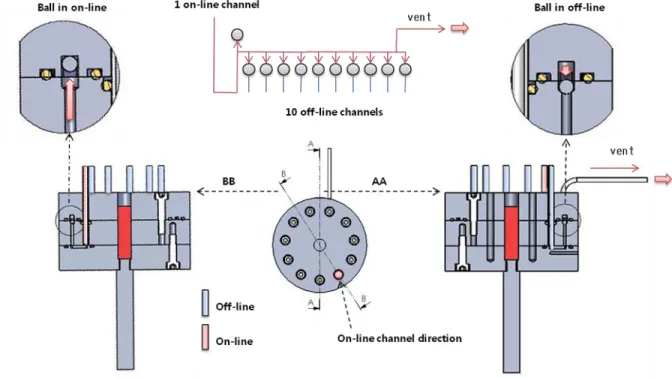
Figure 3.7 Function of module for splitting effluent gas
Our specific technique compared to other high-throughput reactors is the gas splitting module as shown in Figure 3.7. State-of-the-art technology for avoiding gas contamination between on-line and off-line results in the application of fine flow lines (width 2.5 mm) associated with the function of the stainless balls (diameter 3 mm).
Each ball accomplishes opening or shutting each channel by moving its position up and down by overcoming the force of gravity associated with the weight of the ball. The ball in the online channel
31
is raised by the convection force derived by the flow as shown in the top left of Figure 3.7. In contrast, when one channel is open for flow of flue-gas, the other 10 offline channels remain close by pushing the ball based on the gravity force itself and the convection force of feed-gas as shown in the top right of Figure 3.7.
Although contamination can occur through the narrow gap between the ball and channel based on diffusion effects, this influence may be small enough to be ignored. The extent of error in this regard will be shown in the following chapter on the validation of the reactor performance. The entire design of the splitting module can be seen in the appendix.
3.5.2 Comparison of two methods
Figure 3.8 Stage robot reactor vs. 10-fold parallel reactor
The so-called ‗multichannel fixed bed reactor‘ or ‗10-fold parallel reactor‘ was developed for the secondary screening and hit validation. In this chapter the performance of this reactor will be compared with the stage robot reactor (SRR). Both high-throughput methods are used with the Micro-GC as analysis instruments and were automated with temperature control and the pretreatment of catalyst. Despite the fact that the new reactor can carry out tests with a maximum of 10 catalysts compared to 207 in the stage robot reactor, the accuracy is high, which makes it suitable for the optimization of catalysts or scale-enlargements. However, it is unclear which reactor is more suitable for high-throughput experimentation since each reactor has specific advantages and
3.5 Consecutive parallel reactor
32
drawbacks. Ideally, the combination of two high-throughput methods is the best choice for discovering new catalysts in a set of large variables.
To summarize, the stage robot reactor as a primary screening method has to meet the following challenges: tests should be simple, fast and scalable; large variety of catalysts can be tested under steady-state conditions and continuous flow; analysis has to provide a reliable estimate of conversion and selectivity of catalyst; the test results have to be reproducible; all tasks have to be automated under systematic workflow[81].
It is also necessary to confirm promising results in secondary screening methods, which is used to scale up a certain conversion to production scale or screen conditions under conventional test[100]. Therefore, the 10-fold parallel reactor developed by in-house workshop is suitable to take this role as the instrument in secondary screening process.
Evidently, there is a difference between two high-throughput reactors and each reactor has specific criteria to extrapolate catalyst properties in primary screening and secondary screening stages. After all, using both reactors can both enhance the rate of the catalyst testing and harvest on the synergy effect of getting reliable data.
3.6
Automation of the reactor
Prior to developing the software required for performing catalytic tests in the 10-parallel rector, understanding the nature of this task is necessary. Namely, at the beginning those following points are to be taken into consideration:
• What are the component‘s elements of the task?
• What are the main functions?
• How should different instruments be combined?
• Which is the better way for the communication of instruments?
In order to accomplish this work, the idea of processing is applied to events generated over time, a method that simulates the often-occurring queuing in a heterogeneous catalyst environment. This is referred to as the ‗discrete event model‘ and is a system where components interact via timed events. These discrete steps in the procedure may be classified as ‗regulating reactor temperature‘, ‗analyzing product by Micro-GC‘, ‗switching magnetic valve to guide the flow of feed-gas‘ and
33
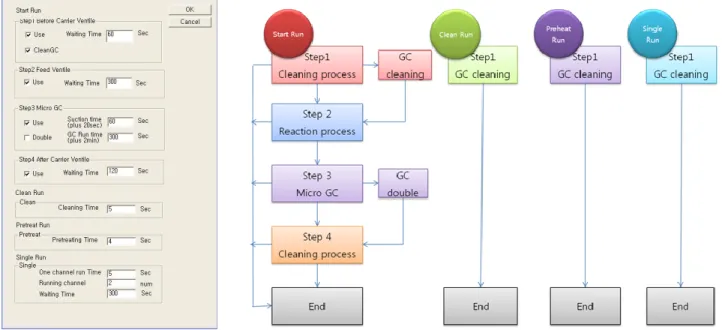
‗changing the online channel in Multi-ports valve‘. For automation of the reactor, an event model is designed in such a manner that the instruments that analyze the outcome of the reactor are alternatively activated during experimentation. This generates a ‗queue events‘ that is sorted by time. For this, a reference program is developed using C++ (see appendix).
3.6.1 Main control box
Developing the electric circuit as the interface of the whole system has the purpose of controlling the five instruments such as Varian CP-4900 GC, 10 multi position valve, heater, 3 magnetic valves. In addition, this control circuitry should be able to command controlling a current stream channel, reactor temperature and on/off condition of valve through Graphical User Interface (GUI) mode.
Figure 3.9 Main control box
As shown in above Figure 3.9, the front side of a control box shows the main power switch, the manual control panel of MVs including the monitor screen, 4 on/off LED lamps for magnetic valves, Micro-GC and heating instrument connectors.
The right diagram in Figure 3.9 describes the inside of the box containing the power supplier, RS232 converter and electric circuit. Four relays are applied to downgrade the voltage sending the signal to 4 magnetic valves for controlling the on/off different feed-gases and 4 LED lamps installed with resistors are implemented to show the state of the magnetic valve. For controlling the temperature at the reaction chamber, ADAM-450 (RS-232 to RS-422/RS-485 Isolated converter) was used. Since the temperature controller (dTron) is carried out under RS485, the change of protocol from RS232 to RS485 through COM1 was necessary. All data communication for automation is performed through three ports such as LPT for ‗Micro-GC‘ and ‗three magnetic valves‘, Com1 for ‗temperature controller‘ and Com2 for ‗multi-ports valve‘.
![Figure 1.3 Detail information of sol-gel process with steps[26]](https://thumb-us.123doks.com/thumbv2/123dok_us/11066823.2993297/16.918.118.834.103.616/figure-information-sol-gel-process-steps.webp)


![Figure 1.11 different visualization methods [10, 11, 73-77]](https://thumb-us.123doks.com/thumbv2/123dok_us/11066823.2993297/24.918.174.770.118.744/figure-different-visualization-methods.webp)
![Figure 2.1 Summary of propene selective oxidation routes [105]](https://thumb-us.123doks.com/thumbv2/123dok_us/11066823.2993297/29.918.172.769.182.583/figure-summary-propene-selective-oxidation-routes.webp)