Effects of observing and producing deictic
gestures on memory and learning in different
age groups
The research presented in this dissertation was carried out at Erasmus University Rotterdam in the context of the research school Interuniversity Center for Educational Sciences.
ISBN: 978-90-6464-952-3
Copyright© Kim Ouwehand, Rotterdam, The Netherlands, 2016
All rights reserved. No part of this thesis may be reproduced or transmitted in any form, by any means, electronic or mechanical, without prior written permission of the author, or where appropriate, of the publisher of the articles.
Cover design by C. Eielts and K. Ouwehand Layout by K. Ouwehand
Effects of Observing and Producing Deictic Gestures on
Memory and Learning in Different Age Groups
Effecten van het observeren en produceren van deiktische gebaren
op het geheugen en het leren in verschillende leeftijdsgroepen
Proefschrift
ter verkrijging van de graad van doctor aan de Erasmus Universiteit Rotterdam
op gezag van de rector magnificus
Prof.dr. H.A.P. Pols
en volgens het besluit van het College voor Promoties. De openbare verdediging zal plaatsvinden op
vrijdag 15 januari 2016 om 11.30 uur
door
Kim Ouwehand
Promotiecommissie
Promotoren:
Prof.dr. F. Paas Prof.dr. T. Van Gog
Overige leden:
Prof.dr. S. M. M. Loyens
Prof.dr. J. J. G. Van Merriënboer Dr. P. P. J. L. Verkoeijen
Contents
Chapter 1: 7
General introduction
Chapter 2: 25
Effects of gestures on older adults’ learning from video-based models
Chapter 3: 51
Designing effective video-based modeling examples using gaze and gesture cues
Chapter 4: 67
Effects of pointing compared with naming and observing during encoding on item and source memory in young and older adults
Chapter 5: 87
Effects of semantic congruency and pointing gestures on item and source memory in children and young adults
Chapter 6: 103
Effects of pointing gestures on visuospatial working memory in young and older adults
Chapter 7: 125
Summary and Discussion
References 143
Appendices 157
Samenvatting (Summary in Dutch) 163
Dankwoord 173
Publications 177
Curriculum Vitae 181
Chapter 1
General introduction
This chapter is partly based on: Ouwehand, K., Van Gog, T., & Paas, F. (2013). The use of gesturing to facilitate older adults' learning from computer-based dynamic visualizations. In R. Z. Zheng, R. D. Hill, & M. K. Gardner (Eds.), Engaging older adults with modern technology: Internet use and information accessneeds (pp. 33-58). Hershey: IGI Global, Information Science Reference.
8 |Chapter 1
Introduction
Given the fast technological developments, learning is nowadays not restricted to formal education anymore. In contrast, lifelong learning is stressed in our professional lives as well as in our personal lives. However, over the life course, cognitive abilities develop and change continuously. For example, working memory functioning improves during childhood and adolescence (Gathercole, Pickering, Ambridge, & Wearing, 2004) and declines when we get older (Celnik et al., 2006; Park et al., 2002). A similar pattern has also been found for source memory (e.g., Cycowicz, Friedman, Snodgrass, & Duff 2001; Old & Naveh-Benjamin, 2008; Ruffman, Rustin, Garnham, & Parkin, 2001) and cognitive control functions that are needed, for example, for selective attention (Gazzaley & Nobre, 2012) and interference control (Bunge, Dudukovic, Thomason, Vaidya, & Gabrieli, 2002; Houx, Jolles, & Vreeling, 1993; McDowd & Filion, 1995; Stolzfus, Hasher, Zacks, Ulivi, & Goldstein, 1993). As a consequence, it is important to consider these age-related differences in cognitive functioning when making instructional design choices for different age groups.
Cognitive load theory presents a perspective on learning and education that advocates taking human cognitive architecture, and particularly working memory limitations, into account in instructional design (Paas, Renkl, & Sweller, 2003; Sweller, 1988; Sweller, Ayres, & Kalyuga, 2011; Sweller, Van Merriënboer, & Paas, 1998). The design guidelines developed by cognitive load theorists are meant to optimize learning by reducing ineffective use of limited working memory resources, so that all available resources can be devoted to processes that are effective for learning (Paas & Van Gog, 2006; Sweller et al., 2011).
Recently, there has been growing interest in the role of the motor system in learning and memory from the perspectives of cognitive load theory (Paas & Sweller, 2012; Van Gog, Paas, Marcus, Ayres, & Sweller, 2009) and grounded cognition theory (for a review see, Barsalou, 2008). Cognitive load theory proponents suggest that the brain efficiently processes human movement (including gestures) because humans have evolved to do so (Paas & Sweller, 2012). Grounded cognition theorists propose that human cognition is grounded in sensory-motor experiences from interacting with the world (Barsalou, 2008). How the motor system facilitates learning according to these theorists will be discussed in more detail later in this chapter.
The studies presented in this dissertation aimed to investigate whether observing or producing deictic gestures (i.e., pointing and tracing gestures to index a referent in space or a movement pathway), would facilitate learning and memory in children, young adults, and older adults. More specifically, regarding memory it was investigated whether the use of deictic gestures would improve performance on tasks targeting cognitive functions that are found to change with age (working memory, cognitive control, and source memory). In addition, it was investigated whether the hypothesized improvements would be more
General introduction | 9
pronounced for children in whom these cognitive functions are still developing, and for older adults, in whom these cognitive functions have been found to suffer from age-related declines. Therefore, the main question addressed in this dissertation is whether the use of deictic gestures would improve learning as well as memory functions (such as source memory) that are known to change with age, and whether the degree of these improvements would be different for children, young adults, and older adults. In the remainder of this introductory chapter, relevant literature regarding age-related changes in cognition, cognitive load theory and instructional design, the role of the motor system in learning, and how gesturing may improve learning and memory in children, young adults, and older adults, is shortly described.
Age and cognition
Some important cognitive functions required for memory and learning change across the life span. The cognitive functions of interest in this dissertation, being working memory, cognitive control, and source memory, seem to follow an inverted U-shape as a function of age. This means that in children these functions are immature and develop until young adulthood, after which they decline from adulthood to old adulthood (Bedard et al., 2002; Borella, Carretti, & De Beni, 2008; Bunge & Wright, 2007; Gathercole et al., 2004; Shing et al., 2010).
Working memory as defined by Baddeley (2000), is a “limited capacity system allowing the temporary storage and manipulation of information necessary for such complex tasks as comprehension, learning and reasoning” (p. 418).Within working memory, a distinction can be made between active and passive working memory processes (Vecchi, Richardson, & Cavallini, 2005). Passive working memory functions involve the passive storage of information and recall of this information in the format in which it was presented, while active working memory functions involve more active processes, needed to be able to mentally transform, integrate, or manipulate information (Vecchi et al., 2005). Active working memory requires a higher degree of cognitive control than passive working memory. Cognitive control can be described as an internal mechanism, orchestrating all kinds of higher order cognitive processes, such as working memory, inhibition, attention, executive functioning, episodic memory, and prospective memory (Braver & Barch, 2002). Children (Crone, Wendelken, Donohue, Van Lijenhorst, & Bunge, 2006) and older adults (Vecchi et al., 2005) have more problems with tasks requiring active working memory than young adults. Evidence suggests that age-related differences in passive working memory functioning are smaller compared with differences in active working memory functioning (Crone et al., 2006; Vecchi et al., 2005). These findings suggest that active working memory relies more heavily on the cognitive control system (that functions suboptimally in children and older adults) than passive working memory.
10 |Chapter 1
Episodic memory is also sensitive to age in that children (Cycowicz et al., 2001; Ruffman et al., 2001) and older adults (Old & Naveh-Benjamin, 2008) have more problems with memory for associations, also called source memory, than with memory for single items, also called item memory. Source memory involves the formation of associations between different elements of an event (Mangels & Heinberg, 2006). Source memory supports learning and binding of several aspects of learning materials: perceptual (i.e., visual, and/or auditory instructions), conceptual (i.e., semantics of the learning materials), spatial (i.e., location of presented information elements) and temporal aspects (i.e., order in which the information is presented). Although research has shown that children perform less well on source and item memory tasks than young adults, this age-related difference is larger for source memory (Cycowicz et al., 2001; Sprondel, Kipp, & Mecklinger, 2011). In addition, developmental studies have shown a larger improvement of source memory performance than item memory performance from childhood (7-8 years) to adolescence (13-14 years) (Sprondel et al., 2011) and from childhood (7-9 years) to young adulthood (18-24 years) (Cycowicz et al., 2001). Chalfonte and Johnson (1996) found that older adults performed as well as young adults on an item memory task in which they had to remember colors and objects in isolation, but worse when they were asked to remember the color of an object, that is, when they had to bind color and object. Another study by Kessels, Hobbel, and Postma (2007) showed that older adults had more problems overall with memory for ‘where’ (spatial associations) and ‘when’ (temporal associations) a certain target was presented, compared with the recollection ‘that’ a specific target was presented. This dichotomy between memory for separate items and associations between items and contextual information (i.e., spatial, temporal) implies that there are different mechanisms underlying memory for associations and item memory.
These findings are explained by evidence showing that the development of source memory is associated with the development of the frontal lobes (e.g., Dobbins, Foley, Schacter, & Wagner, 2002; Trott, Friedman, Ritter, Fabiani, & Snodgrass, 1999), brain areas that do not fully mature until young adulthood (Sowell, Thompson, Holmes, Jernigan, & Toga, 1999) and deteriorates in old adulthood (West, 1996). A study comparing young and older adults’ source memory performance indeed found that source memory performance was related to frontal lobe functioning (Glisky, Rubin, & Davidson, 2001). Consistent with this idea, Naveh-Benjamin (2000) has proposed the associative deficit hypothesis in explaining the deficits in source memory in older adults. According to this hypothesis the relatively impaired memory for associations is a dominant factor in the age-related deficits of source memory functioning. The associative deficit hypothesis has received support from several experiments using different kinds of stimuli, such as word-non-word pairs, word-word pairs, and words presented in different font (Naveh-Benjamin, 2000), name-face pairs (Naveh-Benjamin, Guez, Kilb, & Reedy, 2004), picture pairs (Naveh-Benjamin, Hussain, Guez, & Bar-On, 2003), and face-spatial location pairs (Bastin & Van der Linden, 2005). More generally, the impaired associative
General introduction | 11
memory can be regarded as a difficulty to bind or integrate information elements into complex memories (Chalfonte & Johnson, 1996).
In sum, some important cognitive functions for learning change across the life span, and this should be taken into account in instructional design for educational materials to be effective at different ages. An important line of research that advocates such a cognitive ergonomic approach is pursued in the context of cognitive load theory (Paas et al., 2003; Sweller et al., 1998; Sweller et al., 2011).
Cognitive load theory
The central tenet of cognitive load theory is that learning can be seriously inhibited if the capacity and duration limitations of working memory are not taken into account in the design of instruction (Sweller, 2010). In short, cognitive load theory distinguishes among three kinds of cognitive load in relation to learning: 1) intrinsic load, which is a property of the study material in interaction with the pre-existing knowledge of the learner, 2) extraneous load, which is imposed by the instructional design, that is, the presentation of the learning material, and 3) germane cognitive load, which reflects the amount of cognitive resources that are needed to deal with the intrinsic load (for a review see, Paas, et al., 2003).
According to cognitive load theory, schema construction and automation are the most important processes in learning. Schemata are stored in long-term memory and can be regarded as mental models in which all pieces of information, also called information elements, are categorized and organized (Sweller et al., 1998; Van Merriënboer & Sweller, 2005). The number of relations between information elements in a learning task together with the pre-existing knowledge of the learner determines the degree of element interactivity in that task, which is the main determinant of intrinsic load imposed by the task (Sweller, 2010; Sweller & Chandler, 1994; Tindall-Ford, Chandler, & Sweller, 1997). Learning materials with low element interactivity have a low intrinsic load because individual elements can be learned with minimal reference to other elements and therefore, impose a low demand on working memory. In contrast, in materials with high element interactivity, individual elements heavily interact and therefore cannot be learned in isolation. For successful learning of materials with high element interactivity, multiple elements need to be associated and integrated into the schema (Sweller et al., 1998). Although schemata are stored in long-term memory, the construction of such schemata is an active process that takes place in working memory. Existing schemata can be regarded as sophisticated rules that can be applied and eventually (after extensive practice) used automatically (Sweller et al., 1998). According to cognitive load theory, to design effective instruction for complex cognitive tasks (high in intrinsic load), extraneous load should be reduced and germane load should be optimized, so that the limited working memory capacity can be allocated as much as possible to schema construction and automation processes.
12 |Chapter 1
Instructional guidelines from a cognitive load theory perspective
Novices usually experience high cognitive load when learning complex tasks or materials, because they do not yet possess the appropriate (partial) schemata to guide their task performance or learning process. Several instructional design guidelines have been identified in cognitive load theory research that can support novices’ learning by optimizing their working memory load, such as provideworked examples (for a review see, Renkl, 2014; Van Gog & Rummel, 2010), avoid split attention (for a review see, Sweller et al., 2011), offer information in multiple modalities (for a meta-analysis see Ginns, 2005), and provide cues or signals to guide attention to important information (for a review see, De Koning, Tabbers, Rikers, & Paas, 2009; Van Gog, 2014).
The ‘worked example effect’ is the term used to refer to the superior learning from worked examples that demonstrate how to solve a problem by showing learners a fully worked-out solution procedure compared with conventional problems that learners have to solve without any assistance (Sweller & Cooper, 1985) and this effect has been found in numerous studies (e.g., Atkinson, Derry, Renkl, & Wortham, 2000; Renkl, 2014; Van Gog & Rummel, 2010). Worked example study improves learning compared with problem solving because problem solving requires considering alternative problem states and moves, which is very demanding for working memory but contributes little to learning in novices. Because novices lack prior knowledge of effective strategies, they have to resort to ineffective strategies for selecting moves. This load that these ineffective strategies impose is prevented in worked examples, in which the solutions are already worked-out. This frees up working memory resources that can be dedicated to studying the procedure and constructing a schema of how the problem should be solved, that can guide future attempts to solve similar problems (Sweller et al., 2011).
The ‘split-attention effect’ reflects the finding that for complex tasks with high element interactivity, an instructional format that presents the study material in an integrated manner, improves learning compared with a format in which learners have to integrate information elements themselves (Sweller et al., 2011). For example, learning from worked examples consisting of a diagram and text, is improved when the text is presented in the diagram in such a way that the solution steps are presented in close physical proximity to the part of the diagram they refer to, compared with when the picture is presented above, below or next to the text (e.g., Sweller, Chandler, Tierney, & Cooper, 1990). This can be explained by the fact that an integrative instructional format prevents the extraneous load that is imposed by the need to mentally integrate relations between information elements in segregated instructions. This frees up working memory resources that can be dedicated to dealing with the intrinsic load of the material (Sweller, 2010). Mayer and Moreno (2003) distinguish between temporal and spatial contiguity, which both relate to split attention in multimedia learning. Spatial contiguity refers to presenting mutually referring information sources in
General introduction | 13
spatial proximity (cf. the integrated format just discussed), while temporal contiguity refers to presenting information in close temporal proximity. An instructional format that is very suitable for application of the temporal proximity principle (Mayer, 2001) is a multimodal format in which information is simultaneously presented to different sensory modalities, for example, with speech and gestures.
Research inspired by cognitive load theory has shown that multimodal instruction can improve learning compared with unimodal instruction in which the information is presented to only one modality (i.e., the modality effect; for a meta-analysis see Ginns, 2005; Low & Sweller, 2005). Instructions using combinations of visual and auditory information presentation have been found to increase young (Mousavi, Low, & Sweller, 1995; Tindall-Ford et al., 1997) and older adults’ learning efficiency (i.e., equal/higher performance attained with lower/equal mental effort investment; Paas & Van Merriënboer, 1993; Van Gerven, Paas, Van Merriënboer, & Schmidt, 2002). For instance, example-based learning was improved by using a multimodal compared with a unimodal format of instruction (e.g., Mousavi et al., 1995; Tindall-Ford et al., 1997). Mousavi et al. (1995) showed that problem-solving performance after studying worked examples in geometry, was improved when worked examples were presented as pictures and spoken text (multimodal: visual and auditory) compared with pictures and written text (unimodal: visual only). This finding was replicated by Tindall-Ford et al. (1997), who used worked examples about electricity and also showed that the multimodal instruction was only more beneficial for learning than unimodal instruction for high element interactivity learning materials. For instructions with high element interactivity, a multimodal format of instruction can reduce cognitive load by reducing visual search processes, information integration processes, and by distributing the load over different working memory stores (Van Gerven et al., 2002). Baddeley’s (1992) model of working memory is used to explain this ‘modality effect’. According to this model working memory consists of a control system (the central executive) and two partly independent slave systems one for visual information (the visuospatial sketch pad) and one for auditory information (the phonological loop). Cognitive load theory proposes that multimodal information presentation enhances learning because the limited capacity of working memory can be more efficiently used when the presentation of the learning material is divided over the two partly independent slave systems (Ginns, 2005).
Using gestures in a multimodal instruction
In addition to the visual and auditory modality, research has shown that adding information to the motoric modality in the form of gestures (either observed or self-produced) can facilitate learning and reduce cognitive load (Cook, Mitchell, & Goldin-Meadow, 2008; De Koning & Tabbers, 2013; Goldin-Meadow, Nusbaum, Kelly, & Wagner, 2001; Goldin-Meadow & Wagner, 2005; Hu, Ginns, & Bobis 2015; Valenzeno, Alibali, & Klatzky, 2003). Besides having
14 |Chapter 1
a motoric component, gestures are also visible and therefore bimodal in nature, and because they are easily combined with speech (auditory modality) and/or other visual information, they fit well in multimodal instructions.
However, gesturing might not benefit all learning. In line with what cognitive load theory would predict, tasks should have a level of complexity in which the reduction of extraneous cognitive load would be necessary to improve performance. This claim is supported by a study by McNeill, Alibali, and Evans (2000) in which children got a description of a picture, either verbally or verbally with a corresponding gesture. However, the verbal description was easy or difficult to understand in terms of how many pieces of information it contained and syntactic complexity. It was found that gestures only improved task performance when they accompanied a complex verbal description. That gestures can lighten cognitive load, has been demonstrated in several studies (Goldin-Meadow et al., 2001; Ping & Goldin-Meadow, 2010). Using a dual-task paradigm for cognitive load measurement (for a review, see Brunken, Plass, & Leutner, 2003), Goldin-Meadow et al. (2001) asked participants to solve a math problem, after which they were presented with a list of words they had to remember while verbally explaining how they came to their solution. Half of the participants were permitted to gesture, whereas the other half were not. The main finding was that participants who were allowed to gesture, remembered more words from the word list compared with those who were not. This finding suggests that gestures lower the working memory load imposed by explaining the solution procedure (i.e., the primary task), leaving more resources available that could be successfully dedicated to remembering the word list (i.e., the secondary task).
Another study found that requesting children to produce gestures during learning about mathematical equations enhanced the retention of the learned material relative to when they were not requested to gesture (Cook et al., 2008). Furthermore, a series of experiments of Chu and Kita (2011) showed that gestures enhanced learning of spatial problem-solving tasks and were especially used when task complexity was high. They found that participants produced more spontaneous gestures when they found it difficult to solve the problems. Moreover, participants who were encouraged to gesture solved more problems in a mental rotation task, compared with participants who were prohibited from gesturing. Also, gesture rates in the first group decreased as they solved more problems. According to the researchers, gesture production decreased with increasing experience with the task because the spatial computation processes initially supported by gestures, become internalized; or, in cognitive load theory terms, because the intrinsic load imposed by the task decreases with increasing expertise, the reduction of cognitive load through gestures is no longer needed to support learning. In line with cognitive load theory, these findings suggest that gestures are especially beneficial for learning when cognitive load is high, such as in comprehending a difficult verbal description of pictorial information (McNeill et al., 2000), during dual task performance (Goldin-Meadow et al., 2001), or when solving novel problems (Chu & Kita, 2011).
General introduction | 15
The studies in this dissertation investigate the assumption that deictic (i.e., pointing and tracing) gestures could be a useful instructional tool because they can help to reduce cognitive load via the mechanisms described earlier (i.e., split-attention effect, cueing effect and modality effect). For example, an instructor’s pointing might help avoid negative effects of split attention by guiding the learners’ attention toward relevant corresponding areas in the text and picture (cueing effect). This can reduce the need for visual search, and prevent interference of irrelevant information, which frees up resources that can be dedicated to learning.
Indeed, recent evidence indicates that students who are instructed to produce deictic gestures (point and trace with the index finger) toward important parts of information in worked examples on geometry rules, outperform those who do not gesture; they perform better on subsequent tests, show shorter time on task and experience the test questions as less difficult (Hu et al., 2015). Besides a possible split-attention effect and cueing effect, these results can also be explained by a modality effect in that adding a motoric and tactile modality to the visually presented worked examples led to more efficient learning. To activate the motor modality, overt action is not always necessary (the reason why is explained in the section “The role of the motor system in learning” below); action observation can also be effective. A study by De Koning and Tabbers (2013) showed that gesture observation enhanced learning about the formation of lightning. Participants had to learn from an instructional animation, in which relevant areas were either cued by a moving arrow that participants had to observe or follow with their index finger (self-gesturing), or by a (picture of a) human hand moving in the same manner as the arrow in the other condition. Results showed superior learning from the animation in which participants observed the gesture cue, compared with observing the arrow cue or self-gesturing. In addition, Buisine and Martin (2007) showed that deictic gestures can help learners integrate initially separate information elements. Participants learned from an animation about the functions of a remote control. The animations consisted of a simultaneous presentation of a picture of the remote control and an animated agent explaining the button functions with or without deictic gestures. There were two gesture conditions, one in which the gesture conveyed the same information as the verbal explanation (i.e., saying “You have to use the large button in the center to…” while simultaneously pointing at this button) and one in which the information of the gesture that was complementary to its verbal explanation (i.e., “You have to use this button to…” while simultaneously pointing at the large button in the center). It was found that participants who saw the agent make gestures that conveyed the same information as the speech, recalled more verbal information, and gave higher ratings about the quality of the instruction. Results of this study show that the pointing gestures of the animated agent enriched the verbal information about the function of the button with a ‘bodily’ visuospatial representation of the location of that button in an integrated manner and that this enhanced learning. In addition,
16 |Chapter 1
Mayer and DaPra (2012), also showed that students’ transfer performance is improved when learning about electricity from an animated agent with a high level of embodiment that is, using human-like gesture, facial expression, eye gaze and movement.
To explain the mechanisms underlying multimodality effects, it is important to know how the brain deals with multimodal information, which will be described in the following section.
Multimodal information processing in the brain
Although the studies in this dissertation do not involve neuroscience techniques, knowledge of how multimodal integration takes place at a neural level can help understand the mechanisms underlying the ‘modality effect’ described earlier. Several researchers have identified a specific brain area that is often associated with multimodal integration, namely the superior temporal sulcus (STS; Beauchamp, Argall, Bodurka, Duyn, & Martin, 2004; Beauchamp, Lee, Argall, & Martin, 2004). In the STS, neurons are identified that respond to auditory or visual stimuli in isolation but also a specific set of neurons that are especially sensitive to multimodal stimulation (visual and auditory), as reflected by a response that surpasses the sum of activations elicited by visual or auditory stimuli in isolation (Beauchamp et al., 2004). This may explain behavioral findings showing that visual and verbal information corresponding to the same object can have additive effects on memory (Clark & Paivio, 1991). As mentioned above, research on the modality effect inspired by cognitive load theory, has also shown that learning more complex tasks is improved from using multiple modalities (Tindall-Ford et al., 1997).
Interestingly, there is also evidence for such multimodal enhancement resulting from gesturing. Holle, Obleser, Rueschemeyer, and Gunter, (2010) found a similar enhanced response to multimodal speech-gesture stimuli in the superior temporal areas of the brain, that were identified by Beauchamp et al. (2004) as integration areas for multimodal stimuli. In support of the multimodal enhancement theory, Holle et al. (2010) suggested that gestures boost speech comprehension under adverse listening conditions, with a crucial role for the left superior temporal areas in this process. This was confirmed by behavioral measures showing that participants understood significantly more under the speech-gesture condition compared with the speech only condition. When a gesture accompanied an action phrase that was hard to comprehend, participants understood 57 % of all stimuli, but without a gesture, they only understood 25%. These findings suggest that the human brain deals quite efficiently with information presented in a multimodal format, using the auditory, visual, and motoric (gesture) modality. This could explain findings from educational research, where multimodal instructions with gestures have been found to have positive effects on learning (Buisine & Martin, 2007; De Koning & Tabbers, 2013; Hu et al., 2015; Mayer & Da Pra, 2012) and implicates an important role of the motor system in learning.
General introduction | 17
Two theories that emphasize the role of the motor system in learning, memory and cognition more generally are cognitive load theory (Paas & Sweller, 2012) and the embodied or grounded cognition perspective (Wilson, 2002).
The role of the motor system in learning
From a cognitive load theory–perspective, Paas and Sweller (2012) elaborated on the evolutionary educational psychology view of Geary (2008, 2012) who distinguished between two types of information, namely biologically primary information and biologically secondary information. Biologically primary information is information that the human brain has evolved to learn automatically, for example, the ability to speak a mother tongue and the ability to recognize faces and human movement. Biologically secondary information is information that has to be explicitly taught. This is information that is valued in a certain culture or group, such as writing and mathematics. Because learning biologically primary information is a more automatic process, this is less restrained by the limitations of working memory than learning biologically secondary information (Paas & Sweller, 2012). Therefore, Paas and Sweller propose that the use of biologically primary information might enhance the learning of biologically secondary information. An important example of biologically primary information is the ability to automatically process perceptual information about human movement by using our own body-based knowledge. Cognitive load theory proposes that using such primary information in instruction can enhance learning about biologically secondary information (for example, if a teacher uses gestures when explaining about a geometry problem). A possible mechanism via which this occurs, comes from evidence showing overlapping activation in a specific set of neurons (i.e., mirror neurons) when observing and performing a certain human movement (Rizzolatti & Craighero 2004). It has been proposed that observing human movements automatically activates the mirror neuron system, which plays an important role in observational learning, action recognition, and intention understanding (Iacoboni et al., 2005). It has also been suggested that the mirror neuron system might play an important role in learning from computer-based dynamic visualizations (e.g., animations, videos) that incorporate human movement (Van Gog et al., 2009). Dynamic visualizations about non-human movement procedures or processes (e.g., demonstrating cell division, how lightning develops, how brakes or engines work) are often less effective for learning than a series of static visualizations, because of the high perceptual and cognitive load imposed by transience of information in the dynamic visualizations (Ayres & Paas, 2007). However, this is not the case for dynamic visualizations about procedures involving human movement (Höffler & Leutner, 2007; Van Gog et al., 2009; Wong et al., 2009). Van Gog et al. (2009) propose that the high load imposed by transience is not a problem in dynamic visualizations on human movement procedures due to the automatic processing in the mirror neuron system of (part of) the information.
18 |Chapter 1
Another view that emphasizes the role of the motor system (together with the perceptual system) in cognition is the theory of grounded cognition (for a review, see Barsalou, 2008), which states that human cognition is grounded in sensorimotor interactions rather than abstract symbols (Dijkstra & Zwaan, 2015). Thus our understanding of the world is based on perceptual and motoric interactions with our environment and previous perceptual and bodily experiences shape our cognition (for a review, see Barsalou, 2008). For example, imagining an object (e.g., a kite) seems to elicit similar brain activation patterns as actually seeing that object (Ganis, Thompson, & Kosslyn, 2004), and as mentioned above, imagining an action or seeing someone else perform that action seems to elicit similar brain activation patterns as actually performing that action (Rizzolatti & Craighero, 2004). Simulations are multimodal; apart from the visual modality, they contain relevant motor and mental states that were part of the original experience (Dijkstra & Zwaan, 2015). For example, thinking of or seeing a picture of a flying kite might be associated with the motor response of “looking up”. Because such mental simulations are activated automatically (Barsalou, 2008), perception and memory may be influenced by pre-existing knowledge and earlier experiences without extra effort or even conscious awareness.
Both cognitive load theory and grounded cognition theories suggest that the human brain processes human movement very efficiently. Because humans seem to automatically and quite effortlessly process perceptual information about human movement by using their body-based knowledge of moving their own body (as illustrated by the automatic activation of the mirror neuron system during action observation; Rizzolatti & Craighero 2004), the processing of human movement can be seen as biologically primary information. From this it can be hypothesized that including human movement in instruction facilitates learning biologically secondary knowledge. Note that this is in line with research (described earlier) finding positive effects of deictic gestures in instruction on learning about the formation of lightning (De Koning & Tabbers, 2013), geometry rules (Hu et al., 2015), and electricity (Mayer & DaPra, 2012). Because the processing of biologically primary information requires less working memory capacity, using gestures in instruction can be especially helpful for learning and memory performance in populations with suboptimal working memory such as children (Gathercole et al., 2004) and older adults (Celnik et al., 2006; Park et al., 2002).
How can gestures enhance learning and memory in different age groups?
As mentioned earlier, performance on tasks targeting working memory (Celnik et al., 2006; Gathercole et al., 2004; Park et al., 2002), cognitive control (Bunge et al., 2002; Houx et al., 1993; McDown & Filion, 1995; Stolzfus et al., 1993), and source memory (e.g., Cycowicz et al., 2001; Old & Naveh-Benjamin, 2008; Ruffman et al., 2001) is suboptimal in children and older adults, compared with young adults. In terms of cognitive speed, children (Fry & Hale, 2000) and older adults (Salthouse, 1996, 2000) are slower than young adults on all kinds of
General introduction | 19
cognitive tasks. From the evidence described above, gestures seem to be a promising tool to enhance learning and memory because gestures might compensate for these age-related declines in cognitive functioning.
First, with regard to the age-related working memory impairments, dual task research has shown that gestures reduce cognitive load directly (Goldin-Meadow et al., 2001). Indirect evidence that gestures seem to offload working memory, comes from studies showing that gesturing is especially helpful (McNeill et al., 2000) and more used (Chu & Kita, 2011) in performing complex tasks for which working memory load is expected to be high compared with simple tasks for which working memory load is expected to be low. Second, with regard to the age-related impairments in cognitive control functions, research inspired by cognitive load theory has shown that gestures can serve as attentional cues (De Koning & Tabbers, 2013), thereby avoiding split attention and decreasing the need for cognitive control functions guiding visual search, selection and interference control. Third, with regard to the age-related source memory impairments, evidence showed that deictic gestures can have an integrative function by linking initially separate information elements (Buisine & Martin, 2007).
In sum, gestures have been found to enhance learning and memory in different age groups and different tasks. However, the effectiveness of gesturing for memory and learning has not yet been compared between these three different age groups, and especially research on elderly is scarce. The studies in this dissertation aimed to investigate the effect of deictic gestures in tasks targeting learning and memory functions that are known to change with age. Two main research questions are addressed in this dissertation. First, does observation or production of deictic gestures enhance learning and memory functions that are known to change with age? Second, are the (hypothesized) effects of gesture observation and production stronger in children and older adults (whose memory functions are still developing or already declining, respectively) than in young adults?
Overview of the studies in this dissertation
This dissertation can be roughly categorized in two parts. The first part of this dissertation presents studies investigating the effect of observing deictic gestures made by a human model during instruction of a problem-solving task on children’s, young adults’ and older adults’ learning (Chapter 2) and young adults’ visual attention (Chapter 3). The second part presents studies investigating the effects of self-performed deictic gestures during encoding on spatial source memory in young and older adults (Chapter 4) and in children and young adults (Chapter 5), as well as on spatial working memory in young and older adults (Chapter 6).
20 |Chapter 1
Part 1
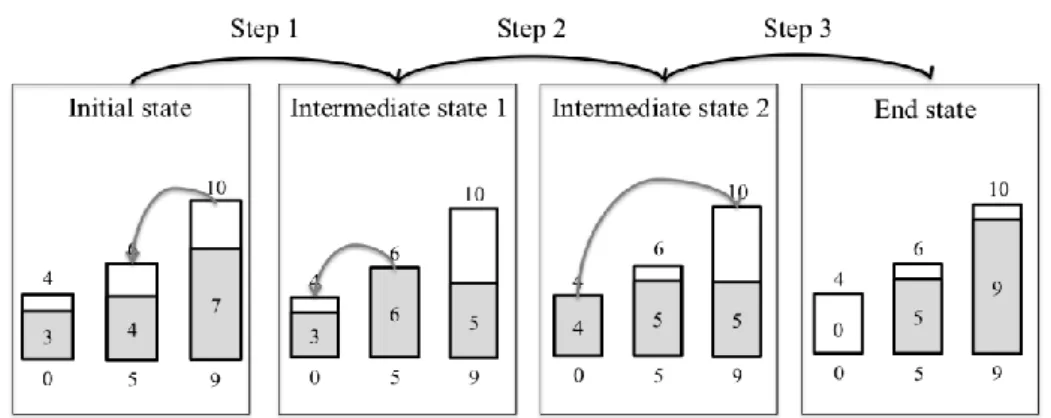
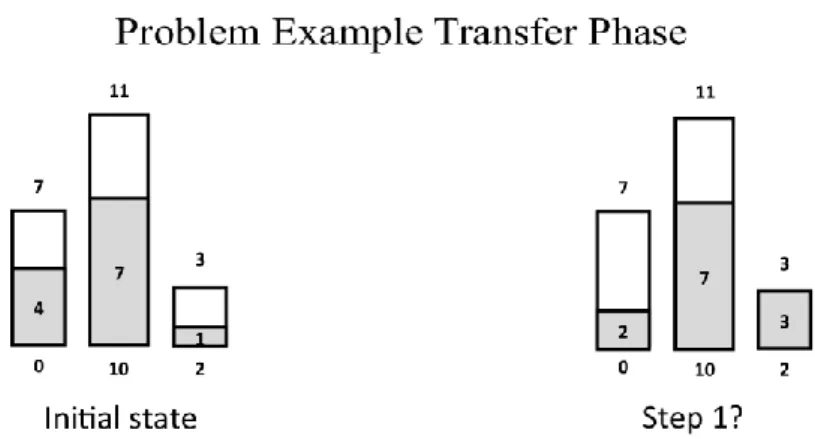
Chapter 2 presents three experiments that investigated children’s, young adults’ and older adults’ learning of a novel problem-solving task from observing a video-based modeling example in which an instructor (the model) demonstrated and explained how to solve the problem. The video example was based on a typical modern lecture setting, in which the model stood next to a whiteboard on which the task was displayed. The task used was a computerized version of Luchins’ (1942) water jug task (Schmid, Wirth, & Polkehn, 2003). The female model explained the task and depending on the instructional condition, she verbally referred to the task while: (i) making head movements toward the screen (no cue condition – although note that the gaze might have provided a less specific kind of cue, cf. Chapter 3), or in addition to those head movements, either (ii) an artificial cue indicated the area of the task that the model referred to on the screen (arrow cue condition), or (iii) she made pointing and tracing gestures to the area(s) she referred to on the screen (gesture cue condition).
First, it was hypothesized that the gesture cue condition would lead to better learning efficiency (reflected in higher performance, lower mental effort and shorter time on task) than the arrow cue condition or no cue condition. Because gestures especially seem to aid learning in complex tasks, that is, if cognitive load is high (Chu & Kita, 2011; Goldin-Meadow et al., 2001; McNeill, et al., 2000), two levels of task complexity (lower and higher) were included. However, because children and older adults have suboptimal functioning of some cognitive properties important for learning novel problem-solving tasks, such as working memory and cognitive control (Crone et al., 2006; Vecchi et al., 2005), tasks at both complexity levels were expected to be more difficult for these groups than for young adults. Thus besides an effect of task complexity within groups, also a between group effect was expected in that young adults would outperform children and older adults. Finally, because task complexity would be relatively higher for children and older adults compared with young adults, possible learning gains were also expected to be higher in these groups than in young adults (i.e., the effects of gestures would be larger).
First, it was hypothesized that the gesture condition would lead to better learning efficiency (reflected in higher performance, lower mental effort and shorter time on task) than the arrow condition or no cue condition. Because gestures especially seem to aid learning in complex tasks, (that is, if cognitive load is high), two levels of task complexity (lower and higher) were included. However, because children and older adults have suboptimal functioning of some cognitive properties important for learning novel problem-solving tasks, such as working memory and cognitive control, tasks at both complexity levels were expected to be more difficult for these groups than for young adults. Thus besides an effect of task complexity within groups, also a between group effect was expected in that young adults would outperform children and older adults. Because task complexity was expected to be relatively higher for children and older adults compared with young adults, possible learning
General introduction | 21
gains were expected to be higher in these groups than in young adults (i.e., the effects of gestures would be more pronounced).
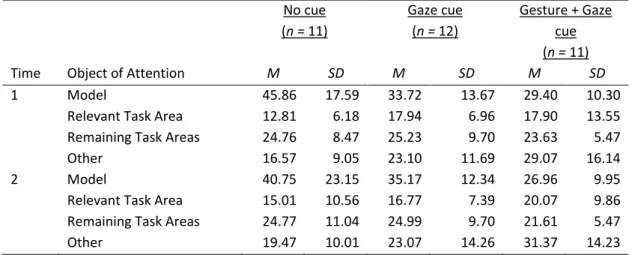
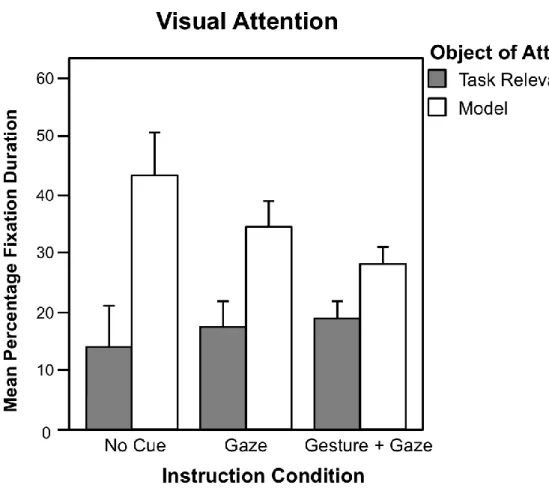
Chapter 3 presents an experiment that investigated whether the gestures made by the instructor in the video-based modeling examples, would help learners to focus their attention timely on the task aspects the model referred to. This study used the same water jug modeling examples as in Chapter 2, however, the conditions were slightly different, with the model (i) looking only straight into the camera (no cue condition), (ii) the model occasionally turning her head to the task display when mentioning an area of the task (gaze cue condition), or (iii) the model turning her head and making pointing and tracing gestures to the area(s) she referred to on the screen (gaze + gesture cue condition). Students’ visual attention while studying the examples was recorded using eye tracking. Because human faces automatically draw people’s attention (Tzourio-Mazoyer et al., 2002), it was hypothesized that the gaze + gesture cue condition compared with the other two conditions would improve learners’ attention distribution between model and task, that is to timely switch their attention from the model to the task areas the model was talking about.
Part 2
Chapter 4 presents two experiments that investigated whether or not pointing toward picture locations could enhance spatial source memory for these locations, in young and older adults. Source memory has been found to decline with aging (Old & Naveh-Benjamin, 2008) and therefore it is important to investigate possible ways to improve this type of memory, especially in older adults. In the first experiment, it was investigated whether pointing at compared with naming the locations of the pictures would lead to higher source memory performance. In the second experiment, it was investigated whether pointing at compared with visual observation only of the locations of the pictures would lead to higher source memory performance. Because pointing gestures are visuospatially oriented (indexing or referring to objects or locations) it was hypothesized that pointing would improve source memory performance in both experiments. Because source memory performance is found to decline with aging (Old & Naveh-Benjamin, 2008), older adults might benefit more from gesturing and therefore, it was hypothesized that positive effects of gestures would be larger in older than in young adults.
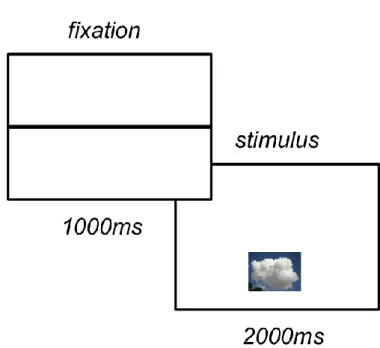
Chapter 5 presents two experiments that investigated whether or not pointing toward picture locations could enhance spatial source memory in children and young adults for these picture locations. In this study another factor was also added: picture-location congruency. A congruent picture location means that the location is consistent with dominant past experiences with the object or scene in the picture, such as a picture of a cloud presented at the upper half of the screen. A cloud presented at the lower half of the screen, would be an example of an incongruent picture location. It was hypothesized that pointing during encoding
22 |Chapter 1
in addition to visual observation could enhance spatial source memory for picture-location pairs in children (Experiment 1) and young adults (Experiment 2) and because source memory is still developing in children (Cycowicz et al., 2001; Ruffman et al., 2001) children might benefit more from gesturing and therefore, it was hypothesized that positive effects of gestures would be larger in children than in young adults.
Chapter 6 presents two experiments that investigated whether or not pointing would enhance visuospatial working memory in young and older adults. For this study the visuospatial working memory paradigm was adopted from Chum, Bekkering, Dodd, and Pratt (2007). They had participants point at and visually observe (multimodal encoding strategy) or only visually observe (unimodal encoding strategy) sequences of simple figures consisting of two arrays (i.e., an array of three circles and an array of three squares) rapidly presented one by one at different locations on screen (encoding phase). Participants were instructed to point at one array and only visually observe the other (e.g., point at the circles and only observe the squares). Each trial consisted of an encoding phase (as just described) and a test phase. In the test phase one of the two arrays presented in the encoding phase was tested and participants were presented with a configuration of either the squares or the circles. They had to judge whether the locations of the figures were consistent or not with those in the encoding phase. Results showed that the multimodal encoding strategy led to improved spatial working memory performance compared with the unimodal encoding strategy. In addition, a recency effect was found in that performance on the stimuli presented more closely to the test phase was better than for those presented at a larger temporal distance. Experiment 1 compared young and older adults’ performance on the paradigm from Chum et al. (2007). It was hypothesized that the beneficial effect of pointing and the recency effect found by Chum et al. would be replicated in young adults and would extend to older adults. Experiment 2 investigated whether or not the recency effect found by Chum et al., would purely stem from a difference in temporal proximity or also from interference from the irrelevant stimuli (i.e., the array that was not tested). It was hypothesized that predictive cues (cueing before the encoding phase whether the circles or the squares were to be tested) would ameliorate the temporal proximity effect.
Finally, in Chapter 7, the results from all studies in this dissertation are summarized and discussed in terms of theoretical and practical implications.
Chapter 2
Effects of gestures on older adults’ learning
from video-based models
This chapter has been published as: Ouwehand, K., Van Gog, T., & Paas, F. (2015). Effects of gestures on older adults’ learning from video-based models. Applied Cognitive Psychology, 29, 115–128. doi:10.1002/acp.3097 Note that some minor changes have been made in this version compared to the published version, to align the layout and wording with the rest of the dissertation.
26 |Chapter 2
Abstract
This study investigated whether the positive effects of gestures on learning by decreasing working memory load, found in children and young adults, also apply to older adults, who might especially benefit from gestures given memory deficits associated with aging. Participants learned a problem-solving skill by observing a video-based modeling example, with the human model using gesture cues, with symbolic (arrow) cues, or without cues. It was expected that gesture compared with symbolic or no cues (i) improves learning and transfer performance, (ii) more in complex than simple problems, and (iii) especially in older adults. Although older adults’ learning outcomes were lower overall than that of children and young adults, the results only revealed a time-on-task advantage of gesture over no cues in the learning phase for the older adults. In conclusion, the present study did not provide strong support for the effectiveness of gestures on learning from video-based modeling examples.
Gestures in instruction for older adults | 27
Introduction
In the past few decades, the Internet has become a popular source for learning from instructional videos. It is not only popular for young people, but older adults are also increasingly using the Internet (Chen & Persson, 2002). A case study among Canadian older adults suggests that although this group uses the Internet mainly for communication purposes, instructional videos on learning how to do something at home and videos made by peers and colleagues (video-modeling examples) are also regularly used (Milliken, O’Donnell, Gibson, & Daniels, 2012). However, not much is known about what determines the effectiveness of such videos in general and even less about how we can optimize such videos for older adults.
One major difference between young and older adults that might affect older adults’ learning from video instructions involves age-related declines in working memory. Specifically, working memory (WM) functions that are prerequisites for learning, such as cognitive control, integrative processes, and speed of information processing, are suboptimal in older adults (Braver & Barch, 2002; Salthouse, 1996) and children (Friedman, Nessler, Cycowicz, & Horton, 2009; Kail, 2000). Fortunately, it seems possible to design instructions that may compensate for these negative age-related effects on learning. Research within the theoretical framework of cognitive load theory (Paas, Renkl, & Sweller, 2003; Sweller, Ayres, & Kalyuga, 2011; Sweller, Van Merriënboer, & Paas, 1998) has shown that instructional designs that take these age- related working memory declines into account may enhance learning performance overall, but especially when working memory functioning is challenged, as in older adults (e.g., Van Gerven, Paas, Van Merriënboer, & Schmidt, 2002), and when task complexity increases (Mayr & Kliegl, 1993; Oberauer & Kliegl, 2001; Paas & Van Merriënboer, 1994).
For example, in line with previous research with young adults on the goal-free effect (e.g., Sweller & Levine, 1982), Paas, Camp, and Rikers (2001) showed that maze learning from goal-free problems (location of goal exit was not visible) was more efficient than learning from specific (location of goal exit was visible) problems, especially for older adults. The goal-free effect shows that for novices who have not yet acquired knowledge of effective problem-solving strategies, a goal-specific problem results in attempts to work backwards from the goal, which is a strategy that imposes high load on working memory but leads to learning only slowly. In the absence of a specific goal, learners explore the entire problem space and, in that process, acquire a schema of the operators involved in the solution procedure (Sweller et al., 2011). Compared with young adults, older adults have even more trouble with goal-specific problems because of age-related declines in attentional processes that are needed to plan subgoals and inhibitory processes to suppress the tendency to only make moves in the direction of the goal location (which was not the solution pathway; Paas et al., 2001).
28 |Chapter 2
Similarly, Van Gerven, Paas, Van Merriënboer, Hendriks, and Schmidt (2003) found that both young and older adults’ learning from multimodal worked-out examples was more efficient than their learning from unimodal worked-out examples and goal-specific problems. Interestingly, these studies showed that the instructional methods that are inspired by cognitive load theory worked even better (Paas et al., 2001) or just as good (Van Gerven et al., 2003) for older adults than for young adults.
The main focus of the present study was on gesturing as an instructional method to foster older adults’ learning of a novel problem-solving task when they observe video-based modeling examples. Learning by observing examples is very effective for acquiring new problem-solving skills (for reviews, see Atkinson, Derry, Renkl, & Wortham, 2000; Sweller et al., 1998; Van Gog & Rummel, 2010). Because of technological advancements, online video-based examples, in which a human model demonstrates and explains how to solve a certain problem, are increasingly being used. However, not much is known about what determines the quality of such examples. Moreover, because the Internet use by older adults is rapidly increasing (Chen & Persson, 2002) and age-related declines in working memory can hamper older adults’ learning, it is especially important to investigate how to optimize video-based modeling examples for older adults.
The effectiveness of video-based modeling for older adults has been demonstrated with training and prevention purposes in health care, in which the learning goal was to imitate the motoric activities of the video model. For example, video-modeling examples on simple activities, such as how to manage activities of daily living (ADL; e.g., hand washing; Mihailidis, Boger, Craig, & Hoey, 2008), in patients with dementia, or how to do exercises that help to decrease fall risk (Clark & Kraemer, 2009; Haines et al., 2009), have been shown successful.
However, not much is known about video-based modeling examples teaching cognitively challenging tasks to older adults. Because life expectancy has increased massively (Oeppen & Vaupel, 2002) and the ongoing rapid changes in technological developments force people to continue learning at any age, we consider it important to investigate ways to facilitate learning, taking into account the age-related declines in cognitive control and processing speed.
The attentional cueing property of gestures
A significant amount of empirical evidence (e.g., Goldin-Meadow, Nusbaum, Kelly, & Wagner, 2001; Mayer & DaPra, 2012; Ping & Goldin-Meadow, 2008; Valenzeno, Alibali, & Klatzky, 2003) and theoretical evidence (e.g., Goldin-Meadow & Wagner, 2005; Paas & Sweller, 2012) suggests that adding a motoric component, in the form of gestures, to video-based modeling examples can improve learning and memory.
The present study takes a cognitive load theory perspective and proposes two main mechanisms that might underlie the positive effect of gestures on learning. First, gestures,
Gestures in instruction for older adults | 29
and especially pointing gestures, might reduce cognitive load and foster integration, because a function of pointing gestures is attentional cueing. Second, because gestures provide motoric information, they also add another modality, which might have positive effects on learning (i.e., a modality effect).
With regard to the first mechanism, attentional cueing might be especially important for older adults, who have been found to have trouble integrating several features of an event into one memory (for a review, see Old & Naveh- Benjamin, 2008) and have difficulties with suppressing (responses to) irrelevant information, as evidenced by aging studies on the Stroop interference effect (Mathis, Schunk, Erb, Namer, & Luthringer, 2009; West & Alain, 2000). This competition for resources between relevant and irrelevant information can cause an increase in unnecessary cognitive load during learning, and we suggest that gestures can ameliorate this. For instance, in a video-based modeling example resembling a lecture situation (i.e., model standing next to a screen or blackboard displaying the task), pointing gestures made by the model can improve learning, by timely guiding participants’ attention toward relevant aspects of the task. As a result, construction of a higher quality cognitive schema might be enhanced, and this cueing property of pointing gestures might be especially beneficial in populations with suboptimal cognitive control processes such as children (e.g., Friedman et al., 2009) and older adults (e.g., Braver & Barch, 2002; West & Alain, 2000).
Cognitive load theory research on learning from multimedia materials has provided evidence that cueing can have beneficial effects on learning (for reviews, see De Koning, Tabbers, Rikers, & Paas, 2009; Van Gog, 2014). However, cueing is not unique to gesturing, and indeed, most studies inspired by cognitive load theory have used symbolic cues or color cues (De Koning et al., 2009; Van Gog, 2014). Interestingly, literature on social cognition proposed that pointing is a primary (infants communicate by pointing even before they can speak) typical and uniquely human manner to elicit joint attention, cooperation, and shared intentions (Tomasello, Carpenter, & Liszkowski, 2007). In this respect, besides providing visual cues (as symbolic cues also do), gestures might also socially motivate learners to direct their attention to where or what the video model is referring to. For instance, Mayer and DaPra (2012) found an embodiment effect, that is, a positive effect on learning if the video-instructor (an animated agent) showed more human-like behavior (e.g., using a human, voice, gestures, and eye gaze). This study suggests that pointing gestures might improve learning because of an animacy effect, which might socially motivate the learner to attend to the information being pointed out, which in turn leads to deeper processing of the learning material. In the search for an answer to the question of whether pointing gestures have an additional effect above and beyond cueing, we consider it necessary to use symbolic cueing as a control condition.
30 |Chapter 2
Gestures and the modality effect
According to the second main mechanism by which gestures can positively affect learning, gestures might have an additional effect over symbolic cues, because of a modality effect. Prior cognitive load theory research has revealed a modality effect in the sense that presenting instruction to both the auditory and visual modality leads to superior learning compared with presenting instruction to only one modality (e.g., only visual; for a review, see Ginns, 2005). Cognitive load theory explains this modality effect in terms of a reduction of visual search and information integration processes, and better distribution of cognitive load over different working memory stores (i.e., visual and auditory) in multimodal instruction than in unimodal instruction (Van Gerven et al., 2003). According to this explanation, one might predict that presenting information in multiple modalities can enhance information processing especially when working memory is challenged, for example, in populations with suboptimal working memory functioning, such as children and older adults, or when task complexity is high.
Indeed, in older adults, learning from multimodal (visual and auditory) compared with unimodal worked examples has been found to increase learning efficiency (e.g., Van Gerven et al., 2003). In addition, other research has shown that presenting information in multiple modalities speeds up response times in a simple target detection task in young adults but significantly more in older adults (Laurienti, Burdette, Maldjian, & Wallace, 2006). This shows that multimodal information presentation can speed up information processing in older adults, a population that generally suffers from decreased cognitive speed (Salthouse, 1996). On the neural level, the modality effect can be explained by the finding that there are specific neurons in the superior temporal sulcus and inferior frontal gyrus that process multisensory information (i.e., visual and auditory). Importantly, these neurons produce more activation in reaction to bimodal information than the sum of activation of neurons responding to visual and auditory information in isolation. This effect is called multisensory enhancement, and shows that the human brain efficiently deals with multisensory information and integrates this at the early stage of encoding (Beauchamp, Lee, Argall, & Martin, 2004).
Interestingly, Holle, Obleser, Rueschemeyer, and Gunter (2010) recently showed that multisensory enhancement also occurs for multisensory information in the form of speech and gestures. Based on these findings regarding the modality effect on learning in general, the effect of multisensory information presentation on performance and response times in older adults, and multisensory enhancement in the brain for gesture–speech information, we propose that gestures used by a video-based model can reduce working memory load during learning and therefore is an effective instructional tool for older adults. By adding motoric information, gestures add another modality to an already multimodal video model. A recent study provided some evidence that this might foster learning. De Koning and Tabbers (2013) investigated the effect of gesture cues versus symbolic cues on learning about the formation
Gestures in instruction for older adults | 31
of lightning from an instructional animation. In this animation, relevant areas were cued by a moving arrow, which participants had to observe or follow with their index finger (self-gesturing), or a picture of a hand moving in the same manner as the arrow in the other condition. Results showed superior learning from the animation in which participants observed the gesture cue, compared with observing the arrow cue or self-gesturing.
This finding can be explained from an embodied cognition perspective that states that our cognition is rooted in bodily interactions with the physical environment (Wilson, 2002) or in respect to the present study that learning is rooted in bodily experiences. According to this perspective, gestures are more than just visual cues, because gestures are also processed by the motor system. Thus, gesturing might improve learning by providing a richer cognitive schema, because gestures add an extra (motoric) modality to the learner’s representation of the task. Moreover, evidence showed that this extra motor information is processed rather efficiently. For example, EEG research in young adults has shown that speech and its accompanying gestures are perceived and processed as an integrated whole (e.g., Kelly, Creigh, & Bartolotti, 2010). These findings suggest that observing an instructor presenting information in speech and gesture leads to the construction of higher quality cognitive schemas than observing an instructor who expresses the same information in speech only.
However, the positive effects of gestures on learning are largely based on studies with children and young adults. The present study proposes that gestures might not only be a useful instructional tool for tasks that impose a high demand on working memory but also for older adults who have a decrease in working memory functioning, because gestures are processed automatically (Kelly et al., 2010) and very efficiently (Holle et al., 2010). Moreover, most prior studies on effects of gesturing did not control for the cueing effect of gestures and therefore do not allow for conclusions on whether beneficial effects of gestures arise merely from cueing or from broader representational effects. The study by De Koning and Tabbers (2013) did compare a gesture to a symbolic cue. However, their gesture cue was a picture of a hand moving on the screen, which is very different from gestures made by an instructor.
The present study
Therefore, in the present study, the gesture condition showed a video of a human model explaining the problem-solving task while making gestures, whereas the cueing condition sees an arrow (i.e., symbolic cue) pointing toward the same locations, and the no cue control condition does not receive any cues. We hypothesize that cueing is better than no cueing for learning and that gestures (being bodily actions) made by a human agent can promote learning more than symbolic cues for two reasons. First, gestures would result in the construction of a richer problem schema by the learner, because gesture cues add a visual code as well as a motoric code to the learners’ representation of the task. Because the motoric information is automatically processed (Rizzolatti & Craighero, 2004; Rizzolatti, Fogassi, & Gallese, 2006),