Lie Detection: Cognitive Processes
Christopher Norman Howell Street
Division of Psychology and Language Sciences University College London, UK
A dissertation submitted in part fulfilment of the requirement for the degree of Doctor of Philosophy in Psychology
Prepared under the supervision of Dr. Daniel C. Richardson
I, Christopher Norman Howell Street, confirm that the work presented in this thesis is my own. Where information has been derived from other sources, I confirm that this has been indicated in the thesis.
Abstract
How do we make decisions when we are uncertain? In more real-world settings there is often a vast array of information available to guide the decision, from an understanding of the social situation, to prior beliefs and experience, to information available in the current environment. Yet much of the research into uncertain
decision-making has typically studied the process by isolating it from this rich source of information that decision-makers usually have available to them. This thesis takes a different approach.
To explore how decisions are made under uncertainty in more real-world
settings, this thesis considers how raters decide if someone is lying or telling the truth. Because people are skilled liars, there is little information available to make a
definitive decision. How do raters negotiate the ambiguous environment to reach a decision?
Raters show a truth bias, which is to say they judge statements as truthful more often than they are so. Recent research has begun to consider dual process theories, suggesting there are two routes for processing information. They claim the truth bias results from an error-prone processing route, but that a more effortful and analytical processing route may overcome it.
I will generate a set of testable hypotheses that arise from the dual process position and show that the theory does not stand up to the test. The truth bias can be better explained as resulting from a single process that attempts to make the most
informed guess despite being uncertain. To make the informed guess, raters come to rely on context-relevant information when the behaviour of the speaker is not sufficiently diagnostic.
An adaptive decision maker position is advocated. I propose the truth bias is an emergent property of making the best guess. That is, in a different context where speakers may be expected to lie, a bias towards disbelieving should be seen. I argue context-dependency is key to understanding decision-making under uncertainty.
Table of Contents List of Figures ... 9 List of Tables ... 12 Dedication ... 13 Acknowledgements ... 14 Collaborations ... 17 Summary of Experiments ... 19 Chapter 1: Overview ... 24
Conceptualising the Truth Bias ... 27
Process Accounts of the Truth Bias ... 30
Testing the Truth Bias: Process and Purpose ... 32
Chapter 2: Theoretical Accounts of the Truth Bias ... 39
Definitions: Heuristics, Heuristic-Analytical Processing and The Adaptive Decision Maker ... 41
A Dual Process: The Heuristic-Analytic Model (HAM) in Detail ... 48
Challenges for a Heuristic Processing Account of the Truth Bias ... 53
Conclusion: Chapter 2 ... 69
Chapter 3: Context-Dependent Information Use ... 70
The Availability Heuristic: Base Rate Knowledge ... 71
Socialisation Practices ... 73
Chapter 4: Testing the Dual Process Theory: ... 83
The Multi-Response Interview ... 83
Experiment 1: The Behavioural Account ... 86
Method ... 88
Results ... 92
Discussion ... 98
Experiment 2: Channel Effects ... 99
Method ... 102 Results ... 103 Discussion ... 108 Experiment 3: Thin-Slicing ... 111 Method ... 111 Results ... 112 Discussion ... 120
Experiment 4: Consistency Heuristic ... 121
Method ... 122
Results and Discussion ... 125
General Discussion: Chapter 4 ... 128
Heuristic-Analytical Accounts of the Truth Bias ... 129
The Role of Behaviour in the Truth Bias ... 133
The Step-by-Step Account: Consistency ... 135
Conclusions: Chapter 4 ... 137
Chapter 5: The Adaptive Decision Maker ... 138
Results ... 147
Discussion ... 154
Experiment 6: Most People Tell the Truth – The Availability Heuristic ... 156
Method ... 158
Results ... 159
Discussion ... 170
Experiment 7: A Cartesian Mind – Post Comprehension ... 175
Method ... 176
Results ... 177
Discussion ... 181
Experiment 8: The Cartesian Hopi Word Experiment ... 183
Method ... 187
Results and Discussion ... 190
General Discussion: Chapter 5 ... 203
Chapter 6: Social Orientation Theory ... 205
Experiment 9: Socialisation Practices ... 207
Method ... 208
Results ... 213
Discussion ... 216
Experiment 10: Social Relatedness as a Heuristic ... 217
Methods ... 219
Results ... 221
Discussion ... 223
General Discussion: Chapter 6 ... 226
Chapter 7: General Discussion: Dual Process Theories ... 232
Summary of Research ... 235
Belief Formation as a Dual Process ... 244
The Truth Bias: A Cognitive Phenomenon ... 244
Dual or Single Process? ... 246
Reinterpreting Evidence Supporting a Dual Process Position: The Spinozan Mind ... 254
Chapter 8: General Discussion: Adaptive Decision Making ... 258
Adaptive Decision Making: Interplay Between World and Mind ... 258
Compensatory Decision-Making ... 262
Future Directions ... 266
Conflict Between Prior Knowledge and Online Processing ... 266
Internal and External Uncertainty ... 268
Conclusions ... 272
List of Figures
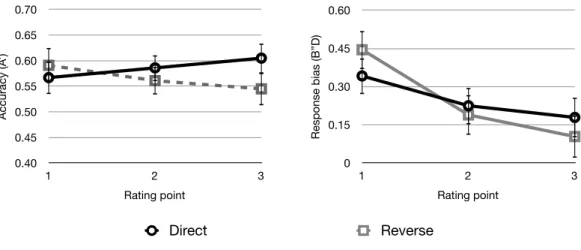
Figure 1a. Accuracy as measured by A’ across the three responses of the full statement split by viewing direction: either in the original recording order (direct) or in reversed order (reverse).
Figure 1b. Response bias as measured by B”D across the three responses in the direct and reverse conditions.
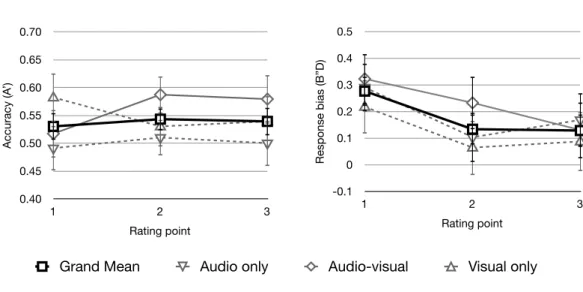
Figure 2a. Accuracy as measured by A’ across the three responses of the full statement, whether given access to video only (dashed grey line, triangle), audio only (dashed grey line, inverted triangle) or the full audio-visual behaviours (solid grey line, diamond). Estimated marginal means for the overall pattern of responding is shown in black.
Figure 2b. Response bias as measured by B”D across the three responses in the audio only, visual only or audio-visual conditions, with the overall pattern shown in black
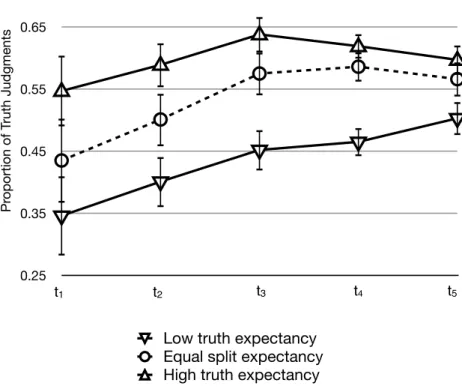
Figure 3. The shift in the PTJ over successive ratings split by whether raters were shown 8 s thin slices of each response or the full length response. Figure 4. Proportion correct across successive ratings for those who judged 8 s
thin slices and for those viewing full-length clips.
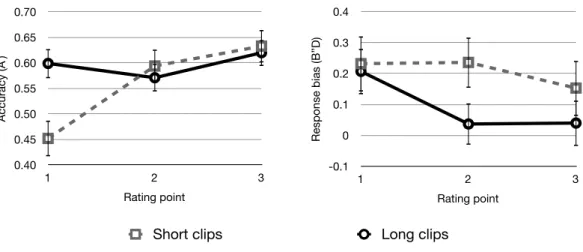
Figure 5a. Accuracy as measured by A’ across the three long or short responses of the statement.
Figure 5b. Response bias as measured by B”D across the three long or short responses of the statement.
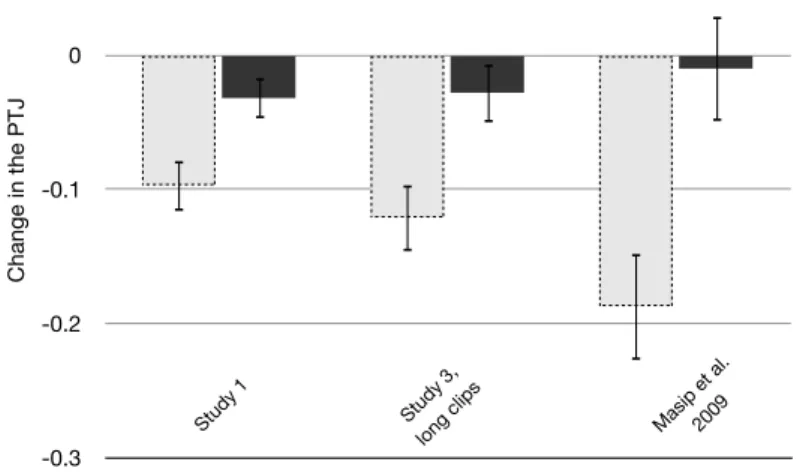
Figure 6. The change in the PTJ (overall) for high versus low consistency items, separated by study.
Figure 7. The proportion of truth judgments made in the LT and LTU conditions across the duration of the trial, split into five equal proportional time bins. Whiskers denote standard errors throughout the chapter. Note that the unsure responses from the LTU condition have been removed, and that chance PTJ is at 0.5 for both the LT and LTU conditions.
Figure 8a. The proportion of truth (square), lie (diamond) and unsure (inverted triangle) responses across the duration of truthful statements. Unsure responses are relatively high during the early stages of processing and decline over time in favour of lie and truth responses
Figure 8b. The proportion of truth, lie and unsure responses across the course of deceptive statements (right).
Figure 9. The proportion of truth judgments over the course of the average statement, split by beliefs about the base rate.
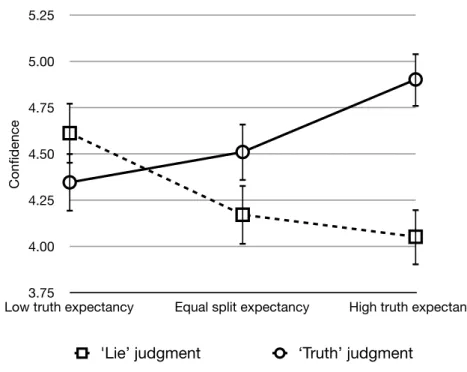
Figure 10. Confidence when making judgments of ‘lie’ or ‘truth’ as a function of base rate beliefs.
Figure 11a. Accuracy (A’) in the forced choice LT and the unforced choice LTU conditions. 0.5 indicates chance accuracy.
Figure 11b. Response bias (B”D) in the LT and LTU conditions. Zero indicates no bias; positive values indicate a truth bias.
Figure 12. The proportion of lie, truth, and unsure (where applicable) responses in the LT and LTU conditions. As can be seen, the increased truth bias in the LTU unforced choice condition results from a reduction in the use of the ‘lie’ response.
Figure 13. The effect of interruption on the proportion of truth judgments as a function of the response options available: either a forced choice (FT) or unforced choice (FTU).
Figure 14a. The proportion of not-seen responses in the FT condition of the current study. Raters were more likely to forget interrupted false propositions than any other proposition type, suggesting the Spinozan effect reflects forgetting of false statements when interrupted.
Figure 14b. The approximate proportion of responses unaccounted for in Figure 2 of Gilbert et al. (1990, Study 1), assumed to reflect the not-seen responses of participants in that study. The pattern of responses unaccounted for in that study resemble those presented in the current research. However, without examination of the data it is unclear whether the supposition holds.
Figure 15. Not-seen responses when judging true and false propositions that were interrupted during learning.
Figure 16. A scene taken from a stimulus item presented to participants in Studies 9 and 10. There was no audio accompanying these videos.
Figure 17. Scene taken from the CCTV footage shown to participants who made up the stimulus set.
Figure 18a. Signal detection measure of accuracy when the speakers were portrayed as either computer generated or human speakers.
Figure 18b. Signal detection measure of response bias when the speakers were portrayed as either computer generated or human speakers.
Figure 19a. Signal detection measure of accuracy when the speakers were portrayed as either ingroup or outgroup members.
Figure 19b. Signal detection measure of response bias when the speakers were portrayed as either ingroup or outgroup members.
List of Tables
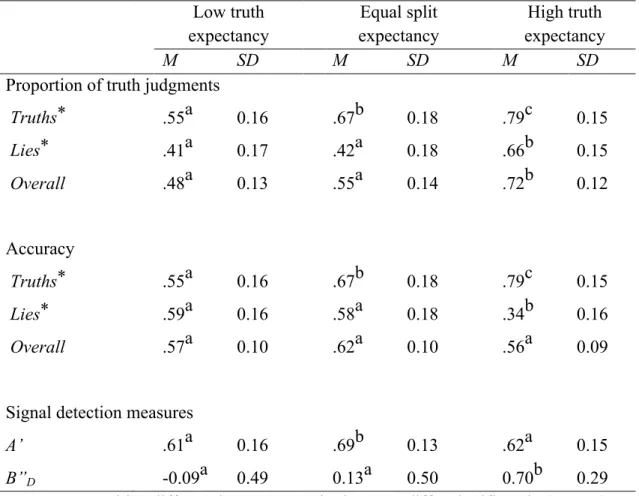
Table 1. Mean proportion of truth judgments and accuracy rates in each expectancy condition.
Table 2. Three orders of stimulus item presentation during the learning phase of the Uncertain Hopi Experiment.
Dedication
- Phyllis Street -
You made the most of your time and enjoyed the social life. It reminds me that there is more to life than a career path. Your constant encouragement gave new meaning to this monograph, a densely packed volume likely to be read by few, and enjoyed by fewer. You have contributed to this work more than you would ever know. I wish I could give you a copy.
Acknowledgements
This volume was the work of many wonderful people, from those who kept me sane during my graduate years to those whose discussions and insightful comments shaped the direction of my research and this thesis.
First, to my parents Julie L’homme and Wayne Street. Their faith and encouragement has brought me this far, and I love you both for it. This
acknowledgement cannot begin to express my gratitude. I know you will still be there for me in the years to come. I hope I have lived up to your expectations.
I have been lucky enough to have some wonderful friendships, each of which have brought me joy and kept me sane. To Jayne Roberts and Ruth Challoner, you have selflessly given and never asked anything in return. You have been both friend and parent to me over many years.
I have far too many people to thank, and I know I will miss many important friends from this list, to whom I apologise. In no particular order, David and Sarah Roberts, Gregor Murray, Myshi MacKenzie, Emily Webber, Gwyneira Edwards and Rhys Dobbs, thank you for your continued friendship and putting up with my odd ways. Additional thanks to my many friends here at UCL who number far too many to list individually. Special thanks to Laura Speed for proof reading two chapters of this thesis; I imagine it was tedious work. I would also like to thank Matthias Gobel for his interesting discussions on the more social aspects of this thesis.
My collaborators, past and present, have taught me much about experimental design and creative thinking. Thank you to Jaume Masip, Miguel Vadillo, Benedetto De Martino, Catrine Jacobsen, Sarah Jordan, Sam Baron, Lee Tbaily, Costi Rezlescu and many others. Thanks also to Maarten Speekenbrink, Richard Morey and Dave Vinson for your help with the statistical questions I have had. I am especially grateful for the friendship of Nick Duran and Rick Dale: despite my awkward ways I hope we will continue to collaborate for years to come. As a late addition to this section, my examining committee Arndt Bröder and Nigel Harvey have given me much food for thought and made important contributions to this thesis.
To those who have shielded me from the barrage of administration, I am sure I have more to thank you for than I realise. Thanks to the general office staff Pia Horbacki, Hannah Spikesley and Joanna Strange and to Steve Williams for his ever-friendly support. Special thanks to John Draper and Steve Davis who, amongst other things, were the ringmasters of the UCL Psychology Christmas Parties. To the IT team in the basement, and especially to Dave Hetherington Mac-extraordinaire, who nursed my laptop back to health over the years from the torturous beatings I have often given it. I am ever grateful.
My undergraduate supervisor Ben W Tatler supported me during my formative years, both intellectually and emotionally. Your lectures sparked excitement in me. You encouraged me to work in your laboratory when I was able, and I enjoyed it thoroughly, with the exception of extracting eye movement data from your mobile eye trackers. That was thoroughly tedious. You were a wonderful mentor and showed me how psychological science should be carried out. I am sure we will continue to cross paths and hopefully begin some new collaborations.
Finally, to Daniel C Richardson. You were daring enough to take me on as a research assistant in your lab, and had faith in me to take up a PhD position with you on a research topic that neither of us had explored before. It has been exciting and I have learnt so much from you. You approach research with a creativity that I aspire to one day reach. Most importantly, you gave me intellectual freedom and allowed me to take my own route down the rabbit-hole that is cross-disciplinary research. For that I thank you.
Collaborations
Chapter 4: Jaume Masip, University of Salamanca. Chapter 6: Costi Rezlescu, Harvard University.
To my readers, I hope this thesis will be of perfect thickness as to prop up your table leg.
Summary of Experiments
A brief summary the aims and outcomes of each experiment conducted is presented here for reference.
Chapter 4: Testing the Dual Process Theory: The Multi-Response Interview
Experiment 1: The Behavioural Account. The truth bias was shown to have an independent cognitive component. However, processing duration available to the rater could not predict the decline in the proportion of truth judgments (PTJ), failing to support two classes of heuristic-analytic models (HAMs).
Experiment 2: Channel Effects. A third class of HAMs was examined, which proposes the cues available in the environment determine whether a heuristic or analytical process is used. No support for this account was found, showing a decrease in the PTJ across multiple judgments regardless of channel availability. In addition, the amount of processing time available was not able to predict the decrease in bias.
Experiment 3: Thin-Slicing. The amount of processing time available was
that processing time determines the extent of the decreased bias, failing to support HAMs.
Experiment 4: The Consistency Heuristic. An alternative account was sought: raters may be making use of consistency information. This finding was
supported. Interestingly, this cue proved to be diagnostic, suggesting raters are attending to useful information. However, that raters did not generally become more accurate over time suggests there may have been use of other information in the belief forming process.
Chapter 5: The Adaptive Decision Maker
Experiment 5: A Cartesian Mind – Online Comprehension. The Spinozan mind account proposes that, in order to understand, it is necessary to first
automatically accept all information to be true. I suggest that this initial bias towards believing actually reflects the use of prior knowledge when uncertain but forced into judgment. This experiment replicates the Spinozan effect of an early truth bias when forced to judge, but there is no evidence of an early bias when able to withhold judgment and indicate uncertainty.
Experiment 6: Most People Tell the Truth – The Availability Heuristic. When forced into judgment, what information is being used to guide the judgment? It is suggested that situation-relevant context knowledge can be used. In the case of lie detection, base rate information from prior experience can be brought to
forced into judgment, early on in the decision process the base rate information is taken into account.
Experiment 7: A Cartesian Mind – Post Comprehension. Informed Cartesian raters are thought to make use of context information under uncertainty. This experiment aimed to test this account at the point of the final judgment.
Surprisingly, and in direct contrast to Experiment 5, the truth bias was greatest when participants were not forced to judge. Exploration of the data suggested that the unforced condition did not show an increase in truth responding, but rather a decrease in lie responding in favour of indicating uncertainty. This experiment led to a distinction being made between internal uncertainty, resulting from an inability to form a decision in spite of the evidence, and external uncertainty, resulting from a lack of information available in the
environment. In the absence of information (external uncertainty), it is proposed raters make use of prior knowledge and contextually relevant information. When information is available but uncertainty remains, context-specific knowledge can again be employed: truths are typically more difficult to spot than lies, and so an inability to decide may be taken as an indication of deception.
Experiment 8: The Cartesian Hopi Word Experiment. In an attempt to replicate the findings of Experiment 5 and to conduct a confirmatory study to replicate the findings of Experiment 7, the Gilbert, Krull and Malone (1990, Study 1) experimental setup was used. Whereas the Spinozan mind predicts an early bias towards believing, the adaptive decision-maker proposes uncertainty initially
and a truth bias later resulting from a shift away from lie responding towards unsure responding. That is, a crossover interaction was predicted. Whilst the data partially support the claim, it was found that the experimental design is not sufficiently placed to be able to test the claims of either the Spinozan mind or the adaptive decision-maker. Forgetting effects could better explain the results.
Chapter 6: Social Orientation Theory
Experiment 9: Socialisation Practices. The reduction in lie responses at the point of final judgment may not reflect true uncertainty but rather a strategy that aims to avoid the socially aggressive act of labelling another without voluntarily making an incorrect judgment – it may act as an ‘out’. The ostrich effect and the
accusatory reluctance account both claim at their core that the social practices we engage with make us reluctant to label another a liar. By removing the implied social presence, a reduction in the truth bias was predicted under this account. It was found that whether the speaker was considered a social or non-social agent did not influence the degree of bias.
Experiment 10: Social Relatedness as a Heuristic. It was noted that the findings of Experiment 9 appear to contradict prior research showing that we are more inclined to believe those to who we feel closer. This experiment sought to determine whether social relatedness information, in isolation of other
information that tends to accompany it (e.g. familiarity), can itself be used as a guide to aid the decision process. Although the truth bias cannot be accounted
for as an accusatory reluctance (Experiment 9), social information can nonetheless be incorporated into the judgment.
Chapter 1: Overview
You are looking to buy a lottery ticket. In the lottery, five numbers are drawn at random, each with equal likelihood of being drawn. A friend gives you the option of buying one of two tickets: either a ticket with (a) 1, 2, 3, 4 and 5 selected, or with (b) 4, 19, 6, 32, and 12 selected. Each ticket is equally likely to win, and so it may be expected that you would equally choose one ticket as the other. In studies similar to this setup, that is not what happens. Instead, across a variety of tasks people show a systematic bias towards choosing one option over the other (Chaiken & Trope, 1999; Gilovich, Griffin & Kahneman, 2002; Plott & Smith, 2008).
This thesis explores the underlying processes involved in biased responding. To date, much of the decision-making research has confined itself to low-level laboratory conditions in an attempt to isolate the processes from social, contextual and even memory influences. But consider the lottery example. There is typically a bias towards choosing numbers that show less systematicity and ordering, a variation on the gambler’s fallacy (Beach & Swensson, 1967; Jarvick, 1951; Witte, 1964).
Although the lottery has no memory, you do. One account suggests the bias or fallacy may be a reflection of habits learned from life outside the laboratory that raters brought with them to the task (Ayton, Hunt & Wright, 1989; Estes, 1964; Lopes & Oden, 1987).
world is a rich source of information, and from it we may learn not only habits, but also the dynamics of and the rule that govern social interactions, the outcomes from past decisions, and expectations for future, similar decisions. This thesis will consider a decision-making task that makes these sources of information relevant and
potentially useful for incorporating into the judgment. I will end by concluding that raters attempt to make the best guess possible given the lack of reliable information by relying on context-relevant information, and that these best guesses are the cause of biased responding in high-level socially oriented tasks. My research highlights the need to consider decision-making in context.
To explore uncertain decision making in situ, I will make use of a real-world decision that people make: deciding whether others are lying or telling the truth. Lie detection is an inherently difficult decision when people are such good liars. The cues available are minimal at best (see Levine, 2010 for the suggestion that most liars are undetectable). For that reason, lie detection offers a perfect test bed for exploring natural decision-making under uncertainty. Despite the uncertainty in the
environment, raters do not responding randomly: they show a truth bias. The truth bias has been reported across various studies and meta-analyses (e.g., Bond & DePaulo, 2006; Fiedler & Walka, 1993; Levine, Park & McCornack, 1999; Masip, Garrido & Herrero, 2006, 2009; Stiff, Kim & Ramesh, 1992; Vrij, 2008; Zuckerman, DeFrank, Hall, Larrance & Rosenthal, 1979). It is defined operationally as making truth judgments more often than truthful statements are presented (c.f. Fiedler & Walka, 1993).
I will explore the cognitive processes underlying the truth bias in this thesis. Rarely has the lie detection field considered the cognitive processes underlying the judgment, but one account that has recently received some support is the dual process
model, outlined below. Although findings have been consistent with the dual process model, lie detection researchers have yet to provide a true test of its explanatory power. I will present a series of challenges against the dual process model that it must meet if it is to account for the truth bias. I will show that the model fails to meet any of the challenges issued. Instead, I will show how the lie-truth judgment can be better thought of as being implemented by a single process rather than by two distinct processing streams. The major conclusion of this thesis is that we are adaptive
decision makers: I suggest the truth bias is not an inherent component of the cognitive system but rather is a response bias that emerges from an integration of the cues in the environment with context-relevant knowledge to make informed guesses when
unsure.
A dual-process model has the advantage of explaining not only how the decision is formed but why it is biased, i.e. because one of the processing routes makes fast but error-prone decisions. If it is shown that we are single-process decision makers, which my research suggests, then we lose an understanding of why the system is biased. Why should a single process model show bias?
There are at least three general conceptualisations of the truth bias. It may arise from an error in the system, just as a dual process account would also claim, it may reflect a useful aid to help navigate the social world, or it may be a way of making informed, accurate decisions based on an integration of context-relevant knowledge with currently available information. The three possibilities I am suggesting are considered in more detail in the next section, and will be empirically tested in
Chapters 4 and 5. I will conclude that the last of these conceptualisations best explains the nature of the truth bias. I will show this by demonstrating that the other two
accounts fail to stand up to empirical testing and that the adaptive use of context-relevant knowledge has a causal effect on the truth bias.
In short, I will argue for a single-process account of the lie-truth judgment and suggest that the truth bias emerges from an integration of context-relevant knowledge and behavioural information from the speaker in order to form a satisfactorily
accurate judgment. This conclusion contributes to both the decision-making and lie detection literatures. For the former, I argue that context-relevant information is brought to bear on real-world complex decisions, where cues are available not only from the immediate environment, but also from prior knowledge and from an understanding of the social environment. This thesis contributes to the lie detection literature by borrowing from decision-making research a new theoretical perspective, the adaptive decision-maker account (Payne, Bettman & Johnson, 1993), considered in more detail in Chapter 2.
Conceptualising the Truth Bias
There is a substantial body of evidence demonstrating the existence and the pervasiveness of the truth bias (Bond & DePaulo, 2006, 2008; DePaulo, Charlton, Cooper, Lindsay & Muhlenbruck, 1997; Levine et al., 1999; Vrij, 2008; Zuckerman et al., 1979; Zuckerman, DePaulo & Rosenthal, 1981). At least three conceptions of the truth bias have been made: (i) as an error in the system that directly causes a decrease in accuracy (see Vrij, Granhag & Porter, 2010), (ii) as a result of socialisation
practices that, as a by-product, causes a decrease in accuracy (O'Sullivan, 2003), and (iii) as an adaptive strategy that makes use of contextual knowledge and the available
behaviour of the speaker to make as good a judgment as possible given the constraints of the limited cognitive resources and the limited information in the world (Payne et al., 1993; Simon, 1990).
First, it has been thought of by some as an aberration in the system (see Vrij, 2008; Vrij, Granhag & Porter, 2010), in much the same way as a bias in a weighing scale can be thought to be an unwanted but systematic problem with an otherwise useful device. Raters are thought to have an overgeneralised bias towards believing because of the lack of appropriate knowledge (Fiedler & Walka, 1993), for example, or because raters neglect some of the available information (Ask & Granhag, 2007; see also Vrij, 2008) and tend to anchor to that information in spite of contradictory evidence (Elaad, 2000; Fan, Wagner & Manstead, 1995; Zuckerman, Koestner, Colella & Alton, 1984; see also Gilbert, 1991). An important part of improving accuracy is to overcome the truth bias, from this perspective.
In contrast, others have considered the truth bias not as a fault or defect, but as a useful aid in a social world. Accusing others of being a liar is a socially aggressive act (O'Sullivan, 2003). And it may come with potentially aggressive repercussions, from a short-lived argument to long-term breakdown of relationships (Bell & DePaulo, 1996; Clark & Lemay, 2010; Cole, 2001; DePaulo & Bell, 1996; Guthrie & Kunkel, 2013; Miller, Mongeau & Sleight, 1986). It may be in a rater’s interest to sacrifice accurate lie detection to maintain social cohesion. The truth bias is not an inherent part of the system but is rather an ‘optional extra’ that we bring to the task.
A third way has also been suggested: the truth bias is useful, but need not decrease accuracy. In fact, it is present precisely because raters are trying to improve their accuracy. People tell the truth far more often than they lie (DePaulo, Kashy,
accuracy) to hedge on the side of believing others (O'Sullivan, Ekman & Friesen, 1988). In this sense, the truth bias is more of an adaptive and flexible response that emerges from a strategy of incorporating prior knowledge into the decision. Police interviewers, for example, show a bias towards disbelieving others (Kassin, Meissner & Norwick, 2005), which may reflect their tendency to expect their interviewees to lie to them (Kassin, 2005; Masip, Alonso, Garrido & Antón, 2005). Such a lie bias is also seen when the speaker is believed to be generally untrustworthy (see DePaulo & DePaulo, 1989).
Thus the truth bias can be thought of in at least three different ways: either as an aberration in the system, a willing sacrifice of accuracy to abide by social
conventions, or an adaptive strategy that incorporates prior knowledge and
expectations. This thesis will consider which of these three conceptualisations can best describe the truth bias. It will be argued that the first two are untenable. The truth bias appears to be a flexible response in that biased responding adapts to situational information and thereby improves performance. How these different
conceptualisations will be addressed is discussed further below and in greater detail in Chapters 2 and 3.
Whether the truth bias is considered an aberration, a social convention, or an adaptive strategy addresses what Marr (1982) called the computational level of analysis. It gives an insight into the function of the system. But answering this question tells us nothing of the algorithmic level – how the system carries out its operations to perform these functions.
Process Accounts of the Truth Bias
Given the applicability of lie detection research, it has been primarily geared toward finding new methods to improve accuracy. As a result, there have been few attempts to understand the underlying cognitive processes involved (see Miller & Stiff, 1993; Reinhard & Sporer, 2010; Vrij & Granhag, 2012).
Attempts to understand the processes are only beginning to be considered. A number of researchers have begun to show support for a dual process theory of the truth bias (Gilbert, 1991; Gilbert, Krull & Malone, 1990; Masip et al., 2006; Masip, Garrido, et al., 2009; Masip, Garrido & Herrero, 2010; Reinhard & Sporer, 2008, 2010). Dual process theory has had success in explaining a wide range of social-cognitive phenomena, and has had some preliminary support in being able to account for lie-truth judgments (Brocas & Carrillo, in press; Chaiken, Liberman & Eagly, 1989; Chaiken & Trope, 1999; Evans, 2008; Evans & Stanovich, 2013; Fiori, 2009; Gawronski, Sherman & Trope, in press; Gilbert, 1991; Granhag, 2006; Masip et al., 2006; Masip, Garrido, et al., 2009; Masip et al., 2010; Petty & Wegener, 1999; Reinhard, 2010; Reinhard & Sporer, 2008, 2010; Smith & DeCoster, 2000; Ulatowska, 2013). I will empirically test the claims made by one prominent dual process theory, the heuristic-analytical model (HAM), and determine whether it can account for the truth bias.
The HAM makes a distinction between a fast, effortless but error-prone heuristic processing stream and a slower, more evaluative but effortful analytic processing stream. It is thought that the truth bias arises from the more effortless heuristic processing route. Three general classes of HAMs have been identified
models, propose that with a short amount of processing time the heuristic route will be used, but that with longer durations a more analytical processing style can be used. Accounts of the truth bias have taken this tack (Gilbert, 1991; Gilbert et al., 1990; Gilbert, Tafarodi & Malone, 1993; Masip et al., 2006; Masip, Garrido, et al., 2009; Masip et al., 2010). The third class of models, pre-emptive conflict resolution models, have been applied to questions concerning accuracy rather than bias (Reinhard & Sporer, 2008, 2010). These models propose either heuristic or analytical processing is chosen at the outset of the judgment, rather than switching between them after time has elapsed. The types of information in the environment may necessitate the selection of analytical processing, although internal motivations can also be used to make the initial selection of heuristic or analytical processing, according to this class of model.
These three classes of model are discussed in greater detail in Chapter 2. The distinction between them is important for the current purposes because it allows for testable predictions to be generated from what is a broad and general theoretical framework (see Evans & Stanovich, 2013). A number of challenges will be brought to bear on the HAM, briefly outlined below and in more detail in Chapter 2. I will show that there is no support for a dual-process HAM in accounting for the bias. Instead, my research suggests the truth bias can better be accounted for by a single process that makes use of context-dependent information and available cues in the
environment in order to form relatively simple judgments in an uncertain
environment. I will argue we are single-process adaptive decision makers (Beach & Mitchell, 1978; Gigerenzer & Selten, 2001; Gigerenzer, Todd & The ABC Research Group, 1999; Payne et al., 1993; Platzer & Bröder, 2012; Simon, 1990) that in an
information-limited world with a resource-limited cognitive capacity make satisfactorily accurate judgments.
In the next section I address how I intend to examine the underlying processes and the conceptual nature of the truth bias.
Testing the Truth Bias: Process and Purpose
Here I shall give an overview of the structure of this thesis. I will first give an account of the general argument I wish to make, and will then follow with an outline of how each study contributes to the narrative.
This thesis will begin by considering whether the HAM can account for the truth bias. It has been shown that during the early moments of consideration raters are truth biased, but that over time the truth bias is attenuated (Gilbert et al., 1990; Gilbert et al., 1993; Masip et al., 2006; Masip, Garrido, et al., 2009). Over time the heuristic processing stream is thought to be interrupted by an analytical process, thereby reducing the bias (Masip et al., 2006, 2009, 2010).
If the HAM can explain the presence (and absence) of the bias as a switch in processing modes, it must stand up to a number of challenges. First, it must be shown that the decrease in the truth bias is not simply the result of the speaker changing in their behaviour over time.
Second, because two of the three classes of HAMs make claims based on processing durations, the decline in the truth bias must be predicted by the amount of processing time available. A switch between the heuristic and analytical processing
streams is thought to occur after a given amount of processing time, at least under two of the three general classes of HAM.
This brings us to the third challenge. If processing time cannot predict the decline in bias, then only one class of the HAM remains. This class of models predicts a selection of heuristic or analytical processing from the outset. Speech requires attention to the narrative of the story and is considered to necessitate analytical processing (Forrest & Feldman, 2000; Gilbert & Krull, 1988; Reinhard & Sporer, 2008, Study 2; Stiff et al., 1989). Visual cues are considered easier to process (Forrest & Feldman, 2000; Reinhard & Sporer, 2008, Study 3; Stiff et al., 1989) and so should evoke heuristic processing.
If none of the above challenges can be met, an alternative account that makes no claim to multiple processes may better explain the phenomenon. I explore the
possibility that raters bring contextually relevant knowledge to bear on the decision given the difficulty with and uncertainty in making a lie-truth judgment. I will show that raters do so precisely because they are uncertain but nonetheless have to make some decision. They can rely on relatively simple rules that the current context allows. If multiple statements are available from the speaker, for example, comparisons between statements can be made, and a consistency heuristic
(‘inconsistent statements are deceptive statements': Granhag & Strömwall, 1999) can be used. In the absence of multiple statements, raters can make use of other speaker-specific information such as how likely a given person is to lie, how alike the speaker is to the rater, and so on. Raters use this information when they must make a judgment but are unsure and so have to guess. The central theme of this thesis is that raters do not flip a mental coin – they make use of the available information, in the form of the
speaker’s behaviour and from context-specific knowledge, to make an informed
guess.
Testing the claims
A more detailed account of how I intend to empirically test the preceding argument can be found in Chapters 2 and 3. Here I will give a brief overview as to how I intend to empirically address the challenges I have posed above.
The first three experiments of Chapter 4 will begin by determining whether the three classes of the HAM can account for a decline in the truth bias as a speaker delivers a number of statements (Masip et al., 2006; Masip, Garrido, et al., 2009). The first experiment sought to determine whether the truth bias could be explained as a simple behavioural shift on part of the speaker. Shifting around the order of the statements should not affect the declining truth bias phenomenon because it is assumed to be independent of the behaviours being judged. This was supported. However, the degree of truth bias was not dependent on the amount of processing time available, failing to support two of the three classes of HAMs.
Experiment 2 addressed the third remaining class of models by manipulating the types of information available to the rater. This has previously been shown to
determine whether heuristic or analytical processing is selected. If this account were to explain the truth bias, it would have to be the case that for the speaker’s first statement the rater made use of the visual information, thought to be processed heuristically, but over time changes to verbal information, thought to be processed analytically. However, regardless of the type of information presented (only audio or only video), the decline in the truth bias was observed, failing to support the final
to predict the degree of truth bias, replicating Experiment 1. Experiment 3 explicitly manipulated the amount of processing time available, rather than relying on
observational analyses. There was no effect of viewing time on the degree of bias. Having established that the HAM fails to meet the challenges issued, an
alternative account was sought that does not rely on a distinction between processing modes: the use of a consistency heuristic (Experiment 4). It was shown that
consistency was not only able to account for the decline in bias across my research, but also for the decline in bias found in the original research (Masip, Garrido, et al., 2009). Thus the decline in bias can be explained by the use of a relatively simple heuristic.
It is not possible to rule out time-based HAM accounts altogether, however. It may be argued that before the end of the first statement raters may have shifted from a heuristic to analytical process. Having found no support for a HAM account at the coarse time scale of minutes, in Chapter 5 a greater temporal resolution is explored, at the scale of seconds (Experiment 5). Others have reported an early truth bias during the act of comprehension (Gilbert et al., 1990; Gilbert et al., 1993). In Experiment 5 I replicate this effect. Based on the findings of Experiment 4, again it is considered whether raters are making use of a relatively simple heuristic. Although consistency between statements is not possible, raters can make use of other readily accessible and context-relevant information such as their prior experience with the world to make ‘the best guess’ in the absence of any other differentiating behaviour from the speaker. Experiment 5 finds that when forced into judgment, raters show a truth bias during the early moments of processing. The early truth bias depends on how likely they believe the speaker is lying or telling the truth (Experiment 6).
The HAM failed to meet the challenges issued: the truth bias can better be accounted for in ways that do not rely on a dual process distinction. The HAM distinction could explain why there was a truth bias. Dropping this model leaves us without an explanation of why the truth bias exists. Does it arise from the single-process cognitive structure in some way, does it reflect socialisation practices, or rather does the bias merely emerge as an adaptive response to the available
information under uncertainty? The findings of Experiment 4, showing that it arises from a consistency heuristic when it is an available option, and the findings of Experiments 5 and 6, showing raters make use of base rate information when it is necessary to guess, suggest an adaptive role of the truth bias. For example, when raters expected speakers to lie, there was an early bias towards disbelieving the speaker.
Experiment 7 particularly highlights the adaptive nature of the truth bias, albeit from a post-hoc position. The purpose of this study was to extend the findings of Experiment 5, which found an early truth bias during comprehension. Because a truth bias is observed after comprehension and at the point of judgment response, the aim was to show that the truth bias at the point of the final judgment was also a result of making the best guess. By removing the need to make a judgment, it was thought that the bias would be attenuated. However, the exact opposite was found: when raters no longer needed to make a judgment they showed a greater truth bias. Further
exploration of the data soon revealed that those forced to make a judgment used their uncertainty in a rather strategic way. Uncertainty after the statement and behaviours had been comprehended is different in nature to uncertainty because of a lack of information. The former is uncertainty in light of the available evidence. This in itself
known as the veracity effect (Levine et al., 1999). Perhaps unsurprisingly then they are more confident when making truth than when making lie ratings (Anderson, DePaulo & Ansfield, 2002; DePaulo, 1992; DePaulo et al., 1997; DePaulo et al., 2003; Anderson, 1999, cited by DePaulo & Morris, 2004; Hartwig & Bond, 2011; see also Levine et al., 1999). If raters were still unsure after having evaluated the
behaviour, this likely suggests the statement is not a truth. Thus the ‘best guess’ under uncertainty in this instance is not to guess truth, but rather to guess lie. This can be seen clearly in the behavioural data: raters forced to make a judgment rate speakers as truthful just as often as those not forced into judgment, but they do rate speakers as lying more often. Those not forced into judgment would explicitly indicate their uncertainty, whereas those forced into judgment were more likely to err on the side of disbelieving. The best guess is not always to guess the speaker is telling the truth: in some situations it is more adaptive to guess the speaker is lying.
The findings thus far appear to align with an adaptive decision-making perspective. Yet it may be that a social account can better explain the truth bias. Consider that raters may not be guessing ‘truth’ because they are relying on their prior knowledge of the world but because of their understanding of the social rules: it is rude to call someone a liar. The aim of Chapter 6 was to determine whether implied social presence alone was sufficient to result in a truth bias.
If the truth bias results from treating others favourably because of our
understanding of the social situation, removing the social component of the situation should remove the bias. To test this, all audio and most of the video cues were removed from the stimulus, leaving only a wire frame outlining the movement of the speakers. Raters were led to believe these wire frames were either social or non-social beings. Specifically, they were either told the speakers were participants in a police
interview situation or were told that the wire frame outputs were the result of computer modelling of a collection of thousands of behaviours and that each video produced a set of behaviours typical of deception or truth-telling. Believing that the videos were of other human speakers was not sufficient to invoke a truth bias
(Experiment 9). While no support was found in favour of such a role for social norms, it is suggested that social information can be utilised as a simple cue to help guide the judgment, as shown in Experiment 10.
Chapter 7 and 8 conclude with a discussion of the work presented and its implications for the HAM and the adaptive decision-maker. I argue context-relevant information is important for making informed judgments. In natural environments outside of the laboratory context-relevant information can be available in the immediate environment but we can also draw on our prior experiences and our understanding of the social situation in help guide the decision.
Chapter 2: Theoretical Accounts of the Truth Bias
Chapter 1 gave a brief overview of the aims and intentions of this thesis: to explore decision-making under uncertainty in a socially oriented task. In that chapter I showed how heuristic-analytic models (HAMs) have had some success in accounting for biased (Gilbert, 1991; Masip et al., 2006; Masip, Garrido, et al., 2009) and
(in)accurate (Reinhard & Sporer, 2008, 2010; see also Fiori, 2009; Ulatowska, 2013) lie-truth judgments. In this chapter I will consider in detail the predictions made by the dual-process HAM and flesh out how these predictions will be tested in the experiments described in Chapters 4 and 5. I will also consider in greater depth the position taken by the single-process adaptive decision-maker account, which is thought to use relatively simple heuristicsto make informed decisions under uncertainty.
The HAM is particularly prominent in the persuasion literature. It can explain when a person is more or less likely to be persuaded (i.e. when heuristically
processing: Chaiken, 1980; Chaiken et al., 1989; Petty & Cacioppo, 1986; Petty & Wegener, 1999). The distinction between a fast and frugal process versus a slow and effortful process has long been considered in decision-making research (Evans, 2008; Gilovich et al., 2002; Kahneman & Tversky, 1973). Surprisingly, it is only recently that HAMs been applied to understanding both biased and accurate lie-truth
judgments (Gilbert, 1991; Gilbert et al., 1990; Gilbert et al., 1993; Masip et al., 2006; Masip, Garrido, et al., 2009; Masip et al., 2010; Reinhard & Sporer, 2008, 2010),
perhaps because of the lack of process-oriented research in the area (see Lane & Vieira, 2012; Miller & Stiff, 1993). This thesis will critically evaluate the utility of HAMs in explaining the truth bias by generating a set of testable predictions that any HAM must meet. These tests are made on two different but related phenomena, examined separately in Chapters 4 and 5.
This chapter will give greater attention to the distinctions made between three classes of HAMs and highlight the predictions made by each. A set of challenges will be issued to test these models. These challenges are (1) the truth bias must at least in part arise from the cognitive operations of the rater, (2) the amount of processing time available must be able to predict the shift in biased responding (as predicted by two of the three classes of HAMs), and (3) if it cannot, then the types of information
available in the environment should guide an early selection of either heuristic or analytical processing (as predicted by the third class of HAMs). It will be shown that the HAM fails to meet these challenges. A single process adaptive decision-maker account is a viable alternative account, one that makes use of simple heuristics.
Note that a distinction is being made between heuristic processing, a claim of the HAM, and the use of heuristics, employed by both the heuristic-analytic and the adaptive decision-maker accounts. There is potential for confusion between heuristics and heuristic processing. This can be seen in the literature where the terms are
sometimes used interchangeably. The distinction is made explicit in the following section.
Definitions: Heuristics, Heuristic-Analytical Processing and The Adaptive Decision Maker
Unfortunately, the term heuristic has been used in markedly different ways – and has even been used interchangeably with the term heuristic processing
(Gigerenzer & Gaissmaier, 2011). In fact, the term heuristic has been so widely used that its meaning has become vague and blurred (Shah & Oppenheimer, 2008). As a result, heuristics are considered consistent with almost all research findings, but they make few testable predictions (Gigerenzer & Gaissmaier, 2011). To overcome this, I will give a working definition of heuristics as tools built up from past experience in similar contexts. Both HAMs and the adaptive processing account make use of these experience-based heuristics, but they can also make use of other frugal strategies. The two accounts differ insofar as they make different assumptions about the number of processing routes and about the utility of heuristics as either error-prone or beneficial.
Heuristic Tools
Heuristics are defined as simple generalised rules of thumb built up through individual, evolutionary and/or social experience, and are used in forming a decision, particularly under uncertain conditions (Gigerenzer & Gaissmaier, 2011; Gilovich et al., 2002; Hutchinson & Gigerenzer, 2005; Simon, 1990; Tversky & Kahneman, 1974). The identifying component of this definition is a history of interaction with the world (Gigerenzer & Gaissmaier, 2011; Kruglanski, 1989). The availability heuristic, for example, can be used to estimate how frequently an event or class of events occur by making use of how often instances of the class can be brought to mind from memory (Tversky & Kahneman, 1974). That instances of plane crashes from news
media reports can be brought to mind from easier than can instances of car crashes may lead to the (erroneous) inference that plane crashes are the more frequent. Heuristics through experience give rise to simple rules such as ‘librarians are quiet people’ and ‘older people are more likely to have heart attacks’. Heuristics like these can be thought of as a set of tools that can aid decision-making insofar as they offer a quick and ready solution to a given problem. But because they necessarily
oversimplify the state of the world by generalising from past experience, heuristics can sometimes lead to erroneous inferences (see Gilovich et al., 2002).
Note that where HAMs would propose a duality in processing styles, one of which is a heuristic processing stream, no such distinction is being made in the
definition of a heuristic. Heuristics are the generalised rules of thumb that can be used by whatever cognitive processes are thought to be in use.
Heuristic and Analytical Processing
Heuristics are entirely independent of the heuristic-analytic processing
distinction. Heuristic processing is one mode through which information is evaluated, characterised primarily by its ease and speed of processing. The process can make use of the heuristic tools described above, but it can also (or instead) use other means to arrive at a quick and relatively effortless judgment (Chaiken et al., 1989; Chaiken & Trope, 1999), such as one’s own moral code (Haidt, 2001), the types of information available in the environment (Chaiken, 1980; Chen & Chaiken, 1999; Forrest & Feldman, 2000; Gilbert & Krull, 1988; Petty & Wegener, 1999; Reinhard & Sporer, 2008; Stiff et al., 1989), whether one is guided by accuracy concerns or other goals like social group acceptance or self-affirmation (Bohner, Moskowitz & Chaiken,
Hewstone, 2003), or other accessible attitudes relevant to the judgment (Houston & Fazio, 1989; see also Howard-Pitney, Borgida & Omoto, 1986). That is, readily accessible information, whether from the environment, past experience or self-reflection, can be used to make relatively effortless decisions.
As well as using readily accessible information, heuristic processing could take into account all the available information in the environment and from past
experience, much as might be expected of a more analytical and deliberative form of processing, but could exert less effort in coming to a judgment (Ajzen & Sexton, 1999; Chaiken, 1980; Griffin, Neuwirth, Geise & Dunwoody, 2002). Heuristic processing, then, is a relatively effortless way of gathering and manipulating
information to arrive at a judgment. It can do so by making use of heuristic rules, but could also do so by other means, such as more shallow processing of the available information (Ajzen & Sexton, 1999; Chaiken, 1980) or relying on a select set of readily accessible cues in the environment (Chaiken et al., 1989; Chaiken & Trope, 1999).
Analytical processing is an alternative mode of processing under the HAM. It is more deliberative and evaluative than heuristic processing, meaning it processes data in more depth and with more effort, but it too can make use of heuristics (Bohner et al., 1995; Chaiken et al., 1989; Chaiken & Maheswaran, 1994; Chaiken & Trope, 1999; Petty, Cacioppo & Goldman, 1981; Wood, Kallgren & Preisler, 1985; Worth & Mackie, 1987). Heuristics, although coarse, are informed by prior experience with the world. For that reason they can be informative for more reasoned decisions (Chaiken et al., 1989). Thus whether heuristic rules are used or not does not define whether a process is said to be a heuristic process or an analytic process. Rather, it is the depth and the evaluative nature of the processing effort that distinguishes heuristic
processing from analytical processing (Ajzen & Sexton, 1999; Griffin et al., 2002; see also Kahlor, Dunwoody, Griffin, Neuwirth & Giese, 2003). However, it is difficult to define precisely what is evaluative and what is not evaluative, or to draw a clear demarcation between ‘deep’ and ‘shallow’, for example. This difficulty in clearly distinguishing between the modes of processing continues to be a source of debate (Evans & Stanovich, 2013; Keren, 2013; Keren & Schul, 2009; Kruglanski, Pierro, Mannetti, Erb & Chun, 2007; Osman, 2004; Thompson, 2013), and is discussed in more detail in Chapter 7. For now, deeper processing is taken to mean more cognitive effort is expended in evaluating the information.
To summarise so far, heuristics are rules of thumb that are informed by past experience. They are just one of the set of tools that can be used to help judgment formation under conditions of uncertainty. They can be used whether using heuristic or analytical processing, although their effects tend to be less influential on the latter mode. Heuristic processing is a more shallow and less evaluative deliberation that makes use of readily accessible information (Ajzen & Sexton, 1999; Chaiken, 1980): sometimes, the most readily accessible information is a heuristic. This heuristic tool
versus processing mode distinction should be borne in mind.
The Adaptive Decision-Maker
The adaptive decision maker is defined as one who makes functional links between the limited information that can be obtained, from both the environment and past experience (Gigerenzer & Brighton, 2009; Gigerenzer & Goldstein, 1996; Gigerenzer, Martignon, Hoffrage, Rieskamp & Czerlinski, 2008; Payne et al., 1993; Simon, 1990), with the limited cognitive resources available to the decision maker
Oppenheimer, 2008; Todd & Gigerenzer, 2005), such that, in general, decision outcomes will be successful (e.g., Marewski, Gaissmaier & Gigerenzer, 2010). This definition closely aligns with that of Payne et al. (1993). In the current context of lie detection, successful decisions are thought to be accurate ones.
The adaptive decision maker has been considered in learning and decision-making tasks, where raters can make use of multiple cues to inform their decision (e.g., Bröder, 2000, 2003; Bröder & Eichler, 2006; Gigerenzer & Goldstein, 1996, 1999; Gigerenzer & Selten, 2001; Goldstein & Gigerenzer, 2008; Platzer & Bröder, 2012). These studies find raters limit their attention to a select number of cues in order to form a satisfactorily accurate judgment. As yet, the adaptive decision maker has not been applied to more socially oriented tasks like the lie detection judgment, which too are multiple-cue decision tasks.
To make successful decisions with ambiguous and limited information, cognitive attention is guided towards only a limited set of cues. Some research suggests the selection of limited cues is a deliberative decision rather than an automatic tendency (Bröder, 2003; Platzer & Bröder, 2012). The selection may be determined by the demands of the task (Payne et al., 1993; Rieskamp & Hoffrage, 1999), but when undetermined, the more accessible and salient information may be used (Newell & Shanks, 2003; Platzer & Bröder, 2012).
The adaptive decision maker account (Beach & Mitchell, 1978; Gigerenzer & Selten, 2001; Payne et al., 1993; Platzer & Bröder, 2012; Simon, 1990), however, brings together aspects of both heuristics and heuristic processing. Briefly, it shares with the HAM that frugal strategies most effectively employ limited cognitive
resources (Gigerenzer & Goldstein, 1996; Gigerenzer et al., 2008) by using simplified strategies in complex, information-limited worlds (Gigerenzer et al., 1999; Todd &
Gigerenzer, 2005). Unlike the HAM distinction, though, the adaptive thinker need not possess two processing streams, and the use of simplified rules is considered to be functional and effective rather than maladaptive and error-prone.
In summary, as with heuristic processing, heuristics could be one of the tools found in the adaptive decision-maker’s toolbox, although other means of simplifying the decision process are also available (Gigerenzer & Goldstein, 1999). Unlike the dual-process HAMs though, the adaptive decision-maker account that I propose is a single process theory, making no claim to a second, qualitatively different style of processing (see Gigerenzer & Gaissmaier, 2011 for a similar perspective that makes no link between the use simple rules with a distinct unconscious or associative processing mode). In addition, contrary to the view of the effortless and error-prone heuristic process in dual-process accounts, the adaptive decision-maker simplifies the uncertain environment in order to improve decision-making by making use of
relatively simple rules and reducing cognitive attention to only a select portion of the information set available (Chase et al., 1998; Czerlinski, Gigerenzer & Goldstein, 1999; Gigerenzer, 2007; Gigerenzer & Gaissmaier, 2011; Gigerenzer et al., 1999; Goldstein & Gigerenzer, 2008; Simon, 1990). Where heuristic processing is considered to make oversimplifications of the available evidence, the adaptive decision-maker is considered to employ generally successfulshortcuts in an information-limited world.
Summary of Definitions
I have drawn a distinction between heuristics, heuristic processing, and the adaptive decision-maker. Heuristics are generalised rules of thumb built up from
heuristics and other available information to arrive at a relatively effortless and potentially erroneous decision, whilst analytical processing is a more deliberative form of information processing. The adaptive decision-maker account shares
properties of both heuristics and heuristic processing: it makes use of simplified rules that, in an uncertain world, are generally successful. It can make use of whatever information is readily accessible, akin to a heuristic process, but differs inasmuch as (a) there is no claim to a second more effortful processing mode and (b) makes use of simplified rules because they can increase judgmental accuracy in an information-limited environment, rather than because of a cognitive miserliness.
This thesis will conclude that the heuristic-analytical dual-process model cannot account for the phenomena that, on the surface, appear to exhibit the patterns of a dual processing structure. Heuristics informed by prior experience appear to be used in some, but not all circumstances: readily accessible cues in the environment can also be used for fast and frugal decision-making. The adaptive decision-making account proposes a set of generally successful strategies that rely on limited amounts of information, either from prior experience or in the immediate environment, under conditions of uncertainty. I will argue the adaptive decision-making account best explains the findings of this thesis, and that even uncertainty itself can be used in an adaptive way to aid decision-making. First though, I will begin from the theoretical framework that has been applied to understanding the truth bias: the heuristic-analytic model.
A Dual Process: The Heuristic-Analytic Model (HAM) in Detail
Dual process theories, as the name suggests, have in common the proposal that there are two modes or two stages of information processing that can lead to different judgment outcomes. A prominent model from the persuasion literature is the
heuristic-analytic model (HAM, e.g. Chaiken et al., 1989; Chaiken & Trope, 1999; Evans, 2007). The HAM shares with other dual-process theories a claim to two processing streams. Heuristic processing results in fast, intuitive judgments (De Neys, 2006; Evans, 2007; Sloman, 1996) and has the advantage of consuming little
cognitive resources (Chaiken et al., 1989). Unfortunately it is prone to neglect the informative evidence available (Chaiken et al., 1989). But we are not confined to heuristic processing: a second analytical mode of processing is available for more analytical deliberation. Analytic processing is slower, requiring greater effort,
cognitive resources and cognitive ability (e.g. Chaiken et al., 1989; Petty & Cacioppo, 1986).
Because these processing streams are different in the way they select and process information, an important concern for dual process theories is how to address the potential for conflicting outcomes of the two systems of thought. In a review of HAMs, Evans (2007) identified three main classes that dual process theories could be categorised into based on the way in which they deal with potential conflict: (1) pre-emptive conflict resolution, (2) parallel-competition, and (3) default-interventionist models. This taxonomy is adopted here for two reasons. First, they identify a small set of essential features that make up HAMs in general. The predictions of each of these class of models can be empirically tested and allow for a more general conclusion
these three classes of models, then inferences regarding HAMs in general can be made (although see Evans & Stanovich, 2013, for a claim that HAMs are not directly Popperian falsifiable but rather require a prolonged attack at the Kuhnian core of the theory). Secondly, and relatedly, they are sufficiently broad as to encapsulate the many theoretical approaches and psychological disciplines reviewed by Evans (2007). A lack of support for any one class of model will have implications for the many theories that adopt the principles of that class of model. With this in mind, the current thesis will examine each of these classes of model in an attempt to distinguish which, if any, class of model may best account for the truth bias.
HAMs have seen some success in their application to understanding lie-truth judgments. Whilst questions about lie detection accuracy have been met with pre-emptive competitive HAMs (Reinhard, 2010; Reinhard & Sporer, 2008, 2010; Stiff et al., 1989), the issue of the truth bias has seen application of the default-interventionist class of model, if only implicitly (Fan et al., 1995; Gilbert, 1991; Gilbert et al., 1990; Gilbert et al., 1993; Masip et al., 2006; Masip, Garrido, et al., 2009; Zuckerman, Fischer, Osmun, Winkler & Wolfson, 1987; Zuckerman, Koestner, et al., 1984). In this section I will explore all three classes of model and consider whether there are alternative explanations of the reported phenomena that better account for the truth bias. Two accounts of the truth bias rest on the claim that heuristic processing is followed by analytical processing, a prediction consistent with both the parallel-competition and default-interventionist models. As such, focus will be given to these models, although pre-emptive conflict resolution models will also be considered.
Three classes of HAMs
(1) Pre-emptive conflict resolution models address potentially conflicting judgment outcomes by avoiding the possibility in the first place (Evans, 2007). Either heuristic or analytical processing is selected from the outset. This selection may be constrained by the information available in the environment. Analytical processing is engaged where more effortful processing will be required (Chaiken, 1980; Evans, 2007; Evans, Newstead & Byrne, 1993). Speech, which requires the listener to comprehend and reconstruct the narrative, requires greater cognitive resources
(Forrest & Feldman, 2000; Gilbert & Krull, 1988; Reinhard & Sporer, 2008, Study 2; Stiff et al., 1989) than do visual behaviours, which have been shown to be easier to process (Forrest & Feldman, 2000; Reinhard & Sporer, 2008, Study 3; Stiff et al., 1989). When only verbal information is present, analytical processing is engaged (Chaiken, 1980; Chen & Chaiken, 1999; Petty & Wegener, 1999). When only visual information is present, the heuristic system is chosen (Reinhard & Sporer, 2008, Study 3; Stiff et al., 1989).
The selection of heuristic or analytical processing need not be driven by the environment. For example, analytical processing has been shown to be the more likely processing route when motivation or task involvement is high (Chaiken, 1980;
Chaiken et al., 1989; Chaiken & Maheswaran, 1994; Chaiken & Trope, 1999; Chen & Chaiken, 1999; Forrest & Feldman, 2000; Petty & Cacioppo, 1979, 1986; Reinhard, 2010; Reinhard & Sporer, 2010). In the absence of environmental cues that can deterministically lead to a selection of a processing route, internal factors can motivate the choice of a process. Whether determined by the external world or selected by internal motivations, pre-emptive conflict resolution models circumvent
the potential for conflict between the two processing modes at the earliest stage of forming a judgment, before it has begun.
(2) Parallel-competitionmodels propose heuristic and analytical processing routes run in unison (Evans, 2007). The mediator of conflict in this model is time. As noted previously, analytical processing is slower and more deliberative. The heuristic processing stream is quicker because it is less analytical and more global in its evaluation. The heuristic processing stream will thus finish before the slower analytical route. Where a quick decision is desired or required, the heuristic
processing stream is de facto selected because the analytical processing stream has yet to produce an output. However, where more time is available for judgment the
analytic process is favoured. Sloman’s (1996, 2002) associative-rule-based model captures this distinction well.
(3) Default-interventionist models share this time property. This class of models also proposes heuristic processes will be the basis of judgment if a quick judgment is made. The model differs from the parallel competition model insofar as the former propose the heuristic system is the default mode of processing and that after some given period of time it is interrupted by analytical processing (Evans, 2006, 2007; Stanovich & West, 2000), rather than the two processing modes running
simultaneously. Both default-interventionist and parallel-competition models receive support in various domains from research showing a response bias when quick judgments are made but a reduced bias when additional processing time is available, suggesting a primacy of heuristic processing (De Neys, 2006; Evans & Curtis-Holmes, 2005; Gilbert et al., 1990; Gilbert et al., 1993; Masip, Alonso, Garrido & Herrero, 2009; Masip et al., 2006; Roberts & Newton, 2001; Schroyens, Schaeken & Handley, 2003; Verschueren, Schaeken & d'Ydewalle, 2005).