THE RELATIONSHIP BETWEEN A COMMUNITY OF INQUIRY AND TRANSFORMATIVE LEARNING
by
Patrick Robert Dempsey Liberty University
A Dissertation Presented in Partial Fulfillment Of the Requirements for the Degree
Doctor of Education
Liberty University 2017
THE RELATIONSHIP BETWEEN A COMMUNITY OF INQUIRY AND TRANSFORMATIVE LEARNING
by Patrick Robert Dempsey
A Dissertation Presented in Partial Fulfillment Of the Requirements for the Degree
Doctor of Education
Liberty University, Lynchburg, VA 2017
APPROVED BY:
Gary W. Kuhne, Ed.D., Committee Chair
Kevin D. Struble, Ed.D., Committee Member
ABSTRACT
To prepare learners for success in the 21stcentury, institutes of higher education must provide students with meaningful learning opportunities, including participation in discourse and critical reflection. The community of inquiry framework describes the elements necessary to create collaborative, online learning environments, while transformative learning describes the content and outcomes of meaningful learning. The purpose of this quantitative, correlational study of 242 online, graduate MBA students from a business school in Maryland, was to measure the relationship between a community of inquiry and transformative learning in onli ne, graduate business courses. Multiple linear regression analyses were used to analyze scores from the Community of Inquiry survey instrument and Reflection Questionnaire to determine if there was a significant relationship between a community of inquiry and transformative learning. Results indicated that a significant relationship existed between a community of inquiry and
transformative learning. Specifically, cognitive presence within a community of inquiry was found to be significantly related to both the reflection and critical reflection constructs of transformative learning, and teaching presence was significantly related to the reflection
subscale. Future studies can investigate strategies for fostering transformative learning within a community of inquiry in online courses, examine different aspects of transformative learning and their relation to a community of inquiry, and replicate the study in different populations and in different disciplines.
Keywords: community of inquiry, transformative learning, critical reflection, confirmation bias, online education
Copyright
© Copyright by Patrick Dempsey 2017 All Rights Reserved
Dedication To my Lord and Savior, Jesus Christ.
Acknowledgements
Jennifer, I thank you for listening to me blather on about CoI and TLT, helping to clarify my thoughts and focus my ideas, your incessant motivation, and most essentially for believing in me. I thank you and love you with all my heart.
To my family: Dad and Jean, Stacey and Mom, your steadfast support of me through the long years preceding this—thank you for loving me, supporting me, and never giving up on me. Dr. Gary Kuhne, Dr. Kevin Struble, and Dr. Lindsay Thompson—your genuine interest in this project and encouragement throughout it made all this possible. I cannot imagine being blessed with a better committee.
To my colleagues Veena Radhakrishnan and Jie Zhang, thank you so much for your brilliance and your relentless support and encouragement throughout this process.
Dr. Gregory Tomlin, thank you for the words of encouragement that lead me to this point.
Table of Contents ABSTRACT ...3 Copyright ...4 Dedication ...5 Acknowledgements ...6 List of Tables ...10 List of Figures ...11
CHAPTER ONE: INTRODUCTION ...12
Overview ...12
Background ...12
Problem Statement ...16
Purpose Statement ...16
Significance of the Study ...17
Research Question...18
Null Hypotheses ...18
Definitions...19
CHAPTER TWO: LITERATURE REVIEW ...20
Overview ...20
Theoretical Frameworks ...21
Transformative Learning Theory ...21
Community of Inquiry ...27
Related Literature...33
Transformative Learning in Communities of Inquiry ...45
Summary ...49
CHAPTER THREE: METHODS ...51
Overview ...51
Design ...51
Research Question...51
Null Hypotheses ...52
Participants and Setting...52
Instrumentation ...53
Reflection Questionnaire...53
Community of Inquiry ...54
Procedures ...56
Data Analysis ...56
CHAPTER FOUR: FINDINGS ...58
Overview ...58 Research Question...58 Null Hypotheses ...58 Descriptive Statistics ...59 Assumption Tests ...59 Data Screening ...59 Assumptions ...61 Results ...63
Results of Null Hypothesis One ...64
Null Hypothesis Two ...65
Results of Null Hypothesis Two ...65
CHAPTER FIVE: CONCLUSIONS ...67
Overview ...67
Discussion ...67
Community of Inquiry and Transformative Learning...68
Cognitive Presence and Transformative Learning ...71
Teaching Presence and Transformative Learning...72
Social Presence and Transformative Learning...74
Interdependence of Presences and Transformative Learning ...75
Implications...76
Limitations ...79
Recommendations for Future Research ...80
REFERENCES ...83
APPENDICES ...105
Appendix A: IRB Approval Letter...105
Appendix B: Recruitment Letter ...106
Appendix C: Consent Form ...107
Appendix D: Reflection Questionnaire ...109
List of Tables
Table 1: Descriptives ……….59
Table 2: Kolmogorov-Smirnov Test of Normality ………....61
Table 3: VIF for Reflection Subscale ………....63
Table 4: VIF for Critical Reflection Subscale ………63
Table 5: Reflection Model Summary ………64
Table 6: ANOVA for Reflection ………64
Table 7: Regression Table for Reflection ………...65
Table 8: Critical Reflection Model Summary ………65
Table 9: ANOVA for Critical Reflection ………..66
List of Figures
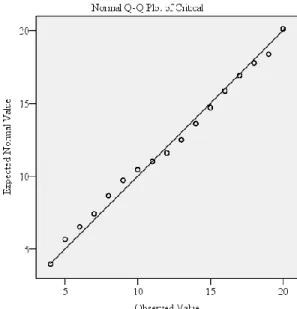
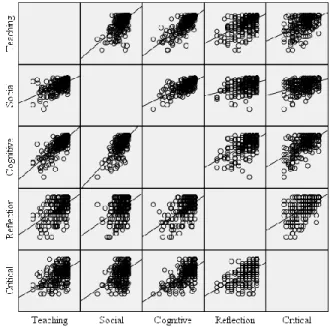
Figure 1: Box and Whisker Plots ..………60 Figure 2: Q-Q Plots ………....61 Figure 3: Scatter Plots ………....62
CHAPTER ONE: INTRODUCTION Overview
With the proliferation of information via modern communication technologies, the purpose of higher education has shifted from providing learners access to information, to developing skills in learners that enable them to assess the information they access (Garrison, 2015). Paradoxically, increased access to information can result in narrower, rather than wider perspectives—a “reinforcement of prior beliefs” (Park, Konana, Gu, Kumar, & Raghunathan, 2013, p. 1051), rather than the expansion or transformation of them. Learners have a natural tendency to ignore perspectives alternative to their own; preferring information that conforms to existing meaning-making schemes (Hernandez & Preston, 2013). Thus, rather than the
augmentation of epistemic capacities, exposure to increasing amounts of information can lead to the development of maladaptive tendencies (Garrison, 2015). Through assessment, however, “distorted meaning perspectives” (Mezirow, 1991, Chapter 3, Section 6, para. 1) can be revised. In its ideal form, assessment entails not only a careful consideration of the value and validity of information, but consideration of the process by, and the premises on which that information is assessed (Cranton, 2016). This ability to engage in critical reflection of the products, processes, and premises of knowledge is “essential for reaching decisions on complex issues affecting individuals and society and, therefore, is widely espoused as a principal goal of adult and higher education” (Kreber, 2012, p. 323).
Background
For Dewey (1933), enabling students to engage in this type of reflectivity was the sole purpose of education. Dewey criticized the uncritical cognitive practice of formulating beliefs based on little or no evidence, and seeking only ad hoc support for those beliefs. This practice,
Dewey suggested, was however the practice of education proper. In turn, Dewey challenged the traditional conception of education where knowledge is simply transmitted to learners, and advocated instead a conception of education that saw knowledge being actively shaped by learners. The challenge for this new educational paradigm was, of course, overcoming the engrained process whereby information is uncritically assimilated into established epistemic structures due to learners’ natural aversion to ideas that conflict with existing meaning-making schemes. To this challenge, Dewey offered two primary cures: reflective thought and discourse.
Reflective thought is the practice of deliberately investigating the basis of a belief and evaluating “its adequacy to support the belief examined” (Dewey, 1933, p. 1). There is, yet, a certain untenable circularity to this reflective process. After all, if a meaning-making scheme is built on the information allowed into it, and learners tend to assimilate only the sorts of
information that confirm existing beliefs, then the reflective process ought to reinforce existing beliefs, not reform them, as reflective thought is supposed to do (Kasworm & Bowles, 2012). Thus, Dewey suggested that discourse was also necessary for engagement in the deepest and most meaningful levels of thought. Discourse is an expression of, and inquiry into, meaning. Through discourse, learners rehearse the information they have been exposed to and the ways in which that information confirms or contradicts prior beliefs. Through this practice of discourse , ideas are built up, torn down, and raised again. Vygotsky (1978) furthered this dialectical conception of education, offering that meaning is made primarily, if not essentially, in the context of social intercourse.
Through reflective thought in the context of discourse it is possible for learners to
transcend and transform established meaning-making schemes. Yet, even under ideal conditions, the reforming of beliefs is unnatural. Wason (1960) studied learners’ propensity to search for
evidence confirming existing beliefs along with their unwillingness to revise prior
understandings when faced with contrary evidence. Wason presented learners with a triplet, a series of three numbers (2–4–6), and charged participants to hypothesize the rule by which the triplet was formed. Learners typically concluded the rule of successive even numbers, and in turn tested only those hypotheses that knowingly accorded with, and so confirmed, the rule. As a result, alternative explanations were neither explored nor even considered. This phenomenon, Wason equated with “magical thinking . . . [where] the failure of a spell or curse can always be ascribed to some inexactitude in its utterance, rather than to its intrinsic deficiency” (p. 136). Nickerson (1998) argued that this phenomenon of confirmation bias—a natural resistance to alternative perspectives—is utterly ubiquitous, and as such could be responsible for “a significant fraction of disputes, altercations, and misunderstandings that occur among individuals, groups, and nations” (p. 175).
At its foundation, transformative learning is about enabling learners to overcome confirmation bias, to experience “a deep shift in perspective, leading to more open, more permeable, and better-justified meaning perspectives” (Cranton, 2016, p. 3). Piaget’s (1952) concept of adaptation explains the process involved in a perspectival shift. According to Piaget, learners organize information into schemes. When new information is encountered, learners have two options: assimilate the information into an existing scheme, or augment the existing scheme to accommodate the new information. Because it is the need of the learner to maintain a sense of cognitive equilibrium, assimilation has more immediate utility. Yet, it is
accommodation that has more developmental potential, for through it cognitive structures are enlarged. In this way, confirmation bias is a move toward assimilation, while transformative learning is a move toward accommodation (Kegan, 1982). In accord with Piaget’s idea that
unfamiliar data can force the accommodation (transformation) of a meaning-making scheme, Mezirow (1978) offered that a disorienting dilemma is the first of ten steps in the transformative process, a process complete with the reformation of a meaning-making scheme. Foundational to this perspective transformation is critical reflection on habits of mind, those “taken-for-granted frames of reference” (Mezirow, 2012, p. 74) that result in confirmation bias. Therefore, to overcome confirmation bias, genuine epistemological transformation is needed—a change in not only what is known, but how it is known (Kegan, 2000).
In a community of inquiry, critical reflection is set within the confines of collaborative discourse for the purpose of countermanding confirmation bias (Garrison, 2015). The
community of inquiry framework is built on the Practical Inquiry Model (Garrison, Anderson, & Archer, 2001), where reflection and discourse, the private and shared worlds of learners
(Garrison, 2015), fuse in the exploration, interpretation, and integration of ideas and experiences. For the community to be effective, each participant must act as both teacher and student
(Garrison & Akyol, 2013). In this way, learners within the community contribute to the construction of their own knowledge as well as the knowledge of the community as a whole (Swan, Day, Bogle, & Matthews, 2014). The desired outcome of this collaborative inquiry process is engagement in, and the development of, critical thinking, the hallmark ( Vaughan, Cleveland-Innes, & Garrison, 2013) and goal (Habermas, 1971) of higher education.
As enrollment in online higher education continues to increase (Allen & Seaman, 2016), so does the need for institutes of higher education to create online learning environments capable of engaging students in meaningful learning. Meaningful learning is about much more than the accumulation of information. Rather, meaningful learning is about the construction of new knowledge (Kovanović, Gašević, Joksimović, Hatala, & Adesope, 2015), the alteration of beliefs
(Taylor, 2015), increased flexibility of meaning-making structures (Cranton & Hoggan, 2012), and transformation of learners’ very ways of being (Kegan & Lahey, 2016). By establishing and sustaining critical reflection and discourse, online learning environments have the potential to engage students in such meaningful learning (Boyer, Maher, & Kirkman, 2013; Cranton, 2010).
Problem Statement
While the community of inquiry framework describes the elements requisite for the creation of an effective, collaborative online learning environment (Garrison, 2015), Oyarzun and Morrison (2013) spotlighted the need for more research on the framework’s ability to “achieve deep and meaningful learning” (p. 185). Transformative learning, as a move from simplistic to “more complex ways of knowing or higher orders of consciousness” (Cranton & Taylor, 2012, p. 11), is just this sort of deep and meaningful learning (Cranton, 2016; Mezirow, 2012; Taylor & Elias, 2012). However, research on fostering transformative learning online is minimal (Cranton & Hoggan, 2012). Smith (2012) called for additional research into “all aspects of fostering transformative learning online” (p. 418), and more specifically, empirical
investigations of “instructional design and facilitation” (p. 418) strategies lending to
transformative learning in online environments. The problem, then, is determining if and how online learning within the context of a community of inquiry can impel student engagement in transformative learning (Oyarzun & Morrison, 2013; Smith, 2012).
Purpose Statement
The purpose of this study is to measure the relationship between a community of inquiry and transformative learning in online, graduate business courses. Business schools have been charged with failing to create meaningful learning opportunities for students (Tello, Swanson, Floyd, & Caldwell, 2013)—opportunities that would lay a foundation for students, as future
business leaders, to become lifelong learners (Senge, 2006). More research is needed to understand how to create online learning environments that enable students to engage in such meaningful learning (Cranton & Hoggan, 2012; Oyarzun & Morrison, 2013; Smith, 2012). In this study, community of inquiry, as measured by the Community of Inquiry survey instrument (Arbaugh et al., 2008), served as the predictor variable. A community of inquiry is a
collaborative educative environment wherein knowledge is co-constructed through the
interaction of three presences (Garrison, Anderson, & Archer, 2000). Teaching presence has to do with the design, facilitation, and direction of the learning experience; social presence
accounts for community, communication, and relationships within the learning environment; and cognitive presence is about discourse, inquiry, and resolution, specifically as they relate to content (Garrison, 2015). Transformative learning, as measured by the Reflection Questionnaire (Kember et al., 2000), and indicated by engagement in reflective thought, served as the criterion variable. Transformative learning describes learning that results in epistemological reformation, from the simplistic to the more complex (Kegan, 2000). This reformation is typically born of critical reflection (Arends, 2014). Critical reflection suggests an evaluation of the
presuppositions underlying the products, processes, and premises of knowledge (Mezirow, 1991). Online, graduate students enrolled in MBA courses in a research institution in Maryland served as the population for this study. Participating students completed an online survey including the Community of Inquiry survey instrument and the Reflection Questionnaire.
Significance of the Study
Institutes of higher education in general, and business schools in particular, have been criticized for failing to provide meaningful learning opportunities to learners (Tello et al., 2013). Yet, it is engagement in meaningful learning, specifically critical reflection and discourse, that
prepares learners for success in work and life in the 21st century (Weinbaum, Kass, Gutekunst, Schleckser, & Caracena, 2015). As Watkins, Marsick, and Faller (2012) put it, “A common organizational narrative in a rapidly changing, complex, globally linked world is that valued employees are those who can think critically, challenge assumptions, and proactively help organizations change” (p. 373). Indeed, Kegan and Lahey (2016) noted that the ability of organizations to adapt to the challenges and complexities of the modern business world depends entirely on the ability of individuals within that organization to adapt to the challenges and complexities of modern life. Coincidentally, as enrollment in online higher education represents a greater percentage of overall college enrollment year-after-year (Allen & Seaman, 2016), it is essential for institutes of higher education to understand the need for, and have the ability to create, online learning environments that engage students in meaningful learning opportunities so as to become persistent learners (Kegan & Lahey, 2016). This study explored the potential of online learning environments to impel student engagement in meaningful learning. Specifically, it explored the potential for a community of inquiry to engage students in “deep and meaningful learning” (Oyarzun & Morrison, 2013, p. 185) as measured by characteristics of transformative learning in the context of online education (Smith, 2012).
Research Question The research question for this study is:
RQ1: Is there a significant predictive relationship between a community of inquiry and transformative learning in online, graduate business courses?
Null Hypotheses The null hypotheses for this study are:
H01: There is no significant predictive relationship between the community of inquiry, as measured by the teaching presence, social presence, and cognitive presence subscales, and transformative learning, as measured by the reflection subscale, in online, graduate business courses.
H02: There is no significant predictive relationship between the community of inquiry, as measured by the teaching presence, social presence, and cognitive presence subscales, and transformative learning, as measured by the critical reflection subscale, in online, graduate business courses.
Definitions
1. Community of inquiry – a collaborative educative environment wherein knowledge is co-constructed (Garrison, Anderson, & Archer, 2000).
2. Confirmation bias – the tendency to seek only that evidence that confirms existing beliefs (Wason, 1960).
3. Critical reflection – an investigation of presuppositions with the intention of finding incoherence or incompleteness within them (Mezirow, 1991).
4. Meaningful learning – learning that results in a change in epistemic structures (Kegan, 1982).
5. Meaning-making schemes – the organization of existing information within cognitive structures, and the way that organization influences the interpretation of new information (Mezirow, 2001)
6. Transformative learning – epistemological growth, from a simplistic, parochial meaning-making scheme, to higher orders of consciousness (Kegan, 2000).
CHAPTER TWO: LITERATURE REVIEW Overview
Communication technologies, with the internet as a general frame, have made
information utterly ubiquitous (Garrison, 2016). The extent to which learners can make good cognitive use, and ultimately sense, of this information depends, in no small measure, on the ability of educators to help learners critically assess the information available to them
(Wittenbols, 2016). Engaging critically with information is essential for overcoming distorted information processing schemes (Muris, Debipersad, & Maher, 2014), which can lead to the rejection of any information that does not cohere with existing knowledge (Brycz, Wyszomirska-Gora, Bar-Tal, & Wisniewski, 2014). Indeed, the consideration of alternative perspectives and the ability to make use of novel ideas are essential for success in modern society (Kreber, 2012), both personally (Weinbaum et al., 2015) and professionally (Watkins et al., 2012). Therefore, the inculcation of critical assessment skills should be the objective of education generally, and institutes of higher education (Weimer, 2012) and business schools more specifically (Glasper & Caldwell, 2016; Tello et al., 2013). Achievement of such educational outcomes—where learners are not merely given access to information, but gain the necessary skills to assess the information they access—requires a move from a transmission to transformational model of education, as learners take increasing responsibility for and ownership of their learning in a collaborative learning environment (Njiro, 2014).
Transformative learning theory (Mezirow, 1978) provides a frame for understanding the process of, and requisites for, learning that leads to the augmentation of cognitive capaciti es. However, more research is needed to understand whether and how online environments can support this type of meaningful learning (Cranton & Hoggan, 2012; Smith, 2012). The
community of inquiry (Garrison et al., 2000) provides a framework for creating collaborative-constructivist learning contexts with the goal of helping learners develop critical thinking skills and ultimately overcome distorted meaning-making processes (Garrison, 2015). However, the potential of the framework to facilitate the deepest levels of learning requires further research (Archibald, 2013; Oyazrun & Morrison, 2013). While Guthrie and McCracken (2014), Lee and Nicolaides (2014), and Smith (2012) have noted the conceptual ties between transformative learning theory and a community of inquiry, to date no research has studied the relationship between the frameworks. This research studied the relationship between the two theories, and determined whether, and in what ways, communities of inquiry can support transformative learning in online courses.
Theoretical Frameworks Transformative Learning Theory
Perspective Transformation. Piaget (1952) described a process of learning guided by the formation and reformation of meaning-making schemes. To make sense of the world, learners catalog experiences into schemes. With each novel experience, learners are faced with two basic choices for making sense of the data: assimilate the information into an existing scheme, or accommodate the scheme to allow for the incorporation of the new information. Assimilation perpetuates the existing meaning-making scheme. Accommodation leads to the creation of a new or significantly augmented scheme of sense-making. In other words, assimilation changes what a learner knows; accommodation transforms how a learner knows (Kegan, 2000). It is this latter type of epistemic transformation that forms the basis of transformative learning theory.
Perspective transformation, as termed by Mezirow (1978) in a study of 83 women returning to college, is the foundation of transformative learning theory. In the process of perspective transformation described by the study participants, Mezirow identified 10 common steps or stages: 1) a disorienting dilemma, 2) self-examination, 3) critical assessment of
assumptions, 4) recognition that discontent is a universal experience, 5) consideration of new roles, 6) creating a plan for change, 7) building skills to operationalize the plan, 8) trying on new roles, 9) increasing confidence and competence in new roles, and 10) a reintegration of new roles and perspectives into life. Just as in the Piagetian (1952) conception, participants in Mezirow’s study faced novel experiences and were forced to assimilate that information into their existing schemes or transform the schemes to accommodate the experiences. It was the accommodative process, the 10 steps of perspective transformation, that Mezirow mapped and that became the foundation of transformative learning theory.
With the presentation of transformative learning as a comprehensive theory, Mezirow (1991) defined transformation as, “Overcoming limited, distorted, and arbitrarily selective modes of perception and cognition through reflection on assumptions that formerly have been accepted uncritically” (p. 5). To Mezirow (1997), knowledge is shaped by a frame of reference—the manner and method by which information is processed. A frame of reference is molded by and consists of “cognitive, conative, and emotional components, and is composed of two dimensions: habits of mind and a point of view” (p. 7). Points of view are dynamic, changing frequently with exposure to and reflection on experiences that do not easily fit into familiar frames. Habits of mind, on the other hand, are more entrenched and resistant to change. Habits of mind typically are tied to cultural and familial roots, and so become the basis upon which attitudes are held and judgements are made. In this way, points of view are the result of habits of mind, they emerge
from and are fashioned by them. Transformative learning, then, has to do with the
transformation not of points of view but habits of mind, the basic structures upon which beliefs and entire knowledge systems are built.
Mezirow (1997) proposed four methods of learning: 1) new knowledge can be added to an existing view, 2) acquired knowledge can be used to construct new points of view, 3) knowledge can transform an existing point of view, or 4) habits of mind can be transformed by the acquisition of new knowledge. It is this last type of learning, the transformation of habits of mind, with which transformative learning theory is concerned. Because habits of mind are so foundational, so engrained in the noetic structure of the learner, to transform a habit of mind requires engagement with alternative perspectives and critical reflection on the basic
assumptions upon which those habits of mind are based.
Mezirow relied on Habermas’s (1984) theory of communicative action in describing the environment in which and through which transformation occurs. Through critical reflection on critical dialogue—the intermingling of the intrapersonal and interpersonal—private perspectives interact with and are challenged by public understanding. This dialogic process, to impel the transformation of distorted meaning-making schemes, must occur in a public sphere—a space that allows equal access to ideas, the formulation of them, and the eventual construction of shared-knowledge or shared-truth. Thus, to engage learners in the process of transformative learning, Mezirow suggested the creation of a safe and open environment for the free exchange of ideas, as well as the facilitation of critical reflection.
For educative purposes, Hoskins (2013) proposed that cognitive dissonance, critical reflection, rational discourse, and action can result in transformation. In this view, a disorienting dilemma, resulting in cognitive dissonance, is the instigator of transformation, and the
transformative process proceeds predictably from it. Lange (2012), however, criticized linear processes of transformation, particularly as formulated by Mezirow (1978). Because living systems are complex and unpredictable, it is impossible to identify those singular, definable moments—disorienting dilemmas—responsible for transformation. Furthermore, it is equally impossible to predict the outcomes of those experiences. Similarly, Alhadeff-Jones (2012) suggested that the cataloguing of transformation into orderly steps ignores the disorderly, the “neglected, forgotten, repressed, rejected, disqualified, excluded, or silenced” (p. 181) elements in the lives of learners.
Nohl (2015) agreed that a definable, epochal moment of change—disorienting dilemma—was hardly the change agent Mezirow (1978) supposed it to be. However, like Mezirow, Nohl offered several stages of transformation: 1) experiencing a nondetermining start (seemingly inconsequential exposure to a new idea or experience of some sort), 2) undirected inquiry about the idea, 3) social testing of the idea, 4) shifting of relevance about the idea, and 5) reconstitution of personal identity based on incorporation of the idea. Accordingly,
transformative learning does not actually begin with a disorienting dilemma. In many cases, it is the so-called nondetermining event that instigates the change process. Therefrom, over a period of several months or even several years, learners may experience transformation, in ways almost imperceptible to them. In this model, it is only in the third phase—the social testing of the idea—when any awareness of disorientation occurs. In this phase, it is the application of new practices onto, or in replacement of, old habits that causes the disorientation. In this way, while Mezirow (2012) allowed for transformation that was either epochal or incremental, Nohl
In line with the incremental understanding, Charaniya (2012) saw transformation as an ongoing cycle of identity formation and reformation. Coke, Benson, and Hayes (2015) described transformative experiences as recursive—oscillating between reflecting back and forging ahead. Willis (2012) conceived of transformation as the very act of human becoming. This view of transformation as an incremental, ongoing, and recursive process of human becoming is most fully developed in Kegan’s (1982) constructive-development model.
Transformation as Human Development. To Kegan (1982), transformative learning is about epistemological change—a change of not only what is known, but how it is known. Central to this conception of the how of knowing, is the subject-object relationship. When a learner is subject to something, the learner is had by it. When a learner is object to something, the learner has it. Taylor and Elias (2012) used the illustration of the matryoshka doll to illustrate how the subject-object relationship informs the transformative process of human development. Starting from the smallest doll and moving outward, each incremental increase in size indicates a transformation of what is object and what is subject. The smallest, innermost doll is the simplest, and is subject to all others—it contains only itself and is held by all others. The next successively bigger doll is slightly more complex, the smallest doll is object to it, even while it is subject to all others. As each doll becomes successively bigger and so more complex, nesting all other dolls in the set within itself, progressively more dolls become object to it as it becomes subject to fewer.
Kegan (1982) originally described six stages of human development, from simplest to most complex: incorporative, impulsive, imperial, interpersonal, institutional, and
interindividual. In the first stage, nothing is object to the individual. In the final stage, even individual identity has become object. Thus, throughout this developmental process, the
changing subject-object relationship is fundamentally about what is self and what is other. Kegan and Lahey (2016) provided a revised understanding of the final three stages in adult development: the socialized mind, the self-authoring mind, and the self-transforming mind. Again, in the final, most complex stage, learners have become object to themselves and therefore have the capacity to subject their own ideas and assumptions to critical scrutiny. That is, learners can actively engage in metacognitive reflection on the products of their beliefs, the processes by which they come to have them, and the premises on which those beliefs are formed. For
Mezirow (2003), transformative learning is precisely this “uniquely adult form of metacognitive reasoning” (p. 58) where the products, processes, and premises of reasoning become better justified through critical assessment.
Transformative Learning in Higher Education and Beyond. Metacognition allows learners to become more aware of, and more capable of assessing and regulating their cognitive processing, resulting in more justifiable beliefs (Brycz et al., 2014). As Watkins (2012) noted, metacognitive capabilities are required to meet the personal and professional demands of life in a “rapidly changing, complex, globally linked world” (p. 373). However, the learning
opportunities provided by institutes of higher education are not adequately enabling learners to meet the demands of life and work in the 21st century (Weinbaum et al., 2015). The
incorporation of transformative learning into curricula can facilitate the critical shift from surface, content-learning to deep, metacognitive-learning. Njiro (2014) insisted that
transformative learning must inform curricula if education is to address the needs of learners in the modern world. Lee and Nicolaides (2014) suggested that transformative education can indeed help learners “meet the adaptive challenges and persistent demands of early 21st century life” (p. 273). Thus, the challenge for educators is designing curricular spaces that facilitate
transformative learning (Cranton, 2016; Cranton & Hoggan, 2012), particularly in online environments (Hoskins, 2013; Smith, 2012).
Community of Inquiry
Teaching and Learning Collaboratively. The “most widely referenced framework associated with the study of online and blended learning” (Garrison, 2015, p. 68), the community of inquiry has become the preeminent theory for the study and design of purposeful e-learning communities (Garrison, 2016). Garrison, Anderson, and Archer (2000) popularized the community of inquiry framework in their work on computer-based conferencing. Unlike traditional distance-education theories, which positioned learning as an individualistic activity, computer-based conferencing utilized text-based, asynchronous discussions to connect learners to one another, thereby creating a community of learners (Garrison, 2016).
Garrison, Anderson, and Archer (2010) credit the term “community of inquiry” to Dewey (1916) via Lipman (1991). From the Deweyan perspective, cognitive engagement and
enrichment occur in social contexts. Learners first develop meaning within the context of the larger community and only therein create an individualized perspective (Oyarzun & Morrison, 2013). Habermas’s (1984) ideas about the intersection of private and public meaning also inform the framework. As such, the community of inquiry framework is built on the
assumptions of the essential contexts for and purposes of education, videlicet the development of personal meaning in the context of public knowledge and understanding (Garrison, 2016).
This idea that learning occurs at the intersection of the psychological and the social, the private and the public, the self and other, is rooted in collaborative-constructivism. Accordingly, individual meaning-making (constructivism) is dependent on and informative of the learning of the entire community (collaboration). In short, constructivism suggests a commitment to
facilitating the development of autonomous and independent thought in learners, while at the same time developing this independence of thought within the context of social settings— collaboration. Piaget (1977) and Vygotsky (1978) identified the social context as the
environment in which cognitive conflicts are resolved. In the Vygotskian view, the community of inquiry creates a zone of proximal development wherein the community of learners, together, enable individual learners to create meaning and overcome cognitive dissonance (Garrison, 2013).
Three Essential Presences. To support this zone of proximal development, this community of learners, a supportive environment that encourages and facilitates critical reflection and discourse must be created (Garrison, 2016). Promoting the collaborative-constructivism upon which communities of inquiry are built, this supportive environment must comprise both social (collaborative) and cognitive (constructivist) elements. In a community of inquiry, these elements are called presences; and both the social presence and cognitive presence components are undergirded by design and facilitation considerations, properly called teaching presence in a community of inquiry.
The term presence is used to connote the idea of fidelity—how real the learning and the learning environment are (Hosler & Arend, 2013). The greater the presence, the greater the fidelity, and thus the more realistic—that is, the less mediated—the learning experience is perceived to be. In creating an authentic collaborative-constructivist learning context, then, the three presences—social, cognitive, and teaching—work together and support one another. To wit, social presence has been shown to be the mediating factor between cognitive and teaching presence (deNoyelles, Zydney, & Chen, 2014; Joksimović, Gašević, Kovanović, Riecke, & Hatala, 2015; Whiteside, Dikkers, & Swan, 2017), cognitive presence is most indicative of
student satisfaction and success (Holser & Arend, 2012; Yang, Quadir, Chen, & Miao, 2016), and teaching presence is understood to be of the greatest value to students (Hodges & Cowan, 2012; Preisman, 2014) and the most critical in establishing purposeful communities of inquiry (Borokhovski, Bernard, Tamim, Schmid, & Sokolvskaya, 2016; Rockinson-Szapkiw, Wighting, & Nisbet, 2016; Rubin & Fernandes, 2013). As such, Archibald (2013) reported that, in creating communities of inquiry, each of three presences is statistically and conceptually interdependent, and Wicks, Craft, Mason, Gritter, and Bolding (2015), and Rockinson-Szapkiw et al. (2016) showed the framework as a whole—through the operationalization of the three presences—to be predictive of learning outcomes.
Social. Prior to the introduction and proliferation of the community of inquiry framework, social presence was related mostly to the emotional experiences of learners as individuals (Garrison, 2016). Learning as a shared experience, however, requires that social presence consider the implications of both intrapersonal and interpersonal —self and other— relationships. Thus, the frame of social presence as an individual affective and expressive concern is enlarged in a community of inquiry to include the context of the learning community. In this more holistic view, affective communication, open communication, and group cohesion together form the social presence construct. Garrison (2015) identified this enhanced view as a change of focus “from the person to the purpose of the communication” (p. 71).
Indeed, within a community of inquiry social presence is operationalized foundationally through identification with shared learning goals—the purposeful pursuit of the achievement of specific cognitive ends (Garrison, 2016). As such, Whiteside et al. (2017) identified social presence as the “unifying component that synchronizes interactions among the instructor, students, academic content, media, tools, instructional strategies, and outcomes within an online
learning experience” (p. 2). In this way, social presence is understood to be the mediating factor between cognitive and teaching presence (deNoyelles, 2014; Joksimović et al., 2015; Whiteside et al., 2017).
Cognitive. With the purpose of engaging learners in deep and meaningful learning, communities of inquiry are designed around the Practical Inquiry Model (Garrison, Anderson, & Archer, 2001). Based on Dewey’s (1933) model of reflective thinking, where learners critically assess their beliefs in the context of personal reflection and shared discourse, the Practical Inquiry Model serves to frame the interactions and intersections of personal and private thought in the construction and confirmation of knowledge (Garrison, 2016). According to the model, cognitive dissonance, resulting from a triggering event, occurs in the public sphere when existing beliefs do not cohere with, or are unable to make sense of, some stimulus. Personal, reflective exploration of the cause of, and possible solutions to, the challenge to existing meaning-making schemes then ensues. Integration of these solutions, these new ways of knowing, proceeds, again in a critically reflective manner. Finally, the learner achieves resolution of the original cognitive challenge as the new meaning-making scheme is applied and tested in the public sphere.
Successful navigation through this process of constructing personal meaning and confirming public knowledge requires learners to engage in shared-metacognition (Garrison, 2016). Garrison and Akyol (2013) identified three functions of metacognition: knowledge of cognition, monitoring of cognition, and regulation of cognition. Knowledge of cognition is a basic understanding of the learning process. Monitoring of cognition is active reflection on the learning process. Regulation of cognition is enactment of strategies to direct the learning process towards meaningful outcomes.
Ultimately, engagement in metacognition allows learners to make more symmetrical judgements about self-knowledge and the knowledge of others (Brycz, 2014), thus contributing to the achievement of the intended collaborative-constructivist learning outcomes within a community of inquiry (Rubin & Fernandes, 2013). However, for learners to engage in this process of critical assessment and regulation of their own and others’ cognition, educators must purposefully steer the process (Wittenbols, 2016). Gašević, Adesope, Joksimović, and
Kovanović (2015) demonstrated the importance of facilitating the metacognitive processes of learners through incorporation of scaffolding strategies as a primary element of teaching presence in a community of inquiry.
Teaching. Teaching presence is the cornerstone of the actualization of cognitive presence in learners—increasing learners’ awareness of, and their responsibility for, their own and others’ contributions to the learning process (Garrison & Akyol, 2013). Inasmuch as shared- metacognition serves as a guiding process for, and intended outcome of, communities of inquiry, teaching presence is recognized as the most influential and informative of the three presences (Garrison, 2016). The foundational characteristic of teaching presence was highlighted in a study by Hosler and Arend (2012), which found that teaching presence accounted for 47% of variance in cognitive presence scores.
Teaching presence is organized around three principles—design, facilitation, and direction (Garrison, 2016). Each of these principles supports both social and cognitive
presences. Design has to do with the creation of communication (social) and a plan to establish critical discourse (cognitive). Facilitation is about establishing community (social) and inquiry dynamics (cognitive). Direction mean sustaining respect and responsibility (social), and inquiry through resolution (cognitive).
It is important to distinguish this component as teaching and not teacher presence, with the realization that all learners, and more foundationally the design of the course as a whole and the individual activities therein, are supportive of the learning environment and overall learning outcomes (Garrison, 2016). Underling this distinction, Preisman (2014) found that student satisfaction and success are best supported through the execution of the essential teaching presence principles, rather than the presence of the teacher as such. Since the construction of personal meaning within a shared cognitive space requires every member of the learning community to take responsibility for and ownership of their own and others’ learning, teaching presence is about the distribution of authority and responsibility—for designing, facilitating, and directing the learning process—throughout the community (Garrison, 2013).
Deep Learning in a Community of Inquiry. Ultimately, it is the interaction of the three presences—social, cognitive, and teaching—that creates an environment for the discourse and reflection required for the achievement of the higher levels of cognitive engagement (Oskoz, 2013; Rockinson-Szapkiw et al., 2016; Rubin & Fernandes, 2013). As such, the context for learning—the learning environment—must be so designed to support learners through the actualization of the three presences, with the objective of engaging them in the deepest levels of thinking and learning (Preisman, 2014). However, because of the difficulty learners experience in moving to the most meaningful levels of learning (Archibald, 2013; Goda & Yamada, 2013; Hosler & Arend, 2013; Lee, 2014; Oskoz, 2013; Richardson, Sadaf, & Ertmer, 2013; Stein & Wanstreet, 2013), videlicet resolution of cognitive challenges due to distorted meaning-making schemes (Rienties, Giesbers, Tempelaar, & Lygo-Baker, 2013), the learning environment must be intentionally designed and utilized to create a context in which learners are supported in the development of metacognitive skills (Meyer, 2013; Winne, 2015). The development of
metacognitive skills becomes essential as learners are confronted with an increasing variety, volume, and velocity of information, much of which conflicts with or even contradicts expectations of how the world works (Garrison, 2016). Thus, the challenge of educational communities of inquiry is to help learners make sense out of, and good use of, information through participation in, and the development of, metacognitive reasoning (Archibald, 2013).
Related Literature
Adapting to, and constructing and confirming knowledge in, a modern, dynamic knowledge society requires learners to engage in iterative assessment of what they know, how they know it, and whether—considering new and oftentimes conflicting information—they should continue to know it (Garrison, 2016; Kreber, 2012; Marisck, & Faller, 2012; Weinbaum et al., 2015; Wittenbols, 2016). At their foundations, both transformative learning theory and the community of inquiry framework describe contexts in which, and processes by whi ch,
inadequate meaning-making schemes can be reconditioned through the development of metacognitive reasoning (Cranton, 2016; Garrison, 2016). Both theories describe learning environments wherein engagement in discourse and critical reflection are meant to, through the construction of personal meaning and shared-understanding, eventuate engagement in high levels of cognition, leading ultimately to more pliable habits of mind. Guthrie and McCracken (2014), Lee and Nicolaides (2014), and Smith (2012), in their research on transformative learning theory, offered that the establishment of a community of inquiry has the potential to promote these transformative learning experiences. In this way, through the creation of an environment
supportive of discourse and critical reflection, the community of inquiry can become the context for the achievement of transformative learning in online courses.
Transformative Learning Environments
Hammond (2015) credited Habermas (1984) with informing the creation of
transformative online learning environments, where private reflection and public discourse are central to a learning process that can result in the construction of individual meaning and shared understanding. Knowledge, drawing from intrapersonal and interpersonal experience, requires, and is founded on, consensus amongst participants. Genuine consensus assumes genuine debate and introspective interrogation of assumed truth. In this way, Habermas understood the purpose of communication to be the “cooperative search for truth” (p. 225). Requisite for this sort of communication is an environment allowing open communication of ideas with the goal of achieving consensus about the truthfulness of them. Accordingly, Habermas offered that discourse:
needed to take place in a kind of ideal speech situation in which those with competence were allowed to speak, no one was constrained in speaking, all were allowed to question the grounds for any assertion and new assertions could be put forward. (p. 225)
Of course, only when learners are willing to embrace and explore the possibility that what they know is not actually true can genuine consensus be achieved. That is, genuine consensus through discourse assumes critical reflection. This engagement in critical reflection requires active participation in communication, with all learners providing justification for their beliefs, and maintaining awareness that some of their assumptions may be found deficient. In other words, participation in discourse aimed at the achievement of resolution of cognitive challenges demands assessment of the products, processes, and premises of beliefs. Habermas (1984) elaborated:
The search for consensus required an active attempt to see the world through the eyes of the “other” and to recognise ways in which one’s own understanding of a situation may be distorted by one’s own subjectivity and the social roles one was expected to play. (p. 225)
That is, knowledge is created through critical assessment of the perspectives of self and other — through metacognition.
Kegan (1982) carried forward this idea that knowledge is formed and transformed in context, when offering that it is the holding environment that creates the context for perspective transformation. Accordingly, a holding environment provides three things for learners:
confirmation, contradiction, and continuation. Kegan and Lahey (2016) updated this language in their work on organizational development, using the terms home, groove, and edge to convey the elements requisite for the creation of transformational environments.
Home. Home refers to the establishment of developmental communities supportive of transformation. As Kegan (1982) described it, transformation is relational. That is,
transformation is always about changes in what learners understand to be self and other. In other words, transformation occurs in the context of intrapersonal and interpersonal relationships —in community.
While Cranton (2016) noted that learners experience transformation in unique ways, and transformation is possible apart from the context of community proper, participation in a
supportive learning community is regularly cited as central to the process and product of transformation (Baumgartner, 2012; Christie, Carey, Robertson, & Grainger, 2015; English & Irving, 2012; Hammond, 2015; Kasworm & Bowles, 2012; Kumi-Yeboah & James, 2014; Lee & Nicolaides, 2014; Schapiro, Wasserman, & Gallegos, 2012; Taylor & Snyder, 2012; Weinbaum
et al., 2015). Edwards-Groves (2013), borrowing Habermas’s (1987) concept of a lifeworld, saw learning communities as spaces where solidarity—individual and collective identity—and
agency—individual and collective power and control—interact in the formation and transformation of the individual and the group. Indeed, communities emerge precisely as individuals engage with others in the context of shared-identity and shared-purposes (Kegan, 1982; Kegan & Lahey, 2016).
To actualize their transformative potential, learning communities must be authentic (Lee & Nicolaides, 2014). That is, learning communities must be supportive of the individuals who comprise them so that “learners feel safe to reveal their genuine identities and thoughts” (Lee & Brett, 2015, p. 80). Guthrie and McCracken (2014) similarly noted that the creation of, and participation in, “secure intellectual and emotional spaces” (p. 240) is essential to transformation. Likewise, Taylor and Laros (2014) described transformative communities as places where
learners fully engage with their own and others’ ideas “free from coercion and distortion” (p. 137). In this way, Mezirow (2012) saw trust, solidarity, security, and empathy as foundational to the proper functioning of a transformative learning community. Thus, community undergirds transformative learning through the development of continuity and commitment, curiosity and openness, emotional engagement, and reflection on shared sense-making (Schapiro et al., 2012).
Schapiro et al. (2012) wrote of “an ineffable element of mystery” (p. 368) to the power of community in fostering transformation. Ultimately, participation in a community of learners can transform not only what is known and how it is known, but also the very being of the community and its learners. Through a process of dialogic reciprocity, where learners form a community, share knowledge that informs the community, engage with divergent perspectives that reform the knowledge of the community, and test new knowledge within and without the community, the
entire community becomes a transformative organism (Edwards-Grove, 2013). Thus, as learning communities construct shared knowledge, they are likewise constructed by it. Kegan (1982) highlighted the importance of process in the creation and maintenance of community:
Intact, sustaining communities have always found ways to recognize that persons grow and change, that this fate can be costly, and that if it is not to cost the community the very loss of its member, then the community must itself be capable of “re-cognition.” (Chapter 9, Section 1, para. 12)
Accordingly, as learners engage with and connect to one another in meaningful and purposeful ways, learning communities become living organisms that transform themselves along with the individual learners within them.
Groove. Groove refers to the interaction of ideas and perspectives leading to occasions of cognitive dissonance, which ultimately make possible the transformation of perspectives (Kegan & Lahey, 2016; Wittenbols, 2016). To Piaget (1952), learners have two options when confronted with new information: assimilate the information into existing meaning-making schemes, or adjust the schemes to accommodate the new information. In either case, exposure to new information leads to cognitive disequilibrium, “a situation in which a person’s worldview is disrupted by new information which contradicts or supplants the current view” (Wittenbols, 2016, p. 2). The task of the learner in these situations is to regain cognitive equilibrium—to make sense of the new data—as economically as possible, which generally favors assimilation over accommodation (MacKerarcher, 2012). However, rejecting knowledge that does not cohere with an existing making scheme, rather than evaluating the viability of the meaning-making scheme itself—confirmation bias—delimits the potential for epistemic growth and transformation (Wittenbols, 2016). Muris et al. (2014) explained that the strategy of selecting
assimilation over accommodation for the purposes of immediate sense-making “means that everyday rationality is characterized by various reasoning errors, which result in dysfunctional and maladaptive behavior” (p. 604).
Chater and Loewenstein (2016) remarked on this drive for sense-making—an innate cognitive requirement to process and organize data in such a way as to make the best sense and, ultimately, use of it—as a lens through which to understand the phenomenon of confirmation bias. Grounded in, but enlarging on, Mill’s (1859) principal of utilitarianism, Chater and Lowenstein proposed four key features of sense-making. First, as it is a basic human need to make sense of data and life more generally, making is pleasurable. Second, not all sense-making is equally pleasurable. Making sense of data that has the most personal utility will be most pleasurable. Third, the pleasure of specific instances of sense-making is based on expectations. Having the world match expectations will lead to the greatest pleasure. On the other hand, experience that fails to conform to expectations can lead to pain. In this way, the fourth principle provides that the pains of disconfirming expectations are greater than the pleasures of matched expectations. This utilitarian model offers a parsimonious understanding of the phenomenon of confirmation bias—utility is maximized when experiences and knowledge conform to expectations. In other words, it is in an individual’s greatest personal interest to seek out only that data that builds onto existing meaning-making schemes while avoiding
contradictory inputs. Brycz et al. (2014) put the matter simply, “Generally, people estimate the world in a manner which favors their own interests” (p. 310).
As Nickerson (1998) noted, confirmation bias is an utterly ubiquitous phenomenon, which Kreber (2012) called “one of the most pervasive human weaknesses” (p. 334). Confirmation bias is seen in medical research where participants for studies are frequently
selected based on the careful matching of symptoms with specific reference standards, thereby altering the predictive value of a treatment for the broader population (Bashir, Sirlin, & Reeder, 2015). It is seen in ecology, where researchers’ prior knowledge of and attitudes about specific phenomena significantly influenced research findings (Kozlov & Zvereva, 2015). Park et al. (2013) showed that confirmation bias distorts the analyses of investors, and is negatively correlated with investment returns. In the field of technology, confirmation bias leads to
increased incidences of defect as testers enable codes to run rather than employing strategies that could possibly make them fail (Calikli & Bener, 2015). Confirmation bias in the analysis of forensic evidence—including fingerprinting and DNA—leads to false criminal convictions as efforts are made to fit the evidence to the primary suspect, instead of allowing the evidence to speak for itself (Perez, 2015). Confirmation bias has been proposed as a critical inducer of anxiety-based disorders (Dibbets, Fliek, & Meesters, 2015; Muris et al., 2014). At the same time, psychotherapy is tainted by confirmation bias as therapists see the change in their clients they expect to see, even in the absence of any actual changes (Lilienfeld, Ritschel, Lynn, Cautin, & Latzman, 2014).
Fforde (2016) offered a sweeping indictment about the effects of confirmation bias. Fforde criticized scientific and statistical methodology as being entirely confined by a basic confirmation bias—a bias that the unknown answer to the question being asked is in fact knowable. In this way, theories postulated at 5% or 10% confidence levels suggest that, even given a lack of certainty, the unknown (or perhaps just inconvenient) data do in fact conform to reality and so allow for theorization. The problem is that, applied to all situations and studies, the confirmation bias tends towards affirming some measure of knowledge as opposed to
accepting some limitations to it. Thus, it is a confirmation bias toward knowing certainly, rather than knowing tentatively, or not knowing at all.
Yet, it is precisely within the space of not-knowing that learning occurs (Vygotsky, 1978). Indeed, it is interactions with novel perspectives—when existing meaning-making schemes cannot account for some new data—that serve as gateways to epistemic transformation (Coke et al., 2015). In this way, Kumi-Yeboah and James (2014) offered that discourse— exposure to diverse and even conflicting ideas—can be a prime instigator of transformation. When new ideas are introduced, or familiar ideas are introduced in new ways, learners are forced to consider the validity of those ideas as well as their own ideas about them (Cranton, 2016). Hernandez and Preston (2013) found that diversity of perspectives, or merely diversity in the presentation of perspectives (disfluency), can impel epistemic transformati on.
[J]ust like speed bumps cause one to drive more slowly and carefully, the experience of difficulty associated with disfluency prompts a slower, more careful mindset when making judgements, even when one comes to the issue with existing beliefs . . .
Disfluency may offer an opportunity for better judgment and discourse between opposing positions, ultimately giving what was once an overlooked message, a chance to be seen. (p. 181)
As such, discourse—an interplay between private thought and public knowledge—within a socially-supportive environment plays a critical role in transformative learning (Cranton, 2016; Kumi-Yeboah & James, 2014).
Habermas (1984) saw discourse as a means for achieving genuine consensus within a community of learners. Mezirow (2012) agreed, suggesting that “Discourse, in the context of transformation theory, is that specialized use of dialogue devoted to searching for a common
understanding and assessment of the justification of an interpretation or belief” (p. 78). However, Lee and Brett (2015) described a Bakhtinian dialogic process whereby the
achievement of genuine consensus within the community of learners is not the goal. Rather, discourse is meant to enable learners to view their ideas from multiple perspectives, particularly within the context of the ideas and experiences of others within the community. This idea that consensus might not be achieved within a community, or that the achievement of consensus might not be a goal of the community, is not contrary to a Habermasian understanding of discourse, however. Hammond (2015) argued that, even when consensus about an idea is not reached, discourse can nevertheless conclude with a consensus of understanding. “Discussion can finish with an agreement to disagree, but in the process participants may gain a reflexive understanding as to why they disagree and a move towards intersubjective understanding and mutual recognition” (Hammond, 2015, p. 233). Kegan (1982) noted that it is just this type of intra- and intersubjective thinking that characterizes the most advanced levels of cognition:
Among the central features of this new way of thinking seems to be a new orientation to contradiction and paradox. Rather than completely threatening the system, or mobilizing the need for resolution at all costs, the contradiction becomes more recognizable as contradiction; the orientation seems to shift to the relationship between poles in a paradox rather than a choice between the poles. (Chapter 8, Section 1, para. 1)
Thus, discourse—exposure to and exploration of alternative perspectives and ideas—can produce in learners, if not shared-knowledge about the meaning of some thing,
shared-metacognition about knowledge in general and thinking more generally. In this way, discourse lays the foundation for perspective transformation through engagement in critical reflection (Schapiro et al., 2012).
Edge. Edge refers to the space where, through the enactment of metacognitive strategies, cognitive challenges are resolved and perspective transformation is actualized. As Meijer, Geijsel, Kujipers, Vrieling, and Vrieling (2016) put it, epistemic curiosity—a willingness to question personal beliefs, and an openness to learn from the ideas, perspectives, and experiences of others—facilitates transformative learning. However, because confirmation bias acts as a “cognitive shortcut or heuristic that simplifie[s] complex inferential tasks” (Hernandez & Preston, 2013, p. 178), engagement in epistemic curiosity, in metacognition, must be facilitated (Kasworm & Bowles, 2012; Mezirow, 1997; Phillip & Cain, 2015; Smith, 2012; Weimer, 2012; Weinbaum et al., 2015; Wittenbols, 2016). Therefore, designing a space that allows for and enables critical reflection on the products, processes, and premises of the learner’s own and others’ cognition is essential to fostering transformative learning (Forte & Blouin, 2016; Hammond, 2015; Kreber, 2012; Mezirow, 2012).
A primary critique leveled against the traditional view of transformative learning is its favoring of rationality over other ways of knowing (Arends, 2014). Acknowledging the myriad ways researchers have approached the study of perspective transformation, Taylor and Cranton (2012) called for the development of an integrative theory of transformative learning. This more holistic understanding of transformation would acknowledge the possibility of not only rational means of transformation, but also relational (Baumgartner, 2012; English & Irving, 2012; Lee & Nicolaides, 2014; Schapiro et al., 2012), conative (MacKeracher, 2012), aesthetic (Cranton, 2016), and spiritual (Charaniya, 2012; Dirkx, 2012) influences and outcomes. However, as Papastamatis and Panitsides (2014) noted, “cognitive, physical, emotional, and spiritual
dimensions are closely interrelated” (p. 74) in the construction of knowledge generally and in the process of transformation more specifically. Brookfield (2012) remarked similarly, suggesting
critical reflection is itself contextually and socially situated. Taylor and Cranton (2012) agreed, “The point here is that we need to cease the discussion of rationality as a separate entity, because the very existence of rationality is rooted in the presence of emotion, without which it cannot exist” (p. 566). More foundationally, Mezirow (2012) assumed that it was the integration of the entirety of private and public knowledge and experience that necessarily informed critical reflection. Therefore, critical reflection is never a purely rationalistic exercise, even while the process and product of it may be the re-cognition of the learner (Kegan, 1982).
Kember at al. (2000) synthesized Mezirow’s (1991) conceptions of cognition, offering a four-stage scheme of increasing epistemic complexity: habitual action, understanding,
reflection, and critical reflection. Habitual action results from taken-for-granted assumptions of how the world works and the corresponding responses triggered by those deeply engrained beliefs. Understanding requires the surfacing of existing knowledge to make sense of new knowledge and experiences, though it does not seek to evaluate those basic perspectives. Reflection considers both the cognitive experiences caused by some stimulus as well as the processes by which those experiences derived. Critical reflection examines not only the products and processes of beliefs, but also the premises of them—“why we perceive, think, feel or act as we do” (Mezirow, 1991, p. 108). In this way, critical reflection is an intentional act, requiring “a provisional suspension of judgement about the truth or falsity of, or the belief or disbelief in, ideas until a better determination can be made” (Mezirow, 2012, p. 80).
For Mezirow (2003), beliefs are only as good as the justifications made for them. As such, Mezirow offered that transformative learning, with critical reflection its immediate precursor, is a “process of advancing and assessing reasons, especially those that provide arguments supporting beliefs resulting in decisions to act” (p. 58). As Cranton and Taylor