Process Support for
Requirements Engineering
A Requirements Engineering Tool
Evaluation Approach
Doctoral thesis
for the degree of doktor ingeniør
Trondheim, June 2005
Norwegian University of Science and Technology
Faculty of Information Technology, Mathematics
and Electrical Engineering
Department of Computer and Information Science
Raimundas Matulevicius
Doctoral thesis
for the degree of doktor ingeniør
Norwegian University of Science and Technology
Faculty of Information Technology, Mathematics and Electrical Engineering Department of Computer and Information Science
© Raimundas Matulevicius ISBN 82-471-7171-6 (printed vers.) ISBN 82-471-7170-8 (electronic vers.) ISSN 1503-8181
Doctoral theses at NTNU, 2005:142 Printed by NTNU-trykk
A
BSTRACT
Requirements engineering (RE) tools are software tools which provide automated assistance during the RE process. The need for automated support varies in different projects. RE-tool support could clearly be useful if an organisation deals with requirements specifications containing many requirements which need to evolve over time. However, the mainstream RE practice relies on office tools (e.g. text editors and modelling tools) rather than targeted RE-tools (e.g., CaliberRM, RequisitePro, and DOORS) provided by various companies and research groups.
Reasons for not using the RE-tools include financial causes, such as high tool price and perceived low return on investment. The part of the problem also lies in the difficulty to evaluate such tools before acquisition to support the RE process. Hence, to support the completeness and effectiveness of RE-tool evaluation, a sound framework providing methodological guidelines to the evaluators is needed.
This work proposes an RE-tool evaluation approach (R-TEA), which provides a systematic way of the RE-tool assessment using two evaluation frameworks for the RE-tools. Both frameworks contain lists of features which provide a structure for the RE-tool comparison and assessment.
The framework for the functional RE-tool requirements consists of three dimensions: representation, agreement, and specification. The representation dimension deals with the degree of formality, where requirements are described using informal, semiformal and formal languages. The agreement dimension deals with the degree of agreement among project participants through communication means. The specification dimension deals with the degree of requirements understanding and completeness at a given time moment.
The second framework categorises the non-functional RE-tool features to process, product, and external requirements. Process requirements characterise constraints placed upon the user’s work practice. Product requirements specify the desired qualitative characteristics of RE-tools. External requirements are derived from the user’s internal and external environment.
Both evaluation frameworks are applied to a specification exemplar which application initiates preparation of the requirements specification for the RE-tool selection. The requirements specification contains RE-tool requirements which specify what the RE-tool should do, what characteristics, constraints and properties it should have. Assessment of the RE-tools’ compatibility to the specified RE-tool requirements is performed using different evaluation techniques. Decision about RE-tool selection is made after summarising all the assessment results.
In comparison to the existing tool assessment approaches, the R-TEA method targets only the RE-tool domain and guides the user of the evaluation frameworks through RE-tool assessment. In comparison to the existing RE-tool frameworks the proposed evaluation frameworks provide a more complete and consistent RE-tool assessment by combining both functional and non-functional RE-tool features and by
A prototype tool is developed supporting the frameworks and R-TEA in order to facilitate the RE-tool assessment. The R-TEA method is tested in a number of case studies. The findings report on positive trends of the frameworks, prototype and the R-TEA method. Furthermore, a number of RE-tool weaknesses is highlighted during the case studies. A fragment-based RE-tool prototype is implemented in order to emphasis the research efforts of the automated RE process support, and to investigate the RE-tool weaknesses in a design experiment environment.
C
ONTENTS
PREFACE ...XV
CHAPTER 1.INTRODUCTION ...1
1.1 Background...1
1.2 Motivation and Objective ...3
1.3 Research Problem and Questions ...5
1.4 Claimed Contribution ...7
1.5 Research Methodology...10
1.6 Structure ...11
CHAPTER 2.INFORMATION SYSTEMS AND PROCESS IMPROVEMENT ...17
2.1 Information System ...17 2.1.1 Development Methodology ... 19 2.1.2 Development Cycles... 20 2.1.3 Modelling Perspectives... 22 2.2 Process Improvement ...24 2.2.1 Plan-Do-Check-Act ... 26
2.2.2 Total Quality Management ... 26
2.2.3 Experience Factory ... 28
2.2.4 Capability Maturity Model ... 31
2.2.5 ISO/IEC 15504 ... 33
2.2.6 Surveys on the Process Improvement Approaches... 35
2.3 Chapter Summary...38
CHAPTER 3.REQUIREMENTS ENGINEERING ...39
3.1 Requirements Engineering Definition ...39
3.1.1 NATURE Framework... 41
3.1.2 3-activity Model ... 42
3.1.3 4-activity Model ... 43
3.1.4 Development/Management Model ... 44
3.2 Requirements Engineering Process ...45
3.3 Requirements Specification...47
3.3.1 Requirements Specification Qualitative Properties ... 48
3.3.2 Requirements Specification Standards ... 50
3.4 Empirical Studies of Requirements Engineering ...52
3.4.1 Representation Activities... 54
3.4.2 Agreement Activities... 54
3.4.3 Specification Activities... 55
3.4.4 RE Share of Total Development Time ... 56
3.4.5 Automated Support for RE ... 56
3.6.1 Tool Weaknesses ... 61
3.6.2 Overview of RE-tools... 63
3.6.3 Taxonomy for RE-tools ... 68
3.7 Chapter Summary...70
CHAPTER 4.SOFTWARE TOOL EVALUATION FRAMEWORKS AND APPROACHES ...73
4.1 Semiotic Quality Framework ...73
4.2 RE-tool Evaluation Frameworks ...76
4.2.1 Wieger’s Requirements ... 79
4.2.2 Lang and Duggan Requirements ... 79
4.2.3 INCOSE Framework ... 80
4.2.4 Priority-based Framework ... 82
4.2.5 Role-based Framework... 82
4.2.6 Comparison of Frameworks ... 86
4.3 COTS Evaluation Methods...88
4.3.1 Procurement-Oriented Requirements Engineering... 89
4.3.2 Off-The-Shelf Option ... 91
4.3.3 COTS Acquisition Process ... 92
4.3.4 Scenario-based Selection... 92
4.3.5 Social Technical Approach to COTS Evaluation ... 94
4.3.6 Quality-based Selection... 95
4.3.7 Comparison of Approaches ... 97
4.4 Chapter Summary...97
CHAPTER 5.FRAMEWORKS FOR FUNCTIONAL AND NON-FUNCTIONAL RE-TOOL REQUIREMENTS ...101
5.1 Framework Definition ...101
5.2 Framework for Functional RE-tool Requirements ...103
5.2.1 Features of the Representation Dimension ... 104
5.2.2 Features of the Agreement Dimension ... 106
5.2.3 Features the Specification Dimension ... 106
5.2.4 Semiotic Quality and Frameworks for Functional RE-tool Requirements 108 5.2.5 Framework for Verification and Validation ... 111
5.3 Framework for Non-functional RE-tool Requirements...112
5.3.1 Non-functional Requirements Models... 113
5.3.2 Requirements of the Evaluation Process ... 113
5.3.3 Overview of the Framework... 114
5.3.4 Process Requirements... 115
CONTENTS
CHAPTER 6.RE-TOOLS EVALUATION APPROACH ...127
6.1 Guidelines for RE-tool Evaluation Methodology...127
6.2 Specification Exemplar and Application Guidelines...129
6.2.1 Specification Exemplar for RE-tool Evaluation ... 129
6.2.2 Specification Exemplar Application... 131
6.2.3 Demonstrative Example ... 134
6.3 Comparison with Other Tool Evaluation Approaches ...139
6.3.1 PORE vs. R-TEA... 139
6.3.2 OTSO vs. R-TEA ... 140
6.3.3 CAP vs. R-TEA ... 140
6.3.4 Scenario-based Selection vs. R-TEA... 141
6.3.5 STACE vs. R-TEA ... 141
6.3.6 Quality-based Selection vs. R-TEA... 141
6.3.7 Comparison Summary ... 142
6.4 Chapter Summary...145
CHAPTER 7.CASE STUDIES ...149
7.1 Case Study Objectives...149
7.2 Case Study A: Framework Feature Importance ...151
7.2.1 Problem Description ... 151
7.2.2 Environment Description... 153
7.2.3 Discovering Environmental Needs ... 154
7.2.4 Evaluation of RE-tools ... 155
7.2.5 RE-tool limitations ... 157
7.2.6 Maintaining Requirements Specification ... 158
7.2.7 Threats to Validity ... 161
7.2.8 Lessons Learned ... 162
7.3 Case Study B: Comparison of Two RE Processes ...163
7.3.1 RE Process Comparison ... 164
7.3.2 Comparison of Requirements Specifications... 167
7.3.3 Threats to Validity ... 168
7.3.4 Lessons Learned ... 170
7.4 Case Study C: Comparison of Evaluation Techniques...171
7.4.1 RE-tools and Evaluation Techniques... 172
7.4.2 Case Study Design... 172
7.4.3 Case Study Results ... 174
7.4.4 Threats to Validity ... 177
7.4.5 Lessons Learned ... 178
7.5 Case Study D: Testing the RE-tool Evaluation Approach ...179
7.5.1 Case Study Design... 180
7.5.2 Result Analysis Method... 183
7.5.3 Case Study Results ... 185
7.5.5 Lessons Learnt... 189
7.6 Summary of Case Studies...190
7.7 Chapter Summary...194
CHAPTER 8.PROTOTYPES ...197
8.1 Prototype: Framework for Functional RE-tool Requirements ...197
8.1.1 Session Management ... 200
8.1.2 Evaluation Management ... 201
8.1.3 Maintenance of Evaluation Rationale... 205
8.1.4 Questionnaire about Quality of Requirements Specification ... 206
8.1.5 Prototype Improvements... 207
8.2 Environment for RE-tool Weakness Consideration ...208
8.2.1 Management Level ... 210
8.2.2 Repository Level... 213
8.2.3 User Identification Level ... 214
8.2.4 Representative Example ... 215
8.2.5 Evaluation and Extensibility... 219
8.3 Chapter Summary ...221
CHAPTER 9.CONCLUSIONS AND FUTURE WORKS ...225
9.1 Conclusions on the Research Questions...225
9.2 Contribution...229 9.3 Limitations...231 9.4 Future Work...231 9.5 Final Remarks...233 BIBLIOGRAPHY ...235 APPENDIX A...249 APPENDIX B...253 APPENDIX C...261 APPENDIX D...265 APPENDIX E....267 APPENDIX F ...269 APPENDIX G...277 APPENDIX H...279 APPENDIX I...283 A J...287
L
IST OF
F
IGURES
Figure 1.1 Software Development Problems ... 2
Figure 1.2 Structure of the Work ... 12
Figure 2.1 Social Reality Construction in an Organisation... 18
Figure 2.2 Waterfall Model... 21
Figure 2.3 Prototyping Model ... 21
Figure 2.4 Process and its Environment... 24
Figure 2.5 Shewhart Improvement Cycle... 26
Figure 2.6 Quality Improvement Paradigm... 30
Figure 2.7 Relations between Goals, Questions and Metrics... 30
Figure 2.8 Capability Maturity Model ... 31
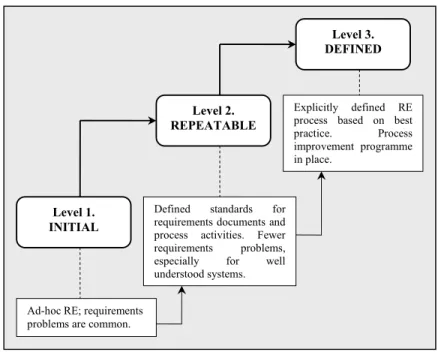
Figure 2.9 Requirements Engineering Process Maturity Model ... 32
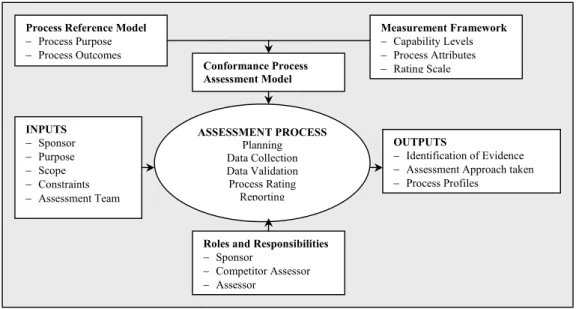
Figure 2.10 Model-based Assessment Process in ISO/IEC 15504... 33
Figure 2.11 Two Dimensional Architecture of ISO/IEC 15504... 34
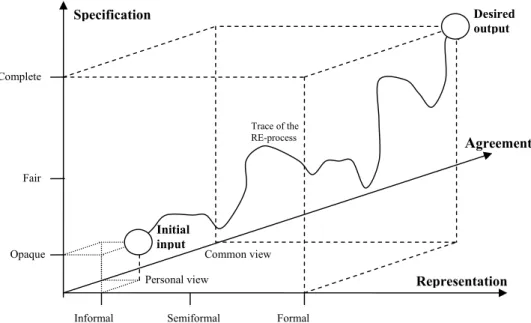
Figure 3.1 Three Dimensional Framework for the RE process... 42
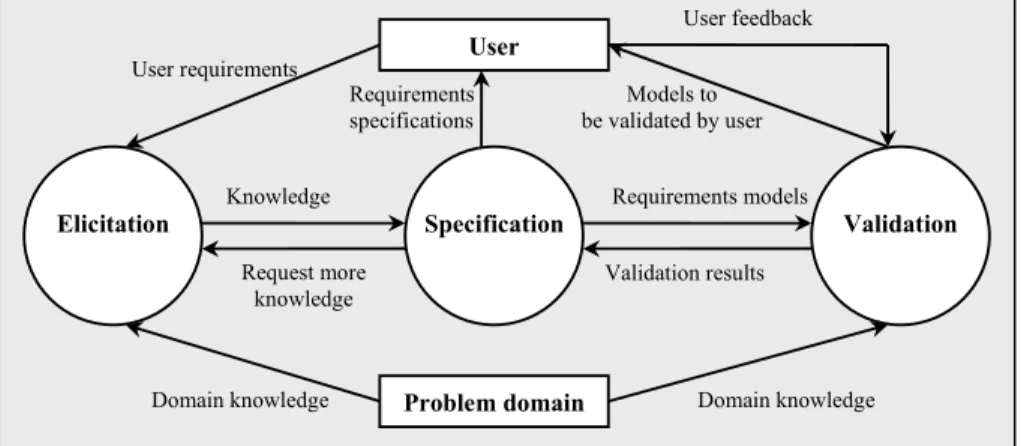
Figure 3.2 3-activity RE Process Model ... 43
Figure 3.3 Requirements Development/Management Model ... 45
Figure 3.4 RE Process in Requirements Development/Management Model ... 45
Figure 3.5 A Spiral Model for the RE process ... 46
Figure 3.6 Complexity of the RE Process ... 47
Figure 3.7 Requirements Specification Outline ... 51
Figure 3.8 Template for the Requirements Model Specification ... 51
Figure 3.9 RE Share Among all Software Development in Lithuania ... 56
Figure 3.10 Most Frequently Used Tools for the RE Activities in Lithuania ... 57
Figure 3.11 Most Frequently Used Tools for the RE Activities in Norway... 57
Figure 3.12 Most Frequently Used Tools for the RE Activities in Finland ... 58
Figure 3.13 SE Tools Taxonomy - Requirements Engineering Tools ... 69
Figure 4.1 The Semiotic Quality Framework... 75
Figure 4.2 The Framework for Quality of Modelling Languages ... 76
Figure 4.3 COTS Selection Process ... 89
Figure 4.4 PORE Process for COTS Selection ... 90
Figure 4.5 PORE Processes... 91
Figure 4.6 CAP Information Flow ... 92
Figure 4.7 How Scenario Will Work with Candidate ‘A’... 93
Figure 4.8 COTS Acquisition Process in Scenario-based Selection ... 93
Figure 4.9 STACE Framework ... 95
Figure 4.10 STACE Evaluation Process ... 96
Figure 5.1 Framework for Evaluation of Functional RE-tool Requirements... 104
Figure 5.2 Framework for Evaluation of Non-functional RE-tool Requirements... 115
Figure 6.2 Specification Example of the Functional Features ... 134
Figure 6.3 Specification Example of the Non-functional Features ... 135
Figure 6.4 Specification Example of the Relationships between Features ... 136
Figure 6.5 Requirements Specification constructed from the Example ... 137
Figure 6.6 R-TEA Example (RE-tool_A) ... 138
Figure 6.7 R-TEA Example (RE-tool_B)... 138
Figure 7.1 Case Study A Design... 152
Figure 7.2 Representation of the Problem. Static View ... 153
Figure 7.3 Representation of the Problem. Dynamic Relationships ... 154
Figure 7.4 Case Study B Design... 165
Figure 7.5 Fragment of the Questionnaire to Evaluate the Requirements Specification .... 167
Figure 7.6 Fragment of the Feature-based Questionnaire ... 173
Figure 7.7 Design of Case Study C ... 174
Figure 7.8 Subjective Evaluations of “the Best” RE-tool ... 176
Figure 7.9 Cases study D Design ... 181
Figure 7.10 Prototype of the Framework for Evaluation of Functional RE-tool Requirements... 181
Figure 7.11 First task: Preparation of Three Requirements Specifications... 182
Figure 7.12 Result Analysis Method... 183
Figure 8.1 Overview of the Prototype Components... 198
Figure 8.2 Administrator Application in the Framework for Evaluation of Functional RE-tool Requirements ... 199
Figure 8.3 Framework Application in the Framework for Evaluation of Functional RE-tool Requirements ... 199
Figure 8.4 Login to the Prototype ... 200
Figure 8.5 Saving Evaluation Session... 200
Figure 8.6 Open Evaluation Session ... 200
Figure 8.7 Feature Description Window ... 201
Figure 8.8 Framework Feature Selection ... 202
Figure 8.9 Framework Feature Selection ... 202
Figure 8.10 Requirements Specification for RE-tool Acquisition ... 203
Figure 8.11 RE-tool Selection for Evaluation ... 203
Figure 8.12 RE-tool Evaluation ... 204
Figure 8.13 Result Analysis Window for Framework Dimensions ... 205
Figure 8.14 Result Analysis Window for Framework Feature (FEF1.1) and Activities... 205
Figure 8.15 Final Evaluation Report ... 206
Figure 8.16 Comment Window (Rationale Maintenance) ... 206
LIST OF FIGURES
Figure 8.22 FB-RET Main Window ... 216
Figure 8.23 Creation of New Master Product in FB-RET ... 216
Figure 8.24 Creation of New Phase Product in FB-RET ... 217
Figure 8.25 Definition of New Fragments in FB-RET ... 217
Figure 8.26 Fragment Upload from Domain in FB-RET... 218
Figure 8.27 Requirements Specification in FB-RET ... 218
Figure B.1 Responses to Question 3 ... 253
Figure B.2 Responses to Question 5 ... 254
Figure B.3 Responses to Question 6 ... 254
Figure B.4 Responses to Question 7 ... 255
Figure B.5 Responses to Question 19 ... 259
Figure B.6 Responses to Question 20 (tool categories) ... 259
Figure B.7 Responses to Question 20 (individual tools)... 260
Figure B.8 Responses to Question 21 ... 260
Figure F.1 Example of Requirements Document... 269
Figure F.2 RequisitePro. Requirements Properties (1)... 269
Figure F.3 Selected Requirements in the Requirements Document... 270
Figure F.4 RequisitePro. Requirements Properties (2)... 270
Figure F.5 RDT. Initiation of Requirements Import ... 271
Figure F.6 RDT. Document Import Parse Window (1)... 271
Figure F.7 RDT. Document Import Parse Window (2)... 272
Figure F.8 RDT. Document Import Parse Window (3)... 272
Figure F.9 RDT. Document Import Parse Window (4)... 273
Figure F.10 RDT. Document Import Parse Window (5)... 273
Figure F.11 CORE. Window of Element Extractor ... 274
Figure F.12 CORE. Database Browser Window... 275
L
IST OF
T
ABLES
Table 1.1 Reasons for Project Failure ... 2
Table 2.1 Steps of the corporate feedback cycle ... 29
Table 2.2 The Capability Levels in ISO/IEC 15504 ... 34
Table 2.3 Comparison of the CMM and EF Approaches... 35
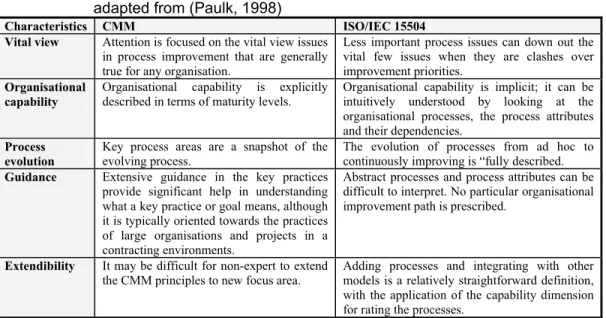
Table 2.4 Comparison of the CMM and ISO/IEC 15504 Approaches... 36
Table 2.5 Taxonomy Applied to TQM, EF, CMM and ISO/IEC 15504... 37
Table 3.1 Qualitative Property Definitions ... 49
Table 3.2 RE Activities Used in Industry... 53
Table 3.3 Survey of RE-tools... 64
Table 4.1 Metrics of COTS Quality ... 77
Table 4.2 Wieger’s (1999) Requirements ... 79
Table 4.3 INCOSE (2002) Requirements ... 81
Table 4.4 Priority-based Evaluation Framework ... 83
Table 4.5 Role-based Framework ... 84
Table 4.6 Framework Comparison... 88
Table 5.1 Activities of the Representation Dimension... 105
Table 5.2 Activities of the Agreement Dimension... 107
Table 5.3 Activities of the Specification Dimension ... 109
Table 5.4 Coverage of RE-tool Framework by Semiotic Quality Framework... 110
Table 5.5 Verification and Validation Support by RE-tool Framework ... 112
Table 5.6 Non-functional Process Requirements ... 115
Table 5.7 Non-functional Product Requirements... 117
Table 5.8 Non-functional External Organisational Requirements ... 121
Table 5.9 Non-functional External Requirements for Business Parties ... 122
Table 6.1 Evaluation Techniques ... 133
Table 6.2 Example of Specification Exemplar (Evaluation results) ... 139
Table 6.3 Comparison of Evaluation Approaches and R-TEA ... 144
Table 7.1 How R-TEA Method Addressed in Case Studies ... 151
Table 7.2 Overall Evaluation of RE-tools According to Organisational Needs in Particular Environment... 156
Table 7.3 Features and Activities for the Evaluation Framework Suggested by Respondents during the Quantitative Analysis... 156
Table 7.4 Comparison along the Representation Dimension ... 166
Table 7.5 Comparison along the Agreement Dimension ... 166
Table 7.6 Comparison along the Specification Dimension... 167
Table 7.7 Comparison of the Qualitative Properties of the Requirements specifications... 169
Table 7.11 Time Schedule for the Experiment Phases... 177
Table 7.12 Evaluation of Tool Functionality and Requirements Specification Quality ... 186
Table 7.13 t-test of the RE-tool Functionality Assessment Using Evaluation Techniques. 186 Table 7.14 t-test of the Requirements Specification Quality Evaluation Using Evaluation Techniques ... 186
Table 7.15 Descriptive Analysis of Evaluation Techniques (evaluation scale 1-to-6) ... 187
Table 7.16 Correlations Coefficient between Evaluation Technique Measures ... 188
Table 7.17 t-test of the Requirements Specification Quality, where Requirements Specifications are Prepared with RE-tools and Office Tools ... 188
Table 7.18 Descriptive Analysis of Tool Usage (evaluation scale 1-to-6)... 188
Table 7.19 Correlation Coefficient between Tool Measures... 188
Table 7.20 Comparison of Three Case Studies ... 191
Table 7.21 The Paired t-test for Agreement about Framework Features ... 192
Table 7.22 ANOVA test for Agreement about Framework Features... 192
Table 7.23 Range of Feature Importance ... 193
Table 7.24 Rate of Not-tested Framework Features... 193
Table 7.25 The Paired t-test for the Rate of Not-tested Framework Features... 193
Table 8.1 Evaluation and Extensions of the FB-RET Prototype... 221
Table B.1 Findings of Question 8 ... 255
Table B.2 Findings of Question 9 ... 256
Table B.3 Findings of Question 10 ... 256
Table B.4 Findings of Question 11 ... 256
Table B.5 Findings of Question 12 ... 257
Table B.6 Findings of Question 13 ... 257
Table B.7 Findings of Question 14 ... 257
Table B.8 Findings of Question 15 ... 257
Table B.9 Findings of Question 16 ... 258
Table B.10 Findings of Question 17 ... 258
Table B.11 Findings of Question 18 ... 258
Table C.1 Evaluation Form for the Requirements Representation Dimension ... 262
Table C.2 Evaluation Form for the Requirements Agreement Dimension ... 263
Table C.3 Evaluation Form for the Requirements Specification Dimension... 264
Table D.1 Raw Material of Case Study A... 265
Preface
This thesis is submitted to the Norwegian University of Science and Technology (NTNU) in partial fulfilment of the requirements for the degree doktor ingeniør. The work has been carried out at the Information Systems Group, within the department of Computer and Information Science (IDI), under supervision of Professor Guttorm Sindre. Part of the work was conducted while on a shorter research stay at the Software Engineering Research Group (SERG) at Lund University in Sweden, with Associate Professor Björn Regnell.
Acknowledgement
I would like to thank Professor Arne Sølvberg for inviting me to Trondheim for the doctorial studies and for providing an excellent environment for the research. I acknowledge and thank my supervisor Professor Guttorm Sindre for his time, open door, patience, discussions and valuable comments. I also enjoyed the freedom that was given during the pursuing of my research directions.
Part of the work has been carried out at the Engineering Research Group at Lund University in Sweden. I would like to thank Associate Professor Björn Regnell for inviting me to work with his group. I also thank fellow colleagues there, in particular, Johan Natt och Dag and Lena Karlsson, for inspiring discussions and practical support. Thanks to all at IDI for the stimulating working atmosphere. Special thanks go to Sari Hakkarainen, Csaba Veres, Christian Mönch, Xiaomeng Su, Darijus Strašunskas, Yun Lin, Jennifer Sampson, and Lillian Hella for a practical and scientific cooperation, and to all fellow members, past and present, of the IS-group for providing the needed environment and atmosphere for this work.
I would like to thank to my friends both in Norway and Lithuania, it is a great pleasure to record my appreciation of the joy I shared with them and the help I received from them.
Special thanks go to my mother and father for supporting and believing in me during all years. I would also like to thank to my bother and his family for the continuous e-mail correspondence, regards and encouragement both from them and my parents. My sincere thank goes to Sigita for her support, understanding and encouragement all the way through.
Raimundas Matulevičius June 29, 2005
C
HAPTER
1
Introduction
The first chapter discusses background, motivation and objectives of this work. The research problem and research questions are defined and the claimed contributions are presented. The chapter continues with a discussion over the research methodology, and finishes with an overview of the thesis structure.
1.1 Background
Information systems development is a complex activity which comprises operating information, allocating material and human resources and managing all of them usually with a computerised software system. Kotonya and Sommerville (1998) define an information system as primarily concerned with processing information which is held in some kind of databases. Such systems are usually implemented using computer hardware and are built on top of commercial operating systems. There are several arguments for distinguishing between software and systems. However every large project involves hardware, networks, people, and procedures to follow, in other words systems of some kind (Alexander and Stevens, 2002). In most projects the system requirements engineering primarily focus on software requirements engineering.
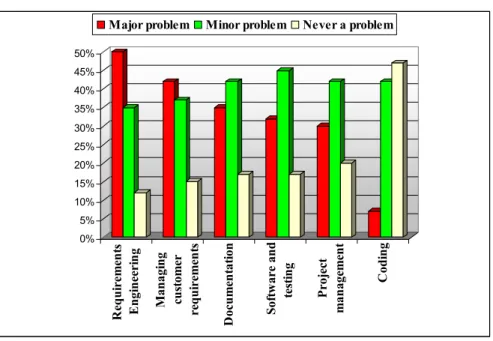
Requirements define what the system is required to do and the circumstances under which it is required to operate. Requirements engineering (RE) is considered to be one of the most important stages in the whole system and software development process (Figure 1.1). Errors done during the RE process could be very expensive in the later development stages and during the system maintenance and use. Alexander and Stevens (2002) and Leffingwell and Widrig (2000) refer to the Standish Group and ESPITI (European Software Process Improvement Training Initiative) studies which identify three most common reasons for the project failure: 1) lack of user involvement, 2) incomplete requirements and requirements specifications, and 3) changing requirements and specifications.
0% 5% 10% 15% 20% 25% 30% 35% 40% 45% 50% R equi re m en ts En gi n ee ri n g M anag ing cu st om er re q u ire m en ts Do cu m en ta ti on S of tw ar e an d te st in g Pr oj ec t ma n ag eme n t C odi ng
Major problem Minor problem Never a problem
Figure 1.1 Software Development Problems adapted from (Leffingwell and Widrig, 2000)
In Table 1.1 five of eight major reasons for failure are requirements-based. The other three are related to management; and none of them are technical (Alexander and Stevens, 2002). Systems do not do what users really want, or systems are too expensive, or they are not used for the full effectiveness by the users who have paid for them.
Table 1.1 Reasons for Project Failure
adapted from (Alexander and Stevens, 2002)
Incomplete requirements 13.1%
Didn’t involve users 12.4%
Insufficient resources/schedule 10.6%
Unrealistic expectations 9.9%
Lack of managerial support 9.3%
Changing requirements 8.7%
Poor planning 8.1%
INTRODUCTION
documents being produced. System designers complain about rework resulting from poor requirements. Finally customers fail to use all the system capabilities, there are a high volume of change request immediately after a system is delivered to customers, and it takes a long time to agree on system changes resulting from new requirements. Therefore, RE process improvement remains an important topic.
Making changes and introducing new techniques in an organisation is always difficult. There should be enough time to implement these new techniques. People who must apply the techniques should be kept fully informed during the introduction process. Before starting improvement activities for the RE process it is important to gather knowledge about 1) the RE process itself and about its maturity level; 2) budget and timescale for improvements; and 3) the people involved in implementing the RE process improvements.
The techniques to support and to improve the process could be characterised in three different ways, like work avoidance (reuse of methodology and techniques in development and reuse of software artefacts, e.g., requirements and requirements specifications), working smarter (apply new RE methods to execute the process, develop techniques for training users, support maintenance of the software products, work out techniques for requirements negotiation, development of standards both for RE process and documents), and working faster (use software tools, e.g., using targeted RE-tools to support the RE process). This work addresses RE process support and improvement by emphasising working faster and suggesting a methodology to acquire RE-tools in order to automate the RE process. Boehm (1999) discusses that introduction of new software tools could improve the productivity by 8 percents (in comparison to application of new methods – 17 percents and reuse of prepared artefacts – 47 percents). Eight percent of improvement is already a significant result for the RE process improvement. On the other hand introduction of new tools require organisational changes, and in most cases it means adoption of new engineering methods. Furthermore, software tools facilitate reuse of already developed artefacts across related domains by suggesting knowledge repositories and linking them across different projects.
1.2 Motivation and Objective
Requirements engineering (RE) tools are software tools which provide automated assistance during the RE process and support the RE activities (Matulevičius, 2004b). The literature and vendors of these tools usually call these tools as requirements management tools. However these tools do support different requirements engineering activities such as requirements elicitation, requirements documentation and analysis, requirements validation and requirements specification. Therefore they are call as RE-tool in this work.
The need for automated support may vary in different projects; and if a company does not have a mature RE process, automation won’t necessarily help as there are other basic process improvements that should be done first. On the other hand if the company deals with system requirements specifications containing many requirements which need to evolve over time, RE-tool support could clearly be useful (Kotonya and Sommerville, 1998; Kaindl et al. 2002; Matulevičius, 2004a). However, empirical studies (Nikula et al, 2000, Hofmann and Lehner, 2001; Karlsson et al, 2002, Matulevičius 2004c) report that the mainstream RE practice relies on office tools (e.g. text editors, drawing, and modelling tools) rather than targeted RE-tools (e.g. DOORS, CaliberRM, RequisitePro, DOORS and CORE) provided by various companies or research groups.
Reasons for not using RE-tools include financial causes, like high RE-tool price, low return on investment. Companies consider it to be difficult to adapt RE tools to their organisational needs. Many software companies are not aware that there might be significant gains in taking up advanced tool support. A part of the reason might be that it is difficult to evaluate the available RE-tools. Hofmann and Lehner (2001) stress that a lack of well defined RE process and a lack of team training in the selected tools caused the insufficient support for the RE activities. In order to adopt a tool, an infrastructure must be set to support the tool. A company must be willing to invest in putting such an infrastructure in the organisation (El Emam and Madhavji, 1995).This includes personnel training, tool support groups,funding for the tool implementation. However, the management of software companies usually have unrealistic expectations, as, for example, immediate pay-off.
Because of their limited use in practice it is difficult to evaluate RE-tools in terms of their impact on an organisation’s processes. Similarly, it is difficult to examine tools in an experimental situation, as it is difficult to control for the variation in system developers’ capabilities. Moreover, RE-tools provide the greatest benefit for large projects with stakeholders who frequently change their minds about requirements, while a controlled experiment normally requires prescribed tasks of a fairly limited size. It would be hard to create experimental tests that would provide a realistic evaluation of the tools, and for small- and medium-size organisations the cost of thus evaluating several RE-tools empirically might be prohibitive. There is also a need for a cheaper kind of evaluation that can be done analytically rather than empirically. For instance, RE-tools can be evaluated from a theoretical point of view - using information provided by vendors. They can be tried out on some realistic examples, but without the rigour of a controlled experiment. A potential problem of
INTRODUCTION
which would help to elicit the environment needs in order to adapt the RE-tool(s) in an inexpensive way and in a short amount of time.
1.3 Research Problem and Questions
In this section the research problem and questions are explained. The working title of this work has been “Process Improvement in Information System Requirements Engineering”. The title had three major parts which are informally explained below and considered in more detail in the first part of this work.
Information System is a system for the dissemination of data between persons in order to increase their knowledge which is related to different aspects of the organisation including, e.g., its production processes, marketing, management, process constraints, policies and guidelines.
Process Improvement means the improvement of the process itself and the improvement of a product produced by this process. In this work both approaches are taken in account since the use of the tools helps to improve the process and the quality of the product, which is produced by the process.
Requirements Engineering is a systematic sequence of actions, during which the list of requirements for a new system is elicited, analysed, validated and documented into a formal, complete and agreed requirements specification.
However this title involves several issues which should be discussed. One could argue why this work addresses only RE for the information systems. As RE for information systems is primarily dealing with a software or application RE (Kotonya and Sommerville, 1998, Alexander and Stevens, 2002) the approach taken in this work could be applicable to various kind of system development. But this work does not address hardware RE which also necessary is when developing embedded, command or control systems.
Process improvement could be seen as increase of productivity (Boehm, 1999) when applying new development methods, reusing of information, or applying the software tools in the system development process. However, one could argue that application of different techniques and means (e.g., applying new requirements elicitation, analysis, documentation and validation methods, training of the workers, developing new methods for RE, reusing RE artefacts, and automating the RE activities) should not be considered as the process improvement, but rather the enactment of the process support. The improvement is not only achieved by the application of techniques or tools. Process improvement much depends on the organisation’s environment, the knowledge and work practice of the workers, projects’ size and management.
Taking in account the discussion above the title for this work is defined as follow: “Process Support for Requirements Engineering”
The second part of the title “An Requirements Engineering Tool Evaluation Approach” defines more precisely the means of the RE process support and improvement. This work focuses on the evaluation and acquisition of the RE-tools. The research problem addressed is:
Research Problem: How to improve the RE process by acquiring RE-tools? This work targets the RE process support and improvement by using RE-tools to automate the RE process. But the work does not develop an RE-tool itself, because of the limited resources, time available and a high competition of the existing commercial RE-tools in the market. Instead, the work discusses the RE-tool evaluation approach which would guide through evaluation process and help to select a qualitative RE-tool in order to automate the RE process. The general belief is that qualitative process support should lead to a better requirement specification. The approach could be helpful both for the RE-tool users and RE-tool vendors. For the RE-tool users the approach provides guidelines, properties and criteria on how to assess the adequacy of an RE-tool to organisational settings before acquisition; for the RE-tool vendors, the work helps to evaluate and improve both the quality and functionality of the developed RE-tool(s).
In order to narrow the investigation focus, the research problem is divided into two main research questions:
RQ.1: What software tools provide better means to support the RE process and to
maintain high-quality requirements artefacts?
This question investigates automated support for the RE process. The main focus is on two types of software tools: office tools which include text editors (e.g., MS Office), drawing tools (e.g., MS paint), and modelling tools (e.g., Visio and Rational Rose), and targeted RE-tool (e.g., DOORS, Rational RequisitePro, CaliberRM, and CORE).
RQ.2: How to evaluate and acquire software tools for the RE process support
according to organisational needs so that they could lead to improvement of the RE process?
The question involves the analysis of requirements of the evaluation process. Such requirements characterise what are the evaluation settings, for example, they define evaluation frameworks, methodological guidelines, techniques and participants. In particular the second research question addresses the tool evaluation frameworks and approaches which are applied during the assessment of tool suitability to an environment, and their performance during the tool assessment process. The working
INTRODUCTION
Both questions are considered through an analytical investigation, a survey, several case studies and prototype tools. Taken together the answers to these questions constitute the main contributions of this work.
1.4 Claimed Contribution
The objective of this work is to investigate how to evaluate the need for the automated support in the organisation and how to acquire the most suitable RE-tools to support the RE process. The main contributions of this work are:
C.1: Two frameworks for evaluating RE-tools; the first is framework for evaluation of the functional RE-tool requirements, the second framework is for evaluation of the non-functional RE-tool requirements.
The framework for functional requirements consists of three dimensions: representation, agreement, and specification. The representation dimension deals with the degree of formality, where informal, semiformal and formal languages are used. The agreement dimension deals with the degree of agreement among project participants through communication means. The specification dimension deals with the degree of system requirements understanding at a given time. The knowledge reuse and standards are ways to achieve a higher degree of specification completeness faster.
The second framework categorises the non-functional RE-tool features into process, product and external RE-tool requirements. Process requirements are constraints placed upon the evaluator’s work practice. Product requirements specify the desired qualitative characteristics of RE-tools. External requirements derived from the RE-tool user’s environment, are divided into organisational requirements and requirements for business parties. Organisational requirements describe the costs and business issues. Requirements for business parties deal with the RE-tool vendor performance, reliability, reputation, customer base and track records.
The evaluation frameworks are presented in Chapter 5. They are developed according to an analytical literature study in Chapters 2 and 4, and surveys of industrial experience in Chapter 3. They contribute to the answer of the first research question RQ.1, as they provide assessment criteria which are tested in empirical investigation of industrial RE practice in Chapter 3 and in case studies in Chapter 7.
C.2: Requirements specification exemplar, used for the RE-tool evaluation.
The specification exemplar initiates the evaluation process according to the proposed evaluation frameworks. It could also be used as an evaluation technique which guides the RE-tool assessment so it contributes to the answer to the second research question RQ.2.
The RE-tool evaluation approach (R-TEA) is inspired from the general tool acquisition approaches discussed in Chapter 4. The R-TEA method applies a specification exemplar which is constructed from the proposed evaluation frameworks. In comparison to existing tool evaluation approaches for commercial-off-the-shelf products, the R-TEA method targets the RE-tool domain and guides the user of the evaluation frameworks through tool assessment. In comparison to the existing RE-tool evaluation frameworks, the proposed evaluation frameworks provide a more complete and consistent RE-tool assessment by combining both functional and non-functional frameworks. Frameworks are also accompanied with methodological guidelines which provide help in the selection of the RE-tool(s) and are maintained by a prototype tool. The claimed contribution helps to answer research question RQ.2. C.4: Prototype tool for facilitating the RE-tool evaluation.
A prototype of the framework for evaluation of functional requirements is created to facilitate the assessment of the RE-tools. A framework prototype uses the guidelines of the RE-tool evaluation approach and implements the evaluation framework for the functional RE-tool requirements. The framework prototype is used in the case study, and it contributes to the answer of the second research question RQ.2.
C.5: Prototype – FB-RET – an RE-tool prototype to test weakly supported RE-tool
features.
While considering the first research question RQ.1 a number of weak aspects of the automated RE process support was discovered. In order to ease analysis of the discovered weaknesses an experimental-design environment (FB-RET) is proposed in section 7.2. The FB-RET prototype emphasises the analysis of different RE activities and processes while implementing them in a unified environment and testing in the experimental design afterwards.
Finally, this work is partly based on papers presented at international conferences and workshops:
− Matulevičius R., Sindre G., Requirements Engineering Tool Evaluation Approach. Accepted for the Proceedings of the 14th International Conference on Information Systems Development (ISD 2005), Karlstad, Sweden, August, 2005.
− Matulevičius R., Sindre G., Overview of the Evaluation Approaches and Frameworks for Requirements Engineering Tools. Accepted for the Proceedings of the 14th International Conference on Information Systems Development (ISD 2005),
INTRODUCTION
International Requirements Engineering Conference (RE’05), Paris, France, August-September, 2005.
− Matulevičius R., Sindre G., Requirements Specification for RE-tool Evaluation: Towards a Specification Exemplar. Proceedings of the 17th International Conference Software and Systems Engineering and their Applications (ICSSEA 2004), Paris, France, November-December, 2004.
− Matulevičius R., Karlsson L., Sindre G., How Evaluation Techniques Influence the RE-Tool Evaluation: An Experiment. Proceedings of the industrial experience track of the European Software Process Improvement Conference (EuroSPI 2004), Trondheim, Norway, November, 2004.
− Matulevičius R., Survey of Requirements Engineering Practice in Lithuanian Software Development Companies. Vasilecas O., Čaplinskas A., Wojtkowski W., Wojtkowski W. G., Zupancic J. Wrycza S. (eds.): Proceedings of the 13th International Conference on Information Systems Development (ISD 2004). Advances in Theory, Practice and Education. To be published by Kluwer Academic/Plenum Publishers. Vilnius, Lithuania, September, 2004, pp. 327-339.
− Matulevičius R., Process Improvement in Requirements Engineering by Acquisition of RE-tools. Glinz M. (eds.): Proceedings of the Doctorial Consortium at the 12th IEEE International RE Conference (RE‘04), Kyoto, Japan, September, 2004, pp. 37-40.
− Matulevičius R., How Requirements Specification Quality Depends on Tools: A Case Study. In Persson A., Stirna J. (eds.) Proceedings of the 16th International Conference on Advanced Information System Engineering (CAiSE’2004), Riga, Latvia, (2004), Springer-Verlag Berlin Heidelberg 2004, pp. 353-367.
− Matulevičius R., Validating an Evaluation Framework for Requirement Engineering Tools. In Krogstie J., Halpin T. and Siau K., (eds.) Information Modeling Methods and Methodologies (Adv. Topics of Database Research), 2004, Idea Group Publishing, pp. 148-174.
− Matulevičius R., Validating an Evaluation Framework for Requirement Engineering Tools. Proceedings of the Eighth CAiSE/IFIP8.1 International Workshop on Evaluation of Modeling Methods in Systems Analysis and Design (EMMSAD'03), Klagenfurt/Velden, Austria, June 16-20, 2003.
− Matulevičius R., Usability and Adaptability of Evaluation Framework for Requirements Engineering Tools. Proceedings of the 2003 International MultiConference in Computer Science & Engineering (SERP’03), Monte Carlo Resort, Las Vegas, Nevada, USA, June 23-26, 2003.
− Matulevičius R., Strašunskas, D. Evaluation Framework of Requirements Engineering Tools for Verification and Validation. In: Genero M., Grandi F., van den Heuvel W.-J., Krogstie J., Lyytinen K., Mayr H.C., Nelson J., Olivé A., Piattini M., Poels G., Roddick J. F, Siau K., Yoshikawa M., Yu E. S. K. (eds.): Advanced Conceptual Modeling Techniques, ER 2002 Workshops: ECDM, MobIMod, IWCMQ, and eCOMO, Tampere, Finland, October, 2002, Revised Papers, Springer-Verlag Berlin Heidelberg 2003, pp. 251-263.
− Matulevičius R., Process Improvement in Information System Requirements Engineering. Scientific Proceedings of Riga Technical University, Information System Development (ISD 2002) Doctoral Consortium, Riga, Latvia, 2002.
1.5 Research Methodology
Mathematics, science, and engineering have special historical relationships with computing, so different research methods may be used. Denning (2000) classifies three major research approaches: theory, experimentation and design. All three research approaches constantly interact in the process of research.
Theoretical approach involves building of conceptual frameworks and notations for understanding relationships among objects in a domain and the logical consequences of axioms and laws. Theory characterise the analytical method when a formal theory is proposed and then compared with empirical observations. Experimentation is a process of exploring models of systems and architectures within the given application domains and testing whether those models can predict new behaviour accurately. Experimentation describes an empirical method when a model is proposed and evaluated through empirical studies, for example, case studies and experiments. Design characterises constructing of systems that support work in given organisations or application domains. Design describes an engineering method, which studies the solutions and evaluates them.
Generally the research process involves three fundamental questions to be raised:
1) What is the problem that is being focused on, and why is this important? The question explains a need to search for understanding, for a sense of having found a satisfying explanation of some aspects of reality.
2) What is the best way to approach a solution to this problem? The question describes how the understanding is achieved by means of statements of general laws and principles– laws applicable to the widest possible variety of phenomena.
INTRODUCTION
The research of this work addresses RE process improvement. The research objective targets the development of the RE-tool evaluation approach which contributes to selection of the RE-tools in order to improve both the RE process and product. In order to analyse the defined research questions, both descriptive and prescriptive research methods are used; and they include literature study, survey (Dillman, 2000), case studies, and experiment (Wohlin et al., 2002), leaving aside field study and action research (Sankaran, 2001). One could argue that application of the RE-tool assessment method especially in an organisation that is planning to acquire an RE-tool would be valuable and useful; however the analytical literature study and the empirical survey (Matulevičius, 2004a) of software development organisations revealed some major problems in conducting field studies and/or action research. It was difficult to find an industrial organisation, which would be interested in participating in such an investigation. The organisations are not interested and not willing to automate the RE process. A part of the problem is that often their RE process is immature and needs further consideration. Therefore, all together the research phases in this work include: 1) An extensive analytical literature study in Chapters 2, 3, and 4. Post-mortem
analysis of software development projects with focus on RE is followed with a survey research (Dillman, 2000) in targeted geographical areas. The analysis highlights the existing RE problems and the RE process difficulties and shows weak automated support of the RE process.
2) Both analytical and descriptive studies contribute to the proposal of the conceptual framework for evaluating the RE-tools before acquisition to the environmental settings. Chapters 5 and 6 present a theoretical approach to the RE-tool assessment which is summarised to the RE-tool evaluation approach (R-TEA).
3) The validation of the proposed method comprises both experimental empirically-based (Wohlin et al., 2002) and design research approaches. Chapter 7 presents a number of case studies in order to explore different conceptual elements of the R-TEA method. Building a prototype and testing the proposed R-R-TEA method is the scope of Chapter 8. Two prototypes are implemented in order to target validity issues from a design point of view.
The first prototype tool supports the proposed R-TEA method itself. The second prototype describes an experimental-design environment for analysis of poorly supported features of existing commercial RE-tools.
1.6 Structure
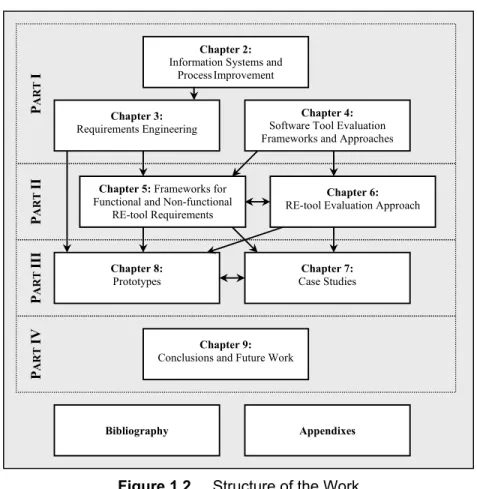
The thesis is organised in four parts and nine chapters (Figure 1.2):
PART I, State-of-the-Art contains three chapters related to the theoretical overview of
the current practices and research in information systems, process improvement and RE.
Figure 1.2 Structure of the Work
Chapter 2: Information Systems and Process Improvement has a purpose to survey
the information system development methodology, development cycles and modelling perspectives. The second half of the chapter overviews and compares the process improvement approaches.
Chapter 3: Requirements Engineering provides a definition of requirements
engineering (RE). Next it surveys the existing RE models and makes a separation between the process and product of RE. In addition the chapter overviews the empirical investigations of RE and characterises the possible targets of the RE process improvement. Finally the chapter surveys the currently available RE-tools
Chapter 2:
Information Systems and
ProcessImprovement
Chapter 3:
Requirements Engineering
Chapter 4:
Software Tool Evaluation Frameworks and Approaches
Chapter 5: Frameworks for Functional and Non-functional
RE-tool Requirements
Chapter 6:
RE-tool Evaluation Approach
Chapter 8:
Prototypes Case StudiesChapter 7:
Chapter 9:
Conclusions and Future Work
P AR T I P AR T II P ART III P ART IV Bibliography Appendixes
INTRODUCTION
Chapter 4: Software Tool Evaluation Frameworks and Approaches surveys the
frameworks and approaches to evaluate software tools before acquisition to the environment settings. The chapter considers a semiotic quality framework first. Next an overview of the existing evaluation frameworks to compare RE-tool and the general assessment approaches to consider the commercial-off-the-shelf products is provided in the chapter.
PART II, Theoretical Approach contains two chapters about the RE-tool evaluation
approach, which consists of two evaluation frameworks and guidelines for framework application.
Chapter 5: Frameworks for Functional and Non-functional RE-tool Requirements
introduces two frameworks. The functional RE-tool requirements framework separates the RE-tool functionality into three orthogonal dimensions, such as requirements representation, requirements agreement and requirements specification. The non-functional RE-tool requirements framework characterises three non-functional groups: such as process, product and external. Finally the relationships between both frameworks are defined in the chapter.
Chapter 6: RE-tool Evaluation Approach proposes the guidelines for the
framework application. The requirements specification for the RE-tool assessment is prepared according to the specification exemplar constructed by the means of the evaluation frameworks. Next the chapter describe six steps of the RE-tool evaluation approach and compares it with the similar tool evaluation approaches.
PART III, Evaluation and Validation contains two chapters which evaluates the
proposed theoretical approach in a number of case studies and experimental design.
Chapter 7: Case Studies reports on four case studies, which applies the evaluation
frameworks in order to compare several RE-tools. The case studies also analyse the validity issues of the RE-tool evaluation approach.
Chapter 8: Prototypes presents two prototypes. The first half of the chapter
introduces the prototype which is constructed to support the evaluation framework of the functional RE-tool requirements. The second part of the chapter presents the environment to investigate the RE-tool weaknesses discovered both in the analytical and empirical investigations.
PART IV, Conclusions and Future Work summarises the major findings and
discusses the future work.
Chapter 9: Conclusions and Future Work presents the conclusions of the research
limitations to the study are described along with the recommendations for the future work.
The final chapter is Bibliography. It includes a list of all references cited throughout the work. Next, a number of appendixes present instruments and raw material gathered in the market research and cases studies.
Appendix A describes the questionnaire used in the market research in order to
investigate the RE activities executed in software organisations.
Appendix B presents the findings of the market research which investigates the
activities performed in the software development organisations while executing the RE process.
Appendix C includes the evaluation form adapted according to the evaluation
framework for the functional RE-tool requirements. The evaluation form is used in Case studies A and C.
Appendix D presents the results of Case study A where the importance and
agreement of the evaluation framework features are analysed.
Appendix E introduces the test problem which is used in case studies to investigate
the performance and correctness of the evaluation frameworks and the RE-tool evaluation approach. The problem is based on the electricity domain and describes the process of the electrical fault handling.
Appendix F shows a sample of the evaluation scenarios for three RE-tools
(RequisitePro, RDT and CORE). The evaluation scenarios are defined for the same problem (presented in Appendix E).
Appendix G shows the results of Case study C which consist of two sessions
executed in different universities. The appendix presents the findings in the Norwegian University of Science and Technology.
Appendix H includes the questionnaire and findings from the second part of the
Case study C. The study was executed in the Lund University.
Appendix I provides the questionnaire used in Case study D which investigates the
correctness and performance of the RE-tool evaluation approach.
Appendix J presents raw material of Case study D where the validity of the
RE-tool evaluation approach was considered using the framework prototype. Finally the work concludes with a list of terms used through this work.
PART I
S
TATE
-
OF
-
THE
-A
RT
The purpose of this part is to survey the state-of-the-art of the process improvement in information system requirements engineering. The part consists of three chapters.
The second chapter Information Systems and Process Improvement overviews information system development methodology and the assessment approach of the organisational maturity. First, the information systems are defined as the spreading of knowledge among workers in the organisation. Next, an overview of the existing methodological approaches of information system development is made. The chapter also presents the existing system development life cycles and modelling perspectives used in software system and tool development.
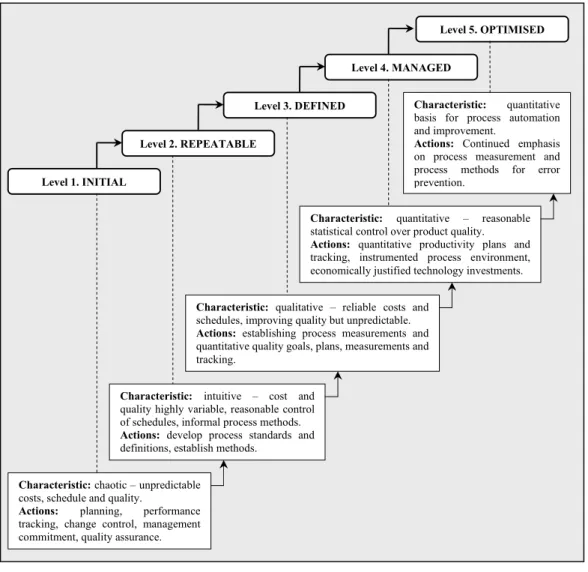
Before starting the RE process improvement it is important to gather knowledge about the RE process itself and its maturity level, budget and timescale for improvements, and the people involved in implementation of the RE process improvements. Therefore, the existing process improvement approaches are analysed in the chapter. The approaches include the Plan-Do-Check-Act paradigm (Shewhart, 1936; Deming, 1986), Total Quality Management (Deming, 1986), Experience Factory (EF) and Quality Improvement Paradigm (Basili and Rombach, 1991; Basili, 1993; Basili and Caldiera, 1995), SEI Capability Maturity Model (Humphrey, 1989; Paulk, Curtis, Chrissis, and Weber, 1993) and ISO/IEC 15504 (El Emam, Drouin and Melo, 1998; Rout, 2001).
As discussed in the first chapter RE is one of the most important system development phases. The third chapter Requirements Engineering defines RE describes the RE models, and surveys RE activities, process and resulting products – requirements specification. Next, the industrial practice from different geographical areas is overviewed. The empirical investigation of the RE practice shows that
software and system development organisations need to make the RE process evolve towards a more mature way, they need to teach employees to perform RE activities. Furthermore the RE process needs to be automated by adopting the RE-tools to support different RE activities. The chapter ends with a commercial RE-tools survey which highlights weak aspects of the RE-tools, and the description of the problem to evaluate the RE-tools before their acquisition for the organisational needs.
The fourth chapter Software Tool Evaluation Frameworks and Approaches introduces a number of RE-tool frameworks, lists of requirements, and general tool evaluation approaches. However, they are not perfectly applicable for the selection of the RE-tools for the organisational needs. For instance the NATURE framework (Pohl, 1994; Pohl, 1996) and the semiotic quality framework (Krogstie 1998; Krogstie, 2001a; Krogstie and Jørgensen, 2003) are too abstract for the tool evaluation purposes. Furthermore, the chapter surveys the RE-tool evaluation frameworks which provide lists of functional and non-functional RE-tool requirements as standalone instruments are not followed with guidelines on how to apply and use them for the tool assessment. Therefore an analytical overview and comparison of the existing general COTS (commercial-off-the-shelf) product selection approaches is performed. However the approaches do not specifically target the RE-tool domain; and their application is time consuming and domain knowledge demanding. The chapter raises a problem on how to assess the RE-tools before acquiring the one which is the most appropriate to the organisational environment.
C
HAPTER
2
Information Systems and
Process Improvement
Before staring to consider the RE process improvement possibilities it is important to investigate the surrounding settings and to define the concepts of information systems and process improvement models. Development of information systems (IS) is not a straightforward process, but comprises cycles, repetitions and continuous changes as the environmental circumstances evolve. Therefore, the need of IS development process improvement emerges, when the IS development processes are reconsidered in order to lead to better, faster, more qualitative IS definition, development and maintenance.
In this chapter an overview of the IS development methodologies, development cycles and modelling perspectives is made. Later, process improvement is defined, and the existing process improvement models in order to assess organisational maturity are discussed.
2.1 Information System
An information system (IS) is a system for the dissemination of data between persons in order to increase their knowledge (Krogstie and Sølvberg, 1996). The knowledge considered is usually related to different aspects of organisation including its production processes, marketing, management, process constraints, policies and guidelines. Organisations are constantly under the pressure of change from internal as well as external forces. Most organisations are supported by a portfolio of application systems that likewise have to be changed, often rapidly, for the organisation to be able to keep up and extend its activities.
An organisation consists of persons who view the world in their own specific way, because each of them has different experiences arising from work and other
activities. The local reality (Figure 2.1) refers to the way a person perceives the world in which he or she lives and the way the world is for the individual. It is some kind of knowledge about how different parts of the world fit together, what is related to what, and how to interpret actions and events. When the social actors of an organisation act, they externalise their local reality. The ways in which persons externalise their local reality are by speaking and constructing languages, artefacts, and institutions. What they do is to construct organisational reality by making something that other persons have to relate to as being part of the organisation.
Organisational reality is the social order to institution that exists because everybody relates to it in their actions. The organisational reality may consist of different things, such as institutions, language, artefacts, and technology. Internalisation is the process of making sense out of the actions, institutions, artefacts etc. in the organisation, and making this organisational reality part of the individual local reality.
Note that this linear presentation does not mean that the processes of externalisation and internalisation occur in a strict sequence. Externalisation and internalisation may be performed simultaneously. Also, it does not mean that only organisational reality is internalised by individuals. Other externalisations also influence the construction of the local reality of an individual.
A computerised organisational information system is a system for the dissemination of data within an organisation which are based on the use of computers (Krogstie and Sølvberg, 1996). An application system is a subsystem of the computerised organisational information system being adapted to the needs of the organisation. Development of an application system is the process of producing a new application system in the organisation based on the current IS and the knowledge of internal and potentially external actors. In the following sections an overview of development methodology, development cycles and modelling perspectives used during the development of the information system is given.
Local reality Organisational reality Externalisation Internalisation
INFORMATION SYSTEM PROCESS IMPROVEMENT 2.1.1 Development Methodology
A methodology is a system of rules, approaches, and tools to aid development and/or maintenance of systems. Krogstie and Sølvberg (1996) suggest a framework for information system methodology classification. It is based on a number of questions (e.g. why, when, what, how, who, and for how long) which are asked while defining, developing, and maintaining a system.
Why is the problem attacked in a chosen way? This question addresses “Weltanschauung”, which differentiates between three views of the world: objectivistic, constructivistic and mentalistic. Objectivistic world view describes that reality exists independently of any observer and merely needs to be mapped to an adequate description. Constructivistic world view says that reality exists independently of any observer, but what each person posses is a restricted mental model only. Finally, mentalistic world view claims that to talk about the reality as such does not make sense because we can only form mental constructions of the perceptions. The distinction into objectivistic and constructivistic is parallel to the distinction between objectivistic and subjectivistic done by Hirschheim and Klein (1989), who also distinguish along the order-conflict dimension. The order emphasises a social world characterised by order, stability, integration, consensus, and functional coordination. The conflict or coercion view stresses change, conflict, disintegration, and coercion.
When is a methodology applied? This aspect analyses the coverage in process. The methodology addresses planning changes to the IS and its support; development of application systems, use and operation of application systems; maintenance and evolution of application systems; management of planning, development, operations, and/or maintenance of application systems.
What part of the IS-portfolio is supported by the methodology? The methodology describes coverage in product and concerns 1) planning, development, operating, use, and/or maintenance of one single application system; 2) a family of related application systems; 3) the whole portfolio of application systems in an organisation; 4) the totality of goals, business process, people, and technology used within the organisation.
How does the methodology help in achieving the goals of IS? The question is concentrated on IS and methodology reuse, having in mind different aspect of it, like: motivation (why reuse is done), substance (artefact reuse, process reuse), development scope (whether the reusable entities are from a source external or internal to a project or organisation), management mode (how reuse is conducted), and technique (how reuse is implemented).
Who is involved and where are the changes done? Stakeholders in IS could be divided into several groups: those who are responsible for IS development, introduction and maintenance (the project manager, system developers, communications experts, technical authors, training and user support staff); those with
financial interest, responsible for the application systems sale or purchase; and those who have an interest in its use (e.g., end-users, indirect users and their managers).
How is the knowledge represented? Knowledge about the process and the product of IS development and maintenance can be represented using both linguistic and non-linguistic means such as audio and video. Representational languages can be informal, semi-formal, or formal, having a logical and/or an operational semantics.
For how long has the methodology been used? The methodology maturity can be differentiated between maturity description (is the methodology properly described?), support by tools (is the methodology supported by tools?), practical applications (is methodology used by many organisation, supporting a large part of the portfolios in these organisations?), and its scientific background (is the methodology undergoing a conscious evolution based on experience with it and scientific study of the use of the methodology?)
2.1.2 Development Cycles
The most common system development activities are identified in (Loucopoulos and Karakostas, 1995; Sommerville, 1997). The activities include software specification (the functionality of the software and constraints on its operation is defined); software development (the software to meet specification must be produced); software validation (the system is validated in order to ensure that it does what customer wants); and software evolution (the system changes in order to meet customer needs). Different decomposition of these activities specify development processes, such as waterfall, spiral, prototyping, operational, transformational, the knowledge-based and domain-based models.
The waterfall model describes system development as a stepwise transformation from the problem domain to the solution through a number of phases which are wholly satisfied before their successors begin (Figure 2.2).
The spiral model of system development recognises the iterative nature of development and the need to plan and assess risks. The following activities (Figure 3.5) must be performed in each of the development phases: plan next phase; determine objectives, alternatives, constraints; evaluate alternatives, identify and resolve risks; and verify next level product.
The prototyping (evolutionary) model is a technique which constructs and experiments with a “mock-up” version of the system, in order to gain some preliminary understanding of the functionality and behaviour required from it (Figure 2.3). The engineers develop an initial implementation, expose it to user comments and